Melanoma Treatment (PDQ®)–Health Professional Version

Melanoma Treatment (PDQ®)–Health Professional Version

General Information About Melanoma

Melanoma is a malignant tumor of melanocytes, which are the cells that make the pigment melanin and are derived from the neural crest. Although most melanomas arise in the skin, they may also arise from mucosal surfaces or at other sites to which neural crest cells migrate, including the uveal tract. Uveal melanomas differ significantly from cutaneous melanoma in incidence, prognostic factors, molecular characteristics, and treatment. For more information, visit Intraocular (Uveal) Melanoma Treatment.

Incidence and Mortality

Estimated new cases and deaths from melanoma in the United States in 2025:[1]

  • New cases: 104,960.
  • Deaths: 8,430.

Skin cancer is the most common malignancy diagnosed in the United States. Invasive melanoma represents about 1% of skin cancers but results in the most deaths.[1,2] Since the early 2000s, the incidence of melanoma in people younger than 50 years has declined by about 1% per year in men and stabilized in women. In people aged 50 years and older, the incidence has stabilized in men and increased by about 3% per year in women.[1] Older men are at highest risk of melanoma; however, it is the most common cancer in young adults aged 25 to 29 years and the second most common cancer in those aged 15 to 29 years.[3] Ocular melanoma is the most common cancer of the eye, with approximately 2,000 cases diagnosed annually.

Risk Factors

Risk factors for melanoma include both intrinsic (genetic and phenotype) and extrinsic (environmental or exposure) factors:

  • Sun exposure.
  • Pigmentary characteristics.
  • Multiple nevi.
  • Family and personal history of melanoma.
  • Immunosuppression.
  • Environmental exposures.

For more information about risk factors, visit Skin Cancer Prevention and Genetics of Skin Cancer.

Anatomy
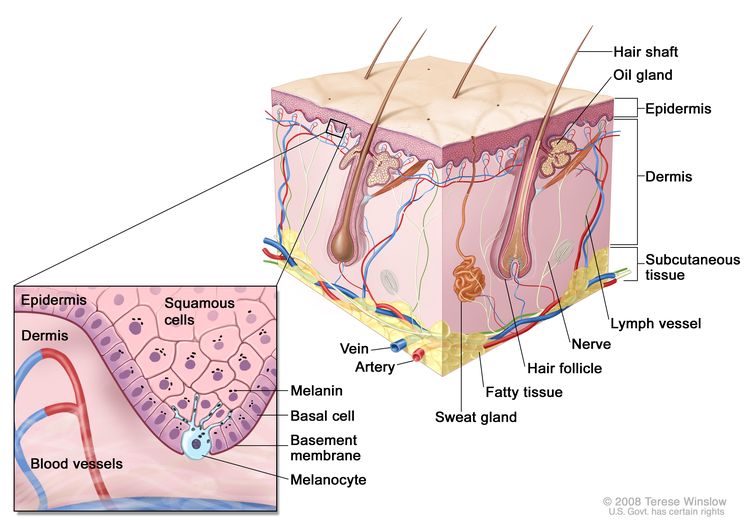
EnlargeSchematic representation of normal skin; drawing shows normal skin anatomy, including the epidermis, dermis, hair follicles, sweat glands, hair shafts, veins, arteries, fatty tissue, nerves, lymph vessels, oil glands, and subcutaneous tissue. The pullout shows a close-up of the squamous cell and basal cell layers of the epidermis, the basement membrane in between the epidermis and dermis, and the dermis with blood vessels. Melanin is shown in the cells. A melanocyte is shown in the layer of basal cells at the deepest part of the epidermis.
Figure 1. Schematic representation of normal skin. Melanocytes are also present in normal skin and serve as the source cell for melanoma. The relatively avascular epidermis houses both basal cell keratinocytes and squamous epithelial keratinocytes, the source cells for basal cell carcinoma and squamous cell carcinoma, respectively. The separation between epidermis and dermis occurs at the basement membrane zone, located just inferior to the basal cell keratinocytes.

Screening

For more information, visit Skin Cancer Screening.

Clinical Features

Melanoma occurs predominantly in adults, and more than 50% of the cases arise in apparently normal areas of the skin. Melanoma can occur anywhere, including on mucosal surfaces and the uvea. However, in women it occurs more commonly on the extremities, and in men it occurs most commonly on the trunk or head and neck.[4]

Early signs in a nevus that would suggest a malignant change include:

  • Darker or variable discoloration.
  • Itching.
  • An increase in size or the development of satellite lesions.
  • Ulceration or bleeding (later signs).

A common acronym used by medical professionals and the lay public to identify the suspicious features of pigmented lesions that may reflect malignant change is ABCDE:[5]

  • Asymmetry of the lesion.
  • Border irregularity.
  • Color variation.
  • Diameter >6 mm.
  • Evolution or change in the lesion.
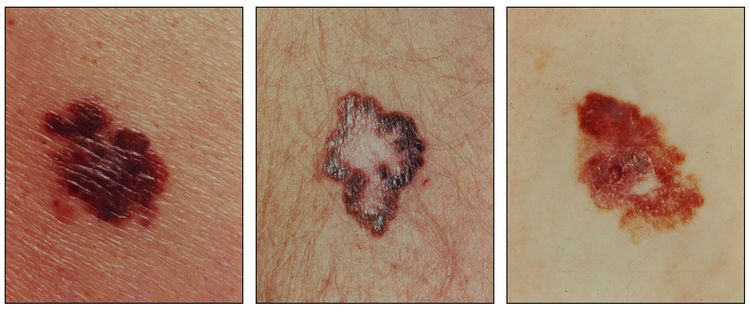
EnlargePhotographs showing a large, asymmetrical, red and brown lesion on the skin (panel 1); a brown lesion with a large and irregular border on the skin (panel 2); and a large, asymmetrical, scaly, red and brown lesion on the skin (panel 3).
Figure 2. Melanomas with characteristic asymmetry, border irregularity, color variation, and large diameter.

Diagnosis

A biopsy, preferably by local excision, should be performed for any suspicious lesions. Suspicious lesions should never be shaved off or cauterized. An experienced pathologist should examine the specimens to allow for microstaging.

Studies show that distinguishing between benign pigmented lesions and early melanomas can be difficult, and even experienced dermatopathologists can have differing opinions. To reduce the possibility of misdiagnosis for an individual patient, a second review by an independent qualified pathologist should be considered.[6,7] Agreement between pathologists in the histological diagnosis of melanomas and benign pigmented lesions has been found to be considerably variable.[6,7]

Evidence (discordance in histological evaluation):

  1. One study found that there was discordance in the diagnosis of melanoma versus benign lesions in 37 of 140 cases examined by a panel of experienced dermatopathologists. For the histological classification of cutaneous melanoma, the highest concordance was attained for Breslow thickness and presence of ulceration, while the agreement was poor for other histological features such as Clark level of invasion, presence of regression, and lymphocytic infiltration.[6]
  2. In another study, 38% of cases examined by a panel of expert pathologists had two or more discordant interpretations.[7]

Prognostic Factors

Prognosis is affected by the characteristics of primary and metastatic tumors. The most important prognostic factors have been incorporated into the 2017 eighth edition of the American Joint Committee on Cancer (AJCC) staging manual and include:[4,810]

  • Thickness and/or level of invasion of the melanoma.
  • Ulceration or bleeding at the primary site.
  • Number of regional lymph nodes involved, with distinction of clinically occult and clinically apparent.
  • Presence of non-nodal regional disease, including microsatellites, satellites, and in-transit cutaneous or subcutaneous metastases.
  • Systemic metastasis.
    • Site—nonvisceral versus lung versus all other visceral sites versus central nervous system.
    • Elevated serum lactate dehydrogenase level.

Patients who are younger, female, and who have melanomas on their extremities generally have better prognoses.[4,8,9,11]

The risk of relapse decreases substantially over time, although late relapses do occur.[1215] Long-term follow-up is important for detection of recurrence, managing long-term effects, and surveillance of new lesions.

Related Subtypes

Mucosal melanoma arises from melanocytes within the mucosal lining of the respiratory, gastrointestinal, or genitourinary tracts. This is a rare subgroup, representing only 1.4% of melanomas.[16] The etiology of mucosal melanomas remains unclear, but whole-genome sequencing reveals mutational signatures unrelated to UV radiation, which is distinct from cutaneous melanomas.[17] Diagnosis is often delayed due to the location of these lesions, a lack of symptoms, and potential amelanotic appearance.[18] There is no clear consensus on staging definitions for mucosal melanoma, and the AJCC eighth edition TNM (tumor, node, metastasis) staging is only used for head and neck mucosal melanomas.[10] The overall prognosis is poor and varies by location.

References
  1. American Cancer Society: Cancer Facts and Figures 2025. American Cancer Society, 2025. Available online. Last accessed January 16, 2025.
  2. Melanoma. Bethesda, Md: National Library of Medicine, 2012. Available online. Last accessed May 1, 2025.
  3. Bleyer A, O’Leary M, Barr R, et al., eds.: Cancer Epidemiology in Older Adolescents and Young Adults 15 to 29 Years of Age, Including SEER Incidence and Survival: 1975-2000. National Cancer Institute, 2006. NIH Pub. No. 06-5767. Available online. Last accessed May 1, 2025.
  4. Slingluff CI Jr, Flaherty K, Rosenberg SA, et al.: Cutaneous melanoma. In: DeVita VT Jr, Lawrence TS, Rosenberg SA: Cancer: Principles and Practice of Oncology. 9th ed. Lippincott Williams & Wilkins, 2011, pp 1643-91.
  5. Abbasi NR, Shaw HM, Rigel DS, et al.: Early diagnosis of cutaneous melanoma: revisiting the ABCD criteria. JAMA 292 (22): 2771-6, 2004. [PUBMED Abstract]
  6. Corona R, Mele A, Amini M, et al.: Interobserver variability on the histopathologic diagnosis of cutaneous melanoma and other pigmented skin lesions. J Clin Oncol 14 (4): 1218-23, 1996. [PUBMED Abstract]
  7. Farmer ER, Gonin R, Hanna MP: Discordance in the histopathologic diagnosis of melanoma and melanocytic nevi between expert pathologists. Hum Pathol 27 (6): 528-31, 1996. [PUBMED Abstract]
  8. Balch CM, Soong S, Ross MI, et al.: Long-term results of a multi-institutional randomized trial comparing prognostic factors and surgical results for intermediate thickness melanomas (1.0 to 4.0 mm). Intergroup Melanoma Surgical Trial. Ann Surg Oncol 7 (2): 87-97, 2000. [PUBMED Abstract]
  9. Manola J, Atkins M, Ibrahim J, et al.: Prognostic factors in metastatic melanoma: a pooled analysis of Eastern Cooperative Oncology Group trials. J Clin Oncol 18 (22): 3782-93, 2000. [PUBMED Abstract]
  10. Melanoma of the Skin. In: Amin MB, Edge SB, Greene FL, et al., eds.: AJCC Cancer Staging Manual. 8th ed. Springer; 2017, pp. 563–85.
  11. Balch CM, Gershenwald JE, Soong SJ, et al.: Final version of 2009 AJCC melanoma staging and classification. J Clin Oncol 27 (36): 6199-206, 2009. [PUBMED Abstract]
  12. Shen P, Guenther JM, Wanek LA, et al.: Can elective lymph node dissection decrease the frequency and mortality rate of late melanoma recurrences? Ann Surg Oncol 7 (2): 114-9, 2000. [PUBMED Abstract]
  13. Tsao H, Cosimi AB, Sober AJ: Ultra-late recurrence (15 years or longer) of cutaneous melanoma. Cancer 79 (12): 2361-70, 1997. [PUBMED Abstract]
  14. Sarac E, Wilhelmi J, Thomas I, et al.: Late recurrence of melanoma after 10 years – Is the course of the disease different from early recurrences? J Eur Acad Dermatol Venereol 34 (5): 977-983, 2020. [PUBMED Abstract]
  15. Faries MB, Steen S, Ye X, et al.: Late recurrence in melanoma: clinical implications of lost dormancy. J Am Coll Surg 217 (1): 27-34; discussion 34-6, 2013. [PUBMED Abstract]
  16. McLaughlin CC, Wu XC, Jemal A, et al.: Incidence of noncutaneous melanomas in the U.S. Cancer 103 (5): 1000-7, 2005. [PUBMED Abstract]
  17. Hayward NK, Wilmott JS, Waddell N, et al.: Whole-genome landscapes of major melanoma subtypes. Nature 545 (7653): 175-180, 2017. [PUBMED Abstract]
  18. Thomas NE, Kricker A, Waxweiler WT, et al.: Comparison of clinicopathologic features and survival of histopathologically amelanotic and pigmented melanomas: a population-based study. JAMA Dermatol 150 (12): 1306-314, 2014. [PUBMED Abstract]

Cellular and Molecular Classification of Melanoma

The descriptive terms for clinicopathological cellular subtypes of malignant melanoma are of historical interest only; they do not have independent prognostic or therapeutic significance. These cellular subtypes include:

  • Superficial spreading.
  • Nodular.
  • Lentigo maligna.
  • Acral lentiginous (palmar/plantar and subungual).
  • Miscellaneous unusual types:
    • Mucosal lentiginous (oral and genital).
    • Desmoplastic.
    • Verrucous.

Genomic Classification

Cutaneous melanoma

The Cancer Genome Atlas (TCGA) Network performed an integrative multiplatform characterization of 333 cutaneous melanomas from 331 patients.[1] Using six types of molecular analysis at the DNA, RNA, and protein levels, the researchers identified four major genomic subtypes:

  • BRAF-altered.
  • RAS-altered.
  • NF1-altered.
  • Triple wild-type.

Genomic subtypes may suggest drug targets and clinical trial design, as well as guide clinical decision-making for targeted therapies. For more information, visit Table 1.

Targeted therapies have demonstrated efficacy and received U.S. Food and Drug Administration approval for the BRAF-altered subtype of melanoma. Combination therapies with a BRAF plus a MEK inhibitor have shown improvement in outcomes over a single-agent inhibitor alone. However, virtually all patients acquire resistance to this therapy and experience disease relapse. Therefore, clinical trials remain an important option for patients with melanoma and a BRAF pathogenic variant and other genomic subtypes of melanoma. For more information, visit the individual treatment sections.

A variety of immunotherapies have been approved for the treatment of melanoma regardless of genetic subtype. The benefit of immunotherapy has not been associated with a specific pathogenic variant or molecular subtype. The TCGA analysis identified immune markers (in a subset within each molecular subtype) that were associated with improved survival and that may have implications for immunotherapy. Identification of predictive biomarkers remains an active area of research. For more information, visit the individual treatment sections.

Table 1. Multiplatform Analysis: Pathogenic Variant, Copy Number, Whole Genome, miRNA/RNA Expression, Protein Expression in Cutaneous Melanomaa
Genomic Subtype % Samples With Pathogenic Variant Increased Lymphocytic Infiltration (%) Clinical Management Implications for Targeted Therapyb,c
FDA = U.S. Food and Drug Administration; WT = wild-type.
aPrimary melanoma with matched normal samples; N = 67 (20%). Metastatic melanoma with matched normal samples; N = 266 (80%). Matched is defined as sample from the same patient.
bThe indications for immunotherapy are not known to be determined or limited by genomic subtype.
cRisks and benefits of single versus combination therapies are detailed in the Treatment Option Overview for Melanoma section of this summary.
dResearch includes but is not limited to these examples. Clinical trials are posted on clinicaltrials.gov.
eIndicated when variant is diagnosed by an FDA-approved assay.
fTriple WT was defined as a heterogeneous subgroup lacking BRAF, NRAS, HRAS, and KRAS, and NF1 pathogenic variants.
      FDA Approved Researchd (single agent or in combination)
BRAF-altered 52 ~ 30 BRAF inhibitorse CDK inhibitors, PI3K/Akt/mTOR inhibitors, ERK inhibitors, IDH1 inhibitors, EZH2 inhibitors, Aurora kinase inhibitors, ARID2 chromatin remodelers
      – Vemurafenib
–Dabrafenib
–Encorafenib
MEK inhibitors
–Trametinib
–Cobimetinib
–Binimetinib
Combination of BRAF + MEK inhibitors
–Vemurafenib + cobimetinib
–Dabrafenib + trametinib
–Encorafenib + binimetinib
RAS-altered (NRAS, HRAS, and KRAS ) 28 ~ 25   MEK inhibitors, CDK inhibitors, PI3K/Akt/mTOR inhibitors, ERK inhibitors, IDH1 inhibitors, EZH2 inhibitors, Aurora kinase inhibitors, ARID2 chromatin remodelers
NF1-altered 14 ~ 25   PI3K/Akt/mTOR inhibitors, ERK inhibitors, IDH1 inhibitors, EZH2 inhibitors, ARID2 chromatin remodelers
Triple WTf 14.5 ~ 40   KIT-altered/amplified CDK inhibitors (i.e., imatinib and dasatinib), MDM2/p53 interaction inhibitors, PI3K/Akt/mTOR inhibitors, IDH1 inhibitors, EZH2 inhibitors

Uveal melanoma

Uveal melanomas differ significantly from cutaneous melanomas. ln one series, 83% of 186 uveal melanomas were found to have a constitutively active somatic pathogenic variant in GNAQ or GNA11.[2,3] For more information, visit Intraocular (Uveal) Melanoma Treatment.

References
  1. Cancer Genome Atlas Network: Genomic Classification of Cutaneous Melanoma. Cell 161 (7): 1681-96, 2015. [PUBMED Abstract]
  2. Van Raamsdonk CD, Bezrookove V, Green G, et al.: Frequent somatic mutations of GNAQ in uveal melanoma and blue naevi. Nature 457 (7229): 599-602, 2009. [PUBMED Abstract]
  3. Van Raamsdonk CD, Griewank KG, Crosby MB, et al.: Mutations in GNA11 in uveal melanoma. N Engl J Med 363 (23): 2191-9, 2010. [PUBMED Abstract]

Stage Information for Melanoma

Clinical staging is based on the thickness and ulceration status of the primary tumor, and whether the tumor has spread to regional lymph nodes or distant sites. For melanoma that is clinically confined to the primary site, the chance of lymph node or systemic metastases increases as the thickness and depth of local invasion increases, which worsens the prognosis. Melanoma can spread by local extension (through lymphatics) and/or by hematogenous routes to distant sites. Any organ may be involved by metastases, but the lungs and liver are common sites.

The microstage of malignant melanoma is determined on histological examination by the vertical thickness of the lesion in millimeters (Breslow classification) and/or the anatomical level of local invasion (Clark classification). The Breslow thickness is more reproducible and more accurately predicts subsequent behavior of malignant melanoma in lesions thicker than 1.5 mm and should always be reported.

Accurate microstaging of the primary tumor requires careful histological evaluation of the entire specimen by an experienced pathologist.

Clark Classification (Level of Invasion)

Table 2. Clark Classification (Level of Invasion)
Level of Invasion Description
Level I Lesions involving only the epidermis (in situ melanoma); not an invasive lesion.
Level II Invasion of the papillary dermis; does not reach the papillary-reticular dermal interface.
Level III Invasion fills and expands the papillary dermis but does not penetrate the reticular dermis.
Level IV Invasion into the reticular dermis but not into the subcutaneous tissue.
Level V Invasion through the reticular dermis into the subcutaneous tissue.

AJCC Stage Groupings and TNM Definitions

The American Joint Committee on Cancer (AJCC) has designated staging by TNM (tumor, node, metastasis) classification to define melanoma.[1]

Cancers staged using this staging system include cutaneous melanoma. Cancers not staged using this system include melanoma of the conjunctiva; melanoma of the uvea; mucosal melanoma arising in the head and neck; mucosal melanoma of the urethra, vagina, rectum, and anus; Merkel cell carcinoma; and squamous cell carcinoma.[1]

AJCC Prognostic Stage Groups-Clinical (cTNM)

Table 3. Definition of cTNM Stage 0a
Stage TNM T Category (Thickness/Ulceration Status) N Category (No. of Tumor-Involved Regional Lymph Nodes/Presence of In-Transit, Satellite, and/or Microsatellite Metastases) M Category (Anatomic Site/LDH Level)
T = primary tumor; N = regional lymph node; M = distant metastasis; c = clinical; LDH = lactate dehydrogenase; No. = number.
aAdapted from AJCC: Melanoma of the Skin. In: Amin MB, Edge SB, Greene FL, et al., eds.: AJCC Cancer Staging Manual. 8th ed. New York, NY: Springer, 2017, pp. 563–85.
bThickness and ulceration status not applicable.
0 Tis, N0, M0 Tis = Melanoma in situ.b N0 = No regional metastases detected. M0 = No evidence of distant metastasis.
Table 4. Definition of cTNM Stages IA and IBa
Stage TNM T Category (Thickness/Ulceration Status) N Category (No. of Tumor-Involved Regional Lymph Nodes/Presence of In-Transit, Satellite, and/or Microsatellite Metastases) M Category (Anatomic Site/LDH Level)
T = primary tumor; N = regional lymph node; M = distant metastasis; c = clinical; LDH = lactate dehydrogenase; No. = number.
aAdapted from AJCC: Melanoma of the Skin. In: Amin MB, Edge SB, Greene FL, et al., eds.: AJCC Cancer Staging Manual. 8th ed. New York, NY: Springer, 2017, pp. 563–85.
IA T1a, N0, M0 T1a = <0.8 mm/without ulceration. N0 = No regional metastases detected. M0 = No evidence of distant metastasis.
IB T1b, N0, M0 T1b = <0.8 mm with ulceration; 0.8–1.0 mm with or without ulceration. N0 = No regional metastases detected. M0 = No evidence of distant metastasis.
T2a, N0, M0 T2a = >1.0–2.0 mm/without ulceration. N0 = No regional metastases detected. M0 = No evidence of distant metastasis.
Table 5. Definition of cTNM Stages IIA, IIB, and IICa
Stage TNM T Category (Thickness/Ulceration Status) N Category (No. of Tumor-Involved Regional Lymph Nodes/Presence of In-Transit, Satellite, and/or Microsatellite Metastases) M Category (Anatomic Site/LDH Level)
T = primary tumor; N = regional lymph node; M = distant metastasis; c = clinical; LDH = lactate dehydrogenase; No. = number.
aAdapted from AJCC: Melanoma of the Skin. In: Amin MB, Edge SB, Greene FL, et al., eds.: AJCC Cancer Staging Manual. 8th ed. New York, NY: Springer, 2017, pp. 563–85.
IIA T2b, N0, M0 T2b = >1.0–2.0 mm/with ulceration. N0 = No regional metastases detected. M0 = No evidence of distant metastasis.
T3a, N0, M0 T3a = >2.0–4.0 mm/without ulceration. N0 = No regional metastases detected. M0 = No evidence of distant metastasis.
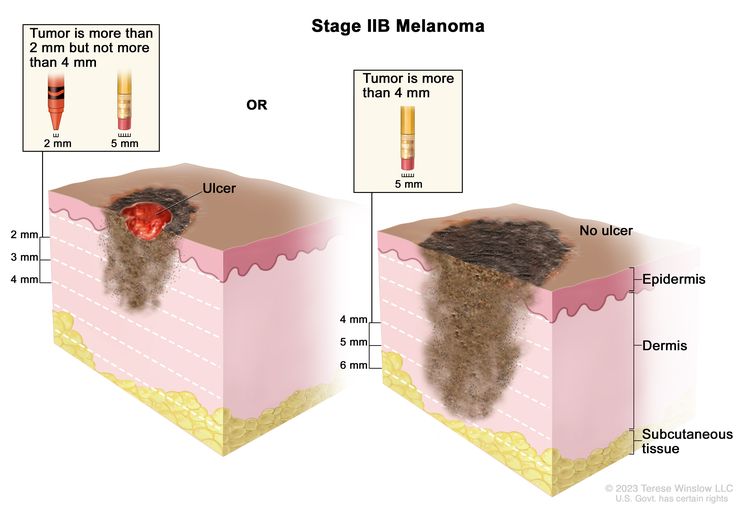
IIB T3b, N0, M0 T3b = >2.0–4.0 mm/with ulceration. N0 = No regional metastases detected. M0 = No evidence of distant metastasis.
T4a, N0, M0 T4a = >4.0 mm/without ulceration. N0 = No regional metastases detected. M0 = No evidence of distant metastasis.
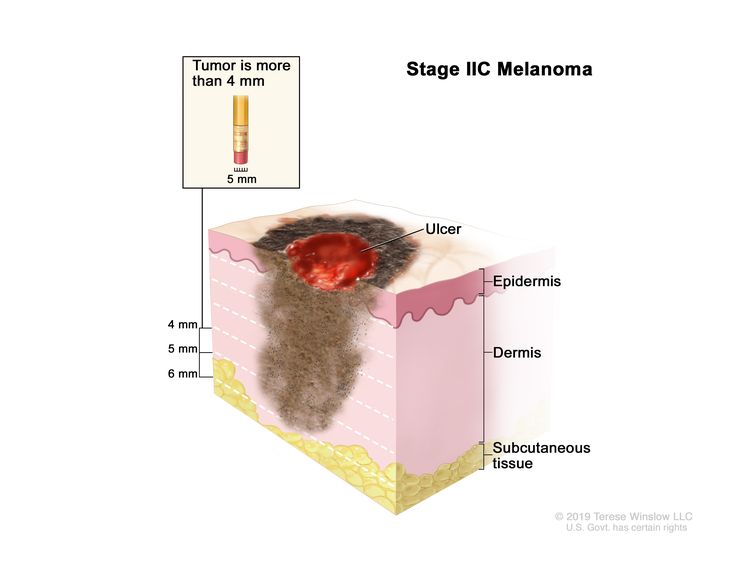
IIC T4b, N0, M0 T4b = >4.0 mm/with ulceration. N0 = No regional metastases detected. M0 = No evidence of distant metastasis.
Table 6. Definition of cTNM Stage IIIa
Stage TNM T Category (Thickness/Ulceration Status) N Category (No. of Tumor-Involved Regional Lymph Nodes/Presence of In-Transit, Satellite, and/or Microsatellite Metastases) M Category (Anatomic Site/LDH)
T = primary tumor; N = regional lymph node; M = distant metastasis; c = clinical; LDH = lactate dehydrogenase; No. = number.
aAdapted from AJCC: Melanoma of the Skin. In: Amin MB, Edge SB, Greene FL, et al., eds.: AJCC Cancer Staging Manual. 8th ed. New York, NY: Springer, 2017, pp. 563–85.
bFor example, diagnosis by curettage.
cFor example, unknown primary or completely regressed melanoma.
dThickness and ulceration status not applicable.
eDetected by sentinel lymph node biopsy.
III Any T, Tis, ≥N1, M0 TX = Primary tumor cannot be assessed.b,d N1a = One clinically occult nodee /in-transit, satellite, and/or microsatellite metastases not present. M0 = No evidence of distant metastasis.
T0 = No evidence of primary tumor.c,d
Tis = Melanoma in situ.d N1b = One clinically detected node/in-transit, satellite, and/or microsatellite metastases not present.
T1a = <0.8 mm/without ulceration. N1c = No regional lymph node disease/in-transit, satellite, and/or microsatellite metastases present.
T1b = <0.8 mm with ulceration; 0.8–1.0 mm with or without ulceration. N2a = Two or three clinically occult nodese/in-transit, satellite, and/or microsatellite metastases not present.
T2a = >1.0–2.0 mm/without ulceration. N2b = Two or three nodes at least one of which was clinically detected/in-transit, satellite, and or microsatellite metastases not present.
T2b = >1.0–2.0 mm/with ulceration. N2c = One clinically occult or clinically detected node/in-transit, satellite, and/or microsatellite metastases present.
T3a = >2.0–4.0 mm/without ulceration. N3a = Four or more clinically occult nodese/in-transit, satellite, and/or microsatellite metastases not present.
T3b = >2.0–4.0 mm/with ulceration. N3b = Four or more nodes, at least one of which was clinically detected, or presence of any number of matted nodes/in-transit, satellite, and/or microsatellite metastases not present.
T4a = >4.0 mm/without ulceration. N3c = Two or more clinically occult or clinically detected nodes and/or presence of any number of matted nodes/in-transit, satellite, and/or microsatellite metastases present.
T4b = >4.0 mm/with ulceration.
Table 7. Definition of cTNM Stage IVa
Stage TNM T Category (Thickness/Ulceration Status) N Category (No. of Tumor-Involved Regional Lymph Nodes/Presence of In-Transit, Satellite, and/or Microsatellite Metastases) M Category (Anatomic Site/LDH Level)
T = primary tumor; N = regional lymph node; M = distant metastasis; c = clinical; CNS = central nervous system; LDH = lactate dehydrogenase; No. = number.
aAdapted from AJCC: Melanoma of the Skin. In: Amin MB, Edge SB, Greene FL, et al., eds.: AJCC Cancer Staging Manual. 8th ed. New York, NY: Springer, 2017, pp. 563–85.
bFor example, sentinel lymph node biopsy not performed, regional nodes previously removed for another reason. (Exception: pathological N category is not required for T1 melanomas, use cN).
IV Any T, Any N, M1 Any T = Visit Table 6 for description. NX = Regional nodes not assessed;b N0 = No regional metastases; ≥N1 = Visit Table 6 for description. M1 = Evidence of distant metastasis.
–M1a = Distant metastasis to skin, soft tissue including muscle, and/or nonregional lymph nodes [M1a(0) = LDH not elevated; M1a(1) = LDH elevated].
–M1b = Distant metastasis to lung with or without M1a sites of disease [M1b(0) = LDH not elevated; M1b(1) = LDH elevated].
–M1c = Distant metastasis to non-CNS visceral sites with or without M1a or M1b sites of disease [M1c(0) = LDH not elevated; OR M1c(1) = LDH elevated].
–M1d = Distant metastasis to CNS with or without M1a, M1b, or M1c sites of disease [M1d(0) = LDH not elevated; M1d(1) = LDH elevated].

AJCC Prognostic Stage Groups-Pathological (pTNM)

Table 8. Definition of pTNM Stage 0a,b
Stage TNM T Category (Thickness/Ulceration Status) N Category (No. of Tumor-Involved Regional Lymph Nodes/Presence of In-Transit, Satellite, and/or Microsatellite Metastases) M Category (Anatomic Site/LDH Level) Illustration
T = primary tumor; N = regional lymph node; M = distant metastasis; cN = clinical N; LDH = lactate dehydrogenase; No. = number; p = pathological.
aAdapted from AJCC: Melanoma of the Skin. In: Amin MB, Edge SB, Greene FL, et al., eds.: AJCC Cancer Staging Manual. 8th ed. New York, NY: Springer, 2017, pp. 563–85.
bPathological stage 0 (melanoma in situ) and T1 do not require pathological evaluation of lymph nodes to complete pathological staging; use cN information to assign their pathological stage.
cThickness and ulceration status not applicable.
0 Tis, N0, M0 Tis = Melanoma in situ.b,c N0 = No regional metastases detected. M0 = No evidence of distant metastasis.
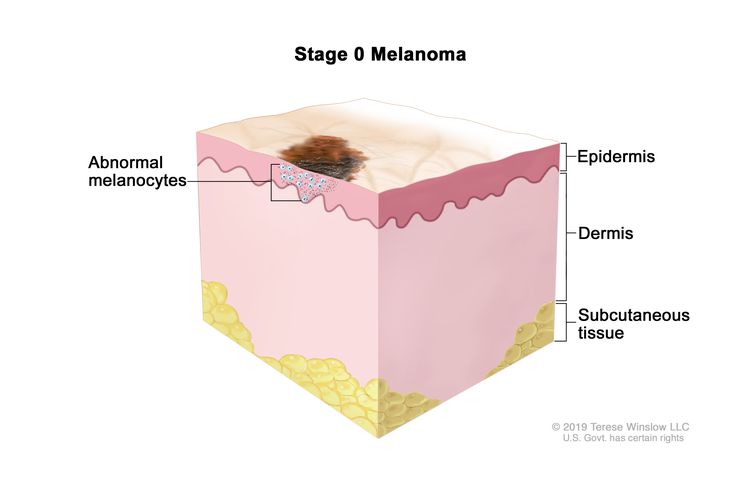
EnlargeStage 0 melanoma; drawing shows an abnormal area on the surface of the skin and abnormal melanocytes in the epidermis (outer layer of the skin). Also shown are the dermis (inner layer of the skin) and the subcutaneous tissue below the dermis.
Table 9. Definition of pTNM Stages IA and IBa,b
Stage TNM T Category (Thickness/Ulceration Status) N Category (No. of Tumor-Involved Regional Lymph Nodes/Presence of In-Transit, Satellite, and/or Microsatellite Metastases) M Category (Anatomic Site/LDH Level) Illustration
T = primary tumor; N = regional lymph node; M = distant metastasis; cN = clinical N; LDH = lactate dehydrogenase; No. = number; p = pathological.
aAdapted from AJCC: Melanoma of the Skin. In: Amin MB, Edge SB, Greene FL, et al., eds.: AJCC Cancer Staging Manual. 8th ed. New York, NY: Springer, 2017, pp. 563–85.
bPathological stage 0 (melanoma in situ) and T1 do not require pathological evaluation of lymph nodes to complete pathological staging; use cN information to assign their pathological stage.
IA T1a, N0, M0 T1a = <0.8 mm/without ulceration. N0 = No regional metastases detected. M0 = No evidence of distant metastasis.
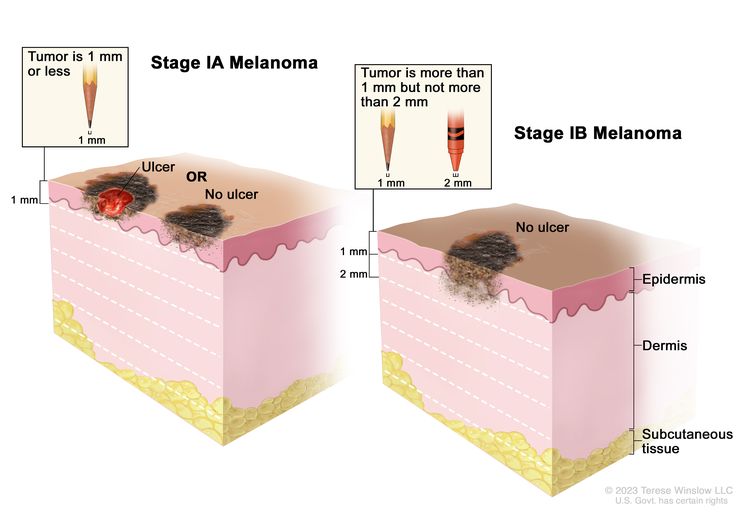
EnlargeTwo-panel drawing of stage I melanoma; the panel on the left shows a stage IA tumor that is not more than 1 millimeter thick, with ulceration (a break in the skin) and without ulceration. The panel on the right shows a stage IB tumor that is more than 1 but not more than 2 millimeters thick, without ulceration. Also shown are the epidermis (outer layer of the skin), the dermis (inner layer of the skin), and the subcutaneous tissue below the dermis.
T1b, N0, M0 T1b = <0.8 mm with ulceration; 0.8–1.0 mm with or without ulceration.
IB T2a, N0, M0 T2a = >1.0–2.0 mm/without ulceration. N0 = No regional metastases detected. M0 = No evidence of distant metastasis.
Table 10. Definition of pTNM Stages IIA, IIB, and IICa
Stage TNM T Category (Thickness/Ulceration Status) N Category (No. of Tumor-Involved Regional Lymph Nodes/Presence of In-Transit, Satellite, and/or Microsatellite Metastases) M Category (Anatomic Site/LDH Level) Illustration
T = primary tumor; N = regional lymph node; M = distant metastasis; LDH = lactate dehydrogenase; No. = number; p = pathological.
aAdapted from AJCC: Melanoma of the Skin. In: Amin MB, Edge SB, Greene FL, et al., eds.: AJCC Cancer Staging Manual. 8th ed. New York, NY: Springer, 2017, pp. 563–85.
IIA T2b, N0, M0 T2b = >1.0–2.0 mm/with ulceration. N0 = No regional metastases detected. M0 = No evidence of distant metastasis.
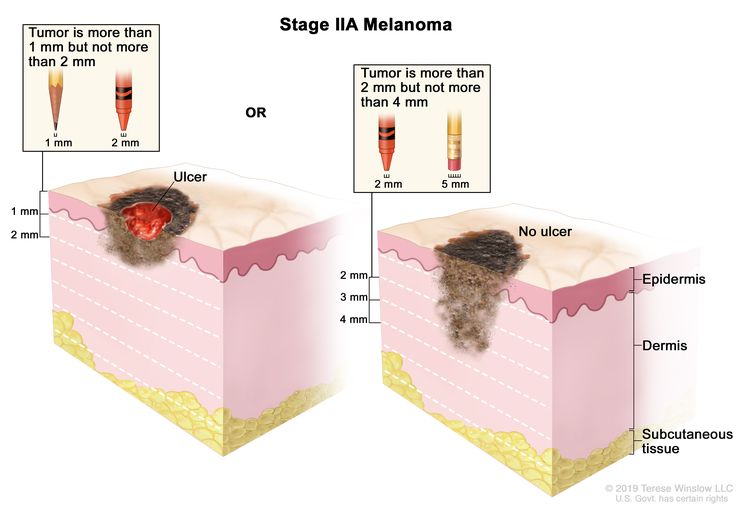
EnlargeTwo-panel drawing of stage IIA melanoma; the panel on the left shows a tumor that is more than 1 but not more than 2 millimeters thick, with ulceration (a break in the skin). The panel on the right shows a tumor that is more than 2 but not more than 4 millimeters thick, without ulceration. Also shown are the epidermis (outer layer of the skin), the dermis (inner layer of the skin), and the subcutaneous tissue below the dermis.
T3a, N0, M0 T3a = >2.0–4.0 mm/without ulceration.
IIB T3b, N0, M0 T3b = >2.0–4.0 mm/with ulceration. N0 = No regional metastases detected. M0 = No evidence of distant metastasis.
EnlargeTwo-panel drawing of stage IIB melanoma; the panel on the left shows a tumor that is more than 2 but not more than 4 millimeters thick, with ulceration (a break in the skin). There is also an inset that shows 2 millimeters is about the size of a new crayon point and 5 millimeters is about the size of a pencil-top eraser. The panel on the right shows a tumor that is more than 4 millimeters thick, without ulceration. There is also an inset that shows 5 millimeters is about the size of a pencil-top eraser. Also shown are the epidermis (outer layer of the skin), the dermis (inner layer of the skin), and the subcutaneous tissue below the dermis.
T4a, N0, M0 T4a = >4.0 mm/without ulceration.
IIC T4b, N0, M0 T4b = >4.0 mm/with ulceration. N0 = No regional metastases detected. M0 = No evidence of distant metastasis.
EnlargeStage IIC melanoma; drawing shows a tumor that is more than 4 millimeters thick, with ulceration (a break in the skin). Also shown are the epidermis (outer layer of the skin), the dermis (inner layer of the skin), and the subcutaneous tissue below the dermis.
Table 11. Definition of pTNM Stages IIIA, IIIB, IIIC, and IIIDa
Stage TNM T Category (Thickness/Ulceration Status) N Category (No. of Tumor-Involved Regional Lymph Nodes/Presence of In-Transit, Satellite, and/or Microsatellite Metastases) M Category (Anatomic Site/LDH Level)
T = primary tumor; N = regional lymph node; M = distant metastasis; LDH = lactate dehydrogenase; No. = number; p = pathological.
aAdapted from AJCC: Melanoma of the Skin. In: Amin MB, Edge SB, Greene FL, et al., eds.: AJCC Cancer Staging Manual. 8th ed. New York, NY: Springer, 2017, pp. 563–85.
bDetected by sentinel lymph node biopsy.
cFor example, unknown primary or completely regressed melanoma.
dThickness and ulceration status not applicable.
IIIA T1a/b–T2a, N1a or N2a, M0 T1a = <0.8 mm/without ulceration/T1b = <0.8 mm with ulceration; 0.8–1.0 mm with or without ulceration. N1a = One clinically occult nodeb/in-transit, satellite, and/or microsatellite metastases not present; OR N2a = Two or three clinically occult nodesb/in-transit, satellite, and/or microsatellite metastases not present. M0 = No evidence of distant metastasis.
T2a = >1.0–2.0 mm/without ulceration.
IIIB T0, N1b, N1c, M0 T0 = No evidence of primary tumor.c,d N1b = One clinically detected node/in-transit, satellite, and/or microsatellite metastases not present. M0 = No evidence of distant metastasis.
N1c = No regional lymph node disease/in-transit, satellite, and/or microsatellite metastases present.
T1a/b–T2a, N1b/c or N2b, M0 T1a = <0.8 mm/without ulceration/T1b <0.8 mm with ulceration; 0.8–1.0 mm with or without ulceration. N1b = One clinically detected node/in-transit, satellite, and/or microsatellite metastases not present;/N1c = No regional lymph node disease/in-transit, satellite, and/or microsatellite metastases present; OR M0 = No evidence of distant metastasis.
T2a = >1.0–2.0 mm/without ulceration.
N2b = Two or three nodes at least one of which was clinically detected/in-transit, satellite, and or microsatellite metastases not present.
T2b/T3a, N1a–N2b, M0 T2b = >1.0–2.0 mm/with ulceration/T3a = >2.0–4.0 mm/without ulceration. N1a = One clinically occult nodeb/in-transit, satellite, and/or microsatellite metastases not present. M0 = No evidence of distant metastasis.
N1b = One clinically detected node/in-transit, satellite, and/or microsatellite metastases not present.
N1c = No regional lymph node disease/in-transit, satellite, and/or microsatellite metastases present.
N2a = Two or three clinically occult nodesb/in-transit, satellite, and/or microsatellite metastases not present.
N2b = Two or three nodes, at least one of which was clinically detected/in-transit, satellite, and/or microsatellite metastases not present.
IIIC T0, N2b, N2c, N3b, or N3c, M0 T0 = No evidence of primary tumor.c,d N2b = Two or three nodes, at least one of which was clinically detected/in-transit, satellite, and/or microsatellite metastases not present. M0 = No evidence of distant metastasis.
N2c = One clinically occult or clinically detected node/in-transit, satellite, and/or microsatellite metastases present.
N3b = Four or more nodes, at least one of which was clinically detected, or presence of any number of matted nodes/in-transit, satellite, and/or microsatellite metastases not present; OR
N3c = Two or more clinically occult or clinically detected nodes and/or presence of any number of matted nodes/in-transit, satellite, and/or microsatellite metastases present.
T1a–T3a, N2c or N3a/b/c, M0 T1a = <0.8 mm/without ulceration/T1b = <0.8 mm with ulceration; 0.8–1.0 mm with or without ulceration. N2c = One clinically occult or clinically detected node/in-transit, satellite, and/or microsatellite metastases present; OR M0 = No evidence of distant metastasis.
T2a = >1.0–2.0 mm/without ulceration.
T2b = >1.0–2.0 mm/with ulceration.
N3a = Four or more clinically occult nodesb/in-transit, satellite, and/or microsatellite metastases not present.
N3b = Four or more nodes, at least one of which was clinically detected, or presence of any number of matted nodes/in-transit, satellite, and/or microsatellite metastases not present.
T3a = >2.0–4.0 mm/without ulceration. N3c = Two or more clinically occult or clinically detected nodes and/or presence of any number of matted nodes/in-transit, satellite, and/or microsatellite metastases present.
T3b/T4a, Any N ≥N1, M0 T3b = >2.0–4.0 mm/with ulceration/T4a = >4.0 mm/without ulceration. N1a = One clinically occult nodeb/in-transit, satellite, and/or microsatellite metastases not present. M0 = No evidence of distant metastasis.
N1b = One clinically detected node/in-transit, satellite, and/or microsatellite metastases not present.
N1c = No regional lymph node disease/in-transit, satellite, and/or microsatellite metastases present.
N2a = Two or three clinically occult nodesb/in-transit, satellite, and/or microsatellite metastases not present.
N2b = Two or three nodes, at least one of which was clinically detected/in-transit, satellite, and/or microsatellite metastases not present.
N2c = One clinically occult or clinically detected node/in-transit, satellite, and/or microsatellite metastases present.
N3a = Four or more clinically occult nodesb/in-transit, satellite, and/or microsatellite metastases not present.
N3b = Four or more nodes, at least one of which was clinically detected, or presence of any number of matted nodes/in-transit, satellite, and/or microsatellite metastases not present.
N3c = Two or more clinically occult or clinically detected nodes and/or presence of any number of matted nodes/in-transit, satellite, and/or microsatellite metastases present.
T4b, N1a–N2c, M0 T4b = >4.0 mm/with ulceration. N1a = One clinically occult nodeb/in-transit, satellite, and/or microsatellite metastases not present. M0 = No evidence of distant metastasis.
N1b = One clinically detected node/in-transit, satellite, and/or microsatellite metastases not present.
N1c = No regional lymph node disease/in-transit, satellite, and/or microsatellite metastases present.
N2a = Two or three clinically occult nodesb/in-transit, satellite, and/or microsatellite metastases not present.
N2b = Two or three nodes, at least one of which was clinically detected/in-transit, satellite, and/or microsatellite metastases not present.
N2c = One clinically occult or clinically detected node/in-transit, satellite, and/or microsatellite metastases present.
IIID T4b, N3a/b/c, M0 T4b = >4.0 mm/with ulceration. N3a = Four or more clinically occult nodesb/in-transit, satellite, and/or microsatellite metastases not present. M0 = No evidence of distant metastasis.
N3b = Four or more nodes, at least one of which was clinically detected, or presence of any number of matted nodes/in-transit, satellite, and/or microsatellite metastases not present.
N3c = Two or more clinically occult or clinically detected nodes and/or presence of any number of matted nodes/in-transit, satellite, and/or microsatellite metastases present.
Table 12. Definition of pTNM Stage IVa
Stage TNM T Category (Thickness/Ulceration Status) N Category (No. of Tumor-Involved Regional Lymph Nodes/Presence of In-Transit, Satellite, and/or Microsatellite Metastases) M Category (Anatomic Site/LDH Level) Illustration
T = primary tumor; N = regional lymph node; M = distant metastasis; cN = clinical N; CNS = central nervous system; LDH = lactate dehydrogenase; No. = number; p = pathological.
aAdapted from AJCC: Melanoma of the Skin. In: Amin MB, Edge SB, Greene FL, et al., eds.: AJCC Cancer Staging Manual. 8th ed. New York, NY: Springer, 2017, pp. 563–85.
bFor example, sentinel lymph node biopsy not performed, regional nodes previously removed for another reason. (Exception: pathological N category is not required for T1 melanomas, use cN).
cPathological stage 0 (melanoma in situ) and T1 do not require pathological evaluation of lymph nodes to complete pathological staging; use cN information to assign their pathological stage.
dThickness and ulceration status not applicable.
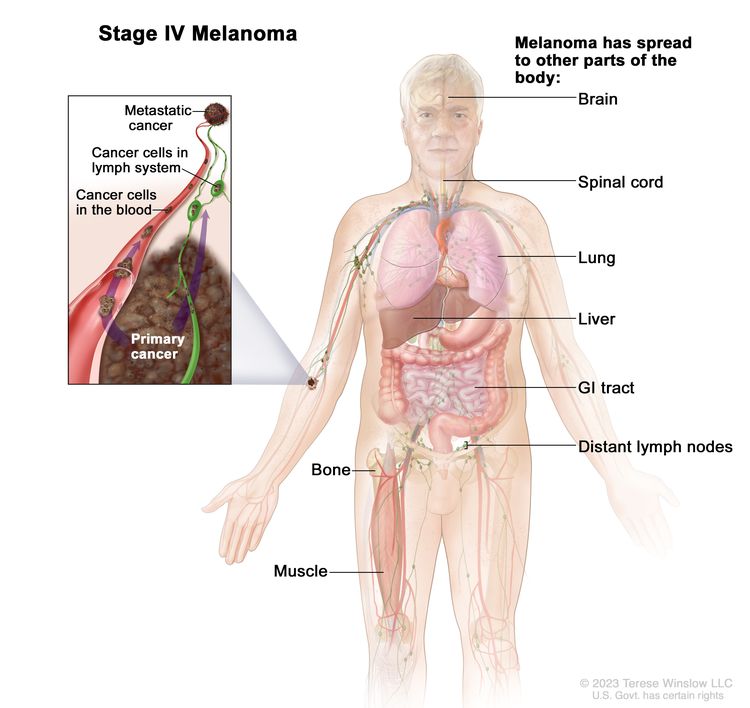
IV Any T, Tis, Any N, M1 Any T = Visit Table 6 for description. NX = Regional nodes not assessed;d N0 = No regional metastases; ≥N1 = Visit Table 6 for description. M1 = Evidence of distant metastasis.
EnlargeStage IV melanoma; drawing shows other parts of the body where melanoma may spread, including the brain, spinal cord, lung, liver, gastrointestinal (GI) tract, bone, muscle, and distant lymph nodes. An inset shows cancer cells spreading through the blood and lymph system to another part of the body where a metastatic tumor has formed.
Tis = Melanoma in situ.b,c –M1a = Distant metastasis to skin, soft tissue including muscle, and/or nonregional lymph nodes [M1a(0) = LDH not elevated; M1a(1) = LDH elevated].
–M1b = Distant metastasis to lung with or without M1a sites of disease [M1b(0) = LDH not elevated; M1b(1) = LDH elevated].
–M1c – Distant metastasis to non-CNS visceral sites with or without M1a or M1b sites of disease [M1c(0) = LDH not elevated; M1c(1) = LDH elevated].
–M1d = Distant metastasis to CNS with or without M1a, M1b, or M1c sites of disease [M1d(0) = LDH not elevated; M1d(1) = LDH elevated].
References
  1. Melanoma of the Skin. In: Amin MB, Edge SB, Greene FL, et al., eds.: AJCC Cancer Staging Manual. 8th ed. Springer; 2017, pp. 563–85.

Treatment Option Overview for Melanoma

Table 13. Treatment Options for Melanoma
Stage (TNM Staging Criteria) Treatment Optionsa
aClinical trials are an important option for patients with all stages of melanoma because advances in understanding the aberrant molecular and biological pathways have led to rapid drug development. Standard treatment options are available in many clinical trials. Information about ongoing clinical trials is available from the NCI website.
Stage 0 melanoma Excision
Stage IA melanoma Excision +/− sentinel lymph node biopsy
Stage IB melanoma Excision with lymph node management
Stage II melanoma Excision with lymph node management
Adjuvant therapy
Resectable Stage III melanoma Excision +/− lymph node management
Neoadjuvant therapy
Adjuvant therapy
Combination immunotherapies, including vaccines (under clinical evaluation)
Adjuvant therapies that target a known pathogenic variant, e.g., KIT (under clinical evaluation)
Intralesional therapies (under clinical evaluation)
Unresectable Stage III, Stage IV, and Recurrent melanoma Immunotherapy
Signal transduction inhibitors
Intralesional therapy
Adjunctive local/regional therapy including surgical resection
Palliative therapy
Targeted therapy with single agents or combination therapy (under clinical evaluation)
Combinations of immunotherapy and targeted therapy (under clinical evaluation)
Intralesional injections (e.g., oncolytic viruses) (under clinical evaluation)
Complete surgical resection of all known disease versus best medical therapy (under clinical evaluation)
Isolated limb perfusion for unresectable extremity melanoma (under clinical evaluation)
Systemic therapy for unresectable disease (under clinical evaluation)

Excision

Surgical excision remains the primary modality for treating localized melanoma. Cutaneous melanomas that have not spread beyond the initial site are highly curable. Localized melanoma is excised with margins proportional to the microstage of the primary lesion.

Standardizing treatment for mucosal melanoma is difficult due to the paucity of prospective data in this rare subgroup. Surgery remains the cornerstone of therapy. Local excision is performed when feasible, as radical resection has not conferred a survival advantage in retrospective studies.[13] Optimal excision margins have not been prospectively studied, but the ultimate goal is to obtain negative histological margins.[4]

Lymph node management

Sentinel lymph node biopsy (SLNB)

Lymphatic mapping and SLNB should be considered to assess the presence of occult metastasis in the regional lymph nodes of patients with primary tumors measuring at least 0.8 mm thick with clinically negative nodes. These procedures may identify individuals who can avoid regional lymph node dissection and individuals who may benefit from adjuvant therapy.[510]

Multiple studies have demonstrated the diagnostic accuracy of SLNB, with false-negative rates of 0% to 2%.[5,1015] To ensure accurate identification of the sentinel lymph node, lymphatic mapping and removal of the sentinel lymph node are ideally performed during the same operation as the wide excision of the primary melanoma.

If micrometastatic melanoma is detected, active surveillance with ultrasound of the draining nodal basin is an acceptable treatment recommendation that has widely replaced complete lymph node dissection (CLND). A complete regional lymphadenectomy can be considered in select populations.

For clinically node-negative patients, there is insufficient evidence to define the role of SLNB in sinonasal, anorectal, or vaginal melanoma. However, SLNB has shown feasibility and accuracy in vulvar melanoma.[16,17] Therapeutic dissection is indicated for clinically positive regional nodes in the absence of distant disease.

Complete lymph node dissection (CLND)

Patients can consider CLND for regional control if the sentinel node(s) is microscopically or macroscopically positive.

Adjuvant Therapy

Adjuvant therapy options for patients at high risk of recurrence after complete resection include checkpoint inhibitors and combination signal transduction inhibitor therapy. Ipilimumab was the first checkpoint inhibitor to be approved by the U.S. Food and Drug Administration (FDA) as adjuvant therapy. It has demonstrated improved overall survival (OS) when given at 10 mg/kg (ipi10), compared with placebo (EORTC 18071 [NCT00636168]).[18] However, ipi10 has significant toxicity at this dose. The North American Intergroup Trial E1609 (NCT01274338), designed with three treatment groups, compared ipi10 with ipilimumab at a lower dose of 3 mg/kg (ipi3) (approved for metastatic melanoma) and with high-dose interferon (HDI). Patients who received ipi3 had a significant improvement in OS compared with ipi10.[19] These data do not support HDI as an adjuvant treatment option for melanoma.

Large randomized trials with nivolumab and pembrolizumab and with combination signal transduction inhibitors (dabrafenib plus trametinib) have shown a clinically significant impact on relapse-free survival (RFS). CheckMate 238 (NCT02388906) compared nivolumab with ipi10 and found that nivolumab produced superior RFS and had a more tolerable safety profile.[20] Pembrolizumab produced superior RFS compared with placebo, with data on OS still maturing in the MK-3475-054/KEYNOTE-054 trial (NCT02362594).[21] Dabrafenib plus trametinib produced superior RFS compared with placebo, with data on OS still maturing in the COMBI-AD trial (NCT01682083).[22] Single-agent BRAF-inhibitor therapy with vemurafenib did not show improved RFS compared with placebo in the BRIM8 trial (NCT01667419).[23]

The benefit of immunotherapy with ipilimumab, nivolumab, and pembrolizumab has been seen regardless of programmed death-ligand 1 (PD-L1) expression or the presence of BRAF pathogenic variants. Combination signal transduction inhibitor therapy is an additional option for patients with BRAF variants.

Participation in clinical trials designed to identify treatments that will further extend RFS and OS with less toxicity and shorter treatment schedules is an important option for all patients.

Neoadjuvant Therapy

Neoadjuvant pembrolizumab can be considered for patients with high-risk node-positive disease or resectable metastatic disease based on the results of a phase II trial (SWOG S1801 [NCT03698019]). In the trial, patients who received 1 year of neoadjuvant and adjuvant pembrolizumab had improved event-free survival (EFS) compared with those who underwent primary resection and received adjuvant pembrolizumab.[24] A total of 313 patients with resectable macroscopic stage IIIB to stage IV melanoma were randomly assigned to receive either (1) three cycles of neoadjuvant pembrolizumab (200 mg intravenously [IV] every 3 weeks) followed by surgery and fifteen cycles of adjuvant pembrolizumab or (2) primary surgery followed by eighteen cycles of adjuvant pembrolizumab (200 mg IV every 3 weeks).

At a median follow-up of 15 months, the EFS rate was 72% in patients who received neoadjuvant immunotherapy and 49% in patients who received adjuvant therapy. Neoadjuvant pembrolizumab did not significantly increase toxicity in the perioperative period compared with adjuvant therapy. OS data are not available yet. The FDA has not approved this regimen, pending the completion of a randomized phase III trial.

Systematic Treatment for Unresectable Stage III, Stage IV, and Recurrent Disease

Treatment options for patients with metastatic melanoma have rapidly expanded over the last decade. Two approaches—checkpoint inhibition and targeting the mitogen-activated protein kinase pathway—have improved OS in randomized trials. Given the rapid development of new agents and combinations, patients may consider a clinical trial for initial treatment and at the time of any subsequent progression.

Immunotherapy

Checkpoint inhibitors

Pembrolizumab, nivolumab, ipilimumab, and relatlimab (in a fixed-dose formulation with nivolumab) are checkpoint inhibitors approved by the FDA. Each has demonstrated the ability to impact OS against different comparators in unresectable or advanced disease. Multiple phase III trials are in progress to determine the optimal sequencing of immunotherapies, immunotherapy with targeted therapy, and whether combinations of immunotherapies or immunotherapy plus targeted therapy are superior for increasing OS.

Interleukin-2 (IL-2)

The FDA approved IL-2 in 1998 because of durable complete response rates in a minority of patients (6%–7%) with previously treated metastatic melanoma in eight phase I and II studies. Phase III trials have not been conducted to compare high-dose IL-2 with other treatments or to determine the impact on OS.

Dual checkpoint inhibition

The combination of an anti–programmed death-1 (PD-1) antibody and an anti–cytotoxic T-lymphocyte antigen-4 (CTLA-4) antibody (nivolumab and ipilimumab) has prolonged progression-free survival (PFS) and OS compared with ipilimumab monotherapy. However, this combination is associated with significant toxicity.

Studies have demonstrated a PFS benefit for patients who receive the combination of nivolumab and the anti–lymphocyte-activation gene-3 (LAG-3) antibody relatlimab, compared with nivolumab monotherapy.[25] OS and response rate data are immature.

Signal transduction inhibitors

Studies indicate that both BRAF and MEK inhibitors can significantly impact the natural history of melanoma, although they do not appear to be curative as single agents. Three combination regimens of BRAF and MEK inhibitors have improved PFS and OS compared with BRAF inhibitor monotherapy.

BRAF inhibitors
Vemurafenib

Vemurafenib, approved by the FDA in 2011, has improved PFS and OS in patients with unresectable or advanced disease. Vemurafenib is an orally available, small-molecule, selective BRAF V600E kinase inhibitor, and its indication is limited to patients with a demonstrated BRAF V600E pathogenic variant by an FDA-approved test.[15]

Dabrafenib

Dabrafenib is an orally available, small-molecule, selective BRAF inhibitor that was approved by the FDA in 2013. An international multicenter trial (BREAK-3 [NCT01227889]) showed that dabrafenib improved PFS when compared with dacarbazine.[26]

Encorafenib

Encorafenib is an orally available, small-molecule, selective BRAF inhibitor. The FDA approved encorafenib in 2018 in combination with the MEK inhibitor binimetinib. A phase III randomized study demonstrated that encorafenib improved PFS and OS when compared with vemurafenib monotherapy.[27]

MEK inhibitors
Trametinib

Trametinib is an orally available, small-molecule, selective inhibitor of MEK1 and MEK2. The FDA approved trametinib in 2013 for patients with unresectable or metastatic melanoma with BRAF V600E or V600K pathogenic variants. Trametinib demonstrated improved PFS when compared with dacarbazine.[28]

Cobimetinib

Cobimetinib is an orally available, small-molecule, selective MEK inhibitor. The FDA approved cobimetinib in 2015 for use in combination with the BRAF inhibitor vemurafenib. For more information, visit the Combination signal transduction inhibitor therapy section.

Binimetinib

Binimetinib is an orally available, small-molecule, selective MEK1 and MEK2 inhibitor. The FDA approved binimetinib in 2018 for use in combination with the BRAF inhibitor encorafenib.

c-KIT inhibitors

Early data suggest that mucosal or acral melanomas with activating pathogenic variants or amplifications in KIT may be sensitive to a variety of c-KIT inhibitors.[2931] Phase II and phase III trials are available for patients with unresectable stage III or stage IV melanoma and a KIT pathogenic variant.

Combination signal transduction inhibitor therapy

The FDA approved the combination regimens dabrafenib plus trametinib, vemurafenib plus cobimetinib, and encorafenib plus binimetinib in patients with unresectable or metastatic melanomas that carry BRAF V600E or V600K pathogenic variants as confirmed by an FDA-approved test. The approvals were based on improved PFS and OS when compared with a single-agent BRAF inhibitor (either dabrafenib or vemurafenib).

Combination signal transduction inhibitor therapy plus anti–PD-L1 therapy

The triplet regimen of cobimetinib (MEK inhibitor), vemurafenib (BRAF kinase inhibitor), and atezolizumab (PD-L1 inhibitor) is an FDA-approved regimen. A phase III study showed improved PFS over the combination of cobimetinib and vemurafenib.[32] However, there was not a significant difference in OS between the arms of the study and there was a higher rate of toxicities in the combination arm. As such, this regimen is not commonly used.

Chemotherapy

Dacarbazine

Dacarbazine was approved in 1970 based on overall response rates. Phase III trials indicated an overall response rate of 10% to 20%, with rare complete responses observed. An impact on OS has not been demonstrated in randomized trials.[3336] When used as a control arm for registration trials of ipilimumab and vemurafenib in previously untreated patients with metastatic melanoma, dacarbazine was shown to be inferior for OS.

Temozolomide

Temozolomide, an oral alkylating agent, appeared to be similar to IV dacarbazine in a randomized phase III trial with a primary end point of OS. However, because the trial was designed to demonstrate the superiority of temozolomide, which was not achieved, the trial was left with a sample size that was inadequate to provide statistical proof of noninferiority.[34]

Palliative local therapy

Regional lymphadenectomy may be used as palliative care for melanoma that is metastatic to distant, lymph node–bearing areas. Resection may be used as palliative care for isolated metastases to the lung, gastrointestinal tract, bone, or sometimes the brain, with occasional long-term survival.[20,37,38]

References
  1. Moreno MA, Roberts DB, Kupferman ME, et al.: Mucosal melanoma of the nose and paranasal sinuses, a contemporary experience from the M. D. Anderson Cancer Center. Cancer 116 (9): 2215-23, 2010. [PUBMED Abstract]
  2. Iddings DM, Fleisig AJ, Chen SL, et al.: Practice patterns and outcomes for anorectal melanoma in the USA, reviewing three decades of treatment: is more extensive surgical resection beneficial in all patients? Ann Surg Oncol 17 (1): 40-4, 2010. [PUBMED Abstract]
  3. Sugiyama VE, Chan JK, Shin JY, et al.: Vulvar melanoma: a multivariable analysis of 644 patients. Obstet Gynecol 110 (2 Pt 1): 296-301, 2007. [PUBMED Abstract]
  4. Nilsson PJ, Ragnarsson-Olding BK: Importance of clear resection margins in anorectal malignant melanoma. Br J Surg 97 (1): 98-103, 2010. [PUBMED Abstract]
  5. Shen P, Wanek LA, Morton DL: Is adjuvant radiotherapy necessary after positive lymph node dissection in head and neck melanomas? Ann Surg Oncol 7 (8): 554-9; discussion 560-1, 2000. [PUBMED Abstract]
  6. Hochwald SN, Coit DG: Role of elective lymph node dissection in melanoma. Semin Surg Oncol 14 (4): 276-82, 1998. [PUBMED Abstract]
  7. Wagner JD, Gordon MS, Chuang TY, et al.: Current therapy of cutaneous melanoma. Plast Reconstr Surg 105 (5): 1774-99; quiz 1800-1, 2000. [PUBMED Abstract]
  8. Cascinelli N, Morabito A, Santinami M, et al.: Immediate or delayed dissection of regional nodes in patients with melanoma of the trunk: a randomised trial. WHO Melanoma Programme. Lancet 351 (9105): 793-6, 1998. [PUBMED Abstract]
  9. Koops HS, Vaglini M, Suciu S, et al.: Prophylactic isolated limb perfusion for localized, high-risk limb melanoma: results of a multicenter randomized phase III trial. European Organization for Research and Treatment of Cancer Malignant Melanoma Cooperative Group Protocol 18832, the World Health Organization Melanoma Program Trial 15, and the North American Perfusion Group Southwest Oncology Group-8593. J Clin Oncol 16 (9): 2906-12, 1998. [PUBMED Abstract]
  10. Wong SL, Balch CM, Hurley P, et al.: Sentinel lymph node biopsy for melanoma: American Society of Clinical Oncology and Society of Surgical Oncology joint clinical practice guideline. J Clin Oncol 30 (23): 2912-8, 2012. [PUBMED Abstract]
  11. Kirkwood JM, Strawderman MH, Ernstoff MS, et al.: Interferon alfa-2b adjuvant therapy of high-risk resected cutaneous melanoma: the Eastern Cooperative Oncology Group Trial EST 1684. J Clin Oncol 14 (1): 7-17, 1996. [PUBMED Abstract]
  12. Kirkwood JM, Ibrahim JG, Sondak VK, et al.: High- and low-dose interferon alfa-2b in high-risk melanoma: first analysis of intergroup trial E1690/S9111/C9190. J Clin Oncol 18 (12): 2444-58, 2000. [PUBMED Abstract]
  13. Eggermont AM, Suciu S, Santinami M, et al.: Adjuvant therapy with pegylated interferon alfa-2b versus observation alone in resected stage III melanoma: final results of EORTC 18991, a randomised phase III trial. Lancet 372 (9633): 117-26, 2008. [PUBMED Abstract]
  14. Hancock BW, Wheatley K, Harris S, et al.: Adjuvant interferon in high-risk melanoma: the AIM HIGH Study–United Kingdom Coordinating Committee on Cancer Research randomized study of adjuvant low-dose extended-duration interferon Alfa-2a in high-risk resected malignant melanoma. J Clin Oncol 22 (1): 53-61, 2004. [PUBMED Abstract]
  15. Chapman PB, Hauschild A, Robert C, et al.: Improved survival with vemurafenib in melanoma with BRAF V600E mutation. N Engl J Med 364 (26): 2507-16, 2011. [PUBMED Abstract]
  16. Leitao MM, Cheng X, Hamilton AL, et al.: Gynecologic Cancer InterGroup (GCIG) consensus review for vulvovaginal melanomas. Int J Gynecol Cancer 24 (9 Suppl 3): S117-22, 2014. [PUBMED Abstract]
  17. Trifirò G, Travaini LL, Sanvito F, et al.: Sentinel node detection by lymphoscintigraphy and sentinel lymph node biopsy in vulvar melanoma. Eur J Nucl Med Mol Imaging 37 (4): 736-41, 2010. [PUBMED Abstract]
  18. Eggermont AM, Chiarion-Sileni V, Grob JJ, et al.: Prolonged Survival in Stage III Melanoma with Ipilimumab Adjuvant Therapy. N Engl J Med 375 (19): 1845-1855, 2016. [PUBMED Abstract]
  19. Tarhini AA, Lee SJ, Hodi FS, et al.: Phase III Study of Adjuvant Ipilimumab (3 or 10 mg/kg) Versus High-Dose Interferon Alfa-2b for Resected High-Risk Melanoma: North American Intergroup E1609. J Clin Oncol 38 (6): 567-575, 2020. [PUBMED Abstract]
  20. Leo F, Cagini L, Rocmans P, et al.: Lung metastases from melanoma: when is surgical treatment warranted? Br J Cancer 83 (5): 569-72, 2000. [PUBMED Abstract]
  21. Eggermont AMM, Blank CU, Mandala M, et al.: Adjuvant Pembrolizumab versus Placebo in Resected Stage III Melanoma. N Engl J Med 378 (19): 1789-1801, 2018. [PUBMED Abstract]
  22. Long GV, Hauschild A, Santinami M, et al.: Adjuvant Dabrafenib plus Trametinib in Stage III BRAF-Mutated Melanoma. N Engl J Med 377 (19): 1813-1823, 2017. [PUBMED Abstract]
  23. Maio M, Lewis K, Demidov L, et al.: Adjuvant vemurafenib in resected, BRAFV600 mutation-positive melanoma (BRIM8): a randomised, double-blind, placebo-controlled, multicentre, phase 3 trial. Lancet Oncol 19 (4): 510-520, 2018. [PUBMED Abstract]
  24. Patel SP, Othus M, Chen Y, et al.: Neoadjuvant-Adjuvant or Adjuvant-Only Pembrolizumab in Advanced Melanoma. N Engl J Med 388 (9): 813-823, 2023. [PUBMED Abstract]
  25. Tawbi HA, Schadendorf D, Lipson EJ, et al.: Relatlimab and Nivolumab versus Nivolumab in Untreated Advanced Melanoma. N Engl J Med 386 (1): 24-34, 2022. [PUBMED Abstract]
  26. Hauschild A, Grob JJ, Demidov LV, et al.: Dabrafenib in BRAF-mutated metastatic melanoma: a multicentre, open-label, phase 3 randomised controlled trial. Lancet 380 (9839): 358-65, 2012. [PUBMED Abstract]
  27. Dummer R, Ascierto PA, Gogas HJ, et al.: Overall survival in patients with BRAF-mutant melanoma receiving encorafenib plus binimetinib versus vemurafenib or encorafenib (COLUMBUS): a multicentre, open-label, randomised, phase 3 trial. Lancet Oncol 19 (10): 1315-1327, 2018. [PUBMED Abstract]
  28. Flaherty KT, Robert C, Hersey P, et al.: Improved survival with MEK inhibition in BRAF-mutated melanoma. N Engl J Med 367 (2): 107-14, 2012. [PUBMED Abstract]
  29. Hodi FS, Friedlander P, Corless CL, et al.: Major response to imatinib mesylate in KIT-mutated melanoma. J Clin Oncol 26 (12): 2046-51, 2008. [PUBMED Abstract]
  30. Guo J, Si L, Kong Y, et al.: Phase II, open-label, single-arm trial of imatinib mesylate in patients with metastatic melanoma harboring c-Kit mutation or amplification. J Clin Oncol 29 (21): 2904-9, 2011. [PUBMED Abstract]
  31. Carvajal RD, Antonescu CR, Wolchok JD, et al.: KIT as a therapeutic target in metastatic melanoma. JAMA 305 (22): 2327-34, 2011. [PUBMED Abstract]
  32. Gutzmer R, Stroyakovskiy D, Gogas H, et al.: Atezolizumab, vemurafenib, and cobimetinib as first-line treatment for unresectable advanced BRAFV600 mutation-positive melanoma (IMspire150): primary analysis of the randomised, double-blind, placebo-controlled, phase 3 trial. Lancet 395 (10240): 1835-1844, 2020. [PUBMED Abstract]
  33. Chapman PB, Einhorn LH, Meyers ML, et al.: Phase III multicenter randomized trial of the Dartmouth regimen versus dacarbazine in patients with metastatic melanoma. J Clin Oncol 17 (9): 2745-51, 1999. [PUBMED Abstract]
  34. Middleton MR, Grob JJ, Aaronson N, et al.: Randomized phase III study of temozolomide versus dacarbazine in the treatment of patients with advanced metastatic malignant melanoma. J Clin Oncol 18 (1): 158-66, 2000. [PUBMED Abstract]
  35. Avril MF, Aamdal S, Grob JJ, et al.: Fotemustine compared with dacarbazine in patients with disseminated malignant melanoma: a phase III study. J Clin Oncol 22 (6): 1118-25, 2004. [PUBMED Abstract]
  36. Robert C, Thomas L, Bondarenko I, et al.: Ipilimumab plus dacarbazine for previously untreated metastatic melanoma. N Engl J Med 364 (26): 2517-26, 2011. [PUBMED Abstract]
  37. Ollila DW, Hsueh EC, Stern SL, et al.: Metastasectomy for recurrent stage IV melanoma. J Surg Oncol 71 (4): 209-13, 1999. [PUBMED Abstract]
  38. Gutman H, Hess KR, Kokotsakis JA, et al.: Surgery for abdominal metastases of cutaneous melanoma. World J Surg 25 (6): 750-8, 2001. [PUBMED Abstract]

Treatment of Stage 0 Melanoma

Treatment Options for Stage 0 Melanoma

Treatment options for stage 0 melanoma include:

Excision

There is no high-level evidence to guide the recommended excision margins for stage 0 (or in situ) melanoma. Consensus guidelines recommend margins of at least 5 mm for stage 0 melanoma, with a goal of achieving microscopically negative margins. However, 5 mm margins may be inadequate for some cases of in situ melanoma, and wider margins may be required.[1,2]

Current Clinical Trials

Use our advanced clinical trial search to find NCI-supported cancer clinical trials that are now enrolling patients. The search can be narrowed by location of the trial, type of treatment, name of the drug, and other criteria. General information about clinical trials is also available.

References
  1. Kunishige JH, Doan L, Brodland DG, et al.: Comparison of surgical margins for lentigo maligna versus melanoma in situ. J Am Acad Dermatol 81 (1): 204-212, 2019. [PUBMED Abstract]
  2. Ellison PM, Zitelli JA, Brodland DG: Mohs micrographic surgery for melanoma: A prospective multicenter study. J Am Acad Dermatol 81 (3): 767-774, 2019. [PUBMED Abstract]

Treatment of Stage IA Melanoma

Treatment Options for Stage IA Melanoma

Treatment options for stage IA (pT1a or pT1b) melanoma include:

Excision

No randomized controlled trials have assessed only melanomas that are less than 1 mm thick. Evidence from randomized controlled clinical trials that included patients with melanomas of this size suggests that they may be adequately treated with radial excision margins of 1 cm.

Evidence (excision):

  1. A randomized trial that compared narrow margins (1 cm) with wide margins (≥3 cm) in 612 patients with melanomas no thicker than 2 mm included 359 patients with melanomas measuring 1 mm or less.[1,2][Level of evidence A1]
    • No difference was observed between the two groups in the development of metastatic disease, disease-free survival (DFS), or overall survival (OS).
    • There were no local recurrences in patients with melanomas measuring 1 mm or less in either cohort.
  2. A Swedish multicenter study included 989 patients with primary melanomas located on the trunk or extremities with a tumor thickness between 0.8 mm and 2 mm. Patients were randomly assigned to undergo wide excision with margins of 2 cm (n = 476) or 5 cm (n = 513).[3][Level of evidence A1]
    • With a median follow-up of 11 years, there was no statistically significant difference in OS between the two groups.
    • With a median follow-up of 8 years, there was no statistically significant difference in recurrence-free survival between the two groups.
    • The local recurrence rate was 1%, and there was no significant difference between the treatment arms.
  3. A European, multicenter, randomized trial compared margins of 2 cm (n = 161) versus 5 cm (n = 165) in 326 patients with primary melanomas with a thickness of 2.1 mm or less. The study included 141 patients with melanomas measuring 1 mm or less. [3,4]Level of evidence A1]
    • There was no statistically significant difference in 10-year DFS or OS between the two groups.
    • Local recurrence occurred in one patient treated with a 2-cm margin and four patients treated with 5-cm margins.
Sentinel lymph node biopsy

Lymphatic mapping and SLNB for patients with high-risk, thin melanomas (≥0.8 mm) or ulcerated lesions measuring less than 0.8 mm may identify individuals with occult nodal disease. These procedures should be considered, particularly if other adverse prognostic features are present. Patients with clinically occult regional nodal metastases may benefit from ultrasound surveillance of regional lymph nodes and adjuvant therapy.[510]

Current Clinical Trials

Use our advanced clinical trial search to find NCI-supported cancer clinical trials that are now enrolling patients. The search can be narrowed by location of the trial, type of treatment, name of the drug, and other criteria. General information about clinical trials is also available.

References
  1. Veronesi U, Cascinelli N: Narrow excision (1-cm margin). A safe procedure for thin cutaneous melanoma. Arch Surg 126 (4): 438-41, 1991. [PUBMED Abstract]
  2. Veronesi U, Cascinelli N, Adamus J, et al.: Thin stage I primary cutaneous malignant melanoma. Comparison of excision with margins of 1 or 3 cm. N Engl J Med 318 (18): 1159-62, 1988. [PUBMED Abstract]
  3. Cohn-Cedermark G, Rutqvist LE, Andersson R, et al.: Long term results of a randomized study by the Swedish Melanoma Study Group on 2-cm versus 5-cm resection margins for patients with cutaneous melanoma with a tumor thickness of 0.8-2.0 mm. Cancer 89 (7): 1495-501, 2000. [PUBMED Abstract]
  4. Balch CM, Soong SJ, Smith T, et al.: Long-term results of a prospective surgical trial comparing 2 cm vs. 4 cm excision margins for 740 patients with 1-4 mm melanomas. Ann Surg Oncol 8 (2): 101-8, 2001. [PUBMED Abstract]
  5. Essner R, Conforti A, Kelley MC, et al.: Efficacy of lymphatic mapping, sentinel lymphadenectomy, and selective complete lymph node dissection as a therapeutic procedure for early-stage melanoma. Ann Surg Oncol 6 (5): 442-9, 1999 Jul-Aug. [PUBMED Abstract]
  6. Gershenwald JE, Thompson W, Mansfield PF, et al.: Multi-institutional melanoma lymphatic mapping experience: the prognostic value of sentinel lymph node status in 612 stage I or II melanoma patients. J Clin Oncol 17 (3): 976-83, 1999. [PUBMED Abstract]
  7. Mraz-Gernhard S, Sagebiel RW, Kashani-Sabet M, et al.: Prediction of sentinel lymph node micrometastasis by histological features in primary cutaneous malignant melanoma. Arch Dermatol 134 (8): 983-7, 1998. [PUBMED Abstract]
  8. Morton DL, Thompson JF, Cochran AJ, et al.: Sentinel-node biopsy or nodal observation in melanoma. N Engl J Med 355 (13): 1307-17, 2006. [PUBMED Abstract]
  9. Faries MB, Thompson JF, Cochran AJ, et al.: Completion Dissection or Observation for Sentinel-Node Metastasis in Melanoma. N Engl J Med 376 (23): 2211-2222, 2017. [PUBMED Abstract]
  10. Leiter U, Stadler R, Mauch C, et al.: Complete lymph node dissection versus no dissection in patients with sentinel lymph node biopsy positive melanoma (DeCOG-SLT): a multicentre, randomised, phase 3 trial. Lancet Oncol 17 (6): 757-767, 2016. [PUBMED Abstract]

Treatment of Stage IB Melanoma

Treatment Options for Stage IB Melanoma

Treatment options for stage IB (pT2a) melanoma include:

Excision

No randomized controlled trials have compared 1-cm margins with 2-cm margins for melanomas measuring 2 mm or thinner. Evidence suggests that lesions no thicker than 2 mm may be treated conservatively with clinical radial excision margins of 1 cm to 2 cm. The decision to pursue a 1-cm versus a 2-cm margin should be based on patient and lesion factors, including functional and cosmetic limitations.

Evidence (excision):

  1. A randomized trial compared narrow margins (1 cm) with wide margins (≥3 cm) in 612 patients with melanomas no thicker than 2 mm.[1,2][Level of evidence A1]
    • No difference was observed between the two groups in the development of metastatic disease, disease-free survival (DFS), or overall survival (OS).
    • The risk of recurrence was 2.7% in patients with melanomas thicker than 1 mm who underwent narrow margins excision. No local recurrences occurred in the wider margin cohort.
  2. A Swedish multicenter study included 989 patients with primary melanomas located on the trunk or extremities with a tumor thickness between 0.8 mm and 2 mm. Patients were randomly assigned to undergo wide excision with margins of either 2 cm (n = 476) or 5 cm (n = 513).[3][Level of evidence A1]
    • With a median follow-up of 11 years, there was no statistically significant difference in OS between the two treatment groups.
    • With a median follow-up of 8 years, there was no statistically significant difference in recurrence-free survival between the two groups.
    • The local recurrence rate was 1%, and there was no significant difference between the treatment arms.
  3. A European, multicenter, randomized trial compared margins of 2 cm (n = 161) versus 5 cm (n = 165) in 326 patients with primary melanomas with a thickness of 2.1 mm or less. The study included 141 patients with melanomas measuring 1 mm or less.[4][Level of evidence A1]
    • There was no statistically significant difference in 10-year DFS or OS between the two treatment groups.
    • Local recurrence occurred in one patient treated with a 2-cm margin and four patients treated with 5-cm margins.
  4. The Intergroup Melanoma Surgical Trial compared radial excision margins of 2 cm versus 4 cm in patients with melanomas of 1 mm to 4 mm in thickness.[5][Level of evidence A1]
    • With a median follow-up of 10 years, there was no significant difference in OS, disease-specific survival, or local recurrence between the two treatment groups.
  5. A single-center retrospective study included 2,131 patients with melanomas between 1 mm and 2 mm (pT2) in thickness. The study compared excision with histological margins of 8 mm versus 16 mm (corresponding to 1-cm versus 2-cm clinical margins).[6][Level of evidence C1]
    • There was no significant difference in 5-year melanoma-specific survival (P = .210) or 5-year DFS (P = .202) between the two groups.
    • On multivariate analysis, peripheral excision margins did not influence local or in-transit recurrence.
  6. Another single-center retrospective study included 576 patients with melanomas of 1 mm to 2 mm (pT2) in thickness. The study compared excision with clinical margins of 1 cm versus 2 cm .[7][Level of evidence C2]
    • The local recurrence rate was significantly higher in the 1-cm margin group than in the 2-cm margin group (3.6% vs. 0.9%; P = .044) on univariate analysis, but the rate was no longer significantly different on multivariate analysis.
    • There was no difference in OS between the two groups.
Lymph node management

Elective regional lymph node dissection has no proven benefit for patients with stage I melanoma.[8]

Lymphatic mapping and sentinel lymph node biopsy (SLNB) for patients who have tumors of intermediate thickness may identify individuals with occult nodal disease. Patients with clinically occult regional nodal metastases may benefit from ultrasound surveillance of regional lymph nodes and adjuvant therapy.[914]

Evidence (SLNB versus observation):

  1. The International Multicenter Selective Lymphadenectomy Trial (MSLT-1) included 1,269 patients with intermediate-thickness (defined as 1.2–3.5 mm in this study) primary melanomas. The primary end point was melanoma-specific survival.[15][Level of evidence A1]
    • At a median follow-up of 59.8 months, there was no melanoma-specific survival advantage for patients randomly assigned to undergo wide excision plus SLNB, followed by immediate completion lymphadenectomy for node positivity versus nodal observation and delayed lymphadenectomy for subsequent nodal recurrence.
    • This trial was not designed to detect a difference in the impact of lymphadenectomy in patients with microscopic lymph node involvement.

Evidence (completion lymphadenectomy vs. observation with serial ultrasound of draining nodal basin):

  1. The Multicenter Selective Lymphadenectomy Trial II (MSLT-II [NCT00297895]) included 1,934 patients with primary melanomas and a positive sentinel node(s). Patients were randomly assigned to undergo either completion lymphadenectomy (n = 967) or nodal observation with ultrasound (n = 967). The primary end point was melanoma-specific survival.[13][Level of evidence A1]
    • At a follow-up of 3 years, there was no melanoma-specific survival advantage for patients randomly assigned to undergo either completion lymphadenectomy versus nodal observation with ultrasound and delayed lymphadenectomy for subsequent nodal recurrence (86% [±1.3%] vs. 86% [±1.2%]; hazard ratio [HR], 1.08; 95% confidence interval [CI], 0.88–1.34; P = .42).
    • At 3 years, the rate of nodal recurrence was 69% lower in the dissection group than in the observation group, with regional nodal disease control rates of 92% (±1.0%) versus 77% (±1.5%), respectively (HR, 0.31; 95% CI, 0.24–0.41; P < .001).
    • With a median follow-up of 43 months, there was no significant difference in distant metastasis–free survival (DMFS) between the two groups (HR, 1.10; 95% CI, 0.92–1.31; P = .31).
    • Adverse events were more common among the surgical cohort. Specifically, lymphedema occurred in 24.1% of patients in the dissection group versus 6.3% of patients in the observation group (P < .0001).
    • A subgroup analysis did not identify any group (i.e., patients with >1 positive sentinel lymph node or a sentinel lymph node tumor >1 mm in diameter) that would benefit from a complete lymph node dissection.
  2. The DeCOG-SLT trial (NCT02434107) included 483 patients with primary melanoma and microscopically detected nodal metastases. Patients were randomly assigned to undergo either completion lymphadenectomy (n = 240) or observation (n = 233). The primary end point was DMFS.[14][Level of evidence B1]
    • At a median follow-up of 35.5 months, there was no difference in DMFS in patients randomly assigned to undergo observation (77%; 90% CI, 71.9%–82.1%) versus completion lymphadenectomy (74.9%; 90% CI, 69.5%–80.3%) (HR, 1.03; 90% CI 0.71-1.50, P = 0.87).
    • At 3 years, the OS rates were similar between patients randomly assigned to undergo observation (81.7%; 90% CI, 76.8%–86.6%) versus completion lymphadenectomy (81.2%; 90% CI, 76.1%–86.3%) (HR, 0.96; 90% CI, 0.67–1.38; P = .87), although the trial was closed early due to low event rates.
    • In an exploratory analysis of DMFS in patients with micrometastasis thicker than 1 mm, there was no difference between the treatment groups (HR, 1.03; 90% CI, 0.63–1.71).

Current Clinical Trials

Use our advanced clinical trial search to find NCI-supported cancer clinical trials that are now enrolling patients. The search can be narrowed by location of the trial, type of treatment, name of the drug, and other criteria. General information about clinical trials is also available.

References
  1. Veronesi U, Cascinelli N: Narrow excision (1-cm margin). A safe procedure for thin cutaneous melanoma. Arch Surg 126 (4): 438-41, 1991. [PUBMED Abstract]
  2. Veronesi U, Cascinelli N, Adamus J, et al.: Thin stage I primary cutaneous malignant melanoma. Comparison of excision with margins of 1 or 3 cm. N Engl J Med 318 (18): 1159-62, 1988. [PUBMED Abstract]
  3. Cohn-Cedermark G, Rutqvist LE, Andersson R, et al.: Long term results of a randomized study by the Swedish Melanoma Study Group on 2-cm versus 5-cm resection margins for patients with cutaneous melanoma with a tumor thickness of 0.8-2.0 mm. Cancer 89 (7): 1495-501, 2000. [PUBMED Abstract]
  4. Khayat D, Rixe O, Martin G, et al.: Surgical margins in cutaneous melanoma (2 cm versus 5 cm for lesions measuring less than 2.1-mm thick). Cancer 97 (8): 1941-6, 2003. [PUBMED Abstract]
  5. Balch CM, Urist MM, Karakousis CP, et al.: Efficacy of 2-cm surgical margins for intermediate-thickness melanomas (1 to 4 mm). Results of a multi-institutional randomized surgical trial. Ann Surg 218 (3): 262-7; discussion 267-9, 1993. [PUBMED Abstract]
  6. Haydu LE, Stollman JT, Scolyer RA, et al.: Minimum Safe Pathologic Excision Margins for Primary Cutaneous Melanomas (1-2 mm in Thickness): Analysis of 2131 Patients Treated at a Single Center. Ann Surg Oncol 23 (4): 1071-81, 2016. [PUBMED Abstract]
  7. Hudson LE, Maithel SK, Carlson GW, et al.: 1 or 2 cm margins of excision for T2 melanomas: do they impact recurrence or survival? Ann Surg Oncol 20 (1): 346-51, 2013. [PUBMED Abstract]
  8. Hochwald SN, Coit DG: Role of elective lymph node dissection in melanoma. Semin Surg Oncol 14 (4): 276-82, 1998. [PUBMED Abstract]
  9. Essner R, Conforti A, Kelley MC, et al.: Efficacy of lymphatic mapping, sentinel lymphadenectomy, and selective complete lymph node dissection as a therapeutic procedure for early-stage melanoma. Ann Surg Oncol 6 (5): 442-9, 1999 Jul-Aug. [PUBMED Abstract]
  10. Gershenwald JE, Thompson W, Mansfield PF, et al.: Multi-institutional melanoma lymphatic mapping experience: the prognostic value of sentinel lymph node status in 612 stage I or II melanoma patients. J Clin Oncol 17 (3): 976-83, 1999. [PUBMED Abstract]
  11. Mraz-Gernhard S, Sagebiel RW, Kashani-Sabet M, et al.: Prediction of sentinel lymph node micrometastasis by histological features in primary cutaneous malignant melanoma. Arch Dermatol 134 (8): 983-7, 1998. [PUBMED Abstract]
  12. Morton DL, Thompson JF, Cochran AJ, et al.: Sentinel-node biopsy or nodal observation in melanoma. N Engl J Med 355 (13): 1307-17, 2006. [PUBMED Abstract]
  13. Faries MB, Thompson JF, Cochran AJ, et al.: Completion Dissection or Observation for Sentinel-Node Metastasis in Melanoma. N Engl J Med 376 (23): 2211-2222, 2017. [PUBMED Abstract]
  14. Leiter U, Stadler R, Mauch C, et al.: Complete lymph node dissection versus no dissection in patients with sentinel lymph node biopsy positive melanoma (DeCOG-SLT): a multicentre, randomised, phase 3 trial. Lancet Oncol 17 (6): 757-767, 2016. [PUBMED Abstract]
  15. Morton DL, Thompson JF, Cochran AJ, et al.: Final trial report of sentinel-node biopsy versus nodal observation in melanoma. N Engl J Med 370 (7): 599-609, 2014. [PUBMED Abstract]

Treatment of Stage II Melanoma

Treatment Options for Stage II Melanoma

Treatment options for stage II melanoma include:

Excision

Evidence suggests that lesions no thicker than 2 mm (pT2b) may be treated conservatively with clinical radial excision margins of 1 cm to 2 cm. The decision to pursue a 1-cm versus 2-cm margin should be based on patient and lesion factors, including functional and cosmetic limitations. Evidence suggests that for melanomas measuring 2 mm or thicker (pT3a/b, pT4a/b), clinical radial margins of 2 cm are recommended. There is no evidence to support that a wider margin is beneficial.[1]

Evidence (excision):

  1. The Intergroup Melanoma Surgical Trial Task 2b compared 2-cm versus 4-cm margins for 740 patients with melanomas that were 1 mm to 4 mm thick.[2]
    • With a median follow-up of more than 10 years, no significant difference in local recurrence or survival was observed between the two groups.
    • The reduction in margins from 4 cm to 2 cm was associated with a statistically significant reduction in the need for skin grafting (from 46% to 11%; P < .001).
  2. A study conducted in the United Kingdom randomly assigned patients with melanomas thicker than 2 mm to undergo excision with either 1-cm or 3-cm margins.[3,4][Level of evidence A1]
    • At a median follow-up of 5 years, patients who underwent excision with 1-cm margins had higher rates of locoregional recurrence (hazard ratio [HR], 1.34; 95% confidence interval [CI], 1.06–1.71; P = .02).
    • No difference in overall survival (OS) was seen (HR, 0.81; 95% CI, 0.58–1.13; P = .386) between the two groups. However, at 8.8 years, there was a melanoma-specific survival advantage for patients who underwent excision with 3-cm margins compared with 1-cm margins (HR, 1.24; 95% CI, 1.01–1.52; P = .036).
    • This study suggests that 1-cm margins may not be adequate for patients with melanomas thicker than 2 mm.
  3. In a multicenter international trial (NCT03638492), the Swedish and Danish melanoma groups randomly assigned patients with localized cutaneous melanoma thicker than 2mm to undergo excision with clinical margins of either 2 cm (n = 471) or 4 cm (n = 465).[1][Level of evidence A1]
    • With a median follow-up of 19.6 years, no significant difference in OS or melanoma-specific survival was observed between the two groups (HR, 0.98; 95% CI, 0.83–1.14; P = .75).
Lymph node management
Lymphatic mapping and sentinel lymph node biopsy (SLNB)

Lymphatic mapping and SLNB have assessed the presence of occult metastasis in the regional lymph nodes of patients with stage II disease. These procedures may identify individuals who can avoid regional lymph node dissection and individuals who may benefit from adjuvant therapy.[59]

To ensure accurate identification of the sentinel lymph node, lymphatic mapping and removal of the sentinel lymph node are performed during the same operation as the wide excision of the primary melanoma.

With the use of a vital blue dye and a radiopharmaceutical agent injected at the site of the primary tumor, the first lymph node in the lymphatic basin that drains the lesion can be identified, removed, and examined microscopically. Multiple studies have demonstrated the diagnostic accuracy of SLNB, with false-negative rates of 0% to 2%.[5,1014]

Regional lymphadenectomy

In patients with microscopic melanoma in regional lymph nodes, immediate completion lymphadenectomy has widely been replaced by active observation, as long as close follow-up with nodal ultrasound surveillance can be achieved.[15,16] Completion lymphadenectomy may still be considered on a case-by-case basis.

Evidence (completion lymphadenectomy vs. observation with serial ultrasound of draining nodal basin):

  1. The Multicenter Selective Lymphadenectomy Trial II (MSLT-II [NCT00297895]) included 1,934 patients with primary melanomas and a positive sentinel node(s). Patients were randomly assigned to undergo either completion lymphadenectomy (n = 967) or nodal observation with ultrasound (n = 967). The primary end point was melanoma-specific survival.[15][Level of evidence A1]
    • After a follow-up of 3 years, there was no melanoma-specific survival advantage for patients randomly assigned to undergo completion lymphadenectomy versus nodal observation with ultrasound and delayed lymphadenectomy for subsequent nodal recurrence (86% [±1.3%] vs. 86% [±1.2%]; HR, 1.08; 95% CI, 0.88–1.34; P = .42).
    • At 3 years, the rate of nodal recurrence was 69% lower in the dissection group than in the observation group, with regional nodal disease control rates of 92% (±1.0%) versus 77% (±1.5%), respectively (HR, 0.31; 95% CI, 0.24–0.41; P < .001).
    • With a median follow-up of 43 months, there was no significant difference in distant metastasis–free survival (DMFS) between the two groups (HR, 1.10; 95% CI, 0.92–1.31; P = .31).
    • Adverse events were more common among the surgical cohort. Specifically, lymphedema occurred in 24.1% of patients in the dissection group versus 6.3% of patients in the observation group (P < .0001).
    • A subgroup analysis did not identify any group (i.e., patients with >1 positive sentinel lymph node or a sentinel lymph node tumor diameter >1 mm) that would benefit from a complete lymph node dissection.
  2. The DeCOG-SLT trial (NCT02434107) included 483 patients with primary melanoma and microscopically detected nodal metastases. Patients were randomly assigned to undergo completion lymphadenectomy (n = 240) or observation (n = 233). The primary end point was DMFS.[16][Level of evidence B1]
    • At a median follow-up of 35.5 months, there was no difference in DMFS between patients randomly assigned to undergo observation (77%; 90% CI, 71.9%–82.1%) versus completion lymphadenectomy (74.9%; 90% CI, 69.5%–80.3%) (HR, 1.03; 90% CI, 0.71–1.50; P = .87).
    • At 3 years, the OS rates were similar between patients randomly assigned to undergo observation (81.7%; 90% CI, 76.8%–86.6%) versus completion lymphadenectomy (81.2%; 90% CI, 76.1%–86.3%) (HR, 0.96; 90% CI, 0.67–1.38; P = .87), although the trial was closed early due to low event rates.
    • In an exploratory analysis of DMFS in patients with micrometastasis thicker than 1 mm, there was no difference between the treatment groups (HR, 1.03; 90% CI, 0.63–1.71).

Adjuvant therapy

Adjuvant therapeutic options are expanding for patients at high risk of recurrence after complete resection. Patients with resected stage IIB or stage IIC melanoma, despite not having lymph node involvement, have a similar risk of recurrence and melanoma-specific death as patients with stage III melanoma. As outlined in the Treatment of Resectable Stage III Melanoma section, the U.S. Food and Drug Administration (FDA) has approved several agents as adjuvant therapy for patients with resected stage III melanoma.

Immunotherapy

Adjuvant immunotherapy has demonstrated a recurrence-free survival (RFS) and DMFS benefit in patients with high-risk stage II melanoma that has been resected. These results led to FDA approval for the anti–programmed death-1 agent pembrolizumab. Data regarding potential OS benefit are still pending.

Checkpoint inhibitors
Pembrolizumab

Evidence (pembrolizumab):

  1. In a multinational double-blind trial (KEYNOTE-716 [NCT03553836]), patients with completely resected stage IIB or stage IIC melanoma were randomly assigned (1:1) to receive either pembrolizumab or placebo. The primary end point was RFS, defined as the time from randomization until the date of first recurrence or death from any cause. If recurrence was documented, patients could cross over or repeat treatment with pembrolizumab. The secondary end point was DMFS. Pembrolizumab was given as an intravenous infusion of 200 mg every 3 weeks, for a total of 17 doses (approximately 1 year).

    A total of 976 patients were randomly assigned: 487 to pembrolizumab and 489 to placebo. Baseline characteristics were balanced, including the number of patients with ulcerated tumors (40% of stage IIB; 36% of stage IIC) in both arms.[17]

    • At the first interim analysis with a median follow-up of 14.4 months, the 12-month RFS rate was 90.0% (95% CI, 87%–93%) in the pembrolizumab group and 83% (95% CI, 79%–86%) in the placebo group.[17][Level of evidence B1]
    • At the second interim analysis with a median follow-up of 20.9 months, the 18-month RFS rate was 86% (95% CI, 82%–89%) in the pembrolizumab group and 77% (95% CI, 73%–81%) in the placebo group.
    • At a median follow-up of 39.4 months, the 36-month RFS rate was 76.2% in the pembrolizumab group and 63.4% in the placebo group. An updated analysis of DMFS reported a 36-month DMFS rate of 84.4% in the pembrolizumab group and 74.7% in the placebo group. Median DMFS was not reached in either group.[18,19]

Current Clinical Trials

Use our advanced clinical trial search to find NCI-supported cancer clinical trials that are now enrolling patients. The search can be narrowed by location of the trial, type of treatment, name of the drug, and other criteria. General information about clinical trials is also available.

References
  1. Utjés D, Malmstedt J, Teras J, et al.: 2-cm versus 4-cm surgical excision margins for primary cutaneous melanoma thicker than 2 mm: long-term follow-up of a multicentre, randomised trial. Lancet 394 (10197): 471-477, 2019. [PUBMED Abstract]
  2. Balch CM, Urist MM, Karakousis CP, et al.: Efficacy of 2-cm surgical margins for intermediate-thickness melanomas (1 to 4 mm). Results of a multi-institutional randomized surgical trial. Ann Surg 218 (3): 262-7; discussion 267-9, 1993. [PUBMED Abstract]
  3. Thomas JM, Newton-Bishop J, A’Hern R, et al.: Excision margins in high-risk malignant melanoma. N Engl J Med 350 (8): 757-66, 2004. [PUBMED Abstract]
  4. Hayes AJ, Maynard L, Coombes G, et al.: Wide versus narrow excision margins for high-risk, primary cutaneous melanomas: long-term follow-up of survival in a randomised trial. Lancet Oncol 17 (2): 184-192, 2016. [PUBMED Abstract]
  5. Gershenwald JE, Thompson W, Mansfield PF, et al.: Multi-institutional melanoma lymphatic mapping experience: the prognostic value of sentinel lymph node status in 612 stage I or II melanoma patients. J Clin Oncol 17 (3): 976-83, 1999. [PUBMED Abstract]
  6. McMasters KM, Reintgen DS, Ross MI, et al.: Sentinel lymph node biopsy for melanoma: controversy despite widespread agreement. J Clin Oncol 19 (11): 2851-5, 2001. [PUBMED Abstract]
  7. Cherpelis BS, Haddad F, Messina J, et al.: Sentinel lymph node micrometastasis and other histologic factors that predict outcome in patients with thicker melanomas. J Am Acad Dermatol 44 (5): 762-6, 2001. [PUBMED Abstract]
  8. Essner R: The role of lymphoscintigraphy and sentinel node mapping in assessing patient risk in melanoma. Semin Oncol 24 (1 Suppl 4): S8-10, 1997. [PUBMED Abstract]
  9. Chan AD, Morton DL: Sentinel node detection in malignant melanoma. Recent Results Cancer Res 157: 161-77, 2000. [PUBMED Abstract]
  10. Morton DL, Wen DR, Wong JH, et al.: Technical details of intraoperative lymphatic mapping for early stage melanoma. Arch Surg 127 (4): 392-9, 1992. [PUBMED Abstract]
  11. Reintgen D, Cruse CW, Wells K, et al.: The orderly progression of melanoma nodal metastases. Ann Surg 220 (6): 759-67, 1994. [PUBMED Abstract]
  12. Thompson JF, McCarthy WH, Bosch CM, et al.: Sentinel lymph node status as an indicator of the presence of metastatic melanoma in regional lymph nodes. Melanoma Res 5 (4): 255-60, 1995. [PUBMED Abstract]
  13. Uren RF, Howman-Giles R, Thompson JF, et al.: Lymphoscintigraphy to identify sentinel lymph nodes in patients with melanoma. Melanoma Res 4 (6): 395-9, 1994. [PUBMED Abstract]
  14. Bostick P, Essner R, Glass E, et al.: Comparison of blue dye and probe-assisted intraoperative lymphatic mapping in melanoma to identify sentinel nodes in 100 lymphatic basins. Arch Surg 134 (1): 43-9, 1999. [PUBMED Abstract]
  15. Faries MB, Thompson JF, Cochran AJ, et al.: Completion Dissection or Observation for Sentinel-Node Metastasis in Melanoma. N Engl J Med 376 (23): 2211-2222, 2017. [PUBMED Abstract]
  16. Leiter U, Stadler R, Mauch C, et al.: Complete lymph node dissection versus no dissection in patients with sentinel lymph node biopsy positive melanoma (DeCOG-SLT): a multicentre, randomised, phase 3 trial. Lancet Oncol 17 (6): 757-767, 2016. [PUBMED Abstract]
  17. Luke JJ, Rutkowski P, Queirolo P, et al.: Pembrolizumab versus placebo as adjuvant therapy in completely resected stage IIB or IIC melanoma (KEYNOTE-716): a randomised, double-blind, phase 3 trial. Lancet 399 (10336): 1718-1729, 2022. [PUBMED Abstract]
  18. Long GV, Luke JJ, Khattak MA, et al.: Pembrolizumab versus placebo as adjuvant therapy in resected stage IIB or IIC melanoma (KEYNOTE-716): distant metastasis-free survival results of a multicentre, double-blind, randomised, phase 3 trial. Lancet Oncol 23 (11): 1378-1388, 2022. [PUBMED Abstract]
  19. Luke JJ, Ascierto PA, Khattak MA, et al.: Pembrolizumab Versus Placebo as Adjuvant Therapy in Resected Stage IIB or IIC Melanoma: Final Analysis of Distant Metastasis-Free Survival in the Phase III KEYNOTE-716 Study. J Clin Oncol 42 (14): 1619-1624, 2024. [PUBMED Abstract]

Treatment of Resectable Stage III Melanoma

Treatment Options for Resectable Stage III Melanoma

Treatment options for resectable stage III melanoma include the following:

  1. Excision with or without lymph node management.
  2. Neoadjuvant therapy.
  3. Adjuvant therapy.
  4. Combination immunotherapies, including vaccines (under clinical evaluation).
  5. Adjuvant therapies that target a known pathogenic variant (e.g., KIT) (under clinical evaluation).
  6. Intralesional therapies (under clinical evaluation).

Excision

The primary tumor may be treated with wide local excision with 1-cm to 2-cm margins, depending on tumor thickness and location.[17] Skin grafting may be necessary to close the resulting defect.

Lymph node management
Sentinel lymph node biopsy (SLNB)

Lymphatic mapping and SLNB can be considered to assess the presence of occult metastases in the regional lymph nodes of patients with primary tumors measuring at least 0.8 mm thick. These procedures may identify individuals who can avoid regional lymph node dissection and individuals who may benefit from adjuvant therapy.[3,812]

To ensure accurate identification of the sentinel lymph node, lymphatic mapping and removal of the sentinel lymph node are performed during the same operation as the wide excision of the primary melanoma.

Multiple studies have demonstrated the diagnostic accuracy of SLNB, with false-negative rates of 0% to 2%.[8,1217] If micrometastatic melanoma is detected, active surveillance with ultrasound of the draining nodal basin is an acceptable treatment recommendation that has widely replaced complete lymph node dissection (CLND).[18,19] A complete regional lymphadenectomy can be considered in select populations.

Regional lymphadenectomy

In patients with microscopic melanoma in regional lymph nodes, immediate completion lymphadenectomy has widely been replaced by active observation, as long as close follow-up with nodal ultrasound surveillance can be achieved. Completion lymphadenectomy may still be considered on a case-by-case basis.

For patients who present with clinically detected (i.e., macroscopic) regional lymph node involvement in the absence of distant disease, therapeutic regional lymphadenectomy may be performed.

Neoadjuvant therapy

Resection of the bulk of the tumor and tumor-infiltrating lymphocytes may decrease the potential effect of programmed death-1 (PD-1) blockade in the adjuvant setting, leading investigators to study the use of neoadjuvant immunotherapy. Neoadjuvant pembrolizumab can be considered for patients with high-risk, node-positive disease or resectable metastatic disease. This treatment approach is based on the results of a randomized phase II trial in which 1 year of neoadjuvant and adjuvant pembrolizumab resulted in an improvement in event-free survival (EFS) compared with primary resection plus adjuvant pembrolizumab. The U.S. Food and Drug Administration (FDA) has not approved this regimen, pending the completion of a randomized phase III trial.

Immunotherapy
Checkpoint inhibitors
Pembrolizumab

Evidence (pembrolizumab):

  1. An open-label phase II study (SWOG S1801 [NCT03698019]) conducted at 90 sites in the United States enrolled 313 patients with resectable macroscopic stage IIIB to stage IV melanoma. Patients were randomly assigned (1:1) to receive either three cycles of neoadjuvant pembrolizumab (200 mg intravenously [IV] every 3 weeks) followed by surgery and fifteen cycles of adjuvant pembrolizumab (n = 154 patients) or primary surgery followed by eighteen cycles of adjuvant pembrolizumab (n = 159 patients).[20] The primary end point was EFS in the intention-to-treat population. Events were defined as disease progression or toxic effects that precluded surgery; the inability to resect all gross disease; disease progression, surgical complications, or toxic effects of treatment that precluded the initiation of adjuvant therapy within 84 days after surgery; recurrence of melanoma after surgery; or death from any cause. Exclusion criteria included prior immunotherapy for melanoma, active autoimmune disease in patients who had received systemic treatment within 2 years before trial entry, uveal melanoma, and any history of brain metastasis.
    • The median duration of follow-up was 14.7 months in both groups. A total of 105 events occurred (38 in the neoadjuvant-adjuvant group and 67 in the adjuvant-only group). EFS was significantly longer in the neoadjuvant-adjuvant group than in the adjuvant-only group (P = .004). The EFS rate at 2 years was 72% (95% confidence interval [CI], 64%–80%) in the neoadjuvant-adjuvant group and 49% (95% CI, 41%–59%) in the adjuvant-only group.[20][Level of evidence B1]
    • At the time of data cutoff, 36 deaths (14 in the neoadjuvant-adjuvant group and 22 in the adjuvant-only group) were reported. This small number of deaths precluded a comparison of overall survival (OS). The benefit of neoadjuvant-adjuvant pembrolizumab was seen across all subgroups of patients including those with BRAF pathogenic variants.
    • Among the 152 patients in the neoadjuvant–adjuvant group who had received at least one dose of pembrolizumab, 11 (7%) had at least one grade 3 or 4 adverse event that was deemed by the investigators to be related to pembrolizumab. The incidence of adverse events of grade 3 or higher during adjuvant therapy was similar in the two groups (12% in the neoadjuvant-adjuvant group and 14% in the adjuvant-only group). No new toxic effects of pembrolizumab were observed in either trial group. No deaths attributed by the investigators to pembrolizumab occurred in either group.
Ipilimumab and nivolumab

Evidence (ipilimumab and nivolumab):

  1. An open-label phase III study (NADINA [NCT04949113]) included patients with resectable macroscopic stage III melanoma. Patients were randomly assigned (1:1) to receive either two cycles of neoadjuvant ipilimumab plus nivolumab every 3 weeks, followed by lymph node dissection/resection of in-transit metastases or lymph node dissection followed by 12 cycles of adjuvant nivolumab every 4 weeks. A total of 423 eligible patients were randomly assigned (212 patients to the neoadjuvant group and 211 to the adjuvant-only group). Adjuvant therapy for patients assigned to the neoadjuvant group was dictated by pathological response. Patients who had a major pathological response (≤10% residual viable tumor) did not receive any adjuvant treatment. Patients who had a pathological partial response (11%–50%) or a pathological nonresponse (>50% residual tumor) received either adjuvant dabrafenib plus trametinib for 46 weeks or an additional 11 cycles of adjuvant nivolumab. The primary end point was EFS in the intention-to-treat population. Events were defined as the time from randomization to the occurrence of progression to unresectable melanoma before surgery, disease recurrence, or death due to melanoma or treatment.[21]
    • The median duration of follow-up was 10.6 months in both groups. A total of 100 events occurred (28 in the neoadjuvant-adjuvant group and 72 in the adjuvant-only group). EFS was significantly longer in the neoadjuvant group than in the adjuvant-only group. The 12-month EFS rate was 83.7% (95% CI, 73.8%–94.8%) in the neoadjuvant group and 57.2% (95% CI, 45.1%–72.7%) in the adjuvant-alone group.[21][Level of evidence B1] The benefit of neoadjuvant therapy was seen across all subgroups of patients, including those with BRAF pathogenic variants.
    • Among the 212 patients in the neoadjuvant group who received at least one dose of treatment, 47.2% had at least one grade 3 or 4 adverse event, compared with 34.1% in the adjuvant-only group. No new toxic effects of ipilimumab and nivolumab were observed in either trial group. One patient in the adjuvant group died of pneumonitis caused by treatment. No treatment-related deaths occurred in the neoadjuvant group.

Adjuvant therapy

Adjuvant therapeutic options are expanding for patients at high risk of recurrence after complete resection and include checkpoint inhibitors and combination signal transduction inhibitor therapy. Ipilimumab was the first checkpoint inhibitor to be approved by the FDA as adjuvant therapy. It has demonstrated improved OS when given at 10 mg/kg (ipi10), compared with placebo (EORTC 18071 [NCT00636168]).[22] However, ipi10 has significant toxicity at this dose. The North American Intergroup Trial E1609 (NCT01274338), designed with three treatment groups, compared ipi10 with ipilimumab at a lower dose of 3 mg/kg (ipi3) (approved for metastatic disease) and with high-dose interferon (HDI). Patients who received ipi3 had a significant improvement in OS compared with ipi10.[23] These data do not support HDI as an adjuvant treatment option for melanoma. As newer checkpoint inhibitors emerge, the role of ipi3 remains to be further defined.

Large randomized trials with the newer checkpoint inhibitors (nivolumab and pembrolizumab) and with combination signal transduction inhibitors (dabrafenib plus trametinib) showed a clinically significant impact on relapse-free survival (RFS). The CheckMate 238 (NCT02388906) trial compared nivolumab with ipi10 and found that nivolumab produced superior RFS and had a more tolerable safety profile.[24] Pembrolizumab produced superior RFS compared with placebo, with data on OS still maturing in the MK-3475-054/KEYNOTE-054 trial (NCT02362594).[25] Dabrafenib plus trametinib produced superior RFS compared with placebo, with data on OS still maturing in the COMBI-AD trial (NCT01682083).[26] Single-agent BRAF-inhibitor therapy with vemurafenib did not show improved RFS compared with placebo in the BRIM8 trial (NCT01667419).[27]

The benefit of immunotherapy with ipilimumab, nivolumab, and pembrolizumab has been seen regardless of programmed death-ligand 1 (PD-L1) expression or the presence of BRAF pathogenic variants. Combination signal transduction inhibitor therapy with dabrafenib plus trametinib is an additional option for patients with BRAF variants.

Patients should consider participating in clinical trials to identify treatments that will further extend RFS and OS with less toxicity and shorter treatment schedules.

Immunotherapy
Checkpoint inhibitors
Nivolumab

Evidence (nivolumab):

  1. In a multinational double-blind trial (CheckMate 238 [NCT02388906]), patients with stage IIIB, IIIC, or IV melanoma who underwent complete resection were randomly assigned (1:1) to receive either nivolumab or ipilimumab.[24][Level of evidence B1] The primary end point was RFS and was defined as time from randomization until the date of the first recurrence, new primary melanoma, or death from any cause. Patients who were excluded included those with resection occurring more than 12 weeks before randomization, autoimmune disease, use of systemic glucocorticoids, previous systemic therapy for melanoma, and an Eastern Cooperative Oncology Group (ECOG) Performance Status (PS) score higher than 1. Nivolumab (3 mg/kg) was given IV every 2 weeks and ipilimumab (10 mg/kg) was given every 3 weeks for four doses, then every 3 months for up to 1 year or until disease recurrence, along with corresponding placebo.

    A total of 906 patients were randomly assigned: 453 patients to nivolumab and 453 patients to ipilimumab. Baseline characteristics were balanced in the two treatment groups. Approximately 81% of patients had stage III disease, 32% had ulcerated primary melanoma, 48% had macroscopic lymph node involvement, 62% had less than a 5% PD-L1 expression, and 42% had BRAF pathogenic variants.

    • The European Organisation for Research and Treatment of Cancer (EORTC) Independent Data Monitoring Committee stopped the study at the protocol-specified interim analysis, when all patients had a minimum follow-up of 18 months, at which time there were 360 events of RFS. The median RFS has not been reached in either treatment group. At 12 months, the RFS rate was 70.5% (95% CI, 66.1%–74.0%) for patients treated with nivolumab versus 60.8% (95% CI, 56.0%–65.2%) for patients treated with ipilimumab. Recurrence or death occurred in 34% (154 of 453) of patients treated with nivolumab versus 45.5% (206 of 453) of patients treated with ipilimumab (hazard ratio [HR] recurrence or death, 0.65; 97.56% CI, 0.51–0.83; P < .001). Subgroup analyses of RFS favored nivolumab regardless of PD-L1 expression or the presence of a BRAF V600 pathogenic variant.
    • Patients treated with nivolumab had fewer adverse events, including grade 3 to 4 serious adverse events and death. Adverse events led to treatment discontinuation in 9.7% of patients assigned to nivolumab and 42.6% of patients assigned to ipilimumab. Two treatment-related deaths occurred among patients treated with ipilimumab (e.g., marrow aplasia and colitis) and none occurred among the patients treated with nivolumab. The adverse event profile was like the type of checkpoint inhibitor toxicities seen in the metastatic setting, with immune-related events most commonly seen in the gastrointestinal system, hepatic system, and skin. Grade 3 or 4 adverse events occurred in 14% of patients treated with nivolumab and in 46% of patients treated with ipilimumab.
    • An updated analysis, after a minimum of 4 years of follow-up, showed an RFS rate of 51.7% (95% CI, 46.8%–56.3%) for patients who received nivolumab versus 41.2% (95% CI, 36.4%–45.9%) for patients who received ipilimumab (HR relapse or death, 0.71; 95% CI, 0.60–0.86; P = .0003). Median OS has not been reached in either group.[28]
Pembrolizumab

Evidence (pembrolizumab):

  1. In a multinational double-blind trial (MK-3475-054/KEYNOTE-054 [NCT02362594]), patients with completely resected stage IIIA, IIIB, or IIIC melanoma were randomly assigned (1:1) to receive either pembrolizumab or placebo.[25][Level of evidence B1] The primary end point was RFS, defined as time from randomization until the date of first recurrence or death from any cause. If recurrence was documented, patients could cross over or repeat treatment with pembrolizumab. Pembrolizumab was given as an IV infusion of 200 mg every 3 weeks, for a total of 18 doses (approximately 1 year).

    A total of 1,019 patients were randomly assigned: 514 to pembrolizumab and 505 to placebo. Baseline characteristics were balanced in the two treatment groups. Approximately 40% had ulcerated primary melanoma, 66% had macroscopic lymph node involvement, 84% had positive PD-L1 expression (melanoma score >2 by 22C3 antibody assay), and 44% had BRAF pathogenic variants.

    • The EORTC Independent Data Monitoring Committee reviewed the unblinded results at an amended interim analysis when 351 events (recurrences or deaths) had occurred. The results were positive, and the interim analysis of RFS became the final analysis.
    • At the amended interim analysis with a median follow-up of 15 months, the 12-month RFS rate was 75.4% (95% CI, 71.3%–78.9%) in the pembrolizumab group versus 61.0% (95% CI, 56.5%–65.1%) in the placebo group.
    • An update of the primary end point of RFS with a median follow-up 3.5 years showed an RFS rate of 59.8% (95% CI, 55.3%–64.1%) in the pembrolizumab group versus 41.4% (95% CI, 39.2%–48.8%) in the placebo group (HR, 0.59; 95% CI, 0.49–0.73).[29]
    • Pembrolizumab maintained its effect regardless of PD-L1 expression or BRAF pathogenic variant status.
    • Approximately 14% of patients discontinued pembrolizumab due to an adverse event. Grade 3, 4, or 5 adverse events considered to be related to pembrolizumab occurred in 15% of patients. There was one death due to treatment (myositis).
Ipilimumab

Evidence (ipilimumab):

  1. The open-label, three-arm, North American Intergroup trial E1609 (NCT01274338) compared two doses of ipilimumab with HDI as adjuvant therapy in high-risk patients with melanoma.[23] A total of 1,670 patients with resected disease (defined by the American Joint Committee on Cancer, 7th edition, as stage IIIB, IIIC, M1a, or M1b) were randomly assigned (1:1:1) to ipi3 or ipi10 every 3 weeks for four doses (induction), followed by the same dose every 12 weeks for four doses (maintenance), or HDI 20 million units/m2 per day, 5 days per week for 4 weeks (induction), followed by 10 million units/m2 daily subcutaneously every other day, 3 days per week for 48 weeks (maintenance).[23][Level of evidence A1]

    The trial was designed with two coprimary end points, RFS and OS, with a hierarchic analysis to evaluate ipi3 versus HDI followed by ipi10 versus HDI. The time to event was longer than anticipated and the design was amended for a final analysis at a data cutoff date giving a median follow-up time of 57.4 months (range, 0.03−86.6).

    • Ipi3 significantly improved OS compared with HDI (HR, 0.78; 95% repeated CI, 0.61−0.99; P = .044), but not RFS (HR, 0.85; 95% CI, 0.66−1.09; P = .065).
    • Ipi10 did not significantly improve OS or RFS compared with HDI (HR, 0.88; 95.6% CI, 0.69−1.12 and exploratory HR, 0.84; 99.4% CI, 0.65−1.09, respectively).
    • Salvage treatments were used in 69.7% of patients after ipi3, 51.6% of patients after ipi10, and 86.2% of patients after HDI.

    Toxicity with ipi3 was lower than with ipi10; however, both had treatment-related discontinuations and death.

    • Treatment-related discontinuations occurred in 34.9% of the ipi3 group and in 54.1% of the ipi10 group.
    • Three possibly treatment-related deaths occurred in the ipi3 group, five in the ipi10 group, and two in the HDI group.

    The study concluded that evidence no longer supports a role for HDI as adjuvant therapy for patients with high-risk melanoma. Further, ipi3 provides OS data superior to ipi10 compared with HDI. The role of ipilimumab as adjuvant monotherapy is unclear because the CheckMate 238 trial demonstrated that nivolumab was superior to ipi10 in improving RFS, with OS data still maturing.

  2. In a multinational double-blind trial (EORTC 18071 [NCT00636168]), patients with stage III melanoma, who had complete resection, were randomly assigned (1:1) to receive either ipilimumab or placebo.[30][Level of evidence B1] Exclusion criteria comprised patients with lymph node metastasis larger than 1 mm, in-transit metastasis, resection occurring more than 12 weeks before randomization, autoimmune disease, previous or concurrent immunosuppressive therapy, previous systemic therapy for melanoma, and an ECOG PS score higher than 1. The ipilimumab dose was 10 mg/kg every 3 weeks for four doses, then every 3 months for up to 3 years. The primary end point was RFS, defined as recurrence or death (regardless of cause), whichever came first, as assessed by an independent review committee.
    • A total of 951 patients were enrolled (475 patients to the ipilimumab arm and 476 patients to the placebo arm). The median age was 51 years, and 94% of the patients had a PS of 0.
    • At a median follow-up of 2.7 years, there were 528 RFS events: 234 in the ipilimumab group (49%; 220 recurrences, 14 deaths) and 294 in the placebo group (62%; 289 recurrences, 5 deaths). Median RFS was 26 months for the ipilimumab group (95% CI, 19–39) versus 17 months for the placebo group (95% CI, 13–22). The HR was 0.75 (95% CI, 0.64–0.90; P < .002). The effect of ipilimumab was consistent across subgroups.
    • Ipilimumab was discontinued because of adverse events in 52% of the patients. Patients received ipilimumab for a median of four doses; 36% of patients in the ipilimumab group stayed on treatment for more than 6 months, and 26% stayed on treatment for more than 1 year. Five patients died from drug-related events: three secondary to colitis, one with myocarditis, and one of multiorgan failure with Guillain-Barré syndrome. The most common adverse events were gastrointestinal, hepatic, and endocrine related and included rash, fatigue, and headache.

    An updated analysis was performed at a median follow-up of 5.3 years.[22]

    • The 5-year RFS rate was 40.8% in patients treated with ipilimumab and 30.3% in patients who received the placebo (HR recurrence or death, 0.76; 95% CI, 0.64–0.89; P < .001). The median RFS rate was 27.6% in patients treated with ipilimumab and 17.1% in patients who received the placebo.
    • The 5-year OS rate, a secondary end point, was 65.4% in patients treated with ipilimumab versus 54.4% in patients who received the placebo (HRdeath, 0.72; 95.1% CI, 0.58–0.88; P = .001).

Data from this trial (EORTC 18071), which tested high-dose ipilimumab at 10 mg/kg compared with placebo, served as the basis for the approval of ipilimumab in the adjuvant setting. However, the subsequent intergroup trial, E1609 (described above), demonstrated better outcomes with low-dose (3 mg/kg) ipilimumab, which is also the dose approved for metastatic disease.

Combination signal transduction inhibitors
Dabrafenib plus trametinib

Evidence (dabrafenib plus trametinib):

  1. A multinational double-blind trial (COMBI-AD [NCT01682083]) included patients with stage IIIA, IIIB, or IIIC melanoma with BRAF V600E or V600K pathogenic variants who underwent completion lymphadenectomy. Patients were randomly assigned (1:1) to receive either dabrafenib plus trametinib or two matched placebo tablets.[26] The primary end point was RFS, defined as time from randomization until the date of first recurrence or death from any cause. Patients with resection occurring more than 12 weeks before random assignment and an ECOG PS score higher than 1 were excluded. Dabrafenib was given at a dose of 150 mg twice daily plus trametinib at a dose of 2 mg once daily (combination therapy) for 12 months in the absence of disease recurrence, unacceptable toxic effects, or death. A total of 870 patients were randomly assigned (438 patients to combination therapy and 432 patients to placebo). Baseline characteristics were balanced in the two treatment groups. Most patients (91%) had BRAF V600E pathogenic variants compared with 9% who had BRAF V600K variants. Most patients (92%) had an ECOG PS of 0.
    • At the data cutoff date for the primary analysis, the minimum follow-up was 2.5 years (median, 2.8 years), and all patients had completed trial treatment. Disease recurrence occurred in 163 of 438 patients (37%) who received combination therapy and in 247 of 432 patients (57%) who received placebo (HRrelapse or death, 0.47; 95% CI, 0.39–0.58; P < .001). Median RFS had not been reached in the combination arm (95% CI, 44.5–not reached) and was 16.6 months (95% CI, 12.7–22.1) in the placebo group.[26][Level of evidence B1]
    • In the combination therapy arm, 26% of the patients had an adverse event leading to the discontinuation of therapy, 38% required dose reduction, and 66% required dose interruption. In the placebo arm, 3% of the patients had an adverse event leading to discontinuation of therapy, 3% required dose reduction, and 15% required dose interruption. Serious adverse events occurred in 36% of the patients who received the combination therapy and 10% of the patients in the placebo group. One death, which resulted from pneumonia, was reported in the combination therapy arm.
    • A final analysis performed after a minimum of 8.33 years of follow-up showed superior RFS for patients who received the dabrafenib plus trametinib combination compared with patients who received placebo. Of patients who received the combination, 52% (95% CI, 47.4%–56.3%) were alive without relapse compared with 36% (95% CI, 30.9%–40.2%) of patients who received the placebo (HR, 0.52; 95% CI, 0.43–0.63). DMFS was also improved in patients who received the combination (60% vs. 46%; HR, 0.56; 95% CI, 0.44–0.71). An OS analysis showed improvement that was not statistically significant (HR, 0.80; 95% CI, 0.62–1.01).[31,32]

Current Clinical Trials

Use our advanced clinical trial search to find NCI-supported cancer clinical trials that are now enrolling patients. The search can be narrowed by location of the trial, type of treatment, name of the drug, and other criteria. General information about clinical trials is also available.

References
  1. Veronesi U, Cascinelli N: Narrow excision (1-cm margin). A safe procedure for thin cutaneous melanoma. Arch Surg 126 (4): 438-41, 1991. [PUBMED Abstract]
  2. Veronesi U, Cascinelli N, Adamus J, et al.: Thin stage I primary cutaneous malignant melanoma. Comparison of excision with margins of 1 or 3 cm. N Engl J Med 318 (18): 1159-62, 1988. [PUBMED Abstract]
  3. Wagner JD, Gordon MS, Chuang TY, et al.: Current therapy of cutaneous melanoma. Plast Reconstr Surg 105 (5): 1774-99; quiz 1800-1, 2000. [PUBMED Abstract]
  4. Cohn-Cedermark G, Rutqvist LE, Andersson R, et al.: Long term results of a randomized study by the Swedish Melanoma Study Group on 2-cm versus 5-cm resection margins for patients with cutaneous melanoma with a tumor thickness of 0.8-2.0 mm. Cancer 89 (7): 1495-501, 2000. [PUBMED Abstract]
  5. Balch CM, Soong SJ, Smith T, et al.: Long-term results of a prospective surgical trial comparing 2 cm vs. 4 cm excision margins for 740 patients with 1-4 mm melanomas. Ann Surg Oncol 8 (2): 101-8, 2001. [PUBMED Abstract]
  6. Heaton KM, Sussman JJ, Gershenwald JE, et al.: Surgical margins and prognostic factors in patients with thick (>4mm) primary melanoma. Ann Surg Oncol 5 (4): 322-8, 1998. [PUBMED Abstract]
  7. Balch CM, Urist MM, Karakousis CP, et al.: Efficacy of 2-cm surgical margins for intermediate-thickness melanomas (1 to 4 mm). Results of a multi-institutional randomized surgical trial. Ann Surg 218 (3): 262-7; discussion 267-9, 1993. [PUBMED Abstract]
  8. Shen P, Wanek LA, Morton DL: Is adjuvant radiotherapy necessary after positive lymph node dissection in head and neck melanomas? Ann Surg Oncol 7 (8): 554-9; discussion 560-1, 2000. [PUBMED Abstract]
  9. Hochwald SN, Coit DG: Role of elective lymph node dissection in melanoma. Semin Surg Oncol 14 (4): 276-82, 1998. [PUBMED Abstract]
  10. Cascinelli N, Morabito A, Santinami M, et al.: Immediate or delayed dissection of regional nodes in patients with melanoma of the trunk: a randomised trial. WHO Melanoma Programme. Lancet 351 (9105): 793-6, 1998. [PUBMED Abstract]
  11. Koops HS, Vaglini M, Suciu S, et al.: Prophylactic isolated limb perfusion for localized, high-risk limb melanoma: results of a multicenter randomized phase III trial. European Organization for Research and Treatment of Cancer Malignant Melanoma Cooperative Group Protocol 18832, the World Health Organization Melanoma Program Trial 15, and the North American Perfusion Group Southwest Oncology Group-8593. J Clin Oncol 16 (9): 2906-12, 1998. [PUBMED Abstract]
  12. Wong SL, Balch CM, Hurley P, et al.: Sentinel lymph node biopsy for melanoma: American Society of Clinical Oncology and Society of Surgical Oncology joint clinical practice guideline. J Clin Oncol 30 (23): 2912-8, 2012. [PUBMED Abstract]
  13. Kirkwood JM, Strawderman MH, Ernstoff MS, et al.: Interferon alfa-2b adjuvant therapy of high-risk resected cutaneous melanoma: the Eastern Cooperative Oncology Group Trial EST 1684. J Clin Oncol 14 (1): 7-17, 1996. [PUBMED Abstract]
  14. Kirkwood JM, Ibrahim JG, Sondak VK, et al.: High- and low-dose interferon alfa-2b in high-risk melanoma: first analysis of intergroup trial E1690/S9111/C9190. J Clin Oncol 18 (12): 2444-58, 2000. [PUBMED Abstract]
  15. Eggermont AM, Suciu S, Santinami M, et al.: Adjuvant therapy with pegylated interferon alfa-2b versus observation alone in resected stage III melanoma: final results of EORTC 18991, a randomised phase III trial. Lancet 372 (9633): 117-26, 2008. [PUBMED Abstract]
  16. Hancock BW, Wheatley K, Harris S, et al.: Adjuvant interferon in high-risk melanoma: the AIM HIGH Study–United Kingdom Coordinating Committee on Cancer Research randomized study of adjuvant low-dose extended-duration interferon Alfa-2a in high-risk resected malignant melanoma. J Clin Oncol 22 (1): 53-61, 2004. [PUBMED Abstract]
  17. Chapman PB, Hauschild A, Robert C, et al.: Improved survival with vemurafenib in melanoma with BRAF V600E mutation. N Engl J Med 364 (26): 2507-16, 2011. [PUBMED Abstract]
  18. Faries MB, Thompson JF, Cochran AJ, et al.: Completion Dissection or Observation for Sentinel-Node Metastasis in Melanoma. N Engl J Med 376 (23): 2211-2222, 2017. [PUBMED Abstract]
  19. Leiter U, Stadler R, Mauch C, et al.: Complete lymph node dissection versus no dissection in patients with sentinel lymph node biopsy positive melanoma (DeCOG-SLT): a multicentre, randomised, phase 3 trial. Lancet Oncol 17 (6): 757-767, 2016. [PUBMED Abstract]
  20. Patel SP, Othus M, Chen Y, et al.: Neoadjuvant-Adjuvant or Adjuvant-Only Pembrolizumab in Advanced Melanoma. N Engl J Med 388 (9): 813-823, 2023. [PUBMED Abstract]
  21. Blank CU, Lucas MW, Scolyer RA, et al.: Neoadjuvant Nivolumab and Ipilimumab in Resectable Stage III Melanoma. N Engl J Med 391 (18): 1696-1708, 2024. [PUBMED Abstract]
  22. Eggermont AM, Chiarion-Sileni V, Grob JJ, et al.: Prolonged Survival in Stage III Melanoma with Ipilimumab Adjuvant Therapy. N Engl J Med 375 (19): 1845-1855, 2016. [PUBMED Abstract]
  23. Tarhini AA, Lee SJ, Hodi FS, et al.: Phase III Study of Adjuvant Ipilimumab (3 or 10 mg/kg) Versus High-Dose Interferon Alfa-2b for Resected High-Risk Melanoma: North American Intergroup E1609. J Clin Oncol 38 (6): 567-575, 2020. [PUBMED Abstract]
  24. Weber J, Mandala M, Del Vecchio M, et al.: Adjuvant Nivolumab versus Ipilimumab in Resected Stage III or IV Melanoma. N Engl J Med 377 (19): 1824-1835, 2017. [PUBMED Abstract]
  25. Eggermont AMM, Blank CU, Mandala M, et al.: Adjuvant Pembrolizumab versus Placebo in Resected Stage III Melanoma. N Engl J Med 378 (19): 1789-1801, 2018. [PUBMED Abstract]
  26. Long GV, Hauschild A, Santinami M, et al.: Adjuvant Dabrafenib plus Trametinib in Stage III BRAF-Mutated Melanoma. N Engl J Med 377 (19): 1813-1823, 2017. [PUBMED Abstract]
  27. Maio M, Lewis K, Demidov L, et al.: Adjuvant vemurafenib in resected, BRAFV600 mutation-positive melanoma (BRIM8): a randomised, double-blind, placebo-controlled, multicentre, phase 3 trial. Lancet Oncol 19 (4): 510-520, 2018. [PUBMED Abstract]
  28. Ascierto PA, Del Vecchio M, Mandalá M, et al.: Adjuvant nivolumab versus ipilimumab in resected stage IIIB-C and stage IV melanoma (CheckMate 238): 4-year results from a multicentre, double-blind, randomised, controlled, phase 3 trial. Lancet Oncol 21 (11): 1465-1477, 2020. [PUBMED Abstract]
  29. Eggermont AMM, Blank CU, Mandalà M, et al.: Adjuvant pembrolizumab versus placebo in resected stage III melanoma (EORTC 1325-MG/KEYNOTE-054): distant metastasis-free survival results from a double-blind, randomised, controlled, phase 3 trial. Lancet Oncol 22 (5): 643-654, 2021. [PUBMED Abstract]
  30. Eggermont AM, Chiarion-Sileni V, Grob JJ, et al.: Adjuvant ipilimumab versus placebo after complete resection of high-risk stage III melanoma (EORTC 18071): a randomised, double-blind, phase 3 trial. Lancet Oncol 16 (5): 522-30, 2015. [PUBMED Abstract]
  31. Dummer R, Hauschild A, Santinami M, et al.: Five-Year Analysis of Adjuvant Dabrafenib plus Trametinib in Stage III Melanoma. N Engl J Med 383 (12): 1139-1148, 2020. [PUBMED Abstract]
  32. Long GV, Hauschild A, Santinami M, et al.: Final Results for Adjuvant Dabrafenib plus Trametinib in Stage III Melanoma. N Engl J Med 391 (18): 1709-1720, 2024. [PUBMED Abstract]

Treatment of Unresectable Stage III, Stage IV, and Recurrent Melanoma

Treatment Options for Unresectable Stage III, Stage IV, and Recurrent Melanoma

Treatment options for unresectable stage III, stage IV, and recurrent melanoma include the following:

  1. Immunotherapy.
  2. Signal transduction inhibitors.
  3. Tumor-infiltrating lymphocyte (TIL) therapy.
  4. Intralesional therapy.
  5. Adjunctive local/regional therapy including surgical resection.
    1. Isolated limb infusion (ILI).
  6. Palliative therapy.
  7. Targeted therapy with single agents or combination therapy (under clinical evaluation).
  8. Combinations of immunotherapy and targeted therapy (under clinical evaluation).
  9. Intralesional injections (e.g., oncolytic viruses) (under clinical evaluation).
  10. Complete surgical resection of all known disease versus best medical therapy (under clinical evaluation).
  11. Isolated limb perfusion for unresectable extremity melanoma (under clinical evaluation).
  12. Systemic therapy for unresectable disease (under clinical evaluation).

Two approaches—checkpoint inhibition and targeting the mitogen-activated protein kinase (MAPK) pathway—improved progression-free survival (PFS) and overall survival (OS) in randomized trials. Anti–PD-1 monotherapy (pembrolizumab or nivolumab) improved efficacy outcomes with better safety profiles when compared with treatment using single-agent anti–CTLA-4 (ipilimumab) or investigator choice of chemotherapy. The combination of anti–PD-1 and anti–CTLA-4 immunotherapies (nivolumab and ipilimumab) also prolongs PFS and OS compared with ipilimumab, but the combination is associated with significant toxicity. The efficacy seen with immunotherapy is independent of BRAF variant status.

Combinations of BRAF and MEK inhibitors have consistently shown superior efficacy compared with BRAF monotherapy. Improved PFS was seen when a PD-L1 inhibitor (atezolizumab) was added to the combination of a BRAF plus MEK inhibitor (vemurafenib plus cobimetinib); however, data on OS are immature. Further questions remain regarding triplet therapy, including how it compares with monotherapy checkpoint inhibition and if the concurrent administration is superior to sequential therapy (NCT02224781).

Because of the rapid development of new agents, combinations, and remaining questions, patients and their physicians are encouraged to consider a clinical trial for initial treatment and at the time of progression. Ongoing clinical trials address the following issues:

  • The value of sequencing therapies, such as immunotherapy and targeted therapy.
  • Optimal doses of combination immunotherapy to decrease toxicity and preserve efficacy.
  • How to select the patients who will benefit from combination immunotherapy versus monotherapy.
  • The role of PD-L1 expression as a biomarker for efficacy.
  • The role of maintenance therapy.

Immunotherapy

Checkpoint inhibitors
Anti–PD-1 and PD-L1 therapy

The PD-1 pathway is a key immunoinhibitory mediator of T-cell exhaustion. Blockade of this pathway can lead to T-cell activation, expansion, and enhanced effector functions. PD-1 has two ligands, PD-L1 and PD-L2. The U.S. Food and Drug Administration (FDA) has approved two anti–PD-1 antibodies, pembrolizumab and nivolumab, based on improved OS in randomized trials.

Pembrolizumab

Evidence (pembrolizumab):

  1. Previously treated patients. One study included 173 patients with unresectable or metastatic melanoma with disease progression within 24 weeks of the last dose of ipilimumab. If the patient had a BRAF V600 pathogenic variant, previous treatment with a BRAF inhibitor was also required. Patients were randomly assigned to one of two doses of pembrolizumab—2 mg/kg or 10 mg/kg—every 3 weeks. The trial excluded patients with an autoimmune disease, a condition requiring immunosuppression, or a history of severe immune-related adverse events (irAEs) from treatment with ipilimumab.
    • The median age was 61 years; 60% were male; 67% had an Eastern Cooperative Oncology Group (ECOG) performance status (PS) score of 0, and 33% had an ECOG PS of 1. Eighteen percent of patients had BRAF V600 pathogenic variants, 39% had an elevated lactate dehydrogenase (LDH) level, 64% had M1c disease, 9% had brain metastases, and 72% had undergone two or more therapies for advanced disease. The primary outcome measure was overall response rate according to Response Evaluation Criteria In Solid Tumors (RECIST, version 1.1) criteria as assessed by blinded independent central review.[1][Level of evidence B3]
    • The overall response rate was 26% (95% confidence interval [CI], -14 to 13; P = .96) for patients who received the 2 mg/kg dose, consisting of one complete response and 20 partial responses in 81 patients. Median follow-up was 8 months, and all patients had a minimum of 6 months of follow-up. Among the 21 patients with an objective response, 18 had ongoing responses, ranging from 1.4+ months to 8.5+ months.
    • Patients who received the 10 mg/kg dose had a similar response rate (26%), consisting of 20 responses in 76 patients. Responses were seen in patients with and without BRAF V600 pathogenic variants.
    • The approved dose was 2 mg/kg given as an intravenous (IV) infusion for 30 minutes every 3 weeks.

    Pembrolizumab was discontinued because of adverse events in 7% of the patients treated with 2 mg/kg, with 3% considered drug-related adverse events by the investigators. The most common adverse events were the following (2 mg/kg vs. 10 mg/kg arms):

    • Fatigue (33% vs. 37%).
    • Pruritus (23% vs. 19%).
    • Rash (18% vs. 18%).

    Other common adverse events included cough, nausea, decreased appetite, constipation, arthralgia, and diarrhea. The most frequent and serious adverse events that occurred in more than 2% of the 411 patients treated with pembrolizumab included renal failure, dyspnea, pneumonia, and cellulitis. Additional clinically significant irAEs included pneumonitis, colitis, hypophysitis, hyperthyroidism, hypothyroidism, nephritis, and hepatitis.

    The FDA label provides recommendations for suspected irAEs, including withholding the drug and administering corticosteroids.

  2. Previously untreated and treated patients. A multicenter international trial (KEYNOTE 006 [NCT01866319]) randomly assigned 834 patients with metastatic melanoma in a 1:1:1 ratio to receive pembrolizumab (10 mg/kg IV every 2 weeks or every 3 weeks) or four cycles of ipilimumab (3 mg/kg every 3 weeks).[2] Patients were stratified by ECOG PS (0 vs. 1), line of therapy (first-line vs. second-line), and PD-L1 expression (positive vs. negative). The primary end points were PFS and OS.[2][Level of evidence A1]

    Approximately 66% of patients had received no previous systemic therapy for advanced melanoma. BRAF V600 pathogenic variants were present in 36% of patients and of these, approximately 50% had received previous BRAF inhibitor treatments. The study did not enroll patients with BRAF V600 pathogenic variants with high LDH levels and symptomatic or rapidly progressive disease who had not received anti-BRAF therapy, which could provide rapid clinical benefit. Approximately 80% of patients had PD-L1–positive tissue samples.

    • The final protocol-specified analysis of OS was conducted at a median follow-up of 23 months. Median OS was not reached in either pembrolizumab group; however, OS was 16.0 months for the ipilimumab group (hazard ratio [HR], 0.68; 95% CI, 0.53−0.87 for pembrolizumab every 2 weeks vs. ipilimumab; P = .0009 and 0.68; 95% CI, 0.53−0.86 for pembrolizumab every 3 weeks vs. ipilimumab; P = .0008). The 24-month survival rate was 55% in the groups who received pembrolizumab every 2 weeks and every 3 weeks compared with 43% in the ipilimumab group.[3]
    • Benefit was seen across all subgroups except for patients with PD-L1–negative tumors. However, since this subset was small (18% of patients) and the CI was wide, no definitive conclusions could be drawn from this study.
Nivolumab

Evidence (nivolumab):

  1. Previously treated patients. Accelerated approval was based on a planned noncomparative interim analysis of the first 120 patients who received nivolumab with at least 6 months of follow-up from a multicenter, open-label trial (CheckMate 037 [NCT01721746]). In this trial, patients were randomly assigned (2:1) to receive either nivolumab (3 mg/kg every 2 weeks) or the investigator’s choice of chemotherapy (either dacarbazine 1,000 mg/m2 IV every 3 weeks or the combination of carboplatin [area under the curve 6] every 3 weeks plus paclitaxel 175 mg/m2 every 3 weeks).[FDA label][Level of evidence C3] Patients were required to have unresectable or metastatic melanoma that had progressed after treatment with ipilimumab. If the patient had a BRAF V600 pathogenic variant, previous treatment with a BRAF inhibitor was also required. The trial excluded patients with an autoimmune disease, a condition requiring immunosuppression, or a history of severe irAEs from treatment with ipilimumab.
    • The median age of patients was 58 years; 65% of patients were male; and ECOG PS was 0 in 58% of patients. BRAF V600 pathogenic variants were present in 22% of patients; 76% had M1c disease; 56% had elevated LDH levels; 18% had a history of brain metastases; and, 68% had previously received two or more systemic therapies for metastatic disease.
    • Objective response rate and OS were coprimary end points. The objective response rate was 32% (95% CI, 23%–41%), with four complete responses and 34 partial responses as assessed by RECIST 1.1 criteria and an independent central review. Among the 38 patients with responses, 33 (87%) had ongoing responses, with durations from 2.6+ to 10.0+ months.
    • Responses were seen in patients with and without BRAF V600 pathogenic variants.
    • Safety analysis is based on 268 patients. Nivolumab was discontinued because of adverse events in 9% of patients. Serious adverse events occurred in 41% of patients, and grade 3 and grade 4 adverse events occurred in 42% of patients. The most common adverse events were rash, cough, upper respiratory tract infection, and peripheral edema. Other important adverse events included ventricular arrhythmia, iridocyclitis, increased amylase and lipase, dizziness, and neuropathy.

    The FDA label provides recommendations for suspected irAEs, including withholding the drug and administering corticosteroids.

  2. Previously untreated patients. A double-blind multicenter trial (CheckMate 066 [NCT01721772]) included 418 patients with unresectable stage III or stage IV melanoma without BRAF pathogenic variants. Patients were randomly assigned (1:1) to receive either nivolumab (3 mg/kg every 2 weeks) and a dacarbazine-matched placebo (every 3 weeks) or dacarbazine (1,000 mg/m2 every 3 weeks with a nivolumab-matched placebo every 2 weeks). The primary end point was OS.[4][Level of evidence A1] The trial was conducted in 80 centers in Europe, Israel, Australia, Canada, and South America, which are countries where dacarbazine had been a standard first-line treatment in patients without BRAF pathogenic variants.
    • The Data and Monitoring Safety Board (DMSB) noted a potential difference in OS during safety review. In 2014, an abbreviated report from an unplanned interim–database lock was reviewed showing a significant difference in OS, in favor of nivolumab. The DMSB recommended that the study be unblinded and allow patients on dacarbazine to receive nivolumab. The intended sample size was approximately 410 patients; a total of 418 patients had been entered.
    • Results from the double-blind portion of the study before the crossover amendment showed that median OS was not reached in the nivolumab group and was 10.8 months (95% CI, 9.3–12.1) in the dacarbazine group. The 1-year OS rate was 72.9% (95% CI, 65.%–78.9%) in the nivolumab group and 42.1% (95% CI, 33.0%–50.9%) in the dacarbazine group. The HRdeath was 0.42 (99.79% CI, 0.25–0.73; P < .001).
    • The most common adverse events in the nivolumab group were fatigue (19.9%), pruritus (17%), nausea (16.5%), and diarrhea (16%). Adverse events led to treatment discontinuation in 6.8% of patients in the nivolumab group and 11.7% of patients in the dacarbazine group. Adverse events with potential immunological etiology that occurred included gastrointestinal, hepatic, pulmonary, renal, endocrine, and skin. However, most resolved with a delay in study treatment, glucocorticoid administration, or both per management guidelines for nivolumab. No deaths were attributed to drug-related adverse events in either group.
  3. Change in dosing regimen for nivolumab in metastatic melanoma.
    • In a population pharmacokinetic response analysis and a dose/exposure-response analysis, the flat dose of 240 mg of nivolumab every 2 weeks was considered pharmacokinetically equivalent to the dosing regimen of 3 mg/kg. Clinical safety and efficacy at the two doses appeared similar across body weight and tumor types in melanoma, non-small cell lung cancer, and renal cell carcinoma.[5]
    • The dosing regimen approved by the FDA for monotherapy has changed from 3 mg/kg to 240 mg IV every 2 weeks until disease progression or intolerable toxicity. The dosing regimen of 1 mg/kg of IV nivolumab when combined with ipilimumab will remain unchanged until after therapy with ipilimumab is complete, when the regimen will change to a 240 mg dose every 2 weeks until disease progression or intolerable toxicity.
Anti–cytotoxic T-lymphocyte antigen-4 (CTLA-4) therapy
Ipilimumab

Ipilimumab is a human monoclonal antibody that binds to CTLA-4, thereby blocking its ability to downregulate T-cell activation, proliferation, and effector function.

Approved by the FDA in 2011, ipilimumab has demonstrated clinical benefit by prolonging OS in randomized trials. Two prospective, randomized, international trials, one each in previously untreated and treated patients, supported the use of ipilimumab.[6,7]

Evidence (ipilimumab):

  1. Previously treated patients. A total of 676 patients with previously treated, unresectable stage III or stage IV disease, and who were HLA-A*0201-positive, were enrolled in a three-arm, multinational, randomized (3:1:1), double-blind, double-placebo trial. A total of 403 patients were randomly assigned to receive ipilimumab (3 mg/kg every 3 weeks for 4 doses) with glycoprotein 100 (gp100) peptide vaccine. One hundred thirty-seven patients received ipilimumab (3 mg/kg every 3 weeks for 4 doses), and 136 patients received the gp100 vaccine. Patients were stratified by baseline metastases and previous receipt or nonreceipt of IL-2 therapy. Eighty-two of the patients had metastases to the brain at baseline.[7][Level of evidence A1]
    • The median OS was 10 months in patients who received ipilimumab alone and 10.1 months in those who received ipilimumab with the gp100 vaccine, compared with 6.4 months for patients who received the vaccine alone (HR of ipilimumab alone vs. gp100 alone, 0.66; P < .003; HR of ipilimumab plus vaccine vs. gp100 alone, 0.68; P < .001).
    • An analysis at 1 year showed that 44% of patients who were treated with ipilimumab and 45% of those treated with ipilimumab and the vaccine were alive, compared with 25% of the patients who received the vaccine only.
    • Grade 3 or grade 4 irAEs occurred in 10% to 15% of patients treated with ipilimumab. These irAEs most often included diarrhea or colitis, and endocrine-related events (e.g., inflammation of the pituitary). These events required cessation of therapy and institution of anti-inflammatory agents such as corticosteroids or, in four cases, infliximab (an antitumor necrosis factor-alpha antibody).
    • There were 14 drug-related deaths (2.1%), and seven deaths were associated with irAEs.
  2. Previously untreated patients. A multicenter, international trial included 502 patients who were untreated for metastatic disease (adjuvant treatment was allowed). Patients were randomly assigned (1:1) to receive either ipilimumab (10 mg/kg) plus dacarbazine (850 mg/m2) or placebo plus dacarbazine (850 mg/m2) at weeks 1, 4, 7, and 10 followed by dacarbazine alone every 3 weeks through week 22. Patients with stable disease or an objective response and no dose-limiting toxic effects received ipilimumab or placebo every 12 weeks thereafter as maintenance therapy. The primary end point was survival. Patients were stratified according to ECOG PS and metastatic stage. Approximately 70% of the patients had an ECOG PS of 0, and the remainder of the patients had an ECOG PS of 1. Approximately 55% of patients had stage M1c disease.[6][Level of evidence A1]
    • The median OS was 11.2 months (95% CI, 9.4–13.6) in the ipilimumab-dacarbazine group versus 9.1 months (95% CI, 7.8–10.5) in the placebo-dacarbazine group. In the ipilimumab-dacarbazine group, estimated survival rates were 47.3% at 1 year, 28.5% at 2 years, and 20.8% at 3 years (HRdeath, 0.72; P < .001). In the placebo-dacarbazine group, the survival rates were 36.3% at 1 year, 17.9% at 2 years, and 12.2% at 3 years.
    • The most common study-drug–related adverse events were those classified as immune related. Grade 3 or grade 4 irAEs were seen in 38.1% of patients treated with ipilimumab plus dacarbazine versus 4.4% of patients treated with placebo plus dacarbazine. The most common events were hepatitis and enterocolitis.
    • No drug-related deaths occurred.

Clinicians and patients should be aware that immune-mediated adverse reactions may be severe or fatal. Early identification and treatment are necessary, including potential administration of systemic glucocorticoids or other immunosuppressants according to the immune-mediated adverse reaction management guide provided by the manufacturer.[8]

High-dose IL-2

The FDA approved IL-2 in 1998 because of durable complete responses in eight phase I and II studies. Phase III trials comparing high-dose IL-2 to other re-treatments, providing an assessment of relative impact on OS, have not been conducted.

Evidence (high-dose IL-2):

  1. Based on a pooled analysis of 270 patients from eight single- and multi-institutional trials in 22 institutions conducted between 1985 and 1993, results included:
    • High-dose IL-2 demonstrated a complete response rate of 6% to 7%.[9]
    • With a median follow-up time for surviving patients of at least 7 years, the median duration of complete responses was not reached but was at least 59 months.[10]

Strategies to improve this therapy are an active area of investigation.

Dual checkpoint inhibition

T cells coexpress several receptors that inhibit T-cell function. Preclinical data and early clinical data suggest that co-blockade of two inhibitory receptors may be more effective than blockade of either alone.[11] This led to a phase III trial (NCT01844505) comparing each single agent with the combination of ipilimumab and nivolumab, and another phase III trial comparing nivolumab to the combination of nivolumab and relatlimab (NCT03470922). The FDA has approved both the ipilimumab-nivolumab and the nivolumab-relatlimab combinations.

CTLA-4 inhibitor plus PD-1 inhibitor

Evidence (ipilimumab plus nivolumab):

  1. Previously untreated patients. In an international double-blind trial (CheckMate 067), 945 previously untreated patients with unresectable stage III or IV melanoma were randomly assigned in a 1:1:1 ratio to receive one of the following regimens:
    • Arm 1: nivolumab (3 mg/kg every 2 weeks) plus placebo;
    • Arm 2: nivolumab (1 mg/kg every 3 weeks) plus ipilimumab (3 mg/kg every 3 weeks for 4 doses) followed by nivolumab (3 mg/kg every 2 weeks for cycle 3 and beyond); or
    • Arm 3: ipilimumab (3 mg/kg every 3 weeks for 4 doses) plus placebo.

    PFS and OS were coprimary end points. The study was powered to compare the combination of nivolumab plus ipilimumab with ipilimumab monotherapy, and nivolumab monotherapy with ipilimumab monotherapy. The study was not powered to compare combination ipilimumab plus nivolumab with nivolumab.

    Patients were stratified according to tumor PD-L1 status assessed in a central laboratory by immunohistochemical testing (positive vs. negative or indeterminate), BRAF pathogenic variant status (V600 variant−positive vs. wild-type), and American Joint Committee on Cancer stage. Characteristics at baseline were as follows: 74% of patients had an ECOG PS of 0; 36% had elevated LDH levels; 31.5% had BRAF pathogenic variants; and 58% had M1c disease. A minority of patients (23.6%) had PD-L1–positive tumors.[12][Level of evidence A1]

    1. The prospectively defined coprimary analysis of PFS occurred after all patients had at least 9 months of follow-up. Treatment with nivolumab alone or in combination with ipilimumab resulted in significantly longer PFS than with ipilimumab alone. Results were consistent across the prespecified stratification factors. Median PFS was 6.9 months (95% CI, 4.3–9.5) with nivolumab, 11.5 months (95% CI, 8.9–16.7) with nivolumab plus ipilimumab, and 2.9 months (95% CI, 2.8–3.4) with ipilimumab.
    2. The prospectively specified coprimary analysis of OS was to occur at 28 months. With 467 deaths, the OS rate at this time point was 59% in the nivolumab group, 64% in the combination group, and 45% in the ipilimumab group (HRdeath for the combination vs. ipilimumab, 0.55 [98% CI, 0.42–0.72; P< .001]; HRdeath with nivolumab vs. ipilimumab 0.63 [98% CI, 0.48–0.81; P< .001]).[13]
    3. In a descriptive analysis with a minimum follow-up of 36 months, the following data were found:
      • OS rates were 52% in the nivolumab group, 58% in the combination group, and 34% in the ipilimumab group.
      • The median OS was not reached in the combination arm (95% CI, 38.2 months–not reached). Median OS in the single-agent nivolumab and ipilimumab groups were 37.6 months (95% CI, 29.1–not reached) and 19.9 months (95% CI, 16.9–24.6), respectively.
      • For the combination versus ipilimumab, the HRdeath was 0.55 (99.5% CI, 0.45–0.69; P < .001); for nivolumab versus ipilimumab, the HR was 0.65 (99.5% CI, 0.53–0.80; P < .001).
    4. Adverse events were highest in the combination arm and need to be monitored carefully. Grades 3 to 4 treatment-related adverse events occurred in 16.3% of patients in the nivolumab group, 27.3% of patients in the ipilimumab group, and 55% of patients in the combination group. The most frequent reason for treatment discontinuation was disease progression in the two monotherapy arms—49% with nivolumab and 65% with ipilimumab. The most frequent reason for discontinuation in the combination group was toxicity (38%).
    5. Four therapy-related deaths were reported, which were attributed to neutropenia (nivolumab group), colon perforation (ipilimumab group), liver necrosis, and autoimmune myocarditis (combination ipilimumab and nivolumab).
    6. Analyses of PD-L1 expression level associated with OS at 3 years showed that expression levels alone are not a reliable predictor of OS.
    7. In a final analysis with a minimum follow-up of 10 years, the following data were reported:
      • The 10-year OS rate was 34% in the combination group, 26% in the nivolumab group, and 16% in the ipilimumab group.
      • The median OS was 71.9 months (95% CI, 51.6–not reached) in the combination group, 36.9 months (95% CI, 30.7–46.6) in the nivolumab group, and 19.9 months (95% CI, 16.8–24.6) in the ipilimumab group.
      • HRdeath, compared with the ipilimumab group, was 0.53 (95% CI, 0.44–0.65) for the combination group and 0.70 (95% CI, 0.59–0.84) for the nivolumab group.[14]
  2. Melanoma metastatic to the brain. Patients with at least one measurable, nonirradiated brain metastasis were eligible for treatment with systemic dual immunotherapy in an open-label, multicenter phase II trial (CheckMate 204 [NCT02320058]).[15][Level of evidence C3] Eligibility required no need for immediate intervention, an absence of neurological signs or symptoms, and no glucocorticoids within 14 days of study treatment. Patients may have received previous stereotactic radiosurgery or excision of up to three brain metastases. Positive PD-L1 expression was not required.

    Treatment consisted of nivolumab (1 mg/kg) plus ipilimumab (3 mg/kg) every 3 weeks for up to 4 doses, followed by nivolumab (3 mg/kg) every 2 weeks until progression or unacceptable toxicity.

    The primary end point was rate of intracranial clinical benefit assessed by the investigator per RECIST criteria and defined as the percentage of patients with a complete response, partial response, or stable disease for at least 6 months. A total of 28 sites in the United States enrolled 101 patients, 94 of whom had a minimum follow-up of 6 months; the data on that population are reported below.

    • Clinical benefit (in the brain) was seen in 57% of patients (95% CI, 47%–68%); 24 patients (26%) had a complete response, 28 patients (30%) had a partial response, and 2 patients (2%) had stable disease that lasted for 6 months or longer. Similar rates of objective response (50%) were seen in patients with extracranial lesions, although fewer patients had a complete response (7%).
    • A subgroup analysis indicated responses in both PD-L1–positive and PD-L1–negative patients (baseline status not known in 20/94 patients).
    • The median follow-up of the 94 patients was 14 months. Median time to intracranial response was 2.3 months (range, 1.1−10.8), and time to extracranial response was 2.1 months (range, 1.1−15.0).
    • The most common treatment-related adverse event of any grade in the nervous system was headache (21 patients [22%]), with 3 patients (3%) having headaches of grade 3 or 4. Other treatment-related neurological adverse events of grade 3 or 4 were brain edema (2 patients [2%]), intracranial hemorrhage (1 patient [1%]), peripheral motor neuropathy (1 patient [1%]), and syncope (1 patient [1%]). Each of these adverse events led to treatment discontinuation, and the one reported case of peripheral motor neuropathy was irreversible. The investigator determined one death to be related to the study treatment (grade 5 immune-related myocarditis).
    • Progression was documented in 33 patients (35%); 17 patients (18%) had intracranial progression only, 4 patients (4%) had extracranial progression only, and 12 patients (13%) had progression in both intracranial and extracranial sites.
LAG-3 inhibitor plus PD-1 inhibitor

Evidence (relatlimab plus nivolumab):

  1. A multinational, phase II/III, double-blind trial (RELATIVITY-047 [NCT03470922]) included 714 patients with previously untreated, histologically confirmed, unresectable stage III or IV melanoma. Patients were randomly assigned in a 1:1 ratio to receive either 160 mg of relatlimab and 480 mg of nivolumab in a fixed-dose combination (n = 355) or 480 mg of nivolumab (n = 359). The characteristics of the patients at baseline were well balanced between the treatment groups. Both therapies were given in a single 60-minute IV infusion every 4 weeks. The primary end point was PFS assessed according to RECIST, version 1.1. Secondary end points included OS and objective response. Patients who had received previous adjuvant or neoadjuvant therapies containing a PD-1, CTLA-4, BRAF, or MEK inhibitor (or a combination of BRAF and MEK inhibitors) were eligible if the therapy was completed at least 6 months before the date of recurrence. Key exclusion criteria were uveal melanoma and active, untreated brain or leptomeningeal metastases.[16]
    • The median PFS was 10.1 months (95% CI, 6.4–15.7) in the relatlimab-nivolumab group and 4.6 months (95% CI, 3.4–5.6) in the nivolumab-alone group (HRprogression or death, 0.75; 95% CI, 0.62–0.92; P = .006). The 12-month PFS rate was 47.7% (95% CI, 41.8%–53.2%) in the relatlimab-nivolumab group and 36.0% (95% CI, 30.5%–41.6%) in the nivolumab-alone group.[16][Level of evidence B1]
    • Grade 3 or 4 treatment-related adverse events occurred in 18.9% of the patients in the relatlimab-nivolumab group and 9.7% of patients in the nivolumab-alone group. Treatment-related adverse events led to treatment discontinuation in 14.6% of patients in the relatlimab-nivolumab group and 6.7% of patients in the nivolumab-alone group. The most common categories of immune-mediated adverse events that occurred in the relatlimab-nivolumab group were hypothyroidism or thyroiditis (18.0%), rash (9.3%), and diarrhea or colitis (6.8%). Myocarditis occurred in 1.7% of the patients in the relatlimab-nivolumab group and 0.6% of patients in the nivolumab-alone group.
    • The relatlimab-nivolumab combination was beneficial compared with nivolumab alone, regardless of LAG-3 expression or BRAF pathogenic variant status. OS and response rate data have not been reported.

Signal transduction inhibitors

Studies indicate that both BRAF and MEK inhibitors, as single agents and in combination, can significantly impact the natural history of melanoma, although they do not appear to provide a cure.

BRAF inhibitors

Treatment with BRAF inhibitors is discouraged for patients with wild-type BRAF melanoma because data from preclinical models have demonstrated that BRAF inhibitors can enhance rather than downregulate the MAPK pathway in tumor cells with wild-type BRAF and upstream RAS pathogenic variants.[1720]

Vemurafenib

Vemurafenib is an orally available, small-molecule, selective BRAF kinase inhibitor that was approved by the FDA in 2011 for patients with unresectable or metastatic melanoma and BRAF V600E pathogenic variants.

Evidence (vemurafenib):

  1. Previously untreated patients. The approval of vemurafenib was supported by an international multicenter trial (BRIM-3 [NCT01006980]) that screened 2,107 patients with previously untreated stage IIIC or IV melanoma for BRAF V600 pathogenic variants and identified 675 patients via the cobas 4800 BRAF V600 Mutation Test.[21] Patients were randomly assigned to receive either vemurafenib (960 mg by mouth twice a day) or dacarbazine (1,000 mg/m2 IV every 3 weeks). Coprimary end points were rates of OS and PFS. At the planned interim analysis, the DMSB determined that both the OS and PFS end points had met the prespecified criteria for statistical significance in favor of vemurafenib and recommended that patients in the dacarbazine group be allowed to cross over to receive vemurafenib.[21][Levels of evidence A1 and B1]
    • A total of 675 patients were evaluated for OS. Although the median survival had not yet been reached for vemurafenib and the data were immature for reliable Kaplan-Meier estimates of survival curves, the OS in the vemurafenib arm was clearly superior to that in the dacarbazine arm.
    • The HRdeath in the vemurafenib group was 0.37 (95% CI, 0.26–0.55; P < .001). The survival benefit in the vemurafenib group was observed in each prespecified subgroup, for example, age, sex, ECOG PS, tumor stage, LDH level, and geographical region.
    • The HR for tumor progression was 0.26 (95% CI, 0.20–0.33; P < .001) in the vemurafenib arm. The estimated median PFS was 5.3 months in the vemurafenib arm versus 1.6 months in the dacarbazine arm.
    • Twenty patients had non-BRAF V600E pathogenic variants: 19 with BRAF V600K and 1 with BRAF V600D. Four patients with BRAF V600K pathogenic variants had a response to vemurafenib.
    • Adverse events required dose modification or interruption in 38% of patients who received vemurafenib and 16% of those who received dacarbazine. The most common adverse events with vemurafenib were cutaneous events, arthralgia, and fatigue. Cutaneous squamous cell carcinoma (SCC), keratoacanthoma, or both developed in 18% of patients and were treated by simple excision. The most common adverse events with dacarbazine were fatigue, nausea, vomiting, and neutropenia. For more information, visit Fatigue and Nausea and Vomiting Related to Cancer Treatment.
  2. Previously treated patients. A multicenter phase II trial included 132 patients with BRAF V600E or BRAF V600K pathogenic variants. Patients received vemurafenib (960 mg by mouth twice a day). Of the enrolled patients, 61% had stage M1c disease, and 49% had an elevated LDH level. All patients had received one or more previous therapies for advanced disease. Median follow-up was 12.9 months.[22][Level of evidence C3]
    • An independent review committee (IRC) reported a response rate of 53% (95% CI, 44%–62%), with eight patients (6%) achieving a complete response.
    • Median duration of response per IRC assessment was 6.7 months (95% CI, 5.6–8.6). Most responses were evident at the first radiological assessment at 6 weeks. However, some patients did not respond until after receiving therapy for more than 6 months.
Dabrafenib

Dabrafenib is an orally available, small-molecule, selective BRAF inhibitor that was approved by the FDA in 2013. It is used for the treatment of patients with unresectable or metastatic melanoma and BRAF V600E pathogenic variants as detected by an FDA-approved test. Dabrafenib and other BRAF inhibitors are not recommended for the treatment of BRAF wild-type melanomas, as in vitro experiments suggest there may be a paradoxical stimulation of MAPK signaling resulting in tumor promotion.

Evidence (dabrafenib):

  1. An international multicenter trial (BREAK-3 [NCT01227889]) compared dabrafenib with dacarbazine. A total of 250 patients with unresectable stage III or IV melanoma and BRAF V600E pathogenic variants were randomly assigned in a 3:1 ratio to receive dabrafenib (150 mg by mouth daily) or dacarbazine (1,000 mg/m2 IV every 3 weeks). IL-2 was allowed as a previous treatment for advanced disease. The primary end point was PFS; patients could cross over at the time of progressive disease after confirmation by a blinded IRC.[23][Level of evidence B1]
    • With 126 events, the HR for PFS was 0.30 (95% CI, 0.18–0.51; P < .0001). The estimated median PFS was 5.1 months for dabrafenib versus 2.7 months for dacarbazine. OS data are limited by the median duration of follow-up and crossover. The partial response rate was 47% and the complete response rate was 3% in patients who received dabrafenib, compared with a partial response rate of 5% and a complete response rate of 2% for those who received dacarbazine.
    • The most frequent adverse events in patients treated with dabrafenib were cutaneous findings (i.e., hyperkeratosis, papillomas, palmar-plantar erythrodysesthesia), pyrexia, fatigue, headache, and arthralgia. Cutaneous SCC or keratoacanthoma occurred in 12 patients, basal cell carcinoma occurred in four patients, mycosis fungoides occurred in one patient, and new melanoma occurred in two patients.
MEK inhibitors
Trametinib

Trametinib is an orally available, small-molecule, selective inhibitor of MEK1 and MEK2. BRAF activates MEK1 and MEK2 proteins, which in turn, activate MAPK. Preclinical data suggest that MEK inhibitors can restrain growth and induce cell death of some BRAF-altered human melanoma tumors.

In 2013, the FDA approved trametinib for patients with unresectable or metastatic melanoma with BRAF V600E or V600K pathogenic variants, as determined by an FDA-approved test.

Evidence (trametinib):

  1. A total of 1,022 patients were screened for BRAF pathogenic variants, resulting in 322 eligible patients (281 with BRAF V600E, 40 with BRAF V600K, and one with both variants).[24] One previous treatment (biological or chemotherapy) was allowed; however, no previous treatment with a BRAF or MEK inhibitor was permitted. Patients were randomly assigned in a 2:1 ratio to receive either trametinib (2 mg every day) or IV chemotherapy (either dacarbazine 1,000 mg/m2 every 3 weeks or paclitaxel 175 mg/m2 every 3 weeks). Crossover for patients randomly assigned to chemotherapy was allowed. The primary end point was PFS.
    • The investigator-assessed PFS was 4.8 months in patients who received trametinib and 1.5 months in patients who received chemotherapy (HR for PFS or death, 0.45; 95% CI, 0.33–0.63; P < .001). A radiology review blinded-to-treatment arm resulted in similar outcomes. Median OS has not been reached.
    • Adverse events leading to dose interruptions occurred in 35% of patients in the trametinib group and 22% of those in the chemotherapy group. Adverse events leading to dose reductions occurred in 27% of patients who received trametinib and in 10% of those who received chemotherapy.
    • The most common adverse events included rash, diarrhea, nausea, vomiting, fatigue, peripheral edema, alopecia, hypertension, and constipation. Cardiomyopathy (7%), interstitial lung disease (2.4%), central serous retinopathy (<1%), and retinal-vein occlusion (<1%) are uncommon but serious adverse events associated with trametinib. On-study cutaneous SCCs were not observed. For more information, visit Fatigue and Nausea and Vomiting Related to Cancer Treatment.
Cobimetinib

Cobimetinib is a small-molecule, selective MEK inhibitor that the FDA approved in 2015 for use in combination with the BRAF inhibitor vemurafenib. For more information, visit the Combination therapy with signal transduction inhibitors section.

KIT inhibitors

Early data suggest that mucosal or acral melanomas with activating pathogenic variants or amplifications in KIT may be sensitive to a variety of c-KIT inhibitors.[2527] Phase II and phase III trials are available for patients with unresectable stage III or stage IV melanoma and KIT pathogenic variants.

Combination therapy with signal transduction inhibitors

Results from phase III trials comparing three different combinations of BRAF-MEK inhibitors with BRAF inhibitor monotherapy have consistently shown that combination therapy is superior to BRAF monotherapy.

Secondary resistance to BRAF inhibitor monotherapy in patients with BRAF V600 pathogenic variants may be associated with reactivation of the MAPK pathway. Therefore, combinations of signal transduction inhibitors that block different sites in the same pathway or sites in multiple pathways are an active area of research.

BRAF inhibitor plus MEK inhibitors
Dabrafenib plus trametinib

Evidence (dabrafenib plus trametinib):

  1. Previously untreated. An international, double-blind, phase III trial (COMBI-d [NCT01584648]) without crossover included 423 previously untreated patients with unresectable stage IIIC or stage IV melanoma and BRAF V600E or V600K pathogenic variants. Patients were randomly assigned to receive either the combination of dabrafenib (150 mg by mouth twice a day) plus trametinib (2 mg by mouth every day) or dabrafenib plus placebo. The primary end point was investigator-assessed PFS. The protocol included a prespecified interim analysis for OS at the time of analysis of the primary end point. Patients were stratified by baseline LDH levels and BRAF genotype.[28][Level of evidence B1]
    • Median PFS was 9.3 months for the combination versus 8.8 months for dabrafenib plus placebo. The HRdeath or progression was 0.75 (95% CI, 0.57–0.99; P = .03). Updated data at the time of final analysis of OS revealed a median PFS of 11.0 months for the combination versus 8.8 months for dabrafenib plus placebo. The HRPFS or death was 0.67 (95% CI, 0.53–0.84; P = .0004; unadjusted for multiple testing).[29]
    • A prespecified final analysis of OS was conducted at 70% of events. Median OS was 25.1 months in the dabrafenib-plus-trametinib group (66% of events) versus 18.7 months in the dabrafenib-plus-placebo group (76% of events). The HR was 0.71 (95% CI, 0.55–0.92; P = 0.01).
    • Permanent discontinuations of study drugs were reported in 9% of patients who received the combination and in 5% of patients treated with dabrafenib only.
    • The incidence of grade 3 to grade 4 adverse events was similar between the groups (35% with the combination and 37% with dabrafenib only). Pyrexia occurred more frequently with the combination and was treated with immediate temporary cessation of the study drug in either group; prophylactic glucocorticoids may prevent recurring episodes. Hyperproliferative cutaneous events, including cutaneous SCCs, were considered related to paradoxical activation of the MAPK pathway and occurred less frequently with the addition of the MEK inhibitor. Rare, but serious, adverse events included decreased ejection fraction and chorioretinopathy.
  2. Previously untreated. An international, open-label, phase III trial (COMBI-v [NCT01597908]) included 704 previously untreated patients with metastatic melanoma and BRAF V600 pathogenic variants. Patients were randomly assigned to receive standard doses of either the combination of dabrafenib plus trametinib or vemurafenib as first-line therapy. The primary end point was OS.[30][Level of evidence A1]
    • An interim analysis for OS was planned when 202 of the final 288 events occurred. Per protocol, the DMSB used adjusted efficacy boundaries for actual events (222) (2-sided P < .0214 for efficacy and P > .2210 for futility). The DMSB recommended stopping for efficacy, and the interim analysis is considered to be the final analysis of OS. A protocol amendment was issued to allow crossover to the combination therapy arm.
    • A total of 100 patients (28%) in the combination arm and 122 (35%) in the vemurafenib group had died (HR, 0.69; 95% CI, 0.53–0.89; P = .005). Median OS for patients treated with vemurafenib was 17.2 months; the median has not been reached in the combination therapy arm.
  3. Previously untreated. A pooled analysis of the 563 patients who were randomly assigned to receive dabrafenib plus trametinib in the COMBI-d (double-blinded) and COMBI-v (open label) trials (described above) provides estimated 5-year outcomes.[31] After the study, 53% of patients received subsequent treatment; two-thirds of these patients received immunotherapy.
    • Sixty-three percent of patients died (64% in COMBI-d and 61% in COMBI-v) after a median follow-up of 22 months (range, 0−76 months).
    • The estimated 5-year OS rate was 34% (95% CI, 30%−38%), and the investigator-assessed PFS rate was 19% (95% CI, 15%−22%).
    • A complete response, which occurred in 109 patients (19%), was associated with an OS rate of 71% (95% CI, 62%−79%) at 5 years.
Vemurafenib plus cobimetinib

Evidence (vemurafenib plus cobimetinib):

  1. Previously untreated. An international phase III trial included 495 patients with previously untreated, unresectable, stage IIIC or stage IV melanoma and BRAF V600 pathogenic variants. Patients were randomly assigned to receive either the combination of vemurafenib (960 mg by mouth every day) and cobimetinib (60 mg by mouth every day for 21 days followed by a 7-day rest period) or vemurafenib plus placebo. The primary end point was investigator-assessed PFS. Crossover at time of PFS was not allowed. Patients were stratified by stage and geographic region. Two interim analyses of OS were prespecified, with the first specified at the time of analysis of the primary end point.[32][Level of evidence B1]
    • The median PFS was 9.9 months in patients who received the combination versus 6.2 months in patients treated with vemurafenib plus placebo. The HRprogression or death was 0.51 (95% CI, 0.39–0.68; P = .001).
    • The first interim analysis of OS is immature because of the few events in both arms; therefore, median survival was not reached in either study group.
    • Rate of withdrawal of therapy caused by adverse events was similar between the groups (13% for patients treated with the combination and 12% for patients treated with vemurafenib only). Six deaths were attributed to adverse events in the combination group, and three deaths were attributed to adverse events in the vemurafenib-only group.
    • The incidence of grade 3 to grade 4 adverse events was similar between the groups (62% in patients treated with the combination and 58% in patients treated with vemurafenib alone). Rare, but serious, adverse events included chorioretinopathy, retinal detachment, decreased ejection fraction, and QT prolongation. Hyperproliferative cutaneous events, including cutaneous SCC, were considered to be related to paradoxical activation of the MAPK pathway and occurred less frequently with the addition of the MEK inhibitor.
Encorafenib plus binimetinib

Encorafenib is a small-molecule BRAF inhibitor, and binimetinib is a small-molecule MEK inhibitor. The combination of these two agents is approved for the treatment of unresectable or metastatic melanoma with BRAF V600E or V600K pathogenic variants, as detected by an FDA-approved test. The combination has demonstrated improved PFS and OS compared with vemurafenib. However, neither is approved as single-agent therapy.

Evidence (encorafenib plus binimetinib):

  1. Previously untreated or progression on or after first-line immunotherapy. An international, open-label, phase III trial (COLUMBUS [NCT01909453]) included 577 patients with stage IIIB, IIIC, or IV melanoma and BRAF V600 pathogenic variants. Patients were randomly assigned in a 1:1:1 ratio to receive encorafenib (450 mg every day) plus binimetinib (45 mg twice a day), encorafenib monotherapy (300 mg every day), or vemurafenib monotherapy (960 mg twice a day).[33,34] The primary end point was PFS for the combination versus vemurafenib alone as assessed by a blinded IRC with a secondary end point of OS.
    • Approximately 5% of patients had received previous checkpoint inhibitor therapy.
    • With a median follow-up of 16.6 months, the median PFS was 14.9 months (95% CI, 11.0–18.5) with the combination versus 7.3 months (95% CI, 5.6–8.2) with vemurafenib alone. The HRprogression or death was 0.54 (95% CI, 0.41–0.71; 2-sided P < .0001).
    • With a median follow-up of 36.8 months for the secondary end point of OS, the median OS was 33.6 months (95% CI, 24.4–39.2) for patients in the combination arm and 16.9 months (95% CI, 14.0–24.5) for patients treated with vemurafenib alone (HR, 0.61; 95% CI, 0.47–0.79; P < .0001). Subsequent treatments after discontinuation of the study drug were received by 42% of patients in the combination group and 62% of patients in the vemurafenib-alone group.[33,34][Level of evidence A1]
    • The incidence of grade 3 to 4 adverse events was 58% with combination therapy and 63% with vemurafenib alone. Serious adverse events occurred in 34% of the combination group and 37% of the vemurafenib-alone group. The most common adverse events in the combination group included gastrointestinal symptoms and elevation of gamma-glutamyl transferase (GGT), elevation of creatine phosphokinase (CPK), left ventricular dysfunction (8%), and serous retinopathy (20%), mostly grade 1 to 2 (monitoring guidelines are provided in the drug label). Patients who received vemurafenib had more pyrexia and cutaneous toxicities. Study drug discontinuations from adverse events occurred in 15% of patients in the combination group and 17% of patients in the vemurafenib-alone group. No deaths were related to treatment; however, one death from suicide occurred in the combination arm.
Combination signal transduction inhibitor therapy plus PD-L1 inhibitor
Cobimetinib and vemurafenib plus atezolizumab

Evidence (cobimetinib and vemurafenib plus atezolizumab):

  1. A double-blind, placebo-controlled, multicenter trial (IMspire150 [NCT02908672]) included 514 patients with unresectable stage IIIC or metastatic melanoma and BRAF V600 pathogenic variants. Patients were randomly assigned (1:1) to receive first-line therapy with cobimetinib plus vemurafenib with either atezolizumab or placebo.[35] Eligibility criteria included ECOG PS scores of 0 to 1, measurable disease, and no previous systemic treatment for metastatic melanoma. Patients with untreated or actively progressing brain metastases or a history of serious autoimmune disease were excluded. Previous adjuvant therapy was allowed (14% of patients).

    After all patients in both arms received a 28-day cycle of cobimetinib and vemurafenib, patients received atezolizumab (840 mg IV every 2 weeks) or placebo in addition to the combination BRAF-MEK inhibitor therapy. The primary efficacy end point was investigator-assessed PFS per RECIST 1.1 criteria.

    • At a median follow-up of 19 months, the primary investigator median PFS was 15 months (95% CI, 11.4−18.4) in the atezolizumab arm and 11 months (95% CI, 9.3−12.7) in the placebo arm (HR, 0.78; 95% CI, 0.63−0.97; P = .0249).
    • An IRC assessment of the triplet therapy found a PFS of 16 months (95% CI, 11.3−18.5), compared with 12 months in the control arm (95% CI, 10.8−14.7) (HR, 0.85; 95% CI, 0.67−1.07).
    • Objective response rates and complete responses were similar between the treatment groups.
    • Data are not mature for OS.
    • Serious adverse events and treatment discontinuations because of toxicity were similar between the arms. Grade 5 adverse events occurred in seven patients in each arm. Two patients with hepatic failure in the atezolizumab group and one patient with pulmonary hemorrhage in the control group were considered treatment related.

The impact of triplet therapy on OS, or when compared with checkpoint inhibitor monotherapy, or to sequential therapy with combination BRAF-MEK inhibitor therapy, preceded or followed by checkpoint inhibition (ongoing trial NCT02224781) is unknown.

Tumor-infiltrating lymphocyte (TIL) therapy

Lifileucel

Lifileucel is an autologous TIL therapy. The FDA approved lifileucel for the treatment of adult patients with unresectable or metastatic melanoma who have previously received a PD-1 blocking antibody and, if BRAF V600 variant–positive, a BRAF inhibitor with or without a MEK inhibitor.

Evidence (lifileucel):

  1. A multicenter, multicohort, open-label trial (C-144-01 [NCT02360579]) evaluated the efficacy and safety of lifileucel in patients with unresectable or metastatic melanoma. The pivotal cohort (cohort 4) included 73 adult patients who had received prior anti–PD-1 therapy and, if BRAF V600 variant–positive, a BRAF inhibitor with or without a MEK inhibitor. Most patients had also received prior ipilimumab. All patients had an ECOG performance status of 0 or 1.

    Patients underwent nonmyeloablative lymphodepleting chemotherapy followed by a single infusion of lifileucel and subsequent high-dose IL-2. Tumors were resected and processed to manufacture the autologous TIL product prior to lymphodepletion. Efficacy was assessed according to objective response rate and duration of response.[36][Level of evidence B4]

    • At a median follow-up of 27.6 months. the objective response rate was 31.5% (95% CI, 21.1%–43.4%), including 4 complete responses and 19 partial responses. The median duration of response was not reached, and 44% of responses lasted 12 months or longer.[36]
    • In a supporting pooled efficacy set that included 153 patients, the objective response rate was 31.4% (95% CI, 24.1%–39.4%). The median duration of response was not reached, with 54.2% of responses maintained at 12 months.
    • In a subsequent analysis of the pooled efficacy cohort at a median follow-up of 48.1 months, the median OS was 13.9 months. The 3-year and 4-year OS rates were 28.4% and 21.9%, respectively.[37]
    • The most common grade 3 or higher adverse events were associated with lymphodepleting chemotherapy and IL-2 administration, including thrombocytopenia, anemia, febrile neutropenia, and hypotension.
    • Treatment-related mortality was not observed, although high-grade toxicities required inpatient monitoring and supportive care. This is an intense regimen that may only be offered at tertiary centers with experience in its administration.

Lifileucel is given as a one-time treatment and is the first individualized TIL therapy approved for patients with advanced melanoma refractory to PD-1 blockade.

Intralesional therapy

Talimogene laherparepvec (T-VEC)

T-VEC is a genetically modified, herpes simplex virus type 1 (HSV1) oncolytic therapy approved for local intralesional injection into unresectable cutaneous, subcutaneous, and nodal lesions in patients with melanoma that recurs after initial surgery. T-VEC is designed to replicate within tumors, causing lysis, and to produce granulocyte-macrophage colony-stimulating factor (GM-CSF). Release of antigens together with virally derived GM-CSF may promote an antitumor immune response. However, the exact mechanism of action is unknown.

The approval of T-VEC by the FDA was based on data that demonstrated shrinkage of lesions. However, improvement of OS, an effect on visceral metastases, or improvement in quality of life has not been shown.

Evidence (T-VEC):

  1. In a multinational open-label trial (NCT00769704), 436 patients were randomly assigned (2:1) to receive either intralesional T-VEC or subcutaneous GM-CSF for at least 6 months or until there were no more injectable lesions.[38][Level of evidence B3] Eligible patients had stage IIIB, IIIC, or IV melanoma with unresectable, bidimensionally measurable lesions. The primary end point was durable response rate (DRR) (complete response or partial response lasting for >6 months) as assessed by independent review. The study was stratified by site of first recurrence, presence of liver metastases, disease stage, and previous nonadjuvant systemic treatment.
    1. The median patient age was 63 years (range, 22–94), 70% of patients had a baseline ECOG PS score of 0, 30% had stage III disease, and 70% had stage IV disease (27% M1a; 21% M1b; and 22% M1c). Previous therapy for melanoma had been received by 53% of the patients.
    2. The first dose only was administered at 106 plaque-forming units (pfu)/mL to a maximum of 4 mL for all lesions combined. Subsequent doses were administered at 8 pfu/mL up to 4.0 mL for all injected lesions combined with the injected volume based on the size of the lesion. Injection into visceral lesions was not allowed.
    3. In patients treated with T-VEC, 16% (95% CI, 12.0%–20.5%) had a DRR versus 2% (95% CI, 0%–4.5%) in patients who received GM-CSF. Subgroup analysis suggested that the differences in DRRs between T-VEC versus GM-CSF may be greater in earlier-stage disease and treatment-naïve disease, as follows:
      • In patients with stage IIIB and IIIC disease, the DRR was 33% in the T-VEC group and 0% in the GM-CSF group.
      • In patients with stage IV M1a disease, the DRR was 16% in the T-VEC group and 2% in the GM-CSF group.
      • In patients with stage IV M1b disease, the DRR was 3% in the T-VEC group and 4% in the GM-CSF group.
      • In patients with stage IV M1c disease, the DRR was 7% in the T-VEC group and 3% in the GM-CSF group.
      • Patients treated with T-VEC or GM-CSF as first-line therapy had a DRR of 24% versus 0%, respectively. However, patients who received treatment as second-line therapy or greater had a DRR of 10% versus 4%, respectively.
    4. The median duration of exposure to T-VEC was 23 weeks (5.3 months), with 26 patients exposed for more than 1 year. The most common adverse events in the T-VEC group were fatigue (50%), chills (49%), pyrexia (43%), nausea (36%), influenza-like illness (30%), and injection site pain. The rate of discontinuation resulting from toxicity to T-VEC was 4%, versus 2% in the GM-CSF group. Of the ten deaths in patients treated with T-VEC, eight deaths were considered the result of PD-1, salmonella infection, and one myocardial infarction; none were considered related to therapy, based on findings of the investigator.

Precautions: T-VEC is a live attenuated HSV and may cause life-threatening, disseminated herpetic infection. It is contraindicated in immunocompromised or pregnant patients. Health care providers and close contacts should avoid direct contact with injected lesions. Biohazard precautions for preparation, administration, and handling are provided in the label.

Detailed prescribing information by treatment cycle and lesion size are provided in the FDA label.

Palliative therapy

Regional lymphadenectomy may be used as palliative care for melanoma that is metastatic to distant, lymph node–bearing areas. Resection may be used as palliative care for isolated metastases to the lung, gastrointestinal tract, bone, or sometimes the brain, with occasional long-term survival.[3941]

Chemotherapy

Dacarbazine was approved in 1970 based on objective response rates. Phase III trials indicate an objective response rate of 10% to 20%, with rare complete responses observed. An impact on OS has not been demonstrated in randomized trials.[6,21,4244] When used as a control arm for recent registration trials of ipilimumab and vemurafenib in previously untreated patients with metastatic melanoma, dacarbazine was inferior for OS.

Temozolomide, an oral alkylating agent that hydrolyzes to the same active moiety as dacarbazine, appeared to be similar to dacarbazine (IV administration) in a randomized phase III trial with a primary end point of OS. However, the trial was designed for superiority, and the sample size was inadequate to prove equivalency.[43]

The objective response rate to dacarbazine and the nitrosoureas, carmustine and lomustine, is approximately 10% to 20%.[42,4547] Responses are usually short-lived, ranging from 3 to 6 months, although long-term remissions can occur in a limited number of patients who attain a complete response.[45,47]

A randomized trial compared IV dacarbazine with temozolomide, an oral agent. OS was 6.4 months for dacarbazine versus 7.7 months for temozolomide (HR, 1.18; 95% CI, 0.92–1.52). While these data suggested similarity between dacarbazine and temozolomide, no benefit in survival has been demonstrated for either dacarbazine or temozolomide. Therefore, evidence of similarity did not result in FDA approval of temozolomide.[43][Level of evidence A1]

An extended schedule and escalated dose of temozolomide was compared with dacarbazine in a multicenter trial by the European Organisation for Research and Treatment of Cancer (EORTC) (EORTC-18032 [NCT00101218]) that randomly assigned 859 patients. No improvement was seen in OS or PFS for the temozolomide group, and this dose and schedule resulted in more toxicity than standard-dose, single-agent dacarbazine.[48][Level of evidence A1]

Two randomized phase III trials in previously untreated patients with metastatic melanoma (resulting in FDA approval for vemurafenib [21] and ipilimumab [6]) included dacarbazine as the standard therapy arm. Both vemurafenib (in BRAF V600–altered melanoma) and ipilimumab showed superior OS compared with dacarbazine in the two separate trials.

Other agents with modest, single-agent activity include vinca alkaloids, platinum compounds, and taxanes.[45,46]

Attempts to develop combination regimens that incorporate chemotherapy (e.g., multiagent chemotherapy,[49,50] combinations of chemotherapy and tamoxifen,[5153] and combinations of chemotherapy and immunotherapy [9,10,3941,49,54]) have not demonstrated an improvement in OS.

A published data meta-analysis of 18 randomized trials (15 of which had survival information) that compared chemotherapy with biochemotherapy (i.e., the same chemotherapy plus interferon alone or with IL-2) reported no impact on OS.[55][Level of evidence A1]

Radiation therapy

Although melanoma is a relatively radiation-resistant tumor, palliative radiation therapy may alleviate symptoms. Retrospective studies have shown that symptom relief and some shrinkage of the tumor with radiation therapy may occur in patients with:[56,57]

  • Multiple brain metastases.
  • Bone metastases.
  • Spinal cord compression.

The most effective dose-fractionation schedule for palliation of melanoma metastatic to the bone or spinal cord is unclear, but high-dose-per-fraction schedules are sometimes used to overcome tumor resistance. For more information, visit Cancer Pain.

Current Clinical Trials

Use our advanced clinical trial search to find NCI-supported cancer clinical trials that are now enrolling patients. The search can be narrowed by location of the trial, type of treatment, name of the drug, and other criteria. General information about clinical trials is also available.

References
  1. Robert C, Ribas A, Wolchok JD, et al.: Anti-programmed-death-receptor-1 treatment with pembrolizumab in ipilimumab-refractory advanced melanoma: a randomised dose-comparison cohort of a phase 1 trial. Lancet 384 (9948): 1109-17, 2014. [PUBMED Abstract]
  2. Robert C, Schachter J, Long GV, et al.: Pembrolizumab versus Ipilimumab in Advanced Melanoma. N Engl J Med 372 (26): 2521-32, 2015. [PUBMED Abstract]
  3. Schachter J, Ribas A, Long GV, et al.: Pembrolizumab versus ipilimumab for advanced melanoma: final overall survival results of a multicentre, randomised, open-label phase 3 study (KEYNOTE-006). Lancet 390 (10105): 1853-1862, 2017. [PUBMED Abstract]
  4. Robert C, Long GV, Brady B, et al.: Nivolumab in previously untreated melanoma without BRAF mutation. N Engl J Med 372 (4): 320-30, 2015. [PUBMED Abstract]
  5. Zhao X, Suryawanshi S, Hruska M, et al.: Assessment of nivolumab benefit-risk profile of a 240-mg flat dose relative to a 3-mg/kg dosing regimen in patients with advanced tumors. Ann Oncol 28 (8): 2002-2008, 2017. [PUBMED Abstract]
  6. Robert C, Thomas L, Bondarenko I, et al.: Ipilimumab plus dacarbazine for previously untreated metastatic melanoma. N Engl J Med 364 (26): 2517-26, 2011. [PUBMED Abstract]
  7. Hodi FS, O’Day SJ, McDermott DF, et al.: Improved survival with ipilimumab in patients with metastatic melanoma. N Engl J Med 363 (8): 711-23, 2010. [PUBMED Abstract]
  8. Yervoy (Ipilimumab): Immune-Mediated Adverse Reaction Management Guide. Princeton, NJ: Bristol-Myers Squibb, 2011. Available online. Last accessed May 1, 2025.
  9. Atkins MB, Lotze MT, Dutcher JP, et al.: High-dose recombinant interleukin 2 therapy for patients with metastatic melanoma: analysis of 270 patients treated between 1985 and 1993. J Clin Oncol 17 (7): 2105-16, 1999. [PUBMED Abstract]
  10. Atkins MB, Kunkel L, Sznol M, et al.: High-dose recombinant interleukin-2 therapy in patients with metastatic melanoma: long-term survival update. Cancer J Sci Am 6 (Suppl 1): S11-4, 2000. [PUBMED Abstract]
  11. Postow MA, Chesney J, Pavlick AC, et al.: Nivolumab and ipilimumab versus ipilimumab in untreated melanoma. N Engl J Med 372 (21): 2006-17, 2015. [PUBMED Abstract]
  12. Larkin J, Chiarion-Sileni V, Gonzalez R, et al.: Combined Nivolumab and Ipilimumab or Monotherapy in Untreated Melanoma. N Engl J Med 373 (1): 23-34, 2015. [PUBMED Abstract]
  13. Wolchok JD, Chiarion-Sileni V, Gonzalez R, et al.: Overall Survival with Combined Nivolumab and Ipilimumab in Advanced Melanoma. N Engl J Med 377 (14): 1345-1356, 2017. [PUBMED Abstract]
  14. Wolchok JD, Chiarion-Sileni V, Rutkowski P, et al.: Final, 10-Year Outcomes with Nivolumab plus Ipilimumab in Advanced Melanoma. N Engl J Med 392 (1): 11-22, 2025. [PUBMED Abstract]
  15. Tawbi HA, Forsyth PA, Algazi A, et al.: Combined Nivolumab and Ipilimumab in Melanoma Metastatic to the Brain. N Engl J Med 379 (8): 722-730, 2018. [PUBMED Abstract]
  16. Tawbi HA, Schadendorf D, Lipson EJ, et al.: Relatlimab and Nivolumab versus Nivolumab in Untreated Advanced Melanoma. N Engl J Med 386 (1): 24-34, 2022. [PUBMED Abstract]
  17. Heidorn SJ, Milagre C, Whittaker S, et al.: Kinase-dead BRAF and oncogenic RAS cooperate to drive tumor progression through CRAF. Cell 140 (2): 209-21, 2010. [PUBMED Abstract]
  18. Hatzivassiliou G, Song K, Yen I, et al.: RAF inhibitors prime wild-type RAF to activate the MAPK pathway and enhance growth. Nature 464 (7287): 431-5, 2010. [PUBMED Abstract]
  19. Poulikakos PI, Zhang C, Bollag G, et al.: RAF inhibitors transactivate RAF dimers and ERK signalling in cells with wild-type BRAF. Nature 464 (7287): 427-30, 2010. [PUBMED Abstract]
  20. Su F, Viros A, Milagre C, et al.: RAS mutations in cutaneous squamous-cell carcinomas in patients treated with BRAF inhibitors. N Engl J Med 366 (3): 207-15, 2012. [PUBMED Abstract]
  21. Chapman PB, Hauschild A, Robert C, et al.: Improved survival with vemurafenib in melanoma with BRAF V600E mutation. N Engl J Med 364 (26): 2507-16, 2011. [PUBMED Abstract]
  22. Sosman JA, Kim KB, Schuchter L, et al.: Survival in BRAF V600-mutant advanced melanoma treated with vemurafenib. N Engl J Med 366 (8): 707-14, 2012. [PUBMED Abstract]
  23. Hauschild A, Grob JJ, Demidov LV, et al.: Dabrafenib in BRAF-mutated metastatic melanoma: a multicentre, open-label, phase 3 randomised controlled trial. Lancet 380 (9839): 358-65, 2012. [PUBMED Abstract]
  24. Flaherty KT, Robert C, Hersey P, et al.: Improved survival with MEK inhibition in BRAF-mutated melanoma. N Engl J Med 367 (2): 107-14, 2012. [PUBMED Abstract]
  25. Hodi FS, Friedlander P, Corless CL, et al.: Major response to imatinib mesylate in KIT-mutated melanoma. J Clin Oncol 26 (12): 2046-51, 2008. [PUBMED Abstract]
  26. Guo J, Si L, Kong Y, et al.: Phase II, open-label, single-arm trial of imatinib mesylate in patients with metastatic melanoma harboring c-Kit mutation or amplification. J Clin Oncol 29 (21): 2904-9, 2011. [PUBMED Abstract]
  27. Carvajal RD, Antonescu CR, Wolchok JD, et al.: KIT as a therapeutic target in metastatic melanoma. JAMA 305 (22): 2327-34, 2011. [PUBMED Abstract]
  28. Long GV, Stroyakovskiy D, Gogas H, et al.: Combined BRAF and MEK inhibition versus BRAF inhibition alone in melanoma. N Engl J Med 371 (20): 1877-88, 2014. [PUBMED Abstract]
  29. Long GV, Stroyakovskiy D, Gogas H, et al.: Dabrafenib and trametinib versus dabrafenib and placebo for Val600 BRAF-mutant melanoma: a multicentre, double-blind, phase 3 randomised controlled trial. Lancet 386 (9992): 444-51, 2015. [PUBMED Abstract]
  30. Robert C, Karaszewska B, Schachter J, et al.: Improved overall survival in melanoma with combined dabrafenib and trametinib. N Engl J Med 372 (1): 30-9, 2015. [PUBMED Abstract]
  31. Robert C, Grob JJ, Stroyakovskiy D, et al.: Five-Year Outcomes with Dabrafenib plus Trametinib in Metastatic Melanoma. N Engl J Med 381 (7): 626-636, 2019. [PUBMED Abstract]
  32. Larkin J, Ascierto PA, Dréno B, et al.: Combined vemurafenib and cobimetinib in BRAF-mutated melanoma. N Engl J Med 371 (20): 1867-76, 2014. [PUBMED Abstract]
  33. Dummer R, Ascierto PA, Gogas HJ, et al.: Encorafenib plus binimetinib versus vemurafenib or encorafenib in patients with BRAF-mutant melanoma (COLUMBUS): a multicentre, open-label, randomised phase 3 trial. Lancet Oncol 19 (5): 603-615, 2018. [PUBMED Abstract]
  34. Dummer R, Ascierto PA, Gogas HJ, et al.: Overall survival in patients with BRAF-mutant melanoma receiving encorafenib plus binimetinib versus vemurafenib or encorafenib (COLUMBUS): a multicentre, open-label, randomised, phase 3 trial. Lancet Oncol 19 (10): 1315-1327, 2018. [PUBMED Abstract]
  35. Gutzmer R, Stroyakovskiy D, Gogas H, et al.: Atezolizumab, vemurafenib, and cobimetinib as first-line treatment for unresectable advanced BRAFV600 mutation-positive melanoma (IMspire150): primary analysis of the randomised, double-blind, placebo-controlled, phase 3 trial. Lancet 395 (10240): 1835-1844, 2020. [PUBMED Abstract]
  36. Chesney J, Lewis KD, Kluger H, et al.: Efficacy and safety of lifileucel, a one-time autologous tumor-infiltrating lymphocyte (TIL) cell therapy, in patients with advanced melanoma after progression on immune checkpoint inhibitors and targeted therapies: pooled analysis of consecutive cohorts of the C-144-01 study. J Immunother Cancer 10 (12): , 2022. [PUBMED Abstract]
  37. Medina T, Chesney JA, Whitman E, et al.: Long-term efficacy and safety of lifileucel tumor-infiltrating lymphocyte (TIL) cell therapy in patients with advanced melanoma: a 4-year analysis of the C-144–01 study. [Abstract] J Immunother Cancer 11 (Suppl 1): A-776, 873, 2023.
  38. Andtbacka RH, Kaufman HL, Collichio F, et al.: Talimogene Laherparepvec Improves Durable Response Rate in Patients With Advanced Melanoma. J Clin Oncol 33 (25): 2780-8, 2015. [PUBMED Abstract]
  39. Leo F, Cagini L, Rocmans P, et al.: Lung metastases from melanoma: when is surgical treatment warranted? Br J Cancer 83 (5): 569-72, 2000. [PUBMED Abstract]
  40. Ollila DW, Hsueh EC, Stern SL, et al.: Metastasectomy for recurrent stage IV melanoma. J Surg Oncol 71 (4): 209-13, 1999. [PUBMED Abstract]
  41. Gutman H, Hess KR, Kokotsakis JA, et al.: Surgery for abdominal metastases of cutaneous melanoma. World J Surg 25 (6): 750-8, 2001. [PUBMED Abstract]
  42. Chapman PB, Einhorn LH, Meyers ML, et al.: Phase III multicenter randomized trial of the Dartmouth regimen versus dacarbazine in patients with metastatic melanoma. J Clin Oncol 17 (9): 2745-51, 1999. [PUBMED Abstract]
  43. Middleton MR, Grob JJ, Aaronson N, et al.: Randomized phase III study of temozolomide versus dacarbazine in the treatment of patients with advanced metastatic malignant melanoma. J Clin Oncol 18 (1): 158-66, 2000. [PUBMED Abstract]
  44. Avril MF, Aamdal S, Grob JJ, et al.: Fotemustine compared with dacarbazine in patients with disseminated malignant melanoma: a phase III study. J Clin Oncol 22 (6): 1118-25, 2004. [PUBMED Abstract]
  45. Anderson CM, Buzaid AC, Legha SS: Systemic treatments for advanced cutaneous melanoma. Oncology (Huntingt) 9 (11): 1149-58; discussion 1163-4, 1167-8, 1995. [PUBMED Abstract]
  46. Wagner JD, Gordon MS, Chuang TY, et al.: Current therapy of cutaneous melanoma. Plast Reconstr Surg 105 (5): 1774-99; quiz 1800-1, 2000. [PUBMED Abstract]
  47. Mays SR, Nelson BR: Current therapy of cutaneous melanoma. Cutis 63 (5): 293-8, 1999. [PUBMED Abstract]
  48. Patel PM, Suciu S, Mortier L, et al.: Extended schedule, escalated dose temozolomide versus dacarbazine in stage IV melanoma: final results of a randomised phase III study (EORTC 18032). Eur J Cancer 47 (10): 1476-83, 2011. [PUBMED Abstract]
  49. Kirkwood JM, Strawderman MH, Ernstoff MS, et al.: Interferon alfa-2b adjuvant therapy of high-risk resected cutaneous melanoma: the Eastern Cooperative Oncology Group Trial EST 1684. J Clin Oncol 14 (1): 7-17, 1996. [PUBMED Abstract]
  50. Kirkwood JM, Ibrahim JG, Sondak VK, et al.: High- and low-dose interferon alfa-2b in high-risk melanoma: first analysis of intergroup trial E1690/S9111/C9190. J Clin Oncol 18 (12): 2444-58, 2000. [PUBMED Abstract]
  51. Kirkwood JM, Ibrahim J, Lawson DH, et al.: High-dose interferon alfa-2b does not diminish antibody response to GM2 vaccination in patients with resected melanoma: results of the Multicenter Eastern Cooperative Oncology Group Phase II Trial E2696. J Clin Oncol 19 (5): 1430-6, 2001. [PUBMED Abstract]
  52. Hancock BW, Wheatley K, Harris S, et al.: Adjuvant interferon in high-risk melanoma: the AIM HIGH Study–United Kingdom Coordinating Committee on Cancer Research randomized study of adjuvant low-dose extended-duration interferon Alfa-2a in high-risk resected malignant melanoma. J Clin Oncol 22 (1): 53-61, 2004. [PUBMED Abstract]
  53. Koops HS, Vaglini M, Suciu S, et al.: Prophylactic isolated limb perfusion for localized, high-risk limb melanoma: results of a multicenter randomized phase III trial. European Organization for Research and Treatment of Cancer Malignant Melanoma Cooperative Group Protocol 18832, the World Health Organization Melanoma Program Trial 15, and the North American Perfusion Group Southwest Oncology Group-8593. J Clin Oncol 16 (9): 2906-12, 1998. [PUBMED Abstract]
  54. Lee ML, Tomsu K, Von Eschen KB: Duration of survival for disseminated malignant melanoma: results of a meta-analysis. Melanoma Res 10 (1): 81-92, 2000. [PUBMED Abstract]
  55. Ives NJ, Stowe RL, Lorigan P, et al.: Chemotherapy compared with biochemotherapy for the treatment of metastatic melanoma: a meta-analysis of 18 trials involving 2,621 patients. J Clin Oncol 25 (34): 5426-34, 2007. [PUBMED Abstract]
  56. Rate WR, Solin LJ, Turrisi AT: Palliative radiotherapy for metastatic malignant melanoma: brain metastases, bone metastases, and spinal cord compression. Int J Radiat Oncol Biol Phys 15 (4): 859-64, 1988. [PUBMED Abstract]
  57. Herbert SH, Solin LJ, Rate WR, et al.: The effect of palliative radiation therapy on epidural compression due to metastatic malignant melanoma. Cancer 67 (10): 2472-6, 1991. [PUBMED Abstract]

Latest Updates to This Summary (05/02/2025)

The PDQ cancer information summaries are reviewed regularly and updated as new information becomes available. This section describes the latest changes made to this summary as of the date above.

Treatment of Stage II Melanoma

Revised text about the results of a trial that randomly assigned patients with completely resected stage IIB or stage IIC melanoma to receive either pembrolizumab or placebo (cited Luke et al. as reference 19).

Treatment of Resectable Stage III Melanoma

Revised text about the final analysis results of a multinational double-blind trial that randomly assigned patients with stage IIIA, IIIB, or IIIC melanoma with BRAF V600E or V600K pathogenic variants who underwent completion lymphadenectomy to receive either dabrafenib plus trametinib or two matched placebo tablets (cited Long et al. as reference 32).

Treatment of Unresectable Stage III, Stage IV, and Recurrent Melanoma

Revised the list of treatment options for unresectable stage III, stage IV, and recurrent melanoma to include tumor-infiltrating lymphocyte therapy.

Revised text about the final analysis results of an international double-blind trial that randomly assigned 945 previously untreated patients with unresectable stage III or IV melanoma to receive nivolumab plus placebo, nivolumab plus ipilimumab followed by nivolumab, or ipilimumab plus placebo (cited Wolchok et al. as reference 14).

Added Tumor-infiltrating lymphocyte therapy as a new subsection.

This summary is written and maintained by the PDQ Adult Treatment Editorial Board, which is editorially independent of NCI. The summary reflects an independent review of the literature and does not represent a policy statement of NCI or NIH. More information about summary policies and the role of the PDQ Editorial Boards in maintaining the PDQ summaries can be found on the About This PDQ Summary and PDQ® Cancer Information for Health Professionals pages.

About This PDQ Summary

Purpose of This Summary

This PDQ cancer information summary for health professionals provides comprehensive, peer-reviewed, evidence-based information about the treatment of melanoma. It is intended as a resource to inform and assist clinicians in the care of their patients. It does not provide formal guidelines or recommendations for making health care decisions.

Reviewers and Updates

This summary is reviewed regularly and updated as necessary by the PDQ Adult Treatment Editorial Board, which is editorially independent of the National Cancer Institute (NCI). The summary reflects an independent review of the literature and does not represent a policy statement of NCI or the National Institutes of Health (NIH).

Board members review recently published articles each month to determine whether an article should:

  • be discussed at a meeting,
  • be cited with text, or
  • replace or update an existing article that is already cited.

Changes to the summaries are made through a consensus process in which Board members evaluate the strength of the evidence in the published articles and determine how the article should be included in the summary.

The lead reviewer for Melanoma Treatment is:

  • Shaheer A. Khan, DO (Columbia University Irving Medical Center)

Any comments or questions about the summary content should be submitted to Cancer.gov through the NCI website’s Email Us. Do not contact the individual Board Members with questions or comments about the summaries. Board members will not respond to individual inquiries.

Levels of Evidence

Some of the reference citations in this summary are accompanied by a level-of-evidence designation. These designations are intended to help readers assess the strength of the evidence supporting the use of specific interventions or approaches. The PDQ Adult Treatment Editorial Board uses a formal evidence ranking system in developing its level-of-evidence designations.

Permission to Use This Summary

PDQ is a registered trademark. Although the content of PDQ documents can be used freely as text, it cannot be identified as an NCI PDQ cancer information summary unless it is presented in its entirety and is regularly updated. However, an author would be permitted to write a sentence such as “NCI’s PDQ cancer information summary about breast cancer prevention states the risks succinctly: [include excerpt from the summary].”

The preferred citation for this PDQ summary is:

PDQ® Adult Treatment Editorial Board. PDQ Melanoma Treatment. Bethesda, MD: National Cancer Institute. Updated <MM/DD/YYYY>. Available at: /types/skin/hp/melanoma-treatment-pdq. Accessed <MM/DD/YYYY>. [PMID: 26389469]

Images in this summary are used with permission of the author(s), artist, and/or publisher for use within the PDQ summaries only. Permission to use images outside the context of PDQ information must be obtained from the owner(s) and cannot be granted by the National Cancer Institute. Information about using the illustrations in this summary, along with many other cancer-related images, is available in Visuals Online, a collection of over 2,000 scientific images.

Disclaimer

Based on the strength of the available evidence, treatment options may be described as either “standard” or “under clinical evaluation.” These classifications should not be used as a basis for insurance reimbursement determinations. More information on insurance coverage is available on Cancer.gov on the Managing Cancer Care page.

Contact Us

More information about contacting us or receiving help with the Cancer.gov website can be found on our Contact Us for Help page. Questions can also be submitted to Cancer.gov through the website’s Email Us.
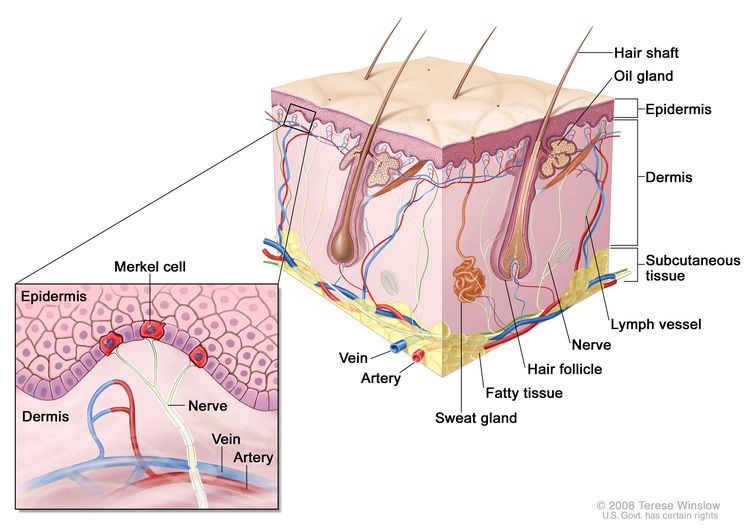
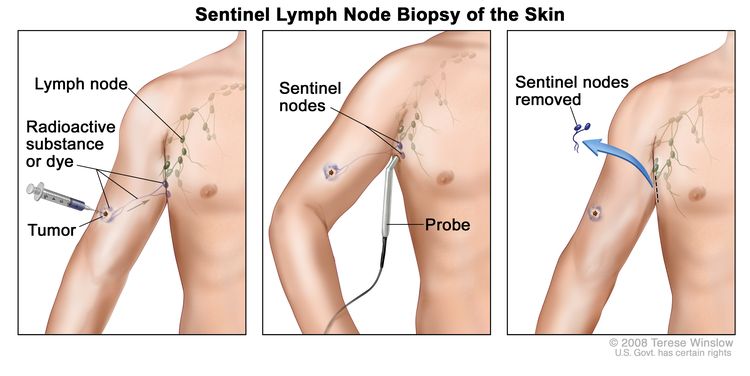
Merkel Cell Carcinoma Treatment (PDQ®)–Patient Version

Merkel Cell Carcinoma Treatment (PDQ®)–Patient Version

General Information About Merkel Cell Carcinoma

Key Points

  • Merkel cell carcinoma is a very rare type of cancer that forms in the skin.
  • Sun exposure and having a weak immune system affects the risk of developing Merkel cell carcinoma.
  • Merkel cell carcinoma usually appears as a single painless lump on sun-exposed skin.
  • Tests that examine the skin are used to diagnose Merkel cell carcinoma.
  • After Merkel cell carcinoma has been diagnosed, tests are done to find out if cancer cells have spread to other parts of the body.
  • Some people decide to get a second opinion.
  • Certain factors affect prognosis (chance of recovery) and treatment options.

Merkel cell carcinoma is a very rare type of cancer that forms in the skin.

Merkel cells are found in the top layer of the skin. These cells are very close to the nerve endings that receive the sensation of touch. Merkel cell carcinoma, also called neuroendocrine carcinoma of the skin or trabecular cancer, is a very rare type of skin cancer that forms when Merkel cells grow out of control. Merkel cell carcinoma starts most often in areas of skin exposed to the sun, especially the head and neck, as well as the arms, legs, and trunk.

EnlargeAnatomy of the skin with Merkel cells; drawing shows normal skin anatomy, including the epidermis, dermis, hair follicles, sweat glands, hair shafts, veins, arteries, fatty tissue, nerves, lymph vessels, oil glands, and subcutaneous tissue. The pullout shows a close-up of the epidermis with Merkel cells above the dermis with a vein and artery. Nerves are connected to Merkel cells.
Anatomy of the skin showing the epidermis, dermis, and subcutaneous tissue. Merkel cells are in the layer of basal cells at the deepest part of the epidermis and are connected to nerves.

Merkel cell carcinoma tends to grow quickly and to metastasize (spread) at an early stage. It usually spreads first to nearby lymph nodes and then may spread to lymph nodes or skin in distant parts of the body, lungs, brain, bones, or other organs.

Merkel cell carcinoma is the second most common cause of skin cancer death after melanoma.

Sun exposure and having a weak immune system affects the risk of developing Merkel cell carcinoma.

Anything that increases a person’s chance of getting a disease is called a risk factor. Not every person with one or more of these risk factors will develop Merkel cell carcinoma, and it can develop in people who don’t have any known risk factors. Talk with your doctor if you think you may be at risk.

Risk factors for Merkel cell carcinoma include:

Merkel cell carcinoma usually appears as a single painless lump on sun-exposed skin.

This and other changes in the skin may be caused by Merkel cell carcinoma or by other conditions. Check with your doctor if you see changes in your skin.

Merkel cell carcinoma usually appears on sun-exposed skin as a single lump that is:

  • fast-growing
  • painless
  • firm and dome-shaped or raised
  • red or violet in color

Tests that examine the skin are used to diagnose Merkel cell carcinoma.

In addition to asking about your personal and family health history and doing a physical exam, your doctor may perform the following tests and procedures:

  • Full-body skin exam is an exam of the skin. A doctor or nurse checks the skin for bumps or spots that look abnormal in color, size, shape, or texture. The size, shape, and texture of the lymph nodes will also be checked.
  • Skin biopsy is the removal of skin cells or tissues so they can be viewed under a microscope by a pathologist to check for signs of cancer.

After Merkel cell carcinoma has been diagnosed, tests are done to find out if cancer cells have spread to other parts of the body.

The process used to find out if cancer has spread to other parts of the body is called staging. The information gathered from the staging process determines the stage of the disease. It is important to know the stage in order to plan treatment.

The following tests and procedures may be used in the staging process:

  • CT scan (CAT scan) uses a computer linked to an x-ray machine to make a series of detailed pictures of areas inside the body, such as the chest, abdomen, head, and neck. The pictures are taken from different angles and are used to create 3-D views of tissues and organs. A dye may be injected into a vein or swallowed to help the organs or tissues show up more clearly. This procedure is also called computed tomography, computerized tomography, or computerized axial tomography. Learn more about Computed Tomography (CT) Scans and Cancer.
  • PET scan (positron emission tomography scan) uses a small amount of radioactive sugar (also called radioactive glucose) that is injected into a vein. The PET scanner rotates around the body and makes pictures of where sugar is being used by the body. Cancer cells show up brighter in the pictures because they are more active and take up more sugar than normal cells do.
  • Lymph node biopsy is the removal of all or part of a lymph node. A pathologist views the lymph node tissue under a microscope to check for cancer cells. This procedure is also called lymph node sampling. There are several types of lymph node biopsy used to stage Merkel cell carcinoma.
    • Sentinel lymph node biopsy removes the sentinel lymph node during surgery. The sentinel lymph node is the first lymph node in a group of lymph nodes to receive lymphatic drainage from the primary tumor. It is therefore the first lymph node the cancer is likely to spread to from the primary tumor. To identify the sentinel lymph node, a radioactive substance, blue dye, or both is injected near the tumor. The substance or dye flows through the lymph ducts to the lymph nodes. The first lymph node to receive the substance or dye is removed. A pathologist views the tissue under a microscope to look for cancer cells. If cancer cells are found, more lymph nodes will be removed through a separate incision (cut). This is called a lymph node dissection. Sometimes, a sentinel lymph node is found in more than one group of nodes.
      EnlargeSentinel lymph node biopsy of the skin. The first of three panels shows a radioactive substance and/or blue dye injected near the tumor; the middle panel shows that the injected material is followed visually and/or with a probe that detects radioactivity to find the sentinel nodes (the first lymph nodes to take up the material); the third panel shows the removal of the tumor and the sentinel nodes to check for cancer cells.
      Sentinel lymph node biopsy of the skin. A radioactive substance and/or blue dye is injected near the tumor (first panel). The injected material is detected visually and/or with a probe that detects radioactivity (middle panel). The sentinel nodes (the first lymph nodes to take up the material) are removed and checked for cancer cells (last panel).
    • Lymph node dissection is a surgical procedure in which the lymph nodes are removed and a sample of tissue is checked under a microscope for signs of cancer. For a regional lymph node dissection, some of the lymph nodes in the tumor area are removed. For a radical lymph node dissection, most or all of the lymph nodes in the tumor area are removed. This procedure is also called lymphadenectomy.
    • Core needle biopsy is a procedure to remove a sample of tissue using a wide needle. A pathologist views the tissue under a microscope to look for cancer cells.
    • Fine-needle aspiration biopsy is a procedure to remove a sample of tissue using a thin needle. A pathologist views the tissue under a microscope to look for cancer cells.
  • Immunohistochemistry uses antibodies to check for certain antigens (markers) in a sample of a patient’s cells or tissue. The antibodies are usually linked to an enzyme or a fluorescent dye. After the antibodies bind to a specific antigen in the tissue sample, the enzyme or dye is activated, and the antigen can then be seen under a microscope. This type of test is used to help diagnose cancer and help tell one type of cancer from another type.

Some people decide to get a second opinion.

You may want to get a second opinion to confirm your Merkel cell carcinoma diagnosis and treatment plan. If you seek a second opinion, you will need to get medical test results and reports from the first doctor to share with the second doctor. The second doctor will review the pathology report, slides, and scans. They may agree with the first doctor, suggest changes or another treatment approach, or provide more information about your cancer.

Learn more about choosing a doctor and getting a second opinion at Finding Cancer Care. You can contact NCI’s Cancer Information Service via chat, email, or phone (both in English and Spanish) for help finding a doctor, hospital, or getting a second opinion. For questions you might want to ask at your appointments, visit Questions to Ask Your Doctor About Cancer.

Certain factors affect prognosis (chance of recovery) and treatment options.

The prognosis and treatment options depend on:

  • the stage of the cancer (the size of the tumor and whether it has spread to the lymph nodes or other parts of the body)
  • where the cancer is in the body
  • whether the cancer has just been diagnosed or has recurred (come back)
  • the person’s age and general health

Prognosis also depends on how deeply the tumor has grown into the skin.

Stages of Merkel Cell Carcinoma

Key Points

  • The following stages are used for Merkel cell carcinoma:
    • Stage 0 (carcinoma in situ)
    • Stage I (also called Stage 1) Merkel cell carcinoma
    • Stage II (also called Stage 2) Merkel cell carcinoma
    • Stage III (also called Stage 3) Merkel cell carcinoma
    • Stage IV (also called Stage 4) Merkel cell carcinoma
  • It is common for Merkel cell carcinoma to recur (come back) after it has been treated.

Cancer stage describes the extent of cancer in the body, such as the size of the tumor, whether it has spread, and how far it has spread from where it first formed. It is important to know the stage of Merkel cell cancer to plan the best treatment.

There are several staging systems for cancer that describe the extent of the cancer. Merkel cell carcinoma staging usually uses the TNM staging system. The cancer may be described by this staging system in your pathology report. Based on the TNM results, a stage (I, II, III, or IV, also written as 1, 2, 3, or 4) is assigned to your cancer. When talking to you about your diagnosis, your doctor may describe the cancer as one of these stages.

Learn about tests to stage Merkel cell carcinoma. Learn more about Cancer Staging.

The following stages are used for Merkel cell carcinoma:

EnlargeDrawing shows different sizes of a tumor in centimeters (cm) compared to the size of a pea (1 cm), a peanut (2 cm), a grape (3 cm), a walnut (4 cm), a lime (5 cm), an egg (6 cm), a peach (7 cm), and a grapefruit (10 cm). Also shown is a 10-cm ruler and a 4-inch ruler.
Tumor sizes are often measured in centimeters (cm) or inches. Common food items that can be used to show tumor size in cm include: a pea (1 cm), a peanut (2 cm), a grape (3 cm), a walnut (4 cm), a lime (5 cm or 2 inches), an egg (6 cm), a peach (7 cm), and a grapefruit (10 cm or 4 inches).

Stage 0 (carcinoma in situ)

In stage 0, abnormal Merkel cells are found in the top layer of skin. These abnormal cells may become cancer and spread into nearby normal tissue.

Stage I (also called Stage 1) Merkel cell carcinoma

In stage I, the tumor is 2 centimeters or smaller.

Stage II (also called Stage 2) Merkel cell carcinoma

Stage II Merkel cell carcinoma is divided into stages IIA and IIB.

Stage III (also called Stage 3) Merkel cell carcinoma

Stage III Merkel cell carcinoma is divided into stages IIIA and IIIB.

In stage IIIA, either of the following is found:

  • the tumor may be any size and may have spread to nearby connective tissue, muscle, cartilage, or bone. A lymph node cannot be felt during a physical exam but cancer is found in the lymph node by sentinel lymph node biopsy or after the lymph node is removed and checked under a microscope for signs of cancer; or
  • a swollen lymph node is felt during a physical exam and/or seen on an imaging test. When the lymph node is removed and checked under a microscope for signs of cancer, cancer is found in the lymph node. The place where the cancer began is not known.

In stage IIIB, the tumor may be any size and:

  • may have spread to nearby connective tissue, muscle, cartilage, or bone. A swollen lymph node is felt during a physical exam and/or seen on an imaging test. When the lymph node is removed and checked under a microscope for signs of cancer, cancer is found in the lymph node; or
  • cancer is in a lymph vessel between the primary tumor and lymph nodes that are near or far away. Cancer may have spread to lymph nodes.

Stage IV (also called Stage 4) Merkel cell carcinoma

In stage IV, the tumor has spread to skin that is not close to the primary tumor or to other parts of the body, such as the liver, lung, bone, or brain.

Stage IV Merkel cell carcinoma is also called metastatic Merkel cell carcinoma. Metastatic cancer happens when cancer cells travel through the lymphatic system or blood and form tumors in other parts of the body. The metastatic tumor is the same type of cancer as the primary tumor. For example, if Merkel cell carcinoma spreads to the liver, the cancer cells in the liver are actually Merkel cell carcinoma cells. The disease is called metastatic Merkel cell carcinoma, not liver cancer. Learn more in Metastatic Cancer: When Cancer Spreads.

It is common for Merkel cell carcinoma to recur (come back) after it has been treated.

Recurrent Merkel cell carcinoma is cancer that has come back after it has been treated. If Merkel cell carcinoma comes back, it may come back in the skin, lymph nodes, or other parts of the body. Tests will be done to help determine where the cancer has returned. The type of treatment for recurrent Merkel cell carcinoma will depend on where it has come back.

Learn more in Recurrent Cancer: When Cancer Comes Back.

Treatment Option Overview

Key Points

  • There are different types of treatment for people with Merkel cell carcinoma.
  • The following types of treatment are used:
    • Surgery
    • Radiation therapy
    • Chemotherapy
    • Immunotherapy
  • New types of treatment are being tested in clinical trials.
  • Treatment for Merkel cell carcinoma may cause side effects.
  • Follow-up care may be needed.

There are different types of treatment for people with Merkel cell carcinoma.

Different types of treatments are available for Merkel cell carcinoma. You and your cancer care team will work together to decide your treatment plan, which may include more than one type of treatment. Many factors will be considered, such as the stage of the cancer, your overall health, and your preferences. Your plan will include information about your cancer, the goals of treatment, your treatment options and the possible side effects, and the expected length of treatment.

Talking with your cancer care team before treatment begins about what to expect will be helpful. You’ll want to learn what you need to do before treatment begins, how you’ll feel while going through it, and what kind of help you will need. To learn more, visit Questions to Ask Your Doctor About Treatment.

The following types of treatment are used:

Surgery

One or more of the following surgical procedures may be used to treat Merkel cell carcinoma:

After the doctor removes all the cancer that can be seen at the time of the surgery, some patients may be given chemotherapy or radiation therapy after surgery to kill any cancer cells that are left. Treatment given after the surgery, to lower the risk that the cancer will come back, is called adjuvant therapy.

Radiation therapy

Radiation therapy uses high-energy x-rays or other types of radiation to kill cancer cells or keep them from growing. External radiation therapy uses a machine outside the body to send radiation toward the area of the body with cancer. It is used to treat Merkel cell carcinoma and may also be used as palliative therapy to relieve symptoms and improve quality of life.

Learn more about Radiation Therapy to Treat Cancer and Radiation Therapy Side Effects.

Chemotherapy

Chemotherapy (also called chemo) uses drugs to stop the growth of cancer cells, either by killing the cells or by stopping the cells from dividing. When chemotherapy is taken by mouth or injected into a vein or muscle, the drugs enter the bloodstream and can reach cancer cells throughout the body (systemic chemotherapy).

Learn more about how chemotherapy works, how it is given, common side effects, and more at Chemotherapy to Treat Cancer and Chemotherapy and You: Support for People With Cancer.

Immunotherapy

Immunotherapy helps a person’s immune system fight cancer.

Immunotherapy drugs used to treat Merkel cell carcinoma include:

Learn more about Immunotherapy to Treat Cancer.

New types of treatment are being tested in clinical trials.

For some people, joining a clinical trial may be an option. There are different types of clinical trials for people with cancer. For example, a treatment trial tests new treatments or new ways of using current treatments. Supportive care and palliative care trials look at ways to improve quality of life, especially for those who have side effects from cancer and its treatment.

You can use the clinical trial search to find NCI-supported cancer clinical trials accepting participants. The search allows you to filter trials based on the type of cancer, your age, and where the trials are being done. Clinical trials supported by other organizations can be found on the ClinicalTrials.gov website.

Learn more about clinical trials, including how to find and join one, at Clinical Trials Information for Patients and Caregivers.

Treatment for Merkel cell carcinoma may cause side effects.

For information about side effects caused by treatment for cancer, visit our Side Effects page.

Follow-up care may be needed.

As you go through treatment, you will have follow-up tests or check-ups. Some tests that were done to diagnose or stage the cancer may be repeated to see how well the treatment is working. Decisions about whether to continue, change, or stop treatment may be based on the results of these tests.

Some of the tests will continue to be done from time to time after treatment has ended. The results of these tests can show if your condition has changed or if the cancer has recurred (come back).

Treatment of Stage I and Stage II Merkel Cell Carcinoma

Treatment of stage I and stage II Merkel cell carcinoma may include:

Learn more about these treatments in the Treatment Option Overview.

Use our clinical trial search to find NCI-supported cancer clinical trials that are accepting patients. You can search for trials based on the type of cancer, the age of the patient, and where the trials are being done. General information about clinical trials is also available.

Treatment of Stage III Merkel Cell Carcinoma

Treatment of stage III Merkel cell carcinoma may include:

Learn more about these treatments in the Treatment Option Overview.

Use our clinical trial search to find NCI-supported cancer clinical trials that are accepting patients. You can search for trials based on the type of cancer, the age of the patient, and where the trials are being done. General information about clinical trials is also available.

Treatment of Stage IV Merkel Cell Carcinoma

Treatment of stage IV Merkel cell carcinoma may include:

Learn more about these treatments in the Treatment Option Overview.

Use our clinical trial search to find NCI-supported cancer clinical trials that are accepting patients. You can search for trials based on the type of cancer, the age of the patient, and where the trials are being done. General information about clinical trials is also available.

Treatment of Recurrent Merkel Cell Carcinoma

Treatment of recurrent Merkel cell carcinoma may include:

Learn more about these treatments in the Treatment Option Overview.

Use our clinical trial search to find NCI-supported cancer clinical trials that are accepting patients. You can search for trials based on the type of cancer, the age of the patient, and where the trials are being done. General information about clinical trials is also available.

To Learn More About Merkel Cell Carcinoma

About This PDQ Summary

About PDQ

Physician Data Query (PDQ) is the National Cancer Institute’s (NCI’s) comprehensive cancer information database. The PDQ database contains summaries of the latest published information on cancer prevention, detection, genetics, treatment, supportive care, and complementary and alternative medicine. Most summaries come in two versions. The health professional versions have detailed information written in technical language. The patient versions are written in easy-to-understand, nontechnical language. Both versions have cancer information that is accurate and up to date and most versions are also available in Spanish.

PDQ is a service of the NCI. The NCI is part of the National Institutes of Health (NIH). NIH is the federal government’s center of biomedical research. The PDQ summaries are based on an independent review of the medical literature. They are not policy statements of the NCI or the NIH.

Purpose of This Summary

This PDQ cancer information summary has current information about the treatment of merkel cell carcinoma. It is meant to inform and help patients, families, and caregivers. It does not give formal guidelines or recommendations for making decisions about health care.

Reviewers and Updates

Editorial Boards write the PDQ cancer information summaries and keep them up to date. These Boards are made up of experts in cancer treatment and other specialties related to cancer. The summaries are reviewed regularly and changes are made when there is new information. The date on each summary (“Updated”) is the date of the most recent change.

The information in this patient summary was taken from the health professional version, which is reviewed regularly and updated as needed, by the PDQ Adult Treatment Editorial Board.

Clinical Trial Information

A clinical trial is a study to answer a scientific question, such as whether one treatment is better than another. Trials are based on past studies and what has been learned in the laboratory. Each trial answers certain scientific questions in order to find new and better ways to help cancer patients. During treatment clinical trials, information is collected about the effects of a new treatment and how well it works. If a clinical trial shows that a new treatment is better than one currently being used, the new treatment may become “standard.” Patients may want to think about taking part in a clinical trial. Some clinical trials are open only to patients who have not started treatment.

Clinical trials can be found online at NCI’s website. For more information, call the Cancer Information Service (CIS), NCI’s contact center, at 1-800-4-CANCER (1-800-422-6237).

Permission to Use This Summary

PDQ is a registered trademark. The content of PDQ documents can be used freely as text. It cannot be identified as an NCI PDQ cancer information summary unless the whole summary is shown and it is updated regularly. However, a user would be allowed to write a sentence such as “NCI’s PDQ cancer information summary about breast cancer prevention states the risks in the following way: [include excerpt from the summary].”

The best way to cite this PDQ summary is:

PDQ® Adult Treatment Editorial Board. PDQ Merkel Cell Carcinoma Treatment. Bethesda, MD: National Cancer Institute. Updated <MM/DD/YYYY>. Available at: /types/skin/patient/merkel-cell-treatment-pdq. Accessed <MM/DD/YYYY>. [PMID: 26389202]

Images in this summary are used with permission of the author(s), artist, and/or publisher for use in the PDQ summaries only. If you want to use an image from a PDQ summary and you are not using the whole summary, you must get permission from the owner. It cannot be given by the National Cancer Institute. Information about using the images in this summary, along with many other images related to cancer can be found in Visuals Online. Visuals Online is a collection of more than 3,000 scientific images.

Disclaimer

The information in these summaries should not be used to make decisions about insurance reimbursement. More information on insurance coverage is available on Cancer.gov on the Managing Cancer Care page.

Contact Us

More information about contacting us or receiving help with the Cancer.gov website can be found on our Contact Us for Help page. Questions can also be submitted to Cancer.gov through the website’s E-mail Us.

Merkel Cell Carcinoma Treatment (PDQ®)–Health Professional Version

Merkel Cell Carcinoma Treatment (PDQ®)–Health Professional Version

General Information About Merkel Cell Carcinoma

Merkel cell carcinoma (MCC) was originally described by Toker in 1972 as trabecular carcinoma of the skin.[1] Other names for MCC include Toker tumor, primary small cell carcinoma of the skin, primary cutaneous neuroendocrine tumor, and malignant trichodiscoma.[2]

MCC is an aggressive neuroendocrine carcinoma arising in the dermoepidermal junction (see Figure 1), and it is the second most common cause of skin cancer death after melanoma.[3,4] Although the exact origin and function of the Merkel cell remains under investigation, it is thought to have features of both epithelial and neuroendocrine origin and arise in cells with touch-sensitivity function (mechanoreceptors).[511]

Therapeutic options have been historically limited for patients with advanced disease. However, new immunotherapeutic approaches are associated with durable responses.[12]

Anatomy

EnlargeMerkelCell
Figure 1. Merkel Cell Anatomy.

Incidence and Mortality

MCC incidence increases progressively with age. There are few cases in patients younger than 50 years, and the median age at diagnosis is about 65 years (see Figure 2).[13] Incidence is considerably greater in White individuals than in Black individuals and slightly greater in men than in women.[1317]

EnlargeMerkelCell
Figure 2. Frequency of MCC by age and sex of men (square) and women (circle). Reprinted from Journal of the American Academy of Dermatology, 49 (5), Agelli M and Clegg L, Epidemiology of primary Merkel cell carcinoma in the United States, pp. 832–41, Copyright (2003), with permission from Elsevier.

MCC occurs most frequently in sun-exposed areas of skin, particularly the head and neck, followed by the extremities, and then the trunk.[5,16,18] Incidence has been reported to be greater in geographic regions with higher levels of ultraviolet B sunlight.[16]

As of 2013, MCC had an annual incidence of 0.7 cases per 100,000 people in the United States.[19] The incidence has been increasing over the past several decades, almost doubling in the United States between 2000 and 2013. This rise is potentially related to more accurate diagnostic pathology tools, improved clinical awareness of MCC, an aging population, increased sun exposure in susceptible populations, and improved registry tools. The incidence is also higher in immunosuppressed populations (HIV, hematologic malignancies, immunosuppressive medications, etc.).[20] Approximately 25,000 cases of MCC have been recorded in the United States since 2000, including more than 2,200 incident cases reported in 2014 to the National Program of Cancer Registries/SEER combined registries, which captures more than 98% of the U.S. population and the ten most common sites of MCC (see Table 1).[17]

Table 1. The Ten Most Common Sites for Merkel Cell Carcinoma (SEER 1973–2006)a
Anatomical Site Cases (%)
NOS = not otherwise specified; SEER = Surveillance, Epidemiology, and End Results Program.
aAlbores-Saavedra J et al: Merkel cell carcinoma demographics, morphology, and survival based on 3,870 cases: A population-based study. J Cutan Pathol. Reprinted with permission © 2009. Published by Wiley-Blackwell. All rights reserved.[17]
Skin, face 1,041 (26.9)
Skin of upper limb and shoulder 853 (22.0)
Skin of lower limb and hip 578 (14.9)
Skin of trunk 410 (10.6)
Skin of scalp and neck 348 (9.0)
Skin, NOS 234 (6.0)
External ear 120 (3.1)
Eyelid 98 (2.5)
Skin of lip 91 (2.4)
Unknown primary site 31 (0.8)
Total 3,804 (98.3)

In various cases series, up to 97% of MCCs arise in the skin. MCC primaries in other sites were very rare, as were MCCs from unknown primary sites.[17]

SEER registry data have shown excess risk of MCC as a first or second cancer in patients with several primary cancers.[21] National cancer registries from three Scandinavian countries have identified a variety of second cancers diagnosed after MCC.[22]

Pathogenesis

Increased incidence of MCC has also been seen in people treated heavily with methoxsalen (psoralen) and ultraviolet A (PUVA) for psoriasis (3 of 1,380 patients, 0.2%). This has also been seen in individuals with chronic immune suppression, especially from chronic lymphocytic leukemia, HIV, and previous solid organ transplant.[16,23]

In 2008, a novel polyomavirus (Merkel cell polyoma virus [MCPyV]) was first reported in MCC tumor specimens,[24] a finding subsequently confirmed in other laboratories.[2527] High levels of viral DNA and clonal integration of the virus in MCC tumors have also been reported, [28] along with expression of certain viral antigens in MCC cells and the presence of antiviral antibodies. Not all cases of MCC appear to be associated with MCPyV infection.[29]

MCPyV has been detected at very low levels in normal skin distant from the MCC primary tumor, in a significant percentage of patients with non-MCC cutaneous disorders, in normal-appearing skin in healthy individuals, and in nonmelanoma skin cancers in immune-suppressed individuals.[10,3032] Various methods have been used to identify and quantify the presence of MCPyV in MCC tumor specimens, other non-MCC tumors, blood, urine, and other tissues.[33,34]

The significance of the new MCPyV findings remains uncertain. The prognostic significance of viral load, antibody titer levels, and the role of underlying immunosuppression in hosts (from disease and medications) are under investigation.

Prevalence of MCPyV appears to differ between MCC patients in the United States and Europe versus Australia. There may be two independent pathways for the development of MCC: one driven by the presence of MCPyV, and the other driven primarily by sun damage, especially as noted in patient series from Australia.[25,29,35]

Although no unique marker for MCC has been identified, a variety of molecular and cytogenetic markers of MCC have been reported.[7,10,36]

Clinical Presentation

MCC usually presents as a painless, indurated, solitary dermal nodule with a slightly erythematous to deeply violaceous color, and rarely, an ulcer. MCC can infiltrate locally via dermal lymphatics, resulting in multiple satellite lesions. Because of its nonspecific clinical appearance, MCC is rarely suspected before a biopsy is performed.[5] Photographs of MCC skin lesions illustrate its clinical variability.[37]

A mnemonic [18] summarizing typical clinical characteristics of MCC has been proposed:

AEIOU

  • A = Asymptomatic.
  • E = Expanding rapidly.
  • I = Immune suppressed.
  • O = Older than 50 years.
  • U = UV-exposed skin.

Not all patients have every element in this mnemonic. However, in this study, 89% of patients met three or more criteria, 52% met four or more criteria, and 7% met all five criteria.[18]

Initial Clinical Evaluation

Because local-regional spread is common, patients with newly diagnosed MCC require a careful clinical examination for satellite lesions and regional nodal involvement.

Tailoring an imaging work-up to the clinical presentation and any relevant signs and symptoms should be considered. There has been no systematic study of the optimal imaging work-up for newly diagnosed patients, and it is not clear if all newly diagnosed patients, especially those with the smallest primary tumors, benefit from a detailed imaging work-up.

If an imaging work-up is performed, it may include a computed tomography (CT) scan of the chest and abdomen to rule out primary small cell lung cancer as well as distant and regional metastases. Imaging studies designed to evaluate suspicious signs and symptoms may also be recommended. In one series, CT scans had an 80% false-negative rate for regional metastases.[38] Head and neck presentations may require additional imaging. Magnetic resonance imaging has been used to evaluate MCC but has not been studied systematically.[39] Fluorine F 18-fludeoxyglucose positron emission tomography results have been reported in selected cases.[40,41] Baseline routine blood work has been recommended but has not been studied systematically. There are no known circulating tumor markers specific to MCC.

Initial Staging Results

The results of initial clinical staging of MCC vary widely in the literature, based on retrospective case series reported over decades. For invasive cancers, 48.6% were localized, 31.1% were regional, and 8.2% were distant.[17]

MCC that presents in regional nodes without an identifiable primary lesion is found in a minority of patients, with the percent of these cases varying among the reported series. Tumors without an identifiable primary lesion have been attributed to either spontaneous regression of the primary or metastatic neuroendocrine carcinoma from a clinically occult site.[8,17,18,42,43]

Clinical Progression

In a review of patients from 18 case series, 279 of 926 patients (30.1%) developed local recurrence during follow-up, excluding those presenting with distant metastatic disease. These events have been typically attributed to inadequate surgical margins and/or a lack of adjuvant radiation therapy. In addition, 545 of 982 patients (55.5%) had lymph node metastases at diagnosis or during follow-up.[8]

In the same review of 18 case series, the most common sites of distant metastases were distant lymph nodes (60.1%), distant skin (30.3%), lung (23.4%), central nervous system (18.4%), and bone (15.2%).[8] Many other sites of disease have also been reported, and the distribution of metastatic sites varies among case series.

In one series of 237 patients presenting with local or regional disease, the median time-to-recurrence was 9 months (range, 2–70 months). Ninety-one percent of recurrences occurred within 2 years of diagnosis.[44]

Potential Prognostic Factors

The extent of disease at presentation may provide the most useful estimate of prognosis.[7]

Diagnostic procedures, such as sentinel lymph node biopsy, may help distinguish between local and regional disease at presentation. One-third of patients who lack clinically palpable or radiologically visible nodes will have microscopically evident regional disease.[38] Nodal positivity may be substantially lower among patients with small tumors (e.g., ≤1.0 cm).[45]

Many retrospective studies have evaluated the relationship of a wide variety of biological and histological factors to survival and local-regional control.[7,8,17,38,44,4657][Level of evidence C2] Many of these reports are confounded by small numbers, potential selection bias, referral bias, short follow-up, no uniform clinical protocol for both staging and treatment, and are underpowered to detect modest differences.

A large, single-institution, retrospective study of 156 patients with MCC, with a median follow-up of 51 months (range, 2–224 months), evaluated histological factors potentially associated with prognosis.[55][Level of evidence C1] Although this report was subject to potential selection and referral bias, both univariate and multivariate analyses demonstrated a relationship between improved cause-specific survival and circumscribed growth pattern versus infiltrative pattern, shallow-tumor depth versus deep-tumor depth, and absence of lymphovascular invasion versus presence of lymphovascular invasion. Adoption of these findings into a global prognostic algorithm awaits independent confirmation by adequately powered studies.

A 2009 study investigated whether the presence of newly identified MCPyV in MCC tumor specimens influenced clinical outcome among 114 Finnish patients with MCC. In this small study, patients whose tumors were MCPyV positive appeared to have better survival than patients whose tumors were MCPyV negative.[58][Level of evidence C2] Standardization of procedures to identify and quantify MCPyV and relevant antibodies is needed to improve understanding of both prognostic and epidemiological questions.[10]

Prognosis

The most significant prognostic parameters for MCC include tumor size and the presence of locoregional or distant metastases. These factors form the basis of the American Joint Committee on Cancer staging system for MCC.[59,60] Although an increasing primary tumor size correlates with an increased risk of metastatic disease, MCC tumors of any size have significant risk of occult metastasis, supporting the use of sentinel lymph node biopsy for all cases.[61] Additional features of the primary tumor, such as lymphovascular invasion and tumor growth pattern, may also have prognostic significance. Clinically detectable nodal disease is associated with worse outcome than microscopic metastases.[55,59] Other findings associated with worse prognosis include sheet-like involvement in lymph node metastases and an increasing number of metastatic lymph nodes.[60,62]

The bulk of MCC literature is from small case series, which are subject to many confounding factors. For this reason, the relapse and survival rates reported by stage vary widely in the literature. In general, lower-stage disease is associated with better overall survival.[63] For more information, see the Potential Prognostic Factors section.

Outcomes from patients presenting with small volume local disease and pathologically confirmed cancer-negative lymph nodes report a cause-specific 5-year survival rate exceeding 90% in one report.[44,55][Level of evidence C2]

A tabular summary of treatment results of MCC from 12 series illustrates the difficulty in comparing outcome data among series.[7]

Using the SEER Program registry MCC staging system adopted in 1973, MCC survival data (1973–2006) by stage is summarized in Figure 3.[17]

EnlargeMerkelCell
Figure 3. Relative ten-year survival rates for Merkel Cell Carcinoma by stage (SEER 1973–2006). Albores-Saavedra J et al: Merkel cell carcinoma demographics, morphology, and survival based on 3,870 cases: A population-based study. J Cutan Pathol. Reprinted with permission © 2009. Published by Wiley-Blackwell. All rights reserved.

References
  1. Toker C: Trabecular carcinoma of the skin. Arch Dermatol 105 (1): 107-10, 1972. [PUBMED Abstract]
  2. Schwartz RA, Lambert WC: The Merkel cell carcinoma: a 50-year retrospect. J Surg Oncol 89 (1): 5, 2005. [PUBMED Abstract]
  3. Agelli M, Clegg LX, Becker JC, et al.: The etiology and epidemiology of merkel cell carcinoma. Curr Probl Cancer 34 (1): 14-37, 2010 Jan-Feb. [PUBMED Abstract]
  4. Harms PW: Update on Merkel Cell Carcinoma. Clin Lab Med 37 (3): 485-501, 2017. [PUBMED Abstract]
  5. Nghiem P, McKee PH, Haynes HA: Merkel cell (cutaneous neuroendocrine) carcinoma. In: Sober AJ, Haluska FG, eds.: Skin Cancer. BC Decker Inc., 2001, pp 127-141.
  6. Nghiem P, James N: Merkel cell carcinoma. In: Wolff K, Goldsmith LA, Katz SI, et al., eds.: Fitzpatrick’s Dermatology in General Medicine. 7th ed. McGraw-Hill , 2008, pp 1087-94.
  7. Eng TY, Boersma MG, Fuller CD, et al.: A comprehensive review of the treatment of Merkel cell carcinoma. Am J Clin Oncol 30 (6): 624-36, 2007. [PUBMED Abstract]
  8. Medina-Franco H, Urist MM, Fiveash J, et al.: Multimodality treatment of Merkel cell carcinoma: case series and literature review of 1024 cases. Ann Surg Oncol 8 (3): 204-8, 2001. [PUBMED Abstract]
  9. Busse PM, Clark JR, Muse VV, et al.: Case records of the Massachusetts General Hospital. Case 19-2008. A 63-year-old HIV-positive man with cutaneous Merkel-cell carcinoma. N Engl J Med 358 (25): 2717-23, 2008. [PUBMED Abstract]
  10. Rockville Merkel Cell Carcinoma Group: Merkel cell carcinoma: recent progress and current priorities on etiology, pathogenesis, and clinical management. J Clin Oncol 27 (24): 4021-6, 2009. [PUBMED Abstract]
  11. Calder KB, Smoller BR: New insights into merkel cell carcinoma. Adv Anat Pathol 17 (3): 155-61, 2010. [PUBMED Abstract]
  12. Cassler NM, Merrill D, Bichakjian CK, et al.: Merkel Cell Carcinoma Therapeutic Update. Curr Treat Options Oncol 17 (7): 36, 2016. [PUBMED Abstract]
  13. Agelli M, Clegg LX: Epidemiology of primary Merkel cell carcinoma in the United States. J Am Acad Dermatol 49 (5): 832-41, 2003. [PUBMED Abstract]
  14. Hodgson NC: Merkel cell carcinoma: changing incidence trends. J Surg Oncol 89 (1): 1-4, 2005. [PUBMED Abstract]
  15. Young JL, Ward KC, Ries LAG: Cancer of rare sites. In: Ries LAG, Young JL, Keel GE, et al., eds.: SEER Survival Monograph: Cancer Survival Among Adults: U. S. SEER Program, 1988-2001, Patient and Tumor Characteristics. National Cancer Institute, 2007. NIH Pub. No. 07-6215, pp 251-61.
  16. Miller RW, Rabkin CS: Merkel cell carcinoma and melanoma: etiological similarities and differences. Cancer Epidemiol Biomarkers Prev 8 (2): 153-8, 1999. [PUBMED Abstract]
  17. Albores-Saavedra J, Batich K, Chable-Montero F, et al.: Merkel cell carcinoma demographics, morphology, and survival based on 3870 cases: a population based study. J Cutan Pathol 37 (1): 20-7, 2010. [PUBMED Abstract]
  18. Heath M, Jaimes N, Lemos B, et al.: Clinical characteristics of Merkel cell carcinoma at diagnosis in 195 patients: the AEIOU features. J Am Acad Dermatol 58 (3): 375-81, 2008. [PUBMED Abstract]
  19. Paulson KG, Park SY, Vandeven NA, et al.: Merkel cell carcinoma: Current US incidence and projected increases based on changing demographics. J Am Acad Dermatol 78 (3): 457-463.e2, 2018. [PUBMED Abstract]
  20. Ma JE, Brewer JD: Merkel cell carcinoma in immunosuppressed patients. Cancers (Basel) 6 (3): 1328-50, 2014. [PUBMED Abstract]
  21. Howard RA, Dores GM, Curtis RE, et al.: Merkel cell carcinoma and multiple primary cancers. Cancer Epidemiol Biomarkers Prev 15 (8): 1545-9, 2006. [PUBMED Abstract]
  22. Bzhalava D, Bray F, Storm H, et al.: Risk of second cancers after the diagnosis of Merkel cell carcinoma in Scandinavia. Br J Cancer 104 (1): 178-80, 2011. [PUBMED Abstract]
  23. Lunder EJ, Stern RS: Merkel-cell carcinomas in patients treated with methoxsalen and ultraviolet A radiation. N Engl J Med 339 (17): 1247-8, 1998. [PUBMED Abstract]
  24. Feng H, Shuda M, Chang Y, et al.: Clonal integration of a polyomavirus in human Merkel cell carcinoma. Science 319 (5866): 1096-100, 2008. [PUBMED Abstract]
  25. Garneski KM, Warcola AH, Feng Q, et al.: Merkel cell polyomavirus is more frequently present in North American than Australian Merkel cell carcinoma tumors. J Invest Dermatol 129 (1): 246-8, 2009. [PUBMED Abstract]
  26. Becker JC, Houben R, Ugurel S, et al.: MC polyomavirus is frequently present in Merkel cell carcinoma of European patients. J Invest Dermatol 129 (1): 248-50, 2009. [PUBMED Abstract]
  27. Kassem A, Schöpflin A, Diaz C, et al.: Frequent detection of Merkel cell polyomavirus in human Merkel cell carcinomas and identification of a unique deletion in the VP1 gene. Cancer Res 68 (13): 5009-13, 2008. [PUBMED Abstract]
  28. Houben R, Schrama D, Becker JC: Molecular pathogenesis of Merkel cell carcinoma. Exp Dermatol 18 (3): 193-8, 2009. [PUBMED Abstract]
  29. Paik JY, Hall G, Clarkson A, et al.: Immunohistochemistry for Merkel cell polyomavirus is highly specific but not sensitive for the diagnosis of Merkel cell carcinoma in the Australian population. Hum Pathol 42 (10): 1385-90, 2011. [PUBMED Abstract]
  30. Andres C, Belloni B, Puchta U, et al.: Prevalence of MCPyV in Merkel cell carcinoma and non-MCC tumors. J Cutan Pathol 37 (1): 28-34, 2010. [PUBMED Abstract]
  31. Kassem A, Technau K, Kurz AK, et al.: Merkel cell polyomavirus sequences are frequently detected in nonmelanoma skin cancer of immunosuppressed patients. Int J Cancer 125 (2): 356-61, 2009. [PUBMED Abstract]
  32. Foulongne V, Dereure O, Kluger N, et al.: Merkel cell polyomavirus DNA detection in lesional and nonlesional skin from patients with Merkel cell carcinoma or other skin diseases. Br J Dermatol 162 (1): 59-63, 2010. [PUBMED Abstract]
  33. DeCaprio JA: Does detection of Merkel cell polyomavirus in Merkel cell carcinoma provide prognostic information? J Natl Cancer Inst 101 (13): 905-7, 2009. [PUBMED Abstract]
  34. Laude HC, Jonchère B, Maubec E, et al.: Distinct merkel cell polyomavirus molecular features in tumour and non tumour specimens from patients with merkel cell carcinoma. PLoS Pathog 6 (8): , 2010. [PUBMED Abstract]
  35. Buck CB, Lowy DR: Immune readouts may have prognostic value for the course of merkel cell carcinoma, a virally associated disease. J Clin Oncol 29 (12): 1506-8, 2011. [PUBMED Abstract]
  36. Lemos B, Nghiem P: Merkel cell carcinoma: more deaths but still no pathway to blame. J Invest Dermatol 127 (9): 2100-3, 2007. [PUBMED Abstract]
  37. Seattle Cancer Care Alliance: Merkel Cell Carcinoma Information for Patients and Their Physicians: Clinical Photos/Images. Seattle, Wa: Seattle Cancer Care Alliance Skin Oncology Clinic, 2009. Available online. Last accessed May 9, 2025.
  38. Gupta SG, Wang LC, Peñas PF, et al.: Sentinel lymph node biopsy for evaluation and treatment of patients with Merkel cell carcinoma: The Dana-Farber experience and meta-analysis of the literature. Arch Dermatol 142 (6): 685-90, 2006. [PUBMED Abstract]
  39. Anderson SE, Beer KT, Banic A, et al.: MRI of merkel cell carcinoma: histologic correlation and review of the literature. AJR Am J Roentgenol 185 (6): 1441-8, 2005. [PUBMED Abstract]
  40. Iagaru A, Quon A, McDougall IR, et al.: Merkel cell carcinoma: Is there a role for 2-deoxy-2-[f-18]fluoro-D-glucose-positron emission tomography/computed tomography? Mol Imaging Biol 8 (4): 212-7, 2006 Jul-Aug. [PUBMED Abstract]
  41. Belhocine T, Pierard GE, Frühling J, et al.: Clinical added-value of 18FDG PET in neuroendocrine-merkel cell carcinoma. Oncol Rep 16 (2): 347-52, 2006. [PUBMED Abstract]
  42. Missotten GS, de Wolff-Rouendaal D, de Keizer RJ: Merkel cell carcinoma of the eyelid review of the literature and report of patients with Merkel cell carcinoma showing spontaneous regression. Ophthalmology 115 (1): 195-201, 2008. [PUBMED Abstract]
  43. Richetta AG, Mancini M, Torroni A, et al.: Total spontaneous regression of advanced merkel cell carcinoma after biopsy: review and a new case. Dermatol Surg 34 (6): 815-22, 2008. [PUBMED Abstract]
  44. Allen PJ, Bowne WB, Jaques DP, et al.: Merkel cell carcinoma: prognosis and treatment of patients from a single institution. J Clin Oncol 23 (10): 2300-9, 2005. [PUBMED Abstract]
  45. Stokes JB, Graw KS, Dengel LT, et al.: Patients with Merkel cell carcinoma tumors < or = 1.0 cm in diameter are unlikely to harbor regional lymph node metastasis. J Clin Oncol 27 (23): 3772-7, 2009. [PUBMED Abstract]
  46. Jabbour J, Cumming R, Scolyer RA, et al.: Merkel cell carcinoma: assessing the effect of wide local excision, lymph node dissection, and radiotherapy on recurrence and survival in early-stage disease–results from a review of 82 consecutive cases diagnosed between 1992 and 2004. Ann Surg Oncol 14 (6): 1943-52, 2007. [PUBMED Abstract]
  47. Henness S, Vereecken P: Management of Merkel tumours: an evidence-based review. Curr Opin Oncol 20 (3): 280-6, 2008. [PUBMED Abstract]
  48. Skelton HG, Smith KJ, Hitchcock CL, et al.: Merkel cell carcinoma: analysis of clinical, histologic, and immunohistologic features of 132 cases with relation to survival. J Am Acad Dermatol 37 (5 Pt 1): 734-9, 1997. [PUBMED Abstract]
  49. Sandel HD, Day T, Richardson MS, et al.: Merkel cell carcinoma: does tumor size or depth of invasion correlate with recurrence, metastasis, or patient survival? Laryngoscope 116 (5): 791-5, 2006. [PUBMED Abstract]
  50. Llombart B, Monteagudo C, López-Guerrero JA, et al.: Clinicopathological and immunohistochemical analysis of 20 cases of Merkel cell carcinoma in search of prognostic markers. Histopathology 46 (6): 622-34, 2005. [PUBMED Abstract]
  51. Senchenkov A, Barnes SA, Moran SL: Predictors of survival and recurrence in the surgical treatment of merkel cell carcinoma of the extremities. J Surg Oncol 95 (3): 229-34, 2007. [PUBMED Abstract]
  52. Goldberg SR, Neifeld JP, Frable WJ: Prognostic value of tumor thickness in patients with Merkel cell carcinoma. J Surg Oncol 95 (8): 618-22, 2007. [PUBMED Abstract]
  53. Heath ML, Nghiem P: Merkel cell carcinoma: if no breslow, then what? J Surg Oncol 95 (8): 614-5, 2007. [PUBMED Abstract]
  54. Tai P: Merkel cell cancer: update on biology and treatment. Curr Opin Oncol 20 (2): 196-200, 2008. [PUBMED Abstract]
  55. Andea AA, Coit DG, Amin B, et al.: Merkel cell carcinoma: histologic features and prognosis. Cancer 113 (9): 2549-58, 2008. [PUBMED Abstract]
  56. Paulson KG, Iyer JG, Tegeder AR, et al.: Transcriptome-wide studies of merkel cell carcinoma and validation of intratumoral CD8+ lymphocyte invasion as an independent predictor of survival. J Clin Oncol 29 (12): 1539-46, 2011. [PUBMED Abstract]
  57. Fields RC, Busam KJ, Chou JF, et al.: Recurrence and survival in patients undergoing sentinel lymph node biopsy for merkel cell carcinoma: analysis of 153 patients from a single institution. Ann Surg Oncol 18 (9): 2529-37, 2011. [PUBMED Abstract]
  58. Sihto H, Kukko H, Koljonen V, et al.: Clinical factors associated with Merkel cell polyomavirus infection in Merkel cell carcinoma. J Natl Cancer Inst 101 (13): 938-45, 2009. [PUBMED Abstract]
  59. Harms KL, Healy MA, Nghiem P, et al.: Analysis of Prognostic Factors from 9387 Merkel Cell Carcinoma Cases Forms the Basis for the New 8th Edition AJCC Staging System. Ann Surg Oncol 23 (11): 3564-3571, 2016. [PUBMED Abstract]
  60. Iyer JG, Storer BE, Paulson KG, et al.: Relationships among primary tumor size, number of involved nodes, and survival for 8044 cases of Merkel cell carcinoma. J Am Acad Dermatol 70 (4): 637-643, 2014. [PUBMED Abstract]
  61. Schwartz JL, Griffith KA, Lowe L, et al.: Features predicting sentinel lymph node positivity in Merkel cell carcinoma. J Clin Oncol 29 (8): 1036-41, 2011. [PUBMED Abstract]
  62. Ko JS, Prieto VG, Elson PJ, et al.: Histological pattern of Merkel cell carcinoma sentinel lymph node metastasis improves stratification of Stage III patients. Mod Pathol 29 (2): 122-30, 2016. [PUBMED Abstract]
  63. Eng TY, Boersma MG, Fuller CD, et al.: Treatment of merkel cell carcinoma. Am J Clin Oncol 27 (5): 510-5, 2004. [PUBMED Abstract]

Cellular Classification of Merkel Cell Carcinoma

Although the exact origin and function of the Merkel cell remains under investigation, it is thought to have features of both epithelial and neuroendocrine origin and arise in cells with touch-sensitivity function (mechanoreceptors).[14]

Characteristic histopathological features include dense core cytoplasmic neurosecretory granules on electron microscopy and cytokeratin-20 on immunohistochemistry (see Figure 4).[5]

A panel of immunoreagents (see Figure 4) can distinguish between Merkel cell carcinoma (MCC) and other similar-appearing tumors including neuroendocrine carcinoma of the lung (i.e., small cell carcinoma), lymphoma, peripheral primitive neuroectodermal tumor, metastatic carcinoid tumor, and small cell melanoma.[5]

EnlargeMerkelCell
Figure 4. Merkel – Immunohistochemical differential diagnosis of Merkel-Cell Carcinoma (Typical Staining Pattern).

Histologically, MCC has been classified into three distinct subtypes:[69]

  • Trabecular: classic pattern, large-cell type, high density or granules on ultrasound examination.
  • Intermediate: solid pattern (most common).
  • Small cell: diffuse, few high-density granules on ultrasound examination (second most common).

Mixtures of variants are common.[68] Although some small retrospective case series have suggested correlations between certain histological features and outcome, the evidence remains uncertain.[1012]

One group has suggested a list of 12 elements that should be described in pathology reports of resected primary lesions and nine elements to be described in pathology reports of sentinel lymph nodes. The prognostic significance of these elements has not been validated prospectively.[13]

If the following data are recorded for every patient with MCC, any patient can be staged with the existing or new staging system:

  • Size of primary tumor (maximum dimension pathologically or clinically in centimeters).
  • Presence/absence of primary tumor invasion into bone, muscle, fascia, or cartilage.
  • Presence/absence of nodal metastasis.
  • Method used to ascertain status of nodal involvement (clinical or pathological examination).
  • Presence/absence of distant metastasis.

The College of American Pathologists has published a protocol for the examination of specimens from patients with MCC of the skin.[14]

For more information, see the Stage Information for Merkel Cell Carcinoma section.

The histological variants of MCC are shown in Figure 5. [15]

EnlargeMerkelCell
Figure 5. (A) Intermediate variant of MCC showing vesicular, basophilic nuclei with prominent nucleoli and multiple mitoses. (B) Small-cell variant, histologically indistinguishable from bronchial small-cell carcinoma. ©) Trabecular variant is rare and normally only seen as a small component of a mixed variant. Goessling W et al: Merkel Cell Carcinoma, J Clin Oncol, 20 (2), pp. 588–98. Reprinted with permission. © 2009 American Society of Clinical Oncology. All rights reserved.

References
  1. Nghiem P, McKee PH, Haynes HA: Merkel cell (cutaneous neuroendocrine) carcinoma. In: Sober AJ, Haluska FG, eds.: Skin Cancer. BC Decker Inc., 2001, pp 127-141.
  2. Bichakjian CK, Nghiem P, Johnson T, et al.: Merkel Cell Carcinoma. In: Amin MB, Edge SB, Greene FL, et al., eds.: AJCC Cancer Staging Manual. 8th ed. Springer; 2017, pp 549-62.
  3. Eng TY, Boersma MG, Fuller CD, et al.: A comprehensive review of the treatment of Merkel cell carcinoma. Am J Clin Oncol 30 (6): 624-36, 2007. [PUBMED Abstract]
  4. Medina-Franco H, Urist MM, Fiveash J, et al.: Multimodality treatment of Merkel cell carcinoma: case series and literature review of 1024 cases. Ann Surg Oncol 8 (3): 204-8, 2001. [PUBMED Abstract]
  5. Busse PM, Clark JR, Muse VV, et al.: Case records of the Massachusetts General Hospital. Case 19-2008. A 63-year-old HIV-positive man with cutaneous Merkel-cell carcinoma. N Engl J Med 358 (25): 2717-23, 2008. [PUBMED Abstract]
  6. Haag ML, Glass LF, Fenske NA: Merkel cell carcinoma. Diagnosis and treatment. Dermatol Surg 21 (8): 669-83, 1995. [PUBMED Abstract]
  7. Ratner D, Nelson BR, Brown MD, et al.: Merkel cell carcinoma. J Am Acad Dermatol 29 (2 Pt 1): 143-56, 1993. [PUBMED Abstract]
  8. Gould VE, Moll R, Moll I, et al.: Neuroendocrine (Merkel) cells of the skin: hyperplasias, dysplasias, and neoplasms. Lab Invest 52 (4): 334-53, 1985. [PUBMED Abstract]
  9. Albores-Saavedra J, Batich K, Chable-Montero F, et al.: Merkel cell carcinoma demographics, morphology, and survival based on 3870 cases: a population based study. J Cutan Pathol 37 (1): 20-7, 2010. [PUBMED Abstract]
  10. Alam M: Management of Merkel cell carcinoma: What we know. Arch Dermatol 142 (6): 771-4, 2006. [PUBMED Abstract]
  11. Heath ML, Nghiem P: Merkel cell carcinoma: if no breslow, then what? J Surg Oncol 95 (8): 614-5, 2007. [PUBMED Abstract]
  12. Andea AA, Coit DG, Amin B, et al.: Merkel cell carcinoma: histologic features and prognosis. Cancer 113 (9): 2549-58, 2008. [PUBMED Abstract]
  13. Bichakjian CK, Lowe L, Lao CD, et al.: Merkel cell carcinoma: critical review with guidelines for multidisciplinary management. Cancer 110 (1): 1-12, 2007. [PUBMED Abstract]
  14. Rao P, Balzer BL, Lemos BD, et al.: Protocol for the examination of specimens from patients with merkel cell carcinoma of the skin. Arch Pathol Lab Med 134 (3): 341-4, 2010. [PUBMED Abstract]
  15. Goessling W, McKee PH, Mayer RJ: Merkel cell carcinoma. J Clin Oncol 20 (2): 588-98, 2002. [PUBMED Abstract]

Stage Information for Merkel Cell Carcinoma

Previously, five competing staging systems have been used to describe Merkel cell carcinoma (MCC) in most publications.

Table 2. Five Previously Used Competing Merkel Cell Carcinoma Staging Systems
First Author Publication Date Institution(s) No. of Patients in Case Series Dates of Cases
MSKCC = Memorial Sloan Kettering Cancer Center; N/A = Not applicable.
aThe MSKCC system has evolved over time. MSKCC authors have published one additional case series with 256 patients.[1]
Yiengpruksawan [2] 1991 MSKCCa 77 1969–1989
Allen [3] 1999 MSKCCa 102 1969–1996
Allen [4] 2005 MSKCCa 250 1970–2002
American Joint Committee on Cancer [5] 2017 N/A N/A  
Clark [6] 2007 Westmead Hospital, Sydney, Australia 110  
Princess Margaret Hospital/University Health Network, Toronto, Canada
Sydney Head and Neck Cancer Institute/Royal Prince Alfred Hospital, Sydney, Australia

These staging systems are highly inconsistent with each other. Stage III disease can mean anything from advanced local disease to nodal disease to distant metastatic disease. Furthermore, all MCC staging systems in use have been based on fewer than 300 patients.

American Joint Committee on Cancer (AJCC) Stage Groupings and TNM Definitions

To address these concerns, a new MCC-specific consensus staging system was developed by the AJCC to define MCC.[7] Before the publication of this new system, the AJCC advocated using the nonmelanoma staging system.

Cancers staged using this staging system include primary cutaneous neuroendocrine carcinoma (MCC).

Clinical Stage Group (cTNM)

Table 3. Definitions of Clinical Stage Group (cTNM) for Stage 0a
Stage TNM Description
T = primary tumor; N = regional lymph node; M = distant metastasis; c = clinical.
aReprinted with permission from AJCC: Merkel Cell Carcinoma. In: Amin MB, Edge SB, Greene FL, et al., eds.: AJCC Cancer Staging Manual. 8th ed. New York, NY: Springer, 2017, pp. 549–62.
0 Tis, N0, M0 Tis = In situ primary tumor.
N0 = No regional lymph node metastasis detected on clinical and/or radiologic examination.
M0 = No distant metastasis detected on clinical and/or radiologic examination.
Table 4. Definitions of Clinical Stage Group (cTNM) for Stage Ia
Stage TNM Description
T = primary tumor; N = regional lymph node; M = distant metastasis; c = clinical.
aReprinted with permission from AJCC: Merkel Cell Carcinoma. In: Amin MB, Edge SB, Greene FL, et al., eds.: AJCC Cancer Staging Manual. 8th ed. New York, NY: Springer, 2017, pp. 549–62.
I T1, N0, M0 T1 = Maximum clinical tumor diameter ≤2 cm.
N0 = No regional lymph node metastasis detected on clinical and/or radiologic examination.
M0 = No distant metastasis detected on clinical and/or radiologic examination.
Table 5. Definitions of Clinical Stage Group (cTNM) for Stages IIA and IIBa
Stage TNM Description
T = primary tumor; N = regional lymph node; M = distant metastasis; c = clinical.
aReprinted with permission from AJCC: Merkel Cell Carcinoma. In: Amin MB, Edge SB, Greene FL, et al., eds.: AJCC Cancer Staging Manual. 8th ed. New York, NY: Springer, 2017, pp. 549–62.
IIA T2–3, N0, M0 T2 = Maximum clinical tumor diameter >2 cm but ≤5 cm.
T3 = Maximum clinical tumor diameter >5 cm.
N0 = No regional lymph node metastasis detected on clinical and/or radiologic examination.
M0 = No distant metastasis detected on clinical and/or radiologic examination.
IIB T4, N0, M0 T4 = Primary tumor invades fascia, muscle, cartilage, or bone.
N0 = No regional lymph node metastasis detected on clinical and/or radiologic examination.
M0 = No distant metastasis detected on clinical and/or radiologic examination.
Table 6. Definitions of Clinical Stage Group (cTNM) for Stage IIIa
Stage TNM Description
T = primary tumor; N = regional lymph node; M = distant metastasis; c = clinical.
aReprinted with permission from AJCC: Merkel Cell Carcinoma. In: Amin MB, Edge SB, Greene FL, et al., eds.: AJCC Cancer Staging Manual. 8th ed. New York, NY: Springer, 2017, pp. 549–62.
III T0–4, N1–3, M0 T0 = No evidence of primary tumor.
Tis = In situ primary tumor.
T1 = Maximum clinical tumor diameter ≤2 cm.
T2 = Maximum clinical tumor diameter >2 but ≤5 cm.
T3 = Maximum clinical tumor diameter >5 cm.
T4 = Primary tumor invades fascia, muscle, cartilage, or bone.
N1 = Metastasis in regional lymph node(s).
N2 = In-transit metastasis (discontinuous from primary tumor; located between primary tumor and draining regional nodal basin, or distal to the primary tumor) without lymph node metastasis.
N3 = In-transit metastasis (discontinuous from primary tumor; located between primary tumor and draining regional nodal basin, or distal to the primary tumor) with lymph node metastasis.
M0 = No distant metastasis detected on clinical and/or radiologic examination.
Table 7. Definitions of Clinical Stage Group (cTNM) for Stage IVa
Stage TNM Description
T = primary tumor; N = regional lymph node; M = distant metastasis; c = clinical.
aReprinted with permission from AJCC: Merkel Cell Carcinoma. In: Amin MB, Edge SB, Greene FL, et al., eds.: AJCC Cancer Staging Manual. 8th ed. New York, NY: Springer, 2017, pp. 549–62.
IV T0–4, Any N, M1 T0 = No evidence of primary tumor.
Tis = In situ primary tumor.
T1 = Maximum clinical tumor diameter ≤2 cm.
T2 = Maximum clinical tumor diameter >2 but ≤5 cm.
T3 = Maximum clinical tumor diameter >5 cm.
T4 = Primary tumor invades fascia, muscle, cartilage, or bone.
NX = Regional lymph nodes cannot be clinically assessed (e.g., previously removed for another reason, or because of body habitus).
N0 = No regional lymph node metastasis detected on clinical and/or radiologic examination.
N1 = Metastasis in regional lymph node(s).
N2 = In-transit metastasis (discontinuous from primary tumor; located between primary tumor and draining regional nodal basin, or distal to the primary tumor) without lymph node metastasis.
N3 = In-transit metastasis (discontinuous from primary tumor; located between primary tumor and draining regional nodal basin, or distal to the primary tumor) with lymph node metastasis.
M1 = Distant metastasis detected on clinical and/or radiologic examination.

Pathological Stage Group (pTNM)

Table 8. Definitions of Pathological Stage Group (pTNM) for Stage 0a
Stage TNM Description
T = primary tumor; N = regional lymph node; M = distant metastasis; p = pathological.
aReprinted with permission from AJCC: Merkel Cell Carcinoma. In: Amin MB, Edge SB, Greene FL, et al., eds.: AJCC Cancer Staging Manual. 8th ed. New York, NY: Springer, 2017, pp. 549–62.
0 Tis, pN0, M0 Tis = In situ primary tumor.
pN0 = No regional lymph node metastasis detected on pathological evaluation.
M0 = No distant metastasis detected on clinical and/or radiologic examination.
Table 9. Definitions of Pathological Stage Group (pTNM) for Stage Ia
Stage TNM Description
T = primary tumor; N = regional lymph node; M = distant metastasis; p = pathological.
aReprinted with permission from AJCC: Merkel Cell Carcinoma. In: Amin MB, Edge SB, Greene FL, et al., eds.: AJCC Cancer Staging Manual. 8th ed. New York, NY: Springer, 2017, pp. 549–62.
I T1, pN0, M0 T1 = Maximum clinical tumor diameter ≤2 cm.
pN0 = No regional lymph node metastasis detected on pathological evaluation.
M0 = No distant metastasis detected on clinical and/or radiologic examination.
Table 10. Definitions of Pathological Stage Group (pTNM) for Stages IIA and IIBa
Stage TNM Description
T = primary tumor; N = regional lymph node; M = distant metastasis; p = pathological.
aReprinted with permission from AJCC: Merkel Cell Carcinoma. In: Amin MB, Edge SB, Greene FL, et al., eds.: AJCC Cancer Staging Manual. 8th ed. New York, NY: Springer, 2017, pp. 549–62.
IIA T2–3, pN0, M0 T2 = Maximum clinical tumor diameter >2 but ≤5 cm.
T3 = Maximum clinical tumor diameter >5 cm.
pN0 = No regional lymph node metastasis detected on pathological evaluation.
M0 = No distant metastasis detected on clinical and/or radiologic examination.
IIB T4, pN0, M0 T4 = Primary tumor invades fascia, muscle, cartilage, or bone.
pN0 = No regional lymph node metastasis detected on pathological evaluation.
M0 = No distant metastasis detected on clinical and/or radiologic examination.
Table 11. Definitions of Pathological Stage Group (pTNM) for Stages IIIA and IIIBa
Stage TNM Description
T = primary tumor; N = regional lymph node; M = distant metastasis; p = pathological.
aReprinted with permission from AJCC: Merkel Cell Carcinoma. In: Amin MB, Edge SB, Greene FL, et al., eds.: AJCC Cancer Staging Manual. 8th ed. New York, NY: Springer, 2017, pp. 549–62.
IIIA T1–4, pN1a(sn) or pN1a, M0 T1 = Maximum clinical tumor diameter ≤2 cm.
T2 = Maximum clinical tumor diameter >2 cm but ≤5 cm.
T3 = Maximum clinical tumor diameter >5 cm.
T4 = Primary tumor invades fascia, muscle, cartilage, or bone.
pN1a(sn) = Clinically occult regional lymph node metastasis identified only by sentinel lymph node biopsy.
pN1a = Clinically occult regional lymph node metastasis following lymph node dissection.
M0 = No distant metastasis detected on clinical and/or radiologic examination.
T0, pN1b, M0 T0 = No evidence of primary tumor.
pN1b = Clinically and/or radiologically detected regional lymph node metastasis, microscopically confirmed.
M0 = No distant metastasis detected on clinical and/or radiologic examination.
IIIB T1–4, pN1b–3, M0 T1 = Maximum clinical tumor diameter ≤2 cm.
T2 = Maximum clinical tumor diameter >2 cm but ≤5 cm.
T3 = Maximum clinical tumor diameter >5 cm.
T4 = Primary tumor invades fascia, muscle, cartilage, or bone.
pN1b = Clinically and/or radiologically detected regional lymph node metastasis, microscopically confirmed.
pN2 = In-transit metastasis (discontinuous from primary tumor; located between primary tumor and draining regional nodal basin, or distal to the primary tumor) without lymph node metastasis.
pN3 = In-transit metastasis (discontinuous from primary tumor; located between primary tumor and draining regional nodal basin, or distal to the primary tumor) with lymph node metastasis.
M0 = No distant metastasis detected on clinical and/or radiologic examination.
Table 12. Definitions of Pathological Stage Group (pTNM) Stage IVa
Stage TNM Description
T = primary tumor; N = regional lymph node; M = distant metastasis; p = pathological.
aReprinted with permission from AJCC: Merkel Cell Carcinoma. In: Amin MB, Edge SB, Greene FL, et al., eds.: AJCC Cancer Staging Manual. 8th ed. New York, NY: Springer, 2017, pp. 549–62.
IV T0–4, Any pN, pM1 T0 = No evidence of primary tumor.
T1 = Maximum clinical tumor diameter ≤2 cm.
T2 = Maximum clinical tumor diameter >2 cm but ≤5 cm.
T3 = Maximum clinical tumor diameter >5 cm.
T4 = Primary tumor invades fascia, muscle, cartilage, or bone.
pNX = Regional lymph nodes cannot be assessed (e.g., previously removed for another reason or not removed for pathological evaluation).
pN0 = No regional lymph node metastasis detected on pathological evaluation.
pN1 = Metastasis in regional lymph node(s).
–pN1a(sn) = Clinically occult regional lymph node metastasis identified only by sentinel lymph node biopsy.
–pN1a = Clinically occult regional lymph node metastasis following lymph node dissection.
–pN1b = Clinically and/or radiologically detected regional lymph node metastasis, microscopically confirmed.
pN2 = In-transit metastasis (discontinuous from primary tumor; located between primary tumor and draining regional nodal basin, or distal to the primary tumor) without lymph node metastasis.
pN3 = In-transit metastasis (discontinuous from primary tumor; located between primary tumor and draining regional nodal basin, or distal to the primary tumor) with lymph node metastasis.
pM1 = Distant metastasis microscopically confirmed.
–pM1a = Metastasis to distant skin, distant subcutaneous tissue, or distant lymph node(s), microscopically confirmed.
–pM1b = Metastasis to lung, microscopically confirmed.
pM1c = Metastasis to all other distant sites, microscopically confirmed.

Before the new AJCC consensus staging system was published, the most recent Memorial Sloan Kettering Cancer Center (MSKCC) four-stage system was favored because it was based on the largest number of patients and was the best validated.[1] The stages in the MSKCC system included:

  • Stage I: local disease <2 cm.
  • Stage II: local disease ≥2 cm.
  • Stage III: regional nodal disease.
  • Stage IV: distant metastatic disease.

One group has suggested a list of 12 elements that should be described in pathology reports of resected primary lesions and nine elements to be described in pathology reports of sentinel lymph nodes. The prognostic significance of these elements has not been validated prospectively.[8] The 2009 AJCC staging manual also specifies a variety of factors that should be collected prospectively on pathology reports.

References
  1. Andea AA, Coit DG, Amin B, et al.: Merkel cell carcinoma: histologic features and prognosis. Cancer 113 (9): 2549-58, 2008. [PUBMED Abstract]
  2. Yiengpruksawan A, Coit DG, Thaler HT, et al.: Merkel cell carcinoma. Prognosis and management. Arch Surg 126 (12): 1514-9, 1991. [PUBMED Abstract]
  3. Allen PJ, Zhang ZF, Coit DG: Surgical management of Merkel cell carcinoma. Ann Surg 229 (1): 97-105, 1999. [PUBMED Abstract]
  4. Allen PJ, Bowne WB, Jaques DP, et al.: Merkel cell carcinoma: prognosis and treatment of patients from a single institution. J Clin Oncol 23 (10): 2300-9, 2005. [PUBMED Abstract]
  5. Amin MB, Edge SB, Greene FL, et al., eds.: AJCC Cancer Staging Manual. 8th ed. Springer; 2017.
  6. Clark JR, Veness MJ, Gilbert R, et al.: Merkel cell carcinoma of the head and neck: is adjuvant radiotherapy necessary? Head Neck 29 (3): 249-57, 2007. [PUBMED Abstract]
  7. Bichakjian CK, Nghiem P, Johnson T, et al.: Merkel Cell Carcinoma. In: Amin MB, Edge SB, Greene FL, et al., eds.: AJCC Cancer Staging Manual. 8th ed. Springer; 2017, pp 549-62.
  8. Bichakjian CK, Lowe L, Lao CD, et al.: Merkel cell carcinoma: critical review with guidelines for multidisciplinary management. Cancer 110 (1): 1-12, 2007. [PUBMED Abstract]

Treatment Option Overview for Merkel Cell Carcinoma

Merkel cell carcinoma (MCC) is an uncommon tumor. Most clinical management recommendations in the literature are based on case series that describe a relatively small number of patients who were not entered on formal clinical trials, evaluated with uniform clinical staging procedures, treated with uniform treatment protocols, or provided with regular, prescribed follow-up. These reports are also confounded by potential selection bias, referral bias, and short follow-up. They are underpowered to detect modest differences in outcome.

In addition, outcomes of patients with American Joint Committee on Cancer stage I and stage II disease are often reported together. In the absence of results from clinical trials with prescribed work-up, treatments, and follow-up, most patients with MCC have been treated using institutional or practitioner preferences that consider the specifics of each case as well as patient preference.

There are two competing philosophies about the most appropriate method of treating MCC. In the first philosophy, MCC is treated like other nonmelanoma skin cancers, with an emphasis on treating local-regional disease with surgery and radiation therapy, as appropriate. In the second philosophy, MCC is treated according to its biological features. This approach makes it analogous to small cell lung cancer, which is assumed to be a systemic disease, and leads to a more routine recommendation of systematic adjuvant chemotherapy.[1]

Surgery for the Primary Lesion

In a review of 18 case series, 279 of 926 patients (30.1%) developed local recurrence during follow-up, excluding those presenting with distant metastatic disease at presentation. These recurrences have been typically attributed to inadequate surgical margins or possibly a lack of adjuvant radiation therapy.[2,3]

Given the propensity of MCC to recur locally (sometimes with satellite lesions and/or in-transit metastases), wide local excision to reduce the risk of local recurrence has been recommended for patients with clinical stage I or stage II disease.

Recommendations about the optimal minimum width and depth of normal tissue margin to be excised around the primary tumor differ among the various retrospective case series, but this question has not been studied systematically.[37][Level of evidence C2] No definitive data suggest that extremely wide margins improve overall survival (OS), although some reports suggest that wider margins appear to improve local control.[3][Level of evidence C2] Frozen-section evaluation of margins may be useful, especially when the tumor is in an anatomical site that is not amenable to wide margins.

Some authors have advocated the use of Mohs micrographic surgery as a tissue-sparing technique. The relapse rate has been reported to be similar to or better than that of wide excision, but comparatively few cases have been treated in this manner and none in randomized controlled trials.[710][Level of evidence C2]

Regional Lymph Node Surgery

In some case series, local-regional recurrence rates are high when pathological nodal staging is omitted. Surgical nodal staging in clinically negative patients has identified positive nodes in at least 25% to 35% of patients.[4,11,12][Level of evidence C2] In one retrospective series of 213 patients who underwent surgical treatment of the primary tumor and evaluation of the draining nodes, nodal positivity was found in 2 of 54 patients with small tumors (e.g., ≤1.0 cm) and 51 of 159 patients with tumors larger than 1.0 cm.[13][Level of evidence C2]

The role of elective lymph node dissection (ELND) in the absence of clinically positive lymph nodes has not been studied in formal clinical trials. In small case series, ELND has been recommended for larger primary tumors, tumors with more than ten mitoses per high-power field, lymphatic or vascular invasion, and the small-cell histological subtypes.[1416][Level of evidence C2]

Sentinel lymph node (SLN) biopsy has been suggested as a preferred initial alternative to complete ELND for the proper staging of MCC. SLN biopsy has less morbidity than complete nodal dissection. Furthermore, for MCC sites with indeterminate lymphatic drainage, such as those on the back, SLN biopsy techniques can be used to identify the pertinent lymph node bed(s). If performed, SLN biopsy is done at the time of the wide resection when the local lymphatic channels are still intact.

Several reports have found the use of SLN biopsy techniques in MCC to be reliable and reproducible.[1720] However, the significance of SLN positivity remains unclear.

  • One meta-analysis of ten case series found that SLN positivity strongly predicted a high short-term risk of recurrence and that subsequent therapeutic lymph node dissection was effective in preventing short-term regional nodal recurrence.[21]
  • Another meta-analysis included 12 retrospective case series (only partially overlapping the collection of case series in the previous meta-analysis).[12][Level of evidence C2]
    • SLN biopsy detected MCC spread in one-third of patients whose tumors would have otherwise been clinically and radiologically understaged.
    • The recurrence rate was three times higher in patients with a positive SLN biopsy than in those with a negative SLN biopsy (P = .03).
  • Between 2006 and 2010, a large, retrospective, single-institutional series of 95 patients (with a total of 97 primary tumors) identified a SLN in 93 instances, and nodal tumor was seen in 42 patients. Immunohistochemical techniques were used to assess node positivity. Various models of tumor and patient characteristics were studied to predict node positivity. There was no subgroup of patients predicted to have lower than 15% to 20% likelihood of SLN positivity, suggesting that SLN biopsy may be considered for all curative patients with clinically negative lymph nodes and no distant metastases.[22][Level of evidence C2]
  • From 1996 to 2010, another retrospective single-institutional study of 153 patients with localized MCC who underwent SLN biopsy analyzed factors associated with SLN positivity. The best predictors of SLN biopsy positivity were tumor size and lymphovascular invasion.[22,23][Level of evidence C2]

In the absence of adequately powered, prospective, randomized clinical trials, the following questions remain:[4,12,21,24][Level of evidence C2]

  • Should every positive SLN biopsy be followed routinely by completion nodal surgery and/or radiation therapy?
  • Are outcomes demonstrably improved by routinely adding radiation if lymph node surgery reveals tumor in multiple nodes and/or extracapsular extension and/or lymphovascular invasion?
  • Should patients with MCCs smaller than 1 cm routinely undergo sentinel lymph node dissection (SLND)?
  • Should patients with negative or omitted nodal work-up routinely undergo local or local-regional radiation therapy?
  • Should immunohistochemical staining techniques be used to identify micrometastases in lymph nodes, and is micrometastatic disease in nodes clinically relevant?

Lymph node surgery is primarily used for staging and guiding additional treatment.

Based on a small number of retrospective studies, therapeutic dissection of the regional lymph nodes after a positive SLND appears to minimize, but not totally eliminate, the risk of subsequent regional lymph node recurrence and in-transit metastases.[4,21,24][Level of evidence C2] There are no data from prospective randomized trials demonstrating that definitive regional nodal treatment with surgery improves survival.

Radiation Therapy

Because of the aggressive nature of MCC, its apparent radiosensitivity, and the high incidence of local and regional recurrences (including in-transit metastases after surgery alone to the primary tumor bed), some clinicians have recommended adjuvant radiation therapy to the primary site and nodal basin. Nodal basin radiation in contiguity with radiation to the primary site has been considered, especially for patients with larger tumors, locally unresectable tumors, close or positive excision margins that cannot be improved by additional surgery, and those with positive regional lymph nodes, especially after SLND (stage II).[10,11,14,15,25][Level of evidence C2] Several small retrospective series have shown that radiation therapy plus adequate surgery improves local-regional control compared with surgery alone,[2,5,2629] whereas other series did not show the same results.[4,8][Level of evidence C2]

In the absence of adequately powered, prospective, randomized clinical trials, the following questions remain:[4,8,9,12,21,24,26,3034][Level of evidence C2]

  • Should every positive SLN biopsy be followed routinely by completion nodal surgery and/or radiation therapy?
  • Are outcomes demonstrably improved by routinely adding radiation only if nodal surgery reveals tumor in multiple lymph nodes and/or extracapsular extension and/or lymphovascular invasion?
  • Should all or just certain patients with negative or omitted nodal work-up receive local or local-regional radiation routinely?

Because of the small size of these nonrandomized retrospective series, the precise benefit from radiation therapy remains unproven.

When recommended, the radiation dose given has been at least 50 Gy to the surgical bed with margins and to the draining regional lymphatics, delivered in 2 Gy fractions. For patients with unresected tumors or tumors with microscopic evidence of spread beyond resected margins, higher doses of 56 Gy to 65 Gy to the primary site have been recommended.[5,10,11,14,15,27,31,35][Level of evidence C2] These doses have not been studied prospectively in clinical trials.

Local and/or regional control of MCC with radiation therapy alone has been reported in small, highly selected, nonrandomized case series of patients with diverse clinical characteristics.[29,36] Typically, these patients have had inoperable primary tumors and/or nodes or were considered medically inappropriate for surgery.[29,36][Level of evidence C2]

Retrospective Surveillance, Epidemiology, and End Results (SEER) Program data suggest that adding radiation therapy to surgery adds survival value, but the conclusions are complicated by incomplete patient data, no protocol for evaluation and treatment, and potential sampling bias.[32] Prospective randomized clinical trials are required to assess whether combining surgery with radiation therapy affects survival.[33,34][Level of evidence C2]

Immunotherapy

Approximately 70% to 80% of MCC cases in the United States are caused by Merkel cell polyomavirus (MCPyV). Within virus-positive MCCs, the viral oncoproteins (T antigens) are constitutively expressed and promote growth. Furthermore, patients with stimulated immune responses to MCPyV have better disease outcomes, providing a rationale for the use of immunotherapy. Although limited by a lack of randomized trials, several single-agent immune checkpoint inhibitors have shown improved survival and tolerability in patients with advanced MCC, compared with the chemotherapy that was used in historical controls. Therefore, immune checkpoint inhibitors are considered the recommended first-line treatment for most patients. There are ongoing trials to assess the use of immune checkpoint inhibitors in the neoadjuvant and adjuvant setting.

Avelumab

Avelumab is a human anti–programmed death ligand-1 (PD-L1) monoclonal antibody.

Evidence (avelumab):

  1. In a phase II trial (JAVELIN Merkel 200 [NCT02155647]), 88 patients with metastatic MCC received avelumab (10 mg/kg intravenously [IV] every 2 weeks). These patients had previously received chemotherapy.[37]
    • The objective response rate was 33%, and 11% of patients had a complete response. The median time to response was 6.1 weeks and was irrespective of MCPyV or PD-L1 status. More importantly, responses were durable, with 74% lasting at least 1 year. The median OS was 12.6 months, more than twice the historical median with second-line chemotherapy.

    Based on the results of this study, the U.S. Food and Drug Administration (FDA) approved avelumab in 2017 for the treatment of patients with metastatic MCC, regardless of previous chemotherapy administration.[3739]

  2. Avelumab was also studied in the first-line setting in a single-arm phase II trial of 116 patients.[40]
    • After a median follow-up of 21.2 months, 30.2% (95% confidence interval [CI], 22.0%–39.4%) of patients had a durable response (>6 months). The objective response rate was 39.7%, and the median OS was 20.3 months (95% CI, 12.4–not estimable).[40][Level of evidence C3]
    • Exploratory analyses found that responses were higher in patients with PD-L1 expression and in those negative for MCPyV.

Pembrolizumab

Pembrolizumab is a humanized IgG4 anti–programmed cell death-1 (PD-1) monoclonal antibody.

Evidence (pembrolizumab):

  1. Pembrolizumab was studied in a phase II trial (NCT02267603) of first-line systemic treatment for patients with unresectable stage IIIB or stage IV MCC. A total of 50 patients received therapy.[41][Level of evidence C3]
    • The objective response rate was 58% (95% CI, 43.2%–71.8%); 30% of patients had a complete response and 28% had a partial response. While the response rate was similar to historical rates with first-line chemotherapy, responses to pembrolizumab were more durable. The median progression-free survival (PFS) was 16.8 months (95% CI, 4.6–43.4), and the 3-year OS rate was 59.4%.

    The FDA approved pembrolizumab in 2018.

Retifanlimab

Retifanlimab is an anti–PD-1 monoclonal antibody.

Evidence (retifanlimab):

  1. Retifanlimab was evaluated in a phase II trial (POD1UM-201 [NCT03599713]), published in abstract form, of 101 patients with previously untreated advanced MCC. Patients received 500mg intravenously (IV) every 4 weeks.[42,43]
    • Preliminary results after a median follow up 17.6 months demonstrated a complete response rate of 16.8%, a partial response rate of 38.6%, and an overall response rate of 53.5% (95% CI, 43.3%–63.5%).[42,43][Level of evidence C3]
    • The median PFS was 12.7 months (95% CI, 7.3–24.9) and the median duration of response was 25.3 months (95% CI, 14.2–not estimable). The median OS was not yet reached.

    Based on the results of this trial, the FDA granted accelerated approval to retifanlimab in 2023.

Nivolumab

Nivolumab is an anti–PD-1 monoclonal antibody.

Evidence (nivolumab):

  1. Nivolumab was studied in a phase I/II trial (CheckMate 358 [NCT02488759]), published in abstract form, in patients with virus-associated cancers, including MCC. Patients may have received up to two prior lines of therapy. Patients with metastatic MCC were eligible regardless of MCPyV status or previous chemotherapy.[44,45]
    • Data from 25 patients with metastatic disease demonstrated an overall response rate of 60% with a median treatment duration of 15.8 months. Preliminary results reported an ongoing response rate of 87%, with responses in 13 of 15 patients at last follow-up (median follow-up, 6 months).[44,45][Level of evidence C3]
    • This trial added a second cohort to investigate nivolumab plus ipilimumab (1 mg/kg) in patients with metastatic MCC.

    Nivolumab is not approved by the FDA for the treatment of MCC.

Chemotherapy

A variety of chemotherapy regimens have been used for patients with MCC in the adjuvant, advanced, and recurrent therapy settings.[5,34,46,47] [Level of evidence C2] No phase III clinical trials have been conducted to demonstrate that adjuvant chemotherapy produces improvements in OS. However, some clinicians recommend its use in most cases because of the following factors:

  • A biological analogy is made between MCC and the histologically similar small cell carcinoma of the lung, which is considered a systemic disease.
  • The risk of metastases and progression is high with MCC.
  • Good initial clinical response rates have been noted with some chemotherapy regimens.

When possible, patients can be encouraged to participate in clinical trials.

From 1997 to 2001, the Trans-Tasman Radiation Oncology Group performed a phase II evaluation of 53 patients with high-risk, local-regional MCC. High risk was defined as recurrence after initial therapy, involved lymph nodes, primary tumor larger than 1 cm, gross residual disease after surgery, or occult primary tumor with positive lymph nodes. Therapy included local-regional radiation therapy (50 Gy in 25 fractions), synchronous carboplatin (area under the curve [AUC], 4.5), and IV etoposide (89 mg/m2 on days 1–3 in weeks 1, 4, 7, and 10). Surgery was not standardized for either the primary tumor or the lymph nodes, and 12 patients had close margins, positive margins, or gross residual disease. Twenty-eight patients had undissected nodal beds, and the remainder had a variety of nodal surgeries. With a median follow-up of 48 months, the 3-year OS rate was 76%, the rate of local-regional control was 75%, and the rate of distant control was 76%. Radiation reactions in the skin and febrile neutropenia were significant clinical acute toxicities. Because of the heterogeneity of the population and the nonstandardized surgery, it is difficult to infer a clear treatment benefit from the chemotherapy.[48][Level of evidence C1]

In a subsequent report, the same investigators evaluated a subset of these protocol patients (n = 40, after excluding patients with unknown primary tumors). These patients were compared with 61 historical controls who received no chemotherapy, were treated at the same institutions, were diagnosed before 1997, and had no routine imaging staging studies. Radiation therapy was given to 50 patients. There was no significant survival benefit seen for chemotherapy patients.[49]

In a subsequent pilot clinical trial of 18 patients from 2004 to 2006, the same investigators attempted to reduce the skin and hematologic toxicity seen in Study 96-07. Carboplatin (AUC, 2) was administered weekly during radiation therapy beginning on day 1 for a maximum of five doses, followed by three cycles of carboplatin (AUC, 4.5; and IV etoposide 80 mg/m2 on days 1–3 beginning 3 weeks after radiation and repeated every 3 weeks for three cycles). The radiation therapy was similar to that in the earlier trial.[48] Results suggested a decrease in hematologic and skin toxicity.[50]

Use of chemotherapy has also been reported in selected patients with locally advanced and metastatic disease. In one retrospective study of 107 patients, 57% of patients with metastatic disease and 69% with locally advanced disease responded to initial chemotherapy. The median OS was 9 months for patients with metastatic disease and 24 months for patients with locally advanced disease. At 3 years, the OS rate was projected to be 17% for those with metastatic disease and 35% for those with locally advanced disease. Toxicity was significant, however, and without clear benefit, particularly in older patients.[51][Level of evidence C2]

Follow-Up

The most appropriate follow-up techniques and frequency for patients treated for MCC have not been prospectively studied. Because of the propensity for local and regional recurrence, clinicians should perform at least a thorough physical examination of the site of initial disease and the regional lymph nodes. Imaging studies may be ordered to evaluate signs and symptoms of concern, or they may be performed to identify distant metastases early. However, there are no data suggesting that early detection and treatment of new distant metastases results in improved survival.

In one series of 237 patients presenting with local or regional disease, the median time-to-recurrence was 9 months (range, 2–70 months). Ninety-one percent of recurrences occurred within 2 years of diagnosis.[4] It has been suggested that the intensity of follow-up can be gradually diminished after 2 to 3 years because most recurrences are likely to have already occurred.[4]

Current Clinical Trials

Use our advanced clinical trial search to find NCI-supported cancer clinical trials that are now enrolling patients. The search can be narrowed by location of the trial, type of treatment, name of the drug, and other criteria. General information about clinical trials is also available.

References
  1. Busse PM, Clark JR, Muse VV, et al.: Case records of the Massachusetts General Hospital. Case 19-2008. A 63-year-old HIV-positive man with cutaneous Merkel-cell carcinoma. N Engl J Med 358 (25): 2717-23, 2008. [PUBMED Abstract]
  2. Medina-Franco H, Urist MM, Fiveash J, et al.: Multimodality treatment of Merkel cell carcinoma: case series and literature review of 1024 cases. Ann Surg Oncol 8 (3): 204-8, 2001. [PUBMED Abstract]
  3. Nghiem P, James N: Merkel cell carcinoma. In: Wolff K, Goldsmith LA, Katz SI, et al., eds.: Fitzpatrick’s Dermatology in General Medicine. 7th ed. McGraw-Hill , 2008, pp 1087-94.
  4. Allen PJ, Bowne WB, Jaques DP, et al.: Merkel cell carcinoma: prognosis and treatment of patients from a single institution. J Clin Oncol 23 (10): 2300-9, 2005. [PUBMED Abstract]
  5. Goessling W, McKee PH, Mayer RJ: Merkel cell carcinoma. J Clin Oncol 20 (2): 588-98, 2002. [PUBMED Abstract]
  6. Senchenkov A, Barnes SA, Moran SL: Predictors of survival and recurrence in the surgical treatment of merkel cell carcinoma of the extremities. J Surg Oncol 95 (3): 229-34, 2007. [PUBMED Abstract]
  7. Nghiem P, McKee PH, Haynes HA: Merkel cell (cutaneous neuroendocrine) carcinoma. In: Sober AJ, Haluska FG, eds.: Skin Cancer. BC Decker Inc., 2001, pp 127-141.
  8. Boyer JD, Zitelli JA, Brodland DG, et al.: Local control of primary Merkel cell carcinoma: review of 45 cases treated with Mohs micrographic surgery with and without adjuvant radiation. J Am Acad Dermatol 47 (6): 885-92, 2002. [PUBMED Abstract]
  9. Wilson LD, Gruber SB: Merkel cell carcinoma and the controversial role of adjuvant radiation therapy: clinical choices in the absence of statistical evidence. J Am Acad Dermatol 50 (3): 435-7; discussion 437-8, 2004. [PUBMED Abstract]
  10. Gollard R, Weber R, Kosty MP, et al.: Merkel cell carcinoma: review of 22 cases with surgical, pathologic, and therapeutic considerations. Cancer 88 (8): 1842-51, 2000. [PUBMED Abstract]
  11. Eng TY, Boersma MG, Fuller CD, et al.: A comprehensive review of the treatment of Merkel cell carcinoma. Am J Clin Oncol 30 (6): 624-36, 2007. [PUBMED Abstract]
  12. Gupta SG, Wang LC, Peñas PF, et al.: Sentinel lymph node biopsy for evaluation and treatment of patients with Merkel cell carcinoma: The Dana-Farber experience and meta-analysis of the literature. Arch Dermatol 142 (6): 685-90, 2006. [PUBMED Abstract]
  13. Stokes JB, Graw KS, Dengel LT, et al.: Patients with Merkel cell carcinoma tumors < or = 1.0 cm in diameter are unlikely to harbor regional lymph node metastasis. J Clin Oncol 27 (23): 3772-7, 2009. [PUBMED Abstract]
  14. Haag ML, Glass LF, Fenske NA: Merkel cell carcinoma. Diagnosis and treatment. Dermatol Surg 21 (8): 669-83, 1995. [PUBMED Abstract]
  15. Ratner D, Nelson BR, Brown MD, et al.: Merkel cell carcinoma. J Am Acad Dermatol 29 (2 Pt 1): 143-56, 1993. [PUBMED Abstract]
  16. Yiengpruksawan A, Coit DG, Thaler HT, et al.: Merkel cell carcinoma. Prognosis and management. Arch Surg 126 (12): 1514-9, 1991. [PUBMED Abstract]
  17. Messina JL, Reintgen DS, Cruse CW, et al.: Selective lymphadenectomy in patients with Merkel cell (cutaneous neuroendocrine) carcinoma. Ann Surg Oncol 4 (5): 389-95, 1997 Jul-Aug. [PUBMED Abstract]
  18. Hill AD, Brady MS, Coit DG: Intraoperative lymphatic mapping and sentinel lymph node biopsy for Merkel cell carcinoma. Br J Surg 86 (4): 518-21, 1999. [PUBMED Abstract]
  19. Wasserberg N, Schachter J, Fenig E, et al.: Applicability of the sentinel node technique to Merkel cell carcinoma. Dermatol Surg 26 (2): 138-41, 2000. [PUBMED Abstract]
  20. Rodrigues LK, Leong SP, Kashani-Sabet M, et al.: Early experience with sentinel lymph node mapping for Merkel cell carcinoma. J Am Acad Dermatol 45 (2): 303-8, 2001. [PUBMED Abstract]
  21. Mehrany K, Otley CC, Weenig RH, et al.: A meta-analysis of the prognostic significance of sentinel lymph node status in Merkel cell carcinoma. Dermatol Surg 28 (2): 113-7; discussion 117, 2002. [PUBMED Abstract]
  22. Schwartz JL, Griffith KA, Lowe L, et al.: Features predicting sentinel lymph node positivity in Merkel cell carcinoma. J Clin Oncol 29 (8): 1036-41, 2011. [PUBMED Abstract]
  23. Fields RC, Busam KJ, Chou JF, et al.: Recurrence and survival in patients undergoing sentinel lymph node biopsy for merkel cell carcinoma: analysis of 153 patients from a single institution. Ann Surg Oncol 18 (9): 2529-37, 2011. [PUBMED Abstract]
  24. Maza S, Trefzer U, Hofmann M, et al.: Impact of sentinel lymph node biopsy in patients with Merkel cell carcinoma: results of a prospective study and review of the literature. Eur J Nucl Med Mol Imaging 33 (4): 433-40, 2006. [PUBMED Abstract]
  25. Goepfert H, Remmler D, Silva E, et al.: Merkel cell carcinoma (endocrine carcinoma of the skin) of the head and neck. Arch Otolaryngol 110 (11): 707-12, 1984. [PUBMED Abstract]
  26. Lewis KG, Weinstock MA, Weaver AL, et al.: Adjuvant local irradiation for Merkel cell carcinoma. Arch Dermatol 142 (6): 693-700, 2006. [PUBMED Abstract]
  27. Veness MJ, Perera L, McCourt J, et al.: Merkel cell carcinoma: improved outcome with adjuvant radiotherapy. ANZ J Surg 75 (5): 275-81, 2005. [PUBMED Abstract]
  28. Jabbour J, Cumming R, Scolyer RA, et al.: Merkel cell carcinoma: assessing the effect of wide local excision, lymph node dissection, and radiotherapy on recurrence and survival in early-stage disease–results from a review of 82 consecutive cases diagnosed between 1992 and 2004. Ann Surg Oncol 14 (6): 1943-52, 2007. [PUBMED Abstract]
  29. Veness M, Foote M, Gebski V, et al.: The role of radiotherapy alone in patients with merkel cell carcinoma: reporting the Australian experience of 43 patients. Int J Radiat Oncol Biol Phys 78 (3): 703-9, 2010. [PUBMED Abstract]
  30. Meeuwissen JA, Bourne RG, Kearsley JH: The importance of postoperative radiation therapy in the treatment of Merkel cell carcinoma. Int J Radiat Oncol Biol Phys 31 (2): 325-31, 1995. [PUBMED Abstract]
  31. Marks ME, Kim RY, Salter MM: Radiotherapy as an adjunct in the management of Merkel cell carcinoma. Cancer 65 (1): 60-4, 1990. [PUBMED Abstract]
  32. Mojica P, Smith D, Ellenhorn JD: Adjuvant radiation therapy is associated with improved survival in Merkel cell carcinoma of the skin. J Clin Oncol 25 (9): 1043-7, 2007. [PUBMED Abstract]
  33. Housman DM, Decker RH, Wilson LD: Regarding adjuvant radiation therapy in merkel cell carcinoma: selection bias and its affect on overall survival. J Clin Oncol 25 (28): 4503-4; author reply 4504-5, 2007. [PUBMED Abstract]
  34. Garneski KM, Nghiem P: Merkel cell carcinoma adjuvant therapy: current data support radiation but not chemotherapy. J Am Acad Dermatol 57 (1): 166-9, 2007. [PUBMED Abstract]
  35. Foote M, Harvey J, Porceddu S, et al.: Effect of radiotherapy dose and volume on relapse in Merkel cell cancer of the skin. Int J Radiat Oncol Biol Phys 77 (3): 677-84, 2010. [PUBMED Abstract]
  36. Fang LC, Lemos B, Douglas J, et al.: Radiation monotherapy as regional treatment for lymph node-positive Merkel cell carcinoma. Cancer 116 (7): 1783-90, 2010. [PUBMED Abstract]
  37. Kaufman HL, Russell JS, Hamid O, et al.: Updated efficacy of avelumab in patients with previously treated metastatic Merkel cell carcinoma after ≥1 year of follow-up: JAVELIN Merkel 200, a phase 2 clinical trial. J Immunother Cancer 6 (1): 7, 2018. [PUBMED Abstract]
  38. Becker JC, Lorenz E, Ugurel S, et al.: Evaluation of real-world treatment outcomes in patients with distant metastatic Merkel cell carcinoma following second-line chemotherapy in Europe. Oncotarget 8 (45): 79731-79741, 2017. [PUBMED Abstract]
  39. Cowey CL, Mahnke L, Espirito J, et al.: Real-world treatment outcomes in patients with metastatic Merkel cell carcinoma treated with chemotherapy in the USA. Future Oncol 13 (19): 1699-1710, 2017. [PUBMED Abstract]
  40. D’Angelo SP, Lebbé C, Mortier L, et al.: First-line avelumab in a cohort of 116 patients with metastatic Merkel cell carcinoma (JAVELIN Merkel 200): primary and biomarker analyses of a phase II study. J Immunother Cancer 9 (7): , 2021. [PUBMED Abstract]
  41. Nghiem PT, Bhatia S, Lipson EJ, et al.: PD-1 Blockade with Pembrolizumab in Advanced Merkel-Cell Carcinoma. N Engl J Med 374 (26): 2542-52, 2016. [PUBMED Abstract]
  42. Grignani G, Rutkowski P, Lebbe C, et al.: Updated results from POD1UM-201: A phase II study of retifanlimab in patients with advanced or metastatic Merkel cell carcinoma (MCC). [Abstract] Ann Oncol 34 (Suppl 2): A-1146P, S686, 2023.
  43. Grignani G, Rutkowski P, Lebbé C, et al.: Updated results from POD1UM-201: A phase 2 study of retifanlimab in patients with advanced or metastatic Merkel cell carcinoma. In: Grignani G, Rutkowski P, Lebbe C, et al.: Updated results from POD1UM-201: A phase II study of retifanlimab in patients with advanced or metastatic Merkel cell carcinoma (MCC). 34 (Suppl 2): A-1146P, S686, 2023, Poster. Available online. Last accessed May 9, 2025.
  44. Bhatia S, Topalian SL, Sharfman WH, et al.: Non-comparative, open-label, international, multicenter phase I/II study of nivolumab (NIVO) ± ipilimumab (IPI) in patients (pts) with recurrent/metastatic merkel cell carcinoma (MCC) (CheckMate 358). [Abstract] J Clin Oncol 41 (Suppl 16): A-9506, 2023.
  45. Topalian SL, Bhatia S, Hollebecque A, et al.: Abstract CT074: Non-comparative, open-label, multiple cohort, phase 1/2 study to evaluate nivolumab (NIVO) in patients with virus-associated tumors (CheckMate 358): efficacy and safety in Merkel cell carcinoma (MCC). [Abstract] Cancer Res 77 (13 Suppl): A-CT074, 2017.
  46. Tai PT, Yu E, Winquist E, et al.: Chemotherapy in neuroendocrine/Merkel cell carcinoma of the skin: case series and review of 204 cases. J Clin Oncol 18 (12): 2493-9, 2000. [PUBMED Abstract]
  47. Henness S, Vereecken P: Management of Merkel tumours: an evidence-based review. Curr Opin Oncol 20 (3): 280-6, 2008. [PUBMED Abstract]
  48. Poulsen M, Rischin D, Walpole E, et al.: High-risk Merkel cell carcinoma of the skin treated with synchronous carboplatin/etoposide and radiation: a Trans-Tasman Radiation Oncology Group Study–TROG 96:07. J Clin Oncol 21 (23): 4371-6, 2003. [PUBMED Abstract]
  49. Poulsen MG, Rischin D, Porter I, et al.: Does chemotherapy improve survival in high-risk stage I and II Merkel cell carcinoma of the skin? Int J Radiat Oncol Biol Phys 64 (1): 114-9, 2006. [PUBMED Abstract]
  50. Poulsen M, Walpole E, Harvey J, et al.: Weekly carboplatin reduces toxicity during synchronous chemoradiotherapy for Merkel cell carcinoma of skin. Int J Radiat Oncol Biol Phys 72 (4): 1070-4, 2008. [PUBMED Abstract]
  51. Voog E, Biron P, Martin JP, et al.: Chemotherapy for patients with locally advanced or metastatic Merkel cell carcinoma. Cancer 85 (12): 2589-95, 1999. [PUBMED Abstract]

Treatment of Stage I and II Merkel Cell Carcinoma

Stage I and II Merkel cell carcinoma (MCC) include patients with local disease only.

Excision with 1 cm to 2 cm margins and radiation therapy are the mainstays of management for primary MCC tumors. Adjuvant radiation therapy to the primary tumor site is often recommended. However, the morbidity of radiation may be avoided and low local recurrence rates maintained, as shown in a subset of patients with small low-risk lesions (i.e., tumors <2 cm without other adverse prognostic factors).[1]

Because of the risk of occult nodal disease, sentinel lymph node (SLN) biopsy is recommended for patients without clinically detectable metastatic disease.[2] Any size of metastatic deposit is currently considered positive with regard to regional lymph node (N) staging; therefore, immunohistochemistry is routinely used to improve detection of micrometastases in SLN.[3,4]

Treatment Options for Stage I and II Merkel Cell Carcinoma

Treatment options for stage I and stage II MCC include:

  1. Margin-negative local excision, attempting to maintain function.
  2. Surgical nodal evaluation, typically by SLN procedure initially, may be considered for patients with significant risk of nodal disease. Completion of the nodal dissection may be considered if positive lymph nodes are found, which would upstage the patient’s cancer to stage III.
  3. Local radiation therapy may be considered if there is concern about the primary tumor excision margins. Regional radiation therapy may be considered if the nodal staging procedure is incomplete or omitted. For sites where the location of primary regional lymph nodes may be uncertain (e.g., mid-back), regional-node field selection is problematic.
  4. Enrollment in clinical trials is encouraged.

Current Clinical Trials

Use our advanced clinical trial search to find NCI-supported cancer clinical trials that are now enrolling patients. The search can be narrowed by location of the trial, type of treatment, name of the drug, and other criteria. General information about clinical trials is also available.

References
  1. Frohm ML, Griffith KA, Harms KL, et al.: Recurrence and Survival in Patients With Merkel Cell Carcinoma Undergoing Surgery Without Adjuvant Radiation Therapy to the Primary Site. JAMA Dermatol 152 (9): 1001-7, 2016. [PUBMED Abstract]
  2. Cassler NM, Merrill D, Bichakjian CK, et al.: Merkel Cell Carcinoma Therapeutic Update. Curr Treat Options Oncol 17 (7): 36, 2016. [PUBMED Abstract]
  3. Harms PW: Update on Merkel Cell Carcinoma. Clin Lab Med 37 (3): 485-501, 2017. [PUBMED Abstract]
  4. Su LD, Lowe L, Bradford CR, et al.: Immunostaining for cytokeratin 20 improves detection of micrometastatic Merkel cell carcinoma in sentinel lymph nodes. J Am Acad Dermatol 46 (5): 661-6, 2002. [PUBMED Abstract]

Treatment of Stage III Merkel Cell Carcinoma

Stage III Merkel cell carcinoma (MCC) includes patients with nodal disease.

Treatment Options for Stage III Merkel Cell Carcinoma

Treatment options for stage III MCC include:

  1. Margin-negative local excision, attempting to maintain function.
  2. Sentinel lymph node procedure, possibly followed by more definitive regional node surgery if positive node(s) are found.
  3. Local and regional lymph node radiation, especially if there is concern about the adequacy of the primary tumor excision margin or the risk of local-regional recurrence following the nodal surgery (e.g., multiple primary nodes, extracapsular extension, lymphovascular invasion, and evidence of in-transit metastases).
  4. Systemic chemotherapy and immunotherapy have been given to patients with the highest risk of recurrence, but existing data have not proven a clinical survival benefit.
  5. Enrollment in clinical trials is encouraged.

Current Clinical Trials

Use our advanced clinical trial search to find NCI-supported cancer clinical trials that are now enrolling patients. The search can be narrowed by location of the trial, type of treatment, name of the drug, and other criteria. General information about clinical trials is also available.

Treatment of Stage IV Merkel Cell Carcinoma

Stage IV Merkel cell carcinoma (MCC) includes patients with distant metastases.

Single-agent immunotherapy is the preferred initial systemic therapy for patients with metastatic disease. Chemotherapy may be considered for patients with stage IV disease who have a good performance status and are either ineligible for or have disease progression while receiving immunotherapy. Although responses have been seen with various regimens, evidence is lacking that chemotherapy results in permanent disease control or long-term survival.

If chemotherapy is not considered an appropriate option, patients with stage IV disease may consider surgery and/or radiation therapy for local or regional palliation.

Treatment Options for Stage IV Merkel Cell Carcinoma

Treatment options for stage IV MCC include:

  1. Single-agent immunotherapy.
  2. Palliation with chemotherapy and/or surgery and/or radiation therapy as clinically appropriate.
  3. Enrollment in clinical trials is strongly encouraged.

Current Clinical Trials

Use our advanced clinical trial search to find NCI-supported cancer clinical trials that are now enrolling patients. The search can be narrowed by location of the trial, type of treatment, name of the drug, and other criteria. General information about clinical trials is also available.

Treatment of Recurrent Merkel Cell Carcinoma

Merkel cell carcinoma (MCC) is a rare tumor. Recommendations and outcomes of various treatments for patients with MCC are included in many large case series [13][Level of evidence C2] and several single-arm phase II clinical trials.[4][Level of evidence C1] Treatment is usually individualized based on patient preference and the specifics of each case. Patients should strongly consider enrolling in clinical trials.

Treatment Options for Recurrent Merkel Cell Carcinoma

Local recurrence

Treatment options for patients with local recurrence include wider local surgery if possible, followed by radiation therapy, if not previously given.

Regional lymph node dissection (RLND) can also be considered if regional draining nodes have not been previously removed.

Because of the poor prognosis after recurrence, systemic therapy can also be considered, although there is no evidence that it improves survival.

Nodal recurrence

Treatment options for patients with only regional nodal recurrence include RLND and adjuvant radiation therapy if the regional draining nodes have not been previously treated. Because of the poor prognosis after recurrence, consideration can also be given to systemic therapy, although there is no evidence that it improves survival.

Distant recurrence

For patients with distant disease, several single-agent immunotherapies have elicited durable responses and are the recommended first-line systemic therapy option for most patients. Among these agents, avelumab and pembrolizumab have longer-term follow-up data published. These agents are approved by the U.S. Food and Drug Administration (FDA).[57][Level of evidence C3] Retifanlimab has also received accelerated approval from the FDA, pending further follow-up.[8][Level of evidence C3]

Chemotherapy is an option for patients who are either ineligible for or have disease progression while receiving immunotherapy, or in select patients who may benefit from a more rapid response.[14,9,10][Level of evidence C2] Although responses with chemotherapy have been reported in selected patients with locally advanced and metastatic disease, toxicity has been significant and durability is limited. When appropriate, radiation therapy and/or surgery may be offered as palliation to sites of recurrence, particularly if chemotherapy is not considered an option.

Current Clinical Trials

Use our advanced clinical trial search to find NCI-supported cancer clinical trials that are now enrolling patients. The search can be narrowed by location of the trial, type of treatment, name of the drug, and other criteria. General information about clinical trials is also available.

References
  1. Goessling W, McKee PH, Mayer RJ: Merkel cell carcinoma. J Clin Oncol 20 (2): 588-98, 2002. [PUBMED Abstract]
  2. Henness S, Vereecken P: Management of Merkel tumours: an evidence-based review. Curr Opin Oncol 20 (3): 280-6, 2008. [PUBMED Abstract]
  3. Voog E, Biron P, Martin JP, et al.: Chemotherapy for patients with locally advanced or metastatic Merkel cell carcinoma. Cancer 85 (12): 2589-95, 1999. [PUBMED Abstract]
  4. Poulsen M, Rischin D, Walpole E, et al.: High-risk Merkel cell carcinoma of the skin treated with synchronous carboplatin/etoposide and radiation: a Trans-Tasman Radiation Oncology Group Study–TROG 96:07. J Clin Oncol 21 (23): 4371-6, 2003. [PUBMED Abstract]
  5. Kaufman HL, Russell JS, Hamid O, et al.: Updated efficacy of avelumab in patients with previously treated metastatic Merkel cell carcinoma after ≥1 year of follow-up: JAVELIN Merkel 200, a phase 2 clinical trial. J Immunother Cancer 6 (1): 7, 2018. [PUBMED Abstract]
  6. D’Angelo SP, Lebbé C, Mortier L, et al.: First-line avelumab in a cohort of 116 patients with metastatic Merkel cell carcinoma (JAVELIN Merkel 200): primary and biomarker analyses of a phase II study. J Immunother Cancer 9 (7): , 2021. [PUBMED Abstract]
  7. Nghiem PT, Bhatia S, Lipson EJ, et al.: PD-1 Blockade with Pembrolizumab in Advanced Merkel-Cell Carcinoma. N Engl J Med 374 (26): 2542-52, 2016. [PUBMED Abstract]
  8. Grignani G, Rutkowski P, Lebbe C, et al.: Updated results from POD1UM-201: A phase II study of retifanlimab in patients with advanced or metastatic Merkel cell carcinoma (MCC). [Abstract] Ann Oncol 34 (Suppl 2): A-1146P, S686, 2023.
  9. Eng TY, Boersma MG, Fuller CD, et al.: A comprehensive review of the treatment of Merkel cell carcinoma. Am J Clin Oncol 30 (6): 624-36, 2007. [PUBMED Abstract]
  10. Tai PT, Yu E, Winquist E, et al.: Chemotherapy in neuroendocrine/Merkel cell carcinoma of the skin: case series and review of 204 cases. J Clin Oncol 18 (12): 2493-9, 2000. [PUBMED Abstract]

Latest Updates to This Summary (05/09/2025)

The PDQ cancer information summaries are reviewed regularly and updated as new information becomes available. This section describes the latest changes made to this summary as of the date above.

Editorial changes were made to this summary.

This summary is written and maintained by the PDQ Adult Treatment Editorial Board, which is editorially independent of NCI. The summary reflects an independent review of the literature and does not represent a policy statement of NCI or NIH. More information about summary policies and the role of the PDQ Editorial Boards in maintaining the PDQ summaries can be found on the About This PDQ Summary and PDQ® Cancer Information for Health Professionals pages.

About This PDQ Summary

Purpose of This Summary

This PDQ cancer information summary for health professionals provides comprehensive, peer-reviewed, evidence-based information about the treatment of Merkel cell carcinoma. It is intended as a resource to inform and assist clinicians in the care of their patients. It does not provide formal guidelines or recommendations for making health care decisions.

Reviewers and Updates

This summary is reviewed regularly and updated as necessary by the PDQ Adult Treatment Editorial Board, which is editorially independent of the National Cancer Institute (NCI). The summary reflects an independent review of the literature and does not represent a policy statement of NCI or the National Institutes of Health (NIH).

Board members review recently published articles each month to determine whether an article should:

  • be discussed at a meeting,
  • be cited with text, or
  • replace or update an existing article that is already cited.

Changes to the summaries are made through a consensus process in which Board members evaluate the strength of the evidence in the published articles and determine how the article should be included in the summary.

The lead reviewer for Merkel Cell Carcinoma Treatment is:

  • Shaheer A. Khan, DO (Columbia University Irving Medical Center)

Any comments or questions about the summary content should be submitted to Cancer.gov through the NCI website’s Email Us. Do not contact the individual Board Members with questions or comments about the summaries. Board members will not respond to individual inquiries.

Levels of Evidence

Some of the reference citations in this summary are accompanied by a level-of-evidence designation. These designations are intended to help readers assess the strength of the evidence supporting the use of specific interventions or approaches. The PDQ Adult Treatment Editorial Board uses a formal evidence ranking system in developing its level-of-evidence designations.

Permission to Use This Summary

PDQ is a registered trademark. Although the content of PDQ documents can be used freely as text, it cannot be identified as an NCI PDQ cancer information summary unless it is presented in its entirety and is regularly updated. However, an author would be permitted to write a sentence such as “NCI’s PDQ cancer information summary about breast cancer prevention states the risks succinctly: [include excerpt from the summary].”

The preferred citation for this PDQ summary is:

PDQ® Adult Treatment Editorial Board. PDQ Merkel Cell Carcinoma Treatment. Bethesda, MD: National Cancer Institute. Updated <MM/DD/YYYY>. Available at: /types/skin/hp/merkel-cell-treatment-pdq. Accessed <MM/DD/YYYY>. [PMID: 20943647]

Images in this summary are used with permission of the author(s), artist, and/or publisher for use within the PDQ summaries only. Permission to use images outside the context of PDQ information must be obtained from the owner(s) and cannot be granted by the National Cancer Institute. Information about using the illustrations in this summary, along with many other cancer-related images, is available in Visuals Online, a collection of over 2,000 scientific images.

Disclaimer

Based on the strength of the available evidence, treatment options may be described as either “standard” or “under clinical evaluation.” These classifications should not be used as a basis for insurance reimbursement determinations. More information on insurance coverage is available on Cancer.gov on the Managing Cancer Care page.

Contact Us

More information about contacting us or receiving help with the Cancer.gov website can be found on our Contact Us for Help page. Questions can also be submitted to Cancer.gov through the website’s Email Us.
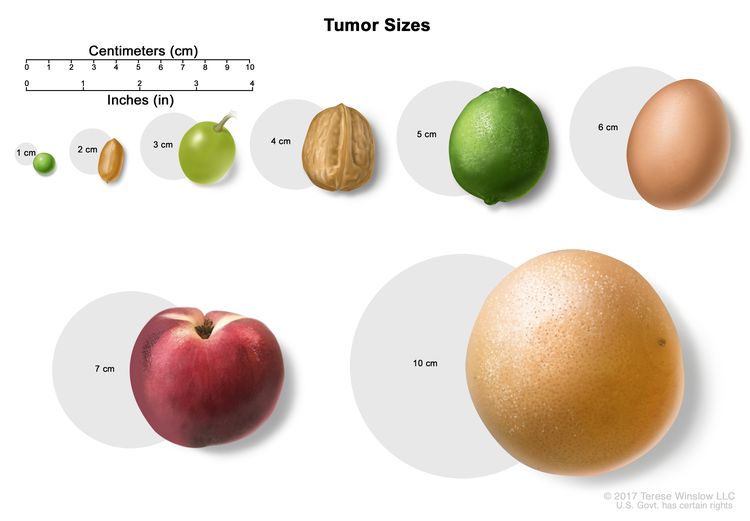
Genetics of Endocrine and Neuroendocrine Neoplasias (PDQ®)–Health Professional Version

Genetics of Endocrine and Neuroendocrine Neoplasias (PDQ®)–Health Professional Version

Executive Summary

This executive summary reviews the topics covered in this PDQ summary on the genetics of endocrine and neuroendocrine neoplasias, with hyperlinks to detailed sections below that describe the evidence on each topic.

  • Inheritance and Risk

    Several hereditary syndromes involve the endocrine or neuroendocrine glands. Multiple endocrine neoplasia type 1 (MEN1), multiple endocrine neoplasia type 2 (MEN2), multiple endocrine neoplasia type 4 (MEN4), familial pheochromocytoma (PHEO) and paraganglioma (PGL) syndrome (FPPL), Carney-Stratakis syndrome (CSS), and familial nonmedullary thyroid cancer (FNMTC) are discussed in this summary. Autosomal dominant pathogenic variants cause most of these syndromes. PHEOs and PGLs may also be found in individuals with von Hippel-Lindau disease. For more information, see von Hippel-Lindau Disease.

  • Associated Genes and Syndromes

    MEN1, which is primarily associated with the development of parathyroid tumors and primary hyperparathyroidism, duodenopancreatic neuroendocrine tumors (NETs), and pituitary tumors, is caused by germline pathogenic variants in the MEN1 gene. The primary endocrine features of MEN2, which is subdivided into MEN2A and MEN2B, include medullary thyroid cancer (MTC); its precursor, C-cell hyperplasia; PHEO; and parathyroid adenomas and/or hyperplasia. MEN2 is caused by germline pathogenic variants in the RET gene. MEN4 is a rare syndrome with clinical features that overlap with the other MEN syndromes; the most common features are primary hyperparathyroidism and pituitary adenomas. MEN4 is caused by germline pathogenic variants in the CDKN1B gene. Both FPPL and CSS are caused by germline pathogenic variants in the SDH genes. PHEOs and PGLs commonly occur sporadically as well, although up to 33% of apparently sporadic PHEOs in individuals with no known family history and up to 40% of apparently sporadic PGLs have a recognizable germline pathogenic variant in one of the known PGL/PHEO susceptibility genes. Multifocal, locally aggressive gastrointestinal stromal tumors (GISTs) are also found in individuals with CSS. FNMTC is a polygenic disease with no single locus responsible for the majority of cases or easily identifiable phenotype and is likely modified by multiple low-penetrance alleles and environmental factors.

  • Clinical Management

    Regular surveillance is a mainstay in individuals found to have or be at risk of carrying a pathogenic variant in MEN1, RET, CDKN1B, or one of the SDH genes. Surveillance recommendations include regular screening for both endocrine and nonendocrine manifestations of disease.

    Surgical management of pituitary and parathyroid tumors in MEN1 is based on disease presentation and management of symptoms of the organ. Surgical management of duodenopancreatic NETs of MEN1 is more specific to preventing disease progression.

    The decision to operate on PHEOs in MEN2 is based on hormonal hypersecretion and symptomatology. Treatment of MTC consists of surgical removal of the entire thyroid gland, including the posterior capsule, and central lymph node dissection. In addition, risk-reducing thyroidectomy has been shown to reduce the subsequent incidence of persistent or recurrent disease in MEN2 patients who had thyroidectomy earlier in life. The timing of risk-reducing thyroidectomy is guided by the risks associated with specific RET variants, although basal calcitonin levels may be used to determine the optimal timing of the procedure. MEN2-related parathyroid disease may also be treated surgically or with medical therapy in high-risk surgical patients.

    Parathyroid and pituitary tumors associated with MEN4 are also managed surgically, in accordance with treatment for other familial syndromes such as MEN1.

    FPPL-associated PHEOs and PGLs are also treated surgically. Preoperative management aimed at preventing catecholamine-induced complications of the surgery is common.

    The mainstay of treatment for CSS-associated GISTs and PGLs is complete surgical resection of the tumor. The timing of the operation correlates with the presentation of the tumor.

    Thyroid cancers associated with FNMTC are also managed surgically, commonly with a total thyroidectomy. Patients who undergo a total thyroidectomy must receive lifelong thyroid hormone replacement therapy.

Introduction

There are several hereditary syndromes that involve endocrine or neuroendocrine glands, such as multiple endocrine neoplasia type 1 (MEN1), multiple endocrine neoplasia type 2 (MEN2), multiple endocrine neoplasia type 4 (MEN4), pheochromocytoma (PHEO), paraganglioma (PGL), Li-Fraumeni syndrome, familial adenomatous polyposis, and von Hippel-Lindau disease. This summary currently focuses on MEN1, MEN2, MEN4, familial PHEO and PGL syndrome, Carney-Stratakis (CSS) syndrome, and familial nonmedullary thyroid cancer (FNMTC). Li-Fraumeni syndrome, familial adenomatous polyposis, Cowden syndrome, and von Hippel-Lindau disease are discussed in the following PDQ summaries: Genetics of Breast and Gynecologic Cancers, Genetics of Colorectal Cancer, and von Hippel-Lindau Disease.

The term multiple endocrine neoplasia is used to describe a group of heritable tumors in endocrine tissues, which can be benign or malignant. Multiple endocrine neoplasias are typically classified into two main categories: MEN1 (also known as Wermer syndrome) and MEN2. Historically, MEN2 was further divided into three subtypes based on the presence or absence of certain endocrine tumors in an individual or family: MEN2A, familial medullary thyroid cancer (FMTC), and MEN2B (which is sometimes referred to as MEN3). FMTC is now considered a subtype of MEN2A.[1] MEN4 was described as a novel syndrome in humans in 2011. Major characteristics of MEN4 include primary hyperparathyroidism and pituitary adenomas. MEN syndrome–associated tumors usually manifest as the overproduction of hormones, tumor growth, or both. For more information, see the MEN1, MEN2, and MEN4 sections.

PGLs and PHEOs are rare tumors arising from chromaffin cells, which have the ability to synthesize, store, and secrete catecholamines and neuropeptides.[2] Either tumor may occur sporadically, as a manifestation of a hereditary syndrome, or as the sole tumor in familial PGL and PHEO syndrome. For more information, see the Familial PHEO and PGL Syndrome section.

Affected individuals with Carney-Stratakis syndrome (CSS) have multifocal, locally aggressive gastrointestinal stromal tumors and multiple neck, intrathoracic, and intra-abdominal PGLs at relatively young ages.[35] CSS is distinct from similarly named syndromes, Carney Complex and Carney Triad. For more information, see the CSS section.

Familial nonmedullary thyroid cancer (FNMTC) is thought to account for 5% to 10% of all differentiated thyroid cancer cases.[68] With the exception of a few rare genetic syndromes that include nonmedullary thyroid cancer as a minor component, most FNMTC is nonsyndromic, and the underlying genetic predisposition is unclear. For more information, see the FNMTC section.

References
  1. Wells SA, Asa SL, Dralle H, et al.: Revised American Thyroid Association guidelines for the management of medullary thyroid carcinoma. Thyroid 25 (6): 567-610, 2015. [PUBMED Abstract]
  2. Inherited tumour syndromes. In: Lloyd RV, Osamura RY, Klöppel G, et al.: WHO Classification of Tumours of Endocrine Organs. 4th ed. International Agency for Research on Cancer, 2017, pp. 262–66.
  3. Carney JA, Stratakis CA: Familial paraganglioma and gastric stromal sarcoma: a new syndrome distinct from the Carney triad. Am J Med Genet 108 (2): 132-9, 2002. [PUBMED Abstract]
  4. McWhinney SR, Pasini B, Stratakis CA, et al.: Familial gastrointestinal stromal tumors and germ-line mutations. N Engl J Med 357 (10): 1054-6, 2007. [PUBMED Abstract]
  5. Pasini B, McWhinney SR, Bei T, et al.: Clinical and molecular genetics of patients with the Carney-Stratakis syndrome and germline mutations of the genes coding for the succinate dehydrogenase subunits SDHB, SDHC, and SDHD. Eur J Hum Genet 16 (1): 79-88, 2008. [PUBMED Abstract]
  6. Stoffer SS, Van Dyke DL, Bach JV, et al.: Familial papillary carcinoma of the thyroid. Am J Med Genet 25 (4): 775-82, 1986. [PUBMED Abstract]
  7. Mazeh H, Sippel RS: Familial nonmedullary thyroid carcinoma. Thyroid 23 (9): 1049-56, 2013. [PUBMED Abstract]
  8. Lupoli G, Vitale G, Caraglia M, et al.: Familial papillary thyroid microcarcinoma: a new clinical entity. Lancet 353 (9153): 637-9, 1999. [PUBMED Abstract]

Multiple Endocrine Neoplasia Type 1

Clinical Description

Multiple endocrine neoplasia type 1 (MEN1) is an autosomal dominant syndrome, with an estimated prevalence of about 1 in 30,000 individuals.[1] The major endocrine features of MEN1 include the following:

A clinical diagnosis of MEN1 may be made when an individual has two of the three major endocrine tumors listed above, especially if he/she was diagnosed with these tumors at a young age. Alternatively, familial MEN1 may be defined as having at least one MEN1 case in the family plus at least one first-degree relative (FDR) with one of these three tumors, or two FDRs with a germline pathogenic variant.[25]

Initial clinical presentation of symptoms typically occurs between the ages of 20 and 30 years. However, in many cases, an MEN1 diagnosis may not be confirmed for many years after initial symptoms occur. The age-related penetrance of MEN1 is 45% to 73% by age 30 years, 82% by age 50 years, and 96% by age 70 years.[2,57] To date, there are no well-established genotype-phenotype correlations to guide clinical management of patients with MEN1.

Parathyroid Tumors and PHPT

The most common features and often the first presenting signs of MEN1 are parathyroid tumors, which result in PHPT. These tumors occur in 80% to 100% of patients by age 50 years.[8,9] MEN1-associated parathyroid tumors are typically multiglandular and hyperplastic. This differs from sporadic parathyroid tumors, which often present with a solitary adenoma.[10] The mean age of PHPT onset is 20 to 25 years in individuals with MEN1. In contrast, PHPT onset occurs in the general population at age 50 to 59 years. When MEN1 presents in childhood, the most common presenting feature is multi-gland hyperparathyroidism.[11] Parathyroid carcinoma in MEN1 is rare but has been described.[1214]

Individuals with MEN1-associated PHPT will have elevated parathyroid hormone (PTH) and calcium levels in the blood. The clinical manifestations of PHPT are mainly the result of hypercalcemia. Mild hypercalcemia may go undetected and have few or no symptoms. More severe hypercalcemia can result in the following:

  • Constipation.
  • Nausea and vomiting.
  • Dehydration.
  • Decreased appetite and abdominal pain.
  • Anorexia.
  • Diuresis.
  • Kidney stones.
  • Increased bone resorption with resultant increased risk of bone fracture.
  • Lethargy.
  • Depression.
  • Confusion.
  • Hypertension.
  • Shortened QT interval.

Since MEN1-associated hypercalcemia is directly related to the presence of parathyroid tumors, surgical removal of these tumors may normalize calcium and PTH levels. This can help relieve an individual’s symptoms. However, there have been high recurrence rates of parathyroid tumors after surgery in some series.[1517] For more information, see the Interventions section.

Duodenopancreatic NETs

Duodenopancreatic NETs are the second most common endocrine manifestation in MEN1, occurring in 30% to 80% of patients by age 40 years.[2,8] A study has shown that the incidence may be as great as twofold higher in young patients (aged 20–40 y) with pathogenic variants in exon 2 of MEN1. These individuals are also more likely to have more aggressive disease and distant metastases.[18] Furthermore, duodenopancreatic NETs are associated with early mortality even after surgical resection.[19]

Duodenopancreatic NETs seen in MEN1 include the following:

  • Gastrinomas.
  • Nonfunctioning NETs.
  • Insulinomas.
  • Vasoactive intestinal peptide tumors (VIPomas).
  • Glucagonomas.
  • Somatostatinomas.
Table 1. MEN1-Associated Duodenopancreatic Neuroendocrine Tumors
Tumor type Estimated Penetrance Symptoms
MEN1 = multiple endocrine neoplasia type 1.
Gastrinoma ≤70% [8,20] Peptic ulcer disease and esophagitis
Diarrhea
Abdominal pain
Weight loss
Nonfunctioning 20%–55% [8,21] Local compressive symptoms: abdominal pain, jaundice, anorexia, weight loss
Insulinoma 10% [8] Whipple’s triad: symptomatic hypoglycemia reversed by glucose administration with associated elevation of insulin, C-peptide, and proinsulin levels
Vasoactive intestinal peptide 1% [8,22] Watery diarrhea
Hypokalemia
Achlorhydria
Glucagonoma 1% [8,22] Diabetes mellitus
Diarrhea
Depression
Necrolytic migratory erythema
Thromboembolic disease
Somatostatinoma <1% [22] Diabetes mellitus
Diarrhea/steatorrhea
Gallbladder disease
Hypochlorhydria
Weight loss

Gastrinomas represent 50% of the gastrointestinal NETs in MEN1 and are the major cause of morbidity and mortality in MEN1 patients.[2,15] Gastrinomas are usually multicentric, with small (<0.5 cm) foci throughout the duodenum.[23] Most result in peptic ulcer disease (Zollinger-Ellison syndrome), and half are malignant at the time of diagnosis.[5,15,23,24]

Originally, nonfunctioning duodenopancreatic NETs were thought to be uncommon in individuals with MEN1. However, recognition of these tumors has increased with advanced genetic testing and improved imaging techniques. For example, a prospective study showed that MEN1 pathogenic variant carriers had a nonfunctioning duodenopancreatic NET frequency of 55% by age 39 years when they underwent endoscopic ultrasonography of the pancreas.[21,25] These tumors can be metastatic. One study of 108 MEN1 pathogenic variant carriers with nonfunctioning duodenopancreatic NETs showed a positive correlation between tumor size, rate of metastasis, and death. Individuals with tumors larger than 2 cm had significantly higher rates of metastasis than those with tumors smaller than 2 cm.[26] For more information, see the Molecular Genetics of MEN1 section.

Pituitary Tumors

Approximately 15% to 50% of MEN1 patients will develop a pituitary tumor.[2,8] Two-thirds are microadenomas (<1.0 cm in diameter), and the majority are prolactin-secreting.[27] Other pituitary tumors can include somatotropinomas and corticotropinomas, or they may be nonfunctioning.

Table 2. MEN1-Associated Pituitary Tumors
Tumor type Estimated Penetrance Symptoms
MEN1 = multiple endocrine neoplasia type 1.
Prolactinoma 20% [8] Galactorrhea
Amenorrhea/infertility
Hypogonadism
Somatotropinoma 10% [8] Coarse facial features
Soft tissue overgrowth: enlargement of hands/feet
Hyperhidrosis
Corticotropinoma <5% [8] Weight gain
Hypertension
Flushing
Easy bruising/bleeding
Hyperglycemia

Other MEN1-Associated Tumors

Other manifestations of MEN1 include carcinoids of the foregut (5%–10% of MEN1 patients). These are typically bronchial or thymic and are sometimes gastric. Skin lesions are also common and can include facial angiofibromas (up to 80% of MEN1 patients) and collagenomas (~75% of MEN1 patients).[28] Lipomas (~30% of MEN1 patients) and adrenal cortical lesions (up to 50% of MEN1 patients),[29] including cortical adenomas, diffuse or nodular hyperplasia, or rarely, carcinoma are also common.[3032] The following manifestations have also been reported:[3335]

  • Thyroid adenoma.
  • Pheochromocytoma.
  • Spinal ependymoma.
  • Meningioma.
  • Leiomyoma (e.g., esophageal, lung, and uterine).

Making the Diagnosis of MEN1

MEN1 is often difficult to diagnose in the absence of a significant family history or a positive genetic test for a pathogenic variant in the MEN1 gene. One study of 560 individuals with MEN1 showed a significant delay between the time of the first presenting symptom and the diagnosis of MEN1.[36] This time lapse is likely because some presenting symptoms of MEN1-associated tumors, such as amenorrhea, peptic ulcers, hypoglycemia, and nephrolithiasis, are not specific to MEN1.

Furthermore, identification of an MEN1-associated tumor is not sufficient to make the clinical diagnosis of MEN1 and may not trigger a referral to an endocrinologist. The median time between the first presenting symptom and diagnosis of MEN1 ranges from 7.6 years to 12 years.[6,31] Genetic testing alleviates some of this delay. Several studies have shown statistically significant differences in the age at MEN1 diagnosis between probands and their family members. In one study, clinically symptomatic probands were diagnosed with MEN1 at a mean age of 47.5 years (standard deviation [SD] +/- 13.5 y), while family members were diagnosed at a mean age of 38.5 years (SD +/- 15.4 y; P < .001).[36] In another study of 154 individuals with MEN1, probands were diagnosed at a mean age of 39.5 years (range: 18–74 y), compared with a mean age of 27 years (range: 14–56 y; P < .05) in family members diagnosed by predictive genetic testing.[37] Nonetheless, the lag time between the diagnosis of MEN1 in an index case and the diagnosis of MEN1 in family members can be significant, leading to increased morbidity and mortality.[38] This was demonstrated in a Dutch MEN1 Study Group analysis, which showed that 10% to 38% of non-index cases already had an MEN1-related manifestation at diagnosis; 4% of these individuals died of an MEN1-related cause that developed during or before the lag time. In family members, the majority of the morbidity related to lag time was due to metastatic duodenopancreatic NETs, pituitary macroadenomas, and multiple MEN1 manifestations.[38] Early intervention is particularly critical as it relates to mortality from duodenopancreatic NETs. A study showed that for every year older at time of surgery, the odds of metastasis increased by 6%.[19] These findings underscore the importance of increased awareness of the signs and symptoms of MEN1-related tumors and the constellation of findings necessary to suspect the diagnosis. It also highlights the importance of genetic counseling and testing and communication among family members once a diagnosis of MEN1 is made.[39,40] Figure 1 illustrates some of the challenges in identifying MEN1 in a family.

EnlargePedigree showing some of the features of a family with a deleterious MEN1 mutation across four generations, including transmission occurring through paternal lineage. The unaffected male proband is shown as having an affected sister (self-report of neck surgery confirmed upon review of medical records to be hyperparathyroidism diagnosed at age 18 y, parathyroidectomy, and pituitary adenoma), father (self-report of stomach cancer confirmed upon review of medical records to be gastrinoma diagnosed at age 45 y), and paternal grandmother (suspected hyperparathyroidism and/or pancreatic tumor).
Figure 1. MEN1 pedigree. MEN1 can be very difficult to identify in a pedigree. The pedigree on the left was constructed based on self-report, and the pedigree on the right depicts the same family following a review of available medical records. This pedigree shows some of the features of a family with an MEN1 pathogenic variant across four generations, including affected family members with hyperparathyroidism, a pituitary adenoma, gastrinoma, and a suspected pancreatic tumor. The tumors in MEN1 typically occur at an earlier age than their sporadic counterparts. MEN1 families may exhibit some or all of these features. As an autosomal dominant syndrome, transmission can occur through maternal or paternal lineages, as depicted in the figure.

Since many of the tumors in MEN1 are underdiagnosed or misdiagnosed, identifying an MEN1 gene pathogenic variant in the proband early in the disease process can allow for early detection and treatment of tumors and earlier identification of at-risk family members. Many studies have been performed to determine the prevalence of MEN1 gene pathogenic variants among patients with apparently sporadic MEN1-related tumors.[8] For example, approximately one-third of patients with Zollinger-Ellison syndrome will carry an MEN1 pathogenic variant.[41,42] In individuals with apparently isolated PHPT or pituitary adenomas, the pathogenic variant prevalence is lower, on the order of 2% to 5%,[27,43,44] but the prevalence is higher in individuals diagnosed with these tumors before age 30 years. Some authors suggest referral for genetics consultation and/or genetic testing for pathogenic variants in MEN1 if one of the following conditions is present:[8,4547]

  • Gastrinoma at any age in the individual or an FDR.
  • Multifocal duodenopancreatic NETs at any age.
  • PHPT before age 30 or 40 years.
  • Multiglandular parathyroid adenomas/hyperplasia or recurrent PHPT.
  • Presence of one of the three main MEN1 tumors plus one of the less common tumors/findings.
  • Presence of two or more features (e.g., adrenal adenomas and carcinoid tumor).
  • Combination of at least two of the following in one individual: parathyroid adenoma; thymic, bronchial, or foregut carcinoid tumor; duodenopancreatic NET; pituitary tumor; adrenal tumor.
  • Parathyroid adenoma and a family history of hyperparathyroidism, pituitary adenoma, duodenopancreatic NET, or foregut carcinoid tumor.
  • Multiple primary duodenopancreatic NETs in the same person.

Molecular Genetics of MEN1

The MEN1 gene is located on chromosome 11q13 and encodes the protein menin.[3,48,49] Over 1,300 pathogenic variants have been identified in the MEN1 gene to date, and these are scattered across the entire coding region.[50,51] Most (~65%) of these are nonsense or frameshift variants. The remainder are missense variants (20%) (which lead to the expression of an altered protein), splice-site variants (9%), or partial- or whole-gene deletions (1%–4%).[52] In MEN1, phenotypic variation is common within a family and between unrelated individuals. Data suggested that anticipation may also occur in families with MEN1 pathogenic variants.[8,5355] One large study demonstrated that pituitary, adrenal, and thymic NETs had the highest rates of heritability.[56]

Genetic Testing and Differential Diagnosis for MEN1

Genetic testing for MEN1 pathogenic variants is recommended for individuals meeting clinical diagnostic criteria and may be considered in individuals with less common MEN1-associated tumors. For more information, see the Making the diagnosis of MEN1 section. For individuals meeting diagnostic criteria, the pathogenic variant detection rate is approximately 75% to 90%.[53,57] Still, germline pathogenic variant yield ranged from 16% to 38% for apparently sporadic cases of parathyroid (15.8%), pancreatic islet (25.0%), or pituitary (37.5%) tumors. Genetic testing may be warranted in these individuals because a diagnosis of MEN1 would prompt screening for other MEN1-related tumors.[58] Laboratories that offer MEN1 testing primarily use DNA sequencing. Several laboratories offer additional analyses for MEN1 partial- or whole-gene deletion and/or duplication. However, these types of variants are rare. Deletion/duplication testing is often reserved for individuals who have very high clinical suspicions for MEN1 but a detectable pathogenic variant was not found by direct DNA sequencing. Evolving studies continue to reveal causative pathogenic variants in MEN1.[52]

A multigene panel that includes MEN1 and other genes associated with an increased risk of endocrine tumors may also be used. Such genetic testing can be used to distinguish between MEN1 and other forms of hereditary hyperparathyroidism, such as familial isolated hyperparathyroidism (FIHP), hyperparathyroidism–jaw tumor syndrome (HPT-JT), and familial hypocalciuric hypercalcemia (FHH). [Note: The hyperparathyroidism in FHH is not primary hyperparathyroidism, which is seen in MEN1, HPT-JT and FIHP.] HPT-JT, which is caused by germline pathogenic variants in the CDC73 gene, is associated with PHPT, ossifying lesions of the maxilla and mandible, and renal lesions, usually bilateral renal cysts, hamartomas, and in some cases, Wilms tumor.[59,60] Unlike MEN1, HPT-JT is associated with an increased risk of parathyroid carcinoma.[61] FIHP, as its name suggests, is characterized by isolated PHPT with no additional endocrine features; in some families, FIHP is the initial diagnosis of what later develops into MEN1, HPT-JT, or FHH.[6264] Approximately 20% of families with a clinical diagnosis of FIHP carry germline MEN1 pathogenic variants.[63,65,66] Pathogenic variants in the calcium-sensing receptor (CASR) gene cause FHH, which can closely mimic the hyperparathyroidism seen in MEN1.

Genetic diagnosis will help guide management for patients with early-onset hyperparathyroidism. This is especially crucial, since many of the above conditions have different management guidelines that correspond with their features. For example, distinguishing between MEN1 and FHH can be critical for a patient’s disease management. Removing the parathyroid glands in FHH does not correct the hyperparathyroidism that is seen in patients with MEN1. This could result in an unnecessary surgery that would not relieve the patient’s symptoms. In addition, HPT-JT is unique because it increases parathyroid carcinoma risk. Hence, individuals with this syndrome have different management guidelines than individuals with other forms of hereditary hyperparathyroidism.[67,68] For more information on MEN1 clinical features and other forms of hyperparathyroidism, see Table 3.

Table 3. Major Clinical Features of MEN1, FIHP, HPT-JT, and FHH
Condition Gene(s) Major Clinical Features
FHH = familial hypocalciuric hypercalcemia; FIHP = familial isolated hyperparathyroidism; HPT-JT = hyperparathyroidism–jaw tumor syndrome; MEN1 = multiple endocrine neoplasia type 1 (gene is italicized); NETs = neuroendocrine tumors; PHPT = primary hyperparathyroidism.
MEN1 MEN1 PHPT, pituitary adenomas, duodenopancreatic NETs [8,10,69]
FIHP MEN1, CDC73 PHPT [6266]
HPT-JT CDC73 PHPT; osteomas of maxilla and mandible; renal cysts or hamartomas; and rarely, Wilms tumor and parathyroid carcinoma [5961]
FHH CASR (type 1), GNA11 (type 2), AP2S1 (type 3) Hyperparathyroidism (not primary) [67,7072]

Surveillance

Screening and surveillance for MEN1 may include a combination of biochemical tests and imaging techniques.

Traditionally, magnetic resonance imaging (MRI) was used for surveillance and staging. However, ongoing studies have evaluated the role of MRI in functional imaging, including gallium Ga 68-DOTATATE (68Ga-DOTATATE) positron emission tomography (PET)–computed tomography (CT) scanning. A multicenter retrospective study examined 108 MEN1 patients undergoing PET-CT for screening, staging, restaging, or targeted radiotherapy selection. This study demonstrated that PET-CT has the potential to increase diagnostic sensitivity when searching for MEN1-associated NETs.[73] In 51% of cases, PET-CT provided superior lesion detection when compared with conventional imaging techniques. However, the retrospective nature of the study makes it impossible to discern how much selection bias may have impacted the study’s findings. Consequently, PET-CT’s exact role in detecting metastasis remains unclear. PET-CT’s potentially improved diagnostic sensitivity must also be weighed against its increased levels of radiation exposure, which are higher than that of other imaging modalities. Radiation exposure is particularly relevant for MEN1 patients, who are prone to developing aggressive malignancies. The issue is even more nuanced in young patients who require lifelong screening to detect aggressive MEN1-associated malignancies early.

A study analyzed thoracic screening techniques in 50 patients with MEN1. It found that when patients with MEN1 underwent functional imaging with fluorine F 18-fludeoxyglucose (18F-FDG) PET-CT screening, they had a similar number of lung nodules as individuals in the general population. However, when lesions in MEN1 patients were FDG-avid, they were more likely to progress during the follow-up period. Therefore, further observation and follow up of FDG-avid lesions may be warranted in patients with MEN1.[74] While lung-specific imaging is not routinely performed in MEN1 patients, the lungs are visualized during MRI surveillance of thymic lesions. When pulmonary lesions are identified, it is important to recognize that lung NETs may grow slowly and may have a good prognosis. Referral to a multidisciplinary team may be beneficial for selective resection of lung NETs.[75]

Recommendations for MEN1 surveillance are summarized in Table 4.[4,8]

Table 4. Practice Guidelines for Surveillance of MEN1a
Biochemical Test or Procedure Condition Screened For Age Screening Initiated (y) Frequency
CT = computed tomography; MEN1 = multiple endocrine neoplasia type 1; MRI = magnetic resonance imaging; NETs = neuroendocrine tumors; PHPT = primary hyperparathyroidism; PTH = parathyroid hormone.
aAdapted from Brandi et al.[4] and Thakker et al.[8]
bThe recommendations for abdominal imaging differ between two published guidelines for the diagnosis and management of MEN1.[4,8] There is weak evidence at this time to support annual imaging before age 10 years. Imaging before age 10 years does identify disease in a high proportion of patients, but it is not clear whether this impacts prognosis.[21,76]
cThe age to initiate screening and the screening frequency for pituitary tumors may be debatable because the clinical significance of small, nonfunctional tumors is unclear;[77] further study may be warranted.
dAdapted from Niederle et al.[5]
eAdapted from Shirali et al.[78] The 2012 guidelines recommend chest MRI every 1-2 years.[8]
Serum prolactin and/or insulin-like growth factor 1 Pituitary tumors 5 Every 1 y
Fasting total serum calcium and/or ionized calcium and PTH Parathyroid tumors and PHPT 8 Every 1 y
Fasting serum gastrin Duodenopancreatic gastrinoma 20 Every 1 y
Chromogranin A, pancreatic polypeptide, glucagon, and vasointestinal polypeptided Duodenopancreatic NETs 10–16 Up to every 3 years (consider every 3 years if asymptomatic; consider shorter screening intervals depending on the clinical scenario)
Fasting glucose and insulin Insulinoma 5 Every 1 y
Brain MRIc Pituitary tumors 5 Every 3–5 y based on biochemical results
Chest MRIe Thymic and bronchial NETs <20 About every 3 years. Consider more frequent screening for men, smokers, or individuals with a positive family history. Baseline chest MRI is done prior to parathyroidectomy
Abdominal CT or MRIb [4] Duodenopancreatic NETs 20 Every 3–5 y based on biochemical results
Abdominal CT, MRI, or endoscopic ultrasonographyb [8] Duodenopancreatic NETs <10 Every 1 y

Interventions

Surgical management of MEN1 is complex and controversial, given the multifocal and multiglandular nature of the disease. Patients with MEN1 have a high risk of tumor recurrence, even after surgery. Additionally, these patients may have an increased risk of developing venous thromboembolisms.[79] Clinicians should be aware of this risk, particularly in the perioperative period. It is critical to establish an MEN1 diagnosis before making surgical decisions, in order to prevent unnecessary and/or inappropriate surgeries. Furthermore, it is recommended that individuals with MEN1 use a surgeon who has experience treating this disease.

Treatment for parathyroid tumors

Once evidence of parathyroid disease is established biochemically, surgical removal of the hyperfunctional parathyroid tissue is recommended to achieve eucalcemia and euparathyroidism. However, the timing and the amount of parathyroid and thymus gland tissue that is removed during surgery remains controversial.[40] For patients with primary hyperparathyroidism who are at risk for MEN1, preoperative detection of a pathogenic variant helps guide the extent of their initial operations, can increase the likelihood of successful initial surgeries, and lower the likelihood of recurrent disease.[68] Furthermore, knowledge of an MEN1 pathogenic variant can help guide surgical decision making and avoid the use of a single-gland surgical approach. Studies have shown that concomitant bilateral cervical thymectomy decreases the rate of parathyroid tumor recurrence and suggests that the thymus can be removed during the patient’s initial operation.[80]

Some groups reserve surgical intervention for symptomatic patients, with continued annual biochemical screening for those without objective signs of disease. Subtotal parathyroidectomy (removal of 3–3.5 glands) is commonly suggested as the initial surgical treatment when a provider decides to proceed with surgery.[68] If 3.5 or more glands are removed during surgery, the rate of persistent disease is only 5% to 6%. Removing fewer than 3.5 glands decreases the durability of eucalcemia. Studies suggest that preoperative imaging (to determine which glands are hyperfunctional) is not reliable enough to justify unilateral exploration, with 86% of patients having enlarged contralateral parathyroid glands.[81] Fifty percent of the patients who had imaging to direct resection had the largest parathyroid gland identified intraoperatively on the contralateral side of greatest uptake.[81] Insufficient resection fails to accomplish the desired eucalcemia.[1517,68]

Total parathyroidectomy with autotransplantation of parathyroid tissue to a distant site, such as the forearm, is a less commonly recommended option. Likelihood of cancer recurrence is lowered with total parathyroidectomy. However, this procedure also renders the patient aparathyroid for a period of time while the autotransplanted tissue becomes functional. This can cause a permanent PTH deficiency (no detectable PTH in the body).[80,82] Benefits of this approach include the following: 1) it is easier remove/debulk recurrent disease from the forearm than it is to remove/debulk recurrent disease from the neck, and 2) differential lateralization with arm blood draws. Hypocalcemia management involves taking numerous oral medications, including calcitrol and calcium replacement, and these daily requirements can be a major burden for patients. Recovery was less likely for patients who were aparathyroid for 6 months after total parathyroidectomy.[83] In select high-risk patients, like in those who had reoperative parathyroidectomy or cervical surgery, cryopreservation can be beneficial, but it is recommended that providers use this method sparingly.

Treatment for duodenopancreatic NETs

The timing and extent of surgery for duodenopancreatic NETs are controversial and depend on many factors, including severity of symptoms, extent of disease, functional component, location and necessity of simple enucleation, subtotal or total pancreatectomy, and pancreaticoduodenectomy (Whipple procedure). Surgical enucleation has been associated with higher recurrence compared with distal pancreatectomy, and a decreased rate of endocrine insufficiency compared with a Whipple procedure.[84] Tumor size has been suggested to advocate for surgical resection on the basis of the increased propensity for risk of metastases or recurrence with increased tumor diameter.[5,85,86] Unfortunately, there is no specific tumor marker or combination of tumor markers that are predictive of disease-specific mortality.[87] Long-acting somatostatin analogs may have a role in early-stage MEN1 duodenopancreatic NETs.[88] Initial study results of pharmacological therapy suggest that the treatment is safe and that long-term suppression of tumor and hormonal activity can be seen in up to 10% of patients and stability of hormone hyperfunction in 80% of patients.[88] The primary goal of surgery is to improve long-term survival by reducing symptoms associated with hormone excess and lowering the risk of distant metastasis.[24] Surgery is commonly performed for most functional tumors and for nonfunctioning NETs when the tumor exceeds 2 to 3 cm because the likelihood of distant metastases is high.[86,8991] Structural imaging modalities alone are suboptimal for predicting the malignant potential of duodenopancreatic NETs. However, a study found that screening MEN1 patients with 18F-FDG PET-CT identified those NETs with an increased malignant potential; the FDG avidity correlated with a Ki-67 index.[92] Tumor size does seem to influence patient survival, with patients with smaller tumors having increased survival after resection.[93] While more-extensive surgical approaches (e.g., pancreatoduodenectomy) have been associated with higher cure rates and improved overall survival,[9496] they also have higher rates of postoperative complications and long-term morbidity.[97] Therefore, the risks and benefits should be carefully considered, and surgical decisions should be made on a case-by-case basis. With regard to open or laparoscopic approaches, in selected patients, pancreatic laparoscopic surgery appears to be safe and associated with a shorter length of stay and fewer complications.[98]

Individuals with MEN1 who are diagnosed with NETs often have multiple tumors of various types throughout the pancreas and duodenum, some of which can be identified using magnetic resonance imaging or computed tomography (CT). Combining functional tracer accumulation with anatomic imaging improves tumor localization. 68Ga-DOTATATE PET-CT demonstrates excellent sensitivity in mapping duodenopancreatic NET disease. This modality may guide the initial workup and appears to be superior to standard somatostatin octreotide, especially for lesions smaller than 10 mm.[99,100] Many tumors are too small to be detected using standard imaging techniques, and intra-arterial secretin stimulation testing and/or intraoperative ultrasonography may also be useful.[101,102] Preoperative assessment using a combination of various biochemical and imaging modalities, intraoperative assessment of tumor burden, and resolution of hormonal hyper-secretion are critical and, in some series, have been associated with higher cure rates and longer disease-free intervals.[101104]

In the current era of effective treatment for hyperfunctional hormone excess states, most MEN1-related deaths are due to the malignant nature of duodenopancreatic NETs. A less common but important risk of death is from malignant thymic carcinoid tumors. Indicators of a poor MEN1 prognosis include elevated fasting serum gastrin, the presence of functional hormonal syndromes, liver or distant metastases, aggressive duodenopancreatic NET growth, large duodenopancreatic NET size, or the need for multiple parathyroidectomies. The most common cause of non-MEN1–related death in this patient cohort is from cardiovascular disease.[105]

Other duodenopancreatic NETs

Glucagonomas, VIPomas, and somatostatinomas are rare but often have higher rates of malignancy than other duodenopancreatic NETs.[22] These are often treated with aggressive surgery.[106]

Insulinomas

Medical management of insulinoma using diet and medication is often unsuccessful; the mainstay of treatment for this tumor is surgical resection.[8] Insulinomas in MEN1 patients can be located throughout the pancreas, with a preponderance found in the distal gland,[107109] and have a higher rate of metastasis than sporadic insulinoma.[106] Surgery can range from enucleation of single or multiple large tumors to partial pancreatic resection, or both,[108] to subtotal or total pancreatectomy.[107,108] More-extensive surgical approaches are associated with a lower rate of recurrence [94,95,108,110] but a higher rate of postoperative morbidity. Because insulinoma often occurs in conjunction with nonfunctioning pancreatic tumors, the selective intra-arterial calcium-injection test (SAS test) may be necessary to determine the source of insulin excess.[111] Intraoperative monitoring of insulin/glucose can help determine whether insulin-secreting tumors have been successfully excised.[102,112]

Gastrinomas

Most MEN1-associated gastrinomas originate in the duodenum. These tumors are typically multifocal and cause hyper-secretion of gastrin, with resultant peptic ulcer disease (Zollinger-Ellison syndrome).[113] The multifocal nature makes complete surgical resection difficult. It is critical to manage symptoms before considering any type of surgical intervention.[114] Historically, some groups have recommended close observation of individuals with smaller tumors (<2.0 cm on imaging) who have relief of symptoms using medications (e.g., proton pump inhibitors or histamine-2 agonists);[115] however, this approach may not be optimal for all patients.

Several published series have shown a positive correlation between primary tumor size and rate of distant metastasis. One retrospective study showed that 61% of patients with tumors larger than 3 cm had liver metastases.[24] In another series, 40% of patients with tumors larger than 3 cm had liver metastases.[116] In contrast, both of these series showed significantly lower rates of liver metastases in individuals with tumors smaller than 3 cm (32% and 4.8%, respectively). On the basis of these and other data, many groups recommend surgery in individuals with nonmetastatic gastrinoma who have tumors larger than 2 cm.[8,96]

The type of surgery for gastrinoma depends on many factors. A Whipple procedure is typically discouraged as an initial surgery, given the high postoperative morbidity and long-term complications, such as diabetes mellitus and malabsorption. Less extensive operations have been described with varying results. At a minimum, duodenectomy with intraoperative palpation and/or ultrasonography to locate and excise duodenal tumors and peri-pancreatic lymph node dissection are performed.[101,117] Because most patients with gastrinoma will have concomitant NETs throughout the pancreas, some of which may be nonfunctional, some groups recommend resection of the distal pancreas and enucleation of tumors in the pancreatic head in addition to duodenal tumor excision.[101,117,118]

Nonfunctioning NETs

Approximately 50% of individuals with MEN1 will develop nonfunctioning NETs.[21,26] These are often identified incidentally during assessment and exploration for functioning tumors. As with gastrinomas, the metastatic rate is correlated with larger tumor size.[26,86] Tumors smaller than 1.5 cm are not likely to have lymph node metastases,[119] although the presence of metastatic disease has been associated with earlier age at death than in those without duodenopancreatic NETs.[9,26]

Pituitary tumors

Medical therapy to suppress hypersecretion is often the first line of therapy for MEN1-associated pituitary tumors. In one series of 136 patients, medical therapy was successful in approximately one-half of patients with secreting tumors (49 of 116, 42%), and successful suppression was correlated with smaller tumor size.[120] Surgery is often necessary for patients who are resistant to this treatment. Radiation therapy is reserved for patients for whom complete surgical resection was not rendered.[8,121]

References
  1. Agarwal SK, Ozawa A, Mateo CM, et al.: The MEN1 gene and pituitary tumours. Horm Res 71 (Suppl 2): 131-8, 2009. [PUBMED Abstract]
  2. Trump D, Farren B, Wooding C, et al.: Clinical studies of multiple endocrine neoplasia type 1 (MEN1) QJM 89 (9): 653-69, 1996. [PUBMED Abstract]
  3. Chandrasekharappa SC, Guru SC, Manickam P, et al.: Positional cloning of the gene for multiple endocrine neoplasia-type 1. Science 276 (5311): 404-7, 1997. [PUBMED Abstract]
  4. Brandi ML, Gagel RF, Angeli A, et al.: Guidelines for diagnosis and therapy of MEN type 1 and type 2. J Clin Endocrinol Metab 86 (12): 5658-71, 2001. [PUBMED Abstract]
  5. Niederle B, Selberherr A, Bartsch DK, et al.: Multiple Endocrine Neoplasia Type 1 and the Pancreas: Diagnosis and Treatment of Functioning and Non-Functioning Pancreatic and Duodenal Neuroendocrine Neoplasia within the MEN1 Syndrome – An International Consensus Statement. Neuroendocrinology 111 (7): 609-630, 2021. [PUBMED Abstract]
  6. Carty SE, Helm AK, Amico JA, et al.: The variable penetrance and spectrum of manifestations of multiple endocrine neoplasia type 1. Surgery 124 (6): 1106-13; discussion 1113-4, 1998. [PUBMED Abstract]
  7. Goudet P, Dalac A, Le Bras M, et al.: MEN1 disease occurring before 21 years old: a 160-patient cohort study from the Groupe d’étude des Tumeurs Endocrines. J Clin Endocrinol Metab 100 (4): 1568-77, 2015. [PUBMED Abstract]
  8. Thakker RV, Newey PJ, Walls GV, et al.: Clinical practice guidelines for multiple endocrine neoplasia type 1 (MEN1). J Clin Endocrinol Metab 97 (9): 2990-3011, 2012. [PUBMED Abstract]
  9. Goudet P, Murat A, Binquet C, et al.: Risk factors and causes of death in MEN1 disease. A GTE (Groupe d’Etude des Tumeurs Endocrines) cohort study among 758 patients. World J Surg 34 (2): 249-55, 2010. [PUBMED Abstract]
  10. Chandrasekharappa SC, Teh BT: Clinical and molecular aspects of multiple endocrine neoplasia type 1. Front Horm Res 28: 50-80, 2001. [PUBMED Abstract]
  11. Shariq OA, Lines KE, English KA, et al.: Multiple endocrine neoplasia type 1 in children and adolescents: Clinical features and treatment outcomes. Surgery 171 (1): 77-87, 2022. [PUBMED Abstract]
  12. del Pozo C, García-Pascual L, Balsells M, et al.: Parathyroid carcinoma in multiple endocrine neoplasia type 1. Case report and review of the literature. Hormones (Athens) 10 (4): 326-31, 2011 Oct-Dec. [PUBMED Abstract]
  13. Christakis I, Busaidy NL, Cote GJ, et al.: Parathyroid carcinoma and atypical parathyroid neoplasms in MEN1 patients; A clinico-pathologic challenge. The MD Anderson case series and review of the literature. Int J Surg 31: 10-6, 2016. [PUBMED Abstract]
  14. Singh Ospina N, Sebo TJ, Thompson GB, et al.: Prevalence of parathyroid carcinoma in 348 patients with multiple endocrine neoplasia type 1 – case report and review of the literature. Clin Endocrinol (Oxf) 84 (2): 244-249, 2016. [PUBMED Abstract]
  15. Norton JA, Venzon DJ, Berna MJ, et al.: Prospective study of surgery for primary hyperparathyroidism (HPT) in multiple endocrine neoplasia-type 1 and Zollinger-Ellison syndrome: long-term outcome of a more virulent form of HPT. Ann Surg 247 (3): 501-10, 2008. [PUBMED Abstract]
  16. Hellman P, Skogseid B, Oberg K, et al.: Primary and reoperative parathyroid operations in hyperparathyroidism of multiple endocrine neoplasia type 1. Surgery 124 (6): 993-9, 1998. [PUBMED Abstract]
  17. Schreinemakers JM, Pieterman CR, Scholten A, et al.: The optimal surgical treatment for primary hyperparathyroidism in MEN1 patients: a systematic review. World J Surg 35 (9): 1993-2005, 2011. [PUBMED Abstract]
  18. Christakis I, Qiu W, Hyde SM, et al.: Genotype-phenotype pancreatic neuroendocrine tumor relationship in multiple endocrine neoplasia type 1 patients: A 23-year experience at a single institution. Surgery 163 (1): 212-217, 2018. [PUBMED Abstract]
  19. Donegan D, Singh Ospina N, Rodriguez-Gutierrez R, et al.: Long-term outcomes in patients with multiple endocrine neoplasia type 1 and pancreaticoduodenal neuroendocrine tumours. Clin Endocrinol (Oxf) 86 (2): 199-206, 2017. [PUBMED Abstract]
  20. Norton JA, Krampitz G, Jensen RT: Multiple Endocrine Neoplasia: Genetics and Clinical Management. Surg Oncol Clin N Am 24 (4): 795-832, 2015. [PUBMED Abstract]
  21. Thomas-Marques L, Murat A, Delemer B, et al.: Prospective endoscopic ultrasonographic evaluation of the frequency of nonfunctioning pancreaticoduodenal endocrine tumors in patients with multiple endocrine neoplasia type 1. Am J Gastroenterol 101 (2): 266-73, 2006. [PUBMED Abstract]
  22. Lévy-Bohbot N, Merle C, Goudet P, et al.: Prevalence, characteristics and prognosis of MEN 1-associated glucagonomas, VIPomas, and somatostatinomas: study from the GTE (Groupe des Tumeurs Endocrines) registry. Gastroenterol Clin Biol 28 (11): 1075-81, 2004. [PUBMED Abstract]
  23. Pipeleers-Marichal M, Somers G, Willems G, et al.: Gastrinomas in the duodenums of patients with multiple endocrine neoplasia type 1 and the Zollinger-Ellison syndrome. N Engl J Med 322 (11): 723-7, 1990. [PUBMED Abstract]
  24. Weber HC, Venzon DJ, Lin JT, et al.: Determinants of metastatic rate and survival in patients with Zollinger-Ellison syndrome: a prospective long-term study. Gastroenterology 108 (6): 1637-49, 1995. [PUBMED Abstract]
  25. Tonelli F, Giudici F, Fratini G, et al.: Pancreatic endocrine tumors in multiple endocrine neoplasia type 1 syndrome: review of literature. Endocr Pract 17 (Suppl 3): 33-40, 2011 Jul-Aug. [PUBMED Abstract]
  26. Triponez F, Dosseh D, Goudet P, et al.: Epidemiology data on 108 MEN 1 patients from the GTE with isolated nonfunctioning tumors of the pancreas. Ann Surg 243 (2): 265-72, 2006. [PUBMED Abstract]
  27. Corbetta S, Pizzocaro A, Peracchi M, et al.: Multiple endocrine neoplasia type 1 in patients with recognized pituitary tumours of different types. Clin Endocrinol (Oxf) 47 (5): 507-12, 1997. [PUBMED Abstract]
  28. Darling TN, Skarulis MC, Steinberg SM, et al.: Multiple facial angiofibromas and collagenomas in patients with multiple endocrine neoplasia type 1. Arch Dermatol 133 (7): 853-7, 1997. [PUBMED Abstract]
  29. Ventura M, Melo M, Carrilho F: Outcome and long-term follow-up of adrenal lesions in multiple endocrine neoplasia type 1. Arch Endocrinol Metab 63 (5): 516-523, 2019. [PUBMED Abstract]
  30. Machens A, Schaaf L, Karges W, et al.: Age-related penetrance of endocrine tumours in multiple endocrine neoplasia type 1 (MEN1): a multicentre study of 258 gene carriers. Clin Endocrinol (Oxf) 67 (4): 613-22, 2007. [PUBMED Abstract]
  31. Pieterman CR, Schreinemakers JM, Koppeschaar HP, et al.: Multiple endocrine neoplasia type 1 (MEN1): its manifestations and effect of genetic screening on clinical outcome. Clin Endocrinol (Oxf) 70 (4): 575-81, 2009. [PUBMED Abstract]
  32. Waldmann J, Bartsch DK, Kann PH, et al.: Adrenal involvement in multiple endocrine neoplasia type 1: results of 7 years prospective screening. Langenbecks Arch Surg 392 (4): 437-43, 2007. [PUBMED Abstract]
  33. Gibril F, Schumann M, Pace A, et al.: Multiple endocrine neoplasia type 1 and Zollinger-Ellison syndrome: a prospective study of 107 cases and comparison with 1009 cases from the literature. Medicine (Baltimore) 83 (1): 43-83, 2004. [PUBMED Abstract]
  34. McKeeby JL, Li X, Zhuang Z, et al.: Multiple leiomyomas of the esophagus, lung, and uterus in multiple endocrine neoplasia type 1. Am J Pathol 159 (3): 1121-7, 2001. [PUBMED Abstract]
  35. Vortmeyer AO, Lubensky IA, Skarulis M, et al.: Multiple endocrine neoplasia type 1: atypical presentation, clinical course, and genetic analysis of multiple tumors. Mod Pathol 12 (9): 919-24, 1999. [PUBMED Abstract]
  36. Yamazaki M, Suzuki S, Kosugi S, et al.: Delay in the diagnosis of multiple endocrine neoplasia type 1: typical symptoms are frequently overlooked. Endocr J 59 (9): 797-807, 2012. [PUBMED Abstract]
  37. Lourenço DM, Toledo RA, Coutinho FL, et al.: The impact of clinical and genetic screenings on the management of the multiple endocrine neoplasia type 1. Clinics (Sao Paulo) 62 (4): 465-76, 2007. [PUBMED Abstract]
  38. van Leeuwaarde RS, van Nesselrooij BP, Hermus AR, et al.: Impact of Delay in Diagnosis in Outcomes in MEN1: Results From the Dutch MEN1 Study Group. J Clin Endocrinol Metab 101 (3): 1159-65, 2016. [PUBMED Abstract]
  39. Strømsvik N, Nordin K, Berglund G, et al.: Living with multiple endocrine neoplasia type 1: decent care-insufficient medical and genetic information: a qualitative study of MEN 1 patients in a Swedish hospital. J Genet Couns 16 (1): 105-17, 2007. [PUBMED Abstract]
  40. Marini F, Giusti F, Tonelli F, et al.: Management impact: effects on quality of life and prognosis in MEN1. Endocr Relat Cancer 24 (10): T227-T242, 2017. [PUBMED Abstract]
  41. Roy PK, Venzon DJ, Shojamanesh H, et al.: Zollinger-Ellison syndrome. Clinical presentation in 261 patients. Medicine (Baltimore) 79 (6): 379-411, 2000. [PUBMED Abstract]
  42. Bardram L, Stage JG: Frequency of endocrine disorders in patients with the Zollinger-Ellison syndrome. Scand J Gastroenterol 20 (2): 233-8, 1985. [PUBMED Abstract]
  43. Uchino S, Noguchi S, Sato M, et al.: Screening of the Men1 gene and discovery of germ-line and somatic mutations in apparently sporadic parathyroid tumors. Cancer Res 60 (19): 5553-7, 2000. [PUBMED Abstract]
  44. Scheithauer BW, Laws ER, Kovacs K, et al.: Pituitary adenomas of the multiple endocrine neoplasia type I syndrome. Semin Diagn Pathol 4 (3): 205-11, 1987. [PUBMED Abstract]
  45. Newey PJ, Thakker RV: Role of multiple endocrine neoplasia type 1 mutational analysis in clinical practice. Endocr Pract 17 (Suppl 3): 8-17, 2011 Jul-Aug. [PUBMED Abstract]
  46. Hampel H, Bennett RL, Buchanan A, et al.: A practice guideline from the American College of Medical Genetics and Genomics and the National Society of Genetic Counselors: referral indications for cancer predisposition assessment. Genet Med 17 (1): 70-87, 2015. [PUBMED Abstract]
  47. Bashford MT, Kohlman W, Everett J, et al.: Addendum: A practice guideline from the American College of Medical Genetics and Genomics and the National Society of Genetic Counselors: referral indications for cancer predisposition assessment. Genet Med 21 (12): 2844, 2019. [PUBMED Abstract]
  48. Larsson C, Skogseid B, Oberg K, et al.: Multiple endocrine neoplasia type 1 gene maps to chromosome 11 and is lost in insulinoma. Nature 332 (6159): 85-7, 1988. [PUBMED Abstract]
  49. Bassett JH, Forbes SA, Pannett AA, et al.: Characterization of mutations in patients with multiple endocrine neoplasia type 1. Am J Hum Genet 62 (2): 232-44, 1998. [PUBMED Abstract]
  50. Lemos MC, Thakker RV: Multiple endocrine neoplasia type 1 (MEN1): analysis of 1336 mutations reported in the first decade following identification of the gene. Hum Mutat 29 (1): 22-32, 2008. [PUBMED Abstract]
  51. Concolino P, Costella A, Capoluongo E: Multiple endocrine neoplasia type 1 (MEN1): An update of 208 new germline variants reported in the last nine years. Cancer Genet 209 (1-2): 36-41, 2016 Jan-Feb. [PUBMED Abstract]
  52. Brandi ML, Agarwal SK, Perrier ND, et al.: Multiple Endocrine Neoplasia Type 1: Latest Insights. Endocr Rev 42 (2): 133-170, 2021. [PUBMED Abstract]
  53. Giraud S, Zhang CX, Serova-Sinilnikova O, et al.: Germ-line mutation analysis in patients with multiple endocrine neoplasia type 1 and related disorders. Am J Hum Genet 63 (2): 455-67, 1998. [PUBMED Abstract]
  54. Wautot V, Vercherat C, Lespinasse J, et al.: Germline mutation profile of MEN1 in multiple endocrine neoplasia type 1: search for correlation between phenotype and the functional domains of the MEN1 protein. Hum Mutat 20 (1): 35-47, 2002. [PUBMED Abstract]
  55. van den Broek MFM, van Nesselrooij BPM, Pieterman CRC, et al.: Clues For Genetic Anticipation In Multiple Endocrine Neoplasia Type 1. J Clin Endocrinol Metab 105 (7): , 2020. [PUBMED Abstract]
  56. Thevenon J, Bourredjem A, Faivre L, et al.: Unraveling the intrafamilial correlations and heritability of tumor types in MEN1: a Groupe d’étude des Tumeurs Endocrines study. Eur J Endocrinol 173 (6): 819-26, 2015. [PUBMED Abstract]
  57. Agarwal SK, Kester MB, Debelenko LV, et al.: Germline mutations of the MEN1 gene in familial multiple endocrine neoplasia type 1 and related states. Hum Mol Genet 6 (7): 1169-75, 1997. [PUBMED Abstract]
  58. Klein RD, Salih S, Bessoni J, et al.: Clinical testing for multiple endocrine neoplasia type 1 in a DNA diagnostic laboratory. Genet Med 7 (2): 131-8, 2005. [PUBMED Abstract]
  59. Teh BT, Farnebo F, Kristoffersson U, et al.: Autosomal dominant primary hyperparathyroidism and jaw tumor syndrome associated with renal hamartomas and cystic kidney disease: linkage to 1q21-q32 and loss of the wild type allele in renal hamartomas. J Clin Endocrinol Metab 81 (12): 4204-11, 1996. [PUBMED Abstract]
  60. Carpten JD, Robbins CM, Villablanca A, et al.: HRPT2, encoding parafibromin, is mutated in hyperparathyroidism-jaw tumor syndrome. Nat Genet 32 (4): 676-80, 2002. [PUBMED Abstract]
  61. Marx SJ: Multiple endocrine neoplasia type 1. In: Vogelstein B, Kinzler KW, eds.: The Genetic Basis of Human Cancer. McGraw-Hill, 1998, pp 489-506.
  62. Warner J, Epstein M, Sweet A, et al.: Genetic testing in familial isolated hyperparathyroidism: unexpected results and their implications. J Med Genet 41 (3): 155-60, 2004. [PUBMED Abstract]
  63. Mizusawa N, Uchino S, Iwata T, et al.: Genetic analyses in patients with familial isolated hyperparathyroidism and hyperparathyroidism-jaw tumour syndrome. Clin Endocrinol (Oxf) 65 (1): 9-16, 2006. [PUBMED Abstract]
  64. Cetani F, Pardi E, Borsari S, et al.: Molecular pathogenesis of primary hyperparathyroidism. J Endocrinol Invest 34 (7 Suppl): 35-9, 2011. [PUBMED Abstract]
  65. Miedlich S, Lohmann T, Schneyer U, et al.: Familial isolated primary hyperparathyroidism–a multiple endocrine neoplasia type 1 variant? Eur J Endocrinol 145 (2): 155-60, 2001. [PUBMED Abstract]
  66. Cetani F, Pardi E, Ambrogini E, et al.: Genetic analyses in familial isolated hyperparathyroidism: implication for clinical assessment and surgical management. Clin Endocrinol (Oxf) 64 (2): 146-52, 2006. [PUBMED Abstract]
  67. Raue F, Frank-Raue K: Primary hyperparathyroidism–what the nephrologist should know–an update. Nephrol Dial Transplant 22 (3): 696-9, 2007. [PUBMED Abstract]
  68. Romero Arenas MA, Morris LF, Rich TA, et al.: Preoperative multiple endocrine neoplasia type 1 diagnosis improves the surgical outcomes of pediatric patients with primary hyperparathyroidism. J Pediatr Surg 49 (4): 546-50, 2014. [PUBMED Abstract]
  69. Thakker RV: Multiple endocrine neoplasia type 1 (MEN1) and type 4 (MEN4). Mol Cell Endocrinol 386 (1-2): 2-15, 2014. [PUBMED Abstract]
  70. Christensen SE, Nissen PH, Vestergaard P, et al.: Familial hypocalciuric hypercalcaemia: a review. Curr Opin Endocrinol Diabetes Obes 18 (6): 359-70, 2011. [PUBMED Abstract]
  71. Nesbit MA, Hannan FM, Howles SA, et al.: Mutations affecting G-protein subunit α11 in hypercalcemia and hypocalcemia. N Engl J Med 368 (26): 2476-2486, 2013. [PUBMED Abstract]
  72. Nesbit MA, Hannan FM, Howles SA, et al.: Mutations in AP2S1 cause familial hypocalciuric hypercalcemia type 3. Nat Genet 45 (1): 93-7, 2013. [PUBMED Abstract]
  73. Mennetrey C, Le Bras M, Bando-Delaunay A, et al.: Value of Somatostatin Receptor PET/CT in Patients With MEN1 at Various Stages of Their Disease. J Clin Endocrinol Metab 107 (5): e2056-e2064, 2022. [PUBMED Abstract]
  74. So A, Pointon O, Hodgson R, et al.: An assessment of 18 F-FDG PET/CT for thoracic screening and risk stratification of pulmonary nodules in multiple endocrine neoplasia type 1. Clin Endocrinol (Oxf) 88 (5): 683-691, 2018. [PUBMED Abstract]
  75. van den Broek MFM, de Laat JM, van Leeuwaarde RS, et al.: The Management of Neuroendocrine Tumors of the Lung in MEN1: Results From the Dutch MEN1 Study Group. J Clin Endocrinol Metab 106 (2): e1014-e1027, 2021. [PUBMED Abstract]
  76. Langer P, Kann PH, Fendrich V, et al.: Prospective evaluation of imaging procedures for the detection of pancreaticoduodenal endocrine tumors in patients with multiple endocrine neoplasia type 1. World J Surg 28 (12): 1317-22, 2004. [PUBMED Abstract]
  77. de Laat JM, Dekkers OM, Pieterman CR, et al.: Long-Term Natural Course of Pituitary Tumors in Patients With MEN1: Results From the DutchMEN1 Study Group (DMSG). J Clin Endocrinol Metab 100 (9): 3288-96, 2015. [PUBMED Abstract]
  78. Shirali AS, Pieterman CRC, Lewis MA, et al.: It’s not a mystery, it’s in the history: Multidisciplinary management of multiple endocrine neoplasia type 1. CA Cancer J Clin 71 (5): 369-380, 2021. [PUBMED Abstract]
  79. Lee ME, Ortega-Sustache YM, Agarwal SK, et al.: Patients With MEN1 Are at an Increased Risk for Venous Thromboembolism. J Clin Endocrinol Metab 106 (2): e460-e468, 2021. [PUBMED Abstract]
  80. Pieterman CR, van Hulsteijn LT, den Heijer M, et al.: Primary hyperparathyroidism in MEN1 patients: a cohort study with longterm follow-up on preferred surgical procedure and the relation with genotype. Ann Surg 255 (6): 1171-8, 2012. [PUBMED Abstract]
  81. Nilubol N, Weinstein LS, Simonds WF, et al.: Limited Parathyroidectomy in Multiple Endocrine Neoplasia Type 1-Associated Primary Hyperparathyroidism: A Setup for Failure. Ann Surg Oncol 23 (2): 416-23, 2016. [PUBMED Abstract]
  82. Lairmore TC, Govednik CM, Quinn CE, et al.: A randomized, prospective trial of operative treatments for hyperparathyroidism in patients with multiple endocrine neoplasia type 1. Surgery 156 (6): 1326-34; discussion 1334-5, 2014. [PUBMED Abstract]
  83. Landry JP, Pieterman CRC, Clemente-Gutierrez U, et al.: Evaluation of risk factors, long-term outcomes, and immediate and delayed autotransplantation to minimize postsurgical hypoparathyroidism in multiple endocrine neoplasia type 1 (MEN1): A retrospective cohort study. Surgery 171 (5): 1240-1246, 2022. [PUBMED Abstract]
  84. Ratnayake CBB, Loveday BP, Windsor JA, et al.: Patient characteristics and clinical outcomes following initial surgical intervention for MEN1 associated pancreatic neuroendocrine tumours: A systematic review and exploratory meta-analysis of the literature. Pancreatology 19 (3): 462-471, 2019. [PUBMED Abstract]
  85. Kishi Y, Shimada K, Nara S, et al.: Basing treatment strategy for non-functional pancreatic neuroendocrine tumors on tumor size. Ann Surg Oncol 21 (9): 2882-8, 2014. [PUBMED Abstract]
  86. Nell S, Verkooijen HM, Pieterman CRC, et al.: Management of MEN1 Related Nonfunctioning Pancreatic NETs: A Shifting Paradigm: Results From the DutchMEN1 Study Group. Ann Surg 267 (6): 1155-1160, 2018. [PUBMED Abstract]
  87. Qiu W, Christakis I, Silva A, et al.: Utility of chromogranin A, pancreatic polypeptide, glucagon and gastrin in the diagnosis and follow-up of pancreatic neuroendocrine tumours in multiple endocrine neoplasia type 1 patients. Clin Endocrinol (Oxf) 85 (3): 400-7, 2016. [PUBMED Abstract]
  88. Ramundo V, Del Prete M, Marotta V, et al.: Impact of long-acting octreotide in patients with early-stage MEN1-related duodeno-pancreatic neuroendocrine tumours. Clin Endocrinol (Oxf) 80 (6): 850-5, 2014. [PUBMED Abstract]
  89. Triponez F, Goudet P, Dosseh D, et al.: Is surgery beneficial for MEN1 patients with small (< or = 2 cm), nonfunctioning pancreaticoduodenal endocrine tumor? An analysis of 65 patients from the GTE. World J Surg 30 (5): 654-62; discussion 663-4, 2006. [PUBMED Abstract]
  90. Bettini R, Partelli S, Boninsegna L, et al.: Tumor size correlates with malignancy in nonfunctioning pancreatic endocrine tumor. Surgery 150 (1): 75-82, 2011. [PUBMED Abstract]
  91. Triponez F, Sadowski SM, Pattou F, et al.: Long-term Follow-up of MEN1 Patients Who Do Not Have Initial Surgery for Small ≤2 cm Nonfunctioning Pancreatic Neuroendocrine Tumors, an AFCE and GTE Study: Association Francophone de Chirurgie Endocrinienne & Groupe d’Etude des Tumeurs Endocrines. Ann Surg 268 (1): 158-164, 2018. [PUBMED Abstract]
  92. Kornaczewski Jackson ER, Pointon OP, Bohmer R, et al.: Utility of FDG-PET Imaging for Risk Stratification of Pancreatic Neuroendocrine Tumors in MEN1. J Clin Endocrinol Metab 102 (6): 1926-1933, 2017. [PUBMED Abstract]
  93. Brunner SM, Weber F, Werner JM, et al.: Neuroendocrine tumors of the pancreas: a retrospective single-center analysis using the ENETS TNM-classification and immunohistochemical markers for risk stratification. BMC Surg 15: 49, 2015. [PUBMED Abstract]
  94. Bartsch DK, Langer P, Wild A, et al.: Pancreaticoduodenal endocrine tumors in multiple endocrine neoplasia type 1: surgery or surveillance? Surgery 128 (6): 958-66, 2000. [PUBMED Abstract]
  95. Bartsch DK, Fendrich V, Langer P, et al.: Outcome of duodenopancreatic resections in patients with multiple endocrine neoplasia type 1. Ann Surg 242 (6): 757-64, discussion 764-6, 2005. [PUBMED Abstract]
  96. Norton JA, Jensen RT: Role of surgery in Zollinger-Ellison syndrome. J Am Coll Surg 205 (4 Suppl): S34-7, 2007. [PUBMED Abstract]
  97. Lopez CL, Waldmann J, Fendrich V, et al.: Long-term results of surgery for pancreatic neuroendocrine neoplasms in patients with MEN1. Langenbecks Arch Surg 396 (8): 1187-96, 2011. [PUBMED Abstract]
  98. Drymousis P, Raptis DA, Spalding D, et al.: Laparoscopic versus open pancreas resection for pancreatic neuroendocrine tumours: a systematic review and meta-analysis. HPB (Oxford) 16 (5): 397-406, 2014. [PUBMED Abstract]
  99. Morgat C, Vélayoudom-Céphise FL, Schwartz P, et al.: Evaluation of (68)Ga-DOTA-TOC PET/CT for the detection of duodenopancreatic neuroendocrine tumors in patients with MEN1. Eur J Nucl Med Mol Imaging 43 (7): 1258-66, 2016. [PUBMED Abstract]
  100. Lastoria S, Marciello F, Faggiano A, et al.: Role of (68)Ga-DOTATATE PET/CT in patients with multiple endocrine neoplasia type 1 (MEN1). Endocrine 52 (3): 488-94, 2016. [PUBMED Abstract]
  101. Imamura M, Komoto I, Ota S, et al.: Biochemically curative surgery for gastrinoma in multiple endocrine neoplasia type 1 patients. World J Gastroenterol 17 (10): 1343-53, 2011. [PUBMED Abstract]
  102. Tonelli F, Fratini G, Nesi G, et al.: Pancreatectomy in multiple endocrine neoplasia type 1-related gastrinomas and pancreatic endocrine neoplasias. Ann Surg 244 (1): 61-70, 2006. [PUBMED Abstract]
  103. Lewis MA, Thompson GB, Young WF: Preoperative assessment of the pancreas in multiple endocrine neoplasia type 1. World J Surg 36 (6): 1375-81, 2012. [PUBMED Abstract]
  104. van Asselt SJ, Brouwers AH, van Dullemen HM, et al.: EUS is superior for detection of pancreatic lesions compared with standard imaging in patients with multiple endocrine neoplasia type 1. Gastrointest Endosc 81 (1): 159-167.e2, 2015. [PUBMED Abstract]
  105. Ito T, Igarashi H, Uehara H, et al.: Causes of death and prognostic factors in multiple endocrine neoplasia type 1: a prospective study: comparison of 106 MEN1/Zollinger-Ellison syndrome patients with 1613 literature MEN1 patients with or without pancreatic endocrine tumors. Medicine (Baltimore) 92 (3): 135-81, 2013. [PUBMED Abstract]
  106. Akerström G, Stålberg P: Surgical management of MEN-1 and -2: state of the art. Surg Clin North Am 89 (5): 1047-68, 2009. [PUBMED Abstract]
  107. O’Riordain DS, O’Brien T, van Heerden JA, et al.: Surgical management of insulinoma associated with multiple endocrine neoplasia type I. World J Surg 18 (4): 488-93; discussion 493-4, 1994 Jul-Aug. [PUBMED Abstract]
  108. Crippa S, Zerbi A, Boninsegna L, et al.: Surgical management of insulinomas: short- and long-term outcomes after enucleations and pancreatic resections. Arch Surg 147 (3): 261-6, 2012. [PUBMED Abstract]
  109. Sakurai A, Yamazaki M, Suzuki S, et al.: Clinical features of insulinoma in patients with multiple endocrine neoplasia type 1: analysis of the database of the MEN Consortium of Japan. Endocr J 59 (10): 859-66, 2012. [PUBMED Abstract]
  110. Vezzosi D, Cardot-Bauters C, Bouscaren N, et al.: Long-term results of the surgical management of insulinoma patients with MEN1: a Groupe d’étude des Tumeurs Endocrines (GTE) retrospective study. Eur J Endocrinol 172 (3): 309-19, 2015. [PUBMED Abstract]
  111. Grant CS: Insulinoma. Best Pract Res Clin Gastroenterol 19 (5): 783-98, 2005. [PUBMED Abstract]
  112. Giudici F, Nesi G, Brandi ML, et al.: Surgical management of insulinomas in multiple endocrine neoplasia type 1. Pancreas 41 (4): 547-53, 2012. [PUBMED Abstract]
  113. Plöckinger U: Diagnosis and Treatment of Gastrinomas in Multiple Endocrine Neoplasia Type 1 (MEN-1). Cancers (Basel) 4 (1): 39-54, 2012. [PUBMED Abstract]
  114. Falconi M, Eriksson B, Kaltsas G, et al.: ENETS Consensus Guidelines Update for the Management of Patients with Functional Pancreatic Neuroendocrine Tumors and Non-Functional Pancreatic Neuroendocrine Tumors. Neuroendocrinology 103 (2): 153-71, 2016. [PUBMED Abstract]
  115. Mignon M, Cadiot G: Diagnostic and therapeutic criteria in patients with Zollinger-Ellison syndrome and multiple endocrine neoplasia type 1. J Intern Med 243 (6): 489-94, 1998. [PUBMED Abstract]
  116. Cadiot G, Vuagnat A, Doukhan I, et al.: Prognostic factors in patients with Zollinger-Ellison syndrome and multiple endocrine neoplasia type 1. Groupe d’Etude des Néoplasies Endocriniennes Multiples (GENEM and groupe de Recherche et d’Etude du Syndrome de Zollinger-Ellison (GRESZE). Gastroenterology 116 (2): 286-93, 1999. [PUBMED Abstract]
  117. Dickson PV, Rich TA, Xing Y, et al.: Achieving eugastrinemia in MEN1 patients: both duodenal inspection and formal lymph node dissection are important. Surgery 150 (6): 1143-52, 2011. [PUBMED Abstract]
  118. Akerström G, Stålberg P, Hellman P: Surgical management of pancreatico-duodenal tumors in multiple endocrine neoplasia syndrome type 1. Clinics (Sao Paulo) 67 (Suppl 1): 173-8, 2012. [PUBMED Abstract]
  119. Zhang IY, Zhao J, Fernandez-Del Castillo C, et al.: Operative Versus Nonoperative Management of Nonfunctioning Pancreatic Neuroendocrine Tumors. J Gastrointest Surg 20 (2): 277-83, 2016. [PUBMED Abstract]
  120. Vergès B, Boureille F, Goudet P, et al.: Pituitary disease in MEN type 1 (MEN1): data from the France-Belgium MEN1 multicenter study. J Clin Endocrinol Metab 87 (2): 457-65, 2002. [PUBMED Abstract]
  121. Pieterman CR, Vriens MR, Dreijerink KM, et al.: Care for patients with multiple endocrine neoplasia type 1: the current evidence base. Fam Cancer 10 (1): 157-71, 2011. [PUBMED Abstract]

Multiple Endocrine Neoplasia Type 2

Multiple endocrine neoplasia type 2 (MEN2) is caused by pathogenic variants in the RET gene. The endocrine disorders observed in MEN2 include medullary thyroid cancer and its precursor, C-cell hyperplasia (referred to as C-cell neoplasia or C-cell carcinoma in situ in more recent publications);[1] pheochromocytoma; and parathyroid adenomas and/or hyperplasia. For more information about MEN2, see Multiple Endocrine Neoplasia Type 2.

References
  1. Wells SA, Asa SL, Dralle H, et al.: Revised American Thyroid Association guidelines for the management of medullary thyroid carcinoma. Thyroid 25 (6): 567-610, 2015. [PUBMED Abstract]

Multiple Endocrine Neoplasia Type 4

Introduction

Multiple endocrine neoplasia type 4 (MEN4) is a novel, rare syndrome with clinical features that overlap with the other MEN syndromes. The most common phenotype of the 19 established cases of MEN4 that have been described to date is primary hyperparathyroidism (PHPT), followed by pituitary adenomas. MEN4 is caused by germline pathogenic variants in the tumor suppressor gene CDKN1B (12p13.1).[1] This syndrome was discovered initially in rats (MENX) [2] and later in humans (MEN4). The syndrome has the phenotype of being multiple endocrine neoplasia type 1 (MEN1)-like. The incidence of CDKN1B variants in patients with an MEN1-related phenotype is difficult to estimate, but it is likely to be in the range of 1.5% to 3.7%.[35] Pathogenic variants leading to the MEN4 phenotype are transmitted in an autosomal dominant fashion.

Clinical Diagnosis

PHPT due to parathyroid neoplasia affects approximately 80% of the reported cases of MEN4. PHPT occurs at a later age in MEN4 than in MEN1 (mean age ~56 y vs. ~25 y, respectively), with a female predominance.[6] There have been no reports of PHPT recurrence after surgical resection, which might indicate that PHPT in MEN4 represents an overall milder disease spectrum than in MEN1. Pituitary involvement in MEN4 is the second most common manifestation of the disease, affecting approximately 37% of the reported cases. Pituitary adenomas in MEN4 vary and include nonfunctional, somatotropinoma, prolactinoma, or corticotropinoma types. The age at diagnosis for these lesions also varies widely, from 30 years to 79 years. The youngest patient reported to have MEN4 presented at age 30 years with acromegaly.[2] Pancreatic neuroendocrine tumors (NETs) have been rare, with only a few cases reported. These include duodenopancreatic or gastrointestinal NETs that could be nonfunctioning or hormonally active and may secrete several substances, including gastrin, insulin, adrenocorticotropic hormone, or vasoactive intestinal polypeptide. Although adrenal neoplasia is a frequent finding in MEN1, only one case of nonfunctional bilateral adrenal nodules has been reported in MEN4.[5] Skin manifestations that are commonly reported in MEN1, such as lipomas, angiofibromas, and collagenomas, have not been reported in MEN4. There is no known genotype-phenotype correlation.

Genetics, Inheritance, and Genetic Testing for MEN4

The CDKN1B variant codes for p27Kip1 (commonly referred to as p27 or KIP1), a putative tumor suppressor gene that regulates cell cycle progression. Alterations in this gene lead to a decrease in expression of p27 protein, triggering uncontrolled cell cycle progression. Although the loss of one allele of p27 is a frequent event in many human cancers, the remaining allele is rarely mutated or lost by loss of heterozygosity in human cancers.[7] Somatic variants or germline pathogenic variants in CDKN1B have also been identified in patients with sporadic PHPT, small intestinal NETs, lymphoma, and breast cancer. These findings demonstrate a novel role for CDKN1B as a tumor susceptibility gene in other neoplasms.[810]

To date, only 19 cases having CDKN1B germline variants have been reported in the medical literature.[8] Thirteen pathogenic germline variants that have been frameshift, nonsense, or missense variants have been described.[11,12]

Index cases or individuals with MEN1-like features and negative results of MEN1 genetic testing are offered genetic counseling and testing for MEN4. Confirmation of an MEN4 diagnosis is only made with genetic testing for CDKN1B variants. In clinical practice, patients with asymptomatic or symptomatic PHPT who are also young (typically <30 y) and have multigland disease, parathyroid carcinoma, or atypical adenoma, or those with a family history or evidence of syndromic disease and negative for MEN1 or RET, are candidates for genetic testing for CDKN1B using accredited laboratories.[8] For those with proven disease, screening is also offered to a first-degree relative with or without MEN1 features. The identification of a germline CDKN1B variant should prompt periodic clinical biochemical screening for MEN4.

Surveillance

Surveillance of CDKN1B pathogenic variant carriers should be performed, though guidelines have not been established yet.[8,13] Currently, surveillance is mainly clinical and focuses on finding an excess of growth hormone. It is recommended that annual biochemical testing for insulin-like growth factor-1 and annual blood work be done to assess for PHPT.[13] For known CDKN1B carriers, surveillance begins at adolescence. The role of imaging has not been established.

Interventions

Similar to the treatment used in other familial syndromes, surgical treatment is recommended for parathyroid and pituitary disease. For more information, see the MEN1 section.

Outcomes

A study of 293 MEN1 pathogenic variant–positive cases and 30 MEN1 pathogenic variant–negative cases, all with the MEN1 phenotype, showed that the pathogenic variant–negative cohort developed disease manifestations later in life, with improved life expectancy.[14] One of the limitations in applying this finding to MEN4 is that only 1 of these 30 MEN1-negative patients was CDKN1B positive.

References
  1. Marinoni I, Pellegata NS: p27kip1: a new multiple endocrine neoplasia gene? Neuroendocrinology 93 (1): 19-28, 2011. [PUBMED Abstract]
  2. Pellegata NS, Quintanilla-Martinez L, Siggelkow H, et al.: Germ-line mutations in p27Kip1 cause a multiple endocrine neoplasia syndrome in rats and humans. Proc Natl Acad Sci U S A 103 (42): 15558-63, 2006. [PUBMED Abstract]
  3. Georgitsi M, Raitila A, Karhu A, et al.: Germline CDKN1B/p27Kip1 mutation in multiple endocrine neoplasia. J Clin Endocrinol Metab 92 (8): 3321-5, 2007. [PUBMED Abstract]
  4. Agarwal SK, Mateo CM, Marx SJ: Rare germline mutations in cyclin-dependent kinase inhibitor genes in multiple endocrine neoplasia type 1 and related states. J Clin Endocrinol Metab 94 (5): 1826-34, 2009. [PUBMED Abstract]
  5. Molatore S, Marinoni I, Lee M, et al.: A novel germline CDKN1B mutation causing multiple endocrine tumors: clinical, genetic and functional characterization. Hum Mutat 31 (11): E1825-35, 2010. [PUBMED Abstract]
  6. Lee M, Pellegata NS: Multiple endocrine neoplasia type 4. Front Horm Res 41: 63-78, 2013. [PUBMED Abstract]
  7. Philipp-Staheli J, Payne SR, Kemp CJ: p27(Kip1): regulation and function of a haploinsufficient tumor suppressor and its misregulation in cancer. Exp Cell Res 264 (1): 148-68, 2001. [PUBMED Abstract]
  8. Alrezk R, Hannah-Shmouni F, Stratakis CA: MEN4 and CDKN1B mutations: the latest of the MEN syndromes. Endocr Relat Cancer 24 (10): T195-T208, 2017. [PUBMED Abstract]
  9. Malanga D, De Gisi S, Riccardi M, et al.: Functional characterization of a rare germline mutation in the gene encoding the cyclin-dependent kinase inhibitor p27Kip1 (CDKN1B) in a Spanish patient with multiple endocrine neoplasia-like phenotype. Eur J Endocrinol 166 (3): 551-60, 2012. [PUBMED Abstract]
  10. Occhi G, Regazzo D, Trivellin G, et al.: A novel mutation in the upstream open reading frame of the CDKN1B gene causes a MEN4 phenotype. PLoS Genet 9 (3): e1003350, 2013. [PUBMED Abstract]
  11. Georgitsi M: MEN-4 and other multiple endocrine neoplasias due to cyclin-dependent kinase inhibitors (p27(Kip1) and p18(INK4C)) mutations. Best Pract Res Clin Endocrinol Metab 24 (3): 425-37, 2010. [PUBMED Abstract]
  12. Lee M, Pellegata NS: Multiple endocrine neoplasia syndromes associated with mutation of p27. J Endocrinol Invest 36 (9): 781-7, 2013. [PUBMED Abstract]
  13. Wasserman JD, Tomlinson GE, Druker H, et al.: Multiple Endocrine Neoplasia and Hyperparathyroid-Jaw Tumor Syndromes: Clinical Features, Genetics, and Surveillance Recommendations in Childhood. Clin Cancer Res 23 (13): e123-e132, 2017. [PUBMED Abstract]
  14. de Laat JM, van der Luijt RB, Pieterman CR, et al.: MEN1 redefined, a clinical comparison of mutation-positive and mutation-negative patients. BMC Med 14 (1): 182, 2016. [PUBMED Abstract]

Familial Pheochromocytoma and Paraganglioma Syndrome

Introduction

Paragangliomas (PGLs) and pheochromocytomas (PHEOs) are rare tumors arising from chromaffin cells, which have the ability to synthesize, store, and secrete catecholamines and neuropeptides. Individuals may present with secondary hypertension. In 2004, the World Health Organization characterized adrenal gland tumors as PHEOs.[1] The term paraganglioma is reserved for non-adrenal (or extra-adrenal) neoplasms and may arise in various sites from the paraganglia along the parasympathetic nerves or the sympathetic trunk. PGLs may be found in the head and neck region, abdomen, or pelvis. Only those arising from sympathetic neural chains have secretory capacity. PGLs found in the skull base or head and neck region typically arise in the glomus cells, near the carotid body, along the vagal nerve or jugular fosse, and are usually from parasympathetic paraganglia and therefore rarely secrete catecholamines.[2,3] The most recognizable tumors are found at the carotid body. PGLs below the neck are most commonly located in the upper mediastinum or the urinary bladder.[3] The reported incidence of these tumors in the general population is variable because they may be asymptomatic but ranges from 1 in 30,000 to 1 in 100,000 individuals.[3] One autopsy study found a much greater incidence of 1 in 2,000 individuals, suggesting a high frequency of occult tumors.[4] PGLs have an equal sex distribution. They can occur at any age but have the highest incidence between the ages of 40 and 50 years.[5,6]

Clinical Description

PHEOs and PGLs may occur sporadically, as manifestations of a hereditary syndrome, or as the sole tumor in one of several hereditary PHEO/PGL syndromes. Some individuals with a predisposition to PHEOs/PGLs do not have a known family history of these tumors. For example, a study of 108 patients with PHEOs/PGLs found that 33% of patients with a germline pathogenic variant did not have family histories of a hereditary PHEO/PGL syndrome. Similarly, 36% of the patients with SDHB germline pathogenic variants did not have family histories of PHEOs/PGLs or personal histories of PHEOs/PGLs at presentation.[7]

Most sporadic PHEOs occur unilaterally. Bilateral PHEOs are more likely to occur in a hereditary condition. A single-center study of patients with PHEOs found that up to 7% of adults and 37.5% of children had bilateral PHEOs. Synchronous tumors were seen in 80% of patients with bilateral PHEOs. When metachronous PHEOs were identified, the median time to develop a second PHEO was 4.5 years (range 1–38 y). Hereditary cancer syndromes were identified in 80% of individuals with bilateral PHEOs. These syndromes included multiple endocrine neoplasia type 2A (MEN2A) (found in 42.6% of patients), von Hippel-Lindau Disease (VHL) (found in 19.1% of patients), MEN2B (found in 9.6% of patients), and neurofibromatosis type 1 (found in 8.5% of patients).[8] In another retrospective series that spanned nearly 50 years, 15 of 49 patients (30%) who presented with a unilateral PHEO and had unilateral total adrenalectomy developed a PHEO in the contralateral adrenal gland. This occurred at a median period of 8.2 years after a patient’s initial diagnosis (range, 1–20 y).[9] Of the 15 patients who developed PHEOs in the contralateral adrenal gland, 8 had MEN2A, 2 had MEN2B, 2 had VHL, and 1 had a familial PHEO. The risk of developing a contralateral PHEO increased over time. Twenty-five percent of patients developed PHEOs after a median period of 6 years, and 43% of patients developed PHEOs after a median period of 32 years.

PGLs and PHEOs are typically slow-growing tumors, and some may be present for many years before coming to clinical attention. A minority of these tumors are malignant and present with an aggressive clinical course. PGL and PHEO malignancy is defined by the presence of metastases at sites distant from the primary tumor in nonchromaffin tissue. Common sites of metastases include the bone, liver, and lungs.[1,10,11]

There are a lack of reliable molecular, immunohistochemical, and genetic predictors that distinguish between benign and malignant tumors.[12] However, in some studies, multivariate analysis indicates that certain factors lead to a higher malignancy rate (up to 70% in one study).[13] These factors include the following: an SDHB pathogenic variant,[14,15] young patient age,[13,15] extra-adrenal tumors,[15] and large tumors.[16] Some experts view local invasion into surrounding tissue as an additional marker of malignancy.[11,17,18] Others have disagreed with this classification because locally invasive tumors tend to follow a more indolent course than tumors with distant metastatic involvement.[1923] Consequently, it is difficult to estimate the rate of malignancy in patients with PGLs. Studies have reported malignancy rates that range from 5% to 20%. Certain gene-specific malignancy estimates may be higher or lower than these percentages.[24]

Clinical Diagnosis of PHEO and PGL

A PGL may cause a variety of symptoms depending on the location of the tumor and whether the tumor has secretory capacity. PGLs of the head and neck are rarely associated with elevated catecholamines. Secretory PGLs and PHEOs may cause hypertension, headache, tachycardia, sweating, and flushing. Typically, nonsecretory tumors are painless, coming to attention only when growth of the lesion into surrounding structures causes a mass effect. Patients with a head or neck PGL may present with an enlarging lateral neck mass, hoarseness, Horner syndrome, pulsatile tinnitus, dizziness, facial droop, or blurred vision.[25]

Patients with clinically apparent catecholamine excess generally undergo biochemical testing to evaluate the secretory capacity of the tumor(s).[26] This evaluation is best performed by measuring urine and/or plasma fractionated metanephrines (normetanephrine and metanephrine), which yields a higher sensitivity and specificity than directly measuring catecholamines (norepinephrine, dopamine, and epinephrine).[27] For patients whose plasma metanephrines levels are measured, blood is collected after an intravenous catheter has been inserted and the patient has been in a supine position for 15 to 20 minutes.[28] Additionally, the patient should not have food or caffeinated beverages, smoke cigarettes, or engage in strenuous physical activity in the 8 to 12 hours before the blood draw.[28]

Imaging of PGLs is the mainstay of diagnosis; the initial evaluation includes computed tomography (CT) of the neck and chest. Magnetic resonance imaging (MRI) also has utility for the head and neck.[27] PGLs typically appear homogeneous with intense enhancement after administration of intravenous contrast. MRI may also be used to distinguish the tumor from adjacent vascular and skeletal structures. On T2-weighted images, a tumor that is larger than 2 cm is likely to display a classic “salt and pepper” appearance, a reflection of scattered areas of signal void mingled with areas of high signal intensity from increased vascularity.[29] Imaging of PHEOs usually consists of a dedicated CT of the adrenal glands.[30,31]

Nuclear imaging, particularly somatostatin receptor scintigraphy (SRS) in combination with anatomic imaging, may be useful for localization and determination of the extent of disease (multifocality vs. distant metastatic deposits).[32] Benign tumors are reported to be more sensitive to SRS than iodine I 123-metaiodobenzylguanidine (123I-MIBG) imaging. Sensitivity is highest for the head and neck region compared with abdomen PGLs or PHEOs (91% vs. 40% and 42%, respectively).[33] SRS has been reported to be superior to MIBG in detecting metastatic tumors (95% vs. 23%, respectively).[33] 123I-MIBG, however, is highly sensitive for PHEO [33] and positron emission tomography–computed tomography (PET-CT) is very specific for PGLs. Functional imaging for PGLs and/or PHEOs with fluorine F 18-dihydroxyphenylalanine (18F-DOPA), 18F-fluorodopamine, or PET-CT may be particularly helpful in localizing head and neck tumors. Data suggest that the selection of PET tracer used for tumor localization should be centered on the patient’s genetic status, on the basis of the metabolic activity of the various tumors.[14] It has been suggested that patients with SDHx and VHL pathogenic variants are more likely to have higher 18F-fludeoxyglucose activity, which is related to gene activation in response to hypoxia.[14,34] Some SDHB tumors only weakly concentrate 18F-DOPA, and patients with SDHx pathogenic variants may have false-negative results with such scans. Tumors with VHL pathogenic variants may be missed with MIBG scans.[14]

While further study is needed to determine the optimal imaging strategy for each PHEO/PGL case, gallium Ga 68-DOTATATE (68Ga-DOTATATE) PET-CT is a more recently developed, highly sensitive imaging modality that can identify PHEOs/PGLs.[11,35,36] Two small case series found that 68Ga-DOTATATE PET-CT improved PHEO/PGL identification when compared with conventional imaging done with MRI or CT.[37,38] A meta-analysis found that 68Ga-DOTATATE PET-CT exhibited superior performance for PHEO/PGL detection over other functional imaging modalities in patients with PHEOs/PGLs.[36] The pooled detection rate for 68Ga-DOTATATE PET-CT was 93% when compared with 80% for fluorine F 18-fluorohydroxyphenylalanine (18F-FDOPA) PET-CT, 74% for fluorine F 18-fludeoxyglucose (18F-FDG) PET-CT, and 38% for 123I-MIBG scans. However, a recent study of 14 patients examined the performance of 68Ga-DOTATATE PET-CT, 18F-FDG PET-CT, 18F-FDOPA PET-CT, and MRI in visualizing sporadic primary PHEOs. This study found that 18F-FDOPA PET-CT identified 100% of sporadic PHEOs. Further study is needed to determine if a PHEO’s genetic status and secretory capacity can drive decision making regarding preferred PHEO imaging modalities.

Genetics, Inheritance, and Genetic Testing for Familial PHEO and PGL Syndrome

A significant proportion of individuals presenting with apparently sporadic PHEO or PGL are carriers of germline pathogenic variants. Up to 33% of patients with apparently sporadic PHEO, and up to 40% of patients with apparently sporadic PGLs, actually have a recognizable germline pathogenic variant in one of the classical PGL/PHEO susceptibility genes.[21,3944] One study found that in individuals with a single tumor and a negative family history, the likelihood of an inherited pathogenic variant was 11.6%,[21] whereas other groups detected pathogenic variants in 41% of such patients.[43,45] A large population study reported that up to 85% of patients younger than 21 years with a PGL/PHEO had a pathogenic variant. Specifically, 50% of these patients had an SDHB pathogenic variant.[13,46] For more information, see Childhood Pheochromocytoma and Paraganglioma Treatment. Even among carriers of SDHB pathogenic variants, there can be reduced penetrance and delayed onset of disease, which may further obscure the hereditary nature of the disease.[47] Genetic testing is recommended for all patients with PHEOs or PGLs, even in those who have a single PHEO/PGL but do not have personal or family histories of these tumors. Genetic testing is recommended in this scenario because of the high frequency of pathogenic variants associated with PHEO/PGL predisposition syndromes.[27,48]

PGLs and PHEOs can be seen as part of several well-described tumor susceptibility syndromes including von Hippel-Lindau disease (VHL), MEN2, neurofibromatosis type 1, Carney-Stratakis syndrome, and familial paraganglioma (FPGL) syndrome. FPGL is most commonly caused by pathogenic variants in one of the following four genes: SDHA, SDHB, SDHC, and SDHD (collectively referred to as SDHx). The SDHx proteins form part of the succinate dehydrogenase (SDH) complex, which is located on the inner mitochondrial membrane and plays a critical role in cellular energy metabolism.[49] Pathogenic variants in SDHB are most common, followed by SDHD and rarely SDHC and SDHA. Pathogenic variants in the SDHAF2 (also called SDH5), TMEM127, and MAX genes have been described in FPGL/PHEO,[5053] but these variants are less common. The mechanism of tumor formation has remained elusive. One study suggests that SDHx-associated tumors display a hypermethylator phenotype that is associated with downregulation of important genes involved in the differentiation of neuroendocrine tissues.[54]

The inheritance pattern of FPGL depends on the gene involved. While most families show traditional autosomal dominant inheritance, those with pathogenic variants in SDHAF2 and SDHD show almost exclusive paternal transmission of the phenotype. FPGL/PHEO syndromes are among the rare inherited diseases in which genomic imprinting contributes to the risk of disease. For example, the SDHD pathogenic variant is normally not activated when inherited from the mother, and the risk of FPGL/PHEO syndromes is not increased. There are reports of disease in individuals with maternally inherited SDHD pathogenic variants,[5558] although the apparent risk is still unknown but appears to be quite low. However, when a pathogenic variant is inherited from the father, the risk for FPGL/PHEO is greatly increased.[59,60] In other words, while the pathogenic variant can be passed down from mother or father, tumors are almost exclusively seen in individuals with paternally inherited pathogenic variants.[59,60] Potential mechanism(s) of tumorigenesis in individuals with maternally inherited pathogenic variants have been described.[58,61] In cases of FPGL not caused by SDHD or SDHAF2 pathogenic variants, first-degree relatives (FDRs) of an affected individual have a 50% chance of carrying the pathogenic variant and are at increased risk of developing PGLs. Because the family history can appear negative in families with lower penetrance pathogenic variants, it is important to offer genetic testing to all unaffected FDRs once the pathogenic variant in the family has been identified.

Genetic testing for hereditary PHEO and PGL syndromes has until recently been largely based on published algorithms,[27] whereby testing is performed stepwise on the basis of factors such as tumor type and location, age at diagnosis, family history, and presence of malignancy.[21,62,63] This approach allowed for cost-effective, targeted testing on the basis of clinical features. Within the last several years, however, next-generation sequencing (NGS) technology has led to a dramatic decrease in the cost and increase in the efficiency of genetic testing, and interrogation of pathogenic variants in 10 to 30 genes for the same cost of testing two or three genes is now possible.[64] These tests are particularly effective for individuals and families who have an atypical presentation or overlapping clinical features where the “best fit” candidate gene is not obvious.[65] Screening through a multigene panel moderately increases the detection rate. In a small series of 87 patients with PHEO, 25.3% of individuals (22 of 87) were found to have germline pathogenic variants on a screening panel that included ten PGL/PHEO-associated genes; 11.7% had germline pathogenic variants in VHL, 6.8% in RET, 2.3% in SDHD, 2.3% in MAX, 1.1% in SDHB, and 1.1% in TMEM127.[66] Apparently sporadic tumors were present in 74.7% of patients (65 of 87).

Genotype-Phenotype Correlations

In FPGL/PHEO, the type and location of tumors, age at onset, and lifetime penetrance vary depending on which genetic variant an individual has. While these correlations can help guide genetic testing and screening decisions, caution must be used since there is a high degree of variability in these conditions. For more information, see Table 5.

Table 5. Genotype-Phenotype Correlations in FPGL/PHEOa
Gene Risk of PGL/PHEO Primary Location Risk of Metastatic or Recurrent Disease Other Associated Features
CNS = central nervous system; FPGL = familial paraganglioma; GIST = gastrointestinal stromal tumor; HNPGL = head and neck paraganglioma; MTC = medullary thyroid cancer; NETs = neuroendocrine tumors; PGL = paraganglioma; PHEO = pheochromocytoma; PHPT = primary hyperparathyroidism; RCC = renal cell carcinoma.
aAdapted from Fishbein et al.[11]
NF1 Up to 13% PHEO (rare case reports of PGL) ~12% Neurofibromas, Lisch nodules, café au lait spots, optic gliomas, skeletal dysplasia
VHL 20% PHEO (bilateral) (rare case reports of PGL) <5% RCC (clear cell type), pancreatic NETs, CNS hemangioblastomas (including the retina)
RET 50% PHEO (bilateral) (rare case reports of PGL) <5% MTC, PHPT
SDHA 10% PGL, PHEO 12% RCC (clear cell type), GIST
SDHB 25% PGL, HNPGL, PHEO 25%–50%  
SDHC Low HNPGL (unifocal), thoracic PGL <5%  
SDHD 45% HNPGL (multifocal), PGL, PHEO <5%–8%  
SDHAF2 Low HNPGL (multifocal) Low  
TMEM127 Low PHEO, PGL less common <5% RCC
MAX Unknown PHEO Unclear  
FH Very Low PGL May be high RCC (papillary type), cutaneous leiomyomas, uterine fibroids

SDHD pathogenic variants are mainly associated with an increased risk of parasympathetic PGLs. These are more commonly multifocal and located in the head and neck, with a low rate of malignancy.[13,24,67,68] Multiple series showed a risk of 71% for a head and neck tumor in SDHD carriers.[23,69] The lifetime risk for any PGL in any location in SDHD carriers was estimated to be as high as 77% by age 50 years in one series [69] and 90% by age 70 years in a second series.[68] A review of more than 1,700 cases reported in the literature provided similar estimates, suggesting a lifetime penetrance of 86%.[70] In another study of 160 probands and nonprobands with SDHD pathogenic variants, the risk to age 60 years for all PGL/PHEO was 79%, but the risk for nonprobands only to age 60 years was 50%. In this same study, there was a statistically significant higher penetrance for symptomatic tumors associated with SDHD pathogenic variants compared with SDHB.[67]

The SDHD pathogenic variant p.Pro81Leu (P81L) is common, especially among individuals of European ancestry, and has been previously described as having a distinct phenotype with a low risk for PHEO and sympathetic PGL, and almost exclusive presentation of head and neck PGL.[68] In a 2018 study, the risk to age 60 years for PHEO and sympathetic PGL was lower than 5% among probands and nonprobands with P81L and higher than 25% among those with other SDHD pathogenic variants (P = .01).[67]

Pathogenic variants in the SDHB gene are associated with sympathetic PGLs, although PHEO and parasympathetic PGLs also have been described. SDHB PGLs are more commonly located in the abdomen and mediastinum than in the head and neck. While older studies reported a high age-related penetrance,[70] newer data suggest that the penetrance ranges from 9% to 35% by age 50 years.[47,7174] There is some evidence that the penetrance in SDHB carriers may be lower in females than in males.[67,75]

Symptoms of hormonal hypersecretion in those with pediatric-onset PGL/PHEO were common in one series of pediatric carriers of SDHB germline pathogenic variants; hypertension was seen in 76%, followed by headache in 68%, sweating/diaphoresis in 51%, palpitations in 40%, nausea and/or vomiting in 31%, and flushing in 25%.[13] The rate of malignancy is higher with SDHB than with the other SDH genes, with up to one-third of patients having malignant tumors in most series.[68,69] However, in one study among nonprobands only, the rate of malignant disease to age 60 was only 4.2 %.[67] One single-center study of pediatric SDHB carriers found that 70% of childhood-onset PGL/PHEO patients developed metastatic disease, with a median interval between diagnoses of primary tumors of 4 years (range, 0–26 y).[13] Pathogenic variants in SDHB have also been associated with several other tumors and malignancies, including gastrointestinal stromal tumors (GISTs), pituitary tumors, renal cell carcinoma (RCC), and papillary thyroid cancer.[6769]

SDHC pathogenic variants are rare, accounting for an estimated 0.5% of all PGLs.[70] In one series of 153 patients with multiple PGLs or a single PGL diagnosed before age 40 years, 3 (2%) had an SDHC pathogenic variant.[40] Another series of 121 index cases from a head and neck PGL registry showed a pathogenic variant rate of 4% (5 of 121), [76] and another series identified 26 SDHC variants among 391 probands with PGL/PHEO (6.6%).[67] SDHC pathogenic variants most commonly cause head and neck PGLs but have been seen in a small number of patients with abdominal PGLs.[21,67,77] Given small populations sizes, lifetime risk estimates for PGL/PHEO associated with pathogenic SDHC variants are limited, but one study of 43 probands and nonprobands found a lifetime risk for all PGL/PHEO to age 60 years of approximately 75%; among nonprobands only, the risk was 25% (95% confidence interval, 0%–57%).[67] Pathogenic variants in SDHB, SDHC, and SDHD can also cause Carney-Stratakis syndrome, which is characterized by the classic dyad of PGLs and GISTs but can also include pituitary and thyroid tumors.[67,78]

Pathogenic variants in SDHA, SDHAF2, MAX, and TMEM127 have also been described; collectively, they account for up to 6% of cases without pathogenic variants in the classical PGL/PHEO genes, with about one-half of these in SDHA.[65]

Although biallelic pathogenic variants in SDHA have long been known to cause the autosomal recessive condition inherited juvenile encephalopathy/Leigh syndrome,[79] it was not until recently that monoallelic pathogenic variants were linked to an increased risk of developing PGL. One series showed a 7.6% incidence of SDHA pathogenic variants in a cohort of 393 patients with PGL in the Netherlands.[80] Tumors most commonly develop in the head and neck, followed by the adrenal glands and abdomen (extra-adrenal).[81,82] In the same series from the Netherlands,[80] the estimated penetrance for non-index pathogenic variant carriers was 10% by age 70 years.

Initially, pathogenic variants in SDHAF2 were described only in head and neck PGLs.[53]

The MAX gene was first described as a PHEO susceptibility gene in 2011 through exome sequencing of three unrelated cases.[50] Three different germline pathogenic variants were identified, and a follow-up series of 59 cases by the same group identified an additional five variants. The MAX protein plays a key role in the development and progression of neural crest cell tumors.[83]

The TMEM127 gene is located on chromosome 2q11.2. It encodes a transmembrane protein that is a negative regulator of mTOR, which regulates multiple cellular processes. A review of 23 patients with TMEM127 pathogenic variants showed that 96% (22 of 23) had a PHEO, and 9% (2 of 23) had a PGL.[70] TMEM127-associated tumors were diagnosed at an average age of 45 years, which is older than the average age of diagnosis in other hereditary PGL/PHEO syndromes. However, individuals with TMEM127 pathogenic variants have a high chance to develop multiple tumors, either synchronously or metachronously. One large study suggested that TMEM127-associated tumors metastasized infrequently; however, the follow-up period was short. RCC occurred frequently in this population. Hence, RCC risk should be considered when creating surveillance plans for patients with TMEM127 pathogenic variants.[84]

Another study looked at TMEM127 and other genes. Here, an additional 58 patients from the European-American-Asian Pheochromocytoma-Paraganglioma Registry Study Group more than doubled the number of previously reported carriers of rare PGL/PHEO predisposition genes SDHA (n = 29), SDHAF2 (n = 1), MAX (n = 8), and TMEM127 (n = 20).[65] The study identified malignant disease in 12% of SDHA pathogenic variant carriers and 10% of TMEM127 carriers, which is significantly higher than previous estimates. Extra-adrenal tumors were common in the cohort (48%), particularly in SDHA carriers (79%) who had an overrepresentation of head and neck tumors (44%). However, no GIST tumors were identified in SDHA carriers in this cohort, compared with frequent reports in previously identified cohorts. SDHA-related tumors occurred in patients as young as 8 years. Tumors associated with MAX pathogenic variants were almost all in the adrenal glands, and frequently bilateral. Overall, penetrance of developing a PGL/PHEO by age 40 years was estimated to be 73% for MAX pathogenic variant carriers, 41% for TMEM127 carriers, and 39% for SDHA carriers. Penetrance was also calculated for pathogenic variant–positive relatives and was significantly lower for these individuals (13%) compared with index patients for SDHA carriers, but not significantly different for MAX or TMEM127 probands and nonprobands. It is important to remember that these relatively small studies are prone to selection and ascertainment biases, as mentioned above. For example, only 22% of family members from this cohort had cascade screening, which affects penetrance calculations. Additionally, the high rates of metastatic disease could represent ascertainment bias of a tertiary care center, and the lack of GIST tumors could be because this was a PGL/PHEO-specific registry, and therefore might not capture the full spectrum of related tumors.[85]

Surveillance

Patients with an identified germline pathogenic variant in one of the SDH genes are at a significantly increased risk of developing PGLs, PHEOs, renal tumors, and GISTs. PHEOs and PGLs typically have a slow growth pattern, but unchecked growth can lead to mass effect and, ultimately, neurologic compromise. Further, although most of these tumors are benign, some may undergo malignant transformation. As such, periodic screening for interval development of a tumor is of critical importance because early detection and removal can minimize risk to the patient.[15] Although limited studies have been performed to delineate the ideal protocol, total-body MRI has been proposed as a reasonable method for screening because of its high sensitivity and minimal radiation exposure.[27,86] In one study, 37 carriers of SDHx pathogenic variants underwent annual biochemical testing and annual or biennial whole-body MRI beginning at age 10 years.[87] This screening protocol identified six tumors in five patients. The sensitivity of MRI was 87.5%, and the specificity was 94.7%. The sensitivity of biochemical testing was significantly lower at 37.5%, with a specificity similar to MRI at 94.9%.[87] A retrospective study of 157 patients evaluated a rapid contrast-enhanced angio-MRI protocol for the detection of head and neck paragangliomas in carriers of SDH pathogenic variants.[88] This protocol had a high sensitivity and specificity of 88.7% and 93.7%, respectively. Another group, analyzing their experience with a cohort of 157 patients, proposed an algorithm of sequential queries into tumor characteristics to identify those at greatest risk for malignant tumors, and therefore more rigorous surveillance. The presence of any one of the following features including extra-adrenal location, positive family history, positive genetic testing, or tumor size greater than 4 cm was associated with a 100% sensitivity and a 42.5% specificity for the identification of malignancy. The authors further suggested that long-term surveillance may be de-escalated for those patients with small adrenal tumors (4 cm or smaller), as none developed a malignancy in their cohort after a mean follow-up of 7.3 years.[15] Prospective validation of these findings at another institution would be valuable.

Although the optimal imaging protocol in SDH pathogenic variant carriers remains unclear, annual biochemical testing and clinical surveillance may be considered. A combined approach of imaging and biochemical testing may be beneficial, since biochemical testing can miss up to 29% of SDH-related tumors, and imaging has varying sensitivity rates based on the radioisotope that is used.[89] Biochemical testing can be performed by measuring plasma-free metanephrines/catecholamines or 24-hour urinary excretion of fractionated catecholamines (including methoxytyramine, a dopamine metabolite, if available). Clinical surveillance may include physical examination and blood pressure measurement. Clinical surveillance and biochemical testing may begin between ages 5 years and 10 years, or 10 years earlier than the earliest age at diagnosis in the family.[90,91] It is unknown whether continued surveillance beyond age 50 to 60 years is beneficial when a patient is asymptomatic. This is an active area of investigation.[92] One highly specialized center has recommended beginning surveillance at age 6 years for SDHB carriers.[13]

Level of evidence: 4

Interventions

Preoperative management

Medical management is the bridge to surgical resection of PGLs/PHEOs. Preoperative medical therapy is not essential for patients without evidence of catecholamine hypersecretion, although some advocate its use regardless of the results of hormonal testing.[28] The aim of pharmacologic therapy is to control hypertension for at least 10 to 14 days before surgery.[93] Management is aimed at preventing catecholamine-induced complications, even in patients who may not present with preoperative hypertension, to avoid intraoperative hypertensive crisis, cardiac arrhythmias, pulmonary edema, and cardiac ischemia. Failure to adequately block the catecholamine excess can dramatically increase the risk of perioperative mortality from hypertensive crisis and lethal arrhythmias and cause hypotensive crisis after tumor removal.[94,95]

In the absence of a randomized controlled trial comparing the various regimens, there is no universally recommended approach. The alpha-adrenoreceptor blocker phenoxybenzamine (Dibenzyline) is most frequently used to control blood pressure and expand the blood volume.[28] Other alpha-blocking drugs have also been used with success, including prazosin, terazosin, or doxazosin; these drugs are more specific alpha-1 adrenergic competitive antagonists and have a shorter half-life than phenoxybenzamine.[96,97] The noncompetitive binding of phenoxybenzamine to the alpha receptors, coupled with its longer half-life, may result in a sustained effect of the drug, with some patients experiencing postoperative hypotension.[28,98] One study found that patients treated with sustained-release doxazosin had more stable perioperative hemodynamic changes and a shorter time interval to preoperative blood pressure control than did patients who received phenoxybenzamine.[98]

A high-volume tertiary care center proposed deviating from the general recommendation for perioperative alpha-receptor blockade. In a closed-case series that compared patients with and without blockade, there was no significant difference in maximal intraoperative systolic arterial pressure or hypertensive episodes.[99] Further study is warranted.

Once the alpha blockade is initiated, expansion of the blood volume is often necessary, as these patients are typically volume contracted.[100,101] In addition to the vasodilatory effects from alpha blockade, volume expansion may be achieved by consuming a high-sodium diet and high fluid intake or a preoperative saline infusion. A clinical manifestation of adequate blockade is the symptom of nasal stuffiness or lightheadedness.

Calcium channel blockers such as nicardipine or nifedipine also have been employed to control the hypertension preoperatively.[102] A calcium channel blocker may be used in conjunction with alpha and beta blockades for refractory hypertension. A calcium channel blocker can also be used alone as a second-line agent for patients with intolerable side effects from the alpha blockade.[28]

Consideration of preoperative imaging is warranted if a pathogenic variant has been identified in a PHEO/PGL syndrome gene. This may alter an individual’s surgical plan and approach.[46] This imaging usually includes a dedicated CT scan of the adrenal glands to visualize PHEOs prior to surgery. This scan can help determine if a cortical-sparing adrenalectomy approach is feasible.[30,31] For more information, see the Clinical Diagnosis of PGL and PHEO section.

Surgery

Surgical resection is the treatment of choice for PGL and PHEO. Both open resection and laparoscopic approaches are safe, but if feasible, laparoscopic removal is preferred.[90,103] Open resection is commonly recommended for large tumors (>6 cm–7 cm) because of the increased risk of technical difficulty within the confined space of laparoscopy. Means of exposure and approach are based on the anatomic location of the tumor. Direct access to the adrenal and para-aortic region can be achieved with the posterior approach. It is direct, safe, and efficient.[104] Adequate exposure of the complete tumor is important for complete removal. Robotic assistance can be utilized in select cases because it offers a three-dimensional, magnified view of the anatomy.[105] The efficacy and safety of posterior retroperitoneoscopic adrenalectomy is established, but ongoing studies are examining the relevance of this approach in familial syndromes (for more information, see NCT02618694).

PGLs are commonly located in the para-aortic retroperitoneal sympathetic chain above the aortic bifurcation, below the takeoff of the inferior mesenteric artery (organ of Zuckerkandl), or near the dome of the bladder.[106,107] Malignant PGLs have a dense fibrous capsule that may adhere to surrounding vascularity, which can make complete resection difficult or unfeasible.[11,107] Regional lymph nodes may be involved with malignant tumors, and if suspected preoperatively or noted intraoperatively, a regional lymphadenectomy may be performed.

Genetic testing is best performed before the initial surgery to inform the risk of recurrent or contralateral disease and to guide the extent of resection (e.g., whether to preserve the cortex) because synchronous or metachronous bilateral disease is quite common in hereditary PHEO. Preoperative knowledge of a germline pathogenic variant significantly affects variables associated with a cortical-sparing adrenalectomy. Preserving the cortex is important in patients with a known pathogenic variant because they are at risk of developing a contralateral tumor. Cortical sparing reduces the possibility of future adrenal insufficiency with contralateral adrenalectomy. This consideration must be weighed against the high risk of malignancy in SDHB carriers. Cortical-sparing surgery is an attractive option because it minimizes the risk of adrenal insufficiency and the need for lifelong steroid supplementation. In large series of patients, cortical-sparing surgery has a 3% to 7% recurrence rate after cortical preservation versus a 2% to 3% recurrence rate after total resection (recurrence in the adrenal bed).[9,108] The frequency of steroid dependence in both studies was lower in patients who underwent cortical-sparing techniques than in patients who did not (57% compared with 86%). One of 39 patients (3%) developed adrenal insufficiency after a cortical-sparing procedure; 5 of 25 patients (20%) developed adrenal insufficiency after total adrenalectomy.[9] These study authors recommend cortical-sparing surgery as a viable option for patients with hereditary PHEO, including patients who initially present with seemingly unilateral disease.

Level of evidence: 5

References
  1. Inherited tumour syndromes. In: Lloyd RV, Osamura RY, Klöppel G, et al.: WHO Classification of Tumours of Endocrine Organs. 4th ed. International Agency for Research on Cancer, 2017, pp. 262–66.
  2. Offergeld C, Brase C, Yaremchuk S, et al.: Head and neck paragangliomas: clinical and molecular genetic classification. Clinics (Sao Paulo) 67 (Suppl 1): 19-28, 2012. [PUBMED Abstract]
  3. Raygada M, Pasini B, Stratakis CA: Hereditary paragangliomas. Adv Otorhinolaryngol 70: 99-106, 2011. [PUBMED Abstract]
  4. McNeil AR, Blok BH, Koelmeyer TD, et al.: Phaeochromocytomas discovered during coronial autopsies in Sydney, Melbourne and Auckland. Aust N Z J Med 30 (6): 648-52, 2000. [PUBMED Abstract]
  5. O’Riordain DS, Young WF, Grant CS, et al.: Clinical spectrum and outcome of functional extraadrenal paraganglioma. World J Surg 20 (7): 916-21; discussion 922, 1996. [PUBMED Abstract]
  6. Erickson D, Kudva YC, Ebersold MJ, et al.: Benign paragangliomas: clinical presentation and treatment outcomes in 236 patients. J Clin Endocrinol Metab 86 (11): 5210-6, 2001. [PUBMED Abstract]
  7. Nockel P, El Lakis M, Gaitanidis A, et al.: Preoperative genetic testing in pheochromocytomas and paragangliomas influences the surgical approach and the extent of adrenal surgery. Surgery 163 (1): 191-196, 2018. [PUBMED Abstract]
  8. Kittah NE, Gruber LM, Bancos I, et al.: Bilateral pheochromocytoma: Clinical characteristics, treatment and longitudinal follow-up. Clin Endocrinol (Oxf) 93 (3): 288-295, 2020. [PUBMED Abstract]
  9. Grubbs EG, Rich TA, Ng C, et al.: Long-term outcomes of surgical treatment for hereditary pheochromocytoma. J Am Coll Surg 216 (2): 280-9, 2013. [PUBMED Abstract]
  10. Eisenhofer G, Lenders JW, Timmers H, et al.: Measurements of plasma methoxytyramine, normetanephrine, and metanephrine as discriminators of different hereditary forms of pheochromocytoma. Clin Chem 57 (3): 411-20, 2011. [PUBMED Abstract]
  11. Fishbein L, Del Rivero J, Else T, et al.: The North American Neuroendocrine Tumor Society Consensus Guidelines for Surveillance and Management of Metastatic and/or Unresectable Pheochromocytoma and Paraganglioma. Pancreas 50 (4): 469-493, 2021. [PUBMED Abstract]
  12. Jovanovic R, Kostadinova-Kunovska S, Bogoeva B, et al.: Histological features, Ki-67 and Bcl-2 immunohistochemical expression and their correlation with the aggressiveness of pheochromocytomas. Prilozi 33 (2): 23-40, 2012. [PUBMED Abstract]
  13. Jochmanova I, Abcede AMT, Guerrero RJS, et al.: Clinical characteristics and outcomes of SDHB-related pheochromocytoma and paraganglioma in children and adolescents. J Cancer Res Clin Oncol 146 (4): 1051-1063, 2020. [PUBMED Abstract]
  14. Taïeb D, Neumann H, Rubello D, et al.: Modern nuclear imaging for paragangliomas: beyond SPECT. J Nucl Med 53 (2): 264-74, 2012. [PUBMED Abstract]
  15. Dhir M, Li W, Hogg ME, et al.: Clinical Predictors of Malignancy in Patients with Pheochromocytoma and Paraganglioma. Ann Surg Oncol 24 (12): 3624-3630, 2017. [PUBMED Abstract]
  16. Eisenhofer G, Lenders JW, Siegert G, et al.: Plasma methoxytyramine: a novel biomarker of metastatic pheochromocytoma and paraganglioma in relation to established risk factors of tumour size, location and SDHB mutation status. Eur J Cancer 48 (11): 1739-49, 2012. [PUBMED Abstract]
  17. Eisenhofer G, Bornstein SR, Brouwers FM, et al.: Malignant pheochromocytoma: current status and initiatives for future progress. Endocr Relat Cancer 11 (3): 423-36, 2004. [PUBMED Abstract]
  18. Zarnegar R, Kebebew E, Duh QY, et al.: Malignant pheochromocytoma. Surg Oncol Clin N Am 15 (3): 555-71, 2006. [PUBMED Abstract]
  19. Medeiros LJ, Wolf BC, Balogh K, et al.: Adrenal pheochromocytoma: a clinicopathologic review of 60 cases. Hum Pathol 16 (6): 580-9, 1985. [PUBMED Abstract]
  20. Walz MK, Alesina PF, Wenger FA, et al.: Laparoscopic and retroperitoneoscopic treatment of pheochromocytomas and retroperitoneal paragangliomas: results of 161 tumors in 126 patients. World J Surg 30 (5): 899-908, 2006. [PUBMED Abstract]
  21. Mannelli M, Castellano M, Schiavi F, et al.: Clinically guided genetic screening in a large cohort of italian patients with pheochromocytomas and/or functional or nonfunctional paragangliomas. J Clin Endocrinol Metab 94 (5): 1541-7, 2009. [PUBMED Abstract]
  22. Lee JH, Barich F, Karnell LH, et al.: National Cancer Data Base report on malignant paragangliomas of the head and neck. Cancer 94 (3): 730-7, 2002. [PUBMED Abstract]
  23. Niemeijer ND, Rijken JA, Eijkelenkamp K, et al.: The phenotype of SDHB germline mutation carriers: a nationwide study. Eur J Endocrinol 177 (2): 115-125, 2017. [PUBMED Abstract]
  24. Lee H, Jeong S, Yu Y, et al.: Risk of metastatic pheochromocytoma and paraganglioma in SDHx mutation carriers: a systematic review and updated meta-analysis. J Med Genet 57 (4): 217-225, 2020. [PUBMED Abstract]
  25. DeLellis RA, Lloyd RV, Heitz PU, et al., eds.: Pathology and Genetics of Tumours of Endocrine Organs. IARC Press, 2004. World Health Organization classification of tumours, vol. 8.
  26. Grossman A, Pacak K, Sawka A, et al.: Biochemical diagnosis and localization of pheochromocytoma: can we reach a consensus? Ann N Y Acad Sci 1073: 332-47, 2006. [PUBMED Abstract]
  27. Lenders JW, Duh QY, Eisenhofer G, et al.: Pheochromocytoma and paraganglioma: an endocrine society clinical practice guideline. J Clin Endocrinol Metab 99 (6): 1915-42, 2014. [PUBMED Abstract]
  28. Chen H, Sippel RS, O’Dorisio MS, et al.: The North American Neuroendocrine Tumor Society consensus guideline for the diagnosis and management of neuroendocrine tumors: pheochromocytoma, paraganglioma, and medullary thyroid cancer. Pancreas 39 (6): 775-83, 2010. [PUBMED Abstract]
  29. Olsen WL, Dillon WP, Kelly WM, et al.: MR imaging of paragangliomas. AJR Am J Roentgenol 148 (1): 201-4, 1987. [PUBMED Abstract]
  30. Pacak K, Eisenhofer G, Ahlman H, et al.: Pheochromocytoma: recommendations for clinical practice from the First International Symposium. October 2005. Nat Clin Pract Endocrinol Metab 3 (2): 92-102, 2007. [PUBMED Abstract]
  31. Guerin C, Romanet P, Taieb D, et al.: Looking beyond the thyroid: advances in the understanding of pheochromocytoma and hyperparathyroidism phenotypes in MEN2 and of non-MEN2 familial forms. Endocr Relat Cancer 25 (2): T15-T28, 2018. [PUBMED Abstract]
  32. Gimenez-Roqueplo AP, Dahia PL, Robledo M: An update on the genetics of paraganglioma, pheochromocytoma, and associated hereditary syndromes. Horm Metab Res 44 (5): 328-33, 2012. [PUBMED Abstract]
  33. Michałowska I, Ćwikła JB, Pęczkowska M, et al.: Usefulness of Somatostatin Receptor Scintigraphy (Tc-[HYNIC, Tyr3]-Octreotide) and 123I-Metaiodobenzylguanidine Scintigraphy in Patients with SDHx Gene-Related Pheochromocytomas and Paragangliomas Detected by Computed Tomography. Neuroendocrinology 101 (4): 321-30, 2015. [PUBMED Abstract]
  34. Span PN, Rao JU, Oude Ophuis SB, et al.: Overexpression of the natural antisense hypoxia-inducible factor-1alpha transcript is associated with malignant pheochromocytoma/paraganglioma. Endocr Relat Cancer 18 (3): 323-31, 2011. [PUBMED Abstract]
  35. Janssen I, Blanchet EM, Adams K, et al.: Superiority of [68Ga]-DOTATATE PET/CT to Other Functional Imaging Modalities in the Localization of SDHB-Associated Metastatic Pheochromocytoma and Paraganglioma. Clin Cancer Res 21 (17): 3888-95, 2015. [PUBMED Abstract]
  36. Han S, Suh CH, Woo S, et al.: Performance of 68Ga-DOTA-Conjugated Somatostatin Receptor-Targeting Peptide PET in Detection of Pheochromocytoma and Paraganglioma: A Systematic Review and Metaanalysis. J Nucl Med 60 (3): 369-376, 2019. [PUBMED Abstract]
  37. Kong G, Schenberg T, Yates CJ, et al.: The Role of 68Ga-DOTA-Octreotate PET/CT in Follow-Up of SDH-Associated Pheochromocytoma and Paraganglioma. J Clin Endocrinol Metab 104 (11): 5091-5099, 2019. [PUBMED Abstract]
  38. Jha A, Ling A, Millo C, et al.: Superiority of 68Ga-DOTATATE over 18F-FDG and anatomic imaging in the detection of succinate dehydrogenase mutation (SDHx )-related pheochromocytoma and paraganglioma in the pediatric population. Eur J Nucl Med Mol Imaging 45 (5): 787-797, 2018. [PUBMED Abstract]
  39. Jafri M, Whitworth J, Rattenberry E, et al.: Evaluation of SDHB, SDHD and VHL gene susceptibility testing in the assessment of individuals with non-syndromic phaeochromocytoma, paraganglioma and head and neck paraganglioma. Clin Endocrinol (Oxf) 78 (6): 898-906, 2013. [PUBMED Abstract]
  40. Pęczkowska M, Kowalska A, Sygut J, et al.: Testing new susceptibility genes in the cohort of apparently sporadic phaeochromocytoma/paraganglioma patients with clinical characteristics of hereditary syndromes. Clin Endocrinol (Oxf) 79 (6): 817-23, 2013. [PUBMED Abstract]
  41. Karasek D, Frysak Z, Pacak K: Genetic testing for pheochromocytoma. Curr Hypertens Rep 12 (6): 456-64, 2010. [PUBMED Abstract]
  42. Neumann HP, Bausch B, McWhinney SR, et al.: Germ-line mutations in nonsyndromic pheochromocytoma. N Engl J Med 346 (19): 1459-66, 2002. [PUBMED Abstract]
  43. Fishbein L, Merrill S, Fraker DL, et al.: Inherited mutations in pheochromocytoma and paraganglioma: why all patients should be offered genetic testing. Ann Surg Oncol 20 (5): 1444-50, 2013. [PUBMED Abstract]
  44. Gómez AM, Soares DC, Costa AAB, et al.: Pheochromocytoma and paraganglioma: implications of germline mutation investigation for treatment, screening, and surveillance. Arch Endocrinol Metab 63 (4): 369-375, 2019. [PUBMED Abstract]
  45. Bacca A, Sellari Franceschini S, Carrara D, et al.: Sporadic or familial head neck paragangliomas enrolled in a single center: clinical presentation and genotype/phenotype correlations. Head Neck 35 (1): 23-7, 2013. [PUBMED Abstract]
  46. Babic B, Patel D, Aufforth R, et al.: Pediatric patients with pheochromocytoma and paraganglioma should have routine preoperative genetic testing for common susceptibility genes in addition to imaging to detect extra-adrenal and metastatic tumors. Surgery 161 (1): 220-227, 2017. [PUBMED Abstract]
  47. Rijken JA, Niemeijer ND, Corssmit EP, et al.: Low penetrance of paraganglioma and pheochromocytoma in an extended kindred with a germline SDHB exon 3 deletion. Clin Genet 89 (1): 128-32, 2016. [PUBMED Abstract]
  48. Yip L, Duh QY, Wachtel H, et al.: American Association of Endocrine Surgeons Guidelines for Adrenalectomy: Executive Summary. JAMA Surg 157 (10): 870-877, 2022. [PUBMED Abstract]
  49. Hussain I, Husain Q, Baredes S, et al.: Molecular genetics of paragangliomas of the skull base and head and neck region: implications for medical and surgical management. J Neurosurg 120 (2): 321-30, 2014. [PUBMED Abstract]
  50. Comino-Méndez I, Gracia-Aznárez FJ, Schiavi F, et al.: Exome sequencing identifies MAX mutations as a cause of hereditary pheochromocytoma. Nat Genet 43 (7): 663-7, 2011. [PUBMED Abstract]
  51. Neumann HP, Sullivan M, Winter A, et al.: Germline mutations of the TMEM127 gene in patients with paraganglioma of head and neck and extraadrenal abdominal sites. J Clin Endocrinol Metab 96 (8): E1279-82, 2011. [PUBMED Abstract]
  52. Burnichon N, Lepoutre-Lussey C, Laffaire J, et al.: A novel TMEM127 mutation in a patient with familial bilateral pheochromocytoma. Eur J Endocrinol 164 (1): 141-5, 2011. [PUBMED Abstract]
  53. Bayley JP, Kunst HP, Cascon A, et al.: SDHAF2 mutations in familial and sporadic paraganglioma and phaeochromocytoma. Lancet Oncol 11 (4): 366-72, 2010. [PUBMED Abstract]
  54. Letouzé E, Martinelli C, Loriot C, et al.: SDH mutations establish a hypermethylator phenotype in paraganglioma. Cancer Cell 23 (6): 739-52, 2013. [PUBMED Abstract]
  55. Bayley JP, Oldenburg RA, Nuk J, et al.: Paraganglioma and pheochromocytoma upon maternal transmission of SDHD mutations. BMC Med Genet 15: 111, 2014. [PUBMED Abstract]
  56. Pigny P, Vincent A, Cardot Bauters C, et al.: Paraganglioma after maternal transmission of a succinate dehydrogenase gene mutation. J Clin Endocrinol Metab 93 (5): 1609-15, 2008. [PUBMED Abstract]
  57. Burnichon N, Mazzella JM, Drui D, et al.: Risk assessment of maternally inherited SDHD paraganglioma and phaeochromocytoma. J Med Genet 54 (2): 125-133, 2017. [PUBMED Abstract]
  58. Yeap PM, Tobias ES, Mavraki E, et al.: Molecular analysis of pheochromocytoma after maternal transmission of SDHD mutation elucidates mechanism of parent-of-origin effect. J Clin Endocrinol Metab 96 (12): E2009-13, 2011. [PUBMED Abstract]
  59. van der Mey AG, Maaswinkel-Mooy PD, Cornelisse CJ, et al.: Genomic imprinting in hereditary glomus tumours: evidence for new genetic theory. Lancet 2 (8675): 1291-4, 1989. [PUBMED Abstract]
  60. Baysal BE: Mitochondrial complex II and genomic imprinting in inheritance of paraganglioma tumors. Biochim Biophys Acta 1827 (5): 573-7, 2013. [PUBMED Abstract]
  61. Hensen EF, Jordanova ES, van Minderhout IJ, et al.: Somatic loss of maternal chromosome 11 causes parent-of-origin-dependent inheritance in SDHD-linked paraganglioma and phaeochromocytoma families. Oncogene 23 (23): 4076-83, 2004. [PUBMED Abstract]
  62. Amar L, Bertherat J, Baudin E, et al.: Genetic testing in pheochromocytoma or functional paraganglioma. J Clin Oncol 23 (34): 8812-8, 2005. [PUBMED Abstract]
  63. Neumann HP, Erlic Z, Boedeker CC, et al.: Clinical predictors for germline mutations in head and neck paraganglioma patients: cost reduction strategy in genetic diagnostic process as fall-out. Cancer Res 69 (8): 3650-6, 2009. [PUBMED Abstract]
  64. Toledo RA, Burnichon N, Cascon A, et al.: Consensus Statement on next-generation-sequencing-based diagnostic testing of hereditary phaeochromocytomas and paragangliomas. Nat Rev Endocrinol 13 (4): 233-247, 2017. [PUBMED Abstract]
  65. Bausch B, Schiavi F, Ni Y, et al.: Clinical Characterization of the Pheochromocytoma and Paraganglioma Susceptibility Genes SDHA, TMEM127, MAX, and SDHAF2 for Gene-Informed Prevention. JAMA Oncol 3 (9): 1204-1212, 2017. [PUBMED Abstract]
  66. Sbardella E, Cranston T, Isidori AM, et al.: Routine genetic screening with a multi-gene panel in patients with pheochromocytomas. Endocrine 59 (1): 175-182, 2018. [PUBMED Abstract]
  67. Andrews KA, Ascher DB, Pires DEV, et al.: Tumour risks and genotype-phenotype correlations associated with germline variants in succinate dehydrogenase subunit genes SDHB, SDHC and SDHD. J Med Genet 55 (6): 384-394, 2018. [PUBMED Abstract]
  68. Ricketts CJ, Forman JR, Rattenberry E, et al.: Tumor risks and genotype-phenotype-proteotype analysis in 358 patients with germline mutations in SDHB and SDHD. Hum Mutat 31 (1): 41-51, 2010. [PUBMED Abstract]
  69. Neumann HP, Pawlu C, Peczkowska M, et al.: Distinct clinical features of paraganglioma syndromes associated with SDHB and SDHD gene mutations. JAMA 292 (8): 943-51, 2004. [PUBMED Abstract]
  70. Welander J, Söderkvist P, Gimm O: Genetics and clinical characteristics of hereditary pheochromocytomas and paragangliomas. Endocr Relat Cancer 18 (6): R253-76, 2011. [PUBMED Abstract]
  71. Schiavi F, Milne RL, Anda E, et al.: Are we overestimating the penetrance of mutations in SDHB? Hum Mutat 31 (6): 761-2, 2010. [PUBMED Abstract]
  72. Solis DC, Burnichon N, Timmers HJ, et al.: Penetrance and clinical consequences of a gross SDHB deletion in a large family. Clin Genet 75 (4): 354-63, 2009. [PUBMED Abstract]
  73. Hes FJ, Weiss MM, Woortman SA, et al.: Low penetrance of a SDHB mutation in a large Dutch paraganglioma family. BMC Med Genet 11: 92, 2010. [PUBMED Abstract]
  74. Rijken JA, Niemeijer ND, Jonker MA, et al.: The penetrance of paraganglioma and pheochromocytoma in SDHB germline mutation carriers. Clin Genet 93 (1): 60-66, 2018. [PUBMED Abstract]
  75. Jochmanova I, Wolf KI, King KS, et al.: SDHB-related pheochromocytoma and paraganglioma penetrance and genotype-phenotype correlations. J Cancer Res Clin Oncol 143 (8): 1421-1435, 2017. [PUBMED Abstract]
  76. Schiavi F, Boedeker CC, Bausch B, et al.: Predictors and prevalence of paraganglioma syndrome associated with mutations of the SDHC gene. JAMA 294 (16): 2057-63, 2005. [PUBMED Abstract]
  77. Peczkowska M, Cascon A, Prejbisz A, et al.: Extra-adrenal and adrenal pheochromocytomas associated with a germline SDHC mutation. Nat Clin Pract Endocrinol Metab 4 (2): 111-5, 2008. [PUBMED Abstract]
  78. Pasini B, McWhinney SR, Bei T, et al.: Clinical and molecular genetics of patients with the Carney-Stratakis syndrome and germline mutations of the genes coding for the succinate dehydrogenase subunits SDHB, SDHC, and SDHD. Eur J Hum Genet 16 (1): 79-88, 2008. [PUBMED Abstract]
  79. Horváth R, Abicht A, Holinski-Feder E, et al.: Leigh syndrome caused by mutations in the flavoprotein (Fp) subunit of succinate dehydrogenase (SDHA). J Neurol Neurosurg Psychiatry 77 (1): 74-6, 2006. [PUBMED Abstract]
  80. van der Tuin K, Mensenkamp AR, Tops CMJ, et al.: Clinical Aspects of SDHA-Related Pheochromocytoma and Paraganglioma: A Nationwide Study. J Clin Endocrinol Metab 103 (2): 438-445, 2018. [PUBMED Abstract]
  81. Burnichon N, Brière JJ, Libé R, et al.: SDHA is a tumor suppressor gene causing paraganglioma. Hum Mol Genet 19 (15): 3011-20, 2010. [PUBMED Abstract]
  82. Korpershoek E, Favier J, Gaal J, et al.: SDHA immunohistochemistry detects germline SDHA gene mutations in apparently sporadic paragangliomas and pheochromocytomas. J Clin Endocrinol Metab 96 (9): E1472-6, 2011. [PUBMED Abstract]
  83. Grandori C, Cowley SM, James LP, et al.: The Myc/Max/Mad network and the transcriptional control of cell behavior. Annu Rev Cell Dev Biol 16: 653-99, 2000. [PUBMED Abstract]
  84. Armaiz-Pena G, Flores SK, Cheng ZM, et al.: Genotype-Phenotype Features of Germline Variants of the TMEM127 Pheochromocytoma Susceptibility Gene: A 10-Year Update. J Clin Endocrinol Metab 106 (1): e350-e364, 2021. [PUBMED Abstract]
  85. Fishbein L, Nathanson KL: Pheochromocytoma and Paraganglioma Susceptibility Genes: Estimating the Associated Risk of Disease. JAMA Oncol 3 (9): 1212-1213, 2017. [PUBMED Abstract]
  86. Schiffman JD: No child left behind in SDHB testing for paragangliomas and pheochromocytomas. J Clin Oncol 29 (31): 4070-2, 2011. [PUBMED Abstract]
  87. Jasperson KW, Kohlmann W, Gammon A, et al.: Role of rapid sequence whole-body MRI screening in SDH-associated hereditary paraganglioma families. Fam Cancer 13 (2): 257-65, 2014. [PUBMED Abstract]
  88. Gravel G, Niccoli P, Rohmer V, et al.: The value of a rapid contrast-enhanced angio-MRI protocol in the detection of head and neck paragangliomas in SDHx mutations carriers: a retrospective study on behalf of the PGL.EVA investigators. Eur Radiol 26 (6): 1696-704, 2016. [PUBMED Abstract]
  89. Greenberg SE, Jacobs MF, Wachtel H, et al.: Tumor detection rates in screening of individuals with SDHx-related hereditary paraganglioma-pheochromocytoma syndrome. Genet Med 22 (12): 2101-2107, 2020. [PUBMED Abstract]
  90. Timmers HJ, Gimenez-Roqueplo AP, Mannelli M, et al.: Clinical aspects of SDHx-related pheochromocytoma and paraganglioma. Endocr Relat Cancer 16 (2): 391-400, 2009. [PUBMED Abstract]
  91. Lefebvre M, Foulkes WD: Pheochromocytoma and paraganglioma syndromes: genetics and management update. Curr Oncol 21 (1): e8-e17, 2014. [PUBMED Abstract]
  92. Greenberg SE, Holman R, Kohlmann W, et al.: Paraganglioma and other tumour detection rates in individuals with SDHx pathogenic variants by age of diagnosis and after the age of 50. Clin Endocrinol (Oxf) 95 (3): 447-452, 2021. [PUBMED Abstract]
  93. Pacak K: Preoperative management of the pheochromocytoma patient. J Clin Endocrinol Metab 92 (11): 4069-79, 2007. [PUBMED Abstract]
  94. GRAHAM JB: Pheochromocytoma and hypertension; an analysis of 207 cases. Int Abstr Surg 92 (2): 105-21, 1951. [PUBMED Abstract]
  95. Goldstein RE, O’Neill JA, Holcomb GW, et al.: Clinical experience over 48 years with pheochromocytoma. Ann Surg 229 (6): 755-64; discussion 764-6, 1999. [PUBMED Abstract]
  96. Miura Y, Yoshinaga K: Doxazosin: a newly developed, selective alpha 1-inhibitor in the management of patients with pheochromocytoma. Am Heart J 116 (6 Pt 2): 1785-9, 1988. [PUBMED Abstract]
  97. Prys-Roberts C, Farndon JR: Efficacy and safety of doxazosin for perioperative management of patients with pheochromocytoma. World J Surg 26 (8): 1037-42, 2002. [PUBMED Abstract]
  98. Zhu Y, He HC, Su TW, et al.: Selective α1-adrenoceptor antagonist (controlled release tablets) in preoperative management of pheochromocytoma. Endocrine 38 (2): 254-9, 2010. [PUBMED Abstract]
  99. Groeben H, Nottebaum BJ, Alesina PF, et al.: Perioperative α-receptor blockade in phaeochromocytoma surgery: an observational case series. Br J Anaesth 118 (2): 182-189, 2017. [PUBMED Abstract]
  100. Ross EJ, Prichard BN, Kaufman L, et al.: Preoperative and operative management of patients with phaeochromocytoma. Br Med J 1 (5534): 191-8, 1967. [PUBMED Abstract]
  101. Hack HA: The perioperative management of children with phaeochromocytoma. Paediatr Anaesth 10 (5): 463-76, 2000. [PUBMED Abstract]
  102. Proye C, Thevenin D, Cecat P, et al.: Exclusive use of calcium channel blockers in preoperative and intraoperative control of pheochromocytomas: hemodynamics and free catecholamine assays in ten consecutive patients. Surgery 106 (6): 1149-54, 1989. [PUBMED Abstract]
  103. Vargas HI, Kavoussi LR, Bartlett DL, et al.: Laparoscopic adrenalectomy: a new standard of care. Urology 49 (5): 673-8, 1997. [PUBMED Abstract]
  104. Perrier ND, Kennamer DL, Bao R, et al.: Posterior retroperitoneoscopic adrenalectomy: preferred technique for removal of benign tumors and isolated metastases. Ann Surg 248 (4): 666-74, 2008. [PUBMED Abstract]
  105. Dickson PV, Jimenez C, Chisholm GB, et al.: Posterior retroperitoneoscopic adrenalectomy: a contemporary American experience. J Am Coll Surg 212 (4): 659-65; discussion 665-7, 2011. [PUBMED Abstract]
  106. Ober WB: Emil Zuckerkandl and his delightful little organ. Pathol Annu 18 Pt 1: 103-19, 1983. [PUBMED Abstract]
  107. Mundschenk J, Lehnert H: Malignant pheochromocytoma. Exp Clin Endocrinol Diabetes 106 (5): 373-6, 1998. [PUBMED Abstract]
  108. Castinetti F, Qi XP, Walz MK, et al.: Outcomes of adrenal-sparing surgery or total adrenalectomy in phaeochromocytoma associated with multiple endocrine neoplasia type 2: an international retrospective population-based study. Lancet Oncol 15 (6): 648-55, 2014. [PUBMED Abstract]

Carney-Stratakis Syndrome

Clinical Description

Carney-Stratakis syndrome (CSS; also known as Carney-Stratakis dyad) was first described in 2002. CSS is distinct from similarly named syndromes, Carney Complex and Carney Triad (for more information, see Table 6). CSS is characterized by an autosomal dominant germline pathogenic variant in the succinate dehydrogenase (SDH) subunit B, C, or D (SDHx) genes that demonstrates incomplete penetrance. Affected individuals develop multifocal, locally aggressive gastrointestinal stromal tumors (GISTs) and multiple neck, intrathoracic, and intra-abdominal paragangliomas (PGLs) at relatively early ages.[13] CSS-associated GISTs and PGLs display phenotypes that differ from their sporadically occurring, more-common counterparts; as a result, it is important to understand the unique features of imaging, treatment, and surveillance in patients with CSS.

Table 6. Comparison of Carney-Stratakis Syndrome, Carney Triad, and Carney Complex
Syndrome Inheritance Pattern Mean Age at Onset (y) Affected Sex Associated Lesions Pathogenic Variants Tumor Behavior
AD = autosomal dominant; GIST = gastrointestinal stromal tumor; F = female; M = male.
Carney-Stratakis syndrome [1,3,4] AD 23 M, F Paraganglioma, stomach epithelioid GIST Germline SDHx pathogenic variants common; no KIT or PDGFRA pathogenic variants GIST metastasis but protracted course; paraganglioma aggressive
Carney triad [46] None <30 >95% F Lung chondroma, paraganglioma, stomach epithelioid GIST No KIT or PDGFRA pathogenic variants; rarely, SDHx pathogenic variants (9.5% in one series) [7] GIST metastasis but protracted course
Carney complex [8,9] AD 20 M, F Lentigines, myxomas, schwannoma, thyroid follicular adenomas or carcinoma, primary pigmented nodular adrenocortical disease, pituitary adenomas Germline PRKAR1A pathogenic variants N/A

Genetics, Inheritance, and Genetic Testing for CSS

The tumorigenesis of CSS-associated GISTs appears to involve succinate dehydrogenase deficiency rather than gain-of-function variants in the KIT gene or the PDGFRA gene, as seen in the vast majority of GISTs.[10] SDH deficiency is also a characteristic finding of pediatric-type GISTs; CSS-associated GISTs display clinical findings similar to these tumors, including young age at onset (median age, 19 y), specificity to the stomach, multifocality, and resistance to imatinib.[3,1113] Furthermore, tumor size and mitotic rate do not accurately predict metastatic potential or survival, as SDH-deficient GISTs frequently metastasize to regional lymph nodes, the peritoneal cavity, and the liver; however, long-term survival is common.[6,14] For more information about genetic testing for Carney-Stratakis syndrome, see the section on Genetics, Inheritance, and Genetic Testing in the Familial Pheochromocytoma and Paraganglioma Syndrome section.

Surveillance

Although the natural history of CSS is poorly understood, experts recommend that ongoing surveillance include the following: close patient follow-up with annual history that focuses on symptoms of anemia and catecholamine excess, physical exam, biochemical analysis with plasma metanephrine level and chromogranin A to detect recurrent PGLs, and cross-sectional imaging. Although many PGLs do not secrete catecholamines, chromogranin A has been found to be elevated in PGLs and may be a useful marker for tumor recurrence. The appropriate screening imaging modality is unknown at this time, but fluorine F 18-fludeoxyglucose positron emission tomography–computed tomography (18F-FDG PET-CT) is highly sensitive at identifying extra-adrenal PGLs and GISTs. Because of the risks of ionizing radiation exposure from CT, some suggest using MRI for annual surveillance.[15,16]

Level of evidence: 4

Interventions

Because multiple primary GISTs and PGLs are common with CSS, preoperative imaging is paramount to accurately identify the extent of disease before surgical planning. Most patients will present having already undergone imaging with CT or magnetic resonance imaging (MRI). Both methods have excellent sensitivity for identifying PGLs, but additional functional imaging is recommended because of the diffuse nature of these tumors. 18F-FDG PET-CT is superior to iodine I 123-metaiodobenzylguanidine at identifying SDHx-associated PGLs and, because of the high metabolic activity of GISTs, has excellent sensitivity in identifying them.[15,17] Thus, in patients with SDHx pathogenic variants, including those with CSS, 18F-FDG PET-CT is the preferred functional imaging modality to optimally detect and stage all GISTs and PGLs.[16] Some evidence suggests that fluorine F 18-fluorohydroxyphenylalanine (18F-FDOPA) PET-CT is superior at identifying the primary PGL, while 18F-FDG PET-CT is superior at identifying metastases.

There are no prospective treatment studies involving patients with CSS; therefore, recommendations are based on limited clinical experience, single case series, and extrapolations from genetically-similar tumors with similar clinical behavior. The mainstay of treatment for CSS-associated GISTs and PGLs is complete surgical resection of the tumor. The timing of the operation correlates with the presentation of the tumor. Surgical resection can be accomplished with laparoscopic or open techniques. For PGLs, vascular reconstruction is uncommon. Although PGLs are commonly present in the paraaortic region, the need for major vascular reconstruction is uncommon. GIST tumors can be resected with wedge resection and primary closure and re-anastomosis. Ensuring negative margins is important, as patients for whom a complete resection is accomplished experience the longest survival.[18] In the rare setting of synchronous disease, combined resection is appropriate if tolerable by the patient. More commonly, tumors develop metachronously, with GISTs arising first; individual resection occurs at the time of diagnosis of each tumor.

A thorough preoperative endoscopy and complete surgical exploration of the stomach are essential, as multiple separate GISTs are frequently encountered. The high frequency of multifocality and the likelihood of tumor recurrence do not justify a prophylactic total gastrectomy because of its substantial associated morbidity. Furthermore, a total gastrectomy is generally only performed when the current disease burden precludes a lesser resection. To this end, gastric wedge resection with gross negative margins is the surgical goal.[19] Sampling of any suspicious nodes at the time of resection is commonly performed. Evidence suggests that locally advanced CSS-associated GISTs demonstrate a rather indolent course;[20] thus, the concern for nodal involvement based on preoperative imaging or abdominal exploration need not deter resection of the primary tumor. While a role for neoadjuvant imatinib in locally advanced adult-type GISTs has been widely described to improve resectability or reduce the burden of resection, it is unlikely to have any effect in locally advanced SDH-deficient GISTs.[21] Evidence suggests that for these tumors, the second-line targeted agents, including sorafenib, sunitinib, dasatinib, and nilotinib, may be beneficial in the adjuvant setting.[22,23] No data support using these agents in the neoadjuvant setting at this time.

Regarding treatment of CSS-associated PGLs, patients are commonly initiated on alpha-blockade preoperatively to minimize perioperative cardiac morbidity and mortality. PGLs typically occur in the para-aortic chain from the urinary bladder and the aortic bifurcation to the superior mediastinum and head and neck. As in the treatment of GISTs, the operative goal is resection of all known disease. Preoperative imaging and intra-operative exploration are essential to achieving this goal. Multiple tumors are common; when disease is present in the bilateral adrenal glands, the surgeon faces the possibility of rendering a patient steroid dependent with a lifelong risk of a fatal Addisonian crisis. In this setting, a surgeon proficient in performing a cortical-sparing adrenalectomy may be consulted.

Level of evidence: 5

References
  1. Carney JA, Stratakis CA: Familial paraganglioma and gastric stromal sarcoma: a new syndrome distinct from the Carney triad. Am J Med Genet 108 (2): 132-9, 2002. [PUBMED Abstract]
  2. McWhinney SR, Pasini B, Stratakis CA, et al.: Familial gastrointestinal stromal tumors and germ-line mutations. N Engl J Med 357 (10): 1054-6, 2007. [PUBMED Abstract]
  3. Pasini B, McWhinney SR, Bei T, et al.: Clinical and molecular genetics of patients with the Carney-Stratakis syndrome and germline mutations of the genes coding for the succinate dehydrogenase subunits SDHB, SDHC, and SDHD. Eur J Hum Genet 16 (1): 79-88, 2008. [PUBMED Abstract]
  4. Gaal J, Stratakis CA, Carney JA, et al.: SDHB immunohistochemistry: a useful tool in the diagnosis of Carney-Stratakis and Carney triad gastrointestinal stromal tumors. Mod Pathol 24 (1): 147-51, 2011. [PUBMED Abstract]
  5. Agaimy A, Pelz AF, Corless CL, et al.: Epithelioid gastric stromal tumours of the antrum in young females with the Carney triad: a report of three new cases with mutational analysis and comparative genomic hybridization. Oncol Rep 18 (1): 9-15, 2007. [PUBMED Abstract]
  6. Zhang L, Smyrk TC, Young WF, et al.: Gastric stromal tumors in Carney triad are different clinically, pathologically, and behaviorally from sporadic gastric gastrointestinal stromal tumors: findings in 104 cases. Am J Surg Pathol 34 (1): 53-64, 2010. [PUBMED Abstract]
  7. Boikos SA, Xekouki P, Fumagalli E, et al.: Carney triad can be (rarely) associated with germline succinate dehydrogenase defects. Eur J Hum Genet 24 (4): 569-73, 2016. [PUBMED Abstract]
  8. Boikos SA, Stratakis CA: Carney complex: pathology and molecular genetics. Neuroendocrinology 83 (3-4): 189-99, 2006. [PUBMED Abstract]
  9. Correa R, Salpea P, Stratakis CA: Carney complex: an update. Eur J Endocrinol 173 (4): M85-97, 2015. [PUBMED Abstract]
  10. Hensen EF, Bayley JP: Recent advances in the genetics of SDH-related paraganglioma and pheochromocytoma. Fam Cancer 10 (2): 355-63, 2011. [PUBMED Abstract]
  11. Agaram NP, Laquaglia MP, Ustun B, et al.: Molecular characterization of pediatric gastrointestinal stromal tumors. Clin Cancer Res 14 (10): 3204-15, 2008. [PUBMED Abstract]
  12. Miettinen M, Wang ZF, Sarlomo-Rikala M, et al.: Succinate dehydrogenase-deficient GISTs: a clinicopathologic, immunohistochemical, and molecular genetic study of 66 gastric GISTs with predilection to young age. Am J Surg Pathol 35 (11): 1712-21, 2011. [PUBMED Abstract]
  13. Sawhney SA, Chapman AD, Carney JA, et al.: Incomplete Carney triad–a review of two cases. QJM 102 (9): 649-53, 2009. [PUBMED Abstract]
  14. Rege TA, Wagner AJ, Corless CL, et al.: “Pediatric-type” gastrointestinal stromal tumors in adults: distinctive histology predicts genotype and clinical behavior. Am J Surg Pathol 35 (4): 495-504, 2011. [PUBMED Abstract]
  15. Ayala-Ramirez M, Callender GG, Kupferman ME, et al.: Paraganglioma syndrome type 1 in a patient with Carney-Stratakis syndrome. Nat Rev Endocrinol 6 (2): 110-5, 2010. [PUBMED Abstract]
  16. Timmers HJ, Kozupa A, Chen CC, et al.: Superiority of fluorodeoxyglucose positron emission tomography to other functional imaging techniques in the evaluation of metastatic SDHB-associated pheochromocytoma and paraganglioma. J Clin Oncol 25 (16): 2262-9, 2007. [PUBMED Abstract]
  17. Timmers HJ, Chen CC, Carrasquillo JA, et al.: Comparison of 18F-fluoro-L-DOPA, 18F-fluoro-deoxyglucose, and 18F-fluorodopamine PET and 123I-MIBG scintigraphy in the localization of pheochromocytoma and paraganglioma. J Clin Endocrinol Metab 94 (12): 4757-67, 2009. [PUBMED Abstract]
  18. Abadin SS, Ayala-Ramirez M, Jimenez C, et al.: Impact of surgical resection for subdiaphragmatic paragangliomas. World J Surg 38 (3): 733-41, 2014. [PUBMED Abstract]
  19. Demetri GD, Benjamin RS, Blanke CD, et al.: NCCN Task Force report: management of patients with gastrointestinal stromal tumor (GIST)–update of the NCCN clinical practice guidelines. J Natl Compr Canc Netw 5 (Suppl 2): S1-29; quiz S30, 2007. [PUBMED Abstract]
  20. Maki RG, Blay JY, Demetri GD, et al.: Key Issues in the Clinical Management of Gastrointestinal Stromal Tumors: An Expert Discussion. Oncologist 20 (7): 823-30, 2015. [PUBMED Abstract]
  21. Ganjoo KN, Villalobos VM, Kamaya A, et al.: A multicenter phase II study of pazopanib in patients with advanced gastrointestinal stromal tumors (GIST) following failure of at least imatinib and sunitinib. Ann Oncol 25 (1): 236-40, 2014. [PUBMED Abstract]
  22. Gill AJ, Chou A, Vilain R, et al.: Immunohistochemistry for SDHB divides gastrointestinal stromal tumors (GISTs) into 2 distinct types. Am J Surg Pathol 34 (5): 636-44, 2010. [PUBMED Abstract]
  23. Janeway KA, Albritton KH, Van Den Abbeele AD, et al.: Sunitinib treatment in pediatric patients with advanced GIST following failure of imatinib. Pediatr Blood Cancer 52 (7): 767-71, 2009. [PUBMED Abstract]

Familial Nonmedullary Thyroid Cancer

Clinical Description

Papillary and follicular cancers, along with their various histologic subtypes, arise from the follicular cells of the thyroid and are collectively referred to as differentiated thyroid cancer or nonmedullary thyroid cancer (NMTC). Papillary thyroid cancer (PTC) is the most common form of thyroid cancer, comprising over 85% of all cases, and is rapidly increasing in incidence worldwide.[1]

Radiation exposure, particularly during childhood, has been extensively studied as a causative factor in the development of thyroid cancer; however, it accounts for only a small minority of cases.[2,3] One of the strongest risk factors for the development of thyroid cancer is a family history of the disease, in which cases are termed familial nonmedullary thyroid cancer (FNMTC). The exact incidence of FNMTC is difficult to determine because the criteria used to qualify as a heritable condition varies among studies. Criteria that have yet to be universally defined include the number of affected relatives and their relationship (i.e., first-degree relatives, second-degree relatives, etc.), pattern of inheritance, and the presence of coexisting thyroid conditions.

Further confounding the distinction between inherited and sporadic disease is the high prevalence of incidental microcarcinomas, which may be found in 10% to 15% of surgeries or autopsies.[4] Because there are, as of yet, no known gene variants responsible for FNMTC in the majority of families, this high background prevalence of disease poses a challenge in assessing the risk of a thyroid malignancy in other family members. This uncertainty may be especially problematic in equivocal cases of inherited disease; for example, two second-degree relatives with thyroid cancer.

FNMTC may be part of a larger syndrome associated with tumors involving other organs or may represent a stand-alone condition. Table 7 outlines the various hereditary syndromes associated with NMTC.

Genetics, Inheritance, and Genetic Testing for Familial NMTC

The genetics of familial medullary thyroid cancer (FMTC) in the context of multiple endocrine neoplasia type 2 are well established. Genetic factors also clearly contribute to NMTC, as it has one of the highest heritabilities of any cancer site, with a relative risk of fivefold to tenfold for relatives of patients, especially (female) siblings.[58] FNMTC, which includes follicular subtypes, primarily papillary, is thought to account for 5% to 10% of all NMTC cases.[5,9,10] Notably, when there are only two individuals affected in a family, there is a 40% to 60% chance that the disease is actually sporadic, whereas when three or more family members are affected there is a 96% chance the disease has an inherited component.[11] With the exception of a few rare genetic syndromes with NMTC as a minor component, the majority of FNMTC is nonsyndromic and the underlying genetic predisposition is unclear. Still, the term familial cancer is somewhat misleading as FNMTC pedigrees demonstrate a definitive mendelian pattern of inheritance which is autosomal dominant with incomplete penetrance and variable expressivity.[5,1215] However, unlike FMTC, FNMTC is a polygenic disease with no single locus responsible for the majority of cases or easily identifiable phenotype and it is likely modified by multiple low-penetrance alleles and environmental factors.[16]

Ruling out syndromic FNMTC

As there is no clinical genetic testing for nonsyndromic FNMTC, identification of at-risk families must rely on astute clinicians obtaining a thorough clinical examination and detailed personal and family history of any patient presenting with thyroid cancer or disease. Aspects of a history that suggest FNMTC include multiple generations affected, early-onset bilateral/multifocal thyroid tumors (especially in males) with a more aggressive clinical course, and association with benign thyroid pathologies.[17] Detailed work-up is critical in FNMTC as it is ultimately a diagnosis of exclusion in the sense that other familial cancer predisposition syndromes associated with NMTC must first be ruled out, such as Cowden syndrome or familial adenomatous polyposis. These differential diagnoses for FNMTC are outlined in Table 7. Notably, the association of NMTC with McCune-Albright, Peutz-Jeghers, ataxia-telangiectasia, and multiple endocrine neoplasia type 1 syndromes is less established.

Table 7. Hereditary Syndromes Associated With Nonmedullary Thyroid Cancera
Syndrome Gene Inheritance Incidence of Thyroid Cancer (%) Type of Thyroid Cancer Extrathyroidal Clinical Features
FAP = familial adenomatous polyposis; FTC = follicular thyroid cancer; MNG = multinodular goiter; PTC = papillary thyroid cancer.
aAdapted from Nose,[18] Sturgeon et al.,[19] and Vriens et al.[17]
FAP/Gardner syndrome APC Autosomal dominant 2 PTC (cribriform morular variant) Gastrointestinal adenomatous polyps; Gardner syndrome also includes desmoid tumors, supernumerary teeth, fibrous dysplasia of skull, osteomas, epidermoid cysts, hypertrophy of retinal epithelium
Cowden syndrome (PTEN hamartoma syndrome) PTEN (rarely SDHx, KLLN, AKT1, PIK3CA) Autosomal dominant 10–35 FTC, PTC Malignant tumors and hamartomas of breast, endometrium, thyroid, kidney, gastrointestinal tract, brain, skin
Carney complex PRKAR1α Autosomal dominant 11–15 FTC, PTC Myxomas of soft tissues, skin and mucosal pigmentation (blue nevi), schwannomas, tumors of adrenal, pituitary and testicle
Werner syndrome WRN Autosomal recessive 18 FTC, anaplastic PTC Premature aging (adult progeria), scleroderma-like skin changes, cataracts, subcutaneous calcifications, muscular atrophy, diabetes
DICER1 syndrome DICER1 Autosomal dominant Unknown PTC (and MNG) Familial pleuropulmonary blastoma; cystic nephroma; ovarian Sertoli-Leydig cell tumors
McCune-Albright syndrome GNAS Mosaic somatic variants Unknown FTC Polyostotic fibrous dysplasia, café-au-lait spots, endocrine hyperfunction of pituitary, adrenal, gonadal tissues
Peutz-Jeghers syndrome STK11 (LKB1) Autosomal dominant Unknown Primarily PTC Hamartomas of small intestine, mucocutaneous hyperpigmentation, Sertoli cell testicular tumors
Ataxia-telangiectasia ATM Autosomal recessive Unknown Primarily PTC Cerebellar ataxia and nystagmus, oculocutaneous telangiectasia, immunodeficiency, lymphoreticular cancers
Multiple endocrine neoplasia type 1 (MEN1) MEN1 Autosomal dominant Unknown Primarily PTC Tumors of parathyroid glands, endocrine gastroenteropancreatic tract, anterior pituitary gland

Identifying genes and inherited variants associated with nonsyndromic FNMTC

Various methods have been employed to uncover the landscape of genetic variation associated with FNMTC, mainly genome-wide linkage analysis using microsatellite markers evenly distributed across the genome and informative large pedigrees with multiple affected family members. More than 15 genetic loci have been linked to FNMTC, which are summarized in Table 8. The loci that are italicized represent those where the susceptibility gene has been identified; the causal genes at the other loci remain unknown. The first four loci were identified by microsatellite linkage analysis. The remaining loci have been identified by increasingly dense single nucleotide variant (SNV) arrays as well as microRNA arrays and, most recently, next-generation sequencing. Most of these studies have been done on groups of families with pedigrees consistent with FNMTC; however, two of the loci were identified through large, population level SNV array analysis. Notably, several studies have excluded the genes that are most commonly somatically altered in association with sporadic NMTC as having a role in FNMTC, namely BRAF, RET, RET/PTC, MET, MEK1, MEK2, RAS, and NTRK.[20] For more information on linkage analysis and next-generation sequencing, see Cancer Genetics Overview.

Table 8. Nonsyndromic Familial Nonmedullary Thyroid Cancer Susceptibility Loci
Locus Location Tumor Type Sample Sizea Study Type Original Cohort Country of Origin Year References
FTC = follicular thyroid cancer; MNG = multinodular goiter; miRNA = microRNA; NMTC = nonmedullary thyroid cancer; PRN = papillary renal neoplasia; PTC = papillary thyroid cancer; SNV = single nucleotide variant; WES = whole-exome sequencing.
aCombined across studies.
MNG1 14q31 MNG with PTC 1 kindred Microsatellite linkage Canada 1997 [21]
18 MNG
2 PTC
TCO 19p13.2 PTC with oxyphilia 1 kindred Microsatellite linkage France 1998 [2225]
20 families
6 MNG
3 PTC
49 NMTC
fPTC/PRN 1q21 PTC with PRN 1 kindred Microsatellite linkage United States 2000 [26]
5 PTC
2 PRN
NMTC1 2q21 PTC (follicular variant) 1 kindred, 80 pedigrees Microsatellite linkage Tasmania 2001 [24,25,27]
19 families
49 NMTC
FTEN 8p23.1-p22 PTC (classic) 1 kindred 10K SNV array Portugal 2008 [28]
11 benign
5 NMTC
Unknown 8q24 PTC with melanoma 26 families 50K SNV array United States 2009 [29]
FOXE1 9q22.33 PTC/FTC 60 families 300K SNV array Iceland/Spain/United States 2009 [30]
197 PTC/FTC
NKX2-1/TITF-1 14q13.3 PTC and MNG 60 families 300K SNV array Iceland/United States/Spain 2009 [30]
197 PTC/FTC
Unknown 6q22 PTC/FTC (classic) 38 families 50K SNV array United States/Italy 2009 [31]
49 PTC
miR-886-3p 5q31.2 PTC 21 PTC 3K miRNA array United States 2011 [32]
7 FNMTC
10 normal thyroid tissue
miR-20a 13q31.3 PTC 21 PTC 3K miRNA array United States 2011 [32]
7 FNMTC
10 normal thyroid tissue
Telomere-telomerase complex (TERT, TRF1, TFR2, RAP1, TIN2, TPP1, POT1) 5p15.3 (TERT), etc. PTC 47 PTC     2008 [33]
SRGAP1 12q14 PTC 38 families 250K SNV array United States/Poland 2013 [34]
HAPB2 10q25-26 PTC, follicular adenoma 1 kindred WES United States 2015 [35]
7 PTC
RTFC (c14orf93) 14q11.2 PTC 15 families WES China 2017 [36]
Susceptibility loci identified through linkage analyses

MNG1, TCO, fPTC/PRN and NMTC1 are proposed FNMTC susceptibility loci identified in families with multiple affected individuals and are summarized in Table 8. Conflicting evidence exists regarding the linkage to the loci described above. MNG1 has shown strong evidence of linkage in only one Canadian kindred with multiple multinodular goiters (MNGs) and linkage analyses in 124 additional families failed to find an association between MNG1 and FNMTC. Therefore, the locus may be important for MNG alone but not for FNMTC.[21,22,26,3739] TCO accounts for a minority of FNMTC cases, but specifically those associated with tumor cell oxyphilia, which is a rare morphology that does not apply to the majority of FNMTC cases ascertained.[2225] fPTC/PRN is also a rare subtype of FNMTC in which PTC is associated with papillary renal neoplasia, but other than the original family reported, no additional families sharing this phenotype have been identified.[22,26,39] NMTC1 seems to predispose to the follicular variant of PTC, another rare subtype. Classic PTC and oxyphilic tumors are also associated with this locus, though to a lesser extent.[24,24,27] In 2001, a comprehensive mutation and linkage analysis of 22 international FNMTC families revealed that only one family had significant linkage to any known susceptibility locus (TCO in this case), including the ones described above.[22] This cumulative evidence suggests that these FNMTC loci account for disease in a small subset of families, which is consistent with the concept that FNMTC exhibits genetic and locus heterogeneity.

Susceptibility loci identified through genome-wide SNV arrays

Five FNMTC loci have been identified through increasingly dense SNV arrays, also listed in Table 8. The first FNMTC study done by SNV array along with microsatellite analysis was in 2008 in a Portuguese family.[28] This family had five members with PTC (4 classic and 1 follicular variant) and 11 members with benign thyroid diseases. The susceptibility locus was identified at 8p23.1-p22 and designated FTEN (familial thyroid epithelial neoplasia). The 8q24 locus was first identified from a linkage analysis study using SNV arrays of 26 FNMTC families (with PTC). One family had three generations of PTC and melanoma (and MNG); but melanoma was not reported in the other 25 families. Sequencing of genes in the 8q24 region did not reveal any candidate pathogenic variants, but gene expression analysis indicated AK023948 (PTSCC1), a noncoding RNA gene that is downregulated in PTC, could be involved.[29]

In 2009, a population-level study was done in Iceland on 197 cases of PTC or FTC and compared with genotypes of 37,196 Icelandic controls.[30] Two loci had high statistical significance, 9q22.33 and 14q13.3, which are near the genes FOXE1 and NKX2-1, respectively. Two SNVs in particular were associated with increased risk of PTC and FTC: rs944289 (near NKX2-1) and rs965513 (near FOXE1). These results were replicated in two additional large cohorts from the United States (726 individuals tested) and Spain (1,433 individuals tested), as well as other cohorts that also found additional SNVs of interest, particularly in FOXE1.[30,40,41] FOXE1 remains a gene of interest in FNMTC because it produces a thyroid transcription factor with a key role in thyroid gland formation, differentiation, and function.[42] The NKX2.1/TITF-1 gene also encodes a thyroid transcription factor. A germline variant, A339V, has been reported in two FNMTC families affected with MNG or PTC/MNG;[43] however, this association could not be replicated in subsequent studies of other families.[44] Lastly, a large United States and Italian cohort (110 individuals, 49 affected, from 28 FNMTC families) was studied using a 50K SNV array. The majority of these families had classic PTC. The pooled analysis showed linkage to previously identified 1q21 locus (PRN) and a new locus at 6q22.[31]

MicroRNA (miRNA) susceptibility loci

miRNAs are small noncoding RNAs that regulate gene expression. Whole-genome miRNA microarrays were used to evaluate 21 sporadic and seven familial NMTC cases, as well as ten normal thyroid tissue samples.[32] Two miRNAs, miR-20a (13q31.3) and miR-886-3p (5q31.2), were differentially expressed between sporadic and familial NMTC, as confirmed by quantitative reverse transcription-polymerase chain reaction (RT-PCR). Both were also downregulated in NMTC compared with normal thyroid tissues by fourfold. Cell-line transfection studies using miR-886-3p confirmed that it plays a critical role in cell proliferation and migration and it regulates genes involved in DNA replication and focal adhesion pathways.[32] Furthermore, a polymorphism in pre-miR-146a (rs2910164) has been shown to affect miRNA expression and was identified in a significant proportion of the tumors of 608 PTC patients, suggesting it could contribute to genetic predisposition to PTC and play a role in the tumorigenesis through somatic changes.[45] The role of gene regulatory mechanisms and their effect on gene expression and FNMTC tumorigenesis warrants further exploration.

Telomere-telomerase complex

Telomeres are noncoding chromosomal ends consisting of tandem repeats that are important in maintaining chromosomal stability. Telomere length is maintained by a telomerase complex that includes telomerase reverse transcriptase (TERT), along with six other proteins: TRF1, TFR2, RAP1, TIN2, TPP1, and POT1.[46] Shortened telomere length is associated with chromosomal instability that can play a role in cancer development. The telomere-telomerase complex has become a focus of investigation as another possible genetic mechanism for predisposition to FNMTC. In 2008, a cohort of patients with FNMTC was studied using qualitative PCR and fluorescence in situ hybridization to evaluate relative telomere length.[33] They found that telomere length was significantly shorter in familial PTC patients compared with unaffected family members and sporadic PTC. The same group also found that the telomeres in FNMTC cancers were relatively fragile and had a high rate of fragment formation.[47] A second study of telomere length in FNMTC also showed shorter telomere lengths in 13 affected patients compared with 31 unaffected family members.[48] However, the same study showed that relative telomere length was not associated with altered copy number or expression of telomere complex genes hTERT, TRF1, TFR2, RAP1, TIN2, TPP1, or POT1. Other studies have failed to show any significant differences in telomere length between FNMTC and sporadic PTC cases.[49] The role and mechanism of the telomere-telomerase complex in predisposition to FNMTC remains to be elucidated.

Other recently identified FNMTC susceptibility genes and variants

SRGAP1 is a gene that was identified in 2013 through genome-wide linkage analysis of 38 FNMTC families with PTC from the United States and Poland.[34] Four germline missense variants were identified but two variants, Q149H and A275T, were most notable because they segregated in two separate families but not in 800 sporadic cases. SRGAP1 regulates the small G-protein CDC42 in neurons and affects cell mobility.[50] Functional assays demonstrated that Q149H and R617C variants in SRGAP1 could lead to loss-of-function changes that impair ability to inactivate CDC42, which could lead to tumorigenesis.[34] Further studies are needed to validate the association of this gene in other FNMTC cohorts.

HAPB2 was identified in 2015 through whole-exome sequencing (WES) in seven affected members of an FNMTC kindred with PTC and follicular adenoma, using unaffected spouses as controls.[35] One specific germline variant, G534E, was found in the heterozygous state in all affected cases. The group also detected this variant through next-generation sequencing in 4.7% of NMTC cases from the Cancer Genome Atlas. This variant was associated with increased HAPB2 protein expression in the thyroid neoplasms of affected family members. This was not seen in normal thyroid tissue or in individuals with sporadic PTC. Functional G534E studies showed that this variant increased colony formation and cellular migration, suggesting a loss of tumor suppression function. Notably, the authors used a criterion of general population frequency of 1% or less to filter variants identified in this kindred using the 1000 Genomes Project (phase III) and HapMap3. However, subsequent correspondences commented on higher reported frequencies of G534E variants from public databases including that of the Exome Aggregation Consortium (ExAC) (2.22% in the total population, 3.29% in non-Finnish European individuals) and the National Heart, Lung, and Blood Institute (NHLBI) Grand Opportunity Exome Sequencing Project database (5.5% in the total population, 3.88% in American individuals of European descent).[5153] Many additional studies were conducted to ascertain the frequency of HAPB2 G534E in FNMTC with variable results. While the G534E variant was not identified in 12 Chinese FNMTC families with PTC (nor in 217 patients with sporadic PTC) [53] or in 11 Middle Eastern FNMTC family members,[54] it was shown to segregate in several independent FNMTC kindreds with PTC from a United States study.[55] Several other studies showed that the G534E variant was found in controls and sporadic cases just as often, or more often, than it was found in familial cases of PTC (if the variant was identified in familial PTC cohorts at all). In some cases, the G534E variant did not segregate with disease in familial PTC cohorts.[54,5658] Therefore, it seems that the HAPB2 G534E variant frequency differs among ancestries and populations; this variant was present in low-to-moderate levels in individuals of European ancestry and in low levels, or completely absent, in individuals of Asian and Middle Eastern ancestries. Larger validation studies are required to determine its role and association with FNMTC.

Lastly, RTFC (c14orf93) was identified through WES of FNMTC families in China.[36] Three genes were identified as candidate genes for FNMTC (RTFC, PYGL, and BMP4) but the RTFC gene was the only one shown to have oncogenic function in promoting thyroid cancer cell survival under starving conditions and promoting cell migration and colony-forming capacity. Specifically, the V205M (c.613G>C) variant in RTFC was important because it was identified in FNMTC patients but absent in unaffected controls. Two additional oncogenic RTFC variants were identified (R115Q and G209D) in patients with sporadic NMTC. Collectively, the ExAC frequencies of these variants in East Asian populations are higher than the ExAC frequencies in the total population, which may indicate that this gene is most relevant in East Asian families with FNMTC. Larger validation studies of this gene and these variants need to be conducted.

In summary, although multiple susceptibility loci have been identified in FNMTC families, no single locus accounts for the majority of nonsyndromic FNMTC and no gene identified shows strong enough associations to warrant clinical genetic testing. Newer sequencing techniques, including WES, will allow for new genes to be discovered and evaluated. Identifying susceptibility genes will allow for screening and early diagnosis, which in turn would lead to improved outcomes for patients and families.

Surveillance

Differentiated thyroid cancer, whether inherited or sporadic, may be associated with a high rate of recurrence, depending on the clinicopathologic features of the disease. Disease recurrence may occur as late as 40 years after initial diagnosis.[59] Surveillance for recurrent disease therefore plays an important role in the long-term management of patients with these tumors. The optimal follow-up strategy is dependent upon both the initial tumor characteristics and the patient’s response to therapy.[60] Fortunately, for most patients, the disease is associated with a low risk of recurrence, and surveillance is accordingly less intensive. In these cases, postoperative evaluation is centered on sonographic examination of the neck and measurement of serum thyroglobulin.[60]

Thyroglobulin, a protein produced by both benign and malignant thyroid follicular cells, is used as a tumor marker for patients with differentiated thyroid cancer. Thyroglobulin measurement is most sensitive after a total thyroidectomy, so detection of thyroglobulin—particularly an increasing trend in the serum concentration—is often an early indicator of recurrent or progressive disease.[61] However, it is important to recognize several caveats about the use of this tumor marker. It is imperative to assess serum thyroid-stimulating hormone (TSH) and thyroglobulin antibody levels concomitantly at each measurement. Thyroglobulin rises with increasing TSH values; therefore, an elevating thyroglobulin level could indicate progressive disease or simply a rising TSH level. Furthermore, the presence of thyroglobulin antibodies can interfere with the accurate measurement of thyroglobulin, with most cases resulting in a spurious lowering of the tumor marker.[62] In such cases, the antibody titer may be used as a surrogate marker of disease status.[60] The final caveat about the use of thyroglobulin as a tumor marker is that the test must be performed in the same laboratory at each measurement to accurately assess the trend in levels; each assay can render a different value of thyroglobulin on the same serum sample.[60] Measurement of serum thyroglobulin to assess for recurrent or persistent disease may be performed 3 to 6 months after therapy is completed and monitored periodically thereafter, depending on the concern for persistent or recurrent disease.[60] Stimulated thyroglobulin testing (after withdrawal of thyroid hormone reaches a minimum TSH level of 30 mIU/L or after recombinant TSH injection) may be useful in select patients, particularly in patients with follicular thyroid cancer or in whom there is high clinical suspicion of recurrent or residual disease.

Whether a patient has received radioactive iodine or only surgery, careful ultrasonography of all compartments in the anterior neck is an important tool to determine if there is recurrent or residual disease because most disease is localized in this region. The initial ultrasonography is typically performed 6 to 12 months after surgery.[60] Ultrasonography may be performed sooner if there is concern about residual disease, but it is important for the sonographer to recognize the potential for false-positive findings due to postoperative swelling. The timing and need for subsequent sonographic evaluation of the neck is dependent upon the patient’s risk for recurrence and the serum thyroglobulin status.[60]

Ultrasonography combined with a serum thyroglobulin test has a very high sensitivity for identifying nodal disease, far superior to the radioiodine diagnostic whole-body scans that were historically the mainstay of surveillance.[61]

Interventions

Once a thyroid nodule is detected, further work-up includes complete ultrasonography of the thyroid, as well as a comprehensive neck ultrasonography to evaluate the central and lateral neck lymph nodes. Comprehensive preoperative neck ultrasonography not only provides the opportunity for fine-needle aspiration (FNA) biopsy of any suspicious nodes before surgery but also allows the surgeon to plan the appropriate surgery and counsel the patient regarding a surgical procedure and its associated risks.[63]

FNA is indicated for cytologic evaluation of suspicious nodules based on size of the nodule, imaging characteristics, and associated patient risk factors.[64,65] Most current guidelines recommend consideration of FNA biopsy of all nodules measuring 10 mm or larger. Those nodules with less suspicious sonographic features may be considered for FNA at a larger size threshold. Nodules smaller than 10 mm in greatest dimension may still warrant cytologic evaluation if radiographic imaging demonstrates features concerning for malignancy, such as suspicious lymphadenopathy or extrathyroidal extension. Consideration may also be given to perform FNA of sonographically suspicious nodules, regardless of size, for patients with a strong family history of thyroid cancer. Ultrasonographic features suspicious for malignancy include hypoechogenicity, solid composition, taller-than-wide shape, infiltrative borders, and microcalcifications.

Although positron emission tomography scanning is not recommended for thyroid nodule assessment, concentrated uptake of contrast in the thyroid gland may be detected when the scan is obtained for other reasons. Incidental increase in fluorine F 18-fludeoxyglucose avidity, and an increase in nodule size (more than 50% volume) during surveillance may also be indications for FNA biopsy of nodules.[60]

Cytologic evaluation and indeterminate thyroid nodules

The Bethesda Thyroid Cytology Classification standardizes the cytologic interpretation of thyroid biopsies. Pathologic results are classified into one of the following six categories:[66]

  • Nondiagnostic or unsatisfactory.
  • Benign.
  • Atypia of undetermined significance (AUS) or follicular lesion of undetermined significance (FLUS).
  • Follicular neoplasm or suspicious for follicular neoplasm.
  • Suspicious for malignancy.
  • Malignant.

Patients with biopsy-proven malignant nodules (or nodules suspicious for malignancy) may be considered for surgical resection as discussed below. Nodules classified as AUS/FLUS fall into the indeterminate category because the extent of architectural or cytologic atypia excludes a benign diagnosis, but the degree of atypia is insufficient for a definitive malignant classification.[66] These lesions may be considered for repeat FNA, surveillance ultrasonography, molecular testing, or surgical removal on the basis of clinical concern for malignancy, comorbid conditions, and/or family history of thyroid cancer.[60]

Surgical treatment of thyroid cancer

Patients with a diagnosis of FNMTC may have increased aggressiveness of disease in comparison with sporadic cases.[67] If there are three affected members of a kindred, the tumor is more likely to have aggressive features at a younger age; this suggests a more aggressive surgical management may be warranted.[68] Most experts support total thyroidectomy because of the risk of increased frequency of multicentric disease, lymph node metastases, local invasion, and recurrence of aggressive disease.[67,69] Most surgeons would agree that patients with FNMTC and radiographically, clinically, or intraoperatively suspicious or biopsy-proven metastatic lymph nodes warrant total thyroidectomy and therapeutic compartment-based removal of the lymph node basin(s). Controversy exists, however, as to the appropriate treatment of nonenlarged lymph nodes of the central neck at the time of initial thyroidectomy. Specifically, some groups advocate routine prophylactic central node dissection (PCND) for all patients with known FNMTC to decrease the risk of local recurrence, although there are no specific, prospective, randomized data to support a survival benefit.[70,71] While two retrospective studies (not specific to hereditary thyroid cancer) have reported a reduction in disease recurrence rates associated with PCND,[72,73] two meta-analyses have shown that PCND does not reduce recurrence rates in a clinically significant manner.[74,75] The current recommendations published by the American Thyroid Association (ATA) state that prophylactic or bilateral Level VI lymph node dissection is recommended in patients with T3/T4 papillary cancer (whether familial or not), clinically involved lateral neck nodes or if the information will be used to plan further therapy such as radioactive iodine ablation. The ATA also states that this recommendation should be interpreted in light of available surgical expertise, acknowledging that PCND may lead to increased perioperative morbidity.[60] Currently, selective, rather than routine PCND seems the most reasonable option to guide the decision process.[76]

After total thyroidectomy, patients will need lifelong thyroid hormone replacement therapy.[60] The levothyroxine replacement therapy dose is approximately 1.6 µg/kg/day and is then titrated to reach an appropriate level of TSH suppression.[77,78] The degree of TSH suppression is also individualized on the basis of the patient’s disease status, risk of recurrence, an individual’s risk of cardiovascular and bone complications with aggressive TSH suppression,[60] and clinicopathological tumor features. Patients typically undergo a surveillance regimen for recurrence consisting of laboratory evaluation and ultrasonography. In papillary and follicular cancer, thyroxine and TSH demonstrate the level of thyroid suppression, and thyroglobulin and thyroglobulin antibody levels are important markers for possible disease recurrence or metastases.

References
  1. Davies L, Welch HG: Current thyroid cancer trends in the United States. JAMA Otolaryngol Head Neck Surg 140 (4): 317-22, 2014. [PUBMED Abstract]
  2. Bhatti P, Veiga LH, Ronckers CM, et al.: Risk of second primary thyroid cancer after radiotherapy for a childhood cancer in a large cohort study: an update from the childhood cancer survivor study. Radiat Res 174 (6): 741-52, 2010. [PUBMED Abstract]
  3. Mazonakis M, Tzedakis A, Damilakis J, et al.: Thyroid dose from common head and neck CT examinations in children: is there an excess risk for thyroid cancer induction? Eur Radiol 17 (5): 1352-7, 2007. [PUBMED Abstract]
  4. Pazaitou-Panayiotou K, Capezzone M, Pacini F: Clinical features and therapeutic implication of papillary thyroid microcarcinoma. Thyroid 17 (11): 1085-92, 2007. [PUBMED Abstract]
  5. Stoffer SS, Van Dyke DL, Bach JV, et al.: Familial papillary carcinoma of the thyroid. Am J Med Genet 25 (4): 775-82, 1986. [PUBMED Abstract]
  6. Goldgar DE, Easton DF, Cannon-Albright LA, et al.: Systematic population-based assessment of cancer risk in first-degree relatives of cancer probands. J Natl Cancer Inst 86 (21): 1600-8, 1994. [PUBMED Abstract]
  7. Frich L, Glattre E, Akslen LA: Familial occurrence of nonmedullary thyroid cancer: a population-based study of 5673 first-degree relatives of thyroid cancer patients from Norway. Cancer Epidemiol Biomarkers Prev 10 (2): 113-7, 2001. [PUBMED Abstract]
  8. Hemminki K, Eng C, Chen B: Familial risks for nonmedullary thyroid cancer. J Clin Endocrinol Metab 90 (10): 5747-53, 2005. [PUBMED Abstract]
  9. Loh KC: Familial nonmedullary thyroid carcinoma: a meta-review of case series. Thyroid 7 (1): 107-13, 1997. [PUBMED Abstract]
  10. Lupoli G, Vitale G, Caraglia M, et al.: Familial papillary thyroid microcarcinoma: a new clinical entity. Lancet 353 (9153): 637-9, 1999. [PUBMED Abstract]
  11. Charkes ND: On the prevalence of familial nonmedullary thyroid cancer in multiply affected kindreds. Thyroid 16 (2): 181-6, 2006. [PUBMED Abstract]
  12. Lote K, Andersen K, Nordal E, et al.: Familial occurrence of papillary thyroid carcinoma. Cancer 46 (5): 1291-7, 1980. [PUBMED Abstract]
  13. Houlston RS, Stratton MR: Genetics of non-medullary thyroid cancer. QJM 88 (10): 685-93, 1995. [PUBMED Abstract]
  14. Burgess JR, Duffield A, Wilkinson SJ, et al.: Two families with an autosomal dominant inheritance pattern for papillary carcinoma of the thyroid. J Clin Endocrinol Metab 82 (2): 345-8, 1997. [PUBMED Abstract]
  15. Malchoff CD, Malchoff DM: Familial nonmedullary thyroid carcinoma. Cancer Control 13 (2): 106-10, 2006. [PUBMED Abstract]
  16. Khan A, Smellie J, Nutting C, et al.: Familial nonmedullary thyroid cancer: a review of the genetics. Thyroid 20 (7): 795-801, 2010. [PUBMED Abstract]
  17. Vriens MR, Suh I, Moses W, et al.: Clinical features and genetic predisposition to hereditary nonmedullary thyroid cancer. Thyroid 19 (12): 1343-9, 2009. [PUBMED Abstract]
  18. Nosé V: Familial thyroid cancer: a review. Mod Pathol 24 (Suppl 2): S19-33, 2011. [PUBMED Abstract]
  19. Sturgeon C, Clark OH: Familial nonmedullary thyroid cancer. Thyroid 15 (6): 588-93, 2005. [PUBMED Abstract]
  20. Hou P, Xing M: Absence of germline mutations in genes within the MAP kinase pathway in familial non-medullary thyroid cancer. Cell Cycle 5 (17): 2036-9, 2006. [PUBMED Abstract]
  21. Bignell GR, Canzian F, Shayeghi M, et al.: Familial nontoxic multinodular thyroid goiter locus maps to chromosome 14q but does not account for familial nonmedullary thyroid cancer. Am J Hum Genet 61 (5): 1123-30, 1997. [PUBMED Abstract]
  22. Bevan S, Pal T, Greenberg CR, et al.: A comprehensive analysis of MNG1, TCO1, fPTC, PTEN, TSHR, and TRKA in familial nonmedullary thyroid cancer: confirmation of linkage to TCO1. J Clin Endocrinol Metab 86 (8): 3701-4, 2001. [PUBMED Abstract]
  23. Canzian F, Amati P, Harach HR, et al.: A gene predisposing to familial thyroid tumors with cell oxyphilia maps to chromosome 19p13.2. Am J Hum Genet 63 (6): 1743-8, 1998. [PUBMED Abstract]
  24. McKay JD, Thompson D, Lesueur F, et al.: Evidence for interaction between the TCO and NMTC1 loci in familial non-medullary thyroid cancer. J Med Genet 41 (6): 407-12, 2004. [PUBMED Abstract]
  25. Prazeres HJ, Rodrigues F, Soares P, et al.: Loss of heterozygosity at 19p13.2 and 2q21 in tumours from familial clusters of non-medullary thyroid carcinoma. Fam Cancer 7 (2): 141-9, 2008. [PUBMED Abstract]
  26. Malchoff CD, Sarfarazi M, Tendler B, et al.: Papillary thyroid carcinoma associated with papillary renal neoplasia: genetic linkage analysis of a distinct heritable tumor syndrome. J Clin Endocrinol Metab 85 (5): 1758-64, 2000. [PUBMED Abstract]
  27. McKay JD, Lesueur F, Jonard L, et al.: Localization of a susceptibility gene for familial nonmedullary thyroid carcinoma to chromosome 2q21. Am J Hum Genet 69 (2): 440-6, 2001. [PUBMED Abstract]
  28. Cavaco BM, Batista PF, Sobrinho LG, et al.: Mapping a new familial thyroid epithelial neoplasia susceptibility locus to chromosome 8p23.1-p22 by high-density single-nucleotide polymorphism genome-wide linkage analysis. J Clin Endocrinol Metab 93 (11): 4426-30, 2008. [PUBMED Abstract]
  29. He H, Nagy R, Liyanarachchi S, et al.: A susceptibility locus for papillary thyroid carcinoma on chromosome 8q24. Cancer Res 69 (2): 625-31, 2009. [PUBMED Abstract]
  30. Gudmundsson J, Sulem P, Gudbjartsson DF, et al.: Common variants on 9q22.33 and 14q13.3 predispose to thyroid cancer in European populations. Nat Genet 41 (4): 460-4, 2009. [PUBMED Abstract]
  31. Suh I, Filetti S, Vriens MR, et al.: Distinct loci on chromosome 1q21 and 6q22 predispose to familial nonmedullary thyroid cancer: a SNP array-based linkage analysis of 38 families. Surgery 146 (6): 1073-80, 2009. [PUBMED Abstract]
  32. Xiong Y, Zhang L, Holloway AK, et al.: MiR-886-3p regulates cell proliferation and migration, and is dysregulated in familial non-medullary thyroid cancer. PLoS One 6 (10): e24717, 2011. [PUBMED Abstract]
  33. Capezzone M, Cantara S, Marchisotta S, et al.: Short telomeres, telomerase reverse transcriptase gene amplification, and increased telomerase activity in the blood of familial papillary thyroid cancer patients. J Clin Endocrinol Metab 93 (10): 3950-7, 2008. [PUBMED Abstract]
  34. He H, Bronisz A, Liyanarachchi S, et al.: SRGAP1 is a candidate gene for papillary thyroid carcinoma susceptibility. J Clin Endocrinol Metab 98 (5): E973-80, 2013. [PUBMED Abstract]
  35. Gara SK, Jia L, Merino MJ, et al.: Germline HABP2 Mutation Causing Familial Nonmedullary Thyroid Cancer. N Engl J Med 373 (5): 448-55, 2015. [PUBMED Abstract]
  36. Liu C, Yu Y, Yin G, et al.: C14orf93 (RTFC) is identified as a novel susceptibility gene for familial nonmedullary thyroid cancer. Biochem Biophys Res Commun 482 (4): 590-596, 2017. [PUBMED Abstract]
  37. McKay JD, Williamson J, Lesueur F, et al.: At least three genes account for familial papillary thyroid carcinoma: TCO and MNG1 excluded as susceptibility loci from a large Tasmanian family. Eur J Endocrinol 141 (2): 122-5, 1999. [PUBMED Abstract]
  38. Lesueur F, Stark M, Tocco T, et al.: Genetic heterogeneity in familial nonmedullary thyroid carcinoma: exclusion of linkage to RET, MNG1, and TCO in 56 families. NMTC Consortium. J Clin Endocrinol Metab 84 (6): 2157-62, 1999. [PUBMED Abstract]
  39. Cavaco BM, Batista PF, Martins C, et al.: Familial non-medullary thyroid carcinoma (FNMTC): analysis of fPTC/PRN, NMTC1, MNG1 and TCO susceptibility loci and identification of somatic BRAF and RAS mutations. Endocr Relat Cancer 15 (1): 207-15, 2008. [PUBMED Abstract]
  40. Bullock M, Duncan EL, O’Neill C, et al.: Association of FOXE1 polyalanine repeat region with papillary thyroid cancer. J Clin Endocrinol Metab 97 (9): E1814-9, 2012. [PUBMED Abstract]
  41. Landa I, Ruiz-Llorente S, Montero-Conde C, et al.: The variant rs1867277 in FOXE1 gene confers thyroid cancer susceptibility through the recruitment of USF1/USF2 transcription factors. PLoS Genet 5 (9): e1000637, 2009. [PUBMED Abstract]
  42. Pereira JS, da Silva JG, Tomaz RA, et al.: Identification of a novel germline FOXE1 variant in patients with familial non-medullary thyroid carcinoma (FNMTC). Endocrine 49 (1): 204-14, 2015. [PUBMED Abstract]
  43. Ngan ES, Lang BH, Liu T, et al.: A germline mutation (A339V) in thyroid transcription factor-1 (TITF-1/NKX2.1) in patients with multinodular goiter and papillary thyroid carcinoma. J Natl Cancer Inst 101 (3): 162-75, 2009. [PUBMED Abstract]
  44. Cantara S, Capuano S, Formichi C, et al.: Lack of germline A339V mutation in thyroid transcription factor-1 (TITF-1/NKX2.1) gene in familial papillary thyroid cancer. Thyroid Res 3 (1): 4, 2010. [PUBMED Abstract]
  45. Jazdzewski K, Murray EL, Franssila K, et al.: Common SNP in pre-miR-146a decreases mature miR expression and predisposes to papillary thyroid carcinoma. Proc Natl Acad Sci U S A 105 (20): 7269-74, 2008. [PUBMED Abstract]
  46. Fu D, Collins K: Purification of human telomerase complexes identifies factors involved in telomerase biogenesis and telomere length regulation. Mol Cell 28 (5): 773-85, 2007. [PUBMED Abstract]
  47. Cantara S, Pisu M, Frau DV, et al.: Telomere abnormalities and chromosome fragility in patients affected by familial papillary thyroid cancer. J Clin Endocrinol Metab 97 (7): E1327-31, 2012. [PUBMED Abstract]
  48. He M, Bian B, Gesuwan K, et al.: Telomere length is shorter in affected members of families with familial nonmedullary thyroid cancer. Thyroid 23 (3): 301-7, 2013. [PUBMED Abstract]
  49. Jendrzejewski J, Tomsic J, Lozanski G, et al.: Telomere length and telomerase reverse transcriptase gene copy number in patients with papillary thyroid carcinoma. J Clin Endocrinol Metab 96 (11): E1876-80, 2011. [PUBMED Abstract]
  50. Wong K, Ren XR, Huang YZ, et al.: Signal transduction in neuronal migration: roles of GTPase activating proteins and the small GTPase Cdc42 in the Slit-Robo pathway. Cell 107 (2): 209-21, 2001. [PUBMED Abstract]
  51. Tomsic J, He H, de la Chapelle A: HABP2 Mutation and Nonmedullary Thyroid Cancer. N Engl J Med 373 (21): 2086, 2015. [PUBMED Abstract]
  52. Sponziello M, Durante C, Filetti S: HABP2 Mutation and Nonmedullary Thyroid Cancer. N Engl J Med 373 (21): 2085-6, 2015. [PUBMED Abstract]
  53. Zhou EY, Lin Z, Yang Y: HABP2 Mutation and Nonmedullary Thyroid Cancer. N Engl J Med 373 (21): 2084-5, 2015. [PUBMED Abstract]
  54. Alzahrani AS, Murugan AK, Qasem E, et al.: HABP2 Gene Mutations Do Not Cause Familial or Sporadic Non-Medullary Thyroid Cancer in a Highly Inbred Middle Eastern Population. Thyroid 26 (5): 667-71, 2016. [PUBMED Abstract]
  55. Zhang T, Xing M: HABP2 G534E Mutation in Familial Nonmedullary Thyroid Cancer. J Natl Cancer Inst 108 (6): djv415, 2016. [PUBMED Abstract]
  56. Tomsic J, Fultz R, Liyanarachchi S, et al.: HABP2 G534E Variant in Papillary Thyroid Carcinoma. PLoS One 11 (1): e0146315, 2016. [PUBMED Abstract]
  57. Sahasrabudhe R, Stultz J, Williamson J, et al.: The HABP2 G534E variant is an unlikely cause of familial non-medullary thyroid cancer. J Clin Endocrinol Metab 10 (3): 1098-1103, 2016. [PUBMED Abstract]
  58. Weeks AL, Wilson SG, Ward L, et al.: HABP2 germline variants are uncommon in familial nonmedullary thyroid cancer. BMC Med Genet 17 (1): 60, 2016. [PUBMED Abstract]
  59. Mazzaferri EL, Jhiang SM: Long-term impact of initial surgical and medical therapy on papillary and follicular thyroid cancer. Am J Med 97 (5): 418-28, 1994. [PUBMED Abstract]
  60. Haugen BR, Alexander EK, Bible KC, et al.: 2015 American Thyroid Association Management Guidelines for Adult Patients with Thyroid Nodules and Differentiated Thyroid Cancer: The American Thyroid Association Guidelines Task Force on Thyroid Nodules and Differentiated Thyroid Cancer. Thyroid 26 (1): 1-133, 2016. [PUBMED Abstract]
  61. Pacini F, Molinaro E, Castagna MG, et al.: Recombinant human thyrotropin-stimulated serum thyroglobulin combined with neck ultrasonography has the highest sensitivity in monitoring differentiated thyroid carcinoma. J Clin Endocrinol Metab 88 (8): 3668-73, 2003. [PUBMED Abstract]
  62. Spencer CA, Takeuchi M, Kazarosyan M, et al.: Serum thyroglobulin autoantibodies: prevalence, influence on serum thyroglobulin measurement, and prognostic significance in patients with differentiated thyroid carcinoma. J Clin Endocrinol Metab 83 (4): 1121-7, 1998. [PUBMED Abstract]
  63. Marshall CL, Lee JE, Xing Y, et al.: Routine pre-operative ultrasonography for papillary thyroid cancer: effects on cervical recurrence. Surgery 146 (6): 1063-72, 2009. [PUBMED Abstract]
  64. Pellegriti G, Frasca F, Regalbuto C, et al.: Worldwide increasing incidence of thyroid cancer: update on epidemiology and risk factors. J Cancer Epidemiol 2013: 965212, 2013. [PUBMED Abstract]
  65. Kwak JY: Indications for fine needle aspiration in thyroid nodules. Endocrinol Metab (Seoul) 28 (2): 81-5, 2013. [PUBMED Abstract]
  66. Cibas ES, Ali SZ: The Bethesda System for Reporting Thyroid Cytopathology. Thyroid 19 (11): 1159-65, 2009. [PUBMED Abstract]
  67. Mazeh H, Benavidez J, Poehls JL, et al.: In patients with thyroid cancer of follicular cell origin, a family history of nonmedullary thyroid cancer in one first-degree relative is associated with more aggressive disease. Thyroid 22 (1): 3-8, 2012. [PUBMED Abstract]
  68. El Lakis M, Giannakou A, Nockel PJ, et al.: Do patients with familial nonmedullary thyroid cancer present with more aggressive disease? Implications for initial surgical treatment. Surgery 165 (1): 50-57, 2019. [PUBMED Abstract]
  69. Mazeh H, Sippel RS: Familial nonmedullary thyroid carcinoma. Thyroid 23 (9): 1049-56, 2013. [PUBMED Abstract]
  70. Mazzaferri EL, Doherty GM, Steward DL: The pros and cons of prophylactic central compartment lymph node dissection for papillary thyroid carcinoma. Thyroid 19 (7): 683-9, 2009. [PUBMED Abstract]
  71. McLeod DS, Sawka AM, Cooper DS: Controversies in primary treatment of low-risk papillary thyroid cancer. Lancet 381 (9871): 1046-57, 2013. [PUBMED Abstract]
  72. Moo TA, McGill J, Allendorf J, et al.: Impact of prophylactic central neck lymph node dissection on early recurrence in papillary thyroid carcinoma. World J Surg 34 (6): 1187-91, 2010. [PUBMED Abstract]
  73. Perrino M, Vannucchi G, Vicentini L, et al.: Outcome predictors and impact of central node dissection and radiometabolic treatments in papillary thyroid cancers < or =2 cm. Endocr Relat Cancer 16 (1): 201-10, 2009. [PUBMED Abstract]
  74. Shan CX, Zhang W, Jiang DZ, et al.: Routine central neck dissection in differentiated thyroid carcinoma: a systematic review and meta-analysis. Laryngoscope 122 (4): 797-804, 2012. [PUBMED Abstract]
  75. Zetoune T, Keutgen X, Buitrago D, et al.: Prophylactic central neck dissection and local recurrence in papillary thyroid cancer: a meta-analysis. Ann Surg Oncol 17 (12): 3287-93, 2010. [PUBMED Abstract]
  76. Moreno MA, Edeiken-Monroe BS, Siegel ER, et al.: In papillary thyroid cancer, preoperative central neck ultrasound detects only macroscopic surgical disease, but negative findings predict excellent long-term regional control and survival. Thyroid 22 (4): 347-55, 2012. [PUBMED Abstract]
  77. Jin J, Allemang MT, McHenry CR: Levothyroxine replacement dosage determination after thyroidectomy. Am J Surg 205 (3): 360-3; discussion 363-4, 2013. [PUBMED Abstract]
  78. Mistry D, Atkin S, Atkinson H, et al.: Predicting thyroxine requirements following total thyroidectomy. Clin Endocrinol (Oxf) 74 (3): 384-7, 2011. [PUBMED Abstract]

Latest Updates to This Summary (12/13/2024)

The PDQ cancer information summaries are reviewed regularly and updated as new information becomes available. This section describes the latest changes made to this summary as of the date above.

Multiple Endocrine Neoplasia Type 2

This section was extensively revised.

This summary is written and maintained by the PDQ Cancer Genetics Editorial Board, which is editorially independent of NCI. The summary reflects an independent review of the literature and does not represent a policy statement of NCI or NIH. More information about summary policies and the role of the PDQ Editorial Boards in maintaining the PDQ summaries can be found on the About This PDQ Summary and PDQ® Cancer Information for Health Professionals pages.

About This PDQ Summary

Purpose of This Summary

This PDQ cancer information summary for health professionals provides comprehensive, peer-reviewed, evidence-based information about the genetics of endocrine and neuroendocrine neoplasias. It is intended as a resource to inform and assist clinicians in the care of their patients. It does not provide formal guidelines or recommendations for making health care decisions.

Reviewers and Updates

This summary is reviewed regularly and updated as necessary by the PDQ Cancer Genetics Editorial Board, which is editorially independent of the National Cancer Institute (NCI). The summary reflects an independent review of the literature and does not represent a policy statement of NCI or the National Institutes of Health (NIH).

Board members review recently published articles each month to determine whether an article should:

  • be discussed at a meeting,
  • be cited with text, or
  • replace or update an existing article that is already cited.

Changes to the summaries are made through a consensus process in which Board members evaluate the strength of the evidence in the published articles and determine how the article should be included in the summary.

The lead reviewers for Genetics of Endocrine and Neuroendocrine Neoplasias are:

  • Erica Blouch, MS, CGC (Massachusetts General Hospital Cancer Center)
  • Kathleen A. Calzone, PhD, RN, AGN-BC, FAAN (National Cancer Institute)
  • Suzanne C. O’Neill, PhD (Georgetown University)
  • Nancy D. Perrier, MD, FACS (University of Texas, M.D. Anderson Cancer Center)
  • John M. Quillin, PhD, MPH, MS (Virginia Commonwealth University)
  • Charite Ricker, MS, CGC (University of Southern California)
  • Catharine Wang, PhD, MSc (Boston University School of Public Health)

Any comments or questions about the summary content should be submitted to Cancer.gov through the NCI website’s Email Us. Do not contact the individual Board Members with questions or comments about the summaries. Board members will not respond to individual inquiries.

Levels of Evidence

Some of the reference citations in this summary are accompanied by a level-of-evidence designation. These designations are intended to help readers assess the strength of the evidence supporting the use of specific interventions or approaches. The PDQ Cancer Genetics Editorial Board uses a formal evidence ranking system in developing its level-of-evidence designations.

Permission to Use This Summary

PDQ is a registered trademark. Although the content of PDQ documents can be used freely as text, it cannot be identified as an NCI PDQ cancer information summary unless it is presented in its entirety and is regularly updated. However, an author would be permitted to write a sentence such as “NCI’s PDQ cancer information summary about breast cancer prevention states the risks succinctly: [include excerpt from the summary].”

The preferred citation for this PDQ summary is:

PDQ® Cancer Genetics Editorial Board. PDQ Genetics of Endocrine and Neuroendocrine Neoplasias. Bethesda, MD: National Cancer Institute. Updated <MM/DD/YYYY>. Available at: /types/thyroid/hp/medullary-thyroid-genetics-pdq. Accessed <MM/DD/YYYY>. [PMID: 26389271]

Images in this summary are used with permission of the author(s), artist, and/or publisher for use within the PDQ summaries only. Permission to use images outside the context of PDQ information must be obtained from the owner(s) and cannot be granted by the National Cancer Institute. Information about using the illustrations in this summary, along with many other cancer-related images, is available in Visuals Online, a collection of over 2,000 scientific images.

Disclaimer

The information in these summaries should not be used as a basis for insurance reimbursement determinations. More information on insurance coverage is available on Cancer.gov on the Managing Cancer Care page.

Contact Us

More information about contacting us or receiving help with the Cancer.gov website can be found on our Contact Us for Help page. Questions can also be submitted to Cancer.gov through the website’s Email Us.
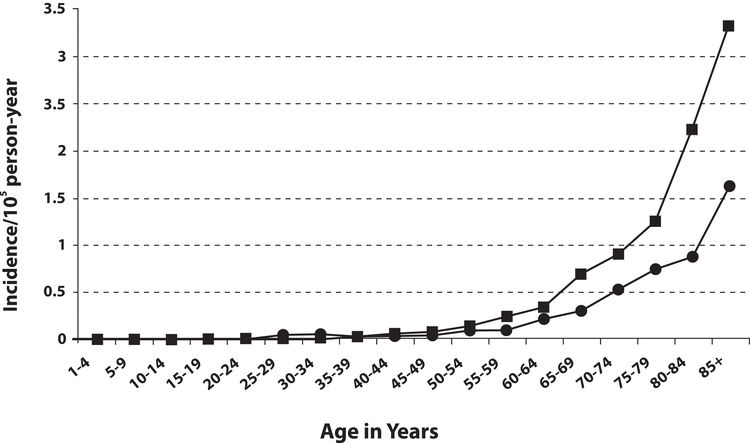
Pediatric Gastrointestinal Neuroendocrine Tumors Treatment (PDQ®)–Health Professional Version

Pediatric Gastrointestinal Neuroendocrine Tumors Treatment (PDQ®)–Health Professional Version

Gastrointestinal Neuroendocrine (Carcinoid) Tumors of the Appendix

Clinical Presentation

The most common site for neuroendocrine (carcinoid) tumors is the appendix. In a single-institution retrospective review of 45 cases of neuroendocrine (carcinoid) tumors in children and adolescents between 2003 and 2016, the appendix was the primary site in 36 patients.[1][Level of evidence C2] No recurrences were observed among the patients with appendiceal primary tumors treated with appendectomy alone, which supports resection of the appendix without hemicolectomy as the procedure of choice.

Most neuroendocrine tumors of the appendix are discovered incidentally at the time of appendectomy. Most of them are small, low-grade, localized tumors.[24]

Treatment of Gastrointestinal Neuroendocrine Tumors of the Appendix

Treatment options for neuroendocrine tumors of the appendix include the following:

  1. Appendectomy.

In adults, it has been accepted practice to remove the entire right colon in patients with large neuroendocrine tumors of the appendix (>2 cm in diameter) or with tumors that have spread to the lymph nodes.[58]

In children and adolescents, however, study results suggest that appendectomy alone is sufficient treatment for appendiceal neuroendocrine tumors, regardless of size, position, histology, or nodal or mesenteric involvement. Right hemicolectomy is unnecessary in children. Routine follow-up imaging and biological studies are not beneficial.[5,810]

Evidence (appendectomy alone):

  1. The Italian Tumori Rari in Etá Pediatrica project performed a prospective registry study that evaluated 113 pediatric patients with appendiceal neuroendocrine tumors.[9][Level of evidence C1] Primary re-excision was not recommended for completely excised tumors smaller than 2 cm, except for microscopic/macroscopic residual tumor on the margins of the appendix. In these cases, cecum resection and pericecal node biopsy was recommended. Decisions about tumors larger than 2 cm were made at the discretion of the primary physicians. However, physicians were discouraged from performing right hemicolectomy unless margins were positive. Of the 113 study participants, 108 had tumors smaller than 2 cm. Thirty-five patients had extension of tumor beyond the appendiceal wall. Five tumors invaded the serosa, and 28 tumors invaded the periappendiceal fat. Margins were clear in 111 of 113 patients.
    • At 41 months of follow-up, all 113 patients were alive.
    • The five patients with tumors larger than 2 cm did well.
    • One patient had resection of the cecum; no residual tumor was found.
    • One patient had a right hemicolectomy (tumor was <2 cm with clear margins, but an octreotide scan was possibly positive), and no tumor was found.

    The study concluded that appendectomy alone should be considered curative for most pediatric patients with appendiceal neuroendocrine tumors. The procedure of choice is a resection of the appendix without hemicolectomy.

  2. A French multicenter study of children younger than 18 years with neuroendocrine tumors of the appendix was carried out by surveying pediatric surgeons from 1988 to 2012. A total of 114 patients were identified. Risk factors for secondary right hemicolectomy were tumor extension into the mesoappendix, positive margins, size larger than 2 cm, and high proliferative index. Eighteen patients met the above criteria and were observed.[10]
    • All patients were alive and had no disease at follow-up.
    • In addition, follow-up radiological studies and biological tests were not helpful.

    The investigator’s recommendation was that appendectomy alone is sufficient treatment for neuroendocrine tumors of the appendix.

  3. A systematic review and meta-analysis of 38 studies of appendiceal neuroendocrine tumors identified 958 patients with a mean age at presentation of 11.6 years. Tumor size was 2 cm or smaller in 85% of the cases. Of the 24 papers that reported the status of the resection margin, 97% of tumors had negative margins. Nodal involvement was reported in ten series and was present in 1.4% of cases, with higher rates seen in patients whose tumors were larger than 2 cm (35%). Vascular involvement was seen in 11% of 510 patients, and invasion of the mesoappendix or periappendiceal fat was reported in 29% of 910 patients.[8]
    • According to the European and American Neuroendocrine Tumor Societies, 189 patients met the criteria for a secondary procedure after initial appendectomy, but only 69 patients underwent a secondary procedure (n = 43, hemicolectomy; n = 2, ileocecectomy; n = 1, cecectomy; n = 2, ileocolectomy; n = 21, not specified).
    • Of the 120 patients who did not have a secondary procedure, 91 patients had tumors extending to the mesoappendix, 5 patients had vascular invasion, 4 patients had positive margins, 12 patients had tumors 2 cm or larger, 1 patient had a high proliferative index, and 7 patients had positive lymph nodes.
    • No disease recurrences were reported in patients who had a secondary procedure or in those who were observed.
    • Preoperative and postoperative imaging was not helpful in managing patients.
References
  1. Degnan AJ, Tocchio S, Kurtom W, et al.: Pediatric neuroendocrine carcinoid tumors: Management, pathology, and imaging findings in a pediatric referral center. Pediatr Blood Cancer 64 (9): , 2017. [PUBMED Abstract]
  2. Pelizzo G, La Riccia A, Bouvier R, et al.: Carcinoid tumors of the appendix in children. Pediatr Surg Int 17 (5-6): 399-402, 2001. [PUBMED Abstract]
  3. Hatzipantelis E, Panagopoulou P, Sidi-Fragandrea V, et al.: Carcinoid tumors of the appendix in children: experience from a tertiary center in northern Greece. J Pediatr Gastroenterol Nutr 51 (5): 622-5, 2010. [PUBMED Abstract]
  4. Henderson L, Fehily C, Folaranmi S, et al.: Management and outcome of neuroendocrine tumours of the appendix-a two centre UK experience. J Pediatr Surg 49 (10): 1513-7, 2014. [PUBMED Abstract]
  5. Dall’Igna P, Ferrari A, Luzzatto C, et al.: Carcinoid tumor of the appendix in childhood: the experience of two Italian institutions. J Pediatr Gastroenterol Nutr 40 (2): 216-9, 2005. [PUBMED Abstract]
  6. Wu H, Chintagumpala M, Hicks J, et al.: Neuroendocrine Tumor of the Appendix in Children. J Pediatr Hematol Oncol 39 (2): 97-102, 2017. [PUBMED Abstract]
  7. Boxberger N, Redlich A, Böger C, et al.: Neuroendocrine tumors of the appendix in children and adolescents. Pediatr Blood Cancer 60 (1): 65-70, 2013. [PUBMED Abstract]
  8. Njere I, Smith LL, Thurairasa D, et al.: Systematic review and meta-analysis of appendiceal carcinoid tumors in children. Pediatr Blood Cancer 65 (8): e27069, 2018. [PUBMED Abstract]
  9. Virgone C, Cecchetto G, Alaggio R, et al.: Appendiceal neuroendocrine tumours in childhood: Italian TREP project. J Pediatr Gastroenterol Nutr 58 (3): 333-8, 2014. [PUBMED Abstract]
  10. de Lambert G, Lardy H, Martelli H, et al.: Surgical Management of Neuroendocrine Tumors of the Appendix in Children and Adolescents: A Retrospective French Multicenter Study of 114 Cases. Pediatr Blood Cancer 63 (4): 598-603, 2016. [PUBMED Abstract]

Extra-Appendiceal Gastrointestinal Neuroendocrine (Carcinoid) Tumors

Clinical Presentation

Extra-appendiceal neuroendocrine (carcinoid) tumors are rare. Most tumors are sporadic, but they may also be part of a hereditary syndrome. A single-institution retrospective review identified 45 cases of neuroendocrine tumors in children and adolescents between 2003 and 2016.[1][Level of evidence C2] In this study, extra-appendiceal primary tumors (n = 9) were associated with a higher risk of metastasis and recurrence. The Tumori Rari in Etá Pediatrica (TREP) group registered 27 patients between 2000 and 2020.[2]

Extra-appendiceal neuroendocrine tumors of the abdomen occur most often in the pancreas but can also occur in the stomach and liver.[2] In the TREP series of 27 cases, 12 occurred in the pancreas and 10 occurred in the bronchi.[2] The most common clinical presentation is an unknown primary site. Extra-appendiceal neuroendocrine tumors are more likely to be larger and higher grade or to present with metastases.[3] Larger tumor size has been associated with a higher risk of recurrence.[1]

The carcinoid syndrome of excessive excretion of somatostatin is characterized by flushing, labile blood pressure, and metastatic spread of the tumor to the liver.[4] Symptoms may be lessened by giving somatostatin analogues, which are available in short-acting and long-acting forms.[5]

Clinical experience with extra-appendiceal neuroendocrine tumors is reported almost entirely in adults. Histopathology is graded by mitotic rate, Ki-67 labeling index, and presence of necrosis into well-differentiated (low grade, G1), moderately differentiated (intermediate grade, G2) and poorly differentiated (high grade, G3) tumors.[6] For more information, see Gastrointestinal Neuroendocrine Tumors Treatment.

Treatment and Outcome of Extra-Appendiceal Gastrointestinal Neuroendocrine Tumors

Complete surgical resection and localized disease are associated with a favorable clinical outcome.[2,7]

In one retrospective single-institution study, the 5-year relapse-free survival rate was 41% for patients with extra-appendiceal neuroendocrine tumors. The overall survival (OS) rate was 66%.[3]

Treatment options for resectable extra-appendiceal neuroendocrine tumors include the following:

  1. Surgery.[8]

Treatment options for unresectable or multifocal extra-appendiceal neuroendocrine tumors include the following:

  1. Embolization.[9]
  2. Somatostatin receptor 2 (SSTR2) ligands.[10,11]
  3. Peptide receptor radionuclide therapy.[12]
  4. Mammalian target of rapamycin (mTOR) inhibitors.[13]
  5. Tyrosine kinase inhibitors (TKIs).[14]
  6. Immunotherapies.[15]

SSTR2 ligands include octreotide, long-acting repeatable octreotide, and lanreotide. Octreotide is not practical for therapy because its short half-life necessitates frequent administration. Long-acting, repeatable octreotide and lanreotide have been evaluated in prospective, randomized, placebo-controlled trials.[10,11] Patient age was not specified in the first trial, and eligibility was restricted to age 18 years and older in the second trial. Neither agent produced significant objective responses in measurable tumors. Both agents were associated with statistically significant increases in progression-free survival and time to progression, and both agents are recommended for the treatment of unresectable extra-appendiceal neuroendocrine tumors in adults.

A phase III trial included 231 patients with advanced or metastatic extra-appendiceal neuroendocrine tumors. Patients were randomly assigned to treatment with lutetium Lu 177 (177Lu)-DOTATATE plus long-acting octreotide or high-dose long-acting octreotide (control group). While the median OS did not reach statistical significance, there was an 11.7-month difference, with 48.0 months (95% confidence interval [CI], 37.4–55.2) in the 177Lu-DOTATATE group and 36.3 months (95% CI, 25.9–51.7) in the control group.[16] The U.S. Food and Drug Administration approved the use of 177Lu-DOTATATE for children aged 12 years and older with somatostatin receptor–positive gastroenteropancreatic neuroendocrine tumors.

Embolization, peptide receptor radionuclide therapy, mTOR inhibitors, and TKIs have been used for treatment.[9,1214]

Conventional cytotoxic chemotherapy appears to be inactive.[3]

References
  1. Degnan AJ, Tocchio S, Kurtom W, et al.: Pediatric neuroendocrine carcinoid tumors: Management, pathology, and imaging findings in a pediatric referral center. Pediatr Blood Cancer 64 (9): , 2017. [PUBMED Abstract]
  2. Virgone C, Ferrari A, Chiaravalli S, et al.: Extra-appendicular neuroendocrine tumors: A report from the TREP project (2000-2020). Pediatr Blood Cancer 68 (4): e28880, 2021. [PUBMED Abstract]
  3. Boston CH, Phan A, Munsell MF, et al.: A Comparison Between Appendiceal and Nonappendiceal Neuroendocrine Tumors in Children and Young Adults: A Single-institution Experience. J Pediatr Hematol Oncol 37 (6): 438-42, 2015. [PUBMED Abstract]
  4. Tormey WP, FitzGerald RJ: The clinical and laboratory correlates of an increased urinary 5-hydroxyindoleacetic acid. Postgrad Med J 71 (839): 542-5, 1995. [PUBMED Abstract]
  5. Delaunoit T, Rubin J, Neczyporenko F, et al.: Somatostatin analogues in the treatment of gastroenteropancreatic neuroendocrine tumors. Mayo Clin Proc 80 (4): 502-6, 2005. [PUBMED Abstract]
  6. Enzler T, Fojo T: Long-acting somatostatin analogues in the treatment of unresectable/metastatic neuroendocrine tumors. Semin Oncol 44 (2): 141-156, 2017. [PUBMED Abstract]
  7. Courtel T, Orbach D, Lacour B, et al.: Childhood pancreatic neuroendocrine neoplasms: A national experience. Pediatr Blood Cancer 72 (2): e31258, 2025. [PUBMED Abstract]
  8. Ambe CM, Nguyen P, Centeno BA, et al.: Multimodality Management of “Borderline Resectable” Pancreatic Neuroendocrine Tumors: Report of a Single-Institution Experience. Cancer Control 24 (5): 1073274817729076, 2017 Oct-Dec. [PUBMED Abstract]
  9. Elf AK, Andersson M, Henrikson O, et al.: Radioembolization Versus Bland Embolization for Hepatic Metastases from Small Intestinal Neuroendocrine Tumors: Short-Term Results of a Randomized Clinical Trial. World J Surg 42 (2): 506-513, 2018. [PUBMED Abstract]
  10. Rinke A, Wittenberg M, Schade-Brittinger C, et al.: Placebo-Controlled, Double-Blind, Prospective, Randomized Study on the Effect of Octreotide LAR in the Control of Tumor Growth in Patients with Metastatic Neuroendocrine Midgut Tumors (PROMID): Results of Long-Term Survival. Neuroendocrinology 104 (1): 26-32, 2017. [PUBMED Abstract]
  11. Caplin ME, Pavel M, Ćwikła JB, et al.: Lanreotide in metastatic enteropancreatic neuroendocrine tumors. N Engl J Med 371 (3): 224-33, 2014. [PUBMED Abstract]
  12. Brabander T, Teunissen JJ, Van Eijck CH, et al.: Peptide receptor radionuclide therapy of neuroendocrine tumours. Best Pract Res Clin Endocrinol Metab 30 (1): 103-14, 2016. [PUBMED Abstract]
  13. Gajate P, Martínez-Sáez O, Alonso-Gordoa T, et al.: Emerging use of everolimus in the treatment of neuroendocrine tumors. Cancer Manag Res 9: 215-224, 2017. [PUBMED Abstract]
  14. Liu IH, Kunz PL: Biologics in gastrointestinal and pancreatic neuroendocrine tumors. J Gastrointest Oncol 8 (3): 457-465, 2017. [PUBMED Abstract]
  15. Vellani SD, Nigro A, Varatharajan S, et al.: Emerging Immunotherapeutic and Diagnostic Modalities in Carcinoid Tumors. Molecules 28 (5): , 2023. [PUBMED Abstract]
  16. Strosberg JR, Caplin ME, Kunz PL, et al.: 177Lu-Dotatate plus long-acting octreotide versus high‑dose long-acting octreotide in patients with midgut neuroendocrine tumours (NETTER-1): final overall survival and long-term safety results from an open-label, randomised, controlled, phase 3 trial. Lancet Oncol 22 (12): 1752-1763, 2021. [PUBMED Abstract]

Metastatic Gastrointestinal Neuroendocrine Tumors

Treatment of metastatic neuroendocrine tumors of the large bowel, pancreas, or stomach is complicated and requires treatment similar to that given for adult high-grade neuroendocrine tumors. For more information about treatment options for patients with malignant carcinoid tumors, see Gastrointestinal Neuroendocrine Tumors Treatment.

Treatment Options Under Clinical Evaluation for Pediatric Gastrointestinal Neuroendocrine Tumors

Information about National Cancer Institute (NCI)–supported clinical trials can be found on the NCI website. For information about clinical trials sponsored by other organizations, see the ClinicalTrials.gov website.

Special Considerations for the Treatment of Children With Cancer

Cancer in children and adolescents is rare, although the overall incidence has slowly increased since 1975.[1] Children and adolescents with cancer should be referred to medical centers that have a multidisciplinary team of cancer specialists with experience treating the cancers that occur during childhood and adolescence. This multidisciplinary team approach incorporates the skills of the following pediatric specialists and others to ensure that children receive treatment, supportive care, and rehabilitation to achieve optimal survival and quality of life:

  • Primary care physicians.
  • Pediatric surgeons.
  • Pathologists.
  • Pediatric radiation oncologists.
  • Pediatric medical oncologists and hematologists.
  • Ophthalmologists.
  • Rehabilitation specialists.
  • Pediatric oncology nurses.
  • Social workers.
  • Child-life professionals.
  • Psychologists.
  • Nutritionists.

For specific information about supportive care for children and adolescents with cancer, see the summaries on Supportive and Palliative Care.

The American Academy of Pediatrics has outlined guidelines for pediatric cancer centers and their role in the treatment of children and adolescents with cancer.[2] At these centers, clinical trials are available for most types of cancer that occur in children and adolescents, and the opportunity to participate is offered to most patients and their families. Clinical trials for children and adolescents diagnosed with cancer are generally designed to compare potentially better therapy with current standard therapy. Other types of clinical trials test novel therapies when there is no standard therapy for a cancer diagnosis. Most of the progress in identifying curative therapies for childhood cancers has been achieved through clinical trials. Information about ongoing clinical trials is available from the NCI website.

Dramatic improvements in survival have been achieved for children and adolescents with cancer. Between 1975 and 2020, childhood cancer mortality decreased by more than 50%.[35] Childhood and adolescent cancer survivors require close monitoring because side effects of cancer therapy may persist or develop months or years after treatment. For information about the incidence, type, and monitoring of late effects in childhood and adolescent cancer survivors, see Late Effects of Treatment for Childhood Cancer.

Childhood cancer is a rare disease, with about 15,000 cases diagnosed annually in the United States in individuals younger than 20 years.[6] The U.S. Rare Diseases Act of 2002 defines a rare disease as one that affects populations smaller than 200,000 people in the United States. Therefore, all pediatric cancers are considered rare.

The designation of a rare tumor is not uniform among pediatric and adult groups. In adults, rare cancers are defined as those with an annual incidence of fewer than six cases per 100,000 people. They account for up to 24% of all cancers diagnosed in the European Union and about 20% of all cancers diagnosed in the United States.[7,8] In children and adolescents, the designation of a rare tumor is not uniform among international groups, as follows:

  • A consensus effort between the European Union Joint Action on Rare Cancers and the European Cooperative Study Group for Rare Pediatric Cancers estimated that 11% of all cancers in patients younger than 20 years could be categorized as very rare. This consensus group defined very rare cancers as those with annual incidences of fewer than two cases per 1 million people. However, three additional histologies (thyroid carcinoma, melanoma, and testicular cancer) with incidences of more than two cases per 1 million people were also included in the very rare group due to a lack of knowledge and expertise in the management of these tumors.[9]
  • The Children’s Oncology Group defines rare pediatric cancers as those listed in the International Classification of Childhood Cancer subgroup XI, which includes thyroid cancers, melanomas and nonmelanoma skin cancers, and multiple types of carcinomas (e.g., adrenocortical carcinomas, nasopharyngeal carcinomas, and most adult-type carcinomas such as breast cancers and colorectal cancers).[10] These diagnoses account for about 5% of the cancers diagnosed in children aged 0 to 14 years and about 27% of the cancers diagnosed in adolescents aged 15 to 19 years.[4]

    Most cancers in subgroup XI are either melanomas or thyroid cancers, with other cancer types accounting for only 2% of the cancers diagnosed in children aged 0 to 14 years and 9.3% of the cancers diagnosed in adolescents aged 15 to 19 years.

These rare cancers are extremely challenging to study because of the relatively few patients with any individual diagnosis, the predominance of rare cancers in the adolescent population, and the small number of clinical trials for adolescents with rare cancers.

Information about these tumors may also be found in sources relevant to adults with cancer, such as Gastrointestinal Neuroendocrine Tumors Treatment.

References
  1. Smith MA, Seibel NL, Altekruse SF, et al.: Outcomes for children and adolescents with cancer: challenges for the twenty-first century. J Clin Oncol 28 (15): 2625-34, 2010. [PUBMED Abstract]
  2. American Academy of Pediatrics: Standards for pediatric cancer centers. Pediatrics 134 (2): 410-4, 2014. Also available online. Last accessed February 25, 2025.
  3. Smith MA, Altekruse SF, Adamson PC, et al.: Declining childhood and adolescent cancer mortality. Cancer 120 (16): 2497-506, 2014. [PUBMED Abstract]
  4. National Cancer Institute: NCCR*Explorer: An interactive website for NCCR cancer statistics. Bethesda, MD: National Cancer Institute. Available online. Last accessed February 25, 2025.
  5. Surveillance Research Program, National Cancer Institute: SEER*Explorer: An interactive website for SEER cancer statistics. Bethesda, MD: National Cancer Institute. Available online. Last accessed December 30, 2024.
  6. Ward E, DeSantis C, Robbins A, et al.: Childhood and adolescent cancer statistics, 2014. CA Cancer J Clin 64 (2): 83-103, 2014 Mar-Apr. [PUBMED Abstract]
  7. Gatta G, Capocaccia R, Botta L, et al.: Burden and centralised treatment in Europe of rare tumours: results of RARECAREnet-a population-based study. Lancet Oncol 18 (8): 1022-1039, 2017. [PUBMED Abstract]
  8. DeSantis CE, Kramer JL, Jemal A: The burden of rare cancers in the United States. CA Cancer J Clin 67 (4): 261-272, 2017. [PUBMED Abstract]
  9. Ferrari A, Brecht IB, Gatta G, et al.: Defining and listing very rare cancers of paediatric age: consensus of the Joint Action on Rare Cancers in cooperation with the European Cooperative Study Group for Pediatric Rare Tumors. Eur J Cancer 110: 120-126, 2019. [PUBMED Abstract]
  10. Pappo AS, Krailo M, Chen Z, et al.: Infrequent tumor initiative of the Children’s Oncology Group: initial lessons learned and their impact on future plans. J Clin Oncol 28 (33): 5011-6, 2010. [PUBMED Abstract]

Latest Updates to This Summary (12/26/2024)

The PDQ cancer information summaries are reviewed regularly and updated as new information becomes available. This section describes the latest changes made to this summary as of the date above.

This summary was reformatted.

This summary is written and maintained by the PDQ Pediatric Treatment Editorial Board, which is editorially independent of NCI. The summary reflects an independent review of the literature and does not represent a policy statement of NCI or NIH. More information about summary policies and the role of the PDQ Editorial Boards in maintaining the PDQ summaries can be found on the About This PDQ Summary and PDQ® Cancer Information for Health Professionals pages.

About This PDQ Summary

Purpose of This Summary

This PDQ cancer information summary for health professionals provides comprehensive, peer-reviewed, evidence-based information about the treatment of pediatric gastrointestinal neuroendocrine tumors. It is intended as a resource to inform and assist clinicians in the care of their patients. It does not provide formal guidelines or recommendations for making health care decisions.

Reviewers and Updates

This summary is reviewed regularly and updated as necessary by the PDQ Pediatric Treatment Editorial Board, which is editorially independent of the National Cancer Institute (NCI). The summary reflects an independent review of the literature and does not represent a policy statement of NCI or the National Institutes of Health (NIH).

Board members review recently published articles each month to determine whether an article should:

  • be discussed at a meeting,
  • be cited with text, or
  • replace or update an existing article that is already cited.

Changes to the summaries are made through a consensus process in which Board members evaluate the strength of the evidence in the published articles and determine how the article should be included in the summary.

The lead reviewers for Pediatric Gastrointestinal Neuroendocrine Tumors Treatment are:

  • Denise Adams, MD (Children’s Hospital Boston)
  • Karen J. Marcus, MD, FACR (Dana-Farber of Boston Children’s Cancer Center and Blood Disorders Harvard Medical School)
  • William H. Meyer, MD
  • Paul A. Meyers, MD (Memorial Sloan-Kettering Cancer Center)
  • Thomas A. Olson, MD (Aflac Cancer and Blood Disorders Center of Children’s Healthcare of Atlanta – Egleston Campus)
  • Arthur Kim Ritchey, MD (Children’s Hospital of Pittsburgh of UPMC)
  • Carlos Rodriguez-Galindo, MD (St. Jude Children’s Research Hospital)
  • Stephen J. Shochat, MD (St. Jude Children’s Research Hospital)

Any comments or questions about the summary content should be submitted to Cancer.gov through the NCI website’s Email Us. Do not contact the individual Board Members with questions or comments about the summaries. Board members will not respond to individual inquiries.

Levels of Evidence

Some of the reference citations in this summary are accompanied by a level-of-evidence designation. These designations are intended to help readers assess the strength of the evidence supporting the use of specific interventions or approaches. The PDQ Pediatric Treatment Editorial Board uses a formal evidence ranking system in developing its level-of-evidence designations.

Permission to Use This Summary

PDQ is a registered trademark. Although the content of PDQ documents can be used freely as text, it cannot be identified as an NCI PDQ cancer information summary unless it is presented in its entirety and is regularly updated. However, an author would be permitted to write a sentence such as “NCI’s PDQ cancer information summary about breast cancer prevention states the risks succinctly: [include excerpt from the summary].”

The preferred citation for this PDQ summary is:

PDQ® Pediatric Treatment Editorial Board. PDQ Pediatric Gastrointestinal Neuroendocrine Tumors Treatment. Bethesda, MD: National Cancer Institute. Updated <MM/DD/YYYY>. Available at: /types/gi-neuroendocrine-tumors/hp/pediatric-gi-neuroendocrine-treatment-pdq. Accessed <MM/DD/YYYY>. [PMID: 31661208]

Images in this summary are used with permission of the author(s), artist, and/or publisher for use within the PDQ summaries only. Permission to use images outside the context of PDQ information must be obtained from the owner(s) and cannot be granted by the National Cancer Institute. Information about using the illustrations in this summary, along with many other cancer-related images, is available in Visuals Online, a collection of over 2,000 scientific images.

Disclaimer

Based on the strength of the available evidence, treatment options may be described as either “standard” or “under clinical evaluation.” These classifications should not be used as a basis for insurance reimbursement determinations. More information on insurance coverage is available on Cancer.gov on the Managing Cancer Care page.

Contact Us

More information about contacting us or receiving help with the Cancer.gov website can be found on our Contact Us for Help page. Questions can also be submitted to Cancer.gov through the website’s Email Us.
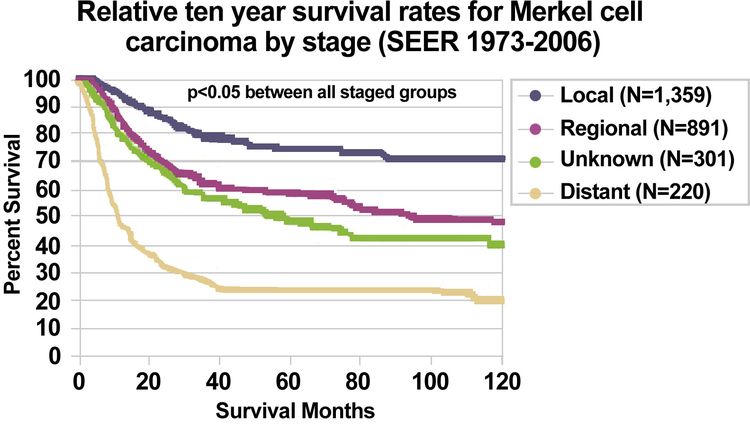
Pancreatic Neuroendocrine Tumors (Islet Cell Tumors) Treatment (PDQ®)–Health Professional Version

Pancreatic Neuroendocrine Tumors (Islet Cell Tumors) Treatment (PDQ®)–Health Professional Version

General Information About Pancreatic Neuroendocrine Tumors (Islet Cell Tumors)

Incidence and Mortality

Pancreatic neuroendocrine tumors (NETs) are uncommon cancers with about 1,000 new cases per year in the United States.[1] They account for less than 2% of pancreatic malignancies and, overall, have a better prognosis than the more common pancreatic exocrine tumors.[1,2]

Pathogenesis

Tumors of the endocrine pancreas are a collection of tumor cell types collectively referred to as pancreatic NETs. These tumors originate in islet cells. Although they may be similar or identical in histological appearance to carcinoid tumors of the gastrointestinal tract, differences in their underlying biology and likely differences in response to therapeutic agents suggest that they should be treated and investigated as a distinct entity.[3]

Most pancreatic NETs are sporadic, but some occur as part of the autosomal dominant multiple endocrine neoplasia type 1 (MEN1) inherited syndrome. This syndrome consists of tumors of the anterior pituitary, parathyroid, and endocrine pancreas glands and is a result of inactivation of the MEN1 tumor suppressor gene located on chromosome 11q13.[4] When part of the MEN1 syndrome, there may be multiple pancreatic tumors.

Islet tumors may either be functional (produce one or more active hormones) or nonfunctional.[4] The functional tumors, which usually present with symptoms of hormone hypersecretion, include:

  • Gastrinoma.
  • Insulinoma.
  • Glucagonoma.
  • Somatostatinoma.
  • VIPoma (Verner-Morrison syndrome).

Prognostic Factors

Most islet cell cancers are functional, but about 15% are nonfunctional, with presentations similar to the far more common exocrine adenocarcinomas of the pancreas.[57] Because of the presence of several cell types in the pancreatic islets (alpha, beta, delta, A, B, C, D, E, F), the term islet cell tumors refers to at least five distinct cancers that, when functional, produce unique metabolic and clinical characteristics. The clinical manifestations in functional tumors may result from the distinctive metabolic effects of the polypeptide(s) secreted by the cancer cells rather than from tumor bulk or metastatic disease. Functional tumors may even be too small to be detected by conventional imaging techniques.

Nonfunctional tumors tend to present at later clinical stages with symptoms attributable to mass effect or metastases.[4] Although nonfunctional tumors do not produce specific clinical syndromes, they may secrete inactive amine and peptide products such as:

  • Neurotensin.
  • Alpha-subunit of human chorionic gonadotropin (alpha-hCG).
  • Neuron-specific enolase.
  • Pancreatic polypeptide.
  • Chromogranin A.

Diagnostics

The potential long delays between initial symptoms and diagnosis and the varied effects of the polypeptides secreted often necessitate involvement of multiple surgical and medical subspecialties. Surgery is the only curative modality and is often used, even in patients with metastatic disease, to alleviate the symptoms of hormonal hypersecretion.[4] Effective palliation may be achieved because of the slow-growing nature of most of these tumors and the potential use of antihormonal pharmacological therapy (e.g., cimetidine in the ulcer-producing Zollinger-Ellison syndrome). In patients with indolent, slow-growing, metastatic islet cell tumors, the best therapy may be careful observation, and no treatment until palliation is required. In patients with MEN1 in which 85% have pancreatic islet cell tumors, 90% have hyperparathyroidism, and 65% have pituitary tumors, and they are less likely to be cured by pancreatic resection than are patients with sporadic islet cell tumors. With the exception of pain relief from bone metastases, radiation therapy has a limited role in this disease.

Tumor localization and staging studies include imaging with computed tomography (CT) with or without magnetic resonance imaging (MRI), and endoscopic ultrasonography. Somatostatin-receptor scintigraphy and single-photon emission CT may be useful adjuncts. However, somatostatin-receptor scintigraphy is less useful in localizing insulinomas versus other pancreatic NETs, since insulinomas often have a low density of somatostatin receptors.[4] If the noninvasive tests do not reveal a tumor, but clinical suspicion remains high, more invasive and technically demanding tests, such as selective arteriography or selective arterial stimulation (with a secretagogue specific for the suspected tumor type), may be useful.[7]

Some of the tumor types have unique characteristics that require specific approaches in their diagnosis and initial evaluation.

Gastrinoma

Diagnosis is dependent on elevated serum gastrin and elevated gastric acid levels. Provocative testing with calcium and secretin shows considerable overlap, and the value of these tests is limited. Zollinger-Ellison syndrome is a condition of unrelenting peptic ulcer disease, diarrhea, and gastric hyperacidity, associated with a gastrin-producing tumor. It accounts for less than 1% of all peptic ulcer disease. About 15% to 35% of gastrinomas are associated with MEN1 syndrome and up to 50% are malignant. Up to 33% of patients with gastrinomas have liver metastases.[4] For more information, see the Diarrhea section in Gastrointestinal Complications.

Diagnostic tests:

  1. BAO:MAO ≥ 0.6 (basal acid output:maximal acid output).
  2. Overnight AO ≥ 100 mmol.
  3. BAO ≥ 10 mmol/hr.
  4. Serum gastrin 10x normal or >500 pg/mL (the accuracy of gastrin assays may vary widely).
  5. Secretin test: 1 unit/kg intravenous rapid injection: Positive = 100% increase in gastrin within 10 minutes; 2 units/kg: Positive = 100% increase over baseline.
  6. Elevated hCG levels.

Insulinoma

Insulinomas are far more likely to be benign than malignant. Only 10% of insulinomas are multiple, and only 10% are malignant. About 5% to 8% are associated with MEN1 syndrome.[4] The clinical manifestations are those of hypoglycemia, which results from inappropriate secretion of insulin by the tumor. Fasting hypoglycemia (<40 mg/dL) associated with an elevated insulin level (in the absence of exogenous administration of insulin) is pathognomonic. Measurement of plasma proinsulin may be helpful for diagnosing insulin-secreting carcinomas. These tumors are usually slow-growing tumors and, when localized to the pancreas or regional lymph nodes, can be cured with pancreatic resection.

The approach to management depends on carefully performed preoperative localization studies and the findings at exploratory laparotomy. In a retrospective case series of 30 patients with 32 pancreatic insulinomas, the combination of preoperative, dual-phase, thin-section multidetector CT and endoscopic sonography correctly identified and localized all of the tumors.[8] These tests, with or without MRI, have replaced older, more invasive, and technically challenging tests, such as percutaneous transhepatic portal venous sampling and arterial stimulation with venous sampling, except for unusual circumstances in which the imaging tests are unsuccessful.[4,9]

Glucagonoma

Glucagonoma is the third most common endocrine-secreting islet cell tumor. About 75% of glucagonomas are malignant.[4] Necrolytic migratory erythema, hyperglycemia, and venous thrombosis comprise a virtually diagnostic triad. A serum glucagon level greater than 1,000 pg/mL confirms the diagnosis. These tumors tend to be large and easily visible on CT scan. Somatostatin-receptor scintigraphy scanning may be a useful adjunct in detecting metastases.

Miscellaneous islet cell tumors

These tumors are rare but have defined clinical syndromes associated with specific production of polypeptide hormone production by islet cell tumors. Because of their rarity and similar approaches to management, they are grouped in the section on treatment. Miscellaneous tumors include:

  • VIPoma.

    VIPoma is characterized by watery diarrhea, hypokalemia, and achlorhydria. A serum vasoactive intestinal peptide (VIP) greater than 200 pg/mL is diagnostic.[4] These tumors can generally be easily localized by CT scan. Somatostatin-receptor scintigraphy scanning may be a useful adjunct in detecting metastases.

  • Somatostatinoma.

    These tumors are particularly rare. They often present with diarrhea, steatorrhea, diabetes, and/or gallstones. Decreased pancreatic secretion of enzymes and bicarbonate accounts for the diarrhea and steatorrhea. Somatostatin-mediated inhibition of cholecystokinin leads to gallstone formation. Somatostatin also inhibits insulin, producing hyperglycemia. The diagnosis is made by a fasting serum somatostatin level greater than 100 pg/mL. CT scan, MRI, and endoscopic ultrasound can usually help localize and stage the tumor. Most of these tumors are malignant and have metastases at diagnosis.

References
  1. Ries LAG, Young JL, Keel GE, et al., eds.: SEER Survival Monograph: Cancer Survival Among Adults: U. S. SEER Program, 1988-2001, Patient and Tumor Characteristics. National Cancer Institute, 2007. NIH Pub. No. 07-6215.
  2. Neuroendocrine tumors of the pancreas. In: Amin MB, Edge SB, Greene FL, et al., eds.: AJCC Cancer Staging Manual. 8th ed. Springer; 2017, pp. 407–19.
  3. Kulke MH, Siu LL, Tepper JE, et al.: Future directions in the treatment of neuroendocrine tumors: consensus report of the National Cancer Institute Neuroendocrine Tumor clinical trials planning meeting. J Clin Oncol 29 (7): 934-43, 2011. [PUBMED Abstract]
  4. Davies K, Conlon KC: Neuroendocrine tumors of the pancreas. Curr Gastroenterol Rep 11 (2): 119-27, 2009. [PUBMED Abstract]
  5. Hochwald SN, Zee S, Conlon KC, et al.: Prognostic factors in pancreatic endocrine neoplasms: an analysis of 136 cases with a proposal for low-grade and intermediate-grade groups. J Clin Oncol 20 (11): 2633-42, 2002. [PUBMED Abstract]
  6. O’Grady HL, Conlon KC: Pancreatic neuroendocrine tumours. Eur J Surg Oncol 34 (3): 324-32, 2008. [PUBMED Abstract]
  7. King CM, Reznek RH, Dacie JE, et al.: Imaging islet cell tumours. Clin Radiol 49 (5): 295-303, 1994. [PUBMED Abstract]
  8. Gouya H, Vignaux O, Augui J, et al.: CT, endoscopic sonography, and a combined protocol for preoperative evaluation of pancreatic insulinomas. AJR Am J Roentgenol 181 (4): 987-92, 2003. [PUBMED Abstract]
  9. Nikfarjam M, Warshaw AL, Axelrod L, et al.: Improved contemporary surgical management of insulinomas: a 25-year experience at the Massachusetts General Hospital. Ann Surg 247 (1): 165-72, 2008. [PUBMED Abstract]

Cellular Classification of Pancreatic Neuroendocrine Tumors (Islet Cell Tumors)

Table 1. Endocrine Tumors of the Pancreas
Islet Cells Secreted Active Agent Tumor and Syndrome
5-HT = serotonin; ACTH = adrenocorticotropin hormone; MSH = melanocyte-stimulating hormone; VIP = vasoactive intestinal peptide; WDHA = watery diarrhea, hypokalemia, and achlorhydria.
Alpha Glucagon Glucagonoma (diabetes, dermatitis)
Beta Insulin Insulinoma (hypoglycemia)
Delta Somatostatin Somatostatinoma (mild diabetes); diarrhea/steatorrhea; gallstones
D Gastrin Gastrinoma (peptic ulcer disease)
A→D VIP and/or other undefined mediators WDHA
  5-HT Carcinoid
  ACTH Cushing disease
  MSH Hyperpigmentation
Interacinar Cells Secreted Active Agent Tumor and Syndrome
F Pancreatic polypeptide Multiple hormonal syndromes
EC 5-HT Carcinoid

Stage Information for Pancreatic Neuroendocrine Tumors (Islet Cell Tumors)

American Joint Committee on Cancer (AJCC) Stage Groupings and TNM Definitions

The AJCC has designated staging by TNM (tumor, node, metastasis) classification to define pancreatic neuroendocrine tumors (islet cell tumors).[1]

Table 2. Definitions for TNM Stage Ia
Stage TNM Definition
T = primary tumor; N = regional lymph node; M = distant metastasis.
aReprinted with permission from AJCC: Neuroendocrine Tumors of the Pancreas. In: Amin MB, Edge SB, Greene FL, et al., eds.: AJCC Cancer Staging Manual. 8th ed. New York, NY: Springer, 2017, pp. 407–19.
bThe explanation for superscript b is at the end of Table 5.
I T1, N0, M0 T1 = Tumor limited to the pancreas,b <2 cm.
N0 = No regional lymph node involvement.
M0 = No distant metastasis.
Table 3. Definitions for TNM Stage IIa
Stage TNM Definition
T = primary tumor; N = regional lymph node; M = distant metastasis.
aReprinted with permission from AJCC: Neuroendocrine Tumors of the Pancreas. In: Amin MB, Edge SB, Greene FL, et al., eds.: AJCC Cancer Staging Manual. 8th ed. New York, NY: Springer, 2017, pp. 407–19.
bThe explanation for superscript b is at the end of Table 5.
II T2, N0, M0 T2 = Tumor limited to the pancreas,b 2–4 cm.
N0 = No regional lymph node involvement.
M0 = No distant metastasis.
T3, N0, M0 T3 = Tumor limited to the pancreas,b >4 cm; or tumor invading the duodenum or common bile duct.
N0 = No regional lymph node involvement.
M0 = No distant metastasis.
Table 4. Definitions for TNM Stage IIIa
Stage TNM Definition
T = primary tumor; N = regional lymph node; M = distant metastasis.
aReprinted with permission from AJCC: Neuroendocrine Tumors of the Pancreas. In: Amin MB, Edge SB, Greene FL, et al., eds.: AJCC Cancer Staging Manual. 8th ed. New York, NY: Springer, 2017, pp. 407–19.
bThe explanation for superscript b is at the end of Table 5.
III T4, N0, M0 T4 = Tumor invading adjacent organs (stomach, spleen, colon, adrenal gland) or the wall of large vessels (celiac axis or the superior mesenteric artery).
N0 = No regional lymph node involvement.
M0 = No distant metastasis.
Any T, N1, M0 TX = Tumor cannot be assessed.
T1 = Tumor limited to the pancreas,b <2 cm.
T2 = Tumor limited to the pancreas,b 2–4 cm.
T3 = Tumor limited to the pancreas,b >4 cm; or tumor invading the duodenum or common bile duct.
T4 = Tumor invading adjacent organs (stomach, spleen, colon, adrenal gland) or the wall of large vessels (celiac axis or the superior mesenteric artery).
N1 = Regional lymph node involvement.
M0 = No distant metastasis.
Table 5. Definitions for TNM Stage IVa
Stage TNM Definition
T = primary tumor; N = regional lymph node; M = distant metastasis.
aReprinted with permission from AJCC: Neuroendocrine Tumors of the Pancreas. In: Amin MB, Edge SB, Greene FL, et al., eds.: AJCC Cancer Staging Manual. 8th ed. New York, NY: Springer, 2017, pp. 407–19.
bLimited to the pancreas means there is no invasion of adjacent organs (stomach, spleen, colon, adrenal gland) or the wall of large vessels (celiac axis or the superior mesenteric artery). Extension of tumor into peripancreatic adipose tissue is NOT a basis for staging. Note: Multiple tumors should be designated as such (the largest tumor should be used to assign T category): if the number of tumors is known, use T(#); e.g., pT3(4) N0 M0; if the number of tumors is unavailable or too numerous, use the m suffix, T(m); e.g., pT3(m) N0 M0.
IV Any T, Any N, M1 TX = Tumor cannot be assessed.
T1 = Tumor limited to the pancreas,b <2 cm.
T2 = Tumor limited to the pancreas,b 2–4 cm.
T3 = Tumor limited to the pancreas,b >4 cm; or tumor invading the duodenum or common bile duct.
T4 = Tumor invading adjacent organs (stomach, spleen, colon, adrenal gland) or the wall of large vessels (celiac axis or the superior mesenteric artery).
NX = Regional lymph nodes cannot be assessed.
N0 = No regional lymph node involvement.
N1 = Regional lymph node involvement.
M1 = Distant metastases.
–M1a = Metastasis confined to liver.
–M1b = Metastases in at least one extrahepatic site (e.g., lung, ovary, nonregional lymph node, peritoneum, bone).
–M1c = Both hepatic and extrahepatic metastases.
References
  1. Neuroendocrine tumors of the pancreas. In: Amin MB, Edge SB, Greene FL, et al., eds.: AJCC Cancer Staging Manual. 8th ed. Springer; 2017, pp. 407–19.

Treatment Option Overview for Pancreatic Neuroendocrine Tumors (Islet Cell Tumors)

Localized Disease

If technically and medically feasible, primary management of endocrine tumors of the pancreas involves surgical resection with curative intent. Given the rare nature of these tumors, surgical approaches are based on case series and expert opinion rather than randomized controlled trials.[1] The surgical options listed below are based on retrospective series from single reporting centers.[24][Level of evidence C2]

Adjuvant therapy has no proven benefit and is, therefore, investigational. There have been no well-controlled trials of adjuvant therapy after complete tumor resection.[5]

Surgical Cytoreduction for Metastases

Surgery plays a role even in the setting of metastatic disease. The symptoms of metastatic functional pancreatic neuroendocrine tumors (NETs) may be ameliorated by the reduction of overall tumor burden through surgical debulking.

The liver is a common site of metastasis from pancreatic NETs. Because of the slow growth rate of many NETs, liver metastases are often resected when technically feasible. Resection of all grossly visible liver metastases can be associated with long-term survival and, in the case of symptomatic hormonally functional tumors, symptom relief.[6] Most symptoms from functional tumors respond to this form of surgical debulking. It is not known if the favorable survival rates are attributable to patient selection factors (e.g., underlying patient condition, extent of metastases, slow doubling time, and so forth).

Alternative approaches to the management of liver metastases have been reported, including Gelfoam embolization or transarterial chemoembolization,[7] radioembolization with radioactive microspheres,[810] radiofrequency ablation, cryoablation, and percutaneous alcohol ablation. These alternative approaches have been reviewed.[11]

Results from surgical resection series appear to be more favorable than with these techniques, and surgery is considered to be the standard approach to resectable liver metastases. However, there are no high-quality studies comparing the various approaches. A systematic review of evidence comparing liver resection versus other treatments for patients with resectable liver neuroendocrine metastases found no randomized trials, or even quasi-experimental, cohort, or case-control studies in which the patient population given the alternative therapies was similar enough to the surgery group to draw reliable conclusions.[12] The evidence for resection of all grossly visible liver metastases is derived solely from case series.[Level of evidence C2]

In most cases, liver metastases are not completely resectable. Cytoreductive surgery, with or without radiofrequency ablation or cryoablation, has been used to palliate symptoms. A systematic review found no randomized or quasi-randomized trials comparing cytoreductive surgery to other palliative approaches such as chemotherapy or tumor product inhibitors.[13] The evidence for surgical cytoreduction of unresectable liver metastases is restricted to case series [Level of evidence C2], and interpretation of outcomes may be strongly affected by patient selection factors.

Systemic Therapy for Advanced and Metastatic Disease

Somatostatin analogues may be effective in reducing the symptoms of functional tumors.[14]

Chemotherapy using drugs such as the following, either alone or in combination, has been shown to have antitumor effects, but evidence is weak or conflicting regarding the impact of chemotherapy on overall survival:[1517]

  • Streptozocin.
  • Doxorubicin.
  • Fluorouracil.
  • Chlorozotocin.
  • Dacarbazine.
  • Temozolomide.

A variety of systemic agents have shown biological or palliative activity, including:[5,18]

  • Tyrosine kinase inhibitors (e.g., sunitinib).
  • Temozolomide.
  • Vascular endothelial growth factor pathway inhibitors.
  • Mammalian target of rapamycin inhibitors (e.g., everolimus).

Nearly all of the evidence of activity is derived from case series.[Level of evidence C3] However, there are ongoing placebo-controlled randomized trials of everolimus [19] and sunitinib [20] that have been reported in abstract form showing an increase in progression-free survival in each case.[Level of evidence B1]

Favorable responses have been reported in patients with advanced progressive pancreatic NETs after treatment with several radiolabeled somatostatin analogues in which the analogues octreotide, octreotate, lanreotide, or edotreotide are stably attached to the radionuclides indium In 111, yttrium Y 90, or lutetium Lu 177.[2123] The relative efficacy of these various compounds is unknown. Study designs have been limited to case series with tumor response, biochemical response, or symptom control as the measure of efficacy.[Level of evidence C3]

As noted in each of the clinical situations, there is a paucity or absence of high-level evidence and a need for randomized controlled trials.[5]

Fluorouracil dosing

The DPYD gene encodes an enzyme that catabolizes pyrimidines and fluoropyrimidines, like capecitabine and fluorouracil. An estimated 1% to 2% of the population has germline pathogenic variants in DPYD, which lead to reduced DPD protein function and an accumulation of pyrimidines and fluoropyrimidines in the body.[24,25] Patients with the DPYD*2A variant who receive fluoropyrimidines may experience severe, life-threatening toxicities that are sometimes fatal. Many other DPYD variants have been identified, with a range of clinical effects.[2426] Fluoropyrimidine avoidance or a dose reduction of 50% may be recommended based on the patient’s DPYD genotype and number of functioning DPYD alleles.[2729] DPYD genetic testing costs less than $200, but insurance coverage varies due to a lack of national guidelines.[30] In addition, testing may delay therapy by 2 weeks, which would not be advisable in urgent situations. This controversial issue requires further evaluation.[31]

References
  1. Davies K, Conlon KC: Neuroendocrine tumors of the pancreas. Curr Gastroenterol Rep 11 (2): 119-27, 2009. [PUBMED Abstract]
  2. Phan GQ, Yeo CJ, Hruban RH, et al.: Surgical experience with pancreatic and peripancreatic neuroendocrine tumors: Review of 125 patients. J Gastrointest Surg 2 (5): 473-82, 1998 Sep-Oct. [PUBMED Abstract]
  3. Kazanjian KK, Reber HA, Hines OJ: Resection of pancreatic neuroendocrine tumors: results of 70 cases. Arch Surg 141 (8): 765-9; discussion 769-70, 2006. [PUBMED Abstract]
  4. Hochwald SN, Zee S, Conlon KC, et al.: Prognostic factors in pancreatic endocrine neoplasms: an analysis of 136 cases with a proposal for low-grade and intermediate-grade groups. J Clin Oncol 20 (11): 2633-42, 2002. [PUBMED Abstract]
  5. Kulke MH, Siu LL, Tepper JE, et al.: Future directions in the treatment of neuroendocrine tumors: consensus report of the National Cancer Institute Neuroendocrine Tumor clinical trials planning meeting. J Clin Oncol 29 (7): 934-43, 2011. [PUBMED Abstract]
  6. Sarmiento JM, Que FG: Hepatic surgery for metastases from neuroendocrine tumors. Surg Oncol Clin N Am 12 (1): 231-42, 2003. [PUBMED Abstract]
  7. Gupta S, Johnson MM, Murthy R, et al.: Hepatic arterial embolization and chemoembolization for the treatment of patients with metastatic neuroendocrine tumors: variables affecting response rates and survival. Cancer 104 (8): 1590-602, 2005. [PUBMED Abstract]
  8. Nguyen C, Faraggi M, Giraudet AL, et al.: Long-term efficacy of radionuclide therapy in patients with disseminated neuroendocrine tumors uncontrolled by conventional therapy. J Nucl Med 45 (10): 1660-8, 2004. [PUBMED Abstract]
  9. Kennedy AS, Dezarn WA, McNeillie P, et al.: Radioembolization for unresectable neuroendocrine hepatic metastases using resin 90Y-microspheres: early results in 148 patients. Am J Clin Oncol 31 (3): 271-9, 2008. [PUBMED Abstract]
  10. King J, Quinn R, Glenn DM, et al.: Radioembolization with selective internal radiation microspheres for neuroendocrine liver metastases. Cancer 113 (5): 921-9, 2008. [PUBMED Abstract]
  11. Siperstein AE, Berber E: Cryoablation, percutaneous alcohol injection, and radiofrequency ablation for treatment of neuroendocrine liver metastases. World J Surg 25 (6): 693-6, 2001. [PUBMED Abstract]
  12. Gurusamy KS, Ramamoorthy R, Sharma D, et al.: Liver resection versus other treatments for neuroendocrine tumours in patients with resectable liver metastases. Cochrane Database Syst Rev (2): CD007060, 2009. [PUBMED Abstract]
  13. Gurusamy KS, Pamecha V, Sharma D, et al.: Palliative cytoreductive surgery versus other palliative treatments in patients with unresectable liver metastases from gastro-entero-pancreatic neuroendocrine tumours. Cochrane Database Syst Rev (1): CD007118, 2009. [PUBMED Abstract]
  14. di Bartolomeo M, Bajetta E, Buzzoni R, et al.: Clinical efficacy of octreotide in the treatment of metastatic neuroendocrine tumors. A study by the Italian Trials in Medical Oncology Group. Cancer 77 (2): 402-8, 1996. [PUBMED Abstract]
  15. Moertel CG, Lefkopoulo M, Lipsitz S, et al.: Streptozocin-doxorubicin, streptozocin-fluorouracil or chlorozotocin in the treatment of advanced islet-cell carcinoma. N Engl J Med 326 (8): 519-23, 1992. [PUBMED Abstract]
  16. Kouvaraki MA, Ajani JA, Hoff P, et al.: Fluorouracil, doxorubicin, and streptozocin in the treatment of patients with locally advanced and metastatic pancreatic endocrine carcinomas. J Clin Oncol 22 (23): 4762-71, 2004. [PUBMED Abstract]
  17. Kulke MH, Hornick JL, Frauenhoffer C, et al.: O6-methylguanine DNA methyltransferase deficiency and response to temozolomide-based therapy in patients with neuroendocrine tumors. Clin Cancer Res 15 (1): 338-45, 2009. [PUBMED Abstract]
  18. Yao JC, Lombard-Bohas C, Baudin E, et al.: Daily oral everolimus activity in patients with metastatic pancreatic neuroendocrine tumors after failure of cytotoxic chemotherapy: a phase II trial. J Clin Oncol 28 (1): 69-76, 2010. [PUBMED Abstract]
  19. Yao JC, Shah MH, Ito T, et al.: A randomized, double-blind, placebo-controlled multicenter phase III trial of everolimus in patients with advanced pancreatic neuroendocrine tumors (PNET) (RADIANT-3). [Abstract] Ann Oncol 21 (Suppl 8): A-LBA9, viii4-5, 2010.
  20. Raymond E, Niccoli-Sire P, Bang Y: Updated results of the phase III trial of sunitinib (SU) versus placebo (PBO) for treatment of advanced pancreatic neuroendocrine tumors (NET). [Abstract] American Society of Clinical Oncology 2010 Gastrointestinal Cancers Symposium, 22–24 January 2010, Orlando, Florida. A-127, 2010.
  21. Teunissen JJ, Kwekkeboom DJ, de Jong M, et al.: Endocrine tumours of the gastrointestinal tract. Peptide receptor radionuclide therapy. Best Pract Res Clin Gastroenterol 19 (4): 595-616, 2005. [PUBMED Abstract]
  22. Kwekkeboom DJ, de Herder WW, Kam BL, et al.: Treatment with the radiolabeled somatostatin analog [177 Lu-DOTA 0,Tyr3]octreotate: toxicity, efficacy, and survival. J Clin Oncol 26 (13): 2124-30, 2008. [PUBMED Abstract]
  23. Bushnell DL, O’Dorisio TM, O’Dorisio MS, et al.: 90Y-edotreotide for metastatic carcinoid refractory to octreotide. J Clin Oncol 28 (10): 1652-9, 2010. [PUBMED Abstract]
  24. Sharma BB, Rai K, Blunt H, et al.: Pathogenic DPYD Variants and Treatment-Related Mortality in Patients Receiving Fluoropyrimidine Chemotherapy: A Systematic Review and Meta-Analysis. Oncologist 26 (12): 1008-1016, 2021. [PUBMED Abstract]
  25. Lam SW, Guchelaar HJ, Boven E: The role of pharmacogenetics in capecitabine efficacy and toxicity. Cancer Treat Rev 50: 9-22, 2016. [PUBMED Abstract]
  26. Shakeel F, Fang F, Kwon JW, et al.: Patients carrying DPYD variant alleles have increased risk of severe toxicity and related treatment modifications during fluoropyrimidine chemotherapy. Pharmacogenomics 22 (3): 145-155, 2021. [PUBMED Abstract]
  27. Amstutz U, Henricks LM, Offer SM, et al.: Clinical Pharmacogenetics Implementation Consortium (CPIC) Guideline for Dihydropyrimidine Dehydrogenase Genotype and Fluoropyrimidine Dosing: 2017 Update. Clin Pharmacol Ther 103 (2): 210-216, 2018. [PUBMED Abstract]
  28. Henricks LM, Lunenburg CATC, de Man FM, et al.: DPYD genotype-guided dose individualisation of fluoropyrimidine therapy in patients with cancer: a prospective safety analysis. Lancet Oncol 19 (11): 1459-1467, 2018. [PUBMED Abstract]
  29. Lau-Min KS, Varughese LA, Nelson MN, et al.: Preemptive pharmacogenetic testing to guide chemotherapy dosing in patients with gastrointestinal malignancies: a qualitative study of barriers to implementation. BMC Cancer 22 (1): 47, 2022. [PUBMED Abstract]
  30. Brooks GA, Tapp S, Daly AT, et al.: Cost-effectiveness of DPYD Genotyping Prior to Fluoropyrimidine-based Adjuvant Chemotherapy for Colon Cancer. Clin Colorectal Cancer 21 (3): e189-e195, 2022. [PUBMED Abstract]
  31. Baker SD, Bates SE, Brooks GA, et al.: DPYD Testing: Time to Put Patient Safety First. J Clin Oncol 41 (15): 2701-2705, 2023. [PUBMED Abstract]

Treatment of Gastrinoma

The approach to treatment often depends on the results of preoperative localization studies and findings at exploratory laparotomy. At exploration, 85% of these tumors are found in the gastrinoma triangle with 40% on the surface of the pancreas and 40% outside of the pancreas. Only 15% are found within the substance of the pancreas. Percutaneous transhepatic venous sampling may occasionally provide accurate localization of single sporadic gastrinomas. Resection (enucleation of individual tumors, if technically feasible), and even excision of liver metastases, is associated with long-term cure or disease control.[1]

Treatment options:

  1. Single lesion in the head of the pancreas:[25]
    • Enucleation.
    • Parietal cell vagotomy and cimetidine.
    • Total gastrectomy (rarely used with the introduction of current therapies).
  2. Single or multiple lesions in the duodenum:[25]
    • Pancreatoduodenectomy.
  3. Single lesion in the body/tail of the pancreas:[25]
    • Resection of body/tail.
  4. Multiple lesions in the pancreas:[25]
    • Resection of body/tail.
    • If residual disease is present, parietal cell vagotomy and cimetidine.
    • Total gastrectomy (rarely used with the introduction of current therapies).
  5. No tumor found:
    • Parietal cell vagotomy and cimetidine.
    • Total gastrectomy (rarely used with the introduction of current therapies).
  6. Liver metastases:[613]
    • Liver resection where possible.
    • Radiofrequency ablation or cryosurgical ablation.
    • Chemoembolization of liver.
  7. Metastatic disease or disease refractory to surgery and cimetidine:[1423]
    • Chemotherapy
    • Somatostatin analogue therapy.

Patients with hepatic-dominant disease and substantial symptoms caused by tumor bulk or hormone-release syndromes may benefit from procedures that reduce hepatic arterial blood flow to metastases (hepatic arterial occlusion with embolization or with chemoembolization). Such treatment may also be combined with systemic chemotherapy in selected patients. Treatment with proton pump inhibitors or H2 blocking agents may aid in control of peptic symptoms.

In the era of proton pump inhibitors and H2 blocking agents, the potentially lethal hyperacidity and hypersecretory states induced by excessive gastrin production can usually be controlled. In a series of 212 patients with Zollinger-Ellison syndrome (ZES), no patients died of causes related to acid hypersecretion. Only 2.3% of those patients had undergone total gastrectomy, and the study cohort had a long median follow-up period of 13.8 years. Although 32% of the patients died during the course of the study, only 50% of the 67 deaths were attributable to ZES-related causes. Those causes were mainly liver metastases with progressive anorexia and cachexia (67%) or secondary endocrine tumors consequent to multiple endocrine neoplasia type 1 syndrome. The development of bone or liver metastases (especially diffuse liver disease) or of ectopic Cushing syndrome during the study period predicted for decreased survival times.[24]

Current Clinical Trials

Use our advanced clinical trial search to find NCI-supported cancer clinical trials that are now enrolling patients. The search can be narrowed by location of the trial, type of treatment, name of the drug, and other criteria. General information about clinical trials is also available.

References
  1. Norton JA, Fraker DL, Alexander HR, et al.: Surgery increases survival in patients with gastrinoma. Ann Surg 244 (3): 410-9, 2006. [PUBMED Abstract]
  2. Davies K, Conlon KC: Neuroendocrine tumors of the pancreas. Curr Gastroenterol Rep 11 (2): 119-27, 2009. [PUBMED Abstract]
  3. Phan GQ, Yeo CJ, Hruban RH, et al.: Surgical experience with pancreatic and peripancreatic neuroendocrine tumors: Review of 125 patients. J Gastrointest Surg 2 (5): 473-82, 1998 Sep-Oct. [PUBMED Abstract]
  4. Kazanjian KK, Reber HA, Hines OJ: Resection of pancreatic neuroendocrine tumors: results of 70 cases. Arch Surg 141 (8): 765-9; discussion 769-70, 2006. [PUBMED Abstract]
  5. Hochwald SN, Zee S, Conlon KC, et al.: Prognostic factors in pancreatic endocrine neoplasms: an analysis of 136 cases with a proposal for low-grade and intermediate-grade groups. J Clin Oncol 20 (11): 2633-42, 2002. [PUBMED Abstract]
  6. Sarmiento JM, Que FG: Hepatic surgery for metastases from neuroendocrine tumors. Surg Oncol Clin N Am 12 (1): 231-42, 2003. [PUBMED Abstract]
  7. Gupta S, Johnson MM, Murthy R, et al.: Hepatic arterial embolization and chemoembolization for the treatment of patients with metastatic neuroendocrine tumors: variables affecting response rates and survival. Cancer 104 (8): 1590-602, 2005. [PUBMED Abstract]
  8. Nguyen C, Faraggi M, Giraudet AL, et al.: Long-term efficacy of radionuclide therapy in patients with disseminated neuroendocrine tumors uncontrolled by conventional therapy. J Nucl Med 45 (10): 1660-8, 2004. [PUBMED Abstract]
  9. Kennedy AS, Dezarn WA, McNeillie P, et al.: Radioembolization for unresectable neuroendocrine hepatic metastases using resin 90Y-microspheres: early results in 148 patients. Am J Clin Oncol 31 (3): 271-9, 2008. [PUBMED Abstract]
  10. King J, Quinn R, Glenn DM, et al.: Radioembolization with selective internal radiation microspheres for neuroendocrine liver metastases. Cancer 113 (5): 921-9, 2008. [PUBMED Abstract]
  11. Siperstein AE, Berber E: Cryoablation, percutaneous alcohol injection, and radiofrequency ablation for treatment of neuroendocrine liver metastases. World J Surg 25 (6): 693-6, 2001. [PUBMED Abstract]
  12. Gurusamy KS, Ramamoorthy R, Sharma D, et al.: Liver resection versus other treatments for neuroendocrine tumours in patients with resectable liver metastases. Cochrane Database Syst Rev (2): CD007060, 2009. [PUBMED Abstract]
  13. Gurusamy KS, Pamecha V, Sharma D, et al.: Palliative cytoreductive surgery versus other palliative treatments in patients with unresectable liver metastases from gastro-entero-pancreatic neuroendocrine tumours. Cochrane Database Syst Rev (1): CD007118, 2009. [PUBMED Abstract]
  14. di Bartolomeo M, Bajetta E, Buzzoni R, et al.: Clinical efficacy of octreotide in the treatment of metastatic neuroendocrine tumors. A study by the Italian Trials in Medical Oncology Group. Cancer 77 (2): 402-8, 1996. [PUBMED Abstract]
  15. Moertel CG, Lefkopoulo M, Lipsitz S, et al.: Streptozocin-doxorubicin, streptozocin-fluorouracil or chlorozotocin in the treatment of advanced islet-cell carcinoma. N Engl J Med 326 (8): 519-23, 1992. [PUBMED Abstract]
  16. Kouvaraki MA, Ajani JA, Hoff P, et al.: Fluorouracil, doxorubicin, and streptozocin in the treatment of patients with locally advanced and metastatic pancreatic endocrine carcinomas. J Clin Oncol 22 (23): 4762-71, 2004. [PUBMED Abstract]
  17. Kulke MH, Hornick JL, Frauenhoffer C, et al.: O6-methylguanine DNA methyltransferase deficiency and response to temozolomide-based therapy in patients with neuroendocrine tumors. Clin Cancer Res 15 (1): 338-45, 2009. [PUBMED Abstract]
  18. Yao JC, Lombard-Bohas C, Baudin E, et al.: Daily oral everolimus activity in patients with metastatic pancreatic neuroendocrine tumors after failure of cytotoxic chemotherapy: a phase II trial. J Clin Oncol 28 (1): 69-76, 2010. [PUBMED Abstract]
  19. Yao JC, Shah MH, Ito T, et al.: A randomized, double-blind, placebo-controlled multicenter phase III trial of everolimus in patients with advanced pancreatic neuroendocrine tumors (PNET) (RADIANT-3). [Abstract] Ann Oncol 21 (Suppl 8): A-LBA9, viii4-5, 2010.
  20. Raymond E, Niccoli-Sire P, Bang Y: Updated results of the phase III trial of sunitinib (SU) versus placebo (PBO) for treatment of advanced pancreatic neuroendocrine tumors (NET). [Abstract] American Society of Clinical Oncology 2010 Gastrointestinal Cancers Symposium, 22–24 January 2010, Orlando, Florida. A-127, 2010.
  21. Teunissen JJ, Kwekkeboom DJ, de Jong M, et al.: Endocrine tumours of the gastrointestinal tract. Peptide receptor radionuclide therapy. Best Pract Res Clin Gastroenterol 19 (4): 595-616, 2005. [PUBMED Abstract]
  22. Kwekkeboom DJ, de Herder WW, Kam BL, et al.: Treatment with the radiolabeled somatostatin analog [177 Lu-DOTA 0,Tyr3]octreotate: toxicity, efficacy, and survival. J Clin Oncol 26 (13): 2124-30, 2008. [PUBMED Abstract]
  23. Bushnell DL, O’Dorisio TM, O’Dorisio MS, et al.: 90Y-edotreotide for metastatic carcinoid refractory to octreotide. J Clin Oncol 28 (10): 1652-9, 2010. [PUBMED Abstract]
  24. Kvols LK, Buck M, Moertel CG, et al.: Treatment of metastatic islet cell carcinoma with a somatostatin analogue (SMS 201-995). Ann Intern Med 107 (2): 162-8, 1987. [PUBMED Abstract]

Treatment of Insulinoma

Curative surgical excision, by open laparotomy or laparoscopy, is the treatment of choice when possible. The open surgical approach is used if the tumor is suspected to be malignant because en bloc lymphadenectomy is performed for malignant tumors without distant metastases. Intraoperative ultrasonography aids the localization of tumor extent and the relationship to other anatomical structures.[1]

Treatment options:

  1. Single, small lesion in the head or tail of the pancreas:[14]
    • Enucleation, if feasible.
  2. Large lesion in the head of the pancreas that is not amenable to enucleation:[14]
    • Pancreaticoduodenectomy.
  3. Single, large lesion in the body/tail:[14]
    • Distal pancreatectomy.
  4. Multiple lesions (may occur in 10% of patients, often in association with multiple endocrine neoplasia syndrome type 1):[14]
    • Distal pancreatectomy with enucleation of tumors in the head of the pancreas.
  5. Metastatic lesions in lymph nodes or distant sites:[512]
    • Resect when possible.
    • Consider radiofrequency or cryosurgical ablation, if not resectable.
  6. Unresectable:[1322]
    • Combination chemotherapy.
    • Pharmacological palliation: diazoxide 300 to 500 mg/day.
    • Somatostatin analogue therapy.

Patients with hepatic-dominant disease and substantial symptoms caused by tumor bulk or hormone-release syndromes may benefit from procedures that reduce hepatic arterial blood flow to metastases (hepatic arterial occlusion with embolization or with chemoembolization).[6,812] Such treatment may also be combined with systemic chemotherapy in selected patients.

Current Clinical Trials

Use our advanced clinical trial search to find NCI-supported cancer clinical trials that are now enrolling patients. The search can be narrowed by location of the trial, type of treatment, name of the drug, and other criteria. General information about clinical trials is also available.

References
  1. Davies K, Conlon KC: Neuroendocrine tumors of the pancreas. Curr Gastroenterol Rep 11 (2): 119-27, 2009. [PUBMED Abstract]
  2. Phan GQ, Yeo CJ, Hruban RH, et al.: Surgical experience with pancreatic and peripancreatic neuroendocrine tumors: Review of 125 patients. J Gastrointest Surg 2 (5): 473-82, 1998 Sep-Oct. [PUBMED Abstract]
  3. Kazanjian KK, Reber HA, Hines OJ: Resection of pancreatic neuroendocrine tumors: results of 70 cases. Arch Surg 141 (8): 765-9; discussion 769-70, 2006. [PUBMED Abstract]
  4. Hochwald SN, Zee S, Conlon KC, et al.: Prognostic factors in pancreatic endocrine neoplasms: an analysis of 136 cases with a proposal for low-grade and intermediate-grade groups. J Clin Oncol 20 (11): 2633-42, 2002. [PUBMED Abstract]
  5. Sarmiento JM, Que FG: Hepatic surgery for metastases from neuroendocrine tumors. Surg Oncol Clin N Am 12 (1): 231-42, 2003. [PUBMED Abstract]
  6. Gupta S, Johnson MM, Murthy R, et al.: Hepatic arterial embolization and chemoembolization for the treatment of patients with metastatic neuroendocrine tumors: variables affecting response rates and survival. Cancer 104 (8): 1590-602, 2005. [PUBMED Abstract]
  7. Nguyen C, Faraggi M, Giraudet AL, et al.: Long-term efficacy of radionuclide therapy in patients with disseminated neuroendocrine tumors uncontrolled by conventional therapy. J Nucl Med 45 (10): 1660-8, 2004. [PUBMED Abstract]
  8. Kennedy AS, Dezarn WA, McNeillie P, et al.: Radioembolization for unresectable neuroendocrine hepatic metastases using resin 90Y-microspheres: early results in 148 patients. Am J Clin Oncol 31 (3): 271-9, 2008. [PUBMED Abstract]
  9. King J, Quinn R, Glenn DM, et al.: Radioembolization with selective internal radiation microspheres for neuroendocrine liver metastases. Cancer 113 (5): 921-9, 2008. [PUBMED Abstract]
  10. Siperstein AE, Berber E: Cryoablation, percutaneous alcohol injection, and radiofrequency ablation for treatment of neuroendocrine liver metastases. World J Surg 25 (6): 693-6, 2001. [PUBMED Abstract]
  11. Gurusamy KS, Ramamoorthy R, Sharma D, et al.: Liver resection versus other treatments for neuroendocrine tumours in patients with resectable liver metastases. Cochrane Database Syst Rev (2): CD007060, 2009. [PUBMED Abstract]
  12. Gurusamy KS, Pamecha V, Sharma D, et al.: Palliative cytoreductive surgery versus other palliative treatments in patients with unresectable liver metastases from gastro-entero-pancreatic neuroendocrine tumours. Cochrane Database Syst Rev (1): CD007118, 2009. [PUBMED Abstract]
  13. di Bartolomeo M, Bajetta E, Buzzoni R, et al.: Clinical efficacy of octreotide in the treatment of metastatic neuroendocrine tumors. A study by the Italian Trials in Medical Oncology Group. Cancer 77 (2): 402-8, 1996. [PUBMED Abstract]
  14. Moertel CG, Lefkopoulo M, Lipsitz S, et al.: Streptozocin-doxorubicin, streptozocin-fluorouracil or chlorozotocin in the treatment of advanced islet-cell carcinoma. N Engl J Med 326 (8): 519-23, 1992. [PUBMED Abstract]
  15. Kouvaraki MA, Ajani JA, Hoff P, et al.: Fluorouracil, doxorubicin, and streptozocin in the treatment of patients with locally advanced and metastatic pancreatic endocrine carcinomas. J Clin Oncol 22 (23): 4762-71, 2004. [PUBMED Abstract]
  16. Kulke MH, Hornick JL, Frauenhoffer C, et al.: O6-methylguanine DNA methyltransferase deficiency and response to temozolomide-based therapy in patients with neuroendocrine tumors. Clin Cancer Res 15 (1): 338-45, 2009. [PUBMED Abstract]
  17. Yao JC, Lombard-Bohas C, Baudin E, et al.: Daily oral everolimus activity in patients with metastatic pancreatic neuroendocrine tumors after failure of cytotoxic chemotherapy: a phase II trial. J Clin Oncol 28 (1): 69-76, 2010. [PUBMED Abstract]
  18. Yao JC, Shah MH, Ito T, et al.: A randomized, double-blind, placebo-controlled multicenter phase III trial of everolimus in patients with advanced pancreatic neuroendocrine tumors (PNET) (RADIANT-3). [Abstract] Ann Oncol 21 (Suppl 8): A-LBA9, viii4-5, 2010.
  19. Raymond E, Niccoli-Sire P, Bang Y: Updated results of the phase III trial of sunitinib (SU) versus placebo (PBO) for treatment of advanced pancreatic neuroendocrine tumors (NET). [Abstract] American Society of Clinical Oncology 2010 Gastrointestinal Cancers Symposium, 22–24 January 2010, Orlando, Florida. A-127, 2010.
  20. Teunissen JJ, Kwekkeboom DJ, de Jong M, et al.: Endocrine tumours of the gastrointestinal tract. Peptide receptor radionuclide therapy. Best Pract Res Clin Gastroenterol 19 (4): 595-616, 2005. [PUBMED Abstract]
  21. Kwekkeboom DJ, de Herder WW, Kam BL, et al.: Treatment with the radiolabeled somatostatin analog [177 Lu-DOTA 0,Tyr3]octreotate: toxicity, efficacy, and survival. J Clin Oncol 26 (13): 2124-30, 2008. [PUBMED Abstract]
  22. Bushnell DL, O’Dorisio TM, O’Dorisio MS, et al.: 90Y-edotreotide for metastatic carcinoid refractory to octreotide. J Clin Oncol 28 (10): 1652-9, 2010. [PUBMED Abstract]

Treatment of Glucagonoma

As with the other pancreatic neuroendocrine tumors, the mainstay of therapy is surgical resection, and extended survival is possible even when the disease is metastatic. Resection of metastases is also a consideration when feasible.[1]

Treatment options:

  1. Single, small lesion in the head or tail of the pancreas:[14]
    • Enucleation, if feasible.
  2. Large lesion in the head of the pancreas that is not amenable to enucleation:[14]
    • Pancreaticoduodenectomy.
  3. Single, large lesion in the body/tail:[14]
    • Distal pancreatectomy.
  4. Multiple lesions:[14]
    • Enucleation, if feasible.
    • Resect body and tail otherwise.
  5. Metastatic disease in lymph nodes or distant sites:[512]
    • Resect when possible.
    • Consider radiofrequency or cryosurgical ablation, if not resectable.
  6. Unresectable disease:[1322]
    • Combination chemotherapy.
    • Somatostatin analogue therapy. Necrotizing erythema of glucagonoma may be relieved in 24 hours with somatostatin analogue, with nearly complete disappearance within 1 week.

Patients with hepatic-dominant disease and substantial symptoms caused by tumor bulk or hormone-release syndromes may benefit from procedures that reduce hepatic arterial blood flow to metastases (hepatic arterial occlusion with embolization or with chemoembolization).[6,812] Such treatment may also be combined with systemic chemotherapy in selected patients.

Current Clinical Trials

Use our advanced clinical trial search to find NCI-supported cancer clinical trials that are now enrolling patients. The search can be narrowed by location of the trial, type of treatment, name of the drug, and other criteria. General information about clinical trials is also available.

References
  1. Davies K, Conlon KC: Neuroendocrine tumors of the pancreas. Curr Gastroenterol Rep 11 (2): 119-27, 2009. [PUBMED Abstract]
  2. Phan GQ, Yeo CJ, Hruban RH, et al.: Surgical experience with pancreatic and peripancreatic neuroendocrine tumors: Review of 125 patients. J Gastrointest Surg 2 (5): 473-82, 1998 Sep-Oct. [PUBMED Abstract]
  3. Kazanjian KK, Reber HA, Hines OJ: Resection of pancreatic neuroendocrine tumors: results of 70 cases. Arch Surg 141 (8): 765-9; discussion 769-70, 2006. [PUBMED Abstract]
  4. Hochwald SN, Zee S, Conlon KC, et al.: Prognostic factors in pancreatic endocrine neoplasms: an analysis of 136 cases with a proposal for low-grade and intermediate-grade groups. J Clin Oncol 20 (11): 2633-42, 2002. [PUBMED Abstract]
  5. Sarmiento JM, Que FG: Hepatic surgery for metastases from neuroendocrine tumors. Surg Oncol Clin N Am 12 (1): 231-42, 2003. [PUBMED Abstract]
  6. Gupta S, Johnson MM, Murthy R, et al.: Hepatic arterial embolization and chemoembolization for the treatment of patients with metastatic neuroendocrine tumors: variables affecting response rates and survival. Cancer 104 (8): 1590-602, 2005. [PUBMED Abstract]
  7. Nguyen C, Faraggi M, Giraudet AL, et al.: Long-term efficacy of radionuclide therapy in patients with disseminated neuroendocrine tumors uncontrolled by conventional therapy. J Nucl Med 45 (10): 1660-8, 2004. [PUBMED Abstract]
  8. Kennedy AS, Dezarn WA, McNeillie P, et al.: Radioembolization for unresectable neuroendocrine hepatic metastases using resin 90Y-microspheres: early results in 148 patients. Am J Clin Oncol 31 (3): 271-9, 2008. [PUBMED Abstract]
  9. King J, Quinn R, Glenn DM, et al.: Radioembolization with selective internal radiation microspheres for neuroendocrine liver metastases. Cancer 113 (5): 921-9, 2008. [PUBMED Abstract]
  10. Siperstein AE, Berber E: Cryoablation, percutaneous alcohol injection, and radiofrequency ablation for treatment of neuroendocrine liver metastases. World J Surg 25 (6): 693-6, 2001. [PUBMED Abstract]
  11. Gurusamy KS, Ramamoorthy R, Sharma D, et al.: Liver resection versus other treatments for neuroendocrine tumours in patients with resectable liver metastases. Cochrane Database Syst Rev (2): CD007060, 2009. [PUBMED Abstract]
  12. Gurusamy KS, Pamecha V, Sharma D, et al.: Palliative cytoreductive surgery versus other palliative treatments in patients with unresectable liver metastases from gastro-entero-pancreatic neuroendocrine tumours. Cochrane Database Syst Rev (1): CD007118, 2009. [PUBMED Abstract]
  13. di Bartolomeo M, Bajetta E, Buzzoni R, et al.: Clinical efficacy of octreotide in the treatment of metastatic neuroendocrine tumors. A study by the Italian Trials in Medical Oncology Group. Cancer 77 (2): 402-8, 1996. [PUBMED Abstract]
  14. Moertel CG, Lefkopoulo M, Lipsitz S, et al.: Streptozocin-doxorubicin, streptozocin-fluorouracil or chlorozotocin in the treatment of advanced islet-cell carcinoma. N Engl J Med 326 (8): 519-23, 1992. [PUBMED Abstract]
  15. Kouvaraki MA, Ajani JA, Hoff P, et al.: Fluorouracil, doxorubicin, and streptozocin in the treatment of patients with locally advanced and metastatic pancreatic endocrine carcinomas. J Clin Oncol 22 (23): 4762-71, 2004. [PUBMED Abstract]
  16. Kulke MH, Hornick JL, Frauenhoffer C, et al.: O6-methylguanine DNA methyltransferase deficiency and response to temozolomide-based therapy in patients with neuroendocrine tumors. Clin Cancer Res 15 (1): 338-45, 2009. [PUBMED Abstract]
  17. Yao JC, Lombard-Bohas C, Baudin E, et al.: Daily oral everolimus activity in patients with metastatic pancreatic neuroendocrine tumors after failure of cytotoxic chemotherapy: a phase II trial. J Clin Oncol 28 (1): 69-76, 2010. [PUBMED Abstract]
  18. Yao JC, Shah MH, Ito T, et al.: A randomized, double-blind, placebo-controlled multicenter phase III trial of everolimus in patients with advanced pancreatic neuroendocrine tumors (PNET) (RADIANT-3). [Abstract] Ann Oncol 21 (Suppl 8): A-LBA9, viii4-5, 2010.
  19. Raymond E, Niccoli-Sire P, Bang Y: Updated results of the phase III trial of sunitinib (SU) versus placebo (PBO) for treatment of advanced pancreatic neuroendocrine tumors (NET). [Abstract] American Society of Clinical Oncology 2010 Gastrointestinal Cancers Symposium, 22–24 January 2010, Orlando, Florida. A-127, 2010.
  20. Teunissen JJ, Kwekkeboom DJ, de Jong M, et al.: Endocrine tumours of the gastrointestinal tract. Peptide receptor radionuclide therapy. Best Pract Res Clin Gastroenterol 19 (4): 595-616, 2005. [PUBMED Abstract]
  21. Kwekkeboom DJ, de Herder WW, Kam BL, et al.: Treatment with the radiolabeled somatostatin analog [177 Lu-DOTA 0,Tyr3]octreotate: toxicity, efficacy, and survival. J Clin Oncol 26 (13): 2124-30, 2008. [PUBMED Abstract]
  22. Bushnell DL, O’Dorisio TM, O’Dorisio MS, et al.: 90Y-edotreotide for metastatic carcinoid refractory to octreotide. J Clin Oncol 28 (10): 1652-9, 2010. [PUBMED Abstract]

Treatment of Miscellaneous Islet Cell Tumors

VIPoma

Immediate fluid resuscitation is often necessary to correct the electrolyte and fluid problems that occur as a result of the watery diarrhea, hypokalemia, and achlorhydria that patients experience. Somatostatin analogues are also used to ameliorate the large fluid and electrolyte losses. Once patients are stabilized, excision of the primary tumor and regional nodes is the first line of therapy for clinically localized disease. In the case of locally advanced or metastatic disease, where curative resection is not possible, debulking and removal of gross disease, including metastases, should be considered to alleviate the characteristic manifestations of vasoactive intestinal peptide overproduction.[1] For more information, see the Treatment Option Overview for Pancreatic Neuroendocrine Tumors (Islet Cell Tumors) section.

Somatostatinoma

Complete excision is the therapy of choice, if technically possible. However, metastases often preclude curative resection, and palliative debulking can be considered to relieve symptoms.[1] For more information, see the Treatment Option Overview for Pancreatic Neuroendocrine Tumors (Islet Cell Tumors) section.

Other Pancreatic Neuroendocrine Tumors

For these very rare tumors, complete surgical excision is the only curative option when technically possible. Debulking or somatostatin analogues are used for palliation of symptoms if the tumor is functional. For more information, see the Treatment Option Overview for Pancreatic Neuroendocrine Tumors (Islet Cell Tumors) section.

Current Clinical Trials

Use our advanced clinical trial search to find NCI-supported cancer clinical trials that are now enrolling patients. The search can be narrowed by location of the trial, type of treatment, name of the drug, and other criteria. General information about clinical trials is also available.

References
  1. Davies K, Conlon KC: Neuroendocrine tumors of the pancreas. Curr Gastroenterol Rep 11 (2): 119-27, 2009. [PUBMED Abstract]

Treatment of Recurrent and Progressive Pancreatic Neuroendocrine Tumors

There is no established therapy for pancreatic neuroendocrine tumors that recur or progress after previous therapy.[1] Deciding on further treatment depends on many factors, including:

  • The specific cancer.
  • Previous treatment.
  • Site of recurrence.
  • Individual patient considerations.

Attempts at re-resection of local tumors that have recurred or re-resection of metastatic lesions may offer palliation, when technically feasible. Intra-arterial chemotherapy is a consideration for patients with liver metastases. Patients with hepatic-dominant disease and substantial symptoms caused by tumor bulk or hormone-release syndromes may benefit from continuous-infusion intra-arterial chemotherapy or procedures that reduce hepatic arterial blood flow to metastases (hepatic arterial occlusion with embolization or with chemoembolization).[27] Such treatment may also be combined with systemic chemotherapy. A variety of systemic agents have shown biological or palliative activity,[1,8] including:

  • Somatostatin analogues.
  • Radiolabeled somatostatin analogues.[911]
  • Tyrosine kinase inhibitors (e.g., sunitinib).
  • Temozolomide.
  • Vascular endothelial growth factor pathway inhibitors.
  • Mammalian target of rapamycin inhibitors (e.g., everolimus).

Current Clinical Trials

Use our advanced clinical trial search to find NCI-supported cancer clinical trials that are now enrolling patients. The search can be narrowed by location of the trial, type of treatment, name of the drug, and other criteria. General information about clinical trials is also available.

References
  1. Kulke MH, Siu LL, Tepper JE, et al.: Future directions in the treatment of neuroendocrine tumors: consensus report of the National Cancer Institute Neuroendocrine Tumor clinical trials planning meeting. J Clin Oncol 29 (7): 934-43, 2011. [PUBMED Abstract]
  2. Gupta S, Johnson MM, Murthy R, et al.: Hepatic arterial embolization and chemoembolization for the treatment of patients with metastatic neuroendocrine tumors: variables affecting response rates and survival. Cancer 104 (8): 1590-602, 2005. [PUBMED Abstract]
  3. Kennedy AS, Dezarn WA, McNeillie P, et al.: Radioembolization for unresectable neuroendocrine hepatic metastases using resin 90Y-microspheres: early results in 148 patients. Am J Clin Oncol 31 (3): 271-9, 2008. [PUBMED Abstract]
  4. King J, Quinn R, Glenn DM, et al.: Radioembolization with selective internal radiation microspheres for neuroendocrine liver metastases. Cancer 113 (5): 921-9, 2008. [PUBMED Abstract]
  5. Siperstein AE, Berber E: Cryoablation, percutaneous alcohol injection, and radiofrequency ablation for treatment of neuroendocrine liver metastases. World J Surg 25 (6): 693-6, 2001. [PUBMED Abstract]
  6. Gurusamy KS, Ramamoorthy R, Sharma D, et al.: Liver resection versus other treatments for neuroendocrine tumours in patients with resectable liver metastases. Cochrane Database Syst Rev (2): CD007060, 2009. [PUBMED Abstract]
  7. Gurusamy KS, Pamecha V, Sharma D, et al.: Palliative cytoreductive surgery versus other palliative treatments in patients with unresectable liver metastases from gastro-entero-pancreatic neuroendocrine tumours. Cochrane Database Syst Rev (1): CD007118, 2009. [PUBMED Abstract]
  8. Yao JC, Lombard-Bohas C, Baudin E, et al.: Daily oral everolimus activity in patients with metastatic pancreatic neuroendocrine tumors after failure of cytotoxic chemotherapy: a phase II trial. J Clin Oncol 28 (1): 69-76, 2010. [PUBMED Abstract]
  9. Teunissen JJ, Kwekkeboom DJ, de Jong M, et al.: Endocrine tumours of the gastrointestinal tract. Peptide receptor radionuclide therapy. Best Pract Res Clin Gastroenterol 19 (4): 595-616, 2005. [PUBMED Abstract]
  10. Kwekkeboom DJ, de Herder WW, Kam BL, et al.: Treatment with the radiolabeled somatostatin analog [177 Lu-DOTA 0,Tyr3]octreotate: toxicity, efficacy, and survival. J Clin Oncol 26 (13): 2124-30, 2008. [PUBMED Abstract]
  11. Bushnell DL, O’Dorisio TM, O’Dorisio MS, et al.: 90Y-edotreotide for metastatic carcinoid refractory to octreotide. J Clin Oncol 28 (10): 1652-9, 2010. [PUBMED Abstract]

Latest Updates to This Summary (05/09/2025)

The PDQ cancer information summaries are reviewed regularly and updated as new information becomes available. This section describes the latest changes made to this summary as of the date above.

Editorial changes were made to this summary.

This summary is written and maintained by the PDQ Adult Treatment Editorial Board, which is editorially independent of NCI. The summary reflects an independent review of the literature and does not represent a policy statement of NCI or NIH. More information about summary policies and the role of the PDQ Editorial Boards in maintaining the PDQ summaries can be found on the About This PDQ Summary and PDQ® Cancer Information for Health Professionals pages.

About This PDQ Summary

Purpose of This Summary

This PDQ cancer information summary for health professionals provides comprehensive, peer-reviewed, evidence-based information about the treatment of pancreatic neuroendocrine tumors (islet cell tumors). It is intended as a resource to inform and assist clinicians in the care of their patients. It does not provide formal guidelines or recommendations for making health care decisions.

Reviewers and Updates

This summary is reviewed regularly and updated as necessary by the PDQ Adult Treatment Editorial Board, which is editorially independent of the National Cancer Institute (NCI). The summary reflects an independent review of the literature and does not represent a policy statement of NCI or the National Institutes of Health (NIH).

Board members review recently published articles each month to determine whether an article should:

  • be discussed at a meeting,
  • be cited with text, or
  • replace or update an existing article that is already cited.

Changes to the summaries are made through a consensus process in which Board members evaluate the strength of the evidence in the published articles and determine how the article should be included in the summary.

The lead reviewer for Pancreatic Neuroendocrine Tumors (Islet Cell Tumors) Treatment is:

  • Jaydira del Rivero, MD (National Cancer Institute)

Any comments or questions about the summary content should be submitted to Cancer.gov through the NCI website’s Email Us. Do not contact the individual Board Members with questions or comments about the summaries. Board members will not respond to individual inquiries.

Levels of Evidence

Some of the reference citations in this summary are accompanied by a level-of-evidence designation. These designations are intended to help readers assess the strength of the evidence supporting the use of specific interventions or approaches. The PDQ Adult Treatment Editorial Board uses a formal evidence ranking system in developing its level-of-evidence designations.

Permission to Use This Summary

PDQ is a registered trademark. Although the content of PDQ documents can be used freely as text, it cannot be identified as an NCI PDQ cancer information summary unless it is presented in its entirety and is regularly updated. However, an author would be permitted to write a sentence such as “NCI’s PDQ cancer information summary about breast cancer prevention states the risks succinctly: [include excerpt from the summary].”

The preferred citation for this PDQ summary is:

PDQ® Adult Treatment Editorial Board. PDQ Pancreatic Neuroendocrine Tumors (Islet Cell Tumors) Treatment. Bethesda, MD: National Cancer Institute. Updated <MM/DD/YYYY>. Available at: /types/pancreatic/hp/pnet-treatment-pdq. Accessed <MM/DD/YYYY>. [PMID: 26389309]

Images in this summary are used with permission of the author(s), artist, and/or publisher for use within the PDQ summaries only. Permission to use images outside the context of PDQ information must be obtained from the owner(s) and cannot be granted by the National Cancer Institute. Information about using the illustrations in this summary, along with many other cancer-related images, is available in Visuals Online, a collection of over 2,000 scientific images.

Disclaimer

Based on the strength of the available evidence, treatment options may be described as either “standard” or “under clinical evaluation.” These classifications should not be used as a basis for insurance reimbursement determinations. More information on insurance coverage is available on Cancer.gov on the Managing Cancer Care page.

Contact Us

More information about contacting us or receiving help with the Cancer.gov website can be found on our Contact Us for Help page. Questions can also be submitted to Cancer.gov through the website’s Email Us.
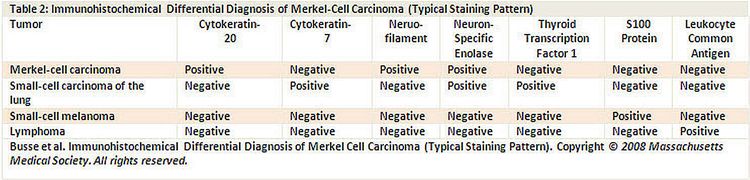
Gastrointestinal Neuroendocrine Tumors Treatment (PDQ®)–Patient Version

Gastrointestinal Neuroendocrine Tumors Treatment (PDQ®)–Patient Version

General Information About Gastrointestinal Neuroendocrine Tumors

Key Points

  • A gastrointestinal neuroendocrine tumor is cancer that forms in the lining of the gastrointestinal tract.
  • Health history can affect the risk of GI neuroendocrine tumors.
  • Some GI neuroendocrine tumors have no signs or symptoms in the early stages.
  • Carcinoid syndrome may occur if the tumor spreads to the liver or other parts of the body.
  • Imaging studies and tests that examine the blood and urine are used to diagnose GI neuroendocrine tumors.
  • Certain factors affect prognosis (chance of recovery) and treatment options.

A gastrointestinal neuroendocrine tumor is cancer that forms in the lining of the gastrointestinal tract.

The gastrointestinal (GI) tract is part of the body’s digestive system, a series of hollow, muscular organs joined in a long, twisting tube from the mouth to the anus. The digestive tract processes nutrients in foods that are eaten and helps pass waste material out of the body:

  • Food moves from the throat to the stomach through a tube called the esophagus.
  • After food enters the stomach, it is broken down by stomach muscles that mix the food and liquid with digestive juices.
  • After leaving the stomach, partly digested food passes into the small intestine and then into the large intestine.
  • The end of the large intestine, called the rectum, stores the waste from the digested food until it is pushed out of the anus during a bowel movement.
EnlargeDrawing of the gastrointestinal tract showing the stomach, small intestine (including the duodenum, jejunum, and ileum), appendix, colon, and rectum.
Gastrointestinal neuroendocrine tumors form in the lining of the gastrointestinal tract, most often in the small intestine, appendix, or rectum.

Gastrointestinal (GI) neuroendocrine tumors (also called gastrointestinal carcinoid tumors) form from a certain type of neuroendocrine cell (a type of cell that is like a nerve cell and a hormone-making cell). These cells are scattered throughout the chest and abdomen but most are found in the GI tract. Neuroendocrine cells make hormones that help control digestive juices and the muscles used in moving food through the stomach and intestines. A GI neuroendocrine tumor may also make hormones and release them into the body.

GI neuroendocrine tumors are rare and most grow very slowly. Most of them occur in the small intestine, rectum, and appendix. Sometimes more than one tumor will form.

See the following for information about other types of neuroendocrine tumors:

Health history can affect the risk of GI neuroendocrine tumors.

Anything that increases a person’s chance of getting a disease is called a risk factor. Not every person with one or more of these risk factors will develop GI neuroendocrine tumors, and they can develop in people who don’t have any known risk factors. Talk to your doctor if you think you may be at risk.

Risk factors for GI neuroendocrine tumors include:

Some GI neuroendocrine tumors have no signs or symptoms in the early stages.

Signs and symptoms may be caused by the growth of the tumor and/or the hormones the tumor makes. Some tumors, especially tumors of the stomach or appendix, may not cause signs or symptoms. Neuroendocrine tumors are often found during tests or treatments for other conditions.

Neuroendocrine tumors in the small intestine (duodenum, jejunum, and ileum), colon, and rectum sometimes cause signs or symptoms as they grow or because of the hormones they make. Other conditions may cause the same signs or symptoms. Check with your doctor if you have:

  • Duodenum

    Signs and symptoms of GI neuroendocrine tumors in the duodenum (first part of the small intestine, that connects to the stomach) may include:

  • Jejunum and ileum

    Signs and symptoms of GI neuroendocrine tumors in the jejunum (middle part of the small intestine) and ileum (last part of the small intestine, that connects to the colon) may include:

  • Colon

    Signs and symptoms of GI neuroendocrine tumors in the colon may include:

    • Abdominal pain.
    • Weight loss for no known reason.
  • Rectum

    Signs and symptoms of GI neuroendocrine tumors in the rectum may include:

Carcinoid syndrome may occur if the tumor spreads to the liver or other parts of the body.

The hormones made by GI neuroendocrine tumors are usually destroyed by liver enzymes in the blood. If the tumor has spread to the liver and the liver enzymes cannot destroy the extra hormones made by the tumor, high amounts of these hormones may remain in the body and cause carcinoid syndrome. This can also happen if tumor cells enter the blood. Signs and symptoms of carcinoid syndrome include:

  • Redness or a feeling of warmth in the face and neck.
  • Abdominal pain.
  • Feeling bloated.
  • Diarrhea.
  • Wheezing or other trouble breathing.
  • Fast heartbeat.

These signs and symptoms may be caused by GI neuroendocrine tumors or by other conditions. Talk to your doctor if you have any of these signs or symptoms.

Imaging studies and tests that examine the blood and urine are used to diagnose GI neuroendocrine tumors.

In addition to asking about your personal and family health history and doing a physical exam, your doctor may perform the following tests and procedures:

  • Blood chemistry studies: A procedure in which a blood sample is checked to measure the amounts of certain substances, such as hormones, released into the blood by organs and tissues in the body. An unusual (higher or lower than normal) amount of a substance can be a sign of disease. The blood sample is checked to see if it contains a hormone produced by neuroendocrine tumors. This test is used to help diagnose carcinoid syndrome.
  • Tumor marker test: A procedure in which a sample of blood, urine, or tissue is checked to measure the amounts of certain substances, such as chromogranin A, made by organs, tissues, or tumor cells in the body. Chromogranin A is a tumor marker. It has been linked to neuroendocrine tumors when found in increased levels in the body.
  • Twenty-four-hour urine test: A test in which urine is collected for 24 hours to measure the amounts of certain substances, such as 5-HIAA or serotonin (hormone). An unusual (higher or lower than normal) amount of a substance can be a sign of disease in the organ or tissue that makes it. This test is used to help diagnose carcinoid syndrome.
  • MIBG scan: A procedure used to find neuroendocrine tumors. A very small amount of radioactive material called MIBG (metaiodobenzylguanidine) is injected into a vein and travels through the bloodstream. Neuroendocrine tumors take up the radioactive material and are detected by a device that measures radiation.
  • CT scan (CAT scan): A procedure that makes a series of detailed pictures of areas inside the body, taken from different angles. The pictures are made by a computer linked to an x-ray machine. A dye may be injected into a vein or swallowed to help the organs or tissues show up more clearly. This procedure is also called computed tomography, computerized tomography, or computerized axial tomography.
  • MRI (magnetic resonance imaging): A procedure that uses a magnet, radio waves, and a computer to make a series of detailed pictures of areas inside the body. This procedure is also called nuclear magnetic resonance imaging.
  • PET scan (positron emission tomography scan): A procedure to find malignant tumor cells in the body. A small amount of radioactive glucose (sugar) is injected into a vein. The PET scanner rotates around the body and makes a picture of where glucose is being used in the body. Malignant tumor cells show up brighter in the picture because they are more active and take up more glucose than normal cells.
  • Endoscopic ultrasound (EUS): A procedure in which an endoscope is inserted into the body, usually through the mouth or rectum. An endoscope is a thin, tube-like instrument with a light and a lens for viewing. A probe at the end of the endoscope is used to bounce high-energy sound waves (ultrasound) off internal tissues or organs, such as the stomach, small intestine, colon, or rectum, and make echoes. The echoes form a picture of body tissues called a sonogram. This procedure is also called endosonography.
  • Upper endoscopy: A procedure to look at organs and tissues inside the body to check for abnormal areas. An endoscope is inserted through the mouth and passed through the esophagus into the stomach. Sometimes the endoscope also is passed from the stomach into the small intestine. An endoscope is a thin, tube-like instrument with a light and a lens for viewing. It may also have a tool to remove tissue or lymph node samples, which are checked under a microscope for signs of disease.
  • Colonoscopy: A procedure to look inside the rectum and colon for polyps, abnormal areas, or cancer. A colonoscope is inserted through the rectum into the colon. A colonoscope is a thin, tube-like instrument with a light and a lens for viewing. It may also have a tool to remove polyps or tissue samples, which are checked under a microscope for signs of cancer.
  • Capsule endoscopy: A procedure used to see all of the small intestine. The patient swallows a capsule that contains a tiny camera. As the capsule moves through the gastrointestinal tract, the camera takes pictures and sends them to a receiver worn on the outside of the body.
  • Biopsy: The removal of cells or tissues so they can be viewed under a microscope to check for signs of cancer. Tissue samples may be taken during endoscopy and colonoscopy.

Certain factors affect prognosis (chance of recovery) and treatment options.

The prognosis and treatment options depend on:

  • Where the tumor is in the gastrointestinal tract.
  • The size of the tumor.
  • Whether the cancer has spread from the stomach and intestines to other parts of the body, such as the liver or lymph nodes.
  • Whether the patient has carcinoid syndrome or has carcinoid heart syndrome.
  • Whether the cancer can be completely removed by surgery.
  • Whether the cancer is newly diagnosed or has recurred.

Stages of Gastrointestinal Neuroendocrine Tumors

Key Points

  • After a gastrointestinal neuroendocrine tumor has been diagnosed, tests are done to find out if cancer cells have spread within the stomach and intestines or to other parts of the body.
  • There are three ways that cancer spreads in the body.
  • Cancer may spread from where it began to other parts of the body.
  • The plan for cancer treatment depends on where the neuroendocrine tumor is found and whether it can be removed by surgery.

After a gastrointestinal neuroendocrine tumor has been diagnosed, tests are done to find out if cancer cells have spread within the stomach and intestines or to other parts of the body.

Staging is the process used to find out how far the cancer has spread. The information gathered from the staging process determines the stage of the disease. The results of tests and procedures used to diagnose gastrointestinal (GI) neuroendocrine tumors may also be used for staging. See the General Information section for a description of these tests and procedures. A bone scan may be done to check if there are rapidly dividing cells, such as cancer cells, in the bone. A very small amount of radioactive material is injected into a vein and travels through the bloodstream. The radioactive material collects in the bones with cancer and is detected by a scanner.

There are three ways that cancer spreads in the body.

Cancer can spread through tissue, the lymph system, and the blood:

  • Tissue. The cancer spreads from where it began by growing into nearby areas.
  • Lymph system. The cancer spreads from where it began by getting into the lymph system. The cancer travels through the lymph vessels to other parts of the body.
  • Blood. The cancer spreads from where it began by getting into the blood. The cancer travels through the blood vessels to other parts of the body.

Cancer may spread from where it began to other parts of the body.

When cancer spreads to another part of the body, it is called metastasis. Cancer cells break away from where they began (the primary tumor) and travel through the lymph system or blood.

  • Lymph system. The cancer gets into the lymph system, travels through the lymph vessels, and forms a tumor (metastatic tumor) in another part of the body.
  • Blood. The cancer gets into the blood, travels through the blood vessels, and forms a tumor (metastatic tumor) in another part of the body.

The metastatic tumor is the same type of tumor as the primary tumor. For example, if a GI neuroendocrine tumor spreads to the liver, the tumor cells in the liver are actually GI neuroendocrine tumor cells. The disease is metastatic GI neuroendocrine tumor, not liver cancer.

Many cancer deaths are caused when cancer moves from the original tumor and spreads to other tissues and organs. This is called metastatic cancer. This animation shows how cancer cells travel from the place in the body where they first formed to other parts of the body.

The plan for cancer treatment depends on where the neuroendocrine tumor is found and whether it can be removed by surgery.

For many cancers it is important to know the stage of the cancer in order to plan treatment. However, the treatment of GI neuroendocrine tumors is not based on the stage of the cancer. Treatment depends mainly on whether the tumor can be removed by surgery and if the tumor has spread.

Treatment is based on whether the tumor:

  • Can be completely removed by surgery.
  • Has spread to other parts of the body.
  • Has come back after treatment. The tumor may come back in the stomach or intestines or in other parts of the body.
  • Has not gotten better with treatment.

Treatment Option Overview

Key Points

  • There are different types of treatment for patients with gastrointestinal neuroendocrine tumors.
  • The following types of treatment are used:
    • Surgery
    • Radiation therapy
    • Chemotherapy
    • Hormone therapy
  • Treatment for carcinoid syndrome may also be needed.
  • New types of treatment are being tested in clinical trials.
    • Targeted therapy
  • Treatment for gastrointestinal neuroendocrine tumors may cause side effects.
  • Patients may want to think about taking part in a clinical trial.
  • Patients can enter clinical trials before, during, or after starting their cancer treatment.
  • Follow-up care may be needed.

There are different types of treatment for patients with gastrointestinal neuroendocrine tumors.

Different types of treatment are available for patients with gastrointestinal neuroendocrine (GI) tumors. Some treatments are standard (the currently used treatment), and some are being tested in clinical trials. A treatment clinical trial is a research study meant to help improve current treatments or obtain information on new treatments for patients with cancer. When clinical trials show that a new treatment is better than the standard treatment, the new treatment may become the standard treatment. Patients may want to think about taking part in a clinical trial. Some clinical trials are open only to patients who have not started treatment.

The following types of treatment are used:

Surgery

Treatment of GI neuroendocrine tumors usually includes surgery. One of the following surgical procedures may be used:

  • Endoscopic resection: Surgery to remove a small tumor that is on the inside lining of the GI tract. An endoscope is inserted through the mouth and passed through the esophagus to the stomach and sometimes, the duodenum. An endoscope is a thin, tube-like instrument with a light, a lens for viewing, and a tool for removing tumor tissue.
  • Local excision: Surgery to remove the tumor and a small amount of normal tissue around it.
  • Resection: Surgery to remove part or all of the organ that contains cancer. Nearby lymph nodes may also be removed.
  • Cryosurgery: A treatment that uses an instrument to freeze and destroy the tumor. This type of treatment is also called cryotherapy. The doctor may use ultrasound to guide the instrument.
  • Radiofrequency ablation: The use of a special probe with tiny electrodes that release high-energy radio waves (similar to microwaves) that kill cancer cells. The probe may be inserted through the skin or through an incision (cut) in the abdomen.
  • Liver transplant: Surgery to remove the whole liver and replace it with a healthy donated liver.
  • Hepatic artery embolization: A procedure to embolize (block) the hepatic artery, which is the main blood vessel that brings blood into the liver. Blocking the flow of blood to the liver helps kill cancer cells growing there.

Radiation therapy

Radiation therapy is a cancer treatment that uses high-energy x-rays or other types of radiation to kill cancer cells or keep them from growing. There are two types of radiation therapy:

Radiopharmaceutical therapy is a type of internal radiation therapy. Radiation is given to the tumor using a drug that has a radioactive substance, such as iodine I 131, attached to it. The radioactive substance kills the tumor cells.

External and internal radiation therapy are used to treat GI neuroendocrine tumors that have spread to other parts of the body.

Chemotherapy

Chemotherapy is a cancer treatment that uses drugs to stop the growth of cancer cells, either by killing the cells or by stopping the cells from dividing. When chemotherapy is taken by mouth or injected into a vein or muscle, the drugs enter the bloodstream and can reach cancer cells throughout the body (systemic chemotherapy). When chemotherapy is placed directly into the cerebrospinal fluid, an organ, or a body cavity such as the abdomen, the drugs mainly affect cancer cells in those areas (regional chemotherapy).

Chemoembolization of the hepatic artery is a type of regional chemotherapy that may be used to treat a GI neuroendocrine tumor that has spread to the liver. The anticancer drug is injected into the hepatic artery through a catheter (thin tube). The drug is mixed with a substance that embolizes (blocks) the artery and cuts off blood flow to the tumor. Most of the anticancer drug is trapped near the tumor and only a small amount of the drug reaches other parts of the body. The blockage may be temporary or permanent, depending on the substance used to block the artery. The tumor is prevented from getting the oxygen and nutrients it needs to grow. The liver continues to receive blood from the hepatic portal vein, which carries blood from the stomach and intestine.

The way the chemotherapy is given depends on the type and stage of the cancer being treated.

Hormone therapy

Hormone therapy with a somatostatin analog is a treatment that stops extra hormones from being made. GI neuroendocrine tumors are treated with octreotide or lanreotide which are injected under the skin or into the muscle. Octreotide and lanreotide may also have a small effect on stopping tumor growth.

Treatment for carcinoid syndrome may also be needed.

Treatment of carcinoid syndrome may include:

  • Hormone therapy with a somatostatin analog stops extra hormones from being made. Carcinoid syndrome is treated with octreotide or lanreotide to lessen flushing and diarrhea. Octreotide and lanreotide may also help slow tumor growth.
  • Interferon therapy stimulates the body’s immune system to work better and lessens flushing and diarrhea. Interferon may also help slow tumor growth.
  • Taking medicine for diarrhea.
  • Taking medicine for skin rashes.
  • Taking medicine to breathe easier.
  • Taking medicine before having anesthesia for a medical procedure.

Other ways to help treat carcinoid syndrome include avoiding things that cause flushing or difficulty breathing such as alcohol, nuts, certain cheeses and foods with capsaicin, such as chili peppers. Avoiding stressful situations and certain types of physical activity can also help treat carcinoid syndrome.

For some patients with carcinoid heart syndrome, a heart valve replacement may be done.

New types of treatment are being tested in clinical trials.

This summary section describes treatments that are being studied in clinical trials. It may not mention every new treatment being studied. Information about clinical trials is available from the NCI website.

Targeted therapy

Targeted therapy is a type of treatment that uses drugs or other substances to identify and attack specific cancer cells. Several types of targeted therapy are being studied in the treatment of GI neuroendocrine tumors.

Treatment for gastrointestinal neuroendocrine tumors may cause side effects.

For information about side effects caused by treatment for cancer, visit our Side Effects page.

Patients may want to think about taking part in a clinical trial.

For some patients, taking part in a clinical trial may be the best treatment choice. Clinical trials are part of the cancer research process. Clinical trials are done to find out if new cancer treatments are safe and effective or better than the standard treatment.

Many of today’s standard treatments for cancer are based on earlier clinical trials. Patients who take part in a clinical trial may receive the standard treatment or be among the first to receive a new treatment.

Patients who take part in clinical trials also help improve the way cancer will be treated in the future. Even when clinical trials do not lead to effective new treatments, they often answer important questions and help move research forward.

Patients can enter clinical trials before, during, or after starting their cancer treatment.

Some clinical trials only include patients who have not yet received treatment. Other trials test treatments for patients whose cancer has not gotten better. There are also clinical trials that test new ways to stop cancer from recurring (coming back) or reduce the side effects of cancer treatment.

Clinical trials are taking place in many parts of the country. Information about clinical trials supported by NCI can be found on NCI’s clinical trials search webpage. Clinical trials supported by other organizations can be found on the ClinicalTrials.gov website.

Follow-up care may be needed.

As you go through treatment, you will have follow-up tests or check-ups. Some tests that were done to diagnose or stage the cancer may be repeated to see how well the treatment is working. Decisions about whether to continue, change, or stop treatment may be based on the results of these tests.

Some of the tests will continue to be done from time to time after treatment has ended. The results of these tests can show if your condition has changed or if the cancer has recurred (come back).

Treatment of Neuroendocrine Tumors in the Stomach

For information about the treatments listed below, see the Treatment Option Overview section.

Treatment of gastrointestinal (GI) neuroendocrine tumors in the stomach may include:

  • Endoscopic surgery (resection) for small tumors.
  • Surgery (resection) to remove part or all of the stomach. Nearby lymph nodes for larger tumors, tumors that grow deep into the stomach wall, or tumors that are growing and spreading quickly may also be removed.

For patients with GI neuroendocrine tumors in the stomach and MEN1 syndrome, treatment may also include:

Use our clinical trial search to find NCI-supported cancer clinical trials that are accepting patients. You can search for trials based on the type of cancer, the age of the patient, and where the trials are being done. General information about clinical trials is also available.

Treatment of Neuroendocrine Tumors in the Small Intestine

For information about the treatments listed below, see the Treatment Option Overview section.

It is not clear what the best treatment is for gastrointestinal (GI) neuroendocrine tumors in the duodenum (first part of the small intestine, that connects to the stomach). Treatment may include:

Treatment of GI neuroendocrine tumors in the jejunum (middle part of the small intestine) and ileum (last part of the small intestine, that connects to the colon) may include:

  • Surgery (resection) to remove the tumor and the membrane that connects the intestines to the back of the abdominal wall. Nearby lymph nodes are also removed.
  • A second surgery to remove the membrane that connects the intestines to the back of the abdominal wall, if any tumor remains or the tumor continues to grow.
  • Hormone therapy.

Use our clinical trial search to find NCI-supported cancer clinical trials that are accepting patients. You can search for trials based on the type of cancer, the age of the patient, and where the trials are being done. General information about clinical trials is also available.

Treatment of Neuroendocrine Tumors in the Appendix

For information about the treatments listed below, see the Treatment Option Overview section.

Treatment of gastrointestinal (GI) neuroendocrine tumors in the appendix may include:

  • Surgery (resection) to remove the appendix.
  • Surgery (resection) to remove the right side of the colon including the appendix. Nearby lymph nodes are also removed.

Use our clinical trial search to find NCI-supported cancer clinical trials that are accepting patients. You can search for trials based on the type of cancer, the age of the patient, and where the trials are being done. General information about clinical trials is also available.

Treatment of Neuroendocrine Tumors in the Colon

For information about the treatments listed below, see the Treatment Option Overview section.

Treatment of gastrointestinal (GI) neuroendocrine tumors in the colon may include:

Use our clinical trial search to find NCI-supported cancer clinical trials that are accepting patients. You can search for trials based on the type of cancer, the age of the patient, and where the trials are being done. General information about clinical trials is also available.

Treatment of Neuroendocrine Tumors in the Rectum

For information about the treatments listed below, see the Treatment Option Overview section.

Treatment of gastrointestinal (GI) neuroendocrine tumors in the rectum may include:

  • Endoscopic surgery (resection) for tumors that are smaller than 1 centimeter.
  • Surgery (resection) for tumors that are larger than 2 centimeters or that have spread to the muscle layer of the rectal wall. This may be either:
    • surgery to remove part of the rectum; or
    • surgery to remove the anus, the rectum, and part of the colon through an incision made in the abdomen.

It is not clear what the best treatment is for tumors that are 1 to 2 centimeters. Treatment may include:

  • Endoscopic surgery (resection).
  • Surgery (resection) to remove part of the rectum.
  • Surgery (resection) to remove the anus, the rectum, and part of the colon through an incision made in the abdomen.

Use our clinical trial search to find NCI-supported cancer clinical trials that are accepting patients. You can search for trials based on the type of cancer, the age of the patient, and where the trials are being done. General information about clinical trials is also available.

Treatment of Metastatic Gastrointestinal Neuroendocrine Tumors

For information about the treatments listed below, see the Treatment Option Overview section.

Distant metastases

Treatment of distant metastases of gastrointestinal (GI) neuroendocrine tumors is usually palliative therapy to relieve symptoms and improve quality of life. Treatment may include:

Liver metastases

Treatment of cancer that has spread to the liver may include:

Use our clinical trial search to find NCI-supported cancer clinical trials that are accepting patients. You can search for trials based on the type of cancer, the age of the patient, and where the trials are being done. General information about clinical trials is also available.

Treatment of Recurrent Gastrointestinal Neuroendocrine Tumors

For information about the treatments listed below, see the Treatment Option Overview section.

Treatment of recurrent gastrointestinal (GI) neuroendocrine tumors may include:

Use our clinical trial search to find NCI-supported cancer clinical trials that are accepting patients. You can search for trials based on the type of cancer, the age of the patient, and where the trials are being done. General information about clinical trials is also available.

To Learn More About Gastrointestinal Neuroendocrine Tumors

About This PDQ Summary

About PDQ

Physician Data Query (PDQ) is the National Cancer Institute’s (NCI’s) comprehensive cancer information database. The PDQ database contains summaries of the latest published information on cancer prevention, detection, genetics, treatment, supportive care, and complementary and alternative medicine. Most summaries come in two versions. The health professional versions have detailed information written in technical language. The patient versions are written in easy-to-understand, nontechnical language. Both versions have cancer information that is accurate and up to date and most versions are also available in Spanish.

PDQ is a service of the NCI. The NCI is part of the National Institutes of Health (NIH). NIH is the federal government’s center of biomedical research. The PDQ summaries are based on an independent review of the medical literature. They are not policy statements of the NCI or the NIH.

Purpose of This Summary

This PDQ cancer information summary has current information about the treatment of adult gastrointestinal neuroendocrine tumors. It is meant to inform and help patients, families, and caregivers. It does not give formal guidelines or recommendations for making decisions about health care.

Reviewers and Updates

Editorial Boards write the PDQ cancer information summaries and keep them up to date. These Boards are made up of experts in cancer treatment and other specialties related to cancer. The summaries are reviewed regularly and changes are made when there is new information. The date on each summary (“Updated”) is the date of the most recent change.

The information in this patient summary was taken from the health professional version, which is reviewed regularly and updated as needed, by the PDQ Adult Treatment Editorial Board.

Clinical Trial Information

A clinical trial is a study to answer a scientific question, such as whether one treatment is better than another. Trials are based on past studies and what has been learned in the laboratory. Each trial answers certain scientific questions in order to find new and better ways to help cancer patients. During treatment clinical trials, information is collected about the effects of a new treatment and how well it works. If a clinical trial shows that a new treatment is better than one currently being used, the new treatment may become “standard.” Patients may want to think about taking part in a clinical trial. Some clinical trials are open only to patients who have not started treatment.

Clinical trials can be found online at NCI’s website. For more information, call the Cancer Information Service (CIS), NCI’s contact center, at 1-800-4-CANCER (1-800-422-6237).

Permission to Use This Summary

PDQ is a registered trademark. The content of PDQ documents can be used freely as text. It cannot be identified as an NCI PDQ cancer information summary unless the whole summary is shown and it is updated regularly. However, a user would be allowed to write a sentence such as “NCI’s PDQ cancer information summary about breast cancer prevention states the risks in the following way: [include excerpt from the summary].”

The best way to cite this PDQ summary is:

PDQ® Adult Treatment Editorial Board. PDQ Gastrointestinal Neuroendocrine Tumors Treatment. Bethesda, MD: National Cancer Institute. Updated <MM/DD/YYYY>. Available at: /types/gi-neuroendocrine-tumors/patient/gi-neuroendocrine-treatment-pdq. Accessed <MM/DD/YYYY>. [PMID: 26389212]

Images in this summary are used with permission of the author(s), artist, and/or publisher for use in the PDQ summaries only. If you want to use an image from a PDQ summary and you are not using the whole summary, you must get permission from the owner. It cannot be given by the National Cancer Institute. Information about using the images in this summary, along with many other images related to cancer can be found in Visuals Online. Visuals Online is a collection of more than 3,000 scientific images.

Disclaimer

The information in these summaries should not be used to make decisions about insurance reimbursement. More information on insurance coverage is available on Cancer.gov on the Managing Cancer Care page.

Contact Us

More information about contacting us or receiving help with the Cancer.gov website can be found on our Contact Us for Help page. Questions can also be submitted to Cancer.gov through the website’s E-mail Us.

Gastrointestinal Neuroendocrine Tumors Treatment (PDQ®)–Health Professional Version

Gastrointestinal Neuroendocrine Tumors Treatment (PDQ®)–Health Professional Version

General Information About Gastrointestinal Neuroendocrine (Carcinoid) Tumors

Epidemiology

The age-adjusted incidence of neuroendocrine (carcinoid) tumors worldwide is approximately 2 per 100,000 people.[1,2] The average age at diagnosis is 61.4 years.[3] Neuroendocrine tumors (also called NETs) represent about 0.5% of all newly diagnosed malignancies.[2,3]

Anatomy

Neuroendocrine tumors are rare, slow-growing tumors that originate in cells of the diffuse neuroendocrine system. They occur most frequently in tissues derived from the embryonic gut. Foregut tumors, which account for up to 25% of cases, arise in the lung, thymus, stomach, or proximal duodenum. Midgut tumors, which account for up to 50% of cases, arise in the small intestine, appendix, or proximal colon. Hindgut tumors, which account for approximately 15% of cases, arise in the distal colon or rectum.[4] Other sites of origin include the gallbladder, kidney, liver, pancreas, ovary, and testis.[35]

Gastrointestinal neuroendocrine tumors, especially tumors of the small intestine, are often associated with other cancers. Synchronous or metachronous cancers occur in approximately 29% of patients with small intestinal neuroendocrine tumors.[3] However, it is possible that the association may be due in part to the serendipitous discovery of slow-growing neuroendocrine tumors, which are found while staging or investigating symptoms from other tumors.

Histology

The term carcinoid may be used for well-differentiated neuroendocrine tumors or carcinomas of the gastrointestinal tract only. The term should not be used to describe pancreatic neuroendocrine tumors or islet cell tumors.[6] Data regarding carcinoids and other neuroendocrine tumors, such as poorly differentiated neuroendocrine carcinomas, may be combined in some epidemiological and clinical studies, rendering separate consideration difficult. Occurring nonrandomly throughout the gastrointestinal tract are more than 14 cell types, which produce different hormones.[7] Although the cellular origin of neuroendocrine tumors of the gastrointestinal tract is uncertain, consistent expression of cytokeratins in neuroendocrine tumors and the expression of the caudal-related homeodomain protein 2 (Cd2 protein), an intestinal transcription factor in endocrine tumors of the small intestine, suggests an origin from an epithelial precursor cell.[8] For more information, see Pancreatic Neuroendocrine Tumors (Islet Cell Tumors) Treatment and the Cellular and Pathological Classification of Gastrointestinal Neuroendocrine Tumors section.

Most neuroendocrine tumors of the small and large intestines occur sporadically, while others may occur within the background of an inherited neoplasia syndrome such as multiple endocrine neoplasia type 1 (MEN1) or neurofibromatosis type 1 (NF1) (e.g., gastrin-producing G-cell tumors and somatostatin-producing D-cell tumors of the duodenum, respectively).[9] Tumor multifocality is the rule within the background of neuroendocrine cell hyperplasia, but multifocality is found in approximately one-third of patients with small enterochromaffin cell tumors in the absence of proliferative or genetic factors. Clonality studies suggest that most of these neoplasms are separate primary lesions.[10,11] Gastric neuroendocrine tumors may be associated with chronic atrophic gastritis.[7]

Histopathology

Individual carcinoid tumors have specific histological and immunohistochemical features based on their anatomical location and endocrine cell type. However, all carcinoids share common pathological features that characterize them as well-differentiated neuroendocrine tumors.[5] In the gastric or intestinal wall, carcinoids may occur as firm white, yellow, or gray nodules and may be intramural masses or may protrude into the lumen as polypoid nodules. The overlying gastric or intestinal mucosa may be intact or have focal ulceration.

Neuroendocrine cells have uniform nuclei and abundant granular or faintly staining (clear) cytoplasm. They are present as solid or small trabecular clusters or are dispersed among other cells, which may make them difficult to recognize in sections stained with hematoxylin and eosin; immunostaining enables their exact identification.[12] At the ultrastructural level, neuroendocrine cells contain cytoplasmic membrane-bound dense-cored secretory granules (diameter >80 NM) and may also contain small clear vesicles (diameter 40–80 NM) that correspond to the synaptic vesicles of neurons.

Molecular genetics

Occasionally, gastrointestinal carcinoids occur in association with inherited syndromes, such as MEN1 and NF1.[1315]

MEN1 is caused by alterations of the MEN1 gene located at chromosomal region 11q13. Most carcinoids associated with MEN1 appear to be of foregut origin.[13] NF1 is an autosomal dominant genetic disorder caused by alteration of the NF1 gene at chromosome 17q11.[16] Carcinoids in patients with NF1 appear to arise primarily in the periampullary region.[5,17,18] For more information, see Genetics of Endocrine and Neuroendocrine Neoplasias.

In sporadic gastrointestinal carcinoids, numerous chromosomal imbalances have been found by comparative genome hybridization analysis. Gains involving chromosomes 5, 14, 17 (especially 17q), and 19 and losses involving chromosomes 11 (especially 11q) and 18 appear to be the most common.[19,20]

The most common pathogenic variant in gastrointestinal carcinoids is CTNNB1. In one study, CTNNB1 exon 3 variants were found in 27 of 72 cases (37.5%).[21]

However, no consistent genetic markers for gastrointestinal carcinoid prognosis have yet been identified.[9] For more information, see the Cellular and Pathological Classification of Gastrointestinal Neuroendocrine Tumors section.

Carcinoid syndrome

Carcinoid syndrome, which occurs in fewer than 20% of patients with neuroendocrine tumors, is caused by the release of metabolically undergraded vasoactive amines into the systemic circulation. It is associated with flushing, abdominal pain and diarrhea, bronchoconstriction, and carcinoid heart disease.[22,23] Because vasoactive amines are efficiently metabolized by the liver, carcinoid syndrome rarely occurs in the absence of hepatic metastases. Exceptions include circumstances in which venous blood draining from a tumor enters directly into the systemic circulation (e.g., primary pulmonary or ovarian carcinoids, pelvic or retroperitoneal involvement by metastatic or locally invasive small bowel carcinoids, or extensive bone metastases).

Carcinoid heart disease develops in more than one-third of patients with carcinoid syndrome. Pathologically, the cardiac valves become thickened because of fibrosis, and the tricuspid and pulmonic valves are affected to a greater extent than the mitral and aortic valves. Symptoms include:[22]

  • Tricuspid and pulmonic regurgitation.
  • Pulmonary stenosis.
  • Mitral and aortic insufficiency.
  • Cardiac dysrhythmias.

Severe carcinoid heart disease is associated with reduced survival. For more information, see the Prognostic Factors section.

Site-Specific Clinical Features

The clinical features of gastrointestinal neuroendocrine tumors vary according to anatomical location and cell type.[5,12,24] Most neuroendocrine tumors in the gastrointestinal tract are located within 3 feet (~90 cm) of the ileocecal valve, with 50% found in the appendix.[25] They are often detected fortuitously during surgery for another gastrointestinal disorder or during emergency surgery for appendicitis, gastrointestinal bleeding, or perforation.[26]

Gastric neuroendocrine tumors

Most gastric neuroendocrine tumors are enterochromaffin-like (ECL)-cell neuroendocrine tumors; rarely, other types may occur in the stomach. For more information, see Table 1.

Type I ECL-cell gastric neuroendocrine tumors, the most common type, typically do not have clinical symptoms. They are often discovered during endoscopy for reflux, anemia, or other reasons. They are typically multifocal. Occurring most commonly in women (female-to-male ratio, 2.5:1) at a mean age of 63 years, achlorhydria may be present, and hypergastrinemia or evidence of antral G-cell hyperplasia is usually found.[5,24,27] These tumors are gastrin-driven and arise in a background of chronic atrophic gastritis of the corpus, usually because of autoimmune pernicious anemia but sometimes caused by Helicobacter pylori infection.[9]

Type II ECL-cell neuroendocrine tumors, the least common type of gastric neuroendocrine tumor, occur at a mean age of 50 years with no sex predilection. The hypergastrinemia associated with MEN1-Zollinger-Ellison syndrome (ZES) is thought to promote the ECL-cell hyperplasia that leads to type II tumors.[27,28]

Type I and type II ECL-cell gastric neuroendocrine tumors have been reported to metastasize in fewer than 10% of cases.[27,29] Type III gastric ECL-cell neuroendocrine tumors, the second most common type of gastric neuroendocrine tumor, occur mostly in men (male-to-female ratio, 2.8:1) at a mean age of 55 years.[27] There are no neuroendocrine manifestations, and patients typically present with signs and symptoms related to an aggressive tumor.[5,30]

Duodenal neuroendocrine tumors

Duodenal neuroendocrine tumors comprise only 2% to 3% of gastrointestinal neuroendocrine tumors. They are discovered incidentally or because of symptoms from hormonal or peptide production. These tumors may also arise in the periampullary region, obstruct the ampulla of Vater, and produce jaundice.[3,5,31] The age at presentation varies widely (range, 19–90 years; mean age, 53 years).[15,32]

The most common duodenal neuroendocrine tumors are gastrin-producing G-cell tumors (~two-thirds), followed by somatostatin-producing D-cell tumors (~one-fifth), which rarely produce systemic manifestations of somatostatin excess.[5,31,33]

Gastrin production from G-cell neuroendocrine tumors (also called gastrinomas if serum gastrin levels are elevated) results in ZES in approximately one-third of the cases of duodenal G-cell tumors.[24] Although duodenal G-cell neuroendocrine tumors may occur sporadically, 90% of patients with MEN1 develop them.[5] The clinical manifestations of serum gastrin elevation include:

  • Nausea.
  • Vomiting.
  • Abdominal pain.
  • Hemorrhage from multiple and recurrent peptic ulcers.
  • Gastroesophageal reflux caused by excess acid production.
  • Diarrhea from hypergastrinemia.

The most common symptom is abdominal pain; both abdominal pain and diarrhea are present in approximately 50% of patients. In contrast to sporadic gastrinomas, which are usually solitary lesions, gastrinomas in patients with MEN1-ZES are usually multiple and smaller than 5 mm.[5]

Somatostatin-producing D-cell tumors occur exclusively in and around the ampulla of Vater, and as many as 50% of patients with D-cell neuroendocrine tumors have NF1.[34] Most patients with this type of tumor and NF1 are Black women, and their tumors are exclusively located in the periampullary region.[15,32] As a result of their location, these tumors may cause local obstructive symptoms and signs such as jaundice, pancreatitis, or hemorrhage. Although D-cell tumors produce somatostatin, systemic manifestations of excess somatostatin such as steatorrhea, diarrhea, diabetes mellitus, hypochlorhydria and achlorhydria, anemia, and cholelithiasis are rare.[31]

Jejunal and ileal neuroendocrine tumors

Most jejunal and ileal neuroendocrine tumors are argentaffin-positive, substance P–containing, and serotonin-producing EC-cell tumors that generate carcinoid syndrome when hepatic or retroperitoneal nodal metastases are present. L-cell, glucagon-like polypeptide-producing, and pancreatic polypeptide- and polypeptide YY-producing tumors occur less frequently.[24] Ileal neuroendocrine tumors develop preferentially in the terminal ileum.[12] Jejunal and ileal neuroendocrine tumors occur equally in men and women at a mean age of 65.4 years.[3] Similar to all neuroendocrine tumors, jejunal and ileal neuroendocrine tumors vary in their biological behavior and ability to metastasize. Typically, EC-cell neuroendocrine tumors of the small intestine metastasize to lymph nodes and the liver.[5] Patients with these lesions may be asymptomatic. The primary tumor may cause small intestinal obstruction, ischemia, or bleeding, and some patients may complain of a long history of intermittent crampy abdominal pain, weight loss, fatigue, abdominal distention, diarrhea, or nausea and vomiting.[5,23,35]

At the time of diagnosis, ileal neuroendocrine tumors (i.e., carcinoids plus poorly differentiated neuroendocrine carcinomas) are commonly larger than 2 cm and have metastasized to regional lymph nodes; in as many as 40% of cases, the tumors are multifocal.[12] Immunocytochemically, the cells contain serotonin, substance P, kallikrein, and catecholamine. Approximately 20% of patients with ileal neuroendocrine tumors have regional lymph node and liver metastases. Most gastrointestinal neuroendocrine tumors secrete their bioactive peptides and amines into the portal circulation, and the effects of these biochemical mediators are diminished or negated by hepatic detoxification; accordingly, carcinoid syndrome (e.g., flush, diarrhea, and endocardial fibrosis) occurs only in patients with liver metastases because hepatic detoxification of serotonin is bypassed.

Appendiceal neuroendocrine tumors

Most appendiceal neuroendocrine tumors are serotonin-producing EC-cell tumors similar to neuroendocrine tumors that occur in the jejunum and ileum. Less commonly, appendiceal neuroendocrine tumors are L-cell tumors similar to those in the colon.[16] The biological behavior of both cell types is strikingly different in the appendix compared with tumors of the ileum and nonappendiceal colon. Most appendiceal neuroendocrine tumors have a benign clinical course and do not metastasize, perhaps because growth in the appendix produces obstruction, appendicitis, and subsequent surgical removal.[5,36] Although appendiceal neuroendocrine tumors occur at all ages, patients with these tumors tend to be much younger than patients diagnosed with other appendiceal neoplasms or carcinoids at other sites. Appendiceal neuroendocrine tumors are reportedly more common in women.[3,5] However, age and sex patterns may be spurious, reflecting the younger age range of patients who typically undergo appendectomy for inflammatory appendicitis, and the larger number of incidental appendectomies performed in women during pelvic operations. For more information, see Pediatric Gastrointestinal Neuroendocrine Tumors Treatment.

Colorectal neuroendocrine tumors

Most colorectal neuroendocrine tumors occur in the rectum; fewer arise in the cecum.[5] In the cecum, argentaffin-like EC-cell neuroendocrine tumors are most common, become increasingly less common in the more distal colon, and are uncommon in the rectum.[31] Rectal neuroendocrine tumors account for approximately one-fourth of gastrointestinal neuroendocrine tumors and fewer than 1% of all rectal cancers.[3,31] Most rectal neuroendocrine tumors have L-cell differentiation. The mean age of patients at diagnosis for colonic neuroendocrine tumors is 66 years and for rectal neuroendocrine tumors, 56.2 years. Colorectal neuroendocrine tumors have no sex predilection, and rectal neuroendocrine tumors are more common in the Black population.[3,37] Abdominal pain and weight loss are typical symptoms of colonic neuroendocrine tumors, but more than 50% of patients with rectal neuroendocrine tumors are asymptomatic, and the tumors are discovered at routine rectal examination or screening endoscopy.[24] Symptoms of rectal neuroendocrine tumors include bleeding, pain, and constipation. Metastatic disease from colonic neuroendocrine tumors may produce carcinoid syndrome, whereas metastatic disease from rectal neuroendocrine tumors is not associated with carcinoid syndrome.[5,38]

Diagnostics: Biochemical Markers, Imaging, and Approach

Biochemical markers

Biochemical investigations in the diagnosis of gastrointestinal neuroendocrine tumors include the use of 24-hour urinary 5-hydroxyindoleacetic acid (5-HIAA) collection, which has a specificity of approximately 88%, although the sensitivity is reported to be as low as 35%.[3941] A time-consuming test, 5-HIAA requires dietary avoidance of serotonin-rich foods, such as bananas, tomatoes, and eggplant.[42] Measurement of plasma chromogranin A (CgA), first described in a study of adrenal gland secretions in 1967 as one of the soluble protein fractions (also including CgB and CgC) of chromaffin granules, is also useful.[43] Although plasma levels of CgA are very sensitive markers of gastrointestinal neuroendocrine tumors, they are nonspecific because they are also elevated in other types of neuroendocrine tumors, such as pancreatic and small cell lung carcinomas.[4446] Plasma CgA appears to be a better biochemical marker of neuroendocrine tumors than urinary 5-HIAA.[47] Numerous investigations have revealed an association between plasma CgA levels and disease severity.[26] However, false-positive plasma levels of CgA may occur in patients on proton pump inhibitors, reported to occur even with short-term, low-dose treatment.[48,49] Many other biochemical markers are associated with neuroendocrine tumors—including substance P, neurotensin, bradykinin, human chorionic gonadotropin, neuropeptide L, and pancreatic polypeptide—but none match the specificity or predictive value of 5-HIAA or CgA.[44]

Imaging

Imaging modalities for gastrointestinal neuroendocrine tumors include the use of somatostatin scintigraphy with indium In 111 (111In)-octreotide; bone scintigraphy with technetium Tc 99m-methylene diphosphonate (99mTc-MDP); iodine I 123-metaiodobenzylguanidine (123I-MIBG) scintigraphy; computed tomography (CT); capsule endoscopy; enteroscopy; and angiography.[26]

Somatostatin receptor scintigraphy

There are five different somatostatin receptor (SSTR) subtypes. More than 70% of neuroendocrine tumors of both the gastrointestinal tract and pancreas express multiple subtypes, with a predominance of receptor subtype 2 [sst(2)] and receptor subtype 5 [sst(5)].[50,51] The synthetic radiolabeled SSTR analogue 111In-DTP-d-Phe10-{octreotide} affords an important method, somatostatin receptor scintigraphy (SRS), to localize carcinoid tumors, especially sst(2)-positive and sst(5)-positive tumors; imaging is accomplished in one session, and small primary tumors and metastases are diagnosed more readily than with conventional imaging or imaging techniques requiring multiple sessions.[26,52,53] Overall sensitivity of the octreotide scan is reported to be as high as 90%; however, failed detection may result from various technical issues, small tumor size, or inadequate expression of SSTRs.[26,54]

Bone scintigraphy

Bone scintigraphy with 99mTc-MDP is the primary imaging modality for identifying bone involvement in neuroendocrine tumors, with detection rates reported to be 90% or higher.[26] 123I-MIBG is concentrated by neuroendocrine tumors in as many as 70% of cases, using the same mechanism as norepinephrine, and is used successfully to visualize neuroendocrine tumors. However, 123I-MIBG appears to be about half as sensitive as 111In-octreotide scintigraphy in detecting tumors.[26,55]

CT/MRI

CT and magnetic resonance imaging (MRI) are important modalities used in the initial localization of primary neuroendocrine tumors and/or metastases. The median detection rate and sensitivity of CT and/or MRI have been estimated at 80%. Detection rates by CT alone range between 76% and 100%, while MRI detection rates are between 67% and 100%.[26] CT and MRI may be used for initial localization of the tumor only because both imaging techniques may miss lesions otherwise detected by 111In-octreotide scintigraphy. One study has shown that lesions in 50% of patients were missed, especially in lymph nodes and extrahepatic locations.[26,56]

PET

A promising approach for positron emission tomography (PET) as an imaging modality to visualize gastrointestinal neuroendocrine tumors appears to be the use of the radioactive-labeled serotonin precursor carbon C 11-5-hydroxytryptophan (11C-5-HTP). With 11C-5-HTP, tumor detection rates have been reported to be as high as 100%, and some investigators have concluded that 11C-5-HTP PET should be used as a universal method for detecting neuroendocrine tumors.[5759] In one study of neuroendocrine tumors, including 18 patients with gastrointestinal carcinoids, 11C-5-HTP PET detected tumor lesions in 95% of patients. In 58% of cases, 11C-5-HTP PET detected more lesions than SRS and CT, compared with the 7% that 11C-5-HTP PET did not detect.[59] Other imaging approaches have been investigated using technetium-labeled isotopes, combining CT/MRI with fluorine F 18-fluorodopa PET, combining iodine I 131-MIBG with 111In-octreotide, and coupling the isotopes gallium Ga 68 and copper Cu 64 to octreotide.[26]

EUS

Endoscopic ultrasonography (EUS) may be a sensitive method for the detection of gastric and duodenal neuroendocrine tumors and may be superior to conventional ultrasonography, particularly in the detection of small tumors (2–3 mm) that are localized in the bowel lumen.[60,61] In one study, EUS was reported to have an accuracy of 90% for the localization and staging of colorectal neuroendocrine tumors.[62]

Capsule endoscopy

Capsule endoscopy may prove useful in the detection of small bowel carcinoids.[63]

Enteroscopy

Double-balloon enteroscopy is a time-consuming procedure that is being studied in the diagnosis of small bowel tumors, including neuroendocrine tumors.[64,65] It is usually performed under general anesthesia, although it can be done under conscious sedation.

Angiography

MRI angiography has replaced angiography to a large extent. However, selective and supraselective angiography may be useful to:

  • Demonstrate the degree of tumor vascularity.
  • Identify the sources of vascular supply.
  • Delineate the relationship of the tumor to adjacent major vascular structures.
  • Provide information regarding vascular invasion.

Angiography may be useful as an adjunct to surgery, particularly in the case of large invasive lesions in proximity to the portal vein and superior mesenteric artery. Overall, this imaging technique provides a more precise topographic delineation of the tumor or tumor-related vessels and facilitates resection.[26]

General diagnostic approaches

As might be expected, diagnostic approaches to gastrointestinal neuroendocrine tumors vary according to anatomical location. In 2004, a consensus statement regarding the diagnosis and treatment of gastrointestinal neuroendocrine tumors was published on behalf of the European Neuroendocrine Tumor Society,[66] which details site-specific approaches to diagnosis.

Prognostic Factors

Factors that determine the clinical course and outcome of patients with gastrointestinal neuroendocrine tumors are complex and multifaceted and include:[67]

  • The site of origin.
  • The size of the primary tumor.
  • The anatomical extent of disease.

Elevated expression of the proliferation antigen Ki-67 and the tumor suppressor protein p53 have been associated with poorer prognosis; however, some investigators suggest that the Ki-67 index may be helpful in establishing prognosis of gastric lesions only and maintain that no consistent genetic markers of prognosis have yet been discovered.[9] Adverse clinical prognostic indicators include:

  • Carcinoid syndrome.
  • Carcinoid heart disease.
  • High concentrations of the tumor markers urinary 5-HIAA and plasma chromogranin A.

Follow-Up and Survivorship

In general, patients with neuroendocrine tumors of the appendix and rectum experience longer survival than patients with tumors of the stomach, small intestine, and colon. Neuroendocrine tumors in the small intestine, even small ones, are more likely to metastasize than those in the appendix, colon, and rectum.[67] Appendiceal and rectal neuroendocrine tumors are usually small at initial detection and have rarely metastasized. The presence of metastases has been associated with a reduction in 5-year survival ranging from 39% to 60% in several case series and reviews.[3,6871] Some patients with metastatic neuroendocrine tumors have an indolent clinical course with survival of several years, whereas others experience an aggressively malignant course with short survival. Although metastases are associated with a shorter survival in large patient samples, the presence of metastases alone does not sufficiently predict the clinical course of the individual patient.

Approximately 35% of neuroendocrine tumors of the small intestine are associated with carcinoid syndrome. The relatively common neuroendocrine tumors of the appendix and rectum rarely produce this syndrome, and neuroendocrine tumors from other sites have intermediate risks.[71,72] Investigations using echocardiographic criteria for carcinoid heart disease found prevalences ranging from 35% to 77% among patients with carcinoid syndrome.[7377] The tricuspid valve is affected more frequently and severely than the pulmonic valve, and the presence and severity of carcinoid heart disease, particularly tricuspid valve dysfunction, is associated with shortened survival.[74,7678] One study involving 64 patients with midgut carcinoid syndrome found 5-year survival rates of 30% for those with severe carcinoid heart disease versus 75% for those with no cardiac disease.[76]

In another study, statistically significantly reduced survival was observed for patients with midgut neuroendocrine tumors who had urinary 5-HIAA concentrations greater than 300 μmol/24 hours compared with patients who had lower concentrations of urinary 5-HIAA.[79] Correspondingly, a study of patients with midgut carcinoid syndrome showed that urinary 5-HIAA levels greater than 500 μmol/24 hours were associated with shorter survival.[76] The degree of elevation of urinary 5-HIAA is also associated with the severity of carcinoid symptoms, with the highest levels being observed in patients with carcinoid heart failure.[76,80] In one study, vascular endothelial growth factor (VEGF) expression by low-grade tumors and surrounding stromal cells was associated with progression-free survival (PFS); median durations of PFS in patients with strong and weak VEGF expression were 29 months and 81 months, respectively.[81]

References
  1. Crocetti E, Paci E: Malignant carcinoids in the USA, SEER 1992-1999. An epidemiological study with 6830 cases. Eur J Cancer Prev 12 (3): 191-4, 2003. [PUBMED Abstract]
  2. Taal BG, Visser O: Epidemiology of neuroendocrine tumours. Neuroendocrinology 80 (Suppl 1): 3-7, 2004. [PUBMED Abstract]
  3. Modlin IM, Lye KD, Kidd M: A 5-decade analysis of 13,715 carcinoid tumors. Cancer 97 (4): 934-59, 2003. [PUBMED Abstract]
  4. Scarsbrook AF, Ganeshan A, Statham J, et al.: Anatomic and functional imaging of metastatic carcinoid tumors. Radiographics 27 (2): 455-77, 2007 Mar-Apr. [PUBMED Abstract]
  5. Levy AD, Sobin LH: From the archives of the AFIP: Gastrointestinal carcinoids: imaging features with clinicopathologic comparison. Radiographics 27 (1): 237-57, 2007 Jan-Feb. [PUBMED Abstract]
  6. Arnold R: Endocrine tumours of the gastrointestinal tract. Introduction: definition, historical aspects, classification, staging, prognosis and therapeutic options. Best Pract Res Clin Gastroenterol 19 (4): 491-505, 2005. [PUBMED Abstract]
  7. Klöppel G, Anlauf M: Epidemiology, tumour biology and histopathological classification of neuroendocrine tumours of the gastrointestinal tract. Best Pract Res Clin Gastroenterol 19 (4): 507-17, 2005. [PUBMED Abstract]
  8. Barbareschi M, Roldo C, Zamboni G, et al.: CDX-2 homeobox gene product expression in neuroendocrine tumors: its role as a marker of intestinal neuroendocrine tumors. Am J Surg Pathol 28 (9): 1169-76, 2004. [PUBMED Abstract]
  9. Williams GT: Endocrine tumours of the gastrointestinal tract-selected topics. Histopathology 50 (1): 30-41, 2007. [PUBMED Abstract]
  10. Yantiss RK, Odze RD, Farraye FA, et al.: Solitary versus multiple carcinoid tumors of the ileum: a clinical and pathologic review of 68 cases. Am J Surg Pathol 27 (6): 811-7, 2003. [PUBMED Abstract]
  11. Katona TM, Jones TD, Wang M, et al.: Molecular evidence for independent origin of multifocal neuroendocrine tumors of the enteropancreatic axis. Cancer Res 66 (9): 4936-42, 2006. [PUBMED Abstract]
  12. Klöppel G: Tumour biology and histopathology of neuroendocrine tumours. Best Pract Res Clin Endocrinol Metab 21 (1): 15-31, 2007. [PUBMED Abstract]
  13. Duh QY, Hybarger CP, Geist R, et al.: Carcinoids associated with multiple endocrine neoplasia syndromes. Am J Surg 154 (1): 142-8, 1987. [PUBMED Abstract]
  14. Levy AD, Patel N, Dow N, et al.: From the archives of the AFIP: abdominal neoplasms in patients with neurofibromatosis type 1: radiologic-pathologic correlation. Radiographics 25 (2): 455-80, 2005 Mar-Apr. [PUBMED Abstract]
  15. Levy AD, Taylor LD, Abbott RM, et al.: Duodenal carcinoids: imaging features with clinical-pathologic comparison. Radiology 237 (3): 967-72, 2005. [PUBMED Abstract]
  16. Zikusoka MN, Kidd M, Eick G, et al.: The molecular genetics of gastroenteropancreatic neuroendocrine tumors. Cancer 104 (11): 2292-309, 2005. [PUBMED Abstract]
  17. Karatzas G, Kouraklis G, Karayiannakis A, et al.: Ampullary carcinoid and jejunal stromal tumour associated with von Recklinghausen’s disease presenting as gastrointestinal bleeding and jaundice. Eur J Surg Oncol 26 (4): 428-9, 2000. [PUBMED Abstract]
  18. Mayoral W, Salcedo J, Al-Kawas F: Ampullary carcinoid tumor presenting as acute pancreatitis in a patient with von Recklinghausen’s disease: case report and review of the literature. Endoscopy 35 (10): 854-7, 2003. [PUBMED Abstract]
  19. Tönnies H, Toliat MR, Ramel C, et al.: Analysis of sporadic neuroendocrine tumours of the enteropancreatic system by comparative genomic hybridisation. Gut 48 (4): 536-41, 2001. [PUBMED Abstract]
  20. Terris B, Meddeb M, Marchio A, et al.: Comparative genomic hybridization analysis of sporadic neuroendocrine tumors of the digestive system. Genes Chromosomes Cancer 22 (1): 50-6, 1998. [PUBMED Abstract]
  21. Fujimori M, Ikeda S, Shimizu Y, et al.: Accumulation of beta-catenin protein and mutations in exon 3 of beta-catenin gene in gastrointestinal carcinoid tumor. Cancer Res 61 (18): 6656-9, 2001. [PUBMED Abstract]
  22. Dierdorf SF: Carcinoid tumor and carcinoid syndrome. Curr Opin Anaesthesiol 16 (3): 343-7, 2003. [PUBMED Abstract]
  23. Sweeney JF, Rosemurgy AS: Carcinoid Tumors of the Gut. Cancer Control 4 (1): 18-24, 1997. [PUBMED Abstract]
  24. Capella C, Solcia E, Sobin L, et al.: Endocrine tumours of the small intestine. In: Hamilton SR, Aaltonen LA: Pathology and Genetics of Tumours of the Digestive System. International Agency for Research on Cancer, 2000, pp 67-90.
  25. Northrop JA, Lee JH: Large bowel carcinoid tumors. Curr Opin Gastroenterol 23 (1): 74-8, 2007. [PUBMED Abstract]
  26. Modlin IM, Latich I, Zikusoka M, et al.: Gastrointestinal carcinoids: the evolution of diagnostic strategies. J Clin Gastroenterol 40 (7): 572-82, 2006. [PUBMED Abstract]
  27. Rindi G, Bordi C, Rappel S, et al.: Gastric carcinoids and neuroendocrine carcinomas: pathogenesis, pathology, and behavior. World J Surg 20 (2): 168-72, 1996. [PUBMED Abstract]
  28. Solcia E, Capella C, Fiocca R, et al.: Gastric argyrophil carcinoidosis in patients with Zollinger-Ellison syndrome due to type 1 multiple endocrine neoplasia. A newly recognized association. Am J Surg Pathol 14 (6): 503-13, 1990. [PUBMED Abstract]
  29. Rindi G, Luinetti O, Cornaggia M, et al.: Three subtypes of gastric argyrophil carcinoid and the gastric neuroendocrine carcinoma: a clinicopathologic study. Gastroenterology 104 (4): 994-1006, 1993. [PUBMED Abstract]
  30. Debelenko LV, Emmert-Buck MR, Zhuang Z, et al.: The multiple endocrine neoplasia type I gene locus is involved in the pathogenesis of type II gastric carcinoids. Gastroenterology 113 (3): 773-81, 1997. [PUBMED Abstract]
  31. Riddell R, Petras R, Williams G, et al.: Tumors of the Intestines. Armed Forces Institute of Pathology, 2003.
  32. Burke AP, Sobin LH, Shekitka KM, et al.: Somatostatin-producing duodenal carcinoids in patients with von Recklinghausen’s neurofibromatosis. A predilection for black patients. Cancer 65 (7): 1591-5, 1990. [PUBMED Abstract]
  33. Klöppel G, Perren A, Heitz PU: The gastroenteropancreatic neuroendocrine cell system and its tumors: the WHO classification. Ann N Y Acad Sci 1014: 13-27, 2004. [PUBMED Abstract]
  34. Dayal Y, Tallberg KA, Nunnemacher G, et al.: Duodenal carcinoids in patients with and without neurofibromatosis. A comparative study. Am J Surg Pathol 10 (5): 348-57, 1986. [PUBMED Abstract]
  35. Akerström G, Hellman P, Hessman O, et al.: Management of midgut carcinoids. J Surg Oncol 89 (3): 161-9, 2005. [PUBMED Abstract]
  36. Gore RM, Berlin JW, Mehta UK, et al.: GI carcinoid tumours: appearance of the primary and detecting metastases. Best Pract Res Clin Endocrinol Metab 19 (2): 245-63, 2005. [PUBMED Abstract]
  37. Modlin IM, Sandor A: An analysis of 8305 cases of carcinoid tumors. Cancer 79 (4): 813-29, 1997. [PUBMED Abstract]
  38. Jetmore AB, Ray JE, Gathright JB, et al.: Rectal carcinoids: the most frequent carcinoid tumor. Dis Colon Rectum 35 (8): 717-25, 1992. [PUBMED Abstract]
  39. Tormey WP, FitzGerald RJ: The clinical and laboratory correlates of an increased urinary 5-hydroxyindoleacetic acid. Postgrad Med J 71 (839): 542-5, 1995. [PUBMED Abstract]
  40. Bajetta E, Ferrari L, Martinetti A, et al.: Chromogranin A, neuron specific enolase, carcinoembryonic antigen, and hydroxyindole acetic acid evaluation in patients with neuroendocrine tumors. Cancer 86 (5): 858-65, 1999. [PUBMED Abstract]
  41. Seregni E, Ferrari L, Bajetta E, et al.: Clinical significance of blood chromogranin A measurement in neuroendocrine tumours. Ann Oncol 12 (Suppl 2): S69-72, 2001. [PUBMED Abstract]
  42. Feldman JM, Lee EM: Serotonin content of foods: effect on urinary excretion of 5-hydroxyindoleacetic acid. Am J Clin Nutr 42 (4): 639-43, 1985. [PUBMED Abstract]
  43. Blaschko H, Comline RS, Schneider FH, et al.: Secretion of a chromaffin granule protein, chromogranin, from the adrenal gland after splanchnic stimulation. Nature 215 (5096): 58-9, 1967. [PUBMED Abstract]
  44. Eriksson B, Oberg K: Peptide hormones as tumor markers in neuroendocrine gastrointestinal tumors. Acta Oncol 30 (4): 477-83, 1991. [PUBMED Abstract]
  45. Stridsberg M, Oberg K, Li Q, et al.: Measurements of chromogranin A, chromogranin B (secretogranin I), chromogranin C (secretogranin II) and pancreastatin in plasma and urine from patients with carcinoid tumours and endocrine pancreatic tumours. J Endocrinol 144 (1): 49-59, 1995. [PUBMED Abstract]
  46. Drivsholm L, Paloheimo LI, Osterlind K: Chromogranin A, a significant prognostic factor in small cell lung cancer. Br J Cancer 81 (4): 667-71, 1999. [PUBMED Abstract]
  47. Eriksson B, Arnberg H, Lindgren PG, et al.: Neuroendocrine pancreatic tumours: clinical presentation, biochemical and histopathological findings in 84 patients. J Intern Med 228 (2): 103-13, 1990. [PUBMED Abstract]
  48. Sanduleanu S, De Bruïne A, Stridsberg M, et al.: Serum chromogranin A as a screening test for gastric enterochromaffin-like cell hyperplasia during acid-suppressive therapy. Eur J Clin Invest 31 (9): 802-11, 2001. [PUBMED Abstract]
  49. Giusti M, Sidoti M, Augeri C, et al.: Effect of short-term treatment with low dosages of the proton-pump inhibitor omeprazole on serum chromogranin A levels in man. Eur J Endocrinol 150 (3): 299-303, 2004. [PUBMED Abstract]
  50. Reubi JC, Kvols L, Krenning E, et al.: Distribution of somatostatin receptors in normal and tumor tissue. Metabolism 39 (9 Suppl 2): 78-81, 1990. [PUBMED Abstract]
  51. de Herder WW, Hofland LJ, van der Lely AJ, et al.: Somatostatin receptors in gastroentero-pancreatic neuroendocrine tumours. Endocr Relat Cancer 10 (4): 451-8, 2003. [PUBMED Abstract]
  52. Modlin IM, Tang LH: Approaches to the diagnosis of gut neuroendocrine tumors: the last word (today). Gastroenterology 112 (2): 583-90, 1997. [PUBMED Abstract]
  53. Mufarrij P, Varkarakis IM, Studeman KD, et al.: Primary renal carcinoid tumor with liver metastases detected with somatostatin receptor imaging. Urology 65 (5): 1002, 2005. [PUBMED Abstract]
  54. Krenning EP, Kooij PP, Bakker WH, et al.: Radiotherapy with a radiolabeled somatostatin analogue, [111In-DTPA-D-Phe1]-octreotide. A case history. Ann N Y Acad Sci 733: 496-506, 1994. [PUBMED Abstract]
  55. Hoefnagel CA, den Hartog Jager FC, Taal BG, et al.: The role of I-131-MIBG in the diagnosis and therapy of carcinoids. Eur J Nucl Med 13 (4): 187-91, 1987. [PUBMED Abstract]
  56. Shi W, Johnston CF, Buchanan KD, et al.: Localization of neuroendocrine tumours with [111In] DTPA-octreotide scintigraphy (Octreoscan): a comparative study with CT and MR imaging. QJM 91 (4): 295-301, 1998. [PUBMED Abstract]
  57. Orlefors H, Sundin A, Ahlström H, et al.: Positron emission tomography with 5-hydroxytryprophan in neuroendocrine tumors. J Clin Oncol 16 (7): 2534-41, 1998. [PUBMED Abstract]
  58. Sundin A, Eriksson B, Bergström M, et al.: PET in the diagnosis of neuroendocrine tumors. Ann N Y Acad Sci 1014: 246-57, 2004. [PUBMED Abstract]
  59. Orlefors H, Sundin A, Garske U, et al.: Whole-body (11)C-5-hydroxytryptophan positron emission tomography as a universal imaging technique for neuroendocrine tumors: comparison with somatostatin receptor scintigraphy and computed tomography. J Clin Endocrinol Metab 90 (6): 3392-400, 2005. [PUBMED Abstract]
  60. Rösch T, Lightdale CJ, Botet JF, et al.: Localization of pancreatic endocrine tumors by endoscopic ultrasonography. N Engl J Med 326 (26): 1721-6, 1992. [PUBMED Abstract]
  61. Zimmer T, Ziegler K, Liehr RM, et al.: Endosonography of neuroendocrine tumors of the stomach, duodenum, and pancreas. Ann N Y Acad Sci 733: 425-36, 1994. [PUBMED Abstract]
  62. Yoshida M, Tsukamoto Y, Niwa Y, et al.: Endoscopic assessment of invasion of colorectal tumors with a new high-frequency ultrasound probe. Gastrointest Endosc 41 (6): 587-92, 1995. [PUBMED Abstract]
  63. Coates SW, DeMarco DC: Metastatic carcinoid tumor discovered by capsule endoscopy and not detected by esophagogastroduodenoscopy. Dig Dis Sci 49 (4): 639-41, 2004. [PUBMED Abstract]
  64. Bellutti M, Fry LC, Schmitt J, et al.: Detection of neuroendocrine tumors of the small bowel by double balloon enteroscopy. Dig Dis Sci 54 (5): 1050-8, 2009. [PUBMED Abstract]
  65. Almeida N, Figueiredo P, Lopes S, et al.: Double-balloon enteroscopy and small bowel tumors: a South-European single-center experience. Dig Dis Sci 54 (7): 1520-4, 2009. [PUBMED Abstract]
  66. Plöckinger U, Rindi G, Arnold R, et al.: Guidelines for the diagnosis and treatment of neuroendocrine gastrointestinal tumours. A consensus statement on behalf of the European Neuroendocrine Tumour Society (ENETS). Neuroendocrinology 80 (6): 394-424, 2004. [PUBMED Abstract]
  67. Rorstad O: Prognostic indicators for carcinoid neuroendocrine tumors of the gastrointestinal tract. J Surg Oncol 89 (3): 151-60, 2005. [PUBMED Abstract]
  68. Soga J: Carcinoids of the rectum: an evaluation of 1271 reported cases. Surg Today 27 (2): 112-9, 1997. [PUBMED Abstract]
  69. Koura AN, Giacco GG, Curley SA, et al.: Carcinoid tumors of the rectum: effect of size, histopathology, and surgical treatment on metastasis free survival. Cancer 79 (7): 1294-8, 1997. [PUBMED Abstract]
  70. Shebani KO, Souba WW, Finkelstein DM, et al.: Prognosis and survival in patients with gastrointestinal tract carcinoid tumors. Ann Surg 229 (6): 815-21; discussion 822-3, 1999. [PUBMED Abstract]
  71. Soga J: Carcinoids and their variant endocrinomas. An analysis of 11842 reported cases. J Exp Clin Cancer Res 22 (4): 517-30, 2003. [PUBMED Abstract]
  72. Soga J, Yakuwa Y, Osaka M: Carcinoid syndrome: a statistical evaluation of 748 reported cases. J Exp Clin Cancer Res 18 (2): 133-41, 1999. [PUBMED Abstract]
  73. Lundin L, Norheim I, Landelius J, et al.: Carcinoid heart disease: relationship of circulating vasoactive substances to ultrasound-detectable cardiac abnormalities. Circulation 77 (2): 264-9, 1988. [PUBMED Abstract]
  74. Pellikka PA, Tajik AJ, Khandheria BK, et al.: Carcinoid heart disease. Clinical and echocardiographic spectrum in 74 patients. Circulation 87 (4): 1188-96, 1993. [PUBMED Abstract]
  75. Denney WD, Kemp WE, Anthony LB, et al.: Echocardiographic and biochemical evaluation of the development and progression of carcinoid heart disease. J Am Coll Cardiol 32 (4): 1017-22, 1998. [PUBMED Abstract]
  76. Westberg G, Wängberg B, Ahlman H, et al.: Prediction of prognosis by echocardiography in patients with midgut carcinoid syndrome. Br J Surg 88 (6): 865-72, 2001. [PUBMED Abstract]
  77. Møller JE, Connolly HM, Rubin J, et al.: Factors associated with progression of carcinoid heart disease. N Engl J Med 348 (11): 1005-15, 2003. [PUBMED Abstract]
  78. Zuetenhorst JM, Bonfrer JM, Korse CM, et al.: Carcinoid heart disease: the role of urinary 5-hydroxyindoleacetic acid excretion and plasma levels of atrial natriuretic peptide, transforming growth factor-beta and fibroblast growth factor. Cancer 97 (7): 1609-15, 2003. [PUBMED Abstract]
  79. Janson ET, Holmberg L, Stridsberg M, et al.: Carcinoid tumors: analysis of prognostic factors and survival in 301 patients from a referral center. Ann Oncol 8 (7): 685-90, 1997. [PUBMED Abstract]
  80. Norheim I, Oberg K, Theodorsson-Norheim E, et al.: Malignant carcinoid tumors. An analysis of 103 patients with regard to tumor localization, hormone production, and survival. Ann Surg 206 (2): 115-25, 1987. [PUBMED Abstract]
  81. Zhang J, Jia Z, Li Q, et al.: Elevated expression of vascular endothelial growth factor correlates with increased angiogenesis and decreased progression-free survival among patients with low-grade neuroendocrine tumors. Cancer 109 (8): 1478-86, 2007. [PUBMED Abstract]

Cellular and Pathological Classification of Gastrointestinal Neuroendocrine Tumors

A variety of neuroendocrine cells normally populate the gastrointestinal mucosa and submucosa. The type, location, and secretory products of gastrointestinal neuroendocrine cells are well defined and are summarized in Table 1. As previously noted, individual neuroendocrine (carcinoid) tumors have specific histological and immunohistochemical features based on their anatomical location and neuroendocrine cell type. However, all carcinoids share common pathological features that characterize them as well-differentiated neuroendocrine tumors.[1]

Table 1. Gastrointestinal Neuroendocrine Cellsa
CCK = cholecystokinin; D = somatostatin-producing; EC = enterochromaffin; ECL = enterochromaffin-like; G = Gastrin cell; GIP = gastric inhibitory polypeptide; L = enteroendocrine; M = motilin; N = neurotensin; PP = pancreatic polypeptide; S = secretin.
a Adapted from [13]
Cell Type Location Secretory Product
G cell Gastric antrum and duodenum Gastrin
ECL cell Gastric fundus and body Histamine
D cell Stomach, duodenum, jejunum, colon, and rectum Somatostatin
EC cell Stomach, duodenum, jejunum, ileum, colon, and rectum Serotonin, motilin, and substance P
CCK cell Duodenum and jejunum Cholecystokinin
GIP cell Duodenum and jejunum Gastric inhibitory polypeptide
M cell Duodenum and jejunum Motilin
S cell Duodenum and jejunum Secretin
PP cell Duodenum Pancreatic polypeptide
L cell Jejunum, ileum, colon, and rectum Polypeptide YY
N cell Jejunum and ileum Neurotensin

Updated in 2000, the World Health Organization (WHO) classification is clinically and prognostically useful for patients with newly diagnosed neuroendocrine tumors of the gastrointestinal tract because it accounts for specific biological behavior according to location and tumor differentiation.[4,5]

This classification distinguishes between the following:

  • Well-differentiated, mostly benign tumors with an excellent prognosis.
  • Well-differentiated carcinomas with a low malignant potential and a favorable prognosis.
  • Poorly differentiated carcinomas (small cell and fewer large cell), which are highly malignant and carry a poor prognosis.

In this classification, the term carcinoid (or typical carcinoid) is used only for well-differentiated neuroendocrine tumors of the gastrointestinal tract, excluding the pancreas, and the term malignant carcinoid (or atypical carcinoid) is used for the corresponding well-differentiated neuroendocrine tumors at the same gastrointestinal tract locations.[6,7] Despite some uncertainty surrounding the role of cell proliferation indices in the prognosis of neuroendocrine tumors, it is clear that poorly differentiated carcinomas are highly aggressive and require a special therapeutic approach.[79] In a second step, the WHO classification subdivides gastrointestinal neuroendocrine tumors on the basis of localization and biology to achieve a prognostically relevant classification of the tumors.[57,9] In this subclassification, gastrointestinal anatomical locations include:

  • Stomach (four different types).
  • Duodenum (and proximal jejunum) (five different types).
  • Ileum (including the distal jejunum).
  • Appendix.
  • Colon-rectum.

For more information about a clinicopathological correlation of cell types and anatomical location, see the Site-Specific Clinical Features section.

In addition, in the WHO classification scheme, gastrointestinal neuroendocrine tumors have been grouped with pancreatic neuroendocrine tumors (islet cell tumors) and labeled as gastroenteropancreatic neuroendocrine tumors (GEP-NETS). However, because of differences in chromosomal alteration patterns and molecular genetics between gastrointestinal neuroendocrine tumors and pancreatic neuroendocrine tumors, some investigators have suggested that this gastroenteropancreatic neuroendocrine tumors grouping requires reassessment.[7,9,10]

Because there were no proven molecular and genetic alterations with clinical and prognostic relevance, only traditional morphological and histopathological criteria were used in the classification. In addition to the level of differentiation, these criteria include:

  • Size of the tumor.
  • Presence or absence of angioinvasion.
  • Proliferative activity (as measured by a Ki-67 index).[5,6]

Traditional cytological and histopathological assessment of growth patterns and cellular features of well-differentiated neuroendocrine tumors seldom help predict their functional behavior and degree of malignancy. In general, typical neuroendocrine tumors in the stomach, appendix, or rectum have an excellent prognosis.[6] In contrast, poorly differentiated neuroendocrine tumors that are composed of cells displaying severe nuclear atypia, a high mitotic index, and few secretory granules are invariably high-grade malignancies.[7]

Diagnostic markers that help to identify gastrointestinal neuroendocrine tumors include:

  • Cytosolic and cell-membrane markers such as neuron-specific enolase, protein gene product 9.5, histidine carboxylase, vesicular monoamine transporter 2 (VMAT2), and neural-cell adhesion molecule CD56 (high sensitivity and low specificity).
  • Small vesicle-associated markers such as synaptophysin and synaptic vesicle protein 2 (high sensitivity and high specificity).
  • Large secretory granule-associated markers such as chromogranins A, B, and C and CD57 (low sensitivity and high specificity).
  • Somatostatin receptors.
  • Specific peptide hormone markers such as serotonin, somatostatin, and gastrin.[7,8]

Hormones that are highly specific for certain gastrointestinal neuroendocrine tumors are serotonin and substance P for ileal and appendiceal NETS, and VMAT2 for ECLomas.[7]

References
  1. Levy AD, Sobin LH: From the archives of the AFIP: Gastrointestinal carcinoids: imaging features with clinicopathologic comparison. Radiographics 27 (1): 237-57, 2007 Jan-Feb. [PUBMED Abstract]
  2. Hemminki K, Li X: Incidence trends and risk factors of carcinoid tumors: a nationwide epidemiologic study from Sweden. Cancer 92 (8): 2204-10, 2001. [PUBMED Abstract]
  3. Burke AP, Thomas RM, Elsayed AM, et al.: Carcinoids of the jejunum and ileum: an immunohistochemical and clinicopathologic study of 167 cases. Cancer 79 (6): 1086-93, 1997. [PUBMED Abstract]
  4. Capella C, Heitz PU, Höfler H, et al.: Revised classification of neuroendocrine tumours of the lung, pancreas and gut. Virchows Arch 425 (6): 547-60, 1995. [PUBMED Abstract]
  5. Solcia E, Kloppel G, Sobin LH, et al.: Histological Typing of Endocrine Tumours. 2nd ed. Springer, 2000 .
  6. Arnold R: Endocrine tumours of the gastrointestinal tract. Introduction: definition, historical aspects, classification, staging, prognosis and therapeutic options. Best Pract Res Clin Gastroenterol 19 (4): 491-505, 2005. [PUBMED Abstract]
  7. Klöppel G: Tumour biology and histopathology of neuroendocrine tumours. Best Pract Res Clin Endocrinol Metab 21 (1): 15-31, 2007. [PUBMED Abstract]
  8. Williams GT: Endocrine tumours of the gastrointestinal tract-selected topics. Histopathology 50 (1): 30-41, 2007. [PUBMED Abstract]
  9. Klöppel G, Perren A, Heitz PU: The gastroenteropancreatic neuroendocrine cell system and its tumors: the WHO classification. Ann N Y Acad Sci 1014: 13-27, 2004. [PUBMED Abstract]
  10. Zikusoka MN, Kidd M, Eick G, et al.: The molecular genetics of gastroenteropancreatic neuroendocrine tumors. Cancer 104 (11): 2292-309, 2005. [PUBMED Abstract]

Stage Information for Gastrointestinal Neuroendocrine Tumors

American Joint Committee on Cancer (AJCC) Stage Groupings and TNM Definitions

The AJCC has designated staging by TNM (tumor, node, metastasis) classification to define neuroendocrine tumors.[16]

Gastric neuroendocrine tumors

Table 2. Definitions of TNM Stage I Neuroendocrine Tumors of the Stomacha
Stage TNM Description
T = primary tumor; N = regional lymph nodes; M = distant metastasis.
aReprinted with permission from AJCC: Neuroendocrine Tumors: Stomach. In: Amin MB, Edge SB, Greene FL, et al., eds.: AJCC Cancer Staging Manual. 8th ed. New York, NY: Springer, 2017, pp. 351–9.
bThe explanation for superscript b is at the end of Table 5.
I T1, N0, M0 T1 = Invades the lamina propria or submucosa and ≤1 cm in size.b
N0 = No regional lymph node metastasis.
M0 = No distant metastasis.
Table 3. Definitions of TNM Stage II Neuroendocrine Tumors of the Stomacha
Stage TNM Description
T = primary tumor; N = regional lymph nodes; M = distant metastasis.
aReprinted with permission from AJCC: Neuroendocrine Tumors: Stomach. In: Amin MB, Edge SB, Greene FL, et al., eds.: AJCC Cancer Staging Manual. 8th ed. New York, NY: Springer, 2017, pp. 351–9.
bThe explanation for superscript b is at the end of Table 5.
II T2 or T3, N0, M0 T2 = Invades the muscularis propria or >1 cm in size.b
T3 = Invades through the muscularis propria into subserosal tissue without penetration of overlying serosa.b
N0 = No regional lymph node metastasis.
M0 = No distant metastasis.
Table 4. Definitions of TNM Stage III Neuroendocrine Tumors of the Stomacha
Stage TNM Description
T = primary tumor; N = regional lymph nodes; M = distant metastasis.
aReprinted with permission from AJCC: Neuroendocrine Tumors: Stomach. In: Amin MB, Edge SB, Greene FL, et al., eds.: AJCC Cancer Staging Manual. 8th ed. New York, NY: Springer, 2017, pp. 351–9.
bThe explanation for superscript b is at the end of Table 5.
III T1, T2, T3, or T4; N1; M0 T1, T2, T3, or T4 = See Stage IV Neuroendocrine Tumors of the Stomach below in Table 5.
N1 = Regional lymph node metastasis.
M0 = No distant metastasis.
T4, N0, M0 T4 = Invades visceral peritoneum (serosal) or other organs or adjacent structures.b
N0 = No regional lymph node metastasis.
M0 = No distant metastasis.
Table 5. Definitions of TNM Stage IV Neuroendocrine Tumors of the Stomacha
Stage TNM Description
T = primary tumor; N = regional lymph nodes; M = distant metastasis.
aReprinted with permission from AJCC: Neuroendocrine Tumors: Stomach. In: Amin MB, Edge SB, Greene FL, et al., eds.: AJCC Cancer Staging Manual. 8th ed. New York, NY: Springer, 2017, pp. 351–9.
bFor any T, add (m) for multiple tumors [TX(#), where X = 1−4 and # = number of primary tumors identified]; for multiple tumors with different Ts, use the highest.
IV TX, T0, T1, T2, T3, or T4; NX, N0, N1; M1 TX = Primary tumor cannot be assessed.
T0 = No evidence of primary tumor.
T1 = Invades the lamina propria or submucosa and ≤1 cm in size.b
T2 = Invades the muscularis propria or >1 cm in size.b
T3 = Invades through the muscularis propria into subserosal tissue without penetration of overlying serosa.b
T4 = Invades visceral peritoneum (serosal) or other organs or adjacent structures.b
NX = Regional lymph nodes cannot be assessed.
N0 = No regional lymph node metastasis.
N1 = Regional lymph node metastasis.
M1 = Distant metastasis.

Duodenal neuroendocrine tumors

Table 6. Definitions of TNM Stage I Neuroendocrine Tumors of the Duodenum and Ampulla of Vatera
Stage TNM Description
T = primary tumor; N = regional lymph nodes; M = distant metastasis.
aReprinted with permission from AJCC: Neuroendocrine Tumors of the Duodenum and Ampulla of Vater. In: Amin MB, Edge SB, Greene FL, et al., eds.: AJCC Cancer Staging Manual. 8th ed. New York, NY: Springer, 2017, pp. 361–73.
I T1, N0, M0 T1 = Tumor invades the mucosa or submucosa only and is ≤1 cm (duodenal tumors); tumor ≤1 cm and confined within the sphincter of Oddi (ampullary tumors).
N0 = No regional lymph node involvement.
M0 = No distant metastasis.
Table 7. Definitions of TNM Stage II Neuroendocrine Tumors of the Duodenum and Ampulla of Vatera
Stage TNM Description
T = primary tumor; N = regional lymph nodes; M = distant metastasis.
aReprinted with permission from AJCC: Neuroendocrine Tumors of the Duodenum and Ampulla of Vater. In: Amin MB, Edge SB, Greene FL, et al., eds.: AJCC Cancer Staging Manual. 8th ed. New York, NY: Springer, 2017, pp. 361–73.
II T2 or T3; N0, M0 T2 = Tumor invades the muscularis propria or is >1 cm (duodenal); tumor invades through sphincter into duodenal submucosa or muscularis propria, or is >1 cm (ampullary).
T3 = Tumor invades the pancreas or peripancreatic adipose tissue.
N0 = No regional lymph node involvement.
M0 = No distant metastasis.
Table 8. Definitions of TNM Stage III Neuroendocrine Tumors of the Duodenum and Ampulla of Vatera
Stage TNM Description
T = primary tumor; N = regional lymph nodes; M = distant metastasis.
aReprinted with permission from AJCC: Neuroendocrine Tumors of the Duodenum and Ampulla of Vater. In: Amin MB, Edge SB, Greene FL, et al., eds.: AJCC Cancer Staging Manual. 8th ed. New York, NY: Springer, 2017, pp. 361–73.
III T4, N0, M0 T4 = Tumor invades the visceral peritoneum (serosa) or other organs.
N0 = No regional lymph node involvement.
M0 = No distant metastasis.
Any T, N1, M0 Any T = See Stage IV Neuroendocrine Tumors of the Duodenum and Ampulla of Vater below in Table 9.
N1 = Regional lymph node involvement.
M0 = No distant metastasis.
Table 9. Definitions of TNM Stage IV Neuroendocrine Tumors of the Duodenum and Ampulla of Vatera
Stage TNM Description
T = primary tumor; N = regional lymph nodes; M = distant metastasis.
aReprinted with permission from AJCC: Neuroendocrine Tumors of the Duodenum and Ampulla of Vater. In: Amin MB, Edge SB, Greene FL, et al., eds.: AJCC Cancer Staging Manual. 8th ed. New York, NY: Springer, 2017, pp. 361–73.
IV Any T, Any N, M1 TX = Primary tumor cannot be assessed.
T1 = Tumor invades the mucosa or submucosa only and is ≤1 cm (duodenal tumors); tumor ≤1 cm and confined within the sphincter of Oddi (ampullary tumors).
T2 = Tumor invades the muscularis propria or is >1 cm (duodenal); tumor invades through sphincter into duodenal submucosa or muscularis propria, or is >1 cm (ampullary).
T3 = Tumor invades the pancreas or peripancreatic adipose tissue.
T4 = Tumor invades the visceral peritoneum (serosa) or other organs.
NX = Regional lymph nodes cannot be assessed.
N0 = No regional lymph node involvement.
N1 = Regional lymph node involvement.
M1 = Distant metastases.

Jejunal and ileal neuroendocrine tumors

Table 10. Definitions of TNM Stage I Neuroendocrine Tumors of the Jejunum and Ileuma
Stage Tb NM Description
T = primary tumor; N = regional lymph nodes; M = distant metastasis.
aReprinted with permission from AJCC: Neuroendocrine Tumors of the Jejunum and Ileum. In: Amin MB, Edge SB, Greene FL, et al., eds.: AJCC Cancer Staging Manual. 8th ed. New York, NY: Springer, 2017, pp. 375–87.
bThe explanation for superscript b is at the end of Table 13.
I T1, N0, M0 T1 = Invades lamina propria or submucosa and ≤1 cm in size.
N0 = No regional lymph node metastasis has occurred.
M0 = No distant metastasis.
Table 11. Definitions of TNM Stage II Neuroendocrine Tumors of the Jejunum and Ileuma
Stage TbNM Description
T = primary tumor; N = regional lymph nodes; M = distant metastasis.
aReprinted with permission from AJCC: Neuroendocrine Tumors of the Jejunum and Ileum. In: Amin MB, Edge SB, Greene FL, et al., eds.: AJCC Cancer Staging Manual. 8th ed. New York, NY: Springer, 2017, pp. 375–87.
bThe explanation for superscript b is at the end of Table 13.
II T2 or T3; N0, M0 T2 = Invades muscularis propria or >1 cm in size.
T3 = Invades through the muscularis propria into subserosal tissue without penetration of overlying serosa.
N0 = No regional lymph node metastasis has occurred.
M0 = No distant metastasis.
Table 12. Definitions of TNM Stage III Neuroendocrine Tumors of the Jejunum and Ileuma
Stage TbNM Description
T = primary tumor; N = regional lymph nodes; M = distant metastasis.
aReprinted with permission from AJCC: Neuroendocrine Tumors of the Jejunum and Ileum. In: Amin MB, Edge SB, Greene FL, et al., eds.: AJCC Cancer Staging Manual. 8th ed. New York, NY: Springer, 2017, pp. 375–87.
bThe explanation for superscript b is at the end of Table 13.
III T1, T2, T3, or T4; N1, N2; M0 T1, T2, T3, or T4 = See Stage IV Neuroendocrine Tumors of the Jejunum and Ileum below in Table 13.
N1 = Regional lymph node metastasis <12 nodes.
N2 = Large mesenteric masses (>2 cm) and/or extensive nodal deposits (≥12), especially those that encase the superior mesenteric vessels.
M0 = No distant metastasis.
T4, N0, M0 T4 = Invades visceral peritoneum (serosal) or other organs or adjacent structures.
N0 = No regional lymph node metastasis has occurred.
M0 = No distant metastasis.
Table 13. Definitions of TNM Stage IV Neuroendocrine Tumors of the Jejunum and Ileuma
Stage TbNM Description
T = primary tumor; N = regional lymph nodes; M = distant metastasis.
aReprinted with permission from AJCC: Neuroendocrine Tumors of the Jejunum and Ileum. In: Amin MB, Edge SB, Greene FL, et al., eds.: AJCC Cancer Staging Manual. 8th ed. New York, NY: Springer, 2017, pp. 375–87.
bFor any T, add (m) for multiple tumors [TX(#) or TX(m), where X = 1−4, and # = number of primary tumors identifiedc]; for multiple tumors with different T, use the highest.
cExample: If there are two primary tumors, only one of which invades through the muscularis propria into subserosal tissue without penetration of overlying serosa (jejunal or ileal), we define the primary tumor as either T3(2) or T3(m).
IV TX, T0, T1, T2, T3, or T4; NX, N0, N1, N2; M1 TX = Primary tumor cannot be assessed.
T0 = No evidence of primary tumor.
T1 = Invades lamina propria or submucosa and ≤1 cm in size.
T2 = Invades muscularis propria or >1 cm in size.
T3 = Invades through the muscularis propria into subserosal tissue without penetration of overlying serosa.
T4 = Invades visceral peritoneum (serosal) or other organs or adjacent structures.
NX = Regional lymph nodes cannot be assessed.
N0 = No regional lymph node metastasis has occurred.
N1 = Regional lymph node metastasis <12 nodes.
N2 = Large mesenteric masses (>2 cm) and/or extensive nodal deposits (≥12), especially those that encase the superior mesenteric vessels.
M1 = Distant metastasis.

Appendiceal neuroendocrine tumors

Table 14. Definitions of TNM Stage I Neuroendocrine Tumors of the Appendixa
Stage TNM Description
T = primary tumor; N = regional lymph nodes; M = distant metastasis.
aReprinted with permission from AJCC: Neuroendocrine Tumors of the Appendix. In: Amin MB, Edge SB, Greene FL, et al., eds.: AJCC Cancer Staging Manual. 8th ed. New York, NY: Springer, 2017, pp. 389–94.
I T1, N0 M0 T1 = Tumor ≤2 cm in greatest dimension.
N0 = No regional lymph node metastasis.
M0 = No distant metastasis.
Table 15. Definitions of TNM Stage II Neuroendocrine Tumors of the Appendixa
Stage TNM Description
T = primary tumor; N = regional lymph nodes; M = distant metastasis.
aReprinted with permission from AJCC: Neuroendocrine Tumors of the Appendix. In: Amin MB, Edge SB, Greene FL, et al., eds.: AJCC Cancer Staging Manual. 8th ed. New York, NY: Springer, 2017, pp. 389–94.
II T2 or T3; N0, M0 T2 = Tumor >2 cm but ≤4 cm.
T3 = Tumor >4 cm or with subserosal invasion or involvement of the mesoappendix.
N0 = No regional lymph node metastasis.
M0 = No distant metastasis.
Table 16. Definitions of TNM Stage III Neuroendocrine Tumors of the Appendixa
Stage TNM Description
T = primary tumor; N = regional lymph nodes; M = distant metastasis.
aReprinted with permission from AJCC: Neuroendocrine Tumors of the Appendix. In: Amin MB, Edge SB, Greene FL, et al., eds.: AJCC Cancer Staging Manual. 8th ed. New York, NY: Springer, 2017, pp. 389–94.
III T1, T2, T3, or T4; N1; M0 T1, T2, T3, or T4 = See Stage IV Neuroendocrine Tumors of the Appendix below in Table 17.
N1 = Regional lymph node metastasis.
M0 = No distant metastasis.
T4, N0, M0 T4 = Tumor perforates the peritoneum or directly invades other adjacent organs or structures (excluding direct mural extension to adjacent subserosa of adjacent bowel), e.g., abdominal wall and skeletal muscle.
N0 = No regional lymph node metastasis.
M0 = No distant metastasis.
Table 17. Definitions of TNM Stage IV Neuroendocrine Tumors of the Appendixa
Stage TNM Description
T = primary tumor; N = regional lymph nodes; M = distant metastasis.
aReprinted with permission from AJCC: Neuroendocrine Tumors of the Appendix. In: Amin MB, Edge SB, Greene FL, et al., eds.: AJCC Cancer Staging Manual. 8th ed. New York, NY: Springer, 2017, pp. 389–94.
IV TX, T0, T1, T2, T3, or T4; NX, N0, N1; M1 TX = Primary tumor cannot be assessed.
T0 = No evidence of primary tumor.
T1 = Tumor ≤2 cm in greatest dimension.
T2 = Tumor >2 cm but ≤4 cm.
T3 = Tumor >4 cm or with subserosal invasion or involvement of the mesoappendix.
T4 = Tumor perforates the peritoneum or directly invades other adjacent organs or structures (excluding direct mural extension to adjacent subserosa of adjacent bowel), e.g., abdominal wall and skeletal muscle.
NX = Regional lymph nodes cannot be assessed.
N0 = No regional lymph node metastasis.
N1 = Regional lymph node metastasis.
M1 = Distant metastasis.

Colonic and rectal neuroendocrine tumors

Table 18. Definitions of TNM Stage I Neuroendocrine Tumors of the Colon and Rectuma
Stage TbNM Description
T = primary tumor; N = regional lymph nodes; M = distant metastasis.
aReprinted with permission from AJCC: Neuroendocrine Tumors of the Colon and Rectum. In: Amin MB, Edge SB, Greene FL, et al., eds.: AJCC Cancer Staging Manual. 8th ed. New York, NY: Springer, 2017, pp. 395–406.
bThe explanation for superscript b is at the end of Table 21.
I T1, N0, M0 T1 = Tumor invades the lamina propria or submucosa and is ≤2 cm.
N0 = No regional lymph node metastasis has occurred.
M0 = No distant metastasis.
Table 19. Definitions of TNM Stages IIA and IIB Neuroendocrine Tumors of the Colon and Rectuma
Stage TbNM Description
aReprinted with permission from AJCC: Neuroendocrine Tumors of the Colon and Rectum. In: Amin MB, Edge SB, Greene FL, et al., eds.: AJCC Cancer Staging Manual. 8th ed. New York, NY: Springer, 2017, pp. 395–406.
T = primary tumor; N = regional lymph nodes; M = distant metastasis.
bThe explanation for superscript b is at the end of Table 21.
IIA T2, N0, M0 T2 = Tumor invades the muscularis propria or is >2 cm with invasion of the lamina propria or submucosa.
N0 = No regional lymph node metastasis has occurred.
M0 = No distant metastasis.
IIB T3, N0, M0 T3 = Tumor invades through the muscularis propria into subserosal tissue without penetration of overlying serosa.
N0 = No regional lymph node metastasis has occurred.
M0 = No distant metastasis.
Table 20. Definitions of TNM Stage IIIA and IIIB Neuroendocrine Tumors of the Colon and Rectuma
Stage TbNM Description
T = primary tumor; N = regional lymph nodes; M = distant metastasis.
aReprinted with permission from AJCC: Neuroendocrine Tumors of the Colon and Rectum. In: Amin MB, Edge SB, Greene FL, et al., eds.: AJCC Cancer Staging Manual. 8th ed. New York, NY: Springer, 2017, pp. 395–406.
bThe explanation for superscript b is at the end of Table 21.
IIIA T4, N0, M0 T4 = Tumor invades the visceral peritoneum (serosa) or other organs or adjacent structures.
N0 = No regional lymph node metastasis has occurred.
M0 = No distant metastasis.
IIIB T1, T2, T3, or T4; N1; M0 T1 = Tumor invades the lamina propria or submucosa and is ≤2 cm.
T2 = Tumor invades the muscularis propria or is >2 cm with invasion of the lamina propria or submucosa.
T3 = Tumor invades through the muscularis propria into subserosal tissue without penetration of overlying serosa.
T4 = Tumor invades the visceral peritoneum (serosa) or other organs or adjacent structures.
N1 = Regional lymph node metastasis.
M0 = No distant metastasis.
Table 21. Definitions of TNM Stage IV Neuroendocrine Tumors of the Colon and Rectuma
Stage TbNM Description
T = primary tumor; N = regional lymph nodes; M = distant metastasis.
aReprinted with permission from AJCC: Neuroendocrine Tumors of the Colon and Rectum. In: Amin MB, Edge SB, Greene FL, et al., eds.: AJCC Cancer Staging Manual. 8th ed. New York, NY: Springer, 2017, pp. 395–406.
bFor any T, add (m) for multiple tumors [TX(#) or TX(m), where X = 1−4 and # = number of primary tumors identifiedc]; for multiple tumors with different T, use the highest.
cExample: If there are two primary tumors, only one of which invades through the muscularis propria into the subserosal tissue without penetration of the overlying serosa, we define the primary tumor as either T3(2) or T3(m).
IV TX, T0, T1, T2, T3, or T4; Any N; M1 TX = Primary tumor cannot be assessed.
T0 = No evidence of primary tumor.
T1 = Tumor invades the lamina propria or submucosa and is ≤2 cm.
T2 = Tumor invades the muscularis propria or is >2 cm with invasion of the lamina propria or submucosa.
T3 = Tumor invades through the muscularis propria into subserosal tissue without penetration of overlying serosa.
T4 = Tumor invades the visceral peritoneum (serosa) or other organs or adjacent structures.
NX = Regional lymph nodes cannot be assessed.
N0 = No regional lymph node metastasis has occurred.
N1 = Regional lymph node metastasis.
M1 = Distant metastasis.
References
  1. Neuroendocrine tumors of the stomach. In: Amin MB, Edge SB, Greene FL, et al., eds.: AJCC Cancer Staging Manual. 8th ed. Springer; 2017, pp. 351–9.
  2. Neuroendocrine tumors of the duodenum and ampulla of vater. In: Amin MB, Edge SB, Greene FL, et al., eds.: AJCC Cancer Staging Manual. 8th ed. Springer; 2017, pp. 361–73.
  3. Neuroendocrine tumors of the jejunum and ileum. In: Amin MB, Edge SB, Greene FL, et al., eds.: AJCC Cancer Staging Manual. 8th ed. Springer; 2017, pp. 375–87.
  4. Neuroendocrine tumors of the appendix. In: Amin MB, Edge SB, Greene FL, et al., eds.: AJCC Cancer Staging Manual. 8th ed. Springer; 2017, pp. 389–94.
  5. Neuroendocrine tumors of the colon and rectum. In: Amin MB, Edge SB, Greene FL, et al., eds.: AJCC Cancer Staging Manual. 8th ed. Springer; 2017, pp. 395–406.
  6. Neuroendocrine tumors of the pancreas. In: Amin MB, Edge SB, Greene FL, et al., eds.: AJCC Cancer Staging Manual. 8th ed. Springer; 2017, pp. 407–19.

Treatment Option Overview for Gastrointestinal Neuroendocrine Tumors

Treatment options for patients with gastrointestinal neuroendocrine (carcinoid) tumors include:

  • Surgery.
  • Somatostatin analogues.
  • Interferons.
  • Treatment of hepatic metastases.
  • Radionuclides.
  • Management of neuroendocrine tumor–related fibrosis.
  • Symptomatic therapy.
  • Molecular-targeted therapies (under clinical evaluation).
  • Therapies for symptomatic relief.
  • Antifibrotic therapies (under clinical evaluation).[1]

Surgery

The only potentially curative therapy for gastrointestinal neuroendocrine tumors, which may be possible in as many as 20% of patients, is resection of the primary tumor and local lymph nodes.[24] Endoscopic surgery may be suitable for some tumors depending on the location, number, size, and degree of malignancy.[4] Resection of nonhepatic tumor primaries is associated with increased median survival ranging from 69 to 139 months.[5,6] However, the extent of resection depends on the site of origin of a given tumor, the involvement of surrounding structures, and the extent of metastases.[1]

Somatostatin Analogues

The development of long-acting and depot formulations of somatostatin analogues has been important in the amelioration of symptoms of carcinoid syndrome. The result has been a substantial improvement in quality of life with relatively mild adverse effects.[1,7] The inhibitory effects of somatostatin on neurotransmission, motor and cognitive functions, smooth muscle contractility, glandular and exocrine secretions, intestinal motility, and absorption of nutrients and ions are mediated by cyclic adenosine monophosphate inhibition.[8,9] Experimentally, somatostatin has been shown to have a cytostatic effect on tumor cells. This effect involves hyperphosphorylation of the retinoblastoma gene product and G1 cell cycle arrest, in addition to somatostatin receptor (SSTR) subtype 3 [sst(3)]-mediated (and to a lesser extent, SSTR subtype [sst(2)]-mediated) apoptosis.[1012] Somatostatin also appears to have some antiangiogenic properties.[1] However, only a small number of patients treated with somatostatin analogue therapy experience partial tumor regression.[1,4]

Available somatostatin analogues display high affinity for sst(2) and SSTR subtype 5, low affinity for SSTR subtype 1 and SSTR subtype 4, and medium affinity for sst(3). For more information, see the Somatostatin receptor scintigraphy section. Octreotide, a short-acting somatostatin analogue and the first biotherapeutic agent used in the management of neuroendocrine tumors, exhibits beneficial effects that are limited to symptom relief, with about 70% of patients experiencing resolution of diarrhea or flushing. [1,4]

In the treatment of neuroendocrine tumors, lanreotide, a long-acting somatostatin analogue administered every 10 to 14 days, has an efficacy similar to that of octreotide and an agreeable formulation for patient use.[13] The effects of lanreotide on symptom relief are comparable to those of octreotide, with 75% to 80% of patients reporting decreased diarrhea and flushing; however, there appears to be little improvement in tumor responses over shorter-acting octreotide.[1] Depot formulations include long-acting repeatable (LAR) octreotide and a slow-release depot preparation of lanreotide. One study comparing subcutaneous short-acting octreotide with monthly LAR octreotide reported an increased median survival from the time of metastatic disease diagnosis (143 months vs. 229 months in favor of the LAR form), representing a 66% lower risk of death among patients treated with the LAR formulation.[14] A randomized controlled study in patients with metastatic midgut neuroendocrine tumors showed improved time to tumor progression with monthly LAR octreotide compared with placebo. For more information, see the Treatment of Jejunal and Ileal Neuroendocrine Tumors section.

The typical duration of treatment with somatostatin analogues is approximately 12 months because of the development of tachyphylaxis (reported less frequently with long-acting formulations) and/or disease progression.[1517] In the management of carcinoid crises, intravenous somatostatin analogues are effective; crises are usually precipitated by anesthesia, surgical interventions, or radiologic interventions.[18] Adverse effects of somatostatin analogue administration include:[19,20]

  • Nausea.
  • Cramping.
  • Loose stools.
  • Steatorrhea.
  • Cardiac conduction abnormalities and arrhythmias.
  • Endocrine disturbances (e.g., hypothyroidism, hypoglycemia, or, more commonly, hyperglycemia).
  • Gastric atony (rarely).

Biliary sludge and cholelithiasis occur in as many as 50% of the patients, but few patients (1%–3%) develop acute symptoms requiring cholecystectomy.[21]

Interferons

The most researched interferon in the treatment of neuroendocrine tumors is interferon alfa (IFN alfa). Comparable to somatostatin analogues, the most pronounced effects of IFN alfa are inhibition of disease progression and symptom relief, with approximately 75% of patients reporting the resolution of diarrhea or flushing.[1] IFN alfa, like other IFNs studied in the treatment of neuroendocrine tumors (e.g., IFN gamma and human leukocyte interferon), has substantial adverse effects, including alopecia, anorexia, fatigue, weight loss, fever, a flu-like syndrome, and myelosuppression. However, IFN alfa may show greater antitumor activity than somatostatin analogues.[13] Both single-agent and multiagent chemotherapeutics appear to have little role in the management of these essentially chemoresistant tumors; no protocol has shown objective tumor response rates greater than 15%.[1]

Treatment of Hepatic Metastases

The management of hepatic metastases may include surgical resection; hepatic artery embolization; cryoablation and radiofrequency ablation (RFA); and orthotopic liver transplant.[1] In one large review of 120 patients with neuroendocrine tumors, a biochemical response rate of 96% and a 5-year survival rate of 61% were reported for patients whose hepatic metastases were resected surgically.[22] The 5-year survival rate without surgical therapy was approximately 30%.[4] For hepatic artery embolization, the most frequently used single agent is gelatin powder. In more than 60 patients with neuroendocrine tumors, the use of gelatin powder resulted in 34% and 42% of patients achieving biochemical and tumor-diminution responses, respectively.[2325] Trials using transcatheter arterial occlusion with chemoembolization have also been performed, with the most thoroughly researched combination involving hepatic artery ligation with gelatin foam and doxorubicin (4 trials and 66 patients), resulting in biochemical responses in 71% of patients and tumor regression in approximately 50% of patients.[1] However, the duration of response can be short lived after embolization, and embolization may be associated with adverse effects that range from transient symptoms (e.g., pain, nausea, fever, and fatigue), which occur in 30% to 70% of patients, to liver enzyme abnormalities, which occur in as many as 100% of patients (i.e., transaminitis and postembolization syndrome), to florid and potentially lethal carcinoid crisis with massive release of vasoactive substances.[4]

In one prospective trial, 80 RFA sessions were performed in 63 patients with neuroendocrine hepatic metastases (including 36 carcinoids), and 92% of the patients reported at least partial symptom relief. In the same 63 patients, 70% had significant or complete relief at 1 week postoperatively, with a perioperative morbidity of 5%; duration of symptom control was 11 ± 2.3 months, and median survival time was 3.9 years after the first RFA.[26] There are few trials of cryoablation of hepatic metastases, and the results of liver transplant for metastatic disease are disappointing, reflecting the typically advanced disease states of transplant recipients.[1]

Information about ongoing clinical trials is available from the NCI website.

Radionuclides

The four radionuclide conjugates most commonly used in the treatment of neuroendocrine tumors are iodine I 131-metaiodobenzylguanidine (131I-MIBG), indium In 111 (111In), yttrium Y 90, and lutetium Lu 177 (177Lu), with the latter three bound to a variety of somatostatin analogues. However, the median tumor response rate for the patients treated with 131I-MIBG is less than 5%, although the modality appears somewhat more effective in achieving biochemical stability (~50%) or tumor stability (~70%).[1] Although 111In-labeled somatostatin analogues are the most commonly studied radiopeptides to date, largely reflecting their availability, and with therapeutic benefits similar to 131I-MIBG, the most promising advance in radiopeptide therapeutics has been the development of 177Lu-octreotate, which emits both beta and gamma radiation.[1] In the largest patient series treated to date with lutetium-labeled somatostatin analogues (n = 131; 65 with gastrointestinal neuroendocrine tumors), remission rates were correlated positively with high pretherapy octreotide scintigraphy uptake and limited hepatic tumor load.[27] In patients with extensive liver involvement, median time to progression was shorter (26 months) compared with patients who had either stable disease or tumor regression (>36 months).

Management of Neuroendocrine Tumor–Related Fibrosis

Bowel obstruction secondary to peritoneal fibrosis is the most common presenting symptom of small intestinal neuroendocrine tumors. Heart failure secondary to right-sided valvular fibrosis represents a serious extraintestinal manifestation of neuroendocrine tumor–related fibrosis. It occurs in 20% to 70% of patients with metastatic disease and it accounts for as much as 50% of neuroendocrine tumor mortality.[28,29] There is no effective pharmacological therapy for either clinical problem. In the instance of bowel obstruction, surgical lysis of the adhesions often is technically demanding because of the cocoon-like effects of extensive fibrosis stimulated by the various tumor-derived growth factors.[30] Valvular replacement usually is required to manage carcinoid heart disease.[1]

Symptomatic Therapy

In addition to the use of long-acting depot formulations of somatostatin analogues to ameliorate neuroendocrine tumor symptoms, supportive care of patients includes:

  • Advising them to avoid factors that induce flushing or bronchospastic episodes, including:
    • Ingestion of alcohol, certain cheeses, capsaicin-containing foods, and nuts.
    • Stressful situations.
    • Some kinds of physical activity.
  • Diarrhea may be treated with conventional antidiarrheal agents such as loperamide or diphenoxylate; more pronounced diarrhea may be treated with the 5-HT receptor subtype 2 antagonist cyproheptadine, which is effective in as many as 50% of patients and may also help alleviate anorexia or cachexia in patients with a malignant carcinoid syndrome.[1]
  • Histamine 1 receptor blockade with fexofenadine, loratadine, terfenadine, or diphenhydramine may help treat skin rashes, particularly in histamine-secreting gastric neuroendocrine tumors.
  • Bronchospasm can be managed with theophylline or beta-2 adrenergic receptor agonists such as albuterol.[1]

Carcinoid crisis is manifested by profound flushing, extreme blood pressure fluctuations, bronchoconstriction, dysrhythmias, and confusion or stupor lasting hours or days and may be provoked by induction of anesthesia or an invasive radiologic procedure.[18,31] This potentially fatal condition can occur after manipulation of tumor masses (including bedside palpation), administration of chemotherapy, or hepatic arterial embolization.[32] In contrast with the treatment of other causes of acute hypotension, the use of calcium and catecholamines should be avoided in carcinoid crisis because these agents provoke the release of bioactive tumor mediators that may perpetuate or worsen the situation. Plasma infusion and octreotide are used for hemodynamic support. For the most part, the use of somatostatin analogues has replaced other pharmacological maneuvers in the treatment of crises, and their use has been associated with increased survival rates. Prophylactic use of subcutaneous octreotide or the administration of a depot somatostatin analogue in a timely fashion before any procedures are undertaken is mandatory to prevent the development of a crisis.[1]

Molecular-Targeted Therapies

Various therapies targeting vascular endothelial growth factor (VEGF), platelet-derived growth factor receptor, and mammalian target of rapamycin (mTOR) are in development.[1,33] Therapeutic agents under investigation include the VEGF monoclonal antibody, bevacizumab and VEGF tyrosine kinase inhibitors, sunitinib, vatalanib, and sorafenib.

General Therapeutic Approaches

As might be expected, therapeutic approaches to gastrointestinal neuroendocrine tumors vary according to anatomical location. In 2004, a consensus statement regarding the diagnosis and treatment of gastrointestinal neuroendocrine tumors was published on behalf of the European Neuroendocrine Tumor Society,[4] which details site-specific approaches to treatment.

References
  1. Modlin IM, Latich I, Kidd M, et al.: Therapeutic options for gastrointestinal carcinoids. Clin Gastroenterol Hepatol 4 (5): 526-47, 2006. [PUBMED Abstract]
  2. Rothmund M, Kisker O: Surgical treatment of carcinoid tumors of the small bowel, appendix, colon and rectum. Digestion 55 (Suppl 3): 86-91, 1994. [PUBMED Abstract]
  3. Loftus JP, van Heerden JA: Surgical management of gastrointestinal carcinoid tumors. Adv Surg 28: 317-36, 1995. [PUBMED Abstract]
  4. Plöckinger U, Rindi G, Arnold R, et al.: Guidelines for the diagnosis and treatment of neuroendocrine gastrointestinal tumours. A consensus statement on behalf of the European Neuroendocrine Tumour Society (ENETS). Neuroendocrinology 80 (6): 394-424, 2004. [PUBMED Abstract]
  5. McEntee GP, Nagorney DM, Kvols LK, et al.: Cytoreductive hepatic surgery for neuroendocrine tumors. Surgery 108 (6): 1091-6, 1990. [PUBMED Abstract]
  6. Søreide O, Berstad T, Bakka A, et al.: Surgical treatment as a principle in patients with advanced abdominal carcinoid tumors. Surgery 111 (1): 48-54, 1992. [PUBMED Abstract]
  7. Welin SV, Janson ET, Sundin A, et al.: High-dose treatment with a long-acting somatostatin analogue in patients with advanced midgut carcinoid tumours. Eur J Endocrinol 151 (1): 107-12, 2004. [PUBMED Abstract]
  8. Bruns C, Weckbecker G, Raulf F, et al.: Molecular pharmacology of somatostatin-receptor subtypes. Ann N Y Acad Sci 733: 138-46, 1994. [PUBMED Abstract]
  9. Lambert P, Minghini A, Pincus W, et al.: Treatment and prognosis of primary malignant small bowel tumors. Am Surg 62 (9): 709-15, 1996. [PUBMED Abstract]
  10. Schally AV: Oncological applications of somatostatin analogues. Cancer Res 48 (24 Pt 1): 6977-85, 1988. [PUBMED Abstract]
  11. Patel YC, Greenwood MT, Panetta R, et al.: The somatostatin receptor family. Life Sci 57 (13): 1249-65, 1995. [PUBMED Abstract]
  12. Reisine T, Bell GI: Molecular biology of somatostatin receptors. Endocr Rev 16 (4): 427-42, 1995. [PUBMED Abstract]
  13. Oberg K, Kvols L, Caplin M, et al.: Consensus report on the use of somatostatin analogs for the management of neuroendocrine tumors of the gastroenteropancreatic system. Ann Oncol 15 (6): 966-73, 2004. [PUBMED Abstract]
  14. Anthony LB, Kang Y, Shyr Y, et al.: Malignant carcinoid syndrome: survival in the octreotide LAR era. [Abstract] J Clin Oncol 23 (Suppl 16): A-4084, 328s, 2005.
  15. Corleto VD, Angeletti S, Schillaci O, et al.: Long-term octreotide treatment of metastatic carcinoid tumor. Ann Oncol 11 (4): 491-3, 2000. [PUBMED Abstract]
  16. Aparicio T, Ducreux M, Baudin E, et al.: Antitumour activity of somatostatin analogues in progressive metastatic neuroendocrine tumours. Eur J Cancer 37 (8): 1014-9, 2001. [PUBMED Abstract]
  17. Kölby L, Persson G, Franzén S, et al.: Randomized clinical trial of the effect of interferon alpha on survival in patients with disseminated midgut carcinoid tumours. Br J Surg 90 (6): 687-93, 2003. [PUBMED Abstract]
  18. Ahlman H, Nilsson O, Wängberg B, et al.: Neuroendocrine insights from the laboratory to the clinic. Am J Surg 172 (1): 61-7, 1996. [PUBMED Abstract]
  19. Oberg K: Future aspects of somatostatin-receptor-mediated therapy. Neuroendocrinology 80 (Suppl 1): 57-61, 2004. [PUBMED Abstract]
  20. Lamberts SW, van der Lely AJ, Hofland LJ: New somatostatin analogs: will they fulfil old promises? Eur J Endocrinol 146 (5): 701-5, 2002. [PUBMED Abstract]
  21. Sahin M, Kartal A, Belviranli M, et al.: Effect of octreotide (Sandostatin 201-995) on bile flow and bile components. Dig Dis Sci 44 (1): 181-5, 1999. [PUBMED Abstract]
  22. Sarmiento JM, Heywood G, Rubin J, et al.: Surgical treatment of neuroendocrine metastases to the liver: a plea for resection to increase survival. J Am Coll Surg 197 (1): 29-37, 2003. [PUBMED Abstract]
  23. Nobin A, Månsson B, Lunderquist A: Evaluation of temporary liver dearterialization and embolization in patients with metastatic carcinoid tumour. Acta Oncol 28 (3): 419-24, 1989. [PUBMED Abstract]
  24. Wängberg B, Westberg G, Tylén U, et al.: Survival of patients with disseminated midgut carcinoid tumors after aggressive tumor reduction. World J Surg 20 (7): 892-9; discussion 899, 1996. [PUBMED Abstract]
  25. Eriksson BK, Larsson EG, Skogseid BM, et al.: Liver embolizations of patients with malignant neuroendocrine gastrointestinal tumors. Cancer 83 (11): 2293-301, 1998. [PUBMED Abstract]
  26. Mazzaglia PJ, Berber E, Milas M, et al.: Laparoscopic radiofrequency ablation of neuroendocrine liver metastases: a 10-year experience evaluating predictors of survival. Surgery 142 (1): 10-9, 2007. [PUBMED Abstract]
  27. Kwekkeboom DJ, Teunissen JJ, Bakker WH, et al.: Radiolabeled somatostatin analog [177Lu-DOTA0,Tyr3]octreotate in patients with endocrine gastroenteropancreatic tumors. J Clin Oncol 23 (12): 2754-62, 2005. [PUBMED Abstract]
  28. Modlin IM, Shapiro MD, Kidd M: Carcinoid tumors and fibrosis: an association with no explanation. Am J Gastroenterol 99 (12): 2466-78, 2004. [PUBMED Abstract]
  29. Zuetenhorst JM, Bonfrer JM, Korse CM, et al.: Carcinoid heart disease: the role of urinary 5-hydroxyindoleacetic acid excretion and plasma levels of atrial natriuretic peptide, transforming growth factor-beta and fibroblast growth factor. Cancer 97 (7): 1609-15, 2003. [PUBMED Abstract]
  30. Akerström G, Hellman P, Hessman O, et al.: Management of midgut carcinoids. J Surg Oncol 89 (3): 161-9, 2005. [PUBMED Abstract]
  31. Kinney MA, Warner ME, Nagorney DM, et al.: Perianaesthetic risks and outcomes of abdominal surgery for metastatic carcinoid tumours. Br J Anaesth 87 (3): 447-52, 2001. [PUBMED Abstract]
  32. Kharrat HA, Taubin H: Carcinoid crisis induced by external manipulation of liver metastasis. J Clin Gastroenterol 36 (1): 87-8, 2003. [PUBMED Abstract]
  33. Yao JC: Neuroendocrine tumors. Molecular targeted therapy for carcinoid and islet-cell carcinoma. Best Pract Res Clin Endocrinol Metab 21 (1): 163-72, 2007. [PUBMED Abstract]

Treatment of Gastric Neuroendocrine Tumors

Type I gastric neuroendocrine (carcinoid) tumors smaller than 1 cm are indolent with minimal risk for invasion and can be removed with endoscopic mucosal resection.[13] Local surgical excision may be performed for rare larger or invasive tumors, but exceptional cases with large multifocal lesions may require gastric resection. Follow-up with yearly endoscopic surveillance and repeated gastroscopy with multiple gastric biopsies is required, and treatment with somatostatin analogues may prevent recurrence.[4]

For type II neuroendocrine tumors, surgery is focused on removing the source of hypergastrinemia, typically by excision of duodenal gastrinomas in patients with multiple endocrine neoplasia type I via duodenotomy with resection of lymph node metastases.[57] Because of their generally benign course similar to type I tumors, type II tumors can usually be managed with endoscopic resection (particularly for tumors <1 cm), followed by close endoscopic surveillance.[1,3] Liberal surgical excision or gastric resection with regional lymphadenectomy is performed for larger and multifocal tumors or for those with deep wall invasion or angioinvasion.[3] In patients with multiple tumors, somatostatin analogue treatment may be used to reduce tumor growth, particularly if hypergastrinemia has not been reversed by surgery.[4]

Sporadic type III gastric neuroendocrine tumors, which behave more aggressively than type I and type II tumors, are treated with gastric resection and regional lymphadenectomy.[3] Tumors larger than 2 cm or those with atypical histology or gastric wall invasion are most appropriately dealt with by gastrectomy or radical gastrectomy.[1,8,9] Most of these tumors are metastatic at the time of presentation.[8] The 5-year survival rate may approach 50%, but, in patients with distant metastases, it is only 10%.[10,11]

Subtyping gastric neuroendocrine tumors is helpful in the prediction of malignant potential and long-term survival and as a guide to management.[12] Based on a combined population from 24 Swedish hospitals, one study of 65 patients with gastric neuroendocrine tumors (51 type I, 1 type II, 4 type III, and 9 poorly differentiated [designated as type IV in the study]), management varied according to tumor type. Among all of the patients, 3 received no specific treatment, 40 underwent endoscopic or surgical excision (in 10 cases combined with antrectomy), 7 underwent total gastrectomy, and 1 underwent proximal gastric resection. Radical tumor removal could not be performed in 2 of 4 patients with type III tumors and in 7 of 9 patients with poorly differentiated tumors. For more information, see the Cellular and Pathological Classification of Gastrointestinal Neuroendocrine Tumors section. Five- and 10-year crude survival rates were 96.1% and 73.9%, respectively, for type I tumors (not different from the general population) but only 33.3% and 22.2% for poorly differentiated gastric neuroendocrine tumors.[12][Level of evidence C2]

Current Clinical Trials

Use our advanced clinical trial search to find NCI-supported cancer clinical trials that are now enrolling patients. The search can be narrowed by location of the trial, type of treatment, name of the drug, and other criteria. General information about clinical trials is also available.

References
  1. Kulke MH: Neuroendocrine tumours: clinical presentation and management of localized disease. Cancer Treat Rev 29 (5): 363-70, 2003. [PUBMED Abstract]
  2. Ichikawa J, Tanabe S, Koizumi W, et al.: Endoscopic mucosal resection in the management of gastric carcinoid tumors. Endoscopy 35 (3): 203-6, 2003. [PUBMED Abstract]
  3. Akerström G, Hellman P: Surgery on neuroendocrine tumours. Best Pract Res Clin Endocrinol Metab 21 (1): 87-109, 2007. [PUBMED Abstract]
  4. Delle Fave G, Capurso G, Milione M, et al.: Endocrine tumours of the stomach. Best Pract Res Clin Gastroenterol 19 (5): 659-73, 2005. [PUBMED Abstract]
  5. Bordi C, Falchetti A, Azzoni C, et al.: Aggressive forms of gastric neuroendocrine tumors in multiple endocrine neoplasia type I. Am J Surg Pathol 21 (9): 1075-82, 1997. [PUBMED Abstract]
  6. Richards ML, Gauger P, Thompson NW, et al.: Regression of type II gastric carcinoids in multiple endocrine neoplasia type 1 patients with Zollinger-Ellison syndrome after surgical excision of all gastrinomas. World J Surg 28 (7): 652-8, 2004. [PUBMED Abstract]
  7. Norton JA, Melcher ML, Gibril F, et al.: Gastric carcinoid tumors in multiple endocrine neoplasia-1 patients with Zollinger-Ellison syndrome can be symptomatic, demonstrate aggressive growth, and require surgical treatment. Surgery 136 (6): 1267-74, 2004. [PUBMED Abstract]
  8. Rindi G, Bordi C, Rappel S, et al.: Gastric carcinoids and neuroendocrine carcinomas: pathogenesis, pathology, and behavior. World J Surg 20 (2): 168-72, 1996. [PUBMED Abstract]
  9. Rindi G, Azzoni C, La Rosa S, et al.: ECL cell tumor and poorly differentiated endocrine carcinoma of the stomach: prognostic evaluation by pathological analysis. Gastroenterology 116 (3): 532-42, 1999. [PUBMED Abstract]
  10. Modlin IM, Kidd M, Latich I, et al.: Current status of gastrointestinal carcinoids. Gastroenterology 128 (6): 1717-51, 2005. [PUBMED Abstract]
  11. Akerström G, Hellman P, Hessman O: Gastrointestinal carcinoids. In: Lennard TWJ, ed.: Endocrine Surgery. 4th ed. WB Saunders Ltd, 2009, pp 147-76.
  12. Borch K, Ahrén B, Ahlman H, et al.: Gastric carcinoids: biologic behavior and prognosis after differentiated treatment in relation to type. Ann Surg 242 (1): 64-73, 2005. [PUBMED Abstract]

Treatment of Duodenal Neuroendocrine Tumors

Duodenal neuroendocrine (carcinoid) tumors are rare, and there is no consensus on the optimal extent of surgical treatment.[1] In a retrospective review of 24 patients with a pathological diagnosis of duodenal neuroendocrine tumor, most tumors (89%) measured smaller than 2 cm in diameter, and most (85%) were limited to the mucosa or submucosa. Lymph node metastases were identified in surgical specimens in 7 (54%) of 13 patients in whom lymph nodes were examined, including 2 patients with tumors smaller than 1 cm, which were limited to the submucosa. At a mean follow-up of 46 months, the disease-specific survival rate was 100%, and only 2 patients had recurrences in regional lymph nodes. No patient was reported to have distant metastases or the carcinoid syndrome.[1][Level of evidence C1] The authors concluded that although duodenal neuroendocrine tumors are indolent, the presence of regional lymph node metastases cannot be predicted reliably on the basis of tumor size or depth of invasion, and their impact on survival is unclear.

In general, endoscopic excision of primary duodenal neuroendocrine tumors appears to be most appropriate for tumors smaller than 1 cm.[1] Duodenal neuroendocrine tumors smaller than 2 cm may be excised locally; for tumors between 1 cm and 2 cm, complete resection is ensured by operative full-thickness excision.[1,2] Follow-up endoscopy is indicated. Tumors larger than 1 cm may be difficult to remove completely endoscopically and should be evaluated with endoscopic ultrasonography before endoscopic resection is attempted because of their potential to invade beyond the submucosa.[3]

Appropriate management of tumors larger than 2 cm can be problematic.[2] However, in general, these tumors can be treated with operative full-thickness excision and regional lymphadenectomy. Lymphadenectomy is performed even in the face of negative preoperative imaging because of the high rate of lymph node metastasis for these tumors.[1]

In addition, some authors recommend that for tumors larger than 2 cm, a regional lymphadenectomy includes the lymph nodes in the following locations:

  • Posterior to the duodenum and pancreatic head and anterior to the inferior vena cava.
  • Posterolateral to the bile duct and portal vein.
  • Anterior to the common hepatic artery.[1,4]

Regardless of the size of the primary tumor, abnormal lymph nodes detected on pretreatment imaging studies or at the time of surgery should be resected. Because little is known about the natural history of unresected, grossly evident lymph node metastases, nonoperative management might otherwise be supported. Node-positive patients should undergo continued radiographic surveillance regardless of the size of the primary tumor.[1]

Ampullary and periampullary duodenal neuroendocrine tumors deserve special consideration because they differ clinically, histologically, and immunohistochemically from neuroendocrine tumors that occur elsewhere in the duodenum.[5] Although their rarity precludes the establishment of any definitive natural history, these tumors appear to behave unpredictably and might be viewed as a distinct category of carcinoid tumor when treatment options are being considered.[2] Compared with tumors in other duodenal sites, even small (<1 cm) ampullary and periampullary neuroendocrine tumors exhibit distinctly different aggressive behavior, and they may metastasize early.[5,6]

Current Clinical Trials

Use our advanced clinical trial search to find NCI-supported cancer clinical trials that are now enrolling patients. The search can be narrowed by location of the trial, type of treatment, name of the drug, and other criteria. General information about clinical trials is also available.

References
  1. Mullen JT, Wang H, Yao JC, et al.: Carcinoid tumors of the duodenum. Surgery 138 (6): 971-7; discussion 977-8, 2005. [PUBMED Abstract]
  2. Zyromski NJ, Kendrick ML, Nagorney DM, et al.: Duodenal carcinoid tumors: how aggressive should we be? J Gastrointest Surg 5 (6): 588-93, 2001 Nov-Dec. [PUBMED Abstract]
  3. Yoshikane H, Tsukamoto Y, Niwa Y, et al.: Carcinoid tumors of the gastrointestinal tract: evaluation with endoscopic ultrasonography. Gastrointest Endosc 39 (3): 375-83, 1993 May-Jun. [PUBMED Abstract]
  4. Modlin IM, Latich I, Kidd M, et al.: Therapeutic options for gastrointestinal carcinoids. Clin Gastroenterol Hepatol 4 (5): 526-47, 2006. [PUBMED Abstract]
  5. Makhlouf HR, Burke AP, Sobin LH: Carcinoid tumors of the ampulla of Vater: a comparison with duodenal carcinoid tumors. Cancer 85 (6): 1241-9, 1999. [PUBMED Abstract]
  6. Hatzitheoklitos E, Büchler MW, Friess H, et al.: Carcinoid of the ampulla of Vater. Clinical characteristics and morphologic features. Cancer 73 (6): 1580-8, 1994. [PUBMED Abstract]

Treatment of Jejunal and Ileal Neuroendocrine Tumors

At the time of diagnosis, 58% to 64% of patients with neuroendocrine (carcinoid) tumors of the small intestine have metastatic disease in the regional lymph nodes or the liver.[1] Early surgical treatment should include removal of the mesentery by wedge resection and resection of lymph node metastases surrounding the mesenteric artery and vein to preserve intestinal vascular supply and to limit the intestinal resection.[2] With grossly radical tumor resections, patients may remain symptom free for extended periods of time; however, because of the tenacity of neuroendocrine tumors, patients should undergo lifelong surveillance.

Surgical treatment for advanced neuroendocrine tumors involves prophylactic removal of mesenteric metastases early on because later the disease may become impossible to manage surgically.[3] Repeat surgery may be necessary if mesenteric metastases are left during primary surgery or have progressed after primary surgery.[2] These operations are difficult because of fibrosis between regions of the intestine, and surgery may result in fistulation, intestinal devascularization, or creation of a short bowel.[3] The 5-year survival rate is approximately 50% for those with inoperable liver metastases and approximately 40% for those with inoperable liver and mesenteric metastases.[4,5]

The effect of octreotide (long-acting repeatable, 30 mg intramuscularly every 28 days) on time to tumor progression in patients with metastatic midgut neuroendocrine tumors has been tested in a randomized placebo-controlled clinical trial.[6] Although the planned study accrual was 162 patients, because of slow accrual, it was stopped after 85 evaluable patients were enrolled. At an interim analysis, the median time to tumor progression was 14.3 months in the octreotide group versus 6 months in the placebo group (hazard ratio, 0.34; 95% confidence interval, 0.20–0.59; P < .0001). Quality of life was similar in both treatment groups. There was no difference in overall survival, but about three-quarters of the control group received octreotide at disease progression.[6][Level of evidence B1]

Current Clinical Trials

Use our advanced clinical trial search to find NCI-supported cancer clinical trials that are now enrolling patients. The search can be narrowed by location of the trial, type of treatment, name of the drug, and other criteria. General information about clinical trials is also available.

References
  1. Modlin IM, Lye KD, Kidd M: A 5-decade analysis of 13,715 carcinoid tumors. Cancer 97 (4): 934-59, 2003. [PUBMED Abstract]
  2. Akerström G, Hellman P: Surgery on neuroendocrine tumours. Best Pract Res Clin Endocrinol Metab 21 (1): 87-109, 2007. [PUBMED Abstract]
  3. Makridis C, Rastad J, Oberg K, et al.: Progression of metastases and symptom improvement from laparotomy in midgut carcinoid tumors. World J Surg 20 (7): 900-6; discussion 907, 1996. [PUBMED Abstract]
  4. Makridis C, Ekbom A, Bring J, et al.: Survival and daily physical activity in patients treated for advanced midgut carcinoid tumors. Surgery 122 (6): 1075-82, 1997. [PUBMED Abstract]
  5. Hellman P, Lundström T, Ohrvall U, et al.: Effect of surgery on the outcome of midgut carcinoid disease with lymph node and liver metastases. World J Surg 26 (8): 991-7, 2002. [PUBMED Abstract]
  6. Rinke A, Müller HH, Schade-Brittinger C, et al.: Placebo-controlled, double-blind, prospective, randomized study on the effect of octreotide LAR in the control of tumor growth in patients with metastatic neuroendocrine midgut tumors: a report from the PROMID Study Group. J Clin Oncol 27 (28): 4656-63, 2009. [PUBMED Abstract]

Treatment of Appendiceal Neuroendocrine Tumors

Approximately 90% of appendiceal neuroendocrine (carcinoid) tumors measure smaller than 1 cm and are not located in the appendiceal base. These tumors can be consistently cured by appendectomy.[1]

Appendiceal neuroendocrine tumors larger than 2 cm require right-sided hemicolectomy and ileocecal lymphadenectomy because of the significant risk of metastasis.[1] For tumors measuring 1 to 2 cm, treatment is controversial, but hemicolectomy may be appropriate if there is invasion in the mesoappendix, if there is residual tumor in the resection margins, or in the presence of lymph node metastases. For same-size lesions confined to the appendiceal wall, appendectomy alone may carry a low risk for metastases. Acceptable indications for hemicolectomy may include operative specimens that show high proliferative activity (high Ki-67 index), high mitotic index, or signs of angioinvasion, but evidence is limited and histological parameters for risk evaluation in appendiceal neuroendocrine tumors measuring 1 cm to 2 cm requires definition.[13] Follow-up should be considered in patients for whom elevated serum chromogranin A may indicate the need for extended operation. Although survival is excellent with locoregional tumor, 10-year survival is approximately 30% with distant metastases.[1]

Goblet cell carcinoid or adenocarcinoid is a rare variant of appendiceal neuroendocrine tumor with mixed endocrine and exocrine features.[1] Often presenting with a diffusely inflamed appendix and occurring in patients at a later age (~50 years), these tumors are aggressive, often with peritoneal and ovarian metastases, and occasionally appearing as mucinous adenocarcinoma.[24] They do not express somatostatin receptors and cannot be visualized by indium In 111-octreotide scintigraphy. Goblet cell carcinoids are treated with right-sided hemicolectomy and lymphadenectomy in combination with chemotherapy. For disseminated tumors, aggressive surgical reduction including peritonectomy and oophorectomy may be required.[1] Goblet cell carcinoids have a 10-year survival rate of approximately 60%.[2]

Current Clinical Trials

Use our advanced clinical trial search to find NCI-supported cancer clinical trials that are now enrolling patients. The search can be narrowed by location of the trial, type of treatment, name of the drug, and other criteria. General information about clinical trials is also available.

References
  1. Akerström G, Hellman P: Surgery on neuroendocrine tumours. Best Pract Res Clin Endocrinol Metab 21 (1): 87-109, 2007. [PUBMED Abstract]
  2. Goede AC, Caplin ME, Winslet MC: Carcinoid tumour of the appendix. Br J Surg 90 (11): 1317-22, 2003. [PUBMED Abstract]
  3. Stinner B, Rothmund M: Neuroendocrine tumours (carcinoids) of the appendix. Best Pract Res Clin Gastroenterol 19 (5): 729-38, 2005. [PUBMED Abstract]
  4. Akerström G, Hellman P, Hessman O: Gastrointestinal carcinoids. In: Lennard TWJ, ed.: Endocrine Surgery. 4th ed. WB Saunders Ltd, 2009, pp 147-76.

Treatment of Colonic Neuroendocrine Tumors

Colonic neuroendocrine (carcinoid) tumors are often exophytic and large (>5 cm), but they rarely bleed. Only occasional right-sided lesions are positive with indium In 111-octreotide scintigraphy. Many of these tumors are aggressive with a high proliferation rate, and they often present with more liver metastases than regional lymph node metastases.[1] These tumors of the colon are treated similarly to adenocarcinoma of the colon.[2] Attempts to achieve radical resection by hemicolectomy or subtotal colectomy with lymphadenectomy should be made, but frequently only debulking is possible. The overall 5-year survival rate is approximately 40% and is slightly worse than the survival rate for patients with colon adenocarcinoma.[1]

Current Clinical Trials

Use our advanced clinical trial search to find NCI-supported cancer clinical trials that are now enrolling patients. The search can be narrowed by location of the trial, type of treatment, name of the drug, and other criteria. General information about clinical trials is also available.

References
  1. Akerström G, Hellman P: Surgery on neuroendocrine tumours. Best Pract Res Clin Endocrinol Metab 21 (1): 87-109, 2007. [PUBMED Abstract]
  2. Plöckinger U, Rindi G, Arnold R, et al.: Guidelines for the diagnosis and treatment of neuroendocrine gastrointestinal tumours. A consensus statement on behalf of the European Neuroendocrine Tumour Society (ENETS). Neuroendocrinology 80 (6): 394-424, 2004. [PUBMED Abstract]

Treatment of Rectal Neuroendocrine Tumors

In general, rectal neuroendocrine (carcinoid) tumors often present as very small, isolated lesions.[1] The TNM (tumor, node, metastasis) system is used for rectal neuroendocrine tumors, but size appears to be one of the best estimates of recurrence. Rectal neuroendocrine tumors should be evaluated by endoscopic ultrasonography (EUS) or rectal magnetic resonance imaging (MRI). Tumors smaller than 1 cm can be safely removed by endoscopic excision.[25] Excised specimens should be examined histologically to exclude muscularis invasion.[2,68]. A report about the patients with rectal carcinoid tumors in the Surveillance, Epidemiology, and End Results (SEER) Program database demonstrated that the 5-year survival rate for patients with stage I carcinoid tumors was 97%.[9]

For patients with tumors that are larger than 2 cm or that have invasion of the muscularis as seen by EUS or MRI, surgical resection with abdominoperineal resection (APR) or low anterior resection (LAR) is recommended because of the high rate of nodal metastases and risk of distant metastatic disease. In the report from the SEER database, patients with stage II or III rectal carcinoid tumors had 5-year survival rates of 84% and 20%, respectively.[9] In a report from the National Cancer Database, among 3,287 patients with rectal carcinoid tumors, the 5-year survival rates for patients with stage II or III disease were 87.3% and 35.5%, respectively.[10]

There is considerable debate about whether local excision or rectal resection (i.e., APR or LAR) is needed for tumors that measure 1 cm to 2 cm. Although it may be possible to recognize tumors with particular atypia and high mitotic index before embarking on the more radical surgery, the presence of muscularis invasion or regional metastases generally supports rectal resection. In a multicenter series of 100 patients who underwent anterior resection for rectal carcinoid tumors, the rate of nodal metastases for patients with tumors between 1 cm and 2 cm was 31%.[11] In this series, tumor size larger than 1 cm and lymphovascular invasion were the two strongest predictors of lymph node metastases. In patients with distant metastases, prognosis is generally poor, with an overall 5-year survival rate of approximately 30%.[12]

Current Clinical Trials

Use our advanced clinical trial search to find NCI-supported cancer clinical trials that are now enrolling patients. The search can be narrowed by location of the trial, type of treatment, name of the drug, and other criteria. General information about clinical trials is also available.

References
  1. Soga J: Carcinoids of the rectum: an evaluation of 1271 reported cases. Surg Today 27 (2): 112-9, 1997. [PUBMED Abstract]
  2. Koura AN, Giacco GG, Curley SA, et al.: Carcinoid tumors of the rectum: effect of size, histopathology, and surgical treatment on metastasis free survival. Cancer 79 (7): 1294-8, 1997. [PUBMED Abstract]
  3. Kwaan MR, Goldberg JE, Bleday R: Rectal carcinoid tumors: review of results after endoscopic and surgical therapy. Arch Surg 143 (5): 471-5, 2008. [PUBMED Abstract]
  4. Mani S, Modlin IM, Ballantyne G, et al.: Carcinoids of the rectum. J Am Coll Surg 179 (2): 231-48, 1994. [PUBMED Abstract]
  5. Caplin M, Sundin A, Nillson O, et al.: ENETS Consensus Guidelines for the management of patients with digestive neuroendocrine neoplasms: colorectal neuroendocrine neoplasms. Neuroendocrinology 95 (2): 88-97, 2012. [PUBMED Abstract]
  6. Suzuki H, Ikeda K: Endoscopic mucosal resection and full thickness resection with complete defect closure for early gastrointestinal malignancies. Endoscopy 33 (5): 437-9, 2001. [PUBMED Abstract]
  7. Vogelsang H, Siewert JR: Endocrine tumours of the hindgut. Best Pract Res Clin Gastroenterol 19 (5): 739-51, 2005. [PUBMED Abstract]
  8. Akerström G, Hellman P, Hessman O: Gastrointestinal carcinoids. In: Lennard TWJ, ed.: Endocrine Surgery. 4th ed. WB Saunders Ltd, 2009, pp 147-76.
  9. Landry CS, Brock G, Scoggins CR, et al.: A proposed staging system for rectal carcinoid tumors based on an analysis of 4701 patients. Surgery 144 (3): 460-6, 2008. [PUBMED Abstract]
  10. Chagpar R, Chiang YJ, Xing Y, et al.: Neuroendocrine tumors of the colon and rectum: prognostic relevance and comparative performance of current staging systems. Ann Surg Oncol 20 (4): 1170-8, 2013. [PUBMED Abstract]
  11. Shields CJ, Tiret E, Winter DC, et al.: Carcinoid tumors of the rectum: a multi-institutional international collaboration. Ann Surg 252 (5): 750-5, 2010. [PUBMED Abstract]
  12. Akerström G, Hellman P: Surgery on neuroendocrine tumours. Best Pract Res Clin Endocrinol Metab 21 (1): 87-109, 2007. [PUBMED Abstract]

Treatment of Metastatic Gastrointestinal Neuroendocrine Tumors

Although the definitive role of surgery in patients with metastatic disease has not been established, conservative resections of the intestine, mesenteric tumors, and fibrotic areas may improve symptoms and quality of life substantially in patients with metastatic hepatic, mesenteric, and peritoneal neuroendocrine (carcinoid) tumors. If the condition of the patient is such that surgery is not a greater risk than the disease, the primary tumor should be resected to prevent an emergency presentation with obstruction, perforation, or bleeding.[1] Despite common acceptance that resection of at least 90% of the tumor burden is required to achieve palliation, approximately 60% of patients with surgery alone will experience symptom recurrence; the 5-year survival rate is between 35% and 80%, depending on the experience of the surgical center.[2,3] Because treatment with somatostatin analogues can achieve similar rates of symptom relief with fewer adverse effects, in each patient the benefits of surgical treatment of gastrointestinal neuroendocrine tumors should be weighed carefully against the potential risks of an open exploration. Tumor debulking, however, may potentiate pharmacological therapy by decreasing the secretion of bioactive substances.[4]

Management of hepatic metastases may include surgical resection; hepatic artery embolization; cryoablation and radiofrequency ablation; and orthotopic liver transplant. For more information, see the Treatment of Hepatic Metastases section. Cytoreductive surgery for hepatic metastases from gastrointestinal neuroendocrine tumors can be performed safely with minimal morbidity and mortality resulting in regression of symptoms and prolonged survival in most patients.[5] In one large review that included 120 patients with neuroendocrine tumors, a biochemical response rate of 96% and a 5-year survival rate of 61% were reported for patients whose hepatic metastases were resected surgically.[6][Level of evidence C2]

In the case of liver metastases, localization and resection of the primary tumor may be considered, even among patients in whom the primary neoplasm is asymptomatic. In a retrospective study involving 84 patients, 60 of whom had their primary neoplasm resected, the resected group had a greater median progression-free survival (PFS) of 56 months, compared with 25 months of PFS for the primary nonresected group (P < .001). Median survival time for the resected group was longer at 159 months when compared with 47 months for the nonresected group (P < .001).[7][Level of evidence C2]

Although the response of neuroendocrine tumors to external-beam radiation therapy is very limited, palliative radiation therapy has some efficacy for bone and brain metastases and in the management of spinal cord metastases.[4]

Treatment with single-agent chemotherapy or multiple-agent chemotherapy appears to be of little benefit in the management of gastrointestinal neuroendocrine tumors because no regimen has shown objective tumor response rates greater than 15%.[4]

Treatment with radionuclides such as iodine I 131-metaiodobenzylguanidine and lutetium Lu 177-octreotate may be of benefit. For more information, see the Radionuclides section.

Somatostatin analogues and interferon alfa are the primary agents used in the treatment of carcinoid syndrome. Management of the symptoms of carcinoid syndrome may also include dietary modification and the use of various antidiarrheal agents, antihistaminics for skin rashes, and theophylline or beta-2 adrenergic receptor agonists for bronchospasm. For more information, see the sections on Somatostatin Analogues, Interferons, and Symptomatic Therapy.

Information about ongoing clinical trials is available from the NCI website.

Current Clinical Trials

Use our advanced clinical trial search to find NCI-supported cancer clinical trials that are now enrolling patients. The search can be narrowed by location of the trial, type of treatment, name of the drug, and other criteria. General information about clinical trials is also available.

References
  1. Läuffer JM, Zhang T, Modlin IM: Review article: current status of gastrointestinal carcinoids. Aliment Pharmacol Ther 13 (3): 271-87, 1999. [PUBMED Abstract]
  2. McEntee GP, Nagorney DM, Kvols LK, et al.: Cytoreductive hepatic surgery for neuroendocrine tumors. Surgery 108 (6): 1091-6, 1990. [PUBMED Abstract]
  3. Plöckinger U, Rindi G, Arnold R, et al.: Guidelines for the diagnosis and treatment of neuroendocrine gastrointestinal tumours. A consensus statement on behalf of the European Neuroendocrine Tumour Society (ENETS). Neuroendocrinology 80 (6): 394-424, 2004. [PUBMED Abstract]
  4. Modlin IM, Latich I, Kidd M, et al.: Therapeutic options for gastrointestinal carcinoids. Clin Gastroenterol Hepatol 4 (5): 526-47, 2006. [PUBMED Abstract]
  5. Hodul P, Malafa M, Choi J, et al.: The role of cytoreductive hepatic surgery as an adjunct to the management of metastatic neuroendocrine carcinomas. Cancer Control 13 (1): 61-71, 2006. [PUBMED Abstract]
  6. Sarmiento JM, Heywood G, Rubin J, et al.: Surgical treatment of neuroendocrine metastases to the liver: a plea for resection to increase survival. J Am Coll Surg 197 (1): 29-37, 2003. [PUBMED Abstract]
  7. Givi B, Pommier SJ, Thompson AK, et al.: Operative resection of primary carcinoid neoplasms in patients with liver metastases yields significantly better survival. Surgery 140 (6): 891-7; discussion 897-8, 2006. [PUBMED Abstract]

Treatment of Recurrent Gastrointestinal Neuroendocrine Tumors

The prognosis for any patient with progressive or recurrent disease is poor. Decisions about further treatment depend on many factors, including previous treatment, site of recurrence, and individual patient considerations. Attempts at re-resecting slow-growing tumors (e.g., repeat or multiple liver resections) are worthy of consideration after extensive evaluation, as further reduction of tumor volume may provide long-term palliation. Recurrence at any single site may also be potentially resectable. Clinical trials are appropriate and should be considered when possible.

Information about ongoing clinical trials is available from the NCI website.

Current Clinical Trials

Use our advanced clinical trial search to find NCI-supported cancer clinical trials that are now enrolling patients. The search can be narrowed by location of the trial, type of treatment, name of the drug, and other criteria. General information about clinical trials is also available.

Latest Updates to This Summary (05/09/2025)

The PDQ cancer information summaries are reviewed regularly and updated as new information becomes available. This section describes the latest changes made to this summary as of the date above.

Editorial changes were made to this summary.

This summary is written and maintained by the PDQ Adult Treatment Editorial Board, which is editorially independent of NCI. The summary reflects an independent review of the literature and does not represent a policy statement of NCI or NIH. More information about summary policies and the role of the PDQ Editorial Boards in maintaining the PDQ summaries can be found on the About This PDQ Summary and PDQ® Cancer Information for Health Professionals pages.

About This PDQ Summary

Purpose of This Summary

This PDQ cancer information summary for health professionals provides comprehensive, peer-reviewed, evidence-based information about the treatment of adult gastrointestinal neuroendocrine tumors. It is intended as a resource to inform and assist clinicians in the care of their patients. It does not provide formal guidelines or recommendations for making health care decisions.

Reviewers and Updates

This summary is reviewed regularly and updated as necessary by the PDQ Adult Treatment Editorial Board, which is editorially independent of the National Cancer Institute (NCI). The summary reflects an independent review of the literature and does not represent a policy statement of NCI or the National Institutes of Health (NIH).

Board members review recently published articles each month to determine whether an article should:

  • be discussed at a meeting,
  • be cited with text, or
  • replace or update an existing article that is already cited.

Changes to the summaries are made through a consensus process in which Board members evaluate the strength of the evidence in the published articles and determine how the article should be included in the summary.

The lead reviewers for Gastrointestinal Neuroendocrine Tumors Treatment are:

  • Amit Chowdhry, MD, PhD (University of Rochester Medical Center)
  • Leon Pappas, MD, PhD (Massachusetts General Hospital)

Any comments or questions about the summary content should be submitted to Cancer.gov through the NCI website’s Email Us. Do not contact the individual Board Members with questions or comments about the summaries. Board members will not respond to individual inquiries.

Levels of Evidence

Some of the reference citations in this summary are accompanied by a level-of-evidence designation. These designations are intended to help readers assess the strength of the evidence supporting the use of specific interventions or approaches. The PDQ Adult Treatment Editorial Board uses a formal evidence ranking system in developing its level-of-evidence designations.

Permission to Use This Summary

PDQ is a registered trademark. Although the content of PDQ documents can be used freely as text, it cannot be identified as an NCI PDQ cancer information summary unless it is presented in its entirety and is regularly updated. However, an author would be permitted to write a sentence such as “NCI’s PDQ cancer information summary about breast cancer prevention states the risks succinctly: [include excerpt from the summary].”

The preferred citation for this PDQ summary is:

PDQ® Adult Treatment Editorial Board. PDQ Gastrointestinal Neuroendocrine Tumors Treatment. Bethesda, MD: National Cancer Institute. Updated <MM/DD/YYYY>. Available at: /types/gi-neuroendocrine-tumors/hp/gi-neuroendocrine-treatment-pdq. Accessed <MM/DD/YYYY>. [PMID: 26389233]

Images in this summary are used with permission of the author(s), artist, and/or publisher for use within the PDQ summaries only. Permission to use images outside the context of PDQ information must be obtained from the owner(s) and cannot be granted by the National Cancer Institute. Information about using the illustrations in this summary, along with many other cancer-related images, is available in Visuals Online, a collection of over 2,000 scientific images.

Disclaimer

Based on the strength of the available evidence, treatment options may be described as either “standard” or “under clinical evaluation.” These classifications should not be used as a basis for insurance reimbursement determinations. More information on insurance coverage is available on Cancer.gov on the Managing Cancer Care page.

Contact Us

More information about contacting us or receiving help with the Cancer.gov website can be found on our Contact Us for Help page. Questions can also be submitted to Cancer.gov through the website’s Email Us.
Ovarian, Fallopian Tube, and Primary Peritoneal Cancers Prevention (PDQ®)–Health Professional Version

Ovarian, Fallopian Tube, and Primary Peritoneal Cancers Prevention (PDQ®)–Health Professional Version

Who Is at Risk?

Ovarian cancer is a rare disease, with carcinomas comprising approximately 90% of tumors and germ cell and stromal tumors accounting for the remainder. Ovarian carcinoma is a disease that predominantly affects postmenopausal women. Ovarian carcinomas consist of several histopathological types, with high-grade serous being both the most common and most lethal. The category of ovarian borderline tumor or tumor of low-malignant potential, which historically had been considered in the context of ovarian cancer, is now generally considered a nonmalignant entity, although it has a postulated relationship with the development of some histological subtypes of low-grade ovarian carcinomas.[1]

Risk factors for ovarian cancer include a family history of breast and/or ovarian cancer and inheritance of deleterious mutations in BRCA1, BRCA2, and selected other high-penetrance genes.[26] For more information, see Genetics of Breast and Gynecologic Cancers. Other risk factors for ovarian cancer include obesity, tall height, endometriosis, and the use of postmenopausal hormone therapy.[79]

Associations of some risk factors with ovarian cancer vary by histopathological subtype. The association of endometriosis with ovarian cancer is stronger for nonserous subtypes, especially clear cell carcinoma and endometrioid subtypes.[10] Further, among carriers of deleterious mutations in BRCA1 or BRCA2, increasing evidence suggests that many tumors previously classified as ovarian high-grade serous carcinoma may develop from malignant cells arising in the tubal epithelium (serous tubal intraepithelial carcinoma [STIC]), although these tumors continue to be referred to as ovarian cancers in most writings. It is hypothesized that high-grade serous carcinomas among individuals who are not carriers of mutations in BRCA1 or BRCA2 may also develop in the fallopian tube, but few STICs have been identified among these women in the absence of concurrent high-stage disease. Further, data suggest that the distinction of high-grade serous carcinomas from other histological types of high-grade carcinomas, particularly endometrioid carcinomas, is not reliable. Reported rates of mucinous carcinoma diagnoses have declined dramatically, but expert pathology reviews suggest that this reflects increased recognition of metastases from occult gastrointestinal primary tumors to the ovary, rather than a true decline in rates of ovarian primary tumors.[11]

References
  1. Kurman RJ, Carcangiu ML, Young RH, eds.: WHO Classification of Tumours of Female Reproductive Organs. 4th ed. International Agency for Research on Cancer, 2014.
  2. Bolton KL, Ganda C, Berchuck A, et al.: Role of common genetic variants in ovarian cancer susceptibility and outcome: progress to date from the Ovarian Cancer Association Consortium (OCAC). J Intern Med 271 (4): 366-78, 2012. [PUBMED Abstract]
  3. Weissman SM, Weiss SM, Newlin AC: Genetic testing by cancer site: ovary. Cancer J 18 (4): 320-7, 2012 Jul-Aug. [PUBMED Abstract]
  4. Hunn J, Rodriguez GC: Ovarian cancer: etiology, risk factors, and epidemiology. Clin Obstet Gynecol 55 (1): 3-23, 2012. [PUBMED Abstract]
  5. Pal T, Akbari MR, Sun P, et al.: Frequency of mutations in mismatch repair genes in a population-based study of women with ovarian cancer. Br J Cancer 107 (10): 1783-90, 2012. [PUBMED Abstract]
  6. Gayther SA, Pharoah PD: The inherited genetics of ovarian and endometrial cancer. Curr Opin Genet Dev 20 (3): 231-8, 2010. [PUBMED Abstract]
  7. Lacey JV, Brinton LA, Leitzmann MF, et al.: Menopausal hormone therapy and ovarian cancer risk in the National Institutes of Health-AARP Diet and Health Study Cohort. J Natl Cancer Inst 98 (19): 1397-405, 2006. [PUBMED Abstract]
  8. Trabert B, Wentzensen N, Yang HP, et al.: Ovarian cancer and menopausal hormone therapy in the NIH-AARP diet and health study. Br J Cancer 107 (7): 1181-7, 2012. [PUBMED Abstract]
  9. Lahmann PH, Cust AE, Friedenreich CM, et al.: Anthropometric measures and epithelial ovarian cancer risk in the European Prospective Investigation into Cancer and Nutrition. Int J Cancer 126 (10): 2404-15, 2010. [PUBMED Abstract]
  10. Poole EM, Lin WT, Kvaskoff M, et al.: Endometriosis and risk of ovarian and endometrial cancers in a large prospective cohort of U.S. nurses. Cancer Causes Control 28 (5): 437-445, 2017. [PUBMED Abstract]
  11. Seidman JD, Kurman RJ, Ronnett BM: Primary and metastatic mucinous adenocarcinomas in the ovaries: incidence in routine practice with a new approach to improve intraoperative diagnosis. Am J Surg Pathol 27 (7): 985-93, 2003. [PUBMED Abstract]

Overview

Note: The Overview section summarizes the published evidence on this topic. The rest of the summary describes the evidence in more detail.

Other PDQ summaries on Ovarian, Fallopian Tube, and Primary Peritoneal Cancers Screening and Ovarian Epithelial, Fallopian Tube, and Primary Peritoneal Cancer Treatment are also available.

Factors With Adequate Evidence of an Increased Risk of Ovarian, Fallopian Tube, and Primary Peritoneal Cancers

Family history and inherited susceptibility to ovarian, fallopian tube, and primary peritoneal cancers

Based on solid evidence, women with a family history of ovarian cancer, especially in a first-degree relative, and those with an inherited predisposition to ovarian cancer, such as a BRCA1 or BRCA2 mutation, have an increased risk of developing ovarian cancer. For more information, see Genetics of Breast and Gynecologic Cancers.

Endometriosis

Based on fair evidence, self-reported and laparoscopically confirmed endometriosis is associated with an increased risk of ovarian cancer.[1,2] The association is stronger with nonserous histological subtypes, specifically endometrioid and clear cell carcinomas.[2,3]

Magnitude of Effect: Modest with observed relative risks (RRs) of 1.8 to 2.4.

  • Study Design: Cohort and case-control studies.
  • Internal Validity: Good.
  • Consistency: Fair.
  • External Validity: Good.

Hormone replacement therapy

Based on fair evidence, current or recent hormone therapy is associated with a small increased risk of ovarian cancer. Risks attenuate after hormone therapy is discontinued. Risks did not differ by oral preparation type (estrogen only vs. combined estrogen/progestin).[4,5] Cutaneous hormone therapy may have a lower risk than oral hormone therapy.[6]

Magnitude of Effect: Modest with observed RRs of 1.20 to 1.8.

  • Study Design: One randomized clinical trial, cohort and case-control studies.
  • Internal Validity: Good.
  • Consistency: Fair.
  • External Validity: Good.

Obesity and height

Based on fair evidence, increases in height and body mass index (BMI) are associated with a modest increased risk of ovarian cancer.

Magnitude of Effect: Based on an overview analysis of 25,157 women with ovarian cancer and 81,211 women without ovarian cancer from 47 epidemiological studies, the RR of ovarian cancer per 5 cm increase in height is 1.07 (95% confidence interval [CI], 1.05–1.09). The RR of ovarian cancer per 5 kg/m2 increase in BMI is 1.10 (95% CI, 1.07–1.13) among never-users of hormone therapy and 0.95 (95% CI, 0.92–0.99) among ever-users of hormone therapy.[7]

  • Study Design: Cohort and case-control studies.
  • Internal Validity: Good.
  • Consistency: Good.
  • External Validity: Good.

Factors With Adequate Evidence of a Decreased Risk of Ovarian, Fallopian Tube, and Primary Peritoneal Cancers

Oral contraceptives: Benefits

Based on solid evidence, oral contraceptive use is associated with a decreased risk of developing ovarian cancer.

Magnitude of Effect: The degree of risk reduction varies by duration of oral contraceptive use and time since last use. A prospective, contemporary, nationwide cohort study of women aged 15 to 49 years in Denmark found that any use of hormonal contraception was associated with an absolute reduction in the rate of ovarian cancer of 3.2 cases per 100,000 person-years. The reduction in risk persists for more than 30 years after use is discontinued, but the degree of reduction attenuates over time.[8]

  • Study Design: Multiple case-control and cohort studies; meta-analyses.
  • Internal Validity: Good.
  • Consistency: Good.
  • External Validity: Good.

Oral contraceptives: Harms

Based on solid evidence, combined current use of estrogen-progestin oral contraceptive use is associated with an increased risk of venous thromboembolism, particularly among smokers, for whom use is contraindicated. Oral contraceptives are not associated with a long-term increased risk of breast cancer but may be associated with a short-term increased risk while a woman is taking oral contraceptives. The risk of breast cancer declines with time since last use.

Magnitude of Effect: The risks may vary by preparation. Overall, the absolute risk of venous thromboembolism is about three events per 10,000 women per year while taking oral contraceptives. The risk is modified by smoking. Breast cancer risk among long-term (>10 years) current users is estimated at one extra case per year per 100,000 women. The risk dissipates with time since last use.

  • Study Design: Observational studies.
  • Internal Validity: Good.
  • Consistency: Good.
  • External Validity: Good.

Tubal ligation: Benefits

Based on solid evidence, tubal ligation is associated with a decreased risk of ovarian cancer.

Magnitude of Effect: Adjusting for other forms of contraception, tubal ligation provides a relative reduction in the odds of developing ovarian cancer of about 30%.

  • Study Design: Multiple case-control studies and cohort studies.
  • Internal Validity: Good.
  • Consistency: Good.
  • External Validity: Good.

Tubal ligation: Harms

Based on fair evidence, harms include surgical risks, including the following:[9]

  • Major morbidity including blood transfusion, reoperation, or hospital readmission (rate of 1.0 per 100 procedures).
  • Minor morbidity including postoperative fever, urinary tract infections, or wound infections (rate of 6.0 per 100 procedures).

Multiparity

Based on good evidence, multiparity is associated with a decreased risk of ovarian cancer.

Magnitude of Effect: Based on good evidence from multiple observational epidemiological studies, parous women have an approximately 30% lower ovarian cancer risk than nulliparous women.[7,1012]

  • Study Design: Observational epidemiological studies.
  • Internal Validity: Good.
  • Consistency: Good.
  • External Validity: Good.

Salpingectomy

Based on limited data, salpingectomy is associated with a decrease in risk of ovarian cancer.

Magnitude of Effect: Approximately 50% decrease for bilateral salpingectomy, less protection for unilateral salpingectomy.

  • Study Design: Observational epidemiological studies from several different countries.
  • Internal Validity: Good.
  • Consistency: Good.
  • External Validity: Good.

Breastfeeding

Based on solid evidence, breastfeeding is associated with a decreased risk of ovarian cancer.

Magnitude of Effect: 2% decrease with every month of breastfeeding.[13]

  • Study Design: Multiple case-control and cohort studies; meta-analysis.
  • Internal Validity: Good.
  • Consistency: Good.
  • External Validity: Good.

Risk-reducing bilateral salpingo-oophorectomy: Benefits

Based on solid evidence, risk-reducing bilateral salpingo-oophorectomy is associated with a decreased risk of ovarian cancer. Peritoneal carcinomatosis has been reported rarely following surgery. Risk-reducing surgery is generally reserved for women at high risk of developing ovarian cancer, such as women who have an inherited susceptibility to ovarian cancer.

Magnitude of Effect: 90% reduction in risk of ovarian cancer observed among women with a BRCA1 or BRCA2 mutation.

  • Study Design: Multiple case-control studies.
  • Internal Validity: Good.
  • Consistency: Good.
  • External Validity: Good.

Risk-reducing bilateral salpingo-oophorectomy: Harms

Based on solid evidence, prophylactic oophorectomy among women who are still menstruating at the time of surgery is associated with infertility, vasomotor symptoms, decreased sexual interest, vaginal dryness, urinary frequency, decreased bone-mineral density, and increased cardiovascular disease.

Magnitude of Effect: Reported prevalence of vasomotor symptoms varies from 41% to 61.4% among women who underwent oophorectomy before natural menopause. Women with bilateral oophorectomy who did not take hormone therapy were twice as likely to have moderate or severe hot flashes, compared with women who underwent natural menopause. The RR of cardiovascular disease among women with bilateral oophorectomy and early menopause was 4.55 (95% CI, 2.56–9.01).

  • Study Design: Cohort and case-control studies.
  • Internal Validity: Good.
  • Consistency: Good.
  • External Validity: Good.

Areas of Uncertainty

Ovarian hyperstimulation for infertility treatment

Evidence is poor to determine the association between ovarian hyperstimulation and the risk of ovarian cancer. Risk of ovarian cancer may be increased among women who remain nulligravid after being treated with ovarian stimulating medications.

Magnitude of Effect: Uncertain—risk of invasive ovarian cancer may be increased among women who remain nulligravid after treatment; risk of borderline ovarian tumors may be increased among women treated with infertility drugs.

  • Study Design: Cohort and case-control studies; systematic review.
  • Internal Validity: Fair.
  • Consistency: Poor.
  • External Validity: Fair.
References
  1. Poole EM, Lin WT, Kvaskoff M, et al.: Endometriosis and risk of ovarian and endometrial cancers in a large prospective cohort of U.S. nurses. Cancer Causes Control 28 (5): 437-445, 2017. [PUBMED Abstract]
  2. Pearce CL, Templeman C, Rossing MA, et al.: Association between endometriosis and risk of histological subtypes of ovarian cancer: a pooled analysis of case-control studies. Lancet Oncol 13 (4): 385-94, 2012. [PUBMED Abstract]
  3. Mogensen JB, Kjær SK, Mellemkjær L, et al.: Endometriosis and risks for ovarian, endometrial and breast cancers: A nationwide cohort study. Gynecol Oncol 143 (1): 87-92, 2016. [PUBMED Abstract]
  4. Mørch LS, Løkkegaard E, Andreasen AH, et al.: Hormone therapy and ovarian cancer. JAMA 302 (3): 298-305, 2009. [PUBMED Abstract]
  5. Beral V, Gaitskell K, Hermon C, et al.: Menopausal hormone use and ovarian cancer risk: individual participant meta-analysis of 52 epidemiological studies. Lancet 385 (9980): 1835-42, 2015. [PUBMED Abstract]
  6. Simin J, Tamimi RM, Callens S, et al.: Menopausal hormone therapy treatment options and ovarian cancer risk: A Swedish prospective population-based matched-cohort study. Int J Cancer 147 (1): 33-44, 2020. [PUBMED Abstract]
  7. Braem MG, Onland-Moret NC, van den Brandt PA, et al.: Reproductive and hormonal factors in association with ovarian cancer in the Netherlands cohort study. Am J Epidemiol 172 (10): 1181-9, 2010. [PUBMED Abstract]
  8. Iversen L, Fielding S, Lidegaard Ø, et al.: Association between contemporary hormonal contraception and ovarian cancer in women of reproductive age in Denmark: prospective, nationwide cohort study. BMJ 362: k3609, 2018. [PUBMED Abstract]
  9. Lawrie TA, Kulier R, Nardin JM: Techniques for the interruption of tubal patency for female sterilisation. Cochrane Database Syst Rev (9): CD003034, 2015. [PUBMED Abstract]
  10. Fortner RT, Ose J, Merritt MA, et al.: Reproductive and hormone-related risk factors for epithelial ovarian cancer by histologic pathways, invasiveness and histologic subtypes: Results from the EPIC cohort. Int J Cancer 137 (5): 1196-208, 2015. [PUBMED Abstract]
  11. Yang HP, Trabert B, Murphy MA, et al.: Ovarian cancer risk factors by histologic subtypes in the NIH-AARP Diet and Health Study. Int J Cancer 131 (4): 938-48, 2012. [PUBMED Abstract]
  12. Lee AW, Rosenzweig S, Wiensch A, et al.: Expanding Our Understanding of Ovarian Cancer Risk: The Role of Incomplete Pregnancies. J Natl Cancer Inst 113 (3): 301-308, 2021. [PUBMED Abstract]
  13. Feng LP, Chen HL, Shen MY: Breastfeeding and the risk of ovarian cancer: a meta-analysis. J Midwifery Womens Health 59 (4): 428-37, 2014 Jul-Aug. [PUBMED Abstract]

Incidence and Mortality

In 2025 in the United States, ovarian cancer will cause an estimated 20,890 new cases and 12,730 deaths.[1] Based on statistical models for analysis, rates for new ovarian cancer cases fell, on average, by 2.7% each year from 2012 to 2021. Death rates fell, on average, by 2.4% each year from 2013 to 2022.[2] In 2021, the overall incidence rate for ovarian cancer among women aged 65 years and older was 33.5 cases per 100,000 women-years.[3] Given that the Surveillance, Epidemiology, and End Results (SEER) Program does not adjust for oophorectomy or salpingectomy, racial differences in the prevalence of women who have undergone these procedures could bias racial rate comparisons. A statistically significant decrease in delayed-adjusted incidence rates of 1.7% per year among White women from 2000 to 2015 and 0.7% per year among Black women from 2000 to 2021 was observed. A statistically significant decrease in mortality rates of 2.5% per year among White women from 2005 to 2022 and 1.9% per year among Black women from 2003 to 2022 was observed. The population lifetime risk of ovarian cancer is 1.12%; the population lifetime risk of dying from ovarian cancer is 0.71%.[3]

References
  1. American Cancer Society: Cancer Facts and Figures 2025. American Cancer Society, 2025. Available online. Last accessed January 16, 2025.
  2. National Cancer Institute: SEER Stat Fact Sheets: Ovarian Cancer. Bethesda, Md: National Institutes of Health. Available online. Last accessed February 10, 2025.
  3. Surveillance Research Program, National Cancer Institute: SEER*Explorer: An interactive website for SEER cancer statistics. Bethesda, MD: National Cancer Institute. Available online. Last accessed December 30, 2024.

Histology and Pathogenesis of Ovarian, Fallopian Tube, and Primary Peritoneal Cancers

Ovarian carcinoma is a biologically and clinically heterogeneous class of tumors that includes several major subtypes: serous, mucinous, endometrioid, and clear cell. Classification of ovarian carcinomas into type I and type II tumors has been proposed. In this system, type I tumors include the following:[1]

  1. Endometriosis-related subtypes, such as endometrioid, clear cell, and seromucinous.
  2. Low-grade serous.
  3. Mucinous and malignant Brenner tumors.

Among type I tumors, endometrioid and clear cell carcinomas are most common and most important clinically. In general, type I ovarian carcinomas present at a lower stage than type II tumors and portend a better prognosis.

Type II tumors are comprised mainly of high-grade serous carcinomas, the most common and lethal of all ovarian carcinoma subtypes. These cancers usually present with symptomatic bulky stage III or IV disease and ascites. Many, but possibly not all, high-grade serous carcinomas appear to arise from malignant in situ lesions in the epithelium of the fallopian tube fimbria. These lesions spread to the ovaries secondarily but continue to be referred to as ovarian carcinomas. Evidence for a tubal origin is based mainly on examination of risk-reducing salpingo-oophorectomy specimens, performed among BRCA1/BRCA2 mutation carriers, in which incidental low-volume disease enables recognition of serous tubal intraepithelial carcinoma (STIC). However, not all women with high-grade serous carcinomas have identifiable STIC, and few studies of the fallopian tubes of women who are not carriers of BRCA1/BRCA2 mutations have been performed, suggesting that pathogenesis of these tumors is not fully known. Serous carcinomas can be further divided on the basis of molecular characteristics.[2]

The heterogeneity in the etiology and pathogenesis of different ovarian cancer subtypes and variability in the classification of tumors over time and between studies pose challenges for interpretation of etiological data. Ovarian cancer is rare, thus sample size and power of studies to detect moderate associations by cancer subtype is limited. However, clearer subtyping of cancers may help improve our understanding of the etiology of ovarian malignancies in future studies.

References
  1. Kurman RJ, Shih IeM: The Dualistic Model of Ovarian Carcinogenesis: Revisited, Revised, and Expanded. Am J Pathol 186 (4): 733-47, 2016. [PUBMED Abstract]
  2. Cancer Genome Atlas Research Network: Integrated genomic analyses of ovarian carcinoma. Nature 474 (7353): 609-15, 2011. [PUBMED Abstract]

Factors With Adequate Evidence of an Increased Risk of Ovarian, Fallopian Tube, and Primary Peritoneal Cancers

Family History and Inherited Susceptibility to Ovarian, Fallopian Tube, and Primary Peritoneal Cancers

Some women are at an increased risk of these cancers because of an inherited mutation, with the magnitude of that risk dependent on the affected gene and specific mutation. Underlying ovarian cancer risk can be assessed through accurate pedigrees and/or genetic markers of risk. Because of uncertainties about cancer risks associated with certain specific gene mutations, genetic information may be difficult to interpret outside of families with a high incidence of ovarian cancer.

This summary does not address multiple genetic syndromes or women who are at high risk because of inherited genetic factors. For specific information related to ovarian cancer risk associated with multiple genetic syndromes and ovarian cancer in BRCA1/BRCA2 mutation carriers, see Genetics of Breast and Gynecologic Cancers and Genetics of Colorectal Cancer.

Endometriosis

Endometriosis has been associated with a modestly increased risk of ovarian cancer. The association is stronger with nonserous histological subtypes, specifically endometrioid and clear cell carcinomas. In one analysis, data were pooled from 13 ovarian cancer case-control studies, including 13,226 controls and 7,911 women with invasive ovarian cancer who were part of the Ovarian Cancer Association Consortium. Logistic regression analyses were undertaken to assess the association between self-reported endometriosis and risk of ovarian cancer. Self-reported endometriosis was associated with a significantly increased risk of clear cell (odds ratio [OR], 3.05; 95% confidence interval [CI], 2.43–3.84; P < .0001), low-grade serous (OR, 2.11; 95% CI, 1.39–3.20; P < .0001), and endometrioid invasive ovarian cancers (OR, 2.04; 95% CI, 1.67–2.48; P < .0001). No association was noted between endometriosis and risk of mucinous (OR, 1.02; 95% CI, 0.69–1.50; P = .93) or high-grade serous invasive ovarian cancer (OR, 1.13; 95% CI, 0.97–1.32; P = .13), or borderline tumors of either subtype (OR, 1.20; 95% CI, 0.95–1.52; P = .12 for serous and OR, 1.12; 95% CI, 0.84–1.48; P = .45 for mucinous).[1] Considering that the clear cell and endometrioid ovarian cancers represented approximately 15% of all ovarian cancers, the lifetime risk of these histological subtypes is approximately 0.2%, which, on the basis of these data, would increase to approximately 0.4% to 0.6% in the presence of self-reported endometriosis.

A cohort study from the Danish National Patient Register identified 45,790 women with a clinical diagnosis of endometriosis between 1977 and 2012. Data were linked to the Danish Cancer Register, which identified 186 women with a diagnosis of ovarian cancer. Endometriosis was associated with modestly increased risks of ovarian cancer overall (standardized incidence ratio [SIR], 1.34; 95% CI, 1.16–1.55). This was primarily caused by increases in endometrioid (SIR, 1.64; 95% CI, 1.09–2.37) and clear cell subtypes (SIR, 3.64; 95% CI, 2.36–5.38). No increased risk of serous or mucinous histological subtypes was reported.[2]

Using data from the Nurses’ Health Study II, 228 ovarian cancers were identified from among 102,025 eligible women. Cox proportional hazards regression models were used to assess associations between endometriosis and cancer risk, evaluating the impacts of self-reported versus laparoscopically confirmed endometriosis, delayed diagnosis, and postendometriosis diagnosis changes in risk-factor exposures. Self-reported endometriosis was associated with ovarian cancer (relative risk [RR], 1.81; 95% CI, 1.26–2.58), which was stronger for laparoscopically confirmed endometriosis diagnoses (RR, 2.14; 95% CI, 1.45–3.15). Diagnosis delays or postendometriosis diagnosis changes in risk factors had little impact on risk. Although this study had limited power to detect differences in risk on the basis of histological subtype, nonserous cases were shown to have an increased risk (RR, 2.44; 95% CI, 1.48–4.01), and serous cases were not (RR, 1.69; 95% CI, 0.92–3.11).[3] A large case-control study in African American women found similar associations with a history of endometriosis and ovarian cancer (OR, 1.78; 95% CI, 1.09–2.90), suggesting that findings from populations of predominantly White women are also observed in Black women.[4]

Hormone Replacement Therapy/Hormone Therapy

A meta-analysis of 52 studies (17 prospective and 35 retrospective) including 21,488 ovarian cancers found increased risks with current or recent hormone replacement use in prospective studies (RR, 1.37; 95% CI, 1.29–1.46), with similar results for retrospective designs. Significant relationships were found for serous and endometrioid subtypes.[5] Recent use was strongly related to risk even among women who had used hormone replacement therapy for less than 5 years (RR, 1.41; 95% CI, 1.32–1.50). Risk declined among women who had discontinued use, with greater effects for longer periods of cessation. Risks did not differ by preparation types (estrogen only vs. combined estrogen/progestin). Risks also did not differ by age at use.[6,7] Cutaneous hormone therapy may have a lower risk than oral hormone therapy.[8]

Tibolone, a synthetic steroid with estrogenic, progestogenic, and androgenic properties, has been associated with an increased incidence rate ratio of 3.56 (95% CI, 3.08–4.69) for endometrial cancer for current users compared with never-users. Tibolone is approved for use to manage menopausal symptoms or to prevent osteoporosis in many countries. However, it is not approved for use in Canada or the United States. Other combined therapy with estrogen and progestin may also increase the risk of breast cancer, so the risks and benefits must be considered.[9]

Obesity and Height

Ovarian cancer risk increases with increasing height and weight (body mass index [BMI]).[10] The Collaborative Group on Epidemiological Studies of Ovarian Cancer compiled individual data, both published and unpublished, from 47 epidemiological studies including 12,157 women with ovarian cancer and 81,311 controls. RR increased significantly with increasing height (1.07 per 5 cm of height) and with increasing BMI (1.10 per 5 kg/m2). These findings were unaffected by other factors known to be associated with ovarian cancer risk, with the exception that ever-users of hormone therapy had no increased risk with increasing BMI. Given that height, weight, and BMI are thought to be strongly correlated, separating out the individual effects can be difficult.[11,12] Ovarian cancer mortality has also been shown to be increased in women with obesity.[13,14]

References
  1. Pearce CL, Templeman C, Rossing MA, et al.: Association between endometriosis and risk of histological subtypes of ovarian cancer: a pooled analysis of case-control studies. Lancet Oncol 13 (4): 385-94, 2012. [PUBMED Abstract]
  2. Mogensen JB, Kjær SK, Mellemkjær L, et al.: Endometriosis and risks for ovarian, endometrial and breast cancers: A nationwide cohort study. Gynecol Oncol 143 (1): 87-92, 2016. [PUBMED Abstract]
  3. Poole EM, Lin WT, Kvaskoff M, et al.: Endometriosis and risk of ovarian and endometrial cancers in a large prospective cohort of U.S. nurses. Cancer Causes Control 28 (5): 437-445, 2017. [PUBMED Abstract]
  4. Park HK, Schildkraut JM, Alberg AJ, et al.: Benign gynecologic conditions are associated with ovarian cancer risk in African-American women: a case-control study. Cancer Causes Control 29 (11): 1081-1091, 2018. [PUBMED Abstract]
  5. Beral V, Gaitskell K, Hermon C, et al.: Menopausal hormone use and ovarian cancer risk: individual participant meta-analysis of 52 epidemiological studies. Lancet 385 (9980): 1835-42, 2015. [PUBMED Abstract]
  6. Lacey JV, Brinton LA, Leitzmann MF, et al.: Menopausal hormone therapy and ovarian cancer risk in the National Institutes of Health-AARP Diet and Health Study Cohort. J Natl Cancer Inst 98 (19): 1397-405, 2006. [PUBMED Abstract]
  7. Trabert B, Wentzensen N, Yang HP, et al.: Ovarian cancer and menopausal hormone therapy in the NIH-AARP diet and health study. Br J Cancer 107 (7): 1181-7, 2012. [PUBMED Abstract]
  8. Simin J, Tamimi RM, Callens S, et al.: Menopausal hormone therapy treatment options and ovarian cancer risk: A Swedish prospective population-based matched-cohort study. Int J Cancer 147 (1): 33-44, 2020. [PUBMED Abstract]
  9. Løkkegaard ECL, Mørch LS: Tibolone and risk of gynecological hormone sensitive cancer. Int J Cancer 142 (12): 2435-2440, 2018. [PUBMED Abstract]
  10. Collaborative Group on Epidemiological Studies of Ovarian Cancer: Ovarian cancer and body size: individual participant meta-analysis including 25,157 women with ovarian cancer from 47 epidemiological studies. PLoS Med 9 (4): e1001200, 2012. [PUBMED Abstract]
  11. Dixon-Suen SC, Nagle CM, Thrift AP, et al.: Adult height is associated with increased risk of ovarian cancer: a Mendelian randomisation study. Br J Cancer 118 (8): 1123-1129, 2018. [PUBMED Abstract]
  12. Qian F, Rookus MA, Leslie G, et al.: Mendelian randomisation study of height and body mass index as modifiers of ovarian cancer risk in 22,588 BRCA1 and BRCA2 mutation carriers. Br J Cancer 121 (2): 180-192, 2019. [PUBMED Abstract]
  13. Calle EE, Rodriguez C, Walker-Thurmond K, et al.: Overweight, obesity, and mortality from cancer in a prospectively studied cohort of U.S. adults. N Engl J Med 348 (17): 1625-38, 2003. [PUBMED Abstract]
  14. Aune D, Navarro Rosenblatt DA, Chan DS, et al.: Anthropometric factors and ovarian cancer risk: a systematic review and nonlinear dose-response meta-analysis of prospective studies. Int J Cancer 136 (8): 1888-98, 2015. [PUBMED Abstract]

Factors With Adequate Evidence of a Decreased Risk of Ovarian, Fallopian Tube, and Primary Peritoneal Cancers

Factors associated with a decreased risk of ovarian cancer include multiparity, use of oral contraceptives, breastfeeding, and risk-reducing surgical procedures like tubal ligation, salpingectomy, and salpingo-oophorectomy.[15] Each of these contributes to a decrease in ovulatory years. Pooled data from 25 case-control studies conducted by the Ovarian Cancer Association Consortium was used to quantify the association between lifetime ovulatory years and epithelial ovarian cancer risk. Lifetime ovulatory years was calculated by subtracting the years of anovulation from an individual’s menstrual span (i.e., age at last menstrual period subtracted from age at menarche).[6] The odds ratio (OR) for ovarian cancer per lifetime ovulatory year with anovulation caused by pregnancy, oral contraceptive use, and breastfeeding was 1.041 (95% confidence interval [CI], 1.036–1.045).

Multiparity

Compared with nulliparous women, the risk of ovarian cancer was reduced by 30% to 60% among parous women, with additive protection for each additional birth.[1] The risk of developing ovarian cancer was lower for parous women (relative risk [RR], 0.69; 95% CI, 0.64–0.74) than for women who never had children, with increased risk reduction with increasing number of children for one child (RR, 0.82; 95% CI, 0.43–0.91) to four or more children (RR, 0.58; 95% CI, 0.53–0.64).[7]

Oral Contraceptives

A collaborative analysis was performed of individual data from 23,257 women with ovarian cancer and 87,303 women without ovarian cancer from 45 studies in 21 countries.[8] Oral contraceptive use was associated with a dose-response effect by duration of use, without observed changes in risk reduction by decade of use from the 1960s to 1980s, over which time the amount of estrogen in oral contraceptives was approximately halved. No risk reduction was observed for women who used oral contraceptives for less than 1 year. The risk reduction associated with use from 1 to 4 years, 5 to 9 years, 10 to 14 years, and 15 years or more was 0.78 (99% CI, 0.73–0.893), 0.64 (99% CI, 0.59–0.69), 0.56 (99% CI, 0.50–0.62), and 0.42 (99% CI, 0.36–0.49), respectively. The observed risk reduction persisted after cessation of oral contraceptive therapy but attenuated over time since last use. The proportional reduction in risk per 5 years of use was 29% (95% CI, 23%–34%) for women who had discontinued use within the last 10 years. The reduction in risk was 15% (95% CI, 9%–21%) for women who discontinued use 20 to 29 years ago.[9]

A meta-analysis, in which the primary analysis was restricted to 24 case-control and cohort studies published since 2000 to reflect more recent types of oral contraceptive preparations, also observed a dose-response by duration of use.[2] The authors estimated that 185 women needed to be treated for 5 years to prevent one case of ovarian cancer. Based on an estimated lifetime risk of 1.38% and prevalence of ever-use of oral contraceptives of 83%, the authors estimated a lifetime relative reduction of ovarian cancer attributable to oral contraceptives of 0.54%. A prospective cohort study from Denmark, which represented nearly 1.9 million women, also examined contemporary oral contraceptive formulations and found that current oral contraceptive formulation users had an RR reduction of 0.58 (95% CI, 0.49–0.68), and former oral contraceptive formulation users had a RR reduction of 0.77 (95% CI, 0.66–0.91). The benefits were strengthened by longer duration of use and weakened by more time since last use. No benefit was found for progesterone-only birth control products. This study was limited by only including incident ovarian cancers that occurred in women younger than 50 years.[10]

For specific information related to ovarian cancer risk among BRCA1/BRCA2 mutation carriers, see Genetics of Breast and Gynecologic Cancers.

Depot-Medroxyprogesterone Acetate

Limited information is available on the use of injectable progestational contraceptives (depot-medroxyprogesterone acetate [DMPA]) and the risk of ovarian cancer. Studies are confounded by the use of other contraceptive methods, particularly oral contraceptives. A hospital-based study conducted in Mexico and Thailand, with 224 cases and 1,781 controls (the World Health Organization Collaborative Study of Neoplasia and Steroid Contraceptives), did not observe an association between DMPA and ovarian cancer (RR, 1.07; 95% CI, 0.6–1.8).[11] However, only 22 of the participants had ever used DMPA, and nine of them had used it for 6 months or less.

A subsequent multicenter study conducted in 12 hospitals in Thailand, including 330 cases and 982 matched controls, observed a statistically significant decreased risk of ovarian cancer associated with DMPA use, controlling for oral contraceptive use and other associated factors (OR, 0.52; 95% CI, 0.33–0.88). A dose-response association was observed, but the sample size was limited in longer-term use categories.[12]

Tubal Ligation

A meta-analysis of 16 case-control studies, three retrospective studies, and two prospective cohort studies observed a decreased risk of ovarian cancer associated with tubal ligation (RR, 0.66; 95% CI, 0.60–0.73).[4] The reduced risk was observed up to 14 years after tubal ligation. A population-based case-control study of 902 cases and 1,802 controls published subsequent to the meta-analysis observed an adjusted OR of 0.62 (95% CI, 0.51–0.75) associated with a history of a tubal ligation.[13] The association was adjusted for oral contraceptive use, which was also associated with a lower risk of ovarian cancer (OR, 0.62; 95% CI, 0.47–0.85) and other risk factors.[13] Salpingectomy has also been discussed as a preferred means of sterilization.[14,15] For more information, see the Salpingectomy section.

Another pooling project with primary data from 13 population-based case-control studies examined the association between tubal ligation and ovarian cancer risk. It included 7,942 individuals with epithelial ovarian cancers and 13,904 controls.[16] Overall, tubal ligation was associated with a 29% reduction in risk (OR, 0.71; 95% CI, 0.66–0.77). The observed risk reduction varied by subtype of invasive cancers and was 52% (OR, 0.48; 95% CI, 0.40–49) for endometrioid cancer; 48% (OR, 0.52; 95% CI, 0.40–0.67) for clear cell cancer; 32% (OR, 0.68; 95% CI, 0.52–89) for mucinous cancer; and 19% (OR, 0.81; 95% CI, 0.74–0,89) for serous cancer.

A pooled analysis from 21 prospective cohort studies examined 14 hormonal, reproductive, and lifestyle factors by histological subtype among 5,584 women with invasive ovarian cancer within a total sample of 1.3 million participants. Overall, tubal ligation was associated with an 18% reduction in risk (OR, 0.82; 95% CI, 0.73–0.93). The observed risk reduction varied by subtype of invasive cancer and was 40% (OR, 0.60; 95% CI, 0.41–88) for endometrioid cancer; 65% (OR, 0.35; 95% CI, 0.18–0.69) for clear cell cancer; and 9% (OR, 0.91; 95% CI, 0.79–1.06) for serous cancer. There was a nonsignificant increase in risk of 1% (OR, 1.01; 95% CI, 0.60–1.71) for mucinous cancer.[7]

Breastfeeding

A meta-analysis [3] that included five prospective studies and 30 case-control studies examined the association between breastfeeding and the risk of ovarian cancer. Any breastfeeding was associated with a decreased risk of ovarian cancer (RR, 0.76; 95% CI, 0.69–0.83). The risk of ovarian cancer decreased 8% for every 5-month increase in duration of breastfeeding (95% CI, 0.90–0.95). Another meta-analysis that included five prospective studies and 35 case-control studies found that any breastfeeding was associated with a decreased risk of ovarian cancer (RR, 0.70; 95% CI, 0.64–0.76). These results are consistent with a previous meta-analysis and further support the prior finding of a suggested association between increased duration of breastfeeding and greater levels of protection.[17] Another meta-analysis of 19 studies, including four cohort and 15 case-control studies, found an overall decreased risk of ovarian cancer with an OR of 0.66 (95% CI, 0.57–0.76) and an association with duration (2% decrease per month). The benefit of breastfeeding was greatest for the first 8 to 10 months.[18]

Risk-Reducing Salpingo-Oophorectomy

Risk-reducing surgery is an option considered by women who are at high risk of ovarian cancer, such as those with an inherited susceptibility to cancer. For more information on this as a risk-reducing intervention, see the Surgical history section in Genetics of Breast and Gynecologic Cancers. Among women in the general population, opportunistic salpingectomy, oophorectomy, or salpingo-oophorectomy have been considered as possible interventions at the time of surgery for other benign indications.

Harms

Risks associated with benign oophorectomy (with or without salpingectomy or hysterectomy) have been analyzed in six published studies. Studies of three cohorts found that oophorectomy performed before menopause (age 45 or 50 years) was associated with increased overall mortality, likely related to cardiovascular disease. This finding was noted particularly among individuals not using hormone replacement. In the Women’s Health Initiative, bilateral salpingo-oophorectomy was not associated with increased mortality. In the National Health and Nutrition Examination Survey (NHANES III), oophorectomy overall was not related to mortality, but mortality was increased among women younger than 40 years with obesity who did not use hormone replacement. The California Teachers Study did not find a mortality risk with oophorectomy, but only 3% of women did not use hormone replacement. Overall, data suggest that oophorectomy among younger women likely increases overall mortality and that this risk may be attenuated with hormone replacement.[1924] Risk-reducing salpingo-oophorectomy has been associated with worsened menopausal symptoms, decreased sexual activity, and decreased sexual functioning.[25]

Salpingectomy

Data relating salpingectomy to risk of ovarian/tubal cancer are limited but consistent. A meta-analysis of three studies found an OR of 0.51 (95% CI, 0.35–0.71) for risk of these cancers among women who had undergone salpingectomy, compared with women who had intact fallopian tubes.[5] These studies included a Swedish record linkage study conducted from 1973 to 2009 with a mean follow-up of 23 years, which found the following hazard ratios (HRs) for risk of ovarian cancer, compared with women who had not undergone surgery:[26]

  • For hysterectomy, the HR was 0.79 (95% CI, 0.70–0.88).
  • For hysterectomy with bilateral salpingo-oophorectomy, the HR was 0.06 (95% CI, 0.03–0.12).
  • For salpingectomy, the HR was 0.65 (95% CI, 0.52–0.81).
  • For sterilization procedures, the HR was 0.72 (95% CI, 0.64–0.81).

Another population-based cohort study of all individuals in British Columbia, Canada, between 2008 and 2017, examined observed versus expected rates of ovarian cancer among individuals who had undergone opportunistic salpingectomy. The study included 25,889 individuals who underwent opportunistic salpingectomy, compared with 32,080 individuals who underwent hysterectomy or tubal ligation alone. There were no serous ovarian cancers in the opportunistic-salpingectomy group, while the age-adjusted expected rate was 5.27 (95% CI, 1.78–19.29) serous cancers based on the age-adjusted incidence rate in the control group.[27] The risk reduction for ovarian cancer of unspecified histology associated with bilateral salpingectomy was approximately twice that of unilateral salpingectomy (HR, 0.35; 95% CI, 0.17–0.73 vs. HR, 0.71; 95% CI, 0.56–0.91, respectively).[26] This report included limited covariate data, but results were similar to other smaller studies included in the meta-analysis.[5]

A nested case-control study from Denmark compared 16,822 epithelial ovarian cancer cases, each matched to 40 controls.[28] This analysis observed an overall risk reduction for epithelial ovarian cancer incidence after both unilateral salpingectomy (OR, 0.73; 95% CI, 0.60–0.87) and bilateral salpingectomy (OR, 0.46; 95% CI, 0.31–0.67). Outcomes by histological type were also evaluated, and a similar risk reduction was observed for serous histology of any grade after bilateral salpingectomy (OR, 0.44; 95% CI, 0.27–0.73). The risk reduction for ovarian cancer incidence increased with time since salpingectomy (OR, 0.72; 95% CI, 0.55–0.95) for individuals 10 to 19 years postsalpingectomy and (OR, 0.55; 95% CI, 0.42–0.73) for individuals 20 years or more postsalpingectomy. Age-stratified analysis suggested that salpingectomy protected against ovarian cancer when salpingectomy was performed in individuals younger than 50 years (OR, 0.61; 95% CI, 0.51–0.73), but not when performed in individuals aged 50 years or older (OR, 1.21; 95% CI, 0.78–1.88). However, the small number of ovarian cancer cases among individuals who had a salpingectomy at age 50 years or older (n = 21) may have limited this finding. Other study limitations included small numbers of ovarian cancer cases of other histological subtypes. The study also did not provide information about tumor grade and hereditary disposition (i.e., BRCA mutation).

Data based on circulating surrogate markers of ovarian reserve suggest that salpingectomy does not have an adverse effect on ovarian function.[29,30]

References
  1. Permuth-Wey J, Sellers TA: Epidemiology of ovarian cancer. Methods Mol Biol 472: 413-37, 2009. [PUBMED Abstract]
  2. Havrilesky LJ, Moorman PG, Lowery WJ, et al.: Oral contraceptive pills as primary prevention for ovarian cancer: a systematic review and meta-analysis. Obstet Gynecol 122 (1): 139-47, 2013. [PUBMED Abstract]
  3. Luan NN, Wu QJ, Gong TT, et al.: Breastfeeding and ovarian cancer risk: a meta-analysis of epidemiologic studies. Am J Clin Nutr 98 (4): 1020-31, 2013. [PUBMED Abstract]
  4. Cibula D, Widschwendter M, Májek O, et al.: Tubal ligation and the risk of ovarian cancer: review and meta-analysis. Hum Reprod Update 17 (1): 55-67, 2011 Jan-Feb. [PUBMED Abstract]
  5. Yoon SH, Kim SN, Shim SH, et al.: Bilateral salpingectomy can reduce the risk of ovarian cancer in the general population: A meta-analysis. Eur J Cancer 55: 38-46, 2016. [PUBMED Abstract]
  6. Fu Z, Brooks MM, Irvin S, et al.: Lifetime ovulatory years and risk of epithelial ovarian cancer: a multinational pooled analysis. J Natl Cancer Inst 115 (5): 539-551, 2023. [PUBMED Abstract]
  7. Wentzensen N, Poole EM, Trabert B, et al.: Ovarian Cancer Risk Factors by Histologic Subtype: An Analysis From the Ovarian Cancer Cohort Consortium. J Clin Oncol 34 (24): 2888-98, 2016. [PUBMED Abstract]
  8. Collaborative Group on Epidemiological Studies of Ovarian Cancer, Beral V, Doll R, et al.: Ovarian cancer and oral contraceptives: collaborative reanalysis of data from 45 epidemiological studies including 23,257 women with ovarian cancer and 87,303 controls. Lancet 371 (9609): 303-14, 2008. [PUBMED Abstract]
  9. Schrijver LH, Antoniou AC, Olsson H, et al.: Oral contraceptive use and ovarian cancer risk for BRCA1/2 mutation carriers: an international cohort study. Am J Obstet Gynecol 225 (1): 51.e1-51.e17, 2021. [PUBMED Abstract]
  10. Iversen L, Fielding S, Lidegaard Ø, et al.: Association between contemporary hormonal contraception and ovarian cancer in women of reproductive age in Denmark: prospective, nationwide cohort study. BMJ 362: k3609, 2018. [PUBMED Abstract]
  11. Depot-medroxyprogesterone acetate (DMPA) and risk of epithelial ovarian cancer. The WHO Collaborative Study of Neoplasia and Steroid Contraceptives. Int J Cancer 49 (2): 191-5, 1991. [PUBMED Abstract]
  12. Wilailak S, Vipupinyo C, Suraseranivong V, et al.: Depot medroxyprogesterone acetate and epithelial ovarian cancer: a multicentre case-control study. BJOG 119 (6): 672-7, 2012. [PUBMED Abstract]
  13. Ness RB, Dodge RC, Edwards RP, et al.: Contraception methods, beyond oral contraceptives and tubal ligation, and risk of ovarian cancer. Ann Epidemiol 21 (3): 188-96, 2011. [PUBMED Abstract]
  14. Hanley GE, McAlpine JN, Kwon JS, et al.: Opportunistic salpingectomy for ovarian cancer prevention. Gynecol Oncol Res Pract 2: 5, 2015. [PUBMED Abstract]
  15. Daly MB, Dresher CW, Yates MS, et al.: Salpingectomy as a means to reduce ovarian cancer risk. Cancer Prev Res (Phila) 8 (5): 342-8, 2015. [PUBMED Abstract]
  16. Sieh W, Salvador S, McGuire V, et al.: Tubal ligation and risk of ovarian cancer subtypes: a pooled analysis of case-control studies. Int J Epidemiol 42 (2): 579-89, 2013. [PUBMED Abstract]
  17. Li DP, Du C, Zhang ZM, et al.: Breastfeeding and ovarian cancer risk: a systematic review and meta-analysis of 40 epidemiological studies. Asian Pac J Cancer Prev 15 (12): 4829-37, 2014. [PUBMED Abstract]
  18. Feng LP, Chen HL, Shen MY: Breastfeeding and the risk of ovarian cancer: a meta-analysis. J Midwifery Womens Health 59 (4): 428-37, 2014 Jul-Aug. [PUBMED Abstract]
  19. Duan L, Xu X, Koebnick C, et al.: Bilateral oophorectomy is not associated with increased mortality: the California Teachers Study. Fertil Steril 97 (1): 111-7, 2012. [PUBMED Abstract]
  20. Rocca WA, Grossardt BR, de Andrade M, et al.: Survival patterns after oophorectomy in premenopausal women: a population-based cohort study. Lancet Oncol 7 (10): 821-8, 2006. [PUBMED Abstract]
  21. McCarthy AM, Menke A, Ouyang P, et al.: Bilateral oophorectomy, body mass index, and mortality in U.S. women aged 40 years and older. Cancer Prev Res (Phila) 5 (6): 847-54, 2012. [PUBMED Abstract]
  22. Rivera CM, Grossardt BR, Rhodes DJ, et al.: Increased cardiovascular mortality after early bilateral oophorectomy. Menopause 16 (1): 15-23, 2009 Jan-Feb. [PUBMED Abstract]
  23. Parker WH, Feskanich D, Broder MS, et al.: Long-term mortality associated with oophorectomy compared with ovarian conservation in the nurses’ health study. Obstet Gynecol 121 (4): 709-16, 2013. [PUBMED Abstract]
  24. Jacoby VL, Grady D, Wactawski-Wende J, et al.: Oophorectomy vs ovarian conservation with hysterectomy: cardiovascular disease, hip fracture, and cancer in the Women’s Health Initiative Observational Study. Arch Intern Med 171 (8): 760-8, 2011. [PUBMED Abstract]
  25. Mai PL, Huang HQ, Wenzel LB, et al.: Prospective follow-up of quality of life for participants undergoing risk-reducing salpingo-oophorectomy or ovarian cancer screening in GOG-0199: An NRG Oncology/GOG study. Gynecol Oncol 156 (1): 131-139, 2020. [PUBMED Abstract]
  26. Falconer H, Yin L, Grönberg H, et al.: Ovarian cancer risk after salpingectomy: a nationwide population-based study. J Natl Cancer Inst 107 (2): , 2015. [PUBMED Abstract]
  27. Hanley GE, Pearce CL, Talhouk A, et al.: Outcomes From Opportunistic Salpingectomy for Ovarian Cancer Prevention. JAMA Netw Open 5 (2): e2147343, 2022. [PUBMED Abstract]
  28. Duus AH, Zheng G, Baandrup L, et al.: Risk of ovarian cancer after salpingectomy and tubal ligation: Prospects on histology and time since the procedure. Gynecol Oncol 177: 125-131, 2023. [PUBMED Abstract]
  29. Findley AD, Siedhoff MT, Hobbs KA, et al.: Short-term effects of salpingectomy during laparoscopic hysterectomy on ovarian reserve: a pilot randomized controlled trial. Fertil Steril 100 (6): 1704-8, 2013. [PUBMED Abstract]
  30. Venturella R, Lico D, Borelli M, et al.: 3 to 5 Years Later: Long-term Effects of Prophylactic Bilateral Salpingectomy on Ovarian Function. J Minim Invasive Gynecol 24 (1): 145-150, 2017. [PUBMED Abstract]

Factors With Inadequate Evidence of an Association Risk of Ovarian, Fallopian Tube, and Primary Peritoneal Cancers

Dietary Factors

No consistent association has been observed between a variety of dietary factors and the risk of ovarian cancer.

A systematic review and meta-analysis that included 23 case-control studies and three cohort studies found no evidence of an association between alcohol use and epithelial ovarian cancer.[1]

A case-control study of the Healthy Eating Index (HEI), based on current U.S. Department of Agriculture dietary guidelines, found no association between the highest HEI score and ovarian cancer risk for any specific food group.[2] A systematic review of the role of diet in ovarian cancer included only prospective studies, with at least 200 reported cases in the publications.[3] Twenty-four publications from ten cohort studies were reviewed, and no dietary factors were consistently associated with the risk of ovarian cancer.

Aspirin and Nonsteroidal Anti-Inflammatory Drugs

A systematic review and meta-analysis of 21 observational studies found a decreased risk of invasive ovarian cancer associated with aspirin use (relative risk [RR], 0.88; 95% confidence interval [CI], 0.79–0.98), but no statistically significant association with the use of nonsteroidal anti-inflammatory drugs (NSAIDs).[4] A study published after that review examined NSAID use and ovarian cancer risk in the National Institutes of Health–AARP Diet and Health Study. No association was observed between the development of ovarian cancer and regular aspirin use (RR, 1.06; 95% CI, 0.87–1.29) or NSAID use (RR, 0.93; 95% CI, 0.74–1.15).[5] A population-based case-control study [6] of 902 incident cases and 1,802 population controls observed a decreased risk of ovarian cancer associated with continual use (0.71; 95% CI, 0.53–0.97) or low-dose daily use (0.72; 95% CI, 0.53–0.97). In that study, selective cyclooxygenase-2 NSAIDs, but not nonselective NSAIDs, were associated with a decreased risk of ovarian cancer (odds ratio [OR], 0.60; 95% CI, 0.39–0.94). A cohort analysis of about 200,000 women in the Nurses’ Health Studies, which used detailed data about the intensity and duration of aspirin use over time, showed a reduced hazard ratio (HR) for ovarian cancer of 0.77 (95% CI, 0.61–0.96) for low-dose aspirin use (≤100 mg/d) but no reduction for standard-dose aspirin use (HR, 1.17; 95% CI, 0.92–1.49).[7]

Perineal Talc Exposure

Results from case-control and cohort studies are inconsistent, so the data are inadequate to support an association between perineal talc exposure and an increased risk of ovarian cancer.

A meta-analysis of 16 studies observed an increased risk with the use of talc (RR, 1.33; 95% CI, 1.16–1.45); however, a dose-response relationship was not found.[8] A pooled analysis from the Ovarian Cancer Association Consortium, composed of multiple case-control studies, included 8,525 cases and 9,859 controls. The analysis found a modest increased risk of epithelial ovarian cancer associated with genital powder use (OR, 1.24; 95% CI, 1.15–1.33), but the trend across increasing lifetime number of applications was not statistically significant (P trend = .17).[9] A meta-analysis of ten case-control studies and a highly selected subset analysis of one prospective cohort study found an association (OR, 1.47; 95% CI, 1.31–1.65) among women who used perineal talc at least twice a week.[10] The subset analysis of the prospective study was inconsistent with the main findings of the original report.[11] However, because of the structure of this analysis, the results should be interpreted with care.[10] A population-based case-control study of African American women in the United States found an association between genital powder use and risk of epithelial ovarian cancer (OR, 1.44; 95% CI, 1.11–1.86).[12] In this study of 584 cases and 745 controls, a dose-response relationship for any genital powder use was reported. Specifically, among any genital powder use, daily powder use was associated with increased adjusted OR of developing ovarian cancer (OR, 1.71; 95% CI, 1.26–2.33) compared with less than daily use (OR, 1.12; 95% CI, 0.80–1.58).

A cohort study among nurses did not observe a risk of ovarian cancer associated with perineal talc use (RR, 1.09; 95% CI, 0.86–1.37), and there was no evidence of increasing risk with increasing frequency of use.[13] Another prospective study, the Women’s Health Initiative, examined the association between perineal powder use and the development of ovarian cancer among 61,576 women without a history of cancer at enrollment and who provided exposure information. Among this group, 429 cases of ovarian cancer occurred. Powder use on genitals, sanitary napkins, and diaphragms was examined individually and as a combined exposure. Women were followed for a mean of 12.4 years. An association of ovarian cancer with ever-use was not found when analyzed either by individual method of exposure or by overall combined exposure. The observed risk (HR) for combined exposure to perineal powder was 1.06 (95% CI, 0.87–1.28), and there was no increased risk observed for increasing duration of use.[14] The cohort study cited above,[11] which included 250,000 women enrolled in four long-term studies of women’s health, was consistent with other cited cohort studies, as the risk of ovarian cancer in perineal talc exposure never-users was similar to that in ever-users, with an HR of 1.08 (95 % CI, 0.99–1.17).[11]

References
  1. Rota M, Pasquali E, Scotti L, et al.: Alcohol drinking and epithelial ovarian cancer risk. a systematic review and meta-analysis. Gynecol Oncol 125 (3): 758-63, 2012. [PUBMED Abstract]
  2. Chandran U, Bandera EV, Williams-King MG, et al.: Healthy eating index and ovarian cancer risk. Cancer Causes Control 22 (4): 563-71, 2011. [PUBMED Abstract]
  3. Crane TE, Khulpateea BR, Alberts DS, et al.: Dietary intake and ovarian cancer risk: a systematic review. Cancer Epidemiol Biomarkers Prev 23 (2): 255-73, 2014. [PUBMED Abstract]
  4. Baandrup L, Faber MT, Christensen J, et al.: Nonsteroidal anti-inflammatory drugs and risk of ovarian cancer: systematic review and meta-analysis of observational studies. Acta Obstet Gynecol Scand 92 (3): 245-55, 2013. [PUBMED Abstract]
  5. Murphy MA, Trabert B, Yang HP, et al.: Non-steroidal anti-inflammatory drug use and ovarian cancer risk: findings from the NIH-AARP Diet and Health Study and systematic review. Cancer Causes Control 23 (11): 1839-52, 2012. [PUBMED Abstract]
  6. Lo-Ciganic WH, Zgibor JC, Bunker CH, et al.: Aspirin, nonaspirin nonsteroidal anti-inflammatory drugs, or acetaminophen and risk of ovarian cancer. Epidemiology 23 (2): 311-9, 2012. [PUBMED Abstract]
  7. Barnard ME, Poole EM, Curhan GC, et al.: Association of Analgesic Use With Risk of Ovarian Cancer in the Nurses’ Health Studies. JAMA Oncol 4 (12): 1675-1682, 2018. [PUBMED Abstract]
  8. Huncharek M, Geschwind JF, Kupelnick B: Perineal application of cosmetic talc and risk of invasive epithelial ovarian cancer: a meta-analysis of 11,933 subjects from sixteen observational studies. Anticancer Res 23 (2C): 1955-60, 2003 Mar-Apr. [PUBMED Abstract]
  9. Terry KL, Karageorgi S, Shvetsov YB, et al.: Genital powder use and risk of ovarian cancer: a pooled analysis of 8,525 cases and 9,859 controls. Cancer Prev Res (Phila) 6 (8): 811-21, 2013. [PUBMED Abstract]
  10. Woolen SA, Lazar AA, Smith-Bindman R: Association Between the Frequent Use of Perineal Talcum Powder Products and Ovarian Cancer: a Systematic Review and Meta-analysis. J Gen Intern Med 37 (10): 2526-2532, 2022. [PUBMED Abstract]
  11. O’Brien KM, Tworoger SS, Harris HR, et al.: Association of Powder Use in the Genital Area With Risk of Ovarian Cancer. JAMA 323 (1): 49-59, 2020. [PUBMED Abstract]
  12. Schildkraut JM, Abbott SE, Alberg AJ, et al.: Association between Body Powder Use and Ovarian Cancer: The African American Cancer Epidemiology Study (AACES). Cancer Epidemiol Biomarkers Prev 25 (10): 1411-1417, 2016. [PUBMED Abstract]
  13. Gertig DM, Hunter DJ, Cramer DW, et al.: Prospective study of talc use and ovarian cancer. J Natl Cancer Inst 92 (3): 249-52, 2000. [PUBMED Abstract]
  14. Houghton SC, Reeves KW, Hankinson SE, et al.: Perineal powder use and risk of ovarian cancer. J Natl Cancer Inst 106 (9): , 2014. [PUBMED Abstract]

Areas of Uncertainty

Ovarian Hyperstimulation Due to Infertility Treatment

Controversy persists concerning the association between ovarian hyperstimulation and ovarian cancer. Results of a systematic review and meta-analysis of nine cohort studies comprised 109,969 women who were exposed to ovarian hyperstimulation for infertility treatment (i.e., in vitro fertilization [IVF]), with 76 incident ovarian cancer cases observed, provided inconclusive evidence for an association.[1] An increased risk of ovarian cancer was observed when the comparison group was the general population (relative risk [RR], 1.50; 95% confidence interval [CI], 1.17–1.92), but no statistically significant increased risk was observed when the reference group was unexposed infertile women (RR, 1.26; 95% CI, 0.62–2.55). A major limitation was that only one of the cohort studies included in the meta-analysis had a follow-up period longer than 10 years for those exposed to IVF.

A Cochrane systematic review that included 11 case-control studies and 14 cohort studies, for a total of 186,972 women, was also indeterminate for an association. Summary statistics were not calculated because of methodological and clinical heterogeneity. Among seven cohort studies that compared treated women with untreated subfertile women, no excess risk was noted in association with hyperstimulation medications. Two cohorts noted an increased risk of twofold to fivefold when treated women were compared with the general population. An increased risk of borderline ovarian tumors was noted in three case-control studies and two cohort studies. Overall, the authors concluded there was no convincing evidence that an increased risk of invasive ovarian tumors was associated with fertility drug treatments.[2]

After the Cochrane review, a follow-up study of an infertility cohort [3] was published. A retrospective cohort of 9,825 women enrolled between 1965 and 1988 was followed through 2010. Ovarian cancer occurred in 85 women. Overall, there was no association between ovarian cancer and clomiphene citrate (RR, 1.34; 95% CI, 0.86–2.07) or gonadotropins (RR, 1.00; 95% CI, 0.48–2.08). Among the subgroup of women who remained nulligravid after treatment, an increased risk of ovarian cancer was associated with clomiphene citrate (RR, 3.63; 95% CI, 1.36–9.72). No increased risk was observed among women who successfully conceived after being treated, compared with women who were not treated.

References
  1. Siristatidis C, Sergentanis TN, Kanavidis P, et al.: Controlled ovarian hyperstimulation for IVF: impact on ovarian, endometrial and cervical cancer–a systematic review and meta-analysis. Hum Reprod Update 19 (2): 105-23, 2013 Mar-Apr. [PUBMED Abstract]
  2. Rizzuto I, Behrens RF, Smith LA: Risk of ovarian cancer in women treated with ovarian stimulating drugs for infertility. Cochrane Database Syst Rev 8: CD008215, 2013. [PUBMED Abstract]
  3. Trabert B, Lamb EJ, Scoccia B, et al.: Ovulation-inducing drugs and ovarian cancer risk: results from an extended follow-up of a large United States infertility cohort. Fertil Steril 100 (6): 1660-6, 2013. [PUBMED Abstract]

Latest Updates to This Summary (04/09/2025)

The PDQ cancer information summaries are reviewed regularly and updated as new information becomes available. This section describes the latest changes made to this summary as of the date above.

Incidence and Mortality

Updated statistics with estimated new cases and deaths for 2025 (cited American Cancer Society as reference 1).

This summary is written and maintained by the PDQ Screening and Prevention Editorial Board, which is editorially independent of NCI. The summary reflects an independent review of the literature and does not represent a policy statement of NCI or NIH. More information about summary policies and the role of the PDQ Editorial Boards in maintaining the PDQ summaries can be found on the About This PDQ Summary and PDQ® Cancer Information for Health Professionals pages.

About This PDQ Summary

Purpose of This Summary

This PDQ cancer information summary for health professionals provides comprehensive, peer-reviewed, evidence-based information about ovarian, fallopian tube, and primary peritoneal cancers prevention. It is intended as a resource to inform and assist clinicians in the care of their patients. It does not provide formal guidelines or recommendations for making health care decisions.

Reviewers and Updates

This summary is reviewed regularly and updated as necessary by the PDQ Screening and Prevention Editorial Board, which is editorially independent of the National Cancer Institute (NCI). The summary reflects an independent review of the literature and does not represent a policy statement of NCI or the National Institutes of Health (NIH).

Board members review recently published articles each month to determine whether an article should:

  • be discussed at a meeting,
  • be cited with text, or
  • replace or update an existing article that is already cited.

Changes to the summaries are made through a consensus process in which Board members evaluate the strength of the evidence in the published articles and determine how the article should be included in the summary.

Any comments or questions about the summary content should be submitted to Cancer.gov through the NCI website’s Email Us. Do not contact the individual Board Members with questions or comments about the summaries. Board members will not respond to individual inquiries.

Levels of Evidence

Some of the reference citations in this summary are accompanied by a level-of-evidence designation. These designations are intended to help readers assess the strength of the evidence supporting the use of specific interventions or approaches. The PDQ Screening and Prevention Editorial Board uses a formal evidence ranking system in developing its level-of-evidence designations.

Permission to Use This Summary

PDQ is a registered trademark. Although the content of PDQ documents can be used freely as text, it cannot be identified as an NCI PDQ cancer information summary unless it is presented in its entirety and is regularly updated. However, an author would be permitted to write a sentence such as “NCI’s PDQ cancer information summary about breast cancer prevention states the risks succinctly: [include excerpt from the summary].”

The preferred citation for this PDQ summary is:

PDQ® Screening and Prevention Editorial Board. PDQ Ovarian, Fallopian Tube, and Primary Peritoneal Cancers Prevention. Bethesda, MD: National Cancer Institute. Updated <MM/DD/YYYY>. Available at: /types/ovarian/hp/ovarian-prevention-pdq. Accessed <MM/DD/YYYY>. [PMID: 26389359]

Images in this summary are used with permission of the author(s), artist, and/or publisher for use within the PDQ summaries only. Permission to use images outside the context of PDQ information must be obtained from the owner(s) and cannot be granted by the National Cancer Institute. Information about using the illustrations in this summary, along with many other cancer-related images, is available in Visuals Online, a collection of over 2,000 scientific images.

Disclaimer

The information in these summaries should not be used as a basis for insurance reimbursement determinations. More information on insurance coverage is available on Cancer.gov on the Managing Cancer Care page.

Contact Us

More information about contacting us or receiving help with the Cancer.gov website can be found on our Contact Us for Help page. Questions can also be submitted to Cancer.gov through the website’s Email Us.
Ovarian Borderline Tumors Treatment (PDQ®)–Health Professional Version

Ovarian Borderline Tumors Treatment (PDQ®)–Health Professional Version

General Information About Ovarian Borderline Tumors

Incidence and Mortality

Ovarian borderline tumors (i.e., tumors of low malignant potential) account for 15% of all epithelial ovarian cancers. Nearly 75% of borderline tumors are stage I at the time of diagnosis.[1] Recognizing these tumors is important because their prognosis and treatment is different from the frankly malignant invasive carcinomas. Ovarian borderline tumors can also become low-grade serous tumors. For more information, see the Treatment of Low-Grade Serous Carcinoma section in Ovarian Epithelial, Fallopian Tube, and Primary Peritoneal Cancer Treatment.

A review of 22 series (which included 953 patients), with a mean follow-up of 7 years, revealed a survival rate of 92% for patients with advanced-stage ovarian borderline tumors, if patients with so-called invasive implants were excluded. The causes of death in these patients were determined to be benign complications of disease (e.g., small bowel obstruction), complications of therapy, and only rarely (0.7% of patients), malignant transformation.[2] In one series, the 5-, 10-, 15-, and 20-year survival rates of patients with borderline tumors (all stages), as demonstrated by clinical life table analysis, were 97%, 95%, 92%, and 89%, respectively.[3] In this series, mortality rates were stage dependent: 0.7% of patients with stage I tumors, 4.2% of patients with stage II tumors, and 26.8% of patients with stage III tumors died of disease.[3] The Fédération Internationale de Gynécologie et d’Obstétrique reported an extremely good prognosis for ovarian borderline tumors, with a 10-year survival rate of approximately 95%.[1] These survival rates are clearly in contrast with the 30% survival rate for patients with invasive tumors (all stages).

Another large retrospective study showed that early stage, serous histology, and younger age were associated with more favorable prognoses in patients with ovarian borderline tumors.[4]

Endometrioid Tumors

Endometrioid borderline tumors are less common and should not be regarded as malignant because they seldom, if ever, metastasize. However, malignant transformation can occur and may be associated with a similar tumor outside of the ovary. Such tumors are the result of either a second primary or rupture of the primary endometrial tumor.[5]

References
  1. Berek JS, Renz M, Kehoe S, et al.: Cancer of the ovary, fallopian tube, and peritoneum: 2021 update. Int J Gynaecol Obstet 155 (Suppl 1): 61-85, 2021. [PUBMED Abstract]
  2. Kurman RJ, Trimble CL: The behavior of serous tumors of low malignant potential: are they ever malignant? Int J Gynecol Pathol 12 (2): 120-7, 1993. [PUBMED Abstract]
  3. Leake JF, Currie JL, Rosenshein NB, et al.: Long-term follow-up of serous ovarian tumors of low malignant potential. Gynecol Oncol 47 (2): 150-8, 1992. [PUBMED Abstract]
  4. Kaern J, Tropé CG, Abeler VM: A retrospective study of 370 borderline tumors of the ovary treated at the Norwegian Radium Hospital from 1970 to 1982. A review of clinicopathologic features and treatment modalities. Cancer 71 (5): 1810-20, 1993. [PUBMED Abstract]
  5. Norris HJ: Proliferative endometrioid tumors and endometrioid tumors of low malignant potential of the ovary. Int J Gynecol Pathol 12 (2): 134-40, 1993. [PUBMED Abstract]

Stage Information for Ovarian Borderline Tumors

Fédération Internationale de Gynécologie et d’Obstétrique (FIGO) Staging

FIGO and the American Joint Committee on Cancer have designated staging to define ovarian borderline tumors; the FIGO system is most commonly used.[1,2]

Table 1. Definitions of FIGO Stage Ia
Stage Definition Illustration
FIGO = Fédération Internationale de Gynécologie et d’Obstétrique.
aAdapted from FIGO Committee for Gynecologic Oncology.[1]
I Tumor confined to ovaries or fallopian tube(s).
EnlargeThree-panel drawing of stage IA, stage IB, and stage IC; each panel shows the ovaries, fallopian tubes, uterus, cervix, and vagina. The first panel (stage IA) shows cancer inside one ovary. The second panel (stage IB) shows cancer inside both ovaries. The third panel (stage IC) shows cancer inside both ovaries and (a) the tumor in the ovary shown on the left has ruptured (broken open), (b) there is cancer on the surface of the ovary shown on the right, and (c) there are cancer cells in the pelvic peritoneal fluid (inset).
IA Tumor limited to one ovary (capsule intact) or fallopian tube; no tumor on ovarian or fallopian tube surface; no malignant cells in the ascites or peritoneal washings.  
IB Tumor limited to both ovaries (capsules intact) or fallopian tubes; no tumor on ovarian or fallopian tube surface; no malignant cells in the ascites or peritoneal washings.  
IC Tumor limited to one or both ovaries or fallopian tubes, with any of the following:  
IC1: Surgical spill.  
IC2: Capsule ruptured before surgery or tumor on ovarian or fallopian tube surface.  
IC3: Malignant cells in the ascites or peritoneal washings.  
Table 2. Definitions of FIGO Stage IIa
Stage Definition Illustration
FIGO = Fédération Internationale de Gynécologie et d’Obstétrique.
aAdapted from FIGO Committee for Gynecologic Oncology.[1]
II Tumor involves one or both ovaries or fallopian tubes with pelvic extension (below the pelvic brim) or primary peritoneal cancer.
EnlargeThree-panel drawing of stage IIA, stage IIB, and stage II primary peritoneal cancer; the first panel (stage IIA) shows cancer inside both ovaries that has spread to the fallopian tube and uterus . Also shown are the cervix and vagina. The second panel (stage IIB) shows cancer inside both ovaries that has spread to the colon. The third panel (primary peritoneal cancer) shows cancer in the pelvic peritoneum.
IIA Extension and/or implants on uterus and/or fallopian tubes and/or ovaries.  
IIB Extension to other pelvic intraperitoneal tissues.  
Table 3. Definitions of FIGO Stage IIIa
Stage Definition Illustration
FIGO = Fédération Internationale de Gynécologie et d’Obstétrique.
aAdapted from FIGO Committee for Gynecologic Oncology.[1]
III Tumor involves one or both ovaries or fallopian tubes, or primary peritoneal cancer, with cytologically or histologically confirmed spread to the peritoneum outside the pelvis and/or metastasis to the retroperitoneal lymph nodes.  
IIIA1 Positive retroperitoneal lymph nodes only (cytologically or histologically proven):
EnlargeDrawing of stage IIIA shows cancer inside both ovaries that has spread to (a) lymph nodes behind the peritoneum and (b) the omentum. The small intestine, colon, fallopian tubes, uterus, and bladder are also shown.
IIIA1(I): Metastasis ≤10 mm in greatest dimension.
IIIA1(ii): Metastasis >10 mm in greatest dimension.
IIIA2 Microscopic extrapelvic (above the pelvic brim) peritoneal involvement with or without positive retroperitoneal lymph nodes.
IIIB Macroscopic peritoneal metastasis beyond the pelvis ≤2 cm in greatest dimension, with or without metastasis to the retroperitoneal lymph nodes.
EnlargeDrawing of stage IIIB shows cancer inside both ovaries that has spread to the omentum. The cancer in the omentum is 2 centimeters or smaller. An inset shows 2 centimeters is about the size of a peanut. Also shown are the small intestine, colon, fallopian tubes, uterus, bladder, and lymph nodes behind the peritoneum.
IIIC Macroscopic peritoneal metastasis beyond the pelvis >2 cm in greatest dimension, with or without metastasis to the retroperitoneal lymph nodes (includes extension of tumor to capsule of liver and spleen without parenchymal involvement of either organ).
EnlargeDrawing of stage IIIC shows cancer inside both ovaries that has spread to the omentum. The cancer in the omentum is larger than 2 centimeters. An inset shows 2 centimeters is about the size of a peanut. Also shown are the small intestine, colon, fallopian tubes, uterus, bladder, and lymph nodes behind the peritoneum.
Table 4. Definitions of FIGO Stage IVa
Stage Definition Illustration
FIGO = Fédération Internationale de Gynécologie et d’Obstétrique.
aAdapted from FIGO Committee for Gynecologic Oncology.[1]
IV Distant metastasis excluding peritoneal metastases.
EnlargeDrawing of stage IV shows other parts of the body where ovarian cancer may spread, including the lung, liver, and lymph nodes in the groin. An inset on the top shows extra fluid around the lung. An inset on the bottom shows cancer cells spreading through the blood and lymph system to another part of the body where metastatic cancer has formed.
IVA Pleural effusion with positive cytology.  
IVB Parenchymal metastases and metastases to extra-abdominal organs (including inguinal lymph nodes and lymph nodes outside of the abdominal cavity).  
References
  1. Berek JS, Renz M, Kehoe S, et al.: Cancer of the ovary, fallopian tube, and peritoneum: 2021 update. Int J Gynaecol Obstet 155 (Suppl 1): 61-85, 2021. [PUBMED Abstract]
  2. Ovary, fallopian tube, and primary peritoneal carcinoma. In: Amin MB, Edge SB, Greene FL, et al., eds.: AJCC Cancer Staging Manual. 8th ed. Springer; 2017, pp 681-90.

Treatment of Early-Stage Ovarian Borderline Tumors

Treatment Options for Early-Stage Ovarian Borderline Tumors

Treatment options for early-stage ovarian borderline tumors include:

Surgery

In early-stage disease (stage I or II), no additional treatment is indicated for patients with a completely resected borderline tumor.[1]

Importance of Staging for Treatment

The value of complete staging has not been demonstrated for patients with early-stage disease, but the opposite ovary should be carefully evaluated for evidence of bilateral disease. The impact of surgical staging on therapeutic management has not been defined. However, in a study of 29 patients with presumed localized disease, 7 patients were upstaged after complete surgical staging.[2]

In two other studies, 16% and 18% of patients with presumed localized borderline tumors were upstaged as a result of a staging laparotomy.[3,4] In one of these studies, the yield for serous tumors was 30.8%, compared with 0% for mucinous tumors.[3]

In another study, patients with localized intraperitoneal disease and negative lymph nodes had a low incidence of recurrence (5%), whereas patients with localized intraperitoneal disease and positive lymph nodes had a statistically significant higher incidence of recurrence (50%).[5]

Fertility Preservation

When a patient wishes to retain childbearing potential, a unilateral salpingo-oophorectomy is adequate therapy.[6,7] In the presence of bilateral ovarian cystic neoplasms, or for patients with a single ovary, a partial oophorectomy can be used to preserve fertility.[8] Some physicians stress the importance of limiting ovarian cystectomy to patients with stage IA disease whose cystectomy specimen margins are tumor free.[9]

In a large series, the relapse rate was higher for patients who underwent more conservative surgery (cystectomy > unilateral oophorectomy > total abdominal hysterectomy and bilateral salpingo-oophorectomy [TAHBSO]). However, differences were not statistically significant, and the survival rates were nearly 100% for all groups.[5,10] When childbearing is not a consideration, a TAHBSO is appropriate therapy. Once a patient’s family is complete, most, but not all,[9] physicians favor removal of remaining ovarian tissue as there is risk of recurrence of a borderline tumor or, rarely, a carcinoma.[3,6]

Current Clinical Trials

Use our advanced clinical trial search to find NCI-supported cancer clinical trials that are now enrolling patients. The search can be narrowed by location of the trial, type of treatment, name of the drug, and other criteria. General information about clinical trials is also available.

References
  1. Tropé C, Kaern J, Vergote IB, et al.: Are borderline tumors of the ovary overtreated both surgically and systemically? A review of four prospective randomized trials including 253 patients with borderline tumors. Gynecol Oncol 51 (2): 236-43, 1993. [PUBMED Abstract]
  2. Yazigi R, Sandstad J, Munoz AK: Primary staging in ovarian tumors of low malignant potential. Gynecol Oncol 31 (3): 402-8, 1988. [PUBMED Abstract]
  3. Snider DD, Stuart GC, Nation JG, et al.: Evaluation of surgical staging in stage I low malignant potential ovarian tumors. Gynecol Oncol 40 (2): 129-32, 1991. [PUBMED Abstract]
  4. Leake JF, Rader JS, Woodruff JD, et al.: Retroperitoneal lymphatic involvement with epithelial ovarian tumors of low malignant potential. Gynecol Oncol 42 (2): 124-30, 1991. [PUBMED Abstract]
  5. Leake JF, Currie JL, Rosenshein NB, et al.: Long-term follow-up of serous ovarian tumors of low malignant potential. Gynecol Oncol 47 (2): 150-8, 1992. [PUBMED Abstract]
  6. Kaern J, Tropé CG, Abeler VM: A retrospective study of 370 borderline tumors of the ovary treated at the Norwegian Radium Hospital from 1970 to 1982. A review of clinicopathologic features and treatment modalities. Cancer 71 (5): 1810-20, 1993. [PUBMED Abstract]
  7. Lim-Tan SK, Cajigas HE, Scully RE: Ovarian cystectomy for serous borderline tumors: a follow-up study of 35 cases. Obstet Gynecol 72 (5): 775-81, 1988. [PUBMED Abstract]
  8. Rice LW, Berkowitz RS, Mark SD, et al.: Epithelial ovarian tumors of borderline malignancy. Gynecol Oncol 39 (2): 195-8, 1990. [PUBMED Abstract]
  9. Piura B, Dgani R, Blickstein I, et al.: Epithelial ovarian tumors of borderline malignancy: a study of 50 cases. Int J Gynecol Cancer 2 (4): 189-197, 1992. [PUBMED Abstract]
  10. Casey AC, Bell DA, Lage JM, et al.: Epithelial ovarian tumors of borderline malignancy: long-term follow-up. Gynecol Oncol 50 (3): 316-22, 1993. [PUBMED Abstract]

Treatment of Advanced-Stage Ovarian Borderline Tumors

Treatment Options for Advanced-Stage Ovarian Borderline Tumors

Treatment options for advanced-stage ovarian borderline tumors include:

Surgery

Patients with advanced disease should undergo a total hysterectomy, bilateral salpingo-oophorectomy, omentectomy, node sampling, and aggressive cytoreductive surgery. Patients with stage III or IV disease with no gross residual tumor had a survival rate of 100% in some series, regardless of the follow-up duration.[1,2] Patients with gross residual disease had a 7-year survival rate of only 69% in a large series, [3] and survival appeared to be inversely proportional to the length of follow-up.[3]

Chemotherapy and/or radiation therapy are not indicated for patients with more advanced-stage disease and microscopic or gross residual disease. Scant evidence exists that postoperative chemotherapy or radiation therapy alters the course of this disease in any beneficial way.[1,36] In a retrospective study of 364 patients without residual tumor, adjuvant therapy had no effect on disease-free or corrected survival when stratified for disease stage.[7] Patients without residual tumor who received no adjuvant treatment had a survival rate equal to or greater than the treated groups. No controlled studies have compared postoperative treatment with no postoperative treatment.

In a review of 150 patients with borderline ovarian tumors, the survival of patients with residual tumors smaller than 2 cm was significantly better than survival for those with residual tumors measuring 2 cm to 5 cm or tumors measuring larger than 5 cm (P < .05).[8] It is not clear whether invasive implants imply a worse prognosis. Some investigators have correlated invasive implants with a poor prognosis,[9] while others have not.[2,10] Some studies have suggested DNA ploidy of the tumors can identify patients who will develop aggressive disease.[11,12] One study could not correlate DNA ploidy of the primary serous tumor with patient survival, but found that aneuploid invasive implants were associated with a poor prognosis.[13] No evidence indicates that treating patients with aneuploid tumors would have an impact on survival. No significant associations were found between TP53 and HER2/neu overexpression and tumor recurrence or patient survival.[14]

Current Clinical Trials

Use our advanced clinical trial search to find NCI-supported cancer clinical trials that are now enrolling patients. The search can be narrowed by location of the trial, type of treatment, name of the drug, and other criteria. General information about clinical trials is also available.

References
  1. Barnhill D, Heller P, Brzozowski P, et al.: Epithelial ovarian carcinoma of low malignant potential. Obstet Gynecol 65 (1): 53-9, 1985. [PUBMED Abstract]
  2. Bostwick DG, Tazelaar HD, Ballon SC, et al.: Ovarian epithelial tumors of borderline malignancy. A clinical and pathologic study of 109 cases. Cancer 58 (9): 2052-65, 1986. [PUBMED Abstract]
  3. Leake JF, Currie JL, Rosenshein NB, et al.: Long-term follow-up of serous ovarian tumors of low malignant potential. Gynecol Oncol 47 (2): 150-8, 1992. [PUBMED Abstract]
  4. Casey AC, Bell DA, Lage JM, et al.: Epithelial ovarian tumors of borderline malignancy: long-term follow-up. Gynecol Oncol 50 (3): 316-22, 1993. [PUBMED Abstract]
  5. Tumors of the ovary: neoplasms derived from coelomic epithelium. In: Morrow CP, Curtin JP: Synopsis of Gynecologic Oncology. 5th ed. Churchill Livingstone, 1998, pp 233-281.
  6. Sutton GP, Bundy BN, Omura GA, et al.: Stage III ovarian tumors of low malignant potential treated with cisplatin combination therapy (a Gynecologic Oncology Group study). Gynecol Oncol 41 (3): 230-3, 1991. [PUBMED Abstract]
  7. Kaern J, Tropé CG, Abeler VM: A retrospective study of 370 borderline tumors of the ovary treated at the Norwegian Radium Hospital from 1970 to 1982. A review of clinicopathologic features and treatment modalities. Cancer 71 (5): 1810-20, 1993. [PUBMED Abstract]
  8. Tamakoshi K, Kikkawa F, Nakashima N, et al.: Clinical behavior of borderline ovarian tumors: a study of 150 cases. J Surg Oncol 64 (2): 147-52, 1997. [PUBMED Abstract]
  9. Bell DA, Scully RE: Serous borderline tumors of the peritoneum. Am J Surg Pathol 14 (3): 230-9, 1990. [PUBMED Abstract]
  10. Michael H, Roth LM: Invasive and noninvasive implants in ovarian serous tumors of low malignant potential. Cancer 57 (6): 1240-7, 1986. [PUBMED Abstract]
  11. Friedlander ML, Hedley DW, Swanson C, et al.: Prediction of long-term survival by flow cytometric analysis of cellular DNA content in patients with advanced ovarian cancer. J Clin Oncol 6 (2): 282-90, 1988. [PUBMED Abstract]
  12. Kaern J, Trope C, Kjorstad KE, et al.: Cellular DNA content as a new prognostic tool in patients with borderline tumors of the ovary. Gynecol Oncol 38 (3): 452-7, 1990. [PUBMED Abstract]
  13. de Nictolis M, Montironi R, Tommasoni S, et al.: Serous borderline tumors of the ovary. A clinicopathologic, immunohistochemical, and quantitative study of 44 cases. Cancer 70 (1): 152-60, 1992. [PUBMED Abstract]
  14. Eltabbakh GH, Belinson JL, Kennedy AW, et al.: p53 and HER-2/neu overexpression in ovarian borderline tumors. Gynecol Oncol 65 (2): 218-24, 1997. [PUBMED Abstract]

Latest Updates to This Summary (02/12/2025)

The PDQ cancer information summaries are reviewed regularly and updated as new information becomes available. This section describes the latest changes made to this summary as of the date above.

General Information About Ovarian Borderline Tumors

Added text to state that ovarian borderline tumors can also become low-grade serous tumors.

Revised text to state that the Fédération Internationale de Gynécologie et d’Obstétrique reported an extremely good prognosis for ovarian borderline tumors, with a 10-year survival rate of approximately 95%.

This summary is written and maintained by the PDQ Adult Treatment Editorial Board, which is editorially independent of NCI. The summary reflects an independent review of the literature and does not represent a policy statement of NCI or NIH. More information about summary policies and the role of the PDQ Editorial Boards in maintaining the PDQ summaries can be found on the About This PDQ Summary and PDQ® Cancer Information for Health Professionals pages.

About This PDQ Summary

Purpose of This Summary

This PDQ cancer information summary for health professionals provides comprehensive, peer-reviewed, evidence-based information about the treatment of ovarian borderline tumors. It is intended as a resource to inform and assist clinicians in the care of their patients. It does not provide formal guidelines or recommendations for making health care decisions.

Reviewers and Updates

This summary is reviewed regularly and updated as necessary by the PDQ Adult Treatment Editorial Board, which is editorially independent of the National Cancer Institute (NCI). The summary reflects an independent review of the literature and does not represent a policy statement of NCI or the National Institutes of Health (NIH).

Board members review recently published articles each month to determine whether an article should:

  • be discussed at a meeting,
  • be cited with text, or
  • replace or update an existing article that is already cited.

Changes to the summaries are made through a consensus process in which Board members evaluate the strength of the evidence in the published articles and determine how the article should be included in the summary.

The lead reviewers for Ovarian Borderline Tumors Treatment are:

  • Olga T. Filippova, MD (Lenox Hill Hospital)
  • Marina Stasenko, MD (New York University Medical Center)

Any comments or questions about the summary content should be submitted to Cancer.gov through the NCI website’s Email Us. Do not contact the individual Board Members with questions or comments about the summaries. Board members will not respond to individual inquiries.

Levels of Evidence

Some of the reference citations in this summary are accompanied by a level-of-evidence designation. These designations are intended to help readers assess the strength of the evidence supporting the use of specific interventions or approaches. The PDQ Adult Treatment Editorial Board uses a formal evidence ranking system in developing its level-of-evidence designations.

Permission to Use This Summary

PDQ is a registered trademark. Although the content of PDQ documents can be used freely as text, it cannot be identified as an NCI PDQ cancer information summary unless it is presented in its entirety and is regularly updated. However, an author would be permitted to write a sentence such as “NCI’s PDQ cancer information summary about breast cancer prevention states the risks succinctly: [include excerpt from the summary].”

The preferred citation for this PDQ summary is:

PDQ® Adult Treatment Editorial Board. PDQ Ovarian Borderline Tumors Treatment. Bethesda, MD: National Cancer Institute. Updated <MM/DD/YYYY>. Available at: /types/ovarian/hp/ovarian-borderline-tumors-treatment-pdq. Accessed <MM/DD/YYYY>. [PMID: 26389466]

Images in this summary are used with permission of the author(s), artist, and/or publisher for use within the PDQ summaries only. Permission to use images outside the context of PDQ information must be obtained from the owner(s) and cannot be granted by the National Cancer Institute. Information about using the illustrations in this summary, along with many other cancer-related images, is available in Visuals Online, a collection of over 2,000 scientific images.

Disclaimer

Based on the strength of the available evidence, treatment options may be described as either “standard” or “under clinical evaluation.” These classifications should not be used as a basis for insurance reimbursement determinations. More information on insurance coverage is available on Cancer.gov on the Managing Cancer Care page.

Contact Us

More information about contacting us or receiving help with the Cancer.gov website can be found on our Contact Us for Help page. Questions can also be submitted to Cancer.gov through the website’s Email Us.