Gastrointestinal Neuroendocrine Tumors—Health Professional Version

Gastrointestinal Neuroendocrine Tumors—Health Professional Version

Causes & Prevention

NCI does not have PDQ evidence-based information about prevention of gastrointestinal neuroendocrine tumors.

Screening

NCI does not have PDQ evidence-based information about screening for gastrointestinal neuroendocrine tumors.

Supportive & Palliative Care

We offer evidence-based supportive and palliative care information for health professionals on the assessment and management of cancer-related symptoms and conditions.

Cancer Pain Nausea and Vomiting Nutrition in Cancer Care Transition to End-of-Life Care Last Days of Life View all Supportive and Palliative Care Summaries

Anal Cancer Prevention (PDQ®)–Health Professional Version

Anal Cancer Prevention (PDQ®)–Health Professional Version

Overview

Note: The Overview section summarizes the published evidence on this topic. The rest of the summary describes the evidence in more detail.

Another PDQ summary on Anal Cancer Treatment is also available.

Who Is at Risk?

Human papillomavirus (HPV) infection is the strongest risk factor for anal cancer and is accepted as a causal agent of squamous cell carcinoma of the anus and its precursor lesions.[1] Behaviors or medical conditions that either indicate HPV infection or facilitate HPV transmission or persistence are associated with increased risk. These behaviors and conditions include a history of HPV-related cancers, high-risk sexual practices such as sex between men, receptive anal intercourse and numerous sexual partners, human immunodeficiency virus (HIV) infection, and chronic immunosuppressive states.[2] Cigarette smoking is also a risk factor.[3]

Factors Associated With Increased Risk of Anal Cancer

Anal HPV infection

Based on solid evidence, HPV infection causes squamous cell carcinoma of the anus.

Magnitude of Effect: About 90% of anal squamous cell cancers occur in individuals with detectable HPV infection.[4] Of those, HPV strain 16 (HPV-16) and/or HPV-18 are detectable in more than 90% of cases.[4] Eighty-five percent of anal cancers have squamous cell histology.[2]

  • Study Design: Case series in men and women (HPV typing of tumor tissue).
  • Internal Validity: Good.
  • Consistency: Good.
  • External Validity: Good.

Behaviors or medical conditions associated with HPV infection

Based on solid evidence, behaviors or medical conditions that either indicate HPV infection or facilitate HPV transmission or persistence increase the risk or are associated with increased risk of anal cancer.

Magnitude of Effect: Risk varies by behavior and medical condition.

  • History of cervical, vaginal, and vulvar cancer increases risk at least threefold.[58]
  • High-risk sexual practices increase risk at least twofold, higher for individuals with many sexual partners and those who engage in receptive anal intercourse.[3,911]
  • Chronic immunosuppressive states increase risk about 30-fold for individuals who are HIV positive, and risk is much higher for men who both are HIV positive and have sex with men.[12]
  • Risk is at least threefold higher for organ transplant recipients.[11]
    • Study Design: Cohort, cancer registries, case-control studies.
    • Internal Validity: Good.
    • Consistency: Good.
    • External Validity: Good.

Cigarette smoking

Based on solid evidence, cigarette smoking increases the risk of anal cancer.

Magnitude of Effect: Risk is about twofold to threefold for ever-smokers; current smokers are at higher risk.[3,11,13]

  • Study Design: Cohort, case-control studies.
  • Internal Validity: Good.
  • Consistency: Good.
  • External Validity: Good.

Interventions Associated With a Decreased Risk of Anal Cancer

HPV vaccination

Based on solid evidence, HPV vaccination of men aged 16 to 26 years who have sex with men in the year before vaccination reduces anal intraepithelial neoplasia (AIN), a precursor lesion of anal cancer.

Magnitude of Effect: Vaccine efficacy against HPV-6, -11, -16, or -18–related AIN is between 50% and 75%.[14] Among those individuals who were naïve to vaccine types, incident quadrivalent HPV-type–associated anal low-grade squamous cell intraepithelial lesions (LSIL)/high-grade squamous cell intraepithelial lesions (HSIL) were not detected. In comparison, 11.1, 2.2, 4.5, and 2.8 cases per 100 person-years were reported for HPV-6, -11, -16, and -18–associated LSIL/HSIL, respectively, among those who were previously exposed to that respective HPV-type.[15]

  • Study Design: Randomized controlled trial, phase II open-label study.
  • Internal Validity: Good.
  • Consistency: Not applicable (N/A)—only one study.
  • External Validity: Good.

Based on national population-level observational data trends, HPV vaccination appears to decrease the risk of anal carcinoma in situ and invasive anal cancer among individuals aged 20 to 44 years after 2008 (when HPV vaccines were widely available).

Magnitude of Effect: Although direct efficacy of the HPV vaccine could not be measured in this population-level analysis, results showed a statistically significant decrease in the incidence of both anal carcinoma in situ (24% decrease) and invasive anal cancer (15% decrease). Older age groups (>45 years) who were not eligible for the HPV vaccine demonstrated increased HPV incidence after 2008.[16]

  • Study Design: National population-level cancer data.
  • Internal Validity: Good.
  • Consistency: Data from other HPV-related cancers, including population-level cervical cancer data, have shown similar decreases in overall cervical cancer incidence.
  • External Validity: Good.

Screening with high-resolution anoscopy (HRA) and treatment for high-grade squamous intraepithelial lesions (HSIL)

Utilizing data from a cohort of 28,175 individuals undergoing treatment for HIV in the Netherlands, anal cancer incidence significantly decreased over time. In a subcohort of 3,866 men who have sex with men (MSM) and had HRA-based anal cancer screening at least once, anal cancer mortality decreased by 31% when compared with those who did not participate in anal cancer screening (even after controlling for CD4 count less than 200).

Even though people living with HIV represent a high-risk population, anal cancer is still rare, and there were few anal cancers in this cohort, rendering conclusions difficult. In particular, there were only 37 anal cancers in men who do not have sex with men and only 10 among women. As a result, confidence intervals (CIs) were wide, and conclusions were suggestive at best.

Magnitude of Effect: Although direct efficacy of screening with HRA could not be measured in this cohort study, it found a statistically significant decrease in anal cancer mortality from 24% in the unscreened population to 3.7% in the screened population.

  • Study Design: Retrospective observational.
  • Internal Validity: Fair.
  • Consistency: Good.
  • External Validity: Fair.

Treatment of anal HSIL

Based on solid evidence, treating anal HSIL prevents anal cancer in HIV-positive individuals older than 35 years. When compared with the active monitoring arm, active HSIL treatment was associated with a decreased progression to anal cancer incidence by 57%.[17]

  • Study Design: Randomized phase III clinical trial.
  • Internal Validity: Good.
  • Consistency: N/A—only one study.
  • External Validity: Fair.

Interventions With Inadequate Evidence as to Whether They Reduce the Risk of Anal Cancer

Condom use

In a study of HPV transmission, MSM, recently had anal sex, and never use condoms were more likely to be infected with oncogenic HPV strains than were those who always used condoms. However, the association was not statistically significant.

Magnitude of Effect: About twofold but not statistically significant (odds ratio, 1.81; 95% CI, 0.58–5.68).[18]

  • Study Design: Case-control study.
  • Internal Validity: Fair.
  • Consistency: N/A—only one study.
  • External Validity: Fair.
References
  1. IARC Working Group on the Evaluation of Carcinogenic Risks to Humans: Human papillomaviruses. IARC Monogr Eval Carcinog Risks Hum 90: 1-636, 2007. [PUBMED Abstract]
  2. Zandberg DP, Bhargava R, Badin S, et al.: The role of human papillomavirus in nongenital cancers. CA Cancer J Clin 63 (1): 57-81, 2013. [PUBMED Abstract]
  3. Daling JR, Madeleine MM, Johnson LG, et al.: Human papillomavirus, smoking, and sexual practices in the etiology of anal cancer. Cancer 101 (2): 270-80, 2004. [PUBMED Abstract]
  4. Parkin DM, Bray F: Chapter 2: The burden of HPV-related cancers. Vaccine 24 (Suppl 3): S3/11-25, 2006. [PUBMED Abstract]
  5. Chaturvedi AK, Engels EA, Gilbert ES, et al.: Second cancers among 104,760 survivors of cervical cancer: evaluation of long-term risk. J Natl Cancer Inst 99 (21): 1634-43, 2007. [PUBMED Abstract]
  6. Hemminki K, Dong C, Vaittinen P: Second primary cancer after in situ and invasive cervical cancer. Epidemiology 11 (4): 457-61, 2000. [PUBMED Abstract]
  7. Ruth A, Kosary A, Hildesheim A: New malignancies following cancer of the cervix uteri, vagina, and vulva. In: Curtis RE, Freedman DM, Ron E, et al., eds.: New Malignancies Among Cancer Survivors: SEER Cancer Registries, 1973-2000. National Cancer Institute, 2006. NIH Pub. No. 05-5302, pp 207-30.
  8. Saleem AM, Paulus JK, Shapter AP, et al.: Risk of anal cancer in a cohort with human papillomavirus-related gynecologic neoplasm. Obstet Gynecol 117 (3): 643-9, 2011. [PUBMED Abstract]
  9. Daling JR, Weiss NS, Hislop TG, et al.: Sexual practices, sexually transmitted diseases, and the incidence of anal cancer. N Engl J Med 317 (16): 973-7, 1987. [PUBMED Abstract]
  10. Frisch M, Glimelius B, van den Brule AJ, et al.: Sexually transmitted infection as a cause of anal cancer. N Engl J Med 337 (19): 1350-8, 1997. [PUBMED Abstract]
  11. van der Zee RP, Richel O, de Vries HJ, et al.: The increasing incidence of anal cancer: can it be explained by trends in risk groups? Neth J Med 71 (8): 401-11, 2013. [PUBMED Abstract]
  12. Silverberg MJ, Lau B, Justice AC, et al.: Risk of anal cancer in HIV-infected and HIV-uninfected individuals in North America. Clin Infect Dis 54 (7): 1026-34, 2012. [PUBMED Abstract]
  13. Nordenvall C, Nilsson PJ, Ye W, et al.: Smoking, snus use and risk of right- and left-sided colon, rectal and anal cancer: a 37-year follow-up study. Int J Cancer 128 (1): 157-65, 2011. [PUBMED Abstract]
  14. Palefsky JM, Giuliano AR, Goldstone S, et al.: HPV vaccine against anal HPV infection and anal intraepithelial neoplasia. N Engl J Med 365 (17): 1576-85, 2011. [PUBMED Abstract]
  15. Palefsky JM, Lensing SY, Belzer M, et al.: High Prevalence of Anal High-Grade Squamous Intraepithelial Lesions, and Prevention Through Human Papillomavirus Vaccination, in Young Men Who Have Sex With Men Living With Human Immunodeficiency Virus. Clin Infect Dis 73 (8): 1388-1396, 2021. [PUBMED Abstract]
  16. Berenson AB, Guo F, Chang M: Association of Human Papillomavirus Vaccination With the Incidence of Squamous Cell Carcinomas of the Anus in the US. JAMA Oncol 8 (4): 1-3, 2022. [PUBMED Abstract]
  17. Palefsky JM, Lee JY, Jay N, et al.: Treatment of Anal High-Grade Squamous Intraepithelial Lesions to Prevent Anal Cancer. N Engl J Med 386 (24): 2273-2282, 2022. [PUBMED Abstract]
  18. Nyitray AG, Carvalho da Silva RJ, Baggio ML, et al.: Age-specific prevalence of and risk factors for anal human papillomavirus (HPV) among men who have sex with women and men who have sex with men: the HPV in men (HIM) study. J Infect Dis 203 (1): 49-57, 2011. [PUBMED Abstract]

Incidence, Mortality, and Survival

United States

The Surveillance, Epidemiology, and End Results (SEER) Program age-adjusted annual incidence rate of anal cancer in the United States from 2017 to 2021 was 1.9 cases per 100,000 persons per year, and the mortality rate was 0.4 cases per 100,000 persons per year from 2018 to 2022. Incidence rates were slightly higher for women than for men (2.3 vs. 1.6 per 100,000 person-years, respectively), but mortality rates were about the same.[1] In 2025, it is estimated that 10,930 Americans will be diagnosed with anal cancer and 2,030 will die of this disease.[2] Incidence rates increased annually from 2012 to 2021 (average increase, 1.3%), and mortality rates increased annually from 2013 to 2022 (average increase, 5.1%). All incidence and mortality increases were statistically different from zero.[3] The 5-year survival rate has remained fairly constant since 1975, and based on data from 2014 to 2020, it was 70.6%.[1]

World

An estimated 27,000 new cases of anal cancer were diagnosed worldwide in 2008.[4] No global incidence rates, mortality rates, or survival statistics are available.

References
  1. National Cancer Institute: SEER Stat Fact Sheets: Anal Cancer. Bethesda, Md: National Cancer Institute. Available online. Last accessed April 8, 2025.
  2. American Cancer Society: Cancer Facts and Figures 2025. American Cancer Society, 2025. Available online. Last accessed January 16, 2025.
  3. Surveillance Research Program, National Cancer Institute: SEER*Explorer: An interactive website for SEER cancer statistics. Bethesda, MD: National Cancer Institute. Available online. Last accessed December 30, 2024.
  4. Forman D, de Martel C, Lacey CJ, et al.: Global burden of human papillomavirus and related diseases. Vaccine 30 (Suppl 5): F12-23, 2012. [PUBMED Abstract]

Histology

About 85% of anal cancers in the United States have squamous cell histology or a histological variant.[1] Nearly all other anal cancers are adenocarcinomas.[2] Human papillomavirus (HPV) vaccination, HPV screening, and screening for the presence of anal cancer precursor lesions will probably change the histological distribution of anal cancer in years to come, as HPV is implicated only in squamous cell carcinomas,[3] and identification of precursor lesions is expected to reduce invasive squamous cell disease.

Precursor Lesions

Squamous cell cancer of the anus is preceded by grade 2 or 3 anal intraepithelial neoplasia (AIN), also referred to as high-grade AIN. Grade 1 AIN is not considered a precursor lesion of anal cancer but may precede high-grade AIN.[4] The cytological terms for low- and high-grade AIN are low-grade squamous cell intraepithelial lesions (LSIL) and high-grade squamous cell intraepithelial lesions (HSIL).[4]

One study reported that 11% of AIN cases progressed to invasive disease over an 8-year period.[5] However, results from another study suggested that progression is much less frequent. Using AIN prevalence and anal cancer incidence data, the investigators estimated hypothetical annual rates of progression from high-grade AIN to anal cancer. For men who have sex with men (MSM) and who are human immunodeficiency virus (HIV) positive, the rate was about 1 case in 600 patients. For HIV-negative MSM, the rate was 1 case in 4,000 patients.[6] Using meta-analysis techniques to combine data from numerous studies worldwide, the investigators estimated that the prevalence of LSIL is 27.5% (95% confidence interval [CI], 21.9%–33.2%) and the prevalence of HSIL is 6.7% (95% CI, 4.4%–9.0%) in HIV-positive MSM. Among HIV-negative MSM, the prevalence of LSIL was 6.6% (95% CI, 1.1%–12.1%), and the prevalence of HSIL was 2.7% (95% CI, 0.0%–5.1%).[6]

References
  1. Zandberg DP, Bhargava R, Badin S, et al.: The role of human papillomavirus in nongenital cancers. CA Cancer J Clin 63 (1): 57-81, 2013. [PUBMED Abstract]
  2. Ries LAG, Young JL, Keel GE, et al., eds.: SEER Survival Monograph: Cancer Survival Among Adults: U. S. SEER Program, 1988-2001, Patient and Tumor Characteristics. National Cancer Institute, 2007. NIH Pub. No. 07-6215.
  3. Joseph DA, Miller JW, Wu X, et al.: Understanding the burden of human papillomavirus-associated anal cancers in the US. Cancer 113 (10 Suppl): 2892-900, 2008. [PUBMED Abstract]
  4. Hoots BE, Palefsky JM, Pimenta JM, et al.: Human papillomavirus type distribution in anal cancer and anal intraepithelial lesions. Int J Cancer 124 (10): 2375-83, 2009. [PUBMED Abstract]
  5. Watson AJ, Smith BB, Whitehead MR, et al.: Malignant progression of anal intra-epithelial neoplasia. ANZ J Surg 76 (8): 715-7, 2006. [PUBMED Abstract]
  6. Machalek DA, Poynten M, Jin F, et al.: Anal human papillomavirus infection and associated neoplastic lesions in men who have sex with men: a systematic review and meta-analysis. Lancet Oncol 13 (5): 487-500, 2012. [PUBMED Abstract]

Risk Factors

Factors Associated With Increased Risk of Anal Cancer

Anal HPV infection

Human papillomavirus (HPV) infection is the strongest risk factor for anal cancer. About 90% of anal cancers occur in individuals with detectable HPV infection.[1] HPV infection with oncogenic HPV strains is accepted as a causal agent and necessary condition for development of squamous cell carcinoma of the anus and its precursor lesions.[2] In a 2009 meta-analysis of about 1,000 invasive squamous cell lesions, HPV-16 was present in about two-thirds of lesions, and HPV-18 was present in about 5% of lesions.[3] Because 85% of anal cancers have a squamous cell carcinoma histology or a histological variant,[4] it is probable that elimination of oncogenic HPV infection would nearly eradicate anal cancer.

HPVs are typically cleared rapidly in healthy individuals. Persistence of the oncogenic HPV strains is more likely in individuals with compromised immune systems; therefore, the risk of squamous cell anal cancer is much higher in these individuals. Behaviors that facilitate transmission of HPVs also increase risk.[4] While these conditions or behaviors will probably have, at most, little independent effect on squamous cell anal cancer risk (that is, in the absence of HPV), data that fully address this hypothesis are very limited.

Given the paucity of cases of anal adenocarcinoma and other nonsquamous histological subtypes, it is unknown what role, if any, HPV plays in the development of these lesions.

Behaviors or medical conditions associated with HPV infection

History of cervical, vaginal, and vulvar cancer

Cancers of the cervix, vagina, and vulva are HPV-related cancers.[5] Long-term registry-based monitoring of cervical, vaginal, and vulvar cancer survivors demonstrates an increase in anal cancer risk for these individuals, although the magnitude of the relationship varies.[69] For survivors of invasive cervical cancer, the standardized incidence ratio (SIR) for anal cancer was 3.1 (95% confidence interval [CI], 1.9–4.9) in a cohort of more than 100,000 cervical cancer survivors from Denmark, Finland, Norway, Sweden, and the United States.[6] The SIR for anal cancer was 6.2 (95% CI, 4.1–8.7) for survivors of invasive cervical cancer in the Surveillance, Epidemiology, and End Results (SEER) Program registry data from 1973 to 2007 (more than 1 million person-years).[8] In the latter cohort, the SIR for women with in situ cervical cancer was 16.4 (95% CI, 13.7–19.2). In an analysis of data from the Swedish Family-Cancer Database, which used data from 1958 to 1996, SIRs were 3.8 (95% CI, 2.9–4.7) among the women with in situ cervical cancer and 3.9 (95% CI, 2.3–6.0) among the women with invasive cervical cancer.[8] In the aforementioned multicountry cohort,[6] the anal cancer SIRs for in situ and invasive vaginal cancer were 7.6 (95% CI, 2.4–15.6) and 1.8 (95% CI, 0.2–5.3), respectively; the anal cancer SIRs for in situ and invasive vulvar cancer were 22.2 (95% CI, 16.7–28.4) and 17.4 (95% CI, 16.7–28.4), respectively.

Individuals with cancer of the oropharynx [10] and penis,[11] two other HPV-associated cancers, are hypothesized to be at increased risk of anal cancer. From 1973 to 2007 (more than 1 million person-years),[7] it was estimated that the observed-to-expected ratio for anal cancer among people with oropharyngeal cancer was twofold (significantly different from one). In that same data source, it was also estimated that no anal cancers occurred after penile cancer, although the expected number of cases was 0.36.

HIV infection/AIDS

The association between HIV infection and anal cancer is strong. One meta-analysis indicated a 30-fold increase in anal cancer in HIV-infected people, compared with the general population (SIR, 28.8; 95% CI, 21.6–38.3).[12] A nationwide Danish cohort study with data from 1995 to 2009 observed an even stronger association (incidence rate ratio, 77.9; 95% CI, 36.2–167.7).[13] This association between HIV infection and anal cancer is confounded or modified by other factors associated with anal cancer, such as HPV status, high-risk behaviors, and level of immunocompromise. For example, the magnitude of the association between HIV infection and anal cancer risk varies by sexual preference. In one study,[14] the highest SIR and the highest incidence rate were observed for HIV-positive men who have sex with men (MSM), compared with HIV-negative men (SIR, 80.3; 95% CI, 42.7–151.1). The incidence rate for HIV-positive MSM is 131 cases per 100,000 person-years. The SIR for HIV-positive men who did not have sex with men was lower but nonnegligible (SIR, 26.7; 95% CI, 11.5–61.7; incidence rate, 46 cases per 100,000 person-years). In the same study, 30 of 8,842 HIV-positive women had anal cancer diagnoses (incidence rate, 2 cases per 100,000 person-years) but none of the 11,653 HIV-negative women were diagnosed with anal cancer; thus, no SIR could be calculated, and the incidence rate was zero. Among men with anal cancer, the Danish study observed a mortality rate ratio of 3.2 (95% CI, 1.1–9.2) for HIV-positive men compared with men in the general population.[13]

Anal HPV infection is common in HIV-positive individuals. Studies suggest an HPV prevalence of 85% to 95% among HIV-positive MSM, 76% to 90% in HIV-positive women, and 60% in HIV-positive heterosexual men.[14]

In a cohort of almost 7,000 men with AIDS, 28 anal cancers occurred, and the odds ratios (OR) suggested relatively modest elevations (about twofold) in risk as the prevalence of high-risk behaviors increased. However, the only statistically significant OR relating to sexual practices was for seven or more unprotected anal receptive sexual partners during the time between study onset and the third study visit (OR, 4.0; 95% CI, 1.1–14.6).[15] In a cohort of nearly half a million AIDS patients, intravenous drug use was associated with anal cancer (SIR, 11.7; 95% CI, 4.2–25.5 for men and SIR, 38.0; 95% CI, 10.3–97.3 for women).[16] Current cigarette smoking, relative to never smoking, has also been observed to increase anal cancer risk in HIV-positive individuals (OR, 2.6; 95% CI, 1.3–5.3).[17]

Anal cancer risk is positively associated with severity of immunosuppression in HIV-positive and AIDS patients.[14] When combined antiretroviral therapy (cART) became available in 1996, the incidence of anal cancer among these patients was expected to decrease. While decreases have been observed for other HIV-associated cancers, such trends have not been observed for anal cancer. It has been proposed that timing of cART treatment influences the risk of anal cancer, and that to be effective against anal cancer, cART must be administered to those with HPV infection earlier in the course of infection than has been clinically practiced.[18] One study suggests that immunosuppression levels 6 to 7 years before anal cancer diagnosis may be more strongly associated with odds of developing the disease than immunosuppression levels in the 12 months before anal cancer diagnosis.

Investigators reported ORs for CD4+ counts 6 to 7 years before anal cancer diagnosis as follows:[17]

  • For counts of 350 to 499: OR, 2.8 (95% CI, 0.6–13.0).
  • For counts of 200 to 349: OR , 5.9 (95% CI, 1.5–23.0).
  • For counts lower than 200: OR, 14.0 (95% CI, 3.9–50.9).

ORs for CD4+ counts in the 12 months before diagnosis were as follows:

  • For counts of 350 to 499: OR, 2.0 (95% CI, 0.9–4.6).
  • For counts of 200 to 349: OR, 2.2 (95% CI, 1.1–4.6).
  • For counts lower than 200: OR, 4.6 (95% CI, 1.8–11.4).

Similar patterns were observed for CD8+ cell counts and for CD4+/CD8+ ratios.

Sexual practices associated with increased risk

Sexual practices that confer elevation in anal cancer risk include receptive anal intercourse, numerous sexual partners, and sex between men.[19] These are practices that are known or believed to increase anal exposure to oncogenic strains of HPV. Because HPV and HIV infection are highly correlated with high-risk sexual practices, few data exist that assess the independent effects of sexual behaviors. Before the HIV/AIDS era, the epidemiology of anal cancer received little attention; it was only as the concurrent emergence of AIDS and the increase in anal cancer occurred that sexual practices were investigated as possible risk factors.

Regardless of the underlying reason, MSM have the highest rates of anal cancer when compared with other men and women. As previously mentioned, HIV-positive MSM have the highest anal cancer rates (about 50 cases per 100,000 person-years),[20] but HIV-negative MSM have significantly higher rates than do men in the general population; their incidence is estimated to be 5 cases per 100,000 person-years.[20] Case-control studies have observed a modest (about twofold) increase in risk for women who practice receptive anal intercourse;[21,22] however, one study found the association to exist only among women who first had anal intercourse before age 30 years (OR, 3.4; 95% CI, 1.7–6.6).[21] In the same study, adjusted ORs for both men and women increased with increasing lifetime number of sexual partners. The OR associated with 10 or more partners was 4.5 (95% CI, 2.7–7.4) for women and 2.5 (95% CI, 1.1–5.5) for men. Increased risk for both men and women has been observed with a history of anal warts and certain other sexually transmitted diseases.[21]

Chronic immunosuppressive states other than HIV infection

Chronic immunosuppression in general is thought to increase risk of anal cancer because of its impact on the ability to clear HPV infection.[19] Organ transplant recipients are at elevated risk of anal cancer because immunosuppressant medications are used to prevent organ rejection. Three large transplant cohort studies have observed SIRs for anal cancer of 2.8 (95% CI, 1.5–4.6),[12] 5.8 (95% CI, 4.7–7.2),[23] and 10.3 (95% CI, 2.8–26.6).[12] Autoimmune disorders are hypothesized to increase risk of anal cancer because of the condition, the treatment, or both. However, the rarity of anal cancer and relative rarity of many of these disorders have led to conflicting findings or limited data. A cohort study of the Denmark National Patient Registry that included nearly 30 years’ experience observed statistically significant threefold increases in risk for Crohn disease (SIR, 3.1; 95% CI, 1.2–6.4) and psoriasis (SIR, 3.1; 95% CI, 1.8–5.1), as well as a ninefold increase for polyarteritis nodosa (SIR, 8.8; 95% CI, 1.5–29.0) and a 12-fold increase in Wegener granulomatosis (SIR, 12.4; 95% CI, 2.1–40.8).[24]

Cigarette smoking

Cigarette smoking was among the first risk factors for anal cancer to be identified. In 1987, a case-control study of 58 men and 90 women observed a ninefold increase in risk (relative risk [RR], 9.4; 95% CI, 2.3–38.5) for men and an eightfold increase in risk for women (RR, 7.7; 95% CI, 3.5–17.2) for current smokers after adjustment for number of sexual partners.[25] RRs for former smokers were not statistically significant and less than twofold. Another case-control study of 306 patients suggested that current cigarette smoking may be an independent risk factor for anal cancer because adjustment for HPV status and number of sexual partners dampened but did not eliminate the significant associations observed in the 1987 study. The OR was 3.9 (95% CI, 1.9–8.0) for men and 3.8 (95% CI, 2.3–6.2) for women.[22] Given the rarity of anal cancer, studies have not been able to rigorously explore whether risk of anal cancer varies by other aspects of smoking history, such as pack-years smoked and time since cessation. The latter would be of particular interest, given the observation of strong risk in current smokers but no risk in former smokers.

References
  1. Parkin DM, Bray F: Chapter 2: The burden of HPV-related cancers. Vaccine 24 (Suppl 3): S3/11-25, 2006. [PUBMED Abstract]
  2. IARC Working Group on the Evaluation of Carcinogenic Risks to Humans: Human papillomaviruses. IARC Monogr Eval Carcinog Risks Hum 90: 1-636, 2007. [PUBMED Abstract]
  3. Hoots BE, Palefsky JM, Pimenta JM, et al.: Human papillomavirus type distribution in anal cancer and anal intraepithelial lesions. Int J Cancer 124 (10): 2375-83, 2009. [PUBMED Abstract]
  4. Zandberg DP, Bhargava R, Badin S, et al.: The role of human papillomavirus in nongenital cancers. CA Cancer J Clin 63 (1): 57-81, 2013. [PUBMED Abstract]
  5. Forman D, de Martel C, Lacey CJ, et al.: Global burden of human papillomavirus and related diseases. Vaccine 30 (Suppl 5): F12-23, 2012. [PUBMED Abstract]
  6. Chaturvedi AK, Engels EA, Gilbert ES, et al.: Second cancers among 104,760 survivors of cervical cancer: evaluation of long-term risk. J Natl Cancer Inst 99 (21): 1634-43, 2007. [PUBMED Abstract]
  7. Saleem AM, Paulus JK, Shapter AP, et al.: Risk of anal cancer in a cohort with human papillomavirus-related gynecologic neoplasm. Obstet Gynecol 117 (3): 643-9, 2011. [PUBMED Abstract]
  8. Hemminki K, Dong C, Vaittinen P: Second primary cancer after in situ and invasive cervical cancer. Epidemiology 11 (4): 457-61, 2000. [PUBMED Abstract]
  9. Ruth A, Kosary A, Hildesheim A: New malignancies following cancer of the cervix uteri, vagina, and vulva. In: Curtis RE, Freedman DM, Ron E, et al., eds.: New Malignancies Among Cancer Survivors: SEER Cancer Registries, 1973-2000. National Cancer Institute, 2006. NIH Pub. No. 05-5302, pp 207-30.
  10. Frisch M, Melbye M: Anal cancer. In: Schottenfeld D, Fraumeni JF Jr, eds.: Cancer Epidemiology and Prevention. 3rd ed. Oxford University Press, 2006, pp 830-40.
  11. McMaster ML, Feuer EJ, Tucker MA: New malignancies following cancer of the male genital tract. In: Curtis RE, Freedman DM, Ron E, et al., eds.: New Malignancies Among Cancer Survivors: SEER Cancer Registries, 1973-2000. National Cancer Institute, 2006. NIH Pub. No. 05-5302, pp 257-84.
  12. Grulich AE, van Leeuwen MT, Falster MO, et al.: Incidence of cancers in people with HIV/AIDS compared with immunosuppressed transplant recipients: a meta-analysis. Lancet 370 (9581): 59-67, 2007. [PUBMED Abstract]
  13. Legarth R, Helleberg M, Kronborg G, et al.: Anal carcinoma in HIV-infected patients in the period 1995-2009: a Danish nationwide cohort study. Scand J Infect Dis 45 (6): 453-9, 2013. [PUBMED Abstract]
  14. Silverberg MJ, Lau B, Justice AC, et al.: Risk of anal cancer in HIV-infected and HIV-uninfected individuals in North America. Clin Infect Dis 54 (7): 1026-34, 2012. [PUBMED Abstract]
  15. D’Souza G, Wiley DJ, Li X, et al.: Incidence and epidemiology of anal cancer in the multicenter AIDS cohort study. J Acquir Immune Defic Syndr 48 (4): 491-9, 2008. [PUBMED Abstract]
  16. Chaturvedi AK, Madeleine MM, Biggar RJ, et al.: Risk of human papillomavirus-associated cancers among persons with AIDS. J Natl Cancer Inst 101 (16): 1120-30, 2009. [PUBMED Abstract]
  17. Bertisch B, Franceschi S, Lise M, et al.: Risk factors for anal cancer in persons infected with HIV: a nested case-control study in the Swiss HIV Cohort Study. Am J Epidemiol 178 (6): 877-84, 2013. [PUBMED Abstract]
  18. Engels EA, Madeleine MM: Invited commentary: Biological and clinical insights from epidemiologic research into HIV, HPV, and anal cancer. Am J Epidemiol 178 (6): 885-7, 2013. [PUBMED Abstract]
  19. van der Zee RP, Richel O, de Vries HJ, et al.: The increasing incidence of anal cancer: can it be explained by trends in risk groups? Neth J Med 71 (8): 401-11, 2013. [PUBMED Abstract]
  20. Machalek DA, Poynten M, Jin F, et al.: Anal human papillomavirus infection and associated neoplastic lesions in men who have sex with men: a systematic review and meta-analysis. Lancet Oncol 13 (5): 487-500, 2012. [PUBMED Abstract]
  21. Frisch M, Glimelius B, van den Brule AJ, et al.: Sexually transmitted infection as a cause of anal cancer. N Engl J Med 337 (19): 1350-8, 1997. [PUBMED Abstract]
  22. Daling JR, Madeleine MM, Johnson LG, et al.: Human papillomavirus, smoking, and sexual practices in the etiology of anal cancer. Cancer 101 (2): 270-80, 2004. [PUBMED Abstract]
  23. Engels EA, Pfeiffer RM, Fraumeni JF, et al.: Spectrum of cancer risk among US solid organ transplant recipients. JAMA 306 (17): 1891-901, 2011. [PUBMED Abstract]
  24. Sunesen KG, Nørgaard M, Thorlacius-Ussing O, et al.: Immunosuppressive disorders and risk of anal squamous cell carcinoma: a nationwide cohort study in Denmark, 1978-2005. Int J Cancer 127 (3): 675-84, 2010. [PUBMED Abstract]
  25. Daling JR, Weiss NS, Hislop TG, et al.: Sexual practices, sexually transmitted diseases, and the incidence of anal cancer. N Engl J Med 317 (16): 973-7, 1987. [PUBMED Abstract]

Interventions Associated With a Decreased Risk of Anal Cancer

HPV Vaccination

Because human papillomavirus (HPV) is a causal condition for squamous cell anal cancer development, vaccination against the oncogenic strains of HPV before exposure may reduce the risk of anal cancer. Conducted from 2004 to 2008, a multicountry trial randomly assigned 4,065 boys and men to receive either the three-shot quadrivalent HPV vaccine regimen (for HPV-6, -11, -16, and -18) or a three-shot placebo injection regimen. Of the 4,065 patients, 602 reported having sex with male partners in the year before enrollment. Heterosexual participants were between the ages of 16 years and 23 years and had no more than five lifetime female partners. Patients who reported sex with male partners were between the ages of 16 years and 26 years and had no more than five lifetime male or female partners. Persistent infection was defined as detection of the same HPV type in anogenital swabs or biopsy specimens collected on two or more consecutive visits, with an interval of 6 months between visits. In the intent-to-treat analysis, which included participants regardless of their baseline HPV status, the efficacy against persistent HPV-6, -11, -16, and -18 infection was 48% (95% confidence interval [CI], 36.0%–57.6%). Among those who were negative for the four HPV strains of interest at baseline (per the protocol analysis, which included 1,397 intervention-arm and 1,408 control-arm participants), vaccine efficacy against persistent HPV-6, -11, -16, and -18 infection was 90% (95% CI, 69.2%–98.1%).[1]

A nonrandomized, phase II, open-label trial (AMC 072 [NCT01209325]) was conducted in 149 men who have sex with men living with HIV. This study did not show a statistically significant difference between incident-persistent infections in the naïve, per-protocol, and previously exposed per-protocol groups. However, there was a statistically significant reduction in incident HPV-16–associated histological high-grade squamous intraepithelial lesions (HSIL) in the naïve group when compared with the previously exposed group (P = .014). The authors conducted a secondary analysis that compared the per-protocol quadrivalent HPV (qHPV)-type naïve participants in the AMC 072 trial to the original, per-protocol placebo group in the Merck 020 trial. This analysis demonstrated that vaccinated qHPV-naïve AMC-072 participants had significantly reduced disease in a combined analysis of all four qHPV types (5.8 per 100 person-years vs. 0 per 100 person-years; P = .008).[2]

Among the 602 patients who had sex with men, the vaccine efficacy against persistent HPV-6, -11, -16, and -18 infection was 59% (95% CI, 43.0%–71.4%) in the intent-to-treat analysis and 95% (95% CI, 80.4%–99.4%) in the per-protocol analysis. Efficacy against HPV-6, -11, -16 or -18–associated anal intraepithelial neoplasia (AIN) was 50% (95% CI, 25.7%–67.2%) in the intention-to-treat analysis and 77.5% (95% CI, 39.6%–93.9%) in the per-protocol analysis (275 intervention-arm and 276 control-arm participants). Efficacy against HPV-6, -11, -16, or -18–associated high-grade AIN was 54.2% (95% CI, 18.0%–75.3%) in the intent-to-treat analysis and 74.9% (95% CI, 8.8%–95.4%) in the per-protocol analysis (194 intervention-arm and 208 control-arm participants).[3]

Efficacy of the bivalent (HPV-16 and HPV-18) vaccine against anal infection was evaluated in the context of a randomized controlled trial of cervical cancer prevention. Conducted in 6,300 Costa Rican women aged 18 to 25 years at enrollment, the trial compared the efficacy of the three-dose bivalent vaccine with that of a control vaccine. Four years after vaccination, most women were offered the option of providing an anal specimen. Among the 2,103 intervention-arm and 2,107 control-arm participants who provided specimens, vaccine efficacy (i.e., absence of HPV-16 or -18 in the specimen) was 62% (95% CI, 47.1%–73.1%). Among the 1,003 intervention-arm and 986 control-arm participants who provided anal specimens, received the three doses, had no evidence of cervical HPV-16 or -18 infection before vaccination, and were seronegative before vaccination, vaccine efficacy was 84% (95% CI, 66.7%–92.8%).[4]

These data strongly suggest that vaccination against oncogenic HPV strains will lead to reductions in anal cancer. They also suggest that vaccination before exposure will provide the most benefit.

Treatment of Anal HSIL

Until the Anal Cancer–HSIL Outcomes Research (ANCHOR) trial was published, there had not been confirmation that treating anal HSIL decreased an individual’s risk for invasive cancer.[5] However, the findings from the ANCHOR trial provided solid evidence that treatment of anal HSIL prevented the incidence of anal cancer. This trial, which was a phase III trial conducted at 25 U.S. sites, included individuals living with HIV who were aged 35 years or older and had biopsy-proven anal HSIL. Participants were randomly assigned in a 1:1 ratio to receive either HSIL treatment or active monitoring without treatment. Nine cases were diagnosed in the treatment group (173 per 100,000 person-years; 95% CI, 90.0–332.0), and 21 cases were diagnosed in the active-monitoring group (402 per 100,000 person-years; 95% CI, 262.0–616.0) after a median follow-up of 25.8 months. The rate of progression to anal cancer was 57% lower in the treatment group than it was in the active-monitoring group (95% CI, 6.0–80.0; P = .03 by log-rank test).

In a recent cohort study of 28,175 individuals being treated for HIV (59.7%, men who have sex with men [MSM]), 227 primary anal cancer cases were diagnosed.[6] Despite the increasing average age of the cohort, crude incidence rates of anal cancer in MSM declined slowly over time from 107.0 per 100,000 person-years (95% CI, 75.7–147.0) in 1996 to 2005 to 93.7 per 100,000 person-years (95% CI, 75.3–115.0) in 2013 to 2020 (P = .49). Crude incidence rates in men who do not have sex with men (non-MSM) and women were generally lower than those in MSM. However, crude incidence rates increased slightly over time from 51.08 per 100,000 person-years (95% CI, 20.54–105.25) to 67.82 per 100,000 person-years (95% CI, 40.83–105.91; P = .52) in non-MSM and from 8.09 per 100,000 person-years (95% CI, 0.20–45.06) to 24.95 per 100,000 person-years (95% CI, 10.03–51.40; P = .29) in women. In addition, the authors compared a subcohort of 3,866 MSM who received high-resolution anoscopy (HRA) screening at least once and treatment for HSIL. Furthermore, if screened individuals had low-grade squamous intraepithelial lesions (LSIL), they continued HRA screening once yearly, and those who had HSIL treatment received HRA screening every 6 months. TNM tumor staging was more favorable (Cochrane-Armitage test for trend, P = .033) in individuals diagnosed with anal cancer during screening. Crude anal cancer–associated 5-year mortality in people living with HIV decreased from 30.4% (1996–2005) to 18.3% (2013–2020; odds ratio, 0.48; P = .070). Anal cancer–related mortality was 3.7% (95% CI, 0.5–23.5) in all men who had been screened and 24.0% (95% CI, 18.1–31.3) in men who had not been screened (P = .023). In men, screening participation (hazard ratio [HR], 0.31; P = .051) and cumulative exposure to CD4 counts of less than 200 cells per µL (HR, 1.11 per year; P = .0022) were independently associated with anal cancer–related mortality.

Even though people living with HIV represent a high-risk population, anal cancer is still rare, and there were few anal cancers in this cohort, rendering conclusions difficult. In particular, there were only 37 anal cancers in non-MSM and only 10 among women. As a result, CIs were wide, and conclusions were suggestive at best. Of note, there are no known randomized controlled trials that provide evidence to support the conclusion of this study.

Data do not support the conclusion that men had improved survival when they were diagnosed with anal cancer after screening or that it is important to screen those who are at high risk of developing anal cancer. The study purported to show reduced mortality after an anal cancer diagnosis among screened men, but the curves in the study’s results did not make adjustments for lead-time bias, selection bias, nor the possibility of overdiagnosis bias. The study also suggested that there was a larger proportion of early-stage cases among screened individuals, but the proportional stage shift caused by anal cancer screening is known to be influenced by lead-time and overdiagnosis biases. There was no mention of adjustment for these biases in the study’s results. In addition, there was a high proportion of unknown stages, further suggesting that the conclusions in this study were not supported by the data. This is an additional rationale for why the data did not support the conclusion of the study.

References
  1. Giuliano AR, Palefsky JM, Goldstone S, et al.: Efficacy of quadrivalent HPV vaccine against HPV Infection and disease in males. N Engl J Med 364 (5): 401-11, 2011. [PUBMED Abstract]
  2. Palefsky JM, Lensing SY, Belzer M, et al.: High Prevalence of Anal High-Grade Squamous Intraepithelial Lesions, and Prevention Through Human Papillomavirus Vaccination, in Young Men Who Have Sex With Men Living With Human Immunodeficiency Virus. Clin Infect Dis 73 (8): 1388-1396, 2021. [PUBMED Abstract]
  3. Palefsky JM, Giuliano AR, Goldstone S, et al.: HPV vaccine against anal HPV infection and anal intraepithelial neoplasia. N Engl J Med 365 (17): 1576-85, 2011. [PUBMED Abstract]
  4. Kreimer AR, González P, Katki HA, et al.: Efficacy of a bivalent HPV 16/18 vaccine against anal HPV 16/18 infection among young women: a nested analysis within the Costa Rica Vaccine Trial. Lancet Oncol 12 (9): 862-70, 2011. [PUBMED Abstract]
  5. Palefsky JM, Lee JY, Jay N, et al.: Treatment of Anal High-Grade Squamous Intraepithelial Lesions to Prevent Anal Cancer. N Engl J Med 386 (24): 2273-2282, 2022. [PUBMED Abstract]
  6. van der Zee RP, Wit FWNM, Richel O, et al.: Effect of the introduction of screening for cancer precursor lesions on anal cancer incidence over time in people living with HIV: a nationwide cohort study. Lancet HIV 10 (2): e97-e106, 2023. [PUBMED Abstract]

Interventions With Inadequate Evidence as to Whether They Reduce the
Risk of Anal Cancer

Condom Use

Because human papillomavirus (HPV) can be transmitted through microabrasions, as well as through more pronounced exposures such as exchange of certain bodily fluids,[1] restriction of condom use to penetrative activity will not protect against transmission that occurs as part of other sexual contact. Nevertheless, condom use would be expected to reduce some risk of transmission and thus anal cancer risk. Few data that explore these hypotheses exist, and those that do suggest a very modest effect, if any. Of note, the ability of condom use to reduce cervical cancer risk is still uncertain and the subject of debate.[2]

In an Italian cohort of 258 HIV-negative men who have sex with men (MSM), the odds ratio (OR) for infection with high-risk HPV strains was 1.7 (95% confidence interval [CI], 0.52–6.3) for inconsistent or no use of condoms in receptive anal sex, compared with consistent condom use.[3] In a Brazilian cohort that included 176 MSM, the OR for oncogenic HPV infection was 1.8 (95% CI, 0.77–4.35) for men who sometimes used condoms for anal sex and 1.8 (95% CI, 0.58–5.68) for men who never used condoms, compared with men who always used condoms.[4]

References
  1. IARC Working Group on the Evaluation of Carcinogenic Risks to Humans: Human papillomaviruses. IARC Monogr Eval Carcinog Risks Hum 90: 1-636, 2007. [PUBMED Abstract]
  2. Chelimo C, Wouldes TA, Cameron LD, et al.: Risk factors for and prevention of human papillomaviruses (HPV), genital warts and cervical cancer. J Infect 66 (3): 207-17, 2013. [PUBMED Abstract]
  3. Donà MG, Palamara G, Di Carlo A, et al.: Prevalence, genotype diversity and determinants of anal HPV infection in HIV-uninfected men having sex with men. J Clin Virol 54 (2): 185-9, 2012. [PUBMED Abstract]
  4. Nyitray AG, Carvalho da Silva RJ, Baggio ML, et al.: Age-specific prevalence of and risk factors for anal human papillomavirus (HPV) among men who have sex with women and men who have sex with men: the HPV in men (HIM) study. J Infect Dis 203 (1): 49-57, 2011. [PUBMED Abstract]

Latest Updates to This Summary (04/08/2025)

The PDQ cancer information summaries are reviewed regularly and updated as new information becomes available. This section describes the latest changes made to this summary as of the date above.

Incidence, Mortality, and Survival

Updated statistics with estimated new cases and deaths for 2025 (cited American Cancer Society as reference 2).

This summary is written and maintained by the PDQ Screening and Prevention Editorial Board, which is editorially independent of NCI. The summary reflects an independent review of the literature and does not represent a policy statement of NCI or NIH. More information about summary policies and the role of the PDQ Editorial Boards in maintaining the PDQ summaries can be found on the About This PDQ Summary and PDQ® Cancer Information for Health Professionals pages.

About This PDQ Summary

Purpose of This Summary

This PDQ cancer information summary for health professionals provides comprehensive, peer-reviewed, evidence-based information about anal cancer prevention. It is intended as a resource to inform and assist clinicians in the care of their patients. It does not provide formal guidelines or recommendations for making health care decisions.

Reviewers and Updates

This summary is reviewed regularly and updated as necessary by the PDQ Screening and Prevention Editorial Board, which is editorially independent of the National Cancer Institute (NCI). The summary reflects an independent review of the literature and does not represent a policy statement of NCI or the National Institutes of Health (NIH).

Board members review recently published articles each month to determine whether an article should:

  • be discussed at a meeting,
  • be cited with text, or
  • replace or update an existing article that is already cited.

Changes to the summaries are made through a consensus process in which Board members evaluate the strength of the evidence in the published articles and determine how the article should be included in the summary.

Any comments or questions about the summary content should be submitted to Cancer.gov through the NCI website’s Email Us. Do not contact the individual Board Members with questions or comments about the summaries. Board members will not respond to individual inquiries.

Levels of Evidence

Some of the reference citations in this summary are accompanied by a level-of-evidence designation. These designations are intended to help readers assess the strength of the evidence supporting the use of specific interventions or approaches. The PDQ Screening and Prevention Editorial Board uses a formal evidence ranking system in developing its level-of-evidence designations.

Permission to Use This Summary

PDQ is a registered trademark. Although the content of PDQ documents can be used freely as text, it cannot be identified as an NCI PDQ cancer information summary unless it is presented in its entirety and is regularly updated. However, an author would be permitted to write a sentence such as “NCI’s PDQ cancer information summary about breast cancer prevention states the risks succinctly: [include excerpt from the summary].”

The preferred citation for this PDQ summary is:

PDQ® Screening and Prevention Editorial Board. PDQ Anal Cancer Prevention. Bethesda, MD: National Cancer Institute. Updated <MM/DD/YYYY>. Available at: /types/anal/hp/anal-prevention-pdq. Accessed <MM/DD/YYYY>. [PMID: 26389511]

Images in this summary are used with permission of the author(s), artist, and/or publisher for use within the PDQ summaries only. Permission to use images outside the context of PDQ information must be obtained from the owner(s) and cannot be granted by the National Cancer Institute. Information about using the illustrations in this summary, along with many other cancer-related images, is available in Visuals Online, a collection of over 2,000 scientific images.

Disclaimer

The information in these summaries should not be used as a basis for insurance reimbursement determinations. More information on insurance coverage is available on Cancer.gov on the Managing Cancer Care page.

Contact Us

More information about contacting us or receiving help with the Cancer.gov website can be found on our Contact Us for Help page. Questions can also be submitted to Cancer.gov through the website’s Email Us.

Anal Cancer Treatment (PDQ®)–Patient Version

Anal Cancer Treatment (PDQ®)–Patient Version

General Information About Anal Cancer

Key Points

  • Anal cancer is a type of cancer that forms in the tissues of the anus.
  • Most anal cancers are related to human papillomavirus (HPV) infection.
  • Signs of anal cancer include bleeding from the anus or rectum or a lump near the anus.
  • Tests that examine the rectum and anus are used to diagnose anal cancer.
  • After anal cancer has been diagnosed, tests are done to find out if cancer cells have spread within the anus or to other parts of the body.
  • Some people decide to get a second opinion.
  • Certain factors affect the prognosis (chance of recovery) and treatment options.

Anal cancer is a type of cancer that forms in the tissues of the anus.

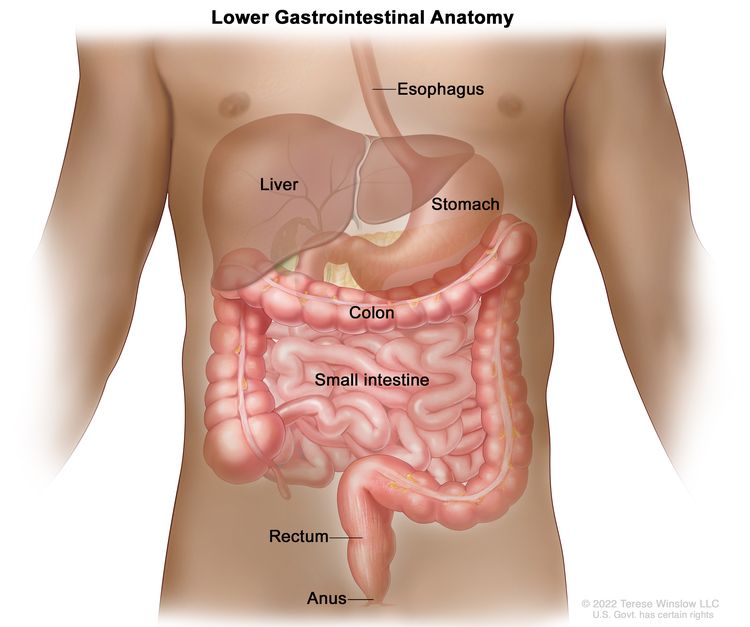
The anus is the end of the large intestine. It is where stool (solid waste) leaves the body. The anus is formed partly from the outer skin layers of the body and partly from the intestine. The anus is connected to the rectum by the anal canal, which is about 1 to 1½ inches long. This area is controlled by two ring-like sphincter muscles, which contract to hold stool in and relax to allow its passage out of the body.

EnlargeGastrointestinal (digestive) system anatomy; drawing shows the esophagus, liver, stomach, colon, small intestine, rectum, and anus.
Anatomy of the lower gastrointestinal (digestive) system showing the colon, rectum, and anus. Other organs that make up the digestive system are also shown.

Anal cancer can start in the lining of the anal canal, called the mucosa, or in the perianal skin, the squamous cells outside of the anus that contain hair follicles and sweat glands.

Tumors of the perianal skin that do not involve the anal sphincter are usually treated the same as anal cancers, although local therapy (treatment directed to a limited area of skin) may be used for some.

Most anal cancers are related to human papillomavirus (HPV) infection.

Anal cancer is caused by certain changes to the way anal cells function, especially how they grow and divide into new cells. There are many risk factors for anal cancer, but many do not directly cause cancer. Instead, they increase the chance of DNA damage in cells that may lead to anal cancer. Learn more about how cancer develops at What Is Cancer?

A risk factor is anything that increases the chance of getting a disease. Some risk factors for anal cancer can be changed. However, risk factors also include things people cannot change, like getting older and their health history. Learning about risk factors for anal cancer can help you make changes that might lower your risk of getting it.

Risk factors for anal cancer include:

Talk with your doctor if you think you may be at risk.

Signs of anal cancer include bleeding from the anus or rectum or a lump near the anus.

These and other signs and symptoms may be caused by anal cancer or by other conditions. Check with your doctor if you have:

  • bleeding from the anus or rectum
  • a lump near the anus
  • pain or pressure in the area around the anus
  • itching or discharge from the anus
  • a change in bowel habits

Tests that examine the rectum and anus are used to diagnose anal cancer.

In addition to asking about your personal and family health history and doing a physical exam, your doctor may perform the following tests and procedures:

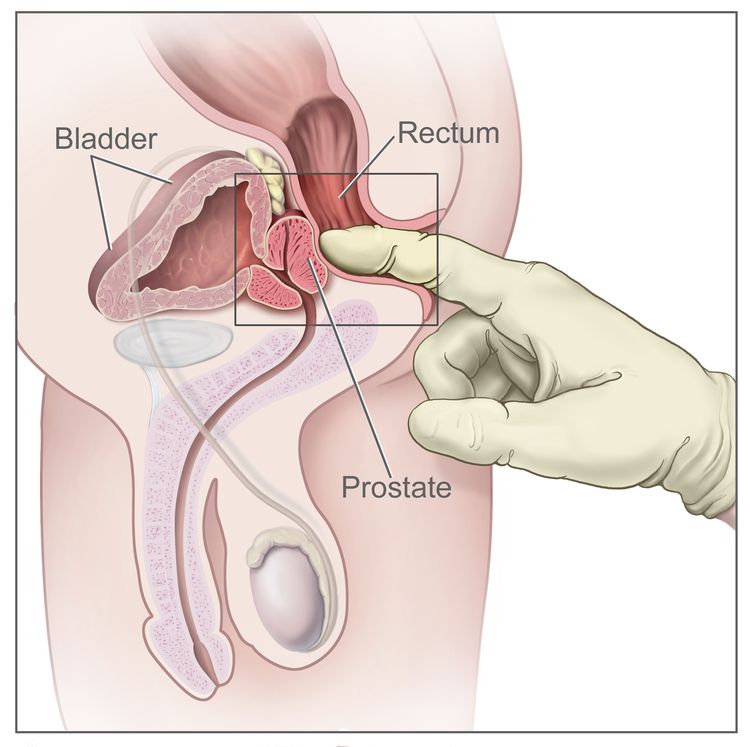
  • Digital rectal examination (DRE) is an exam of the anus and rectum. The doctor or nurse inserts a lubricated, gloved finger into the lower part of the rectum to feel for lumps or anything else that seems unusual.
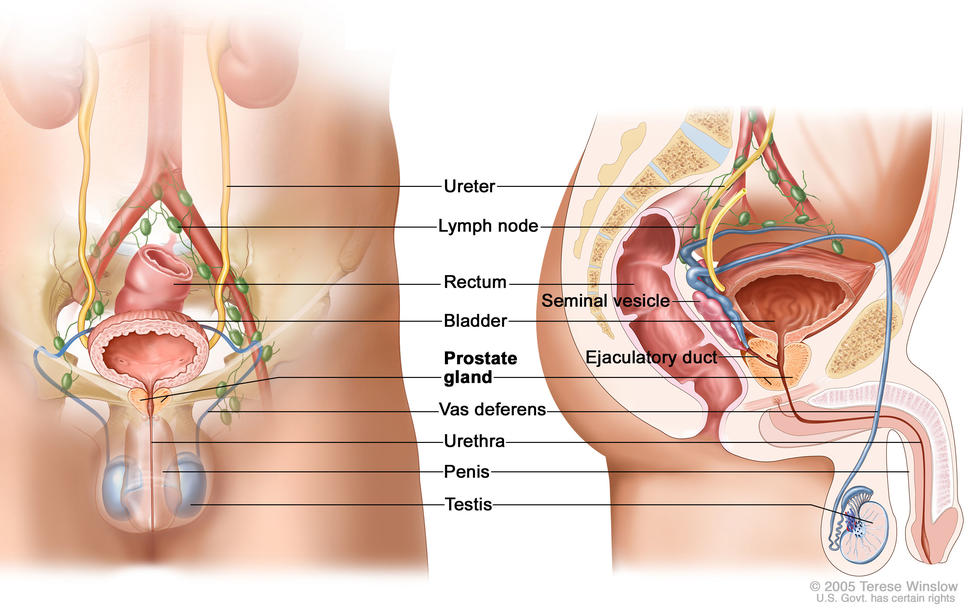
    EnlargeDigital rectal exam; drawing shows a side view of the male reproductive anatomy and the urinary anatomy, including the prostate, rectum, and bladder. Also shown is a gloved, lubricated finger inserted into the rectum to feel the rectum, anus, and prostate.
    Digital rectal exam (DRE). The doctor inserts a gloved, lubricated finger into the rectum and feels the rectum, anus, and prostate (in males) to check for anything abnormal.
  • Anoscopy is an exam of the anus and lower rectum using a short, lighted tube called an anoscope.
  • Proctoscopy is a procedure to look inside the rectum and anus to check for abnormal areas, using a proctoscope. A proctoscope is a thin, tube-like instrument with a light and a lens for viewing the inside of the rectum and anus. It may also have a tool to remove tissue samples, which are checked under a microscope for signs of cancer.
  • Endo-anal or endorectal ultrasound is a procedure in which an ultrasound transducer (probe) is inserted into the anus or rectum and used to bounce high-energy sound waves (ultrasound) off internal tissues or organs and make echoes. The echoes form a picture of body tissues called a sonogram.
  • Biopsy is the removal of cells or tissues so they can be viewed under a microscope by a pathologist to check for signs of cancer. If an abnormal area is seen during the anoscopy, a biopsy may be done at that time.

After anal cancer has been diagnosed, tests are done to find out if cancer cells have spread within the anus or to other parts of the body.

The process used to find out if cancer has spread within the anus or to other parts of the body is called staging. The information gathered from this staging process determines the stage of the disease. It is important to know the stage in order to plan treatment. The following tests may be used in the staging process:

  • CT scan (CAT scan) uses a computer linked to an x-ray machine to make a series of detailed pictures of areas inside the body, such as the abdomen, pelvis, or chest. The pictures are taken from different angles and are used to create 3-D views of tissues and organs. A dye may be injected into a vein or swallowed to help the organs or tissues show up more clearly. This procedure is also called computed tomography, computerized tomography, or computerized axial tomography.
  • Chest x-ray is a type of radiation that can go through the body and make pictures of the organs and bones inside the chest.
  • MRI (magnetic resonance imaging) uses a magnet, radio waves, and a computer to make a series of detailed pictures of areas inside the body. This procedure is also called nuclear magnetic resonance imaging (NMRI).
  • PET scan (positron emission tomography scan) uses a small amount of radioactive sugar (also called radioactive glucose) that is injected into a vein. The PET scanner rotates around the body and makes pictures of where glucose is being used in the body. Cancer cells show up brighter in the picture because they are more active and take up more glucose than normal cells do.
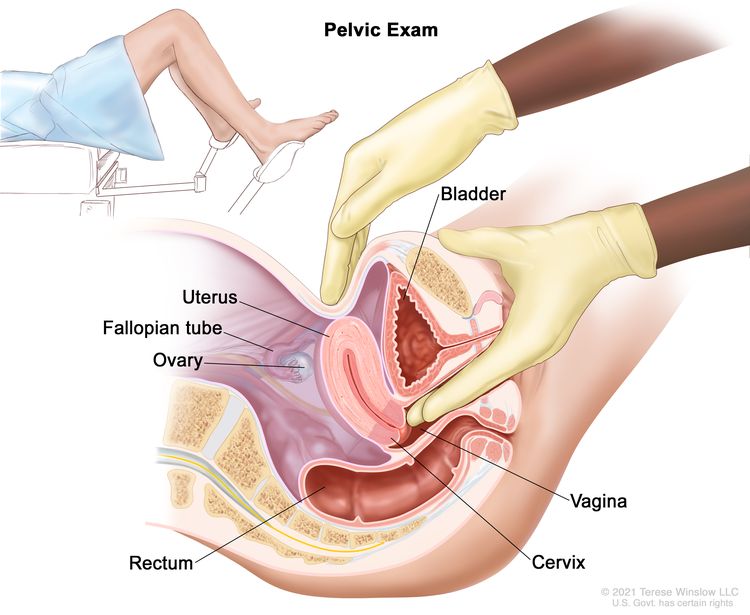
  • Pelvic exam is an exam of the vagina, cervix, uterus, fallopian tubes, ovaries, and rectum. A speculum is inserted into the vagina and the doctor or nurse looks at the vagina and cervix for signs of disease. A Pap test of the cervix is usually done. The doctor or nurse also inserts one or two lubricated, gloved fingers of one hand into the vagina and places the other hand over the lower abdomen to feel the size, shape, and position of the uterus and ovaries. The doctor or nurse also inserts a lubricated, gloved finger into the rectum to feel for lumps or abnormal areas.
    EnlargePelvic exam; drawing shows a side view of the female reproductive anatomy during a pelvic exam. The uterus, left fallopian tube, left ovary, cervix, vagina, bladder, and rectum are shown. Two gloved fingers of one hand of the doctor or nurse are shown inserted into the vagina, while the other hand is shown pressing on the lower abdomen. The inset shows a woman covered by a drape on an exam table with her legs apart and her feet in stirrups.
    Pelvic exam. A doctor or nurse inserts one or two lubricated, gloved fingers of one hand into the vagina and presses on the lower abdomen with the other hand. This is done to feel the size, shape, and position of the uterus and ovaries. The vagina, cervix, fallopian tubes, and rectum are also checked.

Some people decide to get a second opinion.

You may want to get a second opinion to confirm your anal cancer diagnosis and treatment plan. If you seek a second opinion, you will need to get medical test results and reports from the first doctor to share with the second doctor. The second doctor will review the pathology report, slides, and scans. They may agree with the first doctor, suggest changes or another treatment approach, or provide more information about your cancer.

Learn more about choosing a doctor and getting a second opinion at Finding Cancer Care. You can contact NCI’s Cancer Information Service via chat, email, or phone (both in English and Spanish) for help finding a doctor, hospital, or getting a second opinion. For questions you might want to ask at your appointments, visit Questions to Ask Your Doctor About Cancer.

Certain factors affect the prognosis (chance of recovery) and treatment options.

The prognosis depends on:

  • the size of the tumor
  • whether the cancer has spread to the lymph nodes

The treatment options depend on:

  • the stage of the cancer
  • where the tumor is in the anus
  • whether the person has HIV
  • whether cancer remains after initial treatment or has recurred (come back)

Stages of Anal Cancer

Key Points

  • The following stages are used for anal cancer:
    • Stage 0 (carcinoma in situ)
    • Stage I (also called stage 1) anal cancer
    • Stage II (also called stage 2) anal cancer
    • Stage III (also called stage 3) anal cancer
    • Stage IV (also called stage 4) anal cancer
  • Anal cancer can recur (come back) after it has been treated.

Cancer stage describes the extent of cancer in the body, such as the size of the tumor, whether it has spread, and how far it has spread from where it first formed. It is important to know the stage of the anal cancer to plan the best treatment.

There are several staging systems for cancer that describe the extent of the cancer. Anal cancer staging usually uses the TNM staging system. The cancer may be described by this staging system in your pathology report. Based on the TNM results, a stage (I, II, III, or IV, also written as 1, 2, 3, or 4) is assigned to your cancer. When talking to you about your diagnosis, your doctor may describe the cancer as one of these stages.

Learn about tests to stage anal cancer. Learn more about Cancer Staging.

The following stages are used for anal cancer:

Stage 0 (carcinoma in situ)

In stage 0, abnormal cells are found in the mucosa (innermost layer) of the anus. These abnormal cells may become cancer and spread into nearby normal tissue. Stage 0 is also called high-grade intraepithelial lesion (HSIL).

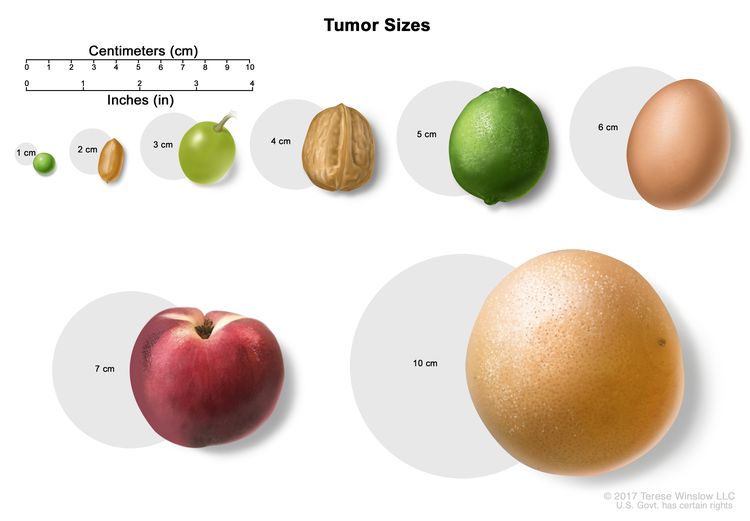
EnlargeDrawing shows different sizes of a tumor in centimeters (cm) compared to the size of a pea (1 cm), a peanut (2 cm), a grape (3 cm), a walnut (4 cm), a lime (5 cm), an egg (6 cm), a peach (7 cm), and a grapefruit (10 cm). Also shown is a 10-cm ruler and a 4-inch ruler.
Tumor sizes are often measured in centimeters (cm) or inches. Common food items that can be used to show tumor size in cm include: a pea (1 cm), a peanut (2 cm), a grape (3 cm), a walnut (4 cm), a lime (5 cm or 2 inches), an egg (6 cm), a peach (7 cm), and a grapefruit (10 cm or 4 inches).

Stage I (also called stage 1) anal cancer

In stage I, cancer has formed and the tumor is 2 centimeters or smaller.

Stage II (also called stage 2) anal cancer

Stage II anal cancer is divided into stages IIA and IIB.

  • In stage IIA, the tumor is larger than 2 centimeters but not larger than 5 centimeters.
  • In stage IIB, the tumor is larger than 5 centimeters.

Stage III (also called stage 3) anal cancer

Stage III anal cancer is divided into stages IIIA, IIIB, and IIIC.

  • In stage IIIA, the tumor is 5 centimeters or smaller and has spread to lymph nodes near the anus or groin.
  • In stage IIIB, the tumor is any size and has spread to nearby organs, such as the vagina, urethra, or bladder. Cancer has not spread to lymph nodes.
  • In stage IIIC, the tumor is any size and may have spread to nearby organs. Cancer has spread to lymph nodes near the anus or groin.

Stage IV (also called stage 4) anal cancer

In stage IV, the tumor is any size. Cancer may have spread to lymph nodes or nearby organs and has spread to other parts of the body, such as the liver or lungs.

Stage IV anal cancer is also called metastatic anal cancer. Metastatic cancer happens when cancer cells travel through the lymphatic system or blood and form tumors in other parts of the body. The metastatic tumor is the same type of cancer as the primary tumor. For example, if anal cancer spreads to the liver, the cancer cells in the liver are actually anal cancer cells. The disease is called metastatic anal cancer, not liver cancer. Learn more in Metastatic Cancer: When Cancer Spreads.

Anal cancer can recur (come back) after it has been treated.

Recurrent anal cancer is cancer that has come back after it has been treated. If anal cancer comes back, it may come back in the anus or in other parts of the body, such as the liver or lungs. Tests will be done to help determine where the cancer has returned. The type of treatment for recurrent anal cancer will depend on where it has come back.

Learn more in Recurrent Cancer: When Cancer Comes Back.

Treatment Option Overview

Key Points

  • There are different types of treatment for people with anal cancer.
  • The following types of treatment are used:
    • Surgery
    • Radiation therapy
    • Chemotherapy
  • New types of treatment are being tested in clinical trials.
  • Treatment for anal cancer may cause side effects.
  • Follow-up care may be needed.

There are different types of treatment for people with anal cancer.

Different types of treatments are available for anal cancer. You and your cancer care team will work together to decide your treatment plan, which may include more than one type of treatment. Many factors will be considered, such as the stage of the cancer, your overall health, and your preferences. Your plan will include information about your cancer, the goals of treatment, your treatment options and the possible side effects, and the expected length of treatment.

Talking with your cancer care team before treatment begins about what to expect will be helpful. You’ll want to learn what you need to do before treatment begins, how you’ll feel while going through it, and what kind of help you will need. To learn more, visit Questions to Ask Your Doctor About Treatment.

The following types of treatment are used:

Surgery

  • Local resection is a surgical procedure in which the tumor is cut from the anus along with some of the healthy tissue around it. Local resection may be used if the cancer is small and has not spread. This procedure may save the sphincter muscles so the person can still control bowel movements. Tumors that form in the lower part of the anus can often be removed with local resection.
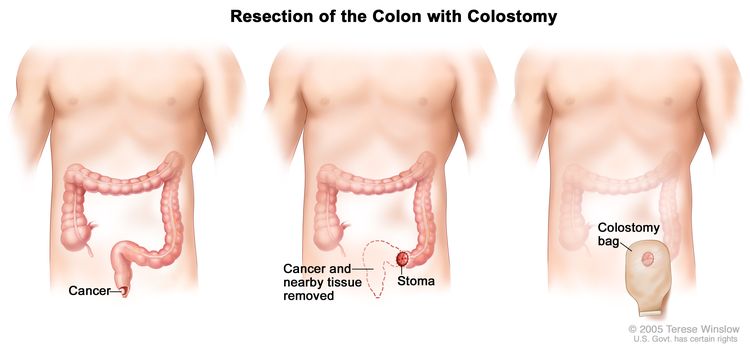
  • Abdominoperineal resection is a surgical procedure in which the anus, the rectum, and part of the sigmoid colon are removed through an incision made in the abdomen. The doctor sews the end of the intestine to an opening, called a stoma, made in the surface of the abdomen so body waste can be collected in a disposable bag outside of the body. This is called a colostomy. Lymph nodes that contain cancer may also be removed during this operation. This procedure is used only for cancer that remains or comes back after treatment with radiation therapy and chemotherapy.
    EnlargeThree-panel drawing showing anal cancer surgery with colostomy; first panel shows area of anus with cancer, middle panel shows cancer and nearby tissue removed and stoma created, last panel shows a colostomy bag attached to the stoma.
    Resection of the colon with colostomy. Part of the colon containing the cancer and nearby healthy tissue are removed, a stoma is created, and a colostomy bag is attached to the stoma.

Radiation therapy

Radiation therapy uses high-energy x-rays or other types of radiation to kill cancer cells or keep them from growing. There are two types of radiation therapy used to treat anal cancer:

Learn more about Radiation Therapy to Treat Cancer and Radiation Therapy Side Effects.

Chemotherapy

Chemotherapy (also called chemo) uses drugs to stop the growth of cancer cells, either by killing the cells or by stopping the cells from dividing. When chemotherapy is taken by mouth or injected into a vein or muscle, the drugs enter the bloodstream and can reach cancer cells throughout the body (systemic chemotherapy).

Chemotherapy drugs used to treat anal cancer include:

Combinations of these drugs may be used. Other chemotherapy drugs not listed here may also be used.

Chemotherapy may be combined with other types of treatment, such as radiation therapy.

Learn more about how chemotherapy works, how it is given, common side effects, and more at Chemotherapy to Treat Cancer and Chemotherapy and You: Support for People With Cancer.

New types of treatment are being tested in clinical trials.

For some people, joining a clinical trial may be an option. There are different types of clinical trials for people with cancer. For example, a treatment trial tests new treatments or new ways of using current treatments. Supportive care and palliative care trials look at ways to improve quality of life, especially for those who have side effects from cancer and its treatment.

You can use the clinical trial search to find NCI-supported cancer clinical trials accepting participants. The search allows you to filter trials based on the type of cancer, your age, and where the trials are being done. Clinical trials supported by other organizations can be found on the ClinicalTrials.gov website.

Learn more about clinical trials, including how to find and join one, at Clinical Trials Information for Patients and Caregivers.

Treatment for anal cancer may cause side effects.

For information about side effects caused by treatment for cancer, visit our Side Effects page.

Follow-up care may be needed.

As you go through treatment, you will have follow-up tests or check-ups. Some tests that were done to diagnose or stage the cancer may be repeated to see how well the treatment is working. Decisions about whether to continue, change, or stop treatment may be based on the results of these tests.

Some of the tests will continue to be done from time to time after treatment has ended. The results of these tests can show if your condition has changed or if the cancer has recurred (come back).

Treatment of Stage 0 (carcinoma in situ)

Treatment of stage 0 is usually local resection.

Learn more about this treatment in the Treatment Option Overview.

Use our clinical trial search to find NCI-supported cancer clinical trials that are accepting patients. You can search for trials based on the type of cancer, the age of the patient, and where the trials are being done. General information about clinical trials is also available.

Treatment of Stages I, II, and III Anal Cancer

Treatment of stage I, stage II, and stage III anal cancer may include:

Those who have had treatment that saves the sphincter muscles may receive follow-up exams every 3 months for the first 2 years, including rectal exams with endoscopy and biopsy, as needed to check for recurrence.

Learn more about these treatments in the Treatment Option Overview.

Use our clinical trial search to find NCI-supported cancer clinical trials that are accepting patients. You can search for trials based on the type of cancer, the age of the patient, and where the trials are being done. General information about clinical trials is also available.

Treatment of Stage IV Anal Cancer

Treatment of stage IV anal cancer may include:

Learn more about these treatments in the Treatment Option Overview.

Use our clinical trial search to find NCI-supported cancer clinical trials that are accepting patients. You can search for trials based on the type of cancer, the age of the patient, and where the trials are being done. General information about clinical trials is also available.

Treatment of HIV and Anal Cancer

In general, treatment for people who have anal cancer and HIV is similar to treatment for other people, and these patients have similar outcomes. However, this treatment can further damage the weakened immune systems of people who have HIV. Treatment for people with a history of AIDS-related complications may require lower doses of anticancer drugs and radiation therapy than doses used for patients who do not have HIV.

Treatment of Recurrent Anal Cancer

Treatment of recurrent anal cancer may include:

  • radiation therapy and chemotherapy, for recurrence after surgery
  • surgery, for recurrence after radiation therapy and/or chemotherapy

Learn more about these treatments in the Treatment Option Overview.

Use our clinical trial search to find NCI-supported cancer clinical trials that are accepting patients. You can search for trials based on the type of cancer, the age of the patient, and where the trials are being done. General information about clinical trials is also available.

To Learn More About Anal Cancer

About This PDQ Summary

About PDQ

Physician Data Query (PDQ) is the National Cancer Institute’s (NCI’s) comprehensive cancer information database. The PDQ database contains summaries of the latest published information on cancer prevention, detection, genetics, treatment, supportive care, and complementary and alternative medicine. Most summaries come in two versions. The health professional versions have detailed information written in technical language. The patient versions are written in easy-to-understand, nontechnical language. Both versions have cancer information that is accurate and up to date and most versions are also available in Spanish.

PDQ is a service of the NCI. The NCI is part of the National Institutes of Health (NIH). NIH is the federal government’s center of biomedical research. The PDQ summaries are based on an independent review of the medical literature. They are not policy statements of the NCI or the NIH.

Purpose of This Summary

This PDQ cancer information summary has current information about the treatment of anal cancer. It is meant to inform and help patients, families, and caregivers. It does not give formal guidelines or recommendations for making decisions about health care.

Reviewers and Updates

Editorial Boards write the PDQ cancer information summaries and keep them up to date. These Boards are made up of experts in cancer treatment and other specialties related to cancer. The summaries are reviewed regularly and changes are made when there is new information. The date on each summary (“Updated”) is the date of the most recent change.

The information in this patient summary was taken from the health professional version, which is reviewed regularly and updated as needed, by the PDQ Adult Treatment Editorial Board.

Clinical Trial Information

A clinical trial is a study to answer a scientific question, such as whether one treatment is better than another. Trials are based on past studies and what has been learned in the laboratory. Each trial answers certain scientific questions in order to find new and better ways to help cancer patients. During treatment clinical trials, information is collected about the effects of a new treatment and how well it works. If a clinical trial shows that a new treatment is better than one currently being used, the new treatment may become “standard.” Patients may want to think about taking part in a clinical trial. Some clinical trials are open only to patients who have not started treatment.

Clinical trials can be found online at NCI’s website. For more information, call the Cancer Information Service (CIS), NCI’s contact center, at 1-800-4-CANCER (1-800-422-6237).

Permission to Use This Summary

PDQ is a registered trademark. The content of PDQ documents can be used freely as text. It cannot be identified as an NCI PDQ cancer information summary unless the whole summary is shown and it is updated regularly. However, a user would be allowed to write a sentence such as “NCI’s PDQ cancer information summary about breast cancer prevention states the risks in the following way: [include excerpt from the summary].”

The best way to cite this PDQ summary is:

PDQ® Adult Treatment Editorial Board. PDQ Anal Cancer Treatment. Bethesda, MD: National Cancer Institute. Updated <MM/DD/YYYY>. Available at: /types/anal/patient/anal-treatment-pdq. Accessed <MM/DD/YYYY>. [PMID: 26389368]

Images in this summary are used with permission of the author(s), artist, and/or publisher for use in the PDQ summaries only. If you want to use an image from a PDQ summary and you are not using the whole summary, you must get permission from the owner. It cannot be given by the National Cancer Institute. Information about using the images in this summary, along with many other images related to cancer can be found in Visuals Online. Visuals Online is a collection of more than 3,000 scientific images.

Disclaimer

The information in these summaries should not be used to make decisions about insurance reimbursement. More information on insurance coverage is available on Cancer.gov on the Managing Cancer Care page.

Contact Us

More information about contacting us or receiving help with the Cancer.gov website can be found on our Contact Us for Help page. Questions can also be submitted to Cancer.gov through the website’s E-mail Us.

Anal Cancer Treatment (PDQ®)–Health Professional Version

Anal Cancer Treatment (PDQ®)–Health Professional Version

General Information About Anal Cancer

Incidence and Mortality

Estimated new cases and deaths from anal, anal canal, and anorectal cancer in the United States in 2025:[1]

  • New cases: 10,930.
  • Deaths: 2,030.

Prognosis and Survival

The two major prognostic factors for anal cancer are tumor size and nodal status. Primary tumors smaller than 2 cm have a better prognosis.[2] Nodal drainage of the anus follows the inguinal vein. The initial evaluation of a patient with anal cancer will include a careful clinical examination of the inguinal region and biopsy of any palpable lymph nodes. For more information, see the American Joint Committee on Cancer Stage Groupings and TNM Definitions section.

Anal cancer is usually curable. At presentation, most patients have T1 or T2 disease (≤5 cm), and fewer than 20% of patients have node-positive disease. The 5-year survival rate for these early-stage patients exceeds 85%.[3,4] Even in patients with node-positive disease, 5-year survival rates exceed 50% in the absence of invasion into adjacent organs or distant metastases.[5]

Risk Factors

Overall, the risk of anal cancer is rising due to increased incidence of human papillomavirus (HPV) infection.[6,7] Ninety-five percent of anal cancers are HPV related, with the highest risk for serotypes 16 and 18. Involvement of HPV can be pathologically correlated with P16+ staining.[8] Patients with HIV have a higher risk of HPV coinfection, and consequently have a higher risk of anal cancer.

Data suggest that certain sexual practices, such as receptive anal intercourse or a high lifetime number of sexual partners, portend an increased risk of anal cancer. These practices may have led to an increase in the number of individuals at risk of infection with HPV.[6]

References
  1. American Cancer Society: Cancer Facts and Figures 2025. American Cancer Society, 2025. Available online. Last accessed January 16, 2025.
  2. Ajani JA, Winter KA, Gunderson LL, et al.: Prognostic factors derived from a prospective database dictate clinical biology of anal cancer: the intergroup trial (RTOG 98-11). Cancer 116 (17): 4007-13, 2010. [PUBMED Abstract]
  3. Klas JV, Rothenberger DA, Wong WD, et al.: Malignant tumors of the anal canal: the spectrum of disease, treatment, and outcomes. Cancer 85 (8): 1686-93, 1999. [PUBMED Abstract]
  4. Touboul E, Schlienger M, Buffat L, et al.: Epidermoid carcinoma of the anal canal. Results of curative-intent radiation therapy in a series of 270 patients. Cancer 73 (6): 1569-79, 1994. [PUBMED Abstract]
  5. Anus. In: Amin MB, Edge SB, Greene FL, et al., eds.: AJCC Cancer Staging Manual. 8th ed. Springer; 2017, pp. 275–84.
  6. Johnson LG, Madeleine MM, Newcomer LM, et al.: Anal cancer incidence and survival: the surveillance, epidemiology, and end results experience, 1973-2000. Cancer 101 (2): 281-8, 2004. [PUBMED Abstract]
  7. Holly EA, Ralston ML, Darragh TM, et al.: Prevalence and risk factors for anal squamous intraepithelial lesions in women. J Natl Cancer Inst 93 (11): 843-9, 2001. [PUBMED Abstract]
  8. Ryan DP, Compton CC, Mayer RJ: Carcinoma of the anal canal. N Engl J Med 342 (11): 792-800, 2000. [PUBMED Abstract]

Cellular Classification of Anal Cancer

Squamous cell (epidermoid) carcinomas make up most primary anal cancers. Historically, a subset of tumors arising from the epithelial transitional zone were categorized as cloacogenic or basaloid tumors. However, these tumors are now recognized as nonkeratinizing squamous cell cancers and are similarly associated with human papillomavirus.[1,2]

Lesions in the hair-bearing skin distal to the squamous mucocutaneous junction are defined as perianal cancers. These are typically treated the same as anal canal cancers, although local therapy alone can be considered for discrete skin lesions with significant separation from the anal verge.

Adenocarcinomas starting in anal glands or fistulae formation are rare and generally have clinical features that are similar to rectal adenocarcinoma. For more information, see the Clinical Features section in Rectal Cancer Treatment.

Treatment of anal melanoma is not included in this summary.

References
  1. Palefsky JM, Holly EA, Gonzales J, et al.: Detection of human papillomavirus DNA in anal intraepithelial neoplasia and anal cancer. Cancer Res 51 (3): 1014-9, 1991. [PUBMED Abstract]
  2. Pirog EC, Quint KD, Yantiss RK: P16/CDKN2A and Ki-67 enhance the detection of anal intraepithelial neoplasia and condyloma and correlate with human papillomavirus detection by polymerase chain reaction. Am J Surg Pathol 34 (10): 1449-55, 2010. [PUBMED Abstract]

Stage Information for Anal Cancer

The anal canal extends from the rectum to the perianal skin and is lined by a mucous membrane that covers the internal sphincter. Tumors of the anal margin (below the anal verge and involving the perianal hair-bearing skin) are classified with skin tumors.

American Joint Committee on Cancer (AJCC) Stage Groupings and TNM Definitions

The following is a staging system for anal canal cancer that has been described by the AJCC and the International Union Against Cancer.[1] The AJCC has designated staging by TNM (tumor, node, metastasis) classification to define anal cancer.

Table 1. Definitions of TNM Stage 0a
Stage TNM Description
T = primary tumor; N = regional lymph node; M = distant metastasis.
aReprinted with permission from AJCC: Anus. In: Amin MB, Edge SB, Greene FL, et al., eds.: AJCC Cancer Staging Manual. 8th ed. New York, NY: Springer, 2017, pp. 275–84.
0 Tis, N0, M0 Tis = High-grade squamous intraepithelial lesion (previously termed carcinoma in situ, Bowen disease, anal intraepithelial neoplasia II–III, high-grade anal intraepithelial neoplasia).
N0 = No regional lymph node metastasis.
M0 = No distant metastasis.
Table 2. Definitions of TNM Stage Ia
Stage TNM Description
T = primary tumor; N = regional lymph node; M = distant metastasis.
aReprinted with permission from AJCC: Anus. In: Amin MB, Edge SB, Greene FL, et al., eds.: AJCC Cancer Staging Manual. 8th ed. New York, NY: Springer, 2017, pp. 275–84.
I T1, N0, M0 T1 = Tumor ≤2 cm.
N0 = No regional lymph node metastasis.
M0 = No distant metastasis.
Table 3. Definitions of TNM Stages IIA and IIBa
Stage TNM Description
T = primary tumor; N = regional lymph node; M = distant metastasis.
aReprinted with permission from AJCC: Anus. In: Amin MB, Edge SB, Greene FL, et al., eds.: AJCC Cancer Staging Manual. 8th ed. New York, NY: Springer, 2017, pp. 275–84.
IIA T2, N0, M0 T2 = Tumor >2 cm but ≤5 cm.
N0 = No regional lymph node metastasis.
M0 = No distant metastasis.
IIB T3, N0, M0 T3 = Tumor >5 cm.
N0 = No regional lymph node metastasis.
M0 = No distant metastasis.
Table 4. Definitions of TNM Stages IIIA, IIIB, and IIICa
Stage TNM Description
T = primary tumor; N = regional lymph node; M = distant metastasis.
aReprinted with permission from AJCC: Anus. In: Amin MB, Edge SB, Greene FL, et al., eds.: AJCC Cancer Staging Manual. 8th ed. New York, NY: Springer, 2017, pp. 275–84.
IIIA T1, N1, M0 T1 = Tumor ≤2 cm.
N1 = Metastasis in inguinal, mesorectal, internal iliac, or external iliac nodes.
M0 = No distant metastasis.
T2, N1, M0 T2 = Tumor >2 cm but ≤5 cm.
N1 = Metastasis in inguinal, mesorectal, internal iliac, or external iliac nodes.
M0 = No distant metastasis.
IIIB T4, N0, M0 T4 = Tumor of any size invading adjacent organ(s), such as the vagina, urethra, or bladder.
N0 = No regional lymph node metastasis.
M0 = No distant metastasis.
IIIC T3, N1, M0 T3 = Tumor >5 cm.
N1 = Metastasis in inguinal, mesorectal, internal iliac, or external iliac nodes.
M0 = No distant metastasis.
T4, N1, M0 T4 = Tumor of any size invading adjacent organ(s), such as the vagina, urethra, or bladder.
N1 = Metastasis in inguinal, mesorectal, internal iliac, or external iliac nodes.
M0 = No distant metastasis.
Table 5. Definitions of Stage IVa
Stage TNM Description
T = primary tumor; N = regional lymph node; M = distant metastasis.
aReprinted with permission from AJCC: Anus. In: Amin MB, Edge SB, Greene FL, et al., eds.: AJCC Cancer Staging Manual. 8th ed. New York, NY: Springer, 2017, pp. 275–84.
IV Any T, Any N, M1 TX = Primary tumor not assessed.
T0 = No evidence of primary tumor.
Tis = High-grade squamous intraepithelial lesion (previously termed carcinoma in situ, Bowen disease, anal intraepithelial neoplasia II–III, high-grade anal intraepithelial neoplasia).
T1 = Tumor ≤2 cm.
T2 = Tumor >2 cm but ≤5 cm.
T3 = Tumor >5 cm.
T4 = Tumor of any size invading adjacent organ(s), such as the vagina, urethra, or bladder.
NX = Regional lymph nodes cannot be assessed.
N0 = No regional lymph node metastasis.
N1 = Metastasis in inguinal, mesorectal, internal iliac, or external iliac nodes.
–N1a = Metastasis in inguinal, mesorectal, or internal iliac lymph nodes.
–N1b = Metastasis in external iliac lymph nodes.
–N1c = Metastasis in external iliac with any N1a nodes.
M1 = Distant metastasis.
References
  1. Anus. In: Amin MB, Edge SB, Greene FL, et al., eds.: AJCC Cancer Staging Manual. 8th ed. Springer; 2017, pp. 275–84.

Treatment Option Overview for Anal Cancer

Treatment options for anal cancer are described in Table 6.

Table 6. Treatment Options for Anal Cancer
Stage (TNM Staging Criteria) Treatment Options
Stage 0 Surgery
Stages I, II, and III Local resection
External-beam radiation therapy with chemotherapy
Alternative strategies
Radical resection
Stage IV Palliative surgery
Palliative radiation therapy
Palliative chemotherapy (with or without radiation therapy)
Checkpoint inhibitors

The optimal approach in patients with advanced disease is still under clinical evaluation. Information about ongoing clinical trials is available from the NCI website.

Capecitabine and Fluorouracil Dosing

The DPYD gene encodes an enzyme that catabolizes pyrimidines and fluoropyrimidines, like capecitabine and fluorouracil. An estimated 1% to 2% of the population has germline pathogenic variants in DPYD, which lead to reduced DPD protein function and an accumulation of pyrimidines and fluoropyrimidines in the body.[1,2] Patients with the DPYD*2A variant who receive fluoropyrimidines may experience severe, life-threatening toxicities that are sometimes fatal. Many other DPYD variants have been identified, with a range of clinical effects.[13] Fluoropyrimidine avoidance or a dose reduction of 50% may be recommended based on the patient’s DPYD genotype and number of functioning DPYD alleles.[46] DPYD genetic testing costs less than $200, but insurance coverage varies due to a lack of national guidelines.[7] In addition, testing may delay therapy by 2 weeks, which would not be advisable in urgent situations. This controversial issue requires further evaluation.[8]

References
  1. Sharma BB, Rai K, Blunt H, et al.: Pathogenic DPYD Variants and Treatment-Related Mortality in Patients Receiving Fluoropyrimidine Chemotherapy: A Systematic Review and Meta-Analysis. Oncologist 26 (12): 1008-1016, 2021. [PUBMED Abstract]
  2. Lam SW, Guchelaar HJ, Boven E: The role of pharmacogenetics in capecitabine efficacy and toxicity. Cancer Treat Rev 50: 9-22, 2016. [PUBMED Abstract]
  3. Shakeel F, Fang F, Kwon JW, et al.: Patients carrying DPYD variant alleles have increased risk of severe toxicity and related treatment modifications during fluoropyrimidine chemotherapy. Pharmacogenomics 22 (3): 145-155, 2021. [PUBMED Abstract]
  4. Amstutz U, Henricks LM, Offer SM, et al.: Clinical Pharmacogenetics Implementation Consortium (CPIC) Guideline for Dihydropyrimidine Dehydrogenase Genotype and Fluoropyrimidine Dosing: 2017 Update. Clin Pharmacol Ther 103 (2): 210-216, 2018. [PUBMED Abstract]
  5. Henricks LM, Lunenburg CATC, de Man FM, et al.: DPYD genotype-guided dose individualisation of fluoropyrimidine therapy in patients with cancer: a prospective safety analysis. Lancet Oncol 19 (11): 1459-1467, 2018. [PUBMED Abstract]
  6. Lau-Min KS, Varughese LA, Nelson MN, et al.: Preemptive pharmacogenetic testing to guide chemotherapy dosing in patients with gastrointestinal malignancies: a qualitative study of barriers to implementation. BMC Cancer 22 (1): 47, 2022. [PUBMED Abstract]
  7. Brooks GA, Tapp S, Daly AT, et al.: Cost-effectiveness of DPYD Genotyping Prior to Fluoropyrimidine-based Adjuvant Chemotherapy for Colon Cancer. Clin Colorectal Cancer 21 (3): e189-e195, 2022. [PUBMED Abstract]
  8. Baker SD, Bates SE, Brooks GA, et al.: DPYD Testing: Time to Put Patient Safety First. J Clin Oncol 41 (15): 2701-2705, 2023. [PUBMED Abstract]

Treatment of Stage 0 Anal Cancer

Treatment Options for Stage 0 Anal Cancer

Stage 0 anal cancer is carcinoma in situ. Rarely diagnosed, it is a very early cancer that has not spread below the limiting membrane of the first layer of anal tissue.

Treatment options for stage 0 anal cancer include:

  1. Surgical resection is used to treat lesions of the perianal area not involving the anal sphincter. The surgical approach depends on the location of the lesion in the anal canal.

Current Clinical Trials

Use our advanced clinical trial search to find NCI-supported cancer clinical trials that are now enrolling patients. The search can be narrowed by location of the trial, type of treatment, name of the drug, and other criteria. General information about clinical trials is also available.

Treatment of Stages I, II, and III Anal Cancer

Treatment Options for Stages I, II, and III Anal Cancer

Current sphincter-sparing therapies include wide local excision for small tumors of the perianal skin or anal margin, or definitive chemoradiation therapy (fluorouracil [5-FU] and mitomycin) for cancers of the anal canal. Radical resection is reserved for patients with incomplete responses or recurrent disease.

Continued surveillance with rectal examination every 3 months for the first 2 years and endoscopy with biopsy when indicated after completion of sphincter-preserving therapy is important to monitor for recurrence.

Treatment options for stage I, stage II, and stage III anal cancer include:

  1. Small tumors of the perianal skin or anal margin not involving the anal sphincter may be adequately treated with local resection.[1]
  2. The standard of care for all other stage I, II, and III anal cancers in appropriate patients is chemoradiation therapy (external-beam radiation therapy [EBRT] with chemotherapy).
    • 5-FU + mitomycin + radiation therapy.[2,3]
    • Capecitabine + mitomycin + radiation therapy.[4,5]
    • 5-FU + cisplatin + radiation therapy.[6,7]
  3. Alternative strategies such as radiation therapy alone or surgery alone may be considered, depending on the clinical context.
  4. Radical resection is reserved for residual or recurrent cancer in the anal canal after nonoperative therapy.

Chemoradiation therapy

Because of historically high rates of recurrence with colostomy alone, chemoradiation therapy is the preferred approach for patients with anal cancer in the absence of distant metastases.

Evidence (chemoradiation therapy):

  1. The Anal Cancer Trial (ACT I) from the United Kingdom Co-ordinating Committee on Cancer Research demonstrated the superiority of chemoradiation with 5-FU and mitomycin over radiation therapy alone with regard to local failure and deaths from anal cancer.[2,8][Level of evidence A1]

    In this prospective trial, 585 patients were randomly assigned to receive 45 Gy of radiation in 20 or 25 fractions with or without 5-FU. The 5-FU was given by continuous infusion (750 mg/m2 for 5 days or 1,000 mg/m2 for 4 days) during the first and final weeks of radiation therapy, along with a single dose of mitomycin (12 mg/m2) on the first day.

    • After a median follow-up of 13.1 years, patients who received chemoradiation therapy had a reduction in local failure (36% vs. 59%; hazard ratio [HR], 0.46; 95% confidence interval [CI], 0.35−0.60; P < .001), risk of death from anal cancer (HR, 0.61; 95% CI, 0.49−0.76; P < .001), and relapse at 12 years (17.7% vs. 29.7%; HR, 0.70; 95% CI, 9.58−0.84; P < .001).[2][Level of evidence A1]
    • There was no significant difference in overall survival (OS) in this trial (HR, 0.86; 95% CI, 0.70−1.04; P = .12).
    • An initial 9.1% increase in non–anal cancer deaths was observed in the first 5 years after chemoradiation therapy but was not seen at 10 years.
  2. A European Organisation for Research and Treatment of Cancer (EORTC) trial prospectively randomly assigned 100 patients with T3 to T4 or N1 to N3 disease to receive 45 Gy of radiation with a 15-Gy or 30-Gy boost with or without 5-FU infusion (750 mg/m2 for 5 days starting on days 1 and 29) plus mitomycin (15 mg/m2 on day 1).[3][Level of evidence B1]
    • Outcomes favored chemoradiation therapy with respect to 5-year colostomy-free survival rates (75% vs. 48%; P = .002) and 5-year progression-free survival (PFS) rates (60% vs. 48%; P = .05).

Subsequent trials have found capecitabine to be a reasonable replacement for 5-FU in combination with mitomycin and radiation therapy.[4,5]

While the ACT I and EORTC randomized trials established chemoradiation therapy as the preferred approach for nonmetastatic anal cancer, the substantial hematological, renal, and pulmonary toxicity of mitomycin has prompted studies of alternative regimens.

Evidence (chemoradiation therapy [alternative regimens]):

  1. A Radiation Therapy Oncology Group (RTOG)/Eastern Cooperative Oncology Group trial of 310 patients studied chemoradiation therapy (5-FU infusion + 45 Gy of radiation) with or without mitomycin.
    • After 4-years of follow-up, patients who received mitomycin had an improved colostomy-free survival rate (71% vs. 59%; P = .014) and disease-free survival (DFS) rate (73% vs. 51%; P = .0003).[9][Level of evidence B1]

    Two large intergroup trials studied the substitution of cisplatin for mitomycin, with differing conclusions.

  2. In a phase III U.S. Intergroup trial (RTOG 9811 [NCT00003596]), patients in the cisplatin arm received two cycles of induction 5-FU and cisplatin before receiving concurrent chemoradiation therapy with 5-FU and cisplatin.[6]
    • Patients who received mitomycin had improved local control and an improved colostomy-free survival rate (90% vs. 81%; P = .02). Subsequent long-term follow-up demonstrated a borderline significant difference in the 5-year colostomy-free survival rate (71.9% vs. 65%; P = .05).[10]
    • Long-term follow-up also demonstrated a superior 5-year DFS rate (67.8% vs. 57.8%; P = .006) and OS rate (78.3% vs. 70.7%; P = .074) for patients who received mitomycin.[11][Level of evidence B1]
    • One potential explanation for the inferiority of cisplatin in this study was the delay in time to radiation therapy during induction chemotherapy.
  3. In the prospective randomized ACT II trial, 940 patients were assigned in a 2 × 2 factorial design to receive the following: (1) either mitomycin or cisplatin during induction chemoradiation therapy and (2) either maintenance therapy with 5-FU and cisplatin in weeks 11 and 14 or no maintenance therapy.[7]
    • The complete remission rate was equivalent in patients who received mitomycin or cisplatin after a median follow-up of 5.1 years (90.5% vs. 89.6%; 95% CI, -4.9 to 3.1; P = .64). The 3-year PFS rate was also equivalent in both study groups (73% for mitomycin vs. 72% for cisplatin; HR, 0.95; 95% CI, 0.75−1.19; P = .063).[7][Level of evidence B1]
    • There was also no significant effect on 3-year PFS rates among patients who received maintenance therapy or no maintenance therapy (74% vs. 73%; HR, 0.95; 95% CI, 0.75−1.21; P = .70).
    • This study suggests that cisplatin might reasonably substitute for mitomycin in a chemoradiation strategy.

The best time to assess a complete clinical response after chemoradiation therapy is generally after 26 weeks because delayed responses are seen.[12] Residual disease or subsequent local recurrence require further treatment.

The standard salvage therapy for patients with either gross or microscopic residual disease after chemoradiation therapy has been abdominoperineal resection. Alternatively, patients may be treated with additional salvage chemoradiation therapy, chemotherapy alone, or immunotherapy.[12,13]

The optimal radiation dose in various situations has not been determined. There is insufficient evidence to determine whether the dose should be escalated for patients with T3 to T4 disease or nodal metastases, or potentially de-escalated for patients with early-stage tumors smaller than 1 cm. It is also unclear whether the chemotherapy backbone can be safely omitted for some patients with early-stage tumors, and whether such a strategy would affect the optimal dose of radiation. The roles for newer strategies such as intensity-modulated radiation therapy, proton beam therapy, and brachytherapy have yet to be conclusively determined.[1416] Based on the National Cancer Database, higher volume radiation oncology centers report improved OS for patients with anal cancer.[17]

Current Clinical Trials

Use our advanced clinical trial search to find NCI-supported cancer clinical trials that are now enrolling patients. The search can be narrowed by location of the trial, type of treatment, name of the drug, and other criteria. General information about clinical trials is also available.

References
  1. Enker WE, Heilwell M, Janov AJ, et al.: Improved survival in epidermoid carcinoma of the anus in association with preoperative multidisciplinary therapy. Arch Surg 121 (12): 1386-90, 1986. [PUBMED Abstract]
  2. Northover J, Glynne-Jones R, Sebag-Montefiore D, et al.: Chemoradiation for the treatment of epidermoid anal cancer: 13-year follow-up of the first randomised UKCCCR Anal Cancer Trial (ACT I). Br J Cancer 102 (7): 1123-8, 2010. [PUBMED Abstract]
  3. Bartelink H, Roelofsen F, Eschwege F, et al.: Concomitant radiotherapy and chemotherapy is superior to radiotherapy alone in the treatment of locally advanced anal cancer: results of a phase III randomized trial of the European Organization for Research and Treatment of Cancer Radiotherapy and Gastrointestinal Cooperative Groups. J Clin Oncol 15 (5): 2040-9, 1997. [PUBMED Abstract]
  4. Goodman KA, Julie D, Cercek A, et al.: Capecitabine With Mitomycin Reduces Acute Hematologic Toxicity and Treatment Delays in Patients Undergoing Definitive Chemoradiation Using Intensity Modulated Radiation Therapy for Anal Cancer. Int J Radiat Oncol Biol Phys 98 (5): 1087-1095, 2017. [PUBMED Abstract]
  5. Meulendijks D, Dewit L, Tomasoa NB, et al.: Chemoradiotherapy with capecitabine for locally advanced anal carcinoma: an alternative treatment option. Br J Cancer 111 (9): 1726-33, 2014. [PUBMED Abstract]
  6. Ajani JA, Winter KA, Gunderson LL, et al.: Fluorouracil, mitomycin, and radiotherapy vs fluorouracil, cisplatin, and radiotherapy for carcinoma of the anal canal: a randomized controlled trial. JAMA 299 (16): 1914-21, 2008. [PUBMED Abstract]
  7. James RD, Glynne-Jones R, Meadows HM, et al.: Mitomycin or cisplatin chemoradiation with or without maintenance chemotherapy for treatment of squamous-cell carcinoma of the anus (ACT II): a randomised, phase 3, open-label, 2 × 2 factorial trial. Lancet Oncol 14 (6): 516-24, 2013. [PUBMED Abstract]
  8. Epidermoid anal cancer: results from the UKCCCR randomised trial of radiotherapy alone versus radiotherapy, 5-fluorouracil, and mitomycin. UKCCCR Anal Cancer Trial Working Party. UK Co-ordinating Committee on Cancer Research. Lancet 348 (9034): 1049-54, 1996. [PUBMED Abstract]
  9. Flam M, John M, Pajak TF, et al.: Role of mitomycin in combination with fluorouracil and radiotherapy, and of salvage chemoradiation in the definitive nonsurgical treatment of epidermoid carcinoma of the anal canal: results of a phase III randomized intergroup study. J Clin Oncol 14 (9): 2527-39, 1996. [PUBMED Abstract]
  10. Eng C, Ciombor KK, Cho M, et al.: Anal Cancer: Emerging Standards in a Rare Disease. J Clin Oncol 40 (24): 2774-2788, 2022. [PUBMED Abstract]
  11. Gunderson LL, Winter KA, Ajani JA, et al.: Long-term update of US GI intergroup RTOG 98-11 phase III trial for anal carcinoma: survival, relapse, and colostomy failure with concurrent chemoradiation involving fluorouracil/mitomycin versus fluorouracil/cisplatin. J Clin Oncol 30 (35): 4344-51, 2012. [PUBMED Abstract]
  12. Pedersen TB, Gocht-Jensen P, Klein MF: 30-day and long-term outcome following salvage surgery for squamous cell carcinoma of the anus. Eur J Surg Oncol 44 (10): 1518-1521, 2018. [PUBMED Abstract]
  13. Guerra GR, Kong JC, Bernardi MP, et al.: Salvage Surgery for Locoregional Failure in Anal Squamous Cell Carcinoma. Dis Colon Rectum 61 (2): 179-186, 2018. [PUBMED Abstract]
  14. Cordoba A, Escande A, Leroy T, et al.: Low-dose-rate interstitial brachytherapy boost for the treatment of anal canal cancers. Brachytherapy 16 (1): 230-235, 2017 Jan – Feb. [PUBMED Abstract]
  15. Call JA, Prendergast BM, Jensen LG, et al.: Intensity-modulated Radiation Therapy for Anal Cancer: Results From a Multi-Institutional Retrospective Cohort Study. Am J Clin Oncol 39 (1): 8-12, 2016. [PUBMED Abstract]
  16. Gryc T, Ott O, Putz F, et al.: Interstitial brachytherapy as a boost to patients with anal carcinoma and poor response to chemoradiation: Single-institution long-term results. Brachytherapy 15 (6): 865-872, 2016 Nov – Dec. [PUBMED Abstract]
  17. Amini A, Jones BL, Ghosh D, et al.: Impact of facility volume on outcomes in patients with squamous cell carcinoma of the anal canal: Analysis of the National Cancer Data Base. Cancer 123 (2): 228-236, 2017. [PUBMED Abstract]

Treatment of Stage IV Anal Cancer

Treatment Options for Stage IV Anal Cancer

Treatment options for stage IV anal cancer include:

  1. Palliative surgery.
  2. Palliative radiation therapy.
  3. Palliative chemotherapy (with or without radiation therapy).
    • Cisplatin + infusional fluorouracil (5-FU).[1]
    • Carboplatin + weekly paclitaxel.[2]
    • Docetaxel + cisplatin + 5-FU.[3]
    • Nivolumab.[4]
    • Pembrolizumab.[5]
  4. Checkpoint inhibitors.

Advanced-stage therapy

  1. In the multicenter, randomized, phase II International Advanced Anal Cancer InterAACT trial (NCT02560298), carboplatin (area under the curve 5) and weekly paclitaxel was compared with standard infusional 5-FU and bolus cisplatin in patients with advanced-stage anal cancer.[2]
    • With a median follow-up of 25.3 months, the median overall survival (OS) with carboplatin and paclitaxel was improved compared with cisplatin and 5-FU (20 months vs. 12.3 months; hazard ratio [HR], 2.0; P = .014).[Level of evidence A1]
    • Serious adverse events were more common in patients treated with cisplatin plus 5-FU (62% vs. 36%; P = .016).

    These promising findings have led international investigators to use carboplatin and paclitaxel as a new backbone in trials for patients with advanced-stage disease, as well as a potential partner for use with radiation therapy. Other chemotherapy regimens, such as modified docetaxel, cisplatin, and 5-FU, are under clinical evaluation.[3]

  2. The checkpoint inhibitors have also shown activity for patients with metastatic disease. The phase II NCI96773 trial (NCT02314169) of single-agent nivolumab (3 mg/kg every 2 weeks) enrolled 37 patients.[4]
  3. The phase Ib KEYNOTE-028 trial (NCT02054806) for patients with advanced tumors with programmed death ligand-1 of at least 1% enrolled a cohort of 24 patients with anal squamous cell carcinoma.[5]
    • The overall response rate was 17%, and an additional stable disease rate was 42%.[5][Level of evidence C3]

Although there is no clear standard of care for patients with metastatic disease, recent studies are uncovering promising new avenues for systemic treatment. Palliation of symptoms from the primary lesion is important. Patients with stage IV disease should strongly consider enrolling in clinical trials.

Current Clinical Trials

Use our advanced clinical trial search to find NCI-supported cancer clinical trials that are now enrolling patients. The search can be narrowed by location of the trial, type of treatment, name of the drug, and other criteria. General information about clinical trials is also available.

References
  1. James RD, Glynne-Jones R, Meadows HM, et al.: Mitomycin or cisplatin chemoradiation with or without maintenance chemotherapy for treatment of squamous-cell carcinoma of the anus (ACT II): a randomised, phase 3, open-label, 2 × 2 factorial trial. Lancet Oncol 14 (6): 516-24, 2013. [PUBMED Abstract]
  2. Rao S, Sclafani F, Eng C, et al.: International Rare Cancers Initiative Multicenter Randomized Phase II Trial of Cisplatin and Fluorouracil Versus Carboplatin and Paclitaxel in Advanced Anal Cancer: InterAAct. J Clin Oncol 38 (22): 2510-2518, 2020. [PUBMED Abstract]
  3. Kim S, François E, André T, et al.: Docetaxel, cisplatin, and fluorouracil chemotherapy for metastatic or unresectable locally recurrent anal squamous cell carcinoma (Epitopes-HPV02): a multicentre, single-arm, phase 2 study. Lancet Oncol 19 (8): 1094-1106, 2018. [PUBMED Abstract]
  4. Morris VK, Salem ME, Nimeiri H, et al.: Nivolumab for previously treated unresectable metastatic anal cancer (NCI9673): a multicentre, single-arm, phase 2 study. Lancet Oncol 18 (4): 446-453, 2017. [PUBMED Abstract]
  5. Ott PA, Piha-Paul SA, Munster P, et al.: Safety and antitumor activity of the anti-PD-1 antibody pembrolizumab in patients with recurrent carcinoma of the anal canal. Ann Oncol 28 (5): 1036-1041, 2017. [PUBMED Abstract]

Treatment of HIV and Anal Cancer

The tolerance of patients with HIV and anal carcinoma to standard fluorouracil and mitomycin chemoradiation therapy is not well defined.[1,2] In general, patients with HIV are treated similarly to other patients and have similar outcomes, particularly in the era of highly active antiretroviral therapy (HAART). Patients with pretreatment CD4 counts of fewer than 200 cells/μl may have increased acute and late toxic effects.[3,4] Therefore, patients with a history of AIDS-related complications may have difficulty tolerating a standard regimen, necessitating a dose adjustment or omission of mitomycin.

Current Clinical Trials

Use our advanced clinical trial search to find NCI-supported cancer clinical trials that are now enrolling patients. The search can be narrowed by location of the trial, type of treatment, name of the drug, and other criteria. General information about clinical trials is also available.

References
  1. Holland JM, Swift PS: Tolerance of patients with human immunodeficiency virus and anal carcinoma to treatment with combined chemotherapy and radiation therapy. Radiology 193 (1): 251-4, 1994. [PUBMED Abstract]
  2. Peddada AV, Smith DE, Rao AR, et al.: Chemotherapy and low-dose radiotherapy in the treatment of HIV-infected patients with carcinoma of the anal canal. Int J Radiat Oncol Biol Phys 37 (5): 1101-5, 1997. [PUBMED Abstract]
  3. Hoffman R, Welton ML, Klencke B, et al.: The significance of pretreatment CD4 count on the outcome and treatment tolerance of HIV-positive patients with anal cancer. Int J Radiat Oncol Biol Phys 44 (1): 127-31, 1999. [PUBMED Abstract]
  4. Place RJ, Gregorcyk SG, Huber PJ, et al.: Outcome analysis of HIV-positive patients with anal squamous cell carcinoma. Dis Colon Rectum 44 (4): 506-12, 2001. [PUBMED Abstract]

Treatment of Recurrent Anal Cancer

Local recurrences and persistent disease after treatment with radiation therapy and chemotherapy or surgery as the primary treatment may be controlled by using the alternate treatment (surgical resection after radiation and vice versa).[1] Salvage chemoradiation therapy with fluorouracil and cisplatin plus a radiation boost may avoid permanent colostomy in patients with residual tumor after initial nonoperative therapy.[2] Clinical trials are exploring the use of radiation therapy with chemotherapy and radiosensitizers to improve local control.

Preliminary studies in patients with stage IV disease suggest that alternative chemotherapy regimens (such as carboplatin and paclitaxel in the InterACCT trial [NCT02560298]) or immune checkpoint inhibitors (as in NCI9673 [NCT02314169] and KEYNOTE-028 [NCT02054806]) may be beneficial in this setting.

Current Clinical Trials

Use our advanced clinical trial search to find NCI-supported cancer clinical trials that are now enrolling patients. The search can be narrowed by location of the trial, type of treatment, name of the drug, and other criteria. General information about clinical trials is also available.

References
  1. Longo WE, Vernava AM, Wade TP, et al.: Recurrent squamous cell carcinoma of the anal canal. Predictors of initial treatment failure and results of salvage therapy. Ann Surg 220 (1): 40-9, 1994. [PUBMED Abstract]
  2. Flam M, John M, Pajak TF, et al.: Role of mitomycin in combination with fluorouracil and radiotherapy, and of salvage chemoradiation in the definitive nonsurgical treatment of epidermoid carcinoma of the anal canal: results of a phase III randomized intergroup study. J Clin Oncol 14 (9): 2527-39, 1996. [PUBMED Abstract]

Latest Updates to This Summary (02/12/2025)

The PDQ cancer information summaries are reviewed regularly and updated as new information becomes available. This section describes the latest changes made to this summary as of the date above.

General Information About Anal Cancer

Updated statistics with estimated new cases and deaths for 2025 (cited American Cancer Society as reference 1).

This summary is written and maintained by the PDQ Adult Treatment Editorial Board, which is editorially independent of NCI. The summary reflects an independent review of the literature and does not represent a policy statement of NCI or NIH. More information about summary policies and the role of the PDQ Editorial Boards in maintaining the PDQ summaries can be found on the About This PDQ Summary and PDQ® Cancer Information for Health Professionals pages.

About This PDQ Summary

Purpose of This Summary

This PDQ cancer information summary for health professionals provides comprehensive, peer-reviewed, evidence-based information about the treatment of anal cancer. It is intended as a resource to inform and assist clinicians in the care of their patients. It does not provide formal guidelines or recommendations for making health care decisions.

Reviewers and Updates

This summary is reviewed regularly and updated as necessary by the PDQ Adult Treatment Editorial Board, which is editorially independent of the National Cancer Institute (NCI). The summary reflects an independent review of the literature and does not represent a policy statement of NCI or the National Institutes of Health (NIH).

Board members review recently published articles each month to determine whether an article should:

  • be discussed at a meeting,
  • be cited with text, or
  • replace or update an existing article that is already cited.

Changes to the summaries are made through a consensus process in which Board members evaluate the strength of the evidence in the published articles and determine how the article should be included in the summary.

The lead reviewers for Anal Cancer Treatment are:

  • Amit Chowdhry, MD, PhD (University of Rochester Medical Center)
  • Leon Pappas, MD, PhD (Massachusetts General Hospital)
  • Ari Seifter, MD (Advocate Health Care)

Any comments or questions about the summary content should be submitted to Cancer.gov through the NCI website’s Email Us. Do not contact the individual Board Members with questions or comments about the summaries. Board members will not respond to individual inquiries.

Levels of Evidence

Some of the reference citations in this summary are accompanied by a level-of-evidence designation. These designations are intended to help readers assess the strength of the evidence supporting the use of specific interventions or approaches. The PDQ Adult Treatment Editorial Board uses a formal evidence ranking system in developing its level-of-evidence designations.

Permission to Use This Summary

PDQ is a registered trademark. Although the content of PDQ documents can be used freely as text, it cannot be identified as an NCI PDQ cancer information summary unless it is presented in its entirety and is regularly updated. However, an author would be permitted to write a sentence such as “NCI’s PDQ cancer information summary about breast cancer prevention states the risks succinctly: [include excerpt from the summary].”

The preferred citation for this PDQ summary is:

PDQ® Adult Treatment Editorial Board. PDQ Anal Cancer Treatment. Bethesda, MD: National Cancer Institute. Updated <MM/DD/YYYY>. Available at: /types/anal/hp/anal-treatment-pdq. Accessed <MM/DD/YYYY>. [PMID: 26389221]

Images in this summary are used with permission of the author(s), artist, and/or publisher for use within the PDQ summaries only. Permission to use images outside the context of PDQ information must be obtained from the owner(s) and cannot be granted by the National Cancer Institute. Information about using the illustrations in this summary, along with many other cancer-related images, is available in Visuals Online, a collection of over 2,000 scientific images.

Disclaimer

Based on the strength of the available evidence, treatment options may be described as either “standard” or “under clinical evaluation.” These classifications should not be used as a basis for insurance reimbursement determinations. More information on insurance coverage is available on Cancer.gov on the Managing Cancer Care page.

Contact Us

More information about contacting us or receiving help with the Cancer.gov website can be found on our Contact Us for Help page. Questions can also be submitted to Cancer.gov through the website’s Email Us.

Anal Cancer—Health Professional Version

Anal Cancer—Health Professional Version

Treatment

PDQ Treatment Information for Health Professionals

Causes & Prevention

PDQ Prevention Information for Health Professionals

Screening

NCI does not have PDQ evidence-based information about screening for anal cancer.

Supportive & Palliative Care

We offer evidence-based supportive and palliative care information for health professionals on the assessment and management of cancer-related symptoms and conditions.

Cancer Pain Nausea and Vomiting Nutrition in Cancer Care Transition to End-of-Life Care Last Days of Life View all Supportive and Palliative Care Summaries

Anal Cancer—Patient Version

Anal Cancer—Patient Version

Overview

Anal cancer cases have been increasing over several decades. Infection with human papillomavirus (HPV) is the major risk factor for anal cancer. Explore the links on this page to learn more about anal cancer prevention, treatment, statistics, research, and clinical trials.

Treatment

PDQ Treatment Information for Patients

Causes & Prevention

PDQ Prevention Information for Patients

More information

Screening

NCI does not have PDQ evidence-based information about screening for anal cancer.

Coping with Cancer

The information in this section is meant to help you cope with the many issues and concerns that occur when you have cancer.

Emotions and Cancer Adjusting to Cancer Support for Caregivers Survivorship Advanced Cancer Managing Cancer Care

Prostate Cancer Research Results and Study Updates

See Advances in Prostate Cancer Research for an overview of recent findings and progress, plus ongoing projects supported by NCI.

Advances in Prostate Cancer Research

Prostate cancer cells interacting with polymeric nanoparticles coated with targeting molecules.

Nanoparticles are tested as a means to deliver drugs to prostate cancer cells.

Credit: National Cancer Institute

NCI-funded researchers are working to advance our understanding of how to prevent, detect, and treat prostate cancer.  Most men diagnosed with prostate cancer will live a long time, but challenges remain in choosing the best treatments for individuals at all stages of the disease.

This page highlights some of the latest research in prostate cancer, including clinical advances that may soon translate into improved care, NCI-supported programs that are fueling progress, and research findings from recent studies.

Studying Early Detection for Men at High Risk

Men with certain inherited genetic traits are at increased risk for developing prostate cancer. Examples of such traits include inherited BRCA gene mutations and Lynch syndrome. No clear guidelines exist for when or how—or if—to screen men at high genetic risk for prostate cancer. 

NCI researchers are using magnetic resonance imaging (MRI) of the prostate in men at high risk of developing prostate cancer to learn more about how often and how early these cancers occur. They’re also testing whether regular scans in such men can detect cancers early, before they spread elsewhere in the body (metastasize).

Diagnosing Prostate Cancer

Improving biopsies for prostate cancer

Traditionally, prostate cancer has been diagnosed using needles inserted into the prostate gland in several places under the guidance of transrectal ultrasound (TRUS) imaging to collect samples of tissue. This approach is called systematic biopsy.

However, ultrasound does not generally show the location of cancer within the prostate. It is mainly used to make sure the biopsy needles go into the gland safely. Therefore, biopsy samples using ultrasound guidance can miss cancer altogether. Or they may identify low-grade cancer while missing areas of high-grade, potentially more aggressive cancer, particularly in Black men.

Some doctors, concerned that a systematic biopsy showing only low-grade cancer could have missed a high-grade cancer, may suggest surgery or radiation. However, in some cases these treatments will be for a cancer that may have never caused a problem, which is considered overtreatment.

Using MRI and ultrasound. Scientists at NCI have developed a procedure that combines magnetic resonance imaging (MRI) with TRUS for more accurate prostate biopsies. MRI can locate potential areas of cancer within the gland but is not practical for real-time imaging to guide a prostate biopsy. The procedure, known as MRI-targeted biopsy, uses computers to fuse an MRI image with an ultrasound image. This lets doctors use ultrasound guidance to take biopsy samples of areas of possible cancer seen on MRI.

NCI researchers have found that combining MRI-targeted biopsy with systematic biopsy can increase the detection of high-grade prostate cancers while decreasing detection of low-grade cancers that are unlikely to progress. 

Testing machine learning. Researchers are testing the use of machine learning, also called artificial intelligence (AI), to better recognize suspicious areas in a prostate MRI that should be biopsied. AI is also being developed to help pathologists who aren’t prostate cancer experts accurately assess prostate cancer grade. Cancer grade is the most important factor in determining the need for treatment versus active surveillance.

Finding small amounts of prostate cancer using imaging and PSMA

NCI-supported researchers are developing new imaging techniques to improve the diagnosis of recurrent prostate cancer. A protein called prostate-specific membrane antigen (PSMA) is found in large amounts—and almost exclusively—on both cancerous and noncancerous prostate cells. By fusing a molecule that binds to PSMA to a compound used in PET imaging, scientists have been able to see tiny deposits of prostate cancer that are too small to be detected by regular imaging.

The Food and Drug Administration (FDA) has approved two such compounds for use in PSMA-PET imaging of men with prostate cancer. These approvals are for men whose cancer may have spread to other parts of the body but is still considered curable, either with surgery or other treatments.

The ability to detect very small amounts of metastatic prostate cancer could help doctors and patients make better-informed treatment decisions. For example, if metastatic cancer is found when a man is first diagnosed, he may choose an alternative treatment to surgery because the cancer has already spread. Or doctors may be able to treat cancer recurrence—either in the prostate or metastatic disease—earlier, which may lead to better survival. Studies are being done to determine if such early detection can improve outcomes.

NCI researchers are testing whether PSMA-PET imaging can also identify men who are at high risk of their cancer recurring. Such imaging may eventually be able to help predict who needs more aggressive treatment—such as radiation therapy in addition to surgery—after diagnosis.

Research teams are also looking at:

New Prostate Cancer Treatments

Standard treatments for prostate cancer that has not spread elsewhere in the body are surgery or radiation therapy, with or without hormone therapy

Active surveillance is also an option for men who have a low risk of their cancer spreading. This means monitoring the cancer with regular biopsies and other tests, and holding off on treatment unless there is evidence of progression. Rates of active surveillance more than doubled between 2014 and 2021, to almost 60% of US men diagnosed with low-risk prostate cancer. 

Hormone therapy for prostate cancer

Over the last decade, several new approaches to hormone therapy for advanced or metastatic prostate cancer have been approved for clinical use.

Many prostate cancers that originally respond to treatment with standard hormone therapy become resistant over time, resulting in castrate-resistant prostate cancer (CRPC). Four newer drugs have been shown to extend survival in some groups of men with CRPC. All inhibit the action of hormones that drive CRPC:

These drugs are now also used in some people whose prostate cancer still responds to standard hormone therapies but has spread elsewhere in the body (metastasized).

Scientists are continuing to study novel treatments and drugs, along with new combinations of existing treatments, in men with metastatic and castrate-resistant prostate cancer.

Hormone therapy for biochemically recurrent prostate cancer

A biochemical recurrence is a rise in the blood level of PSA in people with prostate cancer after treatment with surgery or radiation. In 2023, the FDA approved enzalutamide, given alone or with another drug called leuprolide, for some men who have a biochemical recurrence and are at high risk of their cancer spreading but don’t have signs on regular imaging that their cancer has come back.

Use of this drug combination can improve how long these men live without their cancer spreading. But it’s not yet known if using the drugs in this manner improves how long people live overall. Researchers are trying to determine which patients will benefit most from these types of treatments.

PARP inhibitors for prostate cancer

A PARP inhibitor is a substance that blocks an enzyme in cells called PARP. PARP helps repair DNA when it becomes damaged. Some prostate tumors have genetic changes that limit their ability to repair DNA damage. These tumors may be sensitive to treatment with PARP inhibitors. Some people also inherit genetic factors that limit their body’s ability to repair DNA damage. Prostate tumors in such people can also be treated with PARP inhibitors.  

Two PARP inhibitors, olaparib (Lynparza) and rucaparib (Rubraca), have been approved for use alone in some men whose prostate cancer has such genetic changes and has metastasized, and whose disease has stopped responding to standard hormone treatments alone.

Ongoing studies are looking at combining PARP inhibitors with hormone therapies. Since 2023, the FDA has approved three such combinations for some men with metastatic prostate cancer:

Immunotherapy: vaccines for prostate cancer

Immunotherapies are treatments that harness the power of the immune system to fight cancer. These treatments can either help the immune system attack the cancer directly or stimulate the immune system in a more general way.

Vaccines and checkpoint inhibitors are two types of immunotherapy being tested in prostate cancer. Treatment vaccines are injections that stimulate the immune system to recognize and attack a tumor.

One type of treatment vaccine called sipuleucel-T (Provenge) is approved for men with few or no symptoms from metastatic CRPC.

Immunotherapy: checkpoint inhibitors for prostate cancer

An immune checkpoint inhibitor is a type of drug that blocks proteins on immune cells, making the immune system more effective at killing cancer cells.

Two checkpoint inhibitors, pembrolizumab (Keytruda) and dostarlimab (Jemperli) have been approved for the treatment of tumors, including prostate cancers, that have specific genetic features. Pembrolizumab has also been approved for any tumor that has metastasized and has a high number of genetic mutations.

But relatively few prostate cancers have these features, and prostate cancer in general has largely been resistant to treatment with checkpoint inhibitors and other immunotherapies, such as CAR T-cell therapy.

Research is ongoing to find ways to help the immune system recognize prostate tumors and help immune cells penetrate prostate tumor tissue. Studies are looking at whether combinations of immunotherapy drugs, or immunotherapy drugs given with other types of treatment, may be more effective in treating prostate cancer than single immunotherapies alone.

PSMA-targeted radiation therapy

Scientists have developed targeted therapies based on PSMA, the same protein that is used for imaging prostate cancer. For treatment, the molecule that targets PSMA is chemically linked to a radioactive substance. This new compound can potentially find, bind to, and kill prostate cancer cells throughout the body.

In a recent clinical trial, men with a type of advanced prostate cancer who received a PSMA-targeting drug lived longer than those who received standard therapies. This trial led to FDA approval of the drug, Lu177-PSMA-617 (Pluvicto), to treat some people with metastatic prostate cancer who had previously received chemotherapy. 

An ongoing study is testing the use of Lu177-PSMA-617 in some people with metastatic prostate cancer who haven’t yet received chemotherapy. Other clinical trials are testing PSMA-targeting drugs in patients with earlier stages of prostate cancer, and in combination with other treatments, including targeted therapies like PARP inhibitors and immunotherapy.

Personalized clinical trials for prostate cancer

Research is uncovering more information about the genetic changes that happen as prostate cancers develop and progress. Although early-stage prostate cancer has relatively few genetic changes compared with other types of cancer, researchers have learned that metastatic prostate cancers usually accumulate more changes as they spread through the body.

These changes may make men with metastatic prostate cancers candidates for what are called “basket” clinical trials of new drugs. Such trials enroll participants based on the changes found in their cancer, not where in the body the cancer arose. In the NCI-MATCH trial, a high percentage of enrolled men with advanced prostate cancer had genetic changes that could potentially be targeted with investigational drugs.

NCI-Supported Research Programs

Many NCI-funded researchers working at the National Institutes of Health campus, as well as across the United States and world, are seeking ways to address prostate cancer more effectively. Some of this research is basic, exploring questions as diverse as the biological underpinnings of cancer and the social factors that affect cancer risk. And some is more clinical, seeking to translate basic information into improving patient outcomes. The programs listed below are a small sampling of NCI’s research efforts in prostate cancer.

  • The Cancer Biomarkers Research Group promotes research on cancer biomarkers and manages the Early Detection Research Network (EDRN). EDRN is a network of NCI-funded institutions that are collaborating to discover and validate early detection biomarkers.
  • Within the Center for Cancer Research, the Prostate Cancer Multidisciplinary Clinic (PCMC) provides comprehensive consultations on diagnosis and treatment options to people with newly-diagnosed prostate cancer.
  • The Prostate Specialized Programs of Research Excellence (Prostate SPOREs) are designed to quickly move basic scientific findings into clinical settings. The Prostate SPOREs support the development of new therapies and technologies and studies to better understand how to prevent, monitor, and treat prostate cancer.
  • The NCI Cancer Intervention and Surveillance Modeling Network (CISNET) focuses on using modeling to improve our understanding of which men are most likely to benefit from PSA-based screening. CISNET also studies treatment strategies for prostate cancer and approaches for reducing prostate cancer disparities.
  • The NCI Genitourinary Malignancies Center of Excellence (GUM-COE) brings together scientists studying genitourinary cancers (GU) from across NCI’s Center for Cancer Research and the Division of Cancer Epidemiology and Genetics, as well as investigators who study GU malignancies in other institutes of NIH. The goal is to provide a centralized resource and infrastructure to accelerate the discovery, development, and delivery of interventions for the prevention, diagnosis, and treatment of these cancers.
  • The Research on Prostate Cancer in Men with African Ancestry (RESPOND) study is the largest-ever coordinated research effort to study biological and non-biological factors associated with aggressive prostate cancer in African American men. The study, launched by NCI and the National Institute on Minority Health and Health Disparities in partnership with the Prostate Cancer Foundation, is looking at the environmental and genetic factors related to the aggressiveness of prostate cancer in African American men to better understand why they disproportionally experience aggressive disease.

Clinical Trials

NCI funds and oversees both early- and late-phase clinical trials to develop new treatments and improve patient care. Trials are available for prostate cancer prevention, screening, and treatment.

Prostate Cancer Research Results

Understanding Prostate Changes and Conditions

Black male consulting with doctor.

Take charge of your health. Talk with your doctor about how prostate problems are treated.

Prostate changes and conditions that are common in men include inflammation (prostatitis), enlarged prostate (benign prostatic hyperplasia (BPH), and prostate cancer. Learn about prostate health including prostate-related symptoms, diagnostic tests, and treatments that your doctor may suggest for prostate issues.

About the prostate and prostate changes

The prostate is part of the male reproductive system. The prostate tends to grow larger as a man ages. When men are in their 20s, the normal prostate is about the size of a walnut. By the time a man is 40 the prostate may have grown slightly larger, and by age 60, the prostate is often the size of a lemon. Age increases the risk of prostate problems, such as BPH and prostate cancer.

Anatomy of the male reproductive and urinary systems showing the prostate, testicles, bladder, and other organs.

Anatomy of the male reproductive and urinary systems showing the prostate, testicles, bladder, and other organs.

Where is the prostate located? 

The prostate gland is located below the bladder and in front of the rectum. The prostate surrounds part of the urethra, a tube that carries urine out of the bladder and through the penis.

What does the prostate do?

The prostate is a gland that helps make semen, the white, milky fluid that carries sperm when a man ejaculates. Muscles in the prostate push semen into the urethra and out, through ejaculation.

What are symptoms of prostate changes? 

Benign prostate conditions can cause symptoms such as frequent or the sudden need to urinate (pee) especially at night, pain or burning while urinating, a weak stream of urine, difficulty urinating, blood in the urine or semen, and painful ejaculation.

What tests are used to diagnose prostate problems?

Diagnostic tests can determine if your symptoms are caused by prostate cancer, a benign prostate condition, or other condition such as a urinary tract infection (UTI). Your doctor will do a physical exam and ask about symptoms such as pain, fever, or trouble passing urine—as well as how long you’ve had these problems and how much they are affecting you.

What to expect during a prostate exam

Based on your symptoms, your doctor may advise a digital rectal exam, blood tests such as the prostate-specific antigen (PSA) test, and a urinalysis. Your doctor may refer you to a urologist, a doctor who specializes in diagnosing and treating diseases of the urinary and reproductive organs in males and the urinary organs in females. Learn more about prostate tests that may be used to check for prostate problems.

If you have a PSA test and your PSA level is high, your doctor will talk with you about next steps. A high PSA level can be caused by many things, including:

  • some benign prostate conditions
  • urinary tract infections
  • having a digital rectal exam
  • having a prostate biopsy
  • disturbance to the prostate (from bike riding, for example)
  • prostate cancer

Learn more about the PSA test.

What is prostatitis?

Prostatitis is a benign condition that involves inflammation of the prostate. Prostatitis does not increase your risk of prostate cancer. It is the most common urinary condition in men younger than age 50 and affects at least half of all men at some time during their lives. Prostatitis can raise a man’s PSA level.

Signs and symptoms of types of prostatitis

There are four major types of prostatitis. Each type has unique symptoms and causes.

Acute bacterial prostatitis is caused by a bacterial infection. It is the least common type of prostatitis. Symptoms begin suddenly, get worse quickly, and may include

  • fever, chills, body aches, nausea, or vomiting
  • burning when urinating, frequent, sudden, or urgent need to urinate (pee), difficulty urinating, or a weak urine stream 
  • pain in your lower belly (abdomen), groin, genitals, or lower back

Sometimes this type of prostatitis can block the urinary tract, and you may be unable to urinate. Seek treatment right away for symptoms of acute bacterial prostatitis.

Chronic bacterial prostatitis is also caused by a bacterial infection. Symptoms are similar to those of acute bacterial prostatitis but are less severe. Unlike acute bacterial prostatitis, chronic bacterial prostatitis symptoms may come and go or get worse slowly, over several months. Men with chronic bacterial prostatitis often have urinary tract infections (UTIs) that keep coming back after treatment.

Chronic prostatitis/chronic pelvic pain syndrome is diagnosed in men of all ages who have pain that lasts more than three months, including:

  • pain in the genital area, lower abdomen, or lower back
  • pain when urinating, the need to urinate often, or a weak flow of urine

It is the most common but least understood type of prostatitis. Infection-fighting cells (white blood cells) are often found in the prostate fluid and semen.

Asymptomatic inflammatory prostatitis doesn’t cause symptoms, although white blood cells are detected in the prostate fluid and semen. This condition is often found during testing for other conditions, such as infertility or prostate cancer.

Learn about treatment for different types of prostatitis.

What is benign prostatic hyperplasia (BPH)?

Benign prostatic hyperplasia (BPH) (also called an enlarged prostate) is an overgrowth of prostate tissue. Its name comes from benign (not cancer) and hyperplasia, which means there are an increased number of cells in the prostate gland.

Signs and symptoms of an enlarged prostate (BPH)

Illustration showing the difference between a normal prostate and an enlarged prostate

Normal prostate and benign prostatic hyperplasia (BPH). A normal prostate does not block the flow of urine from the bladder. An enlarged prostate presses on the bladder and urethra and blocks the flow of urine.

Because an enlarged prostate can push against the urethra and the bladder, it may cause urinary symptoms, such as:

  • the need to urinate more often, especially at night 
  • pushing or straining to begin a urine stream
  • feeling that the bladder has not fully emptied
  • the strong or sudden need to urinate
  • weak, slow, or dribbling stream of urine
  • trouble urinating; stopping and starting multiple times while passing urine
  • painful urination
  • pain after ejaculation
  • blood in the urine

Symptoms related to BPH are one of the most common reasons that older men make an appointment to see a urologist.

An enlarged prostate does not increase a man’s risk for prostate cancer. However, people with an enlarged prostate have an increased risk of prostatitis. Over time, if it’s not treated, BPH can lead to a weak bladder, a backflow of urine that can cause bladder or kidney infections, or a blocked flow of urine, which can cause kidney failure.

Treatment for an enlarged prostate  

Although BPH cannot be cured, medicine or surgery can reduce symptoms and help you feel better. Your doctor will talk with you about treatment options, which are based on the results of medical tests, the size of the prostate, your overall health, and your personal preferences.

If your symptoms are mild, your doctor may advise practical steps you can take at home, such as drinking less fluids, especially those with alcohol or caffeine, before bedtime. You may also read about herbal or natural remedies. But such remedies may not help and can possibly cause harm. Before trying any supplements, you should check with your doctor. Their advice may depend on other medications you take and your personal medical history.

Your doctor may also suggest medications. Drugs such as alpha-blockers may be used to relax the muscles near the prostate, and 5-alpha reductase inhibitors may be used to shrink the prostate gland. For severe BPH symptoms or if medicine has not worked well, your doctor may talk with you about minimally invasive procedures or surgery.

Learn more about treatment options for benign prostatic hyperplasia (BPH) and about ongoing BPH clinical trials.

What is prostate cancer?

Prostate cancer is cancer that forms in tissues of the prostate. 

Prostate cancer risk factors

Illustration of the anatomy of prostate with cancer

Risk factors for prostate cancer include:

  • being 50 years or older
  • having a first-degree relative (a father, brother, or son) with prostate cancer
  • inherited gene changes, such as having BRCA1 or BRCA2 gene mutation or Lynch syndrome
  • race and ethnicity; prostate cancer develops more often in African American men
  • history of smoking

BPH and prostatitis are not risk factors for prostate cancer. Learn more about risk factors and protective factors for prostate cancer.

Can prostate cancer be detected early?

PSA testing is sometimes used to screen for prostate cancer. There are both possible benefits and harms to screening, and men who are considering screening should talk with their doctor to see if screening is right for them. Learn more about the prostate-specific antigen (PSA) test.

Symptoms of prostate cancer 

Early-stage prostate cancer does not usually cause symptoms. However, locally advanced prostate cancer may cause urinary symptoms including blood in the urine or semen or pain in the back, hips, or pelvis that doesn’t go away. Learn more about signs of prostate cancer.

Treatment for prostate cancer

Treatment options for prostate cancer are based on your specific diagnosis. Standard treatments for prostate cancer include watchful waiting or active surveillance, surgery, radiation therapy, hormone therapy, chemotherapy, targeted therapy, and immunotherapy, among others. There are also new treatments for prostate cancer that are being tested in clinical trials. Learn about prostate cancer treatment.  

Talk with your doctor about prostate health

Older man and woman have a conversation with their doctor while seated at a table.

Your doctor will talk with you about diagnostic tests and treatment options for your prostate condition or disease.

Questions to ask your primary care doctor or urologist

  • What prostate condition or disease do I have?
  • What type of treatment do you recommend for my prostate problem?
  • What are possible side effects that men have from this procedure or treatment? 

Prostate-Specific Antigen (PSA) Test

What is the PSA test?

Prostate-specific antigen, or PSA, is a protein produced by normal, as well as malignant, cells of the prostate gland. Both prostate cancer and several benign conditions (particularly benign prostatic hyperplasia, or BPH, and prostatitis) can cause PSA levels in the blood to rise. 

The PSA test measures the level of PSA in the blood. This test is used in several different ways:

  • to monitor the progression of prostate cancer in men who have already been diagnosed with the disease
  • to follow up on prostate symptoms, such as painful or frequent urination, blood in urine or semen, and pelvic and/or back pain
  • to screen for prostate cancer in men who do not have symptoms of the disease

Is the PSA test recommended for prostate cancer screening?

The PSA test is not recommended for routine prostate cancer screening in the general population. It was used for this purpose for several decades, beginning in the late 1980s. But by around 2008, as more was learned about both the benefits and harms of prostate cancer screening, many professional medical organizations began to caution against routine population screening with the PSA test. Most organizations now recommend that individuals who are considering PSA screening first discuss the risks and benefits with their doctors before making a decision. 

Some organizations do recommend that men who are at higher risk of prostate cancer have routine PSA testing, beginning at age 40 or 45. Those at higher risk include Black men, men with inherited variants in BRCA2 (and to a lesser extent, in BRCA1), and men whose father or brother had prostate cancer.

The current recommendation of the United States Preventive Serves Task Force (USPSTF), which applies both to the general population and to those at increased risk due to race/ethnicity or family history, is as follows:

  • For individuals aged 55 to 69 years, the decision to undergo periodic PSA-based screening for prostate cancer should be an individual one. Before making the decision, a person should discuss the potential benefits and harms of screening with their clinician and consider these in the context of their own values and preferences.
  • PSA-based screening for prostate cancer is not recommended for individuals 70 years and older. 

Currently, Medicare provides coverage for an annual PSA test for all Medicare-eligible individuals over 50. Many private insurers cover PSA screening as well.

What is a normal PSA test result?

There is no single threshold that distinguishes a normal versus an abnormal PSA result. This is in part because there is no specific PSA level that means that someone has prostate cancer. However, the higher someone’s PSA level, the likelier it is that prostate cancer is present.

In general, a PSA level above 4.0 ng/mL is considered abnormal and may result in a recommendation for prostate biopsy. However, because PSA levels increase with age, some doctors apply a higher cutoff (such as 5 ng/ml) for older men and a lower cutoff ( such as 2.5 ng/mL) for younger men (1).

In addition, a lower cutoff for abnormal is used in men taking certain drugs, including finasteride and dutasteride, which are used to treat BPH. These drugs lower the PSA level.

Various factors can increase someone’s PSA level temporarily. An infection or inflammation of the prostate or having had a recent prostate biopsy can cause PSA levels to be raised for a month or two. Vigorous exercise (such as cycling) and ejaculation can also increase the PSA level transiently. People are generally recommended to wait until any conditions that can change PSA level resolve before they have testing and to avoid activities that may raise the PSA level for 2 days before testing.

What is done if a screening test shows an elevated PSA level?

If someone who has no symptoms of prostate cancer chooses to undergo prostate cancer screening and is found to have an abnormal PSA level, the doctor may recommend another PSA test in 6 to 8 weeks to confirm the original finding. If the PSA level is still elevated, the doctor may recommend continued observation with repeat PSA tests along with digital rectal exams (DREs) to watch for any changes over time.

If the PSA level continues to rise—especially if it rises quickly—or if a lump is detected during a DRE, the doctor may recommend additional tests. These may include additional blood- or urine-based tests, or imaging tests, such as magnetic resonance imaging (MRI) or high-resolution micro-ultrasound.

Alternatively, the doctor may recommend a prostate biopsy without further testing. During this procedure, multiple samples of prostate tissue are collected by inserting hollow needles into the prostate and then withdrawing them. The biopsy needle may be inserted through the wall of the rectum (transrectal biopsy) or through the perineum (transperineal biopsy). A pathologist then examines the collected tissue under a microscope. Although both biopsy techniques are guided by ultrasound imaging so the doctor can view the prostate during the biopsy procedure, ultrasound cannot be used alone to diagnose prostate cancer. An MRI-guided biopsy may be performed for patients with suspicious areas seen on MRI.

What are some of the potential benefits and harms of the PSA test for prostate cancer screening?

The potential benefit of the PSA test for prostate cancer screening is that it may help detect prostate cancer earlier, before it spreads and when it may be easier to treat, possibly reducing someone’s risk of dying from prostate cancer. 

A systematic review and meta-analysis of all randomized controlled trials comparing PSA screening with usual care in men without a diagnosis of prostate cancer concluded that PSA screening for prostate cancer leads to a small reduction in prostate cancer mortality over 10 years (2).

However, this potential benefit needs to be balanced against several potential harms:

  • Some cancers detected through PSA screening grow so slowly that they would never cause symptoms or become life threatening. However, treating them can cause harms. Detecting tumors that would not have caused problems during someone’s lifetime is called “overdiagnosis,” and treating them is called “overtreatment.”

    Overtreatment exposes a person unnecessarily to potential complications. These include urinary, bowel, and sexual side effects, such as leaking of urine following surgery; increased frequency and urgency of urination following radiation; loose stools or, less commonly, rectal bleeding, following radiation; and loss of erections or decreased erections, following both surgery and radiation.
     

  • Detecting prostate cancer earlier does not always result in cure. While the PSA test can help detect small tumors, some of these tumors, regardless of size, may have already spread beyond the prostate before being detected and may not be curable.
     
  • The PSA test may give false-positive results. A false-positive test result occurs when the PSA level is elevated but no cancer is present. A false-positive test result may create anxiety and lead to additional medical procedures, such as a prostate biopsy, that can be harmful. Possible side effects of biopsies include serious infections, pain, and bleeding.

    False-positive test results are common with PSA screening. About 6%–7% of men have a false-positive PSA test on any given screening round, and only about 25% of men who have a biopsy due to an elevated PSA level are found to have prostate cancer (3). 

The United States Preventive Services Task Force has estimated that, for every 1,000 men ages 55 to 69 years who are screened for 13 years (4):

  • About 1.3 deaths from prostate cancer would be avoided (or 1 death avoided per 769 men screened). Subsequent trial data showed that up to 2 deaths from prostate cancer would be avoided per every 1,000 men screened (or 1 death avoided in 570 men screened) (5).
  • 3 men would avoid developing metastatic cancer.
  • 5 men would die from prostate cancer despite having screening, diagnosis, and treatment.
  • 240 men would have a positive PSA test result, many of whom would have a biopsy that shows that the result was a false-positive; some men who had a biopsy would experience at least moderately bothersome symptoms (pain, bleeding, or infection) from the procedure (and 2 would be hospitalized).
  • 100 men would be diagnosed with prostate cancer. Of those, 80 would be treated (either immediately or after a period of active surveillance) with surgery or radiation. Many of these men would have a serious complication from treatment, with 50 experiencing sexual dysfunction and 15 experiencing urinary incontinence.
  • 200 men would die of causes other than prostate cancer.

How is the PSA test used in people who have been treated for prostate cancer?

The PSA test is used to monitor people after surgery or radiation therapy for prostate cancer to see if their cancer has recurred (come back). If a person’s PSA level begins to rise after prostate cancer treatment, it may be the first sign of a recurrence. Such a “biochemical relapse” typically appears months or years before the recurrence causes symptoms.

However, a single elevated PSA measurement in someone who has a history of prostate cancer does not always mean that the cancer has come back. Someone who has been treated for prostate cancer should discuss an elevated PSA level with their doctor. The doctor may recommend repeating the PSA test or performing other tests to check for evidence of a recurrence. The doctor may look for a trend of rising PSA level over time rather than a single elevated PSA level.

A rising trend in PSA level over time in combination with other findings, such as an abnormal result on imaging tests, may lead the doctor to recommend further cancer treatment.

How are researchers trying to improve the PSA test?

Scientists are investigating ways to improve the PSA test and to identify other potential biomarkers and imaging tests to help doctors better distinguish cancerous from benign conditions and slow-growing cancers from fast-growing, potentially lethal cancers. None of these tests has yet been proven to decrease the risk of death from prostate cancer. Some of the methods being studied include:

Blood-based tests. Tests that measure different characteristics of PSA in the blood may help

  • determine whether a prostate biopsy is needed (Prostate Health Index)
  • determine the risk of a high-grade prostate cancer requiring a biopsy (IsoPSA [6])
  • assess the risk of aggressive prostate cancer in someone with an abnormal prostate screening result (4Kscore test)

Urine-based tests. Tests that measure biomarkers in the urine may help

  • prevent an unnecessary biopsy among people with an elevated blood PSA (PCA3 mRNA and the TMPRSS2-ERG gene fusion in combination with PSA and the MPS2 test [7])
  • screen for prostate cancer (exosomal PCA3, SPDEF, and ERG RNA [ExoDx Prostate IntelliScore]; HOXC6 and DLX1 mRNA after an abnormal PSA and/or DRE [SelectMDx]; and small non-coding RNAs [Sentinel PCa Test])

Imaging tests. Tests that integrate magnetic resonance imaging (MRI) into PSA and biomarker screening are being studied to assess the risk of prostate cancer before a biopsy (8).