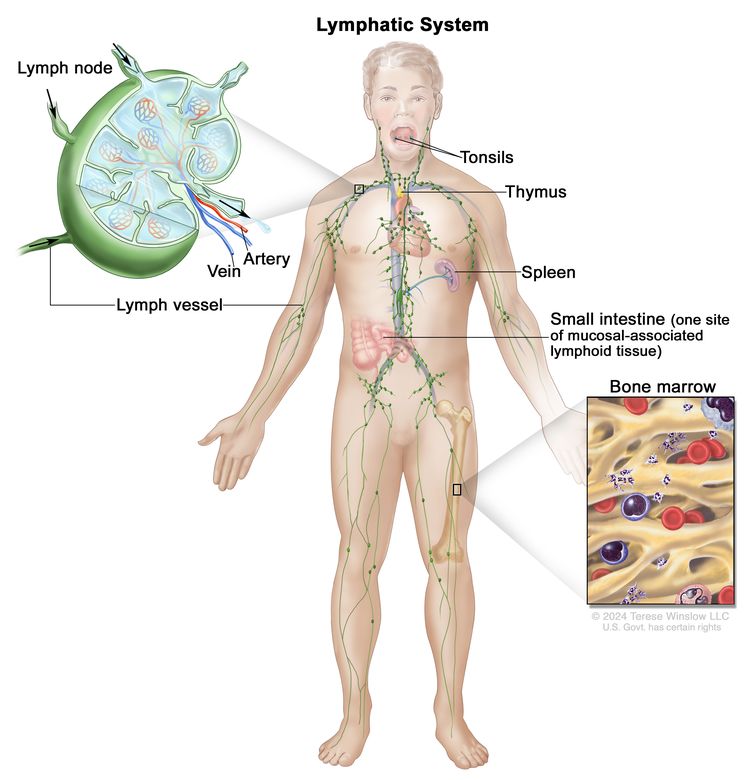
Lymph vessels: A network of thin tubes that collect lymph from different parts of the body and return it to the bloodstream.
Lymph nodes: Small, bean-shaped structures that filter lymph and store white blood cells that help fight infection and disease. Lymph nodes are found along a network of lymph vessels throughout the body. Groups of lymph nodes are found in the neck, underarm, mediastinum, abdomen, pelvis, and groin.
Spleen: An organ that makes lymphocytes, stores red blood cells and lymphocytes, filters the blood, and destroys old blood cells. The spleen is on the left side of the abdomen near the stomach.
Thymus: An organ in which T lymphocytes mature and multiply. The thymus is in the chest behind the breastbone.
Tonsils: Two small masses of lymph tissue at the back of the throat. There is one tonsil on each side of the throat.
Bone marrow: The soft, spongy tissue in the center of certain bones, such as the hip bone and breastbone. White blood cells, red blood cells, and platelets are made in the bone marrow.
EnlargeThe lymph system is part of the body’s immune system and is made up of tissues and organs that help protect the body from infection and disease. These include the tonsils, adenoids (not shown), thymus, spleen, bone marrow, lymph vessels, and lymph nodes. Lymph tissue is also found in many other parts of the body, including the small intestine.
Lymph tissue is also found in other parts of the body such as the lining of the digestive tract, bronchus, and skin.
There are two general types of lymphomas: Hodgkin lymphoma and non-Hodgkin lymphoma. This summary is about the treatment of non-Hodgkin lymphoma in adults, including during pregnancy.
Non-Hodgkin lymphoma can be indolent or aggressive.
Non-Hodgkin lymphoma grows and spreads at different rates and can be indolent or aggressive. Indolent lymphoma tends to grow and spread slowly, and has few signs and symptoms. Aggressive lymphoma grows and spreads quickly, and has signs and symptoms that can be severe. The treatments for indolent and aggressive lymphoma are different.
This summary is about the following types of non-Hodgkin lymphoma:
Indolent non-Hodgkin lymphomas
Follicular lymphoma. Follicular lymphoma is the most common type of indolent non-Hodgkin lymphoma. It is a very slow-growing type of non-Hodgkin lymphoma that begins in B lymphocytes. It affects the lymph nodes and may spread to the bone marrow or spleen. Most patients with follicular lymphoma are age 50 years and older when they are diagnosed. Follicular lymphoma may go away without treatment. The patient is closely watched for signs or symptoms that the disease has come back. Treatment is needed if signs or symptoms occur after the cancer disappeared or after initial cancer treatment. Sometimes follicular lymphoma can become a more aggressive type of lymphoma, such as diffuse large B-cell lymphoma.
Lymphoplasmacytic lymphoma. In most cases of lymphoplasmacytic lymphoma, B lymphocytes that are turning into plasma cells make large amounts of a protein called monoclonalimmunoglobulin M (IgM) antibody. High levels of IgM antibody in the blood cause the blood plasma to thicken. This may cause signs or symptoms such as trouble seeing or hearing, heart problems, shortness of breath, headache, dizziness, and numbness or tingling of the hands and feet. Sometimes there are no signs or symptoms of lymphoplasmacytic lymphoma. It may be found when a blood test is done for another reason. Lymphoplasmacytic lymphoma often spreads to the bone marrow, lymph nodes, and spleen. Patients with lymphoplasmacytic lymphoma should be checked for hepatitis C virus infection. It is also called Waldenström macroglobulinemia.
Marginal zone lymphoma. This type of non-Hodgkin lymphoma begins in B lymphocytes in a part of lymph tissue called the marginal zone. The prognosis may be worse for patients aged 70 years or older, those with stage III or stage IV disease, and those with high lactate dehydrogenase (LDH) levels. There are five different types of marginal zone lymphoma. They are grouped by the type of tissue where the lymphoma formed:
Nodal marginal zone lymphoma. Nodal marginal zone lymphoma forms in lymph nodes. This type of non-Hodgkin lymphoma is rare. It is also called monocytoid B-cell lymphoma.
Extragastric MALT lymphoma. Extragastric MALT lymphoma begins outside of the stomach in almost every part of the body including other parts of the gastrointestinal tract, salivary glands, thyroid, lung, skin, and around the eye. This type of marginal zone lymphoma forms in cells in the mucosa that help make antibodies. Extragastric MALT lymphoma may come back many years after treatment.
Mediterranean abdominal lymphoma. This is a type of MALT lymphoma that occurs in young adults in eastern Mediterranean countries. It often forms in the abdomen and patients may also be infected with bacteria called Campylobacter jejuni. This type of lymphoma is also called immunoproliferative small intestinal disease.
Splenic marginal zone lymphoma. This type of marginal zone lymphoma begins in the spleen and may spread to the peripheral blood and bone marrow. The most common sign of this type of splenic marginal zone lymphoma is a spleen that is larger than normal.
Primarycutaneousanaplastic large cell lymphoma. This type of non-Hodgkin lymphoma is in the skin only. It can be a benign (not cancer) nodule that may go away on its own or it can spread to many places on the skin and need treatment.
Aggressive non-Hodgkin lymphomas
Diffuse large B-cell lymphoma. Diffuse large B-cell lymphoma is the most common type of non-Hodgkin lymphoma. It grows quickly in the lymph nodes and often the spleen, liver, bone marrow, or other organs are also affected. Signs and symptoms of diffuse large B-cell lymphoma may include fever, drenching night sweats, and weight loss. These are also called B symptoms.
Primary mediastinal large B-cell lymphoma. This type of non-Hodgkin lymphoma is marked by the overgrowth of fibrous (scar-like) lymph tissue. A tumor most often forms behind the breastbone. It may press on the airways and cause coughing and trouble breathing. Most patients with primary mediastinal large B-cell lymphoma are women who are age 30 to 40 years.
Follicular large cell lymphoma, stage III. Follicular large cell lymphoma, stage III, is a very rare type of non-Hodgkin lymphoma. Treatment of this type of follicular lymphoma is more like treatment of aggressive NHL than of indolent NHL.
Anaplastic large cell lymphoma. Anaplastic large cell lymphoma is a type of non-Hodgkin lymphoma that usually begins in T lymphocytes. The cancer cells also have a marker called CD30 on the surface of the cell.
There are two types of anaplastic large cell lymphoma:
Cutaneous anaplastic large cell lymphoma. This type of anaplastic large cell lymphoma mostly affects the skin, but other parts of the body may also be affected. Signs of cutaneous anaplastic large cell lymphoma include one or more bumps or ulcers on the skin. This type of lymphoma is rare and indolent.
Systemic anaplastic large cell lymphoma. This type of anaplastic large cell lymphoma begins in the lymph nodes and may affect other parts of the body. This type of lymphoma is more aggressive. Patients may have a lot of anaplastic lymphoma kinase (ALK) protein inside the lymphoma cells. These patients have a better prognosis than patients who do not have extra ALK protein. Systemic anaplastic large cell lymphoma is more common in children than adults. For more information, see Childhood Non-Hodgkin Lymphoma Treatment.
ExtranodalNK-/T-cell lymphoma. Extranodal NK-/T-cell lymphoma usually begins in the area around the nose. It may also affect the paranasal sinus (hollow spaces in the bones around the nose), roof of the mouth, trachea, skin, stomach, and intestines. Most cases of extranodal NK-/T-cell lymphoma have Epstein-Barr virus in the tumor cells. Sometimes hemophagocytic syndrome occurs (a serious condition in which there are too many active histiocytes and T cells that cause severe inflammation in the body). Treatment to suppress the immune system is needed. This type of non-Hodgkin lymphoma is not common in the United States.
Angioimmunoblastic T-cell lymphoma. This type of non-Hodgkin lymphoma begins in T cells. Swollen lymph nodes are a common sign. Other signs may include a skin rash, fever, weight loss, or drenching night sweats. There may also be high levels of gamma globulin (antibodies) in the blood. Patients may also have opportunistic infections because their immune systems are weakened.
Peripheral T-cell lymphoma. Peripheral T-cell lymphoma begins in mature T lymphocytes. This type of T lymphocyte matures in the thymus gland and travels to other lymphatic sites in the body such as the lymph nodes, bone marrow, and spleen. There are three subtypes of peripheral T-cell lymphoma:
Hepatosplenic T-cell lymphoma. This is an uncommon type of peripheral T-cell lymphoma that occurs mostly in young men. It begins in the liver and spleen and the cancer cells also have a T-cell receptor called gamma/delta on the surface of the cell.
Subcutaneous panniculitis-like T-cell lymphoma. Subcutaneous panniculitis-like T-cell lymphoma begins in the skin or mucosa. It may occur with hemophagocytic syndrome (a serious condition in which there are too many active histiocytes and T cells that cause severe inflammation in the body). Treatment to suppress the immune system is needed.
Enteropathy-type intestinal T-cell lymphoma. This type of peripheral T-cell lymphoma occurs in the small bowel of patients with untreated celiac disease (an immune response to gluten that causes malnutrition). Patients who are diagnosed with celiac disease in childhood and stay on a gluten-free diet rarely develop enteropathy-type intestinal T-cell lymphoma.
Intravascular large B-cell lymphoma. This type of non-Hodgkin lymphoma affects blood vessels, especially the small blood vessels in the brain, kidney, lung, and skin. Signs and symptoms of intravascular large B-cell lymphoma are caused by blocked blood vessels. It is also called intravascular lymphomatosis.
Burkitt lymphoma. Burkitt lymphoma is a type of B-cell non-Hodgkin lymphoma that grows and spreads very quickly. It may affect the jaw, bones of the face, bowel, kidneys, ovaries, or other organs. There are three main types of Burkitt lymphoma (endemic, sporadic, and immunodeficiency related). Endemic Burkitt lymphoma commonly occurs in Africa and is linked to the Epstein-Barr virus, and sporadic Burkitt lymphoma occurs throughout the world. Immunodeficiency-related Burkitt lymphoma is most often seen in patients who have AIDS. Burkitt lymphoma may spread to the brain and spinal cord and treatment to prevent its spread may be given. Burkitt lymphoma occurs most often in children and young adults. For more information, see Childhood Non-Hodgkin Lymphoma Treatment. Burkitt lymphoma is also called diffuse small noncleaved-cell lymphoma.
Lymphoblastic lymphoma. Lymphoblastic lymphoma may begin in T cells or B cells, but it usually begins in T cells. In this type of non-Hodgkin lymphoma, there are too many lymphoblasts (immature white blood cells) in the lymph nodes and the thymus gland. These lymphoblasts may spread to other places in the body, such as the bone marrow, brain, and spinal cord. Lymphoblastic lymphoma is most common in teenagers and young adults. It is a lot like acute lymphoblastic leukemia (lymphoblasts are mostly found in the bone marrow and blood). For more information, see Acute Lymphoblastic Leukemia Treatment.
Mantle cell lymphoma. Mantle cell lymphoma is a type of B-cell non-Hodgkin lymphoma that usually occurs in middle-aged or older adults. It begins in the lymph nodes and spreads to the spleen, bone marrow, blood, and sometimes the esophagus, stomach, and intestines. Patients with mantle cell lymphoma have too much of a protein called cyclin-D1 or a certain gene change in the lymphoma cells. In some patients who do not have signs or symptoms of lymphoma, delaying the start of treatment does not affect the prognosis.
True histiocytic lymphoma. This is a rare, very aggressive type of lymphoma. It is not known whether it begins in B cells or T cells. It does not respond well to treatment with standard chemotherapy.
Primary effusion lymphoma. Primary effusion lymphoma begins in B cells that are found in an area where there is a large build-up of fluid, such as the areas between the lining of the lung and chest wall (pleural effusion), the sac around the heart and the heart (pericardial effusion), or in the abdominal cavity. There is usually no tumor that can be seen. This type of lymphoma often occurs in patients who are infected with HIV.
Plasmablastic lymphoma. Plasmablastic lymphoma is a type of large B-cell non-Hodgkin lymphoma that is very aggressive. It is most often seen in patients with HIV infection.
Older age, being male, and having a weakened immune system can increase the risk of non-Hodgkin lymphoma.
Anything that increases a person’s chance of getting a disease is called a risk factor. Not every person with one or more of these risk factors will develop non-Hodgkin lymphoma, and it can develop in people who don’t have any known risk factors. Talk with your doctor if you think you may be at risk.
These and other risk factors may increase the risk of certain types of non-Hodgkin lymphoma:
Being older, male, or White.
Having one of the following medical conditions that weakens the immune system:
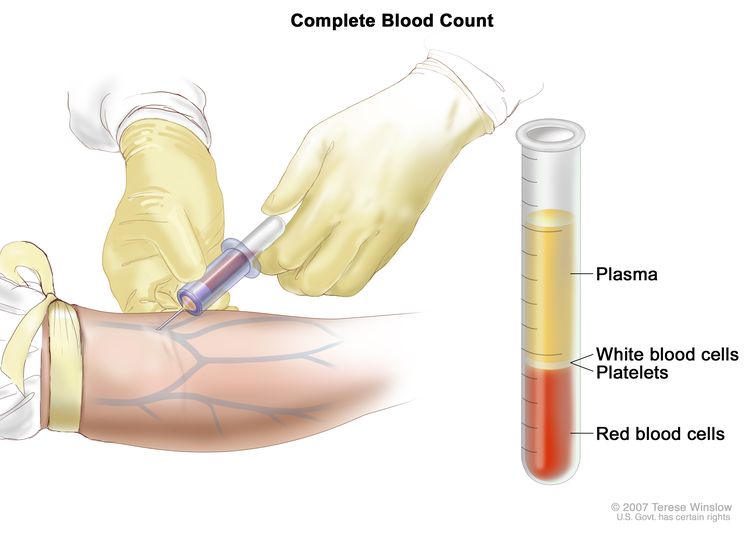
Complete blood count (CBC): A procedure in which a sample of blood is drawn and checked for the following:
The number of red blood cells, white blood cells, and platelets.
The amount of hemoglobin (the protein that carries oxygen) in the red blood cells.
The portion of the sample made up of red blood cells.
EnlargeComplete blood count (CBC). Blood is collected by inserting a needle into a vein and allowing the blood to flow into a tube. The blood sample is sent to the laboratory and the red blood cells, white blood cells, and platelets are counted. The CBC is used to test for, diagnose, and monitor many different conditions.
Blood chemistry studies: A procedure in which a blood sample is checked to measure the amounts of certain substances released into the blood by organs and tissues in the body. An unusual (higher or lower than normal) amount of a substance can be a sign of disease.
LDH test: A procedure in which a blood sample is checked to measure the amount of lactic dehydrogenase. An increased amount of LDH in the blood may be a sign of tissue damage, lymphoma, or other diseases.
Hepatitis B and hepatitis C test: A procedure in which a sample of blood is checked to measure the amounts of hepatitis B virus-specific antigens and/or antibodies and the amounts of hepatitis C virus-specific antibodies. These antigens or antibodies are called markers. Different markers or combinations of markers are used to determine whether a patient has a hepatitis B or C infection, has had a prior infection or vaccination, or is susceptible to infection. Patients who have been treated for hepatitis B virus in the past need continued monitoring to check if it has reactivated. Knowing whether a person has hepatitis B or C may help plan treatment.
HIV test: A test to measure the level of HIV antibodies in a sample of blood. Antibodies are made by the body when it is invaded by a foreign substance. A high level of HIV antibodies may mean the body has been infected with HIV.
CT scan (CAT scan): A procedure that makes a series of detailed pictures of areas inside the body, such as the neck, chest, abdomen, pelvis, and lymph nodes, taken from different angles. The pictures are made by a computer linked to an x-ray machine. A dye may be injected into a vein or swallowed to help the organs or tissues show up more clearly. This procedure is also called computed tomography, computerized tomography, or computerized axial tomography.
PET scan (positron emission tomography scan): A procedure to find malignant tumor cells in the body. A small amount of radioactiveglucose (sugar) is injected into a vein. The PET scanner rotates around the body and makes a picture of where glucose is being used in the body. Malignant tumor cells show up brighter in the picture because they are more active and take up more glucose than normal cells do.
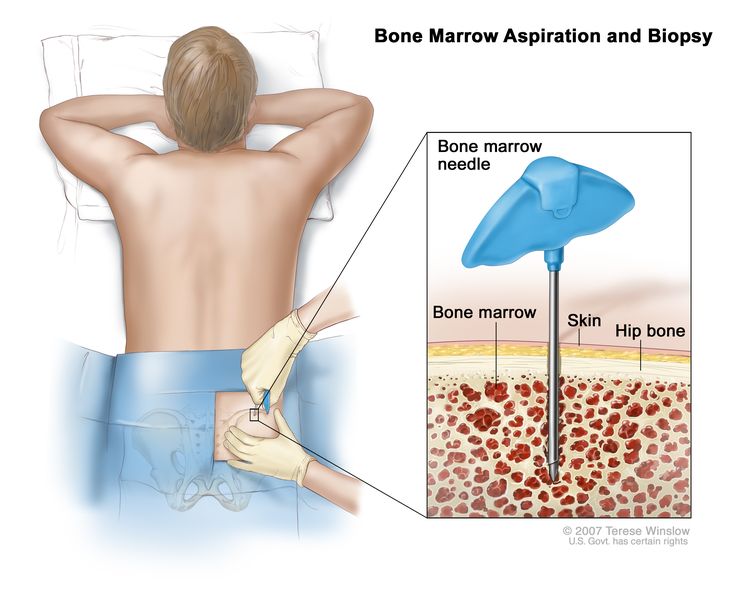
Bone marrow aspiration and biopsy: The removal of bone marrow and a small piece of bone by inserting a needle into the hipbone or breastbone. A pathologist views the bone marrow and bone under a microscope to look for signs of cancer. EnlargeBone marrow aspiration and biopsy. After a small area of skin is numbed, a long, hollow needle is inserted through the patient’s skin and hip bone into the bone marrow. A sample of bone marrow and a small piece of bone are removed for examination under a microscope.
Lymph node biopsy: The removal of all or part of a lymph node. A pathologist views the tissue under a microscope to check for cancer cells. One of the following types of biopsies may be done:
Core biopsy: The removal of part of a lymph node using a wide needle.
If cancer is found, the following tests may be done to study the cancer cells:
Immunohistochemistry: A laboratory test that uses antibodies to check for certain antigens (markers) in a sample of a patient’s tissue. The antibodies are usually linked to an enzyme or a fluorescent dye. After the antibodies bind to a specific antigen in the tissue sample, the enzyme or dye is activated, and the antigen can then be seen under a microscope. This type of test is used to help diagnose cancer and to help tell one type of cancer from another type of cancer.
Cytogenetic analysis: A laboratory test in which the chromosomes of cells in a sample of blood or bone marrow are counted and checked for any changes, such as broken, missing, rearranged, or extra chromosomes. Changes in certain chromosomes may be a sign of cancer. Cytogenetic analysis is used to help diagnose cancer, plan treatment, or find out how well treatment is working.
Immunophenotyping: A laboratory test that uses antibodies to identify cancer cells based on the types of antigens or markers on the surface of the cells. This test is used to help diagnose specific types of lymphoma.
FISH (fluorescence in situ hybridization): A laboratory test used to look at and count genes or chromosomes in cells and tissues. Pieces of DNA that contain fluorescent dyes are made in the laboratory and added to a sample of a patient’s cells or tissues. When these dyed pieces of DNA attach to certain genes or areas of chromosomes in the sample, they light up when viewed under a fluorescent microscope. The FISH test is used to help diagnose cancer and help plan treatment.
Other tests and procedures may be done depending on the signs and symptoms seen and where the cancer forms in the body.
Certain factors affect prognosis (chance of recovery) and treatment options.
The prognosis and treatment options depend on the following:
The patient’s signs and symptoms, including whether or not they have B symptoms (fever for no known reason, weight loss for no known reason, or drenching night sweats).
The stage of the cancer (the size of the cancer tumors and whether the cancer has spread to other parts of the body or lymph nodes).
The type of non-Hodgkin lymphoma.
The amount of lactate dehydrogenase (LDH) in the blood.
Whether there are certain changes in the genes.
The patient’s age, sex, and general health.
Whether the lymphoma is newly diagnosed, continues to grow during treatment, or has recurred (come back).
For non-Hodgkin lymphoma during pregnancy, treatment options also depend on:
The wishes of the patient.
Which trimester of pregnancy the patient is in.
Whether the baby can be delivered early.
Some types of non-Hodgkin lymphoma spread more quickly than others do. Most non-Hodgkin lymphomas that occur during pregnancy are aggressive. Delaying treatment of aggressive lymphoma until after the baby is born may lessen the mother’s chance of survival. Immediate treatment is often recommended, even during pregnancy.
Stages of Non-Hodgkin Lymphoma
Key Points
After non-Hodgkin lymphoma has been diagnosed, tests are done to find out whether cancer cells have spread within the lymph system or to other parts of the body.
There are three ways that cancer spreads in the body.
The following stages are used for non-Hodgkin lymphoma:
Stage I
Stage II
Stage III
Stage IV
Non-Hodgkin lymphomas may be grouped for treatment according to whether the cancer is indolent or aggressive, whether affected lymph nodes are next to each other in the body, and whether the cancer is newly diagnosed or recurrent.
Non-Hodgkin lymphoma can recur (come back) after it has been treated.
After non-Hodgkin lymphoma has been diagnosed, tests are done to find out whether cancer cells have spread within the lymph system or to other parts of the body.
The process used to find out the type of cancer and if cancer cells have spread within the lymph system or to other parts of the body is called staging. The information gathered from the staging process determines the stage of the disease. It is important to know the stage of the disease in order to plan treatment. The results of the tests and procedures done to diagnosenon-Hodgkin lymphoma are used to help make decisions about treatment.
The following tests and procedures may also be used in the staging process:
MRI (magnetic resonance imaging) with gadolinium: A procedure that uses a magnet, radio waves, and a computer to make a series of detailed pictures of areas inside the body, such as the brain and spinal cord. A substance called gadolinium is injected into the patient through a vein. The gadolinium collects around the cancer cells so they show up brighter in the picture. This procedure is also called nuclear magnetic resonance imaging (NMRI).
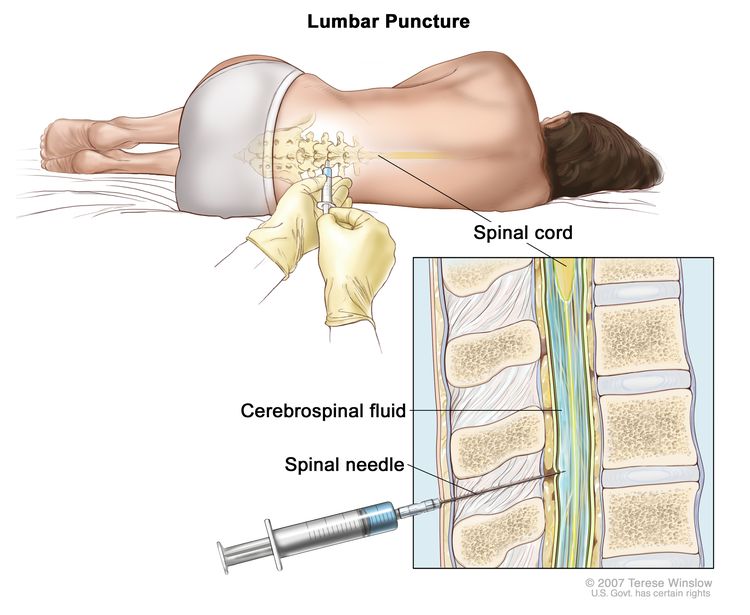
Lumbar puncture: A procedure used to collect cerebrospinal fluid (CSF) from the spinal column. This is done by placing a needle between two bones in the spine and into the CSF around the spinal cord and removing a sample of the fluid. The sample of CSF is checked under a microscope for signs that the cancer has spread to the brain and spinal cord. This procedure is also called an LP or spinal tap. EnlargeLumbar puncture. A patient lies in a curled position on a table. After a small area on the lower back is numbed, a spinal needle (a long, thin needle) is inserted into the lower part of the spinal column to remove cerebrospinal fluid (CSF, shown in blue). The fluid may be sent to a laboratory for testing.
For pregnant women with non-Hodgkin lymphoma, staging tests and procedures that protect the fetus from the harms of radiation are used. These tests and procedures include MRI (without contrast), lumbar puncture, and ultrasound.
There are three ways that cancer spreads in the body.
Tissue. The cancer spreads from where it began by growing into nearby areas.
Lymph system. The cancer spreads from where it began by getting into the lymph system. The cancer travels through the lymph vessels to other parts of the body.
Blood. The cancer spreads from where it began by getting into the blood. The cancer travels through the blood vessels to other parts of the body.
The following stages are used for non-Hodgkin lymphoma:
Stage I
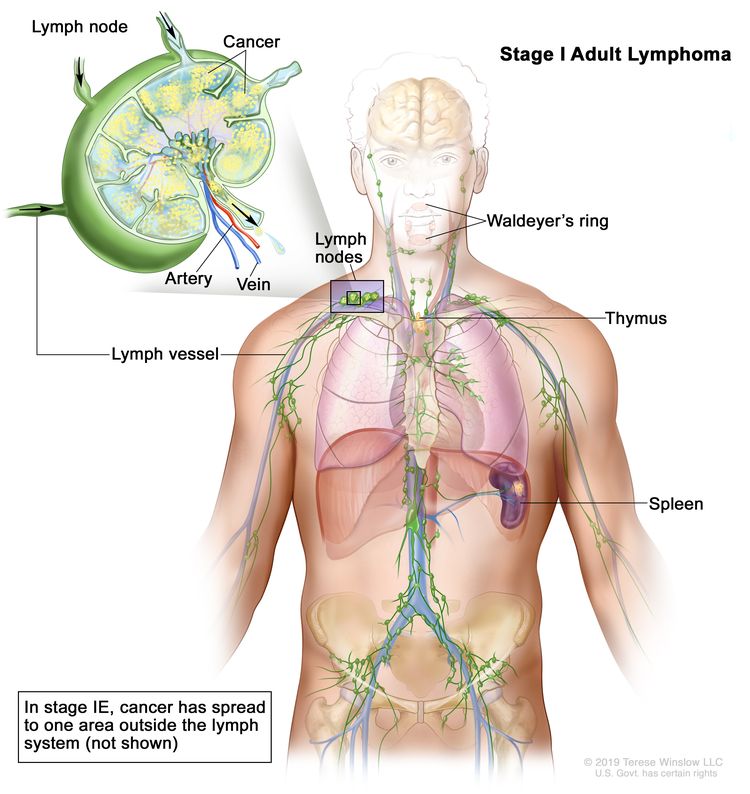
EnlargeStage I adult lymphoma. Cancer is found in one or more lymph nodes in a group of lymph nodes or, in rare cases, cancer is found in the Waldeyer’s ring, thymus, or spleen. In stage IE (not shown), cancer has spread to one area outside the lymph system.
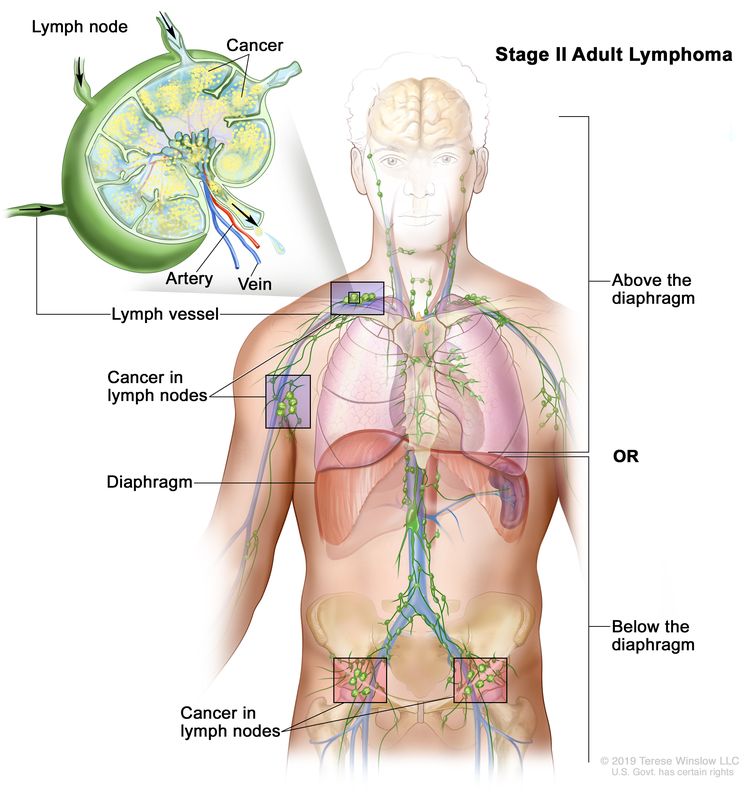
In stage II, cancer is found in two or more groups of lymph nodes that are either above the diaphragm or below the diaphragm. EnlargeStage II adult lymphoma. Cancer is found in two or more groups of lymph nodes that are either above the diaphragm or below the diaphragm.
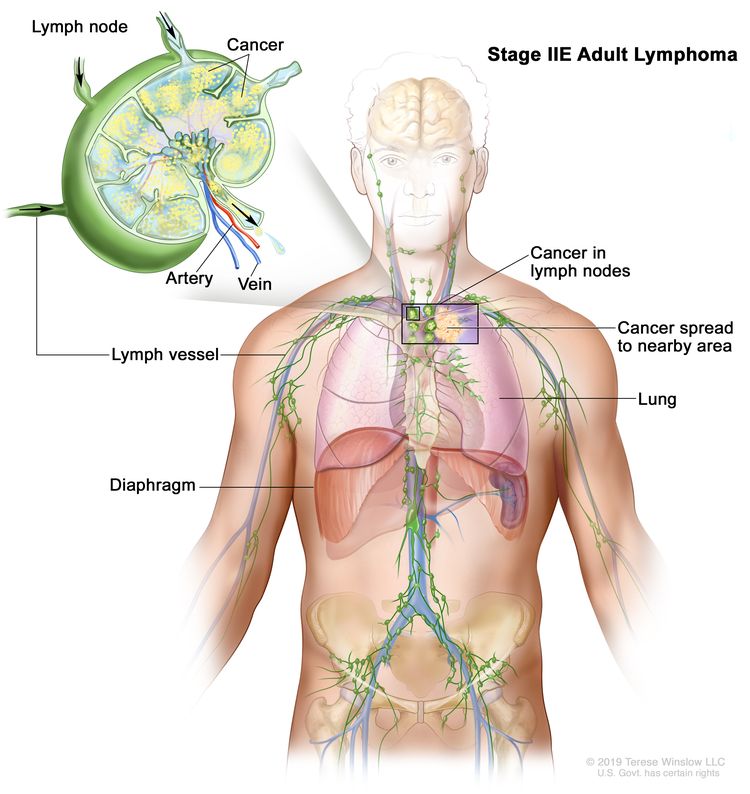
In stage IIE, cancer has spread from a group of lymph nodes to a nearby area that is outside the lymph system. Cancer may have spread to other lymph node groups on the same side of the diaphragm. EnlargeStage IIE adult lymphoma. Cancer has spread from a group of lymph nodes to a nearby area that is outside the lymph system. Cancer may have spread to other lymph node groups on the same side of the diaphragm.
In stage II, the term bulky disease refers to a larger tumor mass. The size of the tumor mass that is referred to as bulky disease varies based on the type of lymphoma.
Stage III
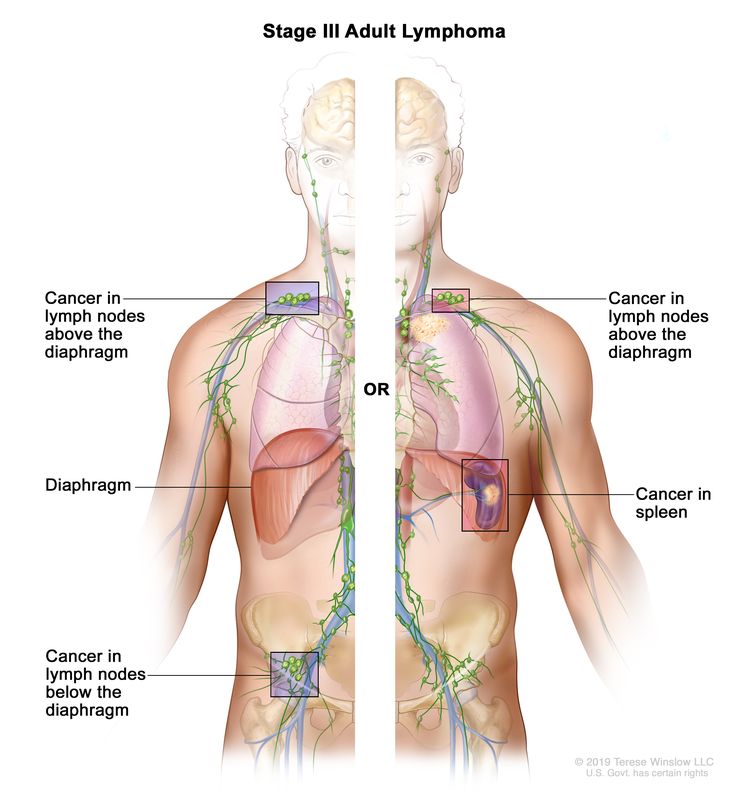
EnlargeStage III adult lymphoma. Cancer is found in groups of lymph nodes both above and below the diaphragm; or in a group of lymph nodes above the diaphragm and in the spleen.
in lymph nodes above the diaphragm and in the spleen.
Stage IV
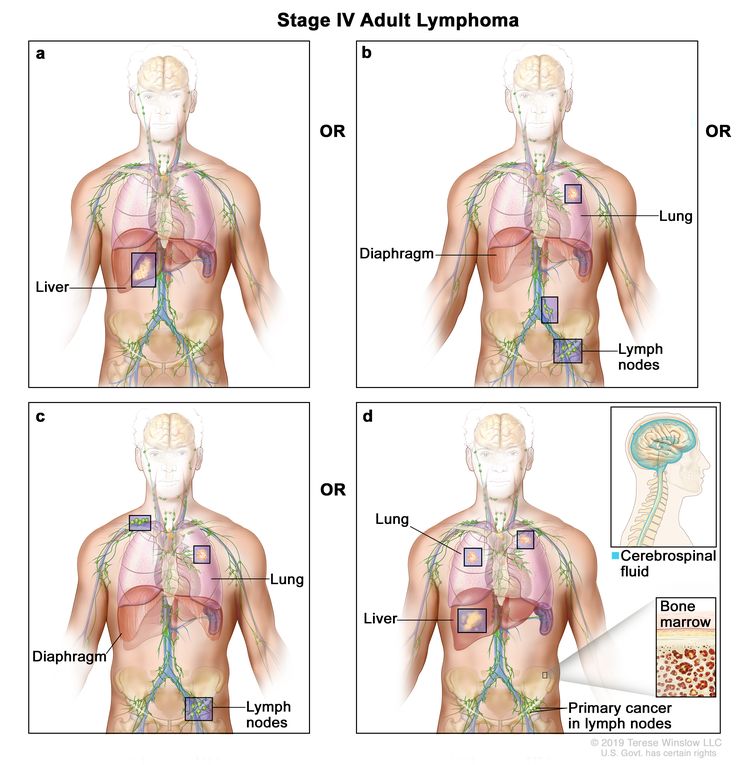
EnlargeStage IV adult lymphoma. Cancer (a) has spread throughout one or more organs outside the lymph system; or (b) is found in two or more groups of lymph nodes that are either above the diaphragm or below the diaphragm and in one organ that is outside the lymph system and not near the affected lymph nodes; or (c) is found in groups of lymph nodes above the diaphragm and below the diaphragm and in any organ that is outside the lymph system; or (d) is found in the liver, bone marrow, more than one place in the lung, or cerebrospinal fluid (CSF). The cancer has not spread directly into the liver, bone marrow, lung, or CSF from nearby lymph nodes.
is found in two or more groups of lymph nodes that are either above the diaphragm or below the diaphragm and in one organ that is outside the lymph system and not near the affected lymph nodes; or
is found in groups of lymph nodes both above and below the diaphragm and in any organ that is outside the lymph system; or
is found in the liver, bone marrow, more than one place in the lung, or cerebrospinal fluid (CSF). The cancer has not spread directly into the liver, bone marrow, lung, or CSF from nearby lymph nodes.
Non-Hodgkin lymphomas may be grouped for treatment according to whether the cancer is indolent or aggressive, whether affected lymph nodes are next to each other in the body, and whether the cancer is newly diagnosed or recurrent.
For more information on the types of indolent (slow-growing) and aggressive (fast-growing) non-Hodgkin lymphoma, see the General Information section.
Contiguous lymphomas: Lymphomas in which the lymph nodes with cancer are next to each other.
Noncontiguous lymphomas: Lymphomas in which the lymph nodes with cancer are not next to each other, but are on the same side of the diaphragm.
Non-Hodgkin lymphoma can recur (come back) after it has been treated.
The lymphoma may come back in the lymph system or in other parts of the body. Indolent lymphoma may come back as aggressive lymphoma. Aggressive lymphoma may come back as indolent lymphoma.
Treatment Option Overview
Key Points
There are different types of treatment for patients with non-Hodgkin lymphoma.
Patients with non-Hodgkin lymphoma should have their treatment planned by a team of health care providers who are experts in treating lymphomas.
Treatment for non-Hodgkin lymphoma may cause side effects.
The following types of treatment are used:
Radiation therapy
Chemotherapy
Immunotherapy
Targeted therapy
Plasmapheresis
Watchful waiting
Antibiotic therapy
Surgery
Stem cell transplant
New types of treatment are being tested in clinical trials.
Vaccine therapy
Patients may want to think about taking part in a clinical trial.
Patients can enter clinical trials before, during, or after starting their cancer treatment.
Follow-up tests may be needed.
There are different types of treatment for patients with non-Hodgkin lymphoma.
Different types of treatment are available for patients with non-Hodgkin lymphoma. Some treatments are standard (the currently used treatment), and some are being tested in clinical trials. A treatment clinical trial is a research study meant to help improve current treatments or obtain information on new treatments for patients with cancer. When clinical trials show that a new treatment is better than the standard treatment, the new treatment may become the standard treatment. Patients may want to think about taking part in a clinical trial. Some clinical trials are open only to patients who have not started treatment.
For pregnant women with non-Hodgkin lymphoma, treatment is carefully chosen to protect the fetus. Treatment decisions are based on the mother’s wishes, the stage of the non-Hodgkin lymphoma, and the trimester of the pregnancy. The treatment plan may change as the signs and symptoms, cancer, and pregnancy change. Choosing the most appropriate cancer treatment is a decision that ideally involves the patient, family, and health care team.
Patients with non-Hodgkin lymphoma should have their treatment planned by a team of health care providers who are experts in treating lymphomas.
Treatment will be overseen by a medical oncologist, a doctor who specializes in treating cancer, or a hematologist, a doctor who specializes in treating blood cancers. The medical oncologist may refer you to other health care providers who have experience and are experts in treating non-Hodgkin lymphoma and who specialize in certain areas of medicine. These may include the following specialists:
Side effects from cancer treatment that begin after treatment and continue for months or years are called late effects. Treatment with chemotherapy, radiation therapy, or stem cell transplant for non-Hodgkin lymphoma may increase the risk of late effects.
Late effects of cancer treatment may include the following:
Some late effects may be treated or controlled. It is important to talk with your doctor about the effects cancer treatment can have on you. Regular follow-up to check for late effects is important.
The following types of treatment are used:
Radiation therapy
Radiation therapy is a cancer treatment that uses high-energy x-rays or other types of radiation to kill cancer cells or keep them from growing.
Proton beam radiation therapy is a type of high-energy, external radiation therapy that uses streams of protons (tiny particles with a positive charge) to kill tumor cells. This type of treatment can lower the amount of radiation damage to healthy tissue near a tumor such as the heart or breast.
External radiation therapy is used to treat non-Hodgkin lymphoma, and may also be used as palliative therapy to relieve symptoms and improve quality of life.
For a pregnant woman with non-Hodgkin lymphoma, radiation therapy should be given after delivery, if possible, to avoid any risk to the fetus. If treatment is needed right away, the woman may decide to continue the pregnancy and receive radiation therapy. A lead shield is used to cover the pregnant woman’s abdomen to help protect the fetus from radiation as much as possible.
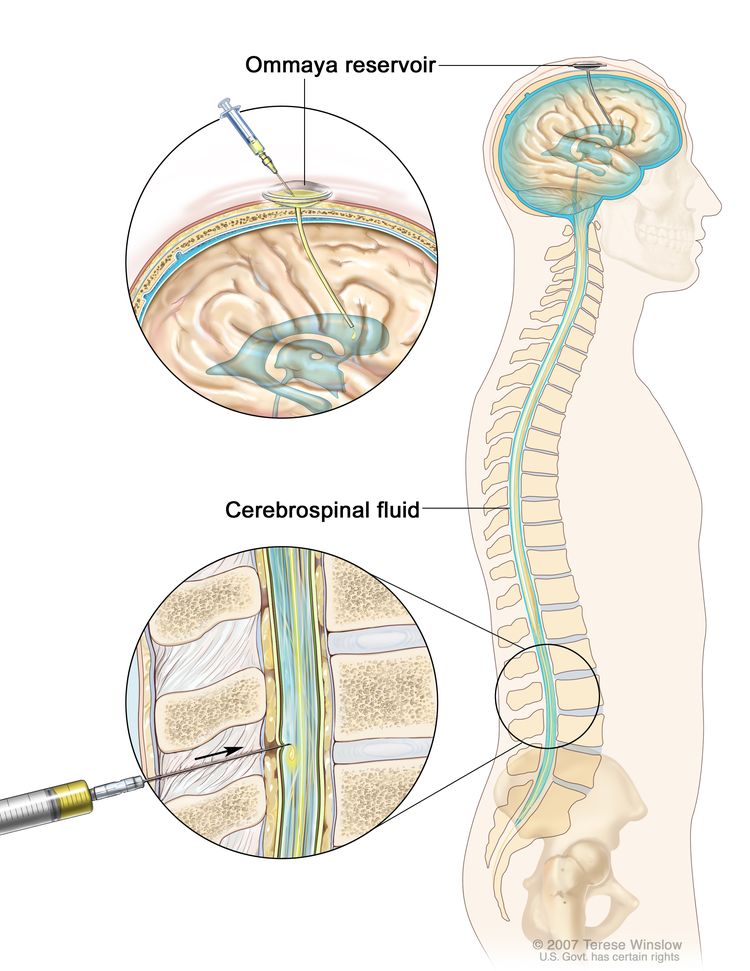
EnlargeIntrathecal chemotherapy. Anticancer drugs are injected into the intrathecal space, which is the space that holds the cerebrospinal fluid (CSF, shown in blue). There are two different ways to do this. One way, shown in the top part of the figure, is to inject the drugs into an Ommaya reservoir (a dome-shaped container that is placed under the scalp during surgery; it holds the drugs as they flow through a small tube into the brain). The other way, shown in the bottom part of the figure, is to inject the drugs directly into the CSF in the lower part of the spinal column, after a small area on the lower back is numbed.
When a pregnant woman is treated with chemotherapy for non-Hodgkin lymphoma, the fetus cannot be protected from being exposed to chemotherapy. Some chemotherapy regimens may cause birth defects if given in the first trimester.
Immunotherapy is a treatment that uses the patient’s immune system to fight cancer. Substances made by the body or made in a laboratory are used to boost, direct, or restore the body’s natural defenses against cancer.
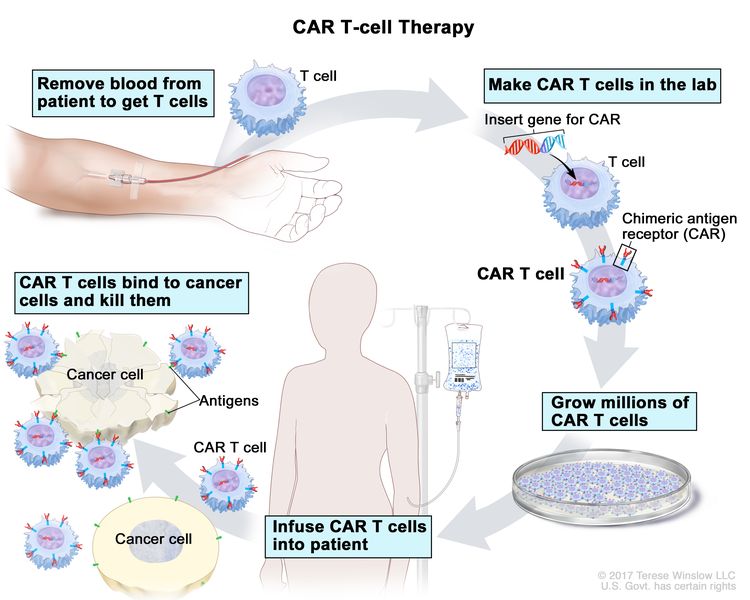
CAR T-cell therapy: The patient’s T cells (a type of immune system cell) are changed so they will attack certain proteins on the surface of cancer cells. T cells are taken from the patient and special receptors are added to their surface in the laboratory. The changed cells are called chimeric antigen receptor (CAR) T cells. The CAR T cells are grown in the laboratory and given to the patient by infusion. The CAR T cells multiply in the patient’s blood and attack cancer cells. CAR T-cell therapy (such as axicabtagene ciloleucel or tisagenlecleucel) is used to treat large B-cell lymphoma that has not responded to treatment. CAR T-cell therapy is being studied to treat mantle cell lymphoma that has relapsed or not responded to treatment.
EnlargeCAR T-cell therapy. A type of treatment in which a patient’s T cells (a type of immune cell) are changed in the laboratory so they will bind to cancer cells and kill them. Blood from a vein in the patient’s arm flows through a tube to an apheresis machine (not shown), which removes the white blood cells, including the T cells, and sends the rest of the blood back to the patient. Then, the gene for a special receptor called a chimeric antigen receptor (CAR) is inserted into the T cells in the laboratory. Millions of the CAR T cells are grown in the laboratory and then given to the patient by infusion. The CAR T cells are able to bind to an antigen on the cancer cells and kill them.
Targeted therapy is a type of treatment that uses drugs or other substances to identify and attack specific cancer cells. Monoclonal antibodytherapy, proteasome inhibitor therapy, and kinase inhibitor therapy are types of targeted therapy used to treat non-Hodgkin lymphoma.
Monoclonal antibody therapy: Monoclonal antibodies are immune system proteins made in the laboratory to treat many diseases, including cancer. As a cancer treatment, these antibodies can attach to a specific target on cancer cells or other cells that may help cancer cells grow. The antibodies are able to then kill the cancer cells, block their growth, or keep them from spreading. Monoclonal antibodies are given by infusion. They may be used alone or to carry drugs, toxins, or radioactive material directly to cancer cells.
Types of monoclonal antibodies include:
Rituximab, used to treat many types of non-Hodgkin lymphoma.
Brentuximab vedotin, which contains a monoclonal antibody that binds to a protein called CD30 that is found on some lymphoma cells. It also contains an anticancer drug that may help kill cancer cells.
Mosunetuzumab, which is a bispecific monoclonal antibody that helps the body’s immune system recognize and kill cancer cells. It is used to treat relapsed or refractory follicular lymphoma.
How do monoclonal antibodies work to treat cancer? This video shows how monoclonal antibodies, such as trastuzumab, pembrolizumab, and rituximab, block molecules cancer cells need to grow, flag cancer cells for destruction by the body’s immune system, or deliver harmful substances to cancer cells.
Proteasome inhibitor therapy: This treatment blocks the action of proteasomes in cancer cells. Proteasomes remove proteins no longer needed by the cell. When the proteasomes are blocked, the proteins build up in the cell and may cause the cancer cell to die. Bortezomib or ixazomib is used to decrease how much immunoglobulin M is in the blood after cancer treatment for lymphoplasmacytic lymphoma (Waldenström macroglobulinemia). It is also being studied to treat relapsedmantle cell lymphoma.
Kinase inhibitor therapy: This treatment blocks certain proteins, which may help keep lymphoma cells from growing and may kill them. Kinase inhibitor therapies include:
Ibrutinib, acalabrutinib, and zanubrutinib, which are types of Bruton tyrosine kinase inhibitor therapy. They are used to treat mantle cell lymphoma. Ibrutinib and acalabrutinib are also used to treat lymphoplasmacytic lymphoma, and zanubrutinib is being studied to treat it.
Histone methyltransferase inhibitor therapy: Tazemetostat is used to treat follicular lymphoma that has come back or has not gotten better with other treatment. It is used in adults whose cancer has a certain mutation (change) in the EZH2 gene that has already been treated with at least two other anticancer therapies.
B-cell lymphoma-2 (BCL-2) inhibitor therapy: Venetoclax may be used to treat mantle cell lymphoma. It blocks the action of a protein called BCL-2 and may help kill cancer cells.
If the blood becomes thick with extra antibody proteins and affects circulation, plasmapheresis is done to remove extra plasma and antibody proteins from the blood. In this procedure, blood is removed from the patient and sent through a machine that separates the plasma (the liquid part of the blood) from the blood cells. The patient’s plasma contains the unneeded antibodies and is not returned to the patient. The normal blood cells are returned to the bloodstream along with donated plasma or a plasma replacement. Plasmapheresis does not keep new antibodies from forming.
Small bowel surgery is often needed to diagnoseceliac disease in adults who develop a type of T-cell lymphoma.
Stem cell transplant
Stem cell transplant is a method of giving high doses of chemotherapy and/or total-body irradiation and then replacing blood-forming cells destroyed by the cancer treatment. Stem cells (immature blood cells) are removed from the blood or bone marrow of the patient (autologous transplant) or a donor (allogeneic transplant) and are frozen and stored. After the chemotherapy and/or radiation therapy is completed, the stored stem cells are thawed and given back to the patient through an infusion. These reinfused stem cells grow into (and restore) the body’s blood cells.
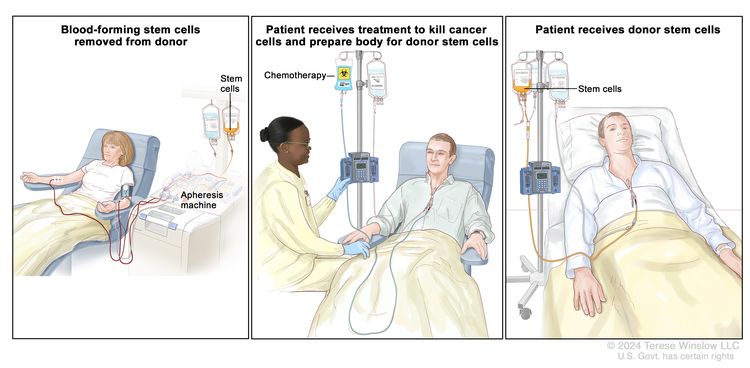
EnlargeDonor stem cell transplant. (Step 1): Four to five days before donor stem cell collection, the donor receives a medicine to increase the number of stem cells circulating through their bloodstream (not shown). The blood-forming stem cells are then collected from the donor through a large vein in their arm. The blood flows through an apheresis machine that removes the stem cells. The rest of the blood is returned to the donor through a vein in their other arm. (Step 2): The patient receives chemotherapy to kill cancer cells and prepare their body for the donor stem cells. The patient may also receive radiation therapy (not shown). (Step 3): The patient receives an infusion of the donor stem cells.
New types of treatment are being tested in clinical trials.
This summary section describes treatments that are being studied in clinical trials. It may not mention every new treatment being studied. Information about clinical trials is available from the NCI website.
Vaccine therapy
Vaccine therapy is a cancer treatment that uses a substance or group of substances to stimulate the immune system to find the tumor and kill it.
Patients may want to think about taking part in a clinical trial.
For some patients, taking part in a clinical trial may be the best treatment choice. Clinical trials are part of the cancer research process. Clinical trials are done to find out if new cancer treatments are safe and effective or better than the standard treatment.
Many of today’s standard treatments for cancer are based on earlier clinical trials. Patients who take part in a clinical trial may receive the standard treatment or be among the first to receive a new treatment.
Patients who take part in clinical trials also help improve the way cancer will be treated in the future. Even when clinical trials do not lead to effective new treatments, they often answer important questions and help move research forward.
Patients can enter clinical trials before, during, or after starting their cancer treatment.
Some clinical trials only include patients who have not yet received treatment. Other trials test treatments for patients whose cancer has not gotten better. There are also clinical trials that test new ways to stop cancer from recurring (coming back) or reduce the side effects of cancer treatment.
Clinical trials are taking place in many parts of the country. Information about clinical trials supported by NCI can be found on NCI’s clinical trials search webpage. Clinical trials supported by other organizations can be found on the ClinicalTrials.gov website.
Follow-up tests may be needed.
As you go through treatment, you will have follow-up tests or check-ups. Some tests that were done to diagnose or stage the cancer may be repeated to see how well the treatment is working. Decisions about whether to continue, change, or stop treatment may be based on the results of these tests.
Some of the tests will continue to be done from time to time after treatment has ended. The results of these tests can show if your condition has changed or if the cancer has recurred (come back).
If the tumor is too large to be treated with radiation therapy, the treatment options for indolent, noncontiguousstage II, III, or IV non-Hodgkin lymphoma will be used.
Treatment of indolent, noncontiguous stage II, III, or IV non-Hodgkin lymphoma may include the following:
Watchful waiting for patients who do not have signs or symptoms.
Monoclonal antibody therapy (rituximab) with or without chemotherapy.
For extragastric MALT lymphoma of the eye and Mediterranean abdominallymphoma, antibiotic therapy is used to treat infection.
For splenicmarginal zone lymphoma, rituximab with or without chemotherapy and B-cell receptor therapy is used as initial treatment. If the tumor does not respond to treatment, a splenectomy may be done.
For mantle cell lymphoma, monoclonal antibody therapy with combination chemotherapy, followed by stem cell transplant. Monoclonal antibody therapy may be given afterwards as maintenance therapy (treatment that is given after initial therapy to help keep cancer from coming back).
Polatuzumab vedotin, combined with bendamustine and rituximab.
A clinical trial of autologous or allogeneic stem cell transplant.
Treatment of indolent lymphoma that comes back as aggressive lymphoma depends on the type of non-Hodgkin lymphoma and may include radiation therapy as palliative therapy to relieve symptoms and improve quality of life. Treatment of aggressive lymphoma that comes back as indolent lymphoma may include chemotherapy.
Treatment of Non-Hodgkin Lymphoma During Pregnancy
Treatment given right away based on the type of non-Hodgkin lymphoma to increase the mother’s chance of survival. Treatment may include combination chemotherapy and rituximab.
Early delivery of the baby followed by treatment based on the type of non-Hodgkin lymphoma.
If in the first trimester of pregnancy, medical oncologists may advise ending the pregnancy so that treatment may begin. Treatment depends on the type of non-Hodgkin lymphoma.
Physician Data Query (PDQ) is the National Cancer Institute’s (NCI’s) comprehensive cancer information database. The PDQ database contains summaries of the latest published information on cancer prevention, detection, genetics, treatment, supportive care, and complementary and alternative medicine. Most summaries come in two versions. The health professional versions have detailed information written in technical language. The patient versions are written in easy-to-understand, nontechnical language. Both versions have cancer information that is accurate and up to date and most versions are also available in Spanish.
PDQ is a service of the NCI. The NCI is part of the National Institutes of Health (NIH). NIH is the federal government’s center of biomedical research. The PDQ summaries are based on an independent review of the medical literature. They are not policy statements of the NCI or the NIH.
Purpose of This Summary
This PDQ cancer information summary has current information about the treatment of adult non-Hodgkin lymphoma. It is meant to inform and help patients, families, and caregivers. It does not give formal guidelines or recommendations for making decisions about health care.
Reviewers and Updates
Editorial Boards write the PDQ cancer information summaries and keep them up to date. These Boards are made up of experts in cancer treatment and other specialties related to cancer. The summaries are reviewed regularly and changes are made when there is new information. The date on each summary (“Updated”) is the date of the most recent change.
The information in this patient summary was taken from the health professional version, which is reviewed regularly and updated as needed, by the PDQ Adult Treatment Editorial Board.
Clinical Trial Information
A clinical trial is a study to answer a scientific question, such as whether one treatment is better than another. Trials are based on past studies and what has been learned in the laboratory. Each trial answers certain scientific questions in order to find new and better ways to help cancer patients. During treatment clinical trials, information is collected about the effects of a new treatment and how well it works. If a clinical trial shows that a new treatment is better than one currently being used, the new treatment may become “standard.” Patients may want to think about taking part in a clinical trial. Some clinical trials are open only to patients who have not started treatment.
Clinical trials can be found online at NCI’s website. For more information, call the Cancer Information Service (CIS), NCI’s contact center, at 1-800-4-CANCER (1-800-422-6237).
Permission to Use This Summary
PDQ is a registered trademark. The content of PDQ documents can be used freely as text. It cannot be identified as an NCI PDQ cancer information summary unless the whole summary is shown and it is updated regularly. However, a user would be allowed to write a sentence such as “NCI’s PDQ cancer information summary about breast cancer prevention states the risks in the following way: [include excerpt from the summary].”
The best way to cite this PDQ summary is:
PDQ® Adult Treatment Editorial Board. PDQ Non-Hodgkin Lymphoma Treatment. Bethesda, MD: National Cancer Institute. Updated <MM/DD/YYYY>. Available at: /types/lymphoma/patient/adult-nhl-treatment-pdq. Accessed <MM/DD/YYYY>. [PMID: 26389337]
Images in this summary are used with permission of the author(s), artist, and/or publisher for use in the PDQ summaries only. If you want to use an image from a PDQ summary and you are not using the whole summary, you must get permission from the owner. It cannot be given by the National Cancer Institute. Information about using the images in this summary, along with many other images related to cancer can be found in Visuals Online. Visuals Online is a collection of more than 3,000 scientific images.
Disclaimer
The information in these summaries should not be used to make decisions about insurance reimbursement. More information on insurance coverage is available on Cancer.gov on the Managing Cancer Care page.
Contact Us
More information about contacting us or receiving help with the Cancer.gov website can be found on our Contact Us for Help page. Questions can also be submitted to Cancer.gov through the website’s E-mail Us.
Acute lymphoblastic leukemia (ALL) is a type of cancer in which the bone marrow makes too many lymphocytes (a type of white blood cell).
Leukemia may affect red blood cells, white blood cells, and platelets.
Previous chemotherapy and exposure to radiation may increase the risk of developing ALL.
Signs and symptoms of ALL include fatigue, fever, and easy bruising or bleeding.
Tests that examine the blood and bone marrow are used to diagnose ALL.
After ALL has been diagnosed, tests are done to find out if the cancer has spread to the central nervous system (brain and spinal cord) or to other parts of the body.
Some people decide to get a second opinion.
Certain factors affect prognosis (chance of recovery) and treatment options.
Acute lymphoblastic leukemia (ALL) is a type of cancer in which the bone marrow makes too many lymphocytes (a type of white blood cell).
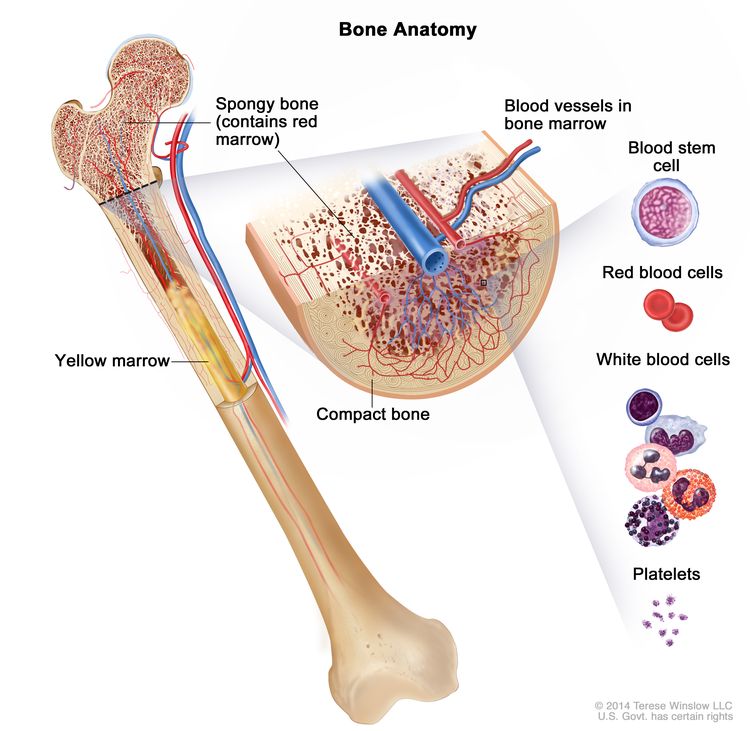
EnlargeAnatomy of the bone. The bone is made up of compact bone, spongy bone, and bone marrow. Compact bone makes up the outer layer of the bone. Spongy bone is found mostly at the ends of bones and contains red marrow. Bone marrow is found in the center of most bones and has many blood vessels. There are two types of bone marrow: red and yellow. Red marrow contains blood stem cells that can become red blood cells, white blood cells, or platelets. Yellow marrow is made mostly of fat.
Leukemia may affect red blood cells, white blood cells, and platelets.
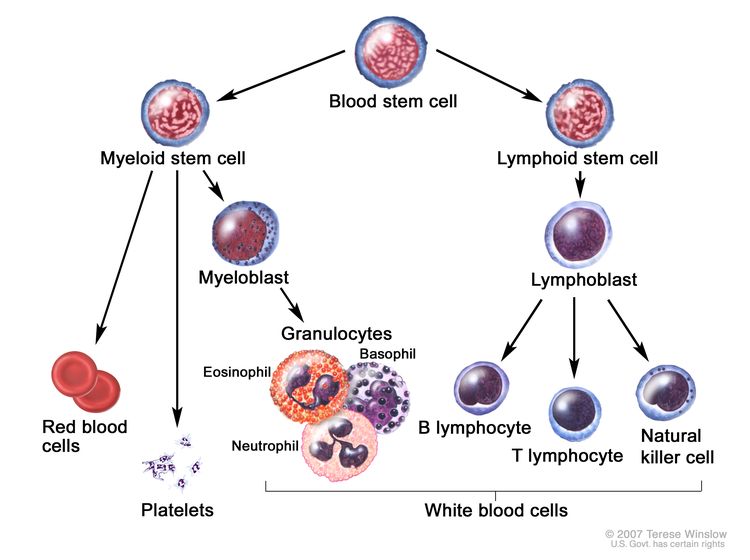
The bone marrow makes blood stem cells (immature cells) that become mature blood cells over time. A blood stem cell may become a myeloid stem cell or a lymphoid stem cell.
A lymphoid stem cell becomes a lymphoblast and then one of three types of lymphocytes (white blood cells):
EnlargeBlood cell development. A blood stem cell goes through several steps to become a red blood cell, platelet, or white blood cell.
In ALL, too many stem cells become lymphoblasts, B lymphocytes, or T lymphocytes. These cells are also called leukemia cells. Leukemia cells are not able to fight infection very well. Also, as the number of leukemia cells increases in the blood and bone marrow, there is less room for healthy white blood cells, red blood cells, and platelets. This may cause infection, anemia, and easy bleeding. The cancer can also spread to the central nervous system (brain and spinal cord), lymph nodes, spleen, liver, testicles, and other organs.
Previous chemotherapy and exposure to radiation may increase the risk of developing ALL.
ALL is caused by certain changes to the way blood stem cells function, especially how they grow and divide into new cells. A risk factor is anything that increases the chance of getting a disease. Some risk factors for cancer, like smoking, can be changed. However, risk factors also include things people cannot change, like their genetics, getting older, and their health history.
There are many risk factors for ALL, but many do not directly cause cancer. Instead, they increase the chance of DNA damage in cells that may lead to ALL. Learn more about how cancer develops at What Is Cancer?
Having one or more of these risk factors does not mean that you will get ALL. Many people with risk factors never develop ALL, while others with no known risk factors do.
the amount of hemoglobin (the protein that carries oxygen) in the red blood cells
the amount of hematocrit (whole blood that is made up of red blood cells)
EnlargeComplete blood count (CBC). Blood is collected by inserting a needle into a vein and allowing the blood to flow into a tube. The blood sample is sent to the laboratory and the red blood cells, white blood cells, and platelets are counted. The CBC is used to test for, diagnose, and monitor many different conditions.
Blood chemistry study uses a blood sample to measure the amounts of certain substances released into the blood by organs and tissues in the body. An unusual amount of a substance can be a sign of disease.
Peripheral blood smear checks a sample of blood for blast cells, the number and kinds of white blood cells, the number of platelets, and changes in the shape of blood cells.
Bone marrow aspiration and biopsy is the removal of bone marrow, blood, and a small piece of bone by inserting a hollow needle into the hipbone or breastbone. A pathologist views the bone marrow, blood, and bone under a microscope to look for abnormal cells. EnlargeBone marrow aspiration and biopsy. After a small area of skin is numbed, a long, hollow needle is inserted through the patient’s skin and hip bone into the bone marrow. A sample of bone marrow and a small piece of bone are removed for examination under a microscope.
The following tests may be done on the samples of blood or bone marrow tissue that are removed:
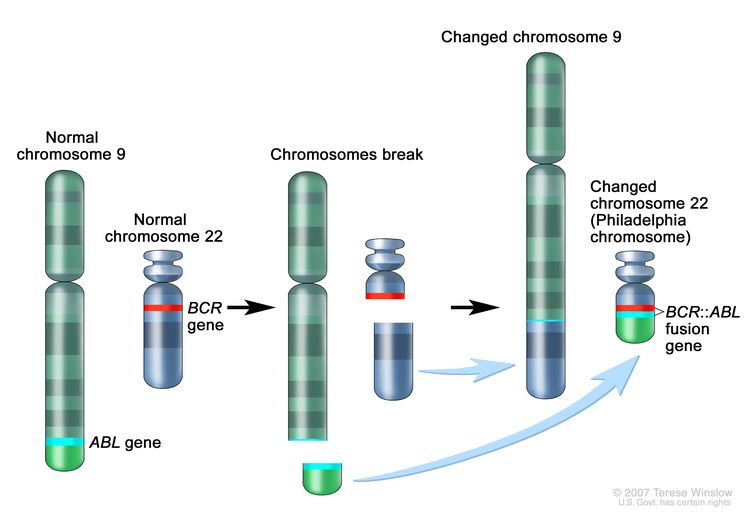
Cytogenetic analysis checks the chromosomes of cells in a blood or bone marrow sample for changes, such as broken, missing, rearranged, or extra chromosomes. Changes in certain chromosomes may be a sign of cancer. For example, in Philadelphia chromosome–positive ALL, part of one chromosome switches places with part of another chromosome. This is called the “Philadelphia chromosome.” Cytogenetic analysis is used to help diagnose cancer, plan treatment, or find out how well treatment is working. EnlargeThe Philadelphia (Ph) chromosome is an abnormal chromosome that is made when pieces of chromosomes 9 and 22 break off and trade places. The ABL1 gene from chromosome 9 joins to the BCR gene on chromosome 22 to form the BCR::ABL1 fusion gene. The changed chromosome 22 with the fusion gene on it is called the Ph chromosome.
Immunophenotyping uses antibodies to identify cancer cells based on the types of antigens or markers on the surface of the cells. This test is used to help diagnose specific types of leukemia. For example, a cytochemistry study may test the cells in a sample of tissue using chemicals (dyes) to look for certain changes in the sample. A chemical may cause a color change in one type of leukemia cell but not in another type of leukemia cell.
After ALL has been diagnosed, tests are done to find out if the cancer has spread to the central nervous system (brain and spinal cord) or to other parts of the body.
The following tests and procedures may be used to find out if the leukemia has spread outside the blood and bone marrow:
Chest x-ray is a type of radiation that can go through the body and make pictures of the organs and bones inside the chest.
Lumbar puncture is a procedure used to collect a sample of cerebrospinal fluid (CSF) from the spinal column. This is done by placing a needle between two bones in the spine and into the lining around the spinal cord to remove a sample of CSF. The sample of CSF is checked under a microscope for signs that leukemia cells have spread to the brain and spinal cord. This procedure is also called an LP or spinal tap. EnlargeLumbar puncture. A patient lies in a curled position on a table. After a small area on the lower back is numbed, a spinal needle (a long, thin needle) is inserted into the lower part of the spinal column to remove cerebrospinal fluid (CSF, shown in blue). The fluid may be sent to a laboratory for testing.
CT scan (CAT scan) uses a computer linked to an x-ray machine to make a series of detailed pictures of areas inside the body, such as the abdomen. The pictures are taken from different angles and are used to create 3-D views of tissues and organs. A dye may be injected into a vein or swallowed to help the organs or tissues show up more clearly. This procedure is also called computed tomography, computerized tomography, or computerized axial tomography. Learn more about Computed Tomography (CT) Scans and Cancer.
MRI (magnetic resonance imaging) uses a magnet, radio waves, and a computer to make a series of detailed pictures of areas inside the body. This procedure is also called nuclear magnetic resonance imaging (NMRI).
Some people decide to get a second opinion.
You may want to get a second opinion to confirm your ALL diagnosis and treatment plan. If you seek a second opinion, you will need to get medical test results and reports from the first doctor to share with the second doctor. The second doctor will review the pathology report, slides, and scans. They may agree with the first doctor, suggest changes or another treatment approach, or provide more information about your cancer.
To learn more about choosing a doctor and getting a second opinion, visit Finding Cancer Care. You can contact NCI’s Cancer Information Service via chat, email, or phone (both in English and Spanish) for help finding a doctor, hospital, or getting a second opinion. For questions you might want to ask at your appointments, visit Questions to Ask Your Doctor About Cancer.
Certain factors affect prognosis (chance of recovery) and treatment options.
The prognosis and treatment options for ALL depend on:
the person’s age
whether the cancer has spread to the brain or spinal cord
whether there are certain changes in the genes, including the Philadelphia chromosome
whether the cancer has been treated before or has recurred (come back)
Stages of Acute Lymphoblastic Leukemia
Key Points
There is no standard staging system for acute lymphoblastic leukemia (ALL).
There is no standard staging system for acute lymphoblastic leukemia (ALL).
The extent or spread of cancer is usually described as stages. Instead of stages, ALL treatment is based on whether the cancer is untreated, in remission, or recurrent.
Untreated ALL
In untreated ALL, the disease is newly diagnosed. It has not been treated, except to relieve signs and symptoms caused by the cancer, such as fever, bleeding, or pain, and the following are true:
In ALL in remission, the disease has been treated, and the following are true:
The CBC is normal.
5% or fewer of the cells in the bone marrow are blasts (leukemia cells).
There are no signs or symptoms of leukemia other than in the bone marrow.
Recurrent ALL
Recurrent ALL is cancer that has recurred (come back) after going into remission. ALL may come back in the blood, bone marrow, or other parts of the body.
There are different types of treatment for patients with acute lymphoblastic leukemia (ALL).
The treatment of ALL usually has two phases.
The following types of treatment are used:
Chemotherapy
Radiation therapy
Chemotherapy with stem cell transplant
Targeted therapy
Immunotherapy
New types of treatment are being tested in clinical trials.
Treatment for ALL may cause side effects.
Follow-up care may be needed.
There are different types of treatment for patients with acute lymphoblastic leukemia (ALL).
Different types of treatment are available for people with ALL. You and your cancer care team will work together to decide your treatment plan, which may include more than one type of treatment. Many factors will be considered, such as whether the ALL is untreated, in remission, or recurrent, and your overall health and preferences. Your plan will include information about your cancer, the goals of treatment, your treatment options and the possible side effects, and the expected length of treatment.
Talking with your cancer care team before treatment begins about what to expect will be helpful. You’ll want to learn what you need to do before treatment begins, how you’ll feel while going through it, and what kind of help you will need. Learn more at Questions to Ask Your Doctor About Treatment.
Remission induction therapy is the first phase of treatment. The goal is to kill the leukemia cells in the blood and bone marrow. This puts the leukemia into remission.
Consolidation therapy is the second phase of treatment. It begins once the leukemia is in remission. The goal of consolidation therapy is to kill any remaining leukemia cells that may not be active but could begin to regrow and cause a relapse. This phase is also called remission continuation therapy.
Treatment called central nervous system (CNS) prophylaxis is usually given during each phase of therapy. Because standard doses of chemotherapy may not reach leukemia cells in the CNS (brain and spinal cord), the leukemia cells are able to hide in the CNS. Systemic chemotherapy given in high doses, intrathecal chemotherapy, and radiation therapy to the brain are able to reach leukemia cells in the CNS. These treatments are given to kill the leukemia cells and lessen the chance the leukemia will recur (come back).
The following types of treatment are used:
Chemotherapy
Chemotherapy (also called chemo) uses drugs to stop the growth of cancer cells, either by killing the cells or by stopping them from dividing. The way the chemotherapy is given depends on whether the leukemia cells have spread to the central nervous system (CNS; brain and spinal cord).
Systemic chemotherapy is when chemotherapy drugs are taken by mouth or injected into a vein or muscle. When given this way, the drugs enter the bloodstream and can reach cancer cells throughout the body.
Intrathecal chemotherapy may be used to treat ALL that has spread, or may spread, to the brain and spinal cord. Intrathecal chemotherapy is a method of placing chemotherapy directly into the cerebrospinal fluid, which is the fluid that surrounds the brain and spinal cord. When used to lessen the chance leukemia cells will spread to the brain and spinal cord, it is called CNS prophylaxis.
EnlargeIntrathecal chemotherapy. Anticancer drugs are injected into the intrathecal space, which is the space that holds the cerebrospinal fluid (CSF, shown in blue). There are two different ways to do this. One way, shown in the top part of the figure, is to inject the drugs into an Ommaya reservoir (a dome-shaped container that is placed under the scalp during surgery; it holds the drugs as they flow through a small tube into the brain). The other way, shown in the bottom part of the figure, is to inject the drugs directly into the CSF in the lower part of the spinal column, after a small area on the lower back is numbed.
Radiation therapy uses high-energy x-rays or other types of radiation to kill cancer cells or keep them from growing. External radiation therapy uses a machine outside the body to send radiation toward the area of the body with cancer.
External radiation therapy may be used to treat ALL that has spread, or may spread, to the brain and spinal cord. When used this way, it is called central nervous system (CNS) sanctuary therapy or CNS prophylaxis. Total-body irradiation may be used to send radiation toward the whole body when preparing for a stem cell transplant. External radiation therapy may also be used as palliative therapy to relieve symptoms and improve quality of life.
Chemotherapy is given to kill cancer cells. Healthy cells, including blood-forming cells, are also destroyed by the cancer treatment. Stem cell transplant is a treatment to replace the blood-forming cells. Stem cells (immature blood cells) are removed from the blood or bone marrow of the patient or a donor and are frozen and stored. After the patient completes chemotherapy or total-body radiation therapy, the stored stem cells are thawed and given back to the patient through an infusion. These reinfused stem cells grow into (and restore) the body’s blood cells.
EnlargeDonor stem cell transplant. (Step 1): Four to five days before donor stem cell collection, the donor receives a medicine to increase the number of stem cells circulating through their bloodstream (not shown). The blood-forming stem cells are then collected from the donor through a large vein in their arm. The blood flows through an apheresis machine that removes the stem cells. The rest of the blood is returned to the donor through a vein in their other arm. (Step 2): The patient receives chemotherapy to kill cancer cells and prepare their body for the donor stem cells. The patient may also receive radiation therapy (not shown). (Step 3): The patient receives an infusion of the donor stem cells.
Targeted therapy
Targeted therapy uses drugs or other substances to identify and attack specific cancer cells. Your doctor may suggest biomarker tests to help predict your response to certain targeted therapy drugs. Learn more about Biomarker Testing for Cancer Treatment.
Immunotherapy helps a person’s immune system fight cancer. Your doctor may suggest biomarker tests to help predict your response to certain immunotherapy drugs. Learn more about Biomarker Testing for Cancer Treatment.
EnlargeCAR T-cell therapy. A type of treatment in which a patient’s T cells (a type of immune cell) are changed in the laboratory so they will bind to cancer cells and kill them. Blood from a vein in the patient’s arm flows through a tube to an apheresis machine (not shown), which removes the white blood cells, including the T cells, and sends the rest of the blood back to the patient. Then, the gene for a special receptor called a chimeric antigen receptor (CAR) is inserted into the T cells in the laboratory. Millions of the CAR T cells are grown in the laboratory and then given to the patient by infusion. The CAR T cells are able to bind to an antigen on the cancer cells and kill them.
New types of treatment are being tested in clinical trials.
For some people, joining a clinical trial may be an option. There are different types of clinical trials for people with cancer. For example, a treatment trial tests new treatments or new ways of using current treatments. Supportive care and palliative care trials look at ways to improve quality of life, especially for those who have side effects from cancer and its treatment.
You can use the clinical trial search to find NCI-supported cancer clinical trials accepting participants. The search allows you to filter trials based on the type of cancer, your age, and where the trials are being done. Clinical trials supported by other organizations can be found on the ClinicalTrials.gov website.
Side effects from cancer treatment that begin after treatment and continue for months or years are called late effects. Late effects of treatment for ALL may include the risk of second cancers (new types of cancer). Regular follow-up exams are very important for long-term survivors.
Follow-up care may be needed.
As you go through treatment, you will have follow-up tests or check-ups. Some tests that were done to diagnose or stage the cancer may be repeated to see how well the treatment is working. Decisions about whether to continue, change, or stop treatment may be based on the results of these tests.
Some of the tests will continue to be done from time to time after treatment has ended. The results of these tests can show if your condition has changed or if the cancer has recurred (come back).
Treatment of Untreated Acute Lymphoblastic Leukemia
Use our clinical trial search to find NCI-supported cancer clinical trials that are accepting patients. You can search for trials based on the type of cancer, the age of the patient, and where the trials are being done. General information about clinical trials is also available.
Treatment of Acute Lymphoblastic Leukemia in Remission
Treatment of ALL during the post-remission phase includes:
Use our clinical trial search to find NCI-supported cancer clinical trials that are accepting patients. You can search for trials based on the type of cancer, the age of the patient, and where the trials are being done. General information about clinical trials is also available.
Treatment of Recurrent Acute Lymphoblastic Leukemia
Use our clinical trial search to find NCI-supported cancer clinical trials that are accepting patients. You can search for trials based on the type of cancer, the age of the patient, and where the trials are being done. General information about clinical trials is also available.
Physician Data Query (PDQ) is the National Cancer Institute’s (NCI’s) comprehensive cancer information database. The PDQ database contains summaries of the latest published information on cancer prevention, detection, genetics, treatment, supportive care, and complementary and alternative medicine. Most summaries come in two versions. The health professional versions have detailed information written in technical language. The patient versions are written in easy-to-understand, nontechnical language. Both versions have cancer information that is accurate and up to date and most versions are also available in Spanish.
PDQ is a service of the NCI. The NCI is part of the National Institutes of Health (NIH). NIH is the federal government’s center of biomedical research. The PDQ summaries are based on an independent review of the medical literature. They are not policy statements of the NCI or the NIH.
Purpose of This Summary
This PDQ cancer information summary has current information about the treatment of acute lymphoblastic leukemia. It is meant to inform and help patients, families, and caregivers. It does not give formal guidelines or recommendations for making decisions about health care.
Reviewers and Updates
Editorial Boards write the PDQ cancer information summaries and keep them up to date. These Boards are made up of experts in cancer treatment and other specialties related to cancer. The summaries are reviewed regularly and changes are made when there is new information. The date on each summary (“Updated”) is the date of the most recent change.
The information in this patient summary was taken from the health professional version, which is reviewed regularly and updated as needed, by the PDQ Adult Treatment Editorial Board.
Clinical Trial Information
A clinical trial is a study to answer a scientific question, such as whether one treatment is better than another. Trials are based on past studies and what has been learned in the laboratory. Each trial answers certain scientific questions in order to find new and better ways to help cancer patients. During treatment clinical trials, information is collected about the effects of a new treatment and how well it works. If a clinical trial shows that a new treatment is better than one currently being used, the new treatment may become “standard.” Patients may want to think about taking part in a clinical trial. Some clinical trials are open only to patients who have not started treatment.
Clinical trials can be found online at NCI’s website. For more information, call the Cancer Information Service (CIS), NCI’s contact center, at 1-800-4-CANCER (1-800-422-6237).
Permission to Use This Summary
PDQ is a registered trademark. The content of PDQ documents can be used freely as text. It cannot be identified as an NCI PDQ cancer information summary unless the whole summary is shown and it is updated regularly. However, a user would be allowed to write a sentence such as “NCI’s PDQ cancer information summary about breast cancer prevention states the risks in the following way: [include excerpt from the summary].”
The best way to cite this PDQ summary is:
PDQ® Adult Treatment Editorial Board. PDQ Acute Lymphoblastic Leukemia Treatment. Bethesda, MD: National Cancer Institute. Updated <MM/DD/YYYY>. Available at: /types/leukemia/patient/adult-all-treatment-pdq. Accessed <MM/DD/YYYY>. [PMID: 26389283]
Images in this summary are used with permission of the author(s), artist, and/or publisher for use in the PDQ summaries only. If you want to use an image from a PDQ summary and you are not using the whole summary, you must get permission from the owner. It cannot be given by the National Cancer Institute. Information about using the images in this summary, along with many other images related to cancer can be found in Visuals Online. Visuals Online is a collection of more than 3,000 scientific images.
Disclaimer
The information in these summaries should not be used to make decisions about insurance reimbursement. More information on insurance coverage is available on Cancer.gov on the Managing Cancer Care page.
Contact Us
More information about contacting us or receiving help with the Cancer.gov website can be found on our Contact Us for Help page. Questions can also be submitted to Cancer.gov through the website’s E-mail Us.
Complications, Graft-Versus-Host Disease, and Late Effects After Pediatric Hematopoietic Stem Cell Transplant (PDQ®)–Health Professional Version
Pretransplant Comorbidities That Affect the Risk of Transplant-Related Mortality: Predictive Power of the Hematopoietic Cell Transplant–Specific Comorbidity Index
Because of the intensity of therapy associated with the transplant process, the pretransplant clinical status of recipients (e.g., age, presence of infections or organ dysfunction, and functional status) is associated with a risk of transplant-related mortality.
The best tool to assess the impact of pretransplant comorbidities on outcomes after transplant was developed by adapting an existing comorbidity scale, the Charlson Comorbidity Index (CCI). Investigators at the Fred Hutchinson Cancer Research Center systematically defined which of the CCI elements were correlated with transplant-related mortality in adult and pediatric patients. They also determined several additional comorbidities that have predictive power specific to transplant patients.
Successful validation defined what is now termed the hematopoietic cell transplant–specific comorbidity index (HCT-CI).[1,2] The rate of transplant-related mortality increases with the presence of cardiac, hepatic, pulmonary, gastrointestinal, infectious, and autoimmune comorbidities, or a history of previous solid tumors (see Table 1).
Table 1. Definitions of Comorbidities Included in the Hematopoietic Cell Transplant–Specific Comorbidity Index (HCT-CI)a
HCT-CI Score
1
2
3
AST/ALT = aspartate aminotransferase/alanine aminotransferase; DLCO = diffusion capacity of carbon monoxide; FEV1 = forced expiratory volume in one second; ULN = upper limit of normal.
Severe pulmonary: DLCO and/or FEV1 <65% or dyspnea at rest or requiring oxygen
Hepatic, mild: Chronic hepatitis, bilirubin >ULN or AST/ALT >ULN to 2.5 × ULN
Infection: Requiring continuation of antimicrobial treatment after day 0
Inflammatory bowel disease: Crohn disease or ulcerative colitis
Obesity: Body mass index >35 kg/m2
Psychiatric disturbance: Depression or anxiety requiring psychiatric consult or treatment
The predictive power of this index for both transplant-related mortality and overall survival (OS) is strong, with a hazard ratio of 3.54 (95% confidence interval [CI], 2.0–6.3) for nonrelapse mortality and 2.69 (95% CI, 1.8–4.1) for survival in patients with a score of 3 or higher, compared with those who have a score of 0. Although the original studies were performed with patients who received intense myeloablative approaches, the HCT-CI has also been shown to predict outcomes for patients receiving reduced-intensity and nonmyeloablative regimens.[3] It has also been combined with disease status [4] and Karnofsky score,[5] leading to even better prediction of survival outcomes. In addition, high HCT-CI scores (>3) have been associated with a higher risk of grades III to IV acute graft-versus-host disease.[6]
Most patients assessed in the HCT-CI studies have been adults, and the comorbidities listed are skewed toward adult diseases. Several studies have explored the relevance of this scale for pediatric and young adult recipients of hematopoietic stem cell transplant (HSCT).
Evidence (use of HCT-CI score in pediatrics):
A retrospective cohort study was conducted at four large centers of pediatric patients (median age, 6 years) with a wide variety of both malignant and nonmalignant disorders.[7]
The HCT-CI was predictive of both nonrelapse mortality and survival.
The 1-year nonrelapse mortality rates were:
10% for patients with scores of 0.
14% for patients with scores of 1 to 2.
28% for patients with scores of 3 or higher.
The 1-year OS rates were:
88% for patients with scores of 0.
67% for patients with scores of 1 to 2.
62% for patients with scores of 3 or higher.
A second study included young adults (aged 16–39 years) and demonstrated the following:[8]
Similar increases in mortality with higher HCT-CI scores.
The nonrelapse mortality rates were 24% for patients with scores of 0 to 2 and 38% for patients with scores of 3 or higher.
The OS rates were 46% for patients with scores of 0 to 2 and 28% for patients with scores of 3 or higher.
A prospective validation of the HCT-CI through the Center for International Blood and Marrow Transplant Research included 23,876 patients, 1,755 of whom were children, who underwent transplant between 2007 and 2009. Patients’ HCT-CI scores and outcomes were tracked.[9]
Although adults treated with myeloablative regimens had increased mortality rates with HCT-CI scores of 1 or 2, pediatric patients did not have increased mortality rates until a score of 3 or higher was noted.
Most of the reported comorbidities in these studies were respiratory or hepatic conditions and infections.[7,8] In the adolescent and young adult study, patients with pre-HSCT pulmonary dysfunction were at particularly higher risk of poor outcomes, with a 2-year OS rate of 29%, compared with 61% in those with normal lung function before HSCT.[8]
References
Sorror ML, Maris MB, Storb R, et al.: Hematopoietic cell transplantation (HCT)-specific comorbidity index: a new tool for risk assessment before allogeneic HCT. Blood 106 (8): 2912-9, 2005. [PUBMED Abstract]
ElSawy M, Storer BE, Pulsipher MA, et al.: Multi-centre validation of the prognostic value of the haematopoietic cell transplantation- specific comorbidity index among recipient of allogeneic haematopoietic cell transplantation. Br J Haematol 170 (4): 574-83, 2015. [PUBMED Abstract]
Sorror ML, Storer BE, Maloney DG, et al.: Outcomes after allogeneic hematopoietic cell transplantation with nonmyeloablative or myeloablative conditioning regimens for treatment of lymphoma and chronic lymphocytic leukemia. Blood 111 (1): 446-52, 2008. [PUBMED Abstract]
Sorror ML, Sandmaier BM, Storer BE, et al.: Comorbidity and disease status based risk stratification of outcomes among patients with acute myeloid leukemia or myelodysplasia receiving allogeneic hematopoietic cell transplantation. J Clin Oncol 25 (27): 4246-54, 2007. [PUBMED Abstract]
Sorror M, Storer B, Sandmaier BM, et al.: Hematopoietic cell transplantation-comorbidity index and Karnofsky performance status are independent predictors of morbidity and mortality after allogeneic nonmyeloablative hematopoietic cell transplantation. Cancer 112 (9): 1992-2001, 2008. [PUBMED Abstract]
Sorror ML, Martin PJ, Storb RF, et al.: Pretransplant comorbidities predict severity of acute graft-versus-host disease and subsequent mortality. Blood 124 (2): 287-95, 2014. [PUBMED Abstract]
Smith AR, Majhail NS, MacMillan ML, et al.: Hematopoietic cell transplantation comorbidity index predicts transplantation outcomes in pediatric patients. Blood 117 (9): 2728-34, 2011. [PUBMED Abstract]
Wood W, Deal A, Whitley J, et al.: Usefulness of the hematopoietic cell transplantation-specific comorbidity index (HCT-CI) in predicting outcomes for adolescents and young adults with hematologic malignancies undergoing allogeneic stem cell transplant. Pediatr Blood Cancer 57 (3): 499-505, 2011. [PUBMED Abstract]
Sorror ML, Logan BR, Zhu X, et al.: Prospective Validation of the Predictive Power of the Hematopoietic Cell Transplantation Comorbidity Index: A Center for International Blood and Marrow Transplant Research Study. Biol Blood Marrow Transplant 21 (8): 1479-87, 2015. [PUBMED Abstract]
Infectious Risks and Immune Recovery After Transplant
Defective immune reconstitution is a major barrier to successful HSCT, regardless of graft source.[1,2] Serious infections have accounted for a significant percentage (4%–20%) of late deaths after HSCT.[3]
Factors that can significantly slow immune recovery include the following:[4]
Graft manipulation (removal of T cells).
Stem cell source (slow recovery with cord blood).
Chronic graft-versus-host disease (GVHD).
Figure 1 illustrates the immune defects, contributing transplant-related factors, and types and timing of infections that occur after allogeneic transplant.[5]
EnlargeFigure 1. Phases of predictable immune suppression with their opportunistic infections among allogeneic hematopoietic stem cell transplant recipients. Adapted from Burik and Freifeld. This figure was published in Clinical Oncology, 3rd edition, Abeloff et al., Chapter: Infection in the severely immunocompromised patient, Pages 941–956, Copyright Elsevier (2004).
Bacterial infections tend to occur in the first few weeks after transplant during the neutropenic phase, when mucosal barriers are damaged from the conditioning regimen. There is significant ongoing research into the role of prophylactic antibacterial medications during the neutropenic phase.[6]
A joint effort between the Centers for Disease Control and Prevention, the Infectious Disease Society of America, and the American Society of Transplantation and Cellular Therapy established guidelines for the prevention of infections after HSCT.[7] Approaches include preventive or prophylactic antivirals, antifungals, and antibiotics; escalation to heightened empiric therapy for signs of infection; and continued careful monitoring through the full duration of the immunocompromised period after HSCT.
Prophylaxis against fungal infections is standard during the first several months after transplant and may be considered for patients with chronic GVHD who are at high risk of fungal infection. Antifungal prophylaxis must be tailored to the patient’s underlying immune status. Pneumocystis infections can occur in all patients after bone marrow transplants, and prophylaxis is mandatory.[6]; [8][Level of evidence C1]
After HSCT, viral infections can be a major source of mortality, especially after T-cell–depleted or cord blood procedures. Types of viral infections include the following:
Cytomegalovirus (CMV). CMV infection has been a major cause of mortality in the past, but today, effective drugs to treat CMV are available. In addition, preventive strategies, including quantitative polymerase chain reaction (PCR) monitoring followed by preemptive therapy with ganciclovir, have been developed. In addition, the U.S. Food and Drug Administration (FDA) approved letermovir for CMV prophylaxis in adults. There is solid experience using letermovir in children aged 12 years and older and emerging experience in children younger than 12 years.[9,10]
Epstein-Barr virus (EBV). EBV rarely causes lymphoproliferative disease and is generally associated with intensive, multidrug GVHD therapy or T-cell–depleted HSCT.
Adenovirus. Adenovirus infection is a major issue in T-cell–depleted transplant, and monitoring by quantitative blood PCR followed by therapy with cidofovir or brincidofovir (available through a compassionate-use protocol) has led to a major decrease in morbidity.[11]
Other. Other viruses have been implicated in hemorrhagic cystitis (BK virus), encephalitis and poor count recovery (human herpes virus 6), and other clinical issues.[6] One study suggested that high BK viral loads early after transplant (4–7 weeks) may be associated with long-term decreases in glomerular filtration rate.[12]
Careful viral monitoring is essential during high-risk allogeneic procedures.
Late bacterial infections can occur in patients who have central lines or patients with significant chronic GVHD. These patients are susceptible to infection with encapsulated organisms, particularly pneumococcus. Despite reimmunization, these patients can sometimes develop significant infections, and continued prophylaxis is recommended until a serological response to immunizations has been documented. Occasionally, postallogeneic HSCT patients can become functionally asplenic, and antibiotic prophylaxis is recommended. Patients should remain on infection prophylaxis (e.g., Pneumocystis jirovecii pneumonia prophylaxis) until immune recovery. Time to immune recovery varies but ranges from 3 months to 9 months after autologous HSCT, and 9 months to 24 months after allogeneic HSCT without GVHD. Patients with active chronic GVHD may have persistent immunosuppression for years. Many centers monitor T-cell subset recovery after bone marrow transplants as a guide to infection risk.[6]
Vaccination after transplant
International transplant and infectious disease groups have developed specific guidelines for the administration of vaccines after autologous and allogeneic transplants.[6,13–15] Comparative studies aimed at defining ideal timing of vaccination after transplant have not been performed, but the vaccine guidelines outlined in Table 2 result in protective titers in most patients who receive vaccinations. These guidelines recommend that autologous transplant recipients receive immunizations beginning at 6 months after stem cell infusion and receive live vaccines 24 months after the transplant. Patients undergoing allogeneic procedures can begin immunizations as soon as 6 months after transplant. However, many groups prefer to wait either until 12 months after the procedure for patients who continue to receive immunosuppressive drugs or until patients are no longer receiving immunosuppressants.
Vaccination recommendations should be reconsidered at times of local endemic or epidemic disease outbreaks. In those settings, earlier vaccination with killed vaccines may be implemented, acknowledging limited host responses. SARS-CoV-2 vaccination recommendations have been included in a recently updated consensus guideline on vaccines after HSCT.[15] Efficacy in gaining protective immunity has been noted with early studies, but given the way the virus has changed over time, the approach to vaccination for SARS-CoV-2 is an ongoing area of study.[16]
Allogeneic HSCT (if not immunized before 12 mo post-HSCT; start regardless of GVHD status or immunosuppression)
12 mob (sooner if off immunosuppression)
14 mob (or 2 mo after first dose)
18 mob (or 6 mo after first dose)
24 mob
GVHD = graft-versus-host disease; IM = intramuscular; PO = orally.
aAdapted from Tomblyn et al.,[6] Centers for Disease Control and Prevention,[7] and Kumar et al.[17]
bTimes indicated are times posttransplant (day 0).
cUse of Tdap is acceptable if DTap is not available.
dTiters may be considered for pediatric patients and patients with GVHD who received immunizations while on immune suppression (minimum 6–8 weeks after last vaccination).
eMay start as soon as 4 months post-HSCT or sooner for patients with CD4 counts >200/mcL or at any time during an epidemic. If given <6 months after HSCT, may require second dose. Children younger than 9 years require second dose, separated by 1 month.
fConsider pre- or postvaccine (at least 6–8 weeks after) titers.
gPCV 7 at 24 months only for patients with GVHD; all other patients can get PPV 23.
hPediatric patients should receive two doses at least 1 month apart.
Inactivated Vaccines
Diphtheria, tetanus, acellular pertussis (DTap)
Xc
Xc
Xc,d
Haemophilus influenzae (Hib)
X
X
Xd
Hepatitis B (HepB)
X
X
Xd
Inactive polio (IPV)
X
X
Xd
Influenza—seasonal injection (IM)
Xe
Pneumococcal conjugate (PCV 7, PCV 13)
Xf
X
Xd,f,g
Pneumococcal polysaccharide (PPV 23)
Xd,f,g
Live Attenuated Vaccines (contraindicated in patients with active GVHD or on immunosuppression)
Measles, mumps, rubella
Xd,h
Optional Inactivated Vaccines
Hepatitis A
Optional
Meningococcal
Xd (for high-risk patients)
Optional Live Vaccines (contraindicated in patients with active GVHD or on immunosuppression)
Chicken pox (varicella vaccine)
Optional
Rabies
May be considered at 12–24 mo if exposed
Yellow fever, tick-borne encephalitis (TBE), Japanese B encephalitis
For travel in endemic areas
Contraindicated Vaccines
Intranasal influenza (trivalent live-attenuated influenza vaccine)—household contacts and caregivers should not receive within 2 weeks before contact with HSCT recipient; shingles; bacillus Calmette-Guerin (BCG); oral polio vaccine (OPV); cholera; typhoid vaccine (PO, IM); rotavirus.
Pathologically, SOS/VOD of the liver is the result of damage to the hepatic sinusoids, resulting in biliary obstruction. This syndrome has been estimated to occur in 15% to 40% of pediatric patients who undergo myeloablative transplants.[18,19]
Risk factors for SOS/VOD include the following:[18,19]
Use of busulfan (especially before therapeutic pharmacokinetic monitoring).
Total-body irradiation.
Serious infection.
GVHD.
Preexisting liver dysfunction caused by hepatitis or iron overload.
SOS/VOD is defined clinically by the following:
Right upper quadrant pain with hepatomegaly.
Fluid retention (weight gain and ascites).
Hyperbilirubinemia.
Life-threatening SOS/VOD generally occurs soon after transplant and is characterized by multiorgan system failure.[20] Milder, reversible forms can occur, with full recovery expected. Pediatric patients who have severe SOS/VOD without increased bilirubin have been reported.[21] Therefore, it is important to be vigilant about monitoring patients who have other symptoms without increased bilirubin.
Diagnosis of SOS/VOD
Older definitions of SOS/VOD include the modified Seattle criteria or the Baltimore criteria.
In the Seattle criteria, at least two of the following must be present by day 20 post HSCT:[22]
Bilirubin level higher than 2 mg/dL.
Hepatomegaly or right upper quadrant pain.
Weight gain (>2%).
In the Baltimore criteria, a bilirubin level of 2 mg/dL or higher and at least two of the following must be present by day 21 post HSCT:[23]
Painful hepatomegaly.
Weight gain (>5%).
Ascites.
These definitions are inadequate, especially in pediatric practice, as they do not recognize late-onset SOS/VOD or VOD with normal bilirubin levels.
The European Society for Blood and Marrow Transplantation (EBMT) have published revised criteria that are now broadly in use.[24] These criteria recognize late-onset SOS/VOD if proved histologically or have hemodynamic and/or ultrasound evidence of SOS/VOD (hepatomegaly, ascites, and decrease in velocity or reversal of portal flow). They have also included a modification for pediatric patients,[25] with no time limitation for SOS/VOD onset and the presence of two or more of the following:
Unexplained consumptive and transfusion-refractory thrombocytopenia.
Otherwise unexplained weight gain on three consecutive days, despite the use of diuretics, or weight gain greater than 5% above baseline value.
Hepatomegaly above baseline value (best if confirmed by imaging).
Ascites above baseline value (best if confirmed by imaging).
Rising bilirubin level from a baseline value on three consecutive days or bilirubin level of 2 mg/dL or higher within 72 hours.
An additional modification of the diagnostic algorithm (Cairo/Cooke criteria) has been proposed, which allows for flexibility with symptoms in unusual situations.[26] The EBMT and Cairo/Cooke criteria have not been prospectively validated in clinical trials.
Prevention and treatment of SOS/VOD
Approaches to both prevention and treatment with agents such as heparin, protein C, and antithrombin III have been studied, with mixed results.[27] One small, retrospective, single-center study showed a benefit from corticosteroid therapy, but further validation is needed.[28]
Another agent with demonstrated activity is defibrotide, a mixture of oligonucleotides with antithrombotic and fibrinolytic effects on microvascular endothelium. Studies of defibrotide have shown the following:
Decreased mortality in patients who were treated with defibrotide for severe SOS/VOD, compared with historical controls.[29–32]; [33][Level of evidence C1]
Decreased SOS/VOD mortality associated with the early initiation of defibrotide treatment soon after diagnostic criteria for SOS/VOD were met.[34][Level of evidence B4]
Efficacy in decreasing SOS/VOD incidence when used prophylactically.[35][Level of evidence A1] However, a second study was closed due to a lack of efficacy, questioning the validity of prophylactic defibrotide use.[36]
The FDA approved defibrotide for the treatment of patients who have hepatic SOS/VOD with renal or pulmonary dysfunction after HSCT.
The British Society for Blood and Marrow Transplantation (BSBMT) published evidence-guided recommendations for the diagnosis and management of SOS/VOD.[32] They recommend that biopsy be reserved for difficult cases and be performed using the transjugular approach. The BSBMT supports the use of defibrotide for the prevention of SOS/VOD (defibrotide prophylaxis is not currently part of the FDA indication) but maintains there is insufficient data to support the use of prostaglandin E1, pentoxifylline, or antithrombin. For treatment of SOS/VOD, they recommend aggressive fluid balance management, early involvement of critical care and gastroenterology specialists, and the use of defibrotide and possibly methylprednisolone. However, they concluded there is insufficient evidence to support the use of tissue plasminogen activator or N-acetylcysteine.[32,37] The Pediatric Transplantation and Cellular Therapy Consortium, which worked with the Pediatric Acute Lung Injury and Sepsis Investigators, published more detailed consensus recommendations for the diagnosis and management of SOS/VOD in children after HSCT.[38–40]
Although TA-TMA clinically mirrors hemolytic uremic syndrome, its causes and clinical course differ from those of other hemolytic uremic syndrome–like diseases. Studies have linked this syndrome with dysregulation of complement pathways.[41] TA-TMA has most frequently been associated with the use of the calcineurin inhibitors tacrolimus and cyclosporine, and it has been noted to occur more frequently when either of these medications is used in combination with sirolimus.[42]
Diagnostic criteria for this syndrome have been updated based on expert consensus opinion and are a modification of criteria published in 2014 (see Table 3).[43,44]
Clinical criteria: Must meet ≥4 of the following 7 criteria within 14 days at 2 consecutive time points
AIHA = autoimmune hemolytic anemia; BP = blood pressure; GI = gastrointestinal; LDH = lactate dehydrogenase; pRBCs = packed red blood cells; PRCA = pure red cell aplasia; rUPCR = random urine protein to creatinine ratio; ULN = upper limit of normal.
aReprinted with permission from Schoettler et al., which is available under the Creative Commons CC-BY-NC-ND license.[43]
bIndicates clarification from published Jodele et al. criteria.[45]
Anemiab
Defined as one of the following:
1. Failure to achieve transfusion independence for pRBCs despite evidence of neutrophil engraftment
2. Hemoglobin decline from patient’s baseline by 1 g/dL
3. New onset of transfusion dependence
Rule out other causes of anemia, such as AIHA and PRCA
Thrombocytopeniab
Defined as one of the following:
1. Failure to achieve platelet engraftment
2. Higher than expected platelet transfusion needs
3. Refractoriness to platelet transfusion
4. 50% reduction or greater in baseline platelet count after full platelet engraftment
Elevated LDH
>ULN for age
Schistocytes
Present
Hypertension
>99th percentile for age (<18 y), or systolic BP ≥140 mm Hg or diastolic BP ≥90 mm Hg (≥18 y)
Elevated sC5b-9
≥ULN
Proteinuria
≥1 mg/mg rUPCR
Evidence (impact of TA-TMA on HSCT outcomes):
A multicenter study of TA-TMA in pediatric patients used the following definition of TA-TMA:[46]
Histological evidence of TA-TMA, or
Presence of at least four of the following laboratory and clinical markers diagnostic for TA-TMA:
Lactate dehydrogenase (LDH) levels above reference value for age.
Schistocytes on peripheral blood smear.
De novo thrombocytopenia or requirement for platelet transfusions.
De novo anemia or requirement for red blood cell transfusions.
Hypertension greater than 99% for age (aged <18 years) or 140/90 mm Hg (aged ≥18 years) requiring ≥2 antihypertensive agents.
Proteinuria ≥30 mg/dL on random urine analysis twice or random urine protein to creatinine ratio >1 mg/mg.
In 614 sequential patients who underwent allogeneic or autologous HSCT, 19% of allogeneic recipients and 10% of autologous recipients developed TA-TMA.
Patients who developed TA-TMA had increased rates of acute GVHD and steroid-refractory GVHD, intensive care unit admission, invasive ventilation, pericardial effusions, pulmonary hypertension, dialysis or continuous renal replacement therapy, acute kidney injury, and VOD.
In patients who underwent allogeneic HSCT, treatment-related mortality during the first 6 months was significantly higher in patients with TA-TMA than in those without TA-TMA (20% vs. 3%; P ≤ .0001).
In patients who underwent autologous HSCT, the overall survival (OS) rate during the first 6 months was significantly lower in patients with TA-TMA than in those without TA-TMA (79% vs. 98%; P = .001).
Treatment of TA-TMA
Treatment for TA-TMA includes the following:
Cessation of the calcineurin inhibitor and substitution with other immune suppressants, if necessary.
Careful management of hypertension and renal damage by dialysis, if necessary.
Prognosis for normal kidney function when disease is caused by calcineurin inhibitors alone is generally poor. However, most TA-TMA that is associated with the combination of a calcineurin inhibitor and sirolimus has been reversed after sirolimus is discontinued, and in some cases, after both medications are stopped.[42]
Some evidence suggests a role for complement modulation (c5, eculizumab therapy) in preserving renal function. Further assessment of the role of this medication in treating this complication is ongoing.[47–49] Although there are no randomized trials that used eculizumab to treat TA-TMA, there are published data from retrospective institutional and multicenter studies and one prospective trial. Historically, the 1-year survival rate for untreated patients with high-risk TA-TMA was about 20%.[50] Two retrospective studies that examined the use of eculizumab showed survival that was better than historical controls. A single-center study showed a 1-year OS rate of 66%,[50] and a multicenter study reported a 6-month OS rate of 47% with eculizumab treatment.[51] Another retrospective multicenter study that examined the use of eculizumab demonstrated a 6-month response rate of 62% and a 1-year OS rate of 55%.[52]
Evidence (treatment of high-risk TA-TMA with eculizumab):
A prospective multicenter trial enrolled 21 patients with high-risk TA-TMA and multisystem organ dysfunction. The eculizumab dosing regimen included intensive loading, induction, and maintenance phases for up to 24 weeks of therapy.[44]
The primary outcome was met, with an OS rate of 71% at 6 months after HSCT (vs. 18% for untreated historical controls; P < .0001).
Eleven of fifteen survivors (73%) had fully recovered organ function at the time of reporting.
Idiopathic Pneumonia Syndrome (IPS)
IPS is characterized by diffuse, noninfectious lung injury that occurs between 14 and 90 days after the infusion of donor cells. Possible etiologies include direct toxic effects of conditioning regimens and occult infection leading to secretion of high levels of inflammatory cytokines into the alveoli.[53]
The incidence of IPS appears to be decreasing, possibly because of less intensive preparative regimens, better HLA matching, and better definition of occult infections through PCR testing of blood and bronchioalveolar specimens. Mortality rates of 50% to 70% have been reported.[53] However, these estimates are from the mid-1990s, and outcomes may have improved.
Diagnostic criteria include the following signs and symptoms in the absence of documented infectious organisms:[54]
Pneumonia.
Evidence of nonlobar radiographic infiltrates.
Abnormal pulmonary function.
Early assessment by bronchioalveolar lavage to rule out infection is important.
Treatment of IPS
The traditional therapy for IPS has been high-dose methylprednisolone and pulmonary support.
Etanercept is a soluble fusion protein that joins the extracellular ligand-binding domain of the tumor necrosis factor (TNF)–alpha receptor to the Fc region of the immunoglobulin G1 antibody. It acts by blocking TNF-alpha signaling. The addition of etanercept to steroid therapies has shown promising short-term outcomes (extubation, improved short-term survival) in single-center studies.[55] A large phase II trial of this approach in pediatric patients showed promising results, with OS rates of 89% at 1 month and 63% at 12 months.[56]
Autoimmune Cytopenias (AIC)
AIC after allogeneic HSCT can be restricted to one cell lineage (e.g., autoimmune hemolytic anemia), two cell lineages, or three cell lineages. Most data about AIC in pediatric patients after HSCT are reported from single-center experiences, with the number of cases ranging from 20 to 30 over a 10- to 20-year period.[57–59] The incidence of AIC is about 5% after allogeneic HSCT. Risk factors for developing AIC seem to be age younger than 10 years and having a nonmalignant disease as an HSCT indication. At least one study has identified use of serotherapy, use of cord blood as the donor source, and severe GVHD as risk factors, but this finding has not been confirmed in other studies. One study demonstrated that patients who develop AIC have inferior outcomes compared with patients who did not develop AIC.[59] However, other studies did not demonstrate an inferior outcome.[57,58]
The National Institutes of Health task force on chronic GVHD has recognized AIC as a possible atypical feature of chronic GVHD (although they may be distinct pathologically).[60] This group has created standardized diagnostic criteria and a proposed prospective study of this complication.
Treatment of AIC
The most common first-line therapy for AIC has been corticosteroids.[57–59] Additional immunosuppression or B-cell targeting monoclonal antibodies have been used and produced good responses. Intravenous immunoglobulin is used frequently as adjunct treatment for AIC and/or immunoglobulin replacement.[61] Some clinicians have used bortezomib or daratumumab as third-line agents, with responses noted.[62]
After HSCT, EBV infection incidence increases through childhood, from approximately 40% in children aged 4 years to more than 80% in teenagers. Patients with a history of previous EBV infection are at risk of EBV reactivation when undergoing HSCT procedures that result in intense, prolonged lymphopenia (T-cell–depleted procedures, use of antithymocyte globulin [ATG] or alemtuzumab, and, to a lesser degree, use of cord blood).[63–65]
Features of EBV reactivation can vary, from an isolated increase in EBV titers in the bloodstream as measured by PCR to an aggressive monoclonal disease with marked lymphadenopathy presenting as lymphoma (lymphoproliferative disorder).
Treatment of EBV-associated lymphoproliferative disorder
Isolated bloodstream reactivation of EBV can improve in some cases without therapy as immune function improves. However, lymphoproliferative disorder requires more aggressive therapy.
Treatment of EBV-associated lymphoproliferative disorder involves decreasing immune suppression and treatment with chemotherapy agents such as cyclophosphamide. CD20-positive EBV-associated lymphoproliferative disorder and EBV reactivation have been shown to respond to therapy with the CD20 monoclonal antibody therapy rituximab.[66–68] In addition, some centers have shown efficacy in treating or preventing this complication with therapeutic or prophylactic EBV-specific cytotoxic T cells.[69–71]
Improved understanding of the risk of EBV reactivation, early monitoring, and aggressive therapy have significantly decreased the risk of mortality from this challenging complication.
Acute GVHD
GVHD is the result of immunologic activation of donor lymphocytes targeting major or minor HLA disparities in the tissues of a recipient.[72] Acute GVHD usually occurs within the first 3 months posttransplant, although delayed acute GVHD has been noted with reduced-intensity conditioning and nonmyeloablative approaches, where achieving a high level of full donor chimerism is sometimes delayed.
Typically, acute GVHD presents with at least one of the following:
Skin rash.
Hyperbilirubinemia.
Secretory diarrhea.
Acute GVHD is classified by staging the severity of skin, liver, and gastrointestinal involvement, and further combining the individual staging of these three areas into an overall grade that is prognostically significant (see Tables 4 and 5).[73] Patients with grade III or grade IV acute GVHD are at higher risk of mortality, generally resulting from organ system damage caused by infections or progressive acute GVHD that is sometimes resistant to therapy.
Table 4. Staging of Acute Graft-Versus-Host Disease (GVHD)a
bThere is no modification of liver staging for other causes of hyperbilirubinemia.
cFor GI staging: The adult stool output values should be used for patients weighing >50 kg. Use 3-day averages for GI staging based on stool output. If stool and urine are mixed, stool output is presumed to be 50% of total stool/urine mix.
dIf results of colon or rectal biopsy are positive but stool output is <500 mL/day (<10 mL/kg/day), then consider as GI stage 0.
eFor stage 4 GI: the term severe abdominal pain will be defined as having both (a) pain control requiring treatment with opioids or an increased dose in ongoing opioid use and (b) pain that significantly impacts performance status, as determined by the treating physician.
0
No GVHD rash
<2 mg/dL
<500 mL or <3 episodes/day
<10 mL/kg or <4 episodes/day
1
Maculopapular rash <25% BSA
2–3 mg/dL
500–999 mLd or 3–4 episodes/day
10–19.9 mL/kg or 4–6 episodes/day; persistent nausea, vomiting, or anorexia, with a positive result from upper GI biopsy
2
Maculopapular rash 25%–50% BSA
3.1–6 mg/dL
1,000–1,500 mL or 5–7 episodes/day
20–30 mL/kg or 7–10 episodes/day
3
Maculopapular rash >50% BSA
6.1–15 mg/dL
>1,500 mL or >7 episodes/day
>30 mL/kg or >10 episodes/day
4
Generalized erythroderma plus bullous formation and desquamation >5% BSA
>15 mg/dL
Severe abdominal paine with or without ileus, or grossly bloody stool (regardless of stool volume)
Severe abdominal paine with or without ileus, or grossly bloody stool (regardless of stool volume)
Table 5. Overall Clinical Grade (Based on the Highest Stage Obtained)
Stage 0–3 skin, with stage 2–3 liver and/or stage 2–3 GI
Grade IV:
Stage 4 skin, liver, or GI involvement
Because the outcomes of patients with different grades of acute GVHD vary, investigators have sought to more precisely define acute GVHD risk based on serum biomarkers. A study that included both adults and children used a score calculated based on the levels of a combination of three biomarkers (tumor necrosis factor receptor 1 [TNFR1], suppression of tumorigenicity 2 [ST2], and regenerating islet-derived 3-alpha [REG3-alpha]), measured at the onset of acute GVHD. Investigators were able to define patients with low (8%), intermediate (27%), and high (46%, P < .0001) risk of 6-month mortality. The biomarker score was more sensitive and specific for predicting survival than clinical staging.[75] Additional refining of the prediction algorithm showed that measurement of only two biomarkers (ST2 and REG3-alpha) reliably predicted outcome. In addition, after 4 weeks of therapy, changes in the biomarker score were able to further refine prediction of survival outcomes.[76] These findings have led to several studies targeting biomarker high-risk or low-risk subsets of patients with acute GVHD and are influencing clinicians regarding the timing and intensity of acute GVHD therapies.
Prevention and treatment of acute GVHD
Morbidity and mortality from acute GVHD can be reduced through immune suppressive medications given prophylactically or T-cell depletion of grafts, either ex vivo by actual removal of cells from a graft or in vivo with anti–T-lymphocyte antibodies (ATG or anti-CD52 [alemtuzumab]). A newer approach includes administering posttransplant cyclophosphamide on days 3 and 4 after HSCT.[77] While it does not affect stem cells in the graft, cyclophosphamide eliminates or reduces the function or proliferation of alloreactive T cells,[78] markedly decreasing rates of both acute and chronic GVHD.
Complete elimination of acute GVHD with intense T-cell depletion has generally resulted in increased relapse, more infectious morbidity, and increased EBV-associated lymphoproliferative disorder. Because of this issue, most HSCT GVHD prophylaxis approaches try to balance risk by giving sufficient immune suppression to prevent severe acute and/or chronic GVHD but not completely remove GVHD risk.
GVHD prophylaxis approaches
GVHD prophylaxis has evolved, from one approach for all donor types to specific and varied approaches tailored to the following factors:
Stem cell sources. For example, using higher intensity prophylaxis for mismatched bone marrow/peripheral blood stem cell (PBSC) HSCT, compared with low intensity/early immune tapering for matched-sibling bone marrow HSCT.[79]
Clinical situations. For example, using planned early tapering of prophylaxis for high-risk disease to stimulate the graft-versus-leukemia (GVL) effect.[79]
Intensity of the HSCT procedure. For example, using less intense prophylaxis for reduced-intensity regimens to increase the GVL effect because of the absence of myeloablation for disease control.
Because of these factors, it is best to consider the combination of preparative regimen, GVHD prophylaxis, and stem cell source as a unit because survival and toxicity outcomes vary if any of these three elements change.
GVHD prophylaxis for matched-sibling HSCT
The most commonly used GVHD prophylaxis approaches in pediatrics for matched-sibling HSCT consist of a calcineurin inhibitor (cyclosporine or tacrolimus), either as a single agent or in combination with methotrexate.[80,81] Doses of methotrexate are often lower for matched-sibling HSCT than for unrelated-donor HSCT. Many centers choose to give prophylaxis on three, rather than four, days after HSCT (days 1, 3, 6, and maybe 11). A large Children’s Oncology Group study had good results tapering the calcineurin inhibitor on day 42 and discontinuing it by day 96 when using matched-sibling HSCT,[82] but the traditional taper starts on day 100 posttransplant and continues over 3 months when using unrelated bone marrow/PBSC and cord blood HSCT.
A calcineurin inhibitor in combination with mycophenolate mofetil has also been used with matched-sibling HSCT, especially when reduced-intensity conditioning approaches are used.[83] Posttransplant cyclophosphamide is effective in adult matched-sibling HSCT,[84] but has generally been given with PBSCs in combination with reduced-intensity conditioning approaches. Limited data address the use of posttransplant cyclophosphamide in children undergoing matched-sibling HSCT using bone marrow as a stem cell source,[85] but outcomes appear similar to standard approaches.
GVHD prophylaxis for matched unrelated-donor HSCT
A calcineurin inhibitor in combination with methotrexate (10 mg/m2 for four doses) has been a standard approach that leads to excellent outcomes.[82] However, more recent studies have also shown excellent outcomes with posttransplant cyclophosphamide.[86–88]
A number of studies have assessed the role of ATG or alemtuzumab (both considered serotherapy, antibodies that deplete T cells) in improving outcomes after unrelated-donor bone marrow transplant.[89–91] Serotherapy includes anti–T-cell approaches (equine ATG and rabbit ATG [rATG] against either a human T-cell leukemia line [ATG-Fresenius] or human thymocytes [thymoglobulin]) and anti-CD52 antibodies (alemtuzumab). Most centers use serotherapy after HSCT for nonmalignant diseases where GVL is not as important, but the results have varied when treating malignancies. Reasonable evidence suggests that when unrelated-donor PBSCs are used, serotherapy may be beneficial. Studies in children who received unrelated-donor bone marrow HSCT have shown that targeting rATG in a pharmacokinetic-dependent model leads to faster immune recovery and better outcomes.[92,93]
A combined adult and pediatric study compared abatacept (T-cell costimulatory blocker) plus a calcineurin inhibitor/methotrexate with placebo plus a calcineurin inhibitor/methotrexate. Patients who received abatacept had improved rates of grades 2 to 4 acute GVHD and severe GVHD-free survival.[94]
GVHD prophylaxis for mismatched unrelated-donor HSCT
Use of a calcineurin inhibitor/methotrexate for mismatched unrelated-donor HSCT has led to higher rates of severe GVHD and lower rates of survival. This outcome is partially mitigated by the use of serotherapy in combination with a calcineurin inhibitor/methotrexate. Using this combined approach, the International BFM Study Group has considered the use of a single-antigen mismatched donor (7/8 or 9/10) to be a well-matched donor, with outcomes similar to those with matched unrelated donors.[95]
A prospective trial in mismatched unrelated-donor recipients added abatacept to a calcineurin inhibitor/methotrexate regimen. The study showed a marked improvement in severe acute GVHD and OS, compared with a Center for International Blood and Marrow Transplant Research (CIBMTR) control trial that used a calcineurin inhibitor/methotrexate alone.[94] An analysis of the CIBMTR registry showed similar relapse-free survival for mismatched unrelated-donor recipients using abatacept or posttransplant cyclophosphamide.[96] Posttransplant cyclophosphamide approaches have also led to improvements in outcomes when mismatched unrelated-donor HSCT have been used. A key trial run by the National Marrow Donor Program tested posttransplant cyclophosphamide using single and multiply mismatched unrelated donors. The results showed impressive decreases in acute and chronic GVHD and improved event-free survival and OS.[97] While these new approaches have revived interest in mismatched unrelated-donor use, prospective trials comparing mismatched unrelated donors using these new approaches with unrelated cord blood or haploidentical stem cell sources have not been performed.
GVHD prophylaxis for unrelated-donor cord blood HSCT
A calcineurin inhibitor/methotrexate and cyclosporine/prednisone regimen has been used as GVHD prophylaxis in cord blood HSCT. However, a number of studies in pediatric patients have documented better survival and GVHD outcomes using a calcineurin inhibitor/mycophenolate mofetil combination.[97–99] Although serotherapy has often been used for cord blood HSCT, especially in the context of nonmalignant indications, there is good evidence of improved outcomes and faster immune reconstitution without serotherapy.[100,101] Targeted dosing of serotherapy shows improved outcomes when used during cord blood HSCT,[102] but a comparison of targeted serotherapy with no serotherapy has not been performed.
GVHD prophylaxis for haploidentical-donor HSCT
Early approaches using various intensities of GVHD prophylaxis and different types of T-cell depletion led to relatively poor rates of survival and high rates of GVHD when haploidentical donors were used.[103] The approach has changed dramatically with the use of posttransplant cyclophosphamide, both for bone marrow and PBSCs, leading to outcomes comparable to those for fully matched unrelated donors.[86]
The other widely used approach to haploidentical HSCT in pediatrics is T-cell receptor (TCR) alpha beta/CD19 depletion. Using this process, several pediatric groups have demonstrated outcomes similar to those for fully matched stem cell sources, with low rates of GVHD.[104–106] Studies that compare this method with posttransplant cyclophosphamide or other stem cell sources have not been performed. Other approaches to T-cell depletion (e.g., CD34+ isolation,[107] CD45RA depletion [108]) are used by some centers, but comparative studies with other approaches are not available.
Similar to unrelated-donor bone marrow and cord blood HSCT, outcomes improved after TCR alpha beta/CD19 depletion when rATG was targeted to specific pre- and post-HSCT exposures.[109]
Nutritional approaches to prevent GVHD
Other nonimmune approaches to prevent GVHD are emerging. In a double-blind randomized study, patients with low vitamin A levels received either one pretransplant dose of vitamin A or a placebo. Patients who received vitamin A had statistically less acute GVHD (grades II to IV), acute gastrointestinal GVHD, and chronic GVHD.[110]
Steroid-refractory acute GVHD
When significant acute GVHD occurs, first-line therapy is generally methylprednisolone.[111] Patients with acute GVHD who are resistant to this therapy have a poor prognosis. However, many patients respond to second-line agents (e.g., mycophenolate mofetil, infliximab, pentostatin, sirolimus, or extracorporeal photopheresis).[112] Ruxolitinib was approved in 2019 for the treatment of children aged 12 years and older with steroid-refractory acute GVHD, with an overall response rate of 55% and a complete response rate of 27% at day 28 after initiation of therapy. Comparative trials of these agents have not been performed, so a best option for steroid-refractory GVHD has not been identified.[113–115]
References
Antin JH: Immune reconstitution: the major barrier to successful stem cell transplantation. Biol Blood Marrow Transplant 11 (2 Suppl 2): 43-5, 2005. [PUBMED Abstract]
Fry TJ, Mackall CL: Immune reconstitution following hematopoietic progenitor cell transplantation: challenges for the future. Bone Marrow Transplant 35 (Suppl 1): S53-7, 2005. [PUBMED Abstract]
Wingard JR, Majhail NS, Brazauskas R, et al.: Long-term survival and late deaths after allogeneic hematopoietic cell transplantation. J Clin Oncol 29 (16): 2230-9, 2011. [PUBMED Abstract]
Bunin N, Small T, Szabolcs P, et al.: NCI, NHLBI/PBMTC first international conference on late effects after pediatric hematopoietic cell transplantation: persistent immune deficiency in pediatric transplant survivors. Biol Blood Marrow Transplant 18 (1): 6-15, 2012. [PUBMED Abstract]
Burik JH, Freifeld AG: Infection in the severely immunocompromised patient. In: Abeloff MD, Armitage JO, Niederhuber JE, et al.: Clinical Oncology. 3rd ed. Elsevier, Churchill Livingstone, 2004, pp 941-56.
Tomblyn M, Chiller T, Einsele H, et al.: Guidelines for preventing infectious complications among hematopoietic cell transplantation recipients: a global perspective. Biol Blood Marrow Transplant 15 (10): 1143-238, 2009. [PUBMED Abstract]
Centers for Disease Control and Prevention, Infectious Disease Society of America, American Society of Blood and Marrow Transplantation: Guidelines for preventing opportunistic infections among hematopoietic stem cell transplant recipients. MMWR Recomm Rep 49 (RR-10): 1-125, CE1-7, 2000. [PUBMED Abstract]
Levy ER, Musick L, Zinter MS, et al.: Safe and Effective Prophylaxis with Bimonthly Intravenous Pentamidine in the Pediatric Hematopoietic Stem Cell Transplant Population. Pediatr Infect Dis J 35 (2): 135-41, 2016. [PUBMED Abstract]
Russo D, Schmitt M, Pilorge S, et al.: Efficacy and safety of extended duration letermovir prophylaxis in recipients of haematopoietic stem-cell transplantation at risk of cytomegalovirus infection: a multicentre, randomised, double-blind, placebo-controlled, phase 3 trial. Lancet Haematol 11 (2): e127-e135, 2024. [PUBMED Abstract]
Galaverna F, Baccelli F, Zama D, et al.: Letermovir for Cytomegalovirus infection in pediatric patients undergoing allogenic hematopoietic stem cell transplantation: a real-life study by the Infectious Diseases Working Group of Italian Association of Pediatric Hematology-Oncology (AIEOP). Bone Marrow Transplant 59 (4): 505-512, 2024. [PUBMED Abstract]
Hiwarkar P, Amrolia P, Sivaprakasam P, et al.: Brincidofovir is highly efficacious in controlling adenoviremia in pediatric recipients of hematopoietic cell transplant. Blood 129 (14): 2033-2037, 2017. [PUBMED Abstract]
Wychera C, Imlay HN, Duke ER, et al.: BK Viremia and Changes in Estimated Glomerular Filtration Rate in Children and Young Adults after Hematopoietic Cell Transplantation. Transplant Cell Ther 29 (3): 187.e1-187.e8, 2023. [PUBMED Abstract]
Rubin LG, Levin MJ, Ljungman P, et al.: 2013 IDSA clinical practice guideline for vaccination of the immunocompromised host. Clin Infect Dis 58 (3): e44-100, 2014. [PUBMED Abstract]
Cordonnier C, Einarsdottir S, Cesaro S, et al.: Vaccination of haemopoietic stem cell transplant recipients: guidelines of the 2017 European Conference on Infections in Leukaemia (ECIL 7). Lancet Infect Dis 19 (6): e200-e212, 2019. [PUBMED Abstract]
Miller P, Patel SR, Skinner R, et al.: Joint consensus statement on the vaccination of adult and paediatric haematopoietic stem cell transplant recipients: Prepared on behalf of the British society of blood and marrow transplantation and cellular therapy (BSBMTCT), the Children’s cancer and Leukaemia Group (CCLG), and British Infection Association (BIA). J Infect 86 (1): 1-8, 2023. [PUBMED Abstract]
Hill JA, Martens MJ, Young JH, et al.: SARS-CoV-2 vaccination in the first year after allogeneic hematopoietic cell transplant: a prospective, multicentre, observational study. EClinicalMedicine 59: 101983, 2023. [PUBMED Abstract]
Kumar D, Chen MH, Welsh B, et al.: A randomized, double-blind trial of pneumococcal vaccination in adult allogeneic stem cell transplant donors and recipients. Clin Infect Dis 45 (12): 1576-82, 2007. [PUBMED Abstract]
Reiss U, Cowan M, McMillan A, et al.: Hepatic venoocclusive disease in blood and bone marrow transplantation in children and young adults: incidence, risk factors, and outcome in a cohort of 241 patients. J Pediatr Hematol Oncol 24 (9): 746-50, 2002. [PUBMED Abstract]
Cesaro S, Pillon M, Talenti E, et al.: A prospective survey on incidence, risk factors and therapy of hepatic veno-occlusive disease in children after hematopoietic stem cell transplantation. Haematologica 90 (10): 1396-404, 2005. [PUBMED Abstract]
Bearman SI: The syndrome of hepatic veno-occlusive disease after marrow transplantation. Blood 85 (11): 3005-20, 1995. [PUBMED Abstract]
Myers KC, Dandoy C, El-Bietar J, et al.: Veno-occlusive disease of the liver in the absence of elevation in bilirubin in pediatric patients after hematopoietic stem cell transplantation. Biol Blood Marrow Transplant 21 (2): 379-81, 2015. [PUBMED Abstract]
Carreras E, Dufour C, Mohty M, et al., eds.: The EBMT Handbook: Hematopoietic Stem Cell Transplantation and Cellular Therapies. 7th edition. Cham (CH): Springer, 2019. Available online. Last accessed May 7, 2024.
Jones RJ, Lee KS, Beschorner WE, et al.: Venoocclusive disease of the liver following bone marrow transplantation. Transplantation 44 (6): 778-83, 1987. [PUBMED Abstract]
Mohty M, Malard F, Abecassis M, et al.: Revised diagnosis and severity criteria for sinusoidal obstruction syndrome/veno-occlusive disease in adult patients: a new classification from the European Society for Blood and Marrow Transplantation. Bone Marrow Transplant 51 (7): 906-12, 2016. [PUBMED Abstract]
Corbacioglu S, Carreras E, Ansari M, et al.: Diagnosis and severity criteria for sinusoidal obstruction syndrome/veno-occlusive disease in pediatric patients: a new classification from the European society for blood and marrow transplantation. Bone Marrow Transplant 53 (2): 138-145, 2018. [PUBMED Abstract]
Cairo MS, Cooke KR, Lazarus HM, et al.: Modified diagnostic criteria, grading classification and newly elucidated pathophysiology of hepatic SOS/VOD after haematopoietic cell transplantation. Br J Haematol 190 (6): 822-836, 2020. [PUBMED Abstract]
Ruutu T, Eriksson B, Remes K, et al.: Ursodeoxycholic acid for the prevention of hepatic complications in allogeneic stem cell transplantation. Blood 100 (6): 1977-83, 2002. [PUBMED Abstract]
Myers KC, Lawrence J, Marsh RA, et al.: High-dose methylprednisolone for veno-occlusive disease of the liver in pediatric hematopoietic stem cell transplantation recipients. Biol Blood Marrow Transplant 19 (3): 500-3, 2013. [PUBMED Abstract]
Richardson PG, Murakami C, Jin Z, et al.: Multi-institutional use of defibrotide in 88 patients after stem cell transplantation with severe veno-occlusive disease and multisystem organ failure: response without significant toxicity in a high-risk population and factors predictive of outcome. Blood 100 (13): 4337-43, 2002. [PUBMED Abstract]
Corbacioglu S, Kernan N, Lehmann L, et al.: Defibrotide for the treatment of hepatic veno-occlusive disease in children after hematopoietic stem cell transplantation. Expert Rev Hematol 5 (3): 291-302, 2012. [PUBMED Abstract]
Richardson PG, Soiffer RJ, Antin JH, et al.: Defibrotide for the treatment of severe hepatic veno-occlusive disease and multiorgan failure after stem cell transplantation: a multicenter, randomized, dose-finding trial. Biol Blood Marrow Transplant 16 (7): 1005-17, 2010. [PUBMED Abstract]
Dignan FL, Wynn RF, Hadzic N, et al.: BCSH/BSBMT guideline: diagnosis and management of veno-occlusive disease (sinusoidal obstruction syndrome) following haematopoietic stem cell transplantation. Br J Haematol 163 (4): 444-57, 2013. [PUBMED Abstract]
Strouse C, Richardson P, Prentice G, et al.: Defibrotide for Treatment of Severe Veno-Occlusive Disease in Pediatrics and Adults: An Exploratory Analysis Using Data from the Center for International Blood and Marrow Transplant Research. Biol Blood Marrow Transplant 22 (7): 1306-1312, 2016. [PUBMED Abstract]
Richardson PG, Smith AR, Triplett BM, et al.: Earlier defibrotide initiation post-diagnosis of veno-occlusive disease/sinusoidal obstruction syndrome improves Day +100 survival following haematopoietic stem cell transplantation. Br J Haematol 178 (1): 112-118, 2017. [PUBMED Abstract]
Corbacioglu S, Cesaro S, Faraci M, et al.: Defibrotide for prophylaxis of hepatic veno-occlusive disease in paediatric haemopoietic stem-cell transplantation: an open-label, phase 3, randomised controlled trial. Lancet 379 (9823): 1301-9, 2012. [PUBMED Abstract]
Grupp SA, Corbacioglu S, Kang HJ, et al.: Defibrotide plus best standard of care compared with best standard of care alone for the prevention of sinusoidal obstruction syndrome (HARMONY): a randomised, multicentre, phase 3 trial. Lancet Haematol 10 (5): e333-e345, 2023. [PUBMED Abstract]
Ruutu T, Juvonen E, Remberger M, et al.: Improved survival with ursodeoxycholic acid prophylaxis in allogeneic stem cell transplantation: long-term follow-up of a randomized study. Biol Blood Marrow Transplant 20 (1): 135-8, 2014. [PUBMED Abstract]
Bajwa RPS, Mahadeo KM, Taragin BH, et al.: Consensus Report by Pediatric Acute Lung Injury and Sepsis Investigators and Pediatric Blood and Marrow Transplantation Consortium Joint Working Committees: Supportive Care Guidelines for Management of Veno-Occlusive Disease in Children and Adolescents, Part 1: Focus on Investigations, Prophylaxis, and Specific Treatment. Biol Blood Marrow Transplant 23 (11): 1817-1825, 2017. [PUBMED Abstract]
Mahadeo KM, McArthur J, Adams RH, et al.: Consensus Report by the Pediatric Acute Lung Injury and Sepsis Investigators and Pediatric Blood and Marrow Transplant Consortium Joint Working Committees on Supportive Care Guidelines for Management of Veno-Occlusive Disease in Children and Adolescents: Part 2-Focus on Ascites, Fluid and Electrolytes, Renal, and Transfusion Issues. Biol Blood Marrow Transplant 23 (12): 2023-2033, 2017. [PUBMED Abstract]
Ovchinsky N, Frazier W, Auletta JJ, et al.: Consensus Report by the Pediatric Acute Lung Injury and Sepsis Investigators and Pediatric Blood and Marrow Transplantation Consortium Joint Working Committees on Supportive Care Guidelines for Management of Veno-Occlusive Disease in Children and Adolescents, Part 3: Focus on Cardiorespiratory Dysfunction, Infections, Liver Dysfunction, and Delirium. Biol Blood Marrow Transplant 24 (2): 207-218, 2018. [PUBMED Abstract]
Jodele S, Licht C, Goebel J, et al.: Abnormalities in the alternative pathway of complement in children with hematopoietic stem cell transplant-associated thrombotic microangiopathy. Blood 122 (12): 2003-7, 2013. [PUBMED Abstract]
Cutler C, Henry NL, Magee C, et al.: Sirolimus and thrombotic microangiopathy after allogeneic hematopoietic stem cell transplantation. Biol Blood Marrow Transplant 11 (7): 551-7, 2005. [PUBMED Abstract]
Schoettler ML, Carreras E, Cho B, et al.: Harmonizing Definitions for Diagnostic Criteria and Prognostic Assessment of Transplantation-Associated Thrombotic Microangiopathy: A Report on Behalf of the European Society for Blood and Marrow Transplantation, American Society for Transplantation and Cellular Therapy, Asia-Pacific Blood and Marrow Transplantation Group, and Center for International Blood and Marrow Transplant Research. Transplant Cell Ther 29 (3): 151-163, 2023. [PUBMED Abstract]
Jodele S, Dandoy CE, Aguayo-Hiraldo P, et al.: A prospective multi-institutional study of eculizumab to treat high-risk stem cell transplantation-associated TMA. Blood 143 (12): 1112-1123, 2024. [PUBMED Abstract]
Jodele S, Davies SM, Lane A, et al.: Diagnostic and risk criteria for HSCT-associated thrombotic microangiopathy: a study in children and young adults. Blood 124 (4): 645-53, 2014. [PUBMED Abstract]
Dandoy CE, Rotz S, Alonso PB, et al.: A pragmatic multi-institutional approach to understanding transplant-associated thrombotic microangiopathy after stem cell transplant. Blood Adv 5 (1): 1-11, 2021. [PUBMED Abstract]
Jodele S, Fukuda T, Vinks A, et al.: Eculizumab therapy in children with severe hematopoietic stem cell transplantation-associated thrombotic microangiopathy. Biol Blood Marrow Transplant 20 (4): 518-25, 2014. [PUBMED Abstract]
Jodele S, Fukuda T, Mizuno K, et al.: Variable Eculizumab Clearance Requires Pharmacodynamic Monitoring to Optimize Therapy for Thrombotic Microangiopathy after Hematopoietic Stem Cell Transplantation. Biol Blood Marrow Transplant 22 (2): 307-315, 2016. [PUBMED Abstract]
Schoettler M, Lehmann L, Li A, et al.: Thrombotic Microangiopathy Following Pediatric Autologous Hematopoietic Cell Transplantation: A Report of Significant End-Organ Dysfunction in Eculizumab-Treated Survivors. Biol Blood Marrow Transplant 25 (5): e163-e168, 2019. [PUBMED Abstract]
Jodele S, Dandoy CE, Lane A, et al.: Complement blockade for TA-TMA: lessons learned from a large pediatric cohort treated with eculizumab. Blood 135 (13): 1049-1057, 2020. [PUBMED Abstract]
Svec P, Elfeky R, Galimard JE, et al.: Use of eculizumab in children with allogeneic haematopoietic stem cell transplantation associated thrombotic microangiopathy – a multicentre retrospective PDWP and IEWP EBMT study. Bone Marrow Transplant 58 (2): 129-141, 2023. [PUBMED Abstract]
Benítez Carabante MI, Bueno D, Alonso García L, et al.: Use of Eculizumab in Pediatric Patients with High-Risk Transplantation-Associated Thrombotic Microangiopathy: Outcomes and Risk Factors Associated with Response and Survival. A Retrospective Study on Behalf of the Spanish Group for Hematopoietic Transplantation and Cellular Therapy (GETH-TC). Transplant Cell Ther 30 (6): 601.e1-601.e13, 2024. [PUBMED Abstract]
Kantrow SP, Hackman RC, Boeckh M, et al.: Idiopathic pneumonia syndrome: changing spectrum of lung injury after marrow transplantation. Transplantation 63 (8): 1079-86, 1997. [PUBMED Abstract]
Clark JG, Hansen JA, Hertz MI, et al.: NHLBI workshop summary. Idiopathic pneumonia syndrome after bone marrow transplantation. Am Rev Respir Dis 147 (6 Pt 1): 1601-6, 1993. [PUBMED Abstract]
Yanik GA, Ho VT, Levine JE, et al.: The impact of soluble tumor necrosis factor receptor etanercept on the treatment of idiopathic pneumonia syndrome after allogeneic hematopoietic stem cell transplantation. Blood 112 (8): 3073-81, 2008. [PUBMED Abstract]
Yanik GA, Grupp SA, Pulsipher MA, et al.: TNF-receptor inhibitor therapy for the treatment of children with idiopathic pneumonia syndrome. A joint Pediatric Blood and Marrow Transplant Consortium and Children’s Oncology Group Study (ASCT0521). Biol Blood Marrow Transplant 21 (1): 67-73, 2015. [PUBMED Abstract]
Szanto CL, Langenhorst J, de Koning C, et al.: Predictors for Autoimmune Cytopenias after Allogeneic Hematopoietic Cell Transplantation in Children. Biol Blood Marrow Transplant 26 (1): 114-122, 2020. [PUBMED Abstract]
Koo J, Giller RH, Quinones R, et al.: Autoimmune cytopenias following allogeneic hematopoietic stem cell transplant in pediatric patients: Response to therapy and late effects. Pediatr Blood Cancer 67 (9): e28591, 2020. [PUBMED Abstract]
O’Brien TA, Eastlund T, Peters C, et al.: Autoimmune haemolytic anaemia complicating haematopoietic cell transplantation in paediatric patients: high incidence and significant mortality in unrelated donor transplants for non-malignant diseases. Br J Haematol 127 (1): 67-75, 2004. [PUBMED Abstract]
Cuvelier GDE, Schoettler M, Buxbaum NP, et al.: Toward a Better Understanding of the Atypical Features of Chronic Graft-Versus-Host Disease: A Report from the 2020 National Institutes of Health Consensus Project Task Force. Transplant Cell Ther 28 (8): 426-445, 2022. [PUBMED Abstract]
Hillier K, Harris EM, Berbert L, et al.: Characteristics and outcomes of autoimmune hemolytic anemia after pediatric allogeneic stem cell transplant. Pediatr Blood Cancer 69 (1): e29410, 2022. [PUBMED Abstract]
Even-Or E, Schejter YD, NaserEddin A, et al.: Autoimmune Cytopenias Post Hematopoietic Stem Cell Transplantation in Pediatric Patients With Osteopetrosis and Other Nonmalignant Diseases. Front Immunol 13: 879994, 2022. [PUBMED Abstract]
Gerritsen EJ, Stam ED, Hermans J, et al.: Risk factors for developing EBV-related B cell lymphoproliferative disorders (BLPD) after non-HLA-identical BMT in children. Bone Marrow Transplant 18 (2): 377-82, 1996. [PUBMED Abstract]
Shapiro RS, McClain K, Frizzera G, et al.: Epstein-Barr virus associated B cell lymphoproliferative disorders following bone marrow transplantation. Blood 71 (5): 1234-43, 1988. [PUBMED Abstract]
Brunstein CG, Weisdorf DJ, DeFor T, et al.: Marked increased risk of Epstein-Barr virus-related complications with the addition of antithymocyte globulin to a nonmyeloablative conditioning prior to unrelated umbilical cord blood transplantation. Blood 108 (8): 2874-80, 2006. [PUBMED Abstract]
Blaes AH, Cao Q, Wagner JE, et al.: Monitoring and preemptive rituximab therapy for Epstein-Barr virus reactivation after antithymocyte globulin containing nonmyeloablative conditioning for umbilical cord blood transplantation. Biol Blood Marrow Transplant 16 (2): 287-91, 2010. [PUBMED Abstract]
Kuehnle I, Huls MH, Liu Z, et al.: CD20 monoclonal antibody (rituximab) for therapy of Epstein-Barr virus lymphoma after hemopoietic stem-cell transplantation. Blood 95 (4): 1502-5, 2000. [PUBMED Abstract]
Styczynski J, Gil L, Tridello G, et al.: Response to rituximab-based therapy and risk factor analysis in Epstein Barr Virus-related lymphoproliferative disorder after hematopoietic stem cell transplant in children and adults: a study from the Infectious Diseases Working Party of the European Group for Blood and Marrow Transplantation. Clin Infect Dis 57 (6): 794-802, 2013. [PUBMED Abstract]
Liu Z, Savoldo B, Huls H, et al.: Epstein-Barr virus (EBV)-specific cytotoxic T lymphocytes for the prevention and treatment of EBV-associated post-transplant lymphomas. Recent Results Cancer Res 159: 123-33, 2002. [PUBMED Abstract]
Bollard CM, Heslop HE: T cells for viral infections after allogeneic hematopoietic stem cell transplant. Blood 127 (26): 3331-40, 2016. [PUBMED Abstract]
Keller MD, Hanley PJ, Chi YY, et al.: Antiviral cellular therapy for enhancing T-cell reconstitution before or after hematopoietic stem cell transplantation (ACES): a two-arm, open label phase II interventional trial of pediatric patients with risk factor assessment. Nat Commun 15 (1): 3258, 2024. [PUBMED Abstract]
Ferrara JL, Levine JE, Reddy P, et al.: Graft-versus-host disease. Lancet 373 (9674): 1550-61, 2009. [PUBMED Abstract]
Przepiorka D, Weisdorf D, Martin P, et al.: 1994 Consensus Conference on Acute GVHD Grading. Bone Marrow Transplant 15 (6): 825-8, 1995. [PUBMED Abstract]
Harris AC, Young R, Devine S, et al.: International, Multicenter Standardization of Acute Graft-versus-Host Disease Clinical Data Collection: A Report from the Mount Sinai Acute GVHD International Consortium. Biol Blood Marrow Transplant 22 (1): 4-10, 2016. [PUBMED Abstract]
Levine JE, Braun TM, Harris AC, et al.: A prognostic score for acute graft-versus-host disease based on biomarkers: a multicentre study. Lancet Haematol 2 (1): e21-9, 2015. [PUBMED Abstract]
Srinagesh HK, Özbek U, Kapoor U, et al.: The MAGIC algorithm probability is a validated response biomarker of treatment of acute graft-versus-host disease. Blood Adv 3 (23): 4034-4042, 2019. [PUBMED Abstract]
Luznik L, O’Donnell PV, Fuchs EJ: Post-transplantation cyclophosphamide for tolerance induction in HLA-haploidentical bone marrow transplantation. Semin Oncol 39 (6): 683-93, 2012. [PUBMED Abstract]
Nunes NS, Kanakry CG: Mechanisms of Graft-versus-Host Disease Prevention by Post-transplantation Cyclophosphamide: An Evolving Understanding. Front Immunol 10: 2668, 2019. [PUBMED Abstract]
Watkins B, Williams KM: Controversies and expectations for the prevention of GVHD: A biological and clinical perspective. Front Immunol 13: 1057694, 2022. [PUBMED Abstract]
Locatelli F, Zecca M, Rondelli R, et al.: Graft versus host disease prophylaxis with low-dose cyclosporine-A reduces the risk of relapse in children with acute leukemia given HLA-identical sibling bone marrow transplantation: results of a randomized trial. Blood 95 (5): 1572-9, 2000. [PUBMED Abstract]
Storb R, Deeg HJ, Pepe M, et al.: Methotrexate and cyclosporine versus cyclosporine alone for prophylaxis of graft-versus-host disease in patients given HLA-identical marrow grafts for leukemia: long-term follow-up of a controlled trial. Blood 73 (6): 1729-34, 1989. [PUBMED Abstract]
Pulsipher MA, Langholz B, Wall DA, et al.: The addition of sirolimus to tacrolimus/methotrexate GVHD prophylaxis in children with ALL: a phase 3 Children’s Oncology Group/Pediatric Blood and Marrow Transplant Consortium trial. Blood 123 (13): 2017-25, 2014. [PUBMED Abstract]
Ueda Oshima M, Storer BE, Qiu H, et al.: Long-term Outcomes with Nonmyeloablative HLA-Identical Related Hematopoietic Cell Transplantation Using Tacrolimus and Mycophenolate Mofetil for Graft-versus-Host Disease Prophylaxis. Transplant Cell Ther 27 (2): 163.e1-163.e7, 2021. [PUBMED Abstract]
Mehta RS, Saliba RM, Rondon G, et al.: Post-Transplantation Cyclophosphamide Versus Tacrolimus and Methotrexate Graft-Versus-Host Disease Prophylaxis for HLA-Matched Donor Transplantation. Transplant Cell Ther 28 (10): 695.e1-695.e10, 2022. [PUBMED Abstract]
Borovkova AS, Paina OV, Semenova EV, et al.: Post-transplant сyclophosphamide after matched donor hematopoietic stem cell transplantation in children with acute leukemia. Clin Transplant 38 (1): e15181, 2024. [PUBMED Abstract]
Fierro-Pineda JC, Tsai HL, Blackford A, et al.: Prospective PTCTC trial of myeloablative haplo-BMT with posttransplant cyclophosphamide for pediatric acute leukemias. Blood Adv 7 (18): 5639-5648, 2023. [PUBMED Abstract]
McCurdy SR, Kanakry CG, Tsai HL, et al.: Development of Grade II Acute Graft-versus-Host Disease Is Associated with Improved Survival after Myeloablative HLA-Matched Bone Marrow Transplantation using Single-Agent Post-Transplant Cyclophosphamide. Biol Blood Marrow Transplant 25 (6): 1128-1135, 2019. [PUBMED Abstract]
Kanakry CG, O’Donnell PV, Furlong T, et al.: Multi-institutional study of post-transplantation cyclophosphamide as single-agent graft-versus-host disease prophylaxis after allogeneic bone marrow transplantation using myeloablative busulfan and fludarabine conditioning. J Clin Oncol 32 (31): 3497-505, 2014. [PUBMED Abstract]
Soiffer RJ, Kim HT, McGuirk J, et al.: Prospective, Randomized, Double-Blind, Phase III Clinical Trial of Anti-T-Lymphocyte Globulin to Assess Impact on Chronic Graft-Versus-Host Disease-Free Survival in Patients Undergoing HLA-Matched Unrelated Myeloablative Hematopoietic Cell Transplantation. J Clin Oncol 35 (36): 4003-4011, 2017. [PUBMED Abstract]
Socié G, Schmoor C, Bethge WA, et al.: Chronic graft-versus-host disease: long-term results from a randomized trial on graft-versus-host disease prophylaxis with or without anti-T-cell globulin ATG-Fresenius. Blood 117 (23): 6375-82, 2011. [PUBMED Abstract]
Kröger N, Solano C, Wolschke C, et al.: Antilymphocyte Globulin for Prevention of Chronic Graft-versus-Host Disease. N Engl J Med 374 (1): 43-53, 2016. [PUBMED Abstract]
Admiraal R, Nierkens S, Bierings MB, et al.: Individualised dosing of anti-thymocyte globulin in paediatric unrelated allogeneic haematopoietic stem-cell transplantation (PARACHUTE): a single-arm, phase 2 clinical trial. Lancet Haematol 9 (2): e111-e120, 2022. [PUBMED Abstract]
Admiraal R, van Kesteren C, Jol-van der Zijde CM, et al.: Association between anti-thymocyte globulin exposure and CD4+ immune reconstitution in paediatric haemopoietic cell transplantation: a multicentre, retrospective pharmacodynamic cohort analysis. Lancet Haematol 2 (5): e194-203, 2015. [PUBMED Abstract]
Watkins B, Qayed M, McCracken C, et al.: Phase II Trial of Costimulation Blockade With Abatacept for Prevention of Acute GVHD. J Clin Oncol 39 (17): 1865-1877, 2021. [PUBMED Abstract]
Peters C, Schrappe M, von Stackelberg A, et al.: Stem-cell transplantation in children with acute lymphoblastic leukemia: A prospective international multicenter trial comparing sibling donors with matched unrelated donors-The ALL-SCT-BFM-2003 trial. J Clin Oncol 33 (11): 1265-74, 2015. [PUBMED Abstract]
Kean LS, Burns LJ, Kou TD, et al.: Abatacept for acute graft-versus-host disease prophylaxis after unrelated donor hematopoietic cell transplantation. Blood 144 (17): 1834-1845, 2024. [PUBMED Abstract]
Shaw BE, Jimenez-Jimenez AM, Burns LJ, et al.: National Marrow Donor Program-Sponsored Multicenter, Phase II Trial of HLA-Mismatched Unrelated Donor Bone Marrow Transplantation Using Post-Transplant Cyclophosphamide. J Clin Oncol 39 (18): 1971-1982, 2021. [PUBMED Abstract]
Wagner JE, Eapen M, Carter S, et al.: One-unit versus two-unit cord-blood transplantation for hematologic cancers. N Engl J Med 371 (18): 1685-94, 2014. [PUBMED Abstract]
Eapen M, Kurtzberg J, Zhang MJ, et al.: Umbilical Cord Blood Transplantation in Children with Acute Leukemia: Impact of Conditioning on Transplantation Outcomes. Biol Blood Marrow Transplant 23 (10): 1714-1721, 2017. [PUBMED Abstract]
Lindemans CA, Chiesa R, Amrolia PJ, et al.: Impact of thymoglobulin prior to pediatric unrelated umbilical cord blood transplantation on immune reconstitution and clinical outcome. Blood 123 (1): 126-32, 2014. [PUBMED Abstract]
Admiraal R, Lindemans CA, van Kesteren C, et al.: Excellent T-cell reconstitution and survival depend on low ATG exposure after pediatric cord blood transplantation. Blood 128 (23): 2734-2741, 2016. [PUBMED Abstract]
Admiraal R, Versluijs AB, Huitema ADR, et al.: High-dose individualized antithymocyte globulin with therapeutic drug monitoring in high-risk cord blood transplant. Cytotherapy 26 (6): 599-605, 2024. [PUBMED Abstract]
Pulsipher MA: Haplo is the new black. Blood 124 (5): 675-6, 2014. [PUBMED Abstract]
Pulsipher MA, Ahn KW, Bunin NJ, et al.: KIR-favorable TCR-αβ/CD19-depleted haploidentical HCT in children with ALL/AML/MDS: primary analysis of the PTCTC ONC1401 trial. Blood 140 (24): 2556-2572, 2022. [PUBMED Abstract]
Bertaina A, Zecca M, Buldini B, et al.: Unrelated donor vs HLA-haploidentical α/β T-cell- and B-cell-depleted HSCT in children with acute leukemia. Blood 132 (24): 2594-2607, 2018. [PUBMED Abstract]
Merli P, Algeri M, Galaverna F, et al.: TCRαβ/CD19 cell-depleted HLA-haploidentical transplantation to treat pediatric acute leukemia: updated final analysis. Blood 143 (3): 279-289, 2024. [PUBMED Abstract]
Mehta PA, Davies SM, Leemhuis T, et al.: Radiation-free, alternative-donor HCT for Fanconi anemia patients: results from a prospective multi-institutional study. Blood 129 (16): 2308-2315, 2017. [PUBMED Abstract]
Bleakley M, Heimfeld S, Loeb KR, et al.: Outcomes of acute leukemia patients transplanted with naive T cell-depleted stem cell grafts. J Clin Invest 125 (7): 2677-89, 2015. [PUBMED Abstract]
Dvorak CC, Long-Boyle JR, Holbrook-Brown L, et al.: Effect of rabbit ATG PK on outcomes after TCR-αβ/CD19-depleted pediatric haploidentical HCT for hematologic malignancy. Blood Adv 8 (23): 6003-6014, 2024. [PUBMED Abstract]
Khandelwal P, Langenberg L, Luebbering N, et al.: A randomized phase 2 trial of oral vitamin A for graft-versus-host disease in children and young adults. Blood 143 (12): 1181-1192, 2024. [PUBMED Abstract]
Jacobsohn DA: Acute graft-versus-host disease in children. Bone Marrow Transplant 41 (2): 215-21, 2008. [PUBMED Abstract]
Deeg HJ: How I treat refractory acute GVHD. Blood 109 (10): 4119-26, 2007. [PUBMED Abstract]
Jagasia M, Perales MA, Schroeder MA, et al.: Ruxolitinib for the treatment of steroid-refractory acute GVHD (REACH1): a multicenter, open-label phase 2 trial. Blood 135 (20): 1739-1749, 2020. [PUBMED Abstract]
Laisne L, Neven B, Dalle JH, et al.: Ruxolitinib in children with steroid-refractory acute graft-versus-host disease: A retrospective multicenter study of the pediatric group of SFGM-TC. Pediatr Blood Cancer 67 (9): e28233, 2020. [PUBMED Abstract]
Locatelli F, Kang HJ, Bruno B, et al.: Ruxolitinib for pediatric patients with treatment-naïve and steroid-refractory acute graft-versus-host disease: the REACH4 study. Blood 144 (20): 2095-2106, 2024. [PUBMED Abstract]
Chronic Graft-Versus-Host Disease (GVHD)
Chronic GVHD is a syndrome that can involve a single organ system or several organ systems, with clinical features resembling an autoimmune disease.[1,2] Chronic GVHD is usually first noted 2 to 12 months after hematopoietic stem cell transplant (HSCT). Traditionally, symptoms occurring more than 100 days after HSCT were considered chronic GVHD, and symptoms occurring sooner than 100 days after HSCT were considered acute GVHD. Because some approaches to HSCT can lead to late-onset acute GVHD, and manifestations that are diagnostic for chronic GVHD can occur sooner than 100 days post-HSCT, the following three distinct types of chronic GVHD have been described:
Classic chronic GVHD: Occurs with diagnostic and/or distinct features of chronic GVHD (see Tables 6–10) after a previous history of resolved acute GVHD.
Overlap syndrome: An ongoing GVHD process when manifestations diagnostic for chronic GVHD occur while symptoms of acute GVHD persist.
De novo chronic GVHD: New-onset GVHD generally occurring at least 2 months after transplant, with diagnostic and/or distinct features of chronic GVHD and no history or features of acute GVHD.
Organ Manifestations of Chronic GVHD
The diagnosis of chronic GVHD is based on clinical features (at least one diagnostic clinical sign, e.g., poikiloderma) or distinctive manifestations complemented by relevant tests (e.g., dry eye with positive results of a Schirmer test).[3]
Commonly involved tissues include the skin, eyes, mouth, hair, joints, liver, and gastrointestinal tract. Other tissues such as lungs, nails, muscles, urogenital system, and nervous system may also be involved. Tables 6 to 10 list organ manifestations of chronic GVHD, including a description of findings that are sufficient to establish the diagnosis of chronic GVHD. Biopsies of affected sites may be needed to confirm the diagnosis.[4]
Common skin manifestations include alterations in pigmentation, texture, elasticity, and thickness, with papules, plaques, or follicular changes. Patient-reported symptoms include dry skin, itching, limited mobility, rash, sores, or changes in coloring or texture. Generalized scleroderma may lead to severe joint contractures and debility. Associated hair loss and nail changes are common. Other important symptoms that should be assessed include dry eyes and oral changes such as atrophy, ulcers, and lichen planus. In addition, joint stiffness along with restricted range of motion, weight loss, nausea, difficulty swallowing, and diarrhea should be noted.
Table 6. Chronic Graft-Versus-Host Disease (GVHD) Symptoms in the Skin, Nails, Scalp, and Body Haira
Organ or Site
Diagnosticb
Distinctivec
Other Featuresd
Common (Seen With Both Acute and Chronic GVHD)
aReprinted from Biology of Blood and Marrow Transplantation, Volume 11 (Issue 12), Alexandra H. Filipovich, Daniel Weisdorf, Steven Pavletic, Gerard Socie, John R. Wingard, Stephanie J. Lee, Paul Martin, Jason Chien, Donna Przepiorka, Daniel Couriel, Edward W. Cowen, Patricia Dinndorf, Ann Farrell, Robert Hartzman, Jean Henslee-Downey, David Jacobsohn, George McDonald, Barbara Mittleman, J. Douglas Rizzo, Michael Robinson, Mark Schubert, Kirk Schultz, Howard Shulman, Maria Turner, Georgia Vogelsang, Mary E.D. Flowers, National Institutes of Health Consensus Development Project on Criteria for Clinical Trials in Chronic Graft-versus-Host Disease: I. Diagnosis and Staging Working Group Report, Pages 945-956, Copyright 2005, with permission from American Society for Blood and Marrow Transplantation and Elsevier.[3]
bSufficient to establish a diagnosis of chronic GVHD.
cSeen in chronic GVHD but insufficient alone to establish a diagnosis of chronic GVHD.
dCan be acknowledged as part of the chronic GVHD symptomatology if the diagnosis is confirmed.
eIn all cases, infection, drug effects, malignancy, or other causes must be excluded.
fDiagnosis of chronic GVHD requires biopsy or radiology confirmation (or Schirmer test for eyes).
Skin
Poikiloderma
Depigmentation
Sweat impairment
Pruritus
Lichen planus–like features
Ichthyosis
Erythema
Sclerotic features
Keratosis pilaris
Maculopapular rash
Morphea-like features
Hypopigmentation
Lichen sclerosus–like features
Hyperpigmentation
Nails
Dystrophy
Longitudinal ridging, splitting, or brittle features
Onycholysis
Pterygium unguis
Nail loss (usually symmetric; affects most nails)e
Scalp and body hair
New onset of scarring or nonscarring scalp alopecia (after recovery from chemoradiotherapy)
Thinning scalp hair, typically patchy, coarse, or dull (not explained by endocrine or other causes)
Scaling, papulosquamous lesions
Premature gray hair
Table 7. Chronic Graft-Versus-Host Disease (GVHD) Symptoms in the Mouth and GI Tracta
Organ or Site
Diagnosticb
Distinctivec
Other Featuresd
Common (Seen With Both Acute and Chronic GVHD)
ALT = alanine aminotransferase; AST = aspartate aminotransferase; GI = gastrointestinal; ULN = upper limit of normal.
Table 10. Chronic Graft-Versus-Host Disease (GVHD) Symptoms in the Lung, Muscles, Fascia, Joints, Hematopoietic and Immune Systems, and Other Symptomsa
Bronchiolitis obliterans diagnosed with lung biopsy
Bronchiolitis obliterans diagnosed with PFTs and radiologyf
BOOP
Muscles, fascia, joints
Fasciitis
Myositis or polymyositisf
Edema
Muscle cramps
Arthralgia or arthritis
Hematopoietic and immune
Thrombocytopenia
Eosinophilia
Lymphopenia
Hypo- or hypergammaglobulinemia
Autoantibodies (AIHA and ITP)
Other
Pericardial or pleural effusions
Ascites
Peripheral neuropathy
Nephrotic syndrome
Myasthenia gravis
Cardiac conduction abnormality or cardiomyopathy
Risk Factors for Chronic GVHD
Chronic GVHD occurs in approximately 15% to 30% of children after sibling-donor HSCT [5] and in 20% to 45% of children after unrelated-donor HSCT. There is a higher risk of chronic GVHD with peripheral blood stem cells (PBSCs) and a lower risk with cord blood and selected approaches to haploidentical HSCT.[6–8]
Risk factors for the development of chronic GVHD include the following:[5,9,10]
Patient’s age (older than 10 years).
Type of donor (unrelated and mismatched donors).
Use of PBSCs.
History of acute GVHD.
Conditioning regimen (myeloablative and total-body irradiation (TBI)–based regimens).
Several factors have been associated with increased risk of nonrelapse mortality in children who develop significant chronic GVHD. Children who received HLA-mismatched grafts, received PBSCs, were older than 10 years, or had platelet counts lower than 100,000/µL at diagnosis of chronic GVHD have an increased risk of nonrelapse mortality.
The nonrelapse mortality rates were 17% at 1 year, 22% at 3 years, and 24% at 5 years after diagnosis of chronic GVHD. Many of these children required long-term immune suppression. By 3 years after diagnosis of chronic GVHD, about a third of children had died of either relapse or nonrelapse mortality, a third were off immune suppression, and a third still required some form of immune suppressive therapy.[11]
Older literature describes chronic GVHD as either limited or extensive. A National Institutes of Health (NIH) Consensus Workshop in 2006 broadened the description of chronic GVHD to three categories to better predict long-term outcomes.[12] The three NIH grading categories are as follows:[3]
Mild disease: Involving only one or two sites, with no significant functional impairment (maximum severity score of 1 on a scale of 0 to 3).
Moderate disease: Either involving more sites (>2) or associated with higher severity score (maximum score of 2 in any site).
Severe disease: Indicating major disability (a score of 3 in any site or a lung score of 2).
Thus, high-risk patients include those with severe disease of any site or extensive involvement of multiple sites, especially those with the following:
Symptomatic lung involvement.
Skin involvement greater than 50%.
Platelet count lower than 100,000/µL.
Poor performance score (<60%).
Weight loss of more than 15%.
Chronic diarrhea.
Progressive-onset chronic GVHD.
History of steroid treatment with more than 0.5 mg/kg of prednisone per day for acute GVHD.
One study demonstrated a much higher chance of long-term GVHD-free survival and lower treatment-related mortality in children with mild and moderate chronic GVHD than in children with severe chronic GVHD. At 8 years, the probability of continued chronic GVHD was 4% for children with mild chronic GVHD, 11% for children with moderate chronic GVHD, and 36% for children with severe chronic GVHD.[13] In another large prospective trial with central review that used the NIH consensus criteria, about 28% of patients were misclassified as having chronic GVHD when they actually had late-acute GVHD. Additionally, there were significant challenges when using the NIH consensus criteria for bronchiolitis obliterans in children.[14]
Treatment of Chronic GVHD
Steroids remain the cornerstone of chronic GVHD therapy. However, many approaches have been developed to minimize steroid dosing, including the use of calcineurin inhibitors.[15] Topical therapy to affected areas is preferred for patients with limited disease.[16] The following agents have been tested with some success:
Other approaches, including extracorporeal photopheresis, have been evaluated and show some efficacy in some patients.[24]
A series of drugs have been approved for the treatment of chronic GVHD in children.
Evidence (treatment of chronic GVHD in children):
Ibrutinib is indicated for pediatric patients aged 1 year or older with chronic GVHD after failure of one or more lines of systemic therapy. Efficacy of ibrutinib was evaluated in an open-label multicenter trial of pediatric and young adult patients with moderate or severe chronic GVHD. The study included 47 patients who had one or more lines of therapy fail. The median age was 13 years (range, 1–19 years).[25]
The overall response rate was 60% (95% confidence interval [CI], 44%–74%) by week 25.
The median duration of response was 5.3 months (95% CI, 2.8–8.8).
The median time from first response to death or new systemic therapies for chronic GVHD was 14.8 months.
The U.S. Food and Drug Administration (FDA) approved ruxolitinib for the treatment of chronic GVHD in adults and children older than 12 years after failure of one or two lines of systemic therapy. The approval was based on one study that randomly assigned 329 patients to receive either ruxolitinib or best available therapy.[22]
The overall response rate was 70% (95% CI, 63%–77%) for patients in the ruxolitinib arm and 57% (95% CI, 49%–65%) for patients in the best available therapy arm.
Belumosudil, a kinase inhibitor, was approved to treat chronic GVHD in adult and pediatric patients aged 12 years and older after failure of at least two prior lines of systemic therapy. The approval was based on a study of 65 patients with chronic GVHD that was refractory to multiple lines of therapy.[23]
The overall response rate was 74% (95% CI, 62%–84%) for patients who received 200 mg of belumosudil once per day and 77% (95% CI, 65%–87%) for patients who received 200 mg of belumosudil twice per day. High response rates were observed in all subgroups of patients.
All affected organs demonstrated complete responses.
No comparative studies have been performed with these three agents. Therefore, the best drug for specific types of chronic GVHD in children has yet to be determined.
Besides significantly affecting organ function, quality of life, and functional status, infection is the major cause of chronic GVHD–related death. Therefore, all patients with chronic GVHD receive prophylaxis against Pneumocystis jirovecii pneumonia, common encapsulated organisms, and varicella by using agents such as trimethoprim/sulfamethoxazole, penicillin, and acyclovir.
Transplant-related complications account for 70% of the deaths in patients with chronic GVHD.[5] Guidelines concerning ancillary therapy and supportive care of patients with chronic GVHD have been published.[16,26]
References
Shlomchik WD, Lee SJ, Couriel D, et al.: Transplantation’s greatest challenges: advances in chronic graft-versus-host disease. Biol Blood Marrow Transplant 13 (1 Suppl 1): 2-10, 2007. [PUBMED Abstract]
Filipovich AH, Weisdorf D, Pavletic S, et al.: National Institutes of Health consensus development project on criteria for clinical trials in chronic graft-versus-host disease: I. Diagnosis and staging working group report. Biol Blood Marrow Transplant 11 (12): 945-56, 2005. [PUBMED Abstract]
Shulman HM, Kleiner D, Lee SJ, et al.: Histopathologic diagnosis of chronic graft-versus-host disease: National Institutes of Health Consensus Development Project on Criteria for Clinical Trials in Chronic Graft-versus-Host Disease: II. Pathology Working Group Report. Biol Blood Marrow Transplant 12 (1): 31-47, 2006. [PUBMED Abstract]
Zecca M, Prete A, Rondelli R, et al.: Chronic graft-versus-host disease in children: incidence, risk factors, and impact on outcome. Blood 100 (4): 1192-200, 2002. [PUBMED Abstract]
Eapen M, Logan BR, Confer DL, et al.: Peripheral blood grafts from unrelated donors are associated with increased acute and chronic graft-versus-host disease without improved survival. Biol Blood Marrow Transplant 13 (12): 1461-8, 2007. [PUBMED Abstract]
Eapen M, Rubinstein P, Zhang MJ, et al.: Outcomes of transplantation of unrelated donor umbilical cord blood and bone marrow in children with acute leukaemia: a comparison study. Lancet 369 (9577): 1947-54, 2007. [PUBMED Abstract]
Bertaina A, Zecca M, Buldini B, et al.: Unrelated donor vs HLA-haploidentical α/β T-cell- and B-cell-depleted HSCT in children with acute leukemia. Blood 132 (24): 2594-2607, 2018. [PUBMED Abstract]
Leung W, Ahn H, Rose SR, et al.: A prospective cohort study of late sequelae of pediatric allogeneic hematopoietic stem cell transplantation. Medicine (Baltimore) 86 (4): 215-24, 2007. [PUBMED Abstract]
Arora M, Klein JP, Weisdorf DJ, et al.: Chronic GVHD risk score: a Center for International Blood and Marrow Transplant Research analysis. Blood 117 (24): 6714-20, 2011. [PUBMED Abstract]
Jacobsohn DA, Arora M, Klein JP, et al.: Risk factors associated with increased nonrelapse mortality and with poor overall survival in children with chronic graft-versus-host disease. Blood 118 (16): 4472-9, 2011. [PUBMED Abstract]
Pavletic SZ, Martin P, Lee SJ, et al.: Measuring therapeutic response in chronic graft-versus-host disease: National Institutes of Health Consensus Development Project on Criteria for Clinical Trials in Chronic Graft-versus-Host Disease: IV. Response Criteria Working Group report. Biol Blood Marrow Transplant 12 (3): 252-66, 2006. [PUBMED Abstract]
Inagaki J, Moritake H, Nishikawa T, et al.: Long-Term Morbidity and Mortality in Children with Chronic Graft-versus-Host Disease Classified by National Institutes of Health Consensus Criteria after Allogeneic Hematopoietic Stem Cell Transplantation. Biol Blood Marrow Transplant 21 (11): 1973-80, 2015. [PUBMED Abstract]
Cuvelier GDE, Nemecek ER, Wahlstrom JT, et al.: Benefits and challenges with diagnosing chronic and late acute GVHD in children using the NIH consensus criteria. Blood 134 (3): 304-316, 2019. [PUBMED Abstract]
Koc S, Leisenring W, Flowers ME, et al.: Therapy for chronic graft-versus-host disease: a randomized trial comparing cyclosporine plus prednisone versus prednisone alone. Blood 100 (1): 48-51, 2002. [PUBMED Abstract]
Couriel D, Carpenter PA, Cutler C, et al.: Ancillary therapy and supportive care of chronic graft-versus-host disease: national institutes of health consensus development project on criteria for clinical trials in chronic Graft-versus-host disease: V. Ancillary Therapy and Supportive Care Working Group Report. Biol Blood Marrow Transplant 12 (4): 375-96, 2006. [PUBMED Abstract]
Martin PJ, Storer BE, Rowley SD, et al.: Evaluation of mycophenolate mofetil for initial treatment of chronic graft-versus-host disease. Blood 113 (21): 5074-82, 2009. [PUBMED Abstract]
Jacobsohn DA, Gilman AL, Rademaker A, et al.: Evaluation of pentostatin in corticosteroid-refractory chronic graft-versus-host disease in children: a Pediatric Blood and Marrow Transplant Consortium study. Blood 114 (20): 4354-60, 2009. [PUBMED Abstract]
Jurado M, Vallejo C, Pérez-Simón JA, et al.: Sirolimus as part of immunosuppressive therapy for refractory chronic graft-versus-host disease. Biol Blood Marrow Transplant 13 (6): 701-6, 2007. [PUBMED Abstract]
Cutler C, Miklos D, Kim HT, et al.: Rituximab for steroid-refractory chronic graft-versus-host disease. Blood 108 (2): 756-62, 2006. [PUBMED Abstract]
Miklos D, Cutler CS, Arora M, et al.: Ibrutinib for chronic graft-versus-host disease after failure of prior therapy. Blood 130 (21): 2243-2250, 2017. [PUBMED Abstract]
Zeiser R, Polverelli N, Ram R, et al.: Ruxolitinib for Glucocorticoid-Refractory Chronic Graft-versus-Host Disease. N Engl J Med 385 (3): 228-238, 2021. [PUBMED Abstract]
Cutler C, Lee SJ, Arai S, et al.: Belumosudil for chronic graft-versus-host disease after 2 or more prior lines of therapy: the ROCKstar Study. Blood 138 (22): 2278-2289, 2021. [PUBMED Abstract]
González Vicent M, Ramirez M, Sevilla J, et al.: Analysis of clinical outcome and survival in pediatric patients undergoing extracorporeal photopheresis for the treatment of steroid-refractory GVHD. J Pediatr Hematol Oncol 32 (8): 589-93, 2010. [PUBMED Abstract]
Carpenter PA, Kang HJ, Yoo KH, et al.: Ibrutinib Treatment of Pediatric Chronic Graft-versus-Host Disease: Primary Results from the Phase 1/2 iMAGINE Study. Transplant Cell Ther 28 (11): 771.e1-771.e10, 2022. [PUBMED Abstract]
Carpenter PA, Kitko CL, Elad S, et al.: National Institutes of Health Consensus Development Project on Criteria for Clinical Trials in Chronic Graft-versus-Host Disease: V. The 2014 Ancillary Therapy and Supportive Care Working Group Report. Biol Blood Marrow Transplant 21 (7): 1167-87, 2015. [PUBMED Abstract]
Late Mortality After Hematopoietic Stem Cell Transplant (HSCT)
The highest incidence of mortality after HSCT occurs in the first 2 years and is mostly caused by relapse. A study of late mortality (≥2 years posttransplant) in children with malignancies who underwent HSCT showed that approximately 20% of the 479 patients who were alive at 2 years had a late death. The late mortality rate was 15% in the allogeneic HSCT group (median follow-up, 10.0 years [2.0–25.6]), mainly caused by relapse (65%). A total of 26% of patients had a late death after autologous HSCT (median follow-up, 6.7 years [2.0–22.2]),[1] and recurrence of the primary malignancy accounted for 88% of these deaths. Nonrelapse mortality, death caused by chronic graft-versus-host disease (GVHD), and secondary malignancies are less common in children.
Another study reviewed the causes of late mortality after a second allogeneic transplant.[2] Of the children who were alive and relapse free 1 year after a second HSCT, 55% remained alive at 10 years. The most common cause of mortality between 1 and 10 years after HSCT in this group was relapse (77% of deaths), generally occurring in the first 3 years after transplant. The cumulative incidence of nonrelapse mortality at 10 years was 10% for this cohort. Chronic GVHD occurred in 43% of children in this study and was the leading cause of nonrelapse mortality.
One study focused on late mortality in children after autologous HSCT. The study showed that mortality rates of children who underwent transplant remained elevated compared with those of the general population more than 10 years after the procedure. However, their mortality rates approached the rates of the general population at 15 years. The study also showed a decrease in late mortality in the more current treatment eras (before 1990, 35.1%; 1990–1999, 25.6%; 2000–2010, 21.8%; P = .05).[3]
References
Schechter T, Pole JD, Darmawikarta D, et al.: Late mortality after hematopoietic SCT for a childhood malignancy. Bone Marrow Transplant 48 (10): 1291-5, 2013. [PUBMED Abstract]
Duncan CN, Majhail NS, Brazauskas R, et al.: Long-term survival and late effects among one-year survivors of second allogeneic hematopoietic cell transplantation for relapsed acute leukemia and myelodysplastic syndromes. Biol Blood Marrow Transplant 21 (1): 151-8, 2015. [PUBMED Abstract]
Holmqvist AS, Chen Y, Wu J, et al.: Late mortality after autologous blood or marrow transplantation in childhood: a Blood or Marrow Transplant Survivor Study-2 report. Blood 131 (24): 2720-2729, 2018. [PUBMED Abstract]
Late Effects After Hematopoietic Stem Cell Transplant (HSCT) in Children
Data from studies of child and adult survivors of HSCT have shown that treatment-related exposures have a significant impact on survival and quality of life.[1] In one study of patients who were alive 2 years after undergoing HSCT, survivors had a 9.9-fold increased risk of premature death compared with age- and sex-matched controls in the U.S. general population.[2] Another multicenter study showed that more than one-half of adult survivors who underwent HSCT during childhood would have a grade 3 or 4 chronic health issue. Survivors had an odds ratio (OR) of 15.1 compared with siblings.[3]
Methodological Challenges in the Study of Late Effects After HSCT
Although the main cause of death in patients who have undergone HSCT is from relapse of the primary disease, many of these patients die from infections related to graft-versus-host disease (GVHD), second malignancies, or cardiac or pulmonary issues.[2,4–6] In addition, other studies have revealed that up to 40% of HSCT survivors experience severe, disabling, and/or life-threatening events or die because of an adverse event associated with primary or previous cancer treatment.[7,8]
Before studies aimed at decreasing the incidence and severity of these effects are initiated, it is important to understand what leads to the development of these complications:
Pretransplant therapy: Pretransplant therapy plays an important role, but the details of significant exposures associated with pre-HSCT therapy are not included in many studies.[9]
Preparative regimen: The transplant preparative regimen itself, including total-body irradiation (TBI) and high-dose chemotherapy, has often been studied, but this intense therapy is only a small part of a long course of therapy filled with potential causes of late effects.
Allogenicity: The effect of allogenicity—differences in major and minor HLA antigens that lead to GVHD, autoimmunity, chronic inflammation, and, sometimes, undetected organ damage—also contributes to these late effects.
Extended exposure to nonchemotherapeutic agents: Patients who undergo transplants may receive immunosuppressants that have significant toxicity for an extended period of time (e.g., cyclosporine or tacrolimus, which can cause hypertension and kidney damage). In addition, it is routine for patients to receive extended courses of supportive medications or antimicrobials that can be associated with organ damage (e.g., liposomal amphotericin B). These medications should be considered when assessing the risk of late effects.
Individuals differ in their susceptibility to specific organ damage from chemotherapy or in their risk of GVHD based on genetic differences in both the donor and recipient.[9–11]
Cardiovascular System Late Effects
Although cardiac dysfunction has been studied extensively in non-HSCT settings, less is known about the incidence and predictors of congestive heart failure following HSCT in childhood. Potentially cardiotoxic exposures unique to HSCT include the following:[12]
Conditioning with high-dose chemotherapy, especially cyclophosphamide.
TBI.
HSCT survivors are at increased risk of developing cardiovascular risk factors such as hypertension and diabetes, partly as a result of exposure to TBI and prolonged immunosuppressive therapy after allogeneic HSCT or related to other health conditions (e.g., hypothyroidism or growth hormone deficiency).[8,12] In a study of 661 pediatric patients who survived at least 2 years after allogeneic HSCT, 52% of patients had obesity or were overweight at their most recent examination, 18% of patients had dyslipidemia (associated with pre-HSCT anthracycline or cranial or chest irradiation), and 7% of patients were diagnosed with diabetes.[13]
Rates of cardiovascular outcomes were examined among nearly 1,500 transplant survivors (surviving ≥2 years) who were treated in Seattle from 1985 to 2006. The survivors and a population-based comparison group were matched by age, year, and sex.[14] Survivors experienced increased rates of cardiovascular death (adjusted incidence rate difference, 3.6 per 1,000 person-years [95% confidence interval, 1.7–5.5]). Survivors also had an increased cumulative incidence of the following:
Ischemic heart disease.
Cardiomyopathy/heart failure.
Stroke.
Vascular diseases.
Rhythm disorders.
Survivors also had an increased cumulative incidence of related conditions that increased their risk of developing more serious cardiovascular disease (i.e., hypertension, renal disease, dyslipidemia, and diabetes).[14]
In addition, cardiac function and pre-HSCT exposures to chemotherapy and radiation therapy have been shown to significantly impact post-HSCT cardiac function. In evaluating post-HSCT patients for long-term issues, it is important to consider levels of pre-HSCT anthracycline and chest irradiation.[15] Although more specific studies are needed to verify this approach, current evidence suggests that the risk of late-occurring cardiovascular complications after HSCT may largely result from pre-HSCT therapeutic exposures, with little additional risk from conditioning-related exposures or GVHD.[16,17]
Many studies report normal neurodevelopment after HSCT, with no evidence of decline.[18–25]
Researchers from St. Jude Children’s Research Hospital have reported on the largest longitudinal cohort to date, describing remarkable stability in global cognitive function and academic achievement during 5 years of posttransplant follow-up.[21–23] This research group reported poorer outcomes in patients who underwent unrelated-donor transplant when the patients received TBI and when they experienced GVHD. But these effects on outcomes were small compared with the much larger effects of socioeconomic status on cognitive function.[22] Most published studies report similar outcomes. Normal cognitive function and academic achievement were reported in a cohort of 47 patients monitored prospectively through 2 years post-HSCT.[25] Stable cognitive function was also noted in a large cohort monitored from pretransplant to 2 years post-HSCT.[20] A smaller study reported similar normal functioning and the absence of declines over time in HSCT survivors.[18] HSCT survivors did not differ from their siblings in cognitive and academic function, with the exception that survivors performed better than siblings on measures of perceptual organization.[19] Based on findings to date, it appears that HSCT poses low-to-minimal risk of late cognitive and academic deficits in survivors.
Several studies, however, have reported some decline in cognitive function after HSCT.[26–32] These studies tended to include samples with a high percentage of very young children. One study reported a significant decline in IQ in their cohort at 1 year post-HSCT, deficits that were maintained at 3 years post-HSCT.[27,28] Similarly, studies from Sweden have reported deficits in visual-spatial domains and executive functioning in very young children who underwent transplant with TBI.[30,31] Another study from St. Jude Children’s Research Hospital reported that while all children younger than 3 years had a decline in IQ at 1 year after transplant, patients who did not receive TBI during conditioning recovered later. Patients who received TBI had a significantly lower IQ at 5 years (P = .05) than did those who did not receive TBI.[32]
Gastrointestinal, biliary, and pancreatic dysfunction
Most gastrointestinal late effects are related to protracted acute GVHD and chronic GVHD (see Table 11). For more information, see the Hepatobiliary section in Late Effects of Treatment for Childhood Cancer.
As GVHD is controlled and tolerance is developed, most symptoms resolve. Major hepatobiliary concerns include the consequences of viral hepatitis acquired before or during the transplant, biliary stone disease, and focal liver lesions.[33] Viral serology and polymerase chain reaction should be performed to differentiate these from GVHD presenting with hepatocellular injury.[34]
Table 11. Causes of Gastrointestinal (GI), Hepatobiliary, and Pancreatic Problems in Long-Term Transplant Survivorsa
aReprinted from Biology of Blood and Marrow Transplantation, Volume 17 (Issue 11), Michael L. Nieder, George B. McDonald, Aiko Kida, Sangeeta Hingorani, Saro H. Armenian, Kenneth R. Cooke, Michael A. Pulsipher, K. Scott Baker, National Cancer Institute–National Heart, Lung and Blood Institute/Pediatric Blood and Marrow Transplant Consortium First International Consensus Conference on Late Effects After Pediatric Hematopoietic Cell Transplantation: Long-Term Organ Damage and Dysfunction, Pages 1573–1584, Copyright 2011, with permission from American Society for Blood and Marrow Transplantation and Elsevier.[34]
Iron overload occurs in almost all patients who undergo HSCT, especially if the procedure is for a condition associated with transfusion dependence before HSCT (e.g., thalassemia, bone marrow failure syndromes) or pre-HSCT treatments requiring transfusions after myelotoxic chemotherapy (e.g., acute leukemias). Inflammatory conditions such as GVHD also increase gastrointestinal iron absorption. Non-HSCT conditions leading to iron overload can lead to cardiac dysfunction, endocrine disorders (e.g., pituitary insufficiency, hypothyroidism), diabetes, neurocognitive effects, and second malignancies.[34]
The effects of iron overload on morbidity post-HSCT have not been well studied. However, reducing iron levels after HSCT for thalassemia has been shown to improve cardiac function.[62]
Data supporting iron reduction therapies (such as phlebotomy or chelation after HSCT) have not identified specific levels at which iron reduction should be performed. However, higher levels of ferritin and/or evidence of significant iron overload by liver biopsy or T2-weighted magnetic resonance imaging (MRI) [63] should be addressed by iron reduction therapy.[64]
Endocrine System Late Effects
Thyroid dysfunction
Studies show that rates of thyroid dysfunction in children after myeloablative HSCT vary, with larger series reporting an average incidence of about 30%.[65–75] A lower incidence in adults (on average, 15%) and a notable increase in incidence in children younger than 10 years who underwent HSCT suggest that a developing thyroid gland may be more susceptible to damage.[65,67,71,75]
Pretransplant local thyroid radiation contributes to high rates of thyroid dysfunction in patients with Hodgkin lymphoma.[65] Early studies showed very high rates of thyroid dysfunction after high single-dose fractions of TBI,[76] but traditional fractionated TBI/cyclophosphamide compared with busulfan/cyclophosphamide showed similar rates of thyroid dysfunction, suggesting a role for high-dose chemotherapy in thyroid damage.[68–70] Notably, one large study showed that patients treated with either TBI or busulfan had similar high rates of thyroid dysfunction, while patients treated with treosulfan or reduced-intensity, chemotherapy-based regimens had low rates of thyroid disease.[75] For more information, see the Posttransplant thyroid dysfunction section in Late Effects of Treatment for Childhood Cancer.
Higher rates of thyroid dysfunction occur with single-drug prophylaxis than with three-drug GVHD prophylaxis.[77] Increased rates of thyroid dysfunction occur after unrelated-donor HSCT than after related-donor HSCT (36% vs. 9%),[66] suggesting a role for alloimmune damage in causing thyroid dysfunction.[70,78]
Growth impairment
Growth impairment is generally multifactorial. Factors that play a role in failure to achieve expected adult height in young children who have undergone HSCT include the following:
Diminished growth hormone level.
Thyroid dysfunction.
Disruption of pubertal sex hormone production.
Steroid therapy.
Poor nutritional status.
The incidence of growth impairment varies from 20% to 80%, depending on age, risk factors, and the definition of growth impairment used by reporting groups.[72,73,79–82] Risk factors include the following:[68,69,80,83]
TBI.
Cranial irradiation.
Younger age.
HSCT for acute lymphoblastic leukemia.
HSCT occurring during a pubertal growth spurt.[84]
Patients younger than 10 years at the time of HSCT are at the highest risk of growth impairment, but they also respond best to growth hormone replacement therapy. Early screening and referral of patients with signs of growth impairment to endocrinology specialists can result in significant restoration of height in younger children.[82]
For more information, see the Growth hormone deficiency section in Late Effects of Treatment for Childhood Cancer.
Abnormal body composition and metabolic syndrome
After HSCT, adult survivors have a 2.3-fold higher risk of premature cardiovascular-related death compared with the general population.[85,86] The exact etiology of cardiovascular risk and subsequent death is largely unknown. However, the development of metabolic syndrome (a constellation of central obesity, insulin resistance, glucose intolerance, dyslipidemia, and hypertension), especially insulin resistance, as a consequence of HSCT has been suggested.[87–89]
In studies of conventionally treated leukemia survivors compared with those who underwent HSCT, transplant survivors are significantly more likely to manifest metabolic syndrome or multiple adverse cardiac risk factors, including central adiposity, hypertension, insulin resistance, and dyslipidemia.[34,90,91] The concern over time is that survivors who develop metabolic syndrome after HSCT will be at higher risk of significant cardiovascular-related events and/or premature death from cardiovascular-related causes.
For more information, see the Metabolic Syndrome section in Late Effects of Treatment for Childhood Cancer.
Sarcopenic obesity
The association of obesity with diabetes and cardiovascular disease risk in the general population is well established, but obesity as determined by body mass index (BMI) is uncommon in long-term survivors after HSCT.[91] However, despite having a normal BMI, HSCT survivors develop significantly altered body composition that results in both an increase in total percent fat mass and a reduction in lean body mass. This finding, called sarcopenic obesity, results in a loss of myocyte insulin receptors and an increase in adipocyte insulin receptors; the latter are less efficient in binding insulin and clearing glucose, ultimately contributing to insulin resistance.[92–94]
Preliminary data from 119 children and young adult survivors and 81 healthy sibling controls found that HSCT survivors had significantly lower weight but no differences in BMI or waist circumference when compared with siblings.[95] HSCT survivors had a significantly higher percent fat mass and lower lean body mass than did controls. HSCT survivors were significantly more insulin resistant than were controls, and they also had a higher incidence of other cardiovascular risk factors, such as elevated total cholesterol, low-density lipoprotein cholesterol, and triglycerides. These differences were found only in patients who had received TBI as part of their transplant conditioning regimen.
Musculoskeletal System Late Effects
Low bone mineral density
Few studies have addressed low bone mineral density after HSCT in children.[96–102] A significant portion of children experienced reduction in total-body bone mineral density or lumbar Z-scores showing osteopenia (18%–33%) or osteoporosis (6%–21%). Although general risk factors have been described (female sex, inactivity, poor nutritional status, White or Asian ethnicity, family history, TBI, craniospinal irradiation, corticosteroid therapy, GVHD, cyclosporine, and endocrine deficiencies [e.g., growth hormone deficiency, hypogonadism]), most reported populations have been too small for multivariate analysis to test the relative importance of each factor.[103–113]
Some studies in adults have shown improvement over time in low bone mineral density after HSCT.[101,114,115] However, this finding has yet to be shown in children.
Treatment for children has generally included a multifactorial approach, with vitamin D and calcium supplementation, minimization of corticosteroid therapy, participation in weight-bearing exercise, and resolution of other endocrine problems. The role of bisphosphonate therapy in children with this condition is unclear.
For more information, see the Osteoporosis and Fractures section in Late Effects of Treatment for Childhood Cancer.
Osteonecrosis
Reported incidence of osteonecrosis in children after HSCT has been 1% to 14%. However, these studies were retrospective and underestimated actual incidence because patients may have been asymptomatic early in the course of the disease.[116–118] Two prospective studies showed an incidence of 30% and 44% with routine MRI screening of possible target joints.[100,119] Osteonecrosis generally occurs within 3 years after HSCT, with a median onset of about 1 year. The most common locations include knees (30%–40%), hips (19%–24%), and shoulders (9%). Most patients experience osteonecrosis in two or more joints.[76,116,120,121]
In one prospective report, risk factors by multivariate analysis included age (markedly increased in children older than 10 years; OR, 7.4) and presence of osteonecrosis at the time of transplant. It is important to note that pre-HSCT factors such as corticosteroid exposure are very important in determining patient risk. In this study, 14 of 44 children who developed osteonecrosis had the disease before HSCT.[119] A Center for International Blood and Marrow Transplant Research (CIBMTR) retrospective nested control study of 160 cases and 478 control children suggested older age (>5 years), female sex, and the presence of chronic GVHD as risk factors for developing osteonecrosis.[122]
Treatment has generally consisted of minimization of corticosteroid therapy and surgical joint replacement. Most patients are not diagnosed until they present with symptoms. In one study of 44 patients with osteonecrosis lesions in whom routine yearly MRI was performed, 4 resolved completely and 2 had resolution in one of multiply involved joints.[119] The observation that some lesions can heal over time suggests caution in the surgical management of asymptomatic lesions.
For more information, see the Osteonecrosis section in Late Effects of Treatment for Childhood Cancer.
Reproductive System Late Effects
Pubertal development
Delayed, absent, or incomplete pubertal development commonly occurs after HSCT. Two studies showed pubertal delay or failure in 16% of female children who received cyclophosphamide alone, 72% of those who received busulfan/cyclophosphamide, and 57% of those who underwent fractionated TBI. In males, incomplete pubertal development or failure was noted in 14% of those who received cyclophosphamide alone, 48% of those who received busulfan/cyclophosphamide, and 58% of those who underwent TBI.[74,123] Boys who received more than 24 Gy of radiation to the testicles developed azoospermia and also experienced failure of testosterone production, requiring supplementation to develop secondary sexual characteristics.[124]
Fertility
Women
Pretransplant and transplant cyclophosphamide exposure is the best-studied agent affecting fertility. Postpubertal women younger than 30 years can tolerate up to 20 g/m2 of cyclophosphamide and have preserved ovarian function. Prepubertal females can tolerate as much as 25 g/m2 to 30 g/m2. Although the additional effect added by pretransplant exposures to cyclophosphamide and other agents has not been specifically calculated in studies, these exposures plus transplant-related chemotherapy and radiation therapy lead to ovarian failure in 65% to 84% of females undergoing myeloablative HSCT.[125–128] The use of cyclophosphamide, busulfan, and TBI as part of the preparative regimen are associated with worse ovarian function. Younger age at the time of HSCT is associated with a higher chance of menarche and ovulation.[129,130] For more information, see the Ovarian function after HSCT section in Late Effects of Treatment for Childhood Cancer.
Studies of pregnancy are challenging because data seldom indicate whether individuals are trying to conceive. Nonetheless, a large study of pregnancy in pediatric and adult survivors of myeloablative transplant demonstrated conception in 32 of 708 patients (4.5%).[125] Of those trying to conceive, patients exposed to cyclophosphamide alone (total dose 6.7 g/m2 with no pretransplant exposure) had the best chance of conception (56 of 103, 54%), while those receiving myeloablative busulfan/cyclophosphamide (0 of 73, 0%) or TBI (7 of 532, 1.3%) had much lower rates of conception.
Men
The ability of men to produce functional sperm decreases with exposure to higher doses and specific types of chemotherapy. Most men will become azoospermic at a cyclophosphamide dose of 300 mg/kg.[131] After HSCT, 48% to 85% of men will experience gonadal failure.[125,131,132] One study showed that men who received cyclophosphamide conceived only 24% of the time, compared with 6.5% of men who received busulfan/cyclophosphamide and 1.3% of those who underwent TBI.[125] For more information, see the Testicular function after HSCT section in Late Effects of Treatment for Childhood Cancer.
Effect of reduced-toxicity, reduced-intensity, or nonmyeloablative regimens
Based on clear evidence of dose effect and the lowered gonadotoxicity of some reduced-toxicity chemotherapy regimens, the use of reduced-intensity, reduced-toxicity, or nonmyeloablative regimens will likely lead to a higher chance of preserved fertility after HSCT. Registry reports are beginning to describe pregnancies after these procedures.[128] In addition, a single-center study compared myeloablative busulfan/cyclophosphamide with reduced-intensity fludarabine/melphalan.[133][Level of evidence C1] Spontaneous puberty occurred in 56% of girls and 89% of boys after busulfan/cyclophosphamide, whereas 90% of girls and all of the boys in the fludarabine/melphalan group entered puberty spontaneously (P = .012). Significantly more girls (61%) who received busulfan/cyclophosphamide required hormone replacement than did girls in the fludarabine/melphalan group (10.5%; P = .012). In boys, no difference was noted between the two conditioning groups in time to follicle-stimulating hormone (FSH) elevation (median, 4 years in the fludarabine/melphalan group vs. 6 years in the busulfan/cyclophosphamide group). While the two regimens had similar effects on testicular function, ovarian function seemed to be better preserved in girls undergoing HSCT with reduced-intensity conditioning approaches.
Another study compared serum concentrations of antimüllerian hormone (AMH) and inhibin B in 121 children who survived more than 1 year following a single HSCT and received a treosulfan-based regimen (treosulfan; low-toxicity), a fludarabine/melphalan regimen (Flu/Mel; reduced-intensity), or a busulphan/cyclophosphamide regimen (Bu/Cy; myeloablative). Mean age at HSCT was 3.6 years; mean age at follow-up was 11.8 years. Mean length of follow-up was 9.9 years. Mean AMH standard deviation scores (SDS) were significantly higher after treosulfan (-1.047) and Flu/Mel (-1.255) than after Bu/Cy (-1.543), suggesting less ovarian reserve impairment after treosulfan and Flu/Mel than after Bu/Cy. Mean serum AMH concentration was significantly better with treosulfan (>1.0 μg/l) than with Flu/Mel or Bu/Cy. In males, mean inhibin B SDS was significantly higher after treosulfan (-0.506) than after Flu/Mel (-2.53) or some Bu/Cy (-1.23). The authors concluded that treosulfan-based regimens may confer a more favorable outlook for gonadal reserve in both sexes than Flu/Mel or Bu/Cy regimens.[134] A similar report showed better pubertal attainment and Leydig cell function in children receiving treosulfan regimens compared with busulfan and TBI-based approaches.[135]
An additional study compared gonadal function markers after myeloablative conditioning with Bu/Cy and cyclophosphamide/TBI regimens with a reduced-intensity conditioning regimen using fludarabine/melphalan/alemtuzumab.[136]
Female patients who received reduced-intensity conditioning were less likely to develop primary ovarian insufficiency, as demonstrated by elevated FSH (P = .02) and low estradiol (P = .01) or elevated luteinizing hormone (P = .09).
Most females in the reduced-intensity conditioning (75%) and myeloablative conditioning (93%) groups had low AMH levels, indicating low or absent ovarian reserve.
In males, although median levels of inhibin B were higher after reduced-intensity conditioning, they were not significantly different between the two groups. Ten of 11 males who received reduced-intensity conditioning (91%) and all ten males who received myeloablative conditioning (100%) had azoospermia or oligospermia. The median time from HSCT to semen analysis was 3.7 years (range, 1.3–12.2 years).
Many of these patients had pre-HSCT exposures to gonadotoxic drugs that were not taken into consideration in the analysis.
Although this study was small, it provided evidence that risk of infertility after reduced-intensity conditioning regimens such as fludarabine/melphalan/alemtuzumab may be substantial.
A multi-institutional, international, retrospective cohort study included 326 adolescent and young adult patients aged 10 to 40 years. The study assessed AMH, FSH, and estradiol levels to compare fertility potential and gonadal failure 1 to 2 years after HSCT in patients who received myeloablative conditioning versus reduced-intensity conditioning (regimens were not defined further).[137]
Only 1 of 45 female patients (2.2%) who received myeloablative conditioning had an AMH level of ≥0.5 ng/mL, compared with 4 of 26 (15.4%) who received reduced-intensity conditioning (P = .06).
Of female patients who received myeloablative conditioning, 8 of 45 (17.8%) had detectable AMH levels of ≥0.03 ng/mL, compared with 12 of 26 who received reduced-intensity conditioning (P = .015).
The gonadal failure rate was 55.3% in female patients. The only significant risk factor was increased age at time of HSCT in both univariate (median age, 17.6 years vs. 13.9 years; P < .0001) and multivariate analyses (OR, 1.11; 95% CI, 1.03–1.22 for each year increase; P = .012).
Diagnosis group, conditioning intensity, TBI, chronic GVHD, and cyclophosphamide dose were not significantly associated with risk of gonadal failure in female patients.
In male patients, 55 of 125 (44.0%) had FSH levels of ≥10.4 mIU/mL, representing likely azoospermia. Univariate analysis showed significant risk factors of older age at time of HSCT (median age, 16.2 years vs. 14.4 years; P = .0005) and TBI dose (P = .002). Multivariate analysis showed significant risk factors of increased age (OR, 1.16; 95% CI, 1.06–1.27 for each year increase; P = .0016) and standard doses of TBI (≥600 cGy) compared with no TBI (OR, 6.23; 95% CI, 2.21–19.15; P = .0008).
Similar to female patients, diagnosis group, conditioning intensity, chronic GVHD, and cyclophosphamide dose were not significantly associated with the risk of gonadal failure in male patients.
Patients with Fanconi anemia were excluded from the study based on high rates of baseline infertility. However, other nonmalignant indications for transplant that similarly predispose patients to infertility were not necessarily excluded, which may confound findings in the reduced-intensity conditioning cohort.
Respiratory System Late Effects
Chronic pulmonary dysfunction
The following two forms of chronic pulmonary dysfunction are observed after HSCT:[138–143]
Obstructive lung disease.
Restrictive lung disease.
The incidence of both forms of lung toxicity can range from 10% to 40%, depending on donor source, the time interval after HSCT, definition applied, and presence of chronic GVHD. In both conditions, collagen deposition and the development of fibrosis in either the interstitial space (restrictive lung disease) or the peribronchiolar space (obstructive lung disease) are believed to underlie the pathology.[144,145]
Obstructive lung disease
The most common form of obstructive lung disease after allogeneic HSCT is bronchiolitis obliterans.[140,143,146,147] This condition is an inflammatory process resulting in bronchiolar obliteration, fibrosis, and progressive obstructive lung disease.[138]
Historically, the term bronchiolitis obliterans was used to describe chronic GVHD of the lung, and it begins 6 to 20 months after HSCT. Pulmonary function tests show obstructive lung disease with general preservation of forced vital capacity (FVC), reductions in forced expiratory volume in 1 second (FEV1), and associated decreases in the FEV1/FVC ratio with or without significant declines in the diffusion capacity of the lung for carbon monoxide (DLCO).
Risk factors for bronchiolitis obliterans include the following:[138,146,148]
Lower pretransplant FEV1/FVC values.
Concomitant pulmonary infections.
Chronic aspiration.
Acute and chronic GVHD.
Older recipient age.
Use of mismatched donors.
High-dose (vs. reduced-intensity) conditioning.
The clinical course of bronchiolitis obliterans is variable, but patients frequently develop progressive and debilitating respiratory failure despite the initiation of enhanced immunosuppression.
Standard treatment for obstructive lung disease combines enhanced immunosuppression with supportive care, including antimicrobial prophylaxis, bronchodilator therapy, and supplemental oxygen, when indicated.[148,149] The potential role for tumor necrosis factor-alpha in the pathogenesis of obstructive lung disease suggests that neutralizing agents such as etanercept may have promise.[150]
Restrictive lung disease
Restrictive lung disease is defined by reductions in FVC, total lung capacity (TLC), and DLCO. In contrast to obstructive lung disease, the FEV1/FVC ratio is maintained near 100%. Restrictive lung disease is common after HSCT and has been reported in 25% to 45% of patients by day 100.[138] Importantly, declines in TLC or FVC occurring at 100 days and 1 year after HSCT are associated with an increase in nonrelapse mortality. Early reports suggested that the incidence of restrictive lung disease increases with advancing recipient age, but subsequent studies have revealed significant restrictive lung disease in children receiving HSCT.[151]
The most recognizable form of restrictive lung disease is bronchiolitis obliterans organizing pneumonia (BOOP), more recently called cryptogenic organizing pneumonia (COP). Clinical features include dry cough, shortness of breath, and fever. Radiographic findings show diffuse, peripheral, fluffy infiltrates consistent with airspace consolidation. Although reported in fewer than 10% of HSCT recipients, the development of BOOP/COP is strongly associated with previous acute and chronic GVHD.[144]
Patients with restrictive lung disease have limited responses to multiple agents such as corticosteroids, cyclosporine, tacrolimus, and azathioprine.[149] The potential role for tumor necrosis factor-alpha in the pathogenesis of restrictive lung disease suggests that neutralizing agents such as etanercept may have promise.[150]
Chronic kidney disease is frequently diagnosed after transplant. There are many clinical forms of chronic kidney disease, but the most commonly described ones include thrombotic microangiopathy, nephrotic syndrome, calcineurin inhibitor toxicity, acute kidney injury, and GVHD-related chronic kidney disease. Various risk factors associated with the development of chronic kidney disease have been described. However, recent studies suggest that acute and chronic GVHD may be a proximal cause of renal injury.[34]
In a systematic review of 9,317 adults and children from 28 cohorts who underwent HSCT, approximately 16.6% of patients (range, 3.6% to 89%) developed chronic kidney disease, defined as a decrease in estimated glomerular filtration rate of at least 24.5 mL/min/1.73 m2 within the first year after transplant.[152] The cumulative incidence of chronic kidney disease developing approximately 5 years after transplant ranged from 4.4% to 44.3%, depending on the type of transplant and stage of chronic kidney disease.[153–155] Mortality rates among patients with chronic kidney disease in this setting were higher than those in transplant recipients who retained normal renal function, even when studies controlled for comorbidities.[156]
It is important to aggressively treat hypertension in patients post-HSCT, especially in those treated with prolonged courses of calcineurin inhibitors. Whether patients with post-HSCT albuminuria and hypertension benefit from treatment with angiotensin-converting enzyme (ACE) inhibitors or angiotensin receptor blockers requires further study, but careful control of hypertension with captopril, an ACE inhibitor, did show a benefit in a small study.[157]
Quality of Life
Health-related quality of life (HRQL)
HRQL is a multidimensional construct, incorporating a subjective appraisal of one’s functioning and well-being, with reference to the impact of health issues on overall quality of life.[158,159] Many studies have shown that HRQL varies according to the following:[160]
Time after HSCT: HRQL is worse with more recent HSCT.
Transplant type: Unrelated-donor HSCT recipients have worse HRQL than do autologous or allogeneic related-donor HSCT recipients.
Presence or absence of HSCT-related sequelae: HRQL is worse with chronic GVHD.
Pre-HSCT factors, such as family cohesion and a child’s adaptive functioning, have been shown to affect HRQL.[161] Several groups have also identified the importance of pre-HSCT parenting stress on parental ratings of children’s HRQL post-HSCT.[161–165] A report of the trajectories of HRQL over the 12 months after HSCT noted that the poorest HRQL was seen at 3 months post-HSCT, with steady improvement thereafter. Recipients of unrelated-donor transplants had the steepest declines in HRQL from baseline to 3 months. Another study reported that compromised emotional functioning, high levels of worry, and reduced communication during the acute recovery period had a negative impact on HRQL at 1-year post-HSCT.[166] Longitudinal studies identified an association of the following additional baseline risk factors with the trajectory of HRQL after HSCT:
Child’s age: Older children had worse HRQL.[161,167,168]
Rater: Mothers reported lower HRQL than did fathers; parents reported lower HRQL than did children.[169,170]
Concordance by primary language or by sex of the raters: Concordant pairs reported higher HRQL.[171]
Parental emotional distress: Greater parental distress led to worse HRQL.[167]
Child’s race: African American children had better HRQL.[168]
A report that investigated the impact of specific HSCT complications indicated that HRQL was worse among children with severe end-organ toxicity, systemic infection, or GVHD.[162] Cross-sectional studies reported that the HRQL among pediatric HSCT survivors of 5 years or longer was reasonably good, although psychological, cognitive, or physical problems appeared to negatively influence HRQL. Female sex, causal diagnosis for HSCT (e.g., acute myelogenous leukemia patients had worse HRQL), and intensity of pre-HSCT therapy were all identified as affecting HRQL post-HSCT.[172,173] Finally, another cross-sectional study of children 5 to 10 years post-HSCT cautioned that parental concerns about the child’s vulnerability may induce overprotective parenting.[165]
Functional outcomes
Physician-reported physical performance
Clinician reports of long-term disability among childhood HSCT survivors suggest that the prevalence and severity of functional loss is low, as described in the following studies:
A study from the European Society for Blood and Marrow Transplantation used the Karnofsky performance scale to report outcomes among 647 HSCT survivors (surviving ≥5 years).[174] In this cohort, 40% of survivors were younger than 18 years when they underwent transplant; only 19% had Karnofsky scores lower than 100. Seven percent had scores lower than 80, defined as the inability to work. Similar low rates of clinician-graded poor functional outcomes were reported by two other groups.[172,175]
Among 50 survivors of childhood allogeneic HSCT treated at the City of Hope National Medical Center and Stanford University Hospital, all had Karnofsky scores of 90 or 100.[175]
Among 73 young adults (mean age, 26 years) treated at the Karolinska University Hospital, the median Karnofsky score at 10 years post-HSCT was 90.[172]
Self-reported physical performance
Self-reported and proxy data among survivors of childhood HSCT indicated similar low rates of functional loss in the following studies:
One study evaluated 22 survivors of childhood allogeneic HSCT (mean age at HSCT, 11 years; mean age at questionnaire, 25 years) and reported no differences between survivors’ scores and population-expected values on standardized physical performance scales.[176]
Another study compared a group of survivors who underwent transplant for childhood leukemia (n = 142) with a group of childhood leukemia survivors treated with chemotherapy alone (n = 288).[177] There were no differences between the groups on the physical function and leisure scales using multiple standardized measures.
Other studies that have reported functional limitations include the following:
In the Bone Marrow Transplant Survivors Study (BMTSS) that included 235 survivors of childhood HSCT, 17% reported long-term physical performance limitations, compared with 8.7% of a sibling comparison group.[178]
A Seattle study evaluated physical function in 214 young adults (median age at questionnaire, 28.7 years; 118 males) who underwent transplant at a median age of 11.9 years. When compared with age- and sex-matched controls, the HSCT survivors in this cohort scored one-half standard deviation lower on the physical component score of the SF-36 and the physical function and role physical subscales, quality-of-life measures.[173]
A Swedish study also identified lower self-reported physical health among 73 young adult (median age, 26 years) HSCT survivors who were a median of 10 years after transplant. HSCT survivors scored significantly below population normative values on physical functioning (90.2 for HSCT survivors vs. 95.3 for population), satisfaction with physical health (66.0 for HSCT survivors vs. 78.7 for population), and role limitation because of physical health (72.7 for HSCT survivors vs. 84.9 for population).[172]
Measured physical performance
Objective measurements of function in the pediatric HSCT patient and survivor population hint that loss of physical capacity may be a bigger problem than revealed in studies that rely on clinician or self-report data. Studies measuring cardiopulmonary fitness have observed the following:
One study used exercise capacity with cycle ergometry in a group of 20 children and young adults before HSCT, 31 patients at 1 year post-HSCT, and 70 healthy controls.[179] The average peak oxygen consumption was 21 mL/kg/min in the pre-HSCT group, 24 mL/kg/min in the post-HSCT group, and 34 mL/kg/min in the healthy controls. Among the HSCT survivors, 62% of those with cancer diagnoses scored in the lowest fifth percentile for peak oxygen consumption, compared with healthy controls.
Another study examined exercise capacity with a Bruce treadmill protocol in 31 survivors of pediatric HSCT. In this cohort, 25.8% of HSCT survivors had exercise capacities in the 70% to 79% of predicted category, and 41.9% had exercise capacities in the lower than 70% of predicted category.[180]
A third study investigated exercise capacity among 33 HSCT survivors who underwent transplant at a mean age of 11.3 years. At 5 years post-HSCT, only 4 of 33 survivors scored above the 75th percentile on a serial cycle ergometry test.[181]
Predictors of poor physical performance
The BMTSS found associations between poor physical performance outcomes and chronic GVHD, cardiac conditions, immune suppression, or treatment for a second malignant neoplasm.[182] In a study from the Fred Hutchison Cancer Research Center, poor performance was associated with myeloid disease.[173]
Published Guidelines for Long-Term Follow-Up
Several organizations have published consensus guidelines for follow-up for late effects after HSCT. The CIBMTR, along with the American Society of Blood and Marrow Transplant (ASBMT), and in cooperation with five other international transplant groups, published consensus recommendations for screening and preventive practices for long-term survivors of HSCT.[183]
Although some pediatric-specific challenges are addressed in these guidelines, many important pediatric issues are not. Some of these issues have been partially covered by general guidelines published by the Children’s Oncology Group (COG) and other children’s cancer groups (United Kingdom, Scotland). The COG has also published more specific recommendations for late effects surveillance after HSCT.[184] To address the lack of detailed, pediatric-specific, late-effects data and guidelines for long-term follow-up after HSCT, the Pediatric Transplantation and Cellular Therapy Consortium (PTCTC) published six detailed papers outlining existing data and summarizing recommendations from key groups (CIBMTR/ASBMT, COG, and the United Kingdom), along with expert recommendations for pediatric-specific issues.[9,34,64,185–187]
Although international efforts at further standardization and harmonization of pediatric-specific follow-up guidelines are under way, the PTCTC summary and guideline recommendations provide a consensus outline for monitoring children for late effects after HSCT.[64]
References
Sun CL, Francisco L, Kawashima T, et al.: Prevalence and predictors of chronic health conditions after hematopoietic cell transplantation: a report from the Bone Marrow Transplant Survivor Study. Blood 116 (17): 3129-39; quiz 3377, 2010. [PUBMED Abstract]
Bhatia S, Francisco L, Carter A, et al.: Late mortality after allogeneic hematopoietic cell transplantation and functional status of long-term survivors: report from the Bone Marrow Transplant Survivor Study. Blood 110 (10): 3784-92, 2007. [PUBMED Abstract]
Holmqvist AS, Chen Y, Hageman L, et al.: Severe, life-threatening, and fatal chronic health conditions after allogeneic blood or marrow transplantation in childhood. Cancer 129 (4): 624-633, 2023. [PUBMED Abstract]
Bhatia S, Robison LL, Francisco L, et al.: Late mortality in survivors of autologous hematopoietic-cell transplantation: report from the Bone Marrow Transplant Survivor Study. Blood 105 (11): 4215-22, 2005. [PUBMED Abstract]
Gooley TA, Chien JW, Pergam SA, et al.: Reduced mortality after allogeneic hematopoietic-cell transplantation. N Engl J Med 363 (22): 2091-101, 2010. [PUBMED Abstract]
Martin PJ, Counts GW, Appelbaum FR, et al.: Life expectancy in patients surviving more than 5 years after hematopoietic cell transplantation. J Clin Oncol 28 (6): 1011-6, 2010. [PUBMED Abstract]
Geenen MM, Cardous-Ubbink MC, Kremer LC, et al.: Medical assessment of adverse health outcomes in long-term survivors of childhood cancer. JAMA 297 (24): 2705-15, 2007. [PUBMED Abstract]
Oeffinger KC, Mertens AC, Sklar CA, et al.: Chronic health conditions in adult survivors of childhood cancer. N Engl J Med 355 (15): 1572-82, 2006. [PUBMED Abstract]
Bhatia S, Davies SM, Scott Baker K, et al.: NCI, NHLBI first international consensus conference on late effects after pediatric hematopoietic cell transplantation: etiology and pathogenesis of late effects after HCT performed in childhood–methodologic challenges. Biol Blood Marrow Transplant 17 (10): 1428-35, 2011. [PUBMED Abstract]
Behar E, Chao NJ, Hiraki DD, et al.: Polymorphism of adhesion molecule CD31 and its role in acute graft-versus-host disease. N Engl J Med 334 (5): 286-91, 1996. [PUBMED Abstract]
Goodman RS, Ewing J, Evans PC, et al.: Donor CD31 genotype and its association with acute graft-versus-host disease in HLA identical sibling stem cell transplantation. Bone Marrow Transplant 36 (2): 151-6, 2005. [PUBMED Abstract]
van Dalen EC, van der Pal HJ, Kok WE, et al.: Clinical heart failure in a cohort of children treated with anthracyclines: a long-term follow-up study. Eur J Cancer 42 (18): 3191-8, 2006. [PUBMED Abstract]
Duncan CN, Brazauskas R, Huang J, et al.: Late cardiovascular morbidity and mortality following pediatric allogeneic hematopoietic cell transplantation. Bone Marrow Transplant 53 (10): 1278-1287, 2018. [PUBMED Abstract]
Chow EJ, Mueller BA, Baker KS, et al.: Cardiovascular hospitalizations and mortality among recipients of hematopoietic stem cell transplantation. Ann Intern Med 155 (1): 21-32, 2011. [PUBMED Abstract]
Armenian SH, Sun CL, Francisco L, et al.: Late congestive heart failure after hematopoietic cell transplantation. J Clin Oncol 26 (34): 5537-43, 2008. [PUBMED Abstract]
Armenian SH, Sun CL, Mills G, et al.: Predictors of late cardiovascular complications in survivors of hematopoietic cell transplantation. Biol Blood Marrow Transplant 16 (8): 1138-44, 2010. [PUBMED Abstract]
Armenian SH, Sun CL, Kawashima T, et al.: Long-term health-related outcomes in survivors of childhood cancer treated with HSCT versus conventional therapy: a report from the Bone Marrow Transplant Survivor Study (BMTSS) and Childhood Cancer Survivor Study (CCSS). Blood 118 (5): 1413-20, 2011. [PUBMED Abstract]
Arvidson J, Kihlgren M, Hall C, et al.: Neuropsychological functioning after treatment for hematological malignancies in childhood, including autologous bone marrow transplantation. Pediatr Hematol Oncol 16 (1): 9-21, 1999 Jan-Feb. [PUBMED Abstract]
Barrera M, Atenafu E: Cognitive, educational, psychosocial adjustment and quality of life of children who survive hematopoietic SCT and their siblings. Bone Marrow Transplant 42 (1): 15-21, 2008. [PUBMED Abstract]
Kupst MJ, Penati B, Debban B, et al.: Cognitive and psychosocial functioning of pediatric hematopoietic stem cell transplant patients: a prospective longitudinal study. Bone Marrow Transplant 30 (9): 609-17, 2002. [PUBMED Abstract]
Phipps S, Brenner M, Heslop H, et al.: Psychological effects of bone marrow transplantation on children and adolescents: preliminary report of a longitudinal study. Bone Marrow Transplant 15 (6): 829-35, 1995. [PUBMED Abstract]
Phipps S, Rai SN, Leung WH, et al.: Cognitive and academic consequences of stem-cell transplantation in children. J Clin Oncol 26 (12): 2027-33, 2008. [PUBMED Abstract]
Phipps S, Dunavant M, Srivastava DK, et al.: Cognitive and academic functioning in survivors of pediatric bone marrow transplantation. J Clin Oncol 18 (5): 1004-11, 2000. [PUBMED Abstract]
Cognitive functioning after BMT. In: Pot-Mees CC: The Psychological Effects of Bone Marrow Transplantation in Children. Eburon Delft, 1989, pp 96–103.
Simms S, Kazak AE, Golomb V, et al.: Cognitive, behavioral, and social outcome in survivors of childhood stem cell transplantation. J Pediatr Hematol Oncol 24 (2): 115-9, 2002. [PUBMED Abstract]
Cool VA: Long-term neuropsychological risks in pediatric bone marrow transplant: what do we know? Bone Marrow Transplant 18 (Suppl 3): S45-9, 1996. [PUBMED Abstract]
Kramer JH, Crittenden MR, DeSantes K, et al.: Cognitive and adaptive behavior 1 and 3 years following bone marrow transplantation. Bone Marrow Transplant 19 (6): 607-13, 1997. [PUBMED Abstract]
Kramer JH, Crittenden MR, Halberg FE, et al.: A prospective study of cognitive functioning following low-dose cranial radiation for bone marrow transplantation. Pediatrics 90 (3): 447-50, 1992. [PUBMED Abstract]
Shah AJ, Epport K, Azen C, et al.: Progressive declines in neurocognitive function among survivors of hematopoietic stem cell transplantation for pediatric hematologic malignancies. J Pediatr Hematol Oncol 30 (6): 411-8, 2008. [PUBMED Abstract]
Smedler AC, Bolme P: Neuropsychological deficits in very young bone marrow transplant recipients. Acta Paediatr 84 (4): 429-33, 1995. [PUBMED Abstract]
Smedler AC, Winiarski J: Neuropsychological outcome in very young hematopoietic SCT recipients in relation to pretransplant conditioning. Bone Marrow Transplant 42 (8): 515-22, 2008. [PUBMED Abstract]
Willard VW, Leung W, Huang Q, et al.: Cognitive outcome after pediatric stem-cell transplantation: impact of age and total-body irradiation. J Clin Oncol 32 (35): 3982-8, 2014. [PUBMED Abstract]
McDonald GB: Hepatobiliary complications of hematopoietic cell transplantation, 40 years on. Hepatology 51 (4): 1450-60, 2010. [PUBMED Abstract]
Nieder ML, McDonald GB, Kida A, et al.: National Cancer Institute-National Heart, Lung and Blood Institute/pediatric Blood and Marrow Transplant Consortium First International Consensus Conference on late effects after pediatric hematopoietic cell transplantation: long-term organ damage and dysfunction. Biol Blood Marrow Transplant 17 (11): 1573-84, 2011. [PUBMED Abstract]
Mackey JR, Desai S, Larratt L, et al.: Myasthenia gravis in association with allogeneic bone marrow transplantation: clinical observations, therapeutic implications and review of literature. Bone Marrow Transplant 19 (9): 939-42, 1997. [PUBMED Abstract]
Shimada K, Yokozawa T, Atsuta Y, et al.: Solid tumors after hematopoietic stem cell transplantation in Japan: incidence, risk factors and prognosis. Bone Marrow Transplant 36 (2): 115-21, 2005. [PUBMED Abstract]
McDonald GB, Sullivan KM, Schuffler MD, et al.: Esophageal abnormalities in chronic graft-versus-host disease in humans. Gastroenterology 80 (5 pt 1): 914-21, 1981. [PUBMED Abstract]
McDonald GB, Sullivan KM, Plumley TF: Radiographic features of esophageal involvement in chronic graft-vs.-host disease. AJR Am J Roentgenol 142 (3): 501-6, 1984. [PUBMED Abstract]
Schima W, Pokieser P, Forstinger C, et al.: Videofluoroscopy of the pharynx and esophagus in chronic graft-versus-host disease. Abdom Imaging 19 (3): 191-4, 1994 May-Jun. [PUBMED Abstract]
Minocha A, Mandanas RA, Kida M, et al.: Bullous esophagitis due to chronic graft-versus-host disease. Am J Gastroenterol 92 (3): 529-30, 1997. [PUBMED Abstract]
Patey-Mariaud de Serre N, Reijasse D, Verkarre V, et al.: Chronic intestinal graft-versus-host disease: clinical, histological and immunohistochemical analysis of 17 children. Bone Marrow Transplant 29 (3): 223-30, 2002. [PUBMED Abstract]
Akpek G, Chinratanalab W, Lee LA, et al.: Gastrointestinal involvement in chronic graft-versus-host disease: a clinicopathologic study. Biol Blood Marrow Transplant 9 (1): 46-51, 2003. [PUBMED Abstract]
Filipovich AH, Weisdorf D, Pavletic S, et al.: National Institutes of Health consensus development project on criteria for clinical trials in chronic graft-versus-host disease: I. Diagnosis and staging working group report. Biol Blood Marrow Transplant 11 (12): 945-56, 2005. [PUBMED Abstract]
McDonald GB, Bouvier M, Hockenbery DM, et al.: Oral beclomethasone dipropionate for treatment of intestinal graft-versus-host disease: a randomized, controlled trial. Gastroenterology 115 (1): 28-35, 1998. [PUBMED Abstract]
Hockenbery DM, Cruickshank S, Rodell TC, et al.: A randomized, placebo-controlled trial of oral beclomethasone dipropionate as a prednisone-sparing therapy for gastrointestinal graft-versus-host disease. Blood 109 (10): 4557-63, 2007. [PUBMED Abstract]
Iyer RV, Hahn T, Roy HN, et al.: Long-term use of oral beclomethasone dipropionate for the treatment of gastrointestinal graft-versus-host disease. Biol Blood Marrow Transplant 11 (8): 587-92, 2005. [PUBMED Abstract]
Borgaonkar MR, Duggan PR, Adams G: Differing clinical manifestations of celiac disease transmitted by bone marrow transplantation. Dig Dis Sci 51 (1): 210-2, 2006. [PUBMED Abstract]
Sullivan KM, Shulman HM, Storb R, et al.: Chronic graft-versus-host disease in 52 patients: adverse natural course and successful treatment with combination immunosuppression. Blood 57 (2): 267-76, 1981. [PUBMED Abstract]
Tomás JF, Pinilla I, García-Buey ML, et al.: Long-term liver dysfunction after allogeneic bone marrow transplantation: clinical features and course in 61 patients. Bone Marrow Transplant 26 (6): 649-55, 2000. [PUBMED Abstract]
Strasser SI, Shulman HM, Flowers ME, et al.: Chronic graft-versus-host disease of the liver: presentation as an acute hepatitis. Hepatology 32 (6): 1265-71, 2000. [PUBMED Abstract]
Malik AH, Collins RH, Saboorian MH, et al.: Chronic graft-versus-host disease after hematopoietic cell transplantation presenting as an acute hepatitis. Am J Gastroenterol 96 (2): 588-90, 2001. [PUBMED Abstract]
Akpek G, Boitnott JK, Lee LA, et al.: Hepatitic variant of graft-versus-host disease after donor lymphocyte infusion. Blood 100 (12): 3903-7, 2002. [PUBMED Abstract]
Shulman HM, Sharma P, Amos D, et al.: A coded histologic study of hepatic graft-versus-host disease after human bone marrow transplantation. Hepatology 8 (3): 463-70, 1988 May-Jun. [PUBMED Abstract]
Strasser SI, Myerson D, Spurgeon CL, et al.: Hepatitis C virus infection and bone marrow transplantation: a cohort study with 10-year follow-up. Hepatology 29 (6): 1893-9, 1999. [PUBMED Abstract]
Ljungman P, Johansson N, Aschan J, et al.: Long-term effects of hepatitis C virus infection in allogeneic bone marrow transplant recipients. Blood 86 (4): 1614-8, 1995. [PUBMED Abstract]
Strasser SI, Sullivan KM, Myerson D, et al.: Cirrhosis of the liver in long-term marrow transplant survivors. Blood 93 (10): 3259-66, 1999. [PUBMED Abstract]
Peffault de Latour R, Lévy V, Asselah T, et al.: Long-term outcome of hepatitis C infection after bone marrow transplantation. Blood 103 (5): 1618-24, 2004. [PUBMED Abstract]
Ko CW, Murakami C, Sekijima JH, et al.: Chemical composition of gallbladder sludge in patients after marrow transplantation. Am J Gastroenterol 91 (6): 1207-10, 1996. [PUBMED Abstract]
Akpek G, Valladares JL, Lee L, et al.: Pancreatic insufficiency in patients with chronic graft-versus-host disease. Bone Marrow Transplant 27 (2): 163-6, 2001. [PUBMED Abstract]
Maringhini A, Gertz MA, DiMagno EP: Exocrine pancreatic insufficiency after allogeneic bone marrow transplantation. Int J Pancreatol 17 (3): 243-7, 1995. [PUBMED Abstract]
Radu B, Allez M, Gornet JM, et al.: Chronic diarrhoea after allogenic bone marrow transplantation. Gut 54 (1): 161, 174, 2005. [PUBMED Abstract]
Mariotti E, Angelucci E, Agostini A, et al.: Evaluation of cardiac status in iron-loaded thalassaemia patients following bone marrow transplantation: improvement in cardiac function during reduction in body iron burden. Br J Haematol 103 (4): 916-21, 1998. [PUBMED Abstract]
Angelucci E, Muretto P, Lucarelli G, et al.: Treatment of iron overload in the “ex-thalassemic”. Report from the phlebotomy program. Ann N Y Acad Sci 850: 288-93, 1998. [PUBMED Abstract]
Pulsipher MA, Skinner R, McDonald GB, et al.: National Cancer Institute, National Heart, Lung and Blood Institute/Pediatric Blood and Marrow Transplantation Consortium First International Consensus Conference on late effects after pediatric hematopoietic cell transplantation: the need for pediatric-specific long-term follow-up guidelines. Biol Blood Marrow Transplant 18 (3): 334-47, 2012. [PUBMED Abstract]
Sanders JE, Hoffmeister PA, Woolfrey AE, et al.: Thyroid function following hematopoietic cell transplantation in children: 30 years’ experience. Blood 113 (2): 306-8, 2009. [PUBMED Abstract]
Bailey HK, Kappy MS, Giller RH, et al.: Time-course and risk factors of hypothyroidism following allogeneic hematopoietic stem cell transplantation (HSCT) in children conditioned with fractionated total body irradiation. Pediatr Blood Cancer 51 (3): 405-9, 2008. [PUBMED Abstract]
Ishiguro H, Yasuda Y, Tomita Y, et al.: Long-term follow-up of thyroid function in patients who received bone marrow transplantation during childhood and adolescence. J Clin Endocrinol Metab 89 (12): 5981-6, 2004. [PUBMED Abstract]
Michel G, Socié G, Gebhard F, et al.: Late effects of allogeneic bone marrow transplantation for children with acute myeloblastic leukemia in first complete remission: the impact of conditioning regimen without total-body irradiation–a report from the Société Française de Greffe de Moelle. J Clin Oncol 15 (6): 2238-46, 1997. [PUBMED Abstract]
Afify Z, Shaw PJ, Clavano-Harding A, et al.: Growth and endocrine function in children with acute myeloid leukaemia after bone marrow transplantation using busulfan/cyclophosphamide. Bone Marrow Transplant 25 (10): 1087-92, 2000. [PUBMED Abstract]
Slatter MA, Gennery AR, Cheetham TD, et al.: Thyroid dysfunction after bone marrow transplantation for primary immunodeficiency without the use of total body irradiation in conditioning. Bone Marrow Transplant 33 (9): 949-53, 2004. [PUBMED Abstract]
Berger C, Le-Gallo B, Donadieu J, et al.: Late thyroid toxicity in 153 long-term survivors of allogeneic bone marrow transplantation for acute lymphoblastic leukaemia. Bone Marrow Transplant 35 (10): 991-5, 2005. [PUBMED Abstract]
Leung W, Ahn H, Rose SR, et al.: A prospective cohort study of late sequelae of pediatric allogeneic hematopoietic stem cell transplantation. Medicine (Baltimore) 86 (4): 215-24, 2007. [PUBMED Abstract]
Dvorak CC, Wright NB, Wong WB, et al.: Safety of hematopoietic stem cell transplantation in children less than three years of age. Pediatr Hematol Oncol 25 (8): 705-22, 2008. [PUBMED Abstract]
Sanders JE, Woolfrey AE, Carpenter PA, et al.: Late effects among pediatric patients followed for nearly 4 decades after transplantation for severe aplastic anemia. Blood 118 (5): 1421-8, 2011. [PUBMED Abstract]
Cattoni A, Molinari S, Gaiero A, et al.: Thyroid Disorders Following Hematopoietic Stem Cell Transplantation in Childhood: Impact of Conditioning Regimen on Thyroid Dysfunction, Volume Changes, and Occurrence of Nodules. Transplant Cell Ther 28 (8): 506.e1-506.e12, 2022. [PUBMED Abstract]
Socié G, Salooja N, Cohen A, et al.: Nonmalignant late effects after allogeneic stem cell transplantation. Blood 101 (9): 3373-85, 2003. [PUBMED Abstract]
Katsanis E, Shapiro RS, Robison LL, et al.: Thyroid dysfunction following bone marrow transplantation: long-term follow-up of 80 pediatric patients. Bone Marrow Transplant 5 (5): 335-40, 1990. [PUBMED Abstract]
Savani BN, Koklanaris EK, Le Q, et al.: Prolonged chronic graft-versus-host disease is a risk factor for thyroid failure in long-term survivors after matched sibling donor stem cell transplantation for hematologic malignancies. Biol Blood Marrow Transplant 15 (3): 377-81, 2009. [PUBMED Abstract]
Huma Z, Boulad F, Black P, et al.: Growth in children after bone marrow transplantation for acute leukemia. Blood 86 (2): 819-24, 1995. [PUBMED Abstract]
Giorgiani G, Bozzola M, Locatelli F, et al.: Role of busulfan and total body irradiation on growth of prepubertal children receiving bone marrow transplantation and results of treatment with recombinant human growth hormone. Blood 86 (2): 825-31, 1995. [PUBMED Abstract]
Cohen A, Rovelli A, Van-Lint MT, et al.: Final height of patients who underwent bone marrow transplantation during childhood. Arch Dis Child 74 (5): 437-40, 1996. [PUBMED Abstract]
Sanders JE, Guthrie KA, Hoffmeister PA, et al.: Final adult height of patients who received hematopoietic cell transplantation in childhood. Blood 105 (3): 1348-54, 2005. [PUBMED Abstract]
Cohen A, Rovelli A, Bakker B, et al.: Final height of patients who underwent bone marrow transplantation for hematological disorders during childhood: a study by the Working Party for Late Effects-EBMT. Blood 93 (12): 4109-15, 1999. [PUBMED Abstract]
Eggleston B, Patience M, Edwards S, et al.: Effect of myeloablative bone marrow transplantation on growth in children with sickle cell anaemia: results of the multicenter study of haematopoietic cell transplantation for sickle cell anaemia. Br J Haematol 136 (4): 673-6, 2007. [PUBMED Abstract]
Reusch JE: Current concepts in insulin resistance, type 2 diabetes mellitus, and the metabolic syndrome. Am J Cardiol 90 (5A): 19G-26G, 2002. [PUBMED Abstract]
Trevisan M, Liu J, Bahsas FB, et al.: Syndrome X and mortality: a population-based study. Risk Factor and Life Expectancy Research Group. Am J Epidemiol 148 (10): 958-66, 1998. [PUBMED Abstract]
Lakka HM, Laaksonen DE, Lakka TA, et al.: The metabolic syndrome and total and cardiovascular disease mortality in middle-aged men. JAMA 288 (21): 2709-16, 2002. [PUBMED Abstract]
Taskinen M, Saarinen-Pihkala UM, Hovi L, et al.: Impaired glucose tolerance and dyslipidaemia as late effects after bone-marrow transplantation in childhood. Lancet 356 (9234): 993-7, 2000. [PUBMED Abstract]
Baker KS, Ness KK, Steinberger J, et al.: Diabetes, hypertension, and cardiovascular events in survivors of hematopoietic cell transplantation: a report from the bone marrow transplantation survivor study. Blood 109 (4): 1765-72, 2007. [PUBMED Abstract]
Eaton SB, Cordain L, Sparling PB: Evolution, body composition, insulin receptor competition, and insulin resistance. Prev Med 49 (4): 283-5, 2009. [PUBMED Abstract]
Boirie Y: Physiopathological mechanism of sarcopenia. J Nutr Health Aging 13 (8): 717-23, 2009. [PUBMED Abstract]
Baker KS, Chow E, Goodman P, et al.: Adverse Impact of hematopoietic cell transplantation (HCT) on body composition and insulin resistance (IR) is associated with increased cardiovascular risk. [Abstract] Biol Blood Marrow Transplant 17 (2 Suppl): A-61, S174, 2011.
Cook S, Weitzman M, Auinger P, et al.: Prevalence of a metabolic syndrome phenotype in adolescents: findings from the third National Health and Nutrition Examination Survey, 1988-1994. Arch Pediatr Adolesc Med 157 (8): 821-7, 2003. [PUBMED Abstract]
Genuth S, Alberti KG, Bennett P, et al.: Follow-up report on the diagnosis of diabetes mellitus. Diabetes Care 26 (11): 3160-7, 2003. [PUBMED Abstract]
Grundy SM, Brewer HB, Cleeman JI, et al.: Definition of metabolic syndrome: Report of the National Heart, Lung, and Blood Institute/American Heart Association conference on scientific issues related to definition. Circulation 109 (3): 433-8, 2004. [PUBMED Abstract]
Petryk A, Bergemann TL, Polga KM, et al.: Prospective study of changes in bone mineral density and turnover in children after hematopoietic cell transplantation. J Clin Endocrinol Metab 91 (3): 899-905, 2006. [PUBMED Abstract]
Bhatia S, Ramsay NK, Weisdorf D, et al.: Bone mineral density in patients undergoing bone marrow transplantation for myeloid malignancies. Bone Marrow Transplant 22 (1): 87-90, 1998. [PUBMED Abstract]
Nysom K, Holm K, Michaelsen KF, et al.: Bone mass after allogeneic BMT for childhood leukaemia or lymphoma. Bone Marrow Transplant 25 (2): 191-6, 2000. [PUBMED Abstract]
Daniels MW, Wilson DM, Paguntalan HG, et al.: Bone mineral density in pediatric transplant recipients. Transplantation 76 (4): 673-8, 2003. [PUBMED Abstract]
Kaste SC, Shidler TJ, Tong X, et al.: Bone mineral density and osteonecrosis in survivors of childhood allogeneic bone marrow transplantation. Bone Marrow Transplant 33 (4): 435-41, 2004. [PUBMED Abstract]
Perkins JL, Kunin-Batson AS, Youngren NM, et al.: Long-term follow-up of children who underwent hematopoeitic cell transplant (HCT) for AML or ALL at less than 3 years of age. Pediatr Blood Cancer 49 (7): 958-63, 2007. [PUBMED Abstract]
Carpenter PA, Hoffmeister P, Chesnut CH, et al.: Bisphosphonate therapy for reduced bone mineral density in children with chronic graft-versus-host disease. Biol Blood Marrow Transplant 13 (6): 683-90, 2007. [PUBMED Abstract]
Weilbaecher KN: Mechanisms of osteoporosis after hematopoietic cell transplantation. Biol Blood Marrow Transplant 6 (2A): 165-74, 2000. [PUBMED Abstract]
Rodgers C, Monroe R: Osteopenia and osteoporosis in pediatric patients after stem cell transplant. J Pediatr Oncol Nurs 24 (4): 184-9, 2007 Jul-Aug. [PUBMED Abstract]
McClune BL, Polgreen LE, Burmeister LA, et al.: Screening, prevention and management of osteoporosis and bone loss in adult and pediatric hematopoietic cell transplant recipients. Bone Marrow Transplant 46 (1): 1-9, 2011. [PUBMED Abstract]
Schulte CM, Beelen DW: Bone loss following hematopoietic stem cell transplantation: a long-term follow-up. Blood 103 (10): 3635-43, 2004. [PUBMED Abstract]
Schimmer AD, Minden MD, Keating A: Osteoporosis after blood and marrow transplantation: clinical aspects. Biol Blood Marrow Transplant 6 (2A): 175-81, 2000. [PUBMED Abstract]
Banfi A, Podestà M, Fazzuoli L, et al.: High-dose chemotherapy shows a dose-dependent toxicity to bone marrow osteoprogenitors: a mechanism for post-bone marrow transplantation osteopenia. Cancer 92 (9): 2419-28, 2001. [PUBMED Abstract]
Castañeda S, Carmona L, Carvajal I, et al.: Reduction of bone mass in women after bone marrow transplantation. Calcif Tissue Int 60 (4): 343-7, 1997. [PUBMED Abstract]
Lee WY, Baek KH, Rhee EJ, et al.: Impact of circulating bone-resorbing cytokines on the subsequent bone loss following bone marrow transplantation. Bone Marrow Transplant 34 (1): 89-94, 2004. [PUBMED Abstract]
Baker KS, Gurney JG, Ness KK, et al.: Late effects in survivors of chronic myeloid leukemia treated with hematopoietic cell transplantation: results from the Bone Marrow Transplant Survivor Study. Blood 104 (6): 1898-906, 2004. [PUBMED Abstract]
Stern JM, Sullivan KM, Ott SM, et al.: Bone density loss after allogeneic hematopoietic stem cell transplantation: a prospective study. Biol Blood Marrow Transplant 7 (5): 257-64, 2001. [PUBMED Abstract]
Ebeling PR, Thomas DM, Erbas B, et al.: Mechanisms of bone loss following allogeneic and autologous hemopoietic stem cell transplantation. J Bone Miner Res 14 (3): 342-50, 1999. [PUBMED Abstract]
Tauchmanovà L, De Rosa G, Serio B, et al.: Avascular necrosis in long-term survivors after allogeneic or autologous stem cell transplantation: a single center experience and a review. Cancer 97 (10): 2453-61, 2003. [PUBMED Abstract]
Kananen K, Volin L, Tähtelä R, et al.: Recovery of bone mass and normalization of bone turnover in long-term survivors of allogeneic bone marrow transplantation. Bone Marrow Transplant 29 (1): 33-9, 2002. [PUBMED Abstract]
Socié G, Cahn JY, Carmelo J, et al.: Avascular necrosis of bone after allogeneic bone marrow transplantation: analysis of risk factors for 4388 patients by the Société Française de Greffe de Moëlle (SFGM). Br J Haematol 97 (4): 865-70, 1997. [PUBMED Abstract]
Faraci M, Calevo MG, Lanino E, et al.: Osteonecrosis after allogeneic stem cell transplantation in childhood. A case-control study in Italy. Haematologica 91 (8): 1096-9, 2006. [PUBMED Abstract]
Enright H, Haake R, Weisdorf D: Avascular necrosis of bone: a common serious complication of allogeneic bone marrow transplantation. Am J Med 89 (6): 733-8, 1990. [PUBMED Abstract]
Sharma S, Yang S, Rochester R, et al.: Prevalence of osteonecrosis and associated risk factors in children before allogeneic BMT. Bone Marrow Transplant 46 (6): 813-9, 2011. [PUBMED Abstract]
Bürger B, Beier R, Zimmermann M, et al.: Osteonecrosis: a treatment related toxicity in childhood acute lymphoblastic leukemia (ALL)–experiences from trial ALL-BFM 95. Pediatr Blood Cancer 44 (3): 220-5, 2005. [PUBMED Abstract]
Mattano LA, Sather HN, Trigg ME, et al.: Osteonecrosis as a complication of treating acute lymphoblastic leukemia in children: a report from the Children’s Cancer Group. J Clin Oncol 18 (18): 3262-72, 2000. [PUBMED Abstract]
Li X, Brazauskas R, Wang Z, et al.: Avascular necrosis of bone after allogeneic hematopoietic cell transplantation in children and adolescents. Biol Blood Marrow Transplant 20 (4): 587-92, 2014. [PUBMED Abstract]
Baker KS, Petryk A: Growth and development after hematopoietic cell transplantation. In: Appelbaum FR, Forman SJ, Negrin RS, et al., eds.: Thomas’ Hematopoietic Cell Transplantation: Stem Cell Transplantation. 5th ed. John Wiley & Sons Inc., 2015, pp 1257-65.
Sanders JE, Flournoy N, Thomas ED, et al.: Marrow transplant experience in children with acute lymphoblastic leukemia: an analysis of factors associated with survival, relapse, and graft-versus-host disease. Med Pediatr Oncol 13 (4): 165-72, 1985. [PUBMED Abstract]
Sanders JE, Hawley J, Levy W, et al.: Pregnancies following high-dose cyclophosphamide with or without high-dose busulfan or total-body irradiation and bone marrow transplantation. Blood 87 (7): 3045-52, 1996. [PUBMED Abstract]
Carter A, Robison LL, Francisco L, et al.: Prevalence of conception and pregnancy outcomes after hematopoietic cell transplantation: report from the Bone Marrow Transplant Survivor Study. Bone Marrow Transplant 37 (11): 1023-9, 2006. [PUBMED Abstract]
Salooja N, Szydlo RM, Socie G, et al.: Pregnancy outcomes after peripheral blood or bone marrow transplantation: a retrospective survey. Lancet 358 (9278): 271-6, 2001. [PUBMED Abstract]
Loren AW, Chow E, Jacobsohn DA, et al.: Pregnancy after hematopoietic cell transplantation: a report from the late effects working committee of the Center for International Blood and Marrow Transplant Research (CIBMTR). Biol Blood Marrow Transplant 17 (2): 157-66, 2011. [PUBMED Abstract]
Shalet SM, Didi M, Ogilvy-Stuart AL, et al.: Growth and endocrine function after bone marrow transplantation. Clin Endocrinol (Oxf) 42 (4): 333-9, 1995. [PUBMED Abstract]
Schubert MA, Sullivan KM, Schubert MM, et al.: Gynecological abnormalities following allogeneic bone marrow transplantation. Bone Marrow Transplant 5 (6): 425-30, 1990. [PUBMED Abstract]
Howell SJ, Shalet SM: Spermatogenesis after cancer treatment: damage and recovery. J Natl Cancer Inst Monogr (34): 12-7, 2005. [PUBMED Abstract]
Anserini P, Chiodi S, Spinelli S, et al.: Semen analysis following allogeneic bone marrow transplantation. Additional data for evidence-based counselling. Bone Marrow Transplant 30 (7): 447-51, 2002. [PUBMED Abstract]
Panasiuk A, Nussey S, Veys P, et al.: Gonadal function and fertility after stem cell transplantation in childhood: comparison of a reduced intensity conditioning regimen containing melphalan with a myeloablative regimen containing busulfan. Br J Haematol 170 (5): 719-26, 2015. [PUBMED Abstract]
Leiper A, Houwing M, Davies EG, et al.: Anti-Müllerian hormone and Inhibin B after stem cell transplant in childhood: a comparison of myeloablative, reduced intensity and treosulfan-based chemotherapy regimens. Bone Marrow Transplant 55 (10): 1985-1995, 2020. [PUBMED Abstract]
Cattoni A, Nicolosi ML, Capitoli G, et al.: Pubertal attainment and Leydig cell function following pediatric hematopoietic stem cell transplantation: a three-decade longitudinal assessment. Front Endocrinol (Lausanne) 14: 1292683, 2023. [PUBMED Abstract]
Bender JD, Oquendo-Del Toro H, Benoit J, et al.: Reduced-Intensity Conditioning Mitigates Risk for Primary Ovarian Insufficiency but Does Not Decrease Risk for Infertility in Pediatric and Young Adult Survivors of Hematopoietic Stem Cell Transplantation. Transplant Cell Ther 29 (2): 130.e1-130.e8, 2023. [PUBMED Abstract]
Rotz SJ, Hamilton BK, Wei W, et al.: Fertility Potential and Gonadal Function in Survivors of Reduced-Intensity Hematopoietic Stem Cell Transplantation. Transplant Cell Ther 30 (5): 534.e1-534.e13, 2024. [PUBMED Abstract]
Yoshihara S, Yanik G, Cooke KR, et al.: Bronchiolitis obliterans syndrome (BOS), bronchiolitis obliterans organizing pneumonia (BOOP), and other late-onset noninfectious pulmonary complications following allogeneic hematopoietic stem cell transplantation. Biol Blood Marrow Transplant 13 (7): 749-59, 2007. [PUBMED Abstract]
Chien JW, Duncan S, Williams KM, et al.: Bronchiolitis obliterans syndrome after allogeneic hematopoietic stem cell transplantation-an increasingly recognized manifestation of chronic graft-versus-host disease. Biol Blood Marrow Transplant 16 (1 Suppl): S106-14, 2010. [PUBMED Abstract]
Hildebrandt GC, Fazekas T, Lawitschka A, et al.: Diagnosis and treatment of pulmonary chronic GVHD: report from the consensus conference on clinical practice in chronic GVHD. Bone Marrow Transplant 46 (10): 1283-95, 2011. [PUBMED Abstract]
Chien JW, Martin PJ, Gooley TA, et al.: Airflow obstruction after myeloablative allogeneic hematopoietic stem cell transplantation. Am J Respir Crit Care Med 168 (2): 208-14, 2003. [PUBMED Abstract]
Cerveri I, Zoia MC, Fulgoni P, et al.: Late pulmonary sequelae after childhood bone marrow transplantation. Thorax 54 (2): 131-5, 1999. [PUBMED Abstract]
Uhlving HH, Bang CL, Christensen IJ, et al.: Lung function after allogeneic hematopoietic stem cell transplantation in children: a longitudinal study in a population-based cohort. Biol Blood Marrow Transplant 19 (9): 1348-54, 2013. [PUBMED Abstract]
Freudenberger TD, Madtes DK, Curtis JR, et al.: Association between acute and chronic graft-versus-host disease and bronchiolitis obliterans organizing pneumonia in recipients of hematopoietic stem cell transplants. Blood 102 (10): 3822-8, 2003. [PUBMED Abstract]
Houdouin V, Dubus JC, Crepon SG, et al.: Late-onset pulmonary complications following allogeneic hematopoietic cell transplantation in pediatric patients: a prospective multicenter study. Bone Marrow Transplant 59 (6): 858-866, 2024. [PUBMED Abstract]
Chien JW, Zhao LP, Hansen JA, et al.: Genetic variation in bactericidal/permeability-increasing protein influences the risk of developing rapid airflow decline after hematopoietic cell transplantation. Blood 107 (5): 2200-7, 2006. [PUBMED Abstract]
Hildebrandt GC, Granell M, Urbano-Ispizua A, et al.: Recipient NOD2/CARD15 variants: a novel independent risk factor for the development of bronchiolitis obliterans after allogeneic stem cell transplantation. Biol Blood Marrow Transplant 14 (1): 67-74, 2008. [PUBMED Abstract]
Shanthikumar S, Gower WA, Srinivasan S, et al.: Detection of Bronchiolitis Obliterans Syndrome after Pediatric Hematopoietic Stem Cell Transplantation: An Official American Thoracic Society Clinical Practice Guideline. Am J Respir Crit Care Med 210 (3): 262-280, 2024. [PUBMED Abstract]
Cooke KR, Yanik G: Lung injury following hematopoietic stem cell transplantation. In: Appelbaum FR, Forman SJ, Negrin RS, et al., eds.: Thomas’ Hematopoietic Cell Transplantation: Stem Cell Transplantation. 5th ed. John Wiley & Sons Inc., 2015, pp 1156-69.
Yanik GA, Mineishi S, Levine JE, et al.: Soluble tumor necrosis factor receptor: enbrel (etanercept) for subacute pulmonary dysfunction following allogeneic stem cell transplantation. Biol Blood Marrow Transplant 18 (7): 1044-54, 2012. [PUBMED Abstract]
Norman BC, Jacobsohn DA, Williams KM, et al.: Fluticasone, azithromycin and montelukast therapy in reducing corticosteroid exposure in bronchiolitis obliterans syndrome after allogeneic hematopoietic SCT: a case series of eight patients. Bone Marrow Transplant 46 (10): 1369-73, 2011. [PUBMED Abstract]
Ellis MJ, Parikh CR, Inrig JK, et al.: Chronic kidney disease after hematopoietic cell transplantation: a systematic review. Am J Transplant 8 (11): 2378-90, 2008. [PUBMED Abstract]
Choi M, Sun CL, Kurian S, et al.: Incidence and predictors of delayed chronic kidney disease in long-term survivors of hematopoietic cell transplantation. Cancer 113 (7): 1580-7, 2008. [PUBMED Abstract]
Ando M, Ohashi K, Akiyama H, et al.: Chronic kidney disease in long-term survivors of myeloablative allogeneic haematopoietic cell transplantation: prevalence and risk factors. Nephrol Dial Transplant 25 (1): 278-82, 2010. [PUBMED Abstract]
Avcı B, Bilir ÖA, Özlü SG, et al.: Acute kidney injury and risk factors in pediatric patients undergoing hematopoietic stem cell transplantation. Pediatr Nephrol 39 (7): 2199-2207, 2024. [PUBMED Abstract]
Cohen EP, Piering WF, Kabler-Babbitt C, et al.: End-stage renal disease (ESRD)after bone marrow transplantation: poor survival compar ed to other causes of ESRD. Nephron 79 (4): 408-12, 1998. [PUBMED Abstract]
Cohen EP, Irving AA, Drobyski WR, et al.: Captopril to mitigate chronic renal failure after hematopoietic stem cell transplantation: a randomized controlled trial. Int J Radiat Oncol Biol Phys 70 (5): 1546-51, 2008. [PUBMED Abstract]
Wilson IB, Cleary PD: Linking clinical variables with health-related quality of life. A conceptual model of patient outcomes. JAMA 273 (1): 59-65, 1995. [PUBMED Abstract]
Eisen M, Donald CA, Ware JE, et al.: Conceptualization and Measurement of Health for Children in the Health Insurance Study. Rand Corporation, 1980.
Parsons SK, Barlow SE, Levy SL, et al.: Health-related quality of life in pediatric bone marrow transplant survivors: according to whom? Int J Cancer Suppl 12: 46-51, 1999. [PUBMED Abstract]
Barrera M, Atenafu E, Hancock K: Longitudinal health-related quality of life outcomes and related factors after pediatric SCT. Bone Marrow Transplant 44 (4): 249-56, 2009. [PUBMED Abstract]
Parsons SK, Shih MC, Duhamel KN, et al.: Maternal perspectives on children’s health-related quality of life during the first year after pediatric hematopoietic stem cell transplant. J Pediatr Psychol 31 (10): 1100-15, 2006 Nov-Dec. [PUBMED Abstract]
Barrera M, Boyd-Pringle LA, Sumbler K, et al.: Quality of life and behavioral adjustment after pediatric bone marrow transplantation. Bone Marrow Transplant 26 (4): 427-35, 2000. [PUBMED Abstract]
Jobe-Shields L, Alderfer MA, Barrera M, et al.: Parental depression and family environment predict distress in children before stem cell transplantation. J Dev Behav Pediatr 30 (2): 140-6, 2009. [PUBMED Abstract]
Vrijmoet-Wiersma CM, Kolk AM, Grootenhuis MA, et al.: Child and parental adaptation to pediatric stem cell transplantation. Support Care Cancer 17 (6): 707-14, 2009. [PUBMED Abstract]
Felder-Puig R, di Gallo A, Waldenmair M, et al.: Health-related quality of life of pediatric patients receiving allogeneic stem cell or bone marrow transplantation: results of a longitudinal, multi-center study. Bone Marrow Transplant 38 (2): 119-26, 2006. [PUBMED Abstract]
Parsons SK, Ratichek SJ, Rodday AM: Caring for the caregiver: eHealth interventions for parents of pediatric hematopoietic stem cell transplant recipients. [Abstract] Pediatr Blood Cancer 56 (7): 1157, 2011.
Brice L, Weiss R, Wei Y, et al.: Health-related quality of life (HRQoL): the impact of medical and demographic variables upon pediatric recipients of hematopoietic stem cell transplantation. Pediatr Blood Cancer 57 (7): 1179-85, 2011. [PUBMED Abstract]
Kaplan SH, Barlow S, Spetter D: Assessing functional status and health-related quality of life among school-aged children: reliability and validity of a new self-reported measure. [Abstract] Qual Life Res 4 (5): 444-45, 1995.
Barrera M, Atenafu E, Doyle J, et al.: Differences in mothers’ and fathers’ health-related quality of life after pediatric SCT: a longitudinal study. Bone Marrow Transplant 47 (6): 855-9, 2012. [PUBMED Abstract]
Feichtl RE, Rosenfeld B, Tallamy B, et al.: Concordance of quality of life assessments following pediatric hematopoietic stem cell transplantation. Psychooncology 19 (7): 710-7, 2010. [PUBMED Abstract]
Löf CM, Winiarski J, Giesecke A, et al.: Health-related quality of life in adult survivors after paediatric allo-SCT. Bone Marrow Transplant 43 (6): 461-8, 2009. [PUBMED Abstract]
Sanders JE, Hoffmeister PA, Storer BE, et al.: The quality of life of adult survivors of childhood hematopoietic cell transplant. Bone Marrow Transplant 45 (4): 746-54, 2010. [PUBMED Abstract]
Duell T, van Lint MT, Ljungman P, et al.: Health and functional status of long-term survivors of bone marrow transplantation. EBMT Working Party on Late Effects and EULEP Study Group on Late Effects. European Group for Blood and Marrow Transplantation. Ann Intern Med 126 (3): 184-92, 1997. [PUBMED Abstract]
Schmidt GM, Niland JC, Forman SJ, et al.: Extended follow-up in 212 long-term allogeneic bone marrow transplant survivors. Issues of quality of life. Transplantation 55 (3): 551-7, 1993. [PUBMED Abstract]
Helder DI, Bakker B, de Heer P, et al.: Quality of life in adults following bone marrow transplantation during childhood. Bone Marrow Transplant 33 (3): 329-36, 2004. [PUBMED Abstract]
Michel G, Bordigoni P, Simeoni MC, et al.: Health status and quality of life in long-term survivors of childhood leukaemia: the impact of haematopoietic stem cell transplantation. Bone Marrow Transplant 40 (9): 897-904, 2007. [PUBMED Abstract]
Ness KK, Bhatia S, Baker KS, et al.: Performance limitations and participation restrictions among childhood cancer survivors treated with hematopoietic stem cell transplantation: the bone marrow transplant survivor study. Arch Pediatr Adolesc Med 159 (8): 706-13, 2005. [PUBMED Abstract]
Larsen RL, Barber G, Heise CT, et al.: Exercise assessment of cardiac function in children and young adults before and after bone marrow transplantation. Pediatrics 89 (4 Pt 2): 722-9, 1992. [PUBMED Abstract]
Eames GM, Crosson J, Steinberger J, et al.: Cardiovascular function in children following bone marrow transplant: a cross-sectional study. Bone Marrow Transplant 19 (1): 61-6, 1997. [PUBMED Abstract]
Hogarty AN, Leahey A, Zhao H, et al.: Longitudinal evaluation of cardiopulmonary performance during exercise after bone marrow transplantation in children. J Pediatr 136 (3): 311-7, 2000. [PUBMED Abstract]
Fraser CJ, Bhatia S, Ness K, et al.: Impact of chronic graft-versus-host disease on the health status of hematopoietic cell transplantation survivors: a report from the Bone Marrow Transplant Survivor Study. Blood 108 (8): 2867-73, 2006. [PUBMED Abstract]
Rizzo JD, Wingard JR, Tichelli A, et al.: Recommended screening and preventive practices for long-term survivors after hematopoietic cell transplantation: joint recommendations of the European Group for Blood and Marrow Transplantation, Center for International Blood and Marrow Transplant Research, and the American Society for Blood and Marrow Transplantation (EBMT/CIBMTR/ASBMT). Bone Marrow Transplant 37 (3): 249-61, 2006. [PUBMED Abstract]
Chow EJ, Anderson L, Baker KS, et al.: Late Effects Surveillance Recommendations among Survivors of Childhood Hematopoietic Cell Transplantation: A Children’s Oncology Group Report. Biol Blood Marrow Transplant 22 (5): 782-95, 2016. [PUBMED Abstract]
Bunin N, Small T, Szabolcs P, et al.: NCI, NHLBI/PBMTC first international conference on late effects after pediatric hematopoietic cell transplantation: persistent immune deficiency in pediatric transplant survivors. Biol Blood Marrow Transplant 18 (1): 6-15, 2012. [PUBMED Abstract]
Dvorak CC, Gracia CR, Sanders JE, et al.: NCI, NHLBI/PBMTC first international conference on late effects after pediatric hematopoietic cell transplantation: endocrine challenges-thyroid dysfunction, growth impairment, bone health, & reproductive risks. Biol Blood Marrow Transplant 17 (12): 1725-38, 2011. [PUBMED Abstract]
Parsons SK, Phipps S, Sung L, et al.: NCI, NHLBI/PBMTC First International Conference on Late Effects after Pediatric Hematopoietic Cell Transplantation: health-related quality of life, functional, and neurocognitive outcomes. Biol Blood Marrow Transplant 18 (2): 162-71, 2012. [PUBMED Abstract]
Latest Updates to This Summary (12/02/2024)
The PDQ cancer information summaries are reviewed regularly and updated as new information becomes available. This section describes the latest changes made to this summary as of the date above.
Added text to state that another retrospective multicenter study that examined the use of eculizumab demonstrated a 6-month response rate of 62% and a 1-year overall survival rate of 55% (cited Benítez Carabante et al. as reference 52).
Added text to state that an analysis of the Center for International Blood and Marrow Transplant Research registry showed similar relapse-free survival for mismatched unrelated-donor recipients using abatacept or posttransplant cyclophosphamide (cited Kean et al. as reference 96).
Added text to state that similar to unrelated-donor bone marrow and cord blood HSCT, outcomes improved after T-cell receptor alpha beta/CD19 depletion when rabbit antithymocyte globulin was targeted to specific pre- and post-HSCT exposures (cited Dvorak et al. as reference 109).
Added text about the results of a multi-institutional, international, retrospective cohort study that included 326 adolescent and young adult patients and assessed fertility potential and gonadal failure 1 to 2 years after HSCT in patients who received myeloablative conditioning versus reduced-intensity conditioning (cited Rotz et al. as reference 137).
This summary is written and maintained by the PDQ Pediatric Treatment Editorial Board, which is editorially independent of NCI. The summary reflects an independent review of the literature and does not represent a policy statement of NCI or NIH. More information about summary policies and the role of the PDQ Editorial Boards in maintaining the PDQ summaries can be found on the About This PDQ Summary and PDQ® Cancer Information for Health Professionals pages.
About This PDQ Summary
Purpose of This Summary
This PDQ cancer information summary for health professionals provides comprehensive, peer-reviewed, evidence-based information about the complications, graft-versus-host disease, and late effects after hematopoietic stem cell transplant for the treatment of pediatric cancer. It is intended as a resource to inform and assist clinicians in the care of their patients. It does not provide formal guidelines or recommendations for making health care decisions.
Reviewers and Updates
This summary is reviewed regularly and updated as necessary by the PDQ Pediatric Treatment Editorial Board, which is editorially independent of the National Cancer Institute (NCI). The summary reflects an independent review of the literature and does not represent a policy statement of NCI or the National Institutes of Health (NIH).
Board members review recently published articles each month to determine whether an article should:
be discussed at a meeting,
be cited with text, or
replace or update an existing article that is already cited.
Changes to the summaries are made through a consensus process in which Board members evaluate the strength of the evidence in the published articles and determine how the article should be included in the summary.
The lead reviewers for Complications, Graft-Versus-Host Disease, and Late Effects After Pediatric Hematopoietic Stem Cell Transplant are:
Thomas G. Gross, MD, PhD (National Cancer Institute)
Michael A. Pulsipher, MD (Huntsman Cancer Institute at University of Utah)
Any comments or questions about the summary content should be submitted to Cancer.gov through the NCI website’s Email Us. Do not contact the individual Board Members with questions or comments about the summaries. Board members will not respond to individual inquiries.
Levels of Evidence
Some of the reference citations in this summary are accompanied by a level-of-evidence designation. These designations are intended to help readers assess the strength of the evidence supporting the use of specific interventions or approaches. The PDQ Pediatric Treatment Editorial Board uses a formal evidence ranking system in developing its level-of-evidence designations.
Permission to Use This Summary
PDQ is a registered trademark. Although the content of PDQ documents can be used freely as text, it cannot be identified as an NCI PDQ cancer information summary unless it is presented in its entirety and is regularly updated. However, an author would be permitted to write a sentence such as “NCI’s PDQ cancer information summary about breast cancer prevention states the risks succinctly: [include excerpt from the summary].”
The preferred citation for this PDQ summary is:
PDQ® Pediatric Treatment Editorial Board. PDQ Complications, Graft-Versus-Host Disease, and Late Effects After Pediatric Hematopoietic Stem Cell Transplant. Bethesda, MD: National Cancer Institute. Updated <MM/DD/YYYY>. Available at: /types/childhood-cancers/hp-stem-cell-transplant/gvhd. Accessed <MM/DD/YYYY>. [PMID: 35133768]
Images in this summary are used with permission of the author(s), artist, and/or publisher for use within the PDQ summaries only. Permission to use images outside the context of PDQ information must be obtained from the owner(s) and cannot be granted by the National Cancer Institute. Information about using the illustrations in this summary, along with many other cancer-related images, is available in Visuals Online, a collection of over 2,000 scientific images.
Disclaimer
Based on the strength of the available evidence, treatment options may be described as either “standard” or “under clinical evaluation.” These classifications should not be used as a basis for insurance reimbursement determinations. More information on insurance coverage is available on Cancer.gov on the Managing Cancer Care page.
Contact Us
More information about contacting us or receiving help with the Cancer.gov website can be found on our Contact Us for Help page. Questions can also be submitted to Cancer.gov through the website’s Email Us.
Pediatric Chimeric Antigen Receptor (CAR) T-Cell Therapy (PDQ®)–Health Professional Version
Chimeric Antigen Receptor (CAR) T-Cell Therapy for Pediatric Cancer
T cells attack cellular targets (viruses or cancer cells) by binding to class I major histocompatibility complex (MHC) molecules on the surface of the target cells. T cells also have to avoid suppressor signals sent by regulatory T cells and other surface molecule interactions. Gene transfer technologies can modify T cells to express MHC-independent, antibody-binding domains (CAR molecules) on the surface of the modified T cells. The CAR molecules aim at specific target proteins on the surface of tumors. Lymphodepleting chemotherapy is generally given before CAR T-cell infusions to minimize the chance of suppressor mechanisms (affecting CAR T-cell function) and to create a cytokine milieu favorable for CAR T-cell expansion.[1] CAR T-cell–mediated responses are further enhanced by adding intracellular costimulatory domains (e.g., CD28, 4-1BB), which cause significant CAR T-cell expansion and may increase the lifespan of these cells in the recipient.[1]
CAR T-Cell Therapy Indications for Pediatric Cancer
Investigators using this technology have targeted a variety of tumors/surface molecules, but the best-studied example in pediatric patients is CAR T cells aimed at CD19, a surface receptor on B cells. Several research groups have reported significant rates of remission (70%–90%) in children and adults with refractory B-cell acute lymphoblastic leukemia (ALL),[2–5] with some groups reporting persistence of CAR T cells and remission beyond 6 months in most patients studied.[5,6] Early loss of the CAR T cells is associated with relapse, and the best use of this therapy (bridge to transplant vs. definitive therapy) is under study.
Indications for hematopoietic stem cell transplant vary over time as risk classifications for a given malignancy change and the efficacy of primary therapy improves. It is best to include specific indications in the context of complete therapy for any given disease. With this in mind, links to sections in specific summaries that cover the most common pediatric CAR T-cell therapy indications are provided below.
Responses to CAR T-cell therapies have been associated with a significant increase in inflammatory cytokines, termed cytokine release syndrome (CRS). CRS can be successfully treated with anti–interleukin-6 receptor (IL-6R) therapies (e.g., tocilizumab), often in combination with steroids.[7,8] CRS presents as a sepsis-like situation, with fever, headache, myalgias, hypotension, capillary leak, hypoxia, and renal dysfunction. The severity of the CRS determines whether patients require therapy. The progression of CRS can be measured by staging. The American Society for Transplantation and Cellular Therapy Consensus guidelines for CRS have been broadly adopted (see Table 1).[9] While treatment of grade 1 and early grade 2 CRS is generally not offered, patients with some forms of grade 2 and all patients with grades 3 and 4 CRS receive therapy.[10]
Table 1. ASTCT CRS Consensus Gradinga,b
CRS Parameter
Grade 1
Grade 2
Grade 3
Grade 4
ASTCT = American Society for Transplantation and Cellular Therapy; BiPAP = bilevel positive airway pressure; CPAP = continuous positive airway pressure; CRS = cytokine release syndrome; CTCAE = Common Terminology Criteria for Adverse Events.
aReprinted from Biology of Blood and Marrow Transplantation, Volume 25, Issue 4, Daniel W. Lee, Bianca D. Santomasso, Frederick L. Locke et al., ASTCT Consensus Grading for Cytokine Release Syndrome and Neurologic Toxicity Associated with Immune Effector Cells, Pages 625–638, Copyright 2019, with permission from Elsevier.[9]
bOrgan toxicities associated with CRS may be graded according to CTCAE v5.0 but they do not influence CRS grading.
cFever is defined as temperature ≥38°C not attributable to any other cause. In patients who have CRS then receive antipyretic or anticytokine therapy such as tocilizumab or steroids, fever is no longer required to grade subsequent CRS severity. In this case, CRS grading is driven by hypotension and/or hypoxia.
dCRS grade is determined by the more severe event: hypotension or hypoxia not attributable to any other cause. For example, a patient with temperature of 39.5°C, hypotension requiring 1 vasopressor, and hypoxia requiring low-flow nasal cannula is classified as grade 3 CRS.
eLow-flow nasal cannula is defined as oxygen delivered at ≤6L/minute. Low flow also includes blow-by oxygen delivery, sometimes used in pediatrics. High-flow nasal cannula is defined as oxygen delivered at >6L/minute.
Feverc
Temperature ≥38°C
Temperature ≥38°C
Temperature ≥38°C
Temperature ≥38°C
With
Hypotension
None
Not requiring vasopressors
Requiring a vasopressor with or without vasopressin
Requiring high-flow nasal cannulae, facemask, nonrebreather mask, or Venturi mask
Requiring positive pressure (e.g., CPAP, BiPAP, intubation and mechanical ventilation)
Approaches to mitigating CRS toxicities
Early studies of CD19-targeted CAR T cells using both CD28 and 4-1BB costimulatory domains varied in approach. The use of tocilizumab or steroids was limited to patients who experienced severe toxicities because of concern about the loss of CAR T-cell persistence (with excessive use of immune suppressive agents). These toxicities included hypotension requiring high-dose vasopressors, severe hypoxia, or intubation. After one early study showed similar efficacy in patients treated with and without tocilizumab,[11] investigators designed approaches aimed at early treatment of CRS to limit organ damage secondary to grade 4 CRS. Some approaches have decreased toxicity without obvious effects on efficacy.
Evidence (early interventions for CRS):
Investigators at Seattle Children’s Hospital compared a strategy of early intervention versus standard practice. Early intervention included treatment with tocilizumab for patients with a fever higher than 39°C that was unresponsive to acetaminophen, persistent hypotension after a 10 mL/kg bolus, or initiation of oxygen. Steroids were given after tocilizumab if symptoms persisted or worsened 6 to 12 hours later.[12]
The early intervention approach doubled the number of patients requiring tocilizumab or steroids but did not affect the overall minimal residual disease–negative remission rate, infection rate, long-term persistence of CAR T cells, or overall survival (OS).
In addition, early intervention for patients with CRS resulted in a decreased need for intubation or inotropic support, from 30% to 15%. However, this finding was not statistically significant (P = .29), possibly because of the small number of patients.
Investigators at Children’s Hospital of Philadelphia performed a prospective trial of a different strategy of early intervention. Because of earlier findings that showed that high disease burden at the time of CAR T-cell treatment was associated with severe CRS,[6] they defined a high–tumor burden cohort as patients with 40% or more marrow blasts before infusion. Planned early intervention for this cohort was tocilizumab, given for two fevers of 38.5°C or higher, at least 4 hours apart, in a 24-hour period.[13]
Grade 4 CRS decreased from 50% (in a comparator cohort) to 27% in the high–tumor burden cohort (P = .18), with no change in efficacy and long-term CAR T-cell persistence.
Neurological toxicities, including aphasia, altered mental status, and seizures, have also been observed with CAR T-cell therapy. This clinical syndrome (ICANS) is graded according to the most severe event of the following five measures that are not attributable to any other cause:[9]
Standardized neurological responsiveness score (tests vary by age: Immune Effector Cell-Associated Encephalopathy [ICE] score for children aged ≥12 years and Cornell Assessment of Pediatric Delirium [CAPD] for children aged <12 years).
Level of consciousness.
Seizure activity.
Motor weakness.
Elevated intracranial pressure/cerebral edema.
Most neurological toxicities after CD19-targeted CAR T-cell therapy have been short lived (1–5 days). However, rare, fatal events such as severe cerebral edema have been reported.[14] The pathophysiology of central nervous system (CNS) toxicity is likely related to disruption of the blood-brain barrier secondary to systemic cytokine release,[14] high levels of cytokines in the cerebrospinal fluid,[14] and/or direct attack of CD19-positive brain mural cells in the CNS tissue by the CAR T cells.[15] CNS symptoms have not responded well to IL-6R–targeting agents and have generally been treated with high-dose steroids or other approaches. The exact timing of required treatment for ICANS is controversial, but concerns about its rare, fatal form have led to near-uniform recommendations for the treatment of patients with grade 3 or higher ICANS.[16]
A portion of patients undergoing CAR T-cell therapy will have HLH-like toxicities associated with CRS (hyperferritinemia with organ dysfunction). Severity of symptoms and outcomes vary by CAR construct. It is not known whether early or preventive treatment can improve patient outcomes.
Evidence (effect of HLH-like toxicities on patient outcomes):
Investigators at the National Cancer Institute noted increased HLH-like toxicities in a trial of CD22-targeted CAR T-cell therapy.[17]
HLH-like toxicity was seen in 19 of 58 patients (32.8%). The average time to onset of HLH-like toxicity was 14 days after CAR T-cell therapy. CRS had resolved or was resolving before the onset of HLH-like features.
CD4/CD8 T-cell selection of the apheresis product improved CAR T-cell manufacturing feasibility. However, after this modification, patients experienced heightened HLH-like toxicities, which led to dose de-escalation.
HLH-like toxicity did not alter survival outcomes but often required intense interventions such as anakinra.
Investigators from the Pediatric Real World CAR Consortium analyzed 183 evaluable children and adolescent and young adult patients treated with tisagenlecleucel for B-cell ALL and found that 14% had HLH-like toxicities.[18]
HLH-like toxicity was associated with poor OS (hazard ratio [HR], 4.61; 95% confidence interval [CI], 2.41–8.83) and relapse-free survival (RFS) (HR, 3.68; 95% CI, 2.15–6.32). The 1-year RFS and OS rates were 25.7% and 4.7%, respectively, for patients with HLH-like toxicities, compared with 80.1% and 57.6%, respectively, for patients without HLH-like toxicities.
Patients who developed HLH-like toxicity had higher pre-infusion disease burden, ferritin levels, and C-reactive protein levels, compared with patients who did not develop HLH-like toxicity. Patients who developed HLH-like toxicity also had lower pre-infusion platelet and absolute neutrophil counts.
Patients who developed HLH-like toxicity subsequently had higher rates of infection, relapse, and nonrelapse mortality.
Other side effects of CAR T-cell therapy
Other CAR T-cell therapy side effects include the following:
Coagulopathy.
Cardiac dysfunction.
Early studies of patients with high levels of disease and delayed CRS therapy resulted in 20% to 40% of patients requiring treatment in the intensive care unit (ICU) (mostly vasopressor support, with 10% to 20% of patients requiring intubation and/or dialysis).[2,5,6] However, current real-world data show that ICU requirements are now approximately 10% to 20%.[19]
Approved CAR T-Cell Therapies
An international trial in children led to U.S. Food and Drug Administration approval of tisagenlecleucel for patients aged 1 to 25 years with CD19-positive B-cell ALL that is refractory or in second or later relapse.[20]
Tisagenlecleucel has also been approved for adults with relapsed or refractory B-cell lymphoma, as has axicabtagene ciloleucel, brexucabtagene autoleucel, and lisocabtagene maraleucel.[21,22]
References
Kalos M, Levine BL, Porter DL, et al.: T cells with chimeric antigen receptors have potent antitumor effects and can establish memory in patients with advanced leukemia. Sci Transl Med 3 (95): 95ra73, 2011. [PUBMED Abstract]
Grupp SA, Kalos M, Barrett D, et al.: Chimeric antigen receptor-modified T cells for acute lymphoid leukemia. N Engl J Med 368 (16): 1509-18, 2013. [PUBMED Abstract]
Lee DW, Kochenderfer JN, Stetler-Stevenson M, et al.: T cells expressing CD19 chimeric antigen receptors for acute lymphoblastic leukaemia in children and young adults: a phase 1 dose-escalation trial. Lancet 385 (9967): 517-28, 2015. [PUBMED Abstract]
Davila ML, Riviere I, Wang X, et al.: Efficacy and toxicity management of 19-28z CAR T cell therapy in B cell acute lymphoblastic leukemia. Sci Transl Med 6 (224): 224ra25, 2014. [PUBMED Abstract]
Gardner RA, Finney O, Annesley C, et al.: Intent-to-treat leukemia remission by CD19 CAR T cells of defined formulation and dose in children and young adults. Blood 129 (25): 3322-3331, 2017. [PUBMED Abstract]
Maude SL, Frey N, Shaw PA, et al.: Chimeric antigen receptor T cells for sustained remissions in leukemia. N Engl J Med 371 (16): 1507-17, 2014. [PUBMED Abstract]
Lee DW, Gardner R, Porter DL, et al.: Current concepts in the diagnosis and management of cytokine release syndrome. Blood 124 (2): 188-95, 2014. [PUBMED Abstract]
Maude SL, Barrett D, Teachey DT, et al.: Managing cytokine release syndrome associated with novel T cell-engaging therapies. Cancer J 20 (2): 119-22, 2014 Mar-Apr. [PUBMED Abstract]
Lee DW, Santomasso BD, Locke FL, et al.: ASTCT Consensus Grading for Cytokine Release Syndrome and Neurologic Toxicity Associated with Immune Effector Cells. Biol Blood Marrow Transplant 25 (4): 625-638, 2019. [PUBMED Abstract]
McNerney KO, Hsieh EM, Shalabi H, et al.: INSPIRED Symposium Part 3: Prevention and Management of Pediatric Chimeric Antigen Receptor T Cell-Associated Emergent Toxicities. Transplant Cell Ther 30 (1): 38-55, 2024. [PUBMED Abstract]
Mueller KT, Waldron E, Grupp SA, et al.: Clinical Pharmacology of Tisagenlecleucel in B-cell Acute Lymphoblastic Leukemia. Clin Cancer Res 24 (24): 6175-6184, 2018. [PUBMED Abstract]
Gardner RA, Ceppi F, Rivers J, et al.: Preemptive mitigation of CD19 CAR T-cell cytokine release syndrome without attenuation of antileukemic efficacy. Blood 134 (24): 2149-2158, 2019. [PUBMED Abstract]
Kadauke S, Myers RM, Li Y, et al.: Risk-Adapted Preemptive Tocilizumab to Prevent Severe Cytokine Release Syndrome After CTL019 for Pediatric B-Cell Acute Lymphoblastic Leukemia: A Prospective Clinical Trial. J Clin Oncol 39 (8): 920-930, 2021. [PUBMED Abstract]
Gust J, Ponce R, Liles WC, et al.: Cytokines in CAR T Cell-Associated Neurotoxicity. Front Immunol 11: 577027, 2020. [PUBMED Abstract]
Parker KR, Migliorini D, Perkey E, et al.: Single-Cell Analyses Identify Brain Mural Cells Expressing CD19 as Potential Off-Tumor Targets for CAR-T Immunotherapies. Cell 183 (1): 126-142.e17, 2020. [PUBMED Abstract]
Ragoonanan D, Khazal SJ, Abdel-Azim H, et al.: Diagnosis, grading and management of toxicities from immunotherapies in children, adolescents and young adults with cancer. Nat Rev Clin Oncol 18 (7): 435-453, 2021. [PUBMED Abstract]
Shah NN, Highfill SL, Shalabi H, et al.: CD4/CD8 T-Cell Selection Affects Chimeric Antigen Receptor (CAR) T-Cell Potency and Toxicity: Updated Results From a Phase I Anti-CD22 CAR T-Cell Trial. J Clin Oncol 38 (17): 1938-1950, 2020. [PUBMED Abstract]
McNerney KO, Si Lim SJ, Ishikawa K, et al.: HLH-like toxicities predict poor survival after the use of tisagenlecleucel in children and young adults with B-ALL. Blood Adv 7 (12): 2758-2771, 2023. [PUBMED Abstract]
Pasquini MC, Hu ZH, Curran K, et al.: Real-world evidence of tisagenlecleucel for pediatric acute lymphoblastic leukemia and non-Hodgkin lymphoma. Blood Adv 4 (21): 5414-5424, 2020. [PUBMED Abstract]
Maude SL, Laetsch TW, Buechner J, et al.: Tisagenlecleucel in Children and Young Adults with B-Cell Lymphoblastic Leukemia. N Engl J Med 378 (5): 439-448, 2018. [PUBMED Abstract]
Chow VA, Shadman M, Gopal AK: Translating anti-CD19 CAR T-cell therapy into clinical practice for relapsed/refractory diffuse large B-cell lymphoma. Blood 132 (8): 777-781, 2018. [PUBMED Abstract]
Neelapu SS, Locke FL, Bartlett NL, et al.: Axicabtagene Ciloleucel CAR T-Cell Therapy in Refractory Large B-Cell Lymphoma. N Engl J Med 377 (26): 2531-2544, 2017. [PUBMED Abstract]
Latest Updates to This Summary (06/13/2024)
The PDQ cancer information summaries are reviewed regularly and updated as new information becomes available. This section describes the latest changes made to this summary as of the date above.
This summary was comprehensively reviewed.
This summary is written and maintained by the PDQ Pediatric Treatment Editorial Board, which is editorially independent of NCI. The summary reflects an independent review of the literature and does not represent a policy statement of NCI or NIH. More information about summary policies and the role of the PDQ Editorial Boards in maintaining the PDQ summaries can be found on the About This PDQ Summary and PDQ® Cancer Information for Health Professionals pages.
About This PDQ Summary
Purpose of This Summary
This PDQ cancer information summary for health professionals provides comprehensive, peer-reviewed, evidence-based information about the use of CAR T-cell therapy in treating pediatric cancer. It is intended as a resource to inform and assist clinicians in the care of their patients. It does not provide formal guidelines or recommendations for making health care decisions.
Reviewers and Updates
This summary is reviewed regularly and updated as necessary by the PDQ Pediatric Treatment Editorial Board, which is editorially independent of the National Cancer Institute (NCI). The summary reflects an independent review of the literature and does not represent a policy statement of NCI or the National Institutes of Health (NIH).
Board members review recently published articles each month to determine whether an article should:
be discussed at a meeting,
be cited with text, or
replace or update an existing article that is already cited.
Changes to the summaries are made through a consensus process in which Board members evaluate the strength of the evidence in the published articles and determine how the article should be included in the summary.
The lead reviewers for Pediatric Chimeric Antigen Receptor (CAR) T-Cell Therapy are:
Thomas G. Gross, MD, PhD (National Cancer Institute)
Michael A. Pulsipher, MD (Huntsman Cancer Institute at University of Utah)
Sarah K. Tasian, MD (Children’s Hospital of Philadelphia)
Any comments or questions about the summary content should be submitted to Cancer.gov through the NCI website’s Email Us. Do not contact the individual Board Members with questions or comments about the summaries. Board members will not respond to individual inquiries.
Levels of Evidence
Some of the reference citations in this summary are accompanied by a level-of-evidence designation. These designations are intended to help readers assess the strength of the evidence supporting the use of specific interventions or approaches. The PDQ Pediatric Treatment Editorial Board uses a formal evidence ranking system in developing its level-of-evidence designations.
Permission to Use This Summary
PDQ is a registered trademark. Although the content of PDQ documents can be used freely as text, it cannot be identified as an NCI PDQ cancer information summary unless it is presented in its entirety and is regularly updated. However, an author would be permitted to write a sentence such as “NCI’s PDQ cancer information summary about breast cancer prevention states the risks succinctly: [include excerpt from the summary].”
The preferred citation for this PDQ summary is:
PDQ® Pediatric Treatment Editorial Board. PDQ Pediatric Chimeric Antigen Receptor (CAR) T-Cell Therapy. Bethesda, MD: National Cancer Institute. Updated <MM/DD/YYYY>. Available at: /types/childhood-cancers/hp-stem-cell-transplant/car-t-cell-therapy. Accessed <MM/DD/YYYY>. [PMID: 35133769]
Images in this summary are used with permission of the author(s), artist, and/or publisher for use within the PDQ summaries only. Permission to use images outside the context of PDQ information must be obtained from the owner(s) and cannot be granted by the National Cancer Institute. Information about using the illustrations in this summary, along with many other cancer-related images, is available in Visuals Online, a collection of over 2,000 scientific images.
Disclaimer
Based on the strength of the available evidence, treatment options may be described as either “standard” or “under clinical evaluation.” These classifications should not be used as a basis for insurance reimbursement determinations. More information on insurance coverage is available on Cancer.gov on the Managing Cancer Care page.
Contact Us
More information about contacting us or receiving help with the Cancer.gov website can be found on our Contact Us for Help page. Questions can also be submitted to Cancer.gov through the website’s Email Us.
Pediatric Allogeneic Hematopoietic Stem Cell Transplant (PDQ®)–Health Professional Version
Improved Outcomes After Allogeneic Hematopoietic Stem Cell Transplant (HSCT)
During the past two decades, significant advances have led to improved outcomes after allogeneic HSCT.[1–3] The most significant improvements in survival occurred in unrelated and alternative donor procedures.[4–6] Possible explanations for these improvements in survival include improved patient selection, better supportive care, refined treatment regimens, improved approaches specific to stem cell sources, better intensive care unit experience, and better HLA typing. The sections below focus on modifiable aspects of HSCT, including the optimization of HLA typing and selection of stem cell sources.
References
Hahn T, McCarthy PL, Hassebroek A, et al.: Significant improvement in survival after allogeneic hematopoietic cell transplantation during a period of significantly increased use, older recipient age, and use of unrelated donors. J Clin Oncol 31 (19): 2437-49, 2013. [PUBMED Abstract]
Horan JT, Logan BR, Agovi-Johnson MA, et al.: Reducing the risk for transplantation-related mortality after allogeneic hematopoietic cell transplantation: how much progress has been made? J Clin Oncol 29 (7): 805-13, 2011. [PUBMED Abstract]
Wood WA, Lee SJ, Brazauskas R, et al.: Survival improvements in adolescents and young adults after myeloablative allogeneic transplantation for acute lymphoblastic leukemia. Biol Blood Marrow Transplant 20 (6): 829-36, 2014. [PUBMED Abstract]
MacMillan ML, Davies SM, Nelson GO, et al.: Twenty years of unrelated donor bone marrow transplantation for pediatric acute leukemia facilitated by the National Marrow Donor Program. Biol Blood Marrow Transplant 14 (9 Suppl): 16-22, 2008. [PUBMED Abstract]
Harvey J, Green A, Cornish J, et al.: Improved survival in matched unrelated donor transplant for childhood ALL since the introduction of high-resolution matching at HLA class I and II. Bone Marrow Transplant 47 (10): 1294-300, 2012. [PUBMED Abstract]
Majhail NS, Chitphakdithai P, Logan B, et al.: Significant improvement in survival after unrelated donor hematopoietic cell transplantation in the recent era. Biol Blood Marrow Transplant 21 (1): 142-50, 2015. [PUBMED Abstract]
Allogeneic Hematopoietic Stem Cell Transplant (HSCT) Indications for Hematologic Malignancies
Indications for HSCT vary over time as risk classifications for a given malignancy change and the efficacy of primary therapy improves. It is best to include specific indications in the context of complete therapy for any given disease. With this in mind, links to sections in specific summaries that cover the most common pediatric allogeneic HSCT indications are provided below.
Appropriate matching between donor and recipient HLA in the major histocompatibility complex located on chromosome 6 is essential to successful allogeneic hematopoietic stem cell transplant (HSCT) (see Figure 1, Table 1, and Table 2).
EnlargeFigure 1. HLA Complex. Human chromosome 6 with amplification of the HLA region. The locations of specific HLA loci for the class I B, C, and A alleles and the class II DP, DQ, and DR alleles are shown.
HLA class I (A, B, C, etc.) and class II (DRB1, DRB3, DRB4, DRB5, DQB1, DPB1, etc.) alleles are highly polymorphic. Therefore, finding appropriately matched unrelated donors is a challenge for some patients, especially those of certain racial groups (e.g., patients with African, Hispanic, Asian, or Pacific-Islander ancestry).[1,2] Full siblings of cancer patients have a 25% chance of being HLA matched.
Early serological techniques of HLA assessment defined a number of HLA antigens, but more precise DNA methodologies have shown HLA allele-level mismatches in up to 40% of serological HLA antigen matches. These differences are clinically relevant because the use of donors with allele-level mismatches affects survival and rates of graft-versus-host disease (GVHD) to a degree similar to that in patients with antigen-level mismatches.[3] Because of this, DNA-based allele-level HLA typing is standard when unrelated donors are being chosen.
The National Marrow Donor Program has published guidelines for HLA matching. The term for allele-level matching used in their guidelines is antigen recognition domain, which refers to the fact that the allele-level similarities used to define the specific HLA type are associated with areas directly used for antigen recognition. Polymorphisms of the HLA proteins outside of these areas are not involved in the function of these molecules. Therefore, they are often not assessed as part of HLA testing and unlikely to contribute to HLA mismatch.[4]
Table 1. Level of HLA Typing Currently Used for Different Hematopoietic Stem Cell Sourcesa,b,c
Class I Antigens
Class II Antigens
BM = bone marrow; N/A = not applicable; PBSCs = peripheral blood stem cells.
aHLA antigen: A serologically defined, low-resolution method of defining an HLA protein. Differs from allele-level typing at least 40% of the time. Designated by the first two numbers (i.e., for HLA B 35:01, the antigen is HLA B 35).
bHLA allele: A higher-resolution method of defining unique HLA proteins by typing their gene through sequencing or other DNA-based methods that detect unique differences. Designated by at least four numbers (i.e., for HLA B 35:01, 35 is the antigen and 01 is the allele).
cConsensus recommendations for HLA typing, including extended class II typing of mismatched donors, have been published by the National Cancer Institute/National Heart, Lung, and Blood Institute–sponsored Blood and Marrow Transplant Clinical Trials Network.[5]
dSiblings need confirmation that they have fully matched haplotypes with no crossovers in the A to DRB1 region. If parental typing is performed and haplotypes are established, antigen-level typing of class I is adequate. With no parental haplotypes, allele-level typing of eight alleles is recommended.
eParents, cousins, or other family members, with a phenotypic match or near-complete HLA match.
Stem Cell Source
HLA A
HLA B
HLA C
HLA DRB1
HLA DQB1;HLA DPB1; HLA DRB3,4,5
Matched siblingd BM/PBSCs
Antigen or allele
Antigen or allele
Optional
Allele
N/A
Mismatched sibling/other related-donore BM/PBSCs
Allele
Allele
Allele
Allele
Recommended
Unrelated-donor BM/PBSCs
Allele
Allele
Allele
Allele
Recommended
Unrelated-donor cord blood
Antigen (allele recommended)
Antigen (allele recommended)
Allele recommended
Allele
N/A
Table 2. Definitions of the Numbers Describing HLA Antigens and Alleles Matching
If These HLA Antigens and Alleles Match:
Then the Donor Is Considered to be This Type of Match:
A, B, and DRB1
6/6
A, B, C, and DRB1
8/8
A, B, C, DRB1, and DQB1
10/10
A, B, C, DRB1, DQB1, and DPB1
12/12
HLA Matching Considerations for Sibling and Related Donors
The most commonly used related donor is a sibling from the same parents who, at a minimum, is HLA matched for HLA A, HLA B, and HLA DRB1 at the antigen level. Given the distance between HLA A and HLA DRB1 on chromosome 6, there is approximately a 1% possibility of a crossover event occurring in a possible sibling match. Because a crossover event could involve the HLA C antigen and because parents may share HLA antigens that actually differ at the allele level, many centers perform allele-level typing of possible sibling donors at all of the key HLA antigens (HLA A, B, C, and DRB1). Any related donor that is not a full sibling should have full HLA typing because similar haplotypes from different parents could differ at the allele level.
Although single-antigen mismatched related donors (5/6 antigen matched) were used interchangeably with matched sibling donors in some studies, a large Center for International Blood and Marrow Transplant Research (CIBMTR) study in pediatric HSCT recipients showed that the use of 5/6 antigen-matched related donors resulted in rates of GVHD and overall survival (OS) equivalent to rates in 8/8-allele-level-matched unrelated donors and slightly inferior survival than in fully matched siblings.[6] Any siblings with single mismatches should have extended typing to ensure that if the mismatch is caused by a crossover, it only occurs with one antigen. If clinicians choose siblings with multiple antigen mismatches as donors, haploidentical approaches may be warranted.
HLA Matching Considerations for Unrelated Donors
Optimal outcomes are achieved in unrelated allogeneic bone marrow transplant when the pairs of antigens at HLA A, B, C, and DRB1 are matched between the donor and the recipient at the allele level (termed an 8/8 match) (see Table 2).[7] A single antigen/allele mismatch at any of these antigens (7/8 match) lowers the probability of survival between 5% and 10%, with a similar increase in the amount of significant (grades III–IV) acute GVHD.[7] Of these four antigen pairs, different reports have shown HLA A, C, and DRB1 mismatches to potentially be more highly associated with mortality than the other antigens,[3,7,8] but the differences in outcome are small and inconsistent, making it very difficult to conclude that one can pick a more favorable mismatch by choosing one type of antigen mismatch over another. Many study groups are attempting to define specific antigens or pairs of antigens that are associated with either good or poor outcomes. For example, a specific HLA C mismatch (HLA-C*03:03/03:04) produces outcomes similar to a match. Therefore, selection of this mismatch is desirable in an otherwise matched donor/pair combination.[9]
It is well understood that class II antigen DRB1 mismatches increase GVHD incidence and worsen survival.[8] Subsequent data have also shown that multiple mismatches of DQB1, DPB1, and DRB3,4,5 lead to worse outcomes in the setting of less-than-8/8 matches.[10] DPB1 mismatches have been extensively studied and classified as permissive or nonpermissive on the basis of T-cell epitope matching. Patients with 10/10 matches and nonpermissive DPB1 mismatches have more transplant-related mortality but have survival rates similar to those with DPB1 matches or permissive matches. Those with 9/10 matches who have nonpermissive DPB1 mismatches have worse survival than those with permissive mismatches or DPB1 matches.[11–13]
With these findings in mind, a 7/8- or 8/8-matched unrelated donor can be used routinely. However, outcomes may be further improved with the following:
Extended typing of DQB1, DPB1, and DRB3,4,5.[4,11–13]
Extended HLA testing to select appropriate donors in the context of HLA-sensitized patients to avoid the potential risk of graft failure.[14,15] HLA sensitization is detected by testing for the presence of specific anti-HLA antibodies and avoiding donors who have any HLA antigens associated with the antibodies present in the recipient.
EnlargeFigure 2. HLA allele duplication in a donor or recipient results in a half match and a mismatch that will either occur in a direction that promotes GVHD (GVH-O) or a direction that promotes rejection (R-O).
If a donor or recipient has a duplication of one of their HLA alleles, they will have a half match and a mismatch only in one direction. Figure 2 illustrates that these mismatches will occur in either a direction that promotes GVHD (GVH-O, donor cells can detect a mismatch in a recipient which could cause GVHD) or a direction that promotes rejection (R-O, recipient cells can detect a mismatch in a donor that could lead to rejection). When 8/8-matched unrelated donors are compared with 7/8 donors mismatched in the GVH-O direction, 7/8 mismatched in the R-O direction, or 7/8 mismatched in both directions, the mismatch in the R-O direction leads to rates of grades III and IV acute GVHD similar to rates in the 8/8 matched and better than in the other two combinations. The 7/8 mismatched in only the R-O direction is preferred over GVH-O and bidirectional mismatches.[17] It is important to note that this observation in unrelated donors differs from observations in cord blood recipients, outlined below.
HLA Matching and Cell Dose Considerations for Unrelated Cord Blood HSCT
Another commonly used hematopoietic stem cell source is unrelated umbilical cord blood, which is harvested from donor placentas moments after birth. The cord blood is processed, HLA typed, cryopreserved, and banked.
Unrelated cord blood transplant has been successful with less-stringent HLA matching requirements compared with standard related or unrelated donors, probably because of limited antigen exposure experienced in utero and different immunological composition. Cord blood matching has traditionally been performed at an intermediate level for HLA A and B and at an allele level (high resolution) for DRB1. However, as outlined below, more extended typing can be helpful.
Although better outcomes occur when 6/6 or 5/6 HLA-matched units are used,[18] successful HSCT has occurred even with 4/6 or less HLA-matched units. In a large CIBMTR/Eurocord study, better matching at the allele level using eight antigens (matching for HLA A, B, C, and DRB1) resulted in less transplant-related mortality and improved survival. Best outcome was noted with 8/8 allele matching versus 4/8 to 7/8 matches, with poor survival in patients with five or more allele mismatches. Patients receiving 8/8-matched cord blood did not require higher cell doses for better outcomes. However, patients with one to three allele mismatches had less transplant-related mortality with total nucleated cell counts higher than 3 × 10⁷/kg, and those with four allele mismatches required a total nucleated cell count higher than 5 × 10⁷/kg to decrease transplant-related mortality.[19] This observation was noted to be especially important in cord blood transplants for nonmalignant disorders, where any mismatching below 7/8 alleles led to inferior survival.[20] Many centers will type additional alleles and use the best match possible, but the impact of DQB1, DPB1, and DRB3,4,5 mismatches has not been studied in detail.
As in unrelated peripheral blood stem cells (PBSCs) or bone marrow donors, extended HLA testing can support the selection of appropriate cord blood units in HLA-sensitized patients to avoid the potential risk of graft failure.[21,22] Evidence also suggests that selecting a mismatched cord blood unit, where the mismatch involves a noninherited maternal antigen, may improve survival.[23,24]
As with unrelated donors, individuals can occasionally have duplicate HLA alleles (e.g., the HLA A allele is 01:01 on both chromosomes). When this occurs in a donor product and the allele is matched to one of the recipient alleles, the recipient immune response will see the donor allele as matched (matched, in the rejection direction), but the donor immune response will see a mismatch in the recipient (mismatched in the GVHD direction). This variation of partial mismatching has been shown to be important in cord blood transplant outcomes. Mismatches that are only in the GVHD direction (i.e., GVH-O) lead to lower transplant-related mortality and overall mortality than those with rejection direction only (i.e., R-O) mismatches.[25] R-O mismatches have outcomes similar to those of bidirectional mismatches.[26] Although these studies suggest that using unidirectional mismatching as a criteria for cord blood selection may be beneficial, a Eurocord–European Society for Blood and Marrow Transplantation analysis disputes the value of this type of mismatching.[27]
Two aspects of umbilical cord blood HSCT have made the practice more widely applicable. First, because a successful procedure can occur with multiple HLA mismatches, more than 95% of patients from a wide variety of ethnicities are able to find at least a 4/6-matched cord blood unit.[1,28] Second, as mentioned above, adequate cell dose (minimum 2.5–3 × 10⁷ total nucleated cells/kg and 1.5 × 10⁵ CD34+ cells/kg) has been shown to be associated with improved survival.[29,30] Total nucleated cells are generally used to judge units because techniques to measure CD34-positive doses have not been standardized. Because even large single umbilical cord blood units are only able to supply these minimum doses to recipients weighing up to 40 kg to 50 kg, early umbilical cord blood HSCT focused mainly on smaller children. Later studies showed that barriers of this smaller size could be overcome by using two umbilical cord blood units if each of the units is at least a 4/6 HLA match with the recipient. Because two cord blood units provide higher cell doses, umbilical cord blood transplant is now used widely for larger children and adults.[31]
If a single unit provides an adequate cell dose, there may be disadvantages to adding a second unit.[32][Level of evidence A1] Two randomized trials showed that in children who had adequately sized single units, the addition of a second unit did not alter relapse, transplant-related mortality, or survival rates, but was associated with higher rates of extensive chronic GVHD.[32,33]
Investigators have shown that by using combinations of cytokines and other compounds to expand cord blood before infusion, engraftment of cord blood cells can occur more rapidly than after standard approaches.[34–37] Although some studies that used multiple units or split units showed that expanded units will engraft early and then give way to nonexpanded units for long-term reconstitution,[38] other studies are showing persistence of expanded cells, implying preservation of stem cells through the expansion process.[36,37] A number of these approaches are under investigation. The U.S. Food and Drug Administration (FDA) approved an approach that uses a single unit split into two fractions, expanding one in culture with nicotinamide and infusing the second fraction without manipulation (omidubicel). One randomized trial compared omidubicel with standard cord blood transplant. Patients who received omidubicel had faster neutrophil and platelet engraftment, fewer bacterial and fungal infections, and fewer hospital days in the first 3 months after HSCT.[39] Notably, there was no difference in survival and GVHD outcomes.
Haploidentical HSCT
Early HSCT studies demonstrated progressively higher percentages of patients experiencing severe GVHD and lower survival rates as the number of donor/recipient HLA mismatches increased.[40] Other studies showed that even with very high numbers of donors in unrelated-donor registries, patients with rare HLA haplotypes and patients with certain ethnic backgrounds (e.g., patients with African, Hispanic, Asian, or Pacific-Islander ancestry) have a low chance of achieving desired levels of HLA matching (7/8 or 8/8 match at the allele level).[2]
To allow access to HSCT for patients without fully HLA-matched donor options, investigators have developed techniques allowing the use of siblings, parents, or other relatives who share only a single haplotype of the HLA complex with the patient and are thus half matches. Most approaches developed to date rely on T-cell depletion of the product before infusion into the patient. The main challenge associated with this approach is intense immune suppression with delayed immune recovery, which can result in lethal infections,[41] increased risk of Epstein-Barr virus (EBV)–associated lymphoproliferative disorder, and high rates of relapse.[42] This led to inferior survival compared with matched-donor HSCTs in the past and resulted in the procedure being used mainly at larger academic centers with a specific research focus on studying and developing this approach.
Improvements in haploidentical approaches, however, have resulted in better outcomes, with many groups reporting survival similar to that of unrelated marrow or cord blood approaches.[43–46] These improvements include the following:
Newer techniques of T-cell depletion and add-back of specific cell populations (e.g., CD3 or alpha-beta CD3/CD19-negative selection) have decreased transplant-related mortality.[47]; [45,46,48,49][Level of evidence C2]
Reduced toxicity preparative regimens have led to decreased transplant-related mortality.[45,50]
Better supportive care has decreased the chance of morbidity from infection or EBV-associated lymphoproliferative disorder.[51]
Certain techniques, such as using combinations of granulocyte colony-stimulating factor–primed bone marrow and PBSCs with posttransplant antibody–based T-cell depletion [52] or post-HSCT cyclophosphamide (chemotherapeutic T-cell depletion),[45,46,53]; [54][Level of evidence C1] have made these procedures more accessible because they do not use the expensive and complicated processing necessary for traditional T-cell depletion.
Reported survival rates using many different types of haploidentical approaches range from 25% to 80%, depending on the technique and the risk of the patient undergoing the procedure.[42,43,52,53]; [54][Level of evidence C1] Retrospective trials in adults have shown similar outcomes after haploidentical-donor transplants compared with matched-unrelated donor or cord blood transplants.[55,56] One prospective randomized trial in adults with hematologic malignancies that used reduced-intensity regimens showed similar progression-free survival, but lower relapse rates and better OS using haploidentical donors.[57] Pediatric trials using haploidentical donors have shown better outcomes with myeloablative preparative regimens, and survival is comparable to nonhaploidentical approaches.[45,46,49,58] One prospective trial in pediatric patients showed that disease-free survival (DFS) was superior using haploidentical approaches compared with mismatched unrelated-donor approaches. DFS rates in patients treated with haploidentical approaches were similar to those in patients treated with other stem cell sources.[45]
Patients who have been sensitized to HLA antigens and develop antibodies to HLA alleles that are present among the mismatched alleles of their haploidentical donor are at increased risk of rejection of their haploidentical graft. Clinicians should choose donors with HLA types against whom the recipient does not have an antibody present, if possible. Guidelines on how to best approach this issue have been published.[59]
Comparison of Stem Cell Products
Currently, the following three stem cell products are used from both related and unrelated donors:
Bone marrow.
PBSCs.
Cord blood.
Bone marrow or PBSCs, including partially HLA-matched (half or more antigens [haploidentical]) related bone marrow or PBSCs, can be used after in vitro or in vivo T-cell depletion, and these products behave differently from other stem cell products. A comparison of stem cell products is presented in Table 3.
Table 3. Comparison of Hematopoietic Stem Cell Products
aAssuming no development of GVHD. If patients develop GVHD, immune reconstitution is delayed until resolution of the GVHD and discontinuation of immune suppression.
bIf a haploidentical donor is used, longer times to immune reconstitution may occur.
The main differences between the products are the numbers of T cells and CD34-positive progenitor cells present. Very high levels of T cells are present in PBSCs, intermediate numbers in bone marrow, and low numbers in cord blood and T-cell–depleted products. Patients receiving T-cell–depleted products or cord blood generally have slower hematopoietic recovery, increased risk of infection, late immune reconstitution, higher risks of nonengraftment, and increased risk of EBV-associated lymphoproliferative disorder. This is countered by lower rates of GVHD and an ability to offer transplant to patients for whom full HLA matching is not available. Higher doses of T cells and other cells in PBSCs result in rapid neutrophil recovery and immune reconstitution but also increase rates of chronic GVHD.
Only a few studies have directly compared outcomes of different stem cell sources/products in pediatric patients.
Evidence (comparison of outcomes of stem cell sources/products in children):
A retrospective registry study of pediatric patients who underwent HSCT for acute leukemia compared those who received related-donor bone marrow with those who received related-donor PBSCs.[63]
Although the bone marrow and PBSC recipient cohorts differed some in their risk profiles, after statistical correction, increased risk of GVHD and transplant-related mortality associated with PBSCs led to poorer survival in the PBSC group.
A retrospective study of Japanese children with acute leukemia compared 90 children who received PBSCs with 571 children who received bone marrow.[64]
The study confirmed higher transplant-related mortality caused by GVHD and inferior survival among the children who received PBSCs.
A large Blood and Marrow Transplant Clinical Trials Network trial for patients requiring unrelated donors included a number of pediatric patients. Patients were randomly assigned to receive either bone marrow or PBSCs. This trial demonstrated the following:[65]
OS was identical using either source, but rates of chronic GVHD were significantly higher in the PBSC arm, with a small increase in rejection in the bone marrow arm.
Rejections were rare in pediatric patients.
There was an insufficient number of patients to draw specific conclusions about rejection risk in children who received bone marrow.
These reports, combined with a lack of prospective studies comparing bone marrow and PBSCs, have led most pediatric transplant protocols to prefer bone marrow over PBSCs from related donors. This approach is further supported by a meta-analysis that included additional retrospective trials.[66]
Published studies comparing unrelated cord blood and bone marrow have been retrospective, with weaknesses inherent in such analyses.
Evidence (comparison of unrelated cord blood versus bone marrow outcomes):
In one study, pediatric patients with acute lymphoblastic leukemia (ALL) who underwent HSCT and received 8/8 HLA-matched unrelated-donor bone marrow were compared with those who received unrelated cord blood.[18]
The analysis showed that the best survival occurred in recipients of 6/6 HLA-matched cord blood.
Survival after 8/8 HLA-matched unrelated bone marrow was slightly worse and was statistically identical to survival for patients receiving 5/6 and 4/6 HLA-matched cord blood units.
In another study from a single center consisting of mostly adult patients with acute myeloid leukemia (AML), myelodysplastic neoplasms (MDS), and ALL, outcomes for cord blood recipients were compared with outcomes for recipients of matched and mismatched unrelated-donor bone marrow/PBSCs.[67]
Better survival because of less relapse was noted in cord blood recipients. This result was mainly due to superior survival in patients with minimal residual disease (MRD) present just before transplant.
No difference was seen in relapse or survival between patients with pre-HSCT MRD and patients without pre-HSCT MRD if they received cord blood.
These results are controversial because they contradict many other studies that showed that the presence of pre-HSCT MRD in cord blood recipients led to increased relapse and inferior survival rates.[68–71]
The CIBMTR compared outcomes of children with low-risk and intermediate-risk ALL and AML who underwent transplant between 2000 and 2014 using alternative donors (non–HLA-matched related or unrelated), including 7/8 HLA-matched bone marrow (n = 172) and 4/6 or greater HLA-matched umbilical cord blood (n = 1,613).[72]
In multivariate analysis, patients who received 7/8 HLA-matched bone marrow versus umbilical cord blood had similar GVHD-free, relapse-free survival (hazard ratio [HR], 1.12; 95% confidence interval [CI], 0.87–1.45; P = .39), chronic GVHD-free, relapse-free survival (HR, 1.06; 95% CI, 0.82–1.38; P = .66), and OS (HR, 1.07; 95% CI, 0.80–1.44; P = .66).
Relapse may have been higher in the 7/8 HLA-matched bone marrow group (HR, 1.44; 95% CI, 1.03–2.02; P = .03; the publication called this a trend as they chose a cutoff value of 0.01% to control for multiple comparisons).
The patients in the 7/8 HLA-matched bone marrow group had a significantly higher risk of grades III to IV acute GVHD (HR, 1.70; 95% CI, 1.16–2.48; P = .006) and chronic GVHD (HR, 6.17; 95% CI, 2.2–17.33; P = .0006) than did the patients in the umbilical cord blood group.
On the basis of these studies, most transplant centers consider matched sibling bone marrow to be the preferred stem cell source/product. If a sibling donor is not available, fully matched unrelated-donor bone marrow, HLA-matched (4/6 to 6/6 or 6/8 to 8/8) cord blood from a single unit with an adequate cell dose, or a haploidentical HSCT lead to similar survival rates.[49][Level of evidence C2] For more information about the prevention of acute GVHD, see the Prevention and treatment of acute GVHD section in Complications, Graft-Versus-Host Disease, and Late Effects After Pediatric Hematopoietic Stem Cell Transplant.
Other Donor Characteristics Associated With Outcome
HLA matching has consistently been the most important factor associated with improved survival in allogeneic HSCT, but a number of other donor characteristics have been shown to affect key outcomes. Higher cell dose from the donor has also been shown to be important when related, unrelated, or haploidentical bone marrow or PBSC donors are used.[73,74] For more information, see the HLA Matching and Cell Dose Considerations for Unrelated Cord Blood HSCT section. The effects of donor age, blood type, CMV status, sex, and parity of female donors have also been studied.
Ideally, after HLA matching, transplant centers should select donors based on the following characteristics:
Donor age. The youngest donor available is generally preferred (when considering pediatric donors, the size and ability to obtain an adequate cell dose comes into consideration).[75,76]
CMV status of the recipient. CMV-negative donor matched to CMV-negative recipient and CMV-positive donor matched to CMV-positive recipient are preferred.[77]
Donor blood type. Matching of blood type between donor and recipient is preferred, although not required. If only blood type–mismatched donors are available, a minor mismatch is preferred over a major mismatch.[78–80]
Donor sex and parity of female donors. Male or nonparous female donors are preferred over parous female donors.[76,81]
It is rare for a donor-recipient pair to fit perfectly into this algorithm, and determining which of these characteristics should be chosen over others has been controversial.
Evidence (donor-recipient characteristics):
A CIBMTR study examined 6,349 patients who underwent transplant for hematological malignancies from 1988 to 2006. The study tested the effect of donor characteristics while adjusting for disease risk and other key transplant characteristics. The data from this study showed the following:[76]
In addition to HLA mismatching, older donor age and major or minor ABO blood type mismatching increased overall mortality.
Parous female graft recipients experienced lower rates of relapse.
Recipients of younger donor grafts had lower rates of acute GVHD.
Recipients of parous female grafts had higher rates of chronic GVHD.
Recipient CMV status was more important than donor CMV status (recipients who are CMV positive are at higher risk of mortality independent of the donor CMV status), although a CMV-negative donor to a CMV-negative recipient combination improves survival.
A cohort of 4,690 patients who underwent transplant between 2007 and 2011 was tested by a multivariate analysis for independent predictors of survival in an EBMT study. The study demonstrated the following:[82]
Older donor age was confirmed to be independently associated with worse OS; every 10 years of donor age increased the risk of mortality by 5.5%.
HLA matching continued to have the most important effect on survival; ABO mismatching was not confirmed to have a continuing effect.
A study of over 10,000 matched donor-recipient pairs attempted to define a hierarchy that could prioritize the non-HLA characteristics (donor age, sex, blood type, CMV status, etc.) that have been described to affect outcomes.[83]
Although the study was unable to create a hierarchical algorithm of modifiable factors, it showed that, by far, younger donor age is the most important factor. The study found a decrease in OS of 3% for every 10-year increment of increased donor age.
Thus, after HLA matching, donor age is likely the most important factor to optimize. Of note, if the recipient is CMV negative, finding a CMV-negative donor is also a high priority.
Several studies have attempted to identify characteristics of the best donors for haploidentical procedures. As with conventional bone marrow transplant, use of younger donors appears to be beneficial, but data regarding donor sex are inconclusive. Studies involving intense T-cell depletion have noted better outcomes using maternal donors,[84] but studies using posttransplant cyclophosphamide or intense immune suppression seem to favor male donors.[85,86] Further study is needed to clarify this important issue.
One large comparison of haploidentical donors showed an effect of ABO incompatibility on engraftment (risk of rejection doubling from 6% to 12%, ABO match vs. ABO major mismatch), and patients receiving bidirectionally mismatched donors had a 2.4-fold increase in grades II to IV acute GVHD.[87] As with nonhaploidentical donors, significant improvement of outcomes was noted when younger donors were used for haploidentical procedures compared with older donors, with an HR of 1.13 for each decade of life that the donor is older.[88]
References
Barker JN, Byam CE, Kernan NA, et al.: Availability of cord blood extends allogeneic hematopoietic stem cell transplant access to racial and ethnic minorities. Biol Blood Marrow Transplant 16 (11): 1541-8, 2010. [PUBMED Abstract]
Gragert L, Eapen M, Williams E, et al.: HLA match likelihoods for hematopoietic stem-cell grafts in the U.S. registry. N Engl J Med 371 (4): 339-48, 2014. [PUBMED Abstract]
Woolfrey A, Klein JP, Haagenson M, et al.: HLA-C antigen mismatch is associated with worse outcome in unrelated donor peripheral blood stem cell transplantation. Biol Blood Marrow Transplant 17 (6): 885-92, 2011. [PUBMED Abstract]
Dehn J, Spellman S, Hurley CK, et al.: Selection of unrelated donors and cord blood units for hematopoietic cell transplantation: guidelines from the NMDP/CIBMTR. Blood 134 (12): 924-934, 2019. [PUBMED Abstract]
Howard CA, Fernandez-Vina MA, Appelbaum FR, et al.: Recommendations for donor human leukocyte antigen assessment and matching for allogeneic stem cell transplantation: consensus opinion of the Blood and Marrow Transplant Clinical Trials Network (BMT CTN). Biol Blood Marrow Transplant 21 (1): 4-7, 2015. [PUBMED Abstract]
Shaw PJ, Kan F, Woo Ahn K, et al.: Outcomes of pediatric bone marrow transplantation for leukemia and myelodysplasia using matched sibling, mismatched related, or matched unrelated donors. Blood 116 (19): 4007-15, 2010. [PUBMED Abstract]
Flomenberg N, Baxter-Lowe LA, Confer D, et al.: Impact of HLA class I and class II high-resolution matching on outcomes of unrelated donor bone marrow transplantation: HLA-C mismatching is associated with a strong adverse effect on transplantation outcome. Blood 104 (7): 1923-30, 2004. [PUBMED Abstract]
Petersdorf EW, Kollman C, Hurley CK, et al.: Effect of HLA class II gene disparity on clinical outcome in unrelated donor hematopoietic cell transplantation for chronic myeloid leukemia: the US National Marrow Donor Program Experience. Blood 98 (10): 2922-9, 2001. [PUBMED Abstract]
Fernandez-Viña MA, Wang T, Lee SJ, et al.: Identification of a permissible HLA mismatch in hematopoietic stem cell transplantation. Blood 123 (8): 1270-8, 2014. [PUBMED Abstract]
Fernández-Viña MA, Klein JP, Haagenson M, et al.: Multiple mismatches at the low expression HLA loci DP, DQ, and DRB3/4/5 associate with adverse outcomes in hematopoietic stem cell transplantation. Blood 121 (22): 4603-10, 2013. [PUBMED Abstract]
Fleischhauer K, Shaw BE, Gooley T, et al.: Effect of T-cell-epitope matching at HLA-DPB1 in recipients of unrelated-donor haemopoietic-cell transplantation: a retrospective study. Lancet Oncol 13 (4): 366-74, 2012. [PUBMED Abstract]
Crocchiolo R, Zino E, Vago L, et al.: Nonpermissive HLA-DPB1 disparity is a significant independent risk factor for mortality after unrelated hematopoietic stem cell transplantation. Blood 114 (7): 1437-44, 2009. [PUBMED Abstract]
Pidala J, Lee SJ, Ahn KW, et al.: Nonpermissive HLA-DPB1 mismatch increases mortality after myeloablative unrelated allogeneic hematopoietic cell transplantation. Blood 124 (16): 2596-606, 2014. [PUBMED Abstract]
Spellman S, Bray R, Rosen-Bronson S, et al.: The detection of donor-directed, HLA-specific alloantibodies in recipients of unrelated hematopoietic cell transplantation is predictive of graft failure. Blood 115 (13): 2704-8, 2010. [PUBMED Abstract]
Ciurea SO, Thall PF, Wang X, et al.: Donor-specific anti-HLA Abs and graft failure in matched unrelated donor hematopoietic stem cell transplantation. Blood 118 (22): 5957-64, 2011. [PUBMED Abstract]
Shaw BE, Mayor NP, Szydlo RM, et al.: Recipient/donor HLA and CMV matching in recipients of T-cell-depleted unrelated donor haematopoietic cell transplants. Bone Marrow Transplant 52 (5): 717-725, 2017. [PUBMED Abstract]
Hurley CK, Woolfrey A, Wang T, et al.: The impact of HLA unidirectional mismatches on the outcome of myeloablative hematopoietic stem cell transplantation with unrelated donors. Blood 121 (23): 4800-6, 2013. [PUBMED Abstract]
Eapen M, Rubinstein P, Zhang MJ, et al.: Outcomes of transplantation of unrelated donor umbilical cord blood and bone marrow in children with acute leukaemia: a comparison study. Lancet 369 (9577): 1947-54, 2007. [PUBMED Abstract]
Eapen M, Klein JP, Ruggeri A, et al.: Impact of allele-level HLA matching on outcomes after myeloablative single unit umbilical cord blood transplantation for hematologic malignancy. Blood 123 (1): 133-40, 2014. [PUBMED Abstract]
Eapen M, Wang T, Veys PA, et al.: Allele-level HLA matching for umbilical cord blood transplantation for non-malignant diseases in children: a retrospective analysis. Lancet Haematol 4 (7): e325-e333, 2017. [PUBMED Abstract]
Takanashi M, Atsuta Y, Fujiwara K, et al.: The impact of anti-HLA antibodies on unrelated cord blood transplantations. Blood 116 (15): 2839-46, 2010. [PUBMED Abstract]
Cutler C, Kim HT, Sun L, et al.: Donor-specific anti-HLA antibodies predict outcome in double umbilical cord blood transplantation. Blood 118 (25): 6691-7, 2011. [PUBMED Abstract]
Rocha V, Spellman S, Zhang MJ, et al.: Effect of HLA-matching recipients to donor noninherited maternal antigens on outcomes after mismatched umbilical cord blood transplantation for hematologic malignancy. Biol Blood Marrow Transplant 18 (12): 1890-6, 2012. [PUBMED Abstract]
van Rood JJ, Stevens CE, Smits J, et al.: Reexposure of cord blood to noninherited maternal HLA antigens improves transplant outcome in hematological malignancies. Proc Natl Acad Sci U S A 106 (47): 19952-7, 2009. [PUBMED Abstract]
Kanda J, Atsuta Y, Wake A, et al.: Impact of the direction of HLA mismatch on transplantation outcomes in single unrelated cord blood transplantation. Biol Blood Marrow Transplant 19 (2): 247-54, 2013. [PUBMED Abstract]
Stevens CE, Carrier C, Carpenter C, et al.: HLA mismatch direction in cord blood transplantation: impact on outcome and implications for cord blood unit selection. Blood 118 (14): 3969-78, 2011. [PUBMED Abstract]
Cunha R, Loiseau P, Ruggeri A, et al.: Impact of HLA mismatch direction on outcomes after umbilical cord blood transplantation for hematological malignant disorders: a retrospective Eurocord-EBMT analysis. Bone Marrow Transplant 49 (1): 24-9, 2014. [PUBMED Abstract]
Wagner JE, Barker JN, DeFor TE, et al.: Transplantation of unrelated donor umbilical cord blood in 102 patients with malignant and nonmalignant diseases: influence of CD34 cell dose and HLA disparity on treatment-related mortality and survival. Blood 100 (5): 1611-8, 2002. [PUBMED Abstract]
Rubinstein P, Carrier C, Scaradavou A, et al.: Outcomes among 562 recipients of placental-blood transplants from unrelated donors. N Engl J Med 339 (22): 1565-77, 1998. [PUBMED Abstract]
Barker JN, Weisdorf DJ, DeFor TE, et al.: Transplantation of 2 partially HLA-matched umbilical cord blood units to enhance engraftment in adults with hematologic malignancy. Blood 105 (3): 1343-7, 2005. [PUBMED Abstract]
Michel G, Galambrun C, Sirvent A, et al.: Single- vs double-unit cord blood transplantation for children and young adults with acute leukemia or myelodysplastic syndrome. Blood 127 (26): 3450-7, 2016. [PUBMED Abstract]
Wagner JE, Eapen M, Carter S, et al.: One-unit versus two-unit cord-blood transplantation for hematologic cancers. N Engl J Med 371 (18): 1685-94, 2014. [PUBMED Abstract]
Stiff PJ, Montesinos P, Peled T, et al.: Cohort-Controlled Comparison of Umbilical Cord Blood Transplantation Using Carlecortemcel-L, a Single Progenitor-Enriched Cord Blood, to Double Cord Blood Unit Transplantation. Biol Blood Marrow Transplant 24 (7): 1463-1470, 2018. [PUBMED Abstract]
Anand S, Thomas S, Hyslop T, et al.: Transplantation of Ex Vivo Expanded Umbilical Cord Blood (NiCord) Decreases Early Infection and Hospitalization. Biol Blood Marrow Transplant 23 (7): 1151-1157, 2017. [PUBMED Abstract]
Wagner JE, Brunstein CG, Boitano AE, et al.: Phase I/II Trial of StemRegenin-1 Expanded Umbilical Cord Blood Hematopoietic Stem Cells Supports Testing as a Stand-Alone Graft. Cell Stem Cell 18 (1): 144-55, 2016. [PUBMED Abstract]
Horwitz ME, Wease S, Blackwell B, et al.: Phase I/II Study of Stem-Cell Transplantation Using a Single Cord Blood Unit Expanded Ex Vivo With Nicotinamide. J Clin Oncol 37 (5): 367-374, 2019. [PUBMED Abstract]
Delaney C, Heimfeld S, Brashem-Stein C, et al.: Notch-mediated expansion of human cord blood progenitor cells capable of rapid myeloid reconstitution. Nat Med 16 (2): 232-6, 2010. [PUBMED Abstract]
Horwitz ME, Stiff PJ, Cutler C, et al.: Omidubicel vs standard myeloablative umbilical cord blood transplantation: results of a phase 3 randomized study. Blood 138 (16): 1429-1440, 2021. [PUBMED Abstract]
Beatty PG, Clift RA, Mickelson EM, et al.: Marrow transplantation from related donors other than HLA-identical siblings. N Engl J Med 313 (13): 765-71, 1985. [PUBMED Abstract]
Aversa F, Tabilio A, Velardi A, et al.: Treatment of high-risk acute leukemia with T-cell-depleted stem cells from related donors with one fully mismatched HLA haplotype. N Engl J Med 339 (17): 1186-93, 1998. [PUBMED Abstract]
Barrett J, Gluckman E, Handgretinger R, et al.: Point-counterpoint: haploidentical family donors versus cord blood transplantation. Biol Blood Marrow Transplant 17 (1 Suppl): S89-93, 2011. [PUBMED Abstract]
Leung W, Campana D, Yang J, et al.: High success rate of hematopoietic cell transplantation regardless of donor source in children with very high-risk leukemia. Blood 118 (2): 223-30, 2011. [PUBMED Abstract]
González-Vicent M, Molina B, Andión M, et al.: Allogeneic hematopoietic transplantation using haploidentical donor vs. unrelated cord blood donor in pediatric patients: a single-center retrospective study. Eur J Haematol 87 (1): 46-53, 2011. [PUBMED Abstract]
Pulsipher MA, Ahn KW, Bunin NJ, et al.: KIR-favorable TCR-αβ/CD19-depleted haploidentical HCT in children with ALL/AML/MDS: primary analysis of the PTCTC ONC1401 trial. Blood 140 (24): 2556-2572, 2022. [PUBMED Abstract]
Merli P, Algeri M, Galaverna F, et al.: TCRαβ/CD19 cell-depleted HLA-haploidentical transplantation to treat pediatric acute leukemia: updated final analysis. Blood 143 (3): 279-289, 2024. [PUBMED Abstract]
Handgretinger R, Chen X, Pfeiffer M, et al.: Feasibility and outcome of reduced-intensity conditioning in haploidentical transplantation. Ann N Y Acad Sci 1106: 279-89, 2007. [PUBMED Abstract]
Locatelli F, Merli P, Pagliara D, et al.: Outcome of children with acute leukemia given HLA-haploidentical HSCT after αβ T-cell and B-cell depletion. Blood 130 (5): 677-685, 2017. [PUBMED Abstract]
Bertaina A, Zecca M, Buldini B, et al.: Unrelated donor vs HLA-haploidentical α/β T-cell- and B-cell-depleted HSCT in children with acute leukemia. Blood 132 (24): 2594-2607, 2018. [PUBMED Abstract]
Bethge WA, Faul C, Bornhäuser M, et al.: Haploidentical allogeneic hematopoietic cell transplantation in adults using CD3/CD19 depletion and reduced intensity conditioning: an update. Blood Cells Mol Dis 40 (1): 13-9, 2008. [PUBMED Abstract]
Leen AM, Christin A, Myers GD, et al.: Cytotoxic T lymphocyte therapy with donor T cells prevents and treats adenovirus and Epstein-Barr virus infections after haploidentical and matched unrelated stem cell transplantation. Blood 114 (19): 4283-92, 2009. [PUBMED Abstract]
Huang XJ, Liu DH, Liu KY, et al.: Haploidentical hematopoietic stem cell transplantation without in vitro T-cell depletion for the treatment of hematological malignancies. Bone Marrow Transplant 38 (4): 291-7, 2006. [PUBMED Abstract]
Luznik L, Fuchs EJ: High-dose, post-transplantation cyclophosphamide to promote graft-host tolerance after allogeneic hematopoietic stem cell transplantation. Immunol Res 47 (1-3): 65-77, 2010. [PUBMED Abstract]
Berger M, Lanino E, Cesaro S, et al.: Feasibility and Outcome of Haploidentical Hematopoietic Stem Cell Transplantation with Post-Transplant High-Dose Cyclophosphamide for Children and Adolescents with Hematologic Malignancies: An AIEOP-GITMO Retrospective Multicenter Study. Biol Blood Marrow Transplant 22 (5): 902-9, 2016. [PUBMED Abstract]
Baker M, Wang H, Rowley SD, et al.: Comparative Outcomes after Haploidentical or Unrelated Donor Bone Marrow or Blood Stem Cell Transplantation in Adult Patients with Hematological Malignancies. Biol Blood Marrow Transplant 22 (11): 2047-2055, 2016. [PUBMED Abstract]
Rashidi A, Slade M, DiPersio JF, et al.: Post-transplant high-dose cyclophosphamide after HLA-matched vs haploidentical hematopoietic cell transplantation for AML. Bone Marrow Transplant 51 (12): 1561-1564, 2016. [PUBMED Abstract]
Fuchs EJ, O’Donnell PV, Eapen M, et al.: Double unrelated umbilical cord blood vs HLA-haploidentical bone marrow transplantation: the BMT CTN 1101 trial. Blood 137 (3): 420-428, 2021. [PUBMED Abstract]
Symons HJ, Zahurak M, Cao Y, et al.: Myeloablative haploidentical BMT with posttransplant cyclophosphamide for hematologic malignancies in children and adults. Blood Adv 4 (16): 3913-3925, 2020. [PUBMED Abstract]
Ciurea SO, Cao K, Fernandez-Vina M, et al.: The European Society for Blood and Marrow Transplantation (EBMT) Consensus Guidelines for the Detection and Treatment of Donor-specific Anti-HLA Antibodies (DSA) in Haploidentical Hematopoietic Cell Transplantation. Bone Marrow Transplant 53 (5): 521-534, 2018. [PUBMED Abstract]
Bensinger WI, Martin PJ, Storer B, et al.: Transplantation of bone marrow as compared with peripheral-blood cells from HLA-identical relatives in patients with hematologic cancers. N Engl J Med 344 (3): 175-81, 2001. [PUBMED Abstract]
Rocha V, Cornish J, Sievers EL, et al.: Comparison of outcomes of unrelated bone marrow and umbilical cord blood transplants in children with acute leukemia. Blood 97 (10): 2962-71, 2001. [PUBMED Abstract]
Bertaina A, Merli P, Rutella S, et al.: HLA-haploidentical stem cell transplantation after removal of αβ+ T and B cells in children with nonmalignant disorders. Blood 124 (5): 822-6, 2014. [PUBMED Abstract]
Eapen M, Horowitz MM, Klein JP, et al.: Higher mortality after allogeneic peripheral-blood transplantation compared with bone marrow in children and adolescents: the Histocompatibility and Alternate Stem Cell Source Working Committee of the International Bone Marrow Transplant Registry. J Clin Oncol 22 (24): 4872-80, 2004. [PUBMED Abstract]
Shinzato A, Tabuchi K, Atsuta Y, et al.: PBSCT is associated with poorer survival and increased chronic GvHD than BMT in Japanese paediatric patients with acute leukaemia and an HLA-matched sibling donor. Pediatr Blood Cancer 60 (9): 1513-9, 2013. [PUBMED Abstract]
Anasetti C, Logan BR, Lee SJ, et al.: Peripheral-blood stem cells versus bone marrow from unrelated donors. N Engl J Med 367 (16): 1487-96, 2012. [PUBMED Abstract]
Shimosato Y, Tanoshima R, Tsujimoto SI, et al.: Allogeneic Bone Marrow Transplantation versus Peripheral Blood Stem Cell Transplantation for Hematologic Malignancies in Children: A Systematic Review and Meta-Analysis. Biol Blood Marrow Transplant 26 (1): 88-93, 2020. [PUBMED Abstract]
Milano F, Gooley T, Wood B, et al.: Cord-Blood Transplantation in Patients with Minimal Residual Disease. N Engl J Med 375 (10): 944-53, 2016. [PUBMED Abstract]
Ruggeri A, Michel G, Dalle JH, et al.: Impact of pretransplant minimal residual disease after cord blood transplantation for childhood acute lymphoblastic leukemia in remission: an Eurocord, PDWP-EBMT analysis. Leukemia 26 (12): 2455-61, 2012. [PUBMED Abstract]
Bachanova V, Burke MJ, Yohe S, et al.: Unrelated cord blood transplantation in adult and pediatric acute lymphoblastic leukemia: effect of minimal residual disease on relapse and survival. Biol Blood Marrow Transplant 18 (6): 963-8, 2012. [PUBMED Abstract]
Sutton R, Shaw PJ, Venn NC, et al.: Persistent MRD before and after allogeneic BMT predicts relapse in children with acute lymphoblastic leukaemia. Br J Haematol 168 (3): 395-404, 2015. [PUBMED Abstract]
Sanchez-Garcia J, Serrano J, Serrano-Lopez J, et al.: Quantification of minimal residual disease levels by flow cytometry at time of transplant predicts outcome after myeloablative allogeneic transplantation in ALL. Bone Marrow Transplant 48 (3): 396-402, 2013. [PUBMED Abstract]
Mehta RS, Holtan SG, Wang T, et al.: GRFS and CRFS in alternative donor hematopoietic cell transplantation for pediatric patients with acute leukemia. Blood Adv 3 (9): 1441-1449, 2019. [PUBMED Abstract]
Pulsipher MA, Chitphakdithai P, Logan BR, et al.: Donor, recipient, and transplant characteristics as risk factors after unrelated donor PBSC transplantation: beneficial effects of higher CD34+ cell dose. Blood 114 (13): 2606-16, 2009. [PUBMED Abstract]
Aversa F, Terenzi A, Tabilio A, et al.: Full haplotype-mismatched hematopoietic stem-cell transplantation: a phase II study in patients with acute leukemia at high risk of relapse. J Clin Oncol 23 (15): 3447-54, 2005. [PUBMED Abstract]
Kollman C, Howe CW, Anasetti C, et al.: Donor characteristics as risk factors in recipients after transplantation of bone marrow from unrelated donors: the effect of donor age. Blood 98 (7): 2043-51, 2001. [PUBMED Abstract]
Kollman C, Spellman SR, Zhang MJ, et al.: The effect of donor characteristics on survival after unrelated donor transplantation for hematologic malignancy. Blood 127 (2): 260-7, 2016. [PUBMED Abstract]
Boeckh M, Nichols WG: The impact of cytomegalovirus serostatus of donor and recipient before hematopoietic stem cell transplantation in the era of antiviral prophylaxis and preemptive therapy. Blood 103 (6): 2003-8, 2004. [PUBMED Abstract]
Seebach JD, Stussi G, Passweg JR, et al.: ABO blood group barrier in allogeneic bone marrow transplantation revisited. Biol Blood Marrow Transplant 11 (12): 1006-13, 2005. [PUBMED Abstract]
Logan AC, Wang Z, Alimoghaddam K, et al.: ABO mismatch is associated with increased nonrelapse mortality after allogeneic hematopoietic cell transplantation. Biol Blood Marrow Transplant 21 (4): 746-54, 2015. [PUBMED Abstract]
Stussi G, Muntwyler J, Passweg JR, et al.: Consequences of ABO incompatibility in allogeneic hematopoietic stem cell transplantation. Bone Marrow Transplant 30 (2): 87-93, 2002. [PUBMED Abstract]
Loren AW, Bunin GR, Boudreau C, et al.: Impact of donor and recipient sex and parity on outcomes of HLA-identical sibling allogeneic hematopoietic stem cell transplantation. Biol Blood Marrow Transplant 12 (7): 758-69, 2006. [PUBMED Abstract]
Canaani J, Savani BN, Labopin M, et al.: ABO incompatibility in mismatched unrelated donor allogeneic hematopoietic cell transplantation for acute myeloid leukemia: A report from the acute leukemia working party of the EBMT. Am J Hematol 92 (8): 789-796, 2017. [PUBMED Abstract]
Shaw BE, Logan BR, Spellman SR, et al.: Development of an Unrelated Donor Selection Score Predictive of Survival after HCT: Donor Age Matters Most. Biol Blood Marrow Transplant 24 (5): 1049-1056, 2018. [PUBMED Abstract]
Stern M, Ruggeri L, Mancusi A, et al.: Survival after T cell-depleted haploidentical stem cell transplantation is improved using the mother as donor. Blood 112 (7): 2990-5, 2008. [PUBMED Abstract]
Ciurea SO, Champlin RE: Donor selection in T cell-replete haploidentical hematopoietic stem cell transplantation: knowns, unknowns, and controversies. Biol Blood Marrow Transplant 19 (2): 180-4, 2013. [PUBMED Abstract]
Wang Y, Chang YJ, Xu LP, et al.: Who is the best donor for a related HLA haplotype-mismatched transplant? Blood 124 (6): 843-50, 2014. [PUBMED Abstract]
Canaani J, Savani BN, Labopin M, et al.: Impact of ABO incompatibility on patients’ outcome after haploidentical hematopoietic stem cell transplantation for acute myeloid leukemia – a report from the Acute Leukemia Working Party of the EBMT. Haematologica 102 (6): 1066-1074, 2017. [PUBMED Abstract]
DeZern AE, Franklin C, Tsai HL, et al.: Relationship of donor age and relationship to outcomes of haploidentical transplantation with posttransplant cyclophosphamide. Blood Adv 5 (5): 1360-1368, 2021. [PUBMED Abstract]
In the days just before infusion of the stem cell product (bone marrow, peripheral blood stem cells [PBSCs], or cord blood), HSCT recipients receive chemotherapy/immunotherapy, sometimes combined with radiation therapy. This is called a preparative regimen, and the original intent of this treatment was to:
Create bone marrow space in the recipient for the donor cells to engraft.
Suppress the immune system or eliminate the recipient T cells to minimize risk of rejection.
Intensely treat cancer (if present) with high doses of active agents to overcome therapy resistance.
With the recognition that donor T cells can facilitate engraftment and kill tumors through graft-versus-leukemia (GVL) effects (obviating the need to create bone marrow space and intensely treat cancer), reduced-intensity or minimal-intensity HSCT approaches focusing on immune suppression rather than myeloablation have been developed. The resulting lower toxicity associated with these regimens has led to lower rates of transplant-related mortality and expanded eligibility for allogeneic HSCT to older individuals and younger patients with pre-HSCT comorbidities that put them at risk of severe toxicity after standard HSCT approaches.[1]
Existing preparative regimens vary tremendously in the amount of immunosuppression and myelosuppression they cause, with the lowest-intensity regimens relying heavily on a strong graft-versus-tumor (GVT) effect (see Figure 3).
EnlargeFigure 3. Selected preparative regimens frequently used in pediatric HSCT categorized by current definitions as nonmyeloablative, reduced intensity, or myeloablative. Although FLU plus treosulfan and FLU plus busulfan (full dose) are considered myeloablative approaches, these and similar approaches are called reduced-toxicity regimens.
Although these regimens lead to varying degrees of myelosuppression and immune suppression, they have been grouped clinically into the following three major categories (see Figure 4):[2]
Myeloablative: Intense approaches that cause irreversible pancytopenia that requires stem cell rescue for restoration of hematopoiesis.
Nonmyeloablative: Regimens that cause minimal cytopenias and do not require stem cell support.
Reduced-intensity conditioning: Regimens that are of intermediate intensity and do not meet the definitions of nonmyeloablative or myeloablative regimens.
EnlargeFigure 4. Classification of conditioning regimens in 3 categories, based on duration of pancytopenia and requirement for stem cell support. Myeloablative regimens (MA) produce irreversible pancytopenia and require stem cell support. Nonmyeloablative regimens (NMA) produce minimal cytopenia and would not require stem cell support. Reduced-intensity regimens (RIC) are regimens which cannot be classified as MA nor NMA. Reprinted from Biology of Blood and Marrow Transplantation, Volume 15 (Issue 12), Andrea Bacigalupo, Karen Ballen, Doug Rizzo, Sergio Giralt, Hillard Lazarus, Vincent Ho, Jane Apperley, Shimon Slavin, Marcelo Pasquini, Brenda M. Sandmaier, John Barrett, Didier Blaise, Robert Lowski, Mary Horowitz, Defining the Intensity of Conditioning Regimens: Working Definitions, Pages 1628-1633, Copyright 2009, with permission from Elsevier.
For years, retrospective studies showed similar outcomes using reduced-intensity and myeloablative approaches.[3,4] However, a Blood and Marrow Transplant Clinical Trials Network trial of adult patients with acute myeloid leukemia (AML) and myelodysplastic neoplasms (MDS) who were randomly assigned to receive either myeloablative or reduced-intensity HSCT approaches demonstrated the importance of regimen intensity.[5]
At 18 months, relapse was markedly higher in the reduced-intensity cohort (48% vs. 13.5%, P < .001).
Although treatment-related mortality was higher in the myeloablative arm (16% vs. 4%, P = .002), relapse-free survival rates were superior (69% vs. 47%, P < .01) and overall survival (OS) rates were higher in the myeloablative arm (76% vs. 68%), with a nonsignificant P value of .07.
With this in mind, the use of reduced-intensity conditioning and nonmyeloablative regimens is well established in older adults who cannot tolerate more intense myeloablative approaches,[6–8] but these approaches have been studied in a limited number of younger patients with malignancies.[9–13] A large Pediatric Blood and Marrow Transplant Consortium study identified patients at high risk of transplant-related mortality with myeloablative regimens (e.g., history of previous myeloablative transplant, severe organ system dysfunction, or active, invasive fungal infection) and successfully treated these patients with a reduced-intensity regimen.[14] Transplant-related mortality was low in this high-risk group, and long-term survival occurred in most patients with minimal or no detectable disease at the time of transplant. Because the risks of relapse are higher with these approaches, their use in pediatric cancer is currently limited to patients ineligible for myeloablative regimens and is most likely to be successful when patients have achieved minimal residual disease (MRD)–negative remissions.[14]
In pediatric HSCT, there has been an effort to develop preparative regimens that are myeloablative but do not have the severe toxicities associated with traditional, highly intense myeloablative approaches such as full-dose total-body irradiation, busulfan and cyclophosphamide, or busulfan, cyclophosphamide, and melphalan. These less-intense regimens are called reduced toxicity and include approaches such as full-dose busulfan and fludarabine or treosulfan and fludarabine. These approaches have been especially useful in transplant for nonmalignant disorders that require full chimerism,[15] but they have often shown similar outcomes when used for patients with malignancies.[16]
Establishing Donor Chimerism
Intense myeloablative approaches almost invariably result in hematopoiesis derived from donor cells upon count recovery after the transplant. The introduction of reduced-toxicity, reduced-intensity, and nonmyeloablative conditioning into HSCT practice has resulted in a slower pace of transition to donor hematopoiesis (gradually increasing from partial to full donor hematopoiesis over months) that sometimes remains partially long-term. DNA-based techniques have been established to differentiate donor from recipient hematopoiesis, applying the word chimerism to describe whether all or part of hematopoiesis after HSCT is from the donor or recipient.
There are several implications regarding the pace and extent of donor chimerism achieved by an HSCT recipient. For patients receiving reduced-intensity conditioning or nonmyeloablative regimens, rapid progression to full donor chimerism is associated with lower relapse rates but more graft-versus-host disease (GVHD).[17] The delayed pace of obtaining full donor chimerism after reduced-intensity regimens has led to late-onset acute GVHD, occurring as late as 6 to 7 months after HSCT (acute GVHD generally occurs within 100 days after myeloablative approaches).[18] A portion of patients achieve stable mixed chimerism of both donor and recipient. Mixed chimerism is associated with more relapse after HSCT for malignancies and less GVHD. However, this condition is often advantageous for nonmalignant HSCT, where usually only a percentage of normal hematopoiesis is needed to correct the underlying disorder and GVHD is not beneficial.[19] Finally, serially measured decreasing donor chimerism, especially T-cell–specific chimerism, has been associated with increased risk of rejection.[20]
Because of the implications of persistent recipient chimerism, most transplant programs test for chimerism shortly after engraftment and continue testing regularly until stable full donor hematopoiesis has been achieved. Investigators have defined two approaches to treat the increased risks of relapse and rejection associated with increasing recipient chimerism: rapid withdrawal of immune suppression and donor lymphocyte infusions (DLI). These approaches are frequently used to address this issue, and they have been shown to decrease relapse risk and stop rejection in some cases.[21–23] The timing of immune suppression and dose tapers and approaches to administration of DLI to increase or stabilize donor chimerism vary between stem cell sources. There is also a wide institutional variability, with some institutions proactively following chimerism and often intervening, and others having a more limited approach to interventions. For more information, see the Using donor lymphocyte infusions (DLI) or early withdrawal of immune suppression to enhance GVL section.
References
Deeg HJ, Sandmaier BM: Who is fit for allogeneic transplantation? Blood 116 (23): 4762-70, 2010. [PUBMED Abstract]
Bacigalupo A, Ballen K, Rizzo D, et al.: Defining the intensity of conditioning regimens: working definitions. Biol Blood Marrow Transplant 15 (12): 1628-33, 2009. [PUBMED Abstract]
Luger SM, Ringdén O, Zhang MJ, et al.: Similar outcomes using myeloablative vs reduced-intensity allogeneic transplant preparative regimens for AML or MDS. Bone Marrow Transplant 47 (2): 203-11, 2012. [PUBMED Abstract]
Pulsipher MA, Chitphakdithai P, Logan BR, et al.: Donor, recipient, and transplant characteristics as risk factors after unrelated donor PBSC transplantation: beneficial effects of higher CD34+ cell dose. Blood 114 (13): 2606-16, 2009. [PUBMED Abstract]
Scott BL, Pasquini MC, Logan BR, et al.: Myeloablative Versus Reduced-Intensity Hematopoietic Cell Transplantation for Acute Myeloid Leukemia and Myelodysplastic Syndromes. J Clin Oncol 35 (11): 1154-1161, 2017. [PUBMED Abstract]
Giralt S, Estey E, Albitar M, et al.: Engraftment of allogeneic hematopoietic progenitor cells with purine analog-containing chemotherapy: harnessing graft-versus-leukemia without myeloablative therapy. Blood 89 (12): 4531-6, 1997. [PUBMED Abstract]
Slavin S, Nagler A, Naparstek E, et al.: Nonmyeloablative stem cell transplantation and cell therapy as an alternative to conventional bone marrow transplantation with lethal cytoreduction for the treatment of malignant and nonmalignant hematologic diseases. Blood 91 (3): 756-63, 1998. [PUBMED Abstract]
Storb R, Yu C, Sandmaier BM, et al.: Mixed hematopoietic chimerism after marrow allografts. Transplantation in the ambulatory care setting. Ann N Y Acad Sci 872: 372-5; discussion 375-6, 1999. [PUBMED Abstract]
Bradley MB, Satwani P, Baldinger L, et al.: Reduced intensity allogeneic umbilical cord blood transplantation in children and adolescent recipients with malignant and non-malignant diseases. Bone Marrow Transplant 40 (7): 621-31, 2007. [PUBMED Abstract]
Del Toro G, Satwani P, Harrison L, et al.: A pilot study of reduced intensity conditioning and allogeneic stem cell transplantation from unrelated cord blood and matched family donors in children and adolescent recipients. Bone Marrow Transplant 33 (6): 613-22, 2004. [PUBMED Abstract]
Gómez-Almaguer D, Ruiz-Argüelles GJ, Tarín-Arzaga Ldel C, et al.: Reduced-intensity stem cell transplantation in children and adolescents: the Mexican experience. Biol Blood Marrow Transplant 9 (3): 157-61, 2003. [PUBMED Abstract]
Pulsipher MA, Woolfrey A: Nonmyeloablative transplantation in children. Current status and future prospects. Hematol Oncol Clin North Am 15 (5): 809-34, vii-viii, 2001. [PUBMED Abstract]
Roman E, Cooney E, Harrison L, et al.: Preliminary results of the safety of immunotherapy with gemtuzumab ozogamicin following reduced intensity allogeneic stem cell transplant in children with CD33+ acute myeloid leukemia. Clin Cancer Res 11 (19 Pt 2): 7164s-7170s, 2005. [PUBMED Abstract]
Pulsipher MA, Boucher KM, Wall D, et al.: Reduced-intensity allogeneic transplantation in pediatric patients ineligible for myeloablative therapy: results of the Pediatric Blood and Marrow Transplant Consortium Study ONC0313. Blood 114 (7): 1429-36, 2009. [PUBMED Abstract]
Cseh A, Galimard JE, de la Fuente J, et al.: Busulfan-fludarabine- or treosulfan-fludarabine-based conditioning before allogeneic HSCT from matched sibling donors in paediatric patients with sickle cell disease: A study on behalf of the EBMT Paediatric Diseases and Inborn Errors Working Parties. Br J Haematol 204 (1): e1-e5, 2024. [PUBMED Abstract]
Pulsipher MA, Ahn KW, Bunin NJ, et al.: KIR-favorable TCR-αβ/CD19-depleted haploidentical HCT in children with ALL/AML/MDS: primary analysis of the PTCTC ONC1401 trial. Blood 140 (24): 2556-2572, 2022. [PUBMED Abstract]
Baron F, Baker JE, Storb R, et al.: Kinetics of engraftment in patients with hematologic malignancies given allogeneic hematopoietic cell transplantation after nonmyeloablative conditioning. Blood 104 (8): 2254-62, 2004. [PUBMED Abstract]
Vigorito AC, Campregher PV, Storer BE, et al.: Evaluation of NIH consensus criteria for classification of late acute and chronic GVHD. Blood 114 (3): 702-8, 2009. [PUBMED Abstract]
Marsh RA, Vaughn G, Kim MO, et al.: Reduced-intensity conditioning significantly improves survival of patients with hemophagocytic lymphohistiocytosis undergoing allogeneic hematopoietic cell transplantation. Blood 116 (26): 5824-31, 2010. [PUBMED Abstract]
McSweeney PA, Niederwieser D, Shizuru JA, et al.: Hematopoietic cell transplantation in older patients with hematologic malignancies: replacing high-dose cytotoxic therapy with graft-versus-tumor effects. Blood 97 (11): 3390-400, 2001. [PUBMED Abstract]
Bader P, Kreyenberg H, Hoelle W, et al.: Increasing mixed chimerism is an important prognostic factor for unfavorable outcome in children with acute lymphoblastic leukemia after allogeneic stem-cell transplantation: possible role for pre-emptive immunotherapy? J Clin Oncol 22 (9): 1696-705, 2004. [PUBMED Abstract]
Horn B, Soni S, Khan S, et al.: Feasibility study of preemptive withdrawal of immunosuppression based on chimerism testing in children undergoing myeloablative allogeneic transplantation for hematologic malignancies. Bone Marrow Transplant 43 (6): 469-76, 2009. [PUBMED Abstract]
Haines HL, Bleesing JJ, Davies SM, et al.: Outcomes of donor lymphocyte infusion for treatment of mixed donor chimerism after a reduced-intensity preparative regimen for pediatric patients with nonmalignant diseases. Biol Blood Marrow Transplant 21 (2): 288-92, 2015. [PUBMED Abstract]
Immunotherapeutic Effects of Allogeneic Hematopoietic Stem Cell Transplant (HSCT)
Graft-Versus-Leukemia (GVL) Effect
Early studies in HSCT focused on the delivery of intense myeloablative preparative regimens followed by rescue of the hematopoietic system with either an autologous or allogeneic bone marrow transplant. Investigators quickly showed that allogeneic approaches led to a decreased risk of relapse caused by an immunotherapeutic reaction of the new bone marrow graft against tumor antigens. This phenomenon came to be termed the GVL or graft-versus-tumor (GVT) effect and has been associated with mismatches to both major and minor HLA antigens.
The GVL effect is challenging to use therapeutically because of a strong association between GVL and clinical graft-versus-host disease (GVHD). For standard approaches to HSCT, the highest survival rates have been associated with mild or moderate GVHD (grades I to II in acute myeloid leukemia [AML] and grades I to III in acute lymphoblastic leukemia [ALL]), compared with patients who have no GVHD and experience more relapse or patients with severe GVHD who experience more transplant-related mortality.[1–3]; [4][Level of evidence C2]
Understanding when GVL occurs and how to use GVL optimally is challenging. One method of study compares rates of relapse and survival between patients undergoing myeloablative HSCT with either autologous or allogeneic donors for a given disease.
Leukemia and myelodysplastic neoplasms (MDS): A clear advantage has been noted when allogeneic approaches are used for ALL, AML, chronic myelogenous leukemia (CML), and MDS. For ALL and AML specifically, autologous HSCT approaches for most high-risk patient groups have shown results similar to those obtained with chemotherapy, while allogeneic approaches produced superior results and are therefore useful for chemoresistant or relapsed patients.[5,6]
Hodgkin lymphoma (HL) and non-Hodgkin lymphoma (NHL): Patients with HL or NHL generally fare better with autologous approaches, although there may be a role for allogeneic approaches in relapsed lymphoblastic lymphoma, lymphoma that is poorly responsive to chemotherapy, or lymphoma that has relapsed after autologous HSCT.[7]
Further insights into the therapeutic benefit of GVL/GVT for given diseases have come from the use of reduced-intensity preparative regimens. This approach to transplant relies on GVL because, in most cases, the intensity of the preparative regimen is not sufficient for cure. Although studies have shown benefit for patients pursuing this approach when they are ineligible for standard transplant,[8] this approach has not been used for most children with cancer who require HSCT because pediatric cancer patients can generally undergo myeloablative approaches safely. For more information, see the Allogeneic HSCT Preparative Regimens section.
Using donor lymphocyte infusions (DLI) or early withdrawal of immune suppression to enhance GVL
GVL can be achieved therapeutically through the infusion of cells after transplant that either specifically or nonspecifically target the tumor. The most common approach is the use of DLI. This approach relies on the persistence of donor T-cell engraftment after transplant to prevent rejection of donor lymphocytes infused to induce GVL.
Therapeutic DLI results in potent responses in patients with CML who relapse after transplant (60%–80% enter into long-term remission),[9] but responses in patients with other diseases (such as AML and ALL) have been less potent, with long-term survival rates of only 20% to 30%.[10] DLI works poorly in patients with acute leukemia who relapse early and who have high levels of active disease. Late relapse (>6 months after transplant) and the treatment of patients into complete remission with chemotherapy before DLI have been associated with improved outcomes.[11] Infusions of donor lymphocytes modified to enhance GVL or other donor cells (e.g., natural killer [NK] cells) have also been studied but have yet to be generally adopted.
Another method of delivering GVL therapeutically is the rapid withdrawal of immune suppression after HSCT. Some studies have scheduled more rapid immune suppression tapers based on donor type (related donors are tapered more quickly than are unrelated donors because of less GVHD risk), and others have used sensitive measures of either low levels of persistent recipient cells (recipient chimerism) or minimal residual disease to assess the risk of relapse and trigger rapid taper of immune suppression.
A combination of early withdrawal of immune suppression after HSCT with DLI to prevent relapse in patients at high risk of relapse because of persistent/progressive recipient chimerism has been tested in patients who underwent transplant for both ALL and AML.[12][Level of evidence B4]; [13][Level of evidence C2]
ALL: One study found increasing recipient chimerism in 46 of 101 patients with ALL. Thirty-one of those patients had withdrawal of immune suppression, and a portion went on to receive DLI if GVHD did not occur. This group had a survival rate of 37%, compared with 0% in the 15 patients who did not undergo this approach (P < .001).[14]
AML: About 20% of patients with AML experienced mixed chimerism after HSCT and were identified as high risk. Of these patients, 54% survived if they underwent withdrawal of immune suppression with or without DLI. There were no survivors among those who did not receive this therapy.[15]
Other immunological and cell therapy approaches under evaluation
Role of killer immunoglobulin-like receptor (KIR) mismatching in HSCT
Donor-derived NK cells in the post-HSCT setting have been shown to promote the following:[16–18]
Engraftment.
Decreased GVHD.
Fewer relapses of hematological malignancies.
Improved survival.
NK-cell function is modulated by interactions with a number of receptor families, including activating and inhibiting KIR. The KIR effect in the allogeneic HSCT setting hinges on the expression of specific inhibitory KIR on donor-derived NK cells and either the presence or absence of their matching HLA class I molecules (KIR ligands) on recipient leukemic and normal cells. Normally, the presence of specific KIR ligands interacting with paired inhibitory KIR molecules prevents NK cell attacks on healthy cells. In the allogeneic transplant setting, recipient leukemia cells genetically differ from donor NK cells, and they may not have the appropriate inhibitory KIR ligand. Mismatch of ligand and receptor allows NK-cell–based killing of recipient leukemia cells to proceed for certain donor-recipient genetic combinations.
The original observation of decreased relapse with certain KIR-ligand combinations was made in the setting of T-cell–depleted haploidentical transplant and was strongest after HSCT for AML.[17,19] However, some haploidentical transplant studies have not shown this effect.[20] Along with decreasing relapse, these studies have suggested a decrease in GVHD with appropriate KIR-ligand combinations. Many subsequent studies did not detect survival effects for KIR-incompatible HSCT using standard transplant methods,[21–24] which has led to the conclusion that T-cell depletion may be necessary to remove other forms of inhibitory cellular interactions.
Decreased relapse and better survival have been noted with donor/recipient KIR-ligand incompatibility after cord blood HSCT, a relatively T-cell–depleted procedure.[25,26] In contrast to this notion, one study demonstrated that some KIR mismatching combinations (activating receptor KIR2DS1 with the HLA C1 ligand) can lead to decreased relapse after AML HSCT without T-cell depletion.[27] The role of KIR incompatibility in sibling donor HSCT and in diseases other than AML is controversial, but in pediatrics, at least two groups have found better outcomes with specific types of KIR mismatching in ALL.[28–30]
A current challenge associated with studies of KIR is that several different approaches have been used to determine what is KIR incompatible and what are the most favorable combinations of KIR molecules in donor-recipient pairs.[19,31,32] Activating KIR molecules have also been shown to contribute to the effect.[33] The standardization of KIR classification and prospective studies should help clarify the utility and importance of this approach. Because a limited number of centers perform haploidentical HSCT and the results of other approaches to HSCT are preliminary, most transplant programs do not use KIR mismatching as part of their strategy for choosing a donor. Full HLA matching is considered most important for outcome, with considerations of KIR mismatching or choosing donors with favorable KIR activation profiles remaining secondary.
NK-cell transplant
With a low risk of GVHD and demonstrated efficacy in decreasing relapse in posthaploidentical HSCT settings, NK-cell infusions as a method of treating high-risk patients and consolidating patients in remission have been studied:
Evidence (NK-cell transplant outcomes):
A University of Minnesota research group compared approaches with different NK-cell populations.[34]
The study initially failed to demonstrate efficacy with autologous NK cells, but it found that intense immunoablative therapy followed by purified haploidentical NK cells and interleukin-2 (IL-2) maintenance led to remission in 5 of 19 high-risk patients with AML.
Researchers at St. Jude Children’s Research Hospital treated ten intermediate-risk patients with AML who had completed chemotherapy and were in remission. The patients received lower-dose immunosuppression followed by haploidentical NK-cell infusions and IL-2 for consolidation.[35]
Expansion of NK cells was noted in all nine of the KIR-incompatible donor-recipient pairs.
All ten children remained in remission at 2 years.
A follow-up phase II study is under way, as are many investigations into NK-cell therapy for a number of cancer types.
Although early survival rates are high in this high-risk AML cohort, multicenter confirmatory studies will be necessary to establish the efficacy of these types of NK-cell approaches.
Other investigators have used expanded/activated NK cells before and after HSCT.[36] One approach that included the culturing of haploidentical NK cells with membrane-bound IL-21 showed marked expansion and high activity. These cells were then infused just before haploidentical HSCT, followed by additional infusions on day 7 and 28 after HSCT.[36]
References
Yeshurun M, Weisdorf D, Rowe JM, et al.: The impact of the graft-versus-leukemia effect on survival in acute lymphoblastic leukemia. Blood Adv 3 (4): 670-680, 2019. [PUBMED Abstract]
Pulsipher MA, Langholz B, Wall DA, et al.: The addition of sirolimus to tacrolimus/methotrexate GVHD prophylaxis in children with ALL: a phase 3 Children’s Oncology Group/Pediatric Blood and Marrow Transplant Consortium trial. Blood 123 (13): 2017-25, 2014. [PUBMED Abstract]
Neudorf S, Sanders J, Kobrinsky N, et al.: Allogeneic bone marrow transplantation for children with acute myelocytic leukemia in first remission demonstrates a role for graft versus leukemia in the maintenance of disease-free survival. Blood 103 (10): 3655-61, 2004. [PUBMED Abstract]
Boyiadzis M, Arora M, Klein JP, et al.: Impact of Chronic Graft-versus-Host Disease on Late Relapse and Survival on 7,489 Patients after Myeloablative Allogeneic Hematopoietic Cell Transplantation for Leukemia. Clin Cancer Res 21 (9): 2020-8, 2015. [PUBMED Abstract]
Woods WG, Neudorf S, Gold S, et al.: A comparison of allogeneic bone marrow transplantation, autologous bone marrow transplantation, and aggressive chemotherapy in children with acute myeloid leukemia in remission. Blood 97 (1): 56-62, 2001. [PUBMED Abstract]
Ribera JM, Ortega JJ, Oriol A, et al.: Comparison of intensive chemotherapy, allogeneic, or autologous stem-cell transplantation as postremission treatment for children with very high risk acute lymphoblastic leukemia: PETHEMA ALL-93 Trial. J Clin Oncol 25 (1): 16-24, 2007. [PUBMED Abstract]
Gross TG, Hale GA, He W, et al.: Hematopoietic stem cell transplantation for refractory or recurrent non-Hodgkin lymphoma in children and adolescents. Biol Blood Marrow Transplant 16 (2): 223-30, 2010. [PUBMED Abstract]
Pulsipher MA, Boucher KM, Wall D, et al.: Reduced-intensity allogeneic transplantation in pediatric patients ineligible for myeloablative therapy: results of the Pediatric Blood and Marrow Transplant Consortium Study ONC0313. Blood 114 (7): 1429-36, 2009. [PUBMED Abstract]
Porter DL, Collins RH, Shpilberg O, et al.: Long-term follow-up of patients who achieved complete remission after donor leukocyte infusions. Biol Blood Marrow Transplant 5 (4): 253-61, 1999. [PUBMED Abstract]
Levine JE, Barrett AJ, Zhang MJ, et al.: Donor leukocyte infusions to treat hematologic malignancy relapse following allo-SCT in a pediatric population. Bone Marrow Transplant 42 (3): 201-5, 2008. [PUBMED Abstract]
Warlick ED, DeFor T, Blazar BR, et al.: Successful remission rates and survival after lymphodepleting chemotherapy and donor lymphocyte infusion for relapsed hematologic malignancies postallogeneic hematopoietic cell transplantation. Biol Blood Marrow Transplant 18 (3): 480-6, 2012. [PUBMED Abstract]
Horn B, Petrovic A, Wahlstrom J, et al.: Chimerism-based pre-emptive immunotherapy with fast withdrawal of immunosuppression and donor lymphocyte infusions after allogeneic stem cell transplantation for pediatric hematologic malignancies. Biol Blood Marrow Transplant 21 (4): 729-37, 2015. [PUBMED Abstract]
Horn B, Wahlstrom JT, Melton A, et al.: Early mixed chimerism-based preemptive immunotherapy in children undergoing allogeneic hematopoietic stem cell transplantation for acute leukemia. Pediatr Blood Cancer 64 (8): , 2017. [PUBMED Abstract]
Bader P, Kreyenberg H, Hoelle W, et al.: Increasing mixed chimerism is an important prognostic factor for unfavorable outcome in children with acute lymphoblastic leukemia after allogeneic stem-cell transplantation: possible role for pre-emptive immunotherapy? J Clin Oncol 22 (9): 1696-705, 2004. [PUBMED Abstract]
Rettinger E, Willasch AM, Kreyenberg H, et al.: Preemptive immunotherapy in childhood acute myeloid leukemia for patients showing evidence of mixed chimerism after allogeneic stem cell transplantation. Blood 118 (20): 5681-8, 2011. [PUBMED Abstract]
Ruggeri L, Capanni M, Urbani E, et al.: Effectiveness of donor natural killer cell alloreactivity in mismatched hematopoietic transplants. Science 295 (5562): 2097-100, 2002. [PUBMED Abstract]
Giebel S, Locatelli F, Lamparelli T, et al.: Survival advantage with KIR ligand incompatibility in hematopoietic stem cell transplantation from unrelated donors. Blood 102 (3): 814-9, 2003. [PUBMED Abstract]
Bari R, Rujkijyanont P, Sullivan E, et al.: Effect of donor KIR2DL1 allelic polymorphism on the outcome of pediatric allogeneic hematopoietic stem-cell transplantation. J Clin Oncol 31 (30): 3782-90, 2013. [PUBMED Abstract]
Ruggeri L, Mancusi A, Capanni M, et al.: Donor natural killer cell allorecognition of missing self in haploidentical hematopoietic transplantation for acute myeloid leukemia: challenging its predictive value. Blood 110 (1): 433-40, 2007. [PUBMED Abstract]
Merli P, Algeri M, Galaverna F, et al.: TCRαβ/CD19 cell-depleted HLA-haploidentical transplantation to treat pediatric acute leukemia: updated final analysis. Blood 143 (3): 279-289, 2024. [PUBMED Abstract]
Davies SM, Ruggieri L, DeFor T, et al.: Evaluation of KIR ligand incompatibility in mismatched unrelated donor hematopoietic transplants. Killer immunoglobulin-like receptor. Blood 100 (10): 3825-7, 2002. [PUBMED Abstract]
Farag SS, Bacigalupo A, Eapen M, et al.: The effect of KIR ligand incompatibility on the outcome of unrelated donor transplantation: a report from the center for international blood and marrow transplant research, the European blood and marrow transplant registry, and the Dutch registry. Biol Blood Marrow Transplant 12 (8): 876-84, 2006. [PUBMED Abstract]
Davies SM, Iannone R, Alonzo TA, et al.: A Phase 2 Trial of KIR-Mismatched Unrelated Donor Transplantation Using in Vivo T Cell Depletion with Antithymocyte Globulin in Acute Myelogenous Leukemia: Children’s Oncology Group AAML05P1 Study. Biol Blood Marrow Transplant 26 (4): 712-717, 2020. [PUBMED Abstract]
Verneris MR, Miller JS, Hsu KC, et al.: Investigation of donor KIR content and matching in children undergoing hematopoietic cell transplantation for acute leukemia. Blood Adv 4 (7): 1350-1356, 2020. [PUBMED Abstract]
Cooley S, Trachtenberg E, Bergemann TL, et al.: Donors with group B KIR haplotypes improve relapse-free survival after unrelated hematopoietic cell transplantation for acute myelogenous leukemia. Blood 113 (3): 726-32, 2009. [PUBMED Abstract]
Willemze R, Rodrigues CA, Labopin M, et al.: KIR-ligand incompatibility in the graft-versus-host direction improves outcomes after umbilical cord blood transplantation for acute leukemia. Leukemia 23 (3): 492-500, 2009. [PUBMED Abstract]
Venstrom JM, Pittari G, Gooley TA, et al.: HLA-C-dependent prevention of leukemia relapse by donor activating KIR2DS1. N Engl J Med 367 (9): 805-16, 2012. [PUBMED Abstract]
Leung W: Use of NK cell activity in cure by transplant. Br J Haematol 155 (1): 14-29, 2011. [PUBMED Abstract]
Leung W, Campana D, Yang J, et al.: High success rate of hematopoietic cell transplantation regardless of donor source in children with very high-risk leukemia. Blood 118 (2): 223-30, 2011. [PUBMED Abstract]
Oevermann L, Michaelis SU, Mezger M, et al.: KIR B haplotype donors confer a reduced risk for relapse after haploidentical transplantation in children with ALL. Blood 124 (17): 2744-7, 2014. [PUBMED Abstract]
Leung W, Iyengar R, Triplett B, et al.: Comparison of killer Ig-like receptor genotyping and phenotyping for selection of allogeneic blood stem cell donors. J Immunol 174 (10): 6540-5, 2005. [PUBMED Abstract]
Pulsipher MA, Ahn KW, Bunin NJ, et al.: KIR-favorable TCR-αβ/CD19-depleted haploidentical HCT in children with ALL/AML/MDS: primary analysis of the PTCTC ONC1401 trial. Blood 140 (24): 2556-2572, 2022. [PUBMED Abstract]
Cooley S, Weisdorf DJ, Guethlein LA, et al.: Donor selection for natural killer cell receptor genes leads to superior survival after unrelated transplantation for acute myelogenous leukemia. Blood 116 (14): 2411-9, 2010. [PUBMED Abstract]
Miller JS, Soignier Y, Panoskaltsis-Mortari A, et al.: Successful adoptive transfer and in vivo expansion of human haploidentical NK cells in patients with cancer. Blood 105 (8): 3051-7, 2005. [PUBMED Abstract]
Rubnitz JE, Inaba H, Ribeiro RC, et al.: NKAML: a pilot study to determine the safety and feasibility of haploidentical natural killer cell transplantation in childhood acute myeloid leukemia. J Clin Oncol 28 (6): 955-9, 2010. [PUBMED Abstract]
Ciurea SO, Schafer JR, Bassett R, et al.: Phase 1 clinical trial using mbIL21 ex vivo-expanded donor-derived NK cells after haploidentical transplantation. Blood 130 (16): 1857-1868, 2017. [PUBMED Abstract]
Treatment Options Under Clinical Evaluation
Information about National Cancer Institute (NCI)–supported clinical trials can be found on the NCI website. For information about clinical trials sponsored by other organizations, see the ClinicalTrials.gov website.
The following is an example of a national and/or institutional clinical trial that is currently being conducted:
ASCT2031 (NCT05457556) (Mismatched Related Donor [Haplo] Versus Matched Unrelated Donor [MUD] Hematopoietic Stem Cell Transplant [HSCT] for Children, Adolescents, and Young Adults with Acute Leukemia or Myelodysplastic Neoplasms [MDS]): This is a phase III randomized controlled trial that will compare outcomes between haplo HSCT and MUD HSCT for patients with acute leukemias or MDS. Patients with both available donor sources (MUD and haplo) will be randomly assigned to either Arm A (haplo HSCT) or Arm B (MUD HSCT). The randomization will be stratified by patient age, complete remission status, and disease type. Patients who do not have both an available MUD and haplo donor, but do have a haplo donor, will be assigned to Arm C and receive a nonrandomized haplo HSCT. Arm C is expected to enroll a higher fraction of racial and ethnic minority patients because they lack MUDs more often than White patients. This third arm will allow direct comparisons of haplo HSCT outcomes between racial and ethnic minority patients and White patients.
The clinically relevant end points, severe graft-versus-host disease (GVHD), and disease-free survival (DFS) in haplo HSCT versus MUD HSCT will be compared as co-primary objectives. The hypothesis is that the incidence of severe GVHD will be less frequent and DFS will be noninferior for haplo HSCT than MUD HSCT.
Latest Updates to This Summary (06/13/2024)
The PDQ cancer information summaries are reviewed regularly and updated as new information becomes available. This section describes the latest changes made to this summary as of the date above.
This summary was comprehensively reviewed.
This summary is written and maintained by the PDQ Pediatric Treatment Editorial Board, which is editorially independent of NCI. The summary reflects an independent review of the literature and does not represent a policy statement of NCI or NIH. More information about summary policies and the role of the PDQ Editorial Boards in maintaining the PDQ summaries can be found on the About This PDQ Summary and PDQ® Cancer Information for Health Professionals pages.
About This PDQ Summary
Purpose of This Summary
This PDQ cancer information summary for health professionals provides comprehensive, peer-reviewed, evidence-based information about the use of allogeneic hematopoietic stem cell transplant in treating pediatric cancer. It is intended as a resource to inform and assist clinicians in the care of their patients. It does not provide formal guidelines or recommendations for making health care decisions.
Reviewers and Updates
This summary is reviewed regularly and updated as necessary by the PDQ Pediatric Treatment Editorial Board, which is editorially independent of the National Cancer Institute (NCI). The summary reflects an independent review of the literature and does not represent a policy statement of NCI or the National Institutes of Health (NIH).
Board members review recently published articles each month to determine whether an article should:
be discussed at a meeting,
be cited with text, or
replace or update an existing article that is already cited.
Changes to the summaries are made through a consensus process in which Board members evaluate the strength of the evidence in the published articles and determine how the article should be included in the summary.
The lead reviewers for Pediatric Allogeneic Hematopoietic Stem Cell Transplant are:
Thomas G. Gross, MD, PhD (National Cancer Institute)
Michael A. Pulsipher, MD (Huntsman Cancer Institute at University of Utah)
Any comments or questions about the summary content should be submitted to Cancer.gov through the NCI website’s Email Us. Do not contact the individual Board Members with questions or comments about the summaries. Board members will not respond to individual inquiries.
Levels of Evidence
Some of the reference citations in this summary are accompanied by a level-of-evidence designation. These designations are intended to help readers assess the strength of the evidence supporting the use of specific interventions or approaches. The PDQ Pediatric Treatment Editorial Board uses a formal evidence ranking system in developing its level-of-evidence designations.
Permission to Use This Summary
PDQ is a registered trademark. Although the content of PDQ documents can be used freely as text, it cannot be identified as an NCI PDQ cancer information summary unless it is presented in its entirety and is regularly updated. However, an author would be permitted to write a sentence such as “NCI’s PDQ cancer information summary about breast cancer prevention states the risks succinctly: [include excerpt from the summary].”
The preferred citation for this PDQ summary is:
PDQ® Pediatric Treatment Editorial Board. PDQ Pediatric Allogeneic Hematopoietic Stem Cell Transplant. Bethesda, MD: National Cancer Institute. Updated <MM/DD/YYYY>. Available at: /types/childhood-cancers/hp-stem-cell-transplant/allogeneic. Accessed <MM/DD/YYYY>. [PMID: 35133766]
Images in this summary are used with permission of the author(s), artist, and/or publisher for use within the PDQ summaries only. Permission to use images outside the context of PDQ information must be obtained from the owner(s) and cannot be granted by the National Cancer Institute. Information about using the illustrations in this summary, along with many other cancer-related images, is available in Visuals Online, a collection of over 2,000 scientific images.
Disclaimer
Based on the strength of the available evidence, treatment options may be described as either “standard” or “under clinical evaluation.” These classifications should not be used as a basis for insurance reimbursement determinations. More information on insurance coverage is available on Cancer.gov on the Managing Cancer Care page.
Contact Us
More information about contacting us or receiving help with the Cancer.gov website can be found on our Contact Us for Help page. Questions can also be submitted to Cancer.gov through the website’s Email Us.
Pediatric Hematopoietic Stem Cell Transplant and Cellular Therapy for Cancer (PDQ®)–Health Professional Version
General Information About Hematopoietic Stem Cell Transplant (HSCT)
Rationale for HSCT
Blood and marrow transplant, or HSCT, is a procedure that involves infusion of hematopoietic stem cells (along with hematopoietic progenitor cells) to reconstitute the hematopoietic system of a patient. The infusion of hematopoietic stem cells generally follows a preparative regimen consisting of agents designed to do the following:
Create marrow space.
Suppress the patient’s immune system to prevent rejection.
Eradicate malignant cells in patients with cancer.
HSCT is currently used in the:
Treatment of malignancies,
Replacement or modulation of an absent or poorly functioning hematopoietic or immune system, or for the
Treatment of certain genetic diseases. In these cases, insufficient expression of the affected gene product can be partially or completely overcome by circulating hematopoietic stem cells transplanted from a donor with normal gene expression.
This summary focuses on the use of HSCT in the treatment of childhood malignancies.
Autologous Versus Allogeneic HSCT
The two major HSCT approaches currently in use are the following:
Autologous (using the patient’s own hematopoietic stem cells).
Allogeneic (using related- or unrelated-donor hematopoietic stem cells).
An autologous transplant treats cancer by exposing patients to high-dose therapy with the intent of overcoming chemotherapy resistance in tumor cells, followed by infusion of the patient’s previously stored hematopoietic stem cells. The transplant can be performed in a single procedure or tandem sequential procedures.
Allogeneic transplant approaches to cancer treatment also may involve high-dose therapy, but because of immunologic differences between the donor and recipient, an additional graft-versus-tumor or graft-versus-leukemia treatment effect can occur. Although autologous approaches are associated with less short-term mortality, many malignancies are resistant to even high doses of chemotherapy and/or involve the bone marrow. Therefore, patients may require allogeneic approaches for optimal outcomes.
Determining When HSCT Is Indicated: Comparison of HSCT and Chemotherapy Outcomes
Because the outcomes using chemotherapy and HSCT treatments have been changing over time, these approaches should be compared regularly to continually redefine optimal therapy for a given patient. For some diseases, randomized trials or intent-to-treat trials using an HLA-matched sibling donor have established the benefit of HSCT by direct comparison.[1,2] However, for very high-risk patients, such as those with early relapse of acute lymphoblastic leukemia, randomized trials have not been feasible because of investigator bias.[3,4]
In general, HSCT typically benefits only children at high risk of relapse with standard chemotherapy approaches. Accordingly, treatment schemas that accurately identify these high-risk patients and offer HSCT if appropriate allogeneic donors are available are the preferred approach for many diseases.[5] Less well-established, higher-risk approaches to HSCT, such as haploidentical transplant, are sometimes reserved for only the very highest-risk patients. However, these higher-risk approaches are becoming safer and more efficacious and are increasingly used interchangeably with fully matched allogeneic approaches.[6–9] For more information, see the Haploidentical HSCT section in Pediatric Allogeneic Hematopoietic Stem Cell Transplant.
When comparisons of similar patients treated with HSCT or chemotherapy are made in the setting where randomized or intent-to-treat studies are not feasible, the following issues should be considered:
Remission/disease status: Comparisons of HSCT and chemotherapy should include only patients who obtain remission, preferably after similar approaches to salvage therapy, because patients who fail to obtain remission have poor outcomes with any therapy.[10]
To account for time-to-transplant bias, the chemotherapy comparator arm should include only patients who maintained remission until the median time to HSCT. The HSCT comparator arm should also include only patients who achieved the initial remission mentioned above and maintained that remission until the time of HSCT.[10]
High-risk and intermediate-risk patient groups should not be combined because benefit or lack of benefit of HSCT in the high-risk group can be masked by different levels of benefit in the intermediate-risk group.[10]
Therapy approaches used for comparison: Comparisons should be made with the best or most used chemotherapy/immunotherapy or HSCT approaches used during the time frame under study.
HSCT approach: HSCT approaches that are very high risk or have documented lower rates of survival should not be combined for analysis with standard-risk HSCT approaches.
Criteria for relapse: Risk factors for relapse should be carefully defined, and analysis should be based on the most current knowledge of risk.
Selection bias: Attempts should be made to understand and eliminate or correct for selection bias. Examples include the following:
Higher-risk patients preferentially undergoing HSCT (i.e., patients who take several rounds to achieve remission or have disease relapse after obtaining remission and go back into a subsequent remission before HSCT).
Sicker patients deferred from HSCT because of comorbidities.
Related to the time-to-transplant bias noted above, patients who undergo HSCT after relapse or recurrence are a subset of all patients with a disease recurrence and will be selected from those who are able to obtain a remission and remain healthy enough to undergo HSCT.
Patient or parent refusal.
Lack of or inability to obtain insurance approval for HSCT.
Lack of access to HSCT because of distance or inability to travel.
Physician bias, for or against HSCT, is difficult to control for or detect. The effects of access to HSCT and therapeutic bias on outcomes of pediatric malignancies for which HSCT may be indicated have been poorly studied.
For more information about pediatric HSCT, see the following summaries:
Matthay KK, Villablanca JG, Seeger RC, et al.: Treatment of high-risk neuroblastoma with intensive chemotherapy, radiotherapy, autologous bone marrow transplantation, and 13-cis-retinoic acid. Children’s Cancer Group. N Engl J Med 341 (16): 1165-73, 1999. [PUBMED Abstract]
Woods WG, Neudorf S, Gold S, et al.: A comparison of allogeneic bone marrow transplantation, autologous bone marrow transplantation, and aggressive chemotherapy in children with acute myeloid leukemia in remission. Blood 97 (1): 56-62, 2001. [PUBMED Abstract]
Lawson SE, Harrison G, Richards S, et al.: The UK experience in treating relapsed childhood acute lymphoblastic leukaemia: a report on the medical research council UKALLR1 study. Br J Haematol 108 (3): 531-43, 2000. [PUBMED Abstract]
Gaynon PS, Harris RE, Altman AJ, et al.: Bone marrow transplantation versus prolonged intensive chemotherapy for children with acute lymphoblastic leukemia and an initial bone marrow relapse within 12 months of the completion of primary therapy: Children’s Oncology Group study CCG-1941. J Clin Oncol 24 (19): 3150-6, 2006. [PUBMED Abstract]
Merli P, Algeri M, Del Bufalo F, et al.: Hematopoietic Stem Cell Transplantation in Pediatric Acute Lymphoblastic Leukemia. Curr Hematol Malig Rep 14 (2): 94-105, 2019. [PUBMED Abstract]
Bertaina A, Merli P, Rutella S, et al.: HLA-haploidentical stem cell transplantation after removal of αβ+ T and B cells in children with nonmalignant disorders. Blood 124 (5): 822-6, 2014. [PUBMED Abstract]
Handgretinger R, Chen X, Pfeiffer M, et al.: Feasibility and outcome of reduced-intensity conditioning in haploidentical transplantation. Ann N Y Acad Sci 1106: 279-89, 2007. [PUBMED Abstract]
Huang XJ, Liu DH, Liu KY, et al.: Haploidentical hematopoietic stem cell transplantation without in vitro T-cell depletion for the treatment of hematological malignancies. Bone Marrow Transplant 38 (4): 291-7, 2006. [PUBMED Abstract]
Luznik L, Fuchs EJ: High-dose, post-transplantation cyclophosphamide to promote graft-host tolerance after allogeneic hematopoietic stem cell transplantation. Immunol Res 47 (1-3): 65-77, 2010. [PUBMED Abstract]
Pulsipher MA, Peters C, Pui CH: High-risk pediatric acute lymphoblastic leukemia: to transplant or not to transplant? Biol Blood Marrow Transplant 17 (1 Suppl): S137-48, 2011. [PUBMED Abstract]
Current Clinical Trials
Use our advanced clinical trial search to find NCI-supported cancer clinical trials that are now enrolling patients. The search can be narrowed by location of the trial, type of treatment, name of the drug, and other criteria. General information about clinical trials is also available.
Latest Updates to This Summary (06/13/2024)
The PDQ cancer information summaries are reviewed regularly and updated as new information becomes available. This section describes the latest changes made to this summary as of the date above.
This summary was comprehensively reviewed.
This summary is written and maintained by the PDQ Pediatric Treatment Editorial Board, which is editorially independent of NCI. The summary reflects an independent review of the literature and does not represent a policy statement of NCI or NIH. More information about summary policies and the role of the PDQ Editorial Boards in maintaining the PDQ summaries can be found on the About This PDQ Summary and PDQ® Cancer Information for Health Professionals pages.
About This PDQ Summary
Purpose of This Summary
This PDQ cancer information summary for health professionals provides comprehensive, peer-reviewed, evidence-based information about the use of hematopoietic stem cell transplant and cellular therapy in treating pediatric cancer. It is intended as a resource to inform and assist clinicians in the care of their patients. It does not provide formal guidelines or recommendations for making health care decisions.
Reviewers and Updates
This summary is reviewed regularly and updated as necessary by the PDQ Pediatric Treatment Editorial Board, which is editorially independent of the National Cancer Institute (NCI). The summary reflects an independent review of the literature and does not represent a policy statement of NCI or the National Institutes of Health (NIH).
Board members review recently published articles each month to determine whether an article should:
be discussed at a meeting,
be cited with text, or
replace or update an existing article that is already cited.
Changes to the summaries are made through a consensus process in which Board members evaluate the strength of the evidence in the published articles and determine how the article should be included in the summary.
The lead reviewers for Pediatric Hematopoietic Stem Cell Transplant and Cellular Therapy for Cancer are:
Thomas G. Gross, MD, PhD (National Cancer Institute)
Michael A. Pulsipher, MD (Huntsman Cancer Institute at University of Utah)
Any comments or questions about the summary content should be submitted to Cancer.gov through the NCI website’s Email Us. Do not contact the individual Board Members with questions or comments about the summaries. Board members will not respond to individual inquiries.
Levels of Evidence
Some of the reference citations in this summary are accompanied by a level-of-evidence designation. These designations are intended to help readers assess the strength of the evidence supporting the use of specific interventions or approaches. The PDQ Pediatric Treatment Editorial Board uses a formal evidence ranking system in developing its level-of-evidence designations.
Permission to Use This Summary
PDQ is a registered trademark. Although the content of PDQ documents can be used freely as text, it cannot be identified as an NCI PDQ cancer information summary unless it is presented in its entirety and is regularly updated. However, an author would be permitted to write a sentence such as “NCI’s PDQ cancer information summary about breast cancer prevention states the risks succinctly: [include excerpt from the summary].”
The preferred citation for this PDQ summary is:
PDQ® Pediatric Treatment Editorial Board. PDQ Pediatric Hematopoietic Stem Cell Transplant and Cellular Therapy for Cancer. Bethesda, MD: National Cancer Institute. Updated <MM/DD/YYYY>. Available at: /types/childhood-cancers/hp-stem-cell-transplant. Accessed <MM/DD/YYYY>. [PMID: 26389503]
Images in this summary are used with permission of the author(s), artist, and/or publisher for use within the PDQ summaries only. Permission to use images outside the context of PDQ information must be obtained from the owner(s) and cannot be granted by the National Cancer Institute. Information about using the illustrations in this summary, along with many other cancer-related images, is available in Visuals Online, a collection of over 2,000 scientific images.
Disclaimer
Based on the strength of the available evidence, treatment options may be described as either “standard” or “under clinical evaluation.” These classifications should not be used as a basis for insurance reimbursement determinations. More information on insurance coverage is available on Cancer.gov on the Managing Cancer Care page.
Contact Us
More information about contacting us or receiving help with the Cancer.gov website can be found on our Contact Us for Help page. Questions can also be submitted to Cancer.gov through the website’s Email Us.
Pediatric Autologous Hematopoietic Stem Cell Transplant (PDQ®)–Health Professional Version
Collection and Storage of Autologous Hematopoietic Stem Cells
Autologous hematopoietic stem cell transplant (HSCT) procedures require collection of growth-factor–mobilized peripheral blood stem cells (PBSCs) from patients using leukapheresis. Bone marrow can be used for autologous transplants, but PBSCs lead to quicker blood count recovery, resulting in less transplant-related toxicity.
Patients being considered for autologous HSCT are generally given chemotherapy to determine tumor responsiveness and minimize the risk of tumor contamination in their bone marrow. After a number of rounds of chemotherapy, patients undergo the leukapheresis procedure, either as their blood counts recover from chemotherapy or during a break between chemotherapy treatments. Growth factors such as granulocyte colony-stimulating factor are used to increase the number of circulating stem and progenitor cells (CD34+ cells). Collection centers monitor the number of CD34-positive cells in the patient and product each day to determine the best time to begin collection and when collection is complete. Patients with low numbers of CD34-positive cells before collection can often have their cells successfully collected using alternative mobilization approaches (e.g., addition of plerixafor).[1] The collected PBSCs are cryopreserved for later use. After completion of an intensive preparative regimen using high-dose chemotherapy, which varies according to the tumor type, the PBSCs are given to the patient at the time of transplant.
References
Patel B, Pearson H, Zacharoulis S: Mobilisation of haematopoietic stem cells in paediatric patients, prior to autologous transplantation following administration of plerixafor and G-CSF. Pediatr Blood Cancer 62 (8): 1477-80, 2015. [PUBMED Abstract]
General Indications and Considerations for Autologous Procedures
Autologous Hematopoietic Stem Cell Transplant (HSCT) Indications for Solid Tumors and Lymphomas
In pediatrics, the most common autologous HSCT indications are for the treatment of some solid tumors and lymphomas.
Autologous transplants have also been used to reset the immune system in patients with severe autoimmune disorders and to enable engraftment of genetically modified autologous hematopoietic stem cell progenitors to correct or ameliorate inherited disorders (e.g., immunodeficiencies, metabolic disorders, and hemoglobinopathies). These indications are not covered in this summary.
Indications for HSCT vary over time as risk classifications for a given malignancy change and the efficacy of primary therapy improves. It is best to include specific indications in the context of complete therapy for any given disease.
With this in mind, links to sections in specific summaries that cover the most common pediatric autologous HSCT indications are provided below.
For autologous transplants to result in cure of malignancies, the following must apply:
A dose-intensified chemotherapy regimen (with or without radiation therapy) with hematopoietic stem cell support is used to achieve a significantly higher cell kill than could be achieved without the use of hematopoietic stem cell support. This approach may include increased tumor kill in areas where standard-dose chemotherapy has less penetration (central nervous system).
Meaningful percentages of cure or long-term remission from the disease must occur without significant nonhematopoietic toxicities that would otherwise limit the therapeutic benefit achieved.
The tumor-specific activity and intensity of agents used for autologous regimens have been shown to be important in improving survival.
The contamination of the collected stem cell product by persistent tumor cells is a concern with autologous approaches. Although techniques have been developed to remove or purge tumor cells from products, studies to date have shown no benefit to tumor purging.[1]
References
Kreissman SG, Seeger RC, Matthay KK, et al.: Purged versus non-purged peripheral blood stem-cell transplantation for high-risk neuroblastoma (COG A3973): a randomised phase 3 trial. Lancet Oncol 14 (10): 999-1008, 2013. [PUBMED Abstract]
Latest Updates to This Summary (06/13/2024)
The PDQ cancer information summaries are reviewed regularly and updated as new information becomes available. This section describes the latest changes made to this summary as of the date above.
This summary was comprehensively reviewed.
This summary is written and maintained by the PDQ Pediatric Treatment Editorial Board, which is editorially independent of NCI. The summary reflects an independent review of the literature and does not represent a policy statement of NCI or NIH. More information about summary policies and the role of the PDQ Editorial Boards in maintaining the PDQ summaries can be found on the About This PDQ Summary and PDQ® Cancer Information for Health Professionals pages.
About This PDQ Summary
Purpose of This Summary
This PDQ cancer information summary for health professionals provides comprehensive, peer-reviewed, evidence-based information about the use of autologous hematopoietic stem cell transplant in treating pediatric cancer. It is intended as a resource to inform and assist clinicians in the care of their patients. It does not provide formal guidelines or recommendations for making health care decisions.
Reviewers and Updates
This summary is reviewed regularly and updated as necessary by the PDQ Pediatric Treatment Editorial Board, which is editorially independent of the National Cancer Institute (NCI). The summary reflects an independent review of the literature and does not represent a policy statement of NCI or the National Institutes of Health (NIH).
Board members review recently published articles each month to determine whether an article should:
be discussed at a meeting,
be cited with text, or
replace or update an existing article that is already cited.
Changes to the summaries are made through a consensus process in which Board members evaluate the strength of the evidence in the published articles and determine how the article should be included in the summary.
The lead reviewers for Pediatric Autologous Hematopoietic Stem Cell Transplant are:
Thomas G. Gross, MD, PhD (National Cancer Institute)
Michael A. Pulsipher, MD (Huntsman Cancer Institute at University of Utah)
Any comments or questions about the summary content should be submitted to Cancer.gov through the NCI website’s Email Us. Do not contact the individual Board Members with questions or comments about the summaries. Board members will not respond to individual inquiries.
Levels of Evidence
Some of the reference citations in this summary are accompanied by a level-of-evidence designation. These designations are intended to help readers assess the strength of the evidence supporting the use of specific interventions or approaches. The PDQ Pediatric Treatment Editorial Board uses a formal evidence ranking system in developing its level-of-evidence designations.
Permission to Use This Summary
PDQ is a registered trademark. Although the content of PDQ documents can be used freely as text, it cannot be identified as an NCI PDQ cancer information summary unless it is presented in its entirety and is regularly updated. However, an author would be permitted to write a sentence such as “NCI’s PDQ cancer information summary about breast cancer prevention states the risks succinctly: [include excerpt from the summary].”
The preferred citation for this PDQ summary is:
PDQ® Pediatric Treatment Editorial Board. PDQ Pediatric Autologous Hematopoietic Stem Cell Transplant. Bethesda, MD: National Cancer Institute. Updated <MM/DD/YYYY>. Available at: /types/childhood-cancers/hp-stem-cell-transplant/autologous. Accessed <MM/DD/YYYY>. [PMID: 35133767]
Images in this summary are used with permission of the author(s), artist, and/or publisher for use within the PDQ summaries only. Permission to use images outside the context of PDQ information must be obtained from the owner(s) and cannot be granted by the National Cancer Institute. Information about using the illustrations in this summary, along with many other cancer-related images, is available in Visuals Online, a collection of over 2,000 scientific images.
Disclaimer
Based on the strength of the available evidence, treatment options may be described as either “standard” or “under clinical evaluation.” These classifications should not be used as a basis for insurance reimbursement determinations. More information on insurance coverage is available on Cancer.gov on the Managing Cancer Care page.
Contact Us
More information about contacting us or receiving help with the Cancer.gov website can be found on our Contact Us for Help page. Questions can also be submitted to Cancer.gov through the website’s Email Us.
Hodgkin lymphoma is a disease in which malignant (cancer) cells form in the lymph system.
The two main types of Hodgkin lymphoma are classic and nodular lymphocyte-predominant.
Being in early or late adulthood, being male, past Epstein-Barr infection, and a family history of Hodgkin lymphoma can increase the risk of Hodgkin lymphoma.
Signs and symptoms of Hodgkin lymphoma include swollen lymph nodes, fever, drenching night sweats, weight loss, and fatigue.
Tests that examine the lymph system and other parts of the body are used to help diagnose and stage Hodgkin lymphoma.
Certain factors affect prognosis (chance of recovery) and treatment options.
Hodgkin lymphoma is a disease in which malignant (cancer) cells form in the lymph system.
Lymph vessels: A network of thin tubes that collect lymph from different parts of the body and return it to the bloodstream.
Lymph nodes: Small, bean-shaped structures that filter lymph and store white blood cells that help fight infection and disease. Lymph nodes are found along a network of lymph vessels throughout the body. Groups of lymph nodes are found in the mediastinum (the area between the lungs), neck, underarm, abdomen, pelvis, and groin. Hodgkin lymphoma most commonly forms in the lymph nodes above the diaphragm and often in the lymph nodes in the mediastinum.
Spleen: An organ that makes lymphocytes, stores red blood cells and lymphocytes, filters the blood, and destroys old blood cells. The spleen is on the left side of the abdomen near the stomach.
Thymus: An organ in which T lymphocytes mature and multiply. The thymus is in the chest behind the breastbone.
Bone marrow: The soft, spongy tissue in the center of certain bones, such as the hip bone and breastbone. White blood cells, red blood cells, and platelets are made in the bone marrow.
Tonsils: Two small masses of lymph tissue at the back of the throat. There is one tonsil on each side of the throat. Hodgkin lymphoma rarely forms in the tonsils.
EnlargeThe lymph system is part of the body’s immune system and is made up of tissues and organs that help protect the body from infection and disease. These include the tonsils, adenoids (not shown), thymus, spleen, bone marrow, lymph vessels, and lymph nodes. Lymph tissue is also found in many other parts of the body, including the small intestine.
Lymph tissue is also found in other parts of the body, such as the lining of the digestive tract, bronchus, and skin.
There are two general types of lymphoma: Hodgkin lymphoma and non-Hodgkin lymphoma. This summary is about the treatment of Hodgkin lymphoma in adults, including during pregnancy.
The two main types of Hodgkin lymphoma are classic and nodular lymphocyte-predominant.
Most Hodgkin lymphomas are the classic type. When a sample of lymph node tissue is looked at under a microscope, Hodgkin lymphoma cancer cells, called Reed-Sternberg cells, may be seen. The classic type is broken down into the following four subtypes:
Nodular sclerosing Hodgkin lymphoma.
Mixed cellularity Hodgkin lymphoma.
Lymphocyte-depleted Hodgkin lymphoma.
Lymphocyte-rich classic Hodgkin lymphoma.
Nodular lymphocyte-predominant Hodgkin lymphoma (NLPHL) is rare and tends to grow slower than classic Hodgkin lymphoma. NLPHL often presents as a swollen lymph node in the neck, chest, armpit, or groin. Most people do not have any other signs or symptoms of cancer at diagnosis. Treatment is often different from classic Hodgkin lymphoma.
Being in early or late adulthood, being male, past Epstein-Barr infection, and a family history of Hodgkin lymphoma can increase the risk of Hodgkin lymphoma.
Anything that increases a person’s chance of getting a disease is called a risk factor. Not every person with one or more of these risk factors will develop Hodgkin lymphoma, and it can develop in people who don’t have any known risk factors. Talk with your doctor if you think you may be at risk. Risk factors for Hodgkin lymphoma include:
Age. Hodgkin lymphoma is most common in early adulthood (age 20–39 years) and in late adulthood (age 65 years and older).
Being male. The risk of Hodgkin lymphoma is slightly higher in males than in females.
Past Epstein-Barr virus infection. Having an infection with the Epstein-Barr virus in the teenage years or early childhood increases the risk of Hodgkin lymphoma.
A family history of Hodgkin lymphoma. Having a parent, brother, or sister with Hodgkin lymphoma increases the risk of developing Hodgkin lymphoma.
Signs and symptoms of Hodgkin lymphoma include swollen lymph nodes, fever, drenching night sweats, weight loss, and fatigue.
These and other signs and symptoms may be caused by Hodgkin lymphoma or by other conditions. Check with your doctor if you have any of the following symptoms that do not go away:
Painless, swollen lymph nodes in the neck, underarm, or groin.
Complete blood count (CBC): A procedure in which a sample of blood is drawn and checked for:
The number of red blood cells, white blood cells, and platelets.
The amount of hemoglobin (the protein that carries oxygen) in the red blood cells.
The portion of the sample made up of red blood cells.
EnlargeComplete blood count (CBC). Blood is collected by inserting a needle into a vein and allowing the blood to flow into a tube. The blood sample is sent to the laboratory and the red blood cells, white blood cells, and platelets are counted. The CBC is used to test for, diagnose, and monitor many different conditions.
Blood chemistry studies: A procedure in which a blood sample is checked to measure the amounts of certain substances released into the blood by organs and tissues in the body. An unusual (higher or lower than normal) amount of a substance can be a sign of disease.
LDH test: A procedure in which a blood sample is checked to measure the amount of lactic dehydrogenase (LDH). An increased amount of LDH in the blood may be a sign of tissue damage, lymphoma, or other diseases.
Hepatitis B and hepatitis C test: A procedure in which a sample of blood is checked to measure the amounts of hepatitis B virus-specific antigens and/or antibodies and the amounts of hepatitis C virus-specific antibodies. These antigens or antibodies are called markers. Different markers or combinations of markers are used to determine whether a patient has a hepatitis B or C infection, has had a prior infection or vaccination, or is susceptible to infection. Knowing whether a patient has hepatitis B or C may help plan treatment.
HIV test: A test to measure the level of HIV antibodies in a sample of blood. Antibodies are made by the body when it is invaded by a foreign substance. A high level of HIV antibodies may mean the body has been infected with HIV. Knowing whether a patient has HIV may help plan treatment.
Sedimentation rate: A procedure in which a sample of blood is drawn and checked for the rate at which the red blood cells settle to the bottom of the test tube. The sedimentation rate is a measure of how much inflammation is in the body. A higher than normal sedimentation rate may be a sign of lymphoma or another condition. Also called erythrocyte sedimentation rate, sed rate, or ESR.
PET-CT scan: A procedure that combines the pictures from a positron emission tomography (PET) scan and a computed tomography (CT) scan. The PET and CT scans are done at the same time on the same machine. The pictures from both scans are combined to make a more detailed picture than either test would make by itself. A PET-CT scan may be used to help diagnose disease, such as cancer, determine stage, plan treatment, or find out how well treatment is working. A PET-magnetic resonance imaging (MRI) scan may be done in place of a PET-CT scan and uses a lower dose of radiation.
CT scan (CAT scan): A procedure that makes a series of detailed pictures of areas inside the body, such as the neck, chest, abdomen, pelvis, and lymph nodes, taken from different angles. The pictures are made by a computer linked to an x-ray machine. A dye may be injected into a vein or swallowed to help the organs or tissues show up more clearly. This procedure is also called computed tomography, computerized tomography, or computerized axial tomography. If a PET-CT scan is not available, a CT scan alone may be done.
PET scan (positron emission tomography scan): A PET scan is a procedure to find cancer cells in the body. A small amount of radioactive glucose (sugar) is injected into a vein. The PET scanner rotates around the body and makes a picture of where glucose is being used in the body. Cancer cells show up brighter in the picture because they are more active and take up more glucose than normal cells do.
Lymph node biopsy: The removal of all or part of a lymph node. A pathologist views the tissue under a microscope to look for cancer cells called Reed-Sternberg cells. Reed-Sternberg cells are common in classic Hodgkin lymphoma. EnlargeReed-Sternberg cell. Reed-Sternberg cells are large, abnormal lymphocytes (a type of white blood cell) that may contain more than one nucleus. These cells are found in people with Hodgkin lymphoma. Reed-Sternberg cells are also called Hodgkin and Reed-Sternberg cells.
One of the following types of biopsies may be done:
Core biopsy: The removal of tissue from a lymph node using a wide needle.
Other areas of the body, such as the liver, lung, bone, bone marrow, and brain, may also have a sample of tissue removed and checked by a pathologist for signs of cancer.
The following test may be done on tissue that was removed:
Immunophenotyping: A laboratory test that uses antibodies to identify cancer cells based on the types of antigens or markers on the surface of the cells. This test is used to help diagnose specific types of lymphoma.
For pregnant women with Hodgkin lymphoma, imaging tests that protect the fetus from the harms of radiation are used. These include:
MRI (magnetic resonance imaging): A procedure that uses a magnet, radio waves, and a computer to make a series of detailed pictures of areas inside the body. This procedure is also called nuclear magnetic resonance imaging (NMRI). In women who are pregnant, contrast dye is not used during the procedure.
Ultrasound exam: A procedure in which high-energy sound waves (ultrasound) are bounced off internal tissues or organs and make echoes. The echoes form a picture of body tissues called a sonogram.
Certain factors affect prognosis (chance of recovery) and treatment options.
The patient’s signs and symptoms, including whether or not they have B symptoms (fever for no known reason, weight loss for no known reason, or drenching night sweats).
The stage of the cancer (the size of the cancer tumors and whether the cancer has spread to the abdomen or more than one group of lymph nodes).
Whether the cancer is newly diagnosed, continues to grow during treatment, or has come back after treatment.
For Hodgkin lymphoma during pregnancy, treatment options also depend on:
The wishes of the patient.
The age of the fetus.
Hodgkin lymphoma can usually be cured if found and treated early.
Stages of Hodgkin Lymphoma
Key Points
After Hodgkin lymphoma has been diagnosed, tests are done to find out if cancer cells have spread within the lymph system or to other parts of the body.
There are three ways that cancer spreads in the body.
The following stages are used for Hodgkin lymphoma:
Stage I
Stage II
Stage III
Stage IV
Hodgkin lymphoma may be grouped for treatment as follows:
Early Favorable
Early Unfavorable
Advanced
Hodgkin lymphoma can recur (come back) after it has been treated.
After Hodgkin lymphoma has been diagnosed, tests are done to find out if cancer cells have spread within the lymph system or to other parts of the body.
The process used to find out if cancer has spread within the lymph system or to other parts of the body is called staging. The information gathered from the staging process determines the stage of the disease. It is important to know the stage to plan treatment. The results of the tests and procedures done to diagnose and stage Hodgkin lymphoma are used to help make decisions about treatment.
There are three ways that cancer spreads in the body.
Tissue. The cancer spreads from where it began by growing into nearby areas.
Lymph system. The cancer spreads from where it began by getting into the lymph system. The cancer travels through the lymph vessels to other parts of the body.
Blood. The cancer spreads from where it began by getting into the blood. The cancer travels through the blood vessels to other parts of the body.
The following stages are used for Hodgkin lymphoma:
Stage I
EnlargeStage I adult lymphoma. Cancer is found in one or more lymph nodes in a group of lymph nodes or, in rare cases, cancer is found in the Waldeyer’s ring, thymus, or spleen. In stage IE (not shown), cancer has spread to one area outside the lymph system.
In stage II, cancer is found in two or more groups of lymph nodes that are either above the diaphragm or below the diaphragm. EnlargeStage II adult lymphoma. Cancer is found in two or more groups of lymph nodes that are either above the diaphragm or below the diaphragm.
In stage IIE, cancer has spread from a group of lymph nodes to a nearby area that is outside the lymph system. Cancer may have spread to other lymph node groups on the same side of the diaphragm. EnlargeStage IIE adult lymphoma. Cancer has spread from a group of lymph nodes to a nearby area that is outside the lymph system. Cancer may have spread to other lymph node groups on the same side of the diaphragm.
In stage II, the term bulky disease refers to a larger tumor mass. The size of the tumor mass that is referred to as bulky disease varies based on the type of lymphoma.
Stage III
EnlargeStage III adult lymphoma. Cancer is found in groups of lymph nodes both above and below the diaphragm; or in a group of lymph nodes above the diaphragm and in the spleen.
in lymph nodes above the diaphragm and in the spleen.
Stage IV
EnlargeStage IV adult lymphoma. Cancer (a) has spread throughout one or more organs outside the lymph system; or (b) is found in two or more groups of lymph nodes that are either above the diaphragm or below the diaphragm and in one organ that is outside the lymph system and not near the affected lymph nodes; or (c) is found in groups of lymph nodes above the diaphragm and below the diaphragm and in any organ that is outside the lymph system; or (d) is found in the liver, bone marrow, more than one place in the lung, or cerebrospinal fluid (CSF). The cancer has not spread directly into the liver, bone marrow, lung, or CSF from nearby lymph nodes.
has spread throughout one or more organs outside the lymph system; or
is found in two or more groups of lymph nodes that are either above the diaphragm or below the diaphragm and in one organ that is outside the lymph system and not near the affected lymph nodes; or
is found in groups of lymph nodes both above and below the diaphragm and in any organ that is outside the lymph system; or
is found in the liver, bone marrow, more than one place in the lung, or cerebrospinal fluid (CSF). The cancer has not spread directly into the liver, bone marrow, lung, or CSF from nearby lymph nodes.
Hodgkin lymphoma may be grouped for treatment as follows:
Early Favorable
Early favorable Hodgkin lymphoma is stage I or stage II, without risk factors that increase the chance that the cancer will come back after it is treated.
Early Unfavorable
Early unfavorable Hodgkin lymphoma is stage I or stage II with one or more of the following risk factors that increase the chance that the cancer will come back after it is treated:
Having a tumor in the chest that is larger than 1/3 of the width of the chest or is at least 10 centimeters.
Having cancer in an organ other than the lymph nodes.
Having B symptoms (fever for no known reason, weight loss for no known reason, or drenching night sweats).
Advanced
Advanced Hodgkin lymphoma is stage III or stage IV. Advanced favorable Hodgkin lymphoma means that the patient has 0–3 of the risk factors below. Advanced unfavorable Hodgkin lymphoma means that the patient has 4 or more of the risk factors below. The more risk factors a patient has, the more likely it is that the cancer will come back after it is treated:
Having a low lymphocyte count (below 600 or less than 8% of the white blood cell count).
Hodgkin lymphoma can recur (come back) after it has been treated.
The cancer may come back in the lymph system or in other parts of the body.
Treatment Option Overview
Key Points
There are different types of treatment for patients with Hodgkin lymphoma.
Patients with Hodgkin lymphoma should have their treatment planned by a team of health care providers with expertise in treating lymphomas.
Treatment for Hodgkin lymphoma may cause side effects.
The following types of treatment are used:
Chemotherapy
Radiation therapy
Targeted therapy
Immunotherapy
Chemotherapy with stem cell transplant
For patients with nodular lymphocyte–predominant Hodgkin lymphoma (NLPHL), treatment options also include:
Watchful waiting
Active surveillance
For pregnant patients with Hodgkin lymphoma, treatment options also include:
Watchful waiting
Steroid therapy
New types of treatment are being tested in clinical trials.
Patients may want to think about taking part in a clinical trial.
Patients can enter clinical trials before, during, or after starting their cancer treatment.
Follow-up care may be needed.
There are different types of treatment for patients with Hodgkin lymphoma.
Different types of treatment are available for patients with Hodgkin lymphoma. Some treatments are standard (currently used treatment), and some are being tested in clinical trials. A treatment clinical trial is a research study meant to help improve current treatments or obtain information on new treatments for patients with cancer. When clinical trials show that a new treatment is better than the standard treatment, the new treatment may become the standard treatment. Patients may want to think about taking part in a clinical trial. Some clinical trials are open only to patients who have not started treatment.
For pregnant women with Hodgkin lymphoma, treatment is carefully chosen to protect the fetus. Treatment decisions are based on the mother’s wishes, the stage of the Hodgkin lymphoma, and the trimester of the pregnancy. The treatment plan may change as the signs and symptoms, cancer, and pregnancy change. Choosing the most appropriate cancer treatment is a decision that ideally involves the patient, family, and health care team.
Patients with Hodgkin lymphoma should have their treatment planned by a team of health care providers with expertise in treating lymphomas.
Treatment will be overseen by a medical oncologist, a doctor who specializes in treating cancer. The medical oncologist may refer you to other health care providers who have experience and expertise in treating Hodgkin lymphoma and who specialize in certain areas of medicine. These may include the following specialists:
Side effects from cancer treatment that begin after treatment and continue for months or years are called late effects. Treatment with chemotherapy and/or radiation therapy for Hodgkin lymphoma may increase the risk of second cancers and other health problems for many months or years after treatment. These late effects depend on the type of treatment and the patient’s age when treated, and may include:
Regular follow-up by doctors who are experts in finding and treating late effects is important for the long-term health of patients treated for Hodgkin lymphoma.
The following types of treatment are used:
Chemotherapy
Chemotherapy is a cancer treatment that uses one or more drugs to stop the growth of cancer cells, either by killing the cells or by stopping them from dividing. Cancer treatment using more than one chemotherapy drug is called combination chemotherapy. When chemotherapy is taken by mouth or injected into a vein or muscle, the drugs enter the bloodstream and can reach cancer cells throughout the body (systemic chemotherapy).
When a pregnant woman is treated with chemotherapy for Hodgkin lymphoma, it isn’t possible to protect the fetus from being exposed to the chemotherapy. Some chemotherapy regimens may cause birth defects if given in the first trimester. Vinblastine is an anticancer drug that has not been linked with birth defects when given in the second or third trimester of pregnancy.
Radiation therapy is a cancer treatment that uses high-energy x-rays or other types of radiation to kill cancer cells or keep them from growing. External radiation therapy uses a machine outside the body to send radiation toward the area of the body with cancer. Sometimes total-body irradiation is given before a stem cell transplant.
Proton beam radiation therapy is a type of high-energy, external radiation therapy that uses streams of protons (tiny particles with a positive charge) to kill tumor cells. This type of treatment can lower the amount of radiation damage to healthy tissue near a tumor such as the heart or breast.
External radiation therapy is used to treat Hodgkin lymphoma and may also be used as palliative therapy to relieve symptoms and improve quality of life.
For a pregnant woman with Hodgkin lymphoma, radiation therapy should be postponed until after delivery, if possible, to avoid any risk of radiation exposure during fetal development. If treatment is needed right away, the woman may decide to continue the pregnancy and receive radiation therapy. A lead shield is used to cover the pregnant woman’s abdomen to help protect the fetus from radiation as much as possible.
Targeted therapy
Targeted therapy is a type of treatment that uses drugs or other substances to identify and attack specific cancer cells.
Monoclonal antibodies: Monoclonal antibodies are immune systemproteins made in the laboratory to treat many diseases, including cancer. As a cancer treatment, these antibodies can attach to a specific target on cancer cells or other cells that may help cancer cells grow. The antibodies are able to then kill the cancer cells, block their growth, or keep them from spreading. Monoclonal antibodies are given by infusion. They may be used alone or to carry drugs, toxins, or radioactive material directly to cancer cells. Brentuximab vedotin and rituximab are monoclonal antibodies used to treat Hodgkin lymphoma.
How do monoclonal antibodies work to treat cancer? This video shows how monoclonal antibodies, such as trastuzumab, pembrolizumab, and rituximab, block molecules cancer cells need to grow, flag cancer cells for destruction by the body’s immune system, or deliver harmful substances to cancer cells.
Immunotherapy is a treatment that uses the patient’s immune system to fight cancer. Substances made by the body or made in a laboratory are used to boost, direct, or restore the body’s natural defenses against cancer.
PD-1 and PD-L1 inhibitor therapy: PD-1 is a protein on the surface of T cells that helps keep the body’s immune responses in check. PD-L1 is a protein found on some types of cancer cells. When PD-1 attaches to PD-L1, it stops the T cell from killing the cancer cell. PD-1 and PD-L1 inhibitors keep PD-1 and PD-L1 proteins from attaching to each other. This allows the T cells to kill cancer cells. Pembrolizumab and nivolumab are types of PD-1 inhibitors used to treat Hodgkin lymphoma that has recurred (come back).
Immunotherapy uses the body’s immune system to fight cancer. This animation explains one type of immunotherapy that uses immune checkpoint inhibitors to treat cancer.
EnlargeImmune checkpoint inhibitor. Checkpoint proteins, such as PD-L1 on tumor cells and PD-1 on T cells, help keep immune responses in check. The binding of PD-L1 to PD-1 keeps T cells from killing tumor cells in the body (left panel). Blocking the binding of PD-L1 to PD-1 with an immune checkpoint inhibitor (anti-PD-L1 or anti-PD-1) allows the T cells to kill tumor cells (right panel).
High doses of chemotherapy are given to kill cancer cells. Healthy cells, including blood-forming cells, are also destroyed by the cancer treatment. Stem cell transplant is a treatment to replace the blood-forming cells. Stem cells (immature blood cells) are removed from the blood or bone marrow of the patient or a donor and are frozen and stored. After the patient completes chemotherapy and radiation therapy, the stored stem cells are thawed and given back to the patient through an infusion. These reinfused stem cells grow into (and restore) the body’s blood cells.
For patients with nodular lymphocyte–predominant Hodgkin lymphoma (NLPHL), treatment options also include:
Watchful waiting
Watchful waiting is closely monitoring a patient’s condition without giving any treatment until signs or symptoms appear or change.
Active surveillance
Active surveillance is a treatment plan that involves closely watching a patient’s condition but not giving any treatment unless there are changes in test results that show the condition is getting worse. During active surveillance, certain exams and tests are done on a regular schedule.
For pregnant patients with Hodgkin lymphoma, treatment options also include:
Watchful waiting
Watchful waiting is closely monitoring a patient’s without giving any treatment unless signs or symptoms appear or change. Labor may be induced when the fetus is 32 to 36 weeks so that the mother can begin treatment.
Steroid therapy
Steroids are hormones made naturally in the body by the adrenal glands and by reproductive organs. Some types of steroids are made in a laboratory. Certain steroid drugs have been found to help chemotherapy work better and help stop the growth of cancer cells. When an early delivery is likely, steroids can also help the lungs of the fetus develop faster than normal. This gives babies who are born early a better chance of survival.
New types of treatment are being tested in clinical trials.
Information about clinical trials is available from the NCI website.
Patients may want to think about taking part in a clinical trial.
For some patients, taking part in a clinical trial may be the best treatment choice. Clinical trials are part of the cancer research process. Clinical trials are done to find out if new cancer treatments are safe and effective or better than the standard treatment.
Many of today’s standard treatments for cancer are based on earlier clinical trials. Patients who take part in a clinical trial may receive the standard treatment or be among the first to receive a new treatment.
Patients who take part in clinical trials also help improve the way cancer will be treated in the future. Even when clinical trials do not lead to effective new treatments, they often answer important questions and help move research forward.
Patients can enter clinical trials before, during, or after starting their cancer treatment.
Some clinical trials only include patients who have not yet received treatment. Other trials test treatments for patients whose cancer has not gotten better. There are also clinical trials that test new ways to stop cancer from recurring (coming back) or reduce the side effects of cancer treatment.
Clinical trials are taking place in many parts of the country. Information about clinical trials supported by NCI can be found on NCI’s clinical trials search webpage. Clinical trials supported by other organizations can be found on the ClinicalTrials.gov website.
Follow-up care may be needed.
As you go through treatment, you will have follow-up tests or check-ups. Some tests that were done to diagnose or stage the cancer may be repeated to see how well the treatment is working. Decisions about whether to continue, change, or stop treatment may be based on the results of these tests.
Some of the tests will continue to be done from time to time after treatment has ended. The results of these tests can show if your condition has changed or if the cancer has recurred (come back).
Treatment of Early Favorable Classic Hodgkin Lymphoma
Radiation therapy alone in patients who cannot be treated with combination chemotherapy.
Use our clinical trial search to find NCI-supported cancer clinical trials that are accepting patients. You can search for trials based on the type of cancer, the age of the patient, and where the trials are being done. General information about clinical trials is also available.
Treatment of Early Unfavorable Classic Hodgkin Lymphoma
Use our clinical trial search to find NCI-supported cancer clinical trials that are accepting patients. You can search for trials based on the type of cancer, the age of the patient, and where the trials are being done. General information about clinical trials is also available.
Combination chemotherapy with or without immunotherapy (nivolumab) or targeted therapy (brentuximab vedotin).
Use our clinical trial search to find NCI-supported cancer clinical trials that are accepting patients. You can search for trials based on the type of cancer, the age of the patient, and where the trials are being done. General information about clinical trials is also available.
Use our clinical trial search to find NCI-supported cancer clinical trials that are accepting patients. You can search for trials based on the type of cancer, the age of the patient, and where the trials are being done. General information about clinical trials is also available.
Treatment of Nodular Lymphocyte–Predominant Hodgkin Lymphoma (NLPHL)
Hodgkin Lymphoma During the First Trimester of Pregnancy
When Hodgkin lymphoma is diagnosed in the first trimester of pregnancy, it does not necessarily mean that the woman will be advised to end the pregnancy. Each woman’s treatment will depend on the stage of the lymphoma, how fast it is growing, and her wishes. Treatment of Hodgkin lymphoma during the first trimester of pregnancy may include:
Watchful waiting when the cancer is above the diaphragm and is slow-growing. Labor may be induced early so the mother can begin treatment.
Radiation therapy when the cancer is above the diaphragm. A lead shield is used to protect the fetus from the radiation as much as possible.
Hodgkin Lymphoma During the Second or Third Trimester of Pregnancy
When Hodgkin lymphoma is diagnosed in the second half of pregnancy, most women can delay treatment until after delivery. Treatment of Hodgkin lymphoma during the second or third trimester of pregnancy may include:
Physician Data Query (PDQ) is the National Cancer Institute’s (NCI’s) comprehensive cancer information database. The PDQ database contains summaries of the latest published information on cancer prevention, detection, genetics, treatment, supportive care, and complementary and alternative medicine. Most summaries come in two versions. The health professional versions have detailed information written in technical language. The patient versions are written in easy-to-understand, nontechnical language. Both versions have cancer information that is accurate and up to date and most versions are also available in Spanish.
PDQ is a service of the NCI. The NCI is part of the National Institutes of Health (NIH). NIH is the federal government’s center of biomedical research. The PDQ summaries are based on an independent review of the medical literature. They are not policy statements of the NCI or the NIH.
Purpose of This Summary
This PDQ cancer information summary has current information about the treatment of adult Hodgkin lymphoma. It is meant to inform and help patients, families, and caregivers. It does not give formal guidelines or recommendations for making decisions about health care.
Reviewers and Updates
Editorial Boards write the PDQ cancer information summaries and keep them up to date. These Boards are made up of experts in cancer treatment and other specialties related to cancer. The summaries are reviewed regularly and changes are made when there is new information. The date on each summary (“Updated”) is the date of the most recent change.
The information in this patient summary was taken from the health professional version, which is reviewed regularly and updated as needed, by the PDQ Adult Treatment Editorial Board.
Clinical Trial Information
A clinical trial is a study to answer a scientific question, such as whether one treatment is better than another. Trials are based on past studies and what has been learned in the laboratory. Each trial answers certain scientific questions in order to find new and better ways to help cancer patients. During treatment clinical trials, information is collected about the effects of a new treatment and how well it works. If a clinical trial shows that a new treatment is better than one currently being used, the new treatment may become “standard.” Patients may want to think about taking part in a clinical trial. Some clinical trials are open only to patients who have not started treatment.
Clinical trials can be found online at NCI’s website. For more information, call the Cancer Information Service (CIS), NCI’s contact center, at 1-800-4-CANCER (1-800-422-6237).
Permission to Use This Summary
PDQ is a registered trademark. The content of PDQ documents can be used freely as text. It cannot be identified as an NCI PDQ cancer information summary unless the whole summary is shown and it is updated regularly. However, a user would be allowed to write a sentence such as “NCI’s PDQ cancer information summary about breast cancer prevention states the risks in the following way: [include excerpt from the summary].”
The best way to cite this PDQ summary is:
PDQ® Adult Treatment Editorial Board. PDQ Hodgkin Lymphoma Treatment. Bethesda, MD: National Cancer Institute. Updated <MM/DD/YYYY>. Available at: /types/lymphoma/patient/adult-hodgkin-treatment-pdq. Accessed <MM/DD/YYYY>. [PMID: 26389245]
Images in this summary are used with permission of the author(s), artist, and/or publisher for use in the PDQ summaries only. If you want to use an image from a PDQ summary and you are not using the whole summary, you must get permission from the owner. It cannot be given by the National Cancer Institute. Information about using the images in this summary, along with many other images related to cancer can be found in Visuals Online. Visuals Online is a collection of more than 3,000 scientific images.
Disclaimer
The information in these summaries should not be used to make decisions about insurance reimbursement. More information on insurance coverage is available on Cancer.gov on the Managing Cancer Care page.
Contact Us
More information about contacting us or receiving help with the Cancer.gov website can be found on our Contact Us for Help page. Questions can also be submitted to Cancer.gov through the website’s E-mail Us.
Estimated new cases and deaths from HL in the United States in 2025:[1]
New cases: 8,720.
Deaths: 1,150.
Up to 90% of all newly diagnosed patients with HL can be cured with combination chemotherapy and/or radiation therapy.[2]
Anatomy
EnlargeThe lymph system is part of the body’s immune system and is made up of tissues and organs that help protect the body from infection and disease. These include the tonsils, adenoids (not shown), thymus, spleen, bone marrow, lymph vessels, and lymph nodes. Lymph tissue is also found in many other parts of the body, including the small intestine.
HL most frequently presents in lymph node groups above the diaphragm and/or in mediastinal lymph nodes. Involvement of Waldeyer’s ring or tonsillar lymph glands is rarely seen.
Risk Factors
Risk factors for HL include:
Being in early adulthood (aged 20–39 years) (most often) or late adulthood (aged 65 years and older) (less often).
Being male.
Having a previous infection with the Epstein-Barr virus in the teenage years or early childhood.
Having a first-degree relative with HL.
Clinical Features
These and other signs and symptoms may be caused by HL or by other conditions:
Painless, swollen lymph nodes in the neck, axilla, or inguinal area.
Fever defined as 38ºC or higher.
Drenching and recurrent night sweats.
Weight loss of 10% or more of baseline weight in the previous 6 months.
Pruritus, especially after bathing or after ingesting alcohol.
Diagnostic evaluation of patients with lymphoma may include:
Biopsy (preferably excisional), with interpretation by a qualified pathologist.
History, with special attention given to the presence and duration of fever, night sweats, and unexplained weight loss of 10% or more of body weight in the previous 6 months.
Physical examination.
Laboratory tests.
Complete blood cell count and platelet count.
Erythrocyte sedimentation rate.
Chemistry panel (electrolytes, blood urea nitrogen, creatinine, calcium, aspartate transaminase, alanine aminotransferase, bilirubin, and alkaline phosphatase) plus lactate dehydrogenase, uric acid, and phosphorus.
Radiographic examination.
Computed tomography (CT) of the neck, chest, abdomen, and pelvis; or metabolic imaging (fluorine F 18-fludeoxyglucose positron emission tomography [PET]) with PET-CT. PET-magnetic resonance imaging scans may be equivalent to PET-CT in obtaining staging information at 25% of the radiation dose.[3]
HIV testing.
Hepatitis B and hepatitis C serology.
All stages of HL can be subclassified into A and B categories: B for those with defined general symptoms (described below) and A for those without B symptoms. The B designation is given to patients with any of the following symptoms:
Unexplained weight loss (more than 10% of body weight in the 6 months before diagnosis).
Unexplained fever with temperatures above 38°C.
Drenching and recurrent night sweats.
The most significant B symptoms are fevers and weight loss. Night sweats alone do not confer an adverse prognosis.
Prognostic Factors
The prognosis for a given patient depends on several factors. The most important factors include:[1,4,5]
Presence or absence of systemic B symptoms.
Stage of disease.
Presence of large masses.
Quality and suitability of the treatment administered.
The best predictor of treatment failure is a PET-CT scan obtained after two cycles of chemotherapy (PET2 scan).[6,7] For limited-stage disease, there are frequent false-positive tests because the relapse risk is low (low-positive predictive value). For advanced-stage disease, up to 15% of patients have a relapse despite a negative PET2 scan (lowering the negative predictive value).[6,7] Combining biomarkers with PET-CT scanning responses or calculating metabolic tumor volume with PET-CT scanning are methods under evaluation to improve prognostic predictions.[6,8–11]
Follow-Up
Recommendations for posttreatment follow-up are not evidence based, but a variety of opinions have been published for high-risk patients who present with advanced-stage disease and for patients who achieve less-than-complete remission by PET-CT scans at the end of therapy.[12–15] For patients at high risk of relapse, conventional CT scans are used to avoid increased false-positive test results and increased radiation exposure of serial PET-CT scans.[16]
For patients with negative findings from a PET-CT scan at the end of therapy, routine scans are not advised because of the very low risk of recurrence.[17] Opportunistic scanning is applied when patients present with suspicious symptoms, physical findings, or laboratory test results. The 5-year risk of relapse from diagnosis is 5.6% for patients remaining event-free for 2 years after induction therapy.[18]
Among 6,840 patients enrolled in German Hodgkin Study Group (GHSG) trials, with a median follow-up of 10.3 years, 141 patients had a relapse after 5 years, compared with 466 patients who had a relapse within 5 years. Treatment-related adverse effects and late relapses may occur beyond 20 years of follow-up.[19]
Adverse Long-Term Effects of Therapy
Patients who complete therapy for HL are at risk of developing long-term side effects, ranging from direct damage to organ function or the immune system to second malignancies. For the first 15 years after treatment, HL is the main cause of death. By 15 to 20 years after therapy, the cumulative mortality from a second malignancy, cardiovascular disease, or pulmonary fibrosis exceeds the cumulative mortality from HL.[20–23] This risk of developing a second malignancy is even higher for individuals with a family history of cancer.[24]
Compared with the general population, long-term survivors of HL have a significantly lower life expectancy.[25] A multicenter cohort study of 4,919 patients treated between 1965 and 2000 and before age 51 years had a median follow-up of 20.2 years. Patients with HL had an absolute excess mortality (AEM) of 123 excess deaths per 10,000 person-years. This risk (standardized mortality ratio, 5.2; 95% confidence interval [CI], 4.2–6.5; AEM, 619) was maintained for 40-year survivors.[25] For example, at age 54 years, the cumulative mortality of 20.0% for HL survivors was commensurate with that of a 71-year-old person from the general population. While mortality from HL dropped precipitously from 1965 to 2000, solid tumor mortality did not change over that time.[25]
Second malignancies
Recommendations for screening for secondary malignancies or follow-up of long-term survivors are consensus based and not derived from randomized trials.[26]
Solid tumors
An increase in second solid tumors has also been observed, especially mesothelioma and cancers of the lung, breast, thyroid, bone/soft tissue, stomach, esophagus, colon and rectum, uterine cervix, and head and neck.[27–34] These tumors occur primarily after radiation therapy or with combined-modality treatment (especially when involving mechlorethamine or procarbazine), and approximately 75% occur within radiation ports. The risk of developing a second solid tumor (cumulative incidence of a second cancer) increases with time after treatment.
At 15-years of follow-up, the risk is approximately 13%.[30]
At 20-years of follow-up, the risk is approximately 17%.[35]
At 25-years of follow-up, the risk is approximately 22%.[27,36]
At 40-years of follow-up, the risk is approximately 48%.[37]
In a cohort of 18,862 5-year survivors from 13 population-based registries, the younger patients had elevated risks for breast, colon, and rectal cancers for 10 to 25 years before the ages when routine screening is recommended in the general population.[29] Even with involved-field doses of 15 Gy to 25 Gy, sarcomas, breast cancers, and thyroid cancers occurred with similar incidence in young patients, compared with those receiving higher-dose radiation.[35]
Lung cancer and breast cancer are among the most-common second solid tumors that develop after therapy for HL.
Lung cancer. Lung cancer is seen with increased frequency, even after chemotherapy alone, and the risk of this cancer increases with cigarette smoking.[38–41] In a retrospective Surveillance, Epidemiology, and End Results (SEER) Program analysis, stage-specific survival was decreased by 30% to 60% in HL survivors, compared with patients with de novo non-small cell lung cancer.[42]
Breast cancer. Breast cancer is seen with increased frequency after radiation therapy or combined-modality therapy.[27,28,43–45] The risk appears greatest for females treated with radiation before age 30 years, especially for girls close to menarche.[46] The incidence of breast cancer increases substantially after 15 years of posttherapy follow-up.[27,47,48] In a cohort of 1,964 female 5-year HL survivors treated between 1975 and 2008, doxorubicin also increased breast cancer risk independent of age at first treatment or prior chest radiation therapy.[49] Survivors who received more than 200 mg/m2 of doxorubicin had a 1.5-fold increased risk (95% CI, 1.08–2.10) versus survivors who did not receive doxorubicin.
In two case-control studies of 479 patients who developed breast cancer after therapy for HL, cumulative absolute risks for developing breast cancer were calculated as a function of radiation therapy dose and the use of chemotherapy.[50,51] With a 30-year to 40-year follow-up, cumulative absolute risks of breast cancer with exposure to radiation range from 8.5% to 39.6%, depending on age at diagnosis. These cohort studies show a continued increase in cumulative excess risk of breast cancer beyond 20 years of follow-up.[50,51]
In a nested case-control study and subsequent cohort study, patients who received both chemotherapy and radiation therapy had a statistically significant lower risk of developing breast cancer than did those treated with radiation therapy alone.[43,52] Reaching early menopause with fewer than 10 years of intact ovarian function appeared to account for the reduction in risk among patients who received combined-modality therapy.[52] Reduction of radiation volume also decreased the risk of breast cancer after HL.[52]
Late effects of autologous stem cell transplant for failure of induction chemotherapy include second malignancies, hypothyroidism, hypogonadism, herpes zoster, depression, and cardiac disease.[53]
Hematologic cancers
Acute myelogenous leukemia (AML). Acute nonlymphocytic leukemia may occur in patients treated with combined-modality therapy or with combination chemotherapy alone, especially with increased exposure to alkylating agents.[30,54]
At 10 years after therapy with regimens containing MOPP (mechlorethamine, vincristine, procarbazine, and prednisone), the risk of AML is approximately 3%, with the peak incidence occurring 5 to 9 years after therapy.[30,54] The risk of acute leukemia at 10 years after therapy with ABVD (doxorubicin, bleomycin, vinblastine, and dacarbazine) appears to be less than 1%.[55]
A population-based study of more than 35,000 survivors during a 30-year time span identified 217 patients who developed AML. The excess absolute risk (EAR) was significantly higher for older patients (>35 years at diagnosis) than for younger survivors (EAR, 9.9 vs. 4.2 per 10,000 patient-years, P < .001).[56]
Other adverse long-term effects
Treatment of HL also affects the endocrine, cardiac, pulmonary, skeletal, and immune systems. Chronic fatigue can be a debilitating symptom for some long-term survivors.[57] A retrospective survey of 20,007 patients with early- and advanced-stage classical HL treated between 2000 and 2016 (i.e., the era in which ABVD became the preferred frontline chemotherapy regimen) showed 1,321 deaths not attributable to lymphoma (39% of total deaths). Heart disease (estimated EAR: 6.6 per 10,000 patient-years, standardized mortality ratio, 1.7 for early-stage disease and 15.1 per 10,000 patient-years, standardized mortality ratio, 2.1 for advanced-stage disease) and infection (estimated EAR: 3.1 per 10,000 patient-years, standardized mortality ratio, 2.2 for early-stage disease and 10.6 per 10,000 patient-years, standardized mortality ratio, 3.9 for advanced-stage disease) were the leading causes of death, especially in patients older than 60 years.[58]
Infertility. A toxic effect that is primarily related to chemotherapy is infertility, usually after regimens containing MOPP or BEACOPP (bleomycin, etoposide, doxorubicin, cyclophosphamide, vincristine, procarbazine, and prednisone).[59–61] After six to eight cycles of BEACOPP, most men had testosterone levels within reference range; however, 82% of women younger than 30 years recovered menses (mostly within 12 months), but only 45% of women older than 30 years recovered menses.[62] ABVD appears to spare long-term testicular and ovarian function.[60,63,64] Increasing age and alkylator-based regimens are the two major factors increasing the risk of premature ovarian insufficiency.[62,65,66] A prospective evaluation of gonadal function embedded in the randomized Response-Adapted Therapy in Advanced Hodgkin Lymphoma (RATHL) study for patients with newly diagnosed advanced-stage HL found good recovery of anti-Müllerian hormone concentration and reduction in follicle-stimulating hormone after ABVD or AVD (doxorubicin, vinblastine, dacarbazine), but less recovery after BEACOPP and for women older than 35 years.[65] A PET scan-adapted treatment regimen to reduce the use of BEACOPP also resulted in less infertility and gonadal dysfunction.[67] While cryopreservation of oocytes or sperm remains the first choice for preservation of fertility, luteinizing hormone-releasing hormone agonists can be tried in this setting, although efficacy for patients with HL has not been confirmed as has been confirmed for patients with breast cancer.[68] A national Danish registry of 793 HL survivors showed that patients who did not have a relapse had similar parenthood rates to the general population, but assistive reproduction methods were required more often for HL survivors (male, 21.6% vs. 6.3%; female, 13.6% vs. 5.5%; P ≤ .001 for both comparisons).[69]
Hypothyroidism. Hypothyroidism is a late complication primarily related to radiation therapy.[70–72] Long-term survivors who receive radiation therapy to the neck are followed up with annual thyroid-stimulating hormone testing.
Cardiac disease. A late complication primarily related to radiation therapy is cardiac disease, the risk of which may persist for over 30 years after the first treatment.[70,73–81] The EAR of fatal cardiovascular disease ranges from 11.9 to 48.9 per 10,000 patient-years and is mostly attributable to fatal myocardial infarction (MI).[73–75,77] A retrospective survey of over 6,000 patients with HL treated in trials between 1964 and 2004 found that cardiac exposure to radiation and use of doxorubicin were significant predictors of ischemic heart disease, congestive heart failure, arrhythmias, and vascular disease.[79] In a cohort of 7,033 patients with HL, MI mortality risk persisted for 25 years after first treatment with supradiaphragmatic radiation therapy (dependent on the details of treatment planning), doxorubicin, or vincristine.[77,78] A nested case-control study of 2,617 5-year survivors of HL diagnosed before age 51 years and treated between 1965 and 1995 found that the 25-year risk of moderate to severe heart failure increased for patients receiving anthracyclines. The risk ranged from 11.2% for patients exposed to 0 Gy to 15 Gy radiation up to 32.9% for patients exposed to radiation equal or greater than 21 Gy.[82] The use of subcranial blocking did not reduce the incidence of fatal MI in a retrospective review, perhaps because of the exposure of the proximal coronary arteries to radiation.[74] Compared with a general matched population, HL patients treated with mediastinal radiation were at increased risk of complications, especially during cardiac surgery.[83] Risk prediction models rely on the dose of mediastinal radiation, smoking history, male sex, and anthracycline exposure to define the patients at highest risk.[81] These risk prediction models found that mediastinal radiation therapy combined with doxorubicin exposure conferred the highest risk, followed by mediastinal radiation therapy alone.[81]
In the U.K. RAPID trial, performed between 2003 and 2010, 183 patients with early-stage HL were PET-negative but still received involved-field radiation therapy (IFRT) (20 Gy) after receiving ABVD.[80] The average predicted 30-year cardiovascular mortality was 5.02%, which included 3.52% expected in the general population, 0.94% EAR from the doxorubicin, and 0.56% from the IFRT. Since 2010, radiation therapy techniques have advanced by using smaller target volumes, lower-dose IFRT (20 Gy), deep inspiration breath holding, intensity-modulated radiation therapy, and proton beam therapy.[80] These techniques will need further evaluation to better assess cardiovascular risks from radiation therapy.
Pulmonary impairment. Impairment of pulmonary function may occur as a result of mantle-field radiation therapy; this impairment is not usually clinically evident, and recovery in pulmonary testing often occurs after 2 to 3 years.[84] Pulmonary toxic effects from bleomycin as used in ABVD are seen in patients older than 40 years.[85]
Bone necrosis. Avascular necrosis of bone has been observed in patients treated with chemotherapy and is most likely related to corticosteroid therapy.[86]
Bacterial sepsis. Bacterial sepsis may occur rarely after splenectomy performed during staging laparotomy for HL;[87] it is much more common in children than in adults.
Fatigue. Fatigue is a commonly reported symptom among patients who have completed chemotherapy and radiation therapy. In a case-control study design, most HL survivors reported significant fatigue lasting for more than 6 months after therapy, compared with age-matched controls. Quality-of-life questionnaires given to 5,306 patients on GHSG trials showed that 20% of patients complained of severe fatigue 5 years after therapy, and those patients had significantly increased problems with employment and financial stability.[88–90] For more information, see Fatigue.
Neurocognitive impairment. After a median of 23 years from diagnosis, 1,760 HL survivors treated in childhood were compared with 3,180 siblings. Significantly higher rates of memory loss (8.1% vs. 5.7%; P < .05), anxiety (7.0% vs. 5.4%; P < .05), unemployment (9.6% vs. 4.4%; P < .05), depression (9.1% vs. 7.0%; P < .05), and impaired physical quality of life (11.2% vs. 3.0%; P < .05) were reported.[91] Lower risks were associated with survivors who adhered to exercise guidelines and did not smoke, but the design of this study did not allow a cause-and-effect conclusion.
References
American Cancer Society: Cancer Facts and Figures 2025. American Cancer Society, 2025. Available online. Last accessed January 16, 2025.
Brice P, de Kerviler E, Friedberg JW: Classical Hodgkin lymphoma. Lancet 398 (10310): 1518-1527, 2021. [PUBMED Abstract]
Picardi M, Cavaliere C, Della Pepa R, et al.: PET/MRI for staging patients with Hodgkin lymphoma: equivalent results with PET/CT in a prospective trial. Ann Hematol 100 (6): 1525-1535, 2021. [PUBMED Abstract]
Cosset JM, Henry-Amar M, Meerwaldt JH, et al.: The EORTC trials for limited stage Hodgkin’s disease. The EORTC Lymphoma Cooperative Group. Eur J Cancer 28A (11): 1847-50, 1992. [PUBMED Abstract]
Evens AM, Helenowski I, Ramsdale E, et al.: A retrospective multicenter analysis of elderly Hodgkin lymphoma: outcomes and prognostic factors in the modern era. Blood 119 (3): 692-5, 2012. [PUBMED Abstract]
Agostinelli C, Gallamini A, Stracqualursi L, et al.: The combined role of biomarkers and interim PET scan in prediction of treatment outcome in classical Hodgkin’s lymphoma: a retrospective, European, multicentre cohort study. Lancet Haematol 3 (10): e467-e479, 2016. [PUBMED Abstract]
Gallamini A, Rossi A, Patti C, et al.: Interim PET-adapted chemotherapy in advanced Hodgkin lymphoma: results of the second interim analysis of the Italian GITIL/FIL DH0607 trial. [Abstract] Hematol Oncol 33 (Suppl 1): A-118, 100-180, 2015.
Spina V, Bruscaggin A, Cuccaro A, et al.: Circulating tumor DNA reveals genetics, clonal evolution, and residual disease in classical Hodgkin lymphoma. Blood 131 (22): 2413-2425, 2018. [PUBMED Abstract]
Cottereau AS, Versari A, Loft A, et al.: Prognostic value of baseline metabolic tumor volume in early-stage Hodgkin lymphoma in the standard arm of the H10 trial. Blood 131 (13): 1456-1463, 2018. [PUBMED Abstract]
Akhtari M, Milgrom SA, Pinnix CC, et al.: Reclassifying patients with early-stage Hodgkin lymphoma based on functional radiographic markers at presentation. Blood 131 (1): 84-94, 2018. [PUBMED Abstract]
Moskowitz AJ, Schöder H, Gavane S, et al.: Prognostic significance of baseline metabolic tumor volume in relapsed and refractory Hodgkin lymphoma. Blood 130 (20): 2196-2203, 2017. [PUBMED Abstract]
Hoppe RT, Advani RH, Ai WZ, et al.: Hodgkin lymphoma, version 2.2012 featured updates to the NCCN guidelines. J Natl Compr Canc Netw 10 (5): 589-97, 2012. [PUBMED Abstract]
Ng A, Constine LS, Advani R, et al.: ACR Appropriateness Criteria: follow-up of Hodgkin’s lymphoma. Curr Probl Cancer 34 (3): 211-27, 2010 May-Jun. [PUBMED Abstract]
Armitage JO: Who benefits from surveillance imaging? J Clin Oncol 30 (21): 2579-80, 2012. [PUBMED Abstract]
Picardi M, Pugliese N, Cirillo M, et al.: Advanced-stage Hodgkin lymphoma: US/chest radiography for detection of relapse in patients in first complete remission–a randomized trial of routine surveillance imaging procedures. Radiology 272 (1): 262-74, 2014. [PUBMED Abstract]
El-Galaly TC, Mylam KJ, Brown P, et al.: Positron emission tomography/computed tomography surveillance in patients with Hodgkin lymphoma in first remission has a low positive predictive value and high costs. Haematologica 97 (6): 931-6, 2012. [PUBMED Abstract]
Hartridge-Lambert SK, Schöder H, Lim RC, et al.: ABVD alone and a PET scan complete remission negates the need for radiologic surveillance in early-stage, nonbulky Hodgkin lymphoma. Cancer 119 (6): 1203-9, 2013. [PUBMED Abstract]
Hapgood G, Zheng Y, Sehn LH, et al.: Evaluation of the Risk of Relapse in Classical Hodgkin Lymphoma at Event-Free Survival Time Points and Survival Comparison With the General Population in British Columbia. J Clin Oncol 34 (21): 2493-500, 2016. [PUBMED Abstract]
Bröckelmann PJ, Goergen H, Kohnhorst C, et al.: Late Relapse of Classical Hodgkin Lymphoma: An Analysis of the German Hodgkin Study Group HD7 to HD12 Trials. J Clin Oncol 35 (13): 1444-1450, 2017. [PUBMED Abstract]
Mauch PM, Kalish LA, Marcus KC, et al.: Long-Term Survival in Hodgkin’s Disease Cancer J Sci Am 1 (1): 33-42, 1995. [PUBMED Abstract]
Longo DL, Armitage JO: Controversies in the treatment of early-stage Hodgkin’s lymphoma. N Engl J Med 372 (17): 1667-9, 2015. [PUBMED Abstract]
Aleman BM, van den Belt-Dusebout AW, Klokman WJ, et al.: Long-term cause-specific mortality of patients treated for Hodgkin’s disease. J Clin Oncol 21 (18): 3431-9, 2003. [PUBMED Abstract]
Sud A, Thomsen H, Sundquist K, et al.: Risk of Second Cancer in Hodgkin Lymphoma Survivors and Influence of Family History. J Clin Oncol 35 (14): 1584-1590, 2017. [PUBMED Abstract]
de Vries S, Schaapveld M, Janus CPM, et al.: Long-Term Cause-Specific Mortality in Hodgkin Lymphoma Patients. J Natl Cancer Inst 113 (6): 760-769, 2021. [PUBMED Abstract]
Ng AK: Current survivorship recommendations for patients with Hodgkin lymphoma: focus on late effects. Blood 124 (23): 3373-9, 2014. [PUBMED Abstract]
Dores GM, Metayer C, Curtis RE, et al.: Second malignant neoplasms among long-term survivors of Hodgkin’s disease: a population-based evaluation over 25 years. J Clin Oncol 20 (16): 3484-94, 2002. [PUBMED Abstract]
Franklin J, Pluetschow A, Paus M, et al.: Second malignancy risk associated with treatment of Hodgkin’s lymphoma: meta-analysis of the randomised trials. Ann Oncol 17 (12): 1749-60, 2006. [PUBMED Abstract]
Hodgson DC, Gilbert ES, Dores GM, et al.: Long-term solid cancer risk among 5-year survivors of Hodgkin’s lymphoma. J Clin Oncol 25 (12): 1489-97, 2007. [PUBMED Abstract]
Swerdlow AJ, Higgins CD, Smith P, et al.: Second cancer risk after chemotherapy for Hodgkin’s lymphoma: a collaborative British cohort study. J Clin Oncol 29 (31): 4096-104, 2011. [PUBMED Abstract]
Chowdhry AK, McHugh C, Fung C, et al.: Second primary head and neck cancer after Hodgkin lymphoma: a population-based study of 44,879 survivors of Hodgkin lymphoma. Cancer 121 (9): 1436-45, 2015. [PUBMED Abstract]
Dores GM, Curtis RE, van Leeuwen FE, et al.: Pancreatic cancer risk after treatment of Hodgkin lymphoma. Ann Oncol 25 (10): 2073-9, 2014. [PUBMED Abstract]
Rigter LS, Spaander MCW, Aleman BMP, et al.: High prevalence of advanced colorectal neoplasia and serrated polyposis syndrome in Hodgkin lymphoma survivors. Cancer 125 (6): 990-999, 2019. [PUBMED Abstract]
Geurts YM, Shakir R, Ntentas G, et al.: Association of Radiation and Procarbazine Dose With Risk of Colorectal Cancer Among Survivors of Hodgkin Lymphoma. JAMA Oncol 9 (4): 481-489, 2023. [PUBMED Abstract]
O’Brien MM, Donaldson SS, Balise RR, et al.: Second malignant neoplasms in survivors of pediatric Hodgkin’s lymphoma treated with low-dose radiation and chemotherapy. J Clin Oncol 28 (7): 1232-9, 2010. [PUBMED Abstract]
Bonadonna G, Viviani S, Bonfante V, et al.: Survival in Hodgkin’s disease patients–report of 25 years of experience at the Milan Cancer Institute. Eur J Cancer 41 (7): 998-1006, 2005. [PUBMED Abstract]
Schaapveld M, Aleman BM, van Eggermond AM, et al.: Second Cancer Risk Up to 40 Years after Treatment for Hodgkin’s Lymphoma. N Engl J Med 373 (26): 2499-511, 2015. [PUBMED Abstract]
van Leeuwen FE, Klokman WJ, Stovall M, et al.: Roles of radiotherapy and smoking in lung cancer following Hodgkin’s disease. J Natl Cancer Inst 87 (20): 1530-7, 1995. [PUBMED Abstract]
Swerdlow AJ, Schoemaker MJ, Allerton R, et al.: Lung cancer after Hodgkin’s disease: a nested case-control study of the relation to treatment. J Clin Oncol 19 (6): 1610-8, 2001. [PUBMED Abstract]
Travis LB, Gospodarowicz M, Curtis RE, et al.: Lung cancer following chemotherapy and radiotherapy for Hodgkin’s disease. J Natl Cancer Inst 94 (3): 182-92, 2002. [PUBMED Abstract]
Lorigan P, Radford J, Howell A, et al.: Lung cancer after treatment for Hodgkin’s lymphoma: a systematic review. Lancet Oncol 6 (10): 773-9, 2005. [PUBMED Abstract]
Milano MT, Li H, Constine LS, et al.: Survival after second primary lung cancer: a population-based study of 187 Hodgkin lymphoma patients. Cancer 117 (24): 5538-47, 2011. [PUBMED Abstract]
van Leeuwen FE, Klokman WJ, Stovall M, et al.: Roles of radiation dose, chemotherapy, and hormonal factors in breast cancer following Hodgkin’s disease. J Natl Cancer Inst 95 (13): 971-80, 2003. [PUBMED Abstract]
Wahner-Roedler DL, Nelson DF, Croghan IT, et al.: Risk of breast cancer and breast cancer characteristics in women treated with supradiaphragmatic radiation for Hodgkin lymphoma: Mayo Clinic experience. Mayo Clin Proc 78 (6): 708-15, 2003. [PUBMED Abstract]
Travis LB, Hill DA, Dores GM, et al.: Breast cancer following radiotherapy and chemotherapy among young women with Hodgkin disease. JAMA 290 (4): 465-75, 2003. [PUBMED Abstract]
Moskowitz CS, Ronckers CM, Chou JF, et al.: Development and Validation of a Breast Cancer Risk Prediction Model for Childhood Cancer Survivors Treated With Chest Radiation: A Report From the Childhood Cancer Survivor Study and the Dutch Hodgkin Late Effects and LATER Cohorts. J Clin Oncol 39 (27): 3012-3021, 2021. [PUBMED Abstract]
Alm El-Din MA, Hughes KS, Finkelstein DM, et al.: Breast cancer after treatment of Hodgkin’s lymphoma: risk factors that really matter. Int J Radiat Oncol Biol Phys 73 (1): 69-74, 2009. [PUBMED Abstract]
Cooke R, Jones ME, Cunningham D, et al.: Breast cancer risk following Hodgkin lymphoma radiotherapy in relation to menstrual and reproductive factors. Br J Cancer 108 (11): 2399-406, 2013. [PUBMED Abstract]
Neppelenbroek SIM, Geurts YM, Aleman BMP, et al.: Doxorubicin Exposure and Breast Cancer Risk in Survivors of Adolescent and Adult Hodgkin Lymphoma. J Clin Oncol 42 (16): 1903-1913, 2024. [PUBMED Abstract]
Travis LB, Hill D, Dores GM, et al.: Cumulative absolute breast cancer risk for young women treated for Hodgkin lymphoma. J Natl Cancer Inst 97 (19): 1428-37, 2005. [PUBMED Abstract]
Swerdlow AJ, Cooke R, Bates A, et al.: Breast cancer risk after supradiaphragmatic radiotherapy for Hodgkin’s lymphoma in England and Wales: a National Cohort Study. J Clin Oncol 30 (22): 2745-52, 2012. [PUBMED Abstract]
De Bruin ML, Sparidans J, van’t Veer MB, et al.: Breast cancer risk in female survivors of Hodgkin’s lymphoma: lower risk after smaller radiation volumes. J Clin Oncol 27 (26): 4239-46, 2009. [PUBMED Abstract]
Lavoie JC, Connors JM, Phillips GL, et al.: High-dose chemotherapy and autologous stem cell transplantation for primary refractory or relapsed Hodgkin lymphoma: long-term outcome in the first 100 patients treated in Vancouver. Blood 106 (4): 1473-8, 2005. [PUBMED Abstract]
Koontz MZ, Horning SJ, Balise R, et al.: Risk of therapy-related secondary leukemia in Hodgkin lymphoma: the Stanford University experience over three generations of clinical trials. J Clin Oncol 31 (5): 592-8, 2013. [PUBMED Abstract]
Valagussa P, Santoro A, Fossati-Bellani F, et al.: Second acute leukemia and other malignancies following treatment for Hodgkin’s disease. J Clin Oncol 4 (6): 830-7, 1986. [PUBMED Abstract]
Schonfeld SJ, Gilbert ES, Dores GM, et al.: Acute myeloid leukemia following Hodgkin lymphoma: a population-based study of 35,511 patients. J Natl Cancer Inst 98 (3): 215-8, 2006. [PUBMED Abstract]
Kreissl S, Müller H, Goergen H, et al.: Health-Related Quality of Life in Patients With Hodgkin Lymphoma: A Longitudinal Analysis of the German Hodgkin Study Group. J Clin Oncol 38 (25): 2839-2848, 2020. [PUBMED Abstract]
Dores GM, Curtis RE, Dalal NH, et al.: Cause-Specific Mortality Following Initial Chemotherapy in a Population-Based Cohort of Patients With Classical Hodgkin Lymphoma, 2000-2016. J Clin Oncol 38 (35): 4149-4162, 2020. [PUBMED Abstract]
Behringer K, Breuer K, Reineke T, et al.: Secondary amenorrhea after Hodgkin’s lymphoma is influenced by age at treatment, stage of disease, chemotherapy regimen, and the use of oral contraceptives during therapy: a report from the German Hodgkin’s Lymphoma Study Group. J Clin Oncol 23 (30): 7555-64, 2005. [PUBMED Abstract]
van der Kaaij MA, Heutte N, Le Stang N, et al.: Gonadal function in males after chemotherapy for early-stage Hodgkin’s lymphoma treated in four subsequent trials by the European Organisation for Research and Treatment of Cancer: EORTC Lymphoma Group and the Groupe d’Etude des Lymphomes de l’Adulte. J Clin Oncol 25 (19): 2825-32, 2007. [PUBMED Abstract]
Scholz M, Engert A, Franklin J, et al.: Impact of first- and second-line treatment for Hodgkin’s lymphoma on the incidence of AML/MDS and NHL–experience of the German Hodgkin’s Lymphoma Study Group analyzed by a parametric model of carcinogenesis. Ann Oncol 22 (3): 681-8, 2011. [PUBMED Abstract]
Behringer K, Mueller H, Goergen H, et al.: Gonadal function and fertility in survivors after Hodgkin lymphoma treatment within the German Hodgkin Study Group HD13 to HD15 trials. J Clin Oncol 31 (2): 231-9, 2013. [PUBMED Abstract]
Viviani S, Santoro A, Ragni G, et al.: Pre- and post-treatment testicular dysfunction in Hodgkin’s disease (HD). [Abstract] Proceedings of the American Society of Clinical Oncology 7: A-877, 227, 1988.
van der Kaaij MA, Heutte N, Meijnders P, et al.: Premature ovarian failure and fertility in long-term survivors of Hodgkin’s lymphoma: a European Organisation for Research and Treatment of Cancer Lymphoma Group and Groupe d’Etude des Lymphomes de l’Adulte Cohort Study. J Clin Oncol 30 (3): 291-9, 2012. [PUBMED Abstract]
Anderson RA, Remedios R, Kirkwood AA, et al.: Determinants of ovarian function after response-adapted therapy in patients with advanced Hodgkin’s lymphoma (RATHL): a secondary analysis of a randomised phase 3 trial. Lancet Oncol 19 (10): 1328-1337, 2018. [PUBMED Abstract]
Weibull CE, Johansson ALV, Eloranta S, et al.: Contemporarily Treated Patients With Hodgkin Lymphoma Have Childbearing Potential in Line With Matched Comparators. J Clin Oncol 36 (26): 2718-2725, 2018. [PUBMED Abstract]
Demeestere I, Racape J, Dechene J, et al.: Gonadal Function Recovery in Patients With Advanced Hodgkin Lymphoma Treated With a PET-Adapted Regimen: Prospective Analysis of a Randomized Phase III Trial (AHL2011). J Clin Oncol 39 (29): 3251-3260, 2021. [PUBMED Abstract]
Lambertini M, Demeestere I: Another step towards improving oncofertility counselling of young women with Hodgkin’s lymphoma. Lancet Oncol 19 (10): 1264-1266, 2018. [PUBMED Abstract]
Øvlisen AK, Jakobsen LH, Eloranta S, et al.: Parenthood Rates and Use of Assisted Reproductive Techniques in Younger Hodgkin Lymphoma Survivors: A Danish Population-Based Study. J Clin Oncol 39 (31): 3463-3472, 2021. [PUBMED Abstract]
Tarbell NJ, Thompson L, Mauch P: Thoracic irradiation in Hodgkin’s disease: disease control and long-term complications. Int J Radiat Oncol Biol Phys 18 (2): 275-81, 1990. [PUBMED Abstract]
Hancock SL, Cox RS, McDougall IR: Thyroid diseases after treatment of Hodgkin’s disease. N Engl J Med 325 (9): 599-605, 1991. [PUBMED Abstract]
Cella L, Conson M, Caterino M, et al.: Thyroid V30 predicts radiation-induced hypothyroidism in patients treated with sequential chemo-radiotherapy for Hodgkin’s lymphoma. Int J Radiat Oncol Biol Phys 82 (5): 1802-8, 2012. [PUBMED Abstract]
Reinders JG, Heijmen BJ, Olofsen-van Acht MJ, et al.: Ischemic heart disease after mantlefield irradiation for Hodgkin’s disease in long-term follow-up. Radiother Oncol 51 (1): 35-42, 1999. [PUBMED Abstract]
Hancock SL, Tucker MA, Hoppe RT: Factors affecting late mortality from heart disease after treatment of Hodgkin’s disease. JAMA 270 (16): 1949-55, 1993. [PUBMED Abstract]
Heidenreich PA, Schnittger I, Strauss HW, et al.: Screening for coronary artery disease after mediastinal irradiation for Hodgkin’s disease. J Clin Oncol 25 (1): 43-9, 2007. [PUBMED Abstract]
Dabaja B, Cox JD, Buchholz TA: Radiation therapy can still be used safely in combined modality approaches in patients with Hodgkin’s lymphoma. J Clin Oncol 25 (1): 3-5, 2007. [PUBMED Abstract]
Swerdlow AJ, Higgins CD, Smith P, et al.: Myocardial infarction mortality risk after treatment for Hodgkin disease: a collaborative British cohort study. J Natl Cancer Inst 99 (3): 206-14, 2007. [PUBMED Abstract]
van Nimwegen FA, Schaapveld M, Cutter DJ, et al.: Radiation Dose-Response Relationship for Risk of Coronary Heart Disease in Survivors of Hodgkin Lymphoma. J Clin Oncol 34 (3): 235-43, 2016. [PUBMED Abstract]
Maraldo MV, Giusti F, Vogelius IR, et al.: Cardiovascular disease after treatment for Hodgkin’s lymphoma: an analysis of nine collaborative EORTC-LYSA trials. Lancet Haematol 2 (11): e492-502, 2015. [PUBMED Abstract]
Cutter DJ, Ramroth J, Diez P, et al.: Predicted Risks of Cardiovascular Disease Following Chemotherapy and Radiotherapy in the UK NCRI RAPID Trial of Positron Emission Tomography-Directed Therapy for Early-Stage Hodgkin Lymphoma. J Clin Oncol 39 (32): 3591-3601, 2021. [PUBMED Abstract]
de Vries S, Haaksma ML, Jóźwiak K, et al.: Development and Validation of Risk Prediction Models for Coronary Heart Disease and Heart Failure After Treatment for Hodgkin Lymphoma. J Clin Oncol 41 (1): 86-95, 2023. [PUBMED Abstract]
van Nimwegen FA, Ntentas G, Darby SC, et al.: Risk of heart failure in survivors of Hodgkin lymphoma: effects of cardiac exposure to radiation and anthracyclines. Blood 129 (16): 2257-2265, 2017. [PUBMED Abstract]
Galper SL, Yu JB, Mauch PM, et al.: Clinically significant cardiac disease in patients with Hodgkin lymphoma treated with mediastinal irradiation. Blood 117 (2): 412-8, 2011. [PUBMED Abstract]
Horning SJ, Adhikari A, Rizk N, et al.: Effect of treatment for Hodgkin’s disease on pulmonary function: results of a prospective study. J Clin Oncol 12 (2): 297-305, 1994. [PUBMED Abstract]
Martin WG, Ristow KM, Habermann TM, et al.: Bleomycin pulmonary toxicity has a negative impact on the outcome of patients with Hodgkin’s lymphoma. J Clin Oncol 23 (30): 7614-20, 2005. [PUBMED Abstract]
Prosnitz LR, Lawson JP, Friedlaender GE, et al.: Avascular necrosis of bone in Hodgkin’s disease patients treated with combined modality therapy. Cancer 47 (12): 2793-7, 1981. [PUBMED Abstract]
Schimpff SC, O’Connell MJ, Greene WH, et al.: Infections in 92 splenectomized patients with Hodgkin’s disease. A clinical review. Am J Med 59 (5): 695-701, 1975. [PUBMED Abstract]
Behringer K, Goergen H, Müller H, et al.: Cancer-Related Fatigue in Patients With and Survivors of Hodgkin Lymphoma: The Impact on Treatment Outcome and Social Reintegration. J Clin Oncol 34 (36): 4329-4337, 2016. [PUBMED Abstract]
Loge JH, Abrahamsen AF, Ekeberg O, et al.: Hodgkin’s disease survivors more fatigued than the general population. J Clin Oncol 17 (1): 253-61, 1999. [PUBMED Abstract]
Kreissl S, Mueller H, Goergen H, et al.: Cancer-related fatigue in patients with and survivors of Hodgkin’s lymphoma: a longitudinal study of the German Hodgkin Study Group. Lancet Oncol 17 (10): 1453-1462, 2016. [PUBMED Abstract]
Williams AM, Mirzaei Salehabadi S, Xing M, et al.: Modifiable risk factors for neurocognitive and psychosocial problems after Hodgkin lymphoma. Blood 139 (20): 3073-3086, 2022. [PUBMED Abstract]
Cellular Classification of HL
Pathologists currently use the World Health Organization (WHO) modification of the Revised European-American Lymphoma (REAL) classification for the histological classification of Hodgkin lymphoma (HL).[1,2]
WHO Modification of the REAL Classification
Classic HL.
Nodular sclerosis HL.
Mixed-cellularity HL.
Lymphocyte-depleted HL. Among 10,019 patients who underwent central expert pathology review for the German Hodgkin Study Group, 84 patients (<1%) were identified as having lymphocyte-depleted classic HL.[3] These patients presented more frequently with advanced-stage HL and B symptoms.
Lymphocyte-rich classic HL.
Nodular lymphocyte–predominant HL (NLPHL). NLPHL is a clinicopathological entity of B-cell origin that is distinct from classic HL.[4,5]
The typical immunophenotype for classic HL is CD15+, CD20-, CD30+, CD45-, while the profile for lymphocyte-predominant disease is CD15-, CD20+, CD30-, CD45+.
References
Lukes RJ, Craver LF, Hall TC, et al.: Report of the Nomenclature Committee. Cancer Res 26 (1): 1311, 1966.
Klimm B, Franklin J, Stein H, et al.: Lymphocyte-depleted classical Hodgkin’s lymphoma: a comprehensive analysis from the German Hodgkin study group. J Clin Oncol 29 (29): 3914-20, 2011. [PUBMED Abstract]
Eichenauer DA, Plütschow A, Fuchs M, et al.: Long-Term Follow-Up of Patients With Nodular Lymphocyte-Predominant Hodgkin Lymphoma Treated in the HD7 to HD15 Trials: A Report From the German Hodgkin Study Group. J Clin Oncol 38 (7): 698-705, 2020. [PUBMED Abstract]
Bartlett NL: Treatment of Nodular Lymphocyte Hodgkin Lymphoma: The Goldilocks Principle. J Clin Oncol 38 (7): 662-668, 2020. [PUBMED Abstract]
Stage Information for HL
Clinical staging for patients with Hodgkin lymphoma (HL) includes:
Thoracic and abdominal/pelvic computerized tomographic (CT) scans with or without positron emission tomography (PET).[1] PET scans combined with CT scans have become the standard imaging for clinical staging.[2]
Staging laparotomy is no longer recommended and should be considered only when the results will allow substantially less treatment. Staging laparotomy should not be done in patients who require chemotherapy. If the laparotomy is required for treatment decisions, the risks of potential morbidity should be considered.[3–6]
Bone marrow involvement occurs in 5% of patients and is more prevalent in the context of constitutional B symptoms and anemia, leukopenia, or thrombocytopenia. In a retrospective review and meta-analysis of 955 patients in nine studies, fewer than 2% of patients with positive bone marrow biopsy results had only stage I or stage II disease on PET-CT scans.[7] Omission of the bone marrow biopsy for PET-CT–designated early-stage patients did not change treatment selection.[7] In addition, focal skeletal bone lesions on PET-CT predicted bone marrow involvement with a 96.9% (95% confidence interval [CI], 93.0%–99.08%) sensitivity and 99.7% (95% CI, 98.9%–100%) specificity.[7] For these reasons, PET-CT has replaced bone marrow biopsy in the clinical staging of newly diagnosed HL.
Massive mediastinal disease has been defined by the Cotswolds meeting as a thoracic ratio of maximum transverse mass diameter of 33% or more of the internal transverse thoracic diameter measured at the T5/6 intervertebral disc level on chest radiography.[1] Some investigators have designated a lymph node mass measuring 10 cm or more in greatest dimension as massive disease.[8] Other investigators use a measurement of the maximum width of the mediastinal mass divided by the maximum intrathoracic diameter.[9]
Staging Subclassification System
Lugano Classification
The American Joint Committee on Cancer (AJCC) has adopted the Lugano classification to evaluate and stage lymphoma.[10] The Lugano classification system replaces the Ann Arbor classification system, which was adopted in 1971 at the Ann Arbor Conference,[11] with some modifications 18 years later from the Cotswolds meeting.[1]
Table 1. Lugano Classification for Hodgkin and Non-Hodgkin Lymphomaa
Stage
Stage Description
Illustration
CSF = cerebrospinal fluid; CT = computed tomography; DLBCL = diffuse large B-cell lymphoma; NHL = non-Hodgkin lymphoma.
aHodgkin and Non-Hodgkin Lymphomas. In: Amin MB, Edge SB, Greene FL, et al., eds.: AJCC Cancer Staging Manual. 8th ed. New York, NY: Springer, 2017, pp. 937–58.
bStage II bulky may be considered either early or advanced stage based on lymphoma histology and prognostic factors.
cThe definition of disease bulk varies according to lymphoma histology. In the Lugano classification, bulk ln Hodgkin lymphoma is defined as a mass greater than one-third of the thoracic diameter on CT of the chest or a mass >10 cm. For NHL, the recommended definitions of bulk vary by lymphoma histology. In follicular lymphoma, 6 cm has been suggested based on the Follicular Lymphoma International Prognostic Index-2 and its validation. In DLBCL, cutoffs ranging from 5 cm to 10 cm have been used, although 10 cm is recommended.
Limited stage
I
Involvement of a single lymphatic site (i.e., nodal region, Waldeyer’s ring, thymus, or spleen).
Diffuse or disseminated involvement of one or more extralymphatic organs, with or without associated lymph node involvement; or noncontiguous extralymphatic organ involvement in conjunction with nodal stage II disease; or any extralymphatic organ involvement in nodal stage III disease. Stage IV includes any involvement of the CSF, bone marrow, liver, or multiple lung lesions (other than by direct extension in stage IIE disease).
Note: Hodgkin lymphoma uses A or B designation with stage group. A/B is no longer used in NHL.
The E designation is used when well-localized extranodal lymphoid malignancies arise in or extend to tissues beyond, but near, the major lymphatic aggregates. Stage IV refers to disease that is diffusely spread throughout an extranodal site, such as the liver. If pathological proof of involvement of one or more extralymphatic sites has been documented, the symbol for the site of involvement, followed by a plus sign (+), is listed.
Table 2. Notations for Identifying Sites
N = nodes
H = liver
L = lung
M = bone marrow
S = spleen
P = pleura
O = bone
D = skin
Prognostic Groups
Many investigators and many new clinical trials employ a clinical staging system that divides patients into three major groups that are also useful for the clinician:[12]
Early favorable.
Early unfavorable.
Advanced.
The group assignment depends on:
Whether the patient has early or advanced disease.
The type and number of adverse prognostic factors present.
Early-stage adverse prognostic factors:
Large mediastinal mass (>33% of the thoracic width on chest x-ray, ≥10 cm on CT scan).
Early favorable group: Clinical stage I or II without any of the adverse prognostic factors listed above.
Early unfavorable group: Clinical stage I or II with one or more of the adverse prognostic factors listed above.
Advanced-stage adverse prognostic factors:
For patients with advanced-stage HL, the International Prognostic Factors Project on Advanced Hodgkin’s Disease developed the International Prognostic Index with a score that is based on the following seven adverse prognostic factors:[13]
Albumin level lower than 40 g/L.
Hemoglobin level lower than 105 g/L.
Male sex.
Age 45 years or older.
Stage IV disease.
White blood cell (WBC) count of 15 × 109/L or higher.
Absolute lymphocytic count lower than 0.6 × 10⁹/L or lymphocyte count higher than 8% of the total WBC count.
Advanced group: Clinical stage III or IV with up to three of the adverse risk factors listed above. Patients with advanced disease have a 60% to 80% rate of freedom from progression of disease at 5 years from treatment with first-line chemotherapy.[13][Level of evidence C2] An updated clinical prediction model uses continuous variables listed for the International Prognostic Index above, with an online calculator available.[14]
References
Lister TA, Crowther D, Sutcliffe SB, et al.: Report of a committee convened to discuss the evaluation and staging of patients with Hodgkin’s disease: Cotswolds meeting. J Clin Oncol 7 (11): 1630-6, 1989. [PUBMED Abstract]
Barrington SF, Kirkwood AA, Franceschetto A, et al.: PET-CT for staging and early response: results from the Response-Adapted Therapy in Advanced Hodgkin Lymphoma study. Blood 127 (12): 1531-8, 2016. [PUBMED Abstract]
Urba WJ, Longo DL: Hodgkin’s disease. N Engl J Med 326 (10): 678-87, 1992. [PUBMED Abstract]
Sombeck MD, Mendenhall NP, Kaude JV, et al.: Correlation of lymphangiography, computed tomography, and laparotomy in the staging of Hodgkin’s disease. Int J Radiat Oncol Biol Phys 25 (3): 425-9, 1993. [PUBMED Abstract]
Mauch P, Larson D, Osteen R, et al.: Prognostic factors for positive surgical staging in patients with Hodgkin’s disease. J Clin Oncol 8 (2): 257-65, 1990. [PUBMED Abstract]
Dietrich PY, Henry-Amar M, Cosset JM, et al.: Second primary cancers in patients continuously disease-free from Hodgkin’s disease: a protective role for the spleen? Blood 84 (4): 1209-15, 1994. [PUBMED Abstract]
Adams HJ, Kwee TC, de Keizer B, et al.: Systematic review and meta-analysis on the diagnostic performance of FDG-PET/CT in detecting bone marrow involvement in newly diagnosed Hodgkin lymphoma: is bone marrow biopsy still necessary? Ann Oncol 25 (5): 921-7, 2014. [PUBMED Abstract]
Bradley AJ, Carrington BM, Lawrance JA, et al.: Assessment and significance of mediastinal bulk in Hodgkin’s disease: comparison between computed tomography and chest radiography. J Clin Oncol 17 (8): 2493-8, 1999. [PUBMED Abstract]
Mauch P, Goodman R, Hellman S: The significance of mediastinal involvement in early stage Hodgkin’s disease. Cancer 42 (3): 1039-45, 1978. [PUBMED Abstract]
Hodgkin and non-Hodgkin lymphoma. In: Amin MB, Edge SB, Greene FL, et al., eds.: AJCC Cancer Staging Manual. 8th ed. Springer; 2017, pp. 937–58.
Carbone PP, Kaplan HS, Musshoff K, et al.: Report of the Committee on Hodgkin’s Disease Staging Classification. Cancer Res 31 (11): 1860-1, 1971. [PUBMED Abstract]
Jost LM, Stahel RA; ESMO Guidelines Task Force: ESMO Minimum Clinical Recommendations for diagnosis, treatment and follow-up of Hodgkin’s disease. Ann Oncol 16 (Suppl 1): i54-5, 2005. [PUBMED Abstract]
Hasenclever D, Diehl V: A prognostic score for advanced Hodgkin’s disease. International Prognostic Factors Project on Advanced Hodgkin’s Disease. N Engl J Med 339 (21): 1506-14, 1998. [PUBMED Abstract]
Rodday AM, Parsons SK, Upshaw JN, et al.: The Advanced-Stage Hodgkin Lymphoma International Prognostic Index: Development and Validation of a Clinical Prediction Model From the HoLISTIC Consortium. J Clin Oncol 41 (11): 2076-2086, 2023. [PUBMED Abstract]
Treatment Option Overview for HL
After initial clinical staging for Hodgkin lymphoma (HL), patients with early favorable disease or early unfavorable disease are treated with ABVD (doxorubicin, bleomycin, vinblastine, and dacarbazine) chemotherapy with or without involved-field or nodal radiation.
Patients with advanced-stage disease are primarily treated with chemotherapy alone, although subsequent radiation therapy may be applied for initial bulky disease (≥10 cm mediastinal mass) or for residual adenopathy (>2.5 cm) with positive findings after a postchemotherapy positron emission tomography (PET) scan.[1] Treatment regimen preferences and application, as well as relative risks, differ regionally.
Patients with HL who are older than 60 years may have more treatment-related morbidity and mortality; maintaining the dose intensity of standard chemotherapy may be difficult.[2,3] Other therapies have been proposed for older patients with lower tolerance for conventional regimens, but no randomized trials have been conducted with these regimens.[4] Twenty-seven previously untreated patients older than 60 years, judged by the investigator to be in poor condition and unable to undergo chemotherapy, received brentuximab vedotin. A 92% overall response rate and 73% complete remission rate were reported.[5][Level of evidence C3] Brentuximab vedotin has been combined with dacarbazine [6] or sequentially with AVD (doxorubicin, vinblastine, dacarbazine) [7], reporting acceptable toxicities in an older population. A retrospective review of 287 patients aged 60 years or older with early-stage favorable HL in two German Hodgkin Study Group (GHSG) trials (HD10 and HD13) showed increased bleomycin-induced lung toxicity with more than two cycles of exposure to bleomycin.[8]
Radiation therapy alone is almost never used to treat patients newly diagnosed with early favorable classic HL.[9] In HL, the appropriate dose of radiation alone is 20 Gy to 30 Gy to clinically uninvolved sites and 30 Gy to 36 Gy to regions of initial nodal involvement.[9–11] When mediastinal radiation will encompass the left side of the heart or will increase breast cancer risk in young female patients, proton therapy may be considered to reduce the radiation dose to organs at risk.[12] When used as a single modality, radiation therapy is delivered to the neck, chest, and axilla (mantle field) and then to an abdominal field to treat para-aortic nodes and the spleen (splenic pedicle). In some patients, pelvic nodes are treated with a third field. The three fields constitute total nodal radiation therapy. In some cases, the pelvic and para-aortic nodes are treated in a single field called an inverted Y.[9–11]
References
Engert A, Haverkamp H, Kobe C, et al.: Reduced-intensity chemotherapy and PET-guided radiotherapy in patients with advanced stage Hodgkin’s lymphoma (HD15 trial): a randomised, open-label, phase 3 non-inferiority trial. Lancet 379 (9828): 1791-9, 2012. [PUBMED Abstract]
Böll B, Görgen H, Fuchs M, et al.: ABVD in older patients with early-stage Hodgkin lymphoma treated within the German Hodgkin Study Group HD10 and HD11 trials. J Clin Oncol 31 (12): 1522-9, 2013. [PUBMED Abstract]
Evens AM, Hong F: How can outcomes be improved for older patients with Hodgkin lymphoma? J Clin Oncol 31 (12): 1502-5, 2013. [PUBMED Abstract]
Kolstad A, Nome O, Delabie J, et al.: Standard CHOP-21 as first line therapy for elderly patients with Hodgkin’s lymphoma. Leuk Lymphoma 48 (3): 570-6, 2007. [PUBMED Abstract]
Forero-Torres A, Holkova B, Goldschmidt J, et al.: Phase 2 study of frontline brentuximab vedotin monotherapy in Hodgkin lymphoma patients aged 60 years and older. Blood 126 (26): 2798-804, 2015. [PUBMED Abstract]
Friedberg JW, Forero-Torres A, Bordoni RE, et al.: Frontline brentuximab vedotin in combination with dacarbazine or bendamustine in patients aged ≥60 years with HL. Blood 130 (26): 2829-2837, 2017. [PUBMED Abstract]
Evens AM, Advani RH, Helenowski IB, et al.: Multicenter Phase II Study of Sequential Brentuximab Vedotin and Doxorubicin, Vinblastine, and Dacarbazine Chemotherapy for Older Patients With Untreated Classical Hodgkin Lymphoma. J Clin Oncol 36 (30): 3015-3022, 2018. [PUBMED Abstract]
Böll B, Goergen H, Behringer K, et al.: Bleomycin in older early-stage favorable Hodgkin lymphoma patients: analysis of the German Hodgkin Study Group (GHSG) HD10 and HD13 trials. Blood 127 (18): 2189-92, 2016. [PUBMED Abstract]
Herst J, Crump M, Baldassarre FG, et al.: Management of Early-stage Hodgkin Lymphoma: A Practice Guideline. Clin Oncol (R Coll Radiol) 29 (1): e5-e12, 2017. [PUBMED Abstract]
Dühmke E, Franklin J, Pfreundschuh M, et al.: Low-dose radiation is sufficient for the noninvolved extended-field treatment in favorable early-stage Hodgkin’s disease: long-term results of a randomized trial of radiotherapy alone. J Clin Oncol 19 (11): 2905-14, 2001. [PUBMED Abstract]
Mendenhall NP, Rodrigue LL, Moore-Higgs GJ, et al.: The optimal dose of radiation in Hodgkin’s disease: an analysis of clinical and treatment factors affecting in-field disease control. Int J Radiat Oncol Biol Phys 44 (3): 551-61, 1999. [PUBMED Abstract]
Dabaja BS, Hoppe BS, Plastaras JP, et al.: Proton therapy for adults with mediastinal lymphomas: the International Lymphoma Radiation Oncology Group guidelines. Blood 132 (16): 1635-1646, 2018. [PUBMED Abstract]
Treatment of Early Favorable Classic HL
Patients are designated as having early favorable classic Hodgkin lymphoma (HL) when they have clinical stage I or stage II disease and none of the following adverse prognostic factors:
B symptoms (unexplained fever ≥38°C, soaking night sweats, unexplained weight loss ≥10% within 6 months).
Extranodal disease.
Bulky disease (≥10 cm or >33% of the chest diameter on chest x-ray).
Three or more sites of nodal involvement.
Sedimentation rate of 50 mm/h or higher.
Treatment Options for Early Favorable Classic HL
Treatment options for early favorable classic HL include:
ABVD (doxorubicin, bleomycin, vinblastine, and dacarbazine) for three to six cycles.[1]
ABVD for two to four cycles plus involved-field radiation therapy (IFRT) (20 Gy or 30 Gy).
Radiation therapy alone in certain circumstances (such as for older adults with absolute contraindications for using chemotherapy).[2,3]
Historically, radiation therapy alone was the primary treatment for patients with early favorable classic HL, often after confirmatory negative staging laparotomy.
The late mortality from solid tumors (especially in the lung, breast, gastrointestinal tract, and connective tissue) and cardiovascular disease makes radiation therapy a less-attractive option for the best-risk patients, who have the highest probability of cure and long-term survival.[4–8] Clinical trials have focused on regimens with chemotherapy and IFRT or with chemotherapy alone.[1]
Evidence (chemotherapy and/or radiation therapy):
For patients with early favorable classic HL, the following four trials established ABVD alone for four cycles or ABVD for two cycles plus 20 Gy of IFRT.
A randomized, prospective trial from the National Cancer Institute of Canada involving 123 patients with early favorable classic HL compared ABVD for four to six cycles with subtotal nodal radiation.[9][Level of evidence A1]
With a median follow-up of 11.3 years, no difference was observed in event-free survival rates (89% vs. 86%; P = .64) or in overall survival rates (OS) (98% vs. 98%; P = .95).
A randomized study from the Milan Cancer Institute of patients with clinical early-stage HL compared 4 months of ABVD followed by IFRT with 4 months of ABVD followed by extended-field radiation therapy (EFRT).[10][Level of evidence B1]
The results showed similar OS and freedom from progression of disease with a 10-year median follow-up, but the study had inadequate statistical power to determine noninferiority of IFRT versus EFRT.
In the HD10 trial, the German Hodgkin Study Group (GHSG) randomly assigned 1,190 patients with early favorable HL to receive one of the following:[11,12][Level of evidence A1]
Two cycles of ABVD plus 30 Gy of IFRT.
Two cycles of ABVD plus 20 Gy of IFRT.
Four cycles of ABVD plus 30 Gy of IFRT.
Four cycles of ABVD plus 20 Gy of IFRT.
The following results were observed for the trial:
With an 8.2-year median follow-up, no differences were observed (hazard ratio [HR], 1.0; 95% confidence interval [CI], 0.6–1.5) in 10-year progression-free survival (PFS) rates (87%) or OS rates (94%) for all four groups.
A follow-up study by the GHSG (HD13 trial) compared modified versions of ABVD with elimination of dacarbazine, bleomycin, or both in combination with 30 Gy of radiation therapy in 1,502 patients with early favorable HL.[13]
After 5 years, freedom from treatment failure was significantly worse when dacarbazine, bleomycin, or both were omitted.
This trial suggests that ABVD remains the standard chemotherapy regimen.
Other trials have investigated the role of positron emission tomography (PET) scans for early favorable HL.
Three prospective randomized trials (EORTC/LYSA/FIL H10 [NCT00433433][14,15]; RAPID [NCT00943423][16,17]; and GHSG HD16 [NCT00736320][18]) of 2,889 patients with early-stage disease investigated the use of PET‒computed tomography (CT) scans to modify therapy.[14–18]
Among patients with early favorable HL who had negative PET-CT scan results (Deauville score of 1 or 2) after two or three cycles of ABVD, radiation therapy could be omitted with no significant loss of OS in all three trials.[14,16,18][Level of evidence B1]
However, two of the trials showed an increased risk of relapse when radiation therapy was omitted. In the GHSG HD16 trial, for the 628 patients with PET2-negative disease (PET after two cycles of ABVD), the 5-year PFS rate was 93.4% (95% CI, 90.4%–96.5%) with combined modality therapy and 86.1% (95% CI, 81.4%–90.0%) with ABVD alone (HR, 1.78; 95% CI, 1.02–3.12).[18] A subsequent analysis of the GHSG HD16 trial showed that most of the recurrences occurred in the proposed radiation field.[15] In the EORTC/LYSA/FIL H10 trial, the 10-year PFS rate was 98.8% with three cycles of ABVD plus radiation therapy and 85.4% with four cycles of ABVD without radiation therapy (HR, 13.2; 95% CI, 3.1–55.8; P < .001).[17]
In summary, this 7% to 13% difference in PFS without a difference in OS can be seen either as a mandate to combine radiation therapy with ABVD to avoid recurrences or as a rationale to give four or more cycles of ABVD when omitting radiation therapy.
ABVD was given for three cycles (six doses) in the RAPID study,[16] for four cycles (eight doses) in the EORTC/LYSA/FIL H10 study,[14] and for two cycles (four doses) in the GHSG HD16 study [18] when applied without radiation therapy.
None of the studies randomly assigned therapy for positive results from an interim PET-CT scan (Deauville score of 3, 4, or 5) after two or three cycles of ABVD because this occurred in only 15% to 25% of the patients studied. One of the studies (RAPID) added an extra cycle of ABVD and IFRT to 30 Gy,[16] another study (EORTC H10F) switched to BEACOPP (bleomycin, etoposide, doxorubicin, cyclophosphamide, vincristine, procarbazine, and prednisone)–escalated therapy for two cycles plus involved nodal radiation therapy to 30 Gy,[14] and the other study (GHSG HD16) added IFRT to 30 Gy.[18]
In the RAPID study (NCT00943423), patients with postchemotherapy PET-CT Deauville scores of 5 (uptake ≥3 times maximum liver uptake) had inferior 5-year PFS rates (61.9%; 95% CI, 41.1%–82.7%) and 5-year OS rates (85.2%; 95% CI, 69.7%–100%) (P = .002) when compared with patients with Deauville scores of 1 to 4 (P < .001).[19]
Older patients with early favorable HL have also been studied.
In 287 patients older than 60 years or with early favorable disease, a retrospective review of pulmonary toxicity in the HD10 and HD13 trials showed the following:[20]
Two cycles of ABVD plus IFRT (137 patients): 2% pulmonary toxicity.
Two cycles of AVD (omitting bleomycin) plus IFRT (82 patients): 2% pulmonary toxicity.
Four cycles of ABVD plus IFRT (68 patients): 10% pulmonary toxicity.
For older patients (>60 years) with early favorable disease, when more than two cycles of ABVD are required, bleomycin may be omitted to avoid pulmonary toxicity.
Summary of early favorable classic HL:
ABVD alone for three to four cycles is recommended for patients with early favorable classical HL when the interim PET-CT scan results are negative after two or three cycles of chemotherapy.[21] These patients are also unlikely to ever have a relapse, so routine CT scans are not recommended in follow-up.
With positive interim PET-CT scan results, extra cycles of ABVD and involved nodal radiation therapy are recommended.
A combined-modality approach with two cycles of ABVD and 20 Gy of IFRT can also be used for patients with early favorable classic HL.[21] In this situation, a PET-CT scan to assess response after completion of therapy would suffice.
Current Clinical Trials
Use our advanced clinical trial search to find NCI-supported cancer clinical trials that are now enrolling patients. The search can be narrowed by location of the trial, type of treatment, name of the drug, and other criteria. General information about clinical trials is also available.
References
Canellos GP, Abramson JS, Fisher DC, et al.: Treatment of favorable, limited-stage Hodgkin’s lymphoma with chemotherapy without consolidation by radiation therapy. J Clin Oncol 28 (9): 1611-5, 2010. [PUBMED Abstract]
Landgren O, Axdorph U, Fears TR, et al.: A population-based cohort study on early-stage Hodgkin lymphoma treated with radiotherapy alone: with special reference to older patients. Ann Oncol 17 (8): 1290-5, 2006. [PUBMED Abstract]
Backstrand KH, Ng AK, Takvorian RW, et al.: Results of a prospective trial of mantle irradiation alone for selected patients with early-stage Hodgkin’s disease. J Clin Oncol 19 (3): 736-41, 2001. [PUBMED Abstract]
Dores GM, Metayer C, Curtis RE, et al.: Second malignant neoplasms among long-term survivors of Hodgkin’s disease: a population-based evaluation over 25 years. J Clin Oncol 20 (16): 3484-94, 2002. [PUBMED Abstract]
Reinders JG, Heijmen BJ, Olofsen-van Acht MJ, et al.: Ischemic heart disease after mantlefield irradiation for Hodgkin’s disease in long-term follow-up. Radiother Oncol 51 (1): 35-42, 1999. [PUBMED Abstract]
Longo DL: Radiation therapy in Hodgkin disease: why risk a Pyrrhic victory? J Natl Cancer Inst 97 (19): 1394-5, 2005. [PUBMED Abstract]
Swerdlow AJ, Higgins CD, Smith P, et al.: Myocardial infarction mortality risk after treatment for Hodgkin disease: a collaborative British cohort study. J Natl Cancer Inst 99 (3): 206-14, 2007. [PUBMED Abstract]
Engert A, Franklin J, Eich HT, et al.: Two cycles of doxorubicin, bleomycin, vinblastine, and dacarbazine plus extended-field radiotherapy is superior to radiotherapy alone in early favorable Hodgkin’s lymphoma: final results of the GHSG HD7 trial. J Clin Oncol 25 (23): 3495-502, 2007. [PUBMED Abstract]
Meyer RM, Gospodarowicz MK, Connors JM, et al.: ABVD alone versus radiation-based therapy in limited-stage Hodgkin’s lymphoma. N Engl J Med 366 (5): 399-408, 2012. [PUBMED Abstract]
Bonadonna G, Bonfante V, Viviani S, et al.: ABVD plus subtotal nodal versus involved-field radiotherapy in early-stage Hodgkin’s disease: long-term results. J Clin Oncol 22 (14): 2835-41, 2004. [PUBMED Abstract]
Engert A, Plütschow A, Eich HT, et al.: Reduced treatment intensity in patients with early-stage Hodgkin’s lymphoma. N Engl J Med 363 (7): 640-52, 2010. [PUBMED Abstract]
Sasse S, Bröckelmann PJ, Goergen H, et al.: Long-Term Follow-Up of Contemporary Treatment in Early-Stage Hodgkin Lymphoma: Updated Analyses of the German Hodgkin Study Group HD7, HD8, HD10, and HD11 Trials. J Clin Oncol 35 (18): 1999-2007, 2017. [PUBMED Abstract]
Behringer K, Goergen H, Hitz F, et al.: Omission of dacarbazine or bleomycin, or both, from the ABVD regimen in treatment of early-stage favourable Hodgkin’s lymphoma (GHSG HD13): an open-label, randomised, non-inferiority trial. Lancet 385 (9976): 1418-27, 2015. [PUBMED Abstract]
Raemaekers JM, André MP, Federico M, et al.: Omitting radiotherapy in early positron emission tomography-negative stage I/II Hodgkin lymphoma is associated with an increased risk of early relapse: Clinical results of the preplanned interim analysis of the randomized EORTC/LYSA/FIL H10 trial. J Clin Oncol 32 (12): 1188-94, 2014. [PUBMED Abstract]
Baues C, Goergen H, Fuchs M, et al.: Involved-Field Radiation Therapy Prevents Recurrences in the Early Stages of Hodgkin Lymphoma in PET-Negative Patients After ABVD Chemotherapy: Relapse Analysis of GHSG Phase 3 HD16 Trial. Int J Radiat Oncol Biol Phys 111 (4): 900-906, 2021. [PUBMED Abstract]
Radford J, Illidge T, Counsell N, et al.: Results of a trial of PET-directed therapy for early-stage Hodgkin’s lymphoma. N Engl J Med 372 (17): 1598-607, 2015. [PUBMED Abstract]
Federico M, Fortpied C, Stepanishyna Y, et al.: Long-Term Follow-Up of the Response-Adapted Intergroup EORTC/LYSA/FIL H10 Trial for Localized Hodgkin Lymphoma. J Clin Oncol 42 (1): 19-25, 2024. [PUBMED Abstract]
Fuchs M, Goergen H, Kobe C, et al.: Positron Emission Tomography-Guided Treatment in Early-Stage Favorable Hodgkin Lymphoma: Final Results of the International, Randomized Phase III HD16 Trial by the German Hodgkin Study Group. J Clin Oncol 37 (31): 2835-2845, 2019. [PUBMED Abstract]
Barrington SF, Phillips EH, Counsell N, et al.: Positron Emission Tomography Score Has Greater Prognostic Significance Than Pretreatment Risk Stratification in Early-Stage Hodgkin Lymphoma in the UK RAPID Study. J Clin Oncol 37 (20): 1732-1741, 2019. [PUBMED Abstract]
Böll B, Goergen H, Behringer K, et al.: Bleomycin in older early-stage favorable Hodgkin lymphoma patients: analysis of the German Hodgkin Study Group (GHSG) HD10 and HD13 trials. Blood 127 (18): 2189-92, 2016. [PUBMED Abstract]
Patients are designated as having early unfavorable classic Hodgkin lymphoma (HL) when they have clinical stage I or stage II disease and one or more of the following risk factors:
B symptoms (unexplained fever ≥38°C, soaking night sweats, unexplained weight loss ≥10% within 6 months).
Extranodal disease.
Bulky disease (≥10 cm or >33% of the chest diameter on chest x-ray).
Three or more sites of nodal involvement.
Sedimentation rate of 50 mm/h or higher.
A retrospective review found that infradiaphragmatic early-stage disease appears to have an inferior outcome compared with the more frequent (>90%) supradiaphragmatic disease, with a decrement in overall survival (OS) rates of 6% (91.5% vs. 97.6%; P < .001).[1][Level of evidence C2]
Treatment Options for Early Unfavorable Classic HL
Treatment options for early unfavorable classic HL include:
See Table 4 for a description of the chemotherapy regimens used to treat HL.
Evidence (chemotherapy and radiation therapy):
A randomized, prospective trial from the National Cancer Institute of Canada (NCIC) involving 276 patients with early unfavorable HL compared ABVD for four to six cycles with ABVD for two cycles plus extended-field radiation therapy (EFRT).[2][Level of evidence A1]
With a median follow-up of 11.3 years, the freedom from progression score favored combined-modality therapy (86% vs. 94%; P = .006), but the OS rate was better for ABVD alone (92% vs. 81%; P = .04).
The trend toward a worse survival for the combined-modality arm was attributed to excess secondary malignancies and cardiovascular deaths. In this trial, the EFRT used higher doses and significantly larger exposure to body sites than are employed in current practice.
This trial established that six cycles of ABVD can be used alone and that long-term complications from radiation therapy can negate differences for progression-free survival (PFS).
In the HD11 trial, the German Hodgkin Study Group (GHSG) randomly assigned 1,395 patients with early unfavorable HL to receive one of the following:
Four cycles of ABVD plus 30 Gy of IFRT.
Four cycles of ABVD plus 20 Gy of IFRT.
Four cycles of BEACOPP (bleomycin, etoposide, doxorubicin, cyclophosphamide, vincristine, procarbazine, and prednisone) plus 30 Gy of IFRT.
Four cycles of BEACOPP plus 20 Gy of IFRT.
The following results were observed:
With an 8.8-year median follow-up, no differences were observed in OS rates (93%–96%) for all four groups.[8][Level of evidence A1]
In the study arms using 30 Gy of IFRT, there was no difference in freedom from treatment failure between BEACOPP and ABVD (P = .65), but a significant difference against ABVD was seen for PFS when 20 Gy of IFRT was used (10-year PFS rate, 84% vs. 76%; hazard ratio (HR), 1.5; 95% confidence interval [CI], 1.0–2.1).[5][Level of evidence B1]
In this trial, four cycles of ABVD plus 30 Gy of IFRT established this regimen as the preferred approach (or BEACOPP with 20 Gy of IFRT).
In the HD14 trial, the GHSG randomly assigned 1,528 patients with early unfavorable HL to receive either four cycles of ABVD plus 30 Gy of IFRT or two cycles of escalated BEACOPP followed by two cycles of ABVD plus 30 Gy of IFRT.[6][Level of evidence A1]
With a median follow-up of 43 months, no difference was observed in OS.
In this trial, four cycles of ABVD plus 30 Gy of IFRT established this regimen as the preferred approach.
In the H9-U trial, the European Organisation for Research and Treatment of Cancer–Groupe d’Étude des Lymphomes de l’Adulte (EORTC/GELA) randomly assigned 808 patients with early unfavorable disease (including 40% with bulky disease) to receive one of the following:[7][Level of evidence A1]:
Six cycles of ABVD plus 36 Gy of IFRT.
Four cycles of ABVD plus 36 Gy of IFRT.
Four cycles of BEACOPP plus 36 Gy of IFRT.
The following results were observed:
With a median follow-up of 64 months, no differences were observed (event-free survival rates, 89%–92%; P = .38; or OS rates, 91%–96%; P = .89).
Based on toxicities, four cycles of ABVD plus IFRT was established as the preferred regimen.
A multicenter nonrandomized study in 117 patients (most of whom had bulky disease) showed that four cycles of BV-AVD (brentuximab vedotin + doxorubicin, vinblastine, and dacarbazine) with or without involved-site radiation therapy is well-tolerated and effective.[9]
With a median follow-up of 3.8 years, the overall 2-year PFS was 94% (95% CI, 89.7%–98.3%). The 2-year OS was 99.1% (97.3%– 100.0%).[9][Level of evidence C2]
This pilot study requires confirmation, but the results may be reassuring when using the regimen for patients who cannot take bleomycin or need to limit anthracycline exposure.
Could the radiation therapy be omitted to minimize late morbidity and mortality from secondary solid tumors and from cardiovascular disease? [3]
The NCIC study addressed this question in patients with early unfavorable HL. Although four to six cycles of ABVD alone had improved OS compared with a combined-modality approach, the use of EFRT in the combined-modality arm is excessive by current standards, and late effects will be magnified with these larger fields.[2] In addition, chemotherapy alone was 8% worse in freedom from disease progression compared with the combined-modality approach. An indirect comparison for using ABVD alone is that the 94% OS rate reported for patients with early unfavorable HL in the NCIC study [2] at 11 years is equivalent to the survival reported at 11 years in the GHSG’s HD6 (NCT00002561), HD10 (NCT01399931), and HD11 (NCT0264953) trials using combined-modality therapy.[10] In addition, for the HD6 and HD10 trials, between the reports at 55 months and subsequently at 133 months, cardiovascular events doubled and solid tumor events tripled.[10]
A retrospective analysis of 215 patients treated with ABVD and more contemporary radiation therapy (20 Gy–30 Gy, limited field) was compared with a cohort of 860 individuals matched for age, sex, geographical region, and major medical diseases.[11] Excess morbidity was still seen in terms of second malignancies, cardiovascular disease, and respiratory disease (HR, 1.5–7.6), but at a lower rate than in reports using regimens and doses from earlier decades.[11]
A Cochrane meta-analysis of 1,245 patients in five randomized clinical trials suggested improved survival for combined-modality therapy versus chemotherapy alone (HR, 0.40; 95% CI, 0.27–0.61).[12] However, the five randomized trials that were analyzed had inadequate follow-up to account for the late toxicities and increased mortality seen with radiation therapy after 10 years.
Other trials have investigated the role of positron emission tomography‒computed tomography (PET-CT) scans for patients with early unfavorable HL.
A randomized prospective trial (EORTC HIOU) of 1,196 patients with early unfavorable HL investigated the use of PET-CT scans to modify therapy after two cycles of therapy.[13]
Among the 815 patients with negative PET-CT findings (Deauville score of 1 or 2) after two cycles of ABVD, the patients randomly assigned to receive six cycles of ABVD had inferior PFS rates compared with patients who received four cycles of ABVD plus involved nodal radiation therapy (94.7% vs. 99.2%; P = .026), but no difference in OS.[Level of evidence B1]
The use of ABVD for six cycles is acceptable in the absence of radiation therapy for patients with early unfavorable classic HL who have negative PET-CT results after two cycles of ABVD, if one can accept a 5% rate of increased relapse, with no decrement in OS after salvage therapy.
In a follow-up report from this trial, 381 patients with positive PET-CT results (Deauville score of 3, 4, or 5) after two cycles of ABVD were randomly assigned to receive four cycles of ABVD plus 30 Gy of involved nodal radiation therapy versus two cycles of ABVD followed by two cycles of escalated BEACOPP plus 30 Gy of involved nodal radiation therapy.[14][Level of evidence A1]
The 5-year PFS rate was 91% in the BEACOPP arm compared with 77% in the ABVD arm (P = .002).
The 5-year OS rate was 96% in the BEACOPP arm compared with 89% in the ABVD arm (P = .02).
This trial supports adding escalated BEACOPP to ABVD for patients with early unfavorable classic HL who have positive PET-CT results after two cycles.
A randomized prospective trial (GHSG HD17 [NCT01356680]) of 1,100 patients with early-stage unfavorable HL evaluated whether radiation therapy can be omitted in patients with a complete metabolic response (CMR) on PET-CT scan after two cycles of escalated BEACOPP and two cycles of regular-dose BEACOPP (2 + 2 regimen). Patients were randomly assigned to receive combined-modality therapy (n = 548) or PET4-guided therapy (n = 552). Combined-modality therapy included both the 2 + 2 regimen and involved-field radiation therapy. PET4-guided therapy included the 2 + 2 regimen for all patients and involved-node radiation therapy for the patients with a positive PET4 scan (n = 160). A total of 333 patients in the PET4-guided therapy group were PET4-negative and received chemotherapy alone.[15]
With a median follow-up of 46.2 months, the 5-year PFS rate was 97.3% (95% CI, 94.5%–98.7%) for patients who received combined-modality therapy and 95.1% (95% CI, 92.0%–97.0%) for patients who received PET4-guided therapy (HR, 0.523; 95% CI, 0.23–1.21). The between-group difference was 2.2% (95% CI, -0.9% to 5.3%) and excluded the noninferiority margin of 8%.[15][Level of evidence B1]
In the subgroup of PET4-negative patients who received chemotherapy alone, the difference in 5-year PFS was 1.7% (95% CI, -1.8% to 5.3%).
Omitting radiation therapy for patients in CMR after four cycles of BEACOPP-based chemotherapy did not significantly impair PFS.
A prospective phase II trial included 94 patients with early-stage (I/II) bulky disease (defined as mass >10 cm or >⅓ maximum intrathoracic diameter on chest x-ray). Patients received ABVD for two cycles, followed by interim PET (PET2) scan. PET-negative patients (78% of the total) were defined as Deauville 1, 2, or 3 and received two more cycles of ABVD. PET2-positive patients (Deauville 4 or 5, 22% of the total) received four cycles of escalated BEACOPP, followed by 30.6 Gy of IFRT.[16]
With a median follow-up of 60 months, the 3-year PFS rate was 93.1% in PET2-negative patients and 89.7% in PET2-positive patients. The 3-year OS rate was 98.6% in PET2-negative patients and 94.4% in PET2-positive patients.[16][Level of evidence C3]
To summarize:
Most of the trials support using four cycles of ABVD plus 30 Gy of IFRT or involved nodal radiation therapy.[17]
ABVD alone for six cycles is a reasonable alternative despite a 5% to 6% decrement in PFS because the long-term toxicities of adding radiation therapy will affect OS, which is the most important patient outcome.[17]
For patients with a positive PET-CT (usually Deauville 4 or 5) after two cycles of ABVD, adding brentuximab vedotin while eliminating bleomycin can be considered. BEACOPP or clinical trials investigating the addition of brentuximab vedotin or checkpoint inhibitors in this setting would be indicated.
Radiation therapy may be omitted in patients with a negative PET-CT (Deauville 1) after two to four cycles of chemotherapy.
Patients with bulky disease (≥10 cm) or massive mediastinal involvement were excluded from most of the trials. On the basis of historical comparisons to chemotherapy or radiation therapy alone, these patients receive combined-modality therapy.[18–20][Level of evidence C2] A retrospective review published in a preliminary abstract reported on 194 patients with bulky disease who had PET-CT scans at the completion of chemotherapy; 112 of them had negative PET results (Deauville score of 1 or 2).[21] The observed 86% OS rate at 5 years suggests that radiation therapy can be excluded for patients with massive mediastinal disease who have negative PET-CT scan results after six cycles of therapy.[21][Level of evidence C2]
Current Clinical Trials
Use our advanced clinical trial search to find NCI-supported cancer clinical trials that are now enrolling patients. The search can be narrowed by location of the trial, type of treatment, name of the drug, and other criteria. General information about clinical trials is also available.
References
Sasse S, Goergen H, Plütschow A, et al.: Outcome of Patients With Early-Stage Infradiaphragmatic Hodgkin Lymphoma: A Comprehensive Analysis From the German Hodgkin Study Group. J Clin Oncol 36 (25): 2603-2611, 2018. [PUBMED Abstract]
Meyer RM, Gospodarowicz MK, Connors JM, et al.: ABVD alone versus radiation-based therapy in limited-stage Hodgkin’s lymphoma. N Engl J Med 366 (5): 399-408, 2012. [PUBMED Abstract]
Canellos GP, Abramson JS, Fisher DC, et al.: Treatment of favorable, limited-stage Hodgkin’s lymphoma with chemotherapy without consolidation by radiation therapy. J Clin Oncol 28 (9): 1611-5, 2010. [PUBMED Abstract]
Gunther JR, Fanale MA, Reddy JP, et al.: Treatment of Early-Stage Unfavorable Hodgkin Lymphoma: Efficacy and Toxicity of 4 Versus 6 Cycles of ABVD Chemotherapy With Radiation. Int J Radiat Oncol Biol Phys 96 (1): 110-8, 2016. [PUBMED Abstract]
Eich HT, Diehl V, Görgen H, et al.: Intensified chemotherapy and dose-reduced involved-field radiotherapy in patients with early unfavorable Hodgkin’s lymphoma: final analysis of the German Hodgkin Study Group HD11 trial. J Clin Oncol 28 (27): 4199-206, 2010. [PUBMED Abstract]
von Tresckow B, Plütschow A, Fuchs M, et al.: Dose-intensification in early unfavorable Hodgkin’s lymphoma: final analysis of the German hodgkin study group HD14 trial. J Clin Oncol 30 (9): 907-13, 2012. [PUBMED Abstract]
Fermé C, Thomas J, Brice P, et al.: ABVD or BEACOPPbaseline along with involved-field radiotherapy in early-stage Hodgkin Lymphoma with risk factors: Results of the European Organisation for Research and Treatment of Cancer (EORTC)-Groupe d’Étude des Lymphomes de l’Adulte (GELA) H9-U intergroup randomised trial. Eur J Cancer 81: 45-55, 2017. [PUBMED Abstract]
Sasse S, Bröckelmann PJ, Goergen H, et al.: Long-Term Follow-Up of Contemporary Treatment in Early-Stage Hodgkin Lymphoma: Updated Analyses of the German Hodgkin Study Group HD7, HD8, HD10, and HD11 Trials. J Clin Oncol 35 (18): 1999-2007, 2017. [PUBMED Abstract]
Kumar A, Casulo C, Advani RH, et al.: Brentuximab Vedotin Combined With Chemotherapy in Patients With Newly Diagnosed Early-Stage, Unfavorable-Risk Hodgkin Lymphoma. J Clin Oncol 39 (20): 2257-2265, 2021. [PUBMED Abstract]
Meyer RM, Hoppe RT: Point/counterpoint: early-stage Hodgkin lymphoma and the role of radiation therapy. Blood 120 (23): 4488-95, 2012. [PUBMED Abstract]
Lagerlöf I, Fohlin H, Enblad G, et al.: Limited, But Not Eliminated, Excess Long-Term Morbidity in Stage I-IIA Hodgkin Lymphoma Treated With Doxorubicin, Bleomycin, Vinblastine, and Dacarbazine and Limited-Field Radiotherapy. J Clin Oncol 40 (13): 1487-1496, 2022. [PUBMED Abstract]
Herbst C, Rehan FA, Skoetz N, et al.: Chemotherapy alone versus chemotherapy plus radiotherapy for early stage Hodgkin lymphoma. Cochrane Database Syst Rev (2): CD007110, 2011. [PUBMED Abstract]
Raemaekers JM, André MP, Federico M, et al.: Omitting radiotherapy in early positron emission tomography-negative stage I/II Hodgkin lymphoma is associated with an increased risk of early relapse: Clinical results of the preplanned interim analysis of the randomized EORTC/LYSA/FIL H10 trial. J Clin Oncol 32 (12): 1188-94, 2014. [PUBMED Abstract]
André MPE, Girinsky T, Federico M, et al.: Early Positron Emission Tomography Response-Adapted Treatment in Stage I and II Hodgkin Lymphoma: Final Results of the Randomized EORTC/LYSA/FIL H10 Trial. J Clin Oncol 35 (16): 1786-1794, 2017. [PUBMED Abstract]
Borchmann P, Plütschow A, Kobe C, et al.: PET-guided omission of radiotherapy in early-stage unfavourable Hodgkin lymphoma (GHSG HD17): a multicentre, open-label, randomised, phase 3 trial. Lancet Oncol 22 (2): 223-234, 2021. [PUBMED Abstract]
Longo DL, Glatstein E, Duffey PL, et al.: Alternating MOPP and ABVD chemotherapy plus mantle-field radiation therapy in patients with massive mediastinal Hodgkin’s disease. J Clin Oncol 15 (11): 3338-46, 1997. [PUBMED Abstract]
Horning SJ, Hoppe RT, Breslin S, et al.: Stanford V and radiotherapy for locally extensive and advanced Hodgkin’s disease: mature results of a prospective clinical trial. J Clin Oncol 20 (3): 630-7, 2002. [PUBMED Abstract]
Advani RH, Hong F, Fisher RI, et al.: Randomized Phase III Trial Comparing ABVD Plus Radiotherapy With the Stanford V Regimen in Patients With Stages I or II Locally Extensive, Bulky Mediastinal Hodgkin Lymphoma: A Subset Analysis of the North American Intergroup E2496 Trial. J Clin Oncol 33 (17): 1936-42, 2015. [PUBMED Abstract]
Savage KJ: Advanced stage classical Hodgkin lymphoma patients with a negative PET-scan following treatment with ABVD have excellent outcomes without the need for consolidative radiotherapy regardless of disease bulk at presentation. [Abstract] Blood 126 (23): 579, 2015.
Treatment of Advanced Classic HL
The following adverse prognostic factors for advanced classic Hodgkin lymphoma (HL) have been combined into the International Prognostic Score (IPS) for advanced-stage HL:[1]
Albumin level lower than 40 g/L.
Hemoglobin level lower than 105 g/L.
Male sex.
Aged 45 years or older.
Stage IV disease.
White blood cell (WBC) count of 15 × 109/L or higher.
Absolute lymphocyte count lower than 0.6 × 10⁹/L or a lymphocyte count higher than 8% of the total WBC count.
Table 5. Risk Factors and Survival Rates for Patients With Advanced Classic Hodgkin Lymphoma
No. of Risk Factors
5-Year FFP (%)
5-Year OS (%)
FFP = freedom from progression; No. = number; OS = overall survival.
0
88
98
1
84
97
2
80
92
3
74
91
4
67
88
≥5
62
73
Even the highest-risk patients in this index have a 5-year freedom from progression rate above 60% and a 5-year overall survival (OS) rate above 70%.[1]
Treatment Options for Advanced Classic HL
Treatment options for advanced classic HL include:
N-AVD (nivolumab [a checkpoint inhibitor] plus doxorubicin, vinblastine, and dacarbazine).
BV-AVD (brentuximab vedotin [an antibody-drug conjugate directed against CD30] plus doxorubicin, vinblastine, and dacarbazine).
ABVD (doxorubicin, bleomycin, vinblastine, and dacarbazine).
Chemotherapy with or without nivolumab or brentuximab vedotin
The chemotherapy regimens N-AVD and BV-AVD are given for six cycles. These regimens have replaced ABVD, the previous standard regimen for three decades.[2,3] The ABVD regimen remains a viable option in cost-conscious settings.
See Table 4 for a description of the chemotherapy regimens used to treat HL.
Evidence (chemotherapy with or without nivolumab or brentuximab vedotin):
A randomized prospective trial (NCT03907488) enrolled 994 patients with previously untreated advanced-stage HL. The study compared BV-AVD with N-AVD.[4]
With a median follow-up of 2.1 years, the 2-year progression-free survival (PFS) rate favored N-AVD over BV-AVD at 92% (95% confidence interval [CI], 89%–94%) versus 83% (95% CI, 79%–86%) (hazard ratio [HR], 0.45; 95% CI, 0.30–0.65; P = .001).[4][Level of evidence B1]
Treatment discontinuation due to side effects was twice as likely for patients who received BV-AVD (22% vs. 11%), mainly because of peripheral sensory neuropathy. Grade 2 or higher sensory peripheral neuropathy occurred in 32% of patients who received BV-AVD and 3% of patients who received N-AVD.
A preplanned analysis, published in abstract form, included 97 patients aged 60 years or older. With a median follow-up of 12.1 months, the 1-year PFS favored N-AVD over BV-AVD at 93% versus 64% (HR, 0.35; 95% CI, 0.12–1.02; P = .022).[5] The BV-AVD regimen had substantially worse side effects including septicemia, peripheral sensory neuropathy, nausea, diarrhea, anorexia, and weight loss, compared with rash and hypothyroidism for N-AVD.[5]
Based on the substantial PFS advantage across age, stage, and IPS score subgroups, as well as the reduced toxicity from avoiding bleomycin or brentuximab vedotin, N-AVD has become the treatment of choice for patients with stages III and IV HL.
A randomized prospective trial (NCT01712490) included 1,334 patients with previously untreated advanced-stage HL. The study compared ABVD with BV-AVD.[6]
With a median follow-up of 73 months, the 6-year OS rate was 93.9% (95% CI, 91.6%–95.5%) for patients who received BV-AVD and 89.4% (95% CI, 86.6%–91.7%) for patients who received ABVD (HR, 0.59; 95% CI, 0.40–0.88; P = .009).[6][Level of evidence A1]
With a median follow-up of 73 months, the 6-year PFS rate was 82.3% (95% CI, 79.1%–85.0%) for patients who received BV-AVD and 74.5% (95% CI, 70.8%–77.7%) for patients who received ABVD (HR, 0.68; 95% CI, 0.53–0.86; P = .002).[6]
Among patients who received BV-AVD, there was significantly more grade 3 or 4 peripheral neuropathy (67% vs. 43%); however, there was more than 80% partial or complete recovery, with a median time to resolution of 16 weeks for BV-AVD and 10 weeks for ABVD. Pulmonary toxicity led to 11 deaths in the ABVD arm.
Although fertility was not directly assessed, pregnancies and live births subsequently occurred in both arms of the trial for female patients and female partners of the male patients.
BV-AVD can cost 50 times more than ABVD (in 2018).[7]
BV-AVD is a new standard of care for patients with advanced-stage classic HL.
In multiple prospective trials and a meta-analysis, ABVD therapy for 6 to 8 months for patients with newly diagnosed advanced HL, showed equivalent OS when compared with other regimens (i.e., BEACOPP [bleomycin, etoposide, doxorubicin, cyclophosphamide, vincristine, procarbazine, and prednisone], escalated BEACOPP, Stanford V [doxorubicin, vinblastine, mechlorethamine, etoposide, vincristine, bleomycin, and prednisone], and MOPP-ABV [mechlorethamine, vincristine, procarbazine prednisone/doxorubicin, bleomycin, and vinblastine]).[8–15][Level of evidence A1]
Multiple studies have addressed the role of radiation therapy consolidation after induction chemotherapy for advanced-stage HL.
Three prospective randomized trials did not show a benefit in OS from the addition of consolidative radiation therapy to chemotherapy for patients with advanced-stage disease.[16–18][Level of evidence A1]
In a meta-analysis of 1,740 patients treated in 14 different trials, no improvement was observed in 10-year OS for patients with advanced-stage HL who received combined-modality therapy compared with chemotherapy alone.[19][Level of evidence C1]
No survival advantage is known for the use of radiation consolidation for patients with massive mediastinal disease and advanced-stage disease.[20]
A randomized prospective trial with a median follow-up of 5.9 years included 320 patients with advanced-stage HL and a large nodal mass (≥5 cm). Patients were randomly assigned to receive radiation therapy or no further treatment after six cycles of ABVD. For patients with a complete metabolic response on positron emission tomography (PET)–computed tomography (CT) after six cycles of ABVD, there was no difference in the 6-year PFS rate for patients who received radiation therapy (91%; 95% CI, 84%–99%) versus patients who received no further treatment (95%; 95% CI, 89%–100%, P = .62).[21][Level of evidence B1]
The German Hodgkin Lymphoma Study Group HD15 trial showed that a negative PET scan after induction therapy with BEACOPP (escalated or every 14 days) for advanced-stage HL was highly predictive for a good outcome, even with the omission of consolidative radiation therapy (negative predictive value for PET was 94% [95% CI, 91%–97%]).[22] In the German Hodgkin Study Group HD18 trial (NCT00515554), PET scan negativity after two cycles (PET2) of escalated BEACOPP allowed reduction to four cycles of therapy instead of six or eight cycles because of the equivalent 5-year PFS (90.8% vs. 92.2%; difference 1.4%; 95% CI, -2.7 to 5.4).[23][Level of evidence B1] The HD18 trial established a Deauville score of 4 or 5 as PET2 positive based on a 3-year OS.[24]
Other trials have investigated the role of PET scans in patients with advanced classic HL.
A randomized prospective trial of 1,214 patients with advanced-stage HL (RATHL [NCT00678327]) investigated the use of PET-CT scans after two cycles of ABVD to modify therapy.[25,26] Patients with negative findings from a PET-CT scan (Deauville score of 1, 2, or 3) were randomly assigned to receive four more cycles of ABVD versus four cycles of AVD (doxorubicin, vinblastine, and dacarbazine).
With a median follow-up of 7.3 years for the 937 patients with negative PET-CT results, there was no difference in the 7-year OS rate (93.2%; 95% CI, 90.2%–95.3% for ABVD vs. 93.5%; 95% CI, 90.5%–95.5% for AVD).[26][Level of evidence A1]
The absolute difference in the 3-year PFS rate (ABVD minus AVD) was 1.3% (95% CI, -3.0% to 4.7%), which falls within the predefined noninferiority margin. This meant that there was no PFS advantage for continuing bleomycin for PET-negative patients on the interim scan.
However, pulmonary toxicity was worse in the continued ABVD arm, with significantly more grade 3 or 4 respiratory events and worsened long-term diffusing capacity of the lung for carbon monoxide levels persisting beyond 1 year.
This study concluded that bleomycin may be omitted after the second cycle of ABVD if findings from the PET-CT scan are negative (Deauville score of 1, 2, or 3).
The patients with positive PET-CT scan results (Deauville score of 4 or 5) after two cycles of ABVD received BEACOPP.
With a median follow-up of 41 months for the 172 patients with positive PET-CT results, the 3-year PFS rate was 67.5% and the OS rate was 87.8%
This trial did not establish that switching to BEACOPP was superior to remaining on ABVD.
In a nonrandomized trial (SWOG S0816 [NCT00822120]), 336 patients with advanced HL received two cycles of ABVD and then were evaluated by PET scan.[27] PET2–negative patients (Deauville score of 1 to 3) completed four more cycles of ABVD, while the 60 PET2–positive patients (18% of total) were switched to escalated BEACOPP.
With a median follow-up of 5.9 years, the 5-year PFS rate for the PET2–positive patients was 66% (95% CI, 52%–76%).[27][Level of evidence C3]
Older patients with advanced-stage HL have also been studied.
In a multicenter phase II study, 48 patients older than 60 years, of whom 81% had advanced-stage disease, received brentuximab vedotin for two consecutive doses, followed by six cycles of AVD, followed by four more doses of brentuximab vedotin.[28]
The 2-year event-free survival rate was 80%, PFS rate was 84%, and OS rate was 93%.[28][Level of evidence C3]
Grade 3 or 4 toxicity was experienced by 42% of patients.
Summary of advanced-stage classic HL:
For patients with advanced-stage HL, six cycles of N-AVD is now the standard approach. In situations where immunotherapy might be contraindicated (such as active vasculitis or inflammatory colitis), BV-AVD is a good option.
When the financial toxicity of N-AVD or BV-AVD precludes their use (such as in a nation with constrained health care options), ABVD is still a reasonable and cost-effective approach. For patients with negative PET-CT scan results after the second cycle of ABVD, bleomycin may be omitted from the chemotherapy regimen with little loss of efficacy and improvement in tolerability.
Current Clinical Trials
Use our advanced clinical trial search to find NCI-supported cancer clinical trials that are now enrolling patients. The search can be narrowed by location of the trial, type of treatment, name of the drug, and other criteria. General information about clinical trials is also available.
References
Moccia AA, Donaldson J, Chhanabhai M, et al.: International Prognostic Score in advanced-stage Hodgkin’s lymphoma: altered utility in the modern era. J Clin Oncol 30 (27): 3383-8, 2012. [PUBMED Abstract]
Connors JM, Jurczak W, Straus DJ, et al.: Brentuximab Vedotin with Chemotherapy for Stage III or IV Hodgkin’s Lymphoma. N Engl J Med 378 (4): 331-344, 2018. [PUBMED Abstract]
Straus DJ, Długosz-Danecka M, Alekseev S, et al.: Brentuximab vedotin with chemotherapy for stage III/IV classical Hodgkin lymphoma: 3-year update of the ECHELON-1 study. Blood 135 (10): 735-742, 2020. [PUBMED Abstract]
Herrera AF, LeBlanc M, Castellino SM, et al.: Nivolumab+AVD in Advanced-Stage Classic Hodgkin’s Lymphoma. N Engl J Med 391 (15): 1379-1389, 2024. [PUBMED Abstract]
Rutherford SC, Li H, Herrera AF, et al.: Nivolumab-AVD is better tolerated and improves progression-free survival compared to Bv-AVD in older patients (aged ≥60 years) with advanced stage Hodgkin lymphoma enrolled on SWOG S1826. [Abstract] Blood 142 (Suppl 1): A-624, 181, 2023.
Ansell SM, Radford J, Connors JM, et al.: Overall Survival with Brentuximab Vedotin in Stage III or IV Hodgkin’s Lymphoma. N Engl J Med 387 (4): 310-320, 2022. [PUBMED Abstract]
Huntington SF, von Keudell G, Davidoff AJ, et al.: Cost-Effectiveness Analysis of Brentuximab Vedotin With Chemotherapy in Newly Diagnosed Stage III and IV Hodgkin Lymphoma. J Clin Oncol : JCO1800122, 2018. [PUBMED Abstract]
Canellos GP, Niedzwiecki D: Long-term follow-up of Hodgkin’s disease trial. N Engl J Med 346 (18): 1417-8, 2002. [PUBMED Abstract]
Duggan DB, Petroni GR, Johnson JL, et al.: Randomized comparison of ABVD and MOPP/ABV hybrid for the treatment of advanced Hodgkin’s disease: report of an intergroup trial. J Clin Oncol 21 (4): 607-14, 2003. [PUBMED Abstract]
Federico M, Luminari S, Iannitto E, et al.: ABVD compared with BEACOPP compared with CEC for the initial treatment of patients with advanced Hodgkin’s lymphoma: results from the HD2000 Gruppo Italiano per lo Studio dei Linfomi Trial. J Clin Oncol 27 (5): 805-11, 2009. [PUBMED Abstract]
Viviani S, Zinzani PL, Rambaldi A, et al.: ABVD versus BEACOPP for Hodgkin’s lymphoma when high-dose salvage is planned. N Engl J Med 365 (3): 203-12, 2011. [PUBMED Abstract]
Bauer K, Skoetz N, Monsef I, et al.: Comparison of chemotherapy including escalated BEACOPP versus chemotherapy including ABVD for patients with early unfavourable or advanced stage Hodgkin lymphoma. Cochrane Database Syst Rev (8): CD007941, 2011. [PUBMED Abstract]
Chisesi T, Bellei M, Luminari S, et al.: Long-term follow-up analysis of HD9601 trial comparing ABVD versus Stanford V versus MOPP/EBV/CAD in patients with newly diagnosed advanced-stage Hodgkin’s lymphoma: a study from the Intergruppo Italiano Linfomi. J Clin Oncol 29 (32): 4227-33, 2011. [PUBMED Abstract]
Carde P, Karrasch M, Fortpied C, et al.: Eight Cycles of ABVD Versus Four Cycles of BEACOPPescalated Plus Four Cycles of BEACOPPbaseline in Stage III to IV, International Prognostic Score ≥ 3, High-Risk Hodgkin Lymphoma: First Results of the Phase III EORTC 20012 Intergroup Trial. J Clin Oncol 34 (17): 2028-36, 2016. [PUBMED Abstract]
Mounier N, Brice P, Bologna S, et al.: ABVD (8 cycles) versus BEACOPP (4 escalated cycles ≥ 4 baseline): final results in stage III-IV low-risk Hodgkin lymphoma (IPS 0-2) of the LYSA H34 randomized trial. Ann Oncol 25 (8): 1622-8, 2014. [PUBMED Abstract]
Fabian CJ, Mansfield CM, Dahlberg S, et al.: Low-dose involved field radiation after chemotherapy in advanced Hodgkin disease. A Southwest Oncology Group randomized study. Ann Intern Med 120 (11): 903-12, 1994. [PUBMED Abstract]
Aleman BM, Raemaekers JM, Tirelli U, et al.: Involved-field radiotherapy for advanced Hodgkin’s lymphoma. N Engl J Med 348 (24): 2396-406, 2003. [PUBMED Abstract]
Fermé C, Mounier N, Casasnovas O, et al.: Long-term results and competing risk analysis of the H89 trial in patients with advanced-stage Hodgkin lymphoma: a study by the Groupe d’Etude des Lymphomes de l’Adulte (GELA). Blood 107 (12): 4636-42, 2006. [PUBMED Abstract]
Loeffler M, Brosteanu O, Hasenclever D, et al.: Meta-analysis of chemotherapy versus combined modality treatment trials in Hodgkin’s disease. International Database on Hodgkin’s Disease Overview Study Group. J Clin Oncol 16 (3): 818-29, 1998. [PUBMED Abstract]
Brice P, Colin P, Berger F, et al.: Advanced Hodgkin disease with large mediastinal involvement can be treated with eight cycles of chemotherapy alone after a major response to six cycles of chemotherapy: a study of 82 patients from the Groupes d’Etudes des Lymphomes de l’Adulte H89 trial. Cancer 92 (3): 453-9, 2001. [PUBMED Abstract]
Gallamini A, Rossi A, Patti C, et al.: Consolidation Radiotherapy Could Be Safely Omitted in Advanced Hodgkin Lymphoma With Large Nodal Mass in Complete Metabolic Response After ABVD: Final Analysis of the Randomized GITIL/FIL HD0607 Trial. J Clin Oncol 38 (33): 3905-3913, 2020. [PUBMED Abstract]
Kobe C, Dietlein M, Franklin J, et al.: Positron emission tomography has a high negative predictive value for progression or early relapse for patients with residual disease after first-line chemotherapy in advanced-stage Hodgkin lymphoma. Blood 112 (10): 3989-94, 2008. [PUBMED Abstract]
Borchmann P, Goergen H, Kobe C, et al.: PET-guided treatment in patients with advanced-stage Hodgkin’s lymphoma (HD18): final results of an open-label, international, randomised phase 3 trial by the German Hodgkin Study Group. Lancet 390 (10114): 2790-2802, 2018. [PUBMED Abstract]
Kobe C, Goergen H, Baues C, et al.: Outcome-based interpretation of early interim PET in advanced-stage Hodgkin lymphoma. Blood 132 (21): 2273-2279, 2018. [PUBMED Abstract]
Johnson P, Federico M, Kirkwood A, et al.: Adapted Treatment Guided by Interim PET-CT Scan in Advanced Hodgkin’s Lymphoma. N Engl J Med 374 (25): 2419-29, 2016. [PUBMED Abstract]
Luminari S, Fossa A, Trotman J, et al.: Long-Term Follow-Up of the Response-Adjusted Therapy for Advanced Hodgkin Lymphoma Trial. J Clin Oncol 42 (1): 13-18, 2024. [PUBMED Abstract]
Stephens DM, Li H, Schöder H, et al.: Five-year follow-up of SWOG S0816: limitations and values of a PET-adapted approach with stage III/IV Hodgkin lymphoma. Blood 134 (15): 1238-1246, 2019. [PUBMED Abstract]
Evens AM, Advani RH, Helenowski IB, et al.: Multicenter Phase II Study of Sequential Brentuximab Vedotin and Doxorubicin, Vinblastine, and Dacarbazine Chemotherapy for Older Patients With Untreated Classical Hodgkin Lymphoma. J Clin Oncol 36 (30): 3015-3022, 2018. [PUBMED Abstract]
Treatment of Recurrent Classic HL
More than one-half of all patients with recurrent Hodgkin lymphoma (HL) can achieve long-term disease-free survival (DFS), or even cure, using reinduction therapy followed by stem cell/bone marrow transplant consolidation.[1] In this regard, the disease follows a 75% rule: 75% of patients attain a clinical complete remission with salvage therapy reinduction, and then 75% of patients who undergo autologous stem cell transplant (SCT) are free of disease at 4 years. Poor prognostic factors include:[2–4]
Primary refractory disease (worst prognosis).
Relapse less than 12 months after initial therapy. Among patients who initially present with early-stage favorable disease that relapses, more than 75% have a relapse more than 12 months after diagnosis.[5]
Inability to attain a clinical complete remission after reinduction (i.e., positron emission tomography‒computed tomography [PET-CT] scan results are positive with a Deauville score of 4 or 5 followed by subsequent progression in the size and/or sites of disease).
Pembrolizumab or nivolumab (alone or with chemotherapy)
The anti-programmed cell death-1 (PD-1) monoclonal antibodies pembrolizumab and nivolumab are immune checkpoint inhibitors.
Evidence: (pembrolizumab):
In a phase II trial of 37 patients with relapsed or refractory disease, patients received three cycles of pembrolizumab with two cycles of ICE chemotherapy (ifosfamide, carboplatin, and etoposide) every 21 days prior to autologous SCT.[6][Level of evidence C3]
The complete response rate was 86.5% (95% confidence interval [CI], 71.2%–95.5%), and the overall response rate was 97.3%. There was no impairment in stem cell mobilization.
A phase II trial included 39 patients with transplant-eligible relapsed or refractory disease. Patients received pembrolizumab with GVD chemotherapy (gemcitabine, vinorelbine, and liposomal doxorubicin).[7]
With a median follow-up of 13.5 months, the overall response rate was 100%, and the complete response rate was 95%.[7][Level of evidence C3]
Thirty-six patients (35%) proceeded to autologous SCT consolidation.
A prospective randomized trial included 304 patients with relapsed or refractory disease who were ineligible for or had a relapse after autologous SCT. Patients were assigned to receive either pembrolizumab or brentuximab vedotin.[8]
With a median follow-up of 25.7 months, the median progression-free survival (PFS) for patients who received pembrolizumab was 13.2 months (95% CI, 10.9–19.4) versus 8.3 months (95% CI, 5.7–8.8) for patients who received brentuximab vedotin (hazard ratio [HR], 0.65; 95% CI, 0.48–0.88; P = .0027).[8][Level of evidence B1]
Serious treatment-related adverse events occurred in 16% of patients who received pembrolizumab and 11% of patients who received brentuximab vedotin.
Studies of patients with relapsed HL treated with pembrolizumab reported the following:[9,10][Level of evidence C3]
The overall response rate was 64% to 74%, with a complete response rate of 22.4% (95% CI, 6.9%–28.6%).
Pembrolizumab was well tolerated by patients and can be used to achieve a clinical complete remission before autologous or allogeneic SCT.
The U.S. Food and Drug Administration (FDA) approved pembrolizumab for use in cases of refractory disease or relapse after three or more lines of therapy.
Evidence (nivolumab alone or nivolumab plus ICE):
Studies of patients with relapsed HL treated with nivolumab reported the following:[11–13][Level of evidence C3]
The overall response rate was 65% to 87% and the complete response rate was 16% to 28%, with response durations usually exceeding 1 year for patients with heavily pretreated, relapsed disease.
Nivolumab was well tolerated by patients and can be used to achieve a clinical complete remission before autologous or allogeneic SCT.
The FDA approved nivolumab for use after both relapse from SCT and previous exposure to brentuximab vedotin. Nivolumab is also approved if the patient has received three different previous treatments, including SCT.
In a phase II trial, nivolumab was given for 3 months. Patients who achieved a complete response proceeded to autologous SCT, while patients with disease in partial response or less received NICE (nivolumab, ifosfamide, carboplatin, and etoposide).[14]
Nivolumab induction was given to 34 patients, and 9 patients needed NICE because the complete response rate was 71% for nivolumab. After all therapy, the overall response rate was 93%, and the complete response rate was 91%. The 2-year PFS rate was 72%, and the 2-year OS rate was 95%.[14][Level of evidence C3]
Brentuximab vedotin
Brentuximab vedotin is an antibody-drug conjugate directed against CD30.[15–17] CD30 is a target for therapy because it is expressed on malignant Reed-Sternberg cells of HL but has limited expression on normal cells. Brentuximab vedotin is well tolerated by patients and can be used to achieve a clinical complete response before autologous or allogeneic SCT.
Evidence (brentuximab vedotin):
In multiple trials for patients with relapsed disease, including one trial performed after allogeneic SCT, the following results were observed:
For patients with relapsing disease, response rates were approximately 75%. Complete remission rates were approximately 50% and median PFS was 4 to 8 months.[15–19][Level of evidence C3]
Twenty-seven previously untreated patients older than 60 years, judged by the investigator to be in poor condition and unable to undergo chemotherapy, received brentuximab vedotin.[20]
A 92% overall response rate and 73% complete remission rate were reported.[20][Level of evidence C3]
Retreatment with brentuximab vedotin was successful in patients with relapsed disease, with a response rate of 60%.[21][Level of evidence C3]
For 329 patients at high risk of residual HL after SCT, the double-blind AETHERA trial (NCT01100502) evaluated brentuximab vedotin versus placebo.[22,23]
With a median follow-up of 5.0 years, the 5-year PFS rate for brentuximab vedotin was 59% (95% CI, 51%–66%) versus 41% (95% CI, 33%–49%) for placebo (HR, 0.521; 95% CI, 0.379–0.717).[22,23][Level of evidence B1]
The 16-month treatment duration after transplant was not achieved by most patients because they developed progressive peripheral neuropathy, which was partially reversible after discontinuation of brentuximab vedotin.
In two phase I/II studies, 120 patients with relapsed or refractory HL received brentuximab vedotin and bendamustine.[24]
After two cycles, the objective response rates were 93% and 78%, and the complete remission rates were 74% and 32%.[24,25][Level of evidence C3]
Brentuximab vedotin plus nivolumab
Evidence (brentuximab vedotin plus nivolumab):
In a phase II trial, 91 patients with relapsed or refractory HL received brentuximab vedotin and nivolumab.[26] Prior brentuximab vedotin therapy was allowed if the patient was not resistant or intolerant to the drug.
With a median follow-up of 34.3 months, the overall response rate was 85%, and the complete response rate was 67%. The 3-year PFS rate was 77% (95% CI, 65%–86%) for all patients and 91% (95% CI, 79%–96%) for those who received autologous SCT. The 3-year OS rate was 93% (95% CI, 85%–97%).[26][Level of evidence C3]
In this trial, 16% of patients had adverse events that required treatment with steroids.
In a phase I/II study of 59 patients with relapsed or refractory HL, the combination of nivolumab and brentuximab vedotin was well tolerated (<10% of patients required systemic steroids).[27][Level of evidence C3]
With a median follow-up of 28.9 months, the 18-month PFS rate was 94% (95% CI, 84%–98%).
Adverse events included peripheral neuropathy (53%), neutropenia (42%), and immune-related events requiring corticosteroids (29%).[27]
Chemotherapy with stem cell transplant
Patients whose HL relapses after initial combination chemotherapy can undergo reinduction with the same or another chemotherapy regimen followed by high-dose chemotherapy and autologous bone marrow or peripheral stem cell or allogeneic bone marrow rescue.[1,28–31] This therapy has resulted in 3- to 4-year DFS rates of up to 50%. Patients who are responsive to reinduction therapy may have a better prognosis after subsequent autologous SCT; in one analysis, the 3-year event-free survival (EFS) rate was 80% with negative PET-CT scan results and 29% with positive PET-CT scan results.[32]
Patients who do not respond to induction chemotherapy (about 20%‒25% of all presenting patients) have survival rates lower than 10% at 8 years.[3] For these patients, high-dose chemotherapy and autologous bone marrow or peripheral stem cell or allogeneic bone marrow rescue [28,29,33–35] have resulted in 5-year DFS rates of around 25% to 30%, but selection bias clearly influences these numbers.[28,29,34,36,37]
In a retrospective review of 105 patients, those older than 60 years fared better with a combination of chemotherapy and salvage radiation therapy than with the use of intensified transplant consolidation.[38][Level of evidence C3]
The use of HLA-matched sibling marrow (allogeneic transplant) results in lower relapse rates, but the benefit may be offset by increased toxic effects.[28,39,40] Reduced-intensity conditioning for allogeneic SCT is also under clinical evaluation.[41–43]
Evidence (chemotherapy with SCT):
A randomized trial compared aggressive conventional chemotherapy versus high-dose chemotherapy with autologous hematopoietic SCT for relapsed chemosensitive HL.[44][Level of evidence B1]
This trial showed improvement in freedom from treatment failure at 3 years for the transplant arm (55%) versus the chemotherapy-alone arm (34%).[44]
No difference was observed in overall survival (OS).
A Cochrane meta-analysis concluded that autologous SCT after reinduction chemotherapy improves relapse-free survival by 20% to 30% over chemotherapy alone, but without an OS benefit.[45][Level of evidence B1]
In three retrospective reviews of patients who underwent autologous bone marrow transplant (BMT) for relapsed or refractory disease, a comparison was made between those who received involved-field radiation therapy (IFRT) for residual masses after high-dose therapy and those who received no further treatment.[46–48]
Those who received IFRT had decreased local disease recurrence.
Normalization of fluorine F 18-fludeoxyglucose PET-CT scans after reinduction therapy predicted a much better outcome after SCT, with an EFS rate of 80% versus 29% in one phase II trial.[32][Level of evidence C2]
After completion of autologous SCT for recurrent HL, 329 patients were randomly assigned to receive brentuximab vedotin or placebo in a double-blind trial (AETHERA [NCT01100502]).[22,23]
With a median follow-up of 5.0 years, the 5-year PFS rate for brentuximab vedotin was 59% (95% CI, 51%–66%) versus 41% (95% CI, 33%–49%) for placebo (HR, 0.521; 95% CI, 0.379–0.717).[22,23][Level of evidence B1]
The 16-month treatment duration after transplant was not achieved by most patients because they developed progressive peripheral neuropathy, which was partially reversible after discontinuation of brentuximab vedotin.
It is unclear whether the results of this trial are applicable when brentuximab vedotin is employed before transplant, such as during reinduction after relapse or during initial therapy (presently under clinical evaluation).
A phase II trial reported a response rate higher than 50% for patients with relapsing disease after autologous BMT.[49][Level of evidence C3] For patients with recurrent disease after autologous BMT, weekly vinblastine therapy has provided palliation with minimal toxic effects.[50][Level of evidence C3]
Combination chemotherapy
For patients who experience a relapse after initial combination chemotherapy, prognosis is determined more by the duration of the first remission than by the specific induction or salvage combination chemotherapy regimen. Patients whose initial remission after chemotherapy was longer than 1 year (late relapse) have long-term survival rates of 22% to 71% with salvage chemotherapy.[2–4,51–53] Patients whose initial remission after chemotherapy was shorter than 1 year (early relapse) do much worse and have long-term survival rates of 11% to 46%.[2,3,54]
It is rare to see a patient who received only radiation therapy for initial treatment, but patients who experience a relapse after initial wide-field, high-dose radiation therapy have a good prognosis. Combination chemotherapy results in 10-year DFS rates of 57% to 81% and OS rates of 57% to 89%.[2,55–57]
Radiation therapy
For the small subgroup of patients with only limited nodal recurrence following initial chemotherapy, radiation therapy with or without additional chemotherapy may provide long-term survival for about 50% of these highly selected patients.[58,59]
Summary for sequencing therapies for recurrent classic HL
Patients whose disease recurs who have not received brentuximab vedotin or a checkpoint inhibitor should consider the combination of nivolumab and brentuximab vedotin.[26,60]
The combination of pembrolizumab plus ICE chemotherapy,[6] nivolumab plus ICE chemotherapy,[14] or pembrolizumab plus GVD chemotherapy [7] is an effective induction therapy prior to autologous SCT.
Consider allogeneic SCT for patients with primary refractory disease who achieved partial response or complete remission on salvage therapy.
Checkpoint inhibitors alone are useful palliative agents for older patients or patients with comorbidities that preclude SCT.
Current Clinical Trials
Use our advanced clinical trial search to find NCI-supported cancer clinical trials that are now enrolling patients. The search can be narrowed by location of the trial, type of treatment, name of the drug, and other criteria. General information about clinical trials is also available.
References
Holmberg L, Maloney DG: The role of autologous and allogeneic hematopoietic stem cell transplantation for Hodgkin lymphoma. J Natl Compr Canc Netw 9 (9): 1060-71, 2011. [PUBMED Abstract]
Josting A, Franklin J, May M, et al.: New prognostic score based on treatment outcome of patients with relapsed Hodgkin’s lymphoma registered in the database of the German Hodgkin’s lymphoma study group. J Clin Oncol 20 (1): 221-30, 2002. [PUBMED Abstract]
Bonfante V, Santoro A, Viviani S, et al.: Outcome of patients with Hodgkin’s disease failing after primary MOPP-ABVD. J Clin Oncol 15 (2): 528-34, 1997. [PUBMED Abstract]
Garcia-Carbonero R, Paz-Ares L, Arcediano A, et al.: Favorable prognosis after late relapse of Hodgkin’s disease. Cancer 83 (3): 560-5, 1998. [PUBMED Abstract]
Bröckelmann PJ, Müller H, Guhl T, et al.: Relapse After Early-Stage, Favorable Hodgkin Lymphoma: Disease Characteristics and Outcomes With Conventional or High-Dose Chemotherapy. J Clin Oncol 39 (2): 107-115, 2021. [PUBMED Abstract]
Bryan LJ, Casulo C, Allen PB, et al.: Pembrolizumab Added to Ifosfamide, Carboplatin, and Etoposide Chemotherapy for Relapsed or Refractory Classic Hodgkin Lymphoma: A Multi-institutional Phase 2 Investigator-Initiated Nonrandomized Clinical Trial. JAMA Oncol 9 (5): 683-691, 2023. [PUBMED Abstract]
Moskowitz AJ, Shah G, Schöder H, et al.: Phase II Trial of Pembrolizumab Plus Gemcitabine, Vinorelbine, and Liposomal Doxorubicin as Second-Line Therapy for Relapsed or Refractory Classical Hodgkin Lymphoma. J Clin Oncol 39 (28): 3109-3117, 2021. [PUBMED Abstract]
Kuruvilla J, Ramchandren R, Santoro A, et al.: Pembrolizumab versus brentuximab vedotin in relapsed or refractory classical Hodgkin lymphoma (KEYNOTE-204): an interim analysis of a multicentre, randomised, open-label, phase 3 study. Lancet Oncol 22 (4): 512-524, 2021. [PUBMED Abstract]
Armand P, Shipp MA, Ribrag V, et al.: Programmed Death-1 Blockade With Pembrolizumab in Patients With Classical Hodgkin Lymphoma After Brentuximab Vedotin Failure. J Clin Oncol 34 (31): 3733-3739, 2016. [PUBMED Abstract]
Chen R, Zinzani PL, Lee HJ, et al.: Pembrolizumab in relapsed or refractory Hodgkin lymphoma: 2-year follow-up of KEYNOTE-087. Blood 134 (14): 1144-1153, 2019. [PUBMED Abstract]
Ansell SM, Lesokhin AM, Borrello I, et al.: PD-1 blockade with nivolumab in relapsed or refractory Hodgkin’s lymphoma. N Engl J Med 372 (4): 311-9, 2015. [PUBMED Abstract]
Younes A, Santoro A, Shipp M, et al.: Nivolumab for classical Hodgkin’s lymphoma after failure of both autologous stem-cell transplantation and brentuximab vedotin: a multicentre, multicohort, single-arm phase 2 trial. Lancet Oncol 17 (9): 1283-94, 2016. [PUBMED Abstract]
Armand P, Engert A, Younes A, et al.: Nivolumab for Relapsed/Refractory Classic Hodgkin Lymphoma After Failure of Autologous Hematopoietic Cell Transplantation: Extended Follow-Up of the Multicohort Single-Arm Phase II CheckMate 205 Trial. J Clin Oncol 36 (14): 1428-1439, 2018. [PUBMED Abstract]
Mei MG, Lee HJ, Palmer JM, et al.: Response-adapted anti-PD-1-based salvage therapy for Hodgkin lymphoma with nivolumab alone or in combination with ICE. Blood 139 (25): 3605-3616, 2022. [PUBMED Abstract]
Gopal AK, Ramchandren R, O’Connor OA, et al.: Safety and efficacy of brentuximab vedotin for Hodgkin lymphoma recurring after allogeneic stem cell transplantation. Blood 120 (3): 560-8, 2012. [PUBMED Abstract]
Younes A, Bartlett NL, Leonard JP, et al.: Brentuximab vedotin (SGN-35) for relapsed CD30-positive lymphomas. N Engl J Med 363 (19): 1812-21, 2010. [PUBMED Abstract]
Younes A, Gopal AK, Smith SE, et al.: Results of a pivotal phase II study of brentuximab vedotin for patients with relapsed or refractory Hodgkin’s lymphoma. J Clin Oncol 30 (18): 2183-9, 2012. [PUBMED Abstract]
Chen R, Palmer JM, Thomas SH, et al.: Brentuximab vedotin enables successful reduced-intensity allogeneic hematopoietic cell transplantation in patients with relapsed or refractory Hodgkin lymphoma. Blood 119 (26): 6379-81, 2012. [PUBMED Abstract]
Bazarbachi A, Boumendil A, Finel H, et al.: Brentuximab vedotin for recurrent Hodgkin lymphoma after allogeneic hematopoietic stem cell transplantation: A report from the EBMT Lymphoma Working Party. Cancer 125 (1): 90-98, 2019. [PUBMED Abstract]
Forero-Torres A, Holkova B, Goldschmidt J, et al.: Phase 2 study of frontline brentuximab vedotin monotherapy in Hodgkin lymphoma patients aged 60 years and older. Blood 126 (26): 2798-804, 2015. [PUBMED Abstract]
Bartlett NL, Chen R, Fanale MA, et al.: Retreatment with brentuximab vedotin in patients with CD30-positive hematologic malignancies. J Hematol Oncol 7: 24, 2014. [PUBMED Abstract]
Moskowitz CH, Nademanee A, Masszi T, et al.: Brentuximab vedotin as consolidation therapy after autologous stem-cell transplantation in patients with Hodgkin’s lymphoma at risk of relapse or progression (AETHERA): a randomised, double-blind, placebo-controlled, phase 3 trial. Lancet 385 (9980): 1853-62, 2015. [PUBMED Abstract]
Moskowitz CH, Walewski J, Nademanee A, et al.: Five-year PFS from the AETHERA trial of brentuximab vedotin for Hodgkin lymphoma at high risk of progression or relapse. Blood 132 (25): 2639-2642, 2018. [PUBMED Abstract]
LaCasce AS, Bociek RG, Sawas A, et al.: Brentuximab vedotin plus bendamustine: a highly active first salvage regimen for relapsed or refractory Hodgkin lymphoma. Blood 132 (1): 40-48, 2018. [PUBMED Abstract]
O’Connor OA, Lue JK, Sawas A, et al.: Brentuximab vedotin plus bendamustine in relapsed or refractory Hodgkin’s lymphoma: an international, multicentre, single-arm, phase 1-2 trial. Lancet Oncol 19 (2): 257-266, 2018. [PUBMED Abstract]
Advani RH, Moskowitz AJ, Bartlett NL, et al.: Brentuximab vedotin in combination with nivolumab in relapsed or refractory Hodgkin lymphoma: 3-year study results. Blood 138 (6): 427-438, 2021. [PUBMED Abstract]
Herrera AF, Chen L, Nieto Y, et al.: Brentuximab vedotin plus nivolumab after autologous haematopoietic stem-cell transplantation for adult patients with high-risk classic Hodgkin lymphoma: a multicentre, phase 2 trial. Lancet Haematol 10 (1): e14-e23, 2023. [PUBMED Abstract]
Akpek G, Ambinder RF, Piantadosi S, et al.: Long-term results of blood and marrow transplantation for Hodgkin’s lymphoma. J Clin Oncol 19 (23): 4314-21, 2001. [PUBMED Abstract]
Tarella C, Cuttica A, Vitolo U, et al.: High-dose sequential chemotherapy and peripheral blood progenitor cell autografting in patients with refractory and/or recurrent Hodgkin lymphoma: a multicenter study of the intergruppo Italiano Linfomi showing prolonged disease free survival in patients treated at first recurrence. Cancer 97 (11): 2748-59, 2003. [PUBMED Abstract]
Shah GL, Moskowitz CH: Transplant strategies in relapsed/refractory Hodgkin lymphoma. Blood 131 (15): 1689-1697, 2018. [PUBMED Abstract]
Martínez C, Gayoso J, Canals C, et al.: Post-Transplantation Cyclophosphamide-Based Haploidentical Transplantation as Alternative to Matched Sibling or Unrelated Donor Transplantation for Hodgkin Lymphoma: A Registry Study of the Lymphoma Working Party of the European Society for Blood and Marrow Transplantation. J Clin Oncol 35 (30): 3425-3432, 2017. [PUBMED Abstract]
Moskowitz CH, Matasar MJ, Zelenetz AD, et al.: Normalization of pre-ASCT, FDG-PET imaging with second-line, non-cross-resistant, chemotherapy programs improves event-free survival in patients with Hodgkin lymphoma. Blood 119 (7): 1665-70, 2012. [PUBMED Abstract]
Fermé C, Mounier N, Diviné M, et al.: Intensive salvage therapy with high-dose chemotherapy for patients with advanced Hodgkin’s disease in relapse or failure after initial chemotherapy: results of the Groupe d’Etudes des Lymphomes de l’Adulte H89 Trial. J Clin Oncol 20 (2): 467-75, 2002. [PUBMED Abstract]
Gopal AK, Metcalfe TL, Gooley TA, et al.: High-dose therapy and autologous stem cell transplantation for chemoresistant Hodgkin lymphoma: the Seattle experience. Cancer 113 (6): 1344-50, 2008. [PUBMED Abstract]
Morschhauser F, Brice P, Fermé C, et al.: Risk-adapted salvage treatment with single or tandem autologous stem-cell transplantation for first relapse/refractory Hodgkin’s lymphoma: results of the prospective multicenter H96 trial by the GELA/SFGM study group. J Clin Oncol 26 (36): 5980-7, 2008. [PUBMED Abstract]
Nademanee A, O’Donnell MR, Snyder DS, et al.: High-dose chemotherapy with or without total body irradiation followed by autologous bone marrow and/or peripheral blood stem cell transplantation for patients with relapsed and refractory Hodgkin’s disease: results in 85 patients with analysis of prognostic factors. Blood 85 (5): 1381-90, 1995. [PUBMED Abstract]
Horning SJ, Chao NJ, Negrin RS, et al.: High-dose therapy and autologous hematopoietic progenitor cell transplantation for recurrent or refractory Hodgkin’s disease: analysis of the Stanford University results and prognostic indices. Blood 89 (3): 801-13, 1997. [PUBMED Abstract]
Böll B, Goergen H, Arndt N, et al.: Relapsed hodgkin lymphoma in older patients: a comprehensive analysis from the German hodgkin study group. J Clin Oncol 31 (35): 4431-7, 2013. [PUBMED Abstract]
Milpied N, Fielding AK, Pearce RM, et al.: Allogeneic bone marrow transplant is not better than autologous transplant for patients with relapsed Hodgkin’s disease. European Group for Blood and Bone Marrow Transplantation. J Clin Oncol 14 (4): 1291-6, 1996. [PUBMED Abstract]
Gajewski JL, Phillips GL, Sobocinski KA, et al.: Bone marrow transplants from HLA-identical siblings in advanced Hodgkin’s disease. J Clin Oncol 14 (2): 572-8, 1996. [PUBMED Abstract]
Kuruvilla J, Pintilie M, Stewart D, et al.: Outcomes of reduced-intensity conditioning allo-SCT for Hodgkin’s lymphoma: a national review by the Canadian Blood and Marrow Transplant Group. Bone Marrow Transplant 45 (7): 1253-5, 2010. [PUBMED Abstract]
Peggs KS, Kayani I, Edwards N, et al.: Donor lymphocyte infusions modulate relapse risk in mixed chimeras and induce durable salvage in relapsed patients after T-cell-depleted allogeneic transplantation for Hodgkin’s lymphoma. J Clin Oncol 29 (8): 971-8, 2011. [PUBMED Abstract]
Genadieva-Stavrik S, Boumendil A, Dreger P, et al.: Myeloablative versus reduced intensity allogeneic stem cell transplantation for relapsed/refractory Hodgkin’s lymphoma in recent years: a retrospective analysis of the Lymphoma Working Party of the European Group for Blood and Marrow Transplantation. Ann Oncol 27 (12): 2251-2257, 2016. [PUBMED Abstract]
Schmitz N, Pfistner B, Sextro M, et al.: Aggressive conventional chemotherapy compared with high-dose chemotherapy with autologous haemopoietic stem-cell transplantation for relapsed chemosensitive Hodgkin’s disease: a randomised trial. Lancet 359 (9323): 2065-71, 2002. [PUBMED Abstract]
Rancea M, Monsef I, von Tresckow B, et al.: High-dose chemotherapy followed by autologous stem cell transplantation for patients with relapsed/refractory Hodgkin lymphoma. Cochrane Database Syst Rev 6: CD009411, 2013. [PUBMED Abstract]
Mundt AJ, Sibley G, Williams S, et al.: Patterns of failure following high-dose chemotherapy and autologous bone marrow transplantation with involved field radiotherapy for relapsed/refractory Hodgkin’s disease. Int J Radiat Oncol Biol Phys 33 (2): 261-70, 1995. [PUBMED Abstract]
Poen JC, Hoppe RT, Horning SJ: High-dose therapy and autologous bone marrow transplantation for relapsed/refractory Hodgkin’s disease: the impact of involved field radiotherapy on patterns of failure and survival. Int J Radiat Oncol Biol Phys 36 (1): 3-12, 1996. [PUBMED Abstract]
Milgrom SA, Jauhari S, Plastaras JP, et al.: A multi-institutional analysis of peritransplantation radiotherapy in patients with relapsed/refractory Hodgkin lymphoma undergoing autologous stem cell transplantation. Cancer 123 (8): 1363-1371, 2017. [PUBMED Abstract]
Moskowitz AJ, Hamlin PA, Perales MA, et al.: Phase II study of bendamustine in relapsed and refractory Hodgkin lymphoma. J Clin Oncol 31 (4): 456-60, 2013. [PUBMED Abstract]
Little R, Wittes RE, Longo DL, et al.: Vinblastine for recurrent Hodgkin’s disease following autologous bone marrow transplant. J Clin Oncol 16 (2): 584-8, 1998. [PUBMED Abstract]
Harker WG, Kushlan P, Rosenberg SA: Combination chemotherapy for advanced Hodgkin’s disease after failure of MOPP: ABVD and B-CAVe. Ann Intern Med 101 (4): 440-6, 1984. [PUBMED Abstract]
Tourani JM, Levy R, Colonna P, et al.: High-dose salvage chemotherapy without bone marrow transplantation for adult patients with refractory Hodgkin’s disease. J Clin Oncol 10 (7): 1086-94, 1992. [PUBMED Abstract]
Canellos GP, Petroni GR, Barcos M, et al.: Etoposide, vinblastine, and doxorubicin: an active regimen for the treatment of Hodgkin’s disease in relapse following MOPP. Cancer and Leukemia Group B. J Clin Oncol 13 (8): 2005-11, 1995. [PUBMED Abstract]
Longo DL, Duffey PL, Young RC, et al.: Conventional-dose salvage combination chemotherapy in patients relapsing with Hodgkin’s disease after combination chemotherapy: the low probability for cure. J Clin Oncol 10 (2): 210-8, 1992. [PUBMED Abstract]
Ng AK, Li S, Neuberg D, et al.: Comparison of MOPP versus ABVD as salvage therapy in patients who relapse after radiation therapy alone for Hodgkin’s disease. Ann Oncol 15 (2): 270-5, 2004. [PUBMED Abstract]
Specht L, Horwich A, Ashley S: Salvage of relapse of patients with Hodgkin’s disease in clinical stages I or II who were staged with laparotomy and initially treated with radiotherapy alone. A report from the international database on Hodgkin’s disease. Int J Radiat Oncol Biol Phys 30 (4): 805-11, 1994. [PUBMED Abstract]
Horwich A, Specht L, Ashley S: Survival analysis of patients with clinical stages I or II Hodgkin’s disease who have relapsed after initial treatment with radiotherapy alone. Eur J Cancer 33 (6): 848-53, 1997. [PUBMED Abstract]
Uematsu M, Tarbell NJ, Silver B, et al.: Wide-field radiation therapy with or without chemotherapy for patients with Hodgkin disease in relapse after initial combination chemotherapy. Cancer 72 (1): 207-12, 1993. [PUBMED Abstract]
Josting A, Nogová L, Franklin J, et al.: Salvage radiotherapy in patients with relapsed and refractory Hodgkin’s lymphoma: a retrospective analysis from the German Hodgkin Lymphoma Study Group. J Clin Oncol 23 (7): 1522-9, 2005. [PUBMED Abstract]
Herrera AF, Moskowitz AJ, Bartlett NL, et al.: Interim results of brentuximab vedotin in combination with nivolumab in patients with relapsed or refractory Hodgkin lymphoma. Blood 131 (11): 1183-1194, 2018. [PUBMED Abstract]
Treatment of Nodular Lymphocyte–Predominant HL (NLPHL)
Immunophenotypic differences distinguish NLPHL (CD15-, CD20+, CD30-) from lymphocyte-rich classic Hodgkin lymphoma (HL) (CD15+, CD20-, CD30+).[1,2] The largest retrospective report of 426 cases showed no significant difference in clinical response or outcome to standard therapies for these two subgroups when patients present with early-stage disease (stage I or II).[3][Level of evidence C1]
Patients with NLPHL have earlier-stage disease and longer survival than those with classic HL.[4,5] NLPHL is usually diagnosed in asymptomatic younger patients with cervical or inguinal lymph nodes; this usually occurs without mediastinal involvement. Unlike patients with classic HL, bulky disease, B symptoms, and contiguous spread are uncommon in patients with NLPHL.[6,7] An international prognostic score identified age 45 years or older, stage III or IV disease, hemoglobin less than 10.5 g/dL, and splenic involvement as poor prognostic factors for NLPHL.[8]
Because of the favorable prognosis for NLPHL and the potential long-term side effects of therapy, studies have evaluated watchful waiting or active surveillance for patients with asymptomatic, low tumor burden disease.[9] In a retrospective comparison, 37 such patients managed with active surveillance had a 5-year progression-free survival (PFS) rate of 77%, versus 85% for patients receiving active treatment.[10][Level of evidence C3]
Radiation therapy
Limited-field radiation therapy is the most-common treatment approach for patients with early-stage disease. This histology is rare, but this approach is based on retrospective analysis spanning several decades.[5,11–15]
Patients with nonbulky lymphocyte–predominant disease presenting in unilateral high neck (above the thyroid notch) or epitrochlear locations require only involved-field radiation therapy (IFRT) after clinical staging.[16] A retrospective report of 426 cases of lymphocyte-predominant HL (including the nodular lymphocyte–predominant and lymphocyte-rich classic subtypes) showed that more patients died of acute and long-term treatment-related toxicity than of recurrent HL.[3][Level of evidence C1] Limitation of radiation dose and radiation fields and avoidance of leukemogenic chemotherapeutic agents, along with watchful waiting policies, should be investigated for these subgroups.[15,17]
Chemotherapy
For patients with early-stage NLPHL, ABVD (doxorubicin, bleomycin, vinblastine, and dacarbazine) for two to three cycles has been combined with IFRT on the basis of anecdotal single-arm trials.[5,18]
For patients with advanced-stage NLPHL, chemotherapy regimens designed for patients with non-Hodgkin lymphomas, such as R-CHOP (rituximab, cyclophosphamide, doxorubicin, vincristine, and prednisone) or R-CVP (rituximab, cyclophosphamide, vincristine, and prednisone), may be preferred, based on two retrospective reviews and a phase II study.[7,19–21][Level of evidence C3]
Rituximab
In a phase II trial of 39 patients with previously untreated and relapsed NLPHL, most of whom had advanced-stage disease, treatment with rituximab yielded a 100% response rate. With a median follow-up of 9.8 years, the median PFS was 3.0 years for patients who received rituximab induction only and 5.6 years for patients who received rituximab induction plus rituximab maintenance.[22][Level of evidence C2] With induction only, 9 of 23 patients had disease relapse with an aggressive B-cell lymphoma.
Follow-Up
Despite a usually favorable prognosis, there is a tendency for histological transformation of NLPHL to diffuse large B-cell lymphoma or T-cell–rich large B-cell lymphoma in approximately 10% of patients by 10 years.[6,22,23] This propensity of NLPHL to transform to aggressive B-cell lymphoma underscores the importance of long-term follow-up and rebiopsy at relapse.[22,24]
With a median follow-up of 7 to 8 years, more patients died of treatment-related toxic effects (acute and long-term) than of recurrent HL. Limitation of radiation dose and fields and avoidance of leukemogenic chemotherapeutic agents, along with watchful waiting policies, should be investigated for these subgroups.[5,17,25]
The treatment approach for relapsing disease is similar to that for recurrent follicular lymphoma. Based on age and performance status, some patients receive sequential therapies and watchful waiting, and some patients receive aggressive salvage chemoimmunotherapy (like R-ICE [rituximab, ifosfamide, carboplatin, and etoposide]) followed by stem cell transplant.[7,26,27]
Current Clinical Trials
Use our advanced clinical trial search to find NCI-supported cancer clinical trials that are now enrolling patients. The search can be narrowed by location of the trial, type of treatment, name of the drug, and other criteria. General information about clinical trials is also available.
Shimabukuro-Vornhagen A, Haverkamp H, Engert A, et al.: Lymphocyte-rich classical Hodgkin’s lymphoma: clinical presentation and treatment outcome in 100 patients treated within German Hodgkin’s Study Group trials. J Clin Oncol 23 (24): 5739-45, 2005. [PUBMED Abstract]
Diehl V, Sextro M, Franklin J, et al.: Clinical presentation, course, and prognostic factors in lymphocyte-predominant Hodgkin’s disease and lymphocyte-rich classical Hodgkin’s disease: report from the European Task Force on Lymphoma Project on Lymphocyte-Predominant Hodgkin’s Disease. J Clin Oncol 17 (3): 776-83, 1999. [PUBMED Abstract]
Nogová L, Reineke T, Brillant C, et al.: Lymphocyte-predominant and classical Hodgkin’s lymphoma: a comprehensive analysis from the German Hodgkin Study Group. J Clin Oncol 26 (3): 434-9, 2008. [PUBMED Abstract]
Eichenauer DA, Plütschow A, Fuchs M, et al.: Long-Term Course of Patients With Stage IA Nodular Lymphocyte-Predominant Hodgkin Lymphoma: A Report From the German Hodgkin Study Group. J Clin Oncol 33 (26): 2857-62, 2015. [PUBMED Abstract]
Eichenauer DA, Plütschow A, Fuchs M, et al.: Long-Term Follow-Up of Patients With Nodular Lymphocyte-Predominant Hodgkin Lymphoma Treated in the HD7 to HD15 Trials: A Report From the German Hodgkin Study Group. J Clin Oncol 38 (7): 698-705, 2020. [PUBMED Abstract]
Bartlett NL: Treatment of Nodular Lymphocyte Hodgkin Lymphoma: The Goldilocks Principle. J Clin Oncol 38 (7): 662-668, 2020. [PUBMED Abstract]
Binkley MS, Flerlage JE, Savage KJ, et al.: International Prognostic Score for Nodular Lymphocyte-Predominant Hodgkin Lymphoma. J Clin Oncol 42 (19): 2271-2280, 2024. [PUBMED Abstract]
Moskowitz AJ: NLP Hodgkin lymphoma: can we get away with less? Blood 135 (26): 2329-2330, 2020. [PUBMED Abstract]
Borchmann S, Joffe E, Moskowitz CH, et al.: Active surveillance for nodular lymphocyte-predominant Hodgkin lymphoma. Blood 133 (20): 2121-2129, 2019. [PUBMED Abstract]
Chen RC, Chin MS, Ng AK, et al.: Early-stage, lymphocyte-predominant Hodgkin’s lymphoma: patient outcomes from a large, single-institution series with long follow-up. J Clin Oncol 28 (1): 136-41, 2010. [PUBMED Abstract]
Nogová L, Reineke T, Eich HT, et al.: Extended field radiotherapy, combined modality treatment or involved field radiotherapy for patients with stage IA lymphocyte-predominant Hodgkin’s lymphoma: a retrospective analysis from the German Hodgkin Study Group (GHSG). Ann Oncol 16 (10): 1683-7, 2005. [PUBMED Abstract]
Wilder RB, Schlembach PJ, Jones D, et al.: European Organization for Research and Treatment of Cancer and Groupe d’Etude des Lymphomes de l’Adulte very favorable and favorable, lymphocyte-predominant Hodgkin disease. Cancer 94 (6): 1731-8, 2002. [PUBMED Abstract]
Eichenauer DA, Engert A: How I treat nodular lymphocyte-predominant Hodgkin lymphoma. Blood 136 (26): 2987-2993, 2020. [PUBMED Abstract]
Binkley MS, Rauf MS, Milgrom SA, et al.: Stage I-II nodular lymphocyte-predominant Hodgkin lymphoma: a multi-institutional study of adult patients by ILROG. Blood 135 (26): 2365-2374, 2020. [PUBMED Abstract]
Russell KJ, Hoppe RT, Colby TV, et al.: Lymphocyte predominant Hodgkin’s disease: clinical presentation and results of treatment. Radiother Oncol 1 (3): 197-205, 1984. [PUBMED Abstract]
Aster JC: Lymphocyte-predominant Hodgkin’s disease: how little therapy is enough? J Clin Oncol 17 (3): 744-6, 1999. [PUBMED Abstract]
Savage KJ, Skinnider B, Al-Mansour M, et al.: Treating limited-stage nodular lymphocyte predominant Hodgkin lymphoma similarly to classical Hodgkin lymphoma with ABVD may improve outcome. Blood 118 (17): 4585-90, 2011. [PUBMED Abstract]
Canellos GP, Mauch P: What is the appropriate systemic chemotherapy for lymphocyte-predominant Hodgkin’s lymphoma? J Clin Oncol 28 (1): e8, 2010. [PUBMED Abstract]
Xing KH, Connors JM, Lai A, et al.: Advanced-stage nodular lymphocyte predominant Hodgkin lymphoma compared with classical Hodgkin lymphoma: a matched pair outcome analysis. Blood 123 (23): 3567-73, 2014. [PUBMED Abstract]
Fanale MA, Cheah CY, Rich A, et al.: Encouraging activity for R-CHOP in advanced stage nodular lymphocyte-predominant Hodgkin lymphoma. Blood 130 (4): 472-477, 2017. [PUBMED Abstract]
Advani RH, Horning SJ, Hoppe RT, et al.: Mature results of a phase II study of rituximab therapy for nodular lymphocyte-predominant Hodgkin lymphoma. J Clin Oncol 32 (9): 912-8, 2014. [PUBMED Abstract]
Al-Mansour M, Connors JM, Gascoyne RD, et al.: Transformation to aggressive lymphoma in nodular lymphocyte-predominant Hodgkin’s lymphoma. J Clin Oncol 28 (5): 793-9, 2010. [PUBMED Abstract]
Kenderian SS, Habermann TM, Macon WR, et al.: Large B-cell transformation in nodular lymphocyte-predominant Hodgkin lymphoma: 40-year experience from a single institution. Blood 127 (16): 1960-6, 2016. [PUBMED Abstract]
Pellegrino B, Terrier-Lacombe MJ, Oberlin O, et al.: Lymphocyte-predominant Hodgkin’s lymphoma in children: therapeutic abstention after initial lymph node resection–a Study of the French Society of Pediatric Oncology. J Clin Oncol 21 (15): 2948-52, 2003. [PUBMED Abstract]
Eichenauer DA, Plütschow A, Schröder L, et al.: Relapsed and refractory nodular lymphocyte-predominant Hodgkin lymphoma: an analysis from the German Hodgkin Study Group. Blood 132 (14): 1519-1525, 2018. [PUBMED Abstract]
Akhtar S, Montoto S, Boumendil A, et al.: High dose chemotherapy and autologous stem cell transplantation in nodular lymphocyte-predominant Hodgkin lymphoma: A retrospective study by the European society for blood and marrow transplantation-lymphoma working party. Am J Hematol 93 (1): 40-46, 2018. [PUBMED Abstract]
Latest Updates to This Summary (02/12/2025)
The PDQ cancer information summaries are reviewed regularly and updated as new information becomes available. This section describes the latest changes made to this summary as of the date above.
Revised Table 3, Treatment Options for Hodgkin Lymphoma, to list chemotherapy with or without nivolumab or brentuximab vedotin as a treatment option for advanced classic HL.
Revised Table 4, Chemotherapy Regimens Used to Treat Hodgkin Lymphoma, to list advanced classic HL as a prognostic group that is treated with the ABVD (doxorubicin, bleomycin, vinblastine, and dacarbazine) regimen.
Revised text to list chemotherapy plus immunotherapy or an antibody-drug conjugate as a treatment option for advanced classic HL.
Revised text about the results of a randomized prospective trial of 994 patients with previously untreated advanced-stage HL that compared BV-AVD (brentuximab vedotin plus doxorubicin, vinblastine, and dacarbazine) with N-AVD (nivolumab plus doxorubicin, vinblastine, and dacarbazine) (cited Herrera et al. as reference 4 and level of evidence B1).
Added text to state that, for patients with advanced-stage HL, six cycles of N-AVD is now the standard approach. In situations where immunotherapy might be contraindicated (such as active vasculitis or inflammatory colitis), BV-AVD is a good option. When the financial toxicity of N-AVD or BV-AVD precludes their use (such as in a nation with constrained health care options), ABVD is still a reasonable and cost-effective approach.
This summary is written and maintained by the PDQ Adult Treatment Editorial Board, which is editorially independent of NCI. The summary reflects an independent review of the literature and does not represent a policy statement of NCI or NIH. More information about summary policies and the role of the PDQ Editorial Boards in maintaining the PDQ summaries can be found on the About This PDQ Summary and PDQ® Cancer Information for Health Professionals pages.
About This PDQ Summary
Purpose of This Summary
This PDQ cancer information summary for health professionals provides comprehensive, peer-reviewed, evidence-based information about the treatment of adult Hodgkin lymphoma. It is intended as a resource to inform and assist clinicians in the care of their patients. It does not provide formal guidelines or recommendations for making health care decisions.
Reviewers and Updates
This summary is reviewed regularly and updated as necessary by the PDQ Adult Treatment Editorial Board, which is editorially independent of the National Cancer Institute (NCI). The summary reflects an independent review of the literature and does not represent a policy statement of NCI or the National Institutes of Health (NIH).
Board members review recently published articles each month to determine whether an article should:
be discussed at a meeting,
be cited with text, or
replace or update an existing article that is already cited.
Changes to the summaries are made through a consensus process in which Board members evaluate the strength of the evidence in the published articles and determine how the article should be included in the summary.
The lead reviewer for Hodgkin Lymphoma Treatment is:
Eric J. Seifter, MD (Johns Hopkins University)
Any comments or questions about the summary content should be submitted to Cancer.gov through the NCI website’s Email Us. Do not contact the individual Board Members with questions or comments about the summaries. Board members will not respond to individual inquiries.
Levels of Evidence
Some of the reference citations in this summary are accompanied by a level-of-evidence designation. These designations are intended to help readers assess the strength of the evidence supporting the use of specific interventions or approaches. The PDQ Adult Treatment Editorial Board uses a formal evidence ranking system in developing its level-of-evidence designations.
Permission to Use This Summary
PDQ is a registered trademark. Although the content of PDQ documents can be used freely as text, it cannot be identified as an NCI PDQ cancer information summary unless it is presented in its entirety and is regularly updated. However, an author would be permitted to write a sentence such as “NCI’s PDQ cancer information summary about breast cancer prevention states the risks succinctly: [include excerpt from the summary].”
The preferred citation for this PDQ summary is:
PDQ® Adult Treatment Editorial Board. PDQ Hodgkin Lymphoma Treatment. Bethesda, MD: National Cancer Institute. Updated <MM/DD/YYYY>. Available at: /types/lymphoma/hp/adult-hodgkin-treatment-pdq. Accessed <MM/DD/YYYY>. [PMID: 26389473]
Images in this summary are used with permission of the author(s), artist, and/or publisher for use within the PDQ summaries only. Permission to use images outside the context of PDQ information must be obtained from the owner(s) and cannot be granted by the National Cancer Institute. Information about using the illustrations in this summary, along with many other cancer-related images, is available in Visuals Online, a collection of over 2,000 scientific images.
Disclaimer
Based on the strength of the available evidence, treatment options may be described as either “standard” or “under clinical evaluation.” These classifications should not be used as a basis for insurance reimbursement determinations. More information on insurance coverage is available on Cancer.gov on the Managing Cancer Care page.
Contact Us
More information about contacting us or receiving help with the Cancer.gov website can be found on our Contact Us for Help page. Questions can also be submitted to Cancer.gov through the website’s Email Us.
Dramatic improvements in survival have been achieved for children and adolescents with cancer.[1] Between 2013 and 2019, the 5-year overall survival rate was 98% for patients younger than 20 years with Hodgkin lymphoma.[2]
Overview of Childhood Hodgkin Lymphoma
Childhood Hodgkin lymphoma is one of the few pediatric malignancies that shares aspects of its biology and natural history with an adult cancer. When initial treatment approaches for children were modeled after those used for adults, substantial morbidities resulted from unacceptably high radiation doses. As a result, strategies using chemotherapy and lower-dose radiation were developed. Presently, treatment approaches for pediatric and adult patients are merging, focusing on improving outcomes while reducing late effects in both populations.
Approximately 90% to 95% of children and adolescents with Hodgkin lymphoma can be cured, prompting increased attention to therapy that lessens long-term morbidity. Contemporary treatment programs use a risk-based and response-adapted approach in which patients receive multiagent chemotherapy, with or without low-dose involved-field or involved-site radiation therapy. Prognostic factors used to determine chemotherapy intensity include cancer stage, presence or absence of B symptoms (fever, weight loss, and night sweats), bulky disease, extranodal involvement, and/or erythrocyte sedimentation rate.
Epidemiology
Hodgkin lymphoma accounts for 6.5% of childhood cancers. In the United States, the incidence of Hodgkin lymphoma is age related and is highest among adolescents aged 15 to 19 years (31.2 cases per 1 million per year). Children aged 10 to 14 years, 5 to 9 years, and 0 to 4 years have approximately threefold, tenfold, and 30-fold lower rates of Hodgkin lymphoma, respectively, than do older adolescents.[2] In low-income countries, the incidence rate is similar in young adults but much higher in children.[3]
Hodgkin lymphoma has the following unique epidemiological features:
Bimodal age distribution. Bimodal age distribution differs geographically and ethnically. In industrialized countries, the early peak occurs in the middle-to-late 20s and the second peak after age 50 years. In low-income countries, the early peak occurs before adolescence.[4]
Male-to-female ratio. This ratio varies markedly by age. In children younger than 10 years, the incidence of Hodgkin lymphoma is threefold higher in males than in females. In children aged 10 to 14 years, the incidence is approximately 1.2-fold higher in males than in females. In adolescents aged 15 to 19 years, the incidence is similar for males and females.[2]
Age cohorts. Hodgkin lymphoma can be segregated into the following three age cohorts because of the variation in etiologies and histological subtypes (see Table 1):
Children: More males than females are affected in the youngest age cohort, especially in children younger than 10 years.
Individuals aged 14 years and younger have a higher prevalence of the non-classical nodular lymphocyte-predominant disease (NLPHL) and Epstein-Barr virus (EBV)–associated mixed-cellularity disease. EBV-associated Hodgkin lymphoma increases in prevalence in association with larger family size and lower socioeconomic status.[4]
Early exposure to common infections in early childhood appears to decrease the risk of Hodgkin lymphoma, most likely by maturation of cellular immunity.[5,6]
Adolescents and young adults: Hodgkin lymphoma in individuals aged 15 to 34 years is associated with a higher socioeconomic status in industrialized countries, increased sibship size, and earlier birth order.[7] The lower risk of Hodgkin lymphoma observed in young adults with multiple older, but not younger, siblings, is consistent with the hypothesis that early exposure to viral infection (which the siblings bring home from school, for example) may play a role in the pathogenesis of the disease.[5]
Nodular-sclerosing Hodgkin lymphoma is the most common subtype, followed by mixed cellularity.
Older adults: Hodgkin lymphoma also occurs in individuals aged 55 to 74 years, who have a higher risk of lymphocyte-depleted Hodgkin lymphoma. The treatment of older adults is not discussed in this summary. For more information, see Hodgkin Lymphoma Treatment.
Family history. A family history of Hodgkin lymphoma in siblings or parents has been associated with an increased risk of this disease.[8,9] In a population-based study that evaluated risk of familial classical Hodgkin lymphoma (i.e., not including NLPHL) by relationship, histology, age, and sex, the cumulative risk of Hodgkin lymphoma was 0.6%, a 3.3-fold increased risk compared with the general population.[10] The risk in siblings was significantly higher than the risk in parents and/or offspring. The risk in sisters was higher than the risk in brothers or siblings of opposite sex. The lifetime risk of Hodgkin lymphoma was higher when first-degree relatives were diagnosed before age 30 years.
Genetic susceptibility. A study of twins affected by Hodgkin lymphoma showed that monozygotic twins, but not dizygotic twins, have a greatly increased risk of Hodgkin lymphoma (standardized incidence ratio of approximately 100). This finding supports the idea that genetic susceptibility underlies Hodgkin lymphoma.[11] A meta-analysis of genome-wide association studies identified 18 risk loci for Hodgkin lymphoma, further validating the major role of genetic susceptibility. Genes putatively associated with the risk loci affected three general biological processes: germinal center reaction, T-cell differentiation and function, and constitutive nuclear factor kappa-light-chain-enhancer of activated B cells activation.[12]
A comprehensive whole genome sequencing effort was conducted in 234 individuals with and without Hodgkin lymphoma, selected from 36 pedigrees that had two or more affected first-degree relatives.[13] Using linkage and a tiered variant prioritization algorithm, 44 Hodgkin lymphoma pathogenic risk variants were identified (33 coding variants and 11 noncoding variants). A recurrent coding variant was seen in KDR, and a 5’ untranslated region variant was seen in KLHDC8B—both of which have previously been identified. Two new noncoding variants were seen in PAX5 (intron 5) and GATA3 (intron 3). In addition, multiple unrelated families harbored novel loss of function variants in POLR1E and stop-gain variants in IRF7 and EEF2KMT. These findings validated previous studies and identified additional germline pathogenic variants associated with an increased risk of Hodgkin lymphoma.
Table 1. Epidemiology of Hodgkin Lymphoma (HL) Across the Age Spectruma
Variables
Childhood HL
AYA HL
Adult HL
Older Adult HL
Age Range
≤14 y
15–34 y
≥35 y
≥55 y
Prevalence of HL
10%–12%
50%
35%
Sex (Male-to-Female Ratio)
2–3:1
1:1–1.3:1
1.2:1–1:1.1
Histology:
Nodular sclerosing
40%–45%
65%–80%
35%–40%
Mixed cellularity
30%–45%
10%–25%
35%–50%
NLPHL
8%–20%
2%–8%
7%–10%
EBV Associated
27%–54%
20%–25%
34%–40%
50%–56%
Advanced Stage
30%–35%
40%
55%
B Symptoms
25%
30%–40%
50%
Relative Survival: Rates at 5 Years
94% (age <20 y)
90% (age <50 y)
65% (age >50 y)
AYA = adolescent and young adult; EBV = Epstein-Barr virus; NLPHL = nodular lymphocyte-predominant Hodgkin lymphoma.
EBV has been implicated in the etiology of some cases of Hodgkin lymphoma. Some patients with Hodgkin lymphoma have high EBV titers, suggesting that a previous EBV infection may precede the development of Hodgkin lymphoma. EBV genetic material can be detected in Hodgkin and Reed-Sternberg (HRS) cells from some patients with Hodgkin lymphoma, most commonly in those with mixed-cellularity disease.[15] In children and adolescents with intermediate-risk Hodgkin lymphoma, EBV DNA in cell-free blood correlated with the presence of EBV in the tumor. EBV DNA found in cell-free blood 8 days after the initiation of therapy predicted an inferior event-free survival (EFS).[15]
The incidence of EBV-associated Hodgkin lymphoma also shows the following distinct epidemiological features:
Histology. EBV positivity is most commonly observed in tumors with mixed-cellularity histology and is almost never seen in patients with lymphocyte-predominant histology (i.e., NLPHL).[16,17]
Age. EBV positivity is more common in children younger than 10 years than in adolescents and young adults.[16,17]
Low-income countries. The incidence of EBV tumor cell positivity for Hodgkin lymphoma in low-income countries ranges from 15% to 25% in adolescents and young adults.[16–18] A high incidence of mixed-cellularity histology in childhood Hodgkin lymphoma is seen in low-income countries, and these cases are generally EBV positive (approximately 80%).[19]
EBV serologic status is not a prognostic factor for failure-free survival in young adult patients with Hodgkin lymphoma,[16–18,20] but plasma EBV DNA has been associated with an inferior outcome in adults.[21] However, children with intermediate-risk disease with higher levels of EBV DNA at diagnosis have better outcomes.[15] This also correlates with better outcomes for patients with mixed-cellularity disease treated with dose-dense chemotherapy (doxorubicin, bleomycin, vincristine, etoposide, prednisone, and cyclophosphamide [ABVE-PC]). Patients with a previous history of serologically confirmed infectious mononucleosis have a fourfold increased risk of developing EBV-positive Hodgkin lymphoma. These patients are not at increased risk of developing EBV-negative Hodgkin lymphoma.[22]
Immunodeficiency and Hodgkin lymphoma
Individuals with immunodeficiency have an increased risk of Hodgkin lymphoma,[23] although the risk of non-Hodgkin lymphoma is even higher.
Characteristics of Hodgkin lymphoma presenting in the context of immunodeficiency are as follows:
Hodgkin lymphoma usually occurs at a younger age and with histologies other than nodular sclerosing in patients with primary immunodeficiencies.[23]
The risk of Hodgkin lymphoma increases as much as 50-fold over the general population in patients with autoimmune lymphoproliferative syndrome (ALPS).[24]
Although it is not an AIDS-defining malignancy, the incidence of Hodgkin lymphoma appears to be higher in HIV-infected individuals, including children.[25,26]
Recipients of solid organ transplants who take chronic immunosuppressive medications have a higher risk of Hodgkin lymphoma than the general population.[27]
Hodgkin lymphoma is the second most common cancer type in children who have undergone a solid organ transplant.[28]
Clinical Presentation
The following presenting features of Hodgkin lymphoma result from direct or indirect effects of nodal or extranodal involvement and/or constitutional symptoms related to cytokine release from HRS cells and cell signaling within the tumor microenvironment:[29]
Approximately 80% of patients present with painless adenopathy, most commonly involving the supraclavicular or cervical area.
Mediastinal disease, which may be asymptomatic, is present in about 75% of adolescents and young adults with Hodgkin lymphoma, compared with only about 35% of young children with Hodgkin lymphoma. This difference reflects the greater prevalence of mixed-cellularity and lymphocyte-predominant (i.e., NLPHL) histology versus nodular-sclerosing histology in this age cohort.
Nonspecific constitutional symptoms including fatigue, anorexia, weight loss, pruritus, night sweats, and fever occur in approximately 25% of patients.[30,31]
Three specific constitutional symptoms (B symptoms) that have been correlated with prognosis are commonly used to assign risk in clinical trials. These symptoms include unexplained fever (temperature above 38.0°C orally), unexplained weight loss (10% of body weight within the 6 months preceding diagnosis), and drenching night sweats.[32]
Female patients with large mediastinal masses and B symptoms are most likely to present with pericardial effusions.[33][Level of evidence C1]
Approximately 15% to 20% of patients have noncontiguous extranodal involvement (stage IV). The most common sites of extranodal involvement are the lungs, liver, bones, and bone marrow.[30,31] A review of 4,995 patients from two European studies and one U.S. study found 45 patients with Hodgkin lymphoma who had extra-axial central nervous system involvement.[34]
Prognostic Factors
As the treatment of Hodgkin lymphoma improved, factors associated with outcome became more difficult to identify. However, several factors continue to influence the success and choice of therapy. These factors are interrelated in the sense that disease stage, bulk, and biological aggressiveness are frequently collinear.
Pretreatment factors
Pretreatment factors associated with an adverse outcome include the following:
Prognostic factors identified in select multi-institutional studies include the following:
In the Gesellschaft für Pädiatrische Onkologie und Hämatologie (GPOH)-95 study, B symptoms, histology, and male sex were adverse prognostic factors for EFS on multivariate analysis.[31]
In 320 children with clinically staged Hodgkin lymphoma treated in the Stanford-St. Jude-Dana Farber Cancer Institute consortium, male sex; stage IIB, IIIB, or IV disease; white blood cell count of 11,500/mm3 or higher; and hemoglobin lower than 11.0 g/dL were significant prognostic factors for inferior disease-free survival and overall survival (OS). Prognosis was also associated with the number of adverse factors.[40]
In the CCG-5942 study, the combination of B symptoms and bulky disease was associated with an inferior outcome.[30]
Factors associated with adverse outcome, many of which are collinear, were evaluated by multivariable analysis in the Children’s Oncology Group (COG) AHOD0031 (NCT00025259) trial for 1,734 children with intermediate-risk Hodgkin lymphoma. The most robust predictors of outcome in this homogeneously treated cohort were stage IV disease, fever, a large mediastinal mass, and low albumin (<3.4 g/dL). The Childhood Hodgkin International Prognostic Score (CHIPS), highly predictive of EFS, was derived by giving a point for each adverse factor.[35] However, CHIPS requires further prospective validation.
Pleural effusions have been shown to be an adverse prognostic finding in patients treated for low-stage Hodgkin lymphoma.[38][Level of evidence B4] The risk of relapse was 25% in patients with an effusion, compared with less than 15% in patients without an effusion. Patients with effusions were more often older (15 years vs. 14 years) and had nodular-sclerosing histology.
A single-institution study showed that Black patients had a higher relapse rate than White patients, but OS was similar.[41] A COG analysis showed no difference in EFS by race or ethnicity. However, compared with non-Hispanic White children, Hispanic and non-Hispanic Black children had an inferior OS because of an increased postrelapse mortality rate.[42][Level of evidence A1]
Response to initial chemotherapy
The rapidity of response to initial cycles of chemotherapy also appears to be prognostically important.[43–45] Response evaluation in previous generations of trials relied on computed tomography and gallium uptake; positron emission tomography (PET) scanning is now routinely used to assess early response in pediatric Hodgkin lymphoma.[46] Fluorine F 18-fludeoxyglucose PET avidity after two cycles of chemotherapy (PET2) for Hodgkin lymphoma in adults has been shown to predict treatment failure and progression-free survival.[47–49] Reduction in PET avidity after one cycle of chemotherapy was associated with a favorable EFS outcome in children with limited-stage classical Hodgkin lymphoma.[39] Additional studies in children are ongoing to assess the role of early PET-based response in modifying therapy and predicting outcome.
Prognostic factors will continue to change because of risk stratification and choice of therapy, with parameters such as disease stage, bulk, systemic symptomatology, and early response to chemotherapy used to stratify therapeutic assignment.
References
Smith MA, Altekruse SF, Adamson PC, et al.: Declining childhood and adolescent cancer mortality. Cancer 120 (16): 2497-506, 2014. [PUBMED Abstract]
National Cancer Institute: NCCR*Explorer: An interactive website for NCCR cancer statistics. Bethesda, MD: National Cancer Institute. Available online. Last accessed February 25, 2025.
Macfarlane GJ, Evstifeeva T, Boyle P, et al.: International patterns in the occurrence of Hodgkin’s disease in children and young adult males. Int J Cancer 61 (2): 165-9, 1995. [PUBMED Abstract]
Chang ET, Montgomery SM, Richiardi L, et al.: Number of siblings and risk of Hodgkin’s lymphoma. Cancer Epidemiol Biomarkers Prev 13 (7): 1236-43, 2004. [PUBMED Abstract]
Rudant J, Orsi L, Monnereau A, et al.: Childhood Hodgkin’s lymphoma, non-Hodgkin’s lymphoma and factors related to the immune system: the Escale Study (SFCE). Int J Cancer 129 (9): 2236-47, 2011. [PUBMED Abstract]
Westergaard T, Melbye M, Pedersen JB, et al.: Birth order, sibship size and risk of Hodgkin’s disease in children and young adults: a population-based study of 31 million person-years. Int J Cancer 72 (6): 977-81, 1997. [PUBMED Abstract]
Crump C, Sundquist K, Sieh W, et al.: Perinatal and family risk factors for Hodgkin lymphoma in childhood through young adulthood. Am J Epidemiol 176 (12): 1147-58, 2012. [PUBMED Abstract]
Linabery AM, Erhardt EB, Richardson MR, et al.: Family history of cancer and risk of pediatric and adolescent Hodgkin lymphoma: A Children’s Oncology Group study. Int J Cancer 137 (9): 2163-74, 2015. [PUBMED Abstract]
Kharazmi E, Fallah M, Pukkala E, et al.: Risk of familial classical Hodgkin lymphoma by relationship, histology, age, and sex: a joint study from five Nordic countries. Blood 126 (17): 1990-5, 2015. [PUBMED Abstract]
Mack TM, Cozen W, Shibata DK, et al.: Concordance for Hodgkin’s disease in identical twins suggesting genetic susceptibility to the young-adult form of the disease. N Engl J Med 332 (7): 413-8, 1995. [PUBMED Abstract]
Sud A, Thomsen H, Orlando G, et al.: Genome-wide association study implicates immune dysfunction in the development of Hodgkin lymphoma. Blood 132 (19): 2040-2052, 2018. [PUBMED Abstract]
Flerlage JE, Myers JR, Maciaszek JL, et al.: Discovery of novel predisposing coding and noncoding variants in familial Hodgkin lymphoma. Blood 141 (11): 1293-1307, 2023. [PUBMED Abstract]
Punnett A, Tsang RW, Hodgson DC: Hodgkin lymphoma across the age spectrum: epidemiology, therapy, and late effects. Semin Radiat Oncol 20 (1): 30-44, 2010. [PUBMED Abstract]
Welch JJG, Schwartz CL, Higman M, et al.: Epstein-Barr virus DNA in serum as an early prognostic marker in children and adolescents with Hodgkin lymphoma. Blood Adv 1 (11): 681-684, 2017. [PUBMED Abstract]
Claviez A, Tiemann M, Lüders H, et al.: Impact of latent Epstein-Barr virus infection on outcome in children and adolescents with Hodgkin’s lymphoma. J Clin Oncol 23 (18): 4048-56, 2005. [PUBMED Abstract]
Lee JH, Kim Y, Choi JW, et al.: Prevalence and prognostic significance of Epstein-Barr virus infection in classical Hodgkin’s lymphoma: a meta-analysis. Arch Med Res 45 (5): 417-31, 2014. [PUBMED Abstract]
Jarrett RF, Stark GL, White J, et al.: Impact of tumor Epstein-Barr virus status on presenting features and outcome in age-defined subgroups of patients with classic Hodgkin lymphoma: a population-based study. Blood 106 (7): 2444-51, 2005. [PUBMED Abstract]
Chabay PA, Barros MH, Hassan R, et al.: Pediatric Hodgkin lymphoma in 2 South American series: a distinctive epidemiologic pattern and lack of association of Epstein-Barr virus with clinical outcome. J Pediatr Hematol Oncol 30 (4): 285-91, 2008. [PUBMED Abstract]
Herling M, Rassidakis GZ, Vassilakopoulos TP, et al.: Impact of LMP-1 expression on clinical outcome in age-defined subgroups of patients with classical Hodgkin lymphoma. Blood 107 (3): 1240; author reply 1241, 2006. [PUBMED Abstract]
Kanakry JA, Li H, Gellert LL, et al.: Plasma Epstein-Barr virus DNA predicts outcome in advanced Hodgkin lymphoma: correlative analysis from a large North American cooperative group trial. Blood 121 (18): 3547-53, 2013. [PUBMED Abstract]
Hjalgrim H, Askling J, Rostgaard K, et al.: Characteristics of Hodgkin’s lymphoma after infectious mononucleosis. N Engl J Med 349 (14): 1324-32, 2003. [PUBMED Abstract]
Robison LL, Stoker V, Frizzera G, et al.: Hodgkin’s disease in pediatric patients with naturally occurring immunodeficiency. Am J Pediatr Hematol Oncol 9 (2): 189-92, 1987. [PUBMED Abstract]
Straus SE, Jaffe ES, Puck JM, et al.: The development of lymphomas in families with autoimmune lymphoproliferative syndrome with germline Fas mutations and defective lymphocyte apoptosis. Blood 98 (1): 194-200, 2001. [PUBMED Abstract]
Biggar RJ, Jaffe ES, Goedert JJ, et al.: Hodgkin lymphoma and immunodeficiency in persons with HIV/AIDS. Blood 108 (12): 3786-91, 2006. [PUBMED Abstract]
Biggar RJ, Frisch M, Goedert JJ: Risk of cancer in children with AIDS. AIDS-Cancer Match Registry Study Group. JAMA 284 (2): 205-9, 2000. [PUBMED Abstract]
Knight JS, Tsodikov A, Cibrik DM, et al.: Lymphoma after solid organ transplantation: risk, response to therapy, and survival at a transplantation center. J Clin Oncol 27 (20): 3354-62, 2009. [PUBMED Abstract]
Yanik EL, Smith JM, Shiels MS, et al.: Cancer Risk After Pediatric Solid Organ Transplantation. Pediatrics 139 (5): , 2017. [PUBMED Abstract]
Steidl C, Connors JM, Gascoyne RD: Molecular pathogenesis of Hodgkin’s lymphoma: increasing evidence of the importance of the microenvironment. J Clin Oncol 29 (14): 1812-26, 2011. [PUBMED Abstract]
Nachman JB, Sposto R, Herzog P, et al.: Randomized comparison of low-dose involved-field radiotherapy and no radiotherapy for children with Hodgkin’s disease who achieve a complete response to chemotherapy. J Clin Oncol 20 (18): 3765-71, 2002. [PUBMED Abstract]
Rühl U, Albrecht M, Dieckmann K, et al.: Response-adapted radiotherapy in the treatment of pediatric Hodgkin’s disease: an interim report at 5 years of the German GPOH-HD 95 trial. Int J Radiat Oncol Biol Phys 51 (5): 1209-18, 2001. [PUBMED Abstract]
Gobbi PG, Cavalli C, Gendarini A, et al.: Reevaluation of prognostic significance of symptoms in Hodgkin’s disease. Cancer 56 (12): 2874-80, 1985. [PUBMED Abstract]
Marks LJ, McCarten KM, Pei Q, et al.: Pericardial effusion in Hodgkin lymphoma: a report from the Children’s Oncology Group AHOD0031 protocol. Blood 132 (11): 1208-1211, 2018. [PUBMED Abstract]
Pabari R, McCarten K, Flerlage J, et al.: Hodgkin lymphoma involving the extra-axial CNS: an AHOD1331, PHL-C1, and PHL-C2 report from the COG and EuroNet-PHL. Blood Adv 8 (18): 4856-4865, 2024. [PUBMED Abstract]
Schwartz CL, Chen L, McCarten K, et al.: Childhood Hodgkin International Prognostic Score (CHIPS) Predicts event-free survival in Hodgkin Lymphoma: A Report from the Children’s Oncology Group. Pediatr Blood Cancer 64 (4): , 2017. [PUBMED Abstract]
Milgrom SA, Kim J, Chirindel A, et al.: Prognostic value of baseline metabolic tumor volume in children and adolescents with intermediate-risk Hodgkin lymphoma treated with chemo-radiation therapy: FDG-PET parameter analysis in a subgroup from COG AHOD0031. Pediatr Blood Cancer 68 (9): e29212, 2021. [PUBMED Abstract]
Gallamini A, Filippi A, Camus V, et al.: Toward a paradigm shift in prognostication and treatment of early-stage Hodgkin lymphoma. Br J Haematol 205 (3): 823-832, 2024. [PUBMED Abstract]
McCarten KM, Metzger ML, Drachtman RA, et al.: Significance of pleural effusion at diagnosis in pediatric Hodgkin lymphoma: a report from Children’s Oncology Group protocol AHOD0031. Pediatr Radiol 48 (12): 1736-1744, 2018. [PUBMED Abstract]
Keller FG, Castellino SM, Chen L, et al.: Results of the AHOD0431 trial of response adapted therapy and a salvage strategy for limited stage, classical Hodgkin lymphoma: A report from the Children’s Oncology Group. Cancer 124 (15): 3210-3219, 2018. [PUBMED Abstract]
Smith RS, Chen Q, Hudson MM, et al.: Prognostic factors for children with Hodgkin’s disease treated with combined-modality therapy. J Clin Oncol 21 (10): 2026-33, 2003. [PUBMED Abstract]
Metzger ML, Castellino SM, Hudson MM, et al.: Effect of race on the outcome of pediatric patients with Hodgkin’s lymphoma. J Clin Oncol 26 (8): 1282-8, 2008. [PUBMED Abstract]
Kahn JM, Kelly KM, Pei Q, et al.: Survival by Race and Ethnicity in Pediatric and Adolescent Patients With Hodgkin Lymphoma: A Children’s Oncology Group Study. J Clin Oncol 37 (32): 3009-3017, 2019. [PUBMED Abstract]
Weiner MA, Leventhal B, Brecher ML, et al.: Randomized study of intensive MOPP-ABVD with or without low-dose total-nodal radiation therapy in the treatment of stages IIB, IIIA2, IIIB, and IV Hodgkin’s disease in pediatric patients: a Pediatric Oncology Group study. J Clin Oncol 15 (8): 2769-79, 1997. [PUBMED Abstract]
Landman-Parker J, Pacquement H, Leblanc T, et al.: Localized childhood Hodgkin’s disease: response-adapted chemotherapy with etoposide, bleomycin, vinblastine, and prednisone before low-dose radiation therapy-results of the French Society of Pediatric Oncology Study MDH90. J Clin Oncol 18 (7): 1500-7, 2000. [PUBMED Abstract]
Friedman DL, Chen L, Wolden S, et al.: Dose-intensive response-based chemotherapy and radiation therapy for children and adolescents with newly diagnosed intermediate-risk hodgkin lymphoma: a report from the Children’s Oncology Group Study AHOD0031. J Clin Oncol 32 (32): 3651-8, 2014. [PUBMED Abstract]
Ilivitzki A, Radan L, Ben-Arush M, et al.: Early interim FDG PET/CT prediction of treatment response and prognosis in pediatric Hodgkin disease-added value of low-dose CT. Pediatr Radiol 43 (1): 86-92, 2013. [PUBMED Abstract]
Hutchings M, Loft A, Hansen M, et al.: FDG-PET after two cycles of chemotherapy predicts treatment failure and progression-free survival in Hodgkin lymphoma. Blood 107 (1): 52-9, 2006. [PUBMED Abstract]
Gallamini A, Hutchings M, Rigacci L, et al.: Early interim 2-[18F]fluoro-2-deoxy-D-glucose positron emission tomography is prognostically superior to international prognostic score in advanced-stage Hodgkin’s lymphoma: a report from a joint Italian-Danish study. J Clin Oncol 25 (24): 3746-52, 2007. [PUBMED Abstract]
Dann EJ, Bar-Shalom R, Tamir A, et al.: Risk-adapted BEACOPP regimen can reduce the cumulative dose of chemotherapy for standard and high-risk Hodgkin lymphoma with no impairment of outcome. Blood 109 (3): 905-9, 2007. [PUBMED Abstract]
Cellular Classification and Biological Correlates of Childhood Hodgkin Lymphoma
Hodgkin lymphoma is characterized by a variable number of characteristic multinucleated giant cells (Hodgkin and Reed-Sternberg [HRS] cells) or large mononuclear cell variants (lymphocytic and histiocytic cells). These cells are in a background of inflammatory cells consisting of small lymphocytes, histiocytes, epithelioid histiocytes, neutrophils, eosinophils, plasma cells, and fibroblasts. The inflammatory cells are present in different proportions depending on the histological subtype. It has been conclusively shown that HRS cells and/or lymphocytic and histiocytic cells represent a clonal population. Almost all cases of Hodgkin lymphoma arise from germinal center B cells.[1–3]
The histological features and clinical symptoms of Hodgkin lymphoma have been attributed to the numerous cytokines, chemokines, and products of the tumor necrosis factor receptors family secreted by the HRS cells and cell signaling within the tumor microenvironment.[4–6]
The hallmark of Hodgkin lymphoma is the HRS cell and its variants,[7] which have the following features:
The HRS cell is a binucleated or multinucleated giant cell with a bilobed nucleus and two large nucleoli that give a characteristic owl’s eye appearance.[7]
The malignant HRS cell comprises only about 1% of the abundant reactive cellular infiltrate of lymphocytes, macrophages, granulocytes, and eosinophils in involved specimens.[7]
HRS cells almost always express CD30. They express CD15 in about 70% of patients and CD20 in 6% to 10% of patients. As opposed to other cells of hematologic origin, HRS cells do not express CD45, CD19, or CD79A, which are typically expressed in other B-cell lymphomas.[8–10]
In nodular lymphocyte-predominant Hodgkin lymphoma (NLPHL), the malignant cells equivalent to HRS cells are lymphocyte-predominant (LP) cells, previously named lymphocyte and histiocytic (L&H) cells and sometimes referred to as popcorn cells. They are usually mononuclear, with a markedly convoluted and lobated nucleus (hence popcorn cells). LP cells do not express CD30, but they do express CD20 and other B-cell surface antigens. This evidence shows that NLPHL is biologically distinct from other subtypes of Hodgkin lymphoma and, therefore, not considered to be classical Hodgkin lymphoma.
Hodgkin lymphoma can be divided into the following two broad pathological classes:[11,12]
cHL is divided into four subtypes, which are defined according to the number of HRS cells, characteristics of the inflammatory milieu, and the presence or absence of fibrosis.[3]
Characteristics of the four histological subtypes of cHL include the following:
Nodular-sclerosing (NS) Hodgkin lymphoma. This histology accounts for approximately 80% of Hodgkin lymphoma cases in older children and adolescents but only 55% of cases in younger children in the United States.[13]
This subtype is distinguished by the presence of collagenous bands that divide the lymph node into nodules, which often contain an HRS cell variant called the lacunar cell. Transforming growth factor-beta (TGF-beta) may be responsible for the fibrosis in this subtype.
A study of over 600 patients with NS Hodgkin lymphoma from three university hospitals in the United States showed that two haplotypes in the HLA class II region correlated with a 70% increased risk of developing NS Hodgkin lymphoma.[14] Another haplotype was associated with a 60% decreased risk of developing Hodgkin lymphoma. These haplotypes are thought to be associated with atypical immune responses that predispose patients to Hodgkin lymphoma.
Mixed-cellularity (MC) Hodgkin lymphoma. This subtype is more common in young children than in adolescents and adults, accounting for approximately 20% of cases in children younger than 10 years, but only approximately 9% of cases in older children and adolescents aged 10 to 19 years in the United States.[13] A high percentage of MC Hodgkin lymphoma cases are Epstein-Barr virus positive.[15]
HRS cells are frequent in a background of abundant normal reactive cells (lymphocytes, plasma cells, eosinophils, and histiocytes). Interleukin-5 may be responsible for the eosinophilia in MC Hodgkin lymphoma. This subtype can be difficult to distinguish from non-Hodgkin lymphoma.
Lymphocyte-rich Hodgkin lymphoma. This subtype may have a nodular appearance, but immunophenotypical analysis shows a distinction between this form of Hodgkin lymphoma and NLPHL.[16] Lymphocyte-rich classical Hodgkin lymphoma cells express CD15 and CD30.
Lymphocyte-depleted Hodgkin lymphoma. This subtype is rare in children. It is common in adult patients with HIV and older adults.
This subtype is characterized by numerous large, bizarre malignant cells, many HRS cells, and few lymphocytes. Diffuse fibrosis and necrosis are common. Many cases previously diagnosed as lymphocyte-depleted Hodgkin lymphoma are now recognized as diffuse large B-cell lymphoma, anaplastic large cell lymphoma, or NS classical Hodgkin lymphoma with lymphocyte depletion.[17]
The frequency of NLPHL in the pediatric population ranges from 5% to 10% in different studies, with a higher frequency in children younger than 10 years than in children aged 10 to 19 years.[13] This type of Hodgkin lymphoma is most common in males younger than 18 years.[18,19]
Characteristics of NLPHL include the following:
Patients generally present with localized, nonbulky, peripheral lymphadenopathy that rarely involves the mediastinum.[18,19] Less than 10% of patients have systemic B symptoms, although some patients with involved lymph nodes, especially cervical, may experience discomfort.[20]
NLPHL is characterized by molecular and immunophenotypical evidence of B-lineage differentiation with the following distinctive features:
Large cells with multilobed nuclei, termed LP cells (previously referred to as L&H cells and sometimes referred to as popcorn cells), as opposed to HRS cells of cHL, express pan–B-cell antigens such as CD19, CD20, CD22, and CD79A. They are negative for CD15 and may or may not express CD30.[21] They also express the B-cell transcription factors OCT2 and BOB1.[22]
Reliable discrimination from non-Hodgkin lymphoma (i.e., diffuse large B-cell lymphoma, primary mediastinal B-cell lymphoma, and gray zone lymphoma) is problematic in diffuse subtypes with lymphocytic and histiocytic cells set against a diffuse background of reactive T cells.[23]
NLPHL can be difficult to distinguish from progressive transformation of germinal centers and/or T-cell–rich B-cell lymphoma.[24]
Histological variants may impact event-free survival (EFS).[25]
Immunoglobulin (Ig) D expression connotes a distinct type of NLPHL that is associated with a very high male-to-female ratio (>10:1).[26,27] In one study, 87 of the 124 pediatric cases (70%) versus 32 of the 84 adult (>18 years) cases (38%) tested expressed IgD in LP cells (P < .0001). The median age of the IgD-positive patients was 14 years.[26] In a second study, the median age of IgD-positive patients was 21 years, compared with a median age of 44 years for the IgD-negative patients.[27] The IgD-positive patients were more likely to present with cervical node involvement (58%) than were the IgD-negative patients (18%). IgD expression was not associated with EFS.
Pediatric patients (aged <20 years) have better outcomes than adult patients, even when controlling for other prognostic factors.[19] Chemotherapy and/or radiation therapy produce excellent long-term progression-free survival and overall survival in patients with NLPHL. However, radiation therapy alone should not be considered for prepubescent patients because the evidence-based doses necessary for tumor control are associated with musculoskeletal impairment. When radiation is administered with chemotherapy, lower radiation doses are effective. Late recurrences have been reported up to 10 years after initial therapy.[20,28,29]; [30][Level of evidence B4]
Deaths of individuals with NLPHL are more frequently related to treatment complications and/or the development of subsequent neoplasms (including non-Hodgkin lymphoma) than refractory disease. This finding underscores the importance of judicious use of chemotherapy and radiation therapy at initial presentation and after recurrent disease.[28,29]
References
Bräuninger A, Schmitz R, Bechtel D, et al.: Molecular biology of Hodgkin’s and Reed/Sternberg cells in Hodgkin’s lymphoma. Int J Cancer 118 (8): 1853-61, 2006. [PUBMED Abstract]
Mathas S: The pathogenesis of classical Hodgkin’s lymphoma: a model for B-cell plasticity. Hematol Oncol Clin North Am 21 (5): 787-804, 2007. [PUBMED Abstract]
Pizzi M, Tazzoli S, Carraro E, et al.: Histology of pediatric classic Hodgkin lymphoma: From diagnosis to prognostic stratification. Pediatr Blood Cancer 67 (5): e28230, 2020. [PUBMED Abstract]
Re D, Küppers R, Diehl V: Molecular pathogenesis of Hodgkin’s lymphoma. J Clin Oncol 23 (26): 6379-86, 2005. [PUBMED Abstract]
Steidl C, Connors JM, Gascoyne RD: Molecular pathogenesis of Hodgkin’s lymphoma: increasing evidence of the importance of the microenvironment. J Clin Oncol 29 (14): 1812-26, 2011. [PUBMED Abstract]
Diefenbach C, Steidl C: New strategies in Hodgkin lymphoma: better risk profiling and novel treatments. Clin Cancer Res 19 (11): 2797-803, 2013. [PUBMED Abstract]
Küppers R, Schwering I, Bräuninger A, et al.: Biology of Hodgkin’s lymphoma. Ann Oncol 13 (Suppl 1): 11-8, 2002. [PUBMED Abstract]
Portlock CS, Donnelly GB, Qin J, et al.: Adverse prognostic significance of CD20 positive Reed-Sternberg cells in classical Hodgkin’s disease. Br J Haematol 125 (6): 701-8, 2004. [PUBMED Abstract]
von Wasielewski R, Mengel M, Fischer R, et al.: Classical Hodgkin’s disease. Clinical impact of the immunophenotype. Am J Pathol 151 (4): 1123-30, 1997. [PUBMED Abstract]
Tzankov A, Zimpfer A, Pehrs AC, et al.: Expression of B-cell markers in classical Hodgkin lymphoma: a tissue microarray analysis of 330 cases. Mod Pathol 16 (11): 1141-7, 2003. [PUBMED Abstract]
Pileri SA, Ascani S, Leoncini L, et al.: Hodgkin’s lymphoma: the pathologist’s viewpoint. J Clin Pathol 55 (3): 162-76, 2002. [PUBMED Abstract]
Bazzeh F, Rihani R, Howard S, et al.: Comparing adult and pediatric Hodgkin lymphoma in the Surveillance, Epidemiology and End Results Program, 1988-2005: an analysis of 21 734 cases. Leuk Lymphoma 51 (12): 2198-207, 2010. [PUBMED Abstract]
Cozen W, Li D, Best T, et al.: A genome-wide meta-analysis of nodular sclerosing Hodgkin lymphoma identifies risk loci at 6p21.32. Blood 119 (2): 469-75, 2012. [PUBMED Abstract]
Lee JH, Kim Y, Choi JW, et al.: Prevalence and prognostic significance of Epstein-Barr virus infection in classical Hodgkin’s lymphoma: a meta-analysis. Arch Med Res 45 (5): 417-31, 2014. [PUBMED Abstract]
Anagnostopoulos I, Hansmann ML, Franssila K, et al.: European Task Force on Lymphoma project on lymphocyte predominance Hodgkin disease: histologic and immunohistologic analysis of submitted cases reveals 2 types of Hodgkin disease with a nodular growth pattern and abundant lymphocytes. Blood 96 (5): 1889-99, 2000. [PUBMED Abstract]
Slack GW, Ferry JA, Hasserjian RP, et al.: Lymphocyte depleted Hodgkin lymphoma: an evaluation with immunophenotyping and genetic analysis. Leuk Lymphoma 50 (6): 937-43, 2009. [PUBMED Abstract]
Hall GW, Katzilakis N, Pinkerton CR, et al.: Outcome of children with nodular lymphocyte predominant Hodgkin lymphoma – a Children’s Cancer and Leukaemia Group report. Br J Haematol 138 (6): 761-8, 2007. [PUBMED Abstract]
Gerber NK, Atoria CL, Elkin EB, et al.: Characteristics and outcomes of patients with nodular lymphocyte-predominant Hodgkin lymphoma versus those with classical Hodgkin lymphoma: a population-based analysis. Int J Radiat Oncol Biol Phys 92 (1): 76-83, 2015. [PUBMED Abstract]
Marks LJ, Pei Q, Bush R, et al.: Outcomes in intermediate-risk pediatric lymphocyte-predominant Hodgkin lymphoma: A report from the Children’s Oncology Group. Pediatr Blood Cancer 65 (12): e27375, 2018. [PUBMED Abstract]
Shankar A, Daw S: Nodular lymphocyte predominant Hodgkin lymphoma in children and adolescents–a comprehensive review of biology, clinical course and treatment options. Br J Haematol 159 (3): 288-98, 2012. [PUBMED Abstract]
Stein H, Marafioti T, Foss HD, et al.: Down-regulation of BOB.1/OBF.1 and Oct2 in classical Hodgkin disease but not in lymphocyte predominant Hodgkin disease correlates with immunoglobulin transcription. Blood 97 (2): 496-501, 2001. [PUBMED Abstract]
Boudová L, Torlakovic E, Delabie J, et al.: Nodular lymphocyte-predominant Hodgkin lymphoma with nodules resembling T-cell/histiocyte-rich B-cell lymphoma: differential diagnosis between nodular lymphocyte-predominant Hodgkin lymphoma and T-cell/histiocyte-rich B-cell lymphoma. Blood 102 (10): 3753-8, 2003. [PUBMED Abstract]
Kraus MD, Haley J: Lymphocyte predominance Hodgkin’s disease: the use of bcl-6 and CD57 in diagnosis and differential diagnosis. Am J Surg Pathol 24 (8): 1068-78, 2000. [PUBMED Abstract]
Untanu RV, Back J, Appel B, et al.: Variant histology, IgD and CD30 expression in low-risk pediatric nodular lymphocyte predominant Hodgkin lymphoma: A report from the Children’s Oncology Group. Pediatr Blood Cancer 65 (1): , 2018. [PUBMED Abstract]
Huppmann AR, Nicolae A, Slack GW, et al.: EBV may be expressed in the LP cells of nodular lymphocyte-predominant Hodgkin lymphoma (NLPHL) in both children and adults. Am J Surg Pathol 38 (3): 316-24, 2014. [PUBMED Abstract]
Prakash S, Fountaine T, Raffeld M, et al.: IgD positive L&H cells identify a unique subset of nodular lymphocyte predominant Hodgkin lymphoma. Am J Surg Pathol 30 (5): 585-92, 2006. [PUBMED Abstract]
Chen RC, Chin MS, Ng AK, et al.: Early-stage, lymphocyte-predominant Hodgkin’s lymphoma: patient outcomes from a large, single-institution series with long follow-up. J Clin Oncol 28 (1): 136-41, 2010. [PUBMED Abstract]
Jackson C, Sirohi B, Cunningham D, et al.: Lymphocyte-predominant Hodgkin lymphoma–clinical features and treatment outcomes from a 30-year experience. Ann Oncol 21 (10): 2061-8, 2010. [PUBMED Abstract]
Appel BE, Chen L, Buxton AB, et al.: Minimal Treatment of Low-Risk, Pediatric Lymphocyte-Predominant Hodgkin Lymphoma: A Report From the Children’s Oncology Group. J Clin Oncol 34 (20): 2372-9, 2016. [PUBMED Abstract]
Genomics of Hodgkin Lymphoma
Genomics of Classical Hodgkin Lymphoma
Classical Hodgkin lymphoma has a molecular profile that differs from that of non-Hodgkin lymphomas. The exception is primary mediastinal B-cell lymphoma, which shares many genomic and cytogenetic characteristics with Hodgkin lymphoma.[1,2] Characterization of genomic alterations for Hodgkin lymphoma is challenging because malignant Hodgkin and Reed-Sternberg (HRS) cells make up only a small percentage of the overall tumor mass. Because of this finding, special methods, such as microdissection of HRS cells or flow cytometry cell sorting, are required before applying molecular analysis methods.[2–5] Hodgkin lymphoma genomic alterations can also be assessed using special sequencing methods applied to circulating cell-free DNA (cfDNA) in peripheral blood of patients with Hodgkin lymphoma.[6,7]
The genomic alterations observed in Hodgkin lymphoma fall into several categories, including immune evasion alterations, JAK-STAT pathway alterations, alterations leading to nuclear factor kappa-light-chain-enhancer of activated B cells (NF-kappaB) activation, and others:
Multiple genomic alterations contribute to immune evasion in Hodgkin lymphoma.
Copy number gain or amplification at chromosome 9p24 is observed in most cases of Hodgkin lymphoma.[8,9] This region encodes the immune checkpoint genes CD274 (encoding PD-L1) and PDCD1LG2 (encoding PD-L2). These genomic alterations lead to increased expression of these checkpoint proteins.[8,9]
Gene fusions involving CIITA, which is the master transcriptional regulator of major histocompatibility complex (MHC) class II expression, were reported in 15% of Hodgkin lymphoma cases.[10] Similar alterations are found in primary mediastinal B-cell lymphoma, and they lead to decreased CIITA protein expression and loss of MHC class II expression.[10,11]
Beta-2-microglobulin (the invariant chain of the MHC class I) frequently shows decreased/absent expression in HRS cells, with accompanying decreased MHC class I expression.[12] Inactivating variants in B2M, the gene that encodes beta-2-microglobulin, are common in Hodgkin lymphoma and lead to reduced expression of MHC class I.[2,4] Inactivating variants in B2M occur more frequently in Epstein-Barr virus (EBV)-negative Hodgkin lymphoma than in EBV-positive Hodgkin lymphoma,[2] which explains the higher rates of beta-2 microglobulin and MHC class I expression for EBV-positive Hodgkin lymphoma, compared with EBV-negative Hodgkin lymphoma.[12]
Genomic alterations involving genes in the JAK-STAT pathway are observed in most cases of Hodgkin lymphoma.[3] Genes in the JAK-STAT pathway for which genomic alterations are reported include:
SOCS1, a negative regulator of JAK-STAT signaling, is inactivated by variants in 60% to 70% of Hodgkin lymphoma cases.[3] In a study of pediatric Hodgkin lymphoma using cfDNA collected before treatment, SOCS1 was the most frequently altered gene, with variants in 60% of all cases and approximately 80% of cases in which genomic alterations were detected in cfDNA.[13]
Activating STAT6 variants occurring at hot spots in the DNA-binding domain are observed in approximately 30% of Hodgkin lymphoma cases.[2,3]
The chromosome 9p region that contains CD274 and PDCD1LG2, which shows gains and amplifications in Hodgkin lymphoma, also contains JAK2.[2,3,14] Chromosome 9p gain/amplification is thought to further augment JAK-STAT pathway signaling.[14]
Inactivating variants in PTPN1, a phosphatase that inhibits JAK-STAT pathway signaling, were observed in approximately 20% of Hodgkin lymphoma cases.[2,15]
Variants in other genes affecting JAK-STAT pathway signaling have also been reported, including JAK1, STAT3, STAT5B, and CSF2RB.[2,3]
Genomic alterations leading to NF-kappaB activation are also common in Hodgkin lymphoma.
The REL gene at chromosome 2p16.1 shows genomic gain or amplification in approximately one-third of Hodgkin lymphoma cases.[2,16]
EBV-positive Hodgkin lymphoma expresses the EBV latent membrane protein 1 (LMP1) at the cell surface. This protein acts like a constitutively activated receptor of the TNF receptor family to cause activation of the NF-kappaB pathway.[17]
Inactivating variants in genes that inhibit NF-kappaB pathway signaling, including TNFAIP3, NFKBIA, and NFKBIE, are common in Hodgkin lymphoma. Inactivation of the gene products for these genes leads to NF-kappaB pathway activation. TNFAIP3 is the most commonly altered inhibitor of NF-kappaB pathway signaling, and loss of function alterations occur by either variants or by focal 6q23.3 or arm-level 6q loss.[2,18] TNFAIP3 genomic alterations are much more common in EBV-negative Hodgkin lymphoma than in EBV-positive Hodgkin lymphoma, suggesting that LMP1 expression in EBV-positive Hodgkin lymphoma obviates the need for TNFAIP3 loss of function.[2,18]
Other genes with variants in Hodgkin lymphoma include XPO1, RBM38, ACTB, ARID1A, and GNA13.[2,3,6]
An evaluation of a large cohort of both pediatric and adult patients (N = 366) with classical Hodgkin lymphoma profiled by ctDNA revealed two molecular clusters based on variant profiles. The H1 cluster is characterized by younger age, higher mutational burden, and variants in NF-kappaB and JAK/STAT signaling. The H2 cluster is distributed more evenly across age groups, has a lower mutational burden, and more frequent somatic copy number alterations.[7]
Hodgkin lymphoma is derived from a B-cell progenitor, and HRS cells generally do not express B-cell surface antigens. HRS cells do have immunoglobulin (Ig) heavy and light chain V gene rearrangements typical of B cells.[19,20] Although Ig genes have undergone rearrangements in HRS cells, the rearrangements are nonproductive and B-cell receptor is not expressed.
Genomics of Nodular Lymphocyte-Predominant Hodgkin Lymphoma (NLPHL)
The lymphocyte-predominant (LP) cells of NLPHL have distinctive genomic characteristics compared with the HRS cells of Hodgkin lymphoma. As with Hodgkin lymphoma, genomic characterization is complicated by the low percentage of malignant cells within a tumor mass.
LP cells express B-cell antigens (e.g., CD19, CD20, CD22, and CD79A) and B-cell transcription factors (e.g., OCT2 and BOB1).[21,22]
The expression of Bcl-6 and the presence of somatic hypervariants in the variable region of rearranged Ig heavy chain genes point to a germinal center derivation for LP cells.[23,24]
IgD expression connotes a distinct type of NLPHL that is associated with a very high male-to-female ratio (>10:1).[25,26] An evaluation of the antigenic specificity of the B-cell receptor in cases of IgD-positive NLPHL found that in 7 of 8 cases (6 of 8 patients aged ≤18 years), the B-cell receptor recognized the DNA-directed RNA polymerase (RpoC) from Moraxella catarrhalis.[27] High-titer, light-chain-restricted anti-RpoC IgG1 serum-antibodies were observed in these patients. In addition, MID/hag is a superantigen expressed by M. catarrhalis that binds to the Fc domain of IgD and activates IgD-positive B cells. These observations support a role for M. catarrhalis in the development and maintenance of IgD-positive NLPHL.
Genomic analysis of NLPHL is limited to a small number of patients using gene panels to evaluate microdissected specimens containing LP cells. Genes with recurring variants include SOCS1 (an inhibitor of JAK-STAT pathway signaling), DUSP2 (a dual specificity phosphatase that is a negative regulator of the MAP kinase pathway), JUNB (a transcription factor in the activator protein-1 family), and SGK1 (a serine-threonine kinase).[28–30]
References
Mottok A, Hung SS, Chavez EA, et al.: Integrative genomic analysis identifies key pathogenic mechanisms in primary mediastinal large B-cell lymphoma. Blood 134 (10): 802-813, 2019. [PUBMED Abstract]
Wienand K, Chapuy B, Stewart C, et al.: Genomic analyses of flow-sorted Hodgkin Reed-Sternberg cells reveal complementary mechanisms of immune evasion. Blood Adv 3 (23): 4065-4080, 2019. [PUBMED Abstract]
Tiacci E, Ladewig E, Schiavoni G, et al.: Pervasive mutations of JAK-STAT pathway genes in classical Hodgkin lymphoma. Blood 131 (22): 2454-2465, 2018. [PUBMED Abstract]
Reichel J, Chadburn A, Rubinstein PG, et al.: Flow sorting and exome sequencing reveal the oncogenome of primary Hodgkin and Reed-Sternberg cells. Blood 125 (7): 1061-72, 2015. [PUBMED Abstract]
Maura F, Ziccheddu B, Xiang JZ, et al.: Molecular Evolution of Classic Hodgkin Lymphoma Revealed Through Whole-Genome Sequencing of Hodgkin and Reed Sternberg Cells. Blood Cancer Discov 4 (3): 208-227, 2023. [PUBMED Abstract]
Spina V, Bruscaggin A, Cuccaro A, et al.: Circulating tumor DNA reveals genetics, clonal evolution, and residual disease in classical Hodgkin lymphoma. Blood 131 (22): 2413-2425, 2018. [PUBMED Abstract]
Alig SK, Shahrokh Esfahani M, Garofalo A, et al.: Distinct Hodgkin lymphoma subtypes defined by noninvasive genomic profiling. Nature 625 (7996): 778-787, 2024. [PUBMED Abstract]
Roemer MG, Advani RH, Ligon AH, et al.: PD-L1 and PD-L2 Genetic Alterations Define Classical Hodgkin Lymphoma and Predict Outcome. J Clin Oncol 34 (23): 2690-7, 2016. [PUBMED Abstract]
Roemer MGM, Redd RA, Cader FZ, et al.: Major Histocompatibility Complex Class II and Programmed Death Ligand 1 Expression Predict Outcome After Programmed Death 1 Blockade in Classic Hodgkin Lymphoma. J Clin Oncol 36 (10): 942-950, 2018. [PUBMED Abstract]
Steidl C, Shah SP, Woolcock BW, et al.: MHC class II transactivator CIITA is a recurrent gene fusion partner in lymphoid cancers. Nature 471 (7338): 377-81, 2011. [PUBMED Abstract]
Mottok A, Woolcock B, Chan FC, et al.: Genomic Alterations in CIITA Are Frequent in Primary Mediastinal Large B Cell Lymphoma and Are Associated with Diminished MHC Class II Expression. Cell Rep 13 (7): 1418-1431, 2015. [PUBMED Abstract]
Roemer MG, Advani RH, Redd RA, et al.: Classical Hodgkin Lymphoma with Reduced β2M/MHC Class I Expression Is Associated with Inferior Outcome Independent of 9p24.1 Status. Cancer Immunol Res 4 (11): 910-916, 2016. [PUBMED Abstract]
Desch AK, Hartung K, Botzen A, et al.: Genotyping circulating tumor DNA of pediatric Hodgkin lymphoma. Leukemia 34 (1): 151-166, 2020. [PUBMED Abstract]
Green MR, Monti S, Rodig SJ, et al.: Integrative analysis reveals selective 9p24.1 amplification, increased PD-1 ligand expression, and further induction via JAK2 in nodular sclerosing Hodgkin lymphoma and primary mediastinal large B-cell lymphoma. Blood 116 (17): 3268-77, 2010. [PUBMED Abstract]
Gunawardana J, Chan FC, Telenius A, et al.: Recurrent somatic mutations of PTPN1 in primary mediastinal B cell lymphoma and Hodgkin lymphoma. Nat Genet 46 (4): 329-35, 2014. [PUBMED Abstract]
Steidl C, Telenius A, Shah SP, et al.: Genome-wide copy number analysis of Hodgkin Reed-Sternberg cells identifies recurrent imbalances with correlations to treatment outcome. Blood 116 (3): 418-27, 2010. [PUBMED Abstract]
Gires O, Zimber-Strobl U, Gonnella R, et al.: Latent membrane protein 1 of Epstein-Barr virus mimics a constitutively active receptor molecule. EMBO J 16 (20): 6131-40, 1997. [PUBMED Abstract]
Schmitz R, Hansmann ML, Bohle V, et al.: TNFAIP3 (A20) is a tumor suppressor gene in Hodgkin lymphoma and primary mediastinal B cell lymphoma. J Exp Med 206 (5): 981-9, 2009. [PUBMED Abstract]
Küppers R, Rajewsky K, Zhao M, et al.: Hodgkin disease: Hodgkin and Reed-Sternberg cells picked from histological sections show clonal immunoglobulin gene rearrangements and appear to be derived from B cells at various stages of development. Proc Natl Acad Sci U S A 91 (23): 10962-6, 1994. [PUBMED Abstract]
Kanzler H, Küppers R, Helmes S, et al.: Hodgkin and Reed-Sternberg-like cells in B-cell chronic lymphocytic leukemia represent the outgrowth of single germinal-center B-cell-derived clones: potential precursors of Hodgkin and Reed-Sternberg cells in Hodgkin’s disease. Blood 95 (3): 1023-31, 2000. [PUBMED Abstract]
Shankar A, Daw S: Nodular lymphocyte predominant Hodgkin lymphoma in children and adolescents–a comprehensive review of biology, clinical course and treatment options. Br J Haematol 159 (3): 288-98, 2012. [PUBMED Abstract]
Stein H, Marafioti T, Foss HD, et al.: Down-regulation of BOB.1/OBF.1 and Oct2 in classical Hodgkin disease but not in lymphocyte predominant Hodgkin disease correlates with immunoglobulin transcription. Blood 97 (2): 496-501, 2001. [PUBMED Abstract]
Braeuninger A, Küppers R, Strickler JG, et al.: Hodgkin and Reed-Sternberg cells in lymphocyte predominant Hodgkin disease represent clonal populations of germinal center-derived tumor B cells. Proc Natl Acad Sci U S A 94 (17): 9337-42, 1997. [PUBMED Abstract]
Falini B, Bigerna B, Pasqualucci L, et al.: Distinctive expression pattern of the BCL-6 protein in nodular lymphocyte predominance Hodgkin’s disease. Blood 87 (2): 465-71, 1996. [PUBMED Abstract]
Huppmann AR, Nicolae A, Slack GW, et al.: EBV may be expressed in the LP cells of nodular lymphocyte-predominant Hodgkin lymphoma (NLPHL) in both children and adults. Am J Surg Pathol 38 (3): 316-24, 2014. [PUBMED Abstract]
Prakash S, Fountaine T, Raffeld M, et al.: IgD positive L&H cells identify a unique subset of nodular lymphocyte predominant Hodgkin lymphoma. Am J Surg Pathol 30 (5): 585-92, 2006. [PUBMED Abstract]
Thurner L, Hartmann S, Neumann F, et al.: Role of Specific B-Cell Receptor Antigens in Lymphomagenesis. Front Oncol 10: 604685, 2020. [PUBMED Abstract]
Hartmann S, Schuhmacher B, Rausch T, et al.: Highly recurrent mutations of SGK1, DUSP2 and JUNB in nodular lymphocyte predominant Hodgkin lymphoma. Leukemia 30 (4): 844-53, 2016. [PUBMED Abstract]
Mottok A, Renné C, Willenbrock K, et al.: Somatic hypermutation of SOCS1 in lymphocyte-predominant Hodgkin lymphoma is accompanied by high JAK2 expression and activation of STAT6. Blood 110 (9): 3387-90, 2007. [PUBMED Abstract]
Schuhmacher B, Bein J, Rausch T, et al.: JUNB, DUSP2, SGK1, SOCS1 and CREBBP are frequently mutated in T-cell/histiocyte-rich large B-cell lymphoma. Haematologica 104 (2): 330-337, 2019. [PUBMED Abstract]
Diagnosis and Staging Information for Childhood Hodgkin Lymphoma
Staging and evaluation of disease status is undertaken at diagnosis, early in the course of chemotherapy, and at the end of chemotherapy.
Diagnostic and Staging Evaluation
The diagnostic and staging evaluation is critical for the selection of treatment. Initial evaluation of the child with Hodgkin lymphoma includes the following:
History of systemic symptoms.
Physical examination.
Laboratory studies, including complete blood count, chemistry panel with albumin, and erythrocyte sedimentation rate.
Anatomical imaging, including chest x-ray and computed tomography (CT) or magnetic resonance imaging (MRI) of the neck, chest, abdomen, and pelvis. MRI has the advantage of limiting radiation exposure.[1,2]
Functional imaging, including positron emission tomography (PET)-CT or PET-MRI.[2]
Systemic symptoms
The following three constitutional symptoms (B symptoms) correlate with prognosis and are used in assignment of stage:
Unexplained fever with temperatures above 38.0°C orally.
Unexplained weight loss of 10% within the 6 months preceding diagnosis.
Drenching night sweats.
Additional Hodgkin-associated constitutional symptoms that lack prognostic significance include the following:
Pruritus.
Alcohol-induced nodal pain.
Physical examination
All node-bearing areas, including the Waldeyer ring, should be assessed by careful physical examination.
Enlarged nodes should be measured to establish a baseline for evaluation of therapy response.
Laboratory studies
Hematological and chemical blood parameters (e.g., albumin) show nonspecific changes that may correlate with disease extent.
Abnormalities of peripheral blood counts may include neutrophilic leukocytosis, lymphopenia, eosinophilia, and monocytosis.
Acute-phase reactants such as the erythrocyte sedimentation rate and C-reactive protein, if abnormal at diagnosis, may be useful in follow-up evaluation.[3]
Anatomical imaging
Anatomical information from CT or MRI is complemented by PET functional imaging, which is sensitive in determining initial sites of involvement, particularly in sites too small to be considered clearly involved by CT or MRI criteria. Collaboration across international groups to harmonize definitions is ongoing.[2,4] Metabolic tumor volume calculations may enhance the prognostic utility of PET scans.[5]
Definition of bulky disease
Historically, the presence of bulky disease, especially mediastinal bulk, predicted an increased risk of local failure and resulted in the incorporation of bulk as an important factor in treatment assignment. The definition of bulk has varied across pediatric protocols and evolved over time with advances in diagnostic imaging technology.[4]
The criteria for bulky mediastinal and nonmediastinal disease are as follows:
Mediastinal. In North American protocols, the posteroanterior chest radiograph remains important because the criterion for bulky mediastinal lymphadenopathy is defined by the ratio of the diameter of the mediastinal lymph node mass to the maximal diameter of the rib cage on an upright chest radiograph, usually at the level of the diaphragm. A ratio of 33% or higher is considered bulky. In contrast, the EuroNet-Pediatric Hodgkin Lymphoma Group defines mediastinal bulk by the volume of the largest contiguous lymph node mass being 200 mL or more on CT.[6]
These two definitions differ from the published consensus guidelines from the International Conference on Malignant Lymphomas Imaging Group (Lugano), which defines bulk as a mass 10 cm or larger seen unidimensionally on CT.[6]
Nonmediastinal. The criteria for bulky peripheral, nonmediastinal lymphadenopathy have also varied over the years in cooperative group study protocols, and this disease characteristic has not been consistently used for treatment stratification. In contemporary U.S. protocols, bulky peripheral lymphadenopathy is defined as greater than 6 cm, with aggregates measured transversely or cranial-caudal. In EuroNet protocols, peripheral adenopathy is again defined as a volume of 200 mL or more, which is generally larger than a 6-cm unidimensional mass.
Criteria for lymphomatous involvement by CT or MRI
Defining strict CT or MRI size criteria for lymphomatous nodal involvement is complicated by several factors, such as size overlap between what proves to be benign reactive hyperplasia versus malignant lymphadenopathy, the implication of nodal clusters, and obliquity of node orientation to the scan plane. Additional difficulties more specific to children include greater variability of normal nodal size and the frequent occurrence of reactive hyperplasia.
General concepts to consider for defining lymphomatous involvement by CT or MRI include the following:
Contiguous nodal clustering or matting is highly suggestive of lymphomatous involvement.
Any focal mass lesion large enough to characterize in a visceral organ is considered lymphomatous involvement unless the imaging characteristics indicate an alternative etiology.
Criteria for nodal involvement may vary by cooperative group or protocol.[4]
Children’s Oncology Group (COG) and EuroNet protocols consider lymph nodes abnormal if the long axis is greater than 2 cm, regardless of the short axis and PET avidity. Lymph nodes with a long axis measuring between 1 cm and 2 cm are only considered abnormal if they are part of a conglomerate of nodes and are fluorine F 18-fludeoxyglucose (18F-FDG) PET positive.
In the Gesellschaft für Pädiatrische Onkologie und Hämatologie (GPOH) GPOH-HD-2002 study, nodal involvement was defined as node size greater than 2 cm in largest diameter. The node was not involved if it was less than 1 cm and was considered questionable if it was between 1 cm and 2 cm. The decision on involvement was then made based on additional clinical evidence.[7]
In an analysis of 47,828 imaging measurements from 2,983 adult and pediatric patients with lymphoma enrolled in ten multicenter clinical trials, a single dimension measurement of 15 mm or more constituted involvement.[8]
Functional imaging
The recommended functional imaging procedure for initial staging is PET, using the radioactive glucose analogue 18F-FDG.[2,9,10] 18F-FDG PET identifies areas of increased metabolic activity, specifically anaerobic glycolysis. PET-CT, which integrates functional and anatomical tumor characteristics, is often used for staging and monitoring of pediatric patients with Hodgkin lymphoma. Residual or persistent 18F-FDG avidity has been correlated with poor prognosis and the need for additional therapy in posttreatment evaluation.[11–13]; [14][Level of evidence B4] Whole-body MRI, with diffusion-weighted imaging, compares favorably to PET-CT for staging of pediatric Hodgkin lymphoma.[15]
Newer factors to consider for using PET for prognostication include metabolic tumor volume, tumor dissemination on PET (Dmax), and total lesion surface.[5,16]
General concepts to consider for defining lymphomatous involvement by 18F-FDG PET include the following:
Concordance between PET and CT data is generally high for nodal regions but may be significantly lower for extranodal sites. In one study analyzing pediatric patients with Hodgkin lymphoma, assessment of initial staging comparing PET and CT data demonstrated concordance of approximately 86% overall. Concordance rates were significantly lower for the spleen, lung nodules, bone, and pleural and pericardial effusions.[17] A meta-analysis of nine clinical studies showed that PET-CT achieved high sensitivity (96.9%) and high specificity (99.7%) in detecting bone marrow involvement in newly diagnosed patients with Hodgkin lymphoma. Focal involvement was highly predictive of bone marrow involvement.[18,19]
Integration of data acquired from PET scans can lead to changes in staging.[6,20]
Staging criteria using PET and CT scan information is protocol dependent. Generally, areas of PET positivity that do not correspond to an anatomical lesion by clinical examination or CT scan size criteria should be disregarded in staging, with the possible exception of focally PET-positive bone marrow findings.
A suspected anatomical lesion that is PET negative should not be considered involved unless proven by biopsy.
18F-FDG PET has limitations in the pediatric setting. Tracer avidity may be seen in a variety of nonmalignant conditions, including thymic rebound commonly observed after completion of lymphoma therapy. 18F-FDG avidity in normal tissues, such as brown fat in the neck, may confound interpretation of the presence of nodal involvement by lymphoma.[9]
Visual PET criteria are scored according to uptake involved by lymphoma from the Deauville 5-point scale, from 1 to 5, as described in Table 2. Calculation of metabolic tumor volume is an evolving approach that may enhance the prognostic utility of PET scans.[5] The COG and EuroNet definitions of PET response of lymph nodes or nodal masses are described in Table 3.
Table 2. Deauville Score Criteria
Deauville Score (Visual Score)
Criteria
1
No uptake.
2
Uptake ≤ mediastinal blood pool.
3
Uptake > mediastinal blood pool and ≤ normal liver.
4
Moderately increased uptake > normal liver.
5
Markedly increased uptake > normal liver.
Table 3. Children’s Oncology Group and EuroNet Definition of PET Response of Lymph Node or Nodal Masses
Timing of 18F-FDG PET
18F-FDG PET Avidity
18F-FDG = fluorine F 18-fludeoxyglucose; PET = positron emission tomography.
Baseline PET (PET 0) response visual threshold uses mediastinal blood pool as the reference activity:
18F-FDG PET positive is defined as visual score 3, 4, 5.
18F-FDG PET negative is defined as visual score 1, 2.
Interim postcycle 2 PET (PET 2) response visual threshold uses normal liver as the reference activity:
18F-FDG PET positive is defined as visual score 4, 5.
18F-FDG PET negative is defined as visual score 1, 2, 3.
End of chemotherapy PET (PET 4 or 5) response visual threshold also uses mediastinal blood pool as the reference activity:
18F-FDG PET positive is defined as visual score 3, 4, 5.
18F-FDG PET negative is defined as visual score 1, 2.
Establishing the Diagnosis of Hodgkin Lymphoma
After a careful physiological and radiographic evaluation of the patient, the least invasive procedure should be used to establish the diagnosis of lymphoma. However, this should not be interpreted to mean that a needle biopsy is the optimal methodology. Small fragments of lymphoma tissue are often inadequate for diagnosis, resulting in the need for second procedures that delay the diagnosis.
If possible, the diagnosis should be established by biopsy of one or more peripheral lymph nodes. The likelihood of obtaining sufficient tissue should be carefully considered when selecting a biopsy procedure. Other issues to consider include the following:
Type of biopsy procedure.
Aspiration cytology alone is not recommended because of the lack of stromal tissue, the small number of cells present in the specimen, and the difficulty of classifying Hodgkin lymphoma into one of the subtypes.
An image-guided biopsy may be used to obtain diagnostic tissue from intra-thoracic or intra-abdominal lymph nodes. Based on the involved sites of disease, alternative procedures to consider may include thoracoscopy, mediastinoscopy, and laparoscopy. Thoracotomy or laparotomy is rarely needed to access diagnostic tissue.
A meta-analysis of nine clinical studies including both pediatric and adult patients showed that PET-CT achieved high sensitivity (96.9%) and high specificity (99.7%) in detecting bone marrow involvement in newly diagnosed patients with Hodgkin lymphoma.[18] Based on these studies, a consensus group no longer recommends bone marrow biopsy in the initial evaluation of adults with Hodgkin lymphoma, with PET-CT being used instead to identify bone marrow involvement.[6] For more information, see the Stage Information for HL section in Hodgkin Lymphoma Treatment.
Because bone marrow involvement is relatively rare in pediatric patients with Hodgkin lymphoma, bilateral bone marrow biopsy might be considered only in patients with advanced disease (stage III or stage IV) and/or B symptoms.[21]
Procedure-related complications.
Patients with large mediastinal masses are at risk of cardiac or respiratory arrest during general anesthesia or heavy sedation.[22] After careful planning with the anesthesiologist, peripheral lymph node biopsy or image-guided core-needle biopsy of mediastinal lymph nodes may be feasible using light sedation and local anesthesia before proceeding to more invasive procedures.
If airway compromise precludes a diagnostic operative procedure, preoperative treatment with steroids or low-dose, localized radiation therapy should be considered, although the latter can be technically difficult if the patient cannot recline. Since preoperative treatment may affect the ability to obtain an accurate tissue diagnosis, a diagnostic biopsy should be obtained as soon as the risks associated with general anesthesia or heavy sedation are alleviated.
Lugano Staging Classification for Hodgkin Lymphoma
Stage is determined by anatomical evidence of disease using CT or MRI scanning in conjunction with functional imaging. The American Joint Committee on Cancer (AJCC) has adopted the Lugano classification to evaluate and stage lymphoma (see Table 4).[23] The Lugano classification system replaces the Ann Arbor classification system, which was adopted in 1971 at the Ann Arbor Conference,[24] with some modifications 18 years later from the Cotswolds meeting.[25] Staging is independent of the imaging modality used.
Table 4. Lugano Classification Applicable for Pediatric Hodgkin Lymphomasa
Stage
Description
Note: Hodgkin lymphoma uses A or B designation with stage group.
aAdapted from AJCC: Pediatric Hodgkin and non-Hodgkin lymphomas. In: Amin MB, Edge SB, Greene FL, et al., eds.: AJCC Cancer Staging Manual. 8th ed. New York, NY: Springer, 2017, pp. 959–65.[23,26]
bStage II bulky may be considered either early or advanced stage based on lymphoma histology and prognostic factors.
cThe definition of disease bulk varies according to lymphoma histology. In the Lugano classification, bulk in Hodgkin lymphoma is defined as a mass greater than one third of the thoracic diameter on CT of the chest or a mass >10 cm.
Limited stage
I
Involvement of a single lymphatic site (i.e., nodal region, Waldeyer’s ring, thymus, or spleen).
IE
Single extralymphatic site in the absence of nodal involvement (rare in Hodgkin lymphoma).
II
Involvement of two or more lymph node regions on the same side of the diaphragm.
IIE
Contiguous extralymphatic extension from a nodal site with or without involvement of other lymph node regions on the same side of the diaphragm.
II bulkyb
Stage II with disease bulk.c
Advanced stage
III
Involvement of lymph node regions on both sides of the diaphragm; or nodes above the diaphragm with spleen involvement.
IV
Diffuse or disseminated involvement of one or more extralymphatic organs, with or without associated lymph node involvement; or noncontiguous extralymphatic organ involvement in conjunction with nodal stage II disease or any extralymphatic organ involvement in nodal stage III disease. Stage IV includes any involvement of the bone marrow, liver, or lungs (other than by direct extension in stage IIE disease).
Designations applicable to any stage
A
No symptoms.
B
Fever (temperature >38.0ºC), drenching night sweats, unexplained loss of >10% of body weight within the preceding 6 months.
E
Involvement of a single extranodal site that is contiguous or proximal to the known nodal site.
S
Splenic involvement.
Extralymphatic disease resulting from direct extension of an involved lymph node region is designated E. Extralymphatic disease can cause confusion in staging. For example, the designation E is not appropriate for cases of widespread disease or diffuse extralymphatic disease (e.g., large pleural effusion that is cytologically positive for Hodgkin lymphoma), which should be considered stage IV. If pathological proof of noncontiguous involvement of one or more extralymphatic sites has been documented, the symbol for the site of involvement, followed by a plus sign (+), is listed.
Current practice is to assign a clinical stage based on findings of the clinical evaluation. However, pathological confirmation of noncontiguous extralymphatic involvement is strongly suggested for assignment to stage IV.
Risk Stratification
After the diagnostic and staging evaluation data are acquired, patients are further classified into risk groups for treatment planning. The classification of patients into low-, intermediate-, or high-risk categories varies considerably among the pediatric research groups, and often even between different studies conducted by the same group, as summarized in Table 5.[27]
Table 5. Differences in Risk Stratification Between Pediatric Hodgkin Lymphoma Study Groups and Protocolsa
bEuroNet-PHL-C1 was amended in 2012: Low-risk (TG1) patients with an erythrocyte sedimentation rate of ≥30 mm/hour and/or bulk of ≥200 mL were treated in TG2 (intermediate risk).
COG
Low (AHOD0431)
IA
IIA
Intermediate (AHOD0031)
IA with extranodal or bulky disease; IB
IIA with extranodal or bulky disease; IIB
IIIA
IVA
High (AHOD0831)
IIIB
IVB
EuroNet-PHL-C1b
Low (TG1)
IA; IB
IIA
Intermediate (TG2)
IA or IB with extranodal disease or risk factors
IIA with extranodal disease or risk factors; IIB
IIIA
High (TG3)
IIB with extranodal disease
IIIA with extranodal disease; IIIB
IVA; IVB
EuroNet-PHL-C2
Low (TL1)
IA; IB
IIA
Intermediate (TL2)
IA or IB with extranodal disease or risk factors
IIA with extranodal disease or risk factors; IIB
IIIA
High (TL3)
IIB with extranodal disease
IIIA with extranodal disease; IIIB
IVA; IVB
Pediatric Hodgkin Consortium
Low (HOD99/HOD08)
IA
IIA with fewer than 3 nodal sites
Intermediate (HOD05)
IA with extranodal disease or mediastinal bulk; IB
IIA with extranodal disease or mediastinal bulk
IIIA
High (HOD99/HLHR13)
IIB
IIIB
IVA; IVB
The COG has collaborated with adult cancer cooperative groups for the treatment of patients with Hodgkin lymphoma. In these trials, risk stratification is similar to that of adult patients (i.e., early stage [stage I/II] and advanced stage [stage III/IV]).
Although all major research groups classify patients according to clinical criteria, such as stage and presence of B symptoms, extranodal involvement, or bulky disease, comparison of outcomes across trials is further complicated because of differences in how these individual criteria are defined.[4]
Response Assessment
Risk classification may be further refined by assessing response after initial cycles of chemotherapy or at the completion of chemotherapy.
Interim response assessment
The interim response to initial therapy, which may be assessed based on volume reduction of disease, functional imaging status, or both, is an important prognostic variable in both early- and advanced-stage pediatric Hodgkin lymphoma.[28,29]; [14][Level of evidence B4]
Definitions for interim response are variable and protocol specific but can range from 2-dimensional reductions in size of greater than 50% to the achievement of a complete response, with 2-dimensional reductions in tumor size of greater than 75% or 80% or a volume reduction of greater than 95% by anatomical imaging or resolution of 18F-FDG PET avidity.[7,30,31]
The rapidity of response to early therapy has been used in risk stratification to titrate therapy in an effort to augment therapy in higher-risk patients or to reduce therapy in rapidly responding patients, which might, in turn, reduce the risk of late effects while maintaining efficacy.[28,29,31,32]
The significance of new pulmonary lesions found on CT scan at the time of interim analysis was evaluated in a retrospective study of 1,300 patients enrolled in the EuroNet-PHL-C1 trial. New nodules were common (119 patients; 9.2%) and most (97%) were smaller than 10 mm. These nodules occurred regardless of initial lung involvement or whether a patient had a relapse. Of the 119 patients with new lung lesions, 17 (14%) subsequently had a relapse or progression. Of these patients, 11 patients had relapse staging imaging available for central review. In all 11 patients, the new lesions seen at interim analysis had all resolved on relapse staging. New lung lesions occurred in 102 patients (7.8%) without subsequent relapse. The authors concluded that most new nodules at interim staging are likely not malignant and require no further action.[33]
Trials using interim response to titrate therapy
Several studies have evaluated the use of interim response to titrate additional therapy:
The Pediatric Oncology Group used a response-based therapy approach consisting of dose-dense doxorubicin, bleomycin, vincristine, etoposide, prednisone, and cyclophosphamide (ABVE-PC) for intermediate-stage and advanced-stage patients, in combination with 21 Gy involved-field radiation therapy (IFRT).[31]
The dose-dense approach permitted reduction in chemotherapy exposure in 63% of patients who achieved a rapid early response on CT imaging after three ABVE-PC cycles.
The 5-year event-free survival (EFS) rates were comparable for rapid early responders (86%; treated with three cycles of ABVE-PC) and slow early responders (83%; treated with five cycles of ABVE-PC). All patients received 21 Gy of regional radiation therapy.
The Children’s Cancer Group (CCG) (CCG-59704) evaluated response-adapted therapy featuring four cycles of the dose-intensive bleomycin, etoposide, doxorubicin, cyclophosphamide, vincristine, procarbazine, prednisone (BEACOPP) regimen, followed by a sex-tailored consolidation, for pediatric patients with stages IIB, IIIB with bulky disease, and IV Hodgkin lymphoma.[32]
For rapid early responding girls, an additional four courses of cyclophosphamide, vincristine, procarbazine, prednisone/doxorubicin, bleomycin, vinblastine (COPP/ABV) without IFRT was given in an effort to reduce breast cancer risk.
Rapid early responding boys received two cycles of ABVD followed by IFRT.
Slow early responders received four additional courses of BEACOPP and IFRT.
Rapid early response (defined by resolution of B symptoms and >70% reduction in tumor volume) was achieved by 74% of patients after four BEACOPP cycles. The 5-year EFS rate among the cohort was 94% (median follow-up, 6.3 years).
The EuroNet Hodgkin lymphoma trials use a similar early response assessment definition of PET positivity, which is a Deauville score of greater than 3 after two cycles of vincristine (Oncovin), etoposide, prednisone, and doxorubicin (Adriamycin) (OEPA).[34]
GPOH studies use stringent criteria for treatment group 1 (TG1) patients that include at least 95% reduction in tumor volume or less than 2 mL residual volume on CT. Patients achieving these metrics will have radiation therapy omitted. Treatment group 2 (TG2) and treatment group 3 (TG3) patients received radiation therapy despite their potential morphological complete response (see Table 5).[7]
The COG AHOD1331 (NCT02166463) initial therapeutics clinical trial for patients with high-risk Hodgkin lymphoma uses 18F-FDG PET assessment, graded by a 5-point visual scale or Deauville criteria after two chemotherapy cycles, to define a rapid early-responding lesion for which radiation will be omitted. A mass of any size is permitted for a complete response designation if the PET is negative. The results of using the latter criteria are not yet available, so it may not be considered standard of care.
End of chemotherapy response assessment
Restaging is carried out after all initial chemotherapy is completed. It may be used to determine the need for consolidative radiation therapy. Key concepts to consider include the following:
Defining complete response. The definition of complete response may vary by cooperative group or protocol.
The International Working Group (IWG) defined complete response for adults with Hodgkin lymphoma in terms of complete metabolic response as assessed by 18F-FDG PET, even when a persistent mass is present.[35] These criteria were endorsed in the Lugano classification, with the recommendation for a 5-point scale to assess response.[6,36] COG protocols have adopted this approach for defining complete response.
Previous studies have varied in the use of findings from the clinical examination, anatomical imaging, and functional imaging to assess response. Although complete response can be defined as absence of disease by clinical examination and/or imaging studies, complete response in Hodgkin lymphoma trials is often defined by a greater than 80% reduction of disease and a change from initial positivity to negativity on functional imaging.[37] This definition is necessary in Hodgkin lymphoma because fibrotic residual disease is common, particularly in the mediastinum. In some studies, such patients are designated as having an unconfirmed complete response.
Timing of PET scanning after completing therapy. Timing of PET scanning after completing therapy is an important issue.
For patients treated with chemotherapy alone, PET scanning is ideally performed a minimum of 3 weeks after the completion of therapy, while patients whose last treatment modality was radiation therapy should not undergo PET scanning until 8 to 12 weeks postradiation.[35]
Screening frequency and overscreening.
A COG study evaluated surveillance CT and detection of relapse in intermediate-stage and advanced-stage Hodgkin lymphoma. Most relapses occurred within the first year after therapy and were detected based on symptoms, laboratory, or physical findings. The method of detection of late relapse, whether by imaging or clinical change, did not affect overall survival. Routine use of CT at the intervals used in this study did not improve outcome.[38] Other investigations have supported the concept of reduced frequency of imaging.[39,40]
Caution should be used in diagnosing relapsed or refractory disease based solely on anatomical and functional imaging because false-positive results are not uncommon.[41–43] Consequently, pathological confirmation of refractory or recurrent disease is recommended before modification of therapeutic plans.
References
Afaq A, Fraioli F, Sidhu H, et al.: Comparison of PET/MRI With PET/CT in the Evaluation of Disease Status in Lymphoma. Clin Nucl Med 42 (1): e1-e7, 2017. [PUBMED Abstract]
Mhlanga J, Alazraki A, Cho SY, et al.: Imaging recommendations in pediatric lymphoma: A COG Diagnostic Imaging Committee/SPR Oncology Committee White Paper. Pediatr Blood Cancer 70 (Suppl 4): e29968, 2023. [PUBMED Abstract]
Haase R, Vilser C, Mauz-Körholz C, et al.: Evaluation of the prognostic meaning of C-reactive protein (CRP) in children and adolescents with classical Hodgkin’s lymphoma (HL). Klin Padiatr 224 (6): 377-81, 2012. [PUBMED Abstract]
Flerlage JE, Kelly KM, Beishuizen A, et al.: Staging Evaluation and Response Criteria Harmonization (SEARCH) for Childhood, Adolescent and Young Adult Hodgkin Lymphoma (CAYAHL): Methodology statement. Pediatr Blood Cancer 64 (7): , 2017. [PUBMED Abstract]
Milgrom SA, Kim J, Chirindel A, et al.: Prognostic value of baseline metabolic tumor volume in children and adolescents with intermediate-risk Hodgkin lymphoma treated with chemo-radiation therapy: FDG-PET parameter analysis in a subgroup from COG AHOD0031. Pediatr Blood Cancer 68 (9): e29212, 2021. [PUBMED Abstract]
Cheson BD, Fisher RI, Barrington SF, et al.: Recommendations for initial evaluation, staging, and response assessment of Hodgkin and non-Hodgkin lymphoma: the Lugano classification. J Clin Oncol 32 (27): 3059-68, 2014. [PUBMED Abstract]
Mauz-Körholz C, Hasenclever D, Dörffel W, et al.: Procarbazine-free OEPA-COPDAC chemotherapy in boys and standard OPPA-COPP in girls have comparable effectiveness in pediatric Hodgkin’s lymphoma: the GPOH-HD-2002 study. J Clin Oncol 28 (23): 3680-6, 2010. [PUBMED Abstract]
Younes A, Hilden P, Coiffier B, et al.: International Working Group consensus response evaluation criteria in lymphoma (RECIL 2017). Ann Oncol 28 (7): 1436-1447, 2017. [PUBMED Abstract]
Hudson MM, Krasin MJ, Kaste SC: PET imaging in pediatric Hodgkin’s lymphoma. Pediatr Radiol 34 (3): 190-8, 2004. [PUBMED Abstract]
Hernandez-Pampaloni M, Takalkar A, Yu JQ, et al.: F-18 FDG-PET imaging and correlation with CT in staging and follow-up of pediatric lymphomas. Pediatr Radiol 36 (6): 524-31, 2006. [PUBMED Abstract]
Hutchings M, Loft A, Hansen M, et al.: FDG-PET after two cycles of chemotherapy predicts treatment failure and progression-free survival in Hodgkin lymphoma. Blood 107 (1): 52-9, 2006. [PUBMED Abstract]
Lopci E, Burnelli R, Guerra L, et al.: Postchemotherapy PET evaluation correlates with patient outcome in paediatric Hodgkin’s disease. Eur J Nucl Med Mol Imaging 38 (9): 1620-7, 2011. [PUBMED Abstract]
Sucak GT, Özkurt ZN, Suyani E, et al.: Early post-transplantation positron emission tomography in patients with Hodgkin lymphoma is an independent prognostic factor with an impact on overall survival. Ann Hematol 90 (11): 1329-36, 2011. [PUBMED Abstract]
Lopci E, Mascarin M, Piccardo A, et al.: FDG PET in response evaluation of bulky masses in paediatric Hodgkin’s lymphoma (HL) patients enrolled in the Italian AIEOP-LH2004 trial. Eur J Nucl Med Mol Imaging 46 (1): 97-106, 2019. [PUBMED Abstract]
Spijkers S, Littooij AS, Kwee TC, et al.: Whole-body MRI versus an FDG-PET/CT-based reference standard for staging of paediatric Hodgkin lymphoma: a prospective multicentre study. Eur Radiol 31 (3): 1494-1504, 2021. [PUBMED Abstract]
Gallamini A, Filippi A, Camus V, et al.: Toward a paradigm shift in prognostication and treatment of early-stage Hodgkin lymphoma. Br J Haematol 205 (3): 823-832, 2024. [PUBMED Abstract]
Robertson VL, Anderson CS, Keller FG, et al.: Role of FDG-PET in the definition of involved-field radiation therapy and management for pediatric Hodgkin’s lymphoma. Int J Radiat Oncol Biol Phys 80 (2): 324-32, 2011. [PUBMED Abstract]
Adams HJ, Kwee TC, de Keizer B, et al.: Systematic review and meta-analysis on the diagnostic performance of FDG-PET/CT in detecting bone marrow involvement in newly diagnosed Hodgkin lymphoma: is bone marrow biopsy still necessary? Ann Oncol 25 (5): 921-7, 2014. [PUBMED Abstract]
Cistaro A, Cassalia L, Ferrara C, et al.: Italian Multicenter Study on Accuracy of 18F-FDG PET/CT in Assessing Bone Marrow Involvement in Pediatric Hodgkin Lymphoma. Clin Lymphoma Myeloma Leuk 18 (6): e267-e273, 2018. [PUBMED Abstract]
Cheng G, Servaes S, Zhuang H: Value of (18)F-fluoro-2-deoxy-D-glucose positron emission tomography/computed tomography scan versus diagnostic contrast computed tomography in initial staging of pediatric patients with lymphoma. Leuk Lymphoma 54 (4): 737-42, 2013. [PUBMED Abstract]
Simpson CD, Gao J, Fernandez CV, et al.: Routine bone marrow examination in the initial evaluation of paediatric Hodgkin lymphoma: the Canadian perspective. Br J Haematol 141 (6): 820-6, 2008. [PUBMED Abstract]
Anghelescu DL, Burgoyne LL, Liu T, et al.: Clinical and diagnostic imaging findings predict anesthetic complications in children presenting with malignant mediastinal masses. Paediatr Anaesth 17 (11): 1090-8, 2007. [PUBMED Abstract]
Link MP, Jaffe ES, Leonard JP: Pediatric Hodgkin and non-Hodgkin lymphomas. In: Amin MB, Edge SB, Greene FL, et al., eds.: AJCC Cancer Staging Manual. 8th ed. Springer; 2017, pp 959-65.
Carbone PP, Kaplan HS, Musshoff K, et al.: Report of the Committee on Hodgkin’s Disease Staging Classification. Cancer Res 31 (11): 1860-1, 1971. [PUBMED Abstract]
Lister TA, Crowther D, Sutcliffe SB, et al.: Report of a committee convened to discuss the evaluation and staging of patients with Hodgkin’s disease: Cotswolds meeting. J Clin Oncol 7 (11): 1630-6, 1989. [PUBMED Abstract]
Amin MB, Edge SB, Greene FL, et al., eds.: AJCC Cancer Staging Manual. 8th ed. Springer; 2017.
Mauz-Körholz C, Metzger ML, Kelly KM, et al.: Pediatric Hodgkin Lymphoma. J Clin Oncol 33 (27): 2975-85, 2015. [PUBMED Abstract]
Keller FG, Castellino SM, Chen L, et al.: Results of the AHOD0431 trial of response adapted therapy and a salvage strategy for limited stage, classical Hodgkin lymphoma: A report from the Children’s Oncology Group. Cancer 124 (15): 3210-3219, 2018. [PUBMED Abstract]
Friedman DL, Chen L, Wolden S, et al.: Dose-intensive response-based chemotherapy and radiation therapy for children and adolescents with newly diagnosed intermediate-risk hodgkin lymphoma: a report from the Children’s Oncology Group Study AHOD0031. J Clin Oncol 32 (32): 3651-8, 2014. [PUBMED Abstract]
Keller FG, Nachman J, Constine L: A phase III study for the treatment of children and adolescents with newly diagnosed low risk Hodgkin lymphoma (HL). [Abstract] Blood 116 (21): A-767, 2010.
Schwartz CL, Constine LS, Villaluna D, et al.: A risk-adapted, response-based approach using ABVE-PC for children and adolescents with intermediate- and high-risk Hodgkin lymphoma: the results of P9425. Blood 114 (10): 2051-9, 2009. [PUBMED Abstract]
Kelly KM, Sposto R, Hutchinson R, et al.: BEACOPP chemotherapy is a highly effective regimen in children and adolescents with high-risk Hodgkin lymphoma: a report from the Children’s Oncology Group. Blood 117 (9): 2596-603, 2011. [PUBMED Abstract]
Stoevesandt D, Ludwig C, Mauz-Körholz C, et al.: Pulmonary lesions in early response assessment in pediatric Hodgkin lymphoma: prevalence and possible implications for initial staging. Pediatr Radiol 54 (5): 725-736, 2024. [PUBMED Abstract]
Hasenclever D, Kurch L, Mauz-Körholz C, et al.: qPET – a quantitative extension of the Deauville scale to assess response in interim FDG-PET scans in lymphoma. Eur J Nucl Med Mol Imaging 41 (7): 1301-8, 2014. [PUBMED Abstract]
Barrington SF, Mikhaeel NG, Kostakoglu L, et al.: Role of imaging in the staging and response assessment of lymphoma: consensus of the International Conference on Malignant Lymphomas Imaging Working Group. J Clin Oncol 32 (27): 3048-58, 2014. [PUBMED Abstract]
Molnar Z, Simon Z, Borbenyi Z, et al.: Prognostic value of FDG-PET in Hodgkin lymphoma for posttreatment evaluation. Long term follow-up results. Neoplasma 57 (4): 349-54, 2010. [PUBMED Abstract]
Voss SD, Chen L, Constine LS, et al.: Surveillance computed tomography imaging and detection of relapse in intermediate- and advanced-stage pediatric Hodgkin’s lymphoma: a report from the Children’s Oncology Group. J Clin Oncol 30 (21): 2635-40, 2012. [PUBMED Abstract]
Hartridge-Lambert SK, Schöder H, Lim RC, et al.: ABVD alone and a PET scan complete remission negates the need for radiologic surveillance in early-stage, nonbulky Hodgkin lymphoma. Cancer 119 (6): 1203-9, 2013. [PUBMED Abstract]
Friedmann AM, Wolfson JA, Hudson MM, et al.: Relapse after treatment of pediatric Hodgkin lymphoma: outcome and role of surveillance after end of therapy. Pediatr Blood Cancer 60 (9): 1458-63, 2013. [PUBMED Abstract]
Nasr A, Stulberg J, Weitzman S, et al.: Assessment of residual posttreatment masses in Hodgkin’s disease and the need for biopsy in children. J Pediatr Surg 41 (5): 972-4, 2006. [PUBMED Abstract]
Meany HJ, Gidvani VK, Minniti CP: Utility of PET scans to predict disease relapse in pediatric patients with Hodgkin lymphoma. Pediatr Blood Cancer 48 (4): 399-402, 2007. [PUBMED Abstract]
Picardi M, De Renzo A, Pane F, et al.: Randomized comparison of consolidation radiation versus observation in bulky Hodgkin’s lymphoma with post-chemotherapy negative positron emission tomography scans. Leuk Lymphoma 48 (9): 1721-7, 2007. [PUBMED Abstract]
Special Considerations for the Treatment of Children With Cancer
Cancer in children and adolescents is rare, although the overall incidence has slowly increased since 1975.[1] Children and adolescents with cancer should be referred to medical centers that have a multidisciplinary team of cancer specialists with experience treating the cancers that occur during childhood and adolescence. This multidisciplinary team approach incorporates the skills of the following pediatric specialists and others to ensure that children receive treatment, supportive care, and rehabilitation to achieve optimal survival and quality of life:
Primary care physicians.
Pediatric surgeons.
Transplant surgeons.
Pathologists.
Pediatric radiation oncologists.
Pediatric medical oncologists and hematologists.
Ophthalmologists.
Rehabilitation specialists.
Pediatric oncology nurses.
Social workers.
Child-life professionals.
Psychologists.
Nutritionists.
For specific information about supportive care for children and adolescents with cancer, see the summaries on Supportive and Palliative Care.
The American Academy of Pediatrics has outlined guidelines for pediatric cancer centers and their role in the treatment of children and adolescents with cancer.[2] At these centers, clinical trials are available for most types of cancer that occur in children and adolescents, and the opportunity to participate is offered to most patients and their families. Clinical trials for children and adolescents diagnosed with cancer are generally designed to compare potentially better therapy with current standard therapy. Other types of clinical trials test novel therapies when there is no standard therapy for a cancer diagnosis. Most of the progress in identifying curative therapies for childhood cancers has been achieved through clinical trials. Information about ongoing clinical trials is available from the NCI website.
References
Smith MA, Seibel NL, Altekruse SF, et al.: Outcomes for children and adolescents with cancer: challenges for the twenty-first century. J Clin Oncol 28 (15): 2625-34, 2010. [PUBMED Abstract]
American Academy of Pediatrics: Standards for pediatric cancer centers. Pediatrics 134 (2): 410-4, 2014. Also available online. Last accessed February 25, 2025.
Treatment of Newly Diagnosed Children and Adolescents With Hodgkin Lymphoma
History of Treatment for Hodgkin Lymphoma
Children and adolescents with Hodgkin lymphoma have achieved long-term survival rates after treatment with radiation therapy, multiagent chemotherapy, and combined-modality therapy. In select cases of localized nodular lymphocyte-predominant Hodgkin lymphoma (NLPHL), complete surgical resection may be curative and obviate the need for cytotoxic therapy.
Treatment options for children and adolescents with Hodgkin lymphoma include the following:
Radiation therapy as a single modality.
Recognition of the excess adverse effects of high-dose radiation therapy on musculoskeletal development in children motivated investigations of multiagent chemotherapy alone or with lower radiation doses (15–25.5 Gy) and reduced treatment volumes (involved sites). It also led clinicians to abandon the use of radiation as a single modality except in select situations.[1–3]
Radiation therapy alone may rarely be considered for adolescents and young adults with NLPHL.[4]
Recognition of the excess risk of cardiovascular disease and subsequent neoplasms in adult survivors who were treated for Hodgkin lymphoma during childhood led to the restriction of radiation therapy in contemporary trials and the reduction in volume and dose when used.[5,6]
Multiagent chemotherapy.
The establishment of the non–cross-resistant combinations of mechlorethamine, vincristine (Oncovin), procarbazine, and prednisone (MOPP) developed in the 1960s and doxorubicin (Adriamycin), bleomycin, vinblastine, and dacarbazine (ABVD) developed in the 1970s made long-term survival possible for patients with advanced and unfavorable (e.g., bulky, symptomatic) Hodgkin lymphoma.[7,8]
MOPP-related sequelae include a dose-related risk of infertility and subsequent myelodysplasia and leukemia.[2,9] The use of MOPP-derivative regimens substituting less leukemogenic and gonadotoxic alkylating agents (e.g., cyclophosphamide) for mechlorethamine or restricting cumulative alkylating agent dose exposure reduces this risk.[10] However, COPP-based regimens (substituting cyclophosphamide for mechlorethamine) are not commonly used in contemporary treatment protocols because of the restricted availability of procarbazine in many parts of the world.
ABVD-related sequelae include a dose-related risk of cardiopulmonary toxicity related to doxorubicin and bleomycin.[11–13] The cumulative dose of these agents has been proactively restricted in pediatric patients to reduce this risk.
In an effort to reduce chemotherapy-related toxicity, hybrid regimens alternating MOPP and ABVD or derivative therapy were developed. They use lower total cumulative doses of alkylators, doxorubicin, and bleomycin.[14,15]
With the use of a cardioprotectant and replacing bleomycin with other agents, ABVD-based regimens are being used more in pediatric patients.[16]
Etoposide has been incorporated into treatment regimens as an effective alternative to alkylating agents in an effort to reduce gonadal toxicity and enhance antineoplastic activity.[17]
Etoposide-related sequelae include an increased risk of subsequent myelodysplasia and leukemia that appears to be rare when etoposide is used in restricted doses in pediatric Hodgkin lymphoma regimens.[18,19]
Pediatric trials have used procarbazine-free standard backbone regimens, such as doxorubicin, bleomycin, vincristine, etoposide, prednisone, and cyclophosphamide (ABVE-PC) in North America [20,21] and vincristine, etoposide, prednisone, doxorubicin; cyclophosphamide, vincristine, prednisone, dacarbazine (OEPA-COPDAC) in Europe.[22] Both of these regimens represent dose-dense therapies that use six drugs to maximize intensity without exceeding thresholds of toxicity.
Multiagent chemotherapy alone versus combined-modality therapy.
Treatment with non–cross-resistant chemotherapy alone offers advantages in low-income countries lacking radiation facilities and trained personnel, as well as diagnostic imaging modalities needed for clinical staging. This treatment option also avoids the potential long-term growth inhibition, organ dysfunction, and solid tumor induction associated with radiation.
Chemotherapy-alone treatment protocols usually prescribe higher cumulative doses of alkylating agent and anthracycline chemotherapy, which may produce acute- and late-treatment morbidity from myelosuppression, cardiac toxic effects, gonadal injury, and subsequent leukemia. However, more recent trials are designed to significantly reduce these risks, especially in those with chemotherapy-responsive disease.[20]
In general, the use of combined chemotherapy and low-dose involved-site radiation therapy (LD-ISRT) broadens the spectrum of potential toxicities, while reducing the severity of individual drug-related or radiation-related toxicities. The results of prospective and controlled randomized trials indicate that combined-modality therapy, compared with chemotherapy alone, produces a superior event-free survival (EFS). However, because of effective second-line therapy, overall survival (OS) has not differed among the groups studied.[23,24]
Contemporary Treatment of Hodgkin Lymphoma
Contemporary treatment of pediatric patients with Hodgkin lymphoma uses a risk-adapted and response-based paradigm that assigns the length and intensity of therapy based on disease-related factors such as stage, number of involved nodal regions, tumor bulk, the presence of B symptoms, and early response to chemotherapy by functional and anatomical imaging. Age, sex, and histological subtype may also be considered in treatment planning.
Treatment options for childhood Hodgkin lymphoma include the following:
Risk designation depends on favorable and unfavorable clinical features, as follows:
Favorable clinical features include localized nodal involvement in the absence of B symptoms and bulky disease. Risk factors considered in other studies include the number of involved nodal regions, presence of hilar adenopathy, size of peripheral lymphadenopathy, and extranodal extension.[25]
Unfavorable clinical features include the presence of B symptoms, bulky mediastinal or peripheral lymphadenopathy, extranodal extension of disease, and advanced (stages IIIB–IV) disease.[25] In most clinical trials, bulky mediastinal lymphadenopathy is designated when the ratio of the maximum measurement of mediastinal lymphadenopathy to intrathoracic cavity on an upright chest radiograph equals or exceeds 33%. Notably, the definition of bulk is trial specific. For more information, see the Definition of bulky disease section.
Pleural effusions have been shown to be an adverse prognostic finding in patients treated for low-stage Hodgkin lymphoma.[26][Level of evidence B4] The risk of relapse was 25% in patients with an effusion, compared with less than 15% in patients without an effusion. Patients with effusions were more often older (15 years vs. 14 years) and had nodular-sclerosing histology.
Localized disease (stages I, II, and IIIA) with unfavorable features may be treated similarly to advanced-stage disease in some treatment protocols or treated with therapy of intermediate intensity.[25]
Inconsistency in risk categorization across studies often makes comparison of study outcomes challenging.
Risk-adapted treatment paradigms
No single treatment approach is ideal for all pediatric and young adult patients because of differences in age-related developmental status and sex-related sensitivity to chemotherapy toxicity.
The general treatment strategy for children and adolescents with Hodgkin lymphoma is chemotherapy, with or without radiation.
The rapidity and degree of response may determine the number of cycles and intensity of chemotherapy as well as the radiation dose and volume. The primary exception to this strategy is in patients with NLPHL, when surgical resection has been advocated for stage I disease with a single resectable node in the United States [27] and for any resectable disease in Europe.[28]
Sex-based regimens were designed because male patients are vulnerable to gonadal toxicity from alkylating-agent chemotherapy, and female patients have a substantial risk of breast cancer after chest irradiation. In addition, males may experience a higher risk of cardiovascular disease after chest irradiation, which suggests limiting radiation exposure in males.[29]
Ongoing trials for patients with favorable disease are evaluating the effectiveness of treatment with fewer cycles of combination chemotherapy alone that limit doses of anthracyclines, alkylating agents, and radiation therapy. Contemporary trials for patients with intermediate/unfavorable disease are testing whether chemotherapy and radiation therapy can be limited in patients who achieve a rapid early response to dose-intensive chemotherapy regimens. Trials have and are also testing the efficacy of regimens integrating novel, potentially less-toxic agents such as brentuximab vedotin and immune modulating therapies such as checkpoint inhibitors.[30]
The use of combination chemotherapy and/or radiation therapy can produce excellent long-term progression-free survival (PFS) and OS in patients with NLPHL.[27,31,32] Late recurrences have been reported and are typically responsive to re-treatment. Because deaths observed among individuals with this histological subtype are frequently related to complications from cytotoxic therapy or transformation to non-Hodgkin lymphoma, risk-adapted treatment assignment is particularly important for limiting exposure to agents with established dose-related toxicities.[31,32]
Histological subtype may direct therapy in patients with stage I, completely resected NLPHL, whose initial treatment may be surgery alone.[27]
Evidence (surgery alone for localized NLPHL):
Although treatment of adult patients with NLPHL has traditionally involved high-dose radiation alone, treatment of children originally involved chemotherapy plus LD-ISRT. Standard of care in pediatric NLPHL at present is unclear but may include chemotherapy alone or, for limited disease, complete resection of isolated nodal disease without chemotherapy. Surgical resection of localized disease produces a prolonged disease-free survival in a substantial proportion of patients, obviating the need for immediate cytotoxic therapy.[27,28,33,34] Even if cytotoxic therapy is required, the possibility of avoiding chemotherapy and radiation in prepubertal children is advantageous.
Results from a single-arm Children’s Oncology Group (COG) trial support the strategy of observation after surgical resection of a single node and treatment with limited chemotherapy for children with favorable stage IA or IIA NLPHL.[27][Level of evidence B1] To date, there is no evidence that this approach increases the risk of transformation to non-Hodgkin lymphoma.
A total of 178 patients were treated with surgical resection alone for single-node disease (n = 52), chemotherapy alone after complete response (CR) to three cycles of doxorubicin, vincristine, prednisone, and cyclophosphamide (AV-PC) (n = 115), or chemotherapy with low-dose involved-field radiation therapy (LD-IFRT) (21 Gy) after incomplete response to AV-PC chemotherapy (n = 11). The 5-year EFS rate was 85.5%, and the OS rate was 100%.
The 5-year EFS rate was 77% for patients observed after total resection and 88.8% for patients treated with AV-PC chemotherapy.
Advanced-stage NLPHL is very rare. There is no consensus regarding the optimal treatment for this disease, although outcomes for patients are excellent when they are treated according to standard regimens for intermediate-risk or high-risk Hodgkin lymphoma.
Evidence (chemotherapy for NLPHL with unfavorable characteristics):
In a retrospective review of 41 patients with advanced-stage NLPHL, many different chemotherapy regimens were used; some included rituximab.[35][Level of evidence C1]
The OS rate was 98%, with the only death resulting from a subsequent neoplasm.
In a retrospective analysis, 97 intermediate-risk patients with NLPHL were treated in COG study AHOD0031 (NCT00025259).[36]
These patients demonstrated a higher CR rate than patients with classical histology. The 5-year EFS rate was marginally superior in patients with NLPHL (91.2%) than in patients with classical Hodgkin lymphoma (83.2%).
Most patients treated with four cycles of the ABVE-PC regimen achieved a rapid early response with a CR status and demonstrated excellent EFS and OS without IFRT. This finding suggests that the dose-dense, response-based protocol therapy designed for patients with classical Hodgkin lymphoma may have been more intensive than necessary for patients with NLPHL.
Retrospective case series report on responses with rituximab alone [37] or in combination with cyclophosphamide, doxorubicin, vincristine, and prednisone (R-CHOP) [38] in adults with NLPHL. However, pediatric data have not been reported.
A summary of treatment approaches for NLPHL can be found in Table 10. Both children and adults have a favorable outcome, particularly when the disease is localized (stage I), as it is for most patients.[27,28,33,39] In patients with NLPHL, transformation to aggressive large B-cell lymphoma rarely occurs. When it does, it substantially increases the risk of mortality.[40] In adults with NLPHL, a variant immunoarchitectural pattern has been associated with a higher risk of progression to aggressive lymphoma and more advanced disease.[41] Among long-term survivors of NLPHL, death is more likely to result from treatment-related toxicity (both acute and long-term) than from lymphoma.[42,43]
Mixed-cellularity Hodgkin lymphoma
In addition to variable responses by histology for NLPHL, differences by mixed-cellularity histology have also been observed. COG investigators reported a 4-year EFS rate of 95.2% for children with stage I or stage II mixed-cellularity histology treated with minimal AV-PC therapy (and only rarely requiring radiation therapy). This EFS rate was significantly better than the 75.8% EFS rate for patients who had nodular-sclerosing histology (P = .008).[44]
Radiation Therapy
As previously mentioned, most newly diagnosed children are treated with risk-adapted chemotherapy, either alone or in combination with consolidative radiation therapy. Radiation therapy volumes can vary and have protocol-specific definitions, but they generally encompass lymph node sites initially involved at the time of diagnosis, without extensive inclusion of uninvolved regions, or positron emission tomography (PET)-avid sites at either interim or end-of-therapy assessment. Radiation therapy field reductions are made to account for tumor regression with chemotherapy.[45]
One study investigated the effects of central review of the interim fluorine F 18-fludeoxyglucose (18F-FDG) PET–computed tomography (CT) scan response (iPET) assessment on treatment allocation in the risk-based, response-adapted COG AHOD1331 (NCT02166463) study for pediatric patients with high-risk Hodgkin lymphoma. The study evaluated the results of 573 patients after two cycles of chemotherapy. There was good agreement between central and institutional iPET analysis, with a concordance rate of 89.7% (514 of 573). Of 126 patients who were considered iPET positive by institutional review, 30% were found to be iPET negative by central review. Thus, these patients could avoid being treated with radiation therapy. Conversely, of 447 patients who were considered iPET negative by institutional review, 4.7% were considered positive by central review, which led to these patients receiving radiation therapy.[46]
Radiation volume
With advancements in systemic therapy, radiation therapy field definitions have become increasingly restricted. Radiation therapy is no longer needed to sterilize all disease. Advances in radiological imaging allow for a more precise radiation target definition. With effective chemotherapy and contemporary treatments using lower radiation doses (<21 Gy) and reduced volumes (ISRT), contralateral uninvolved sites are not irradiated.
General trends in radiation treatment volume are summarized as follows:
Historical regional radiation therapy fields (e.g., mantle, subtotal, or total nodal) have been replaced by involved-nodal radiation therapy (INRT) or ISRT. In select situations, such as adolescents and young adults treated with radiation alone for NLPHL, IFRT is used.
INRT defines the treatment volume using the prechemotherapy PET-CT scan that is obtained with the patient in a position similar to the position to be used at the time of radiation therapy. This volume is later contoured onto the postchemotherapy-planning CT scan. The final treatment volume only includes the initially involved nodes with a margin, typically 2 cm.[47–49] The subsequent EuroNet-PHL-C2 trial employs INRT.
ISRT, used in contemporary COG trials, is used when optimal prechemotherapy imaging (PET-CT in a position similar to the position to be used at the time of radiation therapy) is not available to the radiation oncologist. Because the delineation of the area of involvement is less precise, a somewhat larger treatment volume is contoured than for INRT, typically at least 2 cm around the nodes where the lymphoma was located before chemotherapy was given. The exact volume will depend on the individual case scenario.[45] There are several situations in which this definition is further modified, such as when inappropriately large volumes of sensitive normal tissues might be exposed.[50]
Modified involved-field radiation therapy is the term used in the EuroNet-PHL-C1 trial to describe treatment volumes that contain the involved lymph node(s) as seen before chemotherapy plus radiation planning margins of 1 cm to 2 cm, depending on the area of involvement. These volumes are comparable to ISRT fields, although the development preceded the widespread availability of CT-based planning.
Breast-sparing radiation therapy plans using proton therapy are under evaluation to determine whether there is a statistically significant reduction in dose.[51] Ongoing studies seek to determine whether doses to other critical organs, such as the heart and lungs, can be reduced with proton therapy, without compromising survival outcomes.[52][Level of evidence C1] Long-term results are pending.
ISRT or INRT treatment planning
Radiation therapy planning that uses CT scans obtained during the simulation procedure is a requirement for contemporary INRT or ISRT. Fusion of staging imaging (CT or PET-CT) with the planning CT dataset can facilitate delineation of the treatment volume. Radiation therapy planning scans that encompass the full extent of organs at risk (e.g., lungs) are important so that normal tissue exposures can be calculated accurately.
Definitions that are important in planning radiation therapy include the following:
Prechemotherapy or presurgery gross tumor volume (GTV): Imaging abnormalities of nodal or non-nodal tissues at initially involved sites.
Postchemotherapy GTV: Imaging abnormalities at initially involved sites that remain abnormal after chemotherapy.
Postchemotherapy clinical target volume (CTV): Abnormal tissues originally involved with lymphoma but taking into account the reduction in the axial (transverse) diameter that has occurred with chemotherapy. This delineation requires consideration of the expected routes of disease spread and the quality of pretreatment imaging.
Internal target volume (ITV): Encompasses the CTV, with an added margin to account for variation in shape and motion within the patient (e.g., breathing).
Planning target volume (PTV): Encompasses the ITV or CTV and accounts for variation in daily setup for radiation; generally, 0.5 cm to 1 cm.
Boost radiation therapy: Some protocols, such as the EuroNet-PHL-C1 protocol, give additional radiation therapy (a boost) to sites with a poor response and/or bulky residual disease after initial chemotherapy. These volumes were determined after completion of all chemotherapy. This approach is sometimes used for patients with residual areas of PET avidity after chemotherapy.
Organ at risk determination and dose constraints: Because of the importance of long-term tissue injury after radiation, the dose to normal tissues is kept as low as reasonably achievable while adequately treating the PTV. Some specific organ radiation dose tolerances guide these decisions, and these organs are considered organs at risk.
The treatment volume for unfavorable or advanced disease is somewhat variable and often protocol-specific. Large-volume radiation therapy may compromise organ function and limit the intensity of second-line therapy if relapse occurs. In patients with intermediate or advanced disease, who often have multifocal/extranodal disease, the current standard of therapy includes postchemotherapy ISRT that limits radiation exposure to large portions of the body.[45,50] For example, in the AHOD0031 trial, radiation therapy was given to involved sites at diagnosis,[20] but in the AHOD1331 trial, it was given to bulky mediastinal disease and to slow responding disease sites (based on interim PET scan).[53] There is emerging evidence for omitting radiation therapy entirely in patients who have a complete, PET-based response. Thus, in the S1826 trial, radiation therapy was given only to patients with residual, metabolically active posttherapy sites as defined on PET.[30]
Radiation dose
The dose of radiation also varies and is often protocol specific.
General considerations regarding radiation dose include the following:
Doses of 15 Gy to 25 Gy are typically used, with modifications based on patient age, the presence of bulky or residual (postchemotherapy) disease, and normal tissue concerns. Contemporary studies (Euronet-PHL-C1 and C2, AHOD1331, AHOD1721, and S1826) also allow for consideration of dose augmentation to 30 Gy to 36 Gy to residual PET-avid (Deauville score of 4 and, rarely, 5) sites after chemotherapy. This is because of the continued relapses in involved sites even after combined-modality therapy.[20,30,54]
Some protocols have prescribed a boost of 5 Gy to 10 Gy in regions with suboptimal response to chemotherapy.[55] This approach has not been formally evaluated to quantitate the risk-benefit relationship, and it clearly increases the risk of radiation-associated late effects on heart, lungs, and breast tissues.
Technical considerations
Technical considerations for the use of radiation therapy to treat Hodgkin lymphoma include the following:
A linear accelerator with a beam energy of 6 mV is desirable because of its penetration, well-defined edge, and homogeneity throughout an irregular treatment field.
Three-dimensional conformal radiation therapy (3-D CRT) or intensity-modulated radiation therapy (IMRT) are standard techniques in the treatment of lymphoma. Appropriate CT-based, image-guided treatment planning and delivery are standard, preferably with fusion of staging CT and PET imaging with radiation therapy planning CT datasets to delineate the target volumes.[45]
Data are accumulating regarding the efficacy of IMRT and the decrease in median dose to normal surrounding tissues. Some uncertainty exists about the potential for increased late effects from IMRT, particularly subsequent neoplasms, because a larger area of the body receives a low dose compared with conventional techniques (although the mean dose to a volume may be decreased).
Proton therapy is being investigated and may further decrease the mean dose to the surrounding normal tissue compared with IMRT or 3-D CRT, without increasing the volume of normal tissue receiving lower-dose radiation.[56]
Individualized immobilization devices are preferable for young children to ensure accuracy and reproducibility.
Attempts should be made to exclude or position breast tissue under the lung/axillary shielding.
When the decision is made to include some or all of a critical organ (such as liver, kidney, or heart) in the radiation field, then normal tissue constraints are critical, depending on the chemotherapy used and patient age.
Whole-lung irradiation (~10 Gy), with partial transmission blocks or intensity modulation, was historically a consideration in the setting of overt pulmonary nodules that had not achieved a CR.[20,21,55] However, it may be used in exceptional situations.
Role of LD-ISRT in childhood and adolescent Hodgkin lymphoma
Because all children and adolescents with Hodgkin lymphoma receive chemotherapy, an important question is whether patients who achieve a rapid early response or a CR to chemotherapy require radiation therapy. Conversely, the judicious use of LD-ISRT may permit a reduction in the intensity or duration of chemotherapy below toxicity thresholds that would not be possible if single-modality chemotherapy was used, thus decreasing overall acute and late toxicities.
The treatment approach for pediatric Hodgkin lymphoma should focus on maximizing disease control and minimizing risks of late toxicity associated with both radiation therapy and chemotherapy. Key points to consider regarding the role of radiation include the following:
The use of LD-IFRT or ISRT in children with Hodgkin lymphoma may permit reduction in duration or intensity of chemotherapy and, as a result, dose-related toxicity of anthracyclines, alkylating agents, and bleomycin. This treatment may preserve cardiopulmonary and gonadal function and reduce the risk of subsequent leukemia.
Radiation has been used as an adjunct to multiagent chemotherapy in clinical trials for low-, intermediate-, and high-risk pediatric Hodgkin lymphoma. The goal is to reduce risk of relapse in initially involved sites that do not show sufficient early or end-of-therapy responses to treatment, with the intent of preventing toxicity associated with second-line therapy.
Compared with chemotherapy alone, adjuvant radiation has, in most studies, produced a superior EFS for children with intermediate-risk and high-risk Hodgkin lymphoma who achieve a CR to multiagent chemotherapy. But it does not clearly improve OS because of the success of second-line therapy.[24]
However, the intermediate-risk Hodgkin lymphoma study (AHOD0031 [NCT00025259]) did not show a benefit for IFRT in patients who achieved a rapid CR to chemotherapy (defined as >60% reduction in 2-dimensional tumor burden after two cycles and metabolic remission and >80% reduction after four cycles). The 4-year EFS rate was 87.9% for patients with rapid responses who were randomly assigned to IFRT versus 84.3% (P = .11) for patients with rapid responses who were not assigned to IFRT. The OS rate was 98.8% in both groups.[20] In a subset analysis of patients with anemia and bulky limited-stage disease, the EFS rate was 89.3% for patients with rapid early responses or complete remissions who received IFRT, compared with 77.9% for patients who did not receive IFRT (P = .019).[57][Level of evidence B1]
Adjuvant radiation therapy may be associated with an increased risk of late effects or mortality.[58]
Radiation consolidation may facilitate local disease control in individuals with refractory or recurrent disease, especially in those who have limited or bulky sites of disease progression/recurrence or persistent disease that does not completely respond to chemotherapy.[59,60]
The radiation dose to breast, heart, thyroid, and lung tissue received by patients in contemporary COG trials is 55% to 85% lower than the dose received by survivors analyzed in the Childhood Cancer Survivors Study (CCSS). This finding should be considered when estimating the risk of late toxicity associated with modern radiation therapy.[61] However, a Stanford report identified a significant risk of breast cancer in children with Hodgkin lymphoma despite being treated with low-dose radiation therapy. The regimen used from 1970 to 1990 prescribed IFRT of 15 Gy to 25.5 Gy. At a median follow-up of 20.6 years, 18 of 110 children treated with radiation therapy in this dose range developed one or more subsequent malignant neoplasms, including 6 patients who developed breast carcinomas.[62]
Finally, an inherent assumption is made in a trial comparing chemotherapy alone versus chemotherapy and radiation that the effect of radiation on EFS will be uniform across all patient subgroups. However, it is not clear how histology, presence of bulky disease, presence of B symptoms, or other variables affect the efficacy of postchemotherapy radiation.
Chemotherapy
Many chemotherapy combinations have been used to effectively treat pediatric patients with Hodgkin lymphoma. Many of the agents in original MOPP and ABVD regimens continue to be used. Etoposide has been incorporated into some pediatric treatment regimens as an effective alternative to alkylating agents, in an effort to reduce gonadal toxicity and enhance antineoplastic activity. Current treatment approaches for pediatric patients with Hodgkin lymphoma use procarbazine-free standard backbone regimens, such as ABVE-PC in North America [20,21] and OEPA-COPDAC in Europe.[22] Both of these regimens represent dose-dense therapies that use six drugs to maximize intensity without exceeding thresholds of toxicity. In North America, pediatric patients with Hodgkin lymphoma are treated with ABVD-based regimens. However, bleomycin has been replaced by other agents (i.e., brentuximab vedotin or nivolumab), and the cardioprotectant dexrazoxane has been used to reduce the risk of late effects.
Combination chemotherapy regimens used in trials are summarized in Table 6.
Table 6. Chemotherapy Regimens for Children and Adolescents With Hodgkin Lymphoma
Name
Drugs
Dosage
Route
Days
IV = intravenous; PO = oral.
aABVE-PC modifications during the P9425 study included reducing bleomycin to 5 units/m2 on day 0 and administering prednisone on days 0 to 7 (instead of days 0–9). In subsequent studies, doxorubicin dose was reduced to 25 mg/m2 in all trials, and for high-risk Hodgkin lymphoma, use of cyclophosphamide was increased to 600 mg/m2 on days 1 and 2.
Evolution of North American cooperative and consortium trial results
A series of North American trials have evaluated response-based and risk-adapted therapy.
Evidence (response-based and risk-adapted therapy):
The Pediatric Oncology Group organized two trials featuring response-based, risk-adapted therapy with ABVE [66] for patients with favorable low-stage disease and dose-dense ABVE-PC for patients with unfavorable advanced-stage disease in combination with 21 Gy IFRT.[21]
Children and adolescents with low-risk Hodgkin lymphoma (stages I, IIA, IIIA1) treated with IFRT (25.5 Gy) after achieving CR to two cycles of doxorubicin, bleomycin, vincristine, and etoposide (DBVE) had outcomes comparable to those not in CR after two cycles of DBVE who were then treated with a total of four cycles of DBVE and IFRT (25.5 Gy). This response-dependent approach permitted reduction in chemotherapy exposure in 45% of patients.[66]
A dose-dense, early response–based treatment approach with ABVE-PC permitted reduction in chemotherapy exposure in 63% of patients who achieved a rapid early response after three ABVE-PC cycles.[21][Level of evidence B1]
The 5-year EFS rate was comparable for patients with rapid early responses (86%) and slow early responses (83%) who were treated with three and five cycles of ABVE-PC, respectively, followed by radiation therapy (21 Gy). Patients who received dexrazoxane had more hematological and pulmonary toxicity.[21]
Although etoposide is associated with an increased risk of therapy-related acute myeloid leukemia with 11q23 abnormalities, the risk is very low in those treated with ABVE or ABVE-PC without dexrazoxane.[18,67]
A large COG study (COG-59704) evaluated response-adapted therapy featuring four cycles of a dose-intensive regimen of bleomycin, etoposide, doxorubicin, cyclophosphamide, vincristine, procarbazine, prednisone (BEACOPP), followed by a sex-tailored consolidation for pediatric patients with stages IIB, IIIB with bulky disease, and IV Hodgkin lymphoma.[64][Level of evidence B4] For girls with rapid early responses, an additional four courses of COPP/ABV (without IFRT) were given. Boys with rapid early responses received two cycles of ABVD followed by IFRT. Patients with slow early responses received four additional courses of BEACOPP and IFRT. Eliminating IFRT from the girls’ therapy was intended to reduce the risk of breast cancer. Key findings include the following:[64]
Rapid early response (defined by resolution of B symptoms and >70% reduction in tumor volume) was achieved by 74% of patients after four cycles of BEACOPP.
The 5-year EFS rate was 94%, with a median follow-up time of 6.3 years.
Early intensification followed by less-intense response-based therapy resulted in high EFS.
However, infectious complications during therapy and the long-term risks of infertility and subsequent neoplasms undermine this approach as an optimal treatment, particularly in light of newer and safer strategies.
The Stanford, St. Jude Children’s Research Hospital, and Boston Consortium administered a series of risk-adapted trials over the last 20 years. Key findings include the following:
Nonalkylating-agent chemotherapy (e.g., methotrexate or etoposide) instead of alkylating-agent chemotherapy results in an inferior EFS among patients with unfavorable clinical presentations.[68,69]
The combination of vinblastine, doxorubicin, methotrexate, and prednisone (VAMP) is an effective regimen (10-year EFS rate, 89%) for children and adolescents with favorable-risk disease (low-stage NLPHL and classical Hodgkin lymphoma without B symptoms or bulky disease) when used in combination with response-based LD-IFRT (15–25.5 Gy).[70]
Patients with favorable-risk Hodgkin lymphoma treated with four cycles of VAMP chemotherapy alone who achieved an early CR had a comparable 5-year EFS rate to those treated with four cycles of VAMP chemotherapy plus 25.5 Gy IFRT (89% vs. 88%).[71]
The COG AHOD0031 (NCT00025259) study enrolled 1,712 patients in a randomized controlled trial to evaluate the role of early chemotherapy response in tailoring subsequent therapy in pediatric intermediate-risk Hodgkin lymphoma. Intermediate-risk Hodgkin lymphoma was defined as Ann Arbor stages IB, IAE, IIB, IIAE, IIIA, IVA with or without bulky disease, and IA or IIA with bulky disease. All patients received two cycles of ABVE-PC followed by response evaluation.[20]
Patients with rapid early responses (defined by CT imaging after two cycles) received two additional ABVE-PC cycles, followed by CR evaluation.
Patients with rapid early responses with CR at the end of chemotherapy (based on CT imaging and negative PET or gallium scans) were randomly assigned to receive either IFRT or no additional therapy.
Patients with rapid early responses with less than a CR were nonrandomly assigned to IFRT.
Patients with slow early responses were randomly assigned to receive two additional ABVE-PC cycles with or without two cycles of dexamethasone, etoposide, cisplatin, and cytarabine (DECA). All patients with slow early responses were assigned to receive IFRT.
Key 4-year OS and EFS outcomes from this trial include the following:
Early response was an important prognostic factor. The overall EFS rate was 85.0% and significantly higher (P < .001) for patients with rapid early responses (86.9%) than for patients with slow early responses (77.4%).
The OS rate was 97.8% and significantly higher (P < .001) for patients with rapid early responses (98.5%) than for patients with slow early responses (95.3%).
Approximately 45% of patients had rapid early responses and achieved CR by the end of chemotherapy. For this population, the EFS rate did not differ significantly (P = .11) among those who were randomly assigned to IFRT (87.9%) versus no IFRT (84.3%). The OS rate was 98.8% (95% confidence interval [CI], 96.8%–99.5%) for those receiving IFRT and 98.8% (95% CI, 96.9%–99.6%) for those receiving chemotherapy alone.
Despite achieving rapid early response or CR, stage I or stage II patients with bulky mediastinal adenopathy and anemia had significantly better EFS when randomly assigned to IFRT after four cycles of ABVE-PC.[57]
Approximately 20% of patients had slow early responses. For this population, the EFS rate did not differ significantly (P = .11) among those who were randomly assigned to DECA (79.3%) versus no DECA (75.2%).
Study results confirm the prognostic significance of early chemotherapy response and support the safety of no IFRT, based on rapid early response with CR by the end of chemotherapy.
An analysis of patterns of failure among patients whose disease relapsed while enrolled in the AHOD0031 (NCT00025259) study demonstrated that first relapses occurred more often within the previously irradiated field and within initially involved sites of disease, including both bulky and nonbulky sites.[54]
The COG AHOD0431 (NCT00302003) study used a response-directed treatment strategy for children and adolescents with stage I and stage IIA, nonbulky disease. Chemotherapy sensitivity was assessed by 18F-FDG PET response after one and three cycles of AV-PC chemotherapy. LD-IFRT (21 Gy) was administered only to patients who did not achieve a complete remission after chemotherapy. The protocol also incorporated a standardized salvage regimen (vinorelbine and ifosfamide plus dexamethasone, etoposide, cisplatin, and cytarabine) for low-risk recurrences (defined as stage I/II, nonbulky disease, regardless of time to relapse) after treatment with chemotherapy alone.[44]
At 4 years, the OS rate was 99.6%, with 49.0% in remission after treatment with minimal chemotherapy alone and 88.8% in remission without receiving high-dose chemotherapy with stem cell rescue or more than 21 Gy of IFRT.[44]
Factors predicting favorable EFS after a limited chemotherapy response-based approach included mixed-cellularity histology, low erythrocyte sedimentation rate, and negative 18F-FDG PET after one cycle.[44]
Extended follow-up of this trial confirmed a significantly higher rate of relapse among patients with a slow early response by PET after one cycle, which was mitigated by adding 21 Gy of IFRT.[72][Level of evidence B4]
For patients with rapid early responses, the 10-year PFS rate was 96.6% with IFRT and 84.1% without IFRT (P = .10).
For patients with slow early responses, the 10-year PFS rate was 80.9% with IFRT and 64% without IFRT (P =.03).
Among the 90 patients with rapid early responses who did not receive IFRT, all 14 relapses included an initial disease site.
Among the 45 patients with slow early responses who did not receive IFRT, 14 of the 16 relapses occurred in the initial disease site.
This 3-year study was amended during the second year. All patients with equivocal or positive PET findings after one cycle were treated with IFRT, even if they achieved a CR after three cycles.
In the COG AHOD1331 (NCT02166463) phase III study, 587 eligible patients with high-risk Hodgkin lymphoma were randomly assigned to receive ABVE-PC or Bv-AVE-PC, a regimen that incorporates brentuximab vedotin, omits bleomycin, and reduces vincristine to one dose per treatment course (see Table 6). Patients aged 2 to 21 years with stage IIB with bulk, stage IIIB, and stage IV Hodgkin lymphoma were eligible.[53]
After a median follow-up period of 42.1 months, the 3-year EFS rates were 92.1% (95% CI, 88.4%–94.7%) for patients who received Bv-AVE-PC and 82.5% (95% CI, 77.4%–86.5%; P = .0002) for patients who received ABVE-PC.
The cumulative incidence of relapse was significantly lower for patients who received Bv-AVE-PC (7.5%; 95% CI, 4.9%–10.9%) than for patients who received ABVE-PC (17.1%; 95% CI, 12.9%–21.8%).
Radiation therapy was administered to patients with slow-responding lesions confirmed by PET2 imaging (defined as a five-point scale score >3) and to patients with any large mediastinal masses. The percentage of patients who received radiation therapy was similar between the two arms of the study (52.7% for Bv-AVE-PC and 55.7% for ABVE-PC).
Rates of febrile neutropenia, infection complications, and neuropathy were similar between the two arms of the study.
In the group of patients who received the novel agent brentuximab vedotin, health-related quality of life improved over the course of initial therapy, earlier, and to a greater extent.[73]
The U.S. Food and Drug Administration approved brentuximab vedotin in combination with doxorubicin, vincristine, etoposide, prednisone, and cyclophosphamide for pediatric patients aged 2 years and older with previously untreated high-risk classical Hodgkin lymphoma.
The S1826 (NCT03907488) phase III study included both adolescents (aged ≥12 years) and adults. The study evaluated six cycles of doxorubicin (Adriamycin), vinblastine, and dacarbazine (AVD) with either brentuximab vedotin or nivolumab (see Table 6). A total of 970 enrolled patients with newly diagnosed stage III or stage IV Hodgkin lymphoma were randomly assigned to receive either brentuximab vedotin-AVD or nivolumab-AVD. Granulocyte colony-stimulating factor was required for patients who received brentuximab vedotin-AVD and optional for patients who received nivolumab-AVD. The cardioprotectant dexrazoxane was allowed for all patients, per the investigator’s choice. Radiation therapy for pediatric patients was based on the end-of-treatment imaging evaluation after completion of six cycles of systemic therapy. The use of the AVD backbone with either agent was to reduce or avoid radiation therapy and reduce the use of alkylating agents.[30]
Patients aged 12 to 17 years accounted for approximately 24% of the study’s total accrual.
About 63% of patients had stage IV disease, 68% had B symptoms, and 29% had bulky disease. There were no differences between the brentuximab-AVD group and the nivolumab-AVD group.
Results for this study were released early at a planned interim analysis because the primary PFS end point crossed the protocol-specified monitoring boundary. However, patients continued to be monitored until a median of 2 years was achieved.
The 2-year PFS rate favored nivolumab-AVD over brentuximab vedotin-AVD (92% vs. 83%, respectively) after a median follow-up of 2.1 years. The hazard ratio (HR) was 0.45 (95% CI, 0.30–0.65).
Less than 1% of patients (n = 7) in either arm received consolidative radiation therapy.
The nivolumab-AVD regimen was tolerated better than the brentuximab-AVD regimen. In this study, 9.4% of patients discontinued nivolumab, while 22.2% of patients discontinued brentuximab. Neuropathy was more frequent in the brentuximab arm. Hypothyroidism and hyperthyroidism were more common in the nivolumab arm (7% and 3%, respectively), but other autoimmune conditions were not seen more frequently in the nivolumab arm.
Three age groups were analyzed (12–17 years, 18–60 years, and >60 years). In all age groups, the 2-year PFS rates were significantly increased with the nivolumab-AVD regimen compared with the brentuximab-AVD regimen.
Aged 12–17 years: 95% versus 83%.
Aged 18–60 years: 92% versus 86%.
Aged older than 60 years: 88% versus 65%.
The authors suggested that nivolumab-AVD will likely be a new standard therapy for patients with advanced-stage Hodgkin lymphoma.
Evolution of European multicenter trial results
European investigators have conducted a series of risk-adapted trials evaluating sex-based treatments featuring multiagent chemotherapy with vincristine, prednisone, procarbazine, and doxorubicin (OPPA)/COPP and IFRT.
Key findings from these trials include the following:
Substitution of cyclophosphamide for mechlorethamine in the MOPP combination results in a low risk of subsequent myelodysplasia/leukemia.[10]
Omission of procarbazine from the OPPA combination and substitution of methotrexate for procarbazine in the COPP combination (OPA/COMP) results in a substantially inferior EFS.[74]
Substitution of etoposide for procarbazine in the OPPA combination (OEPA) in boys produces comparable EFS to that of girls treated with OPPA and is associated with hormonal parameters, suggesting lower risk of gonadal toxicity.[75]
Omission of radiation for patients completely responding (defined as complete resolution or only minor residuals in all previously involved regions using clinical examination and anatomical imaging) to risk-based and sex-based OEPA or OPPA/COPP chemotherapy results in a significantly lower EFS in intermediate-risk and high-risk patients than in irradiated patients (79% vs. 91%), but no difference among nonirradiated and irradiated patients assigned to the favorable-risk group.[24]
Substitution of dacarbazine for procarbazine (OEPA-COPDAC) in boys produces comparable results to standard OPPA-COPP in girls when used in combination with IFRT for intermediate-risk and high-risk patients.[22][Level of evidence B4]
A large, multinational, randomized trial (EuroNet-PHL-C1) investigated whether radiation therapy could be omitted in children (aged <18 years) with intermediate- and advanced-stage classical Hodgkin lymphoma who achieved a morphological and adequate metabolic response to early chemotherapy with OEPA. The trial also studied whether modified consolidation with COPDAC (substituting dacarbazine for procarbazine in COPP) reduced gonadotoxicity.[76][Level of evidence B1]
At a median follow-up of 66.5 months, the 5-year EFS rate was 90.1% (95% CI, 87.5%–92.7%) for patients who responded adequately to early chemotherapy with OEPA followed by COPP or COPDAC.
In the analysis according to protocol treatment, the 5-year EFS rate was 89.9% (95% CI, 87.1%–92.8%) for individuals randomly assigned to COPP (n = 444) versus 86.1% (95% CI, 82.9%–89.4%) for those randomly assigned to COPDAC (n = 448). Similar results were observed in the intent-to-treat analysis.
In a subgroup analysis (unplanned), the 5-year EFS rate among those with adequate early response to OEPA was 91.9% (95% CI, 88.1%–95.9%) with COPP and 82.9% (77.2%–89.0%) with COPDAC, but there was no difference in OS.
A posttreatment semen analysis included 45 men at the 40-month follow-up. COPP appeared to be more gonadotoxic (19 of 23 men were azoospermic) than COPDAC (0 of 22 men were azoospermic). Biomarker analyses that included follicle-stimulating hormone (FSH) and inhibin B also suggested higher prevalence of gonadotoxicity after COPP than COPDAC. Similarly, based on biomarker analyses limited to 113 women, FSH was significantly increased in 55 women who were randomly assigned to receive COPP, compared with 58 women who were randomly assigned to receive COPDAC.
Another EuroNet-PHL-C1 trial investigated whether radiation therapy can be omitted in patients with adequate morphological and metabolic responses to OEPA.[77]
Among 738 patients with early-stage disease (median follow-up period, 63.3 months), 714 patients were assigned to and received therapy in treatment group 1.
Among the 713 patients in the intention-to-treat group, 440 had adequate responses to two cycles of OEPA and did not receive radiation therapy. The 5-year EFS rate was 86.5% (95% CI, 83.3%–89.8%).
The 5-year EFS rate was 88.6% (95% CI, 84.8%–92.5%) for the 273 patients with adequate responses to chemotherapy who also received radiation therapy.
The study findings suggested that radiation therapy can be omitted in patients with early-stage classical Hodgkin lymphoma who have had adequate responses to OEPA chemotherapy.
An open-label, single-arm, multicenter trial (NCT01920932) evaluated two cycles of AEPA (brentuximab vedotin substituted for vincristine in the OEPA regimen) and four cycles of CAPDAC (brentuximab vedotin substituted for vincristine in the COPDAC regimen) in 77 patients aged 18 years or younger with stage IIB, IIIB, or IV classical Hodgkin lymphoma. Residual node radiation therapy (25.5 Gy) was given at the end of all chemotherapy and only to nodal sites that did not achieve a CR at the early-response assessment after two cycles of therapy.[63][Level of evidence B4]
The 3-year EFS rate (median follow-up, 3.4 years) was 97.4%, and the OS rate was 98.7%.
The AEPA and CAPDAC regimens were well tolerated and allowed for omission of radiation therapy in 35% of the treated patients.
Only 4% of patients experienced grade 3 neuropathy.
Compared with historical controls, residual node radiation volumes in patients requiring radiation were very small, sparing healthy surrounding tissue.
Accepted Risk-Adapted Treatment Strategies
Contemporary trials for pediatric Hodgkin lymphoma involve a risk-adapted, response-based treatment approach that titrates the length and intensity of chemotherapy and dose of radiation based on disease-related factors, including stage, number of involved nodal regions, tumor bulk, the presence of B symptoms, and early response to chemotherapy as determined by functional imaging. In addition, vulnerability related to age and sex is also considered in treatment planning.
Classical Hodgkin lymphoma, low-risk disease
Table 7 summarizes the results of treatment approaches used for pediatric patients with low-risk Hodgkin lymphoma.
Table 7. Treatment Approaches for Pediatric Patients With Low-Risk Hodgkin Lymphoma
Information about National Cancer Institute (NCI)–supported clinical trials can be found on the NCI website. For information about clinical trials sponsored by other organizations, see the ClinicalTrials.gov website.
The following is an example of a national and/or institutional clinical trial that is currently being conducted:
AHOD2131 (NCT05675410) (A Study to Compare Standard Therapy to Treat Hodgkin Lymphoma to the Use of Two Drugs, Brentuximab Vedotin and Nivolumab): This trial compares immunotherapy (brentuximab vedotin and nivolumab) with standard treatment alone for patients with stage I and stage II classic Hodgkin lymphoma.
NLPHL
Table 10 summarizes the results of treatment approaches used for pediatric patients with NLPHL, some of which feature surgery alone for completely resected disease and limited cycles of chemotherapy with or without LD-IFRT. Because of the relative rarity of this subtype, most trials are limited by small cohort numbers and nonrandom allocation of treatment.
Table 10. Treatment Approaches for Pediatric Patients With Nodular Lymphocyte-Predominant Hodgkin Lymphoma
Chemotherapy (No. of Cycles)a
Radiation (Gy)
No. of Patients
Event-Free Survival Rate (No. of Years of Follow-up)
Treatment of Adolescents and Young Adults With Hodgkin Lymphoma
The treatment approach for adolescents and young adults with Hodgkin lymphoma may vary based on community referral patterns and age restrictions at pediatric cancer centers. The optimal approach is debatable.
In patients with intermediate-risk or high-risk disease, the standard of care in adult oncology practices typically involves at least six cycles of ABVD chemotherapy that delivers a cumulative anthracycline dose of 300 mg/m2.[80,81] For more information, see Hodgkin Lymphoma Treatment. In late-health outcome studies of pediatric cancer survivors, the risk of anthracycline cardiomyopathy has been shown to exponentially increase after exposure to cumulative anthracycline doses of 250 to 300 mg/m2.[82,83] Subsequent need for mediastinal radiation can further enhance the risk of several late cardiac events.[84] In an effort to optimize disease control and preserve both cardiac and gonadal function, pediatric regimens for low-risk disease most often feature a restricted number of cycles of ABVD derivative combinations. For those with intermediate-risk and high-risk disease, alkylating agents and etoposide are integrated into anthracycline-containing regimens.
No prospective studies of efficacy or toxicity in adolescent or young adults treated with pediatric versus adult regimens have been reported; however, some secondary analyses have been conducted.[85]
The 5-year failure-free survival (FFS) rates were 68% for patients in the ECOG trial and 81% for patients in the COG trial, with OS rates of 89% and 97%, respectively.
Limitations of this study include differences in the study populations. More adolescents and young adults aged 17 to 22 years in the E2496 study had stage III or IV disease and B symptoms, whereas more adolescents and young adults aged 17 to 22 years in the AHOD0031 study had bulky disease and received radiation (although with smaller doses than those in E2496). Some of these differences were addressed using a propensity score analysis that confirmed inferior FFS for adolescents and young adults in the E2496 trial than those in the AHOD0031 trial. The study was also not a prospective randomized trial.
A comprehensive review of differences in outcomes between adolescent and young adult patients treated in pediatric versus adult trials was published.[87] In a retrospective analysis, adolescents (aged ≥15 years) who were treated in risk- and response-adapted Children’s Oncology Group Hodgkin lymphoma trials had worse EFS and OS rates than children (aged <15 years). These trials included AHOD0431 (NCT00302003) for low-risk patients, AHOD0031 [NCT00025259] for intermediate-risk patients, and AHOD0831 (NCT01026220) for high-risk patients.[88]
After a median follow-up of 7.4 years, the unadjusted 5-year EFS rates were 80% for older patients and 86% for younger patients (HR, 1.38).
The unadjusted 5-year OS rates were 96% for older patients and 99% for younger patients (HR, 2.50). In multivariable modeling, older patients were more likely to die than younger patients (HR, 3.08).
Outcomes varied by histology for older patients. Older patients with non-mixed cellularity histology experienced a significantly increased risk of having an event, compared with younger patients with the same histology (HR, 1.32). Older patients with mixed cellularity had significantly worse unadjusted 5-year EFS rates (77%) than younger patients (94%) (HR, 2.93 unadjusted). This result remained significant after multivariable modeling (HR, 3.72).
The optimal approach for adolescents and young adults with Hodgkin lymphoma is complicated by critical but understudied variables. Factors such as tumor biology, disease control, supportive care needs, and long-term toxicities in adolescents and young adults with Hodgkin lymphoma require further research.
Adolescent and young adult patients with Hodgkin lymphoma should consider participating in a clinical trial. Information about ongoing clinical trials is available from the NCI website.
Current Clinical Trials
Use our advanced clinical trial search to find NCI-supported cancer clinical trials that are now enrolling patients. The search can be narrowed by location of the trial, type of treatment, name of the drug, and other criteria. General information about clinical trials is also available.
References
Donaldson SS, Kaplan HS: Complications of treatment of Hodgkin’s disease in children. Cancer Treat Rep 66 (4): 977-89, 1982. [PUBMED Abstract]
Donaldson SS, Link MP: Combined modality treatment with low-dose radiation and MOPP chemotherapy for children with Hodgkin’s disease. J Clin Oncol 5 (5): 742-9, 1987. [PUBMED Abstract]
Jenkin D, Chan H, Freedman M, et al.: Hodgkin’s disease in children: treatment results with MOPP and low-dose, extended-field irradiation. Cancer Treat Rep 66 (4): 949-59, 1982. [PUBMED Abstract]
Binkley MS, Flerlage JE, Savage KJ, et al.: International Prognostic Score for Nodular Lymphocyte-Predominant Hodgkin Lymphoma. J Clin Oncol 42 (19): 2271-2280, 2024. [PUBMED Abstract]
Bhatia S, Robison LL, Oberlin O, et al.: Breast cancer and other second neoplasms after childhood Hodgkin’s disease. N Engl J Med 334 (12): 745-51, 1996. [PUBMED Abstract]
Hancock SL, Donaldson SS, Hoppe RT: Cardiac disease following treatment of Hodgkin’s disease in children and adolescents. J Clin Oncol 11 (7): 1208-15, 1993. [PUBMED Abstract]
Devita VT, Serpick AA, Carbone PP: Combination chemotherapy in the treatment of advanced Hodgkin’s disease. Ann Intern Med 73 (6): 881-95, 1970. [PUBMED Abstract]
Bonadonna G, Santoro A: ABVD chemotherapy in the treatment of Hodgkin’s disease. Cancer Treat Rev 9 (1): 21-35, 1982. [PUBMED Abstract]
Ortin TT, Shostak CA, Donaldson SS: Gonadal status and reproductive function following treatment for Hodgkin’s disease in childhood: the Stanford experience. Int J Radiat Oncol Biol Phys 19 (4): 873-80, 1990. [PUBMED Abstract]
Schellong G, Riepenhausen M, Creutzig U, et al.: Low risk of secondary leukemias after chemotherapy without mechlorethamine in childhood Hodgkin’s disease. German-Austrian Pediatric Hodgkin’s Disease Group. J Clin Oncol 15 (6): 2247-53, 1997. [PUBMED Abstract]
Mefferd JM, Donaldson SS, Link MP: Pediatric Hodgkin’s disease: pulmonary, cardiac, and thyroid function following combined modality therapy. Int J Radiat Oncol Biol Phys 16 (3): 679-85, 1989. [PUBMED Abstract]
Fryer CJ, Hutchinson RJ, Krailo M, et al.: Efficacy and toxicity of 12 courses of ABVD chemotherapy followed by low-dose regional radiation in advanced Hodgkin’s disease in children: a report from the Children’s Cancer Study Group. J Clin Oncol 8 (12): 1971-80, 1990. [PUBMED Abstract]
Weiner MA, Leventhal BG, Marcus R, et al.: Intensive chemotherapy and low-dose radiotherapy for the treatment of advanced-stage Hodgkin’s disease in pediatric patients: a Pediatric Oncology Group study. J Clin Oncol 9 (9): 1591-8, 1991. [PUBMED Abstract]
Chow LM, Nathan PC, Hodgson DC, et al.: Survival and late effects in children with Hodgkin’s lymphoma treated with MOPP/ABV and low-dose, extended-field irradiation. J Clin Oncol 24 (36): 5735-41, 2006. [PUBMED Abstract]
Nachman JB, Sposto R, Herzog P, et al.: Randomized comparison of low-dose involved-field radiotherapy and no radiotherapy for children with Hodgkin’s disease who achieve a complete response to chemotherapy. J Clin Oncol 20 (18): 3765-71, 2002. [PUBMED Abstract]
Lo AC, Liu A, Liu Q, et al.: Late Cardiac Toxic Effects Associated With Treatment Protocols for Hodgkin Lymphoma in Children. JAMA Netw Open 7 (1): e2351062, 2024. [PUBMED Abstract]
Gerres L, Brämswig JH, Schlegel W, et al.: The effects of etoposide on testicular function in boys treated for Hodgkin’s disease. Cancer 83 (10): 2217-22, 1998. [PUBMED Abstract]
Smith MA, Rubinstein L, Anderson JR, et al.: Secondary leukemia or myelodysplastic syndrome after treatment with epipodophyllotoxins. J Clin Oncol 17 (2): 569-77, 1999. [PUBMED Abstract]
Giulino-Roth L, Pei Q, Buxton A, et al.: Subsequent malignant neoplasms among children with Hodgkin lymphoma: a report from the Children’s Oncology Group. Blood 137 (11): 1449-1456, 2021. [PUBMED Abstract]
Friedman DL, Chen L, Wolden S, et al.: Dose-intensive response-based chemotherapy and radiation therapy for children and adolescents with newly diagnosed intermediate-risk hodgkin lymphoma: a report from the Children’s Oncology Group Study AHOD0031. J Clin Oncol 32 (32): 3651-8, 2014. [PUBMED Abstract]
Schwartz CL, Constine LS, Villaluna D, et al.: A risk-adapted, response-based approach using ABVE-PC for children and adolescents with intermediate- and high-risk Hodgkin lymphoma: the results of P9425. Blood 114 (10): 2051-9, 2009. [PUBMED Abstract]
Mauz-Körholz C, Hasenclever D, Dörffel W, et al.: Procarbazine-free OEPA-COPDAC chemotherapy in boys and standard OPPA-COPP in girls have comparable effectiveness in pediatric Hodgkin’s lymphoma: the GPOH-HD-2002 study. J Clin Oncol 28 (23): 3680-6, 2010. [PUBMED Abstract]
Wolden SL, Chen L, Kelly KM, et al.: Long-term results of CCG 5942: a randomized comparison of chemotherapy with and without radiotherapy for children with Hodgkin’s lymphoma–a report from the Children’s Oncology Group. J Clin Oncol 30 (26): 3174-80, 2012. [PUBMED Abstract]
Dörffel W, Lüders H, Rühl U, et al.: Preliminary results of the multicenter trial GPOH-HD 95 for the treatment of Hodgkin’s disease in children and adolescents: analysis and outlook. Klin Padiatr 215 (3): 139-45, 2003 May-Jun. [PUBMED Abstract]
Kelly KM: Management of children with high-risk Hodgkin lymphoma. Br J Haematol 157 (1): 3-13, 2012. [PUBMED Abstract]
McCarten KM, Metzger ML, Drachtman RA, et al.: Significance of pleural effusion at diagnosis in pediatric Hodgkin lymphoma: a report from Children’s Oncology Group protocol AHOD0031. Pediatr Radiol 48 (12): 1736-1744, 2018. [PUBMED Abstract]
Appel BE, Chen L, Buxton AB, et al.: Minimal Treatment of Low-Risk, Pediatric Lymphocyte-Predominant Hodgkin Lymphoma: A Report From the Children’s Oncology Group. J Clin Oncol 34 (20): 2372-9, 2016. [PUBMED Abstract]
Mauz-Körholz C, Gorde-Grosjean S, Hasenclever D, et al.: Resection alone in 58 children with limited stage, lymphocyte-predominant Hodgkin lymphoma-experience from the European network group on pediatric Hodgkin lymphoma. Cancer 110 (1): 179-85, 2007. [PUBMED Abstract]
Castellino SM, Geiger AM, Mertens AC, et al.: Morbidity and mortality in long-term survivors of Hodgkin lymphoma: a report from the Childhood Cancer Survivor Study. Blood 117 (6): 1806-16, 2011. [PUBMED Abstract]
Herrera AF, LeBlanc M, Castellino SM, et al.: Nivolumab+AVD in Advanced-Stage Classic Hodgkin’s Lymphoma. N Engl J Med 391 (15): 1379-1389, 2024. [PUBMED Abstract]
Chen RC, Chin MS, Ng AK, et al.: Early-stage, lymphocyte-predominant Hodgkin’s lymphoma: patient outcomes from a large, single-institution series with long follow-up. J Clin Oncol 28 (1): 136-41, 2010. [PUBMED Abstract]
Jackson C, Sirohi B, Cunningham D, et al.: Lymphocyte-predominant Hodgkin lymphoma–clinical features and treatment outcomes from a 30-year experience. Ann Oncol 21 (10): 2061-8, 2010. [PUBMED Abstract]
Pellegrino B, Terrier-Lacombe MJ, Oberlin O, et al.: Lymphocyte-predominant Hodgkin’s lymphoma in children: therapeutic abstention after initial lymph node resection–a Study of the French Society of Pediatric Oncology. J Clin Oncol 21 (15): 2948-52, 2003. [PUBMED Abstract]
Shankar A, Daw S: Nodular lymphocyte predominant Hodgkin lymphoma in children and adolescents–a comprehensive review of biology, clinical course and treatment options. Br J Haematol 159 (3): 288-98, 2012. [PUBMED Abstract]
Shankar AG, Roques G, Kirkwood AA, et al.: Advanced stage nodular lymphocyte predominant Hodgkin lymphoma in children and adolescents: clinical characteristics and treatment outcome – a report from the SFCE & CCLG groups. Br J Haematol 177 (1): 106-115, 2017. [PUBMED Abstract]
Marks LJ, Pei Q, Bush R, et al.: Outcomes in intermediate-risk pediatric lymphocyte-predominant Hodgkin lymphoma: A report from the Children’s Oncology Group. Pediatr Blood Cancer 65 (12): e27375, 2018. [PUBMED Abstract]
Eichenauer DA, Plütschow A, Fuchs M, et al.: Long-Term Course of Patients With Stage IA Nodular Lymphocyte-Predominant Hodgkin Lymphoma: A Report From the German Hodgkin Study Group. J Clin Oncol 33 (26): 2857-62, 2015. [PUBMED Abstract]
Fanale MA, Cheah CY, Rich A, et al.: Encouraging activity for R-CHOP in advanced stage nodular lymphocyte-predominant Hodgkin lymphoma. Blood 130 (4): 472-477, 2017. [PUBMED Abstract]
Nogová L, Reineke T, Brillant C, et al.: Lymphocyte-predominant and classical Hodgkin’s lymphoma: a comprehensive analysis from the German Hodgkin Study Group. J Clin Oncol 26 (3): 434-9, 2008. [PUBMED Abstract]
Kalashnikov I, Tanskanen T, Pitkäniemi J, et al.: Transformation and outcome of nodular lymphocyte predominant Hodgkin lymphoma: a Finnish Nationwide population-based study. Blood Cancer J 11 (12): 203, 2021. [PUBMED Abstract]
Binkley MS, Rauf MS, Milgrom SA, et al.: Stage I-II nodular lymphocyte-predominant Hodgkin lymphoma: a multi-institutional study of adult patients by ILROG. Blood 135 (26): 2365-2374, 2020. [PUBMED Abstract]
Diehl V, Sextro M, Franklin J, et al.: Clinical presentation, course, and prognostic factors in lymphocyte-predominant Hodgkin’s disease and lymphocyte-rich classical Hodgkin’s disease: report from the European Task Force on Lymphoma Project on Lymphocyte-Predominant Hodgkin’s Disease. J Clin Oncol 17 (3): 776-83, 1999. [PUBMED Abstract]
Keller FG, Castellino SM, Chen L, et al.: Results of the AHOD0431 trial of response adapted therapy and a salvage strategy for limited stage, classical Hodgkin lymphoma: A report from the Children’s Oncology Group. Cancer 124 (15): 3210-3219, 2018. [PUBMED Abstract]
Hodgson DC, Dieckmann K, Terezakis S, et al.: Implementation of contemporary radiation therapy planning concepts for pediatric Hodgkin lymphoma: Guidelines from the International Lymphoma Radiation Oncology Group. Pract Radiat Oncol 5 (2): 85-92, 2015 Mar-Apr. [PUBMED Abstract]
Hoppe BS, McCarten KM, Pei Q, et al.: Importance of Central Imaging Review in a Pediatric Hodgkin Lymphoma Trial Using Positron Emission Tomography Response Adapted Radiation Therapy. Int J Radiat Oncol Biol Phys 116 (5): 1025-1030, 2023. [PUBMED Abstract]
Girinsky T, van der Maazen R, Specht L, et al.: Involved-node radiotherapy (INRT) in patients with early Hodgkin lymphoma: concepts and guidelines. Radiother Oncol 79 (3): 270-7, 2006. [PUBMED Abstract]
Campbell BA, Voss N, Pickles T, et al.: Involved-nodal radiation therapy as a component of combination therapy for limited-stage Hodgkin’s lymphoma: a question of field size. J Clin Oncol 26 (32): 5170-4, 2008. [PUBMED Abstract]
Maraldo MV, Aznar MC, Vogelius IR, et al.: Involved node radiation therapy: an effective alternative in early-stage hodgkin lymphoma. Int J Radiat Oncol Biol Phys 85 (4): 1057-65, 2013. [PUBMED Abstract]
Wirth A, Mikhaeel NG, Aleman BMP, et al.: Involved Site Radiation Therapy in Adult Lymphomas: An Overview of International Lymphoma Radiation Oncology Group Guidelines. Int J Radiat Oncol Biol Phys 107 (5): 909-933, 2020. [PUBMED Abstract]
Andolino DL, Hoene T, Xiao L, et al.: Dosimetric comparison of involved-field three-dimensional conformal photon radiotherapy and breast-sparing proton therapy for the treatment of Hodgkin’s lymphoma in female pediatric patients. Int J Radiat Oncol Biol Phys 81 (4): e667-71, 2011. [PUBMED Abstract]
Tringale KR, Modlin LA, Sine K, et al.: Vital organ sparing with proton therapy for pediatric Hodgkin lymphoma: Toxicity and outcomes in 50 patients. Radiother Oncol 168: 46-52, 2022. [PUBMED Abstract]
Castellino SM, Pei Q, Parsons SK, et al.: Brentuximab Vedotin with Chemotherapy in Pediatric High-Risk Hodgkin’s Lymphoma. N Engl J Med 387 (18): 1649-1660, 2022. [PUBMED Abstract]
Dharmarajan KV, Friedman DL, Schwartz CL, et al.: Patterns of relapse from a phase 3 Study of response-based therapy for intermediate-risk Hodgkin lymphoma (AHOD0031): a report from the Children’s Oncology Group. Int J Radiat Oncol Biol Phys 92 (1): 60-6, 2015. [PUBMED Abstract]
Rühl U, Albrecht M, Dieckmann K, et al.: Response-adapted radiotherapy in the treatment of pediatric Hodgkin’s disease: an interim report at 5 years of the German GPOH-HD 95 trial. Int J Radiat Oncol Biol Phys 51 (5): 1209-18, 2001. [PUBMED Abstract]
Hoppe BS, Flampouri S, Su Z, et al.: Effective dose reduction to cardiac structures using protons compared with 3DCRT and IMRT in mediastinal Hodgkin lymphoma. Int J Radiat Oncol Biol Phys 84 (2): 449-55, 2012. [PUBMED Abstract]
Charpentier AM, Friedman DL, Wolden S, et al.: Predictive Factor Analysis of Response-Adapted Radiation Therapy for Chemotherapy-Sensitive Pediatric Hodgkin Lymphoma: Analysis of the Children’s Oncology Group AHOD 0031 Trial. Int J Radiat Oncol Biol Phys 96 (5): 943-950, 2016. [PUBMED Abstract]
Yeh JM, Diller L: Pediatric Hodgkin lymphoma: trade-offs between short- and long-term mortality risks. Blood 120 (11): 2195-202, 2012. [PUBMED Abstract]
Constine LS, Yahalom J, Ng AK, et al.: The Role of Radiation Therapy in Patients With Relapsed or Refractory Hodgkin Lymphoma: Guidelines From the International Lymphoma Radiation Oncology Group. Int J Radiat Oncol Biol Phys 100 (5): 1100-1118, 2018. [PUBMED Abstract]
Daw S, Hasenclever D, Mascarin M, et al.: Risk and Response Adapted Treatment Guidelines for Managing First Relapsed and Refractory Classical Hodgkin Lymphoma in Children and Young People. Recommendations from the EuroNet Pediatric Hodgkin Lymphoma Group. Hemasphere 4 (1): e329, 2020. [PUBMED Abstract]
Zhou R, Ng A, Constine LS, et al.: A Comparative Evaluation of Normal Tissue Doses for Patients Receiving Radiation Therapy for Hodgkin Lymphoma on the Childhood Cancer Survivor Study and Recent Children’s Oncology Group Trials. Int J Radiat Oncol Biol Phys 95 (2): 707-11, 2016. [PUBMED Abstract]
O’Brien MM, Donaldson SS, Balise RR, et al.: Second malignant neoplasms in survivors of pediatric Hodgkin’s lymphoma treated with low-dose radiation and chemotherapy. J Clin Oncol 28 (7): 1232-9, 2010. [PUBMED Abstract]
Metzger ML, Link MP, Billett AL, et al.: Excellent Outcome for Pediatric Patients With High-Risk Hodgkin Lymphoma Treated With Brentuximab Vedotin and Risk-Adapted Residual Node Radiation. J Clin Oncol 39 (20): 2276-2283, 2021. [PUBMED Abstract]
Kelly KM, Sposto R, Hutchinson R, et al.: BEACOPP chemotherapy is a highly effective regimen in children and adolescents with high-risk Hodgkin lymphoma: a report from the Children’s Oncology Group. Blood 117 (9): 2596-603, 2011. [PUBMED Abstract]
Shankar A, Hall GW, Gorde-Grosjean S, et al.: Treatment outcome after low intensity chemotherapy [CVP] in children and adolescents with early stage nodular lymphocyte predominant Hodgkin’s lymphoma – an Anglo-French collaborative report. Eur J Cancer 48 (11): 1700-6, 2012. [PUBMED Abstract]
Tebbi CK, Mendenhall NP, London WB, et al.: Response-dependent and reduced treatment in lower risk Hodgkin lymphoma in children and adolescents, results of P9426: a report from the Children’s Oncology Group. Pediatr Blood Cancer 59 (7): 1259-65, 2012. [PUBMED Abstract]
Tebbi CK, London WB, Friedman D, et al.: Dexrazoxane-associated risk for acute myeloid leukemia/myelodysplastic syndrome and other secondary malignancies in pediatric Hodgkin’s disease. J Clin Oncol 25 (5): 493-500, 2007. [PUBMED Abstract]
Friedmann AM, Hudson MM, Weinstein HJ, et al.: Treatment of unfavorable childhood Hodgkin’s disease with VEPA and low-dose, involved-field radiation. J Clin Oncol 20 (14): 3088-94, 2002. [PUBMED Abstract]
Hudson MM, Krasin M, Link MP, et al.: Risk-adapted, combined-modality therapy with VAMP/COP and response-based, involved-field radiation for unfavorable pediatric Hodgkin’s disease. J Clin Oncol 22 (22): 4541-50, 2004. [PUBMED Abstract]
Donaldson SS, Link MP, Weinstein HJ, et al.: Final results of a prospective clinical trial with VAMP and low-dose involved-field radiation for children with low-risk Hodgkin’s disease. J Clin Oncol 25 (3): 332-7, 2007. [PUBMED Abstract]
Metzger ML, Weinstein HJ, Hudson MM, et al.: Association between radiotherapy vs no radiotherapy based on early response to VAMP chemotherapy and survival among children with favorable-risk Hodgkin lymphoma. JAMA 307 (24): 2609-16, 2012. [PUBMED Abstract]
Parekh A, Keller FG, McCarten KM, et al.: Targeted radiotherapy for early-stage, low-risk pediatric Hodgkin lymphoma slow early responders: a COG AHOD0431 analysis. Blood 140 (10): 1086-1093, 2022. [PUBMED Abstract]
Williams AM, Rodday AM, Pei Q, et al.: Longitudinal Health-Related Quality of Life Among Patients With High-Risk Pediatric Hodgkin Lymphoma Treated on the Children’s Oncology Group AHOD 1331 Study. J Clin Oncol 42 (28): 3330-3338, 2024. [PUBMED Abstract]
Schellong G: The balance between cure and late effects in childhood Hodgkin’s lymphoma: the experience of the German-Austrian Study-Group since 1978. German-Austrian Pediatric Hodgkin’s Disease Study Group. Ann Oncol 7 (Suppl 4): 67-72, 1996. [PUBMED Abstract]
Schellong G, Pötter R, Brämswig J, et al.: High cure rates and reduced long-term toxicity in pediatric Hodgkin’s disease: the German-Austrian multicenter trial DAL-HD-90. The German-Austrian Pediatric Hodgkin’s Disease Study Group. J Clin Oncol 17 (12): 3736-44, 1999. [PUBMED Abstract]
Mauz-Körholz C, Landman-Parker J, Balwierz W, et al.: Response-adapted omission of radiotherapy and comparison of consolidation chemotherapy in children and adolescents with intermediate-stage and advanced-stage classical Hodgkin lymphoma (EuroNet-PHL-C1): a titration study with an open-label, embedded, multinational, non-inferiority, randomised controlled trial. Lancet Oncol 23 (1): 125-137, 2022. [PUBMED Abstract]
Mauz-Körholz C, Landman-Parker J, Fernández-Teijeiro A, et al.: Response-adapted omission of radiotherapy in children and adolescents with early-stage classical Hodgkin lymphoma and an adequate response to vincristine, etoposide, prednisone, and doxorubicin (EuroNet-PHL-C1): a titration study. Lancet Oncol 24 (3): 252-261, 2023. [PUBMED Abstract]
Marr KC, Connors JM, Savage KJ, et al.: ABVD chemotherapy with reduced radiation therapy rates in children, adolescents and young adults with all stages of Hodgkin lymphoma. Ann Oncol 28 (4): 849-854, 2017. [PUBMED Abstract]
Kelly KM, Cole PD, Pei Q, et al.: Response-adapted therapy for the treatment of children with newly diagnosed high risk Hodgkin lymphoma (AHOD0831): a report from the Children’s Oncology Group. Br J Haematol 187 (1): 39-48, 2019. [PUBMED Abstract]
Viviani S, Zinzani PL, Rambaldi A, et al.: ABVD versus BEACOPP for Hodgkin’s lymphoma when high-dose salvage is planned. N Engl J Med 365 (3): 203-12, 2011. [PUBMED Abstract]
Chisesi T, Bellei M, Luminari S, et al.: Long-term follow-up analysis of HD9601 trial comparing ABVD versus Stanford V versus MOPP/EBV/CAD in patients with newly diagnosed advanced-stage Hodgkin’s lymphoma: a study from the Intergruppo Italiano Linfomi. J Clin Oncol 29 (32): 4227-33, 2011. [PUBMED Abstract]
van der Pal HJ, van Dalen EC, van Delden E, et al.: High risk of symptomatic cardiac events in childhood cancer survivors. J Clin Oncol 30 (13): 1429-37, 2012. [PUBMED Abstract]
Blanco JG, Sun CL, Landier W, et al.: Anthracycline-related cardiomyopathy after childhood cancer: role of polymorphisms in carbonyl reductase genes–a report from the Children’s Oncology Group. J Clin Oncol 30 (13): 1415-21, 2012. [PUBMED Abstract]
Bhakta N, Liu Q, Yeo F, et al.: Cumulative burden of cardiovascular morbidity in paediatric, adolescent, and young adult survivors of Hodgkin’s lymphoma: an analysis from the St Jude Lifetime Cohort Study. Lancet Oncol 17 (9): 1325-34, 2016. [PUBMED Abstract]
Kahn JM, Kelly KM: Adolescent and young adult Hodgkin lymphoma: Raising the bar through collaborative science and multidisciplinary care. Pediatr Blood Cancer 65 (7): e27033, 2018. [PUBMED Abstract]
Henderson TO, Parsons SK, Wroblewski KE, et al.: Outcomes in adolescents and young adults with Hodgkin lymphoma treated on US cooperative group protocols: An adult intergroup (E2496) and Children’s Oncology Group (COG AHOD0031) comparative analysis. Cancer 124 (1): 136-144, 2018. [PUBMED Abstract]
Flerlage JE, Metzger ML, Bhakta N: The management of Hodgkin lymphoma in adolescents and young adults: burden of disease or burden of choice? Blood 132 (4): 376-384, 2018. [PUBMED Abstract]
Kahn JM, Pei Q, Friedman DL, et al.: Survival by age in paediatric and adolescent patients with Hodgkin lymphoma: a retrospective pooled analysis of children’s oncology group trials. Lancet Haematol 9 (1): e49-e57, 2022. [PUBMED Abstract]
Treatment of Primary Refractory or Recurrent Hodgkin Lymphoma in Children and Adolescents
Because children and adolescents with Hodgkin lymphoma have excellent responses to frontline therapy, second-line (salvage) therapy has only been evaluated in a limited capacity. Because primary therapy fails in relatively few patients, no uniform second-line treatment strategy exists for this population.[1]
Adverse prognostic factors after relapse include the following:[2][Level of evidence C1]
The presence of B symptoms (fever, weight loss, and night sweats) and extranodal disease.[3]
Early relapse (occurring 3–12 months from the end of therapy).[4,5]
Inadequate response to initial second-line therapy.[5]
Children with localized favorable relapses (≥12 months after completing therapy) whose original therapy involved reduced cycles of risk-adapted chemotherapy alone or chemotherapy with low-dose, small-volume radiation therapy (consolidation therapy) have a high likelihood of achieving long-term survival after treatment with more intensive conventional chemotherapy.[6,7]
Treatment options for children and adolescents with refractory or recurrent Hodgkin lymphoma include the following:
Chemotherapy is the recommended second-line therapy. The choice of specific agents, dose intensity, and number of cycles is determined by the initial therapy, disease characteristics at progression/relapse, and response to second-line therapy.
Agents used alone or in combination regimens in the treatment of refractory or recurrent pediatric Hodgkin lymphoma include the following:
Etoposide, prednisolone, ifosfamide, and cisplatin (EPIC).[15]
Cytosine arabinoside, cisplatin, and etoposide (APE).[16]
High-dose methotrexate, ifosfamide, etoposide, and dexamethasone (MIED).[17]
Etoposide, methylprednisolone, high-dose cytarabine, and cisplatin (ESHAP).[18]
Dexamethasone, high-dose cytarabine, and cisplatin (DHAP).[19]
Rituximab (for patients with CD20-positive disease) alone or in combination with second-line chemotherapy.[20]
Brentuximab vedotin.
Brentuximab vedotin has been evaluated in adults with Hodgkin lymphoma. The U.S. Food and Drug Administration (FDA) indications for brentuximab vedotin in adult patients are as follows: (1) classical Hodgkin lymphoma after failure of autologous HSCT or after failure of at least two previous multiagent chemotherapy regimens in patients who are not autologous HSCT candidates, and (2) classical Hodgkin lymphoma at high risk of relapse or progression, as postautologous HSCT consolidation therapy. For more information, see the Treatment of Recurrent Classic HL section in Hodgkin Lymphoma Treatment.
A phase II trial in 102 adults with Hodgkin lymphoma whose disease relapsed after autologous HSCT showed the following:[21–24]
A complete remission rate of 34% and a partial remission rate of 40% was observed.[21–23]
Patients who achieved a complete remission (n = 34) had a 3-year progression-free survival (PFS) rate of 58% and a 3-year overall survival (OS) rate of 73%, with only 6 of 34 patients proceeding to allogeneic HSCT while in remission.
Further follow-up demonstrated a 5-year OS rate of 41% and a PFS rate of 22%. However, patients who achieved a complete remission (38%) had a 5-year OS rate of 64% and a PFS rate of 52%.[24][Level of evidence B4]
The number of pediatric patients treated with brentuximab vedotin is not sufficient to determine whether they respond differently than adult patients. Clearance and volume of brentuximab vedotin significantly correlates with weight (P < .001), and its area under the curve and C max are lower in children than in adults with weekly dosing.[25]
The Children’s Oncology Group phase I/II AHOD1221 (NCT01780662) study investigated treatment with brentuximab vedotin and gemcitabine in 46 children and young adults with primary refractory Hodgkin lymphoma or early relapse.[26]
The recommended phase II dose of brentuximab vedotin was 1.8 mg/kg.
Twenty-four of 42 patients (57%; 95% confidence interval [CI], 41%–72%) treated at this dose level experienced a complete response within the first four cycles. Four of 13 patients (31%) with partial response or stable disease had all target lesions with Deauville scores of 3 or less after cycle four. By modern response criteria, these are also complete responses, increasing the complete response to 28 of 42 patients (67%; 95% CI, 51%–80%).
Compared with alternate second-line regimens, brentuximab vedotin with gemcitabine offers the advantage of avoiding agents, such as anthracyclines, alkylators, or epipodophyllotoxins, that are associated with late treatment-related sequelae.
Several small retrospective studies have evaluated the outcomes of pediatric and young adult patients with refractory or relapsed Hodgkin lymphoma treated with brentuximab vedotin and bendamustine. Overall results demonstrate tolerability, response, and the potential for this combination to serve as a bridge treatment to HSCT.[27,28][Level of evidence C1]
One study evaluated the outcomes of 32 patients (median age, 16 years) who received up to six cycles of treatment with brentuximab vedotin (1.8 mg/kg) on day 1 and bendamustine (90–120 mg/m2) on days 2 and 3.[27]
At the end of treatment, the overall response rate was 81%.
The 3-year OS rate was 78.1%, and the 3-year PFS rate was 67%.
A multicenter study from four academic centers evaluated 29 patients (median age, 16 years) who received a median of three cycles of brentuximab vedotin (1.8 mg/kg) on day 1 and bendamustine (90 mg/m2) on days 1 and 2 of 3-week cycles.[28]
Nineteen patients (66%) achieved a complete metabolic response, and 23 patients (79%) achieved an objective response.
The 3-year posttreatment event-free survival rate was 65%, and the OS rate was 89%.
There are ongoing trials to determine the toxicity and efficacy of combining brentuximab vedotin with chemotherapy.
Checkpoint Inhibitor Therapy
Treatments that block the interaction between programmed death-1 (PD-1) and its ligands have shown high levels of activity in adults with Hodgkin lymphoma.
Evidence (nivolumab):
The anti–PD-1 antibody nivolumab induced objective responses in 20 of 23 adult patients (87%) with relapsed Hodgkin lymphoma.[29]
In a phase I/II study of children with refractory malignancies, single-agent nivolumab was tolerable and showed antitumor activity.[30][Level of evidence C3]
Among ten children with Hodgkin lymphoma, there was one complete response, two partial responses, and five cases of stable disease.
Twenty-eight patients, aged 5 to 30 years, with low-risk relapsed Hodgkin lymphoma were treated with four cycles of nivolumab and brentuximab vedotin. Patients who had a complete metabolic response to this therapy received an additional two cycles of nivolumab and brentuximab vedotin. Patients who had an inadequate response received intensification therapy with two cycles of brentuximab vedotin and bendamustine. Complete metabolic response (Deauville score ≤3) was assessed after the initial four cycles of treatment or after intensification therapy. Those who achieved a complete metabolic response at any time received involved-field radiation therapy after six total cycles of immunotherapy.[31]
After four cycles of nivolumab and brentuximab vedotin, 23 of 28 patients (82%) achieved a complete metabolic response.
Twenty-six of the 28 patients (93%) achieved a complete metabolic response at some time before radiation therapy.
At 31.9 months of follow-up, the 3-year EFS rate was 87%, and the PFS rate was 95%.
The safety profile was consistent with that of each agent used.
In a phase II study, pediatric and young adult patients (70% were <18 years) with standard-risk relapsed or refractory Hodgkin lymphoma were treated with nivolumab and brentuximab vedotin.[32]
After four induction cycles of nivolumab plus brentuximab vedotin, 59% of patients (23 of 43) achieved a complete metabolic response.
Patients without a complete metabolic response also received intensification therapy with brentuximab vedotin and bendamustine before undergoing autologous HSCT. After intensification therapy and before consolidation therapy, 94% of patients achieved a complete metabolic response.
The FDA approved nivolumab for adult patients with classical Hodgkin lymphoma who have relapsed or progressed after autologous HSCT and brentuximab vedotin or three or more lines of systemic therapy that included autologous HSCT.[29,33]
Evidence (pembrolizumab):
The anti–PD-1 antibody pembrolizumab produced an objective response rate of 65% in 31 heavily pretreated adult patients with Hodgkin lymphoma whose disease relapsed after receiving brentuximab vedotin.[34] For more information, see the Treatment of Recurrent Classic HL section in Hodgkin Lymphoma Treatment.
A phase II study of 210 adult patients (median age, 35 years; range, 18–76 years) with refractory/relapsed classical Hodgkin lymphoma who were treated with pembrolizumab reported the following:[35][Level of evidence C3]
An overall response rate of 69% (95% CI, 62.3%–75.2%), with a complete response rate of 22.4% (95% CI, 6.9%–28.6%).
In a multicenter, nonrandomized, open-label, single-arm phase I/II study, 15 pediatric patients with relapsed or refractory Hodgkin lymphoma were treated with pembrolizumab at a dose of 2 mg/kg every 3 weeks.[36][Level of evidence C1]
Two patients achieved complete responses, and seven patients achieved partial responses, for an overall objective response rate of 60% (95% CI, 32.2%–83.7%).
Adverse events were documented in 97% of the 154 patients enrolled in the study; most were grades 1 to 2 toxicities.
Grades 3 to 5 events, seen in 45% of the cases, consisted mostly of anemia and lymphopenia.
Treatment interruptions were most commonly caused by transaminitis, hypertension, pleural effusion, and pneumonitis.
Two deaths were attributed to drug administration (one resulting from pulmonary edema and the other from pleural effusion and pneumonitis).
The FDA approved pembrolizumab for use in patients with refractory disease or relapse after three or more lines of therapy.
Trials are ongoing to determine the toxicity and efficacy of combining and/or comparing brentuximab vedotin and nivolumab with chemotherapy in pediatric patients with Hodgkin lymphoma.
Chemotherapy Followed by Autologous HSCT
Myeloablative chemotherapy with autologous HSCT is the recommended approach for patients who develop refractory disease during therapy or relapsed disease within 1 year after completing therapy.[8,37–39]; [40,41][Level of evidence C1] This approach is also recommended for patients who have recurrent, extensive disease after the first year of completing therapy or for those with recurrent disease after initial therapy that included intensive (alkylating agents and anthracyclines) multiagent chemotherapy and radiation therapy.
The EuroNet-PHL-R1 study enrolled 118 patients in a prospective nonrandomized study to investigate whether presalvage risk factors and fluorine F 18-fludeoxyglucose (18F-FDG) positron emission tomography (PET) response to reinduction chemotherapy could help determine whether chemotherapy alone or chemotherapy with autologous HSCT was needed in pediatric patients with refractory/relapsed Hodgkin lymphoma. All patients were given two cycles of reinduction therapy consisting of ifosfamide, etoposide, prednisolone (IEP) and adriamycin, bleomycin, vinblastine, dacarbazine (ABVD), followed by consolidation with either radiation therapy alone in patients with low-risk disease or high-dose chemotherapy (HDC)/autologous HSCT, with or without radiation therapy for patients with high-risk disease. There were three risk groups:[42]
R1: Patients with relapse longer than 12 months after completion of initial therapy, who had early-stage disease and received two cycles of chemotherapy.
R3: Patients with progression during or up to 3 months after completion of initial therapy.
R2: Patients with all other relapses.
Patients in the R1 subgroup were defined as low risk, were not studied with 18F-FDG PET, and proceeded to radiation therapy. Patients in the R3 subgroup were defined as high risk and all received HDC/HSCT. Patients in the R2 subgroup were defined as low or high risk based on 18F-FDG PET response. If the PET scan was negative with 50% tumor-volume reduction, the patient was defined as low risk and proceeded to radiation therapy. Those with an inadequate 18F-FDG PET response (Deauville score >3) received HDC/HSCT with radiation therapy.
For all 118 patients, the 5-year PFS rate was 71.3%, and the OS rate was 82.7%. For the 41 patients in the low-risk group, the PFS rate was 89.7%, and the OS rate was 97.4%. For the 18 patients in the R2 low-risk group who received HDC/HSCT off protocol, the PFS rate was 88.9%, and the OS rate was 100%. For the 59 patients with high-risk disease, the PFS rate was 53.3%, and the OS rate was 66.5%.
This trial showed that 18F-FDG PET response-guided therapy in pediatric patients with relapsed/refractory Hodgkin lymphoma can identify patients who may have excellent outcomes without undergoing HSCT.
Autologous HSCT has been preferred for patients with relapsed Hodgkin lymphoma because of the historically high transplant-related mortality (TRM) associated with allogeneic transplant.[43] After autologous HSCT, the projected survival rate is 45% to 70%, and the PFS rate is 30% to 89%.[23,40,44,45]; [46,47][Level of evidence C1]
Brentuximab vedotin as maintenance therapy, given for 1 year after autologous HSCT in adult patients with high risk of relapse or progression, demonstrated improved PFS in a randomized, placebo-controlled, phase III trial.[48]
Brentuximab vedotin as consolidation therapy (after autologous HSCT) was evaluated in 67 pediatric patients with relapsed or refractory Hodgkin lymphoma. The median follow-up was 37 months, and the 3-year PFS rate was 85%. About 69% of these patients (46 of 67) received brentuximab vedotin at any point during the pre-HSCT salvage treatment, for either upfront therapy or reinduction therapy.[49]
A multicenter, open-label, dose-escalation, phase I/II study evaluated the safety, maximum tolerated dose, and pharmacokinetics of brentuximab vedotin. The study identified a recommended phase II dose in 36 pediatric patients with relapsed or refractory classical Hodgkin lymphoma (n = 19) and anaplastic large cell lymphoma (n = 17). Toxicity was manageable (33% of patients had transient, limited-severity peripheral neuropathy), the maximum tolerated dose was not reached, and pediatric pharmacokinetics were similar to that of adults. The recommended phase II dose of brentuximab vedotin, 1.8 mg/m2, was administered for up to 16 cycles (median, 10 cycles) in the phase II arm. In this arm, 47% of Hodgkin lymphoma participants achieved an overall response (33% complete response, 13% partial response), which provided a bridge to HSCT for some patients.[50][Level of evidence C1]
The most commonly used preparative regimens for peripheral blood HSCT are either carmustine (BCNU), etoposide, cytarabine, melphalan (BEAM) or cyclophosphamide, carmustine, etoposide (CBV).[38,44,45,47]; [40,41][Level of evidence C1] Carmustine may produce significant pulmonary toxicity.[47]
Other noncarmustine-containing preparative regimens have been used, including high-dose busulfan, etoposide, and cyclophosphamide [51] and lomustine, cytarabine, cyclophosphamide, and etoposide (LACE).[52][Level of evidence C1]
Adverse prognostic features for outcome after autologous HSCT include extranodal disease at relapse, bulky mediastinal mass at time of transplant, advanced stage at relapse, primary refractory disease, poor response to chemotherapy, and a positive positron emission tomography (PET) scan before autologous HSCT.[2,44,45,47,53,54]
For patients who do not improve after autologous HSCT and patients with chemoresistant disease, allogeneic HSCT has been used with encouraging results.[15,43,55] Investigations of reduced-intensity allogeneic transplant that typically use fludarabine or low-dose total body irradiation to provide a nontoxic immunosuppression have demonstrated acceptable rates of TRM.[56–59]
ISRT to sites of recurrent disease may enhance local control if these sites have not been previously irradiated. ISRT is generally administered after high-dose chemotherapy and stem cell rescue.[60] For patients who are not responsive to salvage therapy, ISRT may be considered before HSCT.[61,62] Consolidative ISRT is particularly appropriate in the following situations:[1]
Low-risk patients whose PET scans are negative after standard-dose salvage chemotherapy.
Select standard-risk and/or high-risk patients who are treated with high-dose chemotherapy and HSCT.
Response Rates for Primary Refractory Hodgkin Lymphoma
Salvage rates for patients with primary refractory Hodgkin lymphoma are poor even with autologous HSCT and radiation. However, some studies have reported that intensification of therapy followed by HSCT consolidation can achieve long-term survival.
Evidence (response to treatment of primary refractory Hodgkin lymphoma):
In one large series, the 5-year OS rate was 49% for patients with primary refractory Hodgkin lymphoma after receiving aggressive second-line therapy (high-dose chemoradiation therapy) and autologous HSCT.[63]
In a Gesellschaft für Pädiatrische Onkologie und Hämatologie (GPOH) study, patients with primary refractory Hodgkin lymphoma (progressive disease on therapy or relapse within 3 months from the end of therapy) had 10-year event-free survival (EFS) and OS rates of 41% and 51%, respectively.[4]
In a study of 53 adolescent patients (like those who participated in the GPOH study), EFS and OS rates were similar.[64] Chemosensitivity to standard-dose, second-line chemotherapy predicted better survival (OS rate, 66%), and tumors that remained refractory to chemotherapy did poorly (OS rate, 17%).[65]
Another group reported a PFS rate of 80% post-HSCT for chemosensitive patients, compared with 0% for those with chemoresistant disease.[40]
Second Relapse After Initial Treatment With Autologous HSCT
In a phase II study, patients (median age, 26.5 years) who had relapsed or refractory disease after autologous HSCT received brentuximab vedotin, with an objective response rate of 73% and a complete remission rate of 34%. Patients who achieved a complete remission (n = 34) had a 3-year PFS rate of 58% and a 3-year OS rate of 73%. Only 6 of 34 patients proceeded to allogeneic HSCT while in remission.[23][Level of evidence B4]
Treatment Options Under Clinical Evaluation
Information about National Cancer Institute (NCI)–supported clinical trials can be found on the NCI website. For information about clinical trials sponsored by other organizations, see the ClinicalTrials.gov website.
Preliminary data on CAR T cells targeting CD30 have been published. In a phase I/II trial of 41 adults with multiply relapsed or refractory Hodgkin lymphoma, CD30 CAR T cells were administered after lymphoreduction with bendamustine alone, bendamustine and fludarabine, or cyclophosphamide and fludarabine.[66] Treated patients had a median of seven previous lines of therapy, including brentuximab vedotin, checkpoint inhibitors, and autologous and allogeneic HSCTs. The overall response rate was 72% for the 32 patients with active disease who received fludarabine-based lymphodepletion. For all evaluable patients, the 1-year PFS rate was 36%, and the OS rate was 94%. The CD30 CAR T-cell therapy was well tolerated.
A number of clinical trials of anti-CD30 CAR T-cell therapy for patients with relapsed Hodgkin lymphoma are listed on ClinicalTrials.gov. The following is an example of a national and/or institutional clinical trial that is currently enrolling patients younger than 18 years:
RELY-30 (NCT02917083) (CD30 CAR T Cells With or Without Cyclophosphamide and Fludarabine in Treating Participants With Relapsed or Refractory CD30-Positive Lymphoma): Patients aged 12 years and older with relapsed or refractory Hodgkin lymphoma will receive CD30 CAR T-cell therapy after chemotherapy or autologous transplant in this phase I study.
Other clinical trials
Anti–PD-1 antibodies being studied in children with Hodgkin lymphoma include the following:
Use our advanced clinical trial search to find NCI-supported cancer clinical trials that are now enrolling patients. The search can be narrowed by location of the trial, type of treatment, name of the drug, and other criteria. General information about clinical trials is also available.
References
Daw S, Hasenclever D, Mascarin M, et al.: Risk and Response Adapted Treatment Guidelines for Managing First Relapsed and Refractory Classical Hodgkin Lymphoma in Children and Young People. Recommendations from the EuroNet Pediatric Hodgkin Lymphoma Group. Hemasphere 4 (1): e329, 2020. [PUBMED Abstract]
Metzger ML, Hudson MM, Krasin MJ, et al.: Initial response to salvage therapy determines prognosis in relapsed pediatric Hodgkin lymphoma patients. Cancer 116 (18): 4376-84, 2010. [PUBMED Abstract]
Moskowitz CH, Nimer SD, Zelenetz AD, et al.: A 2-step comprehensive high-dose chemoradiotherapy second-line program for relapsed and refractory Hodgkin disease: analysis by intent to treat and development of a prognostic model. Blood 97 (3): 616-23, 2001. [PUBMED Abstract]
Schellong G, Dörffel W, Claviez A, et al.: Salvage therapy of progressive and recurrent Hodgkin’s disease: results from a multicenter study of the pediatric DAL/GPOH-HD study group. J Clin Oncol 23 (25): 6181-9, 2005. [PUBMED Abstract]
Gorde-Grosjean S, Oberlin O, Leblanc T, et al.: Outcome of children and adolescents with recurrent/refractory classical Hodgkin lymphoma, a study from the Société Française de Lutte contre le Cancer des Enfants et des Adolescents (SFCE). Br J Haematol 158 (5): 649-56, 2012. [PUBMED Abstract]
Nachman JB, Sposto R, Herzog P, et al.: Randomized comparison of low-dose involved-field radiotherapy and no radiotherapy for children with Hodgkin’s disease who achieve a complete response to chemotherapy. J Clin Oncol 20 (18): 3765-71, 2002. [PUBMED Abstract]
Rühl U, Albrecht M, Dieckmann K, et al.: Response-adapted radiotherapy in the treatment of pediatric Hodgkin’s disease: an interim report at 5 years of the German GPOH-HD 95 trial. Int J Radiat Oncol Biol Phys 51 (5): 1209-18, 2001. [PUBMED Abstract]
Cairo MS, Shen V, Krailo MD, et al.: Prospective randomized trial between two doses of granulocyte colony-stimulating factor after ifosfamide, carboplatin, and etoposide in children with recurrent or refractory solid tumors: a children’s cancer group report. J Pediatr Hematol Oncol 23 (1): 30-8, 2001. [PUBMED Abstract]
Horton TM, Drachtman RA, Chen L, et al.: A phase 2 study of bortezomib in combination with ifosfamide/vinorelbine in paediatric patients and young adults with refractory/recurrent Hodgkin lymphoma: a Children’s Oncology Group study. Br J Haematol 170 (1): 118-22, 2015. [PUBMED Abstract]
Trippett TM, Schwartz CL, Guillerman RP, et al.: Ifosfamide and vinorelbine is an effective reinduction regimen in children with refractory/relapsed Hodgkin lymphoma, AHOD00P1: a children’s oncology group report. Pediatr Blood Cancer 62 (1): 60-4, 2015. [PUBMED Abstract]
Marr K, Ronsley R, Nadel H, et al.: Ifosfamide, gemcitabine, and vinorelbine is an effective salvage regimen with excellent stem cell mobilization in relapsed or refractory pediatric Hodgkin lymphoma. Pediatr Blood Cancer 67 (4): e28167, 2020. [PUBMED Abstract]
Cole PD, Schwartz CL, Drachtman RA, et al.: Phase II study of weekly gemcitabine and vinorelbine for children with recurrent or refractory Hodgkin’s disease: a children’s oncology group report. J Clin Oncol 27 (9): 1456-61, 2009. [PUBMED Abstract]
Jan MRU, Saeed H, Abubakar M, et al.: Response rates, long term outcomes and toxicity profile of gemcitabine and vinorelbine based outpatient chemotherapy regimen in primary progressive and relapsed childhood Hodgkin lymphoma. Leuk Lymphoma 61 (14): 3369-3377, 2020. [PUBMED Abstract]
Ganesan P, Mehra N, Joel A, et al.: Gemcitabine, vinorelbine and dexamethasone: A safe and effective regimen for treatment of relapsed/refractory hodgkin’s lymphoma. Leuk Res 84: 106188, 2019. [PUBMED Abstract]
Shankar A, Hayward J, Kirkwood A, et al.: Treatment outcome in children and adolescents with relapsed Hodgkin lymphoma–results of the UK HD3 relapse treatment strategy. Br J Haematol 165 (4): 534-44, 2014. [PUBMED Abstract]
Wimmer RS, Chauvenet AR, London WB, et al.: APE chemotherapy for children with relapsed Hodgkin disease: a Pediatric Oncology Group trial. Pediatr Blood Cancer 46 (3): 320-4, 2006. [PUBMED Abstract]
Sandlund JT, Pui CH, Mahmoud H, et al.: Efficacy of high-dose methotrexate, ifosfamide, etoposide and dexamethasone salvage therapy for recurrent or refractory childhood malignant lymphoma. Ann Oncol 22 (2): 468-71, 2011. [PUBMED Abstract]
Aparicio J, Segura A, Garcerá S, et al.: ESHAP is an active regimen for relapsing Hodgkin’s disease. Ann Oncol 10 (5): 593-5, 1999. [PUBMED Abstract]
Velasquez WS, Cabanillas F, Salvador P, et al.: Effective salvage therapy for lymphoma with cisplatin in combination with high-dose Ara-C and dexamethasone (DHAP). Blood 71 (1): 117-22, 1988. [PUBMED Abstract]
Schulz H, Rehwald U, Morschhauser F, et al.: Rituximab in relapsed lymphocyte-predominant Hodgkin lymphoma: long-term results of a phase 2 trial by the German Hodgkin Lymphoma Study Group (GHSG). Blood 111 (1): 109-11, 2008. [PUBMED Abstract]
Seattle Genetics, Inc: ADCETRIS (Brentuximab Vedotin): Prescribing Information. Bothell, Wa: Seattle Genetics, 2012. Available online. Last accessed February 14, 2023.
Younes A, Gopal AK, Smith SE, et al.: Results of a pivotal phase II study of brentuximab vedotin for patients with relapsed or refractory Hodgkin’s lymphoma. J Clin Oncol 30 (18): 2183-9, 2012. [PUBMED Abstract]
Gopal AK, Chen R, Smith SE, et al.: Durable remissions in a pivotal phase 2 study of brentuximab vedotin in relapsed or refractory Hodgkin lymphoma. Blood 125 (8): 1236-43, 2015. [PUBMED Abstract]
Chen R, Gopal AK, Smith SE, et al.: Five-year survival and durability results of brentuximab vedotin in patients with relapsed or refractory Hodgkin lymphoma. Blood 128 (12): 1562-6, 2016. [PUBMED Abstract]
Flerlage JE, Metzger ML, Wu J, et al.: Pharmacokinetics, immunogenicity, and safety of weekly dosing of brentuximab vedotin in pediatric patients with Hodgkin lymphoma. Cancer Chemother Pharmacol 78 (6): 1217-1223, 2016. [PUBMED Abstract]
Cole PD, McCarten KM, Pei Q, et al.: Brentuximab vedotin with gemcitabine for paediatric and young adult patients with relapsed or refractory Hodgkin’s lymphoma (AHOD1221): a Children’s Oncology Group, multicentre single-arm, phase 1-2 trial. Lancet Oncol 19 (9): 1229-1238, 2018. [PUBMED Abstract]
Vinti L, Pagliara D, Buffardi S, et al.: Brentuximab vedotin in combination with bendamustine in pediatric patients or young adults with relapsed or refractory Hodgkin lymphoma. Pediatr Blood Cancer 69 (4): e29557, 2022. [PUBMED Abstract]
Forlenza CJ, Gulati N, Mauguen A, et al.: Combination brentuximab vedotin and bendamustine for pediatric patients with relapsed/refractory Hodgkin lymphoma. Blood Adv 5 (24): 5519-5524, 2021. [PUBMED Abstract]
Ansell SM, Lesokhin AM, Borrello I, et al.: PD-1 blockade with nivolumab in relapsed or refractory Hodgkin’s lymphoma. N Engl J Med 372 (4): 311-9, 2015. [PUBMED Abstract]
Davis KL, Fox E, Merchant MS, et al.: Nivolumab in children and young adults with relapsed or refractory solid tumours or lymphoma (ADVL1412): a multicentre, open-label, single-arm, phase 1-2 trial. Lancet Oncol 21 (4): 541-550, 2020. [PUBMED Abstract]
Daw S, Cole PD, Hoppe BS, et al.: Transplant-Free Approach in Relapsed Hodgkin Lymphoma in Children, Adolescents, and Young Adults: A Nonrandomized Clinical Trial. JAMA Oncol 11 (3): 249-257, 2025. [PUBMED Abstract]
Harker-Murray P, Mauz-Körholz C, Leblanc T, et al.: Nivolumab and brentuximab vedotin with or without bendamustine for R/R Hodgkin lymphoma in children, adolescents, and young adults. Blood 141 (17): 2075-2084, 2023. [PUBMED Abstract]
Younes A, Santoro A, Shipp M, et al.: Nivolumab for classical Hodgkin’s lymphoma after failure of both autologous stem-cell transplantation and brentuximab vedotin: a multicentre, multicohort, single-arm phase 2 trial. Lancet Oncol 17 (9): 1283-94, 2016. [PUBMED Abstract]
Armand P, Shipp MA, Ribrag V, et al.: Programmed Death-1 Blockade With Pembrolizumab in Patients With Classical Hodgkin Lymphoma After Brentuximab Vedotin Failure. J Clin Oncol 34 (31): 3733-3739, 2016. [PUBMED Abstract]
Chen R, Zinzani PL, Fanale MA, et al.: Phase II Study of the Efficacy and Safety of Pembrolizumab for Relapsed/Refractory Classic Hodgkin Lymphoma. J Clin Oncol 35 (19): 2125-2132, 2017. [PUBMED Abstract]
Geoerger B, Kang HJ, Yalon-Oren M, et al.: Pembrolizumab in paediatric patients with advanced melanoma or a PD-L1-positive, advanced, relapsed, or refractory solid tumour or lymphoma (KEYNOTE-051): interim analysis of an open-label, single-arm, phase 1-2 trial. Lancet Oncol 21 (1): 121-133, 2020. [PUBMED Abstract]
Rancea M, Monsef I, von Tresckow B, et al.: High-dose chemotherapy followed by autologous stem cell transplantation for patients with relapsed/refractory Hodgkin lymphoma. Cochrane Database Syst Rev 6: CD009411, 2013. [PUBMED Abstract]
Baker KS, Gordon BG, Gross TG, et al.: Autologous hematopoietic stem-cell transplantation for relapsed or refractory Hodgkin’s disease in children and adolescents. J Clin Oncol 17 (3): 825-31, 1999. [PUBMED Abstract]
Akhtar S, Rauf SM, Elhassan TA, et al.: Outcome analysis of high-dose chemotherapy and autologous stem cell transplantation in adolescent and young adults with relapsed or refractory Hodgkin lymphoma. Ann Hematol 95 (9): 1521-35, 2016. [PUBMED Abstract]
Shafer JA, Heslop HE, Brenner MK, et al.: Outcome of hematopoietic stem cell transplant as salvage therapy for Hodgkin’s lymphoma in adolescents and young adults at a single institution. Leuk Lymphoma 51 (4): 664-70, 2010. [PUBMED Abstract]
Claviez A, Sureda A, Schmitz N: Haematopoietic SCT for children and adolescents with relapsed and refractory Hodgkin’s lymphoma. Bone Marrow Transplant 42 (Suppl 2): S16-24, 2008. [PUBMED Abstract]
Daw S, Claviez A, Kurch L, et al.: Transplant and Nontransplant Salvage Therapy in Pediatric Relapsed or Refractory Hodgkin Lymphoma: The EuroNet-PHL-R1 Phase 3 Nonrandomized Clinical Trial. JAMA Oncol 11 (3): 258-267, 2025. [PUBMED Abstract]
Peniket AJ, Ruiz de Elvira MC, Taghipour G, et al.: An EBMT registry matched study of allogeneic stem cell transplants for lymphoma: allogeneic transplantation is associated with a lower relapse rate but a higher procedure-related mortality rate than autologous transplantation. Bone Marrow Transplant 31 (8): 667-78, 2003. [PUBMED Abstract]
Lieskovsky YE, Donaldson SS, Torres MA, et al.: High-dose therapy and autologous hematopoietic stem-cell transplantation for recurrent or refractory pediatric Hodgkin’s disease: results and prognostic indices. J Clin Oncol 22 (22): 4532-40, 2004. [PUBMED Abstract]
Akhtar S, Abdelsalam M, El Weshi A, et al.: High-dose chemotherapy and autologous stem cell transplantation for Hodgkin’s lymphoma in the kingdom of Saudi Arabia: King Faisal specialist hospital and research center experience. Bone Marrow Transplant 42 (Suppl 1): S37-S40, 2008. [PUBMED Abstract]
Talleur AC, Flerlage JE, Shook DR, et al.: Autologous hematopoietic cell transplantation for the treatment of relapsed/refractory pediatric, adolescent, and young adult Hodgkin lymphoma: a single institutional experience. Bone Marrow Transplant 55 (7): 1357-1366, 2020. [PUBMED Abstract]
Harris RE, Termuhlen AM, Smith LM, et al.: Autologous peripheral blood stem cell transplantation in children with refractory or relapsed lymphoma: results of Children’s Oncology Group study A5962. Biol Blood Marrow Transplant 17 (2): 249-58, 2011. [PUBMED Abstract]
Moskowitz CH, Nademanee A, Masszi T, et al.: Brentuximab vedotin as consolidation therapy after autologous stem-cell transplantation in patients with Hodgkin’s lymphoma at risk of relapse or progression (AETHERA): a randomised, double-blind, placebo-controlled, phase 3 trial. Lancet 385 (9980): 1853-62, 2015. [PUBMED Abstract]
Forlenza CJ, Rosenzweig J, Mauguen A, et al.: Brentuximab vedotin after autologous transplantation in pediatric patients with relapsed/refractory Hodgkin lymphoma. Blood Adv 7 (13): 3225-3231, 2023. [PUBMED Abstract]
Locatelli F, Mauz-Koerholz C, Neville K, et al.: Brentuximab vedotin for paediatric relapsed or refractory Hodgkin’s lymphoma and anaplastic large-cell lymphoma: a multicentre, open-label, phase 1/2 study. Lancet Haematol 5 (10): e450-e461, 2018. [PUBMED Abstract]
Wadehra N, Farag S, Bolwell B, et al.: Long-term outcome of Hodgkin disease patients following high-dose busulfan, etoposide, cyclophosphamide, and autologous stem cell transplantation. Biol Blood Marrow Transplant 12 (12): 1343-9, 2006. [PUBMED Abstract]
Gupta A, Gokarn A, Rajamanickam D, et al.: Lomustine, cytarabine, cyclophosphamide, etoposide – An effective conditioning regimen in autologous hematopoietic stem cell transplant for primary refractory or relapsed lymphoma: Analysis of toxicity, long-term outcome, and prognostic factors. J Cancer Res Ther 14 (5): 926-933, 2018 Jul-Sep. [PUBMED Abstract]
Jabbour E, Hosing C, Ayers G, et al.: Pretransplant positive positron emission tomography/gallium scans predict poor outcome in patients with recurrent/refractory Hodgkin lymphoma. Cancer 109 (12): 2481-9, 2007. [PUBMED Abstract]
Satwani P, Ahn KW, Carreras J, et al.: A prognostic model predicting autologous transplantation outcomes in children, adolescents and young adults with Hodgkin lymphoma. Bone Marrow Transplant 50 (11): 1416-23, 2015. [PUBMED Abstract]
Cooney JP, Stiff PJ, Toor AA, et al.: BEAM allogeneic transplantation for patients with Hodgkin’s disease who relapse after autologous transplantation is safe and effective. Biol Blood Marrow Transplant 9 (3): 177-82, 2003. [PUBMED Abstract]
Carella AM, Cavaliere M, Lerma E, et al.: Autografting followed by nonmyeloablative immunosuppressive chemotherapy and allogeneic peripheral-blood hematopoietic stem-cell transplantation as treatment of resistant Hodgkin’s disease and non-Hodgkin’s lymphoma. J Clin Oncol 18 (23): 3918-24, 2000. [PUBMED Abstract]
Robinson SP, Goldstone AH, Mackinnon S, et al.: Chemoresistant or aggressive lymphoma predicts for a poor outcome following reduced-intensity allogeneic progenitor cell transplantation: an analysis from the Lymphoma Working Party of the European Group for Blood and Bone Marrow Transplantation. Blood 100 (13): 4310-6, 2002. [PUBMED Abstract]
Devetten MP, Hari PN, Carreras J, et al.: Unrelated donor reduced-intensity allogeneic hematopoietic stem cell transplantation for relapsed and refractory Hodgkin lymphoma. Biol Blood Marrow Transplant 15 (1): 109-17, 2009. [PUBMED Abstract]
Robinson SP, Sureda A, Canals C, et al.: Reduced intensity conditioning allogeneic stem cell transplantation for Hodgkin’s lymphoma: identification of prognostic factors predicting outcome. Haematologica 94 (2): 230-8, 2009. [PUBMED Abstract]
Wadhwa P, Shina DC, Schenkein D, et al.: Should involved-field radiation therapy be used as an adjunct to lymphoma autotransplantation? Bone Marrow Transplant 29 (3): 183-9, 2002. [PUBMED Abstract]
Constine LS, Yahalom J, Ng AK, et al.: The Role of Radiation Therapy in Patients With Relapsed or Refractory Hodgkin Lymphoma: Guidelines From the International Lymphoma Radiation Oncology Group. Int J Radiat Oncol Biol Phys 100 (5): 1100-1118, 2018. [PUBMED Abstract]
Tinkle CL, Williams NL, Wu H, et al.: Treatment patterns and disease outcomes for pediatric patients with refractory or recurrent Hodgkin lymphoma treated with curative-intent salvage radiotherapy. Radiother Oncol 134: 89-95, 2019. [PUBMED Abstract]
Morabito F, Stelitano C, Luminari S, et al.: The role of high-dose therapy and autologous stem cell transplantation in patients with primary refractory Hodgkin’s lymphoma: a report from the Gruppo Italiano per lo Studio dei Linfomi (GISL). Bone Marrow Transplant 37 (3): 283-8, 2006. [PUBMED Abstract]
Akhtar S, El Weshi A, Rahal M, et al.: High-dose chemotherapy and autologous stem cell transplant in adolescent patients with relapsed or refractory Hodgkin’s lymphoma. Bone Marrow Transplant 45 (3): 476-82, 2010. [PUBMED Abstract]
Moskowitz CH, Kewalramani T, Nimer SD, et al.: Effectiveness of high dose chemoradiotherapy and autologous stem cell transplantation for patients with biopsy-proven primary refractory Hodgkin’s disease. Br J Haematol 124 (5): 645-52, 2004. [PUBMED Abstract]
Ramos CA, Grover NS, Beaven AW, et al.: Anti-CD30 CAR-T Cell Therapy in Relapsed and Refractory Hodgkin Lymphoma. J Clin Oncol 38 (32): 3794-3804, 2020. [PUBMED Abstract]
Late Effects From Childhood and Adolescent Hodgkin Lymphoma Therapy
Childhood and adolescent survivors of Hodgkin lymphoma may be at risk of developing numerous late complications of treatment related to radiation, specific chemotherapeutic exposures, and surgical staging.[1,2] Adverse treatment effects may impact the following:
In the past 30 to 40 years, pediatric Hodgkin lymphoma therapy has changed dramatically to limit exposure to radiation and chemotherapeutic agents, such as anthracyclines, alkylating agents, and bleomycin. When counseling individual patients about the risk of specific treatment complications, the era of treatment should be considered.
In this regard, Childhood Cancer Survivor Study (CCSS) investigators determined the incidence of serious health conditions among 2,996 five-year survivors of pediatric Hodgkin lymphoma (mean age, 35.8 years), compared outcomes by treatment era and strategies, and estimated risks associated with contemporary therapy.[3]
The cumulative incidence of any grade 3 to 5 conditions by age 35 years was 31.4%. Females were twice as likely as males to experience these conditions (hazard ratio, 2.1).
The decade-specific risk of grade 3 to 5 conditions declined by 20% from the 1970s to the 1990s (P trend = .002).
Compared with survivors who were treated with chest radiation therapy of 35 Gy or higher in combination with an anthracycline or alkylating agent, patients who received contemporary regimens for low- or intermediate-risk disease had an estimated 40% reduction in risk of grade 3 to 5 conditions (HR, 0.6).
The risk of grade 3 to 5 conditions in survivors who had a recurrence or underwent hematopoietic stem cell transplant (HSCT) was substantially elevated and similar to that of survivors treated with high-dose, extended-field radiation therapy.
Table 11 summarizes late health effects observed in Hodgkin lymphoma survivors, followed by a limited discussion of common late effects. For a full discussion of this topic, see Late Effects of Treatment for Childhood Cancer.
Table 11. Treatment Complications Observed in Hodgkin Lymphoma Survivors
Health Effects
Predisposing Therapy
Clinical Manifestations
Reproductive
Alkylating agent chemotherapy
Hypogonadism
Gonadal irradiation
Infertility
Thyroid
Radiation impacting thyroid gland
Hypothyroidism
Hyperthyroidism
Thyroid nodules
Cardiovascular
Radiation impacting cardiovascular structures
Subclinical left ventricular dysfunction
Cardiomyopathy
Pericarditis
Heart valve dysfunction
Conduction disorder
Coronary, carotid, subclavian vascular disease
Myocardial infarction
Stroke
Anthracycline chemotherapy
Subclinical left ventricular dysfunction
Cardiomyopathy
Congestive heart failure
Subsequent neoplasms or disease
Alkylating agent chemotherapy
Myelodysplasia/acute myeloid leukemia
Epipodophyllotoxins
Myelodysplasia/acute myeloid leukemia
Radiation
Solid benign and malignant neoplasms
Anthracycline chemotherapy
Breast cancer
Oral or dental
Any chemotherapy in a patient who has not developed permanent dentition
Dental maldevelopment (tooth or root agenesis, microdontia, root thinning and shortening, enamel dysplasia)
Radiation impacting oral cavity and salivary glands
Salivary gland dysfunction
Xerostomia
Accelerated dental decay
Periodontal disease
Pulmonary
Radiation impacting the lungs
Subclinical pulmonary dysfunction
Bleomycin
Pulmonary fibrosis
Musculoskeletal
Radiation of musculoskeletal tissues in any patient who is not skeletally mature
Important concepts related to male gonadal toxicity include the following:
Gonadal irradiation and alkylating agent chemotherapy may produce testicular Leydig cell or germ cell dysfunction, with risk related to cumulative dose of both modalities.
Hypoandrogenism associated with Leydig cell dysfunction may manifest as lack of sexual development; small, atrophic testicles; and sexual dysfunction. Hypoandrogenism also increases the risk of osteoporosis and metabolic disorders associated with chronic disease.[5,6]
Testicular Leydig cells are relatively resistant to treatment toxicity compared with testicular germ cells. Survivors who are azoospermic after gonadal toxic therapy may maintain adequate testosterone production.[7–9]
Infertility caused by azoospermia is the most common manifestation of gonadal toxicity. Some pubertal male patients will have impaired spermatogenesis before they begin therapy.[10,11]
The prepubertal testicle is likely equally or slightly less sensitive to chemotherapy compared with the pubertal testicle. Pubertal status is not protective of chemotherapy-associated gonadal toxicity.[8,9]
Chemotherapy regimens that do not include alkylating agents are not associated with male infertility. These regimens include doxorubicin (Adriamycin), bleomycin, vinblastine, dacarbazine (ABVD); doxorubicin (Adriamycin), bleomycin, vincristine, etoposide (ABVE); vincristine (Oncovin), etoposide, prednisone, doxorubicin Adriamycin (OEPA); or vincristine, doxorubicin (Adriamycin), methotrexate, prednisone (VAMP).
Prednisone and cyclophosphamide (ABVE-PC) and cyclophosphamide, vincristine, prednisone, dacarbazine (OEPA-COPDAC) are titrated to limit alkylating agent dose to below the usual threshold associated with male sterility. Investigations evaluating germ cell function in relation to single alkylating agent exposure suggest that the incidence of permanent azoospermia will be low if the cyclophosphamide dose is less than 7.5 g/m2.[9,12]
Chemotherapy regimens that include more than one alkylating agent, usually procarbazine in conjunction with cyclophosphamide (i.e., cyclophosphamide, vincristine [Oncovin], prednisone, procarbazine [COPP]), chlorambucil, or nitrogen mustard (MOPP), confer a high risk of permanent azoospermia if treatment exceeds three cycles.[13,14]
For more information, see the Testis section in Late Effects of Treatment for Childhood Cancer.
Female Gonadal Toxicity
Ovarian hormone production is linked to the maturation of primordial follicles. Depletion of follicles by alkylating agent chemotherapy can potentially affect both fertility and ovarian hormone production. Because of their greater complement of primordial follicles, the ovaries of young and adolescent girls are less sensitive to the effects of alkylating agents than the ovaries of older women. In general, girls maintain ovarian function at higher cumulative alkylating agent doses, compared with the germ cell function maintained in boys.
Important concepts related to female gonadal toxicity include the following:
Most females treated with contemporary risk-adapted therapy will have menarche (if prepubertal at treatment) or regain normal menses (if pubertal at treatment) unless pelvic radiation therapy is given without oophoropexy. Current regimens used in pediatric oncology are tailored to minimize the risk of ovarian failure. Data presented below related to pediatric treatment before 1987 [15,16] or adult trials in Europe (European Organisation for Research and Treatment of Cancer H1–H9 trials) [17] are not likely reflective of the expected reproductive outcomes in the current era.
Ovarian transposition to a lateral or medial region from the planned radiation volume may preserve ovarian function in young and adolescent girls who require pelvic radiation therapy for lymphoma.[18] Ovarian transposition did not appear to modify risk of premature ovarian insufficiency in a cohort of 49 long-term survivors of Hodgkin lymphoma enrolled in the St. Jude Lifetime Cohort Study who were treated with gonadotoxic therapy and underwent ovarian transposition before pelvic radiation therapy.[19]
The risk of acute ovarian failure and premature menopause is substantial if treatment includes combined-modality therapy with alkylating agent chemotherapy and abdominal or pelvic radiation or dose-intensive alkylating agents for myeloablative conditioning before HSCT.[15,16] The risk of ovarian failure after treatment with contemporary regimens using lower cumulative doses of cyclophosphamide without procarbazine is anticipated to be lower.
In the CCSS, investigators observed that Hodgkin lymphoma survivors were among the highest risk groups for acute ovarian failure and early menopause. In this cohort, the cumulative incidence of nonsurgical premature menopause among survivors treated with alkylating agents and abdominal or pelvic radiation approached 30%.[15,16] These patients were treated before 1986, usually with substantially higher doses of alkylating agents than are used in current regimens in the Children’s Oncology Group (COG), EuroNet, or other consortiums.
A German study demonstrated that parenthood for female survivors of Hodgkin lymphoma was similar to that of the general population, although parenthood was lower for survivors who received pelvic radiation therapy.[20]
For more information, see the Ovary section in Late Effects of Treatment for Childhood Cancer.
Thyroid Abnormalities
Abnormalities of the thyroid gland, including hypothyroidism, hyperthyroidism, and thyroid neoplasms, occur at a higher rate among survivors of Hodgkin lymphoma than in the general population.
Hypothyroidism. Risk factors for hypothyroidism include increasing dose of radiation, female sex, and older age at diagnosis.[21–23] CCSS investigators reported a 20-year actuarial risk of 30% of developing hypothyroidism in Hodgkin lymphoma survivors treated with 35 Gy to 44.99 Gy of radiation and 50% for subjects whose thyroid received 45 Gy or more of radiation.
Hypothyroidism develops most often in the first 5 years after treatment, but new cases have emerged more than 20 years after the cancer diagnosis.[22]
Hyperthyroidism. Hyperthyroidism has been observed after treatment for Hodgkin lymphoma, with a clinical picture similar to that of Graves’ disease.[24] Higher radiation dose has been associated with greater risk of hyperthyroidism.[22]
Subsequent neoplasms. Thyroid neoplasms, both benign and malignant, have been reported with increased frequency after neck irradiation. The incidence of nodules varies substantially across studies (2%–65%) depending on the length of follow-up and detection methods used.[21–23]
The relative risk (RR) of thyroid cancer is higher among Hodgkin lymphoma survivors (approximately 18-fold for the CCSS Hodgkin lymphoma cohort compared with the general population).[23] Risk factors for the development of thyroid nodules in Hodgkin lymphoma survivors reported by CCSS include time since diagnosis of more than 10 years (RR, 4.8; 95% confidence interval [CI], 3.0–7.8), female sex (RR, 4.0; 95% CI, 2.5–6.7), and radiation dose to thyroid higher than 25 Gy (RR, 2.9; 95% CI, 1.4–6.9).[23] The absolute risk of thyroid cancer is relatively low, with approximately 1% of the CCSS Hodgkin cohort developing thyroid cancer, with a median follow-up of approximately 15 years.[23]
A single-institution Hodgkin lymphoma survivor cohort that included both adult and pediatric cases showed a cumulative incidence of thyroid cancer at 10 years from diagnosis of 0.26%, increasing to approximately 3% at 30 years from diagnosis. In this cohort, age younger than 20 years at Hodgkin lymphoma diagnosis and female sex were significantly associated with thyroid cancer.[25]
For more information, see the Thyroid Gland section in Late Effects of Treatment for Childhood Cancer summary.
Cardiac Toxicity
Hodgkin lymphoma survivors exposed to doxorubicin or thoracic radiation therapy are at risk of long-term cardiac toxicity. The effects of thoracic radiation therapy are difficult to separate from those of anthracyclines because few children undergo thoracic radiation therapy without the use of anthracyclines. The pathogenesis of injury differs, however, with radiation primarily affecting the fine vasculature of the heart and anthracyclines directly damaging myocytes.[26–28]
Survivors of childhood Hodgkin lymphoma older than 50 years experience more than two times the number of chronic cardiovascular conditions and nearly five times the number of more severe (grades 3–5) cardiovascular conditions compared with community controls. Also, survivors have one severe, life-threatening, or fatal cardiovascular condition, on average.[29]
Cardiac mortality is higher for survivors of adolescent Hodgkin lymphoma than for survivors of young adult Hodgkin lymphoma. This finding was demonstrated in the Teenage and Young Adult Cancer Survivor Study cohort, with standardized mortality ratios (SMR) of 10.4 (95% CI, 8.1–13.3) for those diagnosed at age 15 and 19 years, compared with an SMR of 2.8 (95% CI, 2.3–3.4) for those diagnosed at age 35 to 39 years.[30]
Applying a model to predict late cardiac toxic effects of therapy, patients with intermediate- and high-risk Hodgkin lymphoma who were treated in four consecutive COG trials between 2002 and 2020 were assessed for risk of grade 3 to grade 5 cardiac disease at 30 years after completion of therapy. Over this time period, the percentage of patients who received mediastinal radiation therapy decreased from 50% to less than 1%, which led to lower cardiac radiation exposure. Anthracycline doses increased from 200 mg/m2 to 300 mg/m2. However, use of the cardioprotectant dexrazoxane increased from 0% to 80%. The results demonstrated the predicted risk of grade 3 to grade 5 cardiac disease at 30 years will decrease from 10% to 6%, which would be highly statistically significant. The 6% incidence of cardiac disease is similar to the predicted 5% incidence for the general population, which questions the necessity of current long-term cardiac monitoring guidelines.[31]
Radiation-associated cardiovascular toxicity
Late effects of radiation to the heart may include the following:[32–34]
Delayed pericarditis.
Pancarditis, including pericardial and myocardial fibrosis, with or without endocardial fibroelastosis.
The risks to the heart are related to the amount of radiation delivered to different depths of the heart, volume and specific areas of the heart irradiated, total and fractional irradiation dose, age at exposure, and latency period.
Modern radiation techniques allow a reduction in the volume of cardiac tissue incidentally exposed to higher radiation doses. This reduction should lower the risk of adverse cardiac events.
Austrian-German investigators evaluated the development of cardiac disease (via patient self-report supplemented by physician report) in a cohort of 1,132 pediatric Hodgkin lymphoma survivors monitored for a median of 20 years. The 25-year cumulative incidence of heart disease increased with higher mediastinal radiation doses: 3% (unirradiated), 5% (20 Gy), 6% (25 Gy), 10% (30 Gy), and 21% (36 Gy). Valve defects were most common, followed by coronary artery disease, cardiomyopathy, rhythm disorders, and pericardial abnormalities.[35]
In a study of adult survivors of Hodgkin lymphoma, vigorous exercise lowered the risk of cardiovascular events, independent of the treatment received.[36]
Emerging data, not confined to patients with Hodgkin lymphoma but inclusive of other pediatric malignancies, suggest that a lower mean heart dose of 10 Gy to 15 Gy should be a goal in contemporary treatment protocols.[28]
Anthracycline-related cardiac toxicity
Late complications related to anthracycline injury may include subclinical left ventricular dysfunction, cardiomyopathy, and congestive heart failure.[27]
Increased risk of doxorubicin-related cardiomyopathy is associated with female sex, treatment with cumulative doses of 250 mg/m2 or higher, younger age at time of exposure, and increased time from exposure.[37]
Prevention or amelioration of anthracycline-induced cardiomyopathy is important because anthracyclines are required in cancer therapy in more than one-half of children with newly diagnosed cancer.[38,39]
Dexrazoxane (a bisdioxopiperazine compound that readily enters cells and is subsequently hydrolyzed to form a chelating agent) has been shown to prevent heart damage in adults and children treated with anthracyclines.[40] Studies suggest that dexrazoxane is safe and does not interfere with chemotherapeutic efficacy. Dexrazoxane has been associated with increased hematologic toxicity and typhlitis in children with Hodgkin lymphoma receiving ABVE-PC chemotherapy.[41]
A number of trials have studied the risk of subsequent neoplasms following dexrazoxane administration, and none has found a significant association with subsequent neoplasms.[42,43] However, one study found a borderline statistical increase in subsequent neoplasms in patients randomly assigned to receive dexrazoxane. This increase was attributed to the administration of three topoisomerase inhibitors (doxorubicin, etoposide, and dexrazoxane) within 2 to 3 hours of each other.[44]
Studies of cancer survivors treated with anthracyclines have not demonstrated the benefit of enalapril in preventing progressive cardiac toxicity.[45,46]
Series evaluating the incidence of subsequent neoplasms in survivors of childhood and adolescent Hodgkin lymphoma have been published.[47–54]; [55][Level of evidence C1] Many of the patients included in these series received high-dose radiation therapy and high-dose alkylating agent chemotherapy regimens, which are no longer used.
Subsequent neoplasms comprise two distinct groups:[56,57]
Myelodysplasia and acute myeloid leukemia (AML) related to chemotherapy.
Subsequent hematological malignancy is related to the use of alkylating agents, anthracyclines, and etoposide and exhibit a brief latency period (<10 years from the primary cancer).[58] This excess risk is largely related to cases of myelodysplasia and subsequent AML.
A single-study experience suggests that there could be an increase in malignancies when multiple topoisomerase inhibitors are administered in close proximity.[44]
Clinical trials using dexrazoxane in childhood leukemia have not observed an excess risk of subsequent neoplasms.[44,59,60]
Chemotherapy-related myelodysplasia and AML are less prevalent after contemporary therapy because of the restriction of cumulative alkylating agent doses.[61,62]
Among 1,711 intermediate-risk Hodgkin lymphoma survivors treated with response-adapted therapy in the COG AHOD0031 (NCT00025259) trial (median follow-up, 7.3 years), the 10-year cumulative incidence of subsequent malignancy was 1.3%, and the cumulative incidence of secondary myelodysplastic syndrome or AML was 0.2%. Of the three cases of secondary AML, the median time to onset was 2 years (range, 1.8–2.7 years).[63]
Solid neoplasms that are predominately related to radiation.
Solid neoplasms most often involve the skin, breast, thyroid, gastrointestinal tract, lung, and head and neck, with risk increasing with radiation dose.[52,54,64]; [55][Level of evidence C1] The risk of a solid subsequent neoplasm escalates with the passage of time after diagnosis of Hodgkin lymphoma, with a latency of 20 years or more. For more information about subsequent thyroid neoplasms, see the Thyroid Abnormalities section.
Breast cancer is the most common therapy-related, solid, subsequent neoplasm after treatment of Hodgkin lymphoma:
The absolute excess risk of breast cancer ranges from 18.6 to 79 per 10,000 person-years, and the cumulative incidence ranges from 12% to 26%, with onset 25 to 30 years after radiation exposure.[51,65–67]
High risk of breast cancer has been found to increase as early as 8 years after radiation exposure, is rare before age 25 years, and continues to increase with time from exposure. Importantly, breast cancer in female childhood cancer survivors typically develops at least 25 years earlier than in the general population and often years before the ages recommended for population-based screening.[51]
The cumulative incidence of breast cancer by age 40 to 45 years ranges from 13% to 20%, compared with 1% for women in the general population.[51,65,67,68] This risk is similar to that observed for women with a BRCA gene variant, for whom the cumulative incidence of breast cancer ranges from 10% to 19% by age 40 years.[69]
Breast cancer risk after radiation therapy:
The risk of breast cancer in female survivors of Hodgkin lymphoma is directly related to the dose of radiation therapy received over a range from 4 Gy to 40 Gy.[70] Female patients treated with both radiation therapy and alkylating agent chemotherapy have a lower RR of developing breast cancer than women receiving radiation therapy alone.[52,71]
CCSS investigators also demonstrated that breast cancer risk associated with breast irradiation was sharply reduced among women who received 5 Gy or more to the ovaries.[72] The protective effect of alkylating chemotherapy and ovarian radiation is believed to be mediated through induction of premature menopause, suggesting that hormone stimulation contributes to the development of radiation-induced breast cancer.[73]
Breast cancer risk after chemotherapy (includes survivors of Hodgkin lymphoma and other childhood, adolescent, and young adult malignancies):
Several cohort studies have demonstrated a dose-related increased risk of breast cancer among female survivors of childhood, adolescent, and young adult cancer treated with anthracycline chemotherapy.[74–77]
St. Jude Lifetime Cohort investigators observed that treatment with anthracycline doses of 250 mg/m2 or higher was associated with increased breast cancer risk in survivors who did not have pathogenic (or likely pathogenic) cancer-predisposing variants and who did not receive chest radiation therapy.[77]
CCSS investigators reported an additive interaction between anthracyclines and chest radiation therapy, as the risk associated with this combination was higher than the sum of the individual risks.[75]
Evidence for risk of breast cancer after treatment with higher doses of alkylating agents without chest radiation therapy has been conflicting, with one study reporting an increased risk and others not observing this effect.[74,75,78]
The evidence is inconsistent about risks and dose thresholds for breast cancer after treatment with chemotherapy in women who did not receive chest radiation. Shared decision-making is recommended for planning breast cancer surveillance.[79]
Hereditary syndromes, other than high-risk breast cancer syndromes, and pathogenic variants may modify the effect of radiation exposure on breast cancer risk after childhood cancer.[80,81]
A study of women survivors who received chest radiation for Hodgkin lymphoma showed that one of the most important factors in obtaining breast cancer screenings per guidelines was recommendation from their treating physician.[82] Standard guidelines for routine breast screening are available. The COG guidelines recommend annual screening with magnetic resonance imaging and mammography for women beginning 8 years after treatment or at age 25 years, whichever is later.[82]
For more information, see the Subsequent Neoplasms section in Late Effects of Treatment for Childhood Cancer.
References
Ng AK: Current survivorship recommendations for patients with Hodgkin lymphoma: focus on late effects. Blood 124 (23): 3373-9, 2014. [PUBMED Abstract]
Dörffel W, Riepenhausen M, Lüders H, et al.: Late Effects Following Treatment of Hodgkin Lymphoma During Childhood and Adolescence. Results of the Hodgkin Lymphoma Late Effects Research Project. Klin Padiatr 228 (6-07): 286-293, 2016. [PUBMED Abstract]
Oeffinger KC, Stratton KL, Hudson MM, et al.: Impact of Risk-Adapted Therapy for Pediatric Hodgkin Lymphoma on Risk of Long-Term Morbidity: A Report From the Childhood Cancer Survivor Study. J Clin Oncol 39 (20): 2266-2275, 2021. [PUBMED Abstract]
Giertz M, Aarnivala H, Wilk Michelsen S, et al.: Symptomatic osteonecrosis in children treated for Hodgkin lymphoma: A population-based study in Sweden, Finland, and Denmark. Pediatr Blood Cancer 71 (11): e31250, 2024. [PUBMED Abstract]
Greenfield DM, Walters SJ, Coleman RE, et al.: Prevalence and consequences of androgen deficiency in young male cancer survivors in a controlled cross-sectional study. J Clin Endocrinol Metab 92 (9): 3476-82, 2007. [PUBMED Abstract]
Howell SJ, Radford JA, Adams JE, et al.: The impact of mild Leydig cell dysfunction following cytotoxic chemotherapy on bone mineral density (BMD) and body composition. Clin Endocrinol (Oxf) 52 (5): 609-16, 2000. [PUBMED Abstract]
Rowley MJ, Leach DR, Warner GA, et al.: Effect of graded doses of ionizing radiation on the human testis. Radiat Res 59 (3): 665-78, 1974. [PUBMED Abstract]
Howell SJ, Shalet SM: Effect of cancer therapy on pituitary-testicular axis. Int J Androl 25 (5): 269-76, 2002. [PUBMED Abstract]
Kenney LB, Laufer MR, Grant FD, et al.: High risk of infertility and long term gonadal damage in males treated with high dose cyclophosphamide for sarcoma during childhood. Cancer 91 (3): 613-21, 2001. [PUBMED Abstract]
Fitoussi, Eghbali H, Tchen N, et al.: Semen analysis and cryoconservation before treatment in Hodgkin’s disease. Ann Oncol 11 (6): 679-84, 2000. [PUBMED Abstract]
Viviani S, Ragni G, Santoro A, et al.: Testicular dysfunction in Hodgkin’s disease before and after treatment. Eur J Cancer 27 (11): 1389-92, 1991. [PUBMED Abstract]
Meistrich ML, Wilson G, Brown BW, et al.: Impact of cyclophosphamide on long-term reduction in sperm count in men treated with combination chemotherapy for Ewing and soft tissue sarcomas. Cancer 70 (11): 2703-12, 1992. [PUBMED Abstract]
Hobbie WL, Ginsberg JP, Ogle SK, et al.: Fertility in males treated for Hodgkins disease with COPP/ABV hybrid. Pediatr Blood Cancer 44 (2): 193-6, 2005. [PUBMED Abstract]
da Cunha MF, Meistrich ML, Fuller LM, et al.: Recovery of spermatogenesis after treatment for Hodgkin’s disease: limiting dose of MOPP chemotherapy. J Clin Oncol 2 (6): 571-7, 1984. [PUBMED Abstract]
Chemaitilly W, Mertens AC, Mitby P, et al.: Acute ovarian failure in the childhood cancer survivor study. J Clin Endocrinol Metab 91 (5): 1723-8, 2006. [PUBMED Abstract]
Sklar CA, Mertens AC, Mitby P, et al.: Premature menopause in survivors of childhood cancer: a report from the childhood cancer survivor study. J Natl Cancer Inst 98 (13): 890-6, 2006. [PUBMED Abstract]
van der Kaaij MA, Heutte N, Meijnders P, et al.: Premature ovarian failure and fertility in long-term survivors of Hodgkin’s lymphoma: a European Organisation for Research and Treatment of Cancer Lymphoma Group and Groupe d’Etude des Lymphomes de l’Adulte Cohort Study. J Clin Oncol 30 (3): 291-9, 2012. [PUBMED Abstract]
Thibaud E, Ramirez M, Brauner R, et al.: Preservation of ovarian function by ovarian transposition performed before pelvic irradiation during childhood. J Pediatr 121 (6): 880-4, 1992. [PUBMED Abstract]
Fernandez-Pineda I, Davidoff AM, Lu L, et al.: Impact of ovarian transposition before pelvic irradiation on ovarian function among long-term survivors of childhood Hodgkin lymphoma: A report from the St. Jude Lifetime Cohort Study. Pediatr Blood Cancer 65 (9): e27232, 2018. [PUBMED Abstract]
Brämswig JH, Riepenhausen M, Schellong G: Parenthood in adult female survivors treated for Hodgkin’s lymphoma during childhood and adolescence: a prospective, longitudinal study. Lancet Oncol 16 (6): 667-75, 2015. [PUBMED Abstract]
Constine LS, Donaldson SS, McDougall IR, et al.: Thyroid dysfunction after radiotherapy in children with Hodgkin’s disease. Cancer 53 (4): 878-83, 1984. [PUBMED Abstract]
Hancock SL, Cox RS, McDougall IR: Thyroid diseases after treatment of Hodgkin’s disease. N Engl J Med 325 (9): 599-605, 1991. [PUBMED Abstract]
Sklar C, Whitton J, Mertens A, et al.: Abnormalities of the thyroid in survivors of Hodgkin’s disease: data from the Childhood Cancer Survivor Study. J Clin Endocrinol Metab 85 (9): 3227-32, 2000. [PUBMED Abstract]
Loeffler JS, Tarbell NJ, Garber JR, et al.: The development of Graves’ disease following radiation therapy in Hodgkin’s disease. Int J Radiat Oncol Biol Phys 14 (1): 175-8, 1988. [PUBMED Abstract]
Michaelson EM, Chen YH, Silver B, et al.: Thyroid malignancies in survivors of Hodgkin lymphoma. Int J Radiat Oncol Biol Phys 88 (3): 636-41, 2014. [PUBMED Abstract]
Adams MJ, Lipshultz SE: Pathophysiology of anthracycline- and radiation-associated cardiomyopathies: implications for screening and prevention. Pediatr Blood Cancer 44 (7): 600-6, 2005. [PUBMED Abstract]
van Nimwegen FA, Schaapveld M, Janus CP, et al.: Cardiovascular disease after Hodgkin lymphoma treatment: 40-year disease risk. JAMA Intern Med 175 (6): 1007-17, 2015. [PUBMED Abstract]
Bates JE, Howell RM, Liu Q, et al.: Therapy-Related Cardiac Risk in Childhood Cancer Survivors: An Analysis of the Childhood Cancer Survivor Study. J Clin Oncol 37 (13): 1090-1101, 2019. [PUBMED Abstract]
Bhakta N, Liu Q, Yeo F, et al.: Cumulative burden of cardiovascular morbidity in paediatric, adolescent, and young adult survivors of Hodgkin’s lymphoma: an analysis from the St Jude Lifetime Cohort Study. Lancet Oncol 17 (9): 1325-34, 2016. [PUBMED Abstract]
Henson KE, Reulen RC, Winter DL, et al.: Cardiac Mortality Among 200 000 Five-Year Survivors of Cancer Diagnosed at 15 to 39 Years of Age: The Teenage and Young Adult Cancer Survivor Study. Circulation 134 (20): 1519-1531, 2016. [PUBMED Abstract]
Lo AC, Liu A, Liu Q, et al.: Late Cardiac Toxic Effects Associated With Treatment Protocols for Hodgkin Lymphoma in Children. JAMA Netw Open 7 (1): e2351062, 2024. [PUBMED Abstract]
Adams MJ, Lipshultz SE, Schwartz C, et al.: Radiation-associated cardiovascular disease: manifestations and management. Semin Radiat Oncol 13 (3): 346-56, 2003. [PUBMED Abstract]
Küpeli S, Hazirolan T, Varan A, et al.: Evaluation of coronary artery disease by computed tomography angiography in patients treated for childhood Hodgkin’s lymphoma. J Clin Oncol 28 (6): 1025-30, 2010. [PUBMED Abstract]
Levis M, Filippi AR, Fiandra C, et al.: Inclusion of heart substructures in the optimization process of volumetric modulated arc therapy techniques may reduce the risk of heart disease in Hodgkin’s lymphoma patients. Radiother Oncol 138: 52-58, 2019. [PUBMED Abstract]
Schellong G, Riepenhausen M, Bruch C, et al.: Late valvular and other cardiac diseases after different doses of mediastinal radiotherapy for Hodgkin disease in children and adolescents: report from the longitudinal GPOH follow-up project of the German-Austrian DAL-HD studies. Pediatr Blood Cancer 55 (6): 1145-52, 2010. [PUBMED Abstract]
Jones LW, Liu Q, Armstrong GT, et al.: Exercise and risk of major cardiovascular events in adult survivors of childhood hodgkin lymphoma: a report from the childhood cancer survivor study. J Clin Oncol 32 (32): 3643-50, 2014. [PUBMED Abstract]
Armenian SH, Hudson MM, Mulder RL, et al.: Recommendations for cardiomyopathy surveillance for survivors of childhood cancer: a report from the International Late Effects of Childhood Cancer Guideline Harmonization Group. Lancet Oncol 16 (3): e123-36, 2015. [PUBMED Abstract]
van Dalen EC, van der Pal HJ, Kok WE, et al.: Clinical heart failure in a cohort of children treated with anthracyclines: a long-term follow-up study. Eur J Cancer 42 (18): 3191-8, 2006. [PUBMED Abstract]
Krischer JP, Epstein S, Cuthbertson DD, et al.: Clinical cardiotoxicity following anthracycline treatment for childhood cancer: the Pediatric Oncology Group experience. J Clin Oncol 15 (4): 1544-52, 1997. [PUBMED Abstract]
van Dalen EC, Caron HN, Dickinson HO, et al.: Cardioprotective interventions for cancer patients receiving anthracyclines. Cochrane Database Syst Rev (2): CD003917, 2008. [PUBMED Abstract]
Schwartz CL, Constine LS, Villaluna D, et al.: A risk-adapted, response-based approach using ABVE-PC for children and adolescents with intermediate- and high-risk Hodgkin lymphoma: the results of P9425. Blood 114 (10): 2051-9, 2009. [PUBMED Abstract]
Vrooman LM, Neuberg DS, Stevenson KE, et al.: The low incidence of secondary acute myelogenous leukaemia in children and adolescents treated with dexrazoxane for acute lymphoblastic leukaemia: a report from the Dana-Farber Cancer Institute ALL Consortium. Eur J Cancer 47 (9): 1373-9, 2011. [PUBMED Abstract]
Chow EJ, Asselin BL, Schwartz CL, et al.: Late Mortality After Dexrazoxane Treatment: A Report From the Children’s Oncology Group. J Clin Oncol 33 (24): 2639-45, 2015. [PUBMED Abstract]
Tebbi CK, London WB, Friedman D, et al.: Dexrazoxane-associated risk for acute myeloid leukemia/myelodysplastic syndrome and other secondary malignancies in pediatric Hodgkin’s disease. J Clin Oncol 25 (5): 493-500, 2007. [PUBMED Abstract]
Silber JH, Cnaan A, Clark BJ, et al.: Enalapril to prevent cardiac function decline in long-term survivors of pediatric cancer exposed to anthracyclines. J Clin Oncol 22 (5): 820-8, 2004. [PUBMED Abstract]
Lipshultz SE, Lipsitz SR, Sallan SE, et al.: Long-term enalapril therapy for left ventricular dysfunction in doxorubicin-treated survivors of childhood cancer. J Clin Oncol 20 (23): 4517-22, 2002. [PUBMED Abstract]
van Leeuwen FE, Klokman WJ, Veer MB, et al.: Long-term risk of second malignancy in survivors of Hodgkin’s disease treated during adolescence or young adulthood. J Clin Oncol 18 (3): 487-97, 2000. [PUBMED Abstract]
Green DM, Hyland A, Barcos MP, et al.: Second malignant neoplasms after treatment for Hodgkin’s disease in childhood or adolescence. J Clin Oncol 18 (7): 1492-9, 2000. [PUBMED Abstract]
Metayer C, Lynch CF, Clarke EA, et al.: Second cancers among long-term survivors of Hodgkin’s disease diagnosed in childhood and adolescence. J Clin Oncol 18 (12): 2435-43, 2000. [PUBMED Abstract]
Sankila R, Garwicz S, Olsen JH, et al.: Risk of subsequent malignant neoplasms among 1,641 Hodgkin’s disease patients diagnosed in childhood and adolescence: a population-based cohort study in the five Nordic countries. Association of the Nordic Cancer Registries and the Nordic Society of Pediatric Hematology and Oncology. J Clin Oncol 14 (5): 1442-6, 1996. [PUBMED Abstract]
Bhatia S, Yasui Y, Robison LL, et al.: High risk of subsequent neoplasms continues with extended follow-up of childhood Hodgkin’s disease: report from the Late Effects Study Group. J Clin Oncol 21 (23): 4386-94, 2003. [PUBMED Abstract]
Constine LS, Tarbell N, Hudson MM, et al.: Subsequent malignancies in children treated for Hodgkin’s disease: associations with gender and radiation dose. Int J Radiat Oncol Biol Phys 72 (1): 24-33, 2008. [PUBMED Abstract]
Swerdlow AJ, Higgins CD, Smith P, et al.: Second cancer risk after chemotherapy for Hodgkin’s lymphoma: a collaborative British cohort study. J Clin Oncol 29 (31): 4096-104, 2011. [PUBMED Abstract]
Chowdhry AK, McHugh C, Fung C, et al.: Second primary head and neck cancer after Hodgkin lymphoma: a population-based study of 44,879 survivors of Hodgkin lymphoma. Cancer 121 (9): 1436-45, 2015. [PUBMED Abstract]
Holmqvist AS, Chen Y, Berano Teh J, et al.: Risk of solid subsequent malignant neoplasms after childhood Hodgkin lymphoma-Identification of high-risk populations to guide surveillance: A report from the Late Effects Study Group. Cancer 125 (8): 1373-1383, 2019. [PUBMED Abstract]
Reulen RC, Frobisher C, Winter DL, et al.: Long-term risks of subsequent primary neoplasms among survivors of childhood cancer. JAMA 305 (22): 2311-9, 2011. [PUBMED Abstract]
Friedman DL, Whitton J, Leisenring W, et al.: Subsequent neoplasms in 5-year survivors of childhood cancer: the Childhood Cancer Survivor Study. J Natl Cancer Inst 102 (14): 1083-95, 2010. [PUBMED Abstract]
Le Deley MC, Leblanc T, Shamsaldin A, et al.: Risk of secondary leukemia after a solid tumor in childhood according to the dose of epipodophyllotoxins and anthracyclines: a case-control study by the Société Française d’Oncologie Pédiatrique. J Clin Oncol 21 (6): 1074-81, 2003. [PUBMED Abstract]
Lipshultz SE, Scully RE, Lipsitz SR, et al.: Assessment of dexrazoxane as a cardioprotectant in doxorubicin-treated children with high-risk acute lymphoblastic leukaemia: long-term follow-up of a prospective, randomised, multicentre trial. Lancet Oncol 11 (10): 950-61, 2010. [PUBMED Abstract]
Barry EV, Vrooman LM, Dahlberg SE, et al.: Absence of secondary malignant neoplasms in children with high-risk acute lymphoblastic leukemia treated with dexrazoxane. J Clin Oncol 26 (7): 1106-11, 2008. [PUBMED Abstract]
Koontz MZ, Horning SJ, Balise R, et al.: Risk of therapy-related secondary leukemia in Hodgkin lymphoma: the Stanford University experience over three generations of clinical trials. J Clin Oncol 31 (5): 592-8, 2013. [PUBMED Abstract]
Schellong G, Riepenhausen M, Creutzig U, et al.: Low risk of secondary leukemias after chemotherapy without mechlorethamine in childhood Hodgkin’s disease. German-Austrian Pediatric Hodgkin’s Disease Group. J Clin Oncol 15 (6): 2247-53, 1997. [PUBMED Abstract]
Giulino-Roth L, Pei Q, Buxton A, et al.: Subsequent malignant neoplasms among children with Hodgkin lymphoma: a report from the Children’s Oncology Group. Blood 137 (11): 1449-1456, 2021. [PUBMED Abstract]
Daniëls LA, Krol AD, Schaapveld M, et al.: Long-term risk of secondary skin cancers after radiation therapy for Hodgkin’s lymphoma. Radiother Oncol 109 (1): 140-5, 2013. [PUBMED Abstract]
Kenney LB, Yasui Y, Inskip PD, et al.: Breast cancer after childhood cancer: a report from the Childhood Cancer Survivor Study. Ann Intern Med 141 (8): 590-7, 2004. [PUBMED Abstract]
Ng AK, Bernardo MV, Weller E, et al.: Second malignancy after Hodgkin disease treated with radiation therapy with or without chemotherapy: long-term risks and risk factors. Blood 100 (6): 1989-96, 2002. [PUBMED Abstract]
Taylor AJ, Winter DL, Stiller CA, et al.: Risk of breast cancer in female survivors of childhood Hodgkin’s disease in Britain: a population-based study. Int J Cancer 120 (2): 384-91, 2007. [PUBMED Abstract]
Henderson TO, Amsterdam A, Bhatia S, et al.: Systematic review: surveillance for breast cancer in women treated with chest radiation for childhood, adolescent, or young adult cancer. Ann Intern Med 152 (7): 444-55; W144-54, 2010. [PUBMED Abstract]
Easton DF, Ford D, Bishop DT: Breast and ovarian cancer incidence in BRCA1-mutation carriers. Breast Cancer Linkage Consortium. Am J Hum Genet 56 (1): 265-71, 1995. [PUBMED Abstract]
Alm El-Din MA, Hughes KS, Finkelstein DM, et al.: Breast cancer after treatment of Hodgkin’s lymphoma: risk factors that really matter. Int J Radiat Oncol Biol Phys 73 (1): 69-74, 2009. [PUBMED Abstract]
Travis LB, Hill DA, Dores GM, et al.: Breast cancer following radiotherapy and chemotherapy among young women with Hodgkin disease. JAMA 290 (4): 465-75, 2003. [PUBMED Abstract]
Inskip PD, Robison LL, Stovall M, et al.: Radiation dose and breast cancer risk in the childhood cancer survivor study. J Clin Oncol 27 (24): 3901-7, 2009. [PUBMED Abstract]
De Bruin ML, Sparidans J, van’t Veer MB, et al.: Breast cancer risk in female survivors of Hodgkin’s lymphoma: lower risk after smaller radiation volumes. J Clin Oncol 27 (26): 4239-46, 2009. [PUBMED Abstract]
Teepen JC, van Leeuwen FE, Tissing WJ, et al.: Long-Term Risk of Subsequent Malignant Neoplasms After Treatment of Childhood Cancer in the DCOG LATER Study Cohort: Role of Chemotherapy. J Clin Oncol 35 (20): 2288-2298, 2017. [PUBMED Abstract]
Veiga LH, Curtis RE, Morton LM, et al.: Association of Breast Cancer Risk After Childhood Cancer With Radiation Dose to the Breast and Anthracycline Use: A Report From the Childhood Cancer Survivor Study. JAMA Pediatr 173 (12): 1171-1179, 2019. [PUBMED Abstract]
Turcotte LM, Liu Q, Yasui Y, et al.: Chemotherapy and Risk of Subsequent Malignant Neoplasms in the Childhood Cancer Survivor Study Cohort. J Clin Oncol 37 (34): 3310-3319, 2019. [PUBMED Abstract]
Ehrhardt MJ, Howell CR, Hale K, et al.: Subsequent Breast Cancer in Female Childhood Cancer Survivors in the St Jude Lifetime Cohort Study (SJLIFE). J Clin Oncol 37 (19): 1647-1656, 2019. [PUBMED Abstract]
Henderson TO, Moskowitz CS, Chou JF, et al.: Breast Cancer Risk in Childhood Cancer Survivors Without a History of Chest Radiotherapy: A Report From the Childhood Cancer Survivor Study. J Clin Oncol 34 (9): 910-8, 2016. [PUBMED Abstract]
Mulder RL, Hudson MM, Bhatia S, et al.: Updated Breast Cancer Surveillance Recommendations for Female Survivors of Childhood, Adolescent, and Young Adult Cancer From the International Guideline Harmonization Group. J Clin Oncol 38 (35): 4194-4207, 2020. [PUBMED Abstract]
Morton LM, Sampson JN, Armstrong GT, et al.: Genome-Wide Association Study to Identify Susceptibility Loci That Modify Radiation-Related Risk for Breast Cancer After Childhood Cancer. J Natl Cancer Inst 109 (11): , 2017. [PUBMED Abstract]
Wang Z, Wilson CL, Easton J, et al.: Genetic Risk for Subsequent Neoplasms Among Long-Term Survivors of Childhood Cancer. J Clin Oncol 36 (20): 2078-2087, 2018. [PUBMED Abstract]
Oeffinger KC, Ford JS, Moskowitz CS, et al.: Breast cancer surveillance practices among women previously treated with chest radiation for a childhood cancer. JAMA 301 (4): 404-14, 2009. [PUBMED Abstract]
Latest Updates to This Summary (04/16/2025)
The PDQ cancer information summaries are reviewed regularly and updated as new information becomes available. This section describes the latest changes made to this summary as of the date above.
Added text to state that a review of 4,995 patients from two European studies and one U.S. study found 45 patients with Hodgkin lymphoma who had extra-axial central nervous system involvement (cited Pabari et al. as reference 34).
Added text to state that in the group of patients who received the novel agent brentuximab vedotin in the Children’s Oncology Group AHOD1331 trial, health-related quality of life improved over the course of initial therapy, earlier, and to a greater extent (cited Williams et al. as reference 73).
Revised text about the S1826 phase III study, including the clinical presentation, follow-up, side effects, and outcomes of the patients who received doxorubicin, vinblastine, and dacarbazine (AVD) with either brentuximab vedotin or nivolumab.
Revised Table 9 to update the number of patients and outcome results for those who received the nivolumab-AVD regimen.
Added AHOD2131 as a new clinical trial that is currently being conducted for patients with newly diagnosed Hodgkin lymphoma.
Added text about the results of a study that included 28 patients aged 5 to 30 years with low-risk relapsed Hodgkin lymphoma who were treated with four cycles of nivolumab and brentuximab vedotin. Additional therapy was based on response to this therapy (cited Daw, Cole et al. as reference 31).
Added text about the results of the EuroNet-PHL-R1 study, which investigated whether presalvage risk factors and fluorine F 18-fludeoxyglucose positron emission tomography response to reinduction chemotherapy could help determine whether chemotherapy alone or chemotherapy with autologous hematopoietic stem cell transplant was needed in pediatric patients with refractory/relapsed Hodgkin lymphoma (cited Daw, Claviez et al. as reference 42).
Revised Table 11 to include osteonecrosis as a musculoskeletal complication observed after glucocorticosteroid treatment in survivors of Hodgkin lymphoma (cited Giertz et al. as reference 4).
This summary is written and maintained by the PDQ Pediatric Treatment Editorial Board, which is editorially independent of NCI. The summary reflects an independent review of the literature and does not represent a policy statement of NCI or NIH. More information about summary policies and the role of the PDQ Editorial Boards in maintaining the PDQ summaries can be found on the About This PDQ Summary and PDQ® Cancer Information for Health Professionals pages.
About This PDQ Summary
Purpose of This Summary
This PDQ cancer information summary for health professionals provides comprehensive, peer-reviewed, evidence-based information about the treatment of childhood Hodgkin lymphoma. It is intended as a resource to inform and assist clinicians in the care of their patients. It does not provide formal guidelines or recommendations for making health care decisions.
Reviewers and Updates
This summary is reviewed regularly and updated as necessary by the PDQ Pediatric Treatment Editorial Board, which is editorially independent of the National Cancer Institute (NCI). The summary reflects an independent review of the literature and does not represent a policy statement of NCI or the National Institutes of Health (NIH).
Board members review recently published articles each month to determine whether an article should:
be discussed at a meeting,
be cited with text, or
replace or update an existing article that is already cited.
Changes to the summaries are made through a consensus process in which Board members evaluate the strength of the evidence in the published articles and determine how the article should be included in the summary.
The lead reviewers for Childhood Hodgkin Lymphoma Treatment are:
Louis S. Constine, MD (James P. Wilmot Cancer Center at University of Rochester Medical Center)
Alan Scott Gamis, MD, MPH (Children’s Mercy Hospital)
Thomas G. Gross, MD, PhD (National Cancer Institute)
Kenneth L. McClain, MD, PhD (Texas Children’s Cancer Center and Hematology Service at Texas Children’s Hospital)
Arthur Kim Ritchey, MD (Children’s Hospital of Pittsburgh of UPMC)
Lisa Giulino Roth, MD (Weil Cornell Medical College)
Malcolm A. Smith, MD, PhD (National Cancer Institute)
Any comments or questions about the summary content should be submitted to Cancer.gov through the NCI website’s Email Us. Do not contact the individual Board Members with questions or comments about the summaries. Board members will not respond to individual inquiries.
Levels of Evidence
Some of the reference citations in this summary are accompanied by a level-of-evidence designation. These designations are intended to help readers assess the strength of the evidence supporting the use of specific interventions or approaches. The PDQ Pediatric Treatment Editorial Board uses a formal evidence ranking system in developing its level-of-evidence designations.
Permission to Use This Summary
PDQ is a registered trademark. Although the content of PDQ documents can be used freely as text, it cannot be identified as an NCI PDQ cancer information summary unless it is presented in its entirety and is regularly updated. However, an author would be permitted to write a sentence such as “NCI’s PDQ cancer information summary about breast cancer prevention states the risks succinctly: [include excerpt from the summary].”
The preferred citation for this PDQ summary is:
PDQ® Pediatric Treatment Editorial Board. PDQ Childhood Hodgkin Lymphoma Treatment. Bethesda, MD: National Cancer Institute. Updated <MM/DD/YYYY>. Available at: /types/lymphoma/hp/child-hodgkin-treatment-pdq. Accessed <MM/DD/YYYY>. [PMID: 26389170]
Images in this summary are used with permission of the author(s), artist, and/or publisher for use within the PDQ summaries only. Permission to use images outside the context of PDQ information must be obtained from the owner(s) and cannot be granted by the National Cancer Institute. Information about using the illustrations in this summary, along with many other cancer-related images, is available in Visuals Online, a collection of over 2,000 scientific images.
Disclaimer
Based on the strength of the available evidence, treatment options may be described as either “standard” or “under clinical evaluation.” These classifications should not be used as a basis for insurance reimbursement determinations. More information on insurance coverage is available on Cancer.gov on the Managing Cancer Care page.
Contact Us
More information about contacting us or receiving help with the Cancer.gov website can be found on our Contact Us for Help page. Questions can also be submitted to Cancer.gov through the website’s Email Us.
Leaving ChemoPrescribe
You are now leaving ChemoPrescribe website.
To return to the website, click on the back arrow on your browser.