Coping with Cervical Cancer

Coping with Cervical Cancer

When you first learn that you have cervical cancer, it is normal to feel a mix of emotions. You may wonder how you will cope with the upcoming changes in your life. One step you can take is to be informed of the changes that may occur and what resources are available to help you cope. Doing so can give you a greater sense of control.

Resources on the common physical side effects of treatment for cervical cancer are provided in the Cervical Cancer Treatment section. Learn more about side effects caused by cancer treatment and ways to manage them.

Because cervical cancer tends to occur in people of reproductive age, and because of where it forms in the body, certain aspects of your diagnosis and treatment are of special concern.

Fertility issues

For some people, infertility can be one of the most difficult and upsetting long-term effects of cervical cancer treatment. Although it might feel overwhelming to think about, you may benefit from talking with you doctor about how treatment may affect your fertility and about options to preserve fertility. If you choose to take steps to preserve your fertility, your doctor and a fertility specialist will work together to develop a treatment plan that includes fertility preservation, whenever possible.

Learn more about which cancer treatments may affect fertility and about fertility-sparing treatment options in Fertility Issues in Girls and Women with Cancer.

Sexual problems

Some treatments for cervical cancer can cause short-term or long-term problems with sex after treatment. Sexual problems are often caused by changes to your body. These changes result from chemotherapy, radiation therapy, surgery, or certain medicines.

Learn more about the sexual problems some cancer treatments can cause and ways to cope and share your concerns with your health care team in Sexual Health Issues in Women with Cancer.

Body changes

Cervical cancer and its treatment can change how you look and feel about yourself. Know you aren’t alone in how you feel. Coping with these changes can be hard. But, over time, most people learn to adjust to them and move forward.

Learn more about how body changes may affect your self-image and sex life after treatment and ways to cope and communicate your feelings in Self-Image and Sexuality.

Stigma and guilt

Because cervical cancer results from a sexually transmitted infection with human papillomavirus (HPV), you may worry that some people assume your behavior caused your cancer. Or you may blame yourself for lifestyle choices you think could have led to your cancer. It is important to remember almost everyone will have an HPV infection at some point in their lives and that most HPV infections of the cervix will not cause cervical cancer. Having cervical cancer is not your fault. It may help you to share your feelings with someone. Let your doctor know if you would like to talk with a counselor or go to a support group.

Learn more about the emotions many people with cancer feel and ways to cope in Feelings and Cancer and Cancer Support Groups.

Financial toxicity

Cancer is one of the most costly diseases to treat in the United States. You may face major financial challenges and need help dealing with the costs of cervical cancer treatment, even if you have insurance. The problems a person has related to the cost of treatment is known as financial toxicity. Find out if you are at risk and learn about ways to cope in Financial Toxicity (Financial Distress) and Cancer Treatment and Managing Costs and Medical Information.

Brachytherapy to Treat Cancer

Brachytherapy to Treat Cancer

Female doctor talking with her patient in an examining room.

Brachytherapy is a type of internal radiation therapy that is often used to treat cancers of the head and neck, breast, cervix, prostate, and eye.

Credit: iStock

Brachytherapy is a type of internal radiation therapy in which seeds, ribbons, or capsules that contain a radiation source are placed in your body, in or near the tumor. Brachytherapy is a local treatment and treats only a specific part of your body. It is often used to treat cancers of the head and neck, breast, cervix, prostate, and eye.

What happens before your first brachytherapy treatment

You will have a 1- to 2-hour meeting with your doctor or nurse to plan your treatment before you begin brachytherapy. At this time, you will have a physical exam, talk about your medical history, and maybe have imaging tests. Your doctor will discuss the type of brachytherapy that is best for you, its benefits and side effects, and ways you can care for yourself during and after treatment. You can then decide whether to have brachytherapy.

How brachytherapy is put in place

Most brachytherapy is put in place through a catheter, which is a small, stretchy tube. Sometimes, brachytherapy is put in place through a larger device called an applicator. The way the brachytherapy is put in place depends on your type of cancer. Your doctor will place the catheter or applicator into your body before you begin treatment.

Techniques for placing brachytherapy:

  • Interstitial brachytherapy, in which the radiation source is placed within the tumor. This technique is used for prostate cancer, for instance.
  • Intracavity brachytherapy, in which the radiation source is placed within a body cavity or a cavity created by surgery. For example, radiation can be placed in the vagina to treat cervical or endometrial cancer.
  • Episcleral brachytherapy, in which the radiation source is attached to the eye. This technique is used to treat melanoma of the eye.

Once the catheter or applicator is in place, the radiation source is placed inside it. The radiation source may be kept in place for a few minutes, for many days, or for the rest of your life. How long it remains in place depends on the type of radiation source, your type of cancer, where the cancer is in your body, your health, and other cancer treatments you have had.

Types of brachytherapy

There are three types of brachytherapy

  • Low-dose rate (LDR) implants: In this type of brachytherapy, the radiation source stays in place for 1 to 7 days. You are likely to be in the hospital during this time. Once your treatment is finished, your doctor will remove the radiation source and the catheter or applicator.
  • High-dose rate (HDR) implants: In this type of brachytherapy, the radiation source is left in place for just 10 to 20 minutes at a time and then taken out. You may have treatment twice a day for 2 to 5 days or once a week for 2 to 5 weeks. The schedule depends on your type of cancer. During the course of treatment, your catheter or applicator may stay in place, or it may be put in place before each treatment. You may be in the hospital during this time, or you may make daily trips to the hospital to have the radiation source put in place. As with LDR implants, your doctor will remove the catheter or applicator once you have finished treatment.
  • Permanent implants: After the radiation source is put in place, the catheter is removed. The implants remain in your body for the rest of your life, but the radiation gets weaker each day. As time goes on, almost all the radiation will go away. When the radiation is first put in place, you may need to limit your time around other people and take other safety measures. Be extra careful not to spend time with children or pregnant women.

What to expect when the catheter is removed

Once you finish treatment with LDR or HDR implants, the catheter will be removed. Here are some things to expect:

  • You will get medicine for pain before the catheter or applicator is removed.
  • The area where the catheter or applicator was might be tender for a few months.
  • There is no radiation in your body after the catheter or applicator is removed. It is safe for people to be near you–even young children and pregnant women.

For a week or two, you may need to limit activities that take a lot of effort. Ask your doctor what kinds of activities are safe for you and which ones you should avoid.

Brachytherapy will make you give off radiation

With brachytherapy, the radiation source in your body will give off radiation for a while. If the radiation you receive is a very high dose, you may need to follow some safety measures. 

  • Staying in a private hospital room to protect others from radiation coming from your body.
  • Being treated quickly by nurses and other hospital staff. They will provide all the care you need but may stand at a distance, talk with you from the doorway of your room, and wear protective clothing.

Your visitors will also need to follow safety measures, which may include

  • not being allowed to visit when the radiation is first put in
  • needing to check with the hospital staff before they go to your room
  • standing by the doorway rather than going into your hospital room
  • keeping visits short, about 30 minutes or less each day (the length of visits depends on the type of radiation being used and the part of your body being treated)
  • not having visits from pregnant women and children younger than a year old

You may also need to follow safety measures once you leave the hospital, such as not spending much time with other people. Your doctor or nurse will talk with you about any safety measures you should follow when you go home.


Audio icon

What To Know About Brachytherapy (A Type of Internal Radiation Therapy)
(Type: MP3 | Time: 3:17 | Size: 3.1MB)

Cervical Cancer Treatment

Cervical Cancer Treatment

Different types of treatment are available for cervical cancer. You and your cancer care team will work together to decide your treatment plan, which may include more than one type of treatment. Many factors will be considered, such as the stage of the cancer, your overall health, and your preferences. Your treatment plan will include information about your cancer, the goals of treatment, the treatment options and possible side effects, and the expected length of treatment.

If you are concerned about whether treatment will affect your fertility, talk with your cancer care team before treatment begins about what to expect. To learn about fertility preservation options and ways to find support, visit Fertility Issues in Girls and Women with Cancer.

For information about treatments by stage of cervical cancer, visit Cervical Cancer Treatment by Stage.

For information about treatment during pregnancy, visit Cervical Cancer Treatment during Pregnancy.

Surgery

Surgery (also called an operation) is sometimes used to treat cervical cancer. The type of surgery depends on where the cancer is located. Learn more about Surgery to Treat Cancer.

The following surgical procedures may be used:

Cold knife conization

Cold knife conization uses a scalpel to remove a cone-shaped piece of tissue from the cervix and cervical canal. Sometimes all the cancer can be removed during this procedure. Cold knife conization is done in the hospital under general anesthesia.

Conization may also be used to treat high-grade cervical cell changes.

Sentinel lymph node biopsy

Sentinel lymph node biopsy removes the sentinel lymph node during surgery. The sentinel lymph node is the first lymph node in a group of lymph nodes to receive lymphatic drainage from the primary tumor. It is therefore the first lymph node the cancer is likely to spread to from the primary tumor. To identify the sentinel lymph node, a radioactive substance and/or blue dye is injected near the tumor. The substance or dye flows through the lymph ducts to the lymph nodes. The first lymph node to receive the substance or dye is removed. A pathologist views the tissue under a microscope to look for cancer cells. If cancer cells are found, more lymph nodes will be removed through a separate incision (cut). This is called a lymph node dissection. After the sentinel lymph node biopsy, the surgeon removes the cancer.

Learn more about Sentinel Lymph Node Biopsy.

Hysterectomy

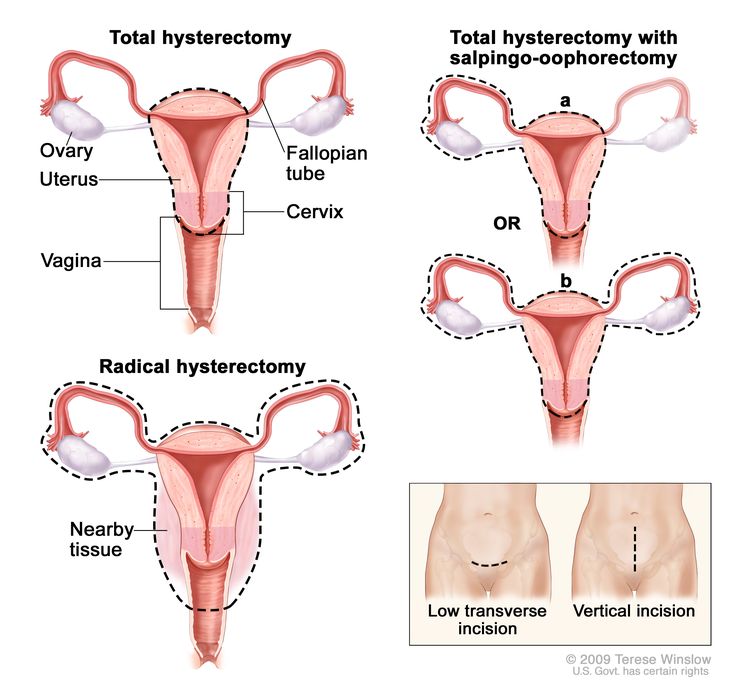
A hysterectomy is surgery to remove the uterus. As a treatment for cervical cancer, the cervix, and sometimes the surrounding structures, are removed. Several types of hysterectomy may be used to treat cervical cancer:

  • Total hysterectomy removes the uterus and the cervix. When the surgery is done entirely through the vagina (with no incisions on the abdomen) and the uterus and cervix are removed through the vagina, the operation is called a total vaginal hysterectomy. If the surgery is done through a large incision on the abdomen (either vertical or horizontal) and the uterus and cervix are removed through this incision, the operation is called a total abdominal hysterectomy. If the surgery is done through small incisions on the abdomen, the operation is called a total laparoscopic hysterectomy. The uterus and cervix are usually taken out through the vagina, although sometimes an abdominal incision is made to remove the uterus and cervix.
    EnlargeHysterectomy; drawing shows the female reproductive anatomy, including the ovaries, uterus, vagina, fallopian tubes, and cervix. Dotted lines show which organs and tissues are removed in a total hysterectomy, a total hysterectomy with salpingo-oophorectomy, and a radical hysterectomy. An inset shows the location of two possible incisions on the abdomen: a low transverse incision is just above the pubic area and a vertical incision is between the navel and the pubic area.
    Hysterectomy. The uterus is surgically removed with or without other organs or tissues. In a total hysterectomy, the uterus and cervix are removed. In a total hysterectomy with salpingo-oophorectomy, (a) the uterus plus one (unilateral) ovary and fallopian tube are removed; or (b) the uterus plus both (bilateral) ovaries and fallopian tubes are removed. In a radical hysterectomy, the uterus, cervix, both ovaries, both fallopian tubes, and nearby tissue are removed. These procedures are done using a low transverse incision or a vertical incision.
  • Radical hysterectomy removes the uterus, cervix, part of the vagina, and a wide area of ligaments and tissues around these organs. The ovaries, fallopian tubes, or nearby lymph nodes may also be removed.
  • Modified radical hysterectomy removes the uterus, cervix, upper part of the vagina, and ligaments and tissues that closely surround these organs. This type of surgery removes fewer tissues and/or organs than radical hysterectomy. The ovaries, fallopian tubes, or nearby lymph nodes may also be removed.

Radical trachelectomy

Radical trachelectomy (also called radical cervicectomy) removes the cervix, nearby tissue, and the upper part of the vagina. Lymph nodes may also be removed. After the surgeon removes the cervix, they attach the uterus to the remaining part of the vagina. A special stitch or band is placed on the uterus (in a procedure called a cerclage) to help keep the uterus closed during pregnancy. If you have this surgery, you may still be able to become pregnant.

Bilateral salpingo-oophorectomy

Bilateral salpingo-oophorectomy removes both ovaries and both fallopian tubes. This is done when the cancer has spread to these organs.

Total pelvic exenteration

Total pelvic exenteration removes the lower colon, rectum, and bladder. The cervix, vagina, ovaries, and nearby lymph nodes are also removed. Artificial openings (stoma) are made for urine and stool to flow from the body to a collection bag. Plastic surgery may be needed to make an artificial vagina after this operation.

Radiation therapy

Radiation therapy uses high-energy x-rays or other types of radiation to kill cancer cells or keep them from growing by damaging their DNA. The two main types of radiation therapy are external radiation therapy and internal radiation therapy (also called brachytherapy).

Both external and internal radiation therapy are used to treat cervical cancer and may also be used as palliative therapy to relieve symptoms and improve quality of life in people with advanced cervical cancer.

External radiation therapy

External beam radiation therapy uses a machine outside the body to send radiation toward the area of the body with cancer. Intensity-modulated radiation therapy (IMRT) is a way of giving external radiation therapy that can help keep radiation from damaging nearby healthy tissue.

IMRT is a type of 3-dimensional (3-D) radiation therapy that uses a computer to make pictures of the size and shape of the tumor. Thin beams of radiation of different intensities (strengths) are aimed directly at the tumor from many angles. IMRT is being studied for the treatment of cervical cancer.

Learn more about External Beam Radiation Therapy for Cancer.

Internal radiation therapy

Internal radiation therapy uses a radioactive substance sealed in needles, seeds, wires, or catheters that are placed directly into or near the cancer. Internal radiation therapy is also called brachytherapy.

Learn more about Brachytherapy to Treat Cancer.

Chemotherapy

Chemotherapy (also called chemo) uses drugs to stop the growth of cancer cells, either by killing the cells or by stopping them from dividing. Chemotherapy may be given alone or with other types of treatment.

Chemotherapy drugs used to treat cervical cancer include:

Combinations of these drugs may be used. Other chemotherapy drugs not listed here may also be used.

Learn more about how chemotherapy works against cancer, how it is given, common side effects, and more in Chemotherapy to Treat Cancer.

Targeted therapy

Targeted therapy uses drugs or other substances to block the action of specific enzymes, proteins, or other molecules involved in the growth and spread of cancer cells.

Targeted therapies used to treat cervical cancer include:

Learn more about how targeted therapy works against cancer, how it is given, possible side effects, and more in Targeted Therapy to Treat Cancer.

Immunotherapy

Immunotherapy helps a person’s immune system fight cancer. Biomarker tests can be used to help predict your response to certain immunotherapy drugs. Learn more about Biomarker Testing for Cancer Treatment.

Pembrolizumab is an immunotherapy drug used to treat certain patients whose cervical cancer has the biomarker PD-L1.

Learn more about how immunotherapy works against cancer, how it is given, possible side effects, and more in Immunotherapy to Treat Cancer.

Clinical trials

For some people, joining a clinical trial may be an option. There are different types of clinical trials for people with cancer. For example, a treatment trial tests new treatments or new ways of using current treatments. Supportive care and palliative care trials look at ways to improve quality of life, especially for those who have side effects from cancer and its treatment.

You can use the clinical trial search to find NCI-supported cancer clinical trials accepting participants. The search allows you to filter trials based on the type of cancer, your age, and where the trials are being done. Clinical trials supported by other organizations can be found on the ClinicalTrials.gov website.

Learn more about clinical trials, including how to find and join one, at Clinical Trials Information for Patients and Caregivers.

Follow-up care during and after treatment

As you go through treatment, you will have follow-up tests or checkups. Some of the tests that were done to diagnose cervical cancer or to find out the stage of the cancer may be repeated to see how well the treatment is working. Decisions about whether to continue, change, or stop treatment may be based on the results of these tests.

Some of the tests will continue to be done from time to time after treatment has ended. The results of these tests can show if your condition has changed or if the cancer has recurred (come back).

Tell your doctor if you have any of the following signs or symptoms, which may mean the cancer has come back:

  • vaginal bleeding or discharge
  • pain in the abdomen, back, or leg
  • swelling in the leg
  • trouble urinating
  • change in your bowel movements
  • cough
  • feeling tired

For cervical cancer, follow-up tests are usually done every 3 to 4 months for the first 2 years, followed by checkups every 6 months. The checkup includes a current health history and exam of the body to check for signs and symptoms of recurrent cervical cancer and for late effects of treatment. A Pap test may or may not be done during your visits.

Learn more about what to expect when treatment ends.

Cervical Cancer Treatment by Stage

Cervical Cancer Treatment by Stage

The cancer stage (the extent of cancer in the body) is an important factor in deciding the best treatment for cervical cancer. Other factors, such as your preferences and overall health, are also important.

An important factor for some women is fertility preservation. If you would like to retain the ability to become pregnant, ask your doctor about fertility-sparing treatment options (treatments for cervical cancer that preserve the uterus and ovaries). Such treatments may be an option for some small cancers that are only in the cervix. If your cancer is more advanced or has a high chance of coming back, you are more likely to have treatments that will prevent you from becoming pregnant. A reproductive endocrinologist can help you understand your options for becoming a parent, such as freezing eggs. To learn more about fertility preservation options and ways to find support, visit Fertility Issues in Girls and Women with Cancer.

For some people, taking part in a clinical trial may be an option. Clinical trials of new cancer drugs or treatment combinations may be available. Learn more about clinical trials, including how to find and join a trial at Clinical Trials Information for Patients and Caregivers.

Treatment of stage IA cervical cancer

Stage IA cervical cancer is separated into stage IA1 and IA2.

Treatment of stage IA1 cervical cancer may include:

Treatment of stage IA2 cervical cancer may include:

To learn more about these treatments, visit Cervical Cancer Treatment.

Treatment of stages IB and IIA cervical cancer

Treatment of stage IB and stage IIA cervical cancer may include:

When radiation is used, it may be given as external radiation therapy only or as a combination of external and internal radiation therapy. Chemotherapy drugs, such as cisplatin or carboplatin, may be given at the same time as radiation therapy. Giving chemotherapy at the same time as radiation therapy helps the radiation therapy work better.

To learn more about these treatments, visit Cervical Cancer Treatment.

Treatment of stages IIB, III, and IVA cervical cancer

Treatment of stage IIB, stage III, and stage IVA cervical cancer may include:

Most people with stage IIB, III, or IVA cervical cancer will receive a combination of external and internal radiation therapy. Chemotherapy drugs, such as cisplatin or carboplatin, may be given at the same time as radiation therapy. Giving chemotherapy at the same time as radiation therapy helps the radiation therapy work better.

Learn more about these treatments at Cervical Cancer Treatment.

Treatment of stage IVB and recurrent cervical cancer

Treatment of stage IVB and cervical cancer that has recurred (come back) may include:

  • The immunotherapy drug pembrolizumab given alone or with other treatments, such as chemotherapy and the targeted therapy drug bevacizumab.
  • Radiation therapy and chemotherapy given at the same time, for cancer that has come back in the pelvis. Radiation may be given as external radiation therapy only or as a combination of external and internal radiation therapy. Many different chemotherapy drugs are used to treat recurrent cervical cancer, including cisplatin, carboplatin, ifosfamide, irinotecan, gemcitabine, paclitaxel, topotecan, and vinorelbine. These drugs may be given alone or in combination. Giving chemotherapy at the same time as radiation therapy helps the radiation therapy work better.
  • Chemotherapy and bevacizumab as palliative therapy. Many different chemotherapy drugs are used as palliative therapy for recurrent cervical cancer, including cisplatin, carboplatin, ifosfamide, irinotecan, gemcitabine, paclitaxel, topotecan, and vinorelbine. These drugs may be given alone or in combination.

    Palliative therapy is treatment meant to improve the quality of life of people who have a serious or life-threatening disease, such as cancer. Many of the same treatments for cancer, such as chemotherapy or other kinds of drugs and radiation therapy, can also be used for palliative therapy to help a patient feel more comfortable. Learn more about Palliative Care in Cancer.

  • Pelvic exenteration, for certain people who cannot have radiation therapy. The goal of pelvic exenteration is to cure the cancer by removing it from all the organs to which it has spread.

To learn more about these treatments, visit Cervical Cancer Treatment.

Cervical Cancer Treatment during Pregnancy

Cervical Cancer Treatment during Pregnancy

Cervical cancer during pregnancy is rare. When it occurs, the cancer is usually found early and confined to the cervix, and it may not need to be treated immediately. But sometimes the cancer is fast-growing or found at a later stage and needs immediate treatment. Before treatment begins, it is important to discuss the benefits and risks of all your treatment options, including how treatment could affect you, your pregnancy, and your future fertility. Your cancer care team will consider your personal wishes when helping you decide the best treatment.

Typically, treatment depends on your trimester of pregnancy.

Treatment of slow-growing stage I cervical cancer in the first trimester

If you have a type of slow-growing cervical cancer that is diagnosed in stage I, are less than 3 months pregnant, and want to continue your pregnancy, your cancer care team might suggest that you delay treatment until later in your pregnancy or after delivery.

Your cancer care team may also suggest you deliver early (around 37 weeks) via cesarean section. You may have a hysterectomy (surgery to remove the uterus and cervix, and sometimes surrounding structures) at the same time as the cesarean section.

To learn more about hysterectomy, see Cervical Cancer Treatment.

Treatment of fast-growing or advanced stage cervical cancer in the first trimester

Tests will be done throughout your pregnancy to find out if the cancer has grown much larger or has spread outside of the cervix. Cervical cancer that is fast-growing or has evidence of spread outside the cervix to other tissues and organs may require immediate treatment, which may include

It is not possible to continue the pregnancy during any of these treatments. Chemotherapy is not safe for the fetus during the first trimester, and radiation therapy is harmful throughout fetal development.

To learn more about these treatments, see Cervical Cancer Treatment.

Treatment of stage I cervical cancer in the second or third trimester

If you are diagnosed with stage I cervical cancer during the second or third trimester of pregnancy, your cancer care team might suggest surgery with cold knife conization or radical trachelectomy.

Cold knife conization uses a scalpel to remove a cone-shaped piece of tissue from the cervix and cervical canal. Cold knife conization is done in the hospital under general anesthesia.

Radical trachelectomy (also called radical cervicectomy) removes the cervix, nearby tissue, and the upper part of the vagina. Lymph nodes may also be removed. After the surgeon removes the cervix, they attach the uterus to the remaining part of the vagina. A special stitch or band is placed on the uterus (in a procedure called a cerclage) to help keep the uterus closed during pregnancy.

Your cancer care team may suggest you deliver early via cesarean section. If all the cancer couldn’t be removed with cold knife conization or radical trachelectomy, you may receive other treatments after delivery, such as hysterectomy and radiation therapy.

To learn more about hysterectomy, see Cervical Cancer Treatment.

Treatment of stage II, III, or IV cervical cancer in the second or third trimester

If you are diagnosed with stage II, III, or IV cervical cancer during the second or third trimester of pregnancy, your cancer care team may suggest you continue the pregnancy and receive chemotherapy.

Chemotherapy, such as with cisplatin or carboplatin and paclitaxel, given in the second or third trimester does not usually harm the fetus but may cause early labor and low birth weight.

Your cancer care team may suggest you deliver early via cesarean section so you can receive other treatments, such as hysterectomy and radiation therapy.

Cervical Cancer Diagnosis

Cervical Cancer Diagnosis

If you have symptoms or screening test results that suggest the possibility of cervical cancer, your doctor will do follow-up tests to find out if it is due to cancer or some other cause. They will usually start by asking about your personal and family medical history and by doing a physical exam, which will include a pelvic exam and rectovaginal exam. They may recommend diagnostic tests to find out if you have cervical cancer, and if so, whether it has spread to another part of the body. The results of these tests will also help you and your doctor plan treatment.

How cervical cancer is diagnosed

The following procedures are used to diagnose cervical cancer:

Colposcopy

Colposcopy is a procedure in which the health care provider inserts a speculum to gently open the vagina and view the cervix. A vinegar solution will be applied to the cervix to help show abnormal areas. The health care provider then places an instrument called a colposcope close to the vagina. It has a bright light and a magnifying lens and allows the health care provider to look closely at the cervix. A colposcopy usually includes a biopsy.

Biopsy

Biopsy is a procedure in which a sample of tissue is removed from the cervix so that a pathologist can view it under a microscope to check for signs of cancer. The following types of biopsies are used to check for cervical cancer:

  • Punch biopsy is a procedure in which a small, round piece of tissue is removed using a sharp, hollow circular instrument. Sometimes several different areas of the cervix will be checked with punch biopsy. This procedure is usually done in the doctor’s office.
  • Endocervical curettage is a procedure to collect cells or tissue from the cervical canal using a curette (spoon-shaped instrument). This procedure removes only a small amount of tissue and is usually done in the doctor’s office.
  • Loop electrosurgical excision procedure (LEEP) uses a thin wire loop, through which an electrical current is passed, to remove tissue from the cervix. LEEP may be used to diagnose cervical cancer. It also may be used to remove precancer or early-stage cancer. This procedure is typically done in a doctor’s office. It usually takes only a few minutes, and local anesthesia is used to numb the area.
  • Cone biopsy is surgery to remove a larger, cone-shaped piece of tissue from the cervix and cervical canal. A cone biopsy may be used to diagnose cervical cancer. It also may be used to remove precancer or early-stage cancer. This procedure is also called conization. A cone biopsy is done at the hospital under general anesthesia.

Talk with your health care provider to learn what to expect during and after your biopsy procedure. Some people have bleeding and/or discharge after a biopsy. Others have pain that feels like cramps during menstruation.

To learn about the type of information that can be found in a pathologist’s report about the cells or tissue removed during a biopsy, see Pathology Reports.

Tests and procedures used to stage cervical cancer

If you are diagnosed with cervical cancer, you will be referred to a gynecologic oncologist. This is a doctor who specializes in staging and treating cervical cancer and other cancers of the female reproductive system. They will recommend tests to determine the extent (stage) of cancer. Sometimes the cancer is only in the cervix. Or, it may have spread from the cervix to other parts of the body. The process of learning the extent of cancer in the body is called staging. It is important to know the stage of the cervical cancer in order to plan the best treatment.

For information about a specific stage of cervical cancer, see Cervical Cancer Stages.

The following procedures may be used to determine the cervical cancer stage:

Imaging tests

  • PET-CT scan combines the pictures from a positron emission tomography (PET) scan and a computed tomography (CT) scan. The PET and CT scans are done at the same time on the same machine. The pictures from both scans are combined to make a more detailed picture than either test would make by itself.
    • For the PET scan, a small amount of radioactive glucose (sugar) is injected into a vein. The scanner rotates around the body and makes a picture of where glucose is being used in the body. Malignant tumor cells show up brighter in the picture because they are more active and take up more glucose than normal cells.
    • For the CT scan, a series of detailed x-ray pictures of areas inside the body is taken from different angles. A dye may be injected into a vein or swallowed to help the organs or tissues show up more clearly.
  • Magnetic resonance imaging (MRI) uses a magnet, radio waves, and a computer to make a series of detailed pictures of areas inside the body. This procedure is also called nuclear magnetic resonance imaging.
  • Ultrasound uses high-energy sound waves (ultrasound), which bounce off internal tissues or organs and make echoes. The echoes form a picture of body tissues called a sonogram.
  • Chest x-ray is an x-ray of the organs and bones inside the chest. An x-ray is a type of high-energy radiation that can go through the body and onto film, making a picture of areas inside the chest.

Lab tests

  • Complete blood count (CBC) is a blood test that measures the following in a sample of blood:
    • the number of red blood cells, white blood cells, and platelets
    • the amount of hemoglobin (the protein that carries oxygen) in the red blood cells
    • the portion of the blood sample made up of red blood cells
  • Blood chemistry study is a blood test that measures the amounts of certain substances released into the blood by organs and tissues in the body, including electrolytes, lactate dehydrogenase, uric acid, blood urea nitrogen, creatinine, and liver function values. An unusual (higher or lower than normal) amount of a substance can be a sign of cancer spread or other diseases.

Visual examination

  • Cystoscopy is a procedure to look inside the bladder and urethra to check for abnormal areas. A cystoscope is inserted through the urethra into the bladder. A cystoscope is a thin, tube-like instrument with a light and a lens for viewing. It may also have a tool to remove tissue samples, which are checked under a microscope for signs of cancer.
  • Sigmoidoscopy uses a sigmoidoscope to look inside the rectum and sigmoid (lower) colon for abnormal areas. A sigmoidoscope is inserted through the rectum into the sigmoid colon. A sigmoidoscope is a thin, tube-like instrument with a light and a lens for viewing. It may also have a tool to remove tissue samples, which are checked under a microscope for signs of cancer.

Getting a second opinion

Some people want to get a second opinion to confirm their cervical cancer diagnosis and treatment plan. If you choose to seek a second opinion, you will need to get important medical test results and reports from the first doctor to share with the second doctor. The second doctor will review the pathology report, slides, and scans before giving a recommendation. The doctor who gives the second opinion may agree with your first doctor, suggest changes or another approach, or provide more information about your cancer.

For questions you might want to ask at your appointments, see Questions to Ask Your Doctor.

To learn more about choosing a doctor and getting a second opinion, see Finding Cancer Care. You can also contact NCI’s Cancer Information Service via chat, email, or phone (both in English and Spanish) for help finding a doctor, hospital, or getting a second opinion.

Cervical Cancer Prognosis and Survival Rates

Cervical Cancer Prognosis and Survival Rates

If you have been diagnosed with cervical cancer, you may have questions about how serious the cancer is and your chances of survival. The likely outcome or course of a disease is called prognosis.

The prognosis for cervical cancer depends on many factors:

  • the stage of the cancer (the size of the tumor and whether the cancer has spread beyond the cervix)
  • the type of cervical cancer (adenocarcinoma or squamous cell carcinoma)
  • your age and general health
  • whether you have other health problems or diseases, including if you are immunocompromised or have HIV
  • whether the cancer is newly diagnosed or has recurred (come back)

Survival rates for cervical cancer

Doctors estimate cervical cancer prognosis by using statistics collected over many years from people with cervical cancer. One statistic that is commonly used in making a prognosis is the 5-year relative survival rate. The 5-year relative survival rate tells you what percent of people with the same type and stage of cervical cancer are alive 5 years after their cancer was diagnosed, compared with people in the overall population. For example, the 5-year relative survival rate for cervical cancer diagnosed at an early stage is 91%. This means that people diagnosed with early-stage cervical cancer are 91% as likely as people who do not have cervical cancer to be alive 5 years after diagnosis. The 5-year relative survival rates for cervical cancer are as follows:

  • When cervical cancer is diagnosed at an early stage, the 5-year relative survival rate is 91%.
  • When cervical cancer is diagnosed after it has spread to nearby tissues, organs, or regional lymph nodes, the 5-year relative survival rate is 60%.
  • When cervical cancer is diagnosed after it has spread to a distant part of the body, the 5-year relative survival rate is 19%.
  • The 5-year relative survival rate for all people with cervical cancer is 67%.

Learn more about statistics for cervical cancer, from our Cancer Stat Facts Collection.

Understanding survival rate statistics

Because prognosis statistics are based on large groups of people, they cannot be used to predict exactly what will happen to you. The doctor who knows the most about your situation is in the best position to discuss these statistics and talk with you about your prognosis. It is important to note the following when reviewing survival statistics:

  • No two people are entirely alike, and responses to treatment can vary greatly.
  • Survival statistics use information collected from large groups of people who may have received different types of treatment.
  • It takes several years to see the effect of newer and better treatments, so these effects may not be reflected in current survival statistics.

To learn more about survival statistics and to see videos of patients and their doctors exploring their feelings about prognosis, see Understanding Cancer Prognosis.

HPV and Pap Test Results: Next Steps after an Abnormal Cervical Cancer Screening Test

HPV and Pap Test Results: Next Steps after an Abnormal Cervical Cancer Screening Test

People who have cervical cancer screening at regular intervals are rarely found to have cancer. Most people who receive abnormal cervical cancer screening results either have human papillomavirus (HPV) infections or have early cell changes that can be monitored (since they often go away on their own) or treated early (to prevent the development of cervical cancer).

See Cervical Cancer Screening for information about when to get screened and what to expect during the tests.

HPV test results: What positive and negative results on a screening test mean

HPV test results show whether high-risk HPV types were found in cervical cells. An HPV test will come back as a negative test result or a positive test result.

  • Negative HPV test result: High-risk HPV was not found. You should have the next test in 5 years. You may need to come back sooner if you had abnormal results in the past.
  • Positive HPV test result: High-risk HPV was found. Your health care provider will recommend follow-up steps you need to take, based on your specific test result.

What does it mean if you have a positive HPV test after years of negative tests?

Sometimes, after several negative HPV tests, a woman may have a positive HPV test result. This is not necessarily a sign of a new HPV infection. Sometimes an HPV infection can become active again after many years. Some other viruses behave this way. For example, the virus that causes chickenpox can reactivate later in life to cause shingles.

Researchers don’t know whether a reactivated HPV infection has the same risk of causing cervical cell changes or cervical cancer as a new HPV infection.

Pap test results: What normal, abnormal, and unsatisfactory screening test results mean

Pap test results show whether cervical cells are normal or abnormal. A Pap test may also come back as unsatisfactory.

Normal Pap test results: No abnormal cervical cells were found. A normal test result may also be called a negative test result or negative for intraepithelial lesion (area of abnormal growth) or malignancy.

Unsatisfactory Pap test results: The lab sample may not have had enough cells, or the cells may have been clumped together or hidden by blood or mucus. Your health care provider will ask you to come in for another Pap test in 2 to 4 months.

Abnormal Pap test results: An abnormal test result may also be called a positive test result. Some of the cells of the cervix look different from the normal cells. An abnormal test result does not mean you have cancer. Your health care provider will recommend monitoring, more testing, or treatment.

Abnormal Pap test results include

  • Atypical squamous cells of undetermined significance (ASC-US): This is the most common abnormal Pap test finding. It means that some cells don’t look completely normal, but it’s not clear if the changes are caused by HPV infection. Other things can cause cells to look abnormal, including irritation, some infections (such as a yeast infection), growths (such as polyps in the uterus), and changes in hormones that occur during pregnancy or menopause. Although these things may make cervical cells look abnormal, they are not related to cancer. Your health care provider will usually do an HPV test to see if the changes may be caused by an HPV infection. If the HPV test is negative, estrogen cream may be prescribed to see if the cell changes are caused by low hormone levels. If the HPV test is positive, you may need additional follow-up tests.
  • Atypical glandular cells (AGC): Some glandular cells were found that do not look normal. This can be a sign of a more serious problem up inside the uterus, so your health care provider will likely ask you to come back for a colposcopy.
  • Low-grade squamous intraepithelial lesions (LSIL): There are low-grade changes that are usually caused by an HPV infection. Your health care provider will likely ask you to come back for additional testing to make sure that there are not more serious (high-grade) changes.
  • Atypical squamous cells, cannot exclude high-grade squamous intraepithelial lesion (ASC-H): Some abnormal squamous cells were found that may be a high-grade squamous intraepithelial lesion (HSIL), although it’s not certain. Your health care provider will likely ask you to come back for a colposcopy.
  • High-grade squamous intraepithelial lesions (HSIL): There are moderately or severely abnormal cervical cells that could become cancer in the future if not treated. Your health care provider will likely ask you to come back for a colposcopy.
  • Adenocarcinoma in situ (AIS): An advanced lesion (area of abnormal growth) was found in the glandular tissue of the cervix. AIS lesions may be referred to as precancer and may become cancer (cervical adenocarcinoma) if not treated. Your health care provider will likely ask you to come back for a colposcopy.
  • Cervical cancer cells (squamous cell carcinoma or adenocarcinoma): Cancer cells were found; this finding is very rare for people who have been screened at regular intervals. If a biopsy shows that cervical cancer is present, your doctor will order certain tests to find out if cancer cells have spread within the cervix or to other parts of the body. See the Cervical Cancer Diagnosis page for information about tests that may be used to diagnose and stage cervical cancer.
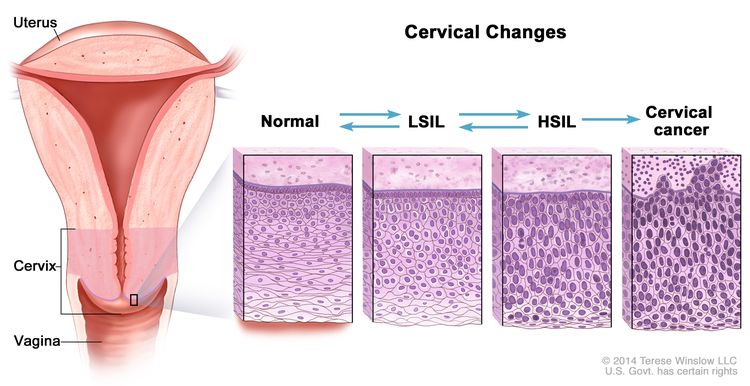
    EnlargeCervical changes; drawing shows a cross-section of the uterus, cervix, and vagina. Also shown are four panels showing cell changes inside the cervix. The first panel shows normal cells. The second and third panels show abnormal cells called LSIL and HSIL. The fourth panel shows cervical cancer cells. Arrows are used between the panels to show that normal cells may become LSIL or HSIL, which may or may not become cancer.
    Cervical changes. The cervix is the lower, narrow end of the uterus that forms a canal between the uterus and vagina. Before cancer cells form in tissues of the cervix, the cells of the cervix go through abnormal changes called dysplasia. There are different types of dysplasia. Mild dysplasia, called low-grade intraepithelial lesion (LSIL) is one type. Moderate or severe dysplasia, called high-grade intraepithelial lesion (HSIL) is another type of dysplasia. LSIL and HSIL may or may not become cancer.

Follow-up tests and procedures after an abnormal Pap test (Pap smear) or HPV test

Keep in mind that most people with abnormal cervical screening test results do not have cancer. However, if you have an abnormal test result, it’s important to get the follow-up care that your health care provider recommends.

Until recently, follow-up recommendations were based on the results of a person’s most recent cervical screening test. However, updated ASCCP risk-based management consensus guidelines advise a more tailored approach to follow-up care.

What these updated guidelines mean is that, in addition to your current Pap, HPV, or cotest screening result, your health care provider will consider additional factors when recommending follow-up care, including

  • previous screening test results
  • previous treatments for precancerous cervical cell changes
  • personal health factors, such as your age

Based on your individual risk of developing severe cervical cell changes that could become cervical cancer, you may be advised to

These updated guidelines focus on detecting and treating severe cervical cell changes that could develop into cervical cancer while also decreasing testing and treatment for less severe conditions (low-grade cervical cell changes).

Colposcopy

During a colposcopy, your doctor inserts a speculum to gently open the vagina and see the cervix. A vinegar solution is applied to the cervix to help show abnormal areas. Your doctor then places an instrument called a colposcope close to the vagina. It has a bright light and a magnifying lens and allows your doctor to look closely at your vagina and cervix for abnormal areas.

A colposcopy usually includes a biopsy, so that the cells or tissues can be checked under a microscope for signs of disease, including cervical cancer.

Cervical biopsy

A biopsy is a procedure used to remove cervical cells or tissue to be checked under a microscope for abnormal cervical cells, including cancer. In addition to removing a sample for further testing, some types of biopsies may be used as treatment, to remove abnormal cervical tissue or lesions.

Talk with your doctor to learn what to expect during and after your biopsy procedure. Bleeding and/or discharge after a biopsy may occur. Some people have pain that feels like cramps during menstruation.

Biopsy findings: cervical intraepithelial neoplasia (CIN)

Biopsy samples are checked by a pathologist for CIN. CIN is the term used to describe abnormal cervical cells that were found on the surface of the cervix after a biopsy.

CIN is graded on a scale of 1 to 3, based on how abnormal the cells look under a microscope and how much of the cervical tissue is affected. LSIL changes seen on a Pap test are generally CIN 1. HSIL changes seen on a Pap test can be CIN 2, CIN2/3, or CIN 3.

  • CIN 1 changes are mild, or low grade. They usually go away on their own and do not require treatment.
  • CIN 2 changes are moderate and are typically treated by removing the abnormal cells. However, CIN 2 can sometimes go away on its own. Some people, after consulting with their health care provider, may decide to have a colposcopy with biopsy every 6 months. CIN 2 must be treated if it progresses to CIN 3 or does not go away in 1 to 2 years.
  • CIN 3 changes are severely abnormal. Although CIN 3 is not cancer, it may become cancer and spread to nearby normal tissue if not treated. Doctors do not yet have a way to tell which cases of CIN 3 will become cancer and which will not. CIN 3 should be treated right away, unless you are pregnant. See Pregnancy and Treatment for High-Grade Cervical Cell Changes for more information.

Treatment for high-grade cervical cell changes

The goal of treating high-grade cervical cell changes is to remove or destroy abnormal cervical cells that have a high chance of becoming cancer. Some of these treatments are also used for early-stage cervical cancer.

The most common treatment for high-grade cervical cell changes is conization, the removal of a cone-shaped piece of tissue from the cervix and cervical canal. There are two types of conization.

  • Loop electrosurgical excision procedure (LEEP) uses a thin wire loop, through which an electrical current is passed, to remove abnormal tissue. This procedure is typically done in a doctor’s office. It usually takes only a few minutes, and local anesthesia is used to numb the area.
  • Cold knife conization uses a scalpel to remove the abnormal tissue. This procedure is done at the hospital under general anesthesia.

Several other treatments may also be used.

  • Laser therapy uses a laser (narrow beam of intense light) to remove or destroy abnormal tissue. This is an outpatient procedure that may be done under local or general anesthesia.
  • Cryotherapy uses a special cold probe to destroy abnormal tissue by freezing it. This procedure is done at a doctor’s office. It takes only a few minutes and usually does not require anesthesia.
  • Total hysterectomy is the surgical removal of the uterus and cervix. It is often used to treat AIS. It is used to treat CIN3 only if the abnormal cells were not completely removed by other treatments.

Pregnancy and treatment for high-grade cervical cell changes

Rarely, procedures to treat cervical cell abnormalities can weaken the cervix, increasing the risk of premature birth or miscarriage.

If you are pregnant or plan to become pregnant, your health care provider will talk with you about procedures that are recommended for you and the timing of these procedures. Depending on your specific diagnosis, you may be treated postpartum, or after delivery.

For a downloadable booklet about cervical cancer screening, see Understanding Cervical Changes: A Health Guide.

Cervical Cancer Causes, Risk Factors, and Prevention

Cervical Cancer Causes, Risk Factors, and Prevention

HPV infection causes cervical cancer

Long-lasting (persistent) infection with high-risk types of human papillomavirus (HPV) causes virtually all cervical cancers. Two high-risk types, HPV 16 and HPV 18, cause 70% of cervical cancers worldwide.

Nearly all people who are sexually active will become infected with HPV at some point in their lives. Most HPV infections go away on their own within a year or two as the immune system controls the infection. These short-term infections do not cause cancer. When a high-risk HPV infection lasts for years, it can lead to changes in the cervical cells, resulting in a precancerous lesion. If the precancerous lesion is not found and removed, it may eventually develop into cervical cancer.

People who become sexually active at a young age, especially before age 18, or have multiple sexual partners are more likely to become infected with a high-risk type of HPV.

To learn more about how HPV causes cervical and other cancers, see HPV and Cancer.

Factors that increase the risk that an HPV infection will cause cancer

Some risk factors make it more likely for a person who has a high-risk HPV infection of the cervix to develop cervical cancer. These risk factors include:

  • Having a weakened immune system. This can lower the body’s ability to fight an HPV infection. HPV infections are more likely to be persistent and progress to cancer in people who are immunocompromised than in people who are not immunocompromised. You may be immunocompromised if you:
  • Smoking or breathing in secondhand smoke. People who smoke or breathe in secondhand smoke have an increased risk of developing cervical cancer. The risk increases the more a person smokes or is exposed to secondhand smoke.

    Learn about different tools to help you quit smoking and how to use them.

  • Reproductive factors. Both the use of oral contraceptives (birth control pills) and giving birth to many children are associated with an increased risk of cervical cancer. The reasons for these associations are not well understood.
  • Obesity. Cervical cancer screening may be more difficult in those with obesity, leading to lower detection of precancers and a higher risk of cancer.

DES exposure is a rare cause of cervical cancer

Being exposed to a drug called diethylstilbestrol (DES) in the womb is an independent risk factor for a type of cervical cancer called clear cell adenocarcinoma. Between 1940 and 1971, DES was given to some pregnant women in the United States to prevent miscarriage (premature birth of a fetus that cannot survive) and early labor. Women whose mothers took DES while pregnant have an increased risk of cervical cell abnormalities and of clear cell adenocarcinoma of the vagina and cervix.

To learn more, see Diethylstilbestrol (DES) Exposure and Cancer.

Cervical cancer is preventable

Cervical cancer is highly preventable and highly curable if caught early. Nearly all cervical cancers could be prevented by HPV vaccination, routine cervical cancer screening, and appropriate follow-up treatment when needed.

HPV vaccination

HPV vaccination is a safe and effective way to help prevent cervical cancer. Gardasil 9 is the FDA-approved vaccine for females and males aged 9 to 45 in the United States. Gardasil 9 is approved to prevent precancers and cancers caused by seven cancer-causing HPV types (16, 18, 31, 33, 45, 52, and 58) and to prevent genital warts caused by HPV types 6 and 11. The HPV vaccine does not treat an existing HPV infection.

Timing of HPV vaccination

The HPV vaccine offers the most protection when given before a person becomes sexually active. Those who are already sexually active may benefit less from the vaccine. This is because sexually active people may have been exposed to some of the HPV types the vaccine targets.

The Centers for Disease Control and Prevention (CDC) recommends routine HPV vaccination for girls and boys at age 11 or 12, and the vaccine can be given starting at age 9. For young people who weren’t vaccinated within the age recommendations, HPV vaccination is recommended up to age 26. Some adults between the ages of 27 and 45 who are not already vaccinated may decide to get the HPV vaccine after talking with their doctor about their risk of new HPV infections.

The HPV vaccine is given as a series of two or three doses, depending on age. CDC recommends that children who start the vaccine series before age 15 receive two doses. For people who receive the first dose on or after their 15th birthday, and for people with certain immunocompromising conditions, CDC recommends getting three doses.

Learn more about HPV vaccines.

Cervical cancer screening

Because HPV vaccination doesn’t protect against all HPV types that can cause cervical cancer, getting screened at regular intervals is still important.

Two widely used screening tests are HPV tests and cytology tests (also known as Pap test or Pap smear). These tests can find high-risk HPV infections and abnormal cell changes and precancers that can be treated before they turn into cancer. So it is important for people with a cervix to have regular screening tests starting in their 20s. Learn more about screening with the HPV test and Pap test.

For cervical cancer screening to be effective, people need to get timely screening and follow up of abnormal test results. Because of social, environmental, and economic disadvantages, certain groups may have difficulty accessing health care and, as a result, bear a disproportionate burden of cervical cancer. Learn about cancer disparities.

Learn more about screening with the HPV test and Pap test, including help finding screening services near you.

Condoms

Condoms, which prevent some sexually transmitted diseases, can decrease the risk of HPV transmission. However, they do not completely prevent it. Therefore, exposure to HPV is still possible in areas that are not covered by the condom.

Cervical Cancer Screening

Cervical Cancer Screening

Screening means checking for a disease before there are symptoms. Cervical cancer screening is an important part of routine health care for people who have a cervix.

What is cervical cancer screening?

The goal of screening for cervical cancer is to find precancerous cervical cell changes, when treatment can prevent cervical cancer from developing. Sometimes, cancer is found during cervical screening. Cervical cancer found at an early stage is usually easier to treat. By the time symptoms appear, cervical cancer may have begun to spread, making treatment more difficult.

There are three main ways to screen for cervical cancer:

  • The human papillomavirus (HPV) test checks cells for infection with high-risk HPV types that can cause cervical cancer.
  • The Pap test (also called a Pap smear or cervical cytology) collects cervical cells so they can be checked for changes caused by HPV that may—if left untreated—turn into cervical cancer. It can find precancerous cells and cervical cancer cells. A Pap test also sometimes finds conditions that are not cancer, such as infection or inflammation.
  • The HPV/Pap cotest uses an HPV test and Pap test together to check for both high-risk HPV and cervical cell changes.

When to get screened for cervical cancer

Cervical screening recommendations are developed by several organizations, including the United States Preventive Services Task Force (USPSTF) and the American Cancer Society (ACS). How often you should be screened for cervical cancer and which tests you should get will depend on your age and health history. Because HPV vaccination does not prevent infection with all high-risk HPV types, vaccinated people who have a cervix should follow cervical cancer screening recommendations.

Age 21-29 years

If you are in this age group, USPSTF recommends getting your first Pap test at age 21, followed by Pap testing every 3 years. Even if you are sexually active, you do not need a Pap test before age 21.

Age 30-65 years

If you are in this age group, USPSTF recommends getting screened for cervical cancer using one of the following methods:

  • HPV test every 5 years
  • HPV/Pap cotest every 5 years
  • Pap test every 3 years

Updated cervical cancer screening guidelines from ACS recommend starting screening at age 25 with an HPV test and having HPV testing every 5 years through age 65. However, testing with an HPV/Pap cotest every 5 years or with a Pap test every 3 years is still acceptable. To read about the reasons for updates to the guidelines, visit ACS’s Updated Cervical Cancer Screening Guidelines Explained.

Older than 65 years

If you are in this age group, talk with your health care provider to learn if screening is still needed. If you have been screened regularly and had normal test results, your health care provider will probably advise you that you no longer need screening. However, if your recent test results were abnormal or you have not been screened regularly, you may need to continue screening beyond age 65.

Exceptions to the cervical cancer screening guidelines

Your health care provider may recommend more frequent screening if:

  • you are HIV positive
  • you have a weakened immune system
  • you were exposed before birth to a medicine called diethylstilbestrol (DES), which was prescribed to some pregnant women through the mid 1970s
  • you had a recent abnormal cervical screening test or biopsy result
  • you have had cervical cancer

If you’ve had an operation to remove both the uterus and cervix (called a total hysterectomy) for reasons not related to cancer or abnormal cervical cells you do not need to be screened for cervical cancer. However, if your hysterectomy was related to cervical cancer or precancer, talk with your health care provider to learn what follow-up care you need. If you’ve had an operation to remove the uterus but not the cervix (sometimes called a partial or supracervical hysterectomy) you should continue routine cervical cancer screening.

Where to get screened for cervical cancer

Doctors’ offices, clinics, and community health centers offer HPV and Pap tests. Many people receive these tests from their ob/gyn (obstetrics/gynecology) or primary care provider.

If you don’t have a primary care provider or doctor you see regularly, you can find a clinic near you that offers cervical cancer screening by contacting:

Cervical screening test results usually come back from the lab in about 1–3 weeks. If you don’t hear from your health care provider, call and ask for your test results. Make sure you understand any follow-up visits or tests you may need.

What to expect during a cervical cancer screening test

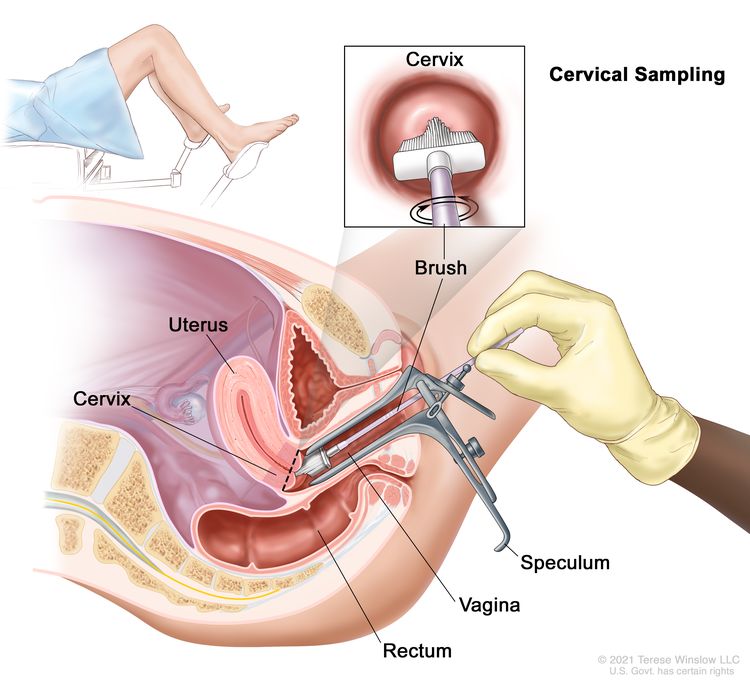
Cervical cancer screening tests are usually done during a pelvic exam, which takes only a few minutes. During the exam, you lie on your back on an exam table, bend your knees, and put your feet into supports at the end of the table. The health care provider uses a speculum to gently open your vagina to see the cervix. A soft, narrow brush or tiny spatula is used to collect a small sample of cells from your cervix. You may have the option to self-collect the cervical sample during your appointment. If you’re interested in this option, talk with your health care provider to learn more.

EnlargeCervical sampling; drawing shows a side view of the female reproductive anatomy. A speculum is shown widening the opening of the vagina. Also shown is a provider's gloved hand inserting a brush into the open vagina to collect cells from the cervix. The brush is touching the cervix at the base of the uterus. The rectum is also shown. One inset shows the brush touching the center of the cervix. A second inset shows a woman covered by a drape on an exam table with her legs apart and her feet in stirrups.
Cervical sampling. A speculum is inserted into the vagina to widen it. Then, a brush is inserted into the vagina to collect cells from the cervix.

The sample is then sent to a lab, where the cells can be checked to see if they are infected with the types of HPV that cause cancer (an HPV test). The same sample can be checked for abnormal cells (a Pap test). When both an HPV test and a Pap test are done on the same sample, this is called an HPV/Pap cotest.

A pelvic exam may include more than taking samples for an HPV and/or Pap test. Your health care provider may also check the size, shape, and position of the uterus and ovaries and feel for any lumps or cysts. The rectum may also be checked for lumps or abnormal areas. You may talk with your health care provider about being tested for sexually transmitted infections.

Most health care providers will tell you what to expect at each step of the exam, so you will be at ease.

Researchers have found that cervical cancer screening may be less effective for people with obesity, possibly because of challenges in visualizing the cervix and obtaining a cell sample. Approaches to improve cervical visualization, including the use of larger speculum, may be helpful.

Does cervical cancer screening have any risks?

Cervical cancer screening saves lives. Very few people screened for cervical cancer at routine intervals develop cervical cancer. Screening can detect cervical changes early, lowering a person’s chance of dying from cervical cancer. Despite these benefits, cervical screening is not perfect, and there are several possible harms to be aware of. Before having any screening test, you may want to discuss the test with your doctor.

Potential risks of harm from cervical cancer screening include:

  • Unnecessary follow-up tests and treatment: Finding a condition through screening that would not have caused problems may lead to unnecessary follow-up tests and possibly treatment. The current recommended screening intervals and tests reduce the chance of finding and treating cervical cell abnormalities that would have gone away on their own.
  • False-positive test results: Screening test results may sometimes appear abnormal even though no precancer or cancer is present. When a Pap test shows a false-positive result (one that shows there is precancer or cancer when there isn’t), it can cause anxiety and is usually followed by more tests and procedures (such as colposcopy, cryotherapy, or loop electrosurgical excision procedure), which also have harms.
  • False-negative test results: Screening test results may appear normal even though cervical precancer or cancer is present. A person who receives a false-negative test result (one that shows there is no cancer when there is) may delay seeking medical care even if there are symptoms.

For a downloadable booklet about cervical cancer screening, visit Understanding Cervical Changes: A Health Guide.