Penile Cancer—Patient Version

Penile Cancer—Patient Version

Overview

Penile cancer usually forms on or under the foreskin. Human papillomavirus (HPV) causes about one-third of penile cancer cases. When found early, penile cancer is usually curable. Explore the links on this page to learn more about penile cancer treatment and clinical trials.

Treatment

Causes & Prevention

NCI does not have PDQ evidence-based information about prevention of penile cancer.

Screening

NCI does not have PDQ evidence-based information about screening for penile cancer.

Coping with Cancer

The information in this section is meant to help you cope with the many issues and concerns that occur when you have cancer.

Emotions and Cancer Adjusting to Cancer Support for Caregivers Survivorship Advanced Cancer Managing Cancer Care

Penile Cancer—Health Professional Version

Penile Cancer—Health Professional Version

Treatment

Causes & Prevention

NCI does not have PDQ evidence-based information about prevention of penile cancer.

Screening

NCI does not have PDQ evidence-based information about screening for penile cancer.

Supportive & Palliative Care

We offer evidence-based supportive and palliative care information for health professionals on the assessment and management of cancer-related symptoms and conditions.

Cancer Pain Nausea and Vomiting Nutrition in Cancer Care Transition to End-of-Life Care Last Days of Life View all Supportive and Palliative Care Summaries

Parathyroid Cancer—Health Professional Version

Parathyroid Cancer—Health Professional Version

Treatment

PDQ Treatment Information for Health Professionals

Causes & Prevention

NCI does not have PDQ evidence-based information about prevention of parathyroid cancer.

Screening

NCI does not have PDQ evidence-based information about screening for parathyroid cancer.

Supportive & Palliative Care

We offer evidence-based supportive and palliative care information for health professionals on the assessment and management of cancer-related symptoms and conditions.

Cancer Pain Nausea and Vomiting Nutrition in Cancer Care Transition to End-of-Life Care Last Days of Life View all Supportive and Palliative Care Summaries

Parathyroid Cancer Treatment (PDQ®)–Health Professional Version

Parathyroid Cancer Treatment (PDQ®)–Health Professional Version

General Information About Parathyroid Cancer

Incidence

Parathyroid adenomas represent a common endocrine problem, whereas parathyroid carcinomas are very rare tumors. With an estimated incidence of 0.015 per 100,000 population and an estimated prevalence of 0.005% in the United States, parathyroid cancer is one of the rarest of all human cancers.[1,2] In Europe, the United States, and Japan, parathyroid carcinoma has been estimated to cause hyperparathyroidism (HPT) in 0.017% to 5.2% of cases; however, many series report this entity to account for less than 1% of patients with primary HPT.[1,35] The median age in most series is between 45 and 51 years.[1] The ratio of affected women to men is 1:1 in contrast to primary HPT in which there is a significant female predominance (ratio of 3–4:1).[5]

Anatomy and Histopathology

Operatively, parathyroid cancers may be distinguished from adenomas by their firm, stony-hard consistency and lobulation; adenomas tend to be soft, round, or oval in shape, and of a reddish-brown color.[5] In most series, the median maximal diameter of parathyroid carcinoma is between 3.0 cm and 3.5 cm compared with approximately 1.5 cm for benign adenomas.[1] In approximately 50% of patients, the malignant tumor is surrounded by a dense, fibrous, grayish-white capsule that infiltrates adjacent tissues.[5]

Histopathologically, as with other endocrine neoplasms, it is difficult to make the distinction between benign and malignant parathyroid tumors.[1,5,6] The extent to which capsular and vascular invasion appears to be unequivocally correlated with tumor recurrences and metastases makes a strong case for these findings to be considered the sole pathognomonic markers of malignancy.[6,7]

Risk Factors

The etiology of parathyroid carcinoma is unknown. However, an increased risk of parathyroid cancer has been associated with multiple endocrine neoplasia type 1 and with autosomal dominant familial isolated hyperparathyroidism.[810] Parathyroid cancer has also been associated with external radiation exposure; however, most reports describe an association between radiation and the more common parathyroid adenoma.[1,5]

Clinical Factors

Parathyroid cancer typically runs an indolent, albeit tenacious, course because the tumor has a rather low malignant potential. At initial presentation, few patients with parathyroid carcinoma have metastases either to regional lymph nodes (<5%) or distant sites (<2%).[1] In a National Cancer Database series of 286 patients, only 16 (5.6%) had lymph node metastases noted at the time of initial surgery.[2] A higher proportion of parathyroid cancers locally invade the thyroid gland, overlying strap muscles, recurrent laryngeal nerve, trachea, or esophagus. Some patients are not identified preoperatively or intraoperatively as having parathyroid carcinoma and undergo parathyroid procedures devised to treat parathyroid adenoma. Only after review of the postsurgical pathology, or when these patients experience local or distant recurrence, is a correct diagnosis of parathyroid carcinoma made.[1] Parathyroid carcinoma tends to be localized in the inferior parathyroid glands. One series reported that a primary tumor originating in the inferior parathyroid glands was found in 15 of 19 cases involving local invasion.[11,12]

Parathyroid cancers are hyperfunctional unlike other endocrine tumors that become less hormonally active when malignant.[1] The clinical features of parathyroid carcinoma are caused primarily by the effects of excessive secretion of parathormone (PTH) by the tumor rather than by the infiltration of vital organs by tumor cells. Serum PTH levels may be three to ten times above the upper limit of normal for the assay employed. This marked elevation is uncommon in primary HPT where serum PTH concentrations are typically less than twice that of normal.[5] Accordingly, signs and symptoms of hypercalcemia typically dominate the clinical picture and may include typical hyperparathyroid bone disease and features of renal involvement, such as nephrolithiasis or nephrocalcinosis.[1] Renal colic is a frequent presenting complaint of patients with parathyroid carcinoma.[5] In a study involving 43 cases, the prevalence of nephrolithiasis was reported to be 56%, and the prevalence of renal insufficiency was reported to be 84%.[13]

The prevalence of bone disease is much greater in patients with parathyroid carcinoma than it is in patients with parathyroid adenoma, with 70% or fewer patients manifesting symptoms related to calcium absorption with osteoporosis and bone pain.[14,15] In benign parathyroid disease, it is unusual to have both renal and bone symptomatology documented at the time of diagnosis.[16] These symptoms are present simultaneously at diagnosis in 50% or fewer patients with parathyroid cancer.[1] In contrast, simultaneous renal and overt skeletal involvement is distinctly unusual in primary HPT.[5] For more information about bone pain, see Cancer Pain.

Diagnosis

The following signs and symptoms of the hyperparathyroid state associated with parathyroid cancer may be found at diagnosis:[1,5]

  • Subcortical bone resorption.
  • Bone pain.
  • Pathological fractures.
  • Palpable neck mass.
  • Renal calculi.
  • Renal disease.
  • Renal colic.
  • Peptic ulcer.
  • Recurrent pancreatitis.
  • Fatigue.
  • Muscle weakness.
  • Weight loss.
  • Anorexia.
  • Polyuria.
  • Polydipsia.
  • Dehydration.
  • Nausea and vomiting.

For more information about some of these symptoms, see Cancer Pain, Nutrition in Cancer Care (for weight loss information), and Nausea and Vomiting Related to Cancer Treatment.

Certain clinical features may help distinguish parathyroid carcinoma from parathyroid adenoma.

Parathyroid carcinoma should be suspected clinically if the patient presents with the following diagnostic features:[1,5,17,18]

  • Hypercalcemia greater than 14 milligrams per deciliter.
  • Serum PTH levels greater than twice that of normal.
  • A cervical mass palpated in a hypercalcemic patient.
  • Hypercalcemia associated with unilateral vocal cord paralysis.
  • Concomitant renal and skeletal disease observed in a patient with a markedly elevated serum PTH.

Clinical Treatment and Management

The medical management of hypercalcemia, particularly in patients with unresectable disease or without measurable disease, is critical and must be the initial treatment goal in all patients with HPT. Conventional treatment with intravenous fluids, diuretics, and antiresorptive agents such as bisphosphonates, gallium, or mithramycin may help control the hypercalcemia.[12] Calcimimetic agents that directly block secretion of the parathyroid hormone from the glands may offer an important approach to medical therapy of primary HPT associated with parathyroid cancer.[19,20]

Surgery is the only effective therapy for parathyroid carcinoma.[1,5,6] Preoperative suspicion and intraoperative recognition of parathyroid carcinoma is critical to achieve a favorable outcome, which involves en bloc resection of the tumor with all potential areas of invasion at the initial operation.[12,21,22]

One analysis of the literature indicated a local recurrence rate of 8% after an en bloc resection and 51% after a standard parathyroidectomy.[23] En bloc excision during the initial procedure for parathyroid cancer may involve resection of the recurrent laryngeal nerve because the nerve is at risk for invasion by any residual tumor and subsequent loss of function. The increased potential for long-term local control achieved by en bloc excision outweighs the complication of postoperative vocal cord paralysis, which can be improved with techniques such as Teflon injection into the paralyzed cord. Cervical lymph node dissection should be performed only for enlarged or firm nodes, particularly those found in the level VI paratracheal nodes and levels III and IV internal jugular nodes.[1]

Because of the fairly indolent biology of this cancer, the management of recurrent or metastatic disease is primarily surgical. Significant palliation may result from the resection of even very small tumor deposits in the neck, lymph nodes, lungs, or liver.[2,13,16,24,25] Accessible distant metastases should be resected when possible.[5] Localization studies performed before the first operation or reoperation may include technetium Tc 99m-sestamibi (MIBI) scan, single photon emission computed tomography, computed tomography (CT)-MIBI image fusion, ultrasound, CT, selective angiogram, and selective venous sampling for PTH.[3] CT and magnetic resonance imaging are useful imaging adjuncts for the localization of distant metastases.[5,26]

Nonsurgical forms of therapy for parathyroid carcinoma generally have poor results.[1,5,6,11] Some investigators have advocated the use of adjuvant radiation therapy to decrease the local recurrence rate.[27,28] Patients with this disease should be monitored for life because they may be at a relatively high risk of multiple relapses over prolonged periods of time.[11] Patients rarely die of the tumor itself; rather, they die of the metabolic complications of uncontrolled HPT.

Follow-Up and Survivorship

Approximately 40% to 60% of patients experience a postsurgical recurrence, typically within 2 to 5 years after the initial resection.[17,21] In most cases, hypercalcemia precedes physical evidence of recurrent disease. The location of recurrence is typically regional, either in the tissues of the neck or in cervical lymph nodes, and accounts for approximately two-thirds of recurrent cases.[18] Often, local recurrences in the neck are difficult to identify because they may be small and multifocal, and they may involve scar tissue from a previous surgical procedure. Use of ultrasonography, sestamibi-thallium scanning, and positron emission tomography may help to identify difficult-to-detect recurrent disease.[2931]

In older studies, distant metastases were reported in 25% of patients, primarily in the lungs but also in the bone and liver.[18,32] Other series indicate that the incidence of recurrence may be higher, possibly because of more accurate pathological diagnoses that exclude patients with atypical adenomas.[1] Because of its low malignant potential, the morbidity and mortality associated with parathyroid cancer primarily result from the metabolic consequences of the disease and not directly from malignant growth.[11,32] In a National Cancer Database series of 286 patients, the 10-year survival rate was approximately 49%.[2] A smaller series reported a 10-year survival rate of 77%, which might be related to improvements in supportive medical care and in the prevention of fatal hypercalcemia.[11]

References
  1. Rahbari R, Kebebew E: Parathyroid tumors. In: DeVita VT Jr, Lawrence TS, Rosenberg SA: Cancer: Principles and Practice of Oncology. 9th ed. Lippincott Williams & Wilkins, 2011, pp 1473-9.
  2. Hundahl SA, Fleming ID, Fremgen AM, et al.: Two hundred eighty-six cases of parathyroid carcinoma treated in the U.S. between 1985-1995: a National Cancer Data Base Report. The American College of Surgeons Commission on Cancer and the American Cancer Society. Cancer 86 (3): 538-44, 1999. [PUBMED Abstract]
  3. Fraker DL: Update on the management of parathyroid tumors. Curr Opin Oncol 12 (1): 41-8, 2000. [PUBMED Abstract]
  4. Favia G, Lumachi F, Polistina F, et al.: Parathyroid carcinoma: sixteen new cases and suggestions for correct management. World J Surg 22 (12): 1225-30, 1998. [PUBMED Abstract]
  5. Shane E: Clinical review 122: Parathyroid carcinoma. J Clin Endocrinol Metab 86 (2): 485-93, 2001. [PUBMED Abstract]
  6. Iacobone M, Lumachi F, Favia G: Up-to-date on parathyroid carcinoma: analysis of an experience of 19 cases. J Surg Oncol 88 (4): 223-8, 2004. [PUBMED Abstract]
  7. Levin KE, Galante M, Clark OH: Parathyroid carcinoma versus parathyroid adenoma in patients with profound hypercalcemia. Surgery 101 (6): 649-60, 1987. [PUBMED Abstract]
  8. Mallette LE, Bilezikian JP, Ketcham AS, et al.: Parathyroid carcinoma in familial hyperparathyroidism. Am J Med 57 (4): 642-8, 1974. [PUBMED Abstract]
  9. Dionisi S, Minisola S, Pepe J, et al.: Concurrent parathyroid adenomas and carcinoma in the setting of multiple endocrine neoplasia type 1: presentation as hypercalcemic crisis. Mayo Clin Proc 77 (8): 866-9, 2002. [PUBMED Abstract]
  10. Wassif WS, Moniz CF, Friedman E, et al.: Familial isolated hyperparathyroidism: a distinct genetic entity with an increased risk of parathyroid cancer. J Clin Endocrinol Metab 77 (6): 1485-9, 1993. [PUBMED Abstract]
  11. Busaidy NL, Jimenez C, Habra MA, et al.: Parathyroid carcinoma: a 22-year experience. Head Neck 26 (8): 716-26, 2004. [PUBMED Abstract]
  12. Clayman GL, Gonzalez HE, El-Naggar A, et al.: Parathyroid carcinoma: evaluation and interdisciplinary management. Cancer 100 (5): 900-5, 2004. [PUBMED Abstract]
  13. Wynne AG, van Heerden J, Carney JA, et al.: Parathyroid carcinoma: clinical and pathologic features in 43 patients. Medicine (Baltimore) 71 (4): 197-205, 1992. [PUBMED Abstract]
  14. Lafferty FW: Primary hyperparathyroidism. Changing clinical spectrum, prevalence of hypertension, and discriminant analysis of laboratory tests. Arch Intern Med 141 (13): 1761-6, 1981. [PUBMED Abstract]
  15. Nikkilä MT, Saaristo JJ, Koivula TA: Clinical and biochemical features in primary hyperparathyroidism. Surgery 105 (2 Pt 1): 148-53, 1989. [PUBMED Abstract]
  16. Vetto JT, Brennan MF, Woodruf J, et al.: Parathyroid carcinoma: diagnosis and clinical history. Surgery 114 (5): 882-92, 1993. [PUBMED Abstract]
  17. Anderson BJ, Samaan NA, Vassilopoulou-Sellin R, et al.: Parathyroid carcinoma: features and difficulties in diagnosis and management. Surgery 94 (6): 906-15, 1983. [PUBMED Abstract]
  18. Obara T, Fujimoto Y: Diagnosis and treatment of patients with parathyroid carcinoma: an update and review. World J Surg 15 (6): 738-44, 1991 Nov-Dec. [PUBMED Abstract]
  19. Collins MT, Skarulis MC, Bilezikian JP, et al.: Treatment of hypercalcemia secondary to parathyroid carcinoma with a novel calcimimetic agent. J Clin Endocrinol Metab 83 (4): 1083-8, 1998. [PUBMED Abstract]
  20. Strewler GJ: Medical approaches to primary hyperparathyroidism. Endocrinol Metab Clin North Am 29 (3): 523-39, vi, 2000. [PUBMED Abstract]
  21. Sandelin K, Auer G, Bondeson L, et al.: Prognostic factors in parathyroid cancer: a review of 95 cases. World J Surg 16 (4): 724-31, 1992 Jul-Aug. [PUBMED Abstract]
  22. Cohn K, Silverman M, Corrado J, et al.: Parathyroid carcinoma: the Lahey Clinic experience. Surgery 98 (6): 1095-100, 1985. [PUBMED Abstract]
  23. Koea JB, Shaw JH: Parathyroid cancer: biology and management. Surg Oncol 8 (3): 155-65, 1999. [PUBMED Abstract]
  24. Obara T, Okamoto T, Ito Y, et al.: Surgical and medical management of patients with pulmonary metastasis from parathyroid carcinoma. Surgery 114 (6): 1040-8; discussion 1048-9, 1993. [PUBMED Abstract]
  25. Sandelin K: Parathyroid carcinoma. Cancer Treat Res 89: 183-92, 1997. [PUBMED Abstract]
  26. Pasieka JL: What’s new in general surgery: endocrine surgery. J Am Coll Surg 199 (3): 437-45, 2004. [PUBMED Abstract]
  27. Munson ND, Foote RL, Northcutt RC, et al.: Parathyroid carcinoma: is there a role for adjuvant radiation therapy? Cancer 98 (11): 2378-84, 2003. [PUBMED Abstract]
  28. Chow E, Tsang RW, Brierley JD, et al.: Parathyroid carcinoma–the Princess Margaret Hospital experience. Int J Radiat Oncol Biol Phys 41 (3): 569-72, 1998. [PUBMED Abstract]
  29. Lu G, Shih WJ, Xiu JY: Technetium-99m MIBI uptake in recurrent parathyroid carcinoma and brown tumors. J Nucl Med 36 (5): 811-3, 1995. [PUBMED Abstract]
  30. Al-Sobhi S, Ashari LH, Ingemansson S: Detection of metastatic parathyroid carcinoma with Tc-99m sestamibi imaging. Clin Nucl Med 24 (1): 21-3, 1999. [PUBMED Abstract]
  31. Neumann DR, Esselstyn CB, Kim EY: Recurrent postoperative parathyroid carcinoma: FDG-PET and sestamibi-SPECT findings. J Nucl Med 37 (12): 2000-1, 1996. [PUBMED Abstract]
  32. Sandelin K, Tullgren O, Farnebo LO: Clinical course of metastatic parathyroid cancer. World J Surg 18 (4): 594-8; discussion 599, 1994 Jul-Aug. [PUBMED Abstract]

Cellular Classification of Parathyroid Cancer

The histological distinction between benign and malignant parathyroid tumors is difficult to make.[1] Although cell type is not known to be of prognostic significance, histological cell types include chief cell, transitional clear cell, and mixed cell types. Standard criteria of malignancy often cannot be confirmed in retrospective reviews of patients with carcinoma. Macroscopic and microscopic infiltrations often do not correlate, and adhesion to surrounding structures does not necessarily imply malignancy. Features such as dense fibrous trabeculae, trabecular growth patterns, mitoses, and capsular invasions, which have been classically associated with carcinomas, have also been found in parathyroid adenomas.[24] Capsular and vascular invasion appears to correlate best with tumor recurrence.[3,5] In a study of 286 patients, pathologists described well-differentiated carcinomas in approximately 80% of the patients.[6]

An aneuploid DNA pattern is more common, and mean nuclear DNA content is greater in carcinomas than in adenomas. When present in a carcinoma, aneuploidy appears to be associated with a poorer prognosis.[79] Aneuploidy occurs too frequently in parathyroid adenomas to be significant in differentiating benign from malignant parathyroid lesions.[911] In general, the clinical course and the gross pathology observed at surgery are as important as the histology to define a lesion as a parathyroid carcinoma.[12]

References
  1. Shane E: Clinical review 122: Parathyroid carcinoma. J Clin Endocrinol Metab 86 (2): 485-93, 2001. [PUBMED Abstract]
  2. Schantz A, Castleman B: Parathyroid carcinoma. A study of 70 cases. Cancer 31 (3): 600-5, 1973. [PUBMED Abstract]
  3. Levin KE, Galante M, Clark OH: Parathyroid carcinoma versus parathyroid adenoma in patients with profound hypercalcemia. Surgery 101 (6): 649-60, 1987. [PUBMED Abstract]
  4. Bondeson L, Sandelin K, Grimelius L: Histopathological variables and DNA cytometry in parathyroid carcinoma. Am J Surg Pathol 17 (8): 820-9, 1993. [PUBMED Abstract]
  5. Iacobone M, Lumachi F, Favia G: Up-to-date on parathyroid carcinoma: analysis of an experience of 19 cases. J Surg Oncol 88 (4): 223-8, 2004. [PUBMED Abstract]
  6. Hundahl SA, Fleming ID, Fremgen AM, et al.: Two hundred eighty-six cases of parathyroid carcinoma treated in the U.S. between 1985-1995: a National Cancer Data Base Report. The American College of Surgeons Commission on Cancer and the American Cancer Society. Cancer 86 (3): 538-44, 1999. [PUBMED Abstract]
  7. Levin KE, Chew KL, Ljung BM, et al.: Deoxyribonucleic acid cytometry helps identify parathyroid carcinomas. J Clin Endocrinol Metab 67 (4): 779-84, 1988. [PUBMED Abstract]
  8. Obara T, Fujimoto Y: Diagnosis and treatment of patients with parathyroid carcinoma: an update and review. World J Surg 15 (6): 738-44, 1991 Nov-Dec. [PUBMED Abstract]
  9. Sandelin K, Auer G, Bondeson L, et al.: Prognostic factors in parathyroid cancer: a review of 95 cases. World J Surg 16 (4): 724-31, 1992 Jul-Aug. [PUBMED Abstract]
  10. Mallette LE: DNA quantitation in the study of parathyroid lesions. A review. Am J Clin Pathol 98 (3): 305-11, 1992. [PUBMED Abstract]
  11. Obara T, Okamoto T, Kanbe M, et al.: Functioning parathyroid carcinoma: clinicopathologic features and rational treatment. Semin Surg Oncol 13 (2): 134-41, 1997 Mar-Apr. [PUBMED Abstract]
  12. Rahbari R, Kebebew E: Parathyroid tumors. In: DeVita VT Jr, Lawrence TS, Rosenberg SA: Cancer: Principles and Practice of Oncology. 9th ed. Lippincott Williams & Wilkins, 2011, pp 1473-9.

Stage Information for Parathyroid Cancer

Because of the low incidence of parathyroid carcinoma, an American Joint Committee on Cancer staging system has not yet been formulated and, thus, is not applicable to this malignancy. In addition, neither tumor size nor lymph node status appear to be important prognostic markers for this malignancy.[1]

Patients are considered to have either localized or metastatic disease.[2,3]

Localized Parathyroid Cancer

Localized parathyroid cancer is disease that involves the parathyroid gland with or without invasion of adjacent tissues.

Metastatic Parathyroid Cancer

Metastatic parathyroid cancer is disease that spreads beyond the tissues adjacent to the involved parathyroid gland(s). Parathyroid carcinoma most frequently metastasizes to regional lymph nodes and lungs, and it may involve other distant sites, such as liver, bone, pleura, pericardium, and pancreas.[4]

References
  1. Hundahl SA, Fleming ID, Fremgen AM, et al.: Two hundred eighty-six cases of parathyroid carcinoma treated in the U.S. between 1985-1995: a National Cancer Data Base Report. The American College of Surgeons Commission on Cancer and the American Cancer Society. Cancer 86 (3): 538-44, 1999. [PUBMED Abstract]
  2. Chow E, Tsang RW, Brierley JD, et al.: Parathyroid carcinoma–the Princess Margaret Hospital experience. Int J Radiat Oncol Biol Phys 41 (3): 569-72, 1998. [PUBMED Abstract]
  3. Busaidy NL, Jimenez C, Habra MA, et al.: Parathyroid carcinoma: a 22-year experience. Head Neck 26 (8): 716-26, 2004. [PUBMED Abstract]
  4. Shane E: Clinical review 122: Parathyroid carcinoma. J Clin Endocrinol Metab 86 (2): 485-93, 2001. [PUBMED Abstract]

Treatment Option Overview for Parathyroid Cancer

The rarity of this tumor does not allow for large published series of treatment experience or permit the systematic evaluation of combination therapies.[1,2] The relatively slow cell-doubling time for this tumor makes radical surgery a therapeutic option even for patients with metastatic disease. Treatment and control of secondary hypercalcemia must be the initial treatment goal in all patients with hyperparathyroidism.

References
  1. Rahbari R, Kebebew E: Parathyroid tumors. In: DeVita VT Jr, Lawrence TS, Rosenberg SA: Cancer: Principles and Practice of Oncology. 9th ed. Lippincott Williams & Wilkins, 2011, pp 1473-9.
  2. Shane E: Clinical review 122: Parathyroid carcinoma. J Clin Endocrinol Metab 86 (2): 485-93, 2001. [PUBMED Abstract]

Treatment of Localized Parathyroid Cancer

Treatment options for localized parathyroid cancer include the following:[14]

  1. The initial operation should include an en bloc resection of the tumor that takes care to avoid rupture of the tumor capsule and to ensure that the margins are free of tumor. This procedure will involve a parathyroidectomy, typically an ipsilateral thyroidectomy (thyroid lobectomy), and possibly resection of adjacent cervical muscles, paratracheal tissues, and the recurrent laryngeal nerve, if involved. Lymphadenectomy, beyond that necessary to achieve an en bloc excision of the primary malignancy, is not indicated unless enlarged or firm nodes clinically indicate the presence of nodal disease. Local recurrence may be minimized by this en bloc resection approach. Preoperative medical management to lower elevated calcium levels and to correct other metabolic disturbances that are due to hyperparathyroidism is critical.
  2. Surgery followed by radiation therapy.[46]
  3. Radiation therapy.

Current Clinical Trials

Use our advanced clinical trial search to find NCI-supported cancer clinical trials that are now enrolling patients. The search can be narrowed by location of the trial, type of treatment, name of the drug, and other criteria. General information about clinical trials is also available.

References
  1. Rahbari R, Kebebew E: Parathyroid tumors. In: DeVita VT Jr, Lawrence TS, Rosenberg SA: Cancer: Principles and Practice of Oncology. 9th ed. Lippincott Williams & Wilkins, 2011, pp 1473-9.
  2. Sandelin K, Auer G, Bondeson L, et al.: Prognostic factors in parathyroid cancer: a review of 95 cases. World J Surg 16 (4): 724-31, 1992 Jul-Aug. [PUBMED Abstract]
  3. Koea JB, Shaw JH: Parathyroid cancer: biology and management. Surg Oncol 8 (3): 155-65, 1999. [PUBMED Abstract]
  4. Clayman GL, Gonzalez HE, El-Naggar A, et al.: Parathyroid carcinoma: evaluation and interdisciplinary management. Cancer 100 (5): 900-5, 2004. [PUBMED Abstract]
  5. Munson ND, Foote RL, Northcutt RC, et al.: Parathyroid carcinoma: is there a role for adjuvant radiation therapy? Cancer 98 (11): 2378-84, 2003. [PUBMED Abstract]
  6. Chow E, Tsang RW, Brierley JD, et al.: Parathyroid carcinoma–the Princess Margaret Hospital experience. Int J Radiat Oncol Biol Phys 41 (3): 569-72, 1998. [PUBMED Abstract]

Treatment of Metastatic Parathyroid Cancer

Metastatic disease can appear shortly after the initial diagnosis and operation or for up to 20 years later.[1] Because of the difficulty in making a histological diagnosis, the appearance of recurrent or metastatic disease in a patient previously operated on for hypercalcemia can be the first indicator that the tumor was malignant.[2] Approximately 50% of patients who experience recurrence will have distant metastases.[3] The most common site of distant metastasis is the lung.[4,5] Some patients experience years of survival even after the diagnosis of distant metastases.[5] Aggressive surgical resection has been associated with a 30% long-term survival rate in retrospective series.[3,6]

Treatment options for metastatic parathyroid cancer include the following:[1,310]

  1. Metastasectomy: Because parathyroid carcinoma can be slow-growing, resection of distant metastases can be effective for palliation and occasional cure.
  2. Medical management of hypercalcemia.[5,1012]
  3. Surgery plus radiation therapy.
  4. Radiation therapy.
  5. Chemotherapy. Anecdotal reports show that short-term remissions with chemotherapy are possible.[5,10]

Current Clinical Trials

Use our advanced clinical trial search to find NCI-supported cancer clinical trials that are now enrolling patients. The search can be narrowed by location of the trial, type of treatment, name of the drug, and other criteria. General information about clinical trials is also available.

References
  1. Wynne AG, van Heerden J, Carney JA, et al.: Parathyroid carcinoma: clinical and pathologic features in 43 patients. Medicine (Baltimore) 71 (4): 197-205, 1992. [PUBMED Abstract]
  2. Busaidy NL, Jimenez C, Habra MA, et al.: Parathyroid carcinoma: a 22-year experience. Head Neck 26 (8): 716-26, 2004. [PUBMED Abstract]
  3. Sandelin K, Tullgren O, Farnebo LO: Clinical course of metastatic parathyroid cancer. World J Surg 18 (4): 594-8; discussion 599, 1994 Jul-Aug. [PUBMED Abstract]
  4. Favia G, Lumachi F, Polistina F, et al.: Parathyroid carcinoma: sixteen new cases and suggestions for correct management. World J Surg 22 (12): 1225-30, 1998. [PUBMED Abstract]
  5. Shane E: Clinical review 122: Parathyroid carcinoma. J Clin Endocrinol Metab 86 (2): 485-93, 2001. [PUBMED Abstract]
  6. Obara T, Okamoto T, Ito Y, et al.: Surgical and medical management of patients with pulmonary metastasis from parathyroid carcinoma. Surgery 114 (6): 1040-8; discussion 1048-9, 1993. [PUBMED Abstract]
  7. Vetto JT, Brennan MF, Woodruf J, et al.: Parathyroid carcinoma: diagnosis and clinical history. Surgery 114 (5): 882-92, 1993. [PUBMED Abstract]
  8. Sandelin K: Parathyroid carcinoma. Cancer Treat Res 89: 183-92, 1997. [PUBMED Abstract]
  9. Iacobone M, Lumachi F, Favia G: Up-to-date on parathyroid carcinoma: analysis of an experience of 19 cases. J Surg Oncol 88 (4): 223-8, 2004. [PUBMED Abstract]
  10. Rahbari R, Kebebew E: Parathyroid tumors. In: DeVita VT Jr, Lawrence TS, Rosenberg SA: Cancer: Principles and Practice of Oncology. 9th ed. Lippincott Williams & Wilkins, 2011, pp 1473-9.
  11. Clayman GL, Gonzalez HE, El-Naggar A, et al.: Parathyroid carcinoma: evaluation and interdisciplinary management. Cancer 100 (5): 900-5, 2004. [PUBMED Abstract]
  12. Peacock M, Bilezikian JP, Klassen PS, et al.: Cinacalcet hydrochloride maintains long-term normocalcemia in patients with primary hyperparathyroidism. J Clin Endocrinol Metab 90 (1): 135-41, 2005. [PUBMED Abstract]

Treatment of Recurrent Parathyroid Cancer

Approximately 40% to 60% of patients experience a postsurgical recurrence, typically between 2 to 5 years after the initial resection.[1,2] Because it is difficult to establish a histological diagnosis of parathyroid cancer at the time of initial surgery, the appearance of recurrent or metastatic tumor can be the first sign of malignancy.[3]

Because these tumors are slow-growing, repeated resection of local recurrences and/or distant metastases can result in significant palliation.[48] Pulmonary metastases and bone metastases should be resected, if possible, to decrease the magnitude of the hypercalcemia.[7,9] Occasionally, long-term salvage is achieved in this group of patients with aggressive surgical treatment.[10] The major morbidity of recurrent or metastatic parathyroid cancer results from severe hypercalcemia, which can be difficult to control. For patients not fit for surgery, treatment with bisphosphonates, plicamycin, calcitonin, and gallium pamidronate may control hypercalcemia.[11] Control of malignant hypercalcemia with these medical measures is often only temporary.

Treatment options for recurrent parathyroid cancer include the following:[410]

  1. Surgical removal of the local recurrence with surgical removal of metastases when possible. Because parathyroid carcinoma can be slow-growing, resection of local recurrences or distant metastases can bring effective palliation but can rarely cure. Debulking of functional carcinomas may help reduce parathormone production.
  2. Medical management of hypercalcemia.[11,10,12,13]
  3. Surgery plus radiation therapy.
  4. Radiation therapy.
  5. Chemotherapy. Anecdotal reports show that short-term remissions with chemotherapy are possible.[10,11]

Current Clinical Trials

Use our advanced clinical trial search to find NCI-supported cancer clinical trials that are now enrolling patients. The search can be narrowed by location of the trial, type of treatment, name of the drug, and other criteria. General information about clinical trials is also available.

References
  1. Anderson BJ, Samaan NA, Vassilopoulou-Sellin R, et al.: Parathyroid carcinoma: features and difficulties in diagnosis and management. Surgery 94 (6): 906-15, 1983. [PUBMED Abstract]
  2. Sandelin K, Auer G, Bondeson L, et al.: Prognostic factors in parathyroid cancer: a review of 95 cases. World J Surg 16 (4): 724-31, 1992 Jul-Aug. [PUBMED Abstract]
  3. Busaidy NL, Jimenez C, Habra MA, et al.: Parathyroid carcinoma: a 22-year experience. Head Neck 26 (8): 716-26, 2004. [PUBMED Abstract]
  4. Vetto JT, Brennan MF, Woodruf J, et al.: Parathyroid carcinoma: diagnosis and clinical history. Surgery 114 (5): 882-92, 1993. [PUBMED Abstract]
  5. Wynne AG, van Heerden J, Carney JA, et al.: Parathyroid carcinoma: clinical and pathologic features in 43 patients. Medicine (Baltimore) 71 (4): 197-205, 1992. [PUBMED Abstract]
  6. Hundahl SA, Fleming ID, Fremgen AM, et al.: Two hundred eighty-six cases of parathyroid carcinoma treated in the U.S. between 1985-1995: a National Cancer Data Base Report. The American College of Surgeons Commission on Cancer and the American Cancer Society. Cancer 86 (3): 538-44, 1999. [PUBMED Abstract]
  7. Obara T, Okamoto T, Ito Y, et al.: Surgical and medical management of patients with pulmonary metastasis from parathyroid carcinoma. Surgery 114 (6): 1040-8; discussion 1048-9, 1993. [PUBMED Abstract]
  8. Sandelin K: Parathyroid carcinoma. Cancer Treat Res 89: 183-92, 1997. [PUBMED Abstract]
  9. Flye MW, Brennan MF: Surgical resection of metastatic parathyroid carcinoma. Ann Surg 193 (4): 425-35, 1981. [PUBMED Abstract]
  10. Rahbari R, Kebebew E: Parathyroid tumors. In: DeVita VT Jr, Lawrence TS, Rosenberg SA: Cancer: Principles and Practice of Oncology. 9th ed. Lippincott Williams & Wilkins, 2011, pp 1473-9.
  11. Shane E: Clinical review 122: Parathyroid carcinoma. J Clin Endocrinol Metab 86 (2): 485-93, 2001. [PUBMED Abstract]
  12. Clayman GL, Gonzalez HE, El-Naggar A, et al.: Parathyroid carcinoma: evaluation and interdisciplinary management. Cancer 100 (5): 900-5, 2004. [PUBMED Abstract]
  13. Peacock M, Bilezikian JP, Klassen PS, et al.: Cinacalcet hydrochloride maintains long-term normocalcemia in patients with primary hyperparathyroidism. J Clin Endocrinol Metab 90 (1): 135-41, 2005. [PUBMED Abstract]

Latest Updates to This Summary (07/05/2024)

The PDQ cancer information summaries are reviewed regularly and updated as new information becomes available. This section describes the latest changes made to this summary as of the date above.

Editorial changes were made to this summary.

This summary is written and maintained by the PDQ Adult Treatment Editorial Board, which is editorially independent of NCI. The summary reflects an independent review of the literature and does not represent a policy statement of NCI or NIH. More information about summary policies and the role of the PDQ Editorial Boards in maintaining the PDQ summaries can be found on the About This PDQ Summary and PDQ® Cancer Information for Health Professionals pages.

About This PDQ Summary

Purpose of This Summary

This PDQ cancer information summary for health professionals provides comprehensive, peer-reviewed, evidence-based information about the treatment of parathyroid cancer. It is intended as a resource to inform and assist clinicians in the care of their patients. It does not provide formal guidelines or recommendations for making health care decisions.

Reviewers and Updates

This summary is reviewed regularly and updated as necessary by the PDQ Adult Treatment Editorial Board, which is editorially independent of the National Cancer Institute (NCI). The summary reflects an independent review of the literature and does not represent a policy statement of NCI or the National Institutes of Health (NIH).

Board members review recently published articles each month to determine whether an article should:

  • be discussed at a meeting,
  • be cited with text, or
  • replace or update an existing article that is already cited.

Changes to the summaries are made through a consensus process in which Board members evaluate the strength of the evidence in the published articles and determine how the article should be included in the summary.

The lead reviewer for Parathyroid Cancer Treatment is:

  • Jaydira del Rivero, MD (National Cancer Institute)

Any comments or questions about the summary content should be submitted to Cancer.gov through the NCI website’s Email Us. Do not contact the individual Board Members with questions or comments about the summaries. Board members will not respond to individual inquiries.

Levels of Evidence

Some of the reference citations in this summary are accompanied by a level-of-evidence designation. These designations are intended to help readers assess the strength of the evidence supporting the use of specific interventions or approaches. The PDQ Adult Treatment Editorial Board uses a formal evidence ranking system in developing its level-of-evidence designations.

Permission to Use This Summary

PDQ is a registered trademark. Although the content of PDQ documents can be used freely as text, it cannot be identified as an NCI PDQ cancer information summary unless it is presented in its entirety and is regularly updated. However, an author would be permitted to write a sentence such as “NCI’s PDQ cancer information summary about breast cancer prevention states the risks succinctly: [include excerpt from the summary].”

The preferred citation for this PDQ summary is:

PDQ® Adult Treatment Editorial Board. PDQ Parathyroid Cancer Treatment. Bethesda, MD: National Cancer Institute. Updated <MM/DD/YYYY>. Available at: /types/parathyroid/hp/parathyroid-treatment-pdq. Accessed <MM/DD/YYYY>. [PMID: 26389236]

Images in this summary are used with permission of the author(s), artist, and/or publisher for use within the PDQ summaries only. Permission to use images outside the context of PDQ information must be obtained from the owner(s) and cannot be granted by the National Cancer Institute. Information about using the illustrations in this summary, along with many other cancer-related images, is available in Visuals Online, a collection of over 2,000 scientific images.

Disclaimer

Based on the strength of the available evidence, treatment options may be described as either “standard” or “under clinical evaluation.” These classifications should not be used as a basis for insurance reimbursement determinations. More information on insurance coverage is available on Cancer.gov on the Managing Cancer Care page.

Contact Us

More information about contacting us or receiving help with the Cancer.gov website can be found on our Contact Us for Help page. Questions can also be submitted to Cancer.gov through the website’s Email Us.

Parathyroid Cancer—Patient Version

Parathyroid Cancer—Patient Version

Overview

Parathyroid tumors are usually benign (not cancer) and are called adenomas. Parathyroid cancer is very rare. Having certain inherited disorders can increase the risk of parathyroid cancer. Explore the links on this page to learn more about parathyroid cancer treatment and clinical trials.

Treatment

PDQ Treatment Information for Patients

Causes & Prevention

NCI does not have PDQ evidence-based information about prevention of parathyroid cancer.

Screening

NCI does not have PDQ evidence-based information about screening for parathyroid cancer.

Coping with Cancer

The information in this section is meant to help you cope with the many issues and concerns that occur when you have cancer.

Emotions and Cancer Adjusting to Cancer Support for Caregivers Survivorship Advanced Cancer Managing Cancer Care

Pheochromocytoma and Paraganglioma Treatment (PDQ®)–Patient Version

Pheochromocytoma and Paraganglioma Treatment (PDQ®)–Patient Version

General Information About Pheochromocytoma and Paraganglioma

Key Points

  • Pheochromocytoma and paraganglioma are rare tumors that come from the same type of tissue.
  • Pheochromocytoma is a rare tumor that forms in the adrenal medulla (the center of the adrenal gland).
  • Paragangliomas form outside the adrenal gland.
  • Some inherited disorders and changes in certain genes increase the risk of pheochromocytoma or paraganglioma.
  • Signs and symptoms of pheochromocytoma and paraganglioma include high blood pressure and headache.
  • Signs and symptoms of pheochromocytoma and paraganglioma may occur at any time or be brought on by certain events.
  • Tests that examine the blood and urine are used to diagnose pheochromocytoma and paraganglioma.
  • Genetic counseling is part of the treatment plan for patients with pheochromocytoma or paraganglioma.
  • Certain factors affect prognosis (chance of recovery) and treatment options.

Pheochromocytoma and paraganglioma are rare tumors that come from the same type of tissue.

Paragangliomas form in nerve tissue in the adrenal glands and near certain blood vessels and nerves. Paragangliomas that form in the adrenal glands are called pheochromocytomas. Paragangliomas that form outside the adrenal glands are called extra-adrenal paragangliomas. In this summary, extra-adrenal paragangliomas are called paragangliomas.

Pheochromocytomas and paragangliomas may be benign (not cancer) or cancer.

Pheochromocytoma is a rare tumor that forms in the adrenal medulla (the center of the adrenal gland).

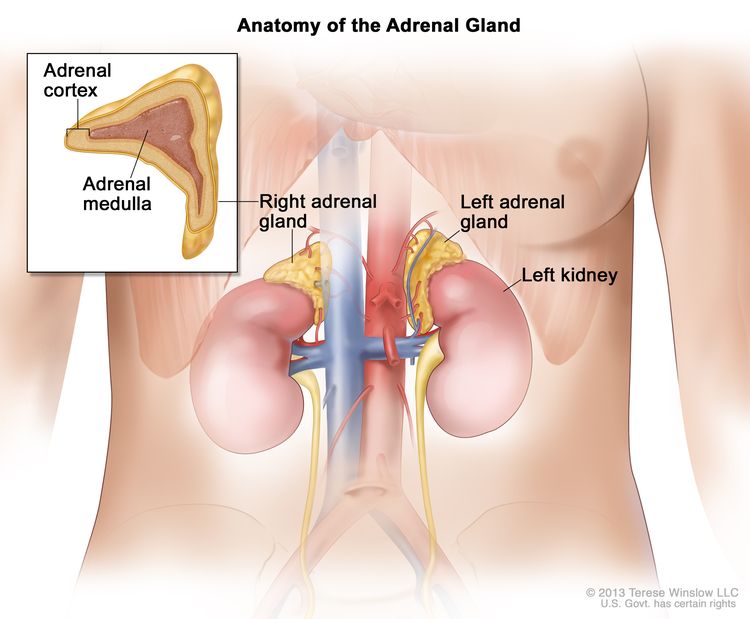
Pheochromocytoma forms in the adrenal glands. There are two adrenal glands, one on top of each kidney in the back of the upper abdomen. Each adrenal gland has two parts. The outer layer of the adrenal gland is the adrenal cortex. The center of the adrenal gland is the adrenal medulla.

Pheochromocytoma is a rare tumor of the adrenal medulla. Usually, pheochromocytoma affects one adrenal gland, but it may affect both adrenal glands. Sometimes there is more than one tumor in one adrenal gland.

The adrenal glands make important hormones called catecholamines. Adrenaline (epinephrine) and noradrenaline (norepinephrine) are two types of catecholamines that help control heart rate, blood pressure, blood sugar, and the way the body reacts to stress. Sometimes a pheochromocytoma will release extra adrenaline and noradrenaline into the blood and cause signs or symptoms of disease.

EnlargeAnatomy of the adrenal gland; drawing of the abdomen showing the left and right adrenal glands, the left and right kidneys, and major blood vessels. Also shown is an inset of an adrenal gland showing the adrenal cortex and the adrenal medulla.
Anatomy of the adrenal gland. There are two adrenal glands, one on top of each kidney. The outer part of each gland is the adrenal cortex and the inner part is the adrenal medulla.

Paragangliomas form outside the adrenal gland.

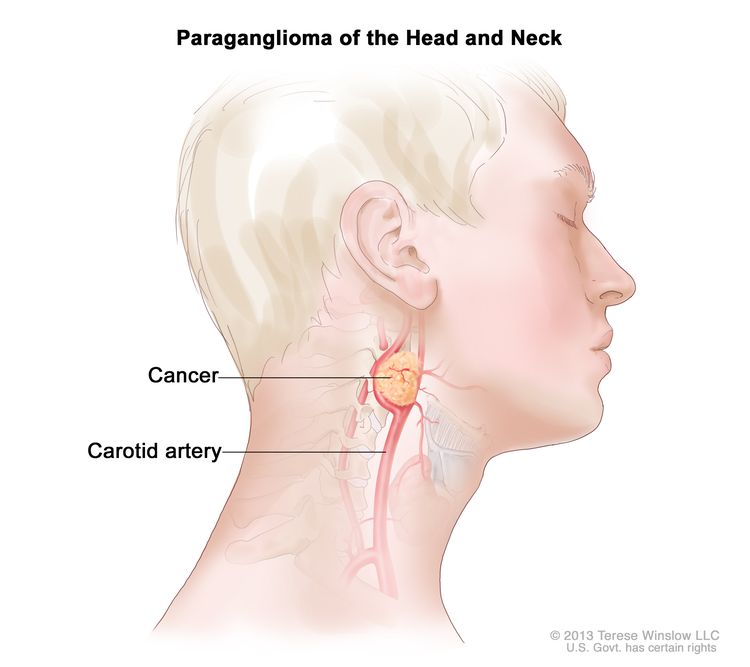
Paragangliomas are rare tumors that form near the carotid artery, along nerve pathways in the head and neck, and in other parts of the body. Some paragangliomas make extra catecholamines called adrenaline and noradrenaline. The release of these extra catecholamines into the blood may cause signs or symptoms of disease.

EnlargeParaganglioma of the head and neck; drawing shows a tumor near the carotid artery in the head and neck.
Paraganglioma of the head and neck. A rare tumor that often forms near the carotid artery. It may also form along nerve pathways in the head and neck and in other parts of the body.

Some inherited disorders and changes in certain genes increase the risk of pheochromocytoma or paraganglioma.

Anything that increases your chance of getting a disease is called a risk factor. Having a risk factor doesn’t mean that you will get cancer; not having risk factors doesn’t mean that you will not get cancer. Talk to your doctor if you think you may be at risk.

The following inherited syndromes or gene changes increase the risk of pheochromocytoma or paraganglioma:

Signs and symptoms of pheochromocytoma and paraganglioma include high blood pressure and headache.

Some tumors do not make extra adrenaline or noradrenaline and do not cause signs and symptoms. These tumors are sometimes found when a lump forms in the neck or when a test or procedure is done for another reason. Signs and symptoms of pheochromocytoma and paraganglioma occur when too much adrenaline or noradrenaline is released into the blood. These and other signs and symptoms may be caused by pheochromocytoma and paraganglioma or by other conditions. Check with your doctor if you have:

  • High blood pressure.
  • Headache.
  • Heavy sweating for no known reason.
  • A strong, fast, or irregular heartbeat.
  • Being shaky.
  • Being extremely pale.

The most common sign is high blood pressure that may be hard to control. Very high blood pressure can cause serious health problems such as irregular heartbeat, heart attack, stroke, or death.

Signs and symptoms of pheochromocytoma and paraganglioma may occur at any time or be brought on by certain events.

Signs and symptoms of pheochromocytoma and paraganglioma may occur when one of the following events happens:

  • Hard physical activity.
  • A physical injury or having a lot of emotional stress.
  • Childbirth.
  • Going under anesthesia.
  • Surgery, including procedures to remove the tumor.
  • Eating foods high in tyramine (such as red wine, chocolate, and cheese).

Tests that examine the blood and urine are used to diagnose pheochromocytoma and paraganglioma.

In addition to asking about your personal and family health history and doing a physical exam to check for signs of disease, such as high blood pressure, your doctor may perform the following tests and procedures:

  • Twenty-four-hour urine test: A test in which urine is collected for 24 hours to measure the amounts of catecholamines in the urine. Substances caused by the breakdown of these catecholamines are also measured. An unusual (higher or lower than normal) amount of a substance can be a sign of disease in the organ or tissue that makes it. Higher-than-normal amounts of certain catecholamines may be a sign of pheochromocytoma.
  • Blood catecholamine studies: A procedure in which a blood sample is checked to measure the amount of certain catecholamines released into the blood. Substances caused by the breakdown of these catecholamines are also measured. An unusual (higher than or lower than normal) amount of a substance can be a sign of disease in the organ or tissue that makes it. Higher-than-normal amounts of certain catecholamines may be a sign of pheochromocytoma.
  • CT scan (CAT scan): A procedure that makes a series of detailed pictures of areas inside the body, such as the neck, chest, abdomen, and pelvis, taken from different angles. The pictures are made by a computer linked to an x-ray machine. A dye may be injected into a vein or swallowed to help the organs or tissues show up more clearly. This procedure is also called computed tomography, computerized tomography, or computerized axial tomography.
  • MRI (magnetic resonance imaging): A procedure that uses a magnet, radio waves, and a computer to make a series of detailed pictures of areas inside the body such as the neck, chest, abdomen, and pelvis. This procedure is also called nuclear magnetic resonance imaging (NMRI).

Genetic counseling is part of the treatment plan for patients with pheochromocytoma or paraganglioma.

All patients who are diagnosed with pheochromocytoma or paraganglioma should have genetic counseling to find out their risk for having an inherited syndrome and other related cancers.

Genetic testing is often recommended by a genetic counselor for patients who:

  • Have a personal or family history of traits linked with inherited pheochromocytoma or paraganglioma syndrome.
  • Have tumors in both adrenal glands.
  • Have more than one tumor in one adrenal gland.
  • Have signs or symptoms of extra catecholamines being released into the blood or malignant (cancerous) paraganglioma.
  • Are diagnosed before age 40 years.

Genetic testing is sometimes recommended for patients with pheochromocytoma who:

  • Are aged 40 to 50 years.
  • Have a tumor in one adrenal gland.
  • Do not have a personal or family history of an inherited syndrome.

When certain gene changes are found during genetic testing, the testing is usually offered to family members who are at risk but do not have signs or symptoms.

Genetic testing is not recommended for patients older than 50 years.

Certain factors affect prognosis (chance of recovery) and treatment options.

The prognosis and treatment options depend on:

  • Whether the tumor is benign or malignant.
  • Whether the tumor is in one area only or has spread to other places in the body.
  • Whether there are signs or symptoms caused by a higher-than-normal amount of catecholamines.
  • Whether the tumor has just been diagnosed or has recurred (come back).

Stages of Pheochromocytoma and Paraganglioma

Key Points

  • After pheochromocytoma and paraganglioma have been diagnosed, tests are done to find out if the tumor has spread to other parts of the body.
  • There are three ways that cancer spreads in the body.
  • Cancer may spread from where it began to other parts of the body.
  • Pheochromocytoma and paraganglioma are described as localized, regional, or metastatic.
    • Localized pheochromocytoma and paraganglioma
    • Regional pheochromocytoma and paraganglioma
    • Metastatic pheochromocytoma and paraganglioma
    • Pheochromocytoma and paraganglioma can recur (come back) after they have been treated.

After pheochromocytoma and paraganglioma have been diagnosed, tests are done to find out if the tumor has spread to other parts of the body.

The process to find out if cancer has spread to other parts of the body is usually called staging. It is important to know whether the cancer has spread in order to plan treatment. The following tests and procedures may be used to determine if the tumor has spread to other parts of the body:

  • CT scan (CAT scan): A procedure that makes a series of detailed pictures of areas inside the body, such as the neck, chest, abdomen, and pelvis, taken from different angles. The pictures are made by a computer linked to an x-ray machine. A dye may be injected into a vein or swallowed to help the organs or tissues show up more clearly. The abdomen and pelvis are imaged to detect tumors that release catecholamine. This procedure is also called computed tomography, computerized tomography, or computerized axial tomography.
  • MRI (magnetic resonance imaging): A procedure that uses a magnet, radio waves, and a computer to make a series of detailed pictures of areas inside the body such as the neck, chest, abdomen, and pelvis. This procedure is also called nuclear magnetic resonance imaging (NMRI).
  • MIBG scan: A procedure used to find neuroendocrine tumors, such as pheochromocytoma and paraganglioma. A very small amount of a substance called radioactive MIBG is injected into a vein and travels through the bloodstream. Neuroendocrine tumor cells take up the radioactive MIBG and are detected by a scanner. Scans may be taken over 1-3 days. An iodine solution may be given before or during the test to keep the thyroid gland from absorbing too much of the MIBG.
  • Octreotide scan: A type of radionuclide scan used to find certain tumors, including tumors that release catecholamine. A very small amount of radioactive octreotide (a hormone that attaches to certain tumors) is injected into a vein and travels through the bloodstream. The radioactive octreotide attaches to the tumor and a special camera that detects radioactivity is used to show where the tumors are in the body.
  • PET scan (positron emission tomography scan) or FDG-PET scan (fluorodeoxyglucose-positron emission tomography scan): A procedure to find malignant tumor cells in the body. A small amount of FDG, a type of radioactive glucose (sugar), is injected into a vein. The PET scanner rotates around the body and makes a picture of where glucose is being used in the body. Malignant tumor cells show up brighter in the picture because they are more active and take up more glucose than normal cells do. Other substances may be used to attach to the tumor to get a better picture.

There are three ways that cancer spreads in the body.

Cancer can spread through tissue, the lymph system, and the blood:

  • Tissue. The cancer spreads from where it began by growing into nearby areas.
  • Lymph system. The cancer spreads from where it began by getting into the lymph system. The cancer travels through the lymph vessels to other parts of the body.
  • Blood. The cancer spreads from where it began by getting into the blood. The cancer travels through the blood vessels to other parts of the body.

Cancer may spread from where it began to other parts of the body.

When cancer spreads to another part of the body, it is called metastasis. Cancer cells break away from where they began (the primary tumor) and travel through the lymph system or blood.

  • Lymph system. The cancer gets into the lymph system, travels through the lymph vessels, and forms a tumor (metastatic tumor) in another part of the body.
  • Blood. The cancer gets into the blood, travels through the blood vessels, and forms a tumor (metastatic tumor) in another part of the body.

The metastatic tumor is the same type of cancer as the primary tumor. For example, if pheochromocytoma spreads to the bone, the cancer cells in the bone are actually pheochromocytoma cells. The disease is metastatic pheochromocytoma, not bone cancer.

Many cancer deaths are caused when cancer moves from the original tumor and spreads to other tissues and organs. This is called metastatic cancer. This animation shows how cancer cells travel from the place in the body where they first formed to other parts of the body.

Pheochromocytoma and paraganglioma are described as localized, regional, or metastatic.

Localized pheochromocytoma and paraganglioma

The tumor is found in one or both adrenal glands (pheochromocytoma) or in one area only (paraganglioma).

Regional pheochromocytoma and paraganglioma

Cancer has spread to lymph nodes or other tissues near where the tumor began.

Metastatic pheochromocytoma and paraganglioma

The cancer has spread to other parts of the body, such as the liver, lungs, bone, or distant lymph nodes.

Pheochromocytoma and paraganglioma can recur (come back) after they have been treated.

The cancer may come back in the same place or in other parts of the body.

Treatment Option Overview

Key Points

  • There are different types of treatment for patients with pheochromocytoma or paraganglioma.
  • Patients receive medication to treat the signs and symptoms of pheochromocytoma and paraganglioma.
  • The following types of treatment are used:
    • Surgery
    • Radiation therapy
    • Chemotherapy
    • Ablation therapy
    • Embolization therapy
    • Targeted therapy
  • New types of treatment are being tested in clinical trials.
  • Treatment for pheochromocytoma and paraganglioma may cause side effects.
  • Follow-up care will be needed.

There are different types of treatment for patients with pheochromocytoma or paraganglioma.

Different types of treatments are available for patients with pheochromocytoma or paraganglioma. Some treatments are standard (the currently used treatment), and some are being tested in clinical trials. A treatment clinical trial is a research study meant to help improve current treatments or obtain information on new treatments for patients with cancer. When clinical trials show that a new treatment is better than the standard treatment, the new treatment may become the standard treatment. Patients may want to think about taking part in a clinical trial. Some clinical trials are open only to patients who have not started treatment

Patients receive medication to treat the signs and symptoms of pheochromocytoma and paraganglioma.

Drug therapy begins when pheochromocytoma or paraganglioma is diagnosed. This may include:

  • Drugs that keep the blood pressure normal. For example, one type of drug called alpha-blockers stops noradrenaline from making small blood vessels more narrow. Keeping the blood vessels open and relaxed improves blood flow and lowers blood pressure.
  • Drugs that keep the heart rate normal. For example, one type of drug called beta-blockers stops the effect of too much noradrenaline and slows the heart rate.
  • Drugs that block the effect of extra hormones made by the adrenal gland.

Drug therapy is often given for one to three weeks before surgery.

The following types of treatment are used:

Surgery

Surgery to remove pheochromocytoma is usually an adrenalectomy (removal of one or both adrenal glands). During this surgery, the tissues and lymph nodes inside the abdomen will be checked and if the tumor has spread, these tissues may also be removed. Drugs may be given before, during, and after surgery to keep blood pressure and heart rate normal.

After surgery to remove the tumor, catecholamine levels in the blood or urine are checked. Normal catecholamine levels are a sign that all the pheochromocytoma cells were removed.

If both adrenal glands are removed, life-long hormone therapy to replace hormones made by the adrenal glands is needed.

Radiation therapy

Radiation therapy uses high-energy x-rays or other types of radiation to kill cancer cells or keep them from growing.

  • External radiation therapy uses a machine outside the body to send radiation toward the area of the body with cancer.
  • Metastatic pheochromocytoma is sometimes treated with a radioactive substance called 131I-MIBG. It is given by infusion to deliver radiation directly to tumor cells throughout the body. 131I-MIBG collects in certain kinds of tumor cells, killing them with the radiation that is given off. Not all pheochromocytomas take up 131I-MIBG, so a test is done first to check for this before treatment begins.

The way the radiation therapy is given depends on whether the cancer is localized, regional, metastatic, or recurrent. External radiation therapy and 131I-MIBG therapy are used to treat pheochromocytoma.

Chemotherapy

Chemotherapy is a cancer treatment that uses drugs to stop the growth of cancer cells, either by killing the cells or by stopping them from dividing. When chemotherapy is taken by mouth or injected into a vein or muscle, the drugs enter the bloodstream and can reach cancer cells throughout the body (systemic chemotherapy). Combination chemotherapy is treatment using more than one anticancer drug. Systemic chemotherapy is used to treat pheochromocytomas and paragangliomas.

Ablation therapy

Ablation is a treatment to remove or destroy a body part or tissue or its function. Ablation therapies used to help kill cancer cells include:

  • Radiofrequency ablation: A procedure that uses radio waves to heat and destroy abnormal cells. The radio waves travel through electrodes (small devices that carry electricity). Radiofrequency ablation may be used to treat cancer and other conditions.
  • Cryoablation: A procedure in which tissue is frozen to destroy abnormal cells. Liquid nitrogen or liquid carbon dioxide is used to freeze the tissue.

Embolization therapy

Embolization therapy is a treatment to block the artery leading to the adrenal gland. Blocking the flow of blood to the adrenal glands helps kill cancer cells growing there.

Targeted therapy

Targeted therapy is a type of treatment that uses drugs or other substances to identify and attack specific cancer cells. Tyrosine kinase inhibitors (TKIs) block signals needed for tumors to grow. Sunitinib, axitinib, and cabozantinib have been used as palliative therapy for metastatic and recurrent pheochromocytoma.

New types of treatment are being tested in clinical trials.

For some people, joining a clinical trial may be an option. There are different types of clinical trials for people with cancer. For example, a treatment trial tests new treatments or new ways of using current treatments. Supportive care and palliative care trials look at ways to improve quality of life, especially for those who have side effects from cancer and its treatment.

You can use the clinical trial search to find NCI-supported cancer clinical trials accepting participants. The search allows you to filter trials based on the type of cancer, your age, and where the trials are being done. Clinical trials supported by other organizations can be found on the ClinicalTrials.gov website.

Learn more about clinical trials, including how to find and join one, at Clinical Trials Information for Patients and Caregivers.

Treatment for pheochromocytoma and paraganglioma may cause side effects.

For information about side effects caused by treatment for cancer, visit our Side Effects page.

Follow-up care will be needed.

Some of the tests that were done to diagnose the cancer or to find out the extent of the cancer may be repeated. Some tests will be repeated to see how well the treatment is working. Decisions about whether to continue, change, or stop treatment will be based on the results of these tests.

Some of the tests will continue to be done after treatment has ended. The results of these tests can show if your condition has changed or if the cancer has recurred (come back). These tests are sometimes called follow-up tests.

For patients with pheochromocytoma or paraganglioma that causes symptoms, catecholamine levels in the blood and urine will be checked on a regular basis. Catecholamine levels that are higher than normal can be a sign that the cancer has come back.

For patients with paraganglioma that does not cause symptoms, follow-up tests, such as CT, MRI, or MIBG scan should be done every year.

For patients with inherited pheochromocytoma or paraganglioma, catecholamine levels in the blood and urine will be checked on a regular basis. Other screening tests will be done to check for other tumors that are linked to the inherited syndrome.

Talk to your doctor about which tests should be done and how often. Patients with pheochromocytoma or paraganglioma need lifelong follow-up.

Treatment of Pheochromocytoma and Paraganglioma

For information about the treatments listed below, see the Treatment Option Overview section.

Localized Pheochromocytoma and Paraganglioma

Treatment of localized benign pheochromocytoma or paraganglioma is usually surgery to completely remove the tumor. If the tumor is in the adrenal gland, the entire adrenal gland is removed.

Use our clinical trial search to find NCI-supported cancer clinical trials that are accepting patients. You can search for trials based on the type of cancer, the age of the patient, and where the trials are being done. General information about clinical trials is also available.

Inherited Pheochromocytoma

In patients with inherited pheochromocytoma linked to multiple endocrine neoplasia (MEN2) or von Hippel-Lindau (VHL) syndrome, tumors often form in both adrenal glands. The tumors are usually benign.

  • Treatment for inherited pheochromocytoma that forms in one adrenal gland is surgery to completely remove the gland.
  • Treatment for inherited pheochromocytoma that forms in both adrenal glands or later forms in the remaining adrenal gland may be surgery to remove the tumor and as little normal tissue in the adrenal cortex as possible.

These surgeries may help patients avoid life-long hormone replacement therapy, acute adrenal insufficiency, and health problems due to the loss of hormones made by the adrenal gland.

Regional Pheochromocytoma and Paraganglioma

Treatment of pheochromocytoma or paraganglioma that has spread to nearby organs or lymph nodes is surgery to completely remove the tumor. Nearby organs that the cancer has spread to, such as the kidney, liver, part of a major blood vessel, and lymph nodes, may also be removed.

Use our clinical trial search to find NCI-supported cancer clinical trials that are accepting patients. You can search for trials based on the type of cancer, the age of the patient, and where the trials are being done. General information about clinical trials is also available.

Metastatic Pheochromocytoma and Paraganglioma

Treatment of metastatic pheochromocytoma or paraganglioma may include:

Use our clinical trial search to find NCI-supported cancer clinical trials that are accepting patients. You can search for trials based on the type of cancer, the age of the patient, and where the trials are being done. General information about clinical trials is also available.

Recurrent Pheochromocytoma and Paraganglioma

Treatment of recurrent pheochromocytoma or paraganglioma may include:

Use our clinical trial search to find NCI-supported cancer clinical trials that are accepting patients. You can search for trials based on the type of cancer, the age of the patient, and where the trials are being done. General information about clinical trials is also available.

Pheochromocytoma During Pregnancy

Key Points

  • Pregnant women with pheochromocytoma need special care.
  • Treatment of pregnant women with pheochromocytoma may include surgery.

For information about the treatments listed below, see the Treatment Option Overview section.

Pregnant women with pheochromocytoma need special care.

Although it is rarely diagnosed during pregnancy, pheochromocytoma can be very serious for the mother and fetus. Women who have an increased risk of pheochromocytoma should have prenatal testing. Pregnant women with pheochromocytoma should be treated by a team of doctors who are experts in this type of care.

Signs of pheochromocytoma in pregnancy may include:

  • High blood pressure during the first 3 months of pregnancy.
  • Sudden periods of high blood pressure.
  • High blood pressure that is very hard to treat.

The diagnosis of pheochromocytoma in pregnant women includes testing for catecholamine levels in blood and urine. See the General Information section for a description of these tests and procedures. An MRI can be done to safely find tumors in pregnant women because it does not expose the fetus to radiation.

Treatment of pregnant women with pheochromocytoma may include surgery.

Treatment of pheochromocytoma during pregnancy may include:

  • Surgery to completely remove the cancer during the second trimester (the fourth through the sixth month of pregnancy).
  • Surgery to completely remove the cancer combined with delivery of the baby by cesarean section for patients diagnosed later in pregnancy.

To Learn More About Pheochromocytoma and Paraganglioma

About This PDQ Summary

About PDQ

Physician Data Query (PDQ) is the National Cancer Institute’s (NCI’s) comprehensive cancer information database. The PDQ database contains summaries of the latest published information on cancer prevention, detection, genetics, treatment, supportive care, and complementary and alternative medicine. Most summaries come in two versions. The health professional versions have detailed information written in technical language. The patient versions are written in easy-to-understand, nontechnical language. Both versions have cancer information that is accurate and up to date and most versions are also available in Spanish.

PDQ is a service of the NCI. The NCI is part of the National Institutes of Health (NIH). NIH is the federal government’s center of biomedical research. The PDQ summaries are based on an independent review of the medical literature. They are not policy statements of the NCI or the NIH.

Purpose of This Summary

This PDQ cancer information summary has current information about the treatment of pheochromocytoma and paraganglioma. It is meant to inform and help patients, families, and caregivers. It does not give formal guidelines or recommendations for making decisions about health care.

Reviewers and Updates

Editorial Boards write the PDQ cancer information summaries and keep them up to date. These Boards are made up of experts in cancer treatment and other specialties related to cancer. The summaries are reviewed regularly and changes are made when there is new information. The date on each summary (“Updated”) is the date of the most recent change.

The information in this patient summary was taken from the health professional version, which is reviewed regularly and updated as needed, by the PDQ Adult Treatment Editorial Board.

Clinical Trial Information

A clinical trial is a study to answer a scientific question, such as whether one treatment is better than another. Trials are based on past studies and what has been learned in the laboratory. Each trial answers certain scientific questions in order to find new and better ways to help cancer patients. During treatment clinical trials, information is collected about the effects of a new treatment and how well it works. If a clinical trial shows that a new treatment is better than one currently being used, the new treatment may become “standard.” Patients may want to think about taking part in a clinical trial. Some clinical trials are open only to patients who have not started treatment.

Clinical trials can be found online at NCI’s website. For more information, call the Cancer Information Service (CIS), NCI’s contact center, at 1-800-4-CANCER (1-800-422-6237).

Permission to Use This Summary

PDQ is a registered trademark. The content of PDQ documents can be used freely as text. It cannot be identified as an NCI PDQ cancer information summary unless the whole summary is shown and it is updated regularly. However, a user would be allowed to write a sentence such as “NCI’s PDQ cancer information summary about breast cancer prevention states the risks in the following way: [include excerpt from the summary].”

The best way to cite this PDQ summary is:

PDQ® Adult Treatment Editorial Board. PDQ Pheochromocytoma and Paraganglioma Treatment. Bethesda, MD: National Cancer Institute. Updated <MM/DD/YYYY>. Available at: /types/pheochromocytoma/patient/pheochromocytoma-treatment-pdq. Accessed <MM/DD/YYYY>. [PMID: 26389499]

Images in this summary are used with permission of the author(s), artist, and/or publisher for use in the PDQ summaries only. If you want to use an image from a PDQ summary and you are not using the whole summary, you must get permission from the owner. It cannot be given by the National Cancer Institute. Information about using the images in this summary, along with many other images related to cancer can be found in Visuals Online. Visuals Online is a collection of more than 3,000 scientific images.

Disclaimer

The information in these summaries should not be used to make decisions about insurance reimbursement. More information on insurance coverage is available on Cancer.gov on the Managing Cancer Care page.

Contact Us

More information about contacting us or receiving help with the Cancer.gov website can be found on our Contact Us for Help page. Questions can also be submitted to Cancer.gov through the website’s E-mail Us.

Pheochromocytoma and Paraganglioma—Health Professional Version

Pheochromocytoma and Paraganglioma—Health Professional Version

Causes & Prevention

NCI does not have PDQ evidence-based information about prevention of pheochromocytoma and paraganglioma.

Screening

NCI does not have PDQ evidence-based information about screening for pheochromocytoma and paraganglioma.

Supportive & Palliative Care

We offer evidence-based supportive and palliative care information for health professionals on the assessment and management of cancer-related symptoms and conditions.

Cancer Pain Nausea and Vomiting Nutrition in Cancer Care Transition to End-of-Life Care Last Days of Life View all Supportive and Palliative Care Summaries

Pheochromocytoma and Paraganglioma Treatment (PDQ®)–Health Professional Version

Pheochromocytoma and Paraganglioma Treatment (PDQ®)–Health Professional Version

General Information About Pheochromocytoma and Paraganglioma

Pheochromocytomas and extra-adrenal paragangliomas are rare tumors arising from neural crest tissue that develops into sympathetic and parasympathetic paraganglia throughout the body.

In 2004, the World Health Organization classification used the term pheochromocytoma exclusively for tumors arising from the adrenal medulla, and the term extra-adrenal paraganglioma for similar tumors that arise from other locations.

Incidence and Mortality

The incidence of pheochromocytoma is 2 to 8 per million persons per year.[1,2] Pheochromocytoma is present in 0.1% to 1% of patients with hypertension,[35] and it is present in approximately 5% of patients with incidentally discovered adrenal masses.[6] The peak incidence occurs in the third to fifth decades of life. The average age at diagnosis is 24.9 years in hereditary cases and 43.9 years in sporadic cases.[7] The incidence is equal between men and women.[8]

Anatomy

Pheochromocytomas and extra-adrenal paragangliomas arise from neural crest tissue. Neural crest tissue develops into sympathetic and parasympathetic paraganglia.

Sympathetic paraganglia include:

  • The adrenal medulla.
  • The organ of Zuckerkandl near the aortic bifurcation.
  • Other paraganglia along the distribution of the sympathetic nervous system.

Parasympathetic paraganglia include:

  • The carotid body.
  • Other paraganglia along the cervical and thoracic branches of the vagus and glossopharyngeal nerves.

Risk Factors

No known environmental, dietary, or lifestyle risk factors have been linked to the development of pheochromocytoma.

Hereditary Predisposition Syndromes

Of all pheochromocytomas and extra-adrenal paragangliomas, 35% occur in patients with a hereditary cancer syndrome.[79] Major genetic syndromes that confer an increased risk of pheochromocytoma are included in Table 1.

Table 1. Major Genetic Syndromes or Conditions That Confer an Increased Risk of Pheochromocytoma
Genetic Syndrome or Condition Affected Gene Comment
aFor more information, see the Familial Pheochromocytoma and Paraganglioma Syndrome section in Genetics of Endocrine and Neuroendocrine Neoplasias.
Multiple endocrine neoplasia type 2A and 2B RET For more information, see Multiple Endocrine Neoplasia Type 2.
von Hippel-Lindau disease VHL For more information, see von Hippel-Lindau Disease.
Neurofibromatosis type 1 NF1  
Hereditary pheochromocytoma and paraganglioma syndromea SDHD [10] Formerly referred to as familial pheochromocytoma-paraganglioma syndrome type 1.
SDHAF2 (SDH5) [11] Formerly referred to as familial pheochromocytoma-paraganglioma syndrome type 2.
SDHC [12] Formerly referred to as familial pheochromocytoma-paraganglioma syndrome type 3.
SDHB [13] Formerly referred to as familial pheochromocytoma-paraganglioma syndrome type 4.
SDHA [14]  
TMEM127 [15,16] Pheochromocytoma; paraganglioma are less common.
MAX [17] Pheochromocytoma; paraganglioma are less common.
Hereditary leiomyomatosis and renal cell cancer FH [1820] Multiple pheochromocytoma and paraganglioma. For more information, see Hereditary Leiomyomatosis and Renal Cell Cancer.

Pheochromocytomas and extra-adrenal paragangliomas can also occur in two other very rare syndromes:

  • The Carney triad of extra-adrenal paraganglioma, gastrointestinal stromal tumor (GIST),[21] and pulmonary chondroma.
  • The Carney-Stratakis dyad of paraganglioma and GIST.[22]

Genetic counseling and testing

It has been proposed that all patients diagnosed with a pheochromocytoma or paraganglioma should consider genetic testing because the incidence of a hereditary syndrome in apparently sporadic cases is as high as 25%.[7,8,23] Early identification of a hereditary syndrome allows for early screening for other associated tumors and identification of family members who are at risk. In addition, some patients with a hereditary syndrome are more likely to develop multifocal, malignant, or recurrent disease. Knowledge of the specific genetic variant permits increased vigilance during preoperative localization or postoperative surveillance of such patients.

Certain subgroups of patients are at very low risk of having an inherited syndrome (e.g., <2% in patients diagnosed with apparently sporadic pheochromocytoma after age 50 years).[7] Therefore, genetic testing for all patients diagnosed with a pheochromocytoma or paraganglioma may not be practical or cost effective from a population standpoint. It is recommended that every patient diagnosed with a pheochromocytoma or extra-adrenal paraganglioma should first undergo risk evaluation for a hereditary syndrome by a certified genetic counselor.[24]

Genetic testing is often recommended in the following situations:

  • Patients with a personal or family history of clinical features suggestive of a hereditary pheochromocytoma-paraganglioma syndrome.
  • Patients with bilateral or multifocal tumors.
  • Patients with sympathetic or malignant extra-adrenal paragangliomas.
  • Patients diagnosed before age 40 years.

Genetic testing can be considered when a patient has the following features:

  • Patient is between the ages of 40 and 50 years.
  • Patients has a history of a unilateral pheochromocytoma.
  • Patient does not have a personal or family history suggestive of a hereditary cancer syndrome.

If a germline variant is identified, predictive genetic testing may be offered to asymptomatic at-risk family members. For more information, see Genetics of Endocrine and Neuroendocrine Neoplasias.

Genetic testing is not recommended in patients who are older than 50 years.

Clinical Features

Patients with pheochromocytomas and sympathetic extra-adrenal paragangliomas may present with symptoms of excess catecholamine production, including:

  • Hypertension.
  • Headache.
  • Perspiration.
  • Forceful palpitations.
  • Tremor.
  • Facial pallor.

These symptoms are often paroxysmal, although sustained hypertension between paroxysmal episodes occurs in 50% to 60% of patients with pheochromocytoma.[25] Episodes of hypertension can be variable in frequency, severity, and duration and are often extremely difficult to manage medically. Hypertensive crisis can lead to cardiac arrhythmias, myocardial infarction, and even death.

Patients are often very symptomatic from excess catecholamine secretion. Symptoms of catecholamine excess can be spontaneous or induced by:

  • Strenuous physical exertion.
  • Trauma.
  • Labor and delivery.
  • Anesthesia induction.
  • Surgery or other invasive procedures, including direct instrumentation of the tumor (e.g., fine-needle aspiration).
  • Eating foods high in tyramine (e.g., red wine, chocolate, and cheese).
  • Urination (e.g., bladder wall tumor, which is rare).

Phenoxybenzamine (an alpha-adrenergic receptor blocker) is an effective treatment for catecholamine excess and metyrosine (a catecholamine synthesis antagonist) can be added if needed.

Parasympathetic extra-adrenal paragangliomas do not secrete catecholamines. These tumors usually present as a neck mass with symptoms related to compression or are incidentally discovered on an imaging study performed for an unrelated reason. In addition, approximately half of patients with pheochromocytoma are asymptomatic because their neoplasms are discovered in the presymptomatic state by either abdominal imaging for other reasons (e.g., adrenal incidentalomas) or genetic testing in at-risk family members.[17,2628]

Diagnostics

The diagnosis of pheochromocytoma is usually preceded by the presence of an adrenal mass or is discovered incidentally. Biochemical testing is done to document excess catecholamine secretion. Once the biochemical diagnosis of a catecholamine-secreting tumor is confirmed, localization studies should be performed. Controversy exists as to the optimal single test to make the diagnosis.

Biochemical testing

24-hour urine collection

A 24-hour urine collection for catecholamines (e.g., epinephrine, norepinephrine, and dopamine) and fractionated metanephrines (e.g., metanephrine and normetanephrine) has a relatively low sensitivity (77%–90%) but a high specificity (98%). Pretest probability is also important. The specificity of plasma-free fractionated metanephrines is 82% in patients tested for sporadic pheochromocytoma versus 96% in patients tested for hereditary pheochromocytoma.[29,30]

Plasma-free fractionated metanephrines

Measurement of plasma-free fractionated metanephrines appears to be an ideal case-detection test for patients at higher baseline risk of pheochromocytoma. Examples of these patients might include:

  • Patients with an incidentally discovered adrenal mass.
  • Patients with a family history of pheochromocytoma.
  • Patients with a known inherited predisposition to pheochromocytoma.

The test is associated with a relatively high false-positive rate in patients with a lower baseline risk of pheochromocytoma. Measurement of plasma-free metanephrines (e.g., metanephrine and normetanephrine) has a high sensitivity (97%–99%) but a relatively low specificity (85%).

In general, it is reasonable to use measurement of plasma-free fractionated metanephrines for initial case detection, which is followed by 24-hour measurement of urine-fractionated metanephrines and catecholamines for confirmation. Test results can be difficult to interpret because of the possibility of false-positive results. False-positive results can be caused by:[25,29]

  • Common medications (e.g., tricyclic antidepressants).
  • Physical or emotional stress.
  • Inappropriately low reference ranges based on normal laboratory data rather than clinical data sets.[31]
  • Common foods (e.g., caffeine and bananas) that interfere with specific assays and medications.

A mildly elevated catecholamine or metanephrine level is usually the result of assay interference caused by drugs or other factors. Patients with symptomatic pheochromocytoma almost always have increases in catecholamines or metanephrines two to three times higher than the upper limits of reference ranges.[25]

Provocative testing (e.g., using glucagon) can be dangerous, adds no value to other current testing methods, and is not recommended.[32]

Imaging studies

Computed tomography (CT) imaging or magnetic resonance imaging (MRI) of the abdomen and pelvis (at least through the level of the aortic bifurcation) are the most commonly used methods for localization.[33] Both have similar sensitivities (90%–100%) and specificities (70%–80%).[33] CT imaging provides superior anatomical detail compared with MRI.

Additional functional imaging may be necessary if CT imaging or MRI fails to localize the tumor. It might also be useful in patients who are at risk for multifocal, malignant, or recurrent disease. Iodine I 123 (123I)-metaiodobenzylguanidine (MIBG) scintigraphy coupled with CT imaging provides anatomical and functional information with good sensitivity (80%–90%) and specificity (95%–100%).[33] 131I-MIBG can be used in the same way, but the image quality is not as high as with 123I-MIBG.[34] Other functional imaging alternatives include gallium Ga 68 (68Ga)-DOTATATE and fluorine F 18-fludeoxyglucose positron emission tomography (PET), both of which can be coupled with CT imaging for improved anatomical detail.[35,36]

It is rare for localization of a catecholamine-secreting tumor to be unsuccessful if currently available imaging methods are used.

Prognosis and Survival

There are no clear data regarding the survival of patients with localized (apparently benign) disease or regional disease. Although patients with localized (apparently benign) disease should experience an overall survival approaching that of age-matched disease-free individuals, 6.5% to 16.5% of these patients will develop a recurrence, usually 5 to 15 years after initial surgery.[3739]

Approximately 15% to 25% of patients with recurrent disease experience distant metastasis. The 5-year overall survival rates in those with metastatic disease range from 50% to 70%.[4043] Carriers of SDHB pathogenic variants have an increased risk of developing metastatic disease of approximately 25% to 50%.[44] The most commonly associated gene with metastatic pheochromocytoma and paraganglioma is SDHB (over 40% of cases).[45,46]

Follow-Up Evaluation

Long-term follow-up is essential for all patients with pheochromocytoma or extra-adrenal paraganglioma, even when initial pathology demonstrates no findings that are concerning for malignancy.[5]

  • After resection of a solitary sporadic pheochromocytoma, patients should undergo baseline postoperative biochemical testing followed by annual lifelong biochemical testing.
  • Patients who have undergone resection of a noncatecholamine-producing tumor should initially undergo annual imaging with CT or MRI and periodic imaging with radiolabeled MIBG or 68Ga-DOTATATE PET/CT to monitor for recurrence or metastasis.
  • Patients with a hereditary pheochromocytoma/paraganglioma syndrome who have undergone resection require lifelong annual biochemical screening in addition to routine screening for other component tumors of their specific syndrome.[5]
References
  1. Beard CM, Sheps SG, Kurland LT, et al.: Occurrence of pheochromocytoma in Rochester, Minnesota, 1950 through 1979. Mayo Clin Proc 58 (12): 802-4, 1983. [PUBMED Abstract]
  2. Stenström G, Svärdsudd K: Pheochromocytoma in Sweden 1958-1981. An analysis of the National Cancer Registry Data. Acta Med Scand 220 (3): 225-32, 1986. [PUBMED Abstract]
  3. Sinclair AM, Isles CG, Brown I, et al.: Secondary hypertension in a blood pressure clinic. Arch Intern Med 147 (7): 1289-93, 1987. [PUBMED Abstract]
  4. Anderson GH, Blakeman N, Streeten DH: The effect of age on prevalence of secondary forms of hypertension in 4429 consecutively referred patients. J Hypertens 12 (5): 609-15, 1994. [PUBMED Abstract]
  5. Omura M, Saito J, Yamaguchi K, et al.: Prospective study on the prevalence of secondary hypertension among hypertensive patients visiting a general outpatient clinic in Japan. Hypertens Res 27 (3): 193-202, 2004. [PUBMED Abstract]
  6. Young WF: Management approaches to adrenal incidentalomas. A view from Rochester, Minnesota. Endocrinol Metab Clin North Am 29 (1): 159-85, x, 2000. [PUBMED Abstract]
  7. Neumann HP, Bausch B, McWhinney SR, et al.: Germ-line mutations in nonsyndromic pheochromocytoma. N Engl J Med 346 (19): 1459-66, 2002. [PUBMED Abstract]
  8. Amar L, Bertherat J, Baudin E, et al.: Genetic testing in pheochromocytoma or functional paraganglioma. J Clin Oncol 23 (34): 8812-8, 2005. [PUBMED Abstract]
  9. Jiménez C, Cote G, Arnold A, et al.: Review: Should patients with apparently sporadic pheochromocytomas or paragangliomas be screened for hereditary syndromes? J Clin Endocrinol Metab 91 (8): 2851-8, 2006. [PUBMED Abstract]
  10. Baysal BE, Ferrell RE, Willett-Brozick JE, et al.: Mutations in SDHD, a mitochondrial complex II gene, in hereditary paraganglioma. Science 287 (5454): 848-51, 2000. [PUBMED Abstract]
  11. Hao HX, Khalimonchuk O, Schraders M, et al.: SDH5, a gene required for flavination of succinate dehydrogenase, is mutated in paraganglioma. Science 325 (5944): 1139-42, 2009. [PUBMED Abstract]
  12. Niemann S, Müller U: Mutations in SDHC cause autosomal dominant paraganglioma, type 3. Nat Genet 26 (3): 268-70, 2000. [PUBMED Abstract]
  13. Astuti D, Latif F, Dallol A, et al.: Gene mutations in the succinate dehydrogenase subunit SDHB cause susceptibility to familial pheochromocytoma and to familial paraganglioma. Am J Hum Genet 69 (1): 49-54, 2001. [PUBMED Abstract]
  14. Burnichon N, Brière JJ, Libé R, et al.: SDHA is a tumor suppressor gene causing paraganglioma. Hum Mol Genet 19 (15): 3011-20, 2010. [PUBMED Abstract]
  15. Eijkelenkamp K, Olderode-Berends MJW, van der Luijt RB, et al.: Homozygous TMEM127 mutations in 2 patients with bilateral pheochromocytomas. Clin Genet 93 (5): 1049-1056, 2018. [PUBMED Abstract]
  16. Abermil N, Guillaud-Bataille M, Burnichon N, et al.: TMEM127 screening in a large cohort of patients with pheochromocytoma and/or paraganglioma. J Clin Endocrinol Metab 97 (5): E805-9, 2012. [PUBMED Abstract]
  17. Else T, Greenberg S, Fishbein L: Hereditary Paraganglioma-Pheochromocytoma Syndromes. In: Adam MP, Feldman J, Mirzaa GM, et al., eds.: GeneReviews. University of Washington, Seattle, 1993-2024, pp. Available online. Last accessed October 29, 2024.
  18. Letouzé E, Martinelli C, Loriot C, et al.: SDH mutations establish a hypermethylator phenotype in paraganglioma. Cancer Cell 23 (6): 739-52, 2013. [PUBMED Abstract]
  19. Castro-Vega LJ, Buffet A, De Cubas AA, et al.: Germline mutations in FH confer predisposition to malignant pheochromocytomas and paragangliomas. Hum Mol Genet 23 (9): 2440-6, 2014. [PUBMED Abstract]
  20. Clark GR, Sciacovelli M, Gaude E, et al.: Germline FH mutations presenting with pheochromocytoma. J Clin Endocrinol Metab 99 (10): E2046-50, 2014. [PUBMED Abstract]
  21. Carney JA: Gastric stromal sarcoma, pulmonary chondroma, and extra-adrenal paraganglioma (Carney Triad): natural history, adrenocortical component, and possible familial occurrence. Mayo Clin Proc 74 (6): 543-52, 1999. [PUBMED Abstract]
  22. Carney JA, Stratakis CA: Familial paraganglioma and gastric stromal sarcoma: a new syndrome distinct from the Carney triad. Am J Med Genet 108 (2): 132-9, 2002. [PUBMED Abstract]
  23. Neumann HP, Pawlu C, Peczkowska M, et al.: Distinct clinical features of paraganglioma syndromes associated with SDHB and SDHD gene mutations. JAMA 292 (8): 943-51, 2004. [PUBMED Abstract]
  24. Lenders JW, Duh QY, Eisenhofer G, et al.: Pheochromocytoma and paraganglioma: an endocrine society clinical practice guideline. J Clin Endocrinol Metab 99 (6): 1915-42, 2014. [PUBMED Abstract]
  25. Lenders JW, Eisenhofer G, Mannelli M, et al.: Phaeochromocytoma. Lancet 366 (9486): 665-75, 2005 Aug 20-26. [PUBMED Abstract]
  26. Kopetschke R, Slisko M, Kilisli A, et al.: Frequent incidental discovery of phaeochromocytoma: data from a German cohort of 201 phaeochromocytoma. Eur J Endocrinol 161 (2): 355-61, 2009. [PUBMED Abstract]
  27. Motta-Ramirez GA, Remer EM, Herts BR, et al.: Comparison of CT findings in symptomatic and incidentally discovered pheochromocytomas. AJR Am J Roentgenol 185 (3): 684-8, 2005. [PUBMED Abstract]
  28. Young WF: Clinical practice. The incidentally discovered adrenal mass. N Engl J Med 356 (6): 601-10, 2007. [PUBMED Abstract]
  29. Lenders JW, Pacak K, Walther MM, et al.: Biochemical diagnosis of pheochromocytoma: which test is best? JAMA 287 (11): 1427-34, 2002. [PUBMED Abstract]
  30. Sawka AM, Jaeschke R, Singh RJ, et al.: A comparison of biochemical tests for pheochromocytoma: measurement of fractionated plasma metanephrines compared with the combination of 24-hour urinary metanephrines and catecholamines. J Clin Endocrinol Metab 88 (2): 553-8, 2003. [PUBMED Abstract]
  31. Perry CG, Sawka AM, Singh R, et al.: The diagnostic efficacy of urinary fractionated metanephrines measured by tandem mass spectrometry in detection of pheochromocytoma. Clin Endocrinol (Oxf) 66 (5): 703-8, 2007. [PUBMED Abstract]
  32. Young WF: Phaeochromocytoma: how to catch a moonbeam in your hand. Eur J Endocrinol 136 (1): 28-9, 1997. [PUBMED Abstract]
  33. Ilias I, Pacak K: Current approaches and recommended algorithm for the diagnostic localization of pheochromocytoma. J Clin Endocrinol Metab 89 (2): 479-91, 2004. [PUBMED Abstract]
  34. Furuta N, Kiyota H, Yoshigoe F, et al.: Diagnosis of pheochromocytoma using [123I]-compared with [131I]-metaiodobenzylguanidine scintigraphy. Int J Urol 6 (3): 119-24, 1999. [PUBMED Abstract]
  35. Janssen I, Wolf KI, Chui CH, et al.: Relevant Discordance Between 68Ga-DOTATATE and 68Ga-DOTANOC in SDHB-Related Metastatic Paraganglioma: Is Affinity to Somatostatin Receptor 2 the Key? Clin Nucl Med 42 (3): 211-213, 2017. [PUBMED Abstract]
  36. Janssen I, Chen CC, Millo CM, et al.: PET/CT comparing (68)Ga-DOTATATE and other radiopharmaceuticals and in comparison with CT/MRI for the localization of sporadic metastatic pheochromocytoma and paraganglioma. Eur J Nucl Med Mol Imaging 43 (10): 1784-91, 2016. [PUBMED Abstract]
  37. Plouin PF, Chatellier G, Fofol I, et al.: Tumor recurrence and hypertension persistence after successful pheochromocytoma operation. Hypertension 29 (5): 1133-9, 1997. [PUBMED Abstract]
  38. van Heerden JA, Roland CF, Carney JA, et al.: Long-term evaluation following resection of apparently benign pheochromocytoma(s)/paraganglioma(s). World J Surg 14 (3): 325-9, 1990 May-Jun. [PUBMED Abstract]
  39. Amar L, Servais A, Gimenez-Roqueplo AP, et al.: Year of diagnosis, features at presentation, and risk of recurrence in patients with pheochromocytoma or secreting paraganglioma. J Clin Endocrinol Metab 90 (4): 2110-6, 2005. [PUBMED Abstract]
  40. Ayala-Ramirez M, Feng L, Johnson MM, et al.: Clinical risk factors for malignancy and overall survival in patients with pheochromocytomas and sympathetic paragangliomas: primary tumor size and primary tumor location as prognostic indicators. J Clin Endocrinol Metab 96 (3): 717-25, 2011. [PUBMED Abstract]
  41. Fishbein L, Ben-Maimon S, Keefe S, et al.: SDHB mutation carriers with malignant pheochromocytoma respond better to CVD. Endocr Relat Cancer 24 (8): L51-L55, 2017. [PUBMED Abstract]
  42. Hamidi O, Young WF, Gruber L, et al.: Outcomes of patients with metastatic phaeochromocytoma and paraganglioma: A systematic review and meta-analysis. Clin Endocrinol (Oxf) 87 (5): 440-450, 2017. [PUBMED Abstract]
  43. Asai S, Katabami T, Tsuiki M, et al.: Controlling Tumor Progression with Cyclophosphamide, Vincristine, and Dacarbazine Treatment Improves Survival in Patients with Metastatic and Unresectable Malignant Pheochromocytomas/Paragangliomas. Horm Cancer 8 (2): 108-118, 2017. [PUBMED Abstract]
  44. Andrews KA, Ascher DB, Pires DEV, et al.: Tumour risks and genotype-phenotype correlations associated with germline variants in succinate dehydrogenase subunit genes SDHB, SDHC and SDHD. J Med Genet 55 (6): 384-394, 2018. [PUBMED Abstract]
  45. Fishbein L, Merrill S, Fraker DL, et al.: Inherited mutations in pheochromocytoma and paraganglioma: why all patients should be offered genetic testing. Ann Surg Oncol 20 (5): 1444-50, 2013. [PUBMED Abstract]
  46. Neumann HPH, Young WF, Eng C: Pheochromocytoma and Paraganglioma. N Engl J Med 381 (6): 552-565, 2019. [PUBMED Abstract]

Cellular Classification of Pheochromocytoma and Paraganglioma

Pathological Classification

Pheochromocytoma and paraganglioma characteristically form small nests of uniform polygonal chromaffin cells (“zellballen”). A diagnosis of malignancy can only be made by identifying tumor deposits in tissues that do not normally contain chromaffin cells (e.g., lymph nodes, liver, bone, lung, and other distant metastatic sites).

Regional or distant metastatic disease is documented on initial pathology in only 3% to 8% of patients; thus, an attempt has been made to identify tumor characteristics associated with future malignant behavior. Pathological features associated with malignancy include:

  • Large tumor size.
  • Increased number of mitoses.
  • DNA aneuploidy.
  • Extensive tumor necrosis.
  • Vascular or capsular invasion.

In the absence of clearly documented metastases, no combination of clinical, histopathological, or biochemical features has been shown to reliably predict the biological behavior of pheochromocytoma. If no definite malignancy is identified, pathology generally provides insufficient prognostic information regarding the likelihood of recurrence or metastasis. These tumors cannot be considered benign by default; patients require continued lifelong surveillance.[17]

References
  1. Plouin PF, Chatellier G, Fofol I, et al.: Tumor recurrence and hypertension persistence after successful pheochromocytoma operation. Hypertension 29 (5): 1133-9, 1997. [PUBMED Abstract]
  2. Thompson LD: Pheochromocytoma of the Adrenal gland Scaled Score (PASS) to separate benign from malignant neoplasms: a clinicopathologic and immunophenotypic study of 100 cases. Am J Surg Pathol 26 (5): 551-66, 2002. [PUBMED Abstract]
  3. Nativ O, Grant CS, Sheps SG, et al.: The clinical significance of nuclear DNA ploidy pattern in 184 patients with pheochromocytoma. Cancer 69 (11): 2683-7, 1992. [PUBMED Abstract]
  4. Wu D, Tischler AS, Lloyd RV, et al.: Observer variation in the application of the Pheochromocytoma of the Adrenal Gland Scaled Score. Am J Surg Pathol 33 (4): 599-608, 2009. [PUBMED Abstract]
  5. Kimura N, Watanabe T, Noshiro T, et al.: Histological grading of adrenal and extra-adrenal pheochromocytomas and relationship to prognosis: a clinicopathological analysis of 116 adrenal pheochromocytomas and 30 extra-adrenal sympathetic paragangliomas including 38 malignant tumors. Endocr Pathol 16 (1): 23-32, 2005. [PUBMED Abstract]
  6. Linnoila RI, Keiser HR, Steinberg SM, et al.: Histopathology of benign versus malignant sympathoadrenal paragangliomas: clinicopathologic study of 120 cases including unusual histologic features. Hum Pathol 21 (11): 1168-80, 1990. [PUBMED Abstract]
  7. Tischler AS: Pheochromocytoma and extra-adrenal paraganglioma: updates. Arch Pathol Lab Med 132 (8): 1272-84, 2008. [PUBMED Abstract]

Stage Information for Pheochromocytoma and Paraganglioma

AJCC Stage Groupings and TNM Definitions

The American Joint Committee on Cancer (AJCC) has designated staging by TNM (tumor, node, metastasis) classification to define pheochromocytoma and paraganglioma.[1] Although the AJCC staging system does not account for the unique characteristics of these tumors, it could increase the understanding of prognostic indicators for survival.

Definitions of TNM Stage Ia,b
Stage TNM Description
T = primary tumor; N = regional lymph nodes; M = distant metastasis; PH = pheochromocytoma.
aReprinted with permission from AJCC: Adrenal – Neuroendocrine tumors. In: Amin MB, Edge SB, Greene FL, et al., eds.: AJCC Cancer Staging Manual. 8th ed. Springer; 2017, pp. 919–27.
bPH: within adrenal gland; PG sympathetic: functional; PG parasympathetic: nonfunctional, usually in the head and neck region; Note: parasympathetic paraganglioma are not staged because they are largely benign.
I T1, N0, M0 T1 = PH <5 cm in greatest dimension, no extra-adrenal invasion.
N0 = No lymph node metastasis.
M0 = No distant metastasis.
Definitions of TNM Stage IIa,b
Stage TNM Description
T = primary tumor; N = regional lymph nodes; M = distant metastasis; PG = paraganglioma; PH = pheochromocytoma.
aReprinted with permission from AJCC: Adrenal – Neuroendocrine tumors. In: Amin MB, Edge SB, Greene FL, et al., eds.: AJCC Cancer Staging Manual. 8th ed. Springer; 2017, pp. 919–27.
bPH: within adrenal gland; PG sympathetic: functional; PG parasympathetic: nonfunctional, usually in the head and neck region; Note: parasympathetic paraganglioma are not staged because they are largely benign.
II T2, N0, M0 T2 = PH ≥5 cm or PG-sympathetic of any size, no extra-adrenal invasion.
N0 = No lymph node metastasis.
M0 = No distant metastasis.
Definitions of TNM Stage IIIa,b
Stage TNM Description
T = primary tumor; N = regional lymph nodes; M = distant metastasis; PG = paraganglioma; PH = pheochromocytoma.
aReprinted with permission from AJCC: Adrenal – Neuroendocrine tumors. In: Amin MB, Edge SB, Greene FL, et al., eds.: AJCC Cancer Staging Manual. 8th ed. Springer; 2017, pp. 919–27.
bPH: within adrenal gland; PG sympathetic: functional; PG parasympathetic: nonfunctional, usually in the head and neck region; Note: parasympathetic paraganglioma are not staged because they are largely benign.
III T1, N1, M0 T1 = PH <5 cm in greatest dimension, no extra-adrenal invasion.
N1 = Regional lymph node metastasis.
M0 = No distant metastasis.
T2, N1, M0 T2 = PH ≥5 cm or PG-sympathetic of any size, no extra-adrenal invasion.
N1 = Regional lymph node metastasis.
M0 = No distant metastasis.
T3, Any N, M0 T3 = Tumor of any size with invasion into surrounding tissues (e.g., liver, pancreas, spleen, kidneys).
NX = Regional lymph nodes cannot be assessed.
N0 = No lymph node metastasis.
N1 = Regional lymph node metastasis.
M0 = No distant metastasis.
Definitions of TNM Stage IVa,b
Stage TNM Description
T = primary tumor; N = regional lymph nodes; M = distant metastasis; PG = paraganglioma; PH = pheochromocytoma.
aReprinted with permission from AJCC: Adrenal – Neuroendocrine tumors. In: Amin MB, Edge SB, Greene FL, et al., eds.: AJCC Cancer Staging Manual. 8th ed. Springer; 2017, pp. 919–27.
bPH: within adrenal gland; PG sympathetic: functional; PG parasympathetic: nonfunctional, usually in the head and neck region; Note: parasympathetic paraganglioma are not staged because they are largely benign.
IV Any T, Any N, M1 TX = Primary tumor cannot be assessed.
T1 = PH <5 cm in greatest dimension, no extra-adrenal invasion.
T2 = PH ≥5 cm or PG-sympathetic of any size, no extra-adrenal invasion.
T3 = Tumor of any size with invasion into surrounding tissues (e.g., liver, pancreas, spleen, kidneys).
NX = Regional lymph nodes cannot be assessed.
N0 = No lymph node metastasis.
N1 = Regional lymph node metastasis.
M1 = Distant metastasis.
–M1a = Distant metastasis to only bone.
–M1b = Distant metastasis to only distant lymph nodes/liver or lung.
–M1c = Distant metastasis to bone plus multiple other sites.
References
  1. Adrenal – Neuroendocrine tumors. In: Amin MB, Edge SB, Greene FL, et al., eds.: AJCC Cancer Staging Manual. 8th ed. Springer; 2017, pp. 919–27.

Treatment Option Overview for Pheochromocytoma and Paraganglioma

Limited data are available from phase II clinical trials to guide the management of patients diagnosed with pheochromocytoma or paraganglioma. There are no phase III trials. Everything is based on case series, and the impact on survival is not known.

Localized and Regional Pheochromocytoma

Definitive treatment for localized and regional pheochromocytoma, including localized disease recurrence, consists of alpha- and beta-adrenergic blockade followed by surgery.

Metastatic Pheochromocytoma

For patients with unresectable or metastatic pheochromocytoma, treatment may include a combination of:

  • Catecholamine blockade.
  • Surgery.
  • Chemotherapy.
  • Radiofrequency ablation.
  • Cryoablation.
  • Radiation therapy.

Treatment for patients with localized, regional, metastatic, or recurrent pheochromocytoma is summarized in Table 2.

Table 2. Treatment Options for Patients With Pheochromocytoma
Clinical Stage Treatment Options
Localized pheochromocytoma Surgery
Regional pheochromocytoma Surgery
Metastatic pheochromocytoma Surgery
Palliative therapy
Recurrent pheochromocytoma Surgery
Palliative therapy

Preoperative Medical Preparation

Surgery is the mainstay of treatment for most patients; however, preoperative medical preparation is critical. Alpha-adrenergic blockade should be initiated at the time of diagnosis and maximized preoperatively to prevent potentially life-threatening cardiovascular complications, which can occur as a result of excess catecholamine secretion during surgery. Complications may include:

  • Hypertensive crisis.
  • Arrhythmia.
  • Myocardial infarction.
  • Pulmonary edema.

Phenoxybenzamine (a nonselective alpha-antagonist) is the usual drug of choice; prazosin, terazosin, and doxazosin (selective alpha-1-antagonists) are alternative choices.[1,2] Prazosin, terazosin, and doxazosin are shorter acting than phenoxybenzamine, and therefore, the duration of postoperative hypotension is theoretically less than with phenoxybenzamine; however, there is less overall experience with selective alpha-1-antagonists than with phenoxybenzamine.

A preoperative treatment period of 1 to 3 weeks is usually sufficient; resolution of spells and a target low normal blood pressure for age indicate that alpha-adrenergic blockade is adequate. During alpha-adrenergic blockade, liberal salt and fluid intake should be encouraged because volume loading reduces excessive orthostatic hypotension both preoperatively and postoperatively. If tachycardia develops or if blood pressure control is not optimal with alpha-adrenergic blockade, a beta-adrenergic blocker (e.g., metoprolol or propranolol) can be added, but only after alpha-blockade. Beta-adrenergic blockade must never be initiated before alpha-adrenergic blockade; doing so blocks beta-adrenergic receptor-mediated vasodilation and results in unopposed alpha-adrenergic receptor-mediated vasoconstriction, which can lead to a life-threatening crisis.

References
  1. Cubeddu LX, Zarate NA, Rosales CB, et al.: Prazosin and propranolol in preoperative management of pheochromocytoma. Clin Pharmacol Ther 32 (2): 156-60, 1982. [PUBMED Abstract]
  2. Prys-Roberts C, Farndon JR: Efficacy and safety of doxazosin for perioperative management of patients with pheochromocytoma. World J Surg 26 (8): 1037-42, 2002. [PUBMED Abstract]

Treatment of Localized Pheochromocytoma

Treatment Options for Localized Pheochromocytoma

Treatment options for localized pheochromocytoma include:

Surgery

Surgical resection (i.e., adrenalectomy) is the definitive treatment for patients with localized pheochromocytoma. A minimally invasive adrenalectomy is generally the preferred approach if the following conditions can be met:

  • Preoperative imaging reveals an adrenal pheochromocytoma that is approximately 6 cm or smaller in diameter.
  • No radiographic evidence of invasion into adjacent structures or evidence of regional or metastatic disease (i.e., presumably a benign tumor).
  • Normal contralateral adrenal gland.

Both anterior transabdominal laparoscopic adrenalectomy and posterior retroperitoneoscopic adrenalectomy have been demonstrated to be safe for most patients with a modestly sized, radiographically benign pheochromocytoma.[1,2] If preoperative imaging suggests malignancy, or if the patient has an extra-adrenal paraganglioma or multifocal disease, an open approach is generally preferred.

Intraoperative hypertension can be controlled with intravenous infusion of phentolamine, sodium nitroprusside, or a short-acting calcium-channel blocker (e.g., nicardipine). Tumor removal may be followed by a sudden drop in blood pressure that may require rapid volume replacement and intravenous vasoconstrictors (e.g., norepinephrine or phenylephrine). Postoperatively, patients should remain in a monitored environment for 24 hours. Postoperative hypotension is managed primarily by volume expansion, and postoperative hypertension usually responds to diuretics.

Treatment Options for Inherited Pheochromocytoma

Treatment options for inherited pheochromocytoma include:

Surgery

The surgical management of pheochromocytoma in patients with the hereditary syndromes multiple endocrine neoplasia type 2 (MEN2) or von Hippel-Lindau (VHL) disease has been controversial. In both of these syndromes, pheochromocytoma is bilateral in at least 50% of patients; however, malignancy is very uncommon. Bilateral total adrenalectomy commits all patients to lifelong steroid dependence, and up to 25% of patients will experience Addisonian crisis (acute adrenal insufficiency).[3,4]

Recommendations generally favor preservation of adrenal cortical tissue in patients with MEN2 or VHL when possible. Patients who initially present with unilateral pheochromocytoma should undergo unilateral adrenalectomy, and patients who present with bilateral pheochromocytomas or who develop pheochromocytoma in their remaining adrenal gland should undergo cortical-sparing adrenalectomy, when technically feasible.[3]

Evidence (surgery):

  1. A single-institution study included 56 patients with adrenal pheochromocytomas.[5]
    • Of the 30 patients who underwent one or more cortical-sparing adrenalectomies, 17 (57%) avoided the need for routine steroid replacement.
    • The clinical recurrence rate was low (3 of 30 patients) and none of the patients developed metastatic disease.[5][Level of evidence C2]

A similar approach may be reasonable in other hereditary pheochromocytoma-paraganglioma syndromes that are characterized by benign disease, but there are insufficient data upon which to base unequivocal recommendations. For more information, see Genetics of Endocrine and Neuroendocrine Neoplasias.

Current Clinical Trials

Use our advanced clinical trial search to find NCI-supported cancer clinical trials that are now enrolling patients. The search can be narrowed by location of the trial, type of treatment, name of the drug, and other criteria. General information about clinical trials is also available.

References
  1. Walz MK, Alesina PF, Wenger FA, et al.: Posterior retroperitoneoscopic adrenalectomy–results of 560 procedures in 520 patients. Surgery 140 (6): 943-8; discussion 948-50, 2006. [PUBMED Abstract]
  2. Gagner M, Breton G, Pharand D, et al.: Is laparoscopic adrenalectomy indicated for pheochromocytomas? Surgery 120 (6): 1076-9; discussion 1079-80, 1996. [PUBMED Abstract]
  3. Lee JE, Curley SA, Gagel RF, et al.: Cortical-sparing adrenalectomy for patients with bilateral pheochromocytoma. Surgery 120 (6): 1064-70; discussion 1070-1, 1996. [PUBMED Abstract]
  4. de Graaf JS, Dullaart RP, Zwierstra RP: Complications after bilateral adrenalectomy for phaeochromocytoma in multiple endocrine neoplasia type 2–a plea to conserve adrenal function. Eur J Surg 165 (9): 843-6, 1999. [PUBMED Abstract]
  5. Yip L, Lee JE, Shapiro SE, et al.: Surgical management of hereditary pheochromocytoma. J Am Coll Surg 198 (4): 525-34; discussion 534-5, 2004. [PUBMED Abstract]

Treatment of Regional Pheochromocytoma

Treatment Options for Regional Pheochromocytoma

Treatment options for regional pheochromocytoma include:

Surgery

Surgical resection is the definitive treatment for pheochromocytoma or extra-adrenal paraganglioma that is regionally advanced (e.g., from direct tumor extension into adjacent organs or because of regional lymph node involvement). Data to guide management are limited because regional disease is diagnosed in very few patients who present with pheochromocytoma.[1] However, aggressive surgical resection to remove all existing disease can render patients symptom free.[2] Surgical management of these patients may require en bloc resection of all or part of adjacent organs (e.g., kidney, liver, inferior vena cava) along with extended lymph node dissection. Patients who have undergone complete resection of regional pheochromocytoma require lifelong monitoring for disease recurrence.

Current Clinical Trials

Use our advanced clinical trial search to find NCI-supported cancer clinical trials that are now enrolling patients. The search can be narrowed by location of the trial, type of treatment, name of the drug, and other criteria. General information about clinical trials is also available.

References
  1. Amar L, Servais A, Gimenez-Roqueplo AP, et al.: Year of diagnosis, features at presentation, and risk of recurrence in patients with pheochromocytoma or secreting paraganglioma. J Clin Endocrinol Metab 90 (4): 2110-6, 2005. [PUBMED Abstract]
  2. Zarnegar R, Kebebew E, Duh QY, et al.: Malignant pheochromocytoma. Surg Oncol Clin N Am 15 (3): 555-71, 2006. [PUBMED Abstract]

Treatment of Metastatic Pheochromocytoma

Treatment Options for Metastatic Pheochromocytoma

Treatment options for metastatic pheochromocytoma include:

The most common sites of metastasis for pheochromocytoma or extra-adrenal paraganglioma are lymph nodes, bones, lungs, and liver. Patients with known or suspected malignancy should undergo staging with computed tomography or magnetic resonance imaging as well as functional imaging (e.g., with iodine I 123-metaiodobenzylguanidine [MIBG]) to determine the extent and location of disease. Patients are often very symptomatic from excess catecholamine secretion. Phenoxybenzamine is effective, and metyrosine, which is a drug that blocks catecholamine synthesis, can be added if needed.

Surgery

If all identifiable disease is resectable, including a limited number of distant metastases, surgery can provide occasional long-term remission. If disease is unresectable, surgical debulking will not improve survival; however, it is occasionally indicated for symptom palliation.

Palliative therapy

Chemotherapy

Chemotherapy has not been shown to improve survival in patients with metastatic pheochromocytoma; however, chemotherapy may be useful for symptom palliation.

The best-established chemotherapy regimen is a combination of cyclophosphamide, vincristine, and dacarbazine (the Averbuch protocol).[1]

Evidence (chemotherapy):

  1. A nonrandomized single-arm trial included 18 patients with metastatic malignant pheochromocytoma or paraganglioma. Patients were treated with a combination of cyclophosphamide, vincristine, and dacarbazine.[2]
    • After 22 years of follow-up, the complete response rate was 11%, the partial response rate was 44%, the biochemical response rate was 72%, and the median survival was 3.3 years.[2][Level of evidence C3]
  2. A retrospective study showed a therapeutic benefit of temozolomide in patients with metastatic pheochromocytoma or paraganglioma. Fifteen consecutive patients with metastatic pheochromocytoma or paraganglioma were enrolled; 10 (67%) had an SDHB variant. The mean dose intensity of temozolomide was 172 mg/m2 daily for 5 days every 28 days.[3]
    • The median progression-free survival was 13.3 months after a median follow-up of 35 months. Of the 15 patients, 5 (33%) had a partial response, 7 (47%) had stable disease, and 3 (20%) had progressive disease.[3][Level of evidence C3]

Several other chemotherapy regimens have been used in small numbers of patients, but the overall results were disappointing.[4,5]

Targeted therapy

Novel targeted therapies are emerging as potential treatment strategies for metastatic pheochromocytoma. Disappointing initial results were reported with the mammalian target of rapamycin (mTOR) inhibitor everolimus,[6] but results from a very small number of patients treated with the tyrosine kinase inhibitors sunitinib, axitinib, and cabozantinib have been more promising.[7,8][Level of evidence C3]

Radiation therapy

Iodine I 131 (131I)-MIBG radiation therapy has been used for the treatment of patients with MIBG-avid metastases.[9,10] Approximately 60% of metastatic pheochromocytoma or paraganglioma sites are MIBG-avid;[11] protocol-based treatment with other experimental radiolabeled agents, such as radiolabeled somatostatin, can be considered for metastases that do not take up MIBG.

Evidence (radiation therapy):

  1. A phase II study of high-dose 131I-MIBG radiation therapy included 49 patients with metastatic pheochromocytoma or paraganglioma.[11]
    • Eight percent of patients had a complete response, 14% had a partial response, and the estimated 5-year survival rate was 64%.[11][Level of evidence C3]

    Iobenguane I 131 is a high-specific-activity 131I-MIBG agent made of labeled MIBG molecules that allows lower mass doses of MIBG to be given for adult and pediatric patients (age >12 years) with advanced unresectable disease. It has been shown to be safe and generally well tolerated and was approved by the U.S. Food and Drug Administration via fast track designation in 2018.

  2. A phase II, open-label, multicenter trial included 68 patients with pheochromocytoma or paraganglioma. The primary end point was a greater than 50% reduction of all antihypertensive medications lasting for at least 6 months.[12][Level of evidence C3]
    • Twenty-five percent of evaluable patients experienced a 50% or greater reduction of all antihypertensive medication for at least 6 months.
    • Overall tumor response was achieved in 22% of patients and, of those patients, 53% experienced durable tumor responses lasting 6 months or longer.
Other therapy

Other palliative treatment modalities include external-beam radiation therapy (e.g., for palliation of bone metastases) and embolization, radiofrequency ablation, or cryoablation (e.g., for palliation of bulky hepatic metastases or isolated bony metastases).

Pheochromocytoma and paraganglioma often express the somatostatin receptor proteins SSTR2 and SSTR3 which may allow for targeted treatment with somatostatin receptor agonists.[13,14] A meta-analysis of studies involving advanced or metastatic pheochromocytoma and paraganglioma patients treated with peptide receptor radionuclide therapy showed that 89.8% of pooled patients had achieved disease stabilization or a partial response.[15][Level of evidence C3]

Current Clinical Trials

Use our advanced clinical trial search to find NCI-supported cancer clinical trials that are now enrolling patients. The search can be narrowed by location of the trial, type of treatment, name of the drug, and other criteria. General information about clinical trials is also available.

References
  1. Averbuch SD, Steakley CS, Young RC, et al.: Malignant pheochromocytoma: effective treatment with a combination of cyclophosphamide, vincristine, and dacarbazine. Ann Intern Med 109 (4): 267-73, 1988. [PUBMED Abstract]
  2. Huang H, Abraham J, Hung E, et al.: Treatment of malignant pheochromocytoma/paraganglioma with cyclophosphamide, vincristine, and dacarbazine: recommendation from a 22-year follow-up of 18 patients. Cancer 113 (8): 2020-8, 2008. [PUBMED Abstract]
  3. Hadoux J, Favier J, Scoazec JY, et al.: SDHB mutations are associated with response to temozolomide in patients with metastatic pheochromocytoma or paraganglioma. Int J Cancer 135 (11): 2711-20, 2014. [PUBMED Abstract]
  4. Nakane M, Takahashi S, Sekine I, et al.: Successful treatment of malignant pheochromocytoma with combination chemotherapy containing anthracycline. Ann Oncol 14 (9): 1449-51, 2003. [PUBMED Abstract]
  5. Kulke MH, Stuart K, Enzinger PC, et al.: Phase II study of temozolomide and thalidomide in patients with metastatic neuroendocrine tumors. J Clin Oncol 24 (3): 401-6, 2006. [PUBMED Abstract]
  6. Druce MR, Kaltsas GA, Fraenkel M, et al.: Novel and evolving therapies in the treatment of malignant phaeochromocytoma: experience with the mTOR inhibitor everolimus (RAD001). Horm Metab Res 41 (9): 697-702, 2009. [PUBMED Abstract]
  7. Jimenez C, Cabanillas ME, Santarpia L, et al.: Use of the tyrosine kinase inhibitor sunitinib in a patient with von Hippel-Lindau disease: targeting angiogenic factors in pheochromocytoma and other von Hippel-Lindau disease-related tumors. J Clin Endocrinol Metab 94 (2): 386-91, 2009. [PUBMED Abstract]
  8. Joshua AM, Ezzat S, Asa SL, et al.: Rationale and evidence for sunitinib in the treatment of malignant paraganglioma/pheochromocytoma. J Clin Endocrinol Metab 94 (1): 5-9, 2009. [PUBMED Abstract]
  9. Buscombe JR, Cwikla JB, Caplin ME, et al.: Long-term efficacy of low activity meta-[131I]iodobenzylguanidine therapy in patients with disseminated neuroendocrine tumours depends on initial response. Nucl Med Commun 26 (11): 969-76, 2005. [PUBMED Abstract]
  10. Scholz T, Eisenhofer G, Pacak K, et al.: Clinical review: Current treatment of malignant pheochromocytoma. J Clin Endocrinol Metab 92 (4): 1217-25, 2007. [PUBMED Abstract]
  11. Gonias S, Goldsby R, Matthay KK, et al.: Phase II study of high-dose [131I]metaiodobenzylguanidine therapy for patients with metastatic pheochromocytoma and paraganglioma. J Clin Oncol 27 (25): 4162-8, 2009. [PUBMED Abstract]
  12. FDA Approves AZEDRA Specified Use in Pheochromocytomas/Paragangliomas. J Nucl Med 59 (10): 17N, 2018. [PUBMED Abstract]
  13. Reubi JC, Waser B, Schaer JC, et al.: Somatostatin receptor sst1-sst5 expression in normal and neoplastic human tissues using receptor autoradiography with subtype-selective ligands. Eur J Nucl Med 28 (7): 836-46, 2001. [PUBMED Abstract]
  14. Mundschenk J, Unger N, Schulz S, et al.: Somatostatin receptor subtypes in human pheochromocytoma: subcellular expression pattern and functional relevance for octreotide scintigraphy. J Clin Endocrinol Metab 88 (11): 5150-7, 2003. [PUBMED Abstract]
  15. Taïeb D, Jha A, Treglia G, et al.: Molecular imaging and radionuclide therapy of pheochromocytoma and paraganglioma in the era of genomic characterization of disease subgroups. Endocr Relat Cancer 26 (11): R627-R652, 2019. [PUBMED Abstract]

Treatment of Recurrent Pheochromocytoma

Treatment Options for Recurrent Pheochromocytoma

Treatment options for recurrent pheochromocytoma include:

After resection of a localized pheochromocytoma presumed to represent a benign tumor and documented normal postoperative biochemical testing, disease recurrence occurs in 6.5% to 16.5% of patients, and 50% of patients with disease recurrence develop metastatic disease.[13] Insufficient data exist to determine recurrence rates after complete surgical resection of regional or metastatic disease.

Surgery

Treatment for recurrent disease involves appropriate medical management (i.e., alpha-adrenergic blockade) followed by complete surgical resection, when possible.

Palliative therapy

Palliation of symptoms, including those related to catecholamine excess and local mass effect, is the primary focus of treatment for disease that is not resectable.

Options for patients with local-regional or metastatic disease who are not considered candidates for surgical resection include:

  • Chemotherapy.
  • Targeted therapies.
  • High-dose iodine I 131-metaiodobenzylguanidine radiation therapy.
  • Ablation therapies.
  • Radiation therapy.

For more information, see the Treatment of Metastatic Pheochromocytoma section.

Treatment Options for Inherited Pheochromocytoma or Paraganglioma

Patients with inherited pheochromocytoma or paraganglioma are at risk of recurrent disease in the form of additional primary tumors. Follow-up evaluation and management of additional primary tumors in such patients is essential. For more information, see the Treatment of Localized Pheochromocytoma section.

Current Clinical Trials

Use our advanced clinical trial search to find NCI-supported cancer clinical trials that are now enrolling patients. The search can be narrowed by location of the trial, type of treatment, name of the drug, and other criteria. General information about clinical trials is also available.

References
  1. Plouin PF, Chatellier G, Fofol I, et al.: Tumor recurrence and hypertension persistence after successful pheochromocytoma operation. Hypertension 29 (5): 1133-9, 1997. [PUBMED Abstract]
  2. van Heerden JA, Roland CF, Carney JA, et al.: Long-term evaluation following resection of apparently benign pheochromocytoma(s)/paraganglioma(s). World J Surg 14 (3): 325-9, 1990 May-Jun. [PUBMED Abstract]
  3. Amar L, Servais A, Gimenez-Roqueplo AP, et al.: Year of diagnosis, features at presentation, and risk of recurrence in patients with pheochromocytoma or secreting paraganglioma. J Clin Endocrinol Metab 90 (4): 2110-6, 2005. [PUBMED Abstract]

Treatment of Pheochromocytoma During Pregnancy

Pheochromocytoma diagnosed during pregnancy is extremely rare (0.007% of all pregnancies).[1,2] However, women with hereditary conditions that increase the risk of developing pheochromocytoma are often also of childbearing age, and the outcome of undiagnosed pheochromocytoma during pregnancy can be catastrophic.

Diagnosis

Prenatal diagnosis clearly results in decreased mortality for both mother and fetus.[3] Prior to 1970, a prenatal diagnosis of pheochromocytoma was made in only approximately 25% of cases, and the mortality rate for both mother and fetus was around 50%.[4,5] The prenatal diagnosis rate rose to greater than 80% through the 1980s and 1990s, and decreased maternal and fetal mortality rates were 6% and 15%, respectively.[4,6]

The diagnosis of pheochromocytoma should be suspected in any pregnant woman who develops hypertension in the first trimester, paroxysmal hypertension, or hypertension that is unusually difficult to treat.[2,7] Normal pregnancy does not affect catecholamine levels.[8] Thus, the usual biochemical tests are valid. Magnetic resonance imaging is the localization method of choice because it does not expose the fetus to ionizing radiation.

Treatment Options for Pheochromocytoma During Pregnancy

Phenoxybenzamine use is safe in pregnancy, but beta-adrenergic blockers should be initiated only if needed because their use has been associated with intrauterine growth restriction.[9,10] Resection of the tumor can often be performed safely during the second trimester, or tumor resection can be combined with cesarean delivery for patients diagnosed later in pregnancy.[2] Case reports have documented successful outcomes in the rare circumstance when surgical resection was delayed until a short time after vaginal delivery.[11] The successful management of pheochromocytoma in pregnancy depends on careful monitoring and the availability of an experienced team of specialists.

Current Clinical Trials

Use our advanced clinical trial search to find NCI-supported cancer clinical trials that are now enrolling patients. The search can be narrowed by location of the trial, type of treatment, name of the drug, and other criteria. General information about clinical trials is also available.

References
  1. Harrington JL, Farley DR, van Heerden JA, et al.: Adrenal tumors and pregnancy. World J Surg 23 (2): 182-6, 1999. [PUBMED Abstract]
  2. Sarathi V, Lila AR, Bandgar TR, et al.: Pheochromocytoma and pregnancy: a rare but dangerous combination. Endocr Pract 16 (2): 300-9, 2010 Mar-Apr. [PUBMED Abstract]
  3. Freier DT, Thompson NW: Pheochromocytoma and pregnancy: the epitome of high risk. Surgery 114 (6): 1148-52, 1993. [PUBMED Abstract]
  4. Mannelli M, Bemporad D: Diagnosis and management of pheochromocytoma during pregnancy. J Endocrinol Invest 25 (6): 567-71, 2002. [PUBMED Abstract]
  5. Schenker JG, Granat M: Phaeochromocytoma and pregnancy–an updated appraisal. Aust N Z J Obstet Gynaecol 22 (1): 1-10, 1982. [PUBMED Abstract]
  6. Ahlawat SK, Jain S, Kumari S, et al.: Pheochromocytoma associated with pregnancy: case report and review of the literature. Obstet Gynecol Surv 54 (11): 728-37, 1999. [PUBMED Abstract]
  7. Keely E: Endocrine causes of hypertension in pregnancy–when to start looking for zebras. Semin Perinatol 22 (6): 471-84, 1998. [PUBMED Abstract]
  8. Jaffe RB, Harrison TS, Cerny JC: Localization of metastatic pheochromocytoma in pregnancy by caval catheterization. Including urinary catecholamine values in uncomplicated pregnancies. Am J Obstet Gynecol 104 (7): 939-44, 1969. [PUBMED Abstract]
  9. Butters L, Kennedy S, Rubin PC: Atenolol in essential hypertension during pregnancy. BMJ 301 (6752): 587-9, 1990. [PUBMED Abstract]
  10. Montan S, Ingemarsson I, Marsál K, et al.: Randomised controlled trial of atenolol and pindolol in human pregnancy: effects on fetal haemodynamics. BMJ 304 (6832): 946-9, 1992. [PUBMED Abstract]
  11. Junglee N, Harries SE, Davies N, et al.: Pheochromocytoma in Pregnancy: When is Operative Intervention Indicated? J Womens Health (Larchmt) 16 (9): 1362-5, 2007. [PUBMED Abstract]

Latest Updates to This Summary (12/12/2024)

The PDQ cancer information summaries are reviewed regularly and updated as new information becomes available. This section describes the latest changes made to this summary as of the date above.

Editorial changes were made to this summary.

This summary is written and maintained by the PDQ Adult Treatment Editorial Board, which is editorially independent of NCI. The summary reflects an independent review of the literature and does not represent a policy statement of NCI or NIH. More information about summary policies and the role of the PDQ Editorial Boards in maintaining the PDQ summaries can be found on the About This PDQ Summary and PDQ® Cancer Information for Health Professionals pages.

About This PDQ Summary

Purpose of This Summary

This PDQ cancer information summary for health professionals provides comprehensive, peer-reviewed, evidence-based information about the treatment of pheochromocytoma and paraganglioma. It is intended as a resource to inform and assist clinicians in the care of their patients. It does not provide formal guidelines or recommendations for making health care decisions.

Reviewers and Updates

This summary is reviewed regularly and updated as necessary by the PDQ Adult Treatment Editorial Board, which is editorially independent of the National Cancer Institute (NCI). The summary reflects an independent review of the literature and does not represent a policy statement of NCI or the National Institutes of Health (NIH).

Board members review recently published articles each month to determine whether an article should:

  • be discussed at a meeting,
  • be cited with text, or
  • replace or update an existing article that is already cited.

Changes to the summaries are made through a consensus process in which Board members evaluate the strength of the evidence in the published articles and determine how the article should be included in the summary.

The lead reviewer for Pheochromocytoma and Paraganglioma Treatment is:

  • Jaydira del Rivero, MD (National Cancer Institute)

Any comments or questions about the summary content should be submitted to Cancer.gov through the NCI website’s Email Us. Do not contact the individual Board Members with questions or comments about the summaries. Board members will not respond to individual inquiries.

Levels of Evidence

Some of the reference citations in this summary are accompanied by a level-of-evidence designation. These designations are intended to help readers assess the strength of the evidence supporting the use of specific interventions or approaches. The PDQ Adult Treatment Editorial Board uses a formal evidence ranking system in developing its level-of-evidence designations.

Permission to Use This Summary

PDQ is a registered trademark. Although the content of PDQ documents can be used freely as text, it cannot be identified as an NCI PDQ cancer information summary unless it is presented in its entirety and is regularly updated. However, an author would be permitted to write a sentence such as “NCI’s PDQ cancer information summary about breast cancer prevention states the risks succinctly: [include excerpt from the summary].”

The preferred citation for this PDQ summary is:

PDQ® Adult Treatment Editorial Board. PDQ Pheochromocytoma and Paraganglioma Treatment. Bethesda, MD: National Cancer Institute. Updated <MM/DD/YYYY>. Available at: /types/pheochromocytoma/hp/pheochromocytoma-treatment-pdq. Accessed <MM/DD/YYYY>. [PMID: 26389312]

Images in this summary are used with permission of the author(s), artist, and/or publisher for use within the PDQ summaries only. Permission to use images outside the context of PDQ information must be obtained from the owner(s) and cannot be granted by the National Cancer Institute. Information about using the illustrations in this summary, along with many other cancer-related images, is available in Visuals Online, a collection of over 2,000 scientific images.

Disclaimer

Based on the strength of the available evidence, treatment options may be described as either “standard” or “under clinical evaluation.” These classifications should not be used as a basis for insurance reimbursement determinations. More information on insurance coverage is available on Cancer.gov on the Managing Cancer Care page.

Contact Us

More information about contacting us or receiving help with the Cancer.gov website can be found on our Contact Us for Help page. Questions can also be submitted to Cancer.gov through the website’s Email Us.

Neuroblastoma Screening (PDQ®)–Health Professional Version

Neuroblastoma Screening (PDQ®)–Health Professional Version

Summary of Evidence

Note: The Summary of Evidence section summarizes the published evidence on this topic. The rest of the summary describes the evidence in more detail.

Other PDQ summaries on Neuroblastoma Treatment and Levels of Evidence for Cancer Screening and Prevention Studies are also available.

Intervention

Screening, usually at age 6 months, for urine vanillylmandelic acid and homovanillic acid, which are metabolites of the hormones, norepinephrine and dopamine.

Benefits

Based on solid evidence, screening for neuroblastoma does not lead to decreased mortality.

Description of the Evidence

  • Study Design: Evidence obtained from nonrandomized controlled trials.
  • Internal Validity: Good.
  • Consistency: Good.
  • Magnitude of Effects on Health Outcomes: No effect on mortality.
  • External Validity: Fair.

Harms

Based on solid evidence, screening infants for neuroblastoma leads to an increase in incidence of early-stage neuroblastoma. There is no concurrent decrease in incidence in children who are screened for advanced-stage disease, which typically has a poor outcome, or in children older than 1 year. The cases identified by screening almost exclusively have biologically favorable properties.

Based on solid evidence, screening infants for neuroblastoma results in overdiagnosis (diagnosis of some neuroblastomas detectable by mass screening that would not have been clinically diagnosed later). This leads to unnecessary diagnostic and therapeutic procedures with consequent physical and psychological morbidity, including death from treatment complications.

Description of the Evidence

  • Study Design: Evidence obtained from nonrandomized controlled trials.
  • Internal Validity: Good.
  • Consistency: Good.
  • Magnitude of Effects on Health Outcomes: No effect on mortality. Screening may overdiagnose as many as seven cases per 100,000 infants screened.
  • External Validity: Fair.

Significance

Incidence and Mortality

About 7% of all malignancies in children younger than 15 years are neuroblastomas. About one-quarter of cancers in the first year of life are neuroblastomas, making this the most frequent histological type of infant cancer.[1,2] The incidence rate of the disease in children younger than 1 year is about 35 per million but declines rapidly with age to about 1 per million between ages 10 and 14 years.[3] Males appear to be affected slightly more commonly than females, with about five cases occurring in boys to every four occurring in girls.

Screening Method and Sensitivity

The risk factors for and causes of neuroblastoma have not been established, and therefore it is not possible to provide information or advice for the primary prevention of this disease. It is generally thought that many neuroblastomas are present and detectable at birth, thereby allowing for detection of tumors by a single, once-in-a-lifetime screening test, such as those used for neonatal screening for noncancerous conditions (e.g., phenylketonuria). Screening is performed through biochemical tests for metabolites of norepinephrine and dopamine (i.e., vanillylmandelic acid [VMA], and homovanillic acid [HVA]). Seventy-five percent to 90% of cases of neuroblastoma excrete these substances into the urine, which can be measured in urine specimens.[4] There is no known optimal age for screening, but the most commonly discussed and studied age for a one-time screen has been 6 months. Screening at 12 months has also been evaluated in a population-based study in Germany.[5] Approximately 65% of cases are present before 6 months.[6] Furthermore, the clinical significance of screen-detected neuroblastomas is in question since stage I and II localized tumors less than 5 cm have been observed to regress without treatment in an observational study.[7]

Testing of liquid urine samples or of samples collected on filter paper for VMA and HVA is possible.[8] The first attempts to conduct mass screening through urinary testing occurred in Japan in the early 1970s.[9] The VMA and HVA levels are usually measured by gas chromatography, thin layer chromatography, and/or high performance liquid chromatography.

There are no standard cutoff levels between positive and negative VMA and HVA tests. One recommendation is to use a VMA cutoff level of 25 μg/mg creatinine and an HVA cutoff level of 32 μg/mg creatinine. Alternatively, individual laboratories use a level of two standard deviations above that laboratory’s age-specific mean to identify specimens for reanalysis. On reanalysis, a level of three standard deviations above the mean is used to determine the need for diagnostic evaluation.[10]

The sensitivity of the screening procedure used in different studies ranges from 40% to 80%.[1013] False-positives results can be caused by dietary agents such as bananas and vanilla [14] but are rare with quantitative assays such as gas chromatography (specificity approximates 99.9%).[12,15] Because of the low prevalence of the disease, even in the Quebec Neuroblastoma Screening Project in which the specificity of the test was extremely high, the positive-predictive value was only 52%,[11] i.e., for every two children identified by screening as being likely to have neuroblastoma, only one was actually affected. In the German Neuroblastoma Screening Project, the positive-predictive value has been reported as only 8.4%.[5] False-positive cases are generally followed for prolonged periods with serial noninvasive testing before a definitive diagnosis excluding cancer can be offered to the parents.[16]

References
  1. Gurney JG, Severson RK, Davis S, et al.: Incidence of cancer in children in the United States. Sex-, race-, and 1-year age-specific rates by histologic type. Cancer 75 (8): 2186-95, 1995. [PUBMED Abstract]
  2. Gao RN, Levy IG, Woods WG, et al.: Incidence and mortality of neuroblastoma in Canada compared with other childhood cancers. Cancer Causes Control 8 (5): 745-54, 1997. [PUBMED Abstract]
  3. Stiller CA, Parkin DM: International variations in the incidence of neuroblastoma. Int J Cancer 52 (4): 538-43, 1992. [PUBMED Abstract]
  4. Williams CM, Greer M: Homovanillic acid and vanilmandelic acid in diagnosis of neuroblastoma. JAMA 183: 836-40, 1963. [PUBMED Abstract]
  5. Schilling FH, Spix C, Berthold F, et al.: Children may not benefit from neuroblastoma screening at 1 year of age. Updated results of the population based controlled trial in Germany. Cancer Lett 197 (1-2): 19-28, 2003. [PUBMED Abstract]
  6. Parker L, Craft AW: Neuroblastoma screening: more questions than answers? Eur J Cancer 27 (6): 682-3, 1991. [PUBMED Abstract]
  7. Yamamoto K, Hanada R, Kikuchi A, et al.: Spontaneous regression of localized neuroblastoma detected by mass screening. J Clin Oncol 16 (4): 1265-9, 1998. [PUBMED Abstract]
  8. Tuchman M, Auray-Blais C, Ramnaraine ML, et al.: Determination of urinary homovanillic and vanillylmandelic acids from dried filter paper samples: assessment of potential methods for neuroblastoma screening. Clin Biochem 20 (3): 173-7, 1987. [PUBMED Abstract]
  9. Sawada T: Past and future of neuroblastoma screening in Japan. Am J Pediatr Hematol Oncol 14 (4): 320-6, 1992. [PUBMED Abstract]
  10. Chamberlain J: Screening for neuroblastoma: a review of the evidence. J Med Screen 1 (3): 169-75, 1994. [PUBMED Abstract]
  11. Woods WG, Tuchman M, Robison LL, et al.: A population-based study of the usefulness of screening for neuroblastoma. Lancet 348 (9043): 1682-7, 1996 Dec 21-28. [PUBMED Abstract]
  12. Nishi M, Miyake H, Takeda T, et al.: Mass screening for neuroblastoma and estimation of costs. Acta Paediatr Scand 80 (8-9): 812-7, 1991 Aug-Sep. [PUBMED Abstract]
  13. Chamberlain J: Neuroblastoma. In: Chamberlain J, Moss S, eds.: Evaluation of Cancer Screening. Springer, 1996, pp 145-149.
  14. Woods WG, Tuchman M: Neuroblastoma: the case for screening infants in North America. Pediatrics 79 (6): 869-73, 1987. [PUBMED Abstract]
  15. Scriver CR, Gregory D, Bernstein M, et al.: Feasibility of chemical screening of urine for neuroblastoma case finding in infancy in Quebec. CMAJ 136 (9): 952-6, 1987. [PUBMED Abstract]
  16. Bernstein ML, Woods WG: Screening for neuroblastoma. In: Miller AB, ed.: Advances in Cancer Screening. Kluwer Academic Publishers, 1996, pp 149-163.

Evidence of Benefit

Evidence of screening effect derives from descriptive studies of local and national programs in Japan, uncontrolled pilot experiences at a number of sites in Europe and the United States, and population-based studies in Canada and Germany.[17]

An increase in survival rates among screen-detected cases would be expected if screening was detecting neuroblastoma at an earlier and more curable stage. While improved survival rates after initiation of screening have been reported,[8,9] these observations should be viewed cautiously because improvements could be caused by lead-time bias, length bias, and identification of cases through screening that would have spontaneously regressed.

Screening results in an increased incidence of early-stage disease. The cases detected by screening almost exclusively have biologically favorable properties (unamplified N-myc oncogene, near triploidy, and favorable histology), and this type of favorable neuroblastoma has a high survival rate, whether detected by screening or detected clinically.[1,6,7,1017] There is evidence that some tumors regress spontaneously in the absence of treatment.[1821]

Some authors have argued that the Japanese experience shows that the number of children older than 1 year, who are diagnosed with neuroblastoma, may have decreased since the inception of screening [22] and that overall mortality has declined during this period.[12,23] A true reduction in neuroblastoma mortality may reflect improvements in treatment efficacy as much as a benefit of treating earlier-stage disease. Mortality has decreased in other countries where screening does not occur.[24] In another study of regional comparisons, disease rates were compared between Osaka, Japan, where screenings were initiated in 1985, and Great Britain, where screening was not done.[25] There was little change during this time in the cumulative mortality rates in either region; 52 versus 57.5 per million between 1970 and 1979 versus 1991 and 1994 in Osaka, compared with 78.6 versus 70.1 in the corresponding periods in Great Britain. In any case, the majority of cases detected by screening at 6 months appear to have biologically favorable prognoses independent of stage.[1,2629] Furthermore, despite the shift in stage distribution of cases detected by screening compared with those that are routinely detected, the evidence of reduction in the incidence of advanced-stage cancers in the Japanese experience has been disputed;[3,11,30] in the Quebec Project, as noted below, no such reduction is observed.[1]

A study of mortality trends before and after the national mass screening program in Japan for neuroblastoma analyzed age-specific mortality rates from 1980 through 2006. Screening began in the mid-1980s and was halted in 2003. Mortality rates were either stable through the entire period for age groups 5 years to 9 years and 10 years to 14 years, or were declining before the initiation of screening and continued to do so through 2006 for age groups younger than 1 year and 1 year to 4 years. Because the most recent year of death analyzed was 2006, any increase in age-specific mortality associated with the cessation of mass screening in 2003 would have been expected to occur among children younger than 1 year or 1 year to 4 years. No such increase was observed. This is the first postscreening analysis to provide evidence that screening had no impact on mortality rates and that stopping screening had no adverse effect.[31]

A study compared neuroblastoma incidence and mortality rates in Japan in three cohorts: children born before screening between 1980 and 1983, and those born during screening between 1986 and 1989, and between 1990 and 1998.[32] Cumulative incidence was higher in the screened cohorts (21.56–29.80 cases per 100,000 births) compared with the prescreening cohort (11.56 cases). Cumulative mortality was lower in the screened cohorts compared with the prescreening cohort (2.83–3.90 vs. 5.38 deaths per 100,000 births). The impact of changes in treatment on these rates is unclear.

Before and after the cessation of the Japanese mass screening program in 2003, another study of neuroblastoma incidence and mortality was conducted in five prefectures (incidence) and nationwide (mortality). This study extended follow-up after cessation of screening several years beyond that reported in previous publications.[33] The incidence rate for infants younger than 1 year, the screened age-group, dropped markedly after the cessation of screening, while the rate for older children remained similar. The mortality rate in each age group was very similar over the entire time period studied (1993–2014). In addition, children were divided into two birth cohorts, those born before the cessation of screening (2003 or earlier) and those born 2004 or later. Cumulative incidence up to 5 years was lower after the cessation of screening, but there was no substantial change in mortality. Results of the mass screening program in Japan are consistent with no effect on neuroblastoma mortality and document that the program caused substantial overdiagnosis with no counterbalancing benefit.[33]

The Quebec Neuroblastoma Screening Project compared neuroblastoma incidence and mortality in a 5-year birth cohort (n = 476,603) from Quebec (where urinary screening was offered at 3 weeks and 6 months [overall compliance, 92%]) with various North American birth cohorts in which no screening took place. In this study, the incidence of early-stage disease in children younger than 1 year, in the screened population, more than doubled that expected; while in the control population, it approximated that expected (standardized incidence ratio, 3.03; 95% confidence interval [CI], 2.30–3.86) in Quebec versus 0.82 in Minnesota (95% CI, 0.41–1.38) and Ontario (95% CI, 0.53–1.17).[1] The incidence of advanced-stage disease (stage III and stage IV) in older children in Quebec showed a statistically nonsignificant increase over that which would have been expected (standard incidence ratio, 1.52; 95% CI, 0.95–2.23).[1] After approximately 8 years of follow-up (range 6–11 years) the neuroblastoma death rate in the screened population was not significantly different from rates in unscreened populations (standardized mortality ratio, 1.11 [95% CI, 0.64–1.92] for the Quebec cohort compared with Ontario children).[7] Similar findings were observed in the German neuroblastoma study.[34] Although final mortality rates are expected in 2008, an interim analysis shows that the death rate from neuroblastoma is similar in screened and control populations (1.6 vs. 1.9 deaths per 100,000 children). A study in Austria yielded a similar conclusion, though screening was performed at age 7 to 12 months. In the screening cohort, neuroblastoma incidence was statistically significantly higher than in children who were not screened (18.2 vs. 11.2 per 100,000 births), while mortality was not statistically significantly different (0.96 vs. 1.57 per 100,000 births).[35]

There is no evidence from controlled studies or randomized trials of decreases in mortality associated with screening.

References
  1. Woods WG, Tuchman M, Robison LL, et al.: A population-based study of the usefulness of screening for neuroblastoma. Lancet 348 (9043): 1682-7, 1996 Dec 21-28. [PUBMED Abstract]
  2. Parker L, Craft AW, Dale G, et al.: Screening for neuroblastoma in the north of England. BMJ 305 (6864): 1260-3, 1992. [PUBMED Abstract]
  3. Bessho F, Hashizume K, Nakajo T, et al.: Mass screening in Japan increased the detection of infants with neuroblastoma without a decrease in cases in older children. J Pediatr 119 (2): 237-41, 1991. [PUBMED Abstract]
  4. Takeda T: History and current status of neuroblastoma screening in Japan. Med Pediatr Oncol 17 (5): 361-3, 1989. [PUBMED Abstract]
  5. Chauvin F, Mathieu P, Frappaz D, et al.: Screening for neuroblastoma in France: methodological aspects and preliminary observations. Med Pediatr Oncol 28 (2): 81-91, 1997. [PUBMED Abstract]
  6. Schilling FH, Spix C, Berthold F, et al.: Neuroblastoma screening at one year of age. N Engl J Med 346 (14): 1047-53, 2002. [PUBMED Abstract]
  7. Woods WG, Gao RN, Shuster JJ, et al.: Screening of infants and mortality due to neuroblastoma. N Engl J Med 346 (14): 1041-6, 2002. [PUBMED Abstract]
  8. Sawada T, Matsumura T, Kawakatsu H, et al.: Long-term effects of mass screening for neuroblastoma in infancy. Am J Pediatr Hematol Oncol 13 (1): 3-7, 1991 Spring. [PUBMED Abstract]
  9. Nishi M, Miyake H, Takeda T, et al.: Effects of the mass screening of neuroblastoma in Sapporo City. Cancer 60 (3): 433-6, 1987. [PUBMED Abstract]
  10. Bernstein ML, Woods WG: Screening for neuroblastoma. In: Miller AB, ed.: Advances in Cancer Screening. Kluwer Academic Publishers, 1996, pp 149-163.
  11. Yamamoto K, Hayashi Y, Hanada R, et al.: Mass screening and age-specific incidence of neuroblastoma in Saitama Prefecture, Japan. J Clin Oncol 13 (8): 2033-8, 1995. [PUBMED Abstract]
  12. Asami T, Otabe N, Wakabayashi M, et al.: Screening for neuroblastoma: a 9-year birth cohort-based study in Niigata, Japan. Acta Paediatr 84 (10): 1173-6, 1995. [PUBMED Abstract]
  13. Naito H, Sasaki M, Yamashiro K, et al.: Improvement in prognosis of neuroblastoma through mass population screening. J Pediatr Surg 25 (2): 245-8, 1990. [PUBMED Abstract]
  14. Takeuchi LA, Hachitanda Y, Woods WG, et al.: Screening for neuroblastoma in North America. Preliminary results of a pathology review from the Quebec Project. Cancer 76 (11): 2363-71, 1995. [PUBMED Abstract]
  15. Look AT, Hayes FA, Shuster JJ, et al.: Clinical relevance of tumor cell ploidy and N-myc gene amplification in childhood neuroblastoma: a Pediatric Oncology Group study. J Clin Oncol 9 (4): 581-91, 1991. [PUBMED Abstract]
  16. Bowman LC, Castleberry RP, Cantor A, et al.: Genetic staging of unresectable or metastatic neuroblastoma in infants: a Pediatric Oncology Group study. J Natl Cancer Inst 89 (5): 373-80, 1997. [PUBMED Abstract]
  17. Brodeur GM, Look AT, Shimada H, et al.: Biological aspects of neuroblastomas identified by mass screening in Quebec. Med Pediatr Oncol 36 (1): 157-9, 2001. [PUBMED Abstract]
  18. Yamamoto K, Hanada R, Kikuchi A, et al.: Spontaneous regression of localized neuroblastoma detected by mass screening. J Clin Oncol 16 (4): 1265-9, 1998. [PUBMED Abstract]
  19. Nishihira H, Toyoda Y, Tanaka Y, et al.: Natural course of neuroblastoma detected by mass screening: s 5-year prospective study at a single institution. J Clin Oncol 18 (16): 3012-7, 2000. [PUBMED Abstract]
  20. Tanaka T, Matsumura T, Iehara T, et al.: Risk of unfavorable character among neuroblastomas detected through mass screening. The Japanese Infantile Neuroblastoma Cooperative Study. Med Pediatr Oncol 35 (6): 705-7, 2000. [PUBMED Abstract]
  21. Yoneda A, Oue T, Imura K, et al.: Observation of untreated patients with neuroblastoma detected by mass screening: a “wait and see” pilot study. Med Pediatr Oncol 36 (1): 160-2, 2001. [PUBMED Abstract]
  22. Sawada T: Past and future of neuroblastoma screening in Japan. Am J Pediatr Hematol Oncol 14 (4): 320-6, 1992. [PUBMED Abstract]
  23. Hanawa Y, Sawada T, Tsunoda A: Decrease in childhood neuroblastoma death in Japan. Med Pediatr Oncol 18 (6): 472-5, 1990. [PUBMED Abstract]
  24. Cole M, Parker L, Craft A: “Decrease in childhood neuroblastoma death in Japan,” Hanawa et al. (1990) Med Pediatr Oncol 20 (1): 84-5, 1992. [PUBMED Abstract]
  25. Honjo S, Doran HE, Stiller CA, et al.: Neuroblastoma trends in Osaka, Japan, and Great Britain 1970-1994, in relation to screening. Int J Cancer 103 (4): 538-43, 2003. [PUBMED Abstract]
  26. Hachitanda Y, Ishimoto K, Hata J, et al.: One hundred neuroblastomas detected through a mass screening system in Japan. Cancer 74 (12): 3223-6, 1994. [PUBMED Abstract]
  27. Hayashi Y, Hanada R, Yamamoto K: Biology of neuroblastomas in Japan found by screening. Am J Pediatr Hematol Oncol 14 (4): 342-7, 1992. [PUBMED Abstract]
  28. Nakagawara A, Zaizen Y, Ikeda K, et al.: Different genomic and metabolic patterns between mass screening-positive and mass screening-negative later-presenting neuroblastomas. Cancer 68 (9): 2037-44, 1991. [PUBMED Abstract]
  29. Kaneko Y, Kanda N, Maseki N, et al.: Current urinary mass screening for catecholamine metabolites at 6 months of age may be detecting only a small portion of high-risk neuroblastomas: a chromosome and N-myc amplification study. J Clin Oncol 8 (12): 2005-13, 1990. [PUBMED Abstract]
  30. Bessho F: Effects of mass screening on age-specific incidence of neuroblastoma. Int J Cancer 67 (4): 520-2, 1996. [PUBMED Abstract]
  31. Katanoda K, Hayashi K, Yamamoto K, et al.: Secular trends in neuroblastoma mortality before and after the cessation of national mass screening in Japan. J Epidemiol 19 (5): 266-70, 2009. [PUBMED Abstract]
  32. Hiyama E, Iehara T, Sugimoto T, et al.: Effectiveness of screening for neuroblastoma at 6 months of age: a retrospective population-based cohort study. Lancet 371 (9619): 1173-80, 2008. [PUBMED Abstract]
  33. Shinagawa T, Kitamura T, Katanoda K, et al.: The incidence and mortality rates of neuroblastoma cases before and after the cessation of the mass screening program in Japan: A descriptive study. Int J Cancer 140 (3): 618-625, 2017. [PUBMED Abstract]
  34. Schilling FH, Spix C, Berthold F, et al.: Children may not benefit from neuroblastoma screening at 1 year of age. Updated results of the population based controlled trial in Germany. Cancer Lett 197 (1-2): 19-28, 2003. [PUBMED Abstract]
  35. Kerbl R, Urban CE, Ambros IM, et al.: Neuroblastoma mass screening in late infancy: insights into the biology of neuroblastic tumors. J Clin Oncol 21 (22): 4228-34, 2003. [PUBMED Abstract]

Latest Updates to This Summary (06/15/2023)

The PDQ cancer information summaries are reviewed regularly and updated as new information becomes available. This section describes the latest changes made to this summary as of the date above.

Summary of Evidence

Added text to state that the Summary of Evidence section summarizes the published evidence on the topic of neuroblastoma screening. The rest of the summary describes the evidence in more detail.

This summary is written and maintained by the PDQ Screening and Prevention Editorial Board, which is editorially independent of NCI. The summary reflects an independent review of the literature and does not represent a policy statement of NCI or NIH. More information about summary policies and the role of the PDQ Editorial Boards in maintaining the PDQ summaries can be found on the About This PDQ Summary and PDQ® Cancer Information for Health Professionals pages.

About This PDQ Summary

Purpose of This Summary

This PDQ cancer information summary for health professionals provides comprehensive, peer-reviewed, evidence-based information about neuroblastoma screening. It is intended as a resource to inform and assist clinicians in the care of their patients. It does not provide formal guidelines or recommendations for making health care decisions.

Reviewers and Updates

This summary is reviewed regularly and updated as necessary by the PDQ Screening and Prevention Editorial Board, which is editorially independent of the National Cancer Institute (NCI). The summary reflects an independent review of the literature and does not represent a policy statement of NCI or the National Institutes of Health (NIH).

Board members review recently published articles each month to determine whether an article should:

  • be discussed at a meeting,
  • be cited with text, or
  • replace or update an existing article that is already cited.

Changes to the summaries are made through a consensus process in which Board members evaluate the strength of the evidence in the published articles and determine how the article should be included in the summary.

Any comments or questions about the summary content should be submitted to Cancer.gov through the NCI website’s Email Us. Do not contact the individual Board Members with questions or comments about the summaries. Board members will not respond to individual inquiries.

Levels of Evidence

Some of the reference citations in this summary are accompanied by a level-of-evidence designation. These designations are intended to help readers assess the strength of the evidence supporting the use of specific interventions or approaches. The PDQ Screening and Prevention Editorial Board uses a formal evidence ranking system in developing its level-of-evidence designations.

Permission to Use This Summary

PDQ is a registered trademark. Although the content of PDQ documents can be used freely as text, it cannot be identified as an NCI PDQ cancer information summary unless it is presented in its entirety and is regularly updated. However, an author would be permitted to write a sentence such as “NCI’s PDQ cancer information summary about breast cancer prevention states the risks succinctly: [include excerpt from the summary].”

The preferred citation for this PDQ summary is:

PDQ® Screening and Prevention Editorial Board. PDQ Neuroblastoma Screening. Bethesda, MD: National Cancer Institute. Updated <MM/DD/YYYY>. Available at: /types/neuroblastoma/hp/neuroblastoma-screening-pdq. Accessed <MM/DD/YYYY>. [PMID: 26389460]

Images in this summary are used with permission of the author(s), artist, and/or publisher for use within the PDQ summaries only. Permission to use images outside the context of PDQ information must be obtained from the owner(s) and cannot be granted by the National Cancer Institute. Information about using the illustrations in this summary, along with many other cancer-related images, is available in Visuals Online, a collection of over 2,000 scientific images.

Disclaimer

The information in these summaries should not be used as a basis for insurance reimbursement determinations. More information on insurance coverage is available on Cancer.gov on the Managing Cancer Care page.

Contact Us

More information about contacting us or receiving help with the Cancer.gov website can be found on our Contact Us for Help page. Questions can also be submitted to Cancer.gov through the website’s Email Us.

Pheochromocytoma and Paraganglioma—Patient Version

Pheochromocytoma and Paraganglioma—Patient Version

Overview

Pheochromocytoma and paraganglioma are rare tumors that can be benign (not cancer) or malignant. Pheochromocytomas form in the adrenal glands, and paragangliomas usually along nerve pathways in the head, neck, and spine. Explore the links on this page to learn more about these tumors, their treatment, research, and clinical trials.

Causes & Prevention

NCI does not have PDQ evidence-based information about prevention of pheochromocytoma and paraganglioma.

Screening

NCI does not have PDQ evidence-based information about screening for pheochromocytoma and paraganglioma.

Coping with Cancer

The information in this section is meant to help you cope with the many issues and concerns that occur when you have cancer.

Emotions and Cancer Adjusting to Cancer Support for Caregivers Survivorship Advanced Cancer Managing Cancer Care