Talk with your doctor before you begin immunotherapy, so you know what side effects to expect, how to manage them, and when to seek urgent medical care.
Doctors and researchers are working to learn more about the best ways to prevent or manage inflammation-related side effects. Sometimes these side effects are managed with medicines, such as steroids, that work to slow down an overactive immune response. These side effects may be serious and even life-threatening. It’s important to talk with your health care team to know what signs and symptoms to expect, as well as when they may happen and what to do if they occur.
For people with an autoimmune disease it’s especially important to discuss this disease with your health care provider before starting treatment.
Side Effects in People Receiving Immunotherapy
This list of side effects can be a helpful reference as you learn more from your health care team about what to expect, based on the treatment you will be receiving.
Side effects are more common in these organs and systems:
Endocrine system: When hormone-producing glands are inflamed you may have some of the problems listed below. Your doctor will check your hormone levels regularly to detect and diagnose these problems.
Adrenal gland inflammation may cause fatigue, muscle weakness, loss of appetite, weight loss, and abdominal pain.
Thyroid gland inflammation can cause problems such as hypothyroidism (which may cause weakness, constipation, dry skin, weight gain, and sensitivity to cold) and hyperthyroidism (which may cause diarrhea, weight loss, sweating, sensitivity to heat, and, in rare cases, atrial fibrillation).
Pancreatic inflammation, called pancreatitis, may cause severe abdominal pain, nausea, and vomiting.
Musculoskeletalsystem: Inflamed joints and muscles may cause you to feel pain and weakness. Inflammation of the muscles is referred to as myositis. You may also have rheumatologic problems.
Respiratory system (lung problems): Inflammation in the lungs, called pneumonitis, can cause you to feel short of breath and have a bad cough.
Side effects are less common in these organs and systems:
Blood (hematologic problems): You may bleed or bruise easier, a condition called thrombocytopenia. Other blood-related problems include anemia and neutropenia.
Eyes: You may have vision changes and/or eye pain caused by inflammatory problems such as uveitis or episcleritis.
Heart inflammation, called myocarditis, may lower your blood pressure. In rare cases, it may lower your heart’s ability to pump blood, disrupt your heartbeat, and cause a heart attack.
Kidneyinflammation, called nephritis, may decrease the amount of urine you produce. You may see blood in your urine.
Liverinflammation, called hepatitis, may cause your skin and eyes to be yellowish. You may also have nausea or vomiting, stomach pain, fatigue, darker urine, and bleeding or bruising.
Nervous systeminflammation may cause your hands, feet, and sometimes your face to tingle and feel numb or weak. Inflammation to the brain, called encephalitis, may cause mild flu-like symptoms or more serious side effects, such as a sudden and high fever, confusion, hallucinations, seizures, and vomiting.
Be alert for changes and problems
It’s important to have any possible inflammatory problems assessed by your oncologist. Your oncologist may advise you to call him or her first about inflammatory symptoms, or you may be advised to seek emergency medical care.
Write down key information about your treatment and keep it handy, in case you need to share it with doctors in the emergency room. It’s important for other medical professionals to know you are receiving immunotherapy, so you’ll want to write down:
the drug name(s)
your doctor’s contact information
your hospital’s contact information
After talking with your health care team, make sure you have answers to these questions
What organ-related inflammatory side effects might I have, based on the type of immunotherapy I am receiving?
Should I try to manage any of these side effects at home?
What side effects should I call you about? Which side effects need urgent medical care? Where should I go to get urgent medical care?
When might these side effects start? How long might they last?
What type of medicine or therapy is used to treat side effects that I may have?
How long will it take to resolve any side effects?
How long after treatment might these side effects occur?
People with nerve problems caused by cancer treatment need to take care to prevent falls. Sometimes integrative medicine practices, advised by your doctor, can also help you to feel better.
Credit: iStock
Some cancer treatments cause peripheral neuropathy, a result of damage to the peripheral nerves. These nerves carry information from the brain to other parts of the body. Side effects depend on which peripheral nerves (sensory, motor, or autonomic) are affected.
Damage to sensory nerves (nerves that help you feel pain, heat, cold, and pressure) can cause:
tingling, numbness, or a pins-and-needles feeling in your feet and hands that may spread to your legs and arms
inability to feel a hot or cold sensation, such as a hot stove
inability to feel pain, such as from a cut or sore on your foot
Damage to motor nerves (nerves that help your muscles to move) can cause:
weak or achy muscles that may cause you to lose your balance, trip easily, or have difficulty buttoning shirts or opening jars
muscles that twitch and cramp or muscle wasting (if you don’t use your muscles regularly)
swallowing or breathing difficulties (if your chest or throat muscles are affected)
sexual problems; men may be unable to get an erection and women may not reach orgasm
sweating problems (either too much or too little sweating)
urination problems, such as leaking urine or difficulty emptying your bladder
If you start to notice any of the problems listed above, talk with your doctor or nurse. Getting these problems diagnosed and treated early is the best way to control them, prevent further damage, and to reduce pain and other complications.
Ways to prevent or manage problems related to nerve changes
You may be advised to take these steps:
Prevent falls. Have someone help you prevent falls around the house. Move rugs out of your path so you will not trip on them. Put rails on the walls and in the bathroom, so you can hold on to them and balance yourself. Put bathmats in the shower or tub. Wear sturdy shoes with soft soles. Get up slowly after sitting or lying down, especially if you feel dizzy.
Take extra care in the kitchen and shower. Use potholders in the kitchen to protect your hands from burns. Be careful when handling knives or sharp objects. Ask someone to check the water temperature, to make sure it’s not too hot.
Protect your hands and feet. Wear shoes, both inside and outside. Check your arms, legs, and feet for cuts or scratches every day. When it’s cold, wear warm clothes to protect your hands and feet.
Ask for help and slow down. Let people help you with difficult tasks. Slow down and give yourself more time to do things.
Ask about pain medicine and integrative medicine practices. You may be prescribed pain medicine. Sometimes practices such as acupuncture, massage, physical therapy, yoga, and others may also be advised to lower pain. Talk with your health care team to learn what is advised for you.
Talking with your health care team
Prepare for your visit by making a list of questions to ask. Consider adding these questions to your list:
What symptoms or problems might I have? Which ones should I call you about?
When will these problems start? How long might they last?
What medicine, treatments, and integrative medicine practices could help me to feel better?
What steps can I take to feel better? What precautions should I take to stay safe?
Could you refer me to a specialist who could give me additional advice?
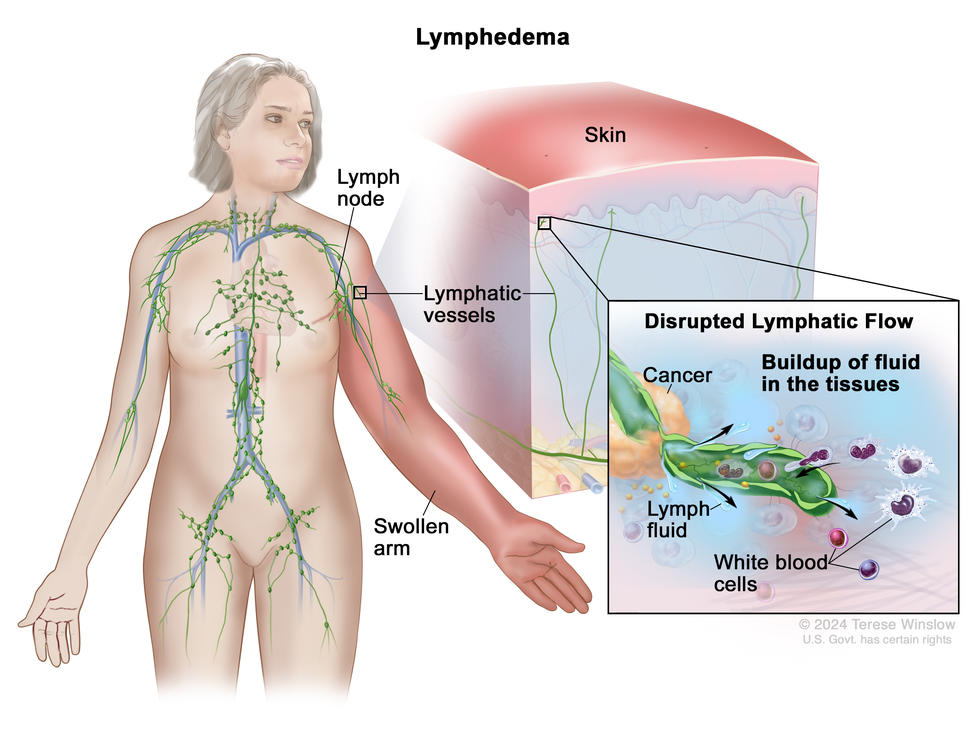
The lymph system helps the body fight infection and is made up of lymph nodes, lymphatic vessels, and organs that collect and carry lymph fluid through the body. If cancer or cancer treatment disrupts the flow of lymph fluid or damages lymph nodes and vessels, lymph fluid may build up and cause lymphedema.
Lymphedema is swelling caused by a buildup of lymph fluid in the body between the skin and muscle. Lymph fluid is part of the lymph system, which plays a role in your body’s ability to fight infection and disease. If you have cancer, the cancer or cancer treatment can disrupt the flow of lymph fluid and cause lymphedema (also known as secondary lymphedema). Lymphedema may arise soon after cancer treatment, or it may develop years after treatment has ended. Most often, it develops slowly over months or years.
Although lymphedema cannot be prevented, there are ways to lower your risk or keep lymphedema from getting worse.
Once lymphedema develops, it is a chronic condition that cannot be cured but can be treated to relieve swelling and improve your ability to function day to day. Lymphedema is easier to control when treatment starts early, so contact your doctor as soon as you notice heaviness, swelling, or other signs of lymphedema.
What causes lymphedema?
Anything that blocks or changes the flow of lymph fluid in the body can cause lymphedema. Cancer and cancer treatments can cause lymphedema when:
cancer or a tumor blocks the flow of lymph fluid
surgery for cancer disrupts the flow of lymph fluid
radiation therapy causes scar tissue that blocks the flow of lymph fluid
Your risk for lymphedema depends on the type and location of your cancer and the treatments you have. Other risk factors for lymphedema include having an infection, healing slowly after surgery, having lymph nodes removed, past surgeries or radiation, having advanced cancer, and being overweight or having obesity. Talk with your doctor to learn about your risk of lymphedema.
Lymphedema and breast cancer
Treatment for breast cancer often involves surgery that removes one or more lymph nodes in the underarm area, increasing the risk of lymphedema. If you have been treated for breast cancer with radiation therapy or surgery, you may develop lymphedema in your hand, arm, or chest on the side of the body where lymph nodes were removed or damaged.
Lymphedema and other cancers
Lymphedema can occur anywhere in the body, but it most commonly affects an arm or leg. Some cancers—especially those that form in the abdomen or genital area—and their treatments are more likely than others to cause lymphedema because they are located near lymph nodes and vessels. Lymphoma, a cancer that affects white blood cells (part of the lymph system), can also cause lymphedema as white blood cells build up and block lymph flow.
The type of cancer you have can help predict where you may develop lymphedema.
People with head and neck cancer may develop swelling in the face, neck, or under the chin. You may also develop lymphedema inside your body, such as in your throat, in which case the lymphedema may not be visible.
Lymphedema can also develop after surgery for melanoma and sarcoma.
What are symptoms of lymphedema?
You may notice symptoms of lymphedema in an arm or leg or near where you had surgery or received radiation therapy. Signs and symptoms may develop slowly over time, so pay close attention to any slight changes. Contact your doctor if you notice any of these signs of lymphedema.
Signs and symptoms of lymphedema anywhere in the body
A heavy, full, or tight feeling in the area where you had surgery or radiation therapy.
Swelling. When you press on the swollen area, a dent may remain in the skin. However, as lymphedema gets worse, pressing on the swollen area may no longer leave a dent.
Numbness or tingling in the affected area. Discomfort will worsen as lymphedema progresses.
Discoloration and hardening of the skin in people with long-term, untreated lymphedema.
Signs and symptoms of lymphedema in the arms or legs
Lymphedema in your arm or leg may cause these additional signs and symptoms:
a heavy, full, or tight feeling in your arm, leg, fingers, or toes
swelling in an arm or leg that makes it appear larger than the other arm or leg
difficulty moving your arm or leg
weakness in your arm or leg
Signs and symptoms of lymphedema in the head or neck
Lymphedema in your head or neck may cause these additional signs and symptoms:
swelling and a tight, uncomfortable feeling in your face, neck, or under your chin
aching, tingling, pain, or numbness in your face, head, neck, shoulders, or ears
difficulty moving your head or neck
difficulty speaking, eating, swallowing, or breathing
voice, vision, or hearing changes
Signs and symptoms of lymphedema in the genitals or abdomen
Lymphedema in your genitals or abdomen may cause these additional signs and symptoms:
swelling in the genital area or abdomen
difficult or painful urination
pain during walking, sex, and other movements
Lymphedema and cellulitis
Cellulitis is a potentially life-threatening bacterial infection of the skin that is a common complication of lymphedema. People with lymphedema are at greater risk of cellulitis because skin in swollen areas is stretched thin, allowing easier entry of bacteria that thrive in fluid-rich areas of the body.
Some signs and symptoms of cellulitis are similar to those of lymphedema. Always check with your doctor about any skin changes or other symptoms you experience. Symptoms of cellulitis include:
pain, tenderness, redness, and swelling in the affected area
skin that feels warm to the touch in the swollen area
fever
If you have a fever or other signs of cellulitis, call your doctor right away. If left untreated, cellulitis can become life-threatening. Your doctor can prescribe antibiotics to treat cellulitis.
How is lymphedema diagnosed?
You should watch for lymphedema signs and symptoms, such as tightness or swelling in an arm or leg, during and after cancer treatment. If you alert your doctor to swelling or other changes you have noticed, your doctor will examine the swollen part of your body. If swelling is affecting an arm or leg, they will compare the size of your swollen arm or leg with that of the other limb.
You may also have one or more of the following tests to help your doctor better understand the cause of swelling and what is disrupting the flow of lymph fluid:
Ultrasound uses high-energy sound waves to examine how fluid, such as blood and lymph, is moving through the body. Doctors can use ultrasound to find a blood clot that might be the cause of swelling.
Magnetic resonance imaging(MRI) uses a dye, magnet, radio waves, and computer to make a series of detailed pictures of areas inside the body. Magnetic resonance lymphangiography (MRL) is like an MRI, but it makes pictures of the lymph system. Doctors can use MRI and MRL to identify what might be blocking the flow of lymph.
CT scan uses a computer linked to an x-ray machine to make a series of detailed pictures of areas inside the body from different angles. A dye may be injected into a vein or swallowed to help the organs or tissues show up more clearly. This procedure is also called computed tomography, computerized tomography, or computerized axial tomography.
Perometry and water displacement are noninvasive techniques used to estimate the volume of a limb in people at risk of lymphedema.
Bioimpedance spectroscopy is a noninvasive technique used to measure the amount of fluid in the body. It can help determine whether a person who does not have symptoms is in the beginning stages of lymphedema. This tool is sometimes used to help prevent lymphedema in people who are at risk.
Lymphedema stages
If you are diagnosed with lymphedema, your doctor will use a staging system to describe the severity of your lymphedema.
Stage 0: The flow of lymph in the body is not moving as it should. You may or may not have symptoms.
Stage I: The affected area is swollen and feels heavy. Pressing on the swollen area leaves a pit (dent) in the skin. Resting and elevating the limb can help reduce swelling at this stage.
Stage II: The affected area is more swollen and may feel firmer than the area around it. Pressing on the swollen area does not leave a pit. Resting and elevating the limb no longer reduces swelling.
Stage III: The affected area is extremely swollen and the skin feels hard and thick. You may also have decreased mobility and dry, blistered skin in the affected area.
How is lymphedema treated?
Treatments are available for managing the symptoms of lymphedema. Your health care team will talk with you about management techniques that can be done at home or under the supervision of a trained professional such as a nurse or a certified lymphedema therapist (CLT), a physical or occupational therapist trained to treat lymphedema. Treatments include:
Short stretch bandaging, compression wraps, leggings, or stockings
These can help move fluid around in your arms and legs to prevent it from building up. They may also be called compression garments. Your nurse or CLT will help you find garments that fit properly and will show you how to use them.
Manual lymphatic drainage
Manual lymphatic drainage, also called lymphatic drainage massage, involves gentle massage that helps move lymph fluid through the body. Lymphatic drainage is part of a treatment called complete decongestive therapy, which is managed by a CLT. Complete decongestive therapy may also include bandaging, exercises, and skin care to manage symptoms.
Compression pump
This is a device connected to a compression sleeve or sock that applies pressure intermittently to the arm or leg. The pumping action may help keep lymph fluid moving, preventing buildup in the limbs.
Surgery and other treatments
If lymphedema is advanced, your doctor may recommend surgery or another medical treatment.
Lymphovenous bypass (also called lymphaticovenous anastomosis) is surgery that connects lymph vessels to a vein, creating a new path for lymph fluid to travel in the body.
Lymphovenous transplant (also called vascularized lymph node transfer) is surgery that replaces damaged lymph nodes with healthy lymph nodes from elsewhere in a person’s body, helping improve lymph flow.
Liposuction removes extra fat in the affected part of the body and may improve lymphedema symptoms.
Laser therapy uses light to stimulate new growth of lymphatic vessels, improve the flow of lymph fluid, and help repair skin affected by lymphedema.
Can I prevent lymphedema?
Although there is no way to prevent lymphedema, there are things you can do to lower your risk or keep it from getting worse. Your health care team may suggest the following things you can do at home:
Protect your skin to prevent infection. Wear gloves when cooking and gardening to protect your hands from injury. Use lotion to prevent dry skin and cracks where bacteria can enter. If you get a burn or cut, ask your doctor about an antibacterial ointment to use. Always call your doctor if you notice redness or other signs of infection.
Wear compression garments daily when you are up and moving around and at night as advised by your CLT.
Learn manual lymph drainage techniques from your CLT that you can do at home.
Exercise. Exercise is a natural pump for the lymph system. It can improve the flow of lymph fluid and keep the heart healthy, which may help treat lymphedema. Exercising may also help lower your risk of lymphedema. Talk with your doctor to find an exercise program that you enjoy and that is safe for you.
Elevate the affected area when possible. If you have lymphedema in your arm, try to keep it raised above the level of your heart when sitting or resting. If you have lymphedema in your leg, elevate it while lying down by resting it on a pillow or rolled-up blankets.
Stay at or get to a healthy weight. Being at a healthy weight can keep lymphedema under control.
Avoid putting pressure on the affected area. Wear loose jewelry and clothes without tight bands or elastic. Avoid carrying handbags or other items with an affected arm. Blood pressure and blood draws should be taken using the arm without lymphedema.
Avoid extreme heat and sun. High temperatures can make lymphedema worse. Use sunscreen and wear sun protection like hats and lightweight, long-sleeved shirts when spending time in the sun.
Stay hydrated. Drinking plenty of water will help keep lymph fluid moving through the body.
Reduce salt in your diet. Salt can make swelling worse by causing your body to retain fluid.
Talking with your doctor about lymphedema
As you prepare for a visit with your doctor, nurse, or social worker, consider making a list of questions to ask and adding these questions about lymphedema:
Does my type of cancer or treatment put me at risk of developing lymphedema?
What changes should I look for? Which ones should I call you about?
If I am at risk of developing lymphedema, are there things I can do to prevent it from starting or worsening?
How long after my cancer treatment might symptoms of lymphedema occur? Will I be monitored for early symptoms?
What steps can I take to lower my risk for lymphedema?
Are there special garments I should wear during the day or night to prevent or treat lymphedema?
If I am diagnosed with lymphedema, is there a certified lymphedema therapist I could meet with?
Coping with lymphedema
The physical changes that result from lymphedema can affect your well-being. You may not be able to do the activities you once enjoyed or find clothes that fit properly. You may feel uncomfortable with the way you look and isolated from those around you. Working with a CLT is often the best way to manage and cope with lymphedema.
For family members and friends who are caring for someone with cancer, you may find these suggestions for caregivers to be helpful.
Lymphedema research
Research is ongoing to discover new ways to prevent, diagnose, and treat lymphedema. Research studies called clinical trials help advance knowledge about lymphedema and other side effects of cancer and cancer treatment. Learn more at Clinical Trials Information for Patients and Caregivers.
Advances in cancer surgery and treatments are helping reduce the chances of lymphedema in people with cancer. For example, sentinel lymph node biopsy allows doctors to remove fewer lymph nodes when checking if the cancer has spread, decreasing the risk of lymphedema.
If treatment makes it hard to concentrate, talk with your nurse to get tips on how to keep track of important information.
Credit: iStock
Whether you have memory or concentration problems (sometimes described as a mental fog or chemo brain) depends on the type of treatment you receive, your age, and other health-related factors. Cancer treatments such as chemotherapy may cause difficulty with thinking, concentrating, or remembering things. So can some types of radiation therapy to the brain and immunotherapy.
These cognitive problems may start during or after cancer treatment. Some people notice very small changes, such as a bit more difficulty remembering things, whereas others have much greater memory or concentration problems.
Your doctor will assess your symptoms and advise you about ways to manage or treat these problems. Treating conditions such as poor nutrition, anxiety, depression, fatigue, and insomnia may also help.
Ways to manage memory or concentration problems
It’s important for you or a family member to tell your health care team if you have difficulty remembering things, thinking, or concentrating. Here are some steps you can take to manage minor memory or concentration problems:
Plan your day. Do things that need the most concentration at the time of day when you feel best. Get extra rest and plenty of sleep at night. If you need to rest during the day, short naps of less than 1 hour are best. Long naps can make it more difficult to sleep at night. Keep a daily routine.
Exercise your body and mind. Exercise can help to decrease stress and help you to feel more alert. Exercise releases endorphins, also known as “feel-good chemicals,”which give people a feeling of well-being. Ask what light physical exercises may be helpful for you. Mind–body practices such as meditation or mental exercises such as puzzles or games also help some people.
Get help to remember things. Write down and keep a list handy of important information. Use a daily planner, recorder, or other electronic device to help you remember important activities. Make a list of important names and phone numbers. Keep it in one place so it’s easy to find.
Talking with your health care team about memory or concentration problems
It’s important for you or a family member to talk with your doctor or nurse about any memory or cognitive changes you may have. Prepare for your visit by making a list of questions to ask. Consider adding these questions to your list:
Am I at increased risk of cognitive problems based on the treatment I am receiving?
When might these problems start to occur? How long might they last?
Are there steps I can take to decrease these problems?
What symptoms or other problems should I, or a family member, call you about?
Could I meet with a social worker to get ideas about additional support and resources?
Cancer treatments can cause nausea and vomiting. These side effects can be prevented by medicine. Sometimes, several different medicines may need to be tried to find the one that works best.
Credit: iStock
Nausea is when you feel sick to your stomach, as if you are going to throw up. Vomiting is when you throw up.
What cancer treatments can cause nausea and vomiting?
Narrator: What to do about nausea and vomiting during radiation therapy.
Do you have an upset stomach or are you vomiting? Rodney offers tips from his nurse that helped him. Let’s hear what he has to say.
Rodney: I think there is one thing we can all agree on—vomiting is no good. There were days during radiation therapy that I was just so sick. So, I called my doctor, and he prescribed some medicine that helped a lot.
In addition to getting and taking medicine that helped a lot, my nurse gave me 3 tips. I did these things on days when it was hard to keep food down, and I want to share them with you.
Tip 1: Eat small meals – 5 or 6 small meals stayed down easier for me than 3 big meals.
Tip 2: Try drinks and foods that are easy on the stomach. Clear soft drinks, crackers, and plain toast are easy to digest.
Tip 3: Sit up or go for a short walk after eating.
Try these tips. They worked for me. I hope they can help you prevent nausea and vomiting, too.
Oh, it also helped to have a small snack before treatment. That seemed to work best for me. But one of the guys in the waiting room said that it worked best for him to avoid eating or drinking before treatment. Talk with your doctor to learn what might work best for you.
Narrator Summary: Feeling sick to your stomach and vomiting can cause you to lose fluids that your body needs. Talk with your doctor or nurse if you are vomiting and cannot keep down fluids. There is medicine that can help. So can following the 3 tips from Rodney’s nurse:
Tip number 1: Eat 5 or 6 small meals a day.
Tip number 2: When you are feeling sick to your stomach, choose drinks and foods that are easy to digest, such as clear soft drinks, crackers, and plain toast.
Tip number 3: It can help to sit up or take a short walk after eating.
Finally, be sure to talk with your doctor or nurse to learn more about how to manage nausea and vomiting.
//
/**/
What are the different types of nausea and vomiting?
What serious problems can nausea and vomiting cause?
Nausea and vomiting can cause serious health problems such as malnutrition and dehydration. Controlling nausea and vomiting can help to prevent these problems. It can also help you to feel better.
Your doctor or nurse will work to figure out what is causing your symptoms. Medicines called anti-nausea drugs or antiemetics work well and are effective in preventing or reducing many types of nausea and vomiting. The medicine is taken at specific times to prevent and/or control symptoms of nausea and vomiting.
Here are some practical tips and steps you can take to feel better when you have nausea and vomiting:
Take an anti-nausea medicine. Talk with your doctor or nurse to learn when to take your medicine. Most people need to take an anti-nausea medicine even on days when they feel well. Tell your doctor or nurse if the medicine doesn’t help. There are different kinds of medicine and one may work better than another for you.
Drink plenty of water and fluids. Drinking will help to prevent dehydration, a serious problem that happens when your body loses too much fluid and you are not drinking enough. Try to sip on water, fruit juices, ginger ale, tea, and/or sports drinks throughout the day.
Avoid certain foods. Don’t eat greasy, fried, sweet, or spicy foods if you feel sick after eating them. If the smell of food bothers you, ask others to make your food. Try cold foods that do not have strong smells, or let food cool down before you eat it.
Try these tips on treatment days. Some people find that it helps to eat a small snack before treatment. Others avoid eating or drinking right before or after treatment because it makes them feel sick. After treatment, wait at least 1 hour before you eat or drink.
Narrator: What to do about nausea and vomiting during radiation therapy.
Do you have an upset stomach or are you vomiting? Rodney offers tips from his nurse that helped him. Let’s hear what he has to say.
Rodney: I think there is one thing we can all agree on—vomiting is no good. There were days during radiation therapy that I was just so sick. So, I called my doctor, and he prescribed some medicine that helped a lot.
In addition to getting and taking medicine that helped a lot, my nurse gave me 3 tips. I did these things on days when it was hard to keep food down, and I want to share them with you.
Tip 1: Eat small meals – 5 or 6 small meals stayed down easier for me than 3 big meals.
Tip 2: Try drinks and foods that are easy on the stomach. Clear soft drinks, crackers, and plain toast are easy to digest.
Tip 3: Sit up or go for a short walk after eating.
Try these tips. They worked for me. I hope they can help you prevent nausea and vomiting, too.
Oh, it also helped to have a small snack before treatment. That seemed to work best for me. But one of the guys in the waiting room said that it worked best for him to avoid eating or drinking before treatment. Talk with your doctor to learn what might work best for you.
Narrator Summary: Feeling sick to your stomach and vomiting can cause you to lose fluids that your body needs. Talk with your doctor or nurse if you are vomiting and cannot keep down fluids. There is medicine that can help. So can following the 3 tips from Rodney’s nurse:
Tip number 1: Eat 5 or 6 small meals a day.
Tip number 2: When you are feeling sick to your stomach, choose drinks and foods that are easy to digest, such as clear soft drinks, crackers, and plain toast.
Tip number 3: It can help to sit up or take a short walk after eating.
Finally, be sure to talk with your doctor or nurse to learn more about how to manage nausea and vomiting.
If mouth and throat side effects make it difficult to eat, try softer foods. Talk with your doctor about mouth rinses and pain medicine that can help.
Credit: National Cancer Institute
What causes oral complications during cancer treatment?
Cancer treatments may cause mouth, throat, and dental problems. Radiation therapy to the head and neck may harm the salivary glands and tissues in your mouth and/or make it hard to chew and swallow safely. Some types of chemotherapy and immunotherapy can also harm cells in your mouth, throat, and lips. Drugs used to treat cancer and certain bone problems may also cause oral problems.
Mouth problems (also called oral problems) are more serious if they interfere with eating and drinking because they can lead to dehydration and/or malnutrition. It’s important to call your doctor or nurse if you have pain in your mouth, lips, or throat that makes it difficult to eat, drink, or sleep or if you have a fever of 100.5 °F (38 °C) or higher.
Your doctor or nurse may advise you to take these and other steps:
Get a dental check-up before starting treatment. Before you start treatment, visit your dentist for a cleaning and check-up. Tell the dentist about your cancer treatment and try to get any dental work completed before starting treatment.
Check and clean your mouth daily. Check your mouth every day for sores or white spots. Tell your doctor or nurse as soon as you notice any changes, such as pain or sensitivity. Rinse your mouth throughout the day with a solution of warm water, baking soda, and salt. Ask your nurse to write down the mouth rinse recipe that is recommended for you. Gently brush your teeth, gums, and tongue after each meal and before going to bed at night. Use a very soft toothbrush or cotton swabs. If you are at risk of bleeding, ask if you should floss.
Ways to manage mouth problems and changes in taste
Your health care team may suggest that you take these and other steps to manage these problems:
For a sore mouth or throat: Choose foods that are soft, wet, and easy to swallow. Soften dry foods with gravy, sauce, or other liquids. Use a blender to make milkshakes or blend your food to make it easier to swallow. Ask about pain medicine, such as lozenges or sprays that numb your mouth and make eating less painful. Avoid foods and drinks that can irritate your mouth; foods that are crunchy, salty, spicy, or sugary; and alcoholic drinks. Don’t smoke or use tobacco products.
For a dry mouth: Drink plenty of liquids because a dry mouth can increase the risk of tooth decay and mouth infections. Keep water handy and sip it often to keep your mouth wet. Suck on ice chips or sugar-free hard candy, have frozen desserts, or chew sugar-free gum. Use a lip balm. Ask about medicines such as saliva substitutes that can coat, protect, and moisten your mouth and throat. Acupuncture may also help with dry mouth.
For changes to your sense of taste: Foods may seem to have no taste or may not taste the way they used to or food may not have much taste at all. Radiation therapy may cause a change in sweet, sour, bitter, and salty tastes. Chemotherapy drugs may cause an unpleasant chemical or metallic taste in your mouth. If you have taste changes it may help to try different foods to find ones that taste best to you. Trying cold foods may also help. Here are some more tips to consider:
Improving Taste and Smell During Cancer Treatment
Cancer and its treatment can cause changes in taste or smell that can make it hard to eat. Try our tips to deal with these changes.
If food tastes bland, marinate foods to improve their flavor or add spices to foods.
If red meat tastes strange, switch to other high-protein foods such as chicken, eggs, fish, peanut butter, turkey, beans, or dairy products.
If foods taste salty, bitter, or acidic, try sweetening them.
If foods taste metallic, switch to plastic utensils and non-metal cooking dishes.
If you have a bad taste in your mouth, try sugar-free lemon drops, gum, or mints.
Talking with your health care team about mouth and throat problems
Prepare for your visit by making a list of questions to ask. Consider adding these questions to your list:
When might these problems start to occur? How long might they last?
What steps can I take to feel better?
What medicines can help?
What symptoms or problems should I call the doctor about?
What pain medicine and/or mouthwashes could help me?
Would you recommend a registered dietitian who I could see to learn about good food choices?
For people receiving radiation therapy to the head and neck: Should I take supplements such as zinc, to help my sense of taste come back after treatment?
Good hand washing practices can help to prevent infection, which is especially important when a person is being treated for cancer.
Credit: National Cancer Institute
An infection is the invasion and growth of germs in the body, such as bacteria, viruses, yeast, or other fungi. An infection can begin anywhere in the body, may spread throughout the body, and can cause one or more of these signs:
fever of 100.5 °F (38 °C) or higher
chills
cough or sore throat
diarrhea
ear pain, headache or sinus pain, or a stiff or sore neck
sores or white coating in your mouth or on your tongue
swelling or redness, especially where a catheter enters your body
urine that is bloody or cloudy, or pain when you urinate
Call your health care team if you have signs of an infection. Infections during cancer treatment can be life threatening and require urgent medical attention. Be sure to talk with your doctor or nurse before taking medicine—even aspirin, acetaminophen (such as Tylenol®), or ibuprofen (such as Advil®) for a fever. These medicines can lower a fever but may also mask or hide signs of a more serious problem.
Some types of cancer and treatments such as chemotherapy may increase your risk of infection. This is because they lower the number of white blood cells, the cells that help your body to fight infection. During chemotherapy, there will be times in your treatment cycle when the number of white blood cells (called neutrophils) is particularly low and you are at increased risk of infection. Stress, poor nutrition, and not enough sleep can also weaken the immune system, making infection more likely.
You will have blood tests to check for neutropenia (a condition in which there is a low number of neutrophils). Medicine may sometimes be given to help prevent infection or to increase the number of white blood cells.
Ways to prevent infection
Your health care team will talk with you about these and other ways to prevent infection:
Wash your hands often and well. Use soap and warm water to wash your hands well, especially before eating. Have people around you wash their hands well too.
Stay extra clean. If you have a catheter, keep the area around it clean and dry. Clean your teeth well and check your mouth for sores or other signs of an infection each day. If you get a scrape or cut, clean it well. Let your doctor or nurse know if your bottom is sore or bleeds, as this could increase your risk of infection.
Avoid germs. Stay away from people who are sick or have a cold. Avoid crowds and people who have just had a live vaccine, such as one for chicken pox, polio, or measles. Follow food safety guidelines; make sure the meat, fish, and eggs you eat are well cooked. Keep hot foods hot and cold foods cold. You may be advised to eat only fruits and vegetables that can be peeled, or to wash all raw fruits and vegetables very well.
Food Safety for People with Cancer
Some cancer treatments make it easier for you to get sick from contaminated food. Our 8 tips for food safety during cancer treatment can help you properly handle and prepare food to reduce your risk of foodborne illness.
Talking with your health care team about infection
Prepare for your visit by making a list of questions to ask. Consider adding these questions to your list:
Am I at increased risk of infection during treatment? When am I at increased risk?
What steps should I take to prevent infection?
What signs of infection should I look for?
Which signs signal that I need urgent medical care at the emergency room? Which should I call you about?
If treatment will cause hair loss, try wearing fun scarves and earrings—or a cap, from time to time.
Credit: National Cancer Institute
Some types of chemotherapy cause the hair on your head and other parts of your body to fall out. Radiation therapy can also cause hair loss on the part of the body that is being treated. Hair loss is called alopecia. Talk with your health care team to learn if the cancer treatment you will be receiving causes hair loss. Your doctor or nurse will share strategies that have helped others, including those listed below.
Ways to manage hair loss
Talk with your health care team about ways to manage before and after hair loss:
Treat your hair gently. You may want to use a hairbrush with soft bristles or a wide-tooth comb. Do not use hair dryers, irons, or products such as gels or clips that may hurt your scalp. Wash your hair with a mild shampoo. Wash it less often and be very gentle. Pat it dry with a soft towel.
You have choices. Some people choose to cut their hair short to make it easier to deal with when it starts to fall out. Others choose to shave their head. If you choose to shave your head, use an electric shaver so you won’t cut yourself. If you plan to buy a wig, get one while you still have hair so you can match it to the color of your hair. If you find wigs to be itchy and hot, try wearing a comfortable scarf or turban.
Protect and care for your scalp. Use sunscreen or wear a hat when you are outside. Choose a comfortable scarf or hat that you enjoy and that keeps your head warm. If your scalp itches or feels tender, using lotions and conditioners can help it feel better.
Talk about your feelings. Many people feel angry, depressed, or embarrassed about hair loss. It can help to share these feelings with someone who understands. Some people find it helpful to talk with other people who have lost their hair during cancer treatment. Talking openly and honestly with your children and close family members can also help you all. Tell them that you expect to lose your hair during treatment.
Ways to care for your hair when it grows back
Be gentle. When your hair starts to grow back, you will want to be gentle with it. Avoid too much brushing, curling, and blow-drying. You may not want to wash your hair as frequently.
After chemotherapy. Hair often grows back in 2 to 3 months after treatment has ended. Your hair will be very fine when it starts to grow back. Sometimes your new hair can be curlier or straighter—or even a different color. In time, it may go back to how it was before treatment.
After radiation therapy. Hair often grows back in 3 to 6 months after treatment has ended. If you received a very high dose of radiation your hair may grow back thinner or not at all on the part of your body that received radiation.
Talking with your health care team about hair loss
Prepare for your visit by making a list of questions to ask. Consider adding these questions to your list:
Is treatment likely to cause my hair to fall out?
How should I protect and care for my head? Are there products that you recommend? Ones I should avoid?
Learn about flu-like symptoms you may have during treatment for cancer. Know when to call your doctor or seek urgent medical care.
Credit: iStock
Flu-like symptoms (also called flu-like syndrome) are a group of related side effects that may be caused by cancer treatments, such as chemotherapy and immunotherapy. If flu-like symptoms are severe, you may be advised to seek immediate medical attention. Some people who receive higher doses of treatment, or more than one treatment at a time, may have more severe flu-like symptoms.
Talk with your doctor so you know what flu-like symptoms to expect, based on your cancer treatment.
Some types of chemotherapy can cause flu-like symptoms within a few hours after treatment. These symptoms generally last for 2 to 3 days.
Ways to manage flu-like symptoms during cancer treatment
Keep in mind that when these symptoms occur in people receiving immunotherapy they may be diagnosed, managed, and treated differently than when they are caused by other cancer treatments.
When your doctor recommends self care, here are steps you can take to feel better:
Appetite loss: Drink water and other fluids advised by your health care team to stay hydrated. Drinking fluids is especially important if you are not eating much. It may be easier to eat small meals, and to eat more often. Choose foods that are high in calories and protein to give your body strength. Learn more about how to manage appetite loss.
Chills: Chills are your body’s way of increasing your temperature. Ask your health care team what steps you should take if you have chills. Your health care team may advise you not to pile on blankets, since this can cause your temperature to rise even higher. When chills are severe, doctors may prescribe medicine.
Diarrhea: Drink plenty of water to replace fluids you lose when you have diarrhea. Water and other fluids will help prevent dehydration, which may cause you to feel weak, dizzy, and disoriented. Your doctor may prescribe an over-the-counter diarrhea medicine. If you are receiving immunotherapy, diagnostic tests may be advised to rule out gastritis, a more serious medical condition. Learn more about how to manage diarrhea.
Fatigue: Balance periods of rest with periods of activity. Choose the time of the day when you have the most energy to do an activity or to exercise. Regular exercise can help you to keep up your strength and stamina during treatment. Learn more about how to manage fatigue.
Fever: Your body loses fluids when you have a fever, so it’s important to drink water to prevent dehydration. You may want to rest and put an ice pack on your forehead. Sometimes taking medicine to lower a fever can mask a more serious problem. For this reason, you may be advised to call your doctor before taking medicine to lower a fever.
Headache and/or body aches: Use ice packs or place a cold washcloth on your forehead to get relief. If advised by your doctor, take over-the-counter pain relievers such as acetaminophen, ibuprofen, or aspirin.
Nausea and vomiting: Try to take small sips of water, fruit juices, ginger ale, tea, and/or sports drinks, if recommended, throughout the day. Learn more about how to manage nausea and vomiting.
If these symptoms last or become severe, your doctor may advise diagnostic tests to identify what is causing these problems and determine how best to treat them.
Talking with your health care team about flu-like symptoms
Prepare for your visit by making a list of questions to ask. Consider adding these questions to your list:
What flu-like symptoms are common for the type of treatment I’m receiving?
What problems should I call you about? Are there any symptoms that need urgent medical care?
When might these symptoms start? How long might they last?
Should I keep track of any symptoms?
How much fluid should I drink every day? What types of fluids are best for me to drink?
Are there medicines I should take to feel better? Are there medicines I should avoid or call you before taking?
Treatment for cancer may cause changes to a girl’s or a woman’s fertility.
Credit: iStock
Cancer treatments can lower your fertility by making it difficult to become pregnant or to carry a pregnancy. Most likely, your doctor will talk with you about whether or not cancer treatment may increase the risk of fertility problems or cause infertility. Sometimes you, or parents of a child being treated for cancer, may need to initiate this conversation with the doctor.
Whether fertility is affected depends on factors such as:
Cancer treatments are important for your future health, but they may harm reproductive organs and glands that control fertility. Changes to your fertility may be temporary or permanent.
Talk with your health care team to learn what to expect, based on your treatment(s):
Chemotherapy (especially with drugs called alkylating agents) can affect the ovaries, causing them to stop releasing mature eggs and producing estrogen. This consequence of chemotherapy is called primary ovarian insufficiency (also called premature ovarian failure). Sometimes it’s temporary and your menstrual periods and fertility return after treatment. Other times, damage to your ovaries is permanent and you may experience premature menopause. Symptoms may include hot flashes, night sweats, irritability, vaginal dryness, and irregular or no menstrual periods. Chemotherapy can also lower the number of total eggs in the ovaries. Women who are closer to the age of natural menopause may have a greater risk of ovarian failure and/or infertility. Learn more about primary ovarian insufficiency from the National Institute for Child Health and Human Development.
Radiation therapy to or near the abdomen, pelvis, or spine can harm nearby reproductive organs. Radiation therapy to the ovaries can cause primary ovarian insufficiency, while radiation therapy to the uterus can affect blood flow, which may increase pregnancy-related complications. Radiation therapy to the brain can harm the pituitary gland. This gland is important because it sends signals to the ovaries to make hormones such as estrogen that are needed for ovulation. The amount of radiation given, and the part of your body being treated, play a role in whether fertility is affected.
Stem cell transplants involve receiving high doses of chemotherapy and/or radiation. These treatments can damage the ovaries and may cause infertility as a result.
Surgery for cancers of the reproductive organs and for cancers in the pelvic region can harm nearby reproductive tissues and cause scarring, which can affect your fertility. The size and location of the tumor are important factors in whether your fertility is affected.
Making decisions about whether to preserve your fertility isn’t easy. You’ll need to learn about the risks of the proposed cancer treatment to your fertility as well as the best fertility preservation options for you. Infertility can be a difficult and upsetting side effect of some cancer treatments.
Although it might feel overwhelming to think about your fertility right now, most people benefit from having talked with their doctor (or their child’s doctor, when a child is being treated for cancer) about how treatment may affect their fertility and options to preserve fertility.
Although many people want to have children at some point in their life, families can come together in different ways. For support reach out to your health care team with questions or concerns, as well as to professionally led cancer support groups.
If you are a young person with cancer or the parent of a young girl or teen with cancer, this video of fertility options for young female cancer patients from the Children’s Hospital of Philadelphia may help you talk with the healthcare team.
Fertility preservation options for girls and women
Fertility preservation is the process of saving or protecting your eggs, or reproductive tissue, in order to have biological children in the future. Women and girls with cancer have options to preserve their fertility. These procedures may be available at the hospital where you are receiving cancer treatment or at a fertility preservation clinic.
Talk with your doctor about the best option(s) for you based on your age, the type of cancer you have, and the specific treatment(s) you will be receiving.
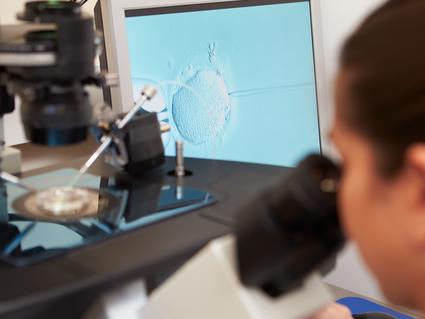
Egg freezing (also called egg banking, egg cryopreservation, or oocyte cryopreservation) is a procedure in which mature eggs are removed from the ovary and frozen. Later, when you are ready to try to become pregnant, the eggs can be thawed, fertilized with sperm in the lab to form embryos, and placed in your uterus. Egg freezing is a newer procedure than embryo freezing and does not have as long of a track record of success as embryo freezing, but it may be especially suitable if you do not have a partner.
Embryo freezing (also called embryo banking or embryo cryopreservation) is a procedure in which eggs are removed from the ovary and then fertilized with sperm in the lab to form embryos that are frozen for future use. When you are ready to try to become pregnant, the frozen embryos are thawed and placed in the uterus.
Gonadotropin-releasing hormone agonist (GnRHa) is a drug that causes egg maturation as well as estrogen and progesterone production in the ovaries to stop. Research in women with breast cancer has found that using GnRHa can protect against premature ovarian failure.
Ovarian shielding (also called gonadal shielding) is a procedure that can be done during radiation treatment, in which a protective cover is placed over the ovaries and other parts of the reproductive system, to shield them from scatter radiation.
Ovarian tissue freezing (also called ovarian tissue banking and ovarian tissue cryopreservation) involves surgically removing part or all of an ovary and then freezing the ovarian tissue, which contains eggs. Later, when you are ready to try to become pregnant, the tissue is thawed and placed back into your body.
Ovarian transposition (also called oophoropexy) is an operation to move the ovaries away from the part of the body receiving radiation therapy to lessen the potential for damage from the radiation. This procedure may be done during surgery to remove the cancer.
Radical trachelectomy (also called radical cervicectomy) is surgery used to treat women with early-stage cervical cancer who would like to be pregnant in the future. This operation removes the cervix, nearby lymph nodes, and the upper part of the vagina. The uterus is then attached to the remaining part of the vagina, with a special band that keeps the uterus closed during pregnancy.
If you choose to take steps to preserve your fertility, your doctor and a fertility specialist will work together to develop a treatment plan that includes fertility preservation, whenever possible. Your health care team will advise you on the timing of fertility procedures you may choose to have and whether a delay may affect your treatment plan and prognosis.
Getting personalized care
It’s important to make decisions that reflect what is important to you. If having biological children is important, talk with your health care team about how the proposed cancer treatment may affect your ability to become pregnant. These conversations can help you get the information you need to make decisions. Most people with cancer are glad they had these discussions with their doctor.
Finding more resources, financial support, and clinical trials
These organizations also have information about fertility preservation options for people with cancer:
Oncofertility Consortium Learn more about fertility preservation options, connect with a patient navigator, and find community resources.
Livestrong Fertility Access financial support and find a fertility clinic in your area if cancer treatment presents a risk to your fertility. Learn about a discount program for qualifying patients.
What Women Can Do About Changes in Sexuality and Fertility
Narrator: What women can do about changes in sexuality and fertility caused by radiation therapy.
You may be wondering if radiation therapy could affect your sex life. Let’s listen to a discussion between Dr. Williams and women in a support group as they talk first about sexuality issues that relate to all women getting radiation therapy. And then to questions from women receiving radiation therapy to the pelvic area – such as to the vagina, uterus, or ovaries – about fertility issues. Let’s listen in on their discussion.
Gina: Dr. Williams, I’m Gina. My husband and I had a pretty active sex life before I started treatment. Now, I’m just not in the mood. Is this normal?
Dr. Williams: Yes it is, Gina. You’re going through a lot these days. Coping with cancer, feeling very tired, or being in pain can lower sexual desires. Try to be easy on yourself. It can help to talk with your husband about what you’re feeling. There are many ways to stay close during this time other than having sex. Holding, hugging, and cuddling are ways that help many people stay connected.
Kim: That’s true, Dr. Williams. My partner and I sit side by side when we watch TV. And sometimes we give each other backrubs. My question is about whether or not I need to use birth control during radiation therapy.
Dr. Williams: Yes, women who’ve not yet gone through menopause and who are having intercourse should talk with their doctor about birth control and ways to keep from getting pregnant.
It’s very important not to get pregnant during radiation therapy. The treatment can harm an unborn baby.
Cara: Dr. Williams, I am getting radiation to my pelvis, and it’s causing some changes in my vagina. It feels dry and itchy, and, frankly, sex hurts.
Dr. Williams: I’m sorry to hear that. This is a common side effect for women getting radiation to the pelvis. Many women are helped by products such as Replens, Astroglide, or K-Y liquid. These products help make the vagina moist. Your doctor may also suggest a gel or cream to stop an itchy, dry, or burning feeling.
In some cases, something called a dilator can also help. It stretches the vagina. Talk with your nurse to learn more about this product.
Cara: Dr. Williams, before I got cancer my husband and I were ready to start a family. Now I’m not so sure if that’s going to be possible. What can we do?
Dr. Williams: Cara, I’m glad you asked about that. First, it’s good to know that there are more fertility options these days than there used to be. It’s best to talk with your doctor before treatment starts if you’ll be receiving radiation therapy to the pelvis and would like to get pregnant after radiation therapy.
Your doctor can talk with you about things you can do now to plan for the future or refer you to a fertility specialist.
Any more questions?
Well, okay—it’s been a pleasure to talk with all of you. I’ll be staying around to answer any individual questions that you may have.
Narrator Summary: Remember—you may have less desire for sex during radiation therapy. Talk with your partner to find new ways to show affection and feel connected.
If you are having sex, make sure to use birth control since radiation therapy can harm an unborn baby.
And for women getting radiation to the pelvis there are 2 suggestions:
First, ask your nurse about products that can help make the vagina feel more comfortable or stretch the vagina.
Second, talk with your doctor before treatment if you are interested in having children after treatment. There are things you can do now to plan for the future.
Finally, be sure to talk with your health care team to learn more about how to manage and prepare for any changes in sexuality and fertility that may happen.
Leaving ChemoPrescribe
You are now leaving ChemoPrescribe website.
To return to the website, click on the back arrow on your browser.