FDA Approves KEYTRUDA® plus Trastuzumab and Chemotherapy for HER2 Positive Gastric or Gastroesophageal Junction Cancer

SUMMARY: The FDA on May 5, 2021 granted accelerated approval to KEYTRUDA® (Pembrolizumab) in combination with Trastuzumab, Fluoropyrimidine and Platinum-containing chemotherapy for the first-line treatment of patients with locally advanced unresectable or metastatic HER2 positive Gastric or GastroEsophageal Junction (GEJ) adenocarcinoma. The American Cancer Society estimates that in the US, about 26,560 new cases of Gastric cancer will be diagnosed in 2021 and about 11,180 people will die of the disease. It is one of the leading causes of cancer-related deaths in the world. Several hereditary syndromes such as Hereditary Diffuse Gastric Cancer (HDGC), Lynch syndrome (Hereditary Nonpolyposis Colorectal Cancer) and Familial Adenomatous Polyposis (FAP) have been associated with a predisposition for Gastric cancer. Additionally, one of the strongest risk factor for Gastric adenocarcinoma is infection with Helicobacter pylori (H.pylori), which is a gram-negative, spiral-shaped microaerophilic bacterium.

Majority of the patients with Gastric and GastroEsophageal (GE) Adenocarcinoma have advanced disease at the time of initial presentation and have limited therapeutic options with little or no chance for cure. The Human Epidermal growth factor Receptor (HER) or erbB family of receptors, consist of HER1, HER2, HER3 and HER4. Approximately 15-20% of advanced Gastric and GastroEsophageal (GE) junction cancers, overexpress or have amplification of the HER2 oncogene. These patients often receive first line treatment with a combination of chemotherapy plus anti-HER2 antibody, Trastuzumab, as there is Overall Survival (OS) benefit with this combination regimen.
KEYTRUDA® is a fully humanized, Immunoglobulin G4, anti-PD-1, monoclonal antibody, that binds to the PD-1 receptor expressed on activated T cells, and blocks its interaction with ligands PD-L1 and PD-L2. It thereby reverses the PD-1 pathway-mediated inhibition of the immune response and unleashes the tumor-specific effector T cells. In two Phase II studies, KEYTRUDA® in combination with Trastuzumab and chemotherapy showed promising efficacy with manageable toxicities.

The present FDA approval was based on KEYNOTE-811 trial, an ongoing global, multicenter, randomized, double blind, placebo controlled, Phase III study, which assessed whether adding KEYTRUDA® to Standard of Care chemotherapy improved efficacy, compared to Standard of Care alone, among patients with HER2+ metastatic Gastric/GEJ cancer. A total of 692 patients were enrolled and patients were randomized (1:1) to receive KEYTRUDA® 200 mg IV or placebo IV every 3 weeks, in combination with Trastuzumab and investigator’s choice of Fluorouracil plus Cisplatin (FP), or Capecitabine plus Oxaliplatin (CAPOX). Treatment is being given for up to 2 years or until intolerable toxicity or progressive disease. Patients were enrolled irrespective of PD-L1 status, and HER2-positive status was defined as ImmunoHistoChemistry (IHC) 3+ or IHC 2+ and FISH positivity. The dual Primary end points are Progression Free Survival (PFS) by Blinded, Independent Central Review (BICR) and Overall Survival (OS). Secondary end points are Overall Response Rate (ORR) and Duration of Response (DOR) assessed by BICR, and Safety.

The first interim analysis included 264 patients with a median follow up of 12 months. At the time of this interim analysis, 133 patients were randomized to KEYTRUDA® plus Standard of Care and 131 patients to Placebo plus Standard of care. Approximately 88% and 85% of the patients in the KEYTRUDA® and Placebo groups respectively, had a PD-L1 Combined Positive Score of 1 or more.
The confirmed ORR was 74.4% for KEYTRUDA® plus Standard of Care versus 51.9% for Placebo plus Standard of care (P=0.00006). The Complete Response rate was 11.3% versus 3.1% and Disease Control Rate was 96.2% versus 89.3% respectively. The median Duration of Response was 10.6 months for patients treated with KEYTRUDA® and 9.5 months for those in the placebo group. Adverse Events were similar between the two treatment groups and immune-mediated pneumonitis and colitis were more common as expected, in the KEYTRUDA® group.

It was concluded that the addition of KEYTRUDA® to Trastuzumab and chemotherapy, as first line therapy for HER2+ metastatic Gastric/GE Junction cancer, resulted in a substantial, statistically significant increase in Overall Response Rate, compared to Trastuzumab and chemotherapy alone. The authors added that these initial data are practice-changing and support KEYTRUDA® plus Trastuzumab and chemotherapy as a potential new treatment option for this patient group.

Pembrolizumab plus trastuzumab and chemotherapy for HER2+ metastatic gastric or gastroesophageal junction (G/GEJ) cancer: Initial findings of the global phase 3 KEYNOTE-811 study. Janjigian YY, Kawazoe A, Yanez PE, et al. DOI: 10.1200/JCO.2021.39.15_suppl.4013 Journal of Clinical Oncology 39, no. 15_suppl (May 20, 2021) 4013-4013.
Platinum Chemotherapy Inferior to XELODA® in Triple Negative Breast Cancer Following Neoadjuvant Chemotherapy

SUMMARY: Breast cancer is the most common cancer among women in the US and about 1 in 8 women (12%) will develop invasive breast cancer during their lifetime. Approximately 284,200 new cases of breast cancer will be diagnosed in 2021 and about 44,130 individuals will die of the disease, largely due to metastatic recurrence.

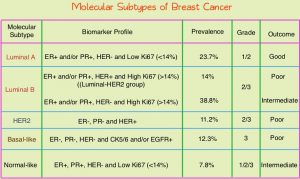
Breast cancer is heterogeneous malignancy and using global gene expression analyses, 6 breast cancer intrinsic subtypes have been established. They include Luminal A, Luminal B, HER2-enriched, Claudin-low, Basal-like, and a Normal breast-like group. Triple Negative Breast Cancer (TNBC) is a heterogeneous, molecularly diverse group of breast cancers and are ER (Estrogen Receptor), PR (Progesterone Receptor) and HER2 (Human Epidermal Growth Factor Receptor-2) negative. TNBC accounts for 15-20% of invasive breast cancers, with a higher incidence noted in young patients and African American females. It is a surrogate for the inherently aggressive Basal-like breast cancer subtype. This group has the worse prognosis compared to other breast cancer subtypes and is usually aggressive, and tumors tend to be high grade. Patients with TNBC are at a higher risk for both local and distant recurrence and often develop visceral metastases. Those with metastatic disease have one of the worst prognoses of all cancers, with a median Overall Survival of 13 months. The majority of patients with TNBC who develop metastatic disease do so within the first 3 years after diagnosis, whereas those without recurrence during this period of time have survival rates similar to those with ER-positive breast cancers. Basal-like breast cancer subtype is also a marker of hereditary breast cancer susceptibility. Multiparity may increase the risk of TNBC and reduce the likelihood of developing ER-positive breast cancer. The lack of known recurrent oncogenic drivers in patients with metastatic TNBC, presents a major therapeutic challenge.Molecular-Subtypes-of-Breast-Cancer

Nonetheless, patients with TNBC often receive chemotherapy in the neoadjuvant, adjuvant or metastatic settings and approximately 30-40% of patients achieve a pathological Complete Response (pCR) in the neoadjuvant setting. In addition to increasing the likelihood of tumor resectability and breast preservation, patients achieving a pCR following neoadjuvant chemotherapy have a longer Event Free Survival (EFS) and Overall Survival (OS). Those who do not achieve a pathological Complete Response tend to have a poor prognosis. For all these reasons, pCR is considered a valid endpoint for clinical testing of neoadjuvant therapy in patients with early stage TNBC. Patients with TNBC are at a high risk for recurrence if they have residual invasive disease, following completion of standard neoadjuvant chemotherapy.

In the Phase III CREATE-X trial, the addition of adjuvant XELODA® (Capecitabine) therapy was found to be safe and effective in prolonging Disease Free Survival (DFS) and Overall Survival (OS) among patients with HER2-negative breast cancer, who had residual invasive disease on pathological evaluation, following neoadjuvant chemotherapy (N Engl J Med 2017;376:2147-2159).

Based on the preclinical models supporting the use of platinum agents in the TNBC Basal-like subtype, the EA1131 trial was conducted to test the hypothesis that adjuvant platinum chemotherapy would improve invasive DFS compared with XELODA®, in patients with clinical Stage II-III TNBC, who had Basal-like subtype invasive residual disease in the breast, following neoadjuvant chemotherapy. The aim of this study was to assess whether platinum chemotherapy would be as effective, or more effective than XELODA® (noninferiority design with superiority alternative – Hybrid design).

In this study, 410 patients with clinical Stage II or III TNBC who had completed at least one full cycle of taxane with or without anthracycline-containing neoadjuvant chemotherapy were randomly assigned to receive XELODA® 1000 mg/m2 orally twice daily, days 1-14, every 3 weeks, for a total of six cycles, or a platinum agent (treating physician choice of Cisplatin 75 mg/m2 or Carboplatin AUC 6 on day 1) IV, once every 3 weeks, for a total of four cycles. Radiation Therapy before or after study treatment completion, was required for all patients after breast-conservation surgery. Postmastectomy Radiation Therapy was required for patients with primary tumors more than 5 cm or those with 4 or more positive axillary lymph nodes. TNBC subtype (Basal versus non-Basal) was determined by PAM50 in the residual disease. The Primary end point was invasive DFS (time from random assignment to the earliest disease recurrence, invasive contralateral cancer, second primary cancer, or death) in patients with Basal subtype TNBC.

After a recent interim analysis, the Data and Safety Monitoring Committee recommended stopping the trial, as it was unlikely that further follow up would show noninferiority or superiority of platinum chemotherapy. After a median follow up of 20 months, the 3-year invasive DFS among the 308 patients with Basal subtype TNBC for platinum chemotherapy was 42% versus 49% for XELODA®. Further, Grade 3 and 4 toxicities were more common in the platinum chemotherapy group. The 3-year Relapse Free Survival as well as Overall Survival was also in favor of XELODA® group versus Platinum group. There was no benefit noted with platinum chemotherapy in any of the subsets of randomized patients.

It was concluded from this study that platinum agents do not improve outcomes in patients with Basal subtype TNBC, who have residual disease following neoadjuvant chemotherapy, and are associated with more severe toxicities, when compared with XELODA®. All participants in this study had a lower than expected 3-year invasive DFS regardless of study treatment, highlighting the need for better therapies in this high-risk population. The authors added that these study findings have an immediate impact in clinical practice, and adjuvant use of platinum agents in this patient population should only be considered in the context of a clinical trial.

Randomized Phase III Postoperative Trial of Platinum-Based Chemotherapy Versus Capecitabine in Patients With Residual Triple-Negative Breast Cancer Following Neoadjuvant Chemotherapy: ECOG-ACRIN EA1131. Mayer IA, Zhao F, Arteaga CL, et al. DOI: 10.1200/JCO.21.00976 Journal of Clinical Oncology. Published online June 06, 2021.

DARZALEX® with REVLIMID® and Dexamethasone Improves Overall Survival in Newly Diagnosed Multiple Myeloma

SUMMARY: Multiple Myeloma is a clonal disorder of plasma cells in the bone marrow and the American Cancer Society estimates that in the United States, 34,920 new cases will be diagnosed in 2021 and 12,410 patients are expected to die of the disease. Multiple Myeloma (MM) in 2021 remains an incurable disease. The therapeutic goal therefore is to improve Progression Free Survival (PFS) and Overall Survival (OS). Multiple Myeloma is a disease of the elderly, with a median age at diagnosis of 69 years and characterized by intrinsic clonal heterogeneity. Almost all patients eventually will relapse, and patients with a high-risk cytogenetic profile, extramedullary disease or refractory disease have the worst outcomes. The median survival for patients with myeloma is over 10 years.

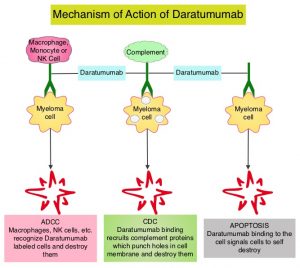
REVLIMID® (Lenalidomide) based regimens are often prescribed for patients with newly diagnosed, transplant-ineligible Multiple Myeloma. REVLIMID®, a thalidomide analogue has immunomodulatory, tumoricidal, and antiangiogenic properties, and synergizes with Dexamethasone to enhance anti-myeloma activity. DARZALEX® is a human IgG1 antibody that targets CD38, a transmembrane glycoprotein abundantly expressed on malignant plasma cells and with low levels of expression on normal lymphoid and myeloid cells. DARZALEX® exerts its cytotoxic effect on myeloma cells by multiple mechanisms, including Antibody Dependent Cellular Cytotoxicity (ADCC), Complement Mediated Cytotoxicity and direct apoptosis. Additionally, DARZALEX® may have a role in immunomodulation by depleting CD38-positive regulator Immune suppressor cells, and thereby expanding T cells, in patients responding to therapy. DARZALEX® has activity as both a single agent and when combined with other standard regimens. The primary analyses of several Phase III studies (ALCYONE, MAIA, and CASSIOPEIA) demonstrated superior clinical efficacy of DARZALEX® in combination with standard-of-care regimens, compared to standard of care alone, for patients with newly diagnosed multiple myeloma. The MAIA study compared the efficacy and safety of DARZALEX® plus REVLIMID® and Dexamathasone (D-Rd) with REVLIMID® and Dexamathasone (Rd), in transplant-ineligible newly diagnosed Multiple Myeloma patients.Mechanism-of-Action-of-Daratumumab

The MAIA study is a multicenter, international, open-label, phase III trial, which included 737 newly diagnosed Myeloma patients who were not candidates for high-dose chemotherapy and Autologous Stem Cell Transplant (ASCT), due to age 65 years or older or comorbidities. Patients were randomly assigned 1:1 to receive REVLIMID® 25 mg orally on days 1-21 of each 28-day cycle and Dexamethasone 40 mg once a week, with or without DARZALEX®. Patients assigned DARZALEX® (D-Rd regimen) received 16 mg/kg weekly for the first 8 weeks (cycles 1 and 2), every other week for 16 weeks (cycles 3 to 6), and then every 4 weeks (cycle 7 and beyond) until disease progression or unacceptable toxicity. Treatment groups were well balanced. The median patient age was 73 years, 99% of patients were 65 years or older and 44% of patients were 75-90 years old. Cytogenetic risk level could be determined in 642 patients of the total population. Eighty-six percent (86%) of these patients were standard risk and 14% were considered high risk. The Primary end point was Progression Free Survival (PFS). Key Secondary endpoints included Overall Survival (OS), Overall Response Rate (ORR), Minimal Residual Disease (MRD) negativity rate (10-5 sensitivity), and Safety.

In the primary analysis of the MAIA trial, D-Rd regimen reduced the risk of disease progression or death by 44%, compared to Rd. The authors now reported the updated efficacy and safety of D-Rd, compared to Rd, after almost 5 years of median follow up, in transplant-ineligible newly diagnosed Multiple Myeloma patients, from the prespecified interim OS analysis of MAIA.

After a median follow up of almost 5 years (56.2 months), the median OS was not reached (NR) in either treatment groups. The estimated 5-year OS rate was 66.3% with D-Rd and 53.1% with Rd (HR=0.68; P=0.0013). D-Rd reduced the risk of death by 32%. The updated median PFS was Not Reached with D-Rd versus 34.4 months with Rd. The estimated 5-year PFS rate was 52.5% with D-Rd and 28.7% with Rd (HR=0.53; P<0.0001). D-Rd reduced the risk of disease progression or death was reduced by 47%. The updated ORR was 92.9% with D-Rd versus 81.6% with Rd (P<0.0001).

The authors concluded that after almost 5 years of follow-up, the addition of DARZALEX® to REVLIMID® and Dexamethasone resulted in a significant improvement in Overall Survival, as well as significant reduction in the risk of disease progression or death, in newly diagnosed Multiple Myeloma patients, who are transplant-ineligible. The authors added that these results are more meaningful and support D-Rd as a new standard of care for this patient group, as this study population of elderly patients, never receive subsequent therapy.

OVERALL SURVIVAL RESULTS WITH DARATUMUMAB, LENALIDOMIDE, AND DEXAMETHASONE VERSUS LENALIDOMIDE AND DEXAMETHASONE IN TRANSPLANT-INELIGIBLE NEWLY DIAGNOSED MULTIPLE MYELOMA: PHASE 3 MAIA STUDY. Facon T, Kumar SK, Plesner T, et al. Presented at: European Hematology Association Annual Meeting; June 9-17, 2021; Virtual. Abstract LB1901.

Late Breaking Abstract – ASCO 2021: PSMA Targeted Radioligand Therapy Improves Progression Free Survival and Overall Survival in Metastatic Prostate Cancer

SUMMARY: Prostate cancer is the most common cancer in American men with the exclusion of skin cancer, and 1 in 8 men will be diagnosed with prostate cancer during their lifetime. It is estimated that in the United States, about 248,530 new cases of prostate cancer will be diagnosed in 2021 and 34,130 men will die of the disease.

The development and progression of prostate cancer is driven by androgens. Androgen Deprivation Therapy (ADT) or testosterone suppression has therefore been the cornerstone of treatment of advanced prostate cancer, and is the first treatment intervention. Approximately 10-20% of patients with advanced Prostate cancer will progress to Castration Resistant Prostate Cancer (CRPC) within five years during ADT, and over 80% of these patients will have metastatic disease at the time of CRPC diagnosis. Among those patients without metastases at CRPC diagnosis, 33% are likely to develop metastases within two years. Progression to Castration Resistant Prostate Cancer (CRPC) often manifests itself with a rising PSA (Prostate Specific Antigen) and the estimated mean survival of patients with CRPC is 9-36 months, and there is therefore an unmet need for new effective therapies.

Prostate-Specific Membrane Antigen (PSMA) is a type II cell membrane glycoprotein that is selectively expressed in prostate cells, with higher levels of expression in prostatic adenocarcinoma. PSMA is a therefore an excellent target for molecular imaging and therapeutics, due to its high specificity for prostate cancer.

Lu-177-PSMA-617 is a radiopharmaceutical that targets PSMA. It is comprised of Lutetium-177, linked to the ligand PSMA-617, a small molecule designed to bind with high affinity to PSMA. Radioligand therapy with Lu-177-PSMA-617 targets PSMA and releases its payload of lethal beta radiation into the prostate cancer cell. The antitumor activity and safety of Lu-177-PSMA-617 have been established previously in a Phase II study (Lancet Oncol. 2018;19:825-833).

VISION is an international, randomized, open-label Phase III study in which the benefit of Lu-177-PSMA-617 was evaluated in men with PSMA-positive mCRPC, previously treated with second generation Androgen Receptor signaling pathway inhibitor (XTANDI®-Enzalutamide or ZYTIGA®-Abiraterone acetate), and 1-2 taxane chemotherapy regimens. In this trial, 831 patients were randomized 2:1 to receive Lu-177-PSMA-617, 7.4 GBq every 6 weeks for 6 cycles plus Standard of Care as determined by the treating physician (N=551), or Standard of Care only (N=280). Both treatment groups were well balanced and this trial excluded patients treated with XOFIGO® (Radium-223). Enrolled patients had a castrate level or serum/plasma testosterone of lower than 50 ng/dL, and PET imaging with 68Ga-PSMA-11 was used to determine PSMA positivity by central review. The Primary endpoints were radiographic Progression Free Survival (rPFS) by Independent Central Review (ICR) and Overall Survival (OS). Secondary endpoints included Objective Response Rate (ORR), Disease Control Rate (DCR), and time to first Symptomatic Skeletal Event (SSE). The median study follow up was 20.9 months.

Lu-177-PSMA-617 plus Standard of Care significantly improved rPFS by 60%, compared to Standard of Care alone (median rPFS 8.7 versus 3.4 months, HR=0.40; P<0.001). The median OS was also significantly improved by 38% with Lu-177-PSMA-617 plus Standard of Care compared to Standard of Care alone (median OS 15.3 versus 11.3 months, HR=0.62; P<0.001). All key secondary endpoints including Objective Response Rate, Disease Control Rate, and time to first Symptomatic Skeletal Event were statistically significant, and in favor of Lu-177-PSMA-617 plus Standard of Care.

It was concluded that radioligand therapy with Lutetium-177–PSMA-617 significantly improved radiographic Progression Free Survival and Overall Survival when added to Standard of Care, compared with Standard of Care alone, in men with PSMA-positive metastatic Castration Resistant Prostate Cancer.

Phase 3 study of lutetium-177-PSMA-617 in patients with metastatic castration-resistant prostate cancer (VISION). Morris MJ, De Bono JS, Chi KN, et al. J Clin Oncol. 2021;39(suppl 15):LBA4.

Late Breaking Abstract – ASCO 2021: Adjuvant KEYTRUDA® Improves Disease Free Survival in Renal Cell Carcinoma

SUMMARY: The American Cancer Society estimates that 76,080 new cases of kidney cancers will be diagnosed in the United States in 2021 and about 13,780 people will die from the disease. Renal Cell Carcinoma (RCC) is by far the most common type of kidney cancer and is about twice as common in men as in women. Modifiable risk factors include smoking, obesity, workplace exposure to certain substances and high blood pressure. The five year survival of patients with advanced RCC is less than 10% and there is a significant unmet need for improved therapies for this disease.

The prognosis for patients with Renal Cell Carcinoma (RCC) is dependent on the stage of disease and risk factors. Two validated models, the University of California Los Angeles Integrated Staging System (UISS) and the Stage, Size, Grade, and Necrosis (SSIGN) score were developed, to assess the risk for relapse. UISS is based on ECOG Performance Status, Fuhrman nuclear grading and TNM pathological stage, whereas the SSIGN score takes Stage, Size, Grade and Necrosis into consideration. Approximately 16% of patients with RCC present with Locoregional disease, and up to 40% of these patients relapse with metastatic disease, following nephrectomy. The 5-year survival for locoregional (stage III) disease is 53%, and 8% for metastatic disease. The standard management of high risk patients following nephrectomy has been surveillance, as there has been limited data demonstrating the benefit of adjuvant therapy in reducing the risk of relapse. Adjuvant therapy with immune check point inhibitors therapy is a potentially attractive treatment strategy for this patient group.

KEYNOTE-564 is a multicenter, double-blind, Phase III trial in which the benefit of adjuvant therapy with KEYTRUDA® was compared with placebo, following nephrectomy, in patients with clear cell RCC. In this study, 994 patients were randomized 1:1 to receive either KEYTRUDA® or placebo at least 12 weeks after surgery. Enrolled patients had histologically confirmed clear cell RCC, with Intermediate-High risk (pT2, Grade 4 or Sarcomatoid, N0 M0; or pT3, any Grade, N0 M0), High risk (pT4, any Grade, N0 M0; or pT any Stage, any Grade, N+ M0), or M1 with No Evidence of Disease after primary tumor and soft tissue metastases were completely resected, 1 year or less from nephrectomy. Treatment consisted of KEYTRUDA® 200 mg IV every 3 weeks (N=496) or placebo (N=498), every 3 weeks, for approximately 1 year. Both treatment groups were well balanced. The Primary end point of the trial was Disease Free Survival (DFS) assessment in all randomized patients and Secondary end points included Overall Survival (OS) and Safety. The median follow up at the time of data cut-off was 24.1 months.

At first prespecified interim analysis, the Primary endpoint of DFS was met. The median DFS was not reached for both treatment groups. KEYTRUDA® reduced the risk of recurrence or death by 32% compared with placebo, and this difference was statistically significant (HR=0.68; P=0.0010). The estimated DFS rate at 24 months was 77.3% with KEYTRUDA® versus 68.1% with placebo and this DFS benefit was consistent across subgroups. The estimated OS rate at 24 months was 96.6% with KEYTRUDA® versus 93.5% with placebo. Survival data are premature and additional follow up is planned for OS.

It was concluded that KEYTRUDA® demonstrated a statistically significant and clinically meaningful improvement in Disease Free Survival compared to placebo, in patients with Renal Cell Carcinoma, with a high risk of recurrence. The authors added that this is the first positive Phase III study with a checkpoint inhibitor, in adjuvant Renal Cell Carcinoma, and these practice changing results support KEYTRUDA® as a potential new standard of care for this patient group.

Pembrolizumab versus placebo as post-nephrectomy adjuvant therapy for patients with renal cell carcinoma: Randomized, double-blind, phase III KEYNOTE-564 study. Choueiri TK, Tomczak P, Park SH, et al. J Clin Oncol 2021; 39: (suppl 15; abstr LBA5) DOI: 10.1200/JCO.2021.39.15_suppl.LBA5

Late Breaking Abstract – ASCO 2021: Adjuvant LYNPARZA® Improves Disease Free Survival in BRCA Positive Breast Cancer

SUMMARY: Breast cancer is the most common cancer among women in the US and about 1 in 8 women (12%) will develop invasive breast cancer during their lifetime. Approximately 284,200 new cases of breast cancer will be diagnosed in 2021 and about 44,130 individuals will die of the disease, largely due to metastatic recurrence.

DNA can be damaged due to errors during its replication or as a result of environmental exposure to ultraviolet radiation from the sun or other toxins. The tumor suppressor genes such as BRCA1 (Breast Cancer 1) and BRCA2 help repair damaged DNA and thus play an important role in maintaining cellular genetic integrity, failing which these genetic aberrations can result in malignancies. The BRCA1 gene is located on the long (q) arm of chromosome 17 whereas BRCA2 is located on the long arm of chromosome 13. Mutations in BRCA1 and BRCA2 account for about 20 to 25 percent of hereditary breast cancers and about 5 to 10 percent of all breast cancers. These mutations can be inherited from either of the parents and a child has a 50 percent chance of inheriting this mutation, and the deleterious effects of the mutations are seen even when an individual’s second copy of the gene is normal. Patients with BRCA mutations can present with aggressive, high-risk disease and are at a high risk of recurrence following completion of multimodality therapy including surgery, radiation, and chemotherapy. This is an area of unmet need, warranting identification of additional novel and effective therapies.

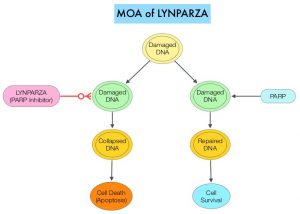
BRCA1 and BRCA2 are tumor suppressor genes and they recognize and repair double strand DNA breaks via Homologous Recombination (HR) pathway. Homologous Recombination is a DNA repair pathway utilized by cells to accurately repair DNA double-stranded breaks during the S and G2 phases of the cell cycle, and thereby maintain genomic integrity. The PARP (Poly ADP Ribose Polymerase) family of enzymes include PARP1 and PARP2, and is a related enzymatic pathway that repairs single strand breaks in DNAIn a BRCA mutant, the cancer cell relies solely on PARP pathway for DNA repair to survive.

LYNPARZA® is a PARP inhibitor, that traps PARP onto DNA at sites of single-strand breaks, thereby preventing their repair and generate double-strand breaks. These breaks cannot be repaired accurately in tumors harboring defects in Homologous Recombination Repair pathway genes, such as BRCA1 or BRCA2 mutations, and this leads to cumulative DNA damage and tumor cell death. LYNPARZA® is presently approved by the FDA for metastatic HER2-negative breast cancer with BRCA1/2 germline mutation. The researchers in this study evaluated the benefit of LYNPARZA® in patients with germline BRCA-mutated, HER2-negative, early stage breast cancer.MOA-of-LYNPARZA

OlympiA is a multicenter, randomized, placebo-controlled, double-blind, Phase III trial of adjuvant LYNPARZA® after neoadjuvant/adjuvant chemotherapy, in patients with germline BRCA1/2 mutations, and high-risk HER2-negative early breast cancer. This trial enrolled 1836 patients, including triple negative and hormone receptor positive breast cancer. All enrolled patients had already received standard adjuvant or neoadjuvant chemotherapy, surgery and if needed, radiation therapy, for early stage breast cancer (Stage II-III). Inclusion criteria also required that patients have a high risk of disease recurrence and those with lower risk of invasive disease recurrence were excluded. For example, patients with hormone receptor positive breast cancer had 4 or more positive lymph nodes prior to adjuvant chemotherapy. Patients were randomized 1:1 to receive LYNPARZA® 300 mg PO BID continuously for 1 year (N=921) or placebo (N=915). Endocrine therapy and bisphosphonates were allowed. The Primary endpoint was invasive Disease Free Survival (IDFS) and Secondary endpoints included distant DFS (DDFS), Overall Survival (OS) and Safety. The study results were reported early, at a median follow up of 2.5 years, after a planned interim analysis was reviewed by an Independent Data Monitoring Committee.

At the pre-specified interim analysis (2.5 years), the estimated 3-year invasive DFS (IDFS) was 85.9% for patients who received LYNPARZA® compared with 77.1% for those who received placebo (HR=0.58; P<0.001), representing a 42% reduction in the risk of IDFS with LYNPARZA® compared to placebo. The estimated 3-year distant DFS (DDFS) was 87.5% versus 80.4% respectively (HR=0.57; P<0.001). This represented a 43% reduction in DDFS with adjuvant LYNPARZA® compared to placebo. At the time of this interim analysis, Overall Survival data were considered immature. The side effects were consistent with the known safety profile of LYNPARZA®, and no new safety signals were noted during the trial.

The authors concluded that adjuvant LYNPARZA® following adjuvant or neoadjuvant chemotherapy significantly improved invasive DFS and distant DFS with acceptable toxicity, in patients with germline BRCA mutated, and high risk HER-2 negative early stage breast cancer. The authors added that this is the first study to report the benefit of a PARP inhibitor given as adjuvant therapy on survival endpoints, in this patient group. Overall Survival data are awaited, as follow up data matures.

Adjuvant Olaparib for Patients with BRCA1- or BRCA2-Mutated Breast Cancer. Tutt AJ, Garber JE, Kaufman B, et al. June 3, 2021, DOI: 10.1056/NEJMoa2105215.

Adjuvant Treatment with OPDIVO® in Muscle-Invasive Urothelial Carcinoma

SUMMARY: The American Cancer Society estimates that in the United States for 2021, about 83,730 new cases of bladder cancer will be diagnosed and approximately 17,200 patients will die of the disease. Bladder cancer is the fourth most common cancer in men, but it is less common in women. A third of the patients initially present with locally invasive or metastatic disease. Even though radical cystectomy is considered the standard of care for patients with localized Muscle Invasive Bladder Cancer (MIBC), two large randomized trials and two meta-analysis have shown greater survival benefit with neoadjuvant Cisplatin-based combination chemotherapy for patients with MIBC, compared to surgery alone. However, not all patients with MIBC benefit from neoadjuvant Cisplatin based therapy, with only 25-50% attaining a pathologic response. More than 50% of patients with MIBC or regional lymph node involvement will develop metastatic disease following radical cystectomy. There is presently no clear consensus with regards to the routine use of adjuvant Cisplatin-based chemotherapy. Further, not all patients are eligible for adjuvant or neoadjuvant Cisplatin-based chemotherapy.

OPDIVO® (Nivolumab) is a fully human, immunoglobulin G4 monoclonal antibody that binds to the PD-1 receptor and blocks its interaction with PD-L1 and PD-L2. Blocking the Immune checkpoint proteins unleashes the T cells, resulting in T cell proliferation, activation and a therapeutic response. OPDIVO® has been shown to have antitumor activity in patients with metastatic urothelial carcinoma who had previously received platinum treatment, and is presently approved by the FDA for this patient group.

CheckMate 274 is a multicenter, double-blind, randomized, Phase III trial conducted to evaluate the efficacy and safety of adjuvant OPDIVO®, as compared with placebo, in patients with muscle-invasive urothelial carcinoma following radical surgery (with or without previous neoadjuvant Cisplatin-based combination chemotherapy). A total of 709 patients with muscle-invasive urothelial carcinoma who had undergone radical surgery were randomly assigned in a 1:1 ratio to receive either OPDIVO® 240 mg as a 30-minute IV infusion (N=353) or placebo (N=356), every 2 weeks for up to 1 year. To be eligible, patients must have had radical surgery (R0, with negative surgical margins), with or without neoadjuvant Cisplatin-based chemotherapy. Patients must have had pathological evidence of urothelial carcinoma (originating in the bladder, ureter or renal pelvis) with a high risk of recurrence defined as follows: pathological stage of pT3, pT4a, or pN+ and patients not eligible for or declined adjuvant Cisplatin-based combination chemotherapy, patients who had not received neoadjuvant Cisplatin-based chemotherapy, and pathological stage of ypT2 to ypT4a or ypN+ for patients who received neoadjuvant Cisplatin. Both treatment groups were well balanced and approximately 40% of patients in both treatment groups had PD-L1 expression of 1% or more and 43% of patients had received previous neoadjuvant cisplatin therapy. The two Primary endpoints were Disease Free Survival (DFS) among all the patients, and among patients with a tumor Programmed Death-Ligand 1 (PD-L1) expression level of 1% or more. Secondary endpoints included Survival free from recurrence outside the urothelial tract, Overall Survival and Safety. The median follow up was 20.9 months among patients who received OPDIVO® and 19.5 months among those who received placebo.

The median DFS was 20.8 months in the OPDIVO® group and 10.8 months in the placebo group in the intention-to-treat population, which was nearly double that with placebo. The percentage of patients who were alive and disease-free at 6 months was 74.9% with OPDIVO® and 60.3% with placebo, in the intention-to-treat population (HR for disease recurrence or death=0.70; P<0.001). Among patients with a PD-L1 expression level of 1% or more, the percentage who were alive and disease-free at 6 months was 74.5% with OPDIVO® and 55.7% with placebo, in the Intention-to-Treat Population (HR=0.55; P<0.001). The subgroup analysis showed that there was a higher probability of DFS with OPDIVO® than with placebo, and this benefit was observed regardless of nodal status, PD-L1 status, or use or nonuse of previous neoadjuvant Cisplatin-based chemotherapy.

The median survival free from recurrence outside the urothelial tract, in the intention-to-treat population, was 22.9 months among patients who received OPDIVO® and 13.7 months with placebo. The percentage of patients who were alive and free from recurrence outside the urothelial tract at 6 months was 77% with OPDIVO® and 62.7% with placebo (HR for recurrence outside the urothelial tract or death=0.72). Among those with a PD-L1 expression level of 1% or more, the percentage who were alive and free from recurrence outside the urothelial tract at 6 months was 75.3% and 56.7%, respectively (HR=0.55). Grade 3 or higher toxicities were noted in 17.9% of patients in the OPDIVO® group and 7.2% of patients in the placebo group.

It was concluded that among patients with high risk muscle-invasive urothelial carcinoma who had undergone radical surgery with curative intent, adjuvant treatment with OPDIVO® significantly improved Disease Free Survival, compared to placebo, in both intention-to-treat population and among patients with a PD-L1 expression level of 1% or more.

Adjuvant Nivolumab versus Placebo in Muscle-Invasive Urothelial Carcinoma. Bajorin DF, Witjes JA, Gschwend JE, et al. N Engl J Med 2021;384:2102-2114.

FDA Approves LUMAKRAS® for KRAS G12C-Mutated Non Small Cell Lung Cancer

SUMMARY: The FDA on May 28, 2021, granted accelerated approval to LUMAKRAS® (Sotorasib), a RAS GTPase family inhibitor, for adult patients with KRAS G12C mutated locally advanced or metastatic Non Small Cell Lung Cancer (NSCLC), as determined by an FDA approved test, who have received at least one prior systemic therapy. The FDA also approved the QIAGEN therascreen® KRAS RGQ PCR kit (tissue) and the Guardant360® CDx (plasma) as companion diagnostics for LUMAKRAS®. If no mutation is detected in a plasma specimen, the tumor tissue should be tested.

The American Cancer Society estimates that for 2021, about 235,760 new cases of lung cancer will be diagnosed and 131,880 patients will die of the disease. Lung cancer is the leading cause of cancer-related mortality in the United States. Non-Small Cell Lung Cancer (NSCLC) accounts for approximately 85% of all lung cancers. Of the three main subtypes of NSCLC, 30% are Squamous Cell Carcinomas (SCC), 40% are Adenocarcinomas and 10% are Large Cell Carcinomas. With changes in the cigarette composition and decline in tobacco consumption over the past several decades, Adenocarcinoma now is the most frequent histologic subtype of lung cancer.

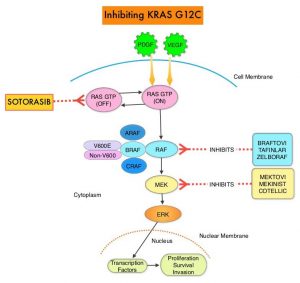
The KRAS (kirsten rat sarcoma viral oncogene homologue) proto-oncogene encodes a protein that is a member of the small GTPase super family. The KRAS gene provides instructions for making the KRAS protein, which is a part of a signaling pathway known as the RAS/MAPK pathway. By relaying signals from outside the cell to the cell nucleus, the protein instructs the cell to grow, divide and differentiate. The KRAS protein is a GTPase, and converts GTP into GDP. To transmit signals, the KRAS protein must be turned on, by binding to a molecule of GTP. When GTP is converted to GDP, the KRAS protein is turned off or inactivated, and when the KRAS protein is bound to GDP, it does not relay signals to the cell nucleus. The KRAS gene is in the Ras family of oncogenes, which also includes two other genes, HRAS and NRAS. When mutated, oncogenes have the potential to change normal cells cancerous.

KRAS is the most frequently mutated oncogene in human cancers and are often associated with resistance to targeted therapies and poor outcomes. The KRAS-G12C mutation occurs in approximately 12-15% of Non Small Cell Lung Cancers (NSCLC) and in 3-5% of Colorectal cancers and other solid cancers. KRAS G12C is one of the most prevalent driver mutations in NSCLC and accounts for a greater number of patients than those with ALK, ROS1, RET, and TRK 1/2/3 mutations combined. KRAS G12C cancers are genomically more heterogeneous and occur more frequently in current or former smokers, and are likely to be more complex genomically than EGFR mutant or ALK rearranged cancers. G12C is a single point mutation with a Glycine-to-Cysteine substitution at codon 12. This substitution favors the activated state of KRAS, resulting in a predominantly GTP-bound KRAS oncoprotein, amplifying signaling pathways that lead to oncogenesis.Inhibiting-KRAS-G12C

LUMAKRAS® is a first-in-class small molecule that specifically and irreversibly inhibits KRAS-G12C and traps KRAS-G12C in the inactive GDP-bound state. Preclinical studies in animal models showed that LUMAKRAS® inhibited nearly all detectable phosphorylation of Extracellular signal-Regulated Kinase (ERK), a key downstream effector of KRAS, leading to durable complete regression of KRAS-G12C tumors.

The CodeBreaK clinical development program for LUMAKRAS® was designed to treat patients with an advanced solid tumor with the KRAS G12C mutation and address the longstanding unmet medical need for these cancers. This program has enrolled more than 800 patients across 13 tumor types since its inception.

CodeBreaK 100 is a Phase I and II, first-in-human, open-label, single arm, multicenter study, which enrolled patients with KRAS G12C-mutant solid tumors. Eligible patients must have received a prior line of systemic anticancer therapy, for their tumor type and stage of disease. The present FDA approval was based on a Phase II trial which enrolled 126 patients with NSCLC, 124 of whom had centrally evaluable lesions by RECIST criteria at baseline. Enrolled patients had locally advanced or metastatic NSCLC with a KRAS G12C mutation, who had progressed on an immune checkpoint inhibitor and/or platinum-based chemotherapy, and those with active brain metastases were excluded. Patient received LUMAKRAS® 960mg orally once daily, until disease progression or unacceptable toxicity. Imaging studies were done every 6 weeks up to week 48 and then once every 12 weeks thereafter. The Primary end point of the trial was Overall Response Rate (ORR) as assessed by blinded Independent Central Review. Secondary end points included Duration of Response (DOR), Disease Control Rate (DCR), time to recovery, Progression Free Survival (PFS), Overall Survival, and Safety. The examination of biomarkers served as an exploratory end point. Patients were followed for a median of 12.2 months.

The ORR was 37.1% and the median Duration of Response was 10 months. Three patients had a Complete Response and the Disease Control Rate was 80.6%. The median Time to response was 1.4 months and 72% of patients had an early rapid response on first CT scan at 6 weeks. Approximately 81% of patients had tumor shrinkage of any magnitude, and the median percentage of best tumor shrinkage among all responders was 60%, and these responses were durable. The median PFS was 6.8 months. In the exploratory biomarker analysis, tumor response to LUMAKRAS® was seen across subgroups, including patients with negative or low expression of PD-L1 and those with STK11 and TP53 mutations. The most common adverse reactions were diarrhea, musculoskeletal pain, nausea, fatigue, hepatotoxicity, and cough. The most common laboratory abnormalities were increase in liver function tests, anemia, hyponatremia and proteinuria.

It was concluded that patients with NSCLC have poor outcomes and limited treatment options following progression on first line treatment. LUMAKRAS® offers a new treatment option for this patient group, and it is the first KRAS-targeted therapy to be approved after nearly four decades of research. A global Phase III study (CodeBreaK 200) is underway, comparing LUMAKRAS® to Docetaxel in patients with KRAS G12C-mutated NSCLC.

CodeBreaK 100: Registrational Phase 2 Trial of Sotorasib in KRAS p.G12C Mutated Non-small Cell Lung Cancer. Li BT, Skoulidis F, Falchook G, et al. Presented at: International Association for the Study of Lung Cancer 2020 World Conference on Lung Cancer; January 28-31, 2021; virtual. Abstract PS01.07.

FDA Approves TRUSELTIQ® for Metastatic Cholangiocarcinoma

SUMMARY: The FDA on May 28, 2021, granted accelerated approval to TRUSELTIQ® (Infigratinib), a kinase inhibitor for adults with previously treated, unresectable, locally advanced or metastatic Cholangiocarcinoma with a Fibroblast Growth Factor Receptor 2 (FGFR2) fusion or other rearrangement, as detected by an FDA-approved test. The FDA also approved FoundationOne® CDx (Foundation Medicine, Inc.) for selection of patients with FGFR2 fusion or other rearrangement as a companion diagnostic device for treatment with TRUSELTIQ®.

Bile Duct cancer (Cholangiocarcinoma), comprise about 30% of all primary liver tumors and includes both intrahepatic and extrahepatic bile duct cancers. Klatskin tumor is a type of Cholangiocarcinoma that begins in the hilum, at the junction of the left and right bile ducts. It is the most common type of Cholangiocarcinoma, accounting for more than half of all cases. About 8,000 people in the US are diagnosed with Cholangiocarcinoma each year and approximately 20% of the cases are suitable for surgical resection, whereas a majority of patients at diagnosis have advanced disease. The 5-year survival is less than 5%, with limited progress made over the past two decades.

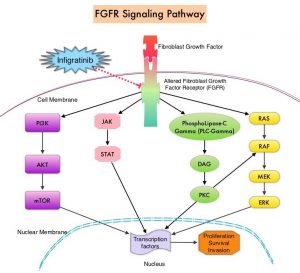
Approximately 75% of patients are diagnosed with late-stage disease, and are often treated with Gemcitabine plus Cisplatin, based on the findings of the ABC-02 study. Second line treatment options include FOLFOX regimen, which is associated with a Response Rate of about 5%, median Progression Free Survival (PFS) of about 4 months, and median Overall Survival (OS) of about 6 months. There is therefore an unmet need for new effective therapies. FGFRs (Fibroblast Growth Factor Receptors) play an important role in tumor cell proliferation and survival, migration and angiogenesis. Activating fusions, rearrangements, translocations and gene amplifications in FGFRs result in dysregulation of FGFR signaling, and may contribute to the pathogenesis of various cancers, including Cholangiocarcinoma. FGFR2 fusions or rearrangements occur almost exclusively in intrahepatic Cholangiocarcinoma, where they are observed in 10-16% of patients.FGFR-Signaling-Pathway

TRUSELTIQ® (Infigratinib) is an orally administered, ATP-competitive, Tyrosine Kinase Inhibitor of FGFR, which targets the Fibroblast Growth Factor Receptor (FGFR) protein, blocking downstream activity. In clinical studies, TRUSELTIQ® demonstrated a clinically meaningful Overall Response Rate (ORR) and Duration of Response (DOR).

The present FDA approval was based on a multicenter, open-label, single-arm, Phase II trial that enrolled 108 patients with previously treated, unresectable, locally advanced or metastatic Cholangiocarcinoma, with an FGFR2 fusion or rearrangement as determined by local or central testing. Patients received TRUSELTIQ® 125 mg orally daily for 21 days of each 28-day cycle, until unacceptable toxicity or disease progression. All patients had received at least 1 prior line of systemic therapy and 54% had received 2 or more prior lines of treatment. The median age was 53 years and all patients received prophylaxis with the oral phosphate binder Sevelamer carbonate. The co-Primary endpoints were Objective Response Rate (ORR) by Independent Central Review, and Duration of Response (DOR). Secondary endpoints included Progression Free Survival (PFS), Disease Control Rate (DCR), Overall Survival (OS), Safety and Pharmacokinetics. The median follow up was 10.6 months.

The ORR was 23%, with a median Duration of Response of 5.0 months. Among responding patients, 32% had a Duration of Response of 6 months or more. The median PFS was 7.3 months. The most common toxicities were hyperphosphatemia, increased creatinine, nail toxicity, stomatitis, dry eye, fatigue, alopecia, palmar-plantar erythrodysesthesia syndrome, arthralgia, dysgeusia, constipation, abdominal pain, dry mouth, eyelash changes, diarrhea, dry skin, decreased appetite, vision blurred and vomiting. Serious toxicities included hyperphosphatemia and retinal pigment epithelial detachment and monitoring for these adverse reactions during treatment is recommended.

It was concluded that TRUSELTIQ® administered as second or later line treatment was associated with promising anticancer activity, and represents a new therapeutic option for patients with Cholangiocarcinoma and FGFR fusions/rearrangements. A Phase III study of TRUSELTIQ® versus Gemcitabine/Cisplatin is ongoing, in the first-line setting.

Final results from a phase II study of infigratinib (BGJ398), an FGFR-selective tyrosine kinase inhibitor, in patients with previously treated advanced cholangiocarcinoma harboring an FGFR2 gene fusion or rearrangement. Javle MM, Roychowdhury S, Kelley RK, et al. DOI: 10.1200/JCO.2021.39.3_suppl.265 Journal of Clinical Oncology 39, no. 3_suppl (January 20, 2021) 265-265.

FDA Approves Bispecific Antibody RYBREVANT® for Metastatic Non Small Cell Lung Cancer

SUMMARY: The FDA on May 21, 2021, granted accelerated approval to RYBREVANT® (Amivantamab-vmjw), a bispecific antibody directed against Epidermal Growth Factor (EGF) and MET receptors, for adult patients with locally advanced or metastatic Non Small Cell Lung Cancer (NSCLC) with Epidermal Growth Factor Receptor (EGFR) exon 20 insertion mutations, as detected by an FDA-approved test, whose disease has progressed on or after Platinum-based chemotherapy. FDA also approved the Guardant360® CDx (Guardant Health, Inc.) as a companion diagnostic for RYBREVANT®.

The American Cancer Society estimates that for 2021, about 235,760 new cases of lung cancer will be diagnosed and 131,880 patients will die of the disease. Lung cancer is the leading cause of cancer-related mortality in the United States. Non-Small Cell Lung Cancer (NSCLC) accounts for approximately 85% of all lung cancers. Of the three main subtypes of NSCLC, 30% are Squamous Cell Carcinomas (SCC), 40% are Adenocarcinomas and 10% are Large Cell Carcinomas. With changes in the cigarette composition and decline in tobacco consumption over the past several decades, Adenocarcinoma now is the most frequent histologic subtype of lung cancer.

Approximately 10-15% of Caucasian patients and 35-50% of Asian patients with Adenocarcinomas, harbor activating EGFR mutations and 90% of these mutations are either exon 19 deletions or L858R substitution mutation in exon 21. EGFR exon 20 insertion mutations are the third most common after L858R and exon 19 deletions, and occur in about 2-3% patients with NSCLC and are insensitive to EGFR Tyrosine Kinase Inhibitors (TKIs) due to an altered conformation of the kinase active site. Next-Generation sequencing provides an alternative to Polymerase Chain Reaction (PCR)-based tests, which fail to identify 50% or more of exon 20 insertion mutations. Patients with EGFR exon 20 insertion mutations have a 5 year Overall Survival (OS) of 8% in the frontline setting, compared to an OS of 19% for patients with EGFR exon 19 deletions or L858R mutations. There is therefore a clinically unmet need for this patient group, as there are no approved targeted therapies available and platinum-doublet chemotherapy remains the standard of care for these patients.

Epidermal Growth Factor Receptor (EGFR) plays an important role in regulating cell proliferation, survival and differentiation, and is overexpressed in a variety of epithelial malignancies. EGFR targeted Tyrosine Kinase Inhibitors (TKIs) such as Gefitinib, Erlotinib, Afatinib, Dacomitinib and Osimertinib target the EGFR signaling cascade. However, patients eventually will develop drug resistance due to new EGFR mutations. Another important cause of drug resistance to TKIs is due to the activation of parallel RTK (Receptor Tyrosine Kinase) pathways such as Hepatocyte Growth Factor/Mesenchymal-Epithelial Transition factor (HGF/MET) pathway, thereby bypassing EGFR TKI inhibitors.

RYBREVANT® is a fully-human bispecific antibody directed against EGFR and MET receptors. RYBREVANT® binds extracellularly and simultaneously blocks ligand-induced phosphorylation of EGFR and c-MET, inhibiting tumor growth and promoting tumor cell death. Further, RYBREVANT® downregulates receptor expression on tumor cells thus preventing drug resistance mediated by new emerging mutations of EGFR or c-MET. By binding to the extracellular domain of the receptor protein, RYBREVANT® can bypass primary and secondary TKI resistance at the active site.

The present FDA approval was based on CHRYSALIS, an ongoing multicenter, non-randomized, open label, multicohort, Phase I clinical trial (NCT02609776) which included patients with locally advanced or metastatic NSCLC with EGFR exon 20 insertion mutations. The purpose of study is to evaluate the safety, pharmacokinetics, and preliminary efficacy of RYBREVANT® as a monotherapy and in combination with Lazertinib, and to determine the recommended Phase 2 dose (RP2D) (monotherapy), recommended Phase 2 combination dose (RP2CD) (combination therapy), and to determine recommended Phase 2 Dose (RP2q3W) with combination chemotherapy (RYBREVANT® in combination with standard of care Carboplatin and Pemetrexed) in 21 day treatment cycle for participants with advanced NSCLC.

In this analysis of the Phase 1 CHRYSALIS study, researchers assessed the efficacy and safety of RYBREVANT® in patients with NSCLC and EGFR exon 20 insertion mutations, who had progressed on prior Platinum-based chemotherapy, and were treated at the recommended Phase II dose of RYBREVANT® 1050 mg (1400 mg for patients weighting 80 kg or more). The median patient age was 61 years, 51% were female, and median prior lines of therapy was one. The Primary endpoint was Overall Response Rate (ORR). Secondary endpoints included Duration of Response (DOR), Clinical Benefit Rate, Progression Free Survival (PFS) and Overall Survival (OS).

It was noted that among this post-platinum cohort of patients (N=81), at a median follow up of 9.7 months, the ORR was 40%, with 4% Complete Reponses and 36% achieving Partial Responses (PR). Responses were durable with median Duration of Response of 11.1 months, with 63 % having responses of at least six months or greater duration. The median PFS was 8.3 months and median OS was 22.8 months. The Clinical Benefit Rate (PR or more, or Stable Disease of 11 weeks or more) was 74%. The most common adverse reactions (20% or more) were rash, infusion-related reactions, paronychia, fatigue, musculoskeletal pain, stomatitis, nausea, vomiting, constipation, edema, cough and dyspnea.

The authors concluded that RYBREVANT® demonstrated robust and durable antitumor activity in patients with EGFR exon 20 insertion mutations, with a manageable safety profile.

Amivantamab in Post-platinum EGFR Exon 20 Insertion Mutant Non-small Cell Lung Cancer. Sabari JK, Shu CA, Park K, et al. Presented at: IASLC 2020 World Conference on Lung Cancer Singapore. January 28-31, 2021. Abstract OA04.04