FDA Approves KEYTRUDA® for BCG-Unresponsive, High-Risk Non-Muscle Invasive Bladder Cancer

SUMMARY: The FDA on January 8, 2020, approved KEYTRUDA® (Pembrolizumab) for the treatment of patients with Bacillus Calmette-Guerin (BCG)-unresponsive, high-risk, Non-Muscle Invasive Bladder Cancer (NMIBC) with Carcinoma In Situ (CIS) with or without papillary tumors, who are ineligible for or have elected not to undergo cystectomy.

The American Cancer Society estimates that for 2020, about 81,400 new cases of bladder cancer will be diagnosed in the US and about 17,980 patients will die of the disease. Bladder cancer is the fourth most common cancer in men, but is less common in women and the average age at the time of diagnosis is 73. Approximately 50% of all bladder cancers are non-invasive or in situ cancers. Patients with high-risk, Non-Muscle Invasive Bladder Cancer that has become unresponsive to BCG treatment, are often given the treatment option of radical cystectomy, which includes removing the entire urinary bladder and a prostatectomy for men or total hysterectomy in women. While highly curative, this surgical procedure carries substantial risk for morbidity and mortality, and can negatively impact patient’s quality of life. Further, a significant proportion of patients are medically ineligible for a radical cystectomy, and even if eligible, refuse surgery and opt for other less effective treatments, which could compromise outcomes.

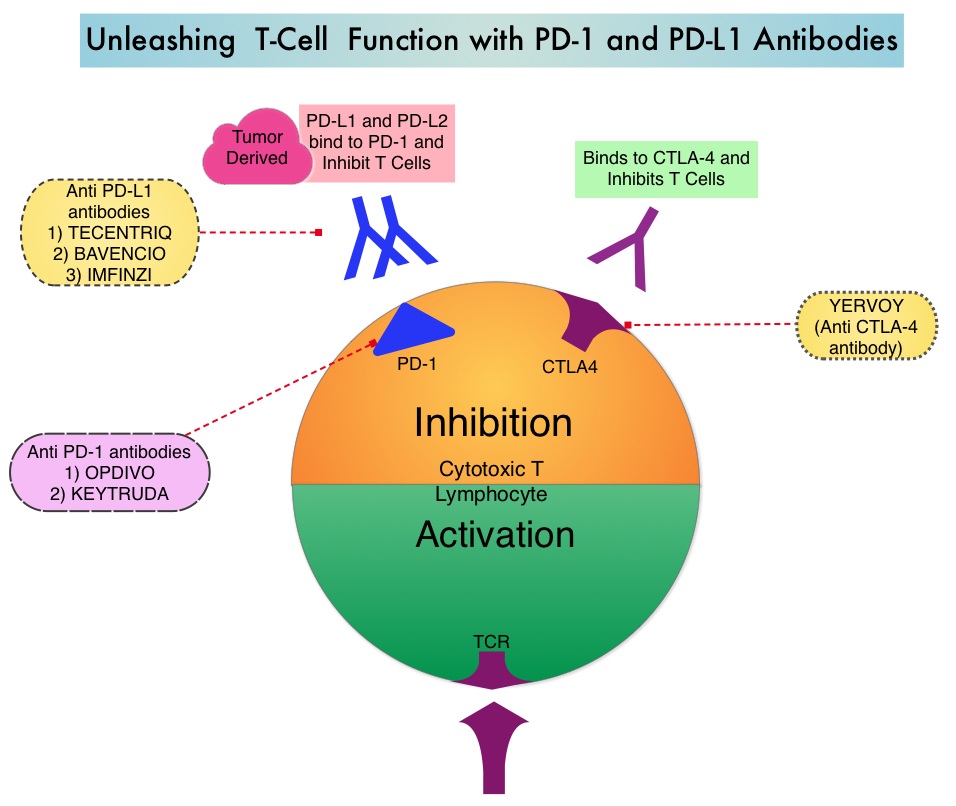
KEYTRUDA® is a fully humanized, Immunoglobulin G4, anti-PD-1, monoclonal antibody, that binds to the PD-1 receptor and blocks its interaction with ligands PD-L1 and PD-L2. By doing so, it unleashes the tumor-specific effector T cells, and is thereby able to undo PD-1 pathway-mediated inhibition of the immune response. KEYTRUDA® is presently approved by the FDA for the treatment of patients with locally advanced or metastatic Urothelial carcinoma who are not eligible for Cisplatin-containing chemotherapy or for those with disease progression during or following platinum-containing chemotherapy, based on its durable antitumor activity in this patient group. Upregulation of the PD-1 pathway has been observed in BCG-resistant NMIBC, suggesting that KEYTRUDA® may be of benefit in this group of patients.

This new FDA approval for KEYTRUDA® was based on the KEYNOTE-057 study, which is a multicenter, single-arm trial that enrolled 148 patients with high-risk NMIBC, of whom 96 patients had BCG-unresponsive CIS with or without papillary tumors. BCG-unresponsive high-risk Non-Muscle Invasive Bladder Cancer was defined as persistent disease despite adequate BCG therapy, disease recurrence after an initial tumor-free state following adequate BCG therapy, or T1 disease following a single induction course of BCG. Eligible patients had received adequate BCG therapy and were unable/unwilling to undergo radical cystectomy. All patients had undergone TransUrethral Resection of Bladder Tumor (TURBT) to remove resectable disease. Patients with residual Carcinoma In Situ, not amenable to complete resection were permitted. Patients received KEYTRUDA® 200 mg every 3 weeks until unacceptable toxicity, persistent or recurrent high-risk NMIBC or progressive disease, or up to 24 months of therapy without disease progression. The median age was 73 years and the median number of prior BCG instillations was 12. More than half of patients (56.9%) had a PD-L1 Combined Positive Score (CPS) of less than 10, and most patients in this analysis had refused prior cystectomy. The Primary end point was Complete Response Rate (CRR) as defined by negative results for cystoscopy with TURBT/biopsies as applicable, urine cytology, and CT Urography imaging. Secondary end points included Duration of Response and Safety.

At a median follow up was 28 months the Complete Response Rate was 41% and the median Duration of Response was 16.2 months. Forty-six percent (46%) of responding patients experienced a Complete Response lasting at least 12 months. The most frequent adverse reactions were fatigue, diarrhea, rash, pruritis, musculoskeletal pain, peripheral edema and hypothyroidism.

It was concluded from this study that KEYTRUDA® had encouraging activity in bladder cancer patients, with high-risk, BCG-unresponsive Carcinoma in Situ, with or without papillary tumors. The authors added that this study demonstrates that immune activation with systemically administered treatment can result in local activity in the bladder, as well as long-term durable remissions of cancer.
Keynote 057: Phase II trial of Pembrolizumab (pembro) for patients (pts) with high-risk (HR) nonmuscle invasive bladder cancer (NMIBC) unresponsive to bacillus calmette-guérin (BCG). Balar AV, Kulkarni GS, Uchio EM, et al. J Clin Oncol 37, 2019 (suppl 7S; abstr 350)
REBLOZYL® (Luspatercept-aamt)

The FDA on April 3, 2020, approved REBLOZYL® (Luspatercept-aamt) for the treatment of anemia, failing an Erythropoiesis Stimulating Agent, and requiring 2 or more RBC units over 8 weeks, in adult patients with very low- to intermediate-risk MyeloDysplastic Syndromes with Ring Sideroblasts (MDS-RS), or with MyeloDysplastic/MyeloProliferative Neoplasm with Ring Sideroblasts and Thrombocytosis (MDS/MPN-RS-T). REBLOZYL® is a product of Celgene Corporation.

FDA Approves IMFINZI® for Advanced Small Cell Lung Cancer

SUMMARY: The FDA on March 27, 2020 approved IMFINZI® (Durvalumab) in combination with Etoposide and either Carboplatin or Cisplatin as first-line treatment for patients with Extensive-Stage Small Cell Lung Cancer (ES-SCLC). The American Cancer Society estimates that for 2020 about 228,820 new cases of lung cancer will be diagnosed and about 135,720 patients will die of the disease. Lung cancer is the leading cause of cancer-related mortality in the United States. Small cell lung cancer (SCLC) accounts for approximately 13-15% of all lung cancers and is aggressive. Patients with extensive stage SCLC are often treated with a combination of Carboplatin or Cisplatin with Etoposide as first line treatment and the tumor response rates are as high as 60-80%. However, majority of the patients relapse within months of completing initial therapy, with a median Overall Survival (OS) of approximately 10 months. Patients often receive HYCAMTIN® (Topotecan) for recurrent or progressive SCLC (second-line treatment) and after failure on second-line therapy, treatment options are limited. The 5 year survival rate for Extensive Stage SCLC (ES-SCLC) is less than 5%, with a median survival of 9-10 months from the time of diagnosis.Unleashing-T-Cell-Function-with-PD-1-and-PD-L1-Antibodies

Based on the premise that SCLC has a high mutation rate, it was hypothesized that these tumors may be immunogenic and more recently immunotherapy with checkpoint inhibitors has demonstrated clinical activity in Extensive Stage SCLC. IMFINZI® (Durvalumab) is a selective, high-affinity, human IgG1 monoclonal antibody, that blocks the binding of Programmed Death Ligand 1 (PD-L1) to Programmed Death 1 (PD-1) receptor and CD80, thereby unleashing the T cells to recognize and kill tumor cells.

IMFINZI® is approved by the FDA for the treatment of patients with locally advanced, unresectable Stage III Non-Small Cell Lung Cancer, who have not progressed following chemoradiotherapy. Additionally, IMFINZI® is also approved for the treatment of patients with locally advanced or metastatic Urothelial carcinoma who have disease progression during or following Platinum-containing chemotherapy, or who have disease progression within 12 months of neoadjuvant or adjuvant treatment with Platinum-containing chemotherapy.

This present FDA approval was based on CASPIAN trial, which is a multicenter, randomized, controlled, open-label, Phase III study, in which the efficacy of IMFINZI® with or without CTLA-4 inhibitor Tremelimumab, in combination with Etoposide plus either Cisplatin or Carboplatin (Platinum-Etoposide), was compared to chemotherapy alone, in treatment-naive patients with ES-SCLC.
Patients were randomly assigned in a 1:1:1 ratio to IMFINZI® plus Platinum-Etoposide, IMFINZI® plus Tremelimumab plus Platinum-Etoposide, or Platinum-Etoposide alone. This study allocated 268 patients to the IMFINZI® plus Platinum-Etoposide group and 269 patients to the Platinum-Etoposide group. Treatment with Platinum-Etoposide consisted of Etoposide 80-100 mg/m2 IV on days 1-3 of each cycle with investigator’s choice of either Carboplatin AUC 5-6 mg/mL per min or Cisplatin 75-80 mg/m2 IV administered on day 1 of each cycle. Patients received up to four cycles of Platinum-Etoposide along with IMFINZI® 1500 mg IV with or without Tremelimumab 75 mg IV every 3 weeks, followed by maintenance IMFINZI® 1500 mg IV every 4 weeks in the immunotherapy treatment groups, or up to six cycles of Platinum-Etoposide IV every 3 weeks plus Prophylactic Cranial Irradiation (at the treating physicians discretion), in the Platinum-Etoposide control group. The median patient age was 62 years and 10% of the patients had CNS metastases. PCI was administered to 8% of patients in the Platinum-Etoposide group. The Primary endpoint was Overall Survival (OS). Additional efficacy outcome measures included Progression Free Survival (PFS) and Objective Response Rate (ORR). The authors reported the results for the IMFINZI® plus Platinum-Etoposide group, compared to the Platinum-Etoposide group, from a planned interim analysis.

The median OS was 13.0 months in the IMFINZI® plus chemotherapy group, compared with 10.3 months in the chemotherapy alone group (HR=0.73; P=0.0047), with a 27% reduction in the risk of death.
Approximately 34% of patients who received IMFINZI® were alive at 18 months as compared to 25% in the control arm of the trial. Additionally, IMFINZI® plus chemotherapy demonstrated a higher PFS rate at 12 months (17.5% versus 4.7%), a 10.3% increase in confirmed ORR (67.9% versus 57.6%), and improved Duration of Response at 12 months (22.7% versus 6.3%). The most common adverse reactions noted were nausea, fatigue, asthenia, and alopecia.

It was concluded that the addition of IMFINZI® to first line Platinum-Etoposide chemotherapy combination significantly improved Overall Survival in patients with Extensive Stage-Small Cell Lung Cancer, when compared to chemotherapy alone.

Durvalumab plus platinum-etoposide versus platinum-etoposide in first-line treatment of extensive-stage small-cell lung cancer (CASPIAN): a randomised, controlled, open-label, phase 3 trial. Paz-Ares L, Dvorkin M, Chen Y, CASPIAN investigators, et al. Lancet. 2019;394:1929-1939

FDA Approves REBLOZYL® for Patients with Lower-Risk Myelodysplastic Syndromes

SUMMARY: The FDA on April 3, 2020 approved REBLOZYL® (Luspatercept-aamt) for the treatment of anemia, failing an Erythropoiesis Stimulating Agent, and requiring two or more RBC units over 8 weeks, in adult patients with very low- to intermediate-risk MyeloDysplastic Syndromes with Ring Sideroblasts (MDS-RS) or with Myelodysplastic/Myeloproliferative neoplasm with Ring Sideroblasts and Thrombocytosis (MDS/MPN-RS-T).

It is estimated that in the US approximately 13,000 people are diagnosed with MyeloDysplastic Syndromes (MDS) each year. MyeloDysplastic Syndromes are a heterogenous group of stem cell disorders characterized by marrow failure resulting in cytopenias with associated cytogenetic abnormalities, and abnormal cellular maturation with morphologic changes in clonal cells. Majority of the individuals diagnosed with MDS are aged 65 years and older and die as a result of infection and/or bleeding consequent to bone marrow failure. About a third of patients with MDS develop Acute Myeloid Leukemia (AML).

Patients with Lower-risk MDS (Revised IPSS-Very Low, Low, or Intermediate risk ) often present with symptomatic anemia and these patients are in chronic need for RBC transfusions which in turn can result in iron overload and can have a negative impact on quality of life and Overall Survival. These patients are treated with Erythropoiesis Stimulating Agents (ESAs) as first line therapy. ESAs such as Darbepoetin alfa and Epoetin alfa are re-engineered and recombinant DNA technology products of Erythropoietin (EPO), and they stimulate erythropoiesis by binding and activating the EPO receptor. However, transfusion-dependent patients with serum EPO levels above 200 U per liter are less likely to respond to ESAs. Additionally, patients with MDS with ring sideroblasts have a shorter median duration of response to ESAs, than those who do not have ring sideroblasts. Patients with Lower-risk MDS with chromosome 5q deletion (del 5q) who are transfusion dependent are treated with Lenalidomide, regardless of previous treatment with ESAs. In contrast, only 39% of patients with non-del(5q) Lower-risk MDS receive second line therapy besides RBC transfusions, and there are few treatment options for patients who are refractory to, unresponsive to, or ineligible for ESAs. There is therefore an unmet clinical need for safe and effective treatment options, to reduce the RBC transfusion burden in these patients.Luspartercept-Restores-Red-Blood-Cell's-Ability-to-Mature

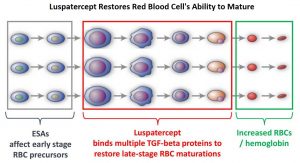
Signaling by the SMAD2 and SMAD3 pathway exerts an inhibitory effect on red cell maturation. This pathway is constitutively activated in the bone marrow cells of patients with MDS and diseases associated with ineffective erythropoiesis such as β-thalassemia. REBLOZYL® (Luspatercept) is a recombinant soluble fusion protein and is first-in-class erythroid maturation agent that enhances erythropoiesis by promoting late-stage Red Blood Cell precursor differentiation and maturation. It targets select Transforming Growth Factor (TGF)-β superfamily ligands such as GDF11, that regulate late-stage erythropoiesis. This results in a reduction in aberrant SMAD2 and SMAD3 signaling, thereby promoting late-stage RBC precursor differentiation and maturation. In a Phase II study, treatment of Lower-risk MDS patients with REBLOZYL® resulted in 38% of patients being transfusion independent for 8 weeks or longer and this benefit was even more so among patients with 15% or more ring sideroblasts.

The MEDALIST trial is a randomized, double-blind, placebo-controlled Phase III study which evaluated the efficacy and safety of REBLOZYL® in patients with anemia secondary to MDS, defined as Very Low-Risk, Low-Risk, or Intermediate-Risk with Ring Sideroblasts, according to the Revised International Prognostic Scoring System (R-IPSS). Eligible patients were refractory, intolerant, or ineligible to receive ESAs and required RBC transfusions. A total of 229 patients (N=229) were randomized 2:1 to receive either REBLOZYL® at a starting dose level of 1mg/kg SC with titration up to 1.75 mg/kg if needed (N=153), or placebo SC (N=76), every 3 weeks for 24 weeks or more. The median age was 71 years and median time from diagnosis was 41.8 months. Approximately 95% of patients had previously received ESAs and 90% had an SF3B1 mutation. SF3B1 mutation defines a homogeneous subgroup of MDS patients with Ring Sideroblasts, who have isolated erythroid dysplasia and favorable prognosis. The Primary endpoint was RBC transfusion independence for 8 weeks or more between week 1 and 24. A key Secondary endpoint was RBC transfusion independence for 12 weeks or more between week 1 and 24.

Among those receiving REBLOZYL®, 38% achieved the Primary endpoint of RBC transfusion independence for 8 weeks or more, compared with 13% receiving placebo (P<0.0001). Further among those receiving REBLOZYL®, 28% achieved the key Secondary endpoint of RBC transfusion independence for 12 weeks or more compared with 8% receiving placebo (P<0.001). The median duration of the longest, single continuous period of response to REBLOZYL® was 30.6 weeks, and 13.6 weeks in the placebo group. Among patients who had a baseline transfusion burden of 4 to less than 6 units per 8 weeks, 37% of those in the REBLOZYL® group and 4% of those in the placebo group had a response. Additionally, patients receiving REBLOZYL® were more likely to achieve an mHI-E (modified Hematologic Improvement-Erythroid) response, (defined as a reduction in transfusion of 4 or more RBC units per 8 weeks or a mean hemoglobin increase of 1.5 g/dL or more per 8 weeks, in the absence of transfusions), compared with patients receiving placebo (53% versus 12% during weeks 1-24; P<0.0001). A mean increase in hemoglobin level of at least 1 g/dL during weeks 1 to 24 was noted in 35% of patients who received REBLOZYL® and in 8% of patients who received placebo. The most common adverse events of any grade associated with REBLOZYL® included fatigue, diarrhea, asthenia, nausea and dizziness, and the incidence of adverse events decreased over time.

It was concluded that treatment with REBLOZYL® significantly reduced the severity of anemia in patients with Lower-risk MDS with ring sideroblasts, who had been RBC transfusion-dependent, and who had disease that was refractory to, or unlikely to respond to ESAs. Luspatercept in Patients with Lower-Risk Myelodysplastic Syndromes. Fenaux P, Platzbecker U, Mufti GJ, et al. N Engl J Med 2020; 382:140-151

IMFINZI® (Durvalumab)

The FDA on March 30, 2020 approved IMFINZI® in combination with Etoposide and either Carboplatin or Cisplatin as first-line treatment of patients with Extensive-Stage Small Cell Lung Cancer (ES-SCLC). IMFINZI® is a product of AstraZeneca.

OPDIVO® and YERVOY®

The FDA on March 10, 2020 granted accelerated approval to the combination of OPDIVO® (Nivolumab) and YERVOY® (Ipilimumab) for patients with Hepatocellular Carcinoma (HCC), who have been previously treated with NEXAVAR® (Sorafenib). Both OPDIVO® and YERVOY® are products of Bristol-Myers Squibb Co.

NERLYNX® (Neratinib)

The FDA on February 25, 2020 approved NERLYNX® in combination with XELODA® (Capecitabine) for adult patients with advanced or metastatic HER2-positive Breast Cancer, who have received two or more prior anti-HER2 based regimens in the metastatic setting. NERLYNX® is a product of Puma Biotechnology, Inc.

SARCLISA® (Isatuximab-irfc)

The FDA on March 2, 2020 approved SARCLISA® in combination with POMALYST® (Pomalidomide) and Dexamethasone for adult patients with Multiple Myeloma, who have received at least two prior therapies including REVLIMID® (Lenalidomide) and a Proteasome Inhibitor. SARCLISA® is a product of Sanofi-Aventis U.S. LLC.

TAZVERIK® (Tazemetostat)

The FDA on January 23, 2020 granted accelerated approval to TAZVERIK® for adults and pediatric patients aged 16 years and older with metastatic or locally advanced epithelioid sarcoma, not eligible for complete resection. TAZVERIK® is a product of Epizyme, Inc.